Brewing
Gongfu brewing
- Water temperature
- 75 °C
- Tea amount
- 5 g
- Water volume
- 100 ml
- First steep
- 10 s
- Time added per infusion
- 5 s
- Infusions
- 3

Tóngchéng xiǎo huā
Choose a brewing method. Start with the recommended quantities and time, then adjust to taste.
Brewing
Brewing
Taste
Tea encyclopedia
Category: Historical famous tea (历史名茶, lìshǐ míngchá), belonging to the family of Wanxi Lánhuā Chá (皖西兰花茶, «orchid teas of western Anhui»). Protected as a product with geographical indication: in 2018, the Ministry of Agriculture and Rural Affairs of the PRC approved agricultural geographical indication (农产品地理标志) for «Tongcheng Xiao Hua». In 2025, the State Intellectual Property Office of the PRC recognized it as a product with geographical origin protection (地理标志产品). Provincial standard — DB...
Category: Historical famous tea (历史名茶, lìshǐ míngchá), belonging to the family of Wanxi Lánhuā Chá (皖西兰花茶, «orchid teas of western Anhui»). Protected as a product with geographical indication: in 2018, the Ministry of Agriculture and Rural Affairs of the PRC approved agricultural geographical indication (农产品地理标志) for «Tongcheng Xiao Hua». In 2025, the State Intellectual Property Office of the PRC recognized it as a product with geographical origin protection (地理标志产品). Provincial standard — DB34/T 586-2006.
Coordinates: 30°39′–31°16′ N, 116°40′–117°09′ E (protection zone according to geographical indication data). Core — area of Yangtou (杨头) and Huangcaojian (黄草尖) peaks at elevation ~800–1000 m.
Origin: China, Ānhuī Province (安徽省, Ānhuī Shěng), Tóngchéng City (桐城市, Tóngchéng Shì). Main production areas: Dàguān (大关镇), Lüting (吕亭镇), Huangjia (黄甲镇), Tangwan (唐湾镇), Qīngcǎo (青草镇) townships, as well as Lóngmián (龙眠街道) and Wénchāng (文昌街道) streets — a total of 7 administrative units, 33 villages. Production core — Mount Lóngmián (龙眠山, Lóngmián Shān), southeastern spur of the Huòshān range (霍山山脉) in the Dàbié Mountains (大别山, Dàbiéshān) system.
Type: Green tea (non-oxidized, 绿茶, lǜchá). Processing — hongqing (烘青, hōngqīng) — fixation followed by hot-air drying (unlike the pan-fired chaoqing of Longjing).
Cultural Significance: Tongcheng is one of the main cultural centers of Anhui Province, famous for the «Tongcheng Literary School» (桐城派, Tóngchéng Pài) — the most influential movement in prose of the 18th–19th centuries. The city bears the unofficial title «Wendu» (文都, «Capital of Culture»). Tongcheng Xiao Hua tea fits organically into this cultural tradition: refined, quiet, with literary associations. The famous story «Liuchichang» (六尺巷, «Six-Chi-Wide Alley») — a legend about mutual concession, connected with Qīng chancellor Zhāng Tingyu (张廷玉), a native of Tongcheng — is also associated with local tea. It was Zhang Tingyu who, according to legend, named Xiao Hua: «色澄秋水,味比兰花» — «color clear as autumn waters, taste like orchid fragrance». The local formula for tea harmony states: «龙眠山上茶,紫来桥下水» — «tea from Mount Longmian, water from under Zilai Bridge».
History: The tradition of tea cultivation in Tóngchéng dates back to the Tāng dynasty (唐, 618–907), however the creation of the tea now known as «Tongcheng Xiao Hua» is attributed to the Míng era (明, 1368–1644). According to the historical collection «Tong Jiu Ji» (《桐旧集》), Lushan-gong (鲁山公) — the honorary title of Sǔn Jīn (孙晋), who held the post of Dǎ Sima (大司马, Minister of Defense) at the Ming court — brought unusual tea seeds from his official travels and planted them in the Jiaoyuan (椒园) area on Mount Longmian. Tea from this garden, which received the name «Jiaoyuan Cha» (椒园茶), soon came to be mentioned alongside the celebrated Gùzhǔ (顾渚) and Méngdǐng (蒙顶) and was classified as «gongcha» — tribute to the imperial court. Subsequently, since the shoots opening during brewing resembled a blooming flower, and the aroma was like wild orchid, the tea received the poetic name «Tongcheng Xiao Hua» — «little flower from Tongcheng».
Name Breakdown: «桐城» (Tóngchéng) — name of the city and county in Anhui Province, literally «paulownia city»; «小» (xiǎo) — «small»; «花» (huā) — «flower». The name indicates the characteristic form of the opened shoot, resembling a small blooming flower, as well as the pronounced floral (orchid) aroma. The tea is also known as «Longmian Cha» (龙眠茶, «Sleeping Dragon tea» — after Mount Longmian) and «Xiao Lanhua Cha» (小兰花茶, «small orchid tea»).
Cultivar: Traditional base — Lóngmián Quntichong (龙眠群体种, lóngmián qúntǐzhǒng) — local population (seed) planting, representing a genetically diverse mixture of lines naturally adapted to the terroir of Mount Longmian over centuries. Also permitted are clonal varieties selected from the local population: Shūchá Zǎo (舒茶早, Shūchá Zǎo), Shanpo Lü (山坡绿, Shānpō Lǜ) and other closely related varieties from the Dabie Mountains zone, preserving the characteristic profile «jade color, clear liquor, orchid aroma, sweet aftertaste» (色翠汤清,兰香甜韵).
Picking: Traditionally — from Gǔyǔ (谷雨, ~April 20) and later; with introduction of early clonal varieties, harvest beginning shifted to the period before Qīngmíng (清明, ~April 5). For highest grade — one bud and one leaf in initial opening stage; for 1st and 2nd grades — one bud and two-three leaves.
Pluck Standard: Shoots must be plump (壮实), uniform (匀整), with well-expressed down (茸毛显露). Shoot length for highest grade — about 2.5–3 cm. For 500 g of finished tea, 8,000–10,000 buds are required.
Raw Material: Freshly picked, without mechanical damage, without overheating. Harvest — in clear, dry weather.
Altitude: From 400 to 1000 m above sea level. Core of quality production (杨头, 黄草尖, 黄岭) — at elevation 600–1000 m. Base plantations in this zone — about 140 hectares.
Climate: Subtropical humid monsoon. Average annual temperature — 16°C (in mountain zone — 14.5°C). Precipitation — 1200–1400 mm/year. Four distinct seasons, sufficient light.
Soil: Sandy loam (砂壤土, shā rǎng tǔ), acidic and weakly acidic (pH 5.0–6.5), with high organic matter content. Enriched with microelements — zinc and selenium. Water regime is formed by four river systems (Dashahe, Guachehe, Longmianhe, Kongchenghe), flowing into Caizi Lake and further into the Yangtze. Mountain streams are clean and saturated with minerals.
Mount Longmian — southeastern spur of the Huoshan range in the Dabie Mountains system — is characterized by deep gorges, frequent clouds and mists, high humidity. Key feature: wild orchids (兰草, lán cǎo) grow abundantly on mountain slopes among tea bushes, creating natural background scenting. Mountain forest with high coverage percentage provides diffused lighting, favorable for accumulation of amino acids and aromatic substances.
Ecological farming: hand weeding (without herbicides), organic fertilizers. High-mountain plantations (杨头) are managed by cooperatives according to the model of «six unified standards» (统一种植、管理、采摘、包装、品牌、销售). New plantings preferably from seed material of local Longmian population to preserve authentic character.
Fresh leaves are spread in a thin even layer in a ventilated room for moisture equalization, tissue softening and initial aroma development. Duration — 4–8 hours.
Mechanical or manual shaping of shoots into straight, slightly flattened form resembling an opened flower bud. This stage is present in the modern line; in traditional it is partially performed by the «ripe wok».
Hot air (热风, rèfēng), temperature 100–110°C. Leaf is dried to moisture ~20–25%. Uses drying rack or mechanical drying unit.
Tea is spread for redistribution of residual moisture from leaf center to surface. Duration — 30–60 minutes.
At lower temperature (~80–90°C) to moisture 5–7%.
Manual or machine removal of defective leaves, stems, tea dust. Division into grades: special (特级), first (一级), second (二级), third (三级).
Brief warming at moderate temperature (~60–70°C) for «lifting» aroma and fixing final flavor profile. It is at this stage that orchid notes become most pronounced.
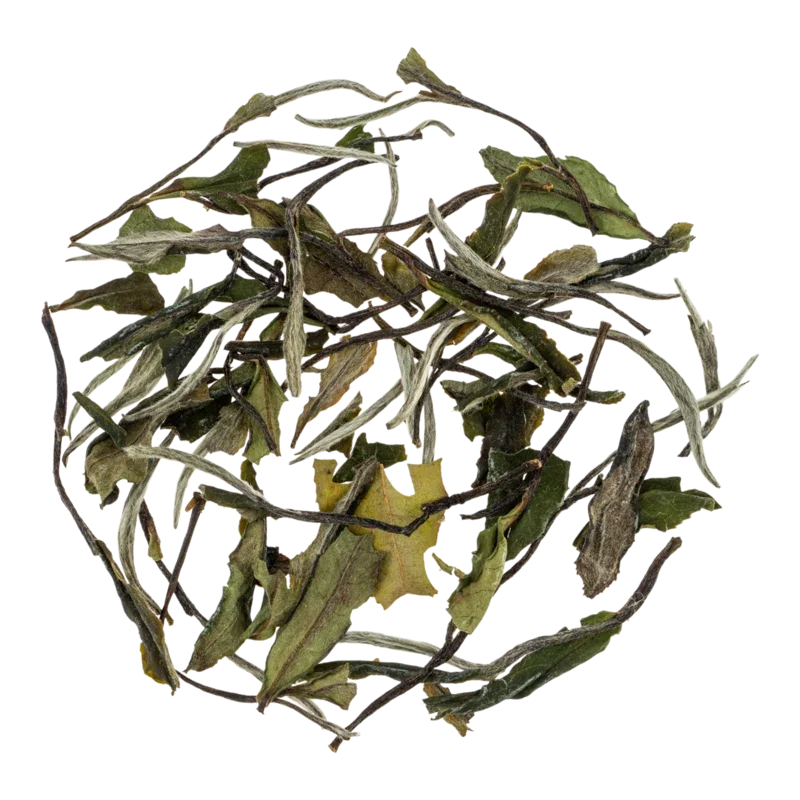
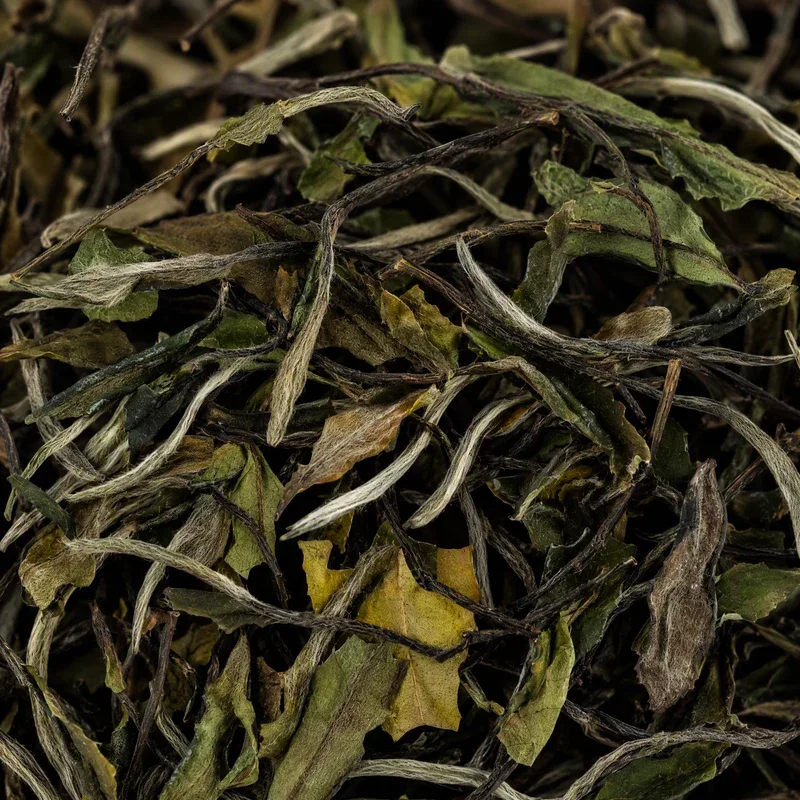
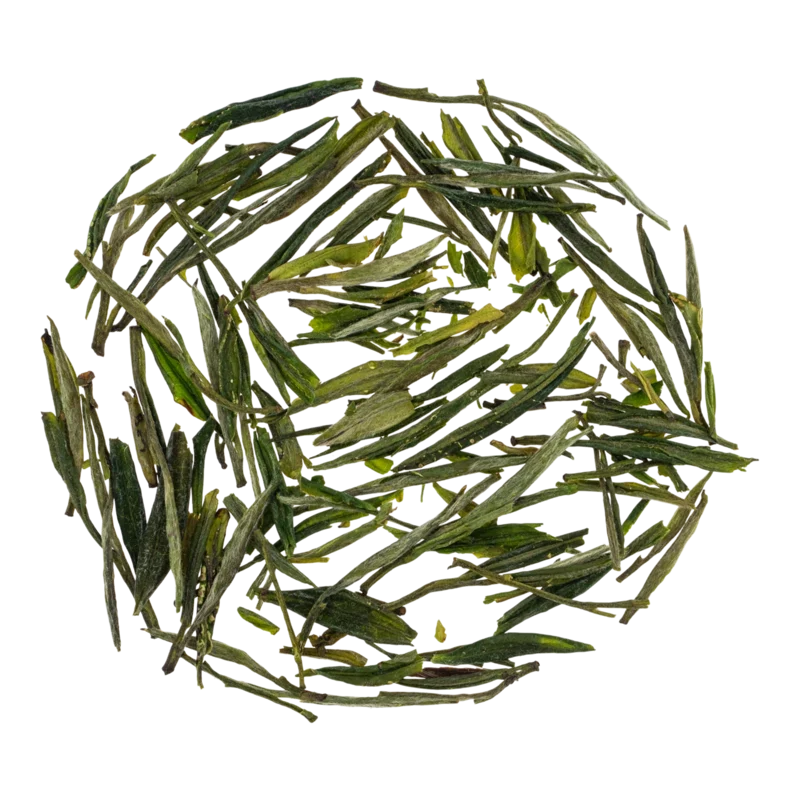
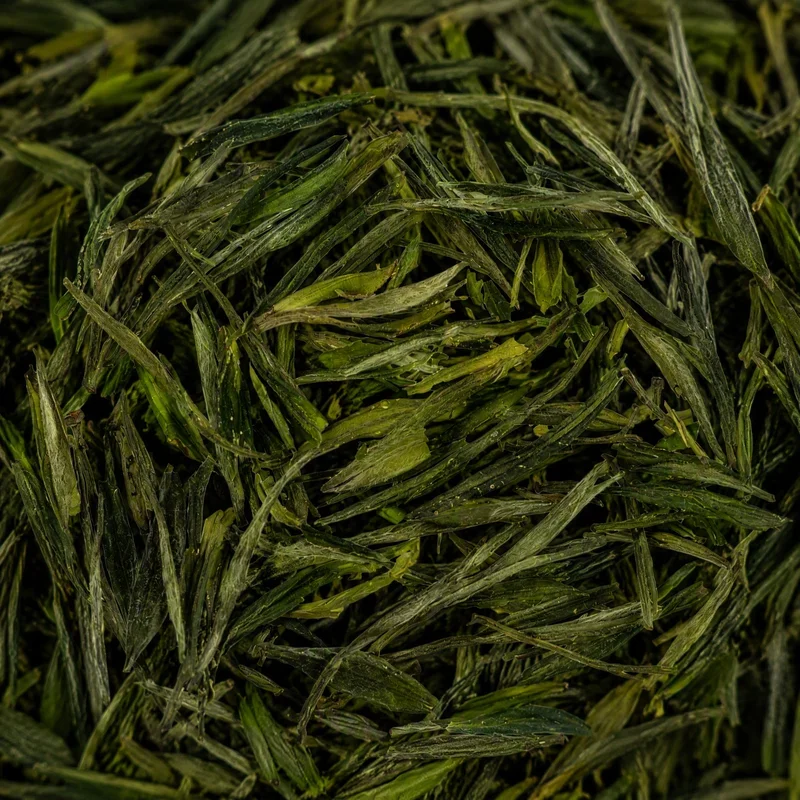
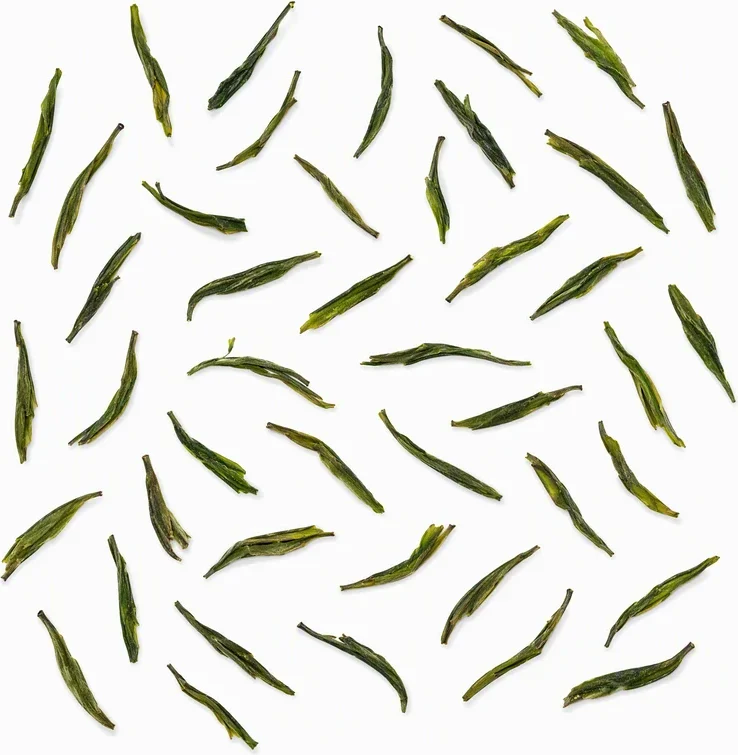
Dry Leaf Appearance: Shoots straight, slightly flattened, opened — resembling a small blooming flower or opening orchid (形似兰花). Color — bright jade-green (色泽翠绿), lively and fresh (鲜活). Buds and leaves whole, with noticeable down.
Dry Leaf Aroma: Clean, fresh, with distinct orchid overtone (兰花香, lánhuā xiāng) — the calling card of this tea. Notes of wild flowers and fresh greenery.
Liquor Aroma: High, fresh, persistent (清鲜持久). Orchid aroma dominates — elegant, not perfumery, but natural, like mountain wind that swept through wild orchid thickets. As it cools, honey and herbal overtones emerge.
Liquor Color: Tender green with light yellow tint, transparent, bright (嫩绿明亮). «Clear as autumn waters» (色澄秋水).
Spent Leaves: Tender, uniform, bright green (嫩匀绿明). Shoots open completely, demonstrating structural integrity of «bud + leaf». Texture — soft, elastic, lively.
Taste: Rich, fresh, with pronounced briskness (鲜醇回甘). Body medium, dense for hongqing tea. Light astringency quickly transitions to long returning sweetness (回甘). Finish — clean, with mineral aftertaste. Qing chancellor Zhang Tingyu defined it with the formula «味比兰花» — «taste like orchid».
Alkaloids: Caffeine — typical level for green tea (2–4% dry mass). Theobromine and theophylline — in trace amounts.
Amino Acids: Elevated content — characteristic feature of teas from the mountain zone of Longmian. Local population (群体种) and Fuzao-2 variety (凫早二号) demonstrate the highest amino acid level (theanine, aspartic acid, arginine). Low polyphenol-amino acid coefficient (< 5) ensures softness and pronounced umami component.
Main fractions — EGCG, EGC, ECG, EC. Interestingly, different cultivars have different catechin profiles: Shucha Zao variety contains more EGC, EC and ECG, while local population — more theanine.
Essential Oils: Linalool, geraniol, β-ionone, cis-jasmone, benzyl alcohol — responsible for the characteristic orchid bouquet. Proximity of tea bushes to wild orchids (Cymbidium spp.) on Longmian slopes apparently not only creates olfactory associations, but also influences microbiota and volatile compounds in the plantation microenvironment.
Minerals: Zinc and selenium — noted as characteristic microelements of Longmianshan soils, which is reflected in the tea's mineral profile. Also — potassium, magnesium, manganese, fluorine, phosphorus.
Polyphenols: Typical level for high-mountain hongqing teas of Anhui — 18–26%. Scientific research comparing four cultivars showed that polyphenol, caffeine and water-soluble extract content does not statistically differ between varieties used for Tongcheng Xiao Hua.
Vitamins: Elevated vitamin C content (according to CAAS data), as well as B vitamins, vitamin E, β-carotene.
Catechin complex (EGCG, EGC) protects cells from oxidative stress and free radicals.
Balanced ratio of caffeine and L-theanine provides sustained concentration without nervousness and energy «crashes».
Green tea polyphenols contribute to cholesterol level normalization and maintaining vascular elasticity.
Vitamin C, zinc, selenium and catechins in complex support body's protective functions, especially during seasonal transitions.
Moderate astringency and polyphenols stimulate peristalsis and digestive juice secretion, facilitating food absorption.
Fluorine and antibacterial properties of catechins help prevent caries and maintain fresh breath.
L-theanine promotes generation of alpha waves of brain activity, improving ability for focused work and creative thinking.
EGCG reduces level of pro-inflammatory cytokines.
Tea Amount: 3–4 g per 150–200 ml (glass brewing); 5 g per 100–120 ml (gaiwan).
Teaware: Glass tumbler — for admiring the «dance» of opening shoot-«flowers»; porcelain gaiwan (盖碗) — for controlled brewing with multiple infusions; porcelain teapot — for daily tea drinking. According to tradition, ideal water — from the spring under Zilai Bridge (紫来桥) in Tongcheng.
Water Temperature: 80–85°C for standard batches; 75–80°C for highest grade with tender buds.
Container: Airtight — aluminum foil bag with removed air, placed in tin or ceramic container with tight lid.
Enemies: Moisture, light, heat, foreign odors. Orchid aroma of Xiao Hua is especially sensitive to degradation — cold storage is critically important for its preservation.
Shelf Life: Optimal — 6–12 months after production. With proper refrigerated storage — up to 18 months. Not suitable for aging.
Temperature: Optimal — 0–5°C (refrigerator). Short-term (2–4 weeks) acceptable at room temperature in dark, cool place.
Price Category: Medium for Anhui green teas. Highest grade (特级) from production core (杨头, Longmianshan) — 600–1500+ yuan/kg. Regular batches of 1st–2nd grade — 200–500 yuan/kg. Price significantly depends on growing elevation and harvest time (pre-Qingming more expensive).
Price Factors: Plantation elevation (mountain > flatland); harvest time (ming qian > yu qian); cultivar (local population > introduced clones); processing method (hand > machine).
No reviews yet. Tell us what you think of this tea.
Rate this tea and share your impressions. We review each submission before publishing it.