Brewing
Gongfu brewing
- Water temperature
- 75 °C
- Tea amount
- 5 g
- Water volume
- 100 ml
- First steep
- 10 s
- Time added per infusion
- 5 s
- Infusions
- 3


Tiānzhù jiàn háo
Choose a brewing method. Start with the recommended quantities and time, then adjust to taste.
Brewing
Brewing
Taste
Tea encyclopedia
Category: New Famous Tea of China (中国新名茶, Zhōngguó xīn míngchá) — since 1985. Regional tea with protected designation of origin; regional public brand (区域公用品牌) of Qianshan City.
Category: New Famous Tea of China (中国新名茶, Zhōngguó xīn míngchá) — since 1985. Regional tea with protected designation of origin; regional public brand (区域公用品牌) of Qianshan City.
Coordinates: Approximately 30.73° N, 116.57° E (center of Qianshan City). Main peak Tianzhu — 30°43′ N, 116°27′ E, elevation 1,489.8 m.
Origin: China, Ānhuī Province (安徽, Ānhuī), Ānqìng City (安庆, Ānqìng), Qiánshān City district (潜山市, Qiánshān shì). Produced in the Tianzhushanmountain massif and adjacent areas — townships of Shuǐhǒu (水吼镇, Shuǐhǒu zhèn), Tianzhushan (天柱山镇) and several others. Ancient name of the region — Shūzhōu (舒州, Shūzhōu).
Type: Green tea (绿茶) (non-oxidized). Primary fixation method — pan-firing in wok (炒青, chǎoqīng); final stage — baking (烘干, hōnggān). Belongs to the type of "pan-fired and baked" green teas (炒烘结合型绿茶), which distinguishes it from purely pan-fired (like Longjing) or purely baked (like Huangshan Mao Feng).
Cultural Significance: Mount Tianzhu is one of the sacred places of Chinese culture. During the Hàn era it was the Southern Sacred Peak (南岳, Nányuè) — this title later passed to Mount Hengshan in Hunan. Han Emperor Wu-di (汉武帝, Hàn Wǔdì) in 106 BCE personally made the ascent and sacrifice on Tianzhu. Daoists called it the "Fourteenth Blessed Cave" (第十四洞天, dì shísì dòngtiān). Lì Bó (李白) wrote: "Marvelous peaks give birth to marvelous clouds, beautiful trees harbor beautiful energy, serene is Mount Wan-gong, majestically towering, delighting people." Qianshan City (ancient name — Wan, 皖) gave its name to the entire province: "Anhui" abbreviated — "Wan" (皖), and this word traces back to the ancient kingdom of Wan, whose capital was located precisely here. In 2011, Tianzhushan received UNESCO Global Geopark status. The tea "Tianzhujian Hao" thus carries a multilayered cultural message: from ancient sacrifices and Tang poetry to modern scientific tea studies.
History: The tea history of Mount Tianzhu spans more than a thousand years. Already in "The Classic of Tea" (《茶经》, Chá Jīng) by Lù Yǔ (陆羽, Lù Yǔ), compiled during the Tāng era (唐, 760s), tea from Xiázhōu (峡州) and Shūzhōu (舒州) is mentioned among the finest. In the Tang treatise "Records of the Kitchen Steward" (《膳夫经手录》, Shànfū jīngshǒu lù) it states: "Shuzhou, tea from Tianzhu, — strong and vigorous, sweet and aromatic, 醇美." Legend tells that Tāng Prime Minister Lǐ Déyù (李德裕, Lǐ Déyù), a renowned tea connoisseur, specifically requested the Shuzhou prefect to send him "Tianzhu Feng Cha" (天柱峰茶). In "Dream Pool Essays" (《梦溪笔谈》, Mèngxī Bǐtán) by Shěn Kuò (沈括, Shěn Kuò) from the Sōng era (宋), it notes: "The ancients, discussing tea, mentioned only Yangxian, Guzhu, Tianzhu and Mengding" — thereby placing Tianzhu Cha in the same rank as three other great teas. In "Chronicle of Qianshan County" (《潜山县志》, Qiánshān xiànzhì) it is recorded: "Mountain tea is so aromatic by itself that it needs no incense treatment; it is gathered during Guyu, and does not yield to Longtuan and Queshe." However, after the Tang and Song eras, Tianzhu Cha gradually disappeared from the tea scene — for unclear reasons.
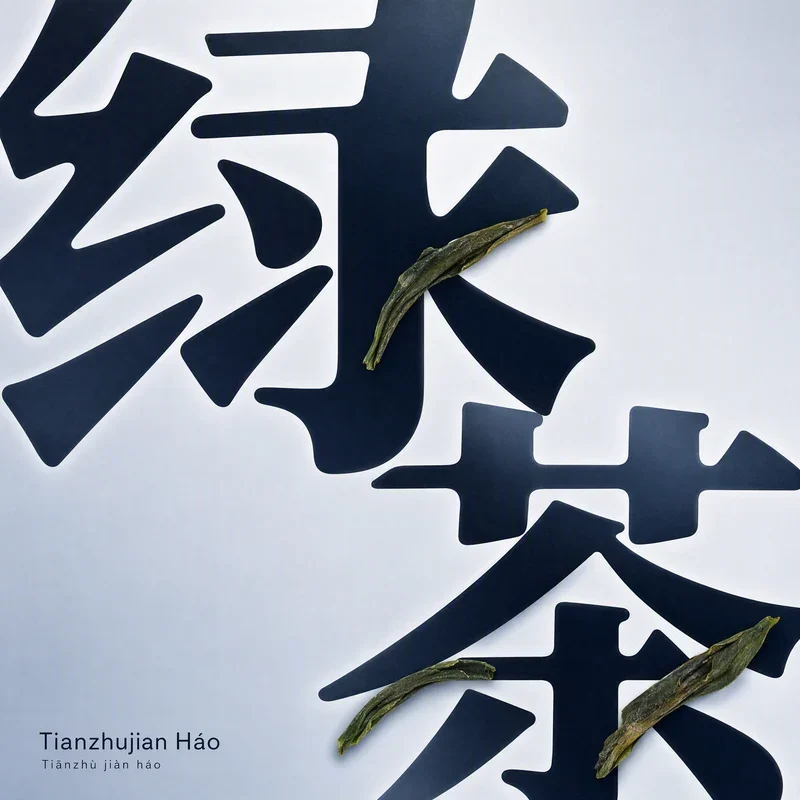
Name Breakdown: Tiānzhù (天柱, Tiānzhù) — "Heavenly Pillar": name of the mountain whose main peak "like a pillar supporting the firmament." Jiàn (剑, jiàn) — "sword": the tea leaf is flat, straight and pointed, resembling a sword blade, and the form is inspired by the silhouette of Sunzi Fēng (笋子峰) — "Bamboo Shoot," one of the peaks of Tianzhushan. Háo (毫, háo) — "down": dense white fuzz covering the tea leaf surface. Full name: "Sword and Down from the Heavenly Pillar."
Cultivar: Local population varieties (群体种, qúntǐ zhǒng) — genetically diverse plantings adapted to the mountain conditions of Tianzhushan over centuries. Medium-height bushes with dense foliage and pronounced bud pubescence.
Picking: Early spring: beginning — Qīngmíng (清明, early April), main period — Gǔyǔ (谷雨, ~April 20). Harvest season duration is limited: high-mountain terrain and cool climate delay vegetation.
Pluck Standard: One bud and one leaf (一芽一叶, yī yá yī yè), shoot length 3–3.5 cm. For mass batches, one bud and two leaves is acceptable. Exclusively hand-picked.
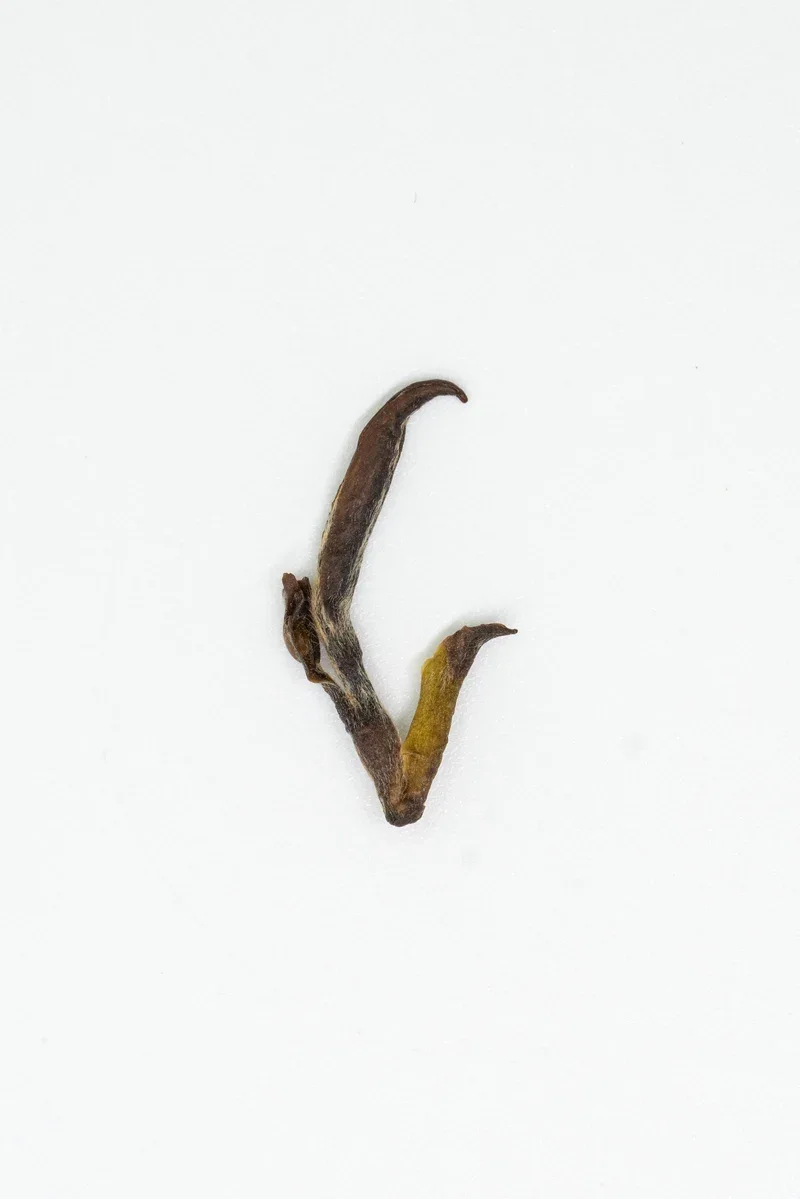
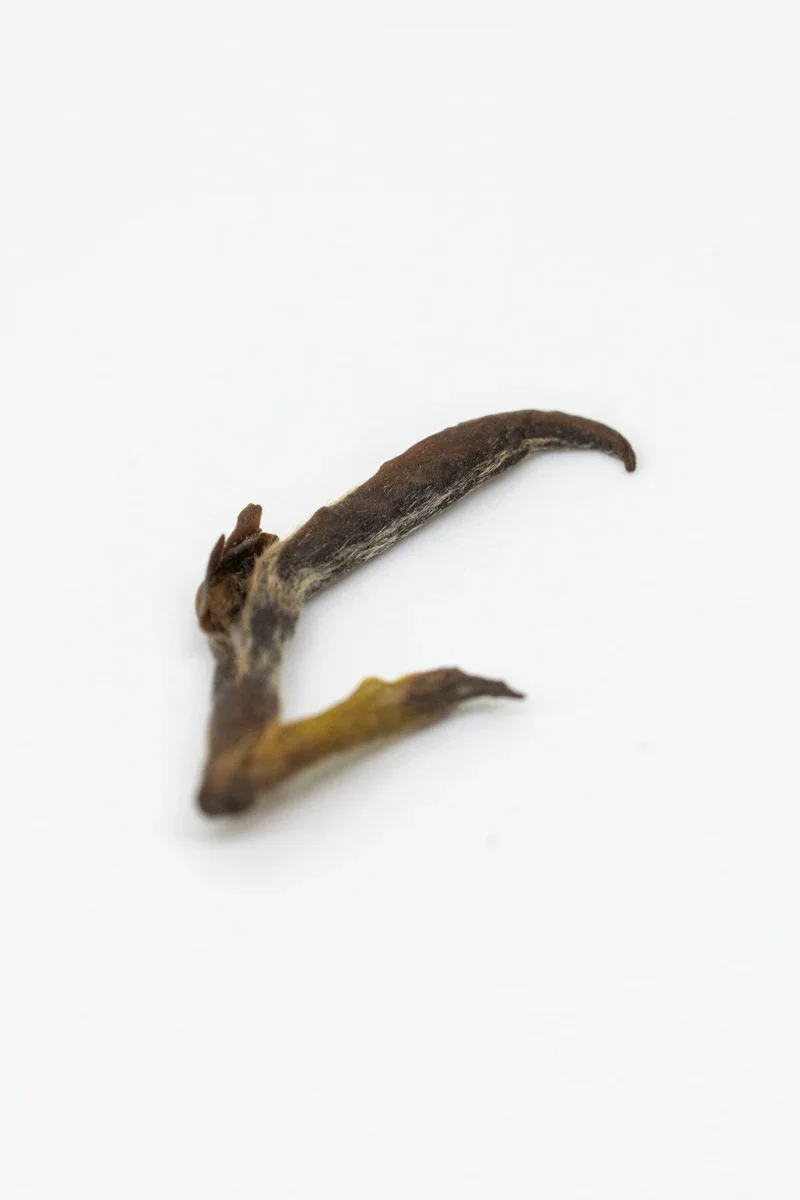
Raw Material: Shoot must be whole, fresh, without mechanical damage. White down on the bud is a mandatory sign of quality raw material.
Altitude: Main plantations — above 500 m above sea level, in the zone of constant clouds and mists. Main peak — 1,489.8 m. Cloud cover — up to 180 days per year.
Climate: Mid-subtropical monsoon. Average annual temperature — about 16.3 °C (at intermediate elevations) and ~9.5 °C at the summit. Average annual precipitation — more than 1,900 mm. Frost-free period — ~235 days. Forest cover — 97–98%, negative ion content in air — three times higher than the highest national standard (Level I). The region is called the "green lungs of southwestern Wan" (皖西南绿肺).
Soil: Mountain yellow earths and brown forest soils on granite foundation. Acidic (pH 4.5–5.5), well-drained, rich in organic matter and minerals. The geological uniqueness of Tianzhushan — the world's largest exposure of ultra-high pressure metamorphic zone — provides a specific mineral profile of soils.
Plantations are located predominantly in forest massifs, on natural clearings and terraces. Artificial shading is not required — it is provided by clouds and surrounding forest. Ecological management: absence of chemical fertilizers and pesticides on the best plots. Qianshan City has the status of "2022 — district of large-scale tea industry development" and "key tea production district," awarded by the China Tea Marketing Association.
Fresh leaf is spread in a thin layer in a cool, ventilated room for moisture equalization and beginning of aroma formation.
Pan-firing in wok at temperature 160–130 °C (initial temperature high, gradually decreasing). Batch size — ~250 g per wok. Initially — vigorous tossing (抖炒, dǒuchǎo) for even heating; when clean aroma appears, begin straightening (理条, lǐtiáo). Duration — 6–8 minutes.
Most characteristic stage. Leaf is shaped into flat, straight, pointed tea leaves resembling sword blades. Techniques used: straightening, tossing, turning, pressing (理、抖、翻、捺), as well as "搭" (dā — "layering"), recommended by Chen Chuan. Wok temperature stabilizes at ~50 °C. Duration — about 15 minutes.
When tea leaf shape is basically fixed, tea is taken in palms and with soft, even movements rubbed so that white down separates from leaf surface and becomes visible. This gives the tea its signature "snow-covered" appearance. Process continues until reaching ~80% dryness, after which tea is laid out to cool for ~30 minutes.
Three-stage, per Chen Chuan's recommendation:
Removal of stems, fragments, non-standard tea leaves. Hermetic packaging.
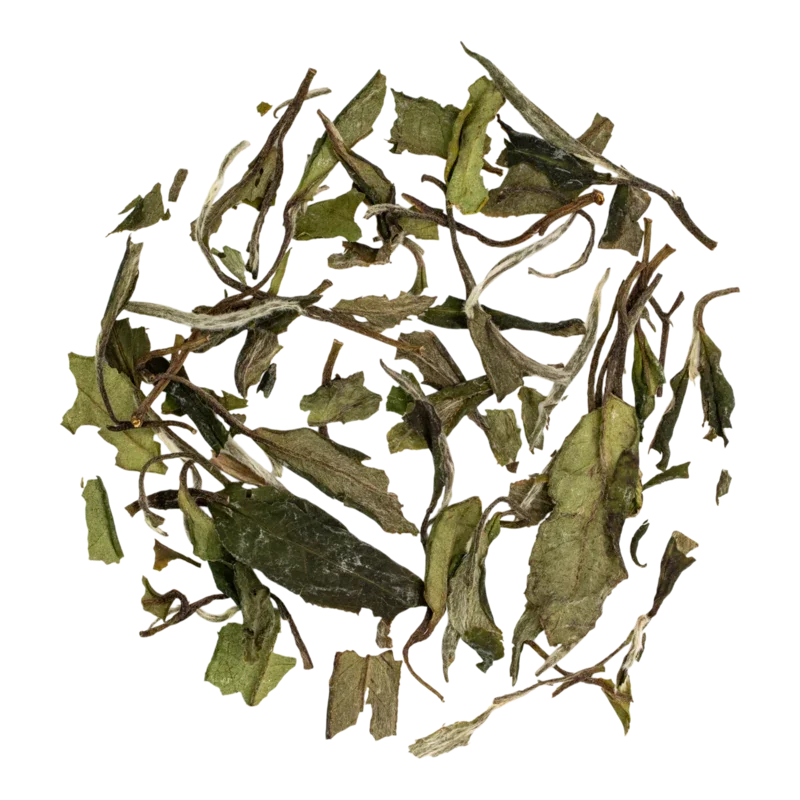
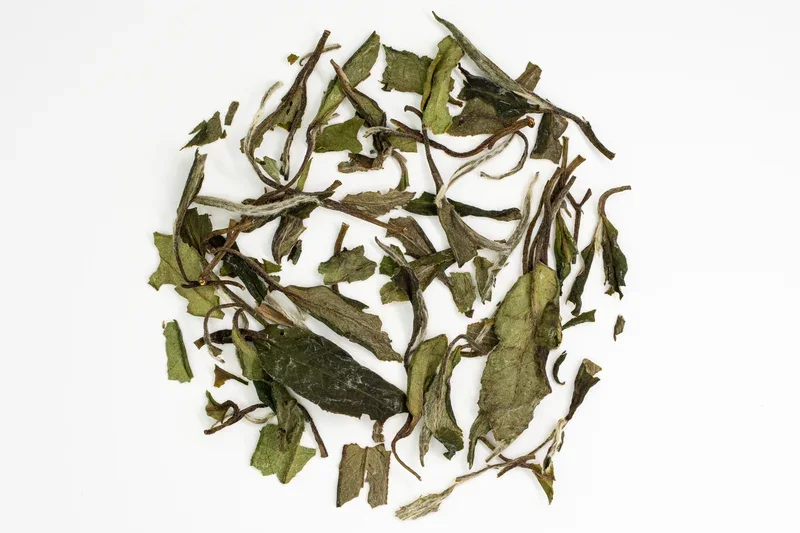
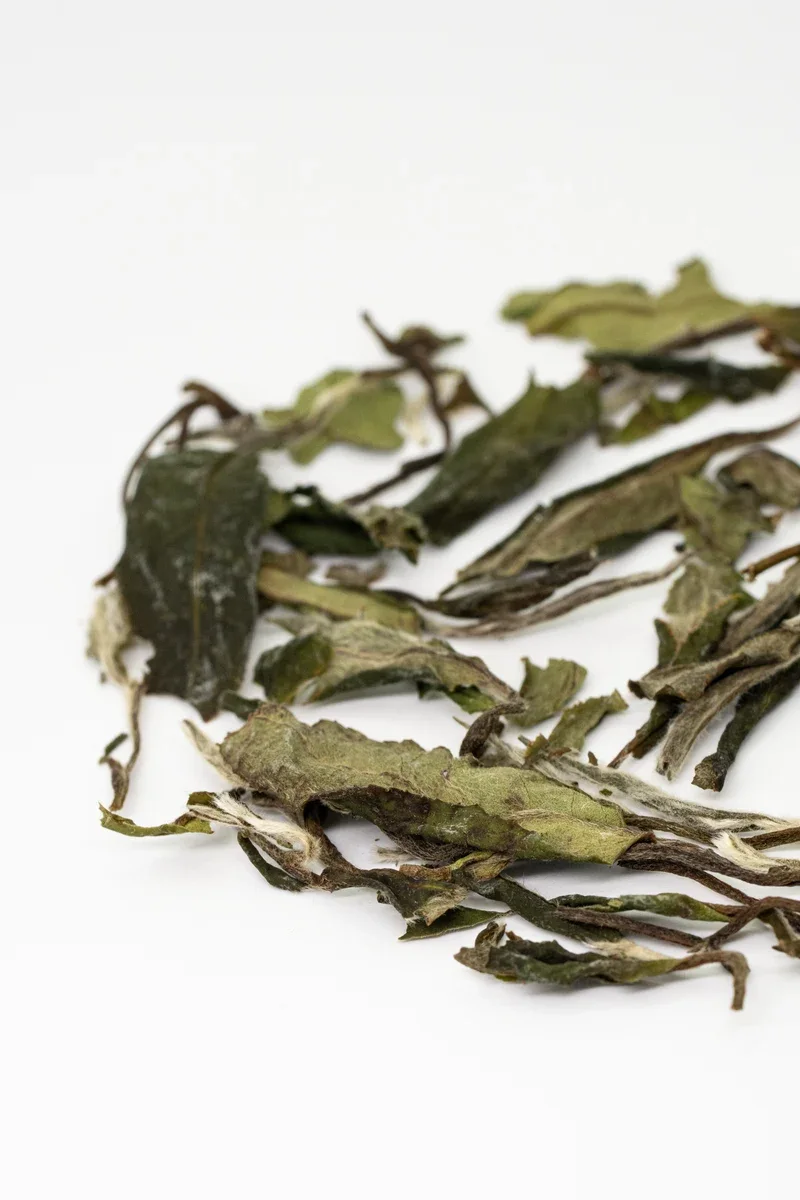
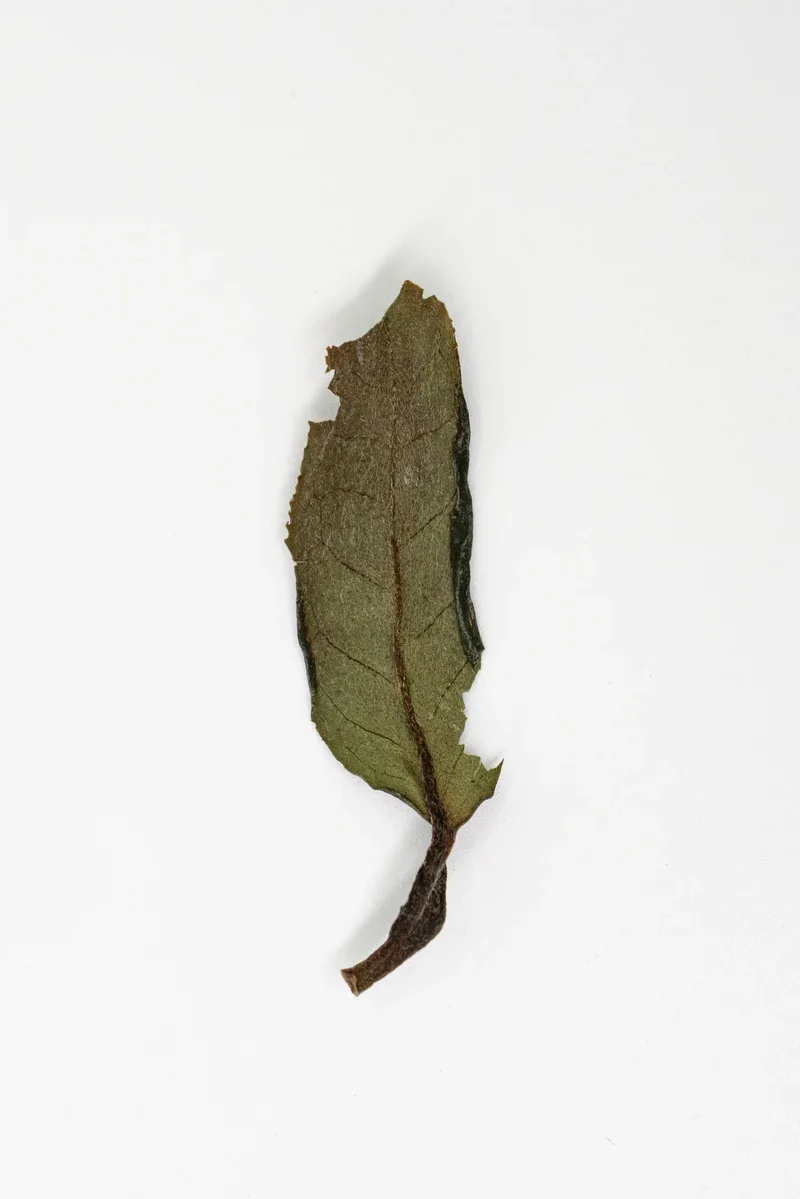
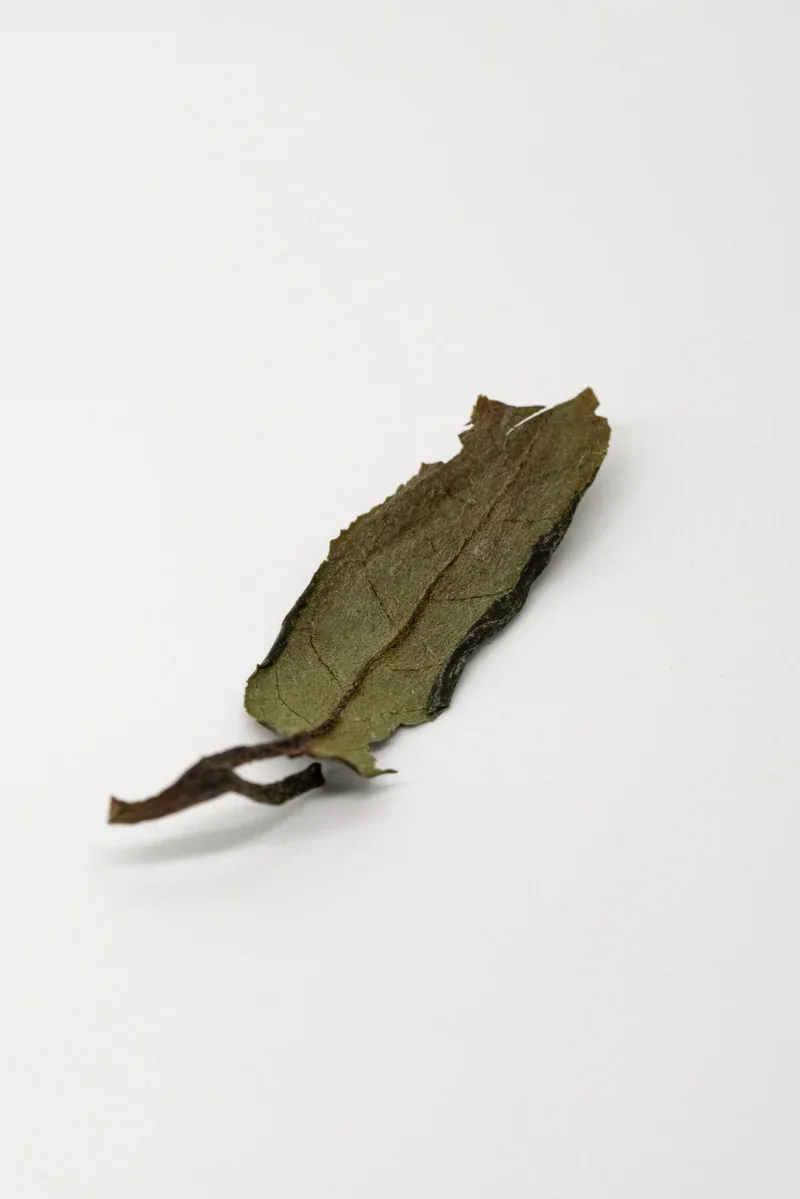
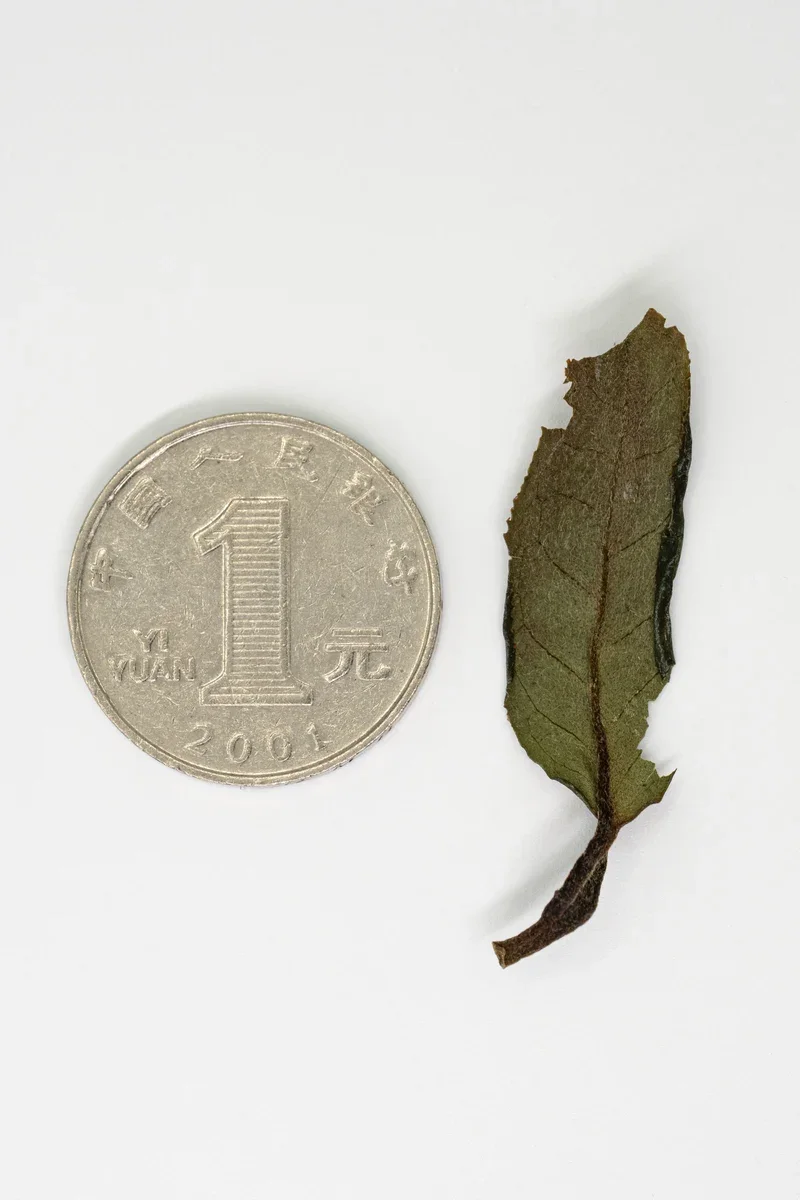
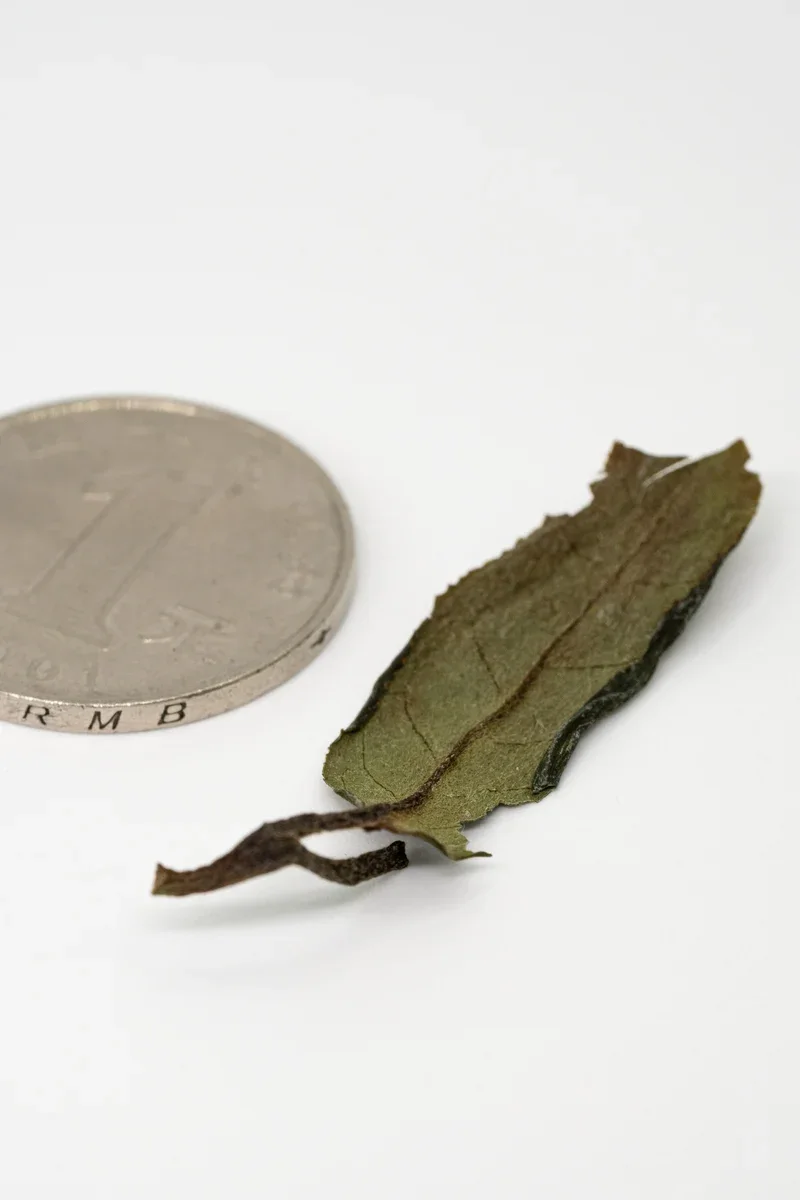
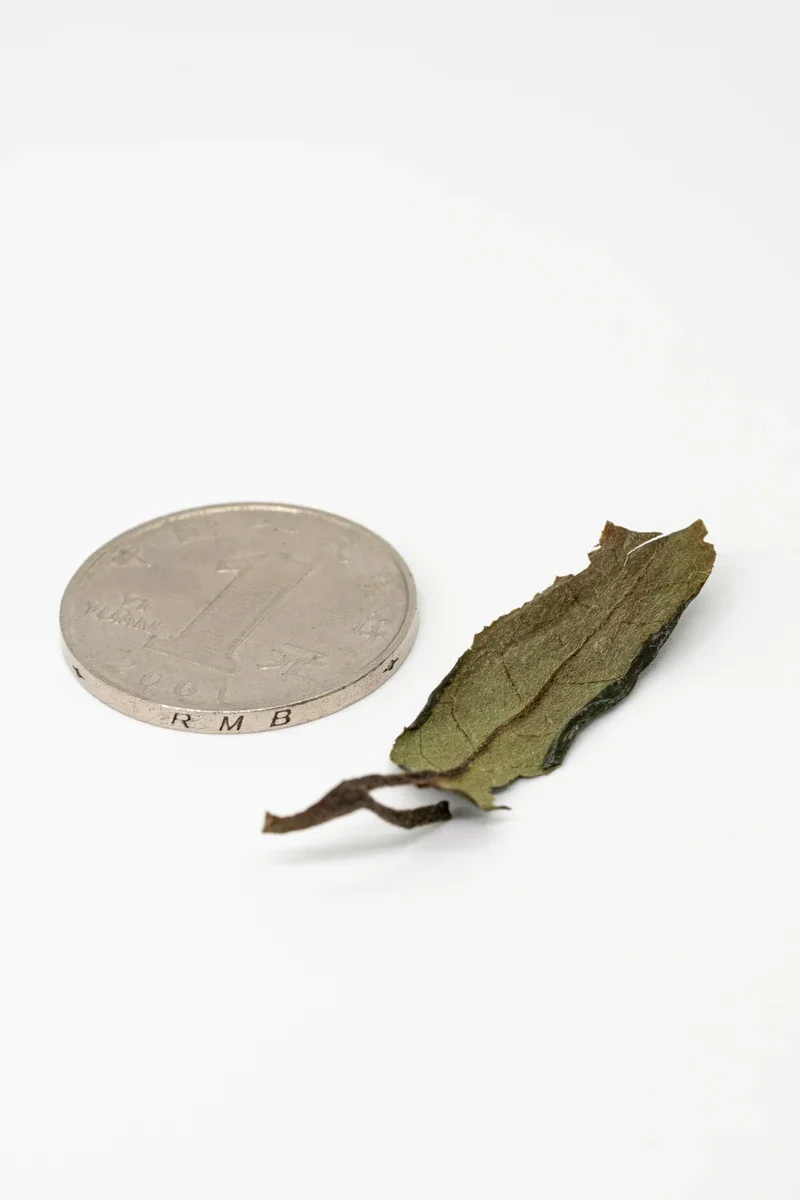
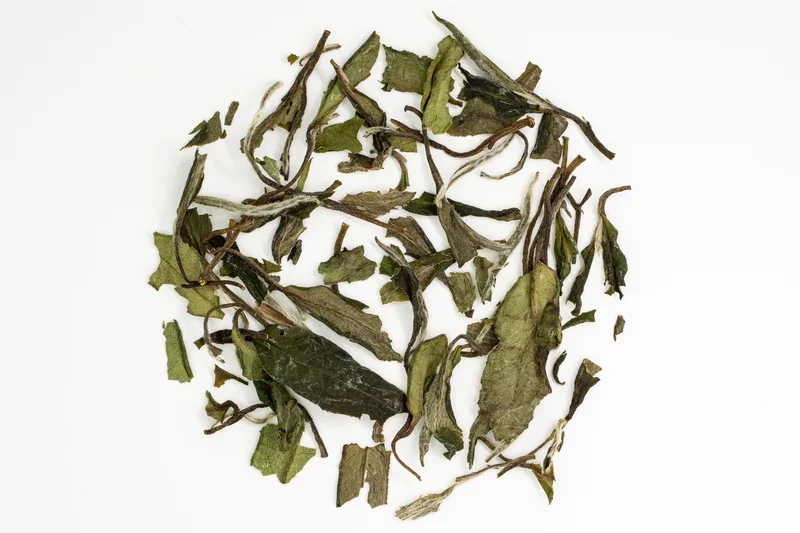
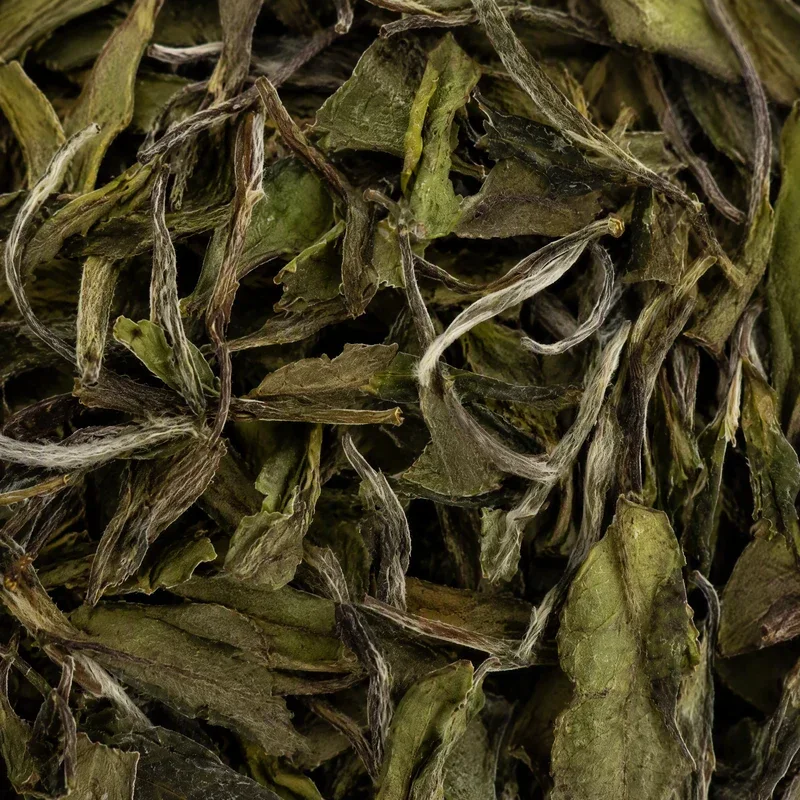
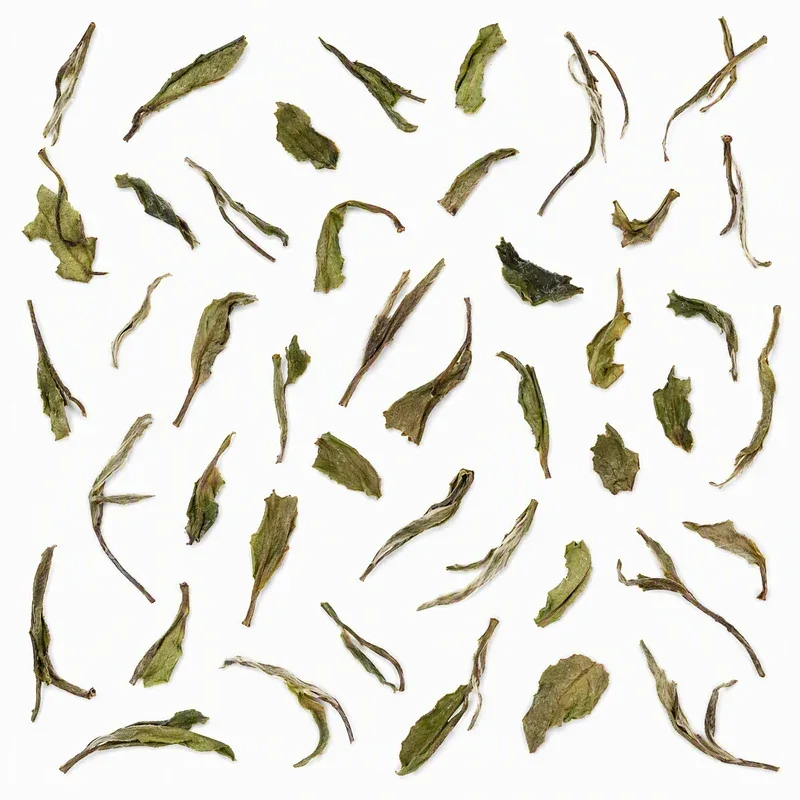
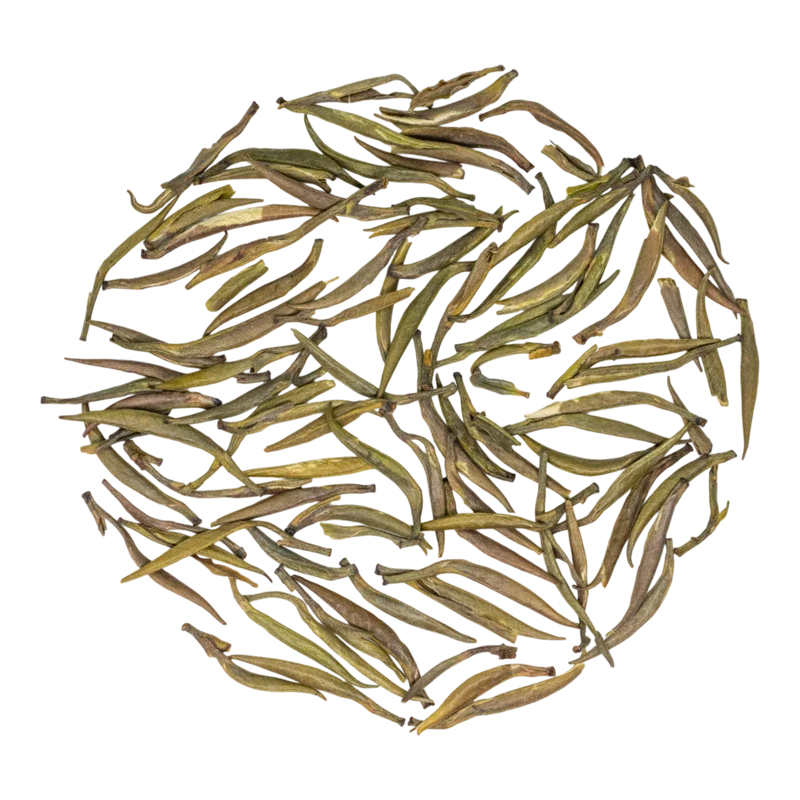
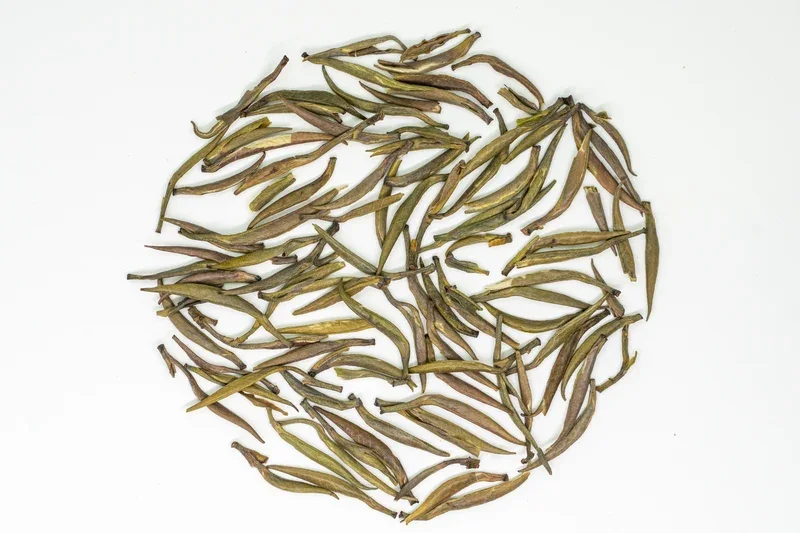
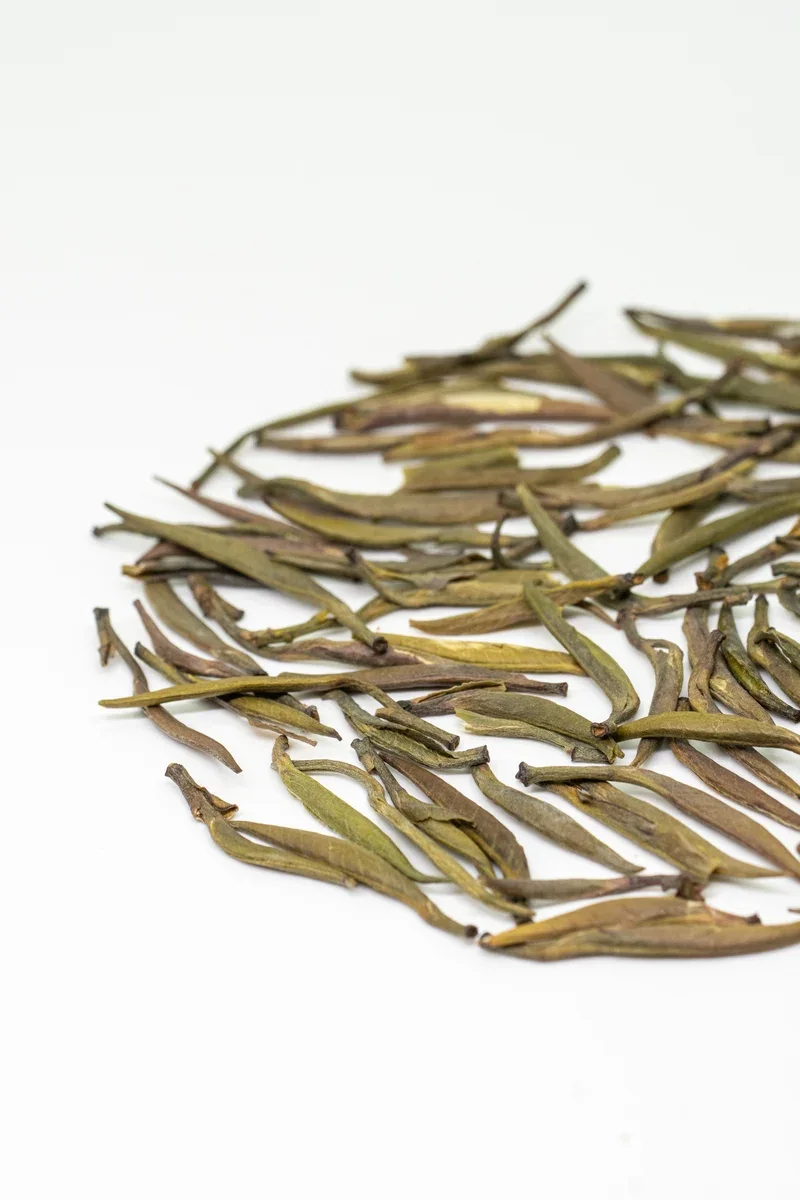
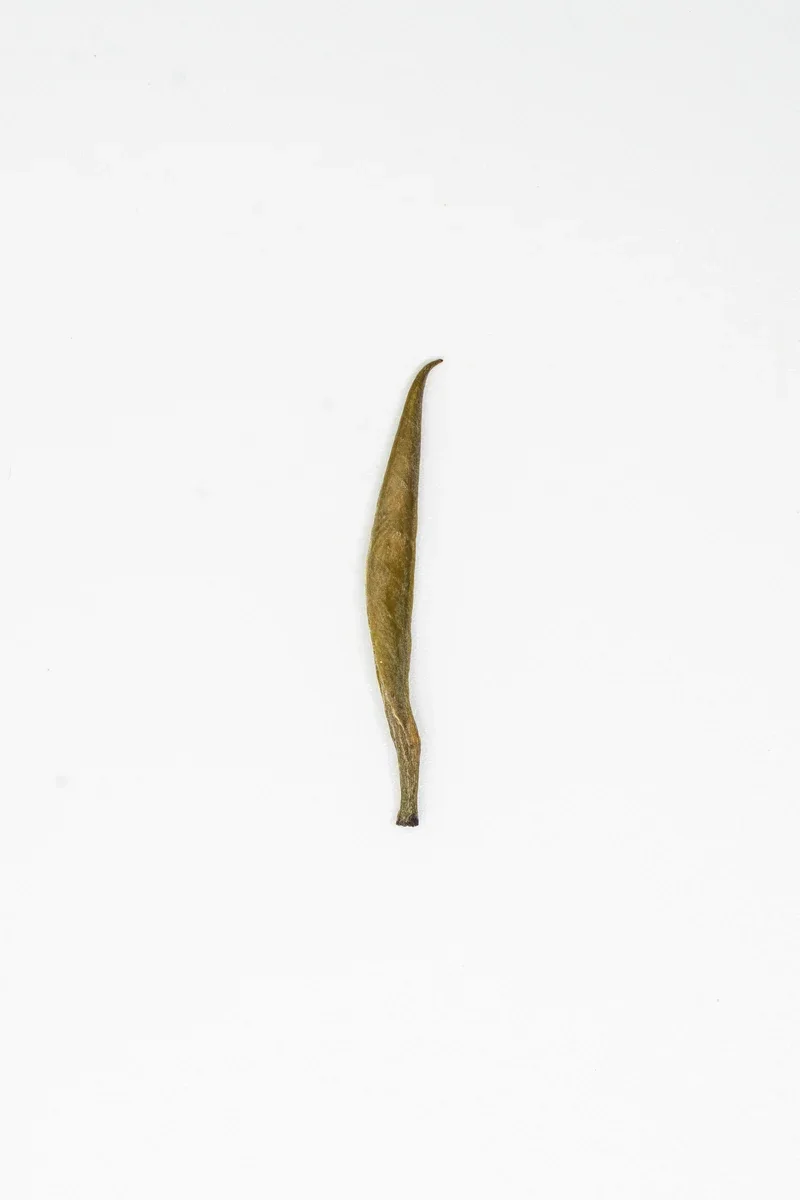
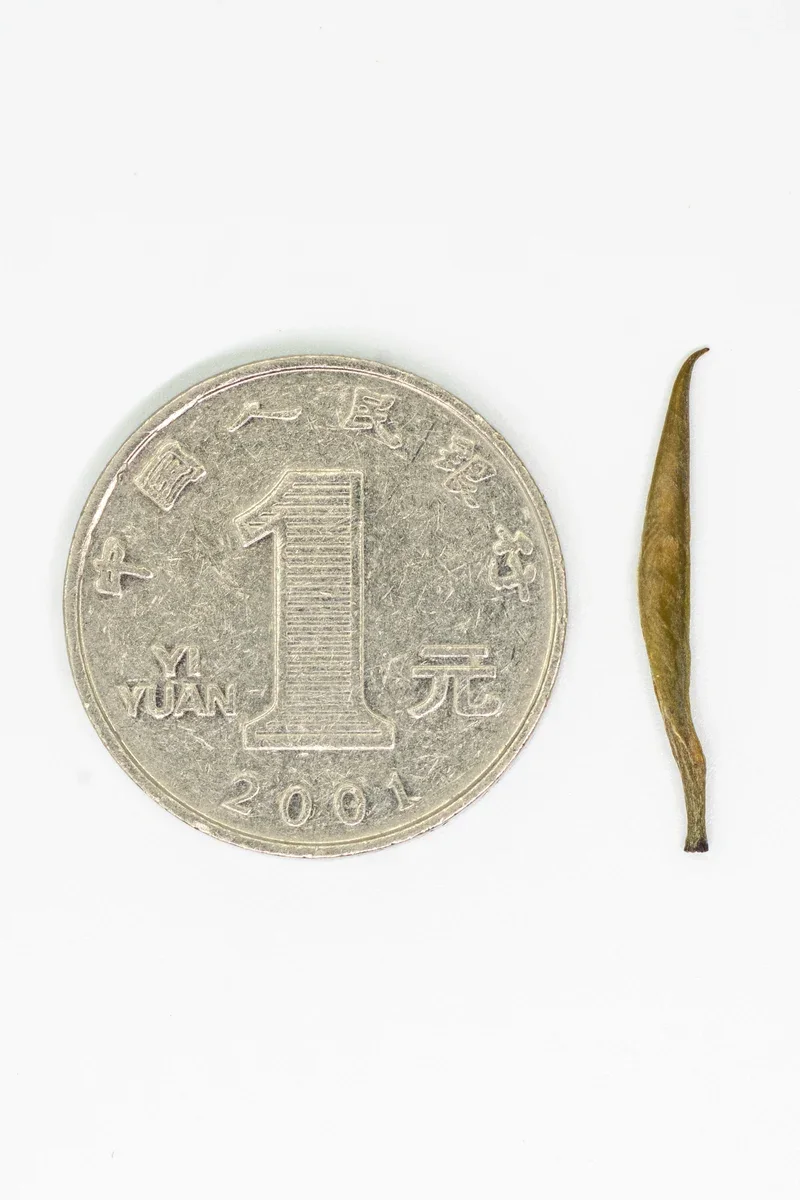
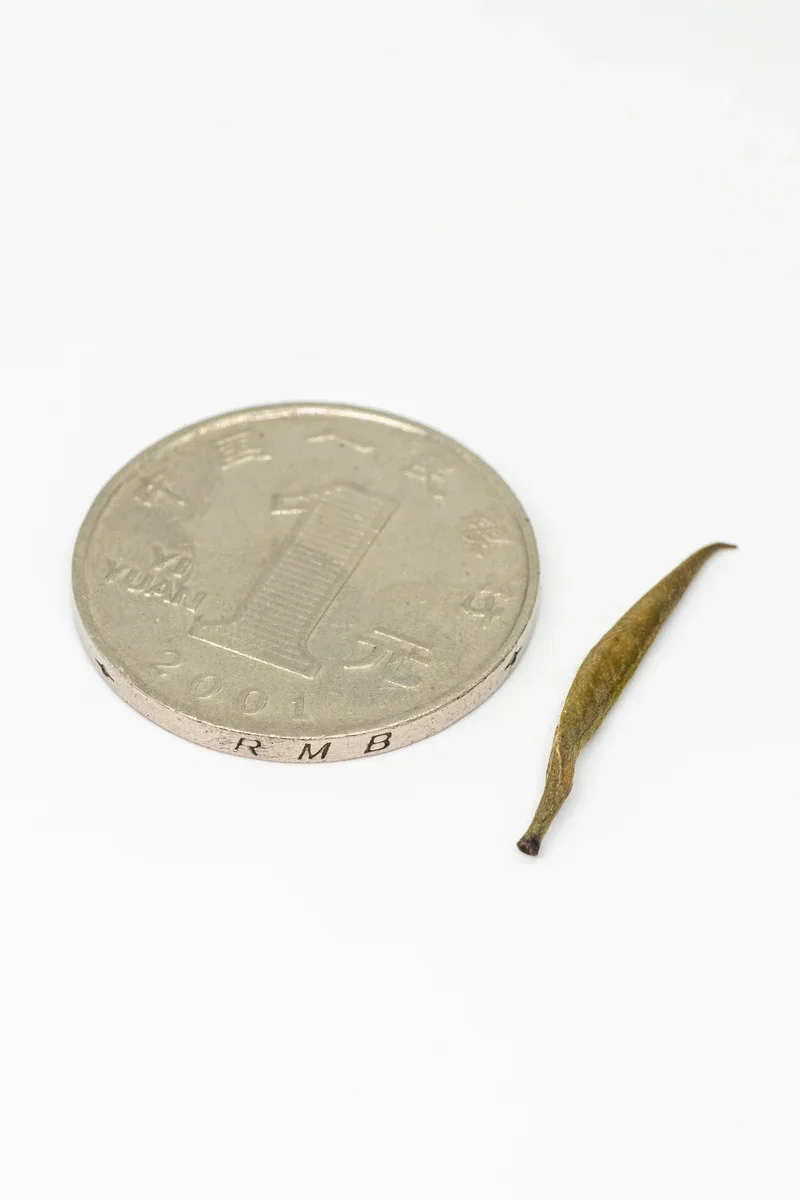
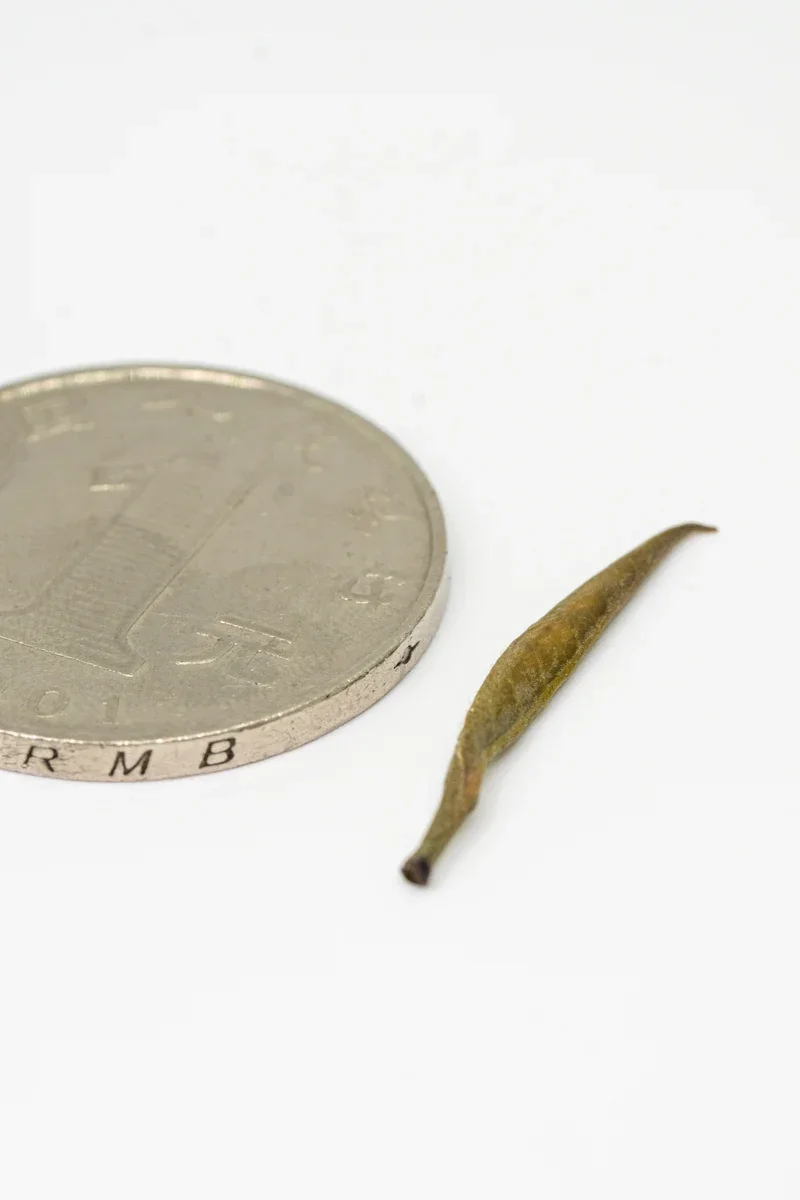
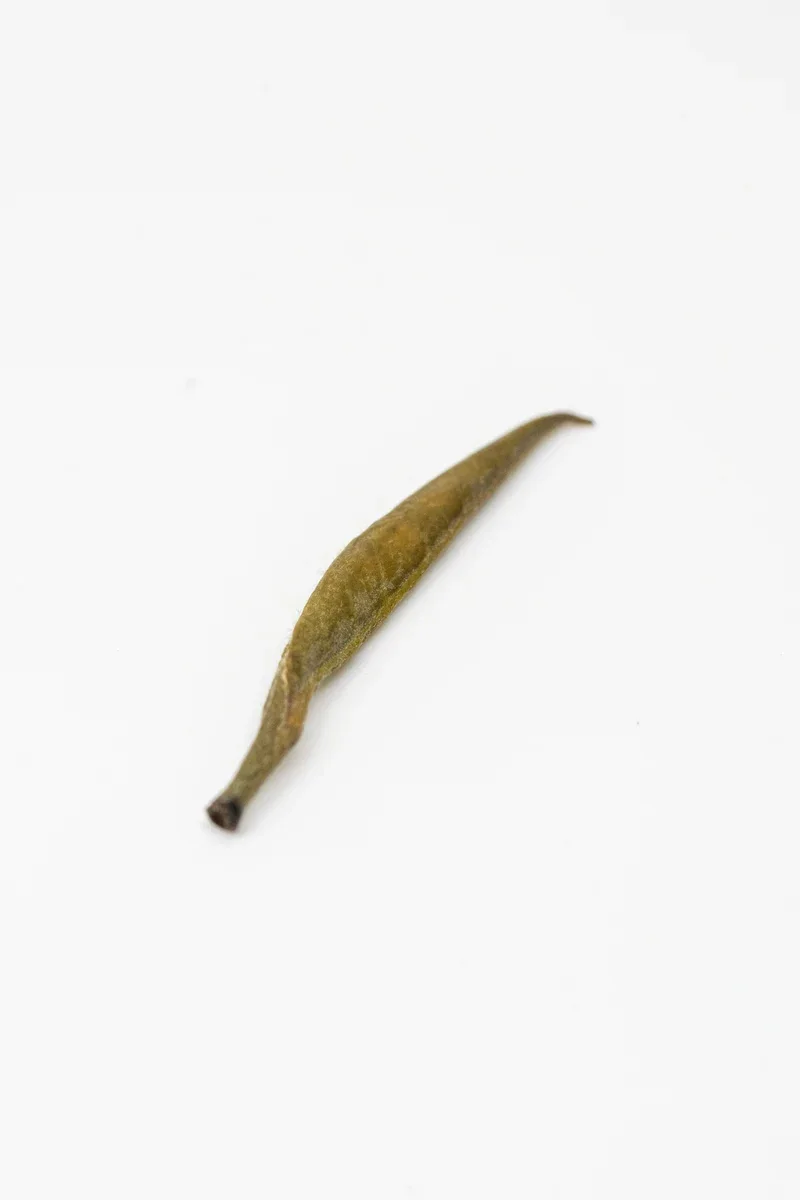
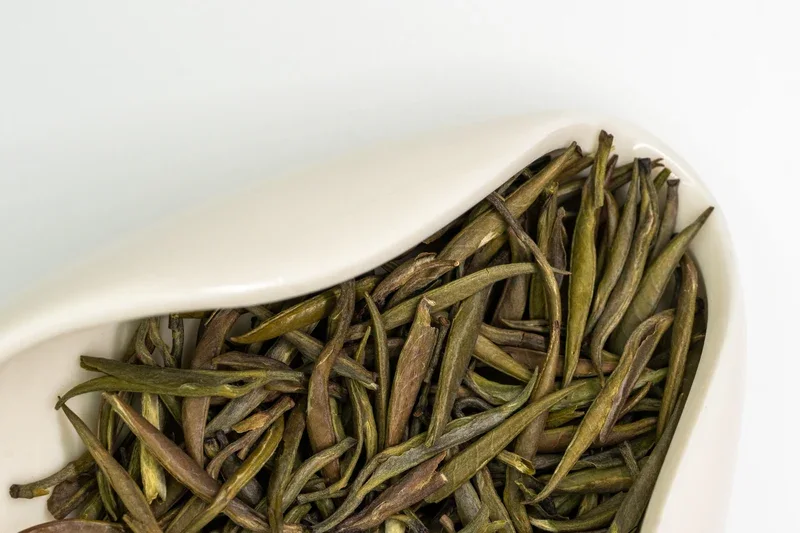
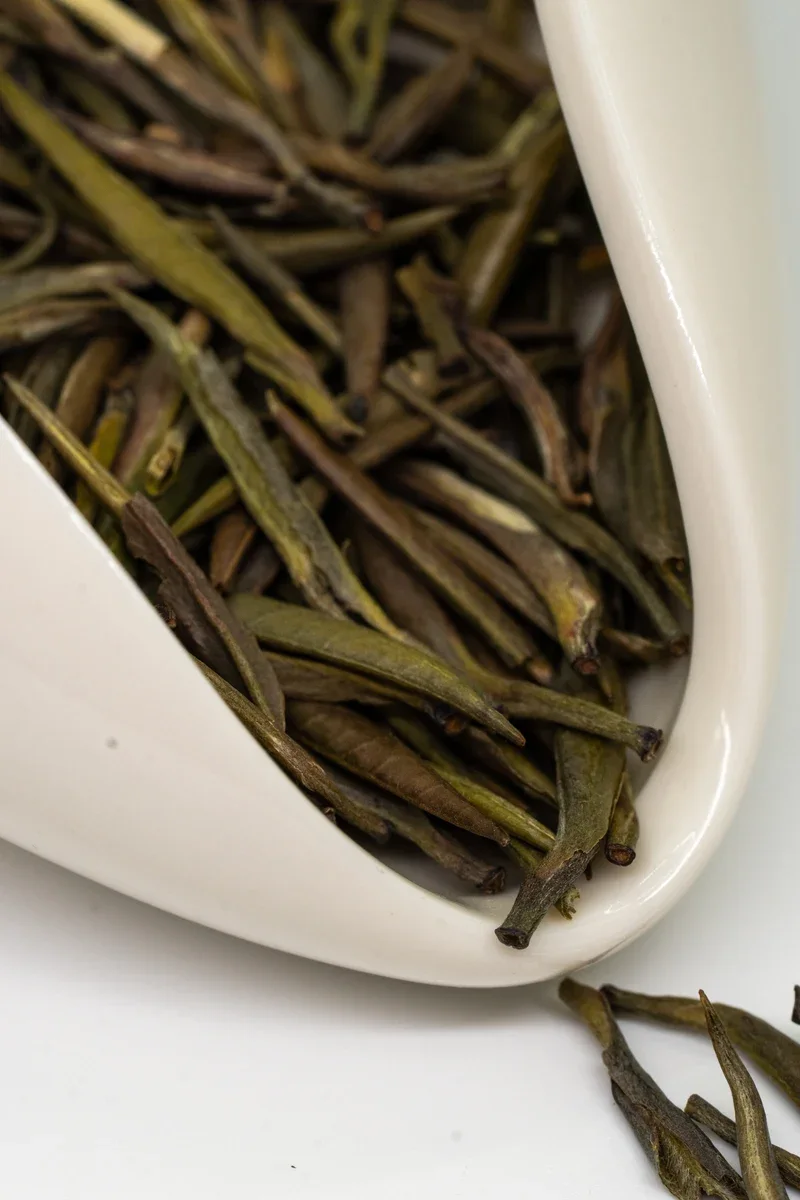
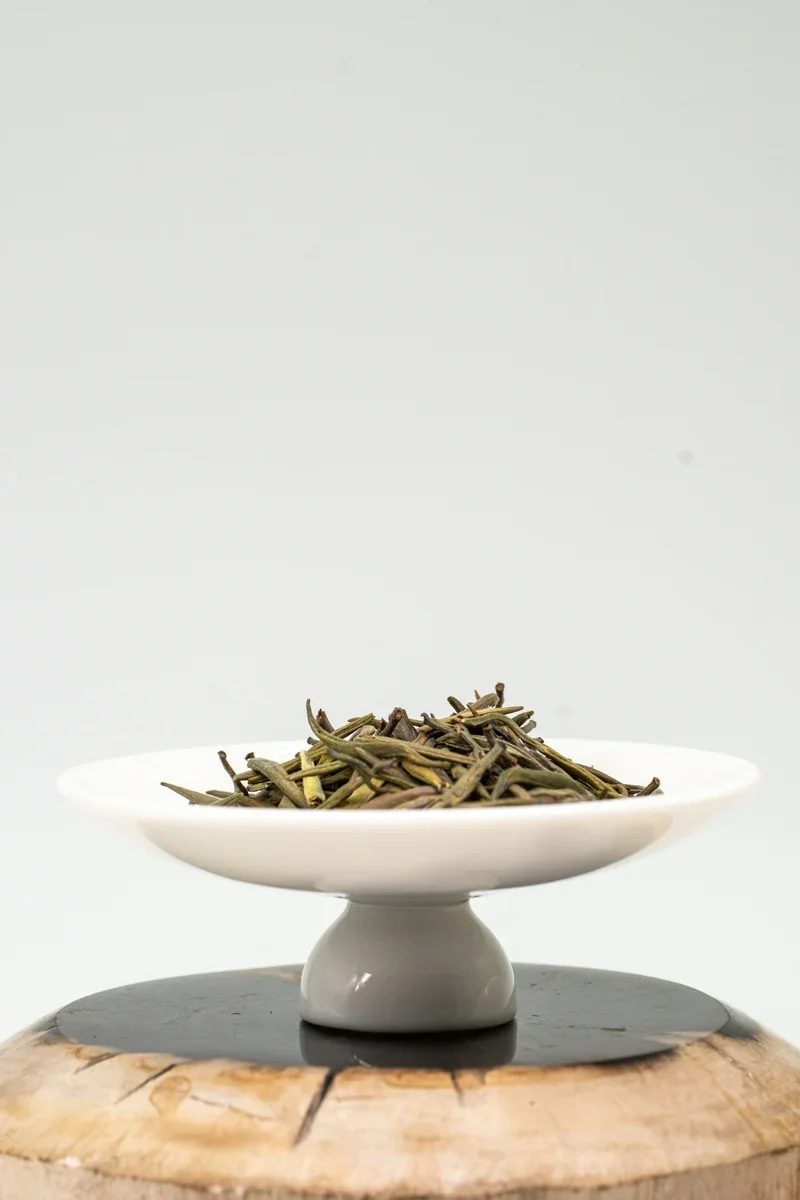
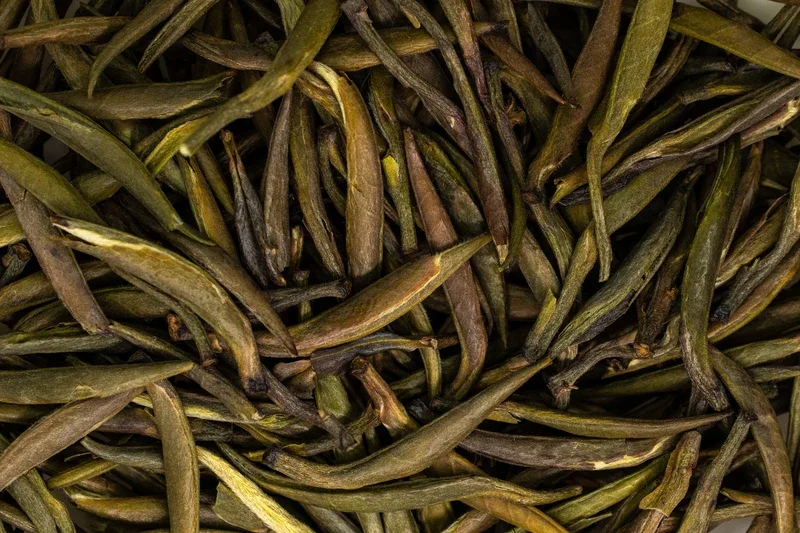
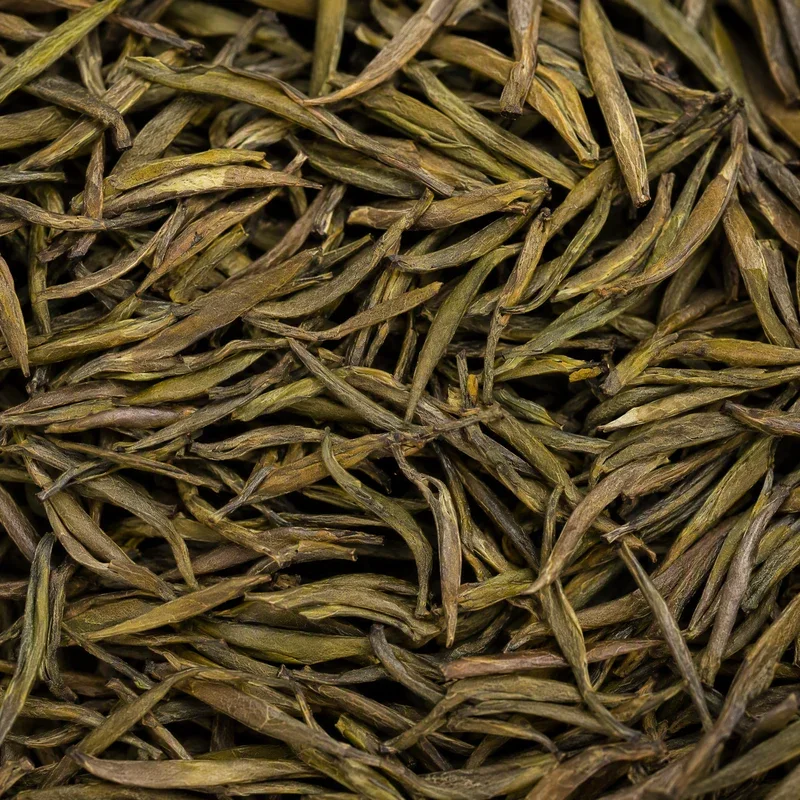
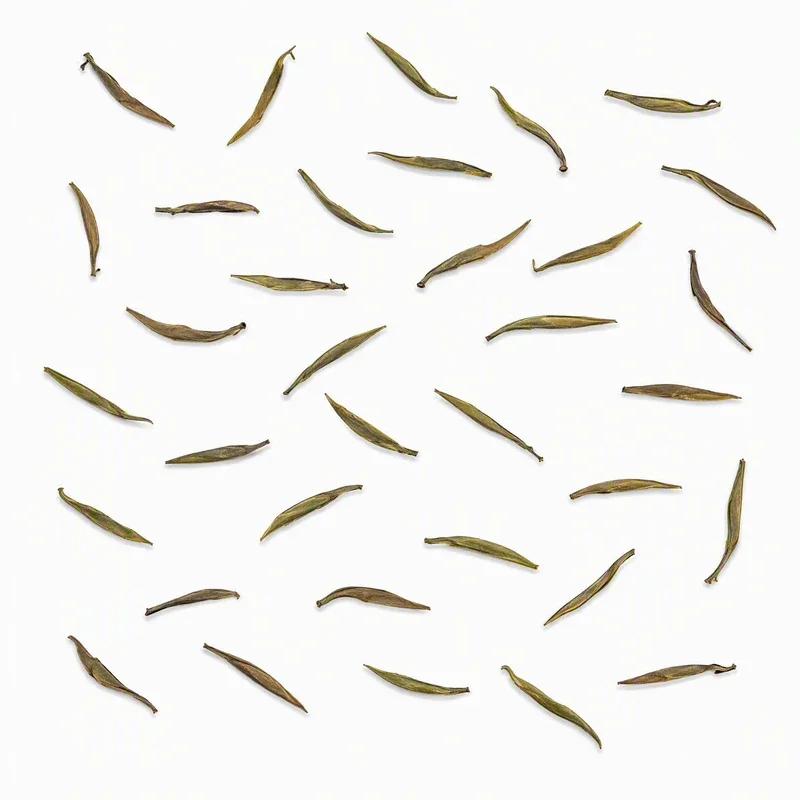
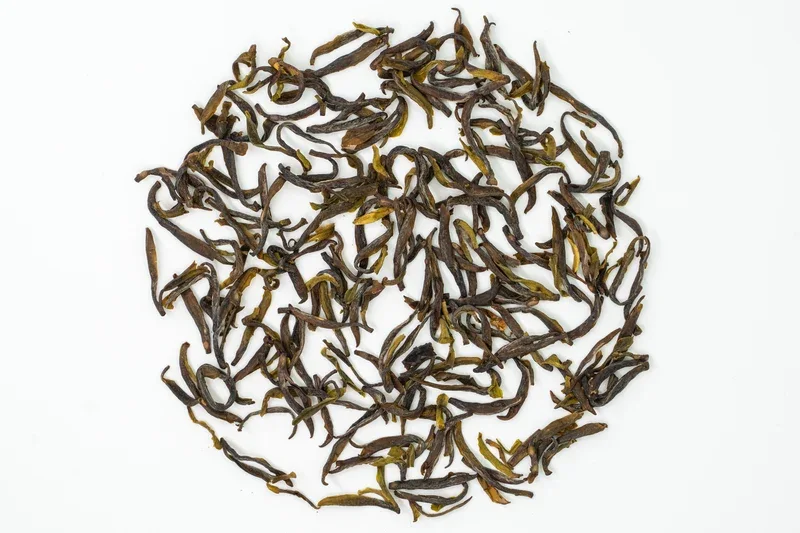
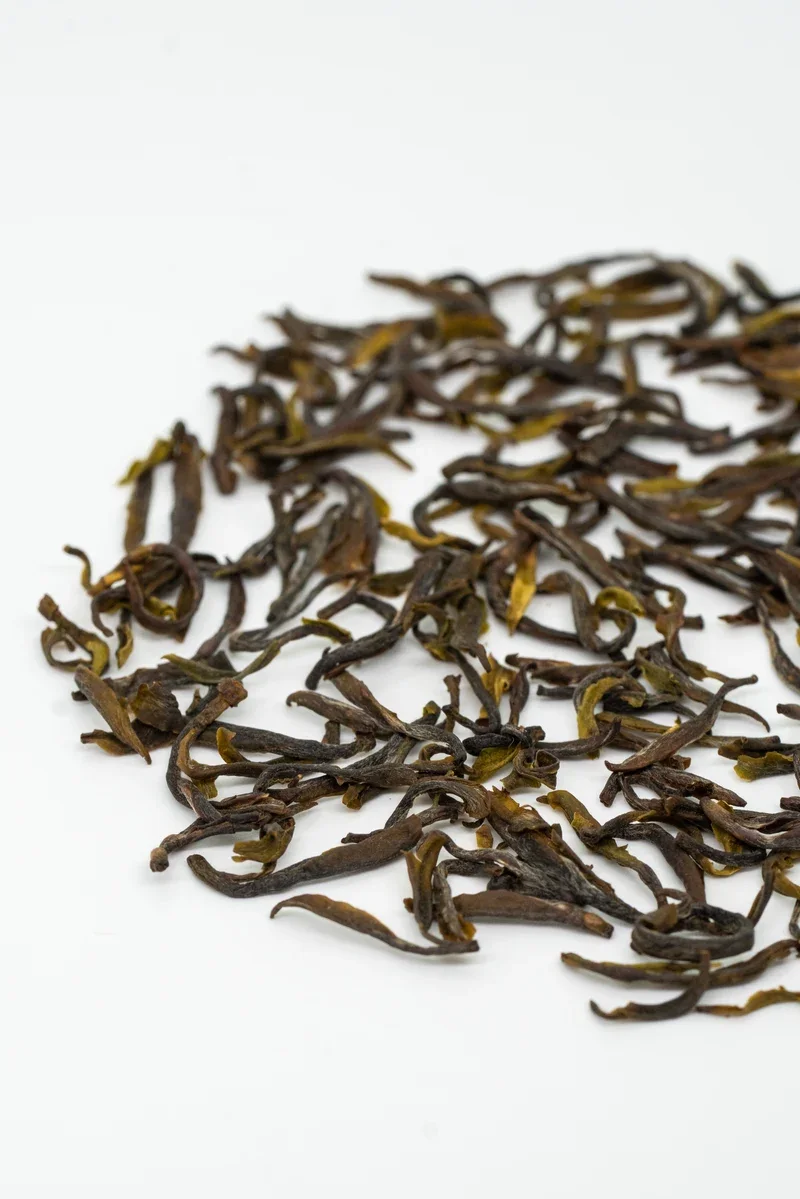
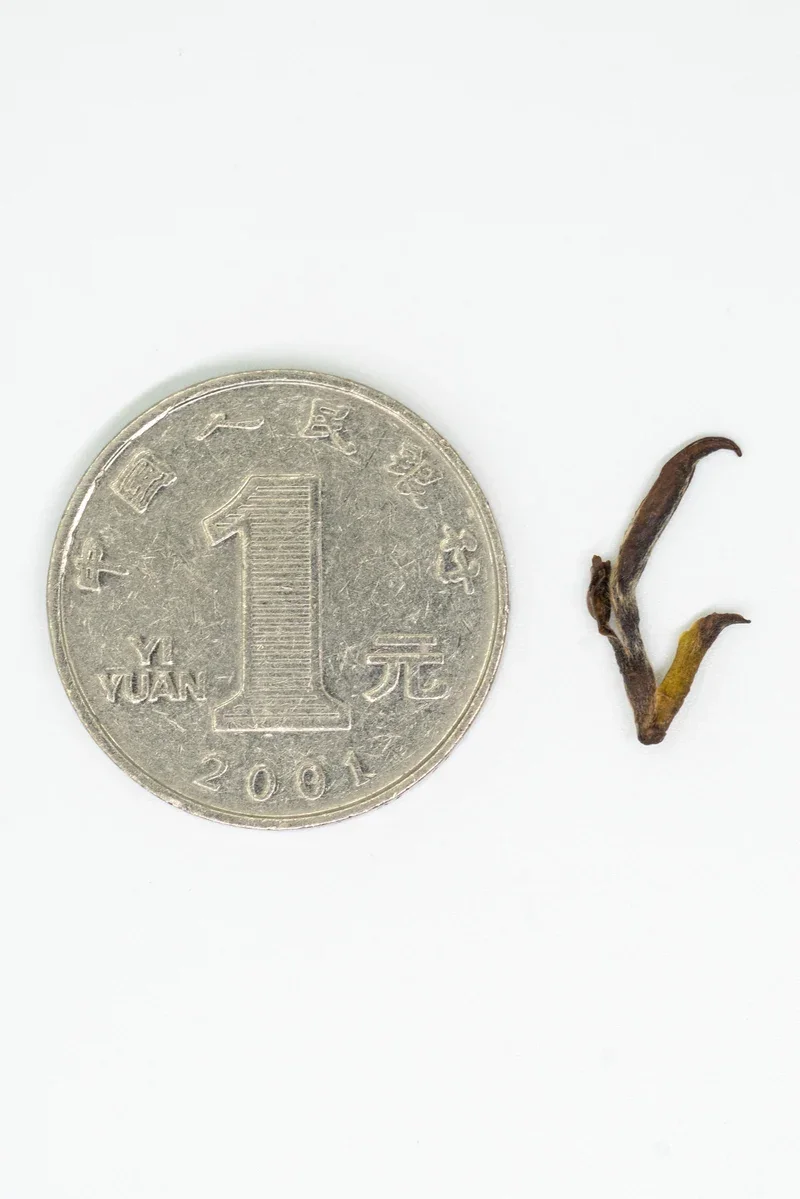
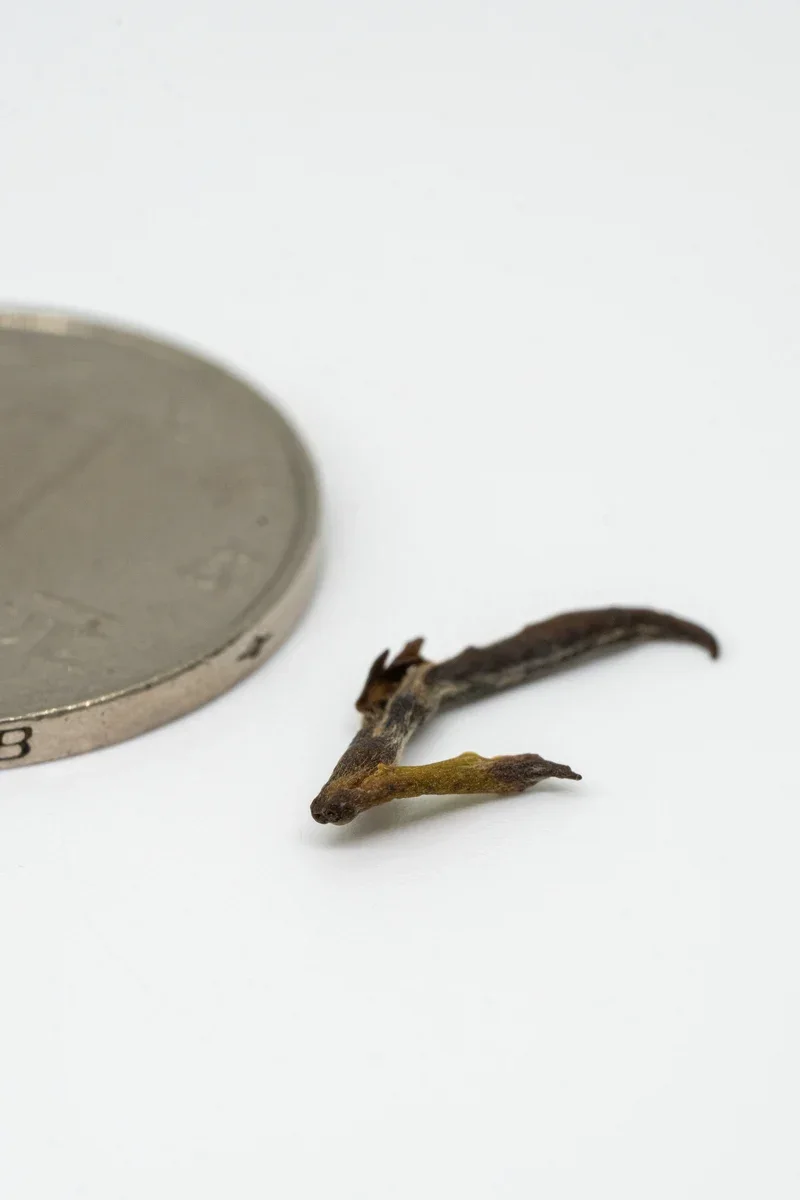
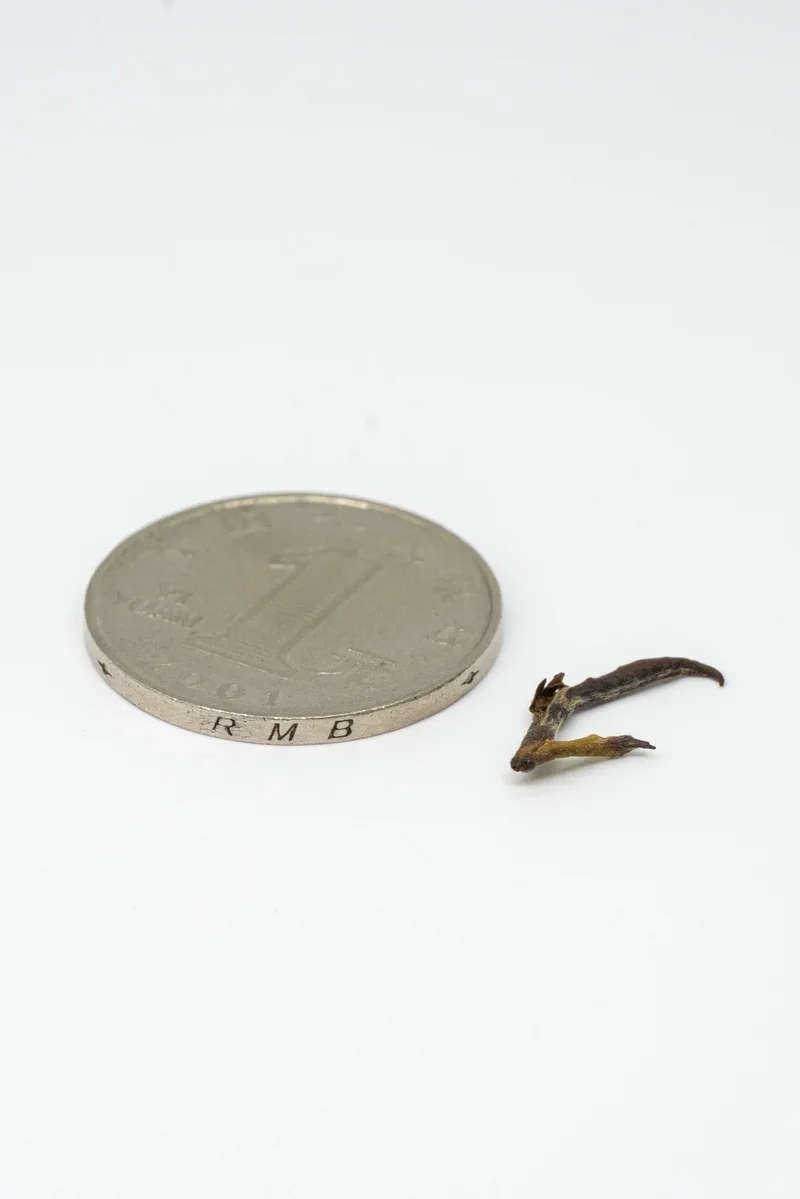
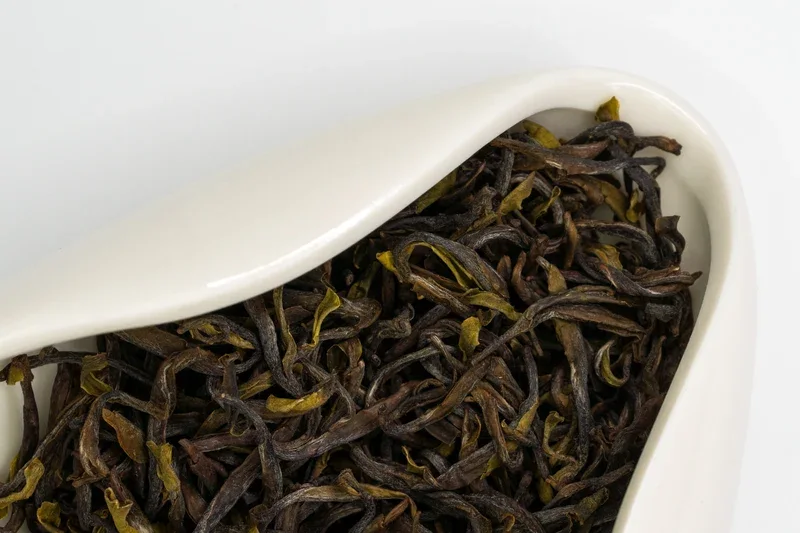
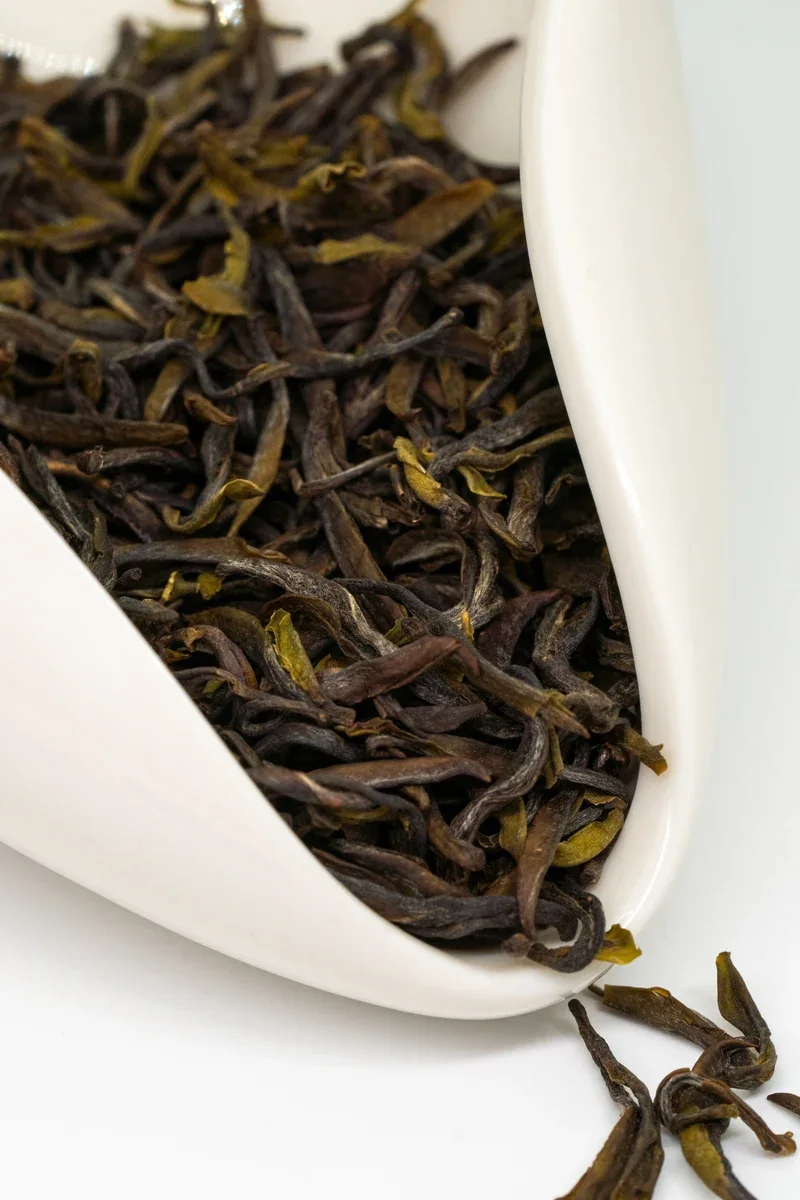
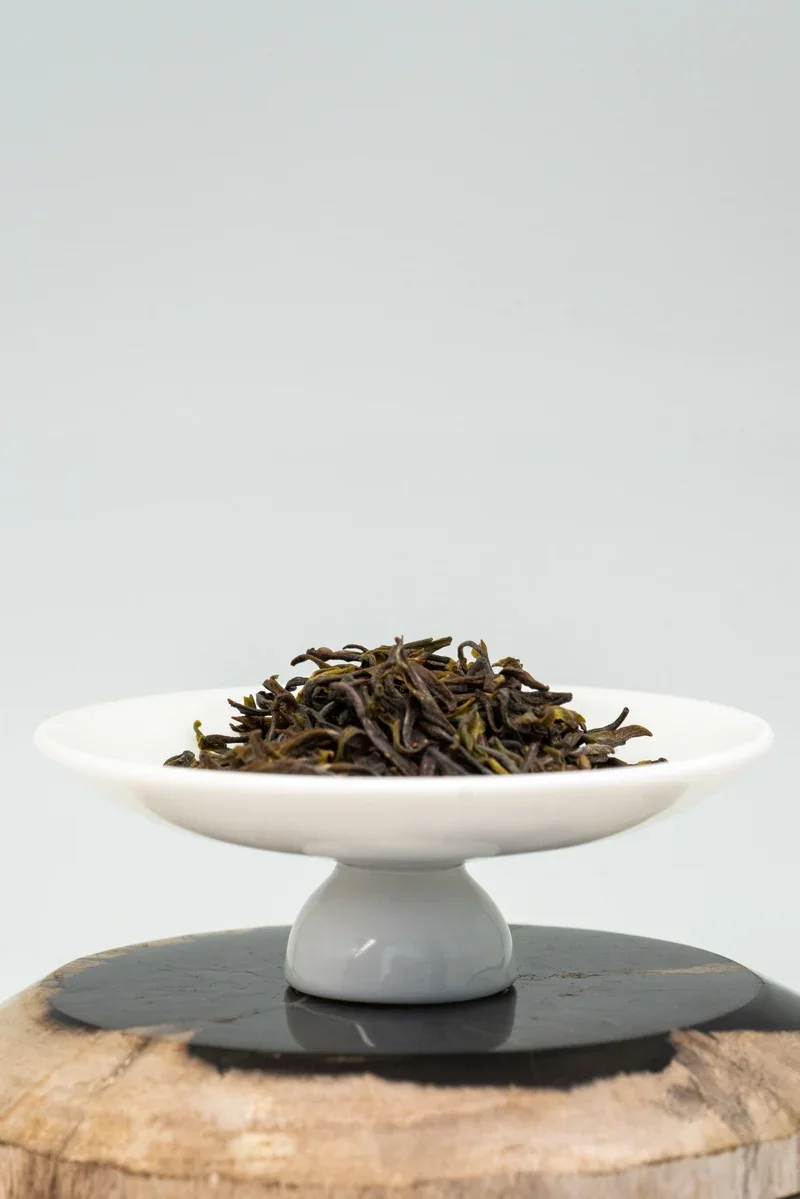
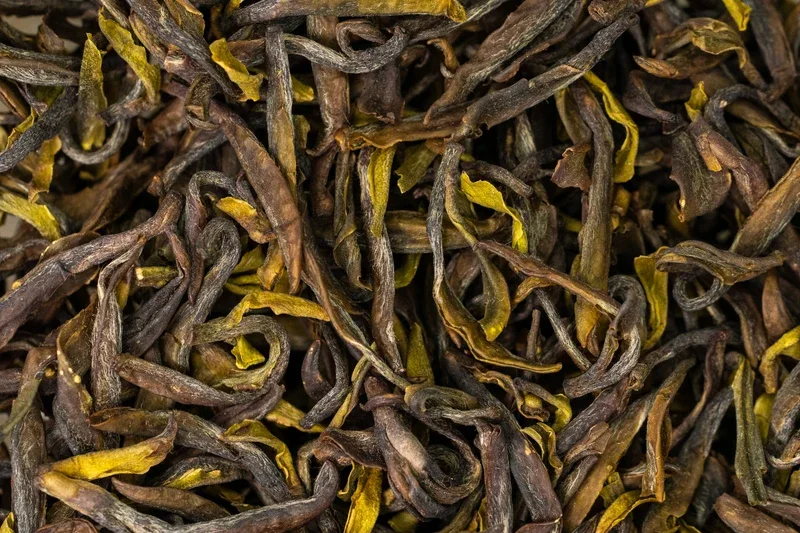
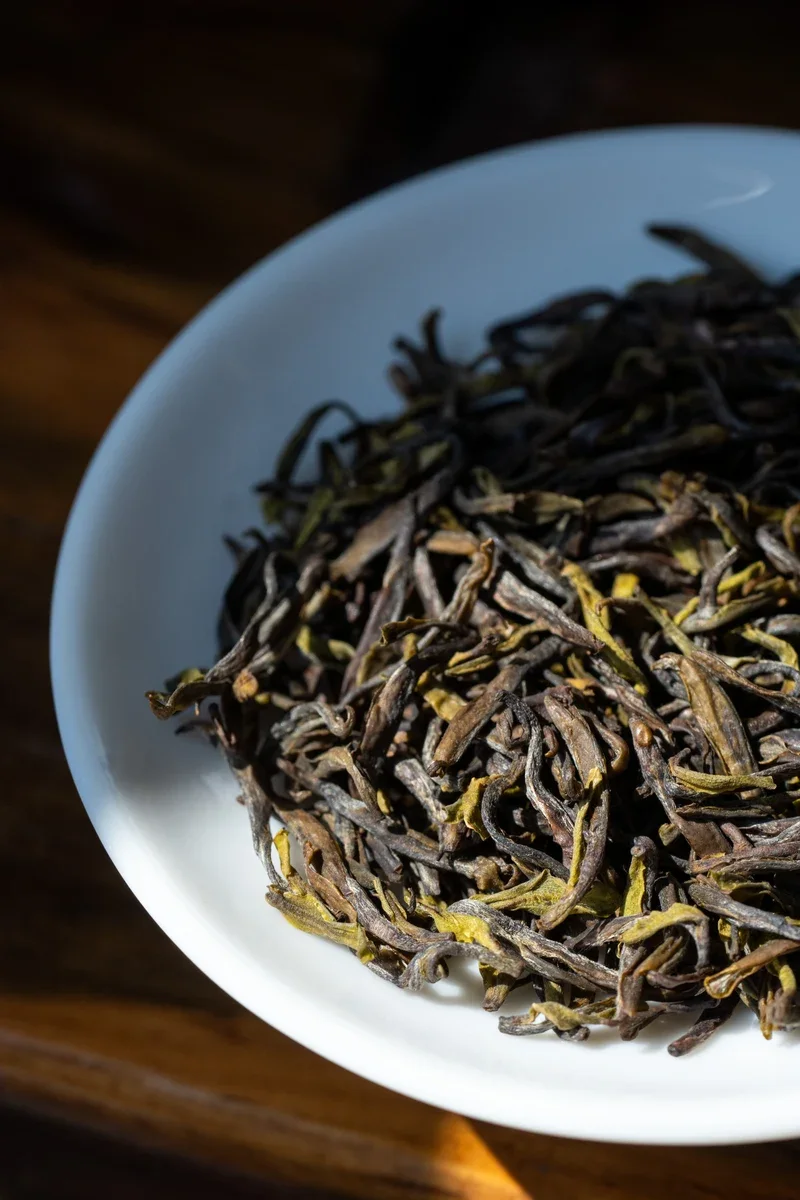
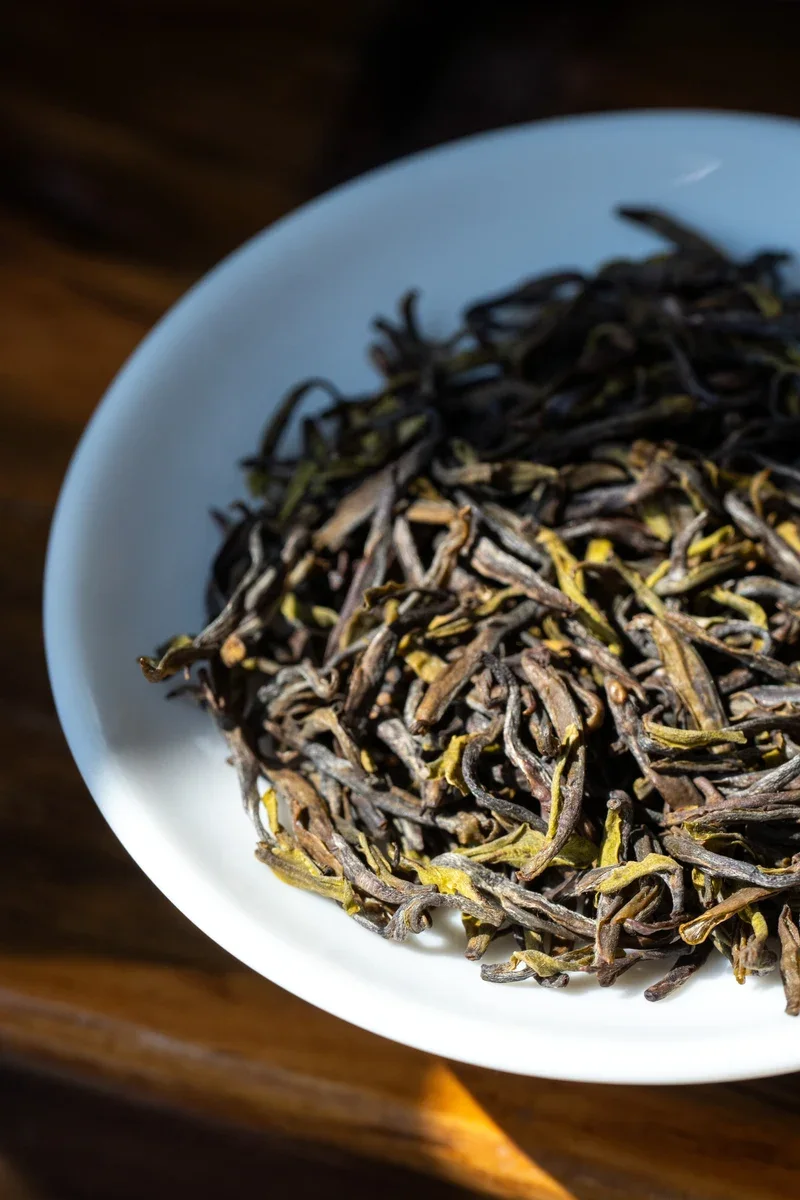
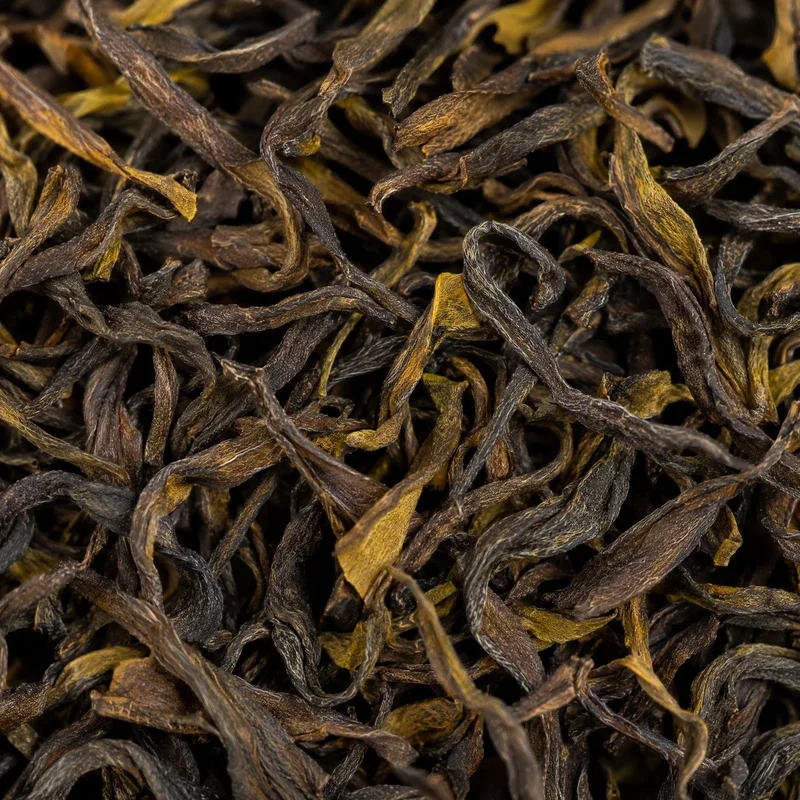
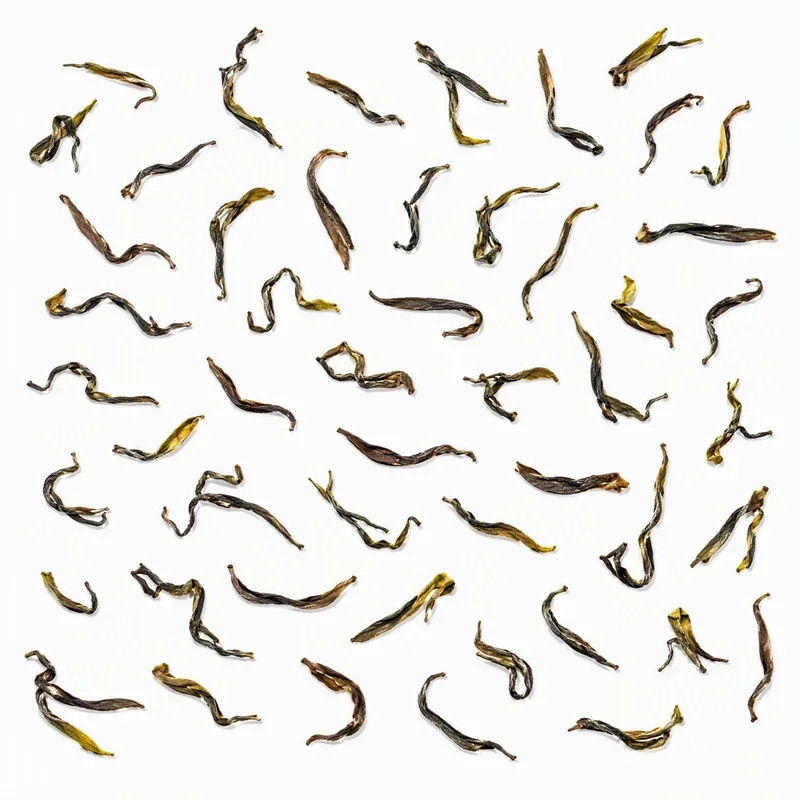
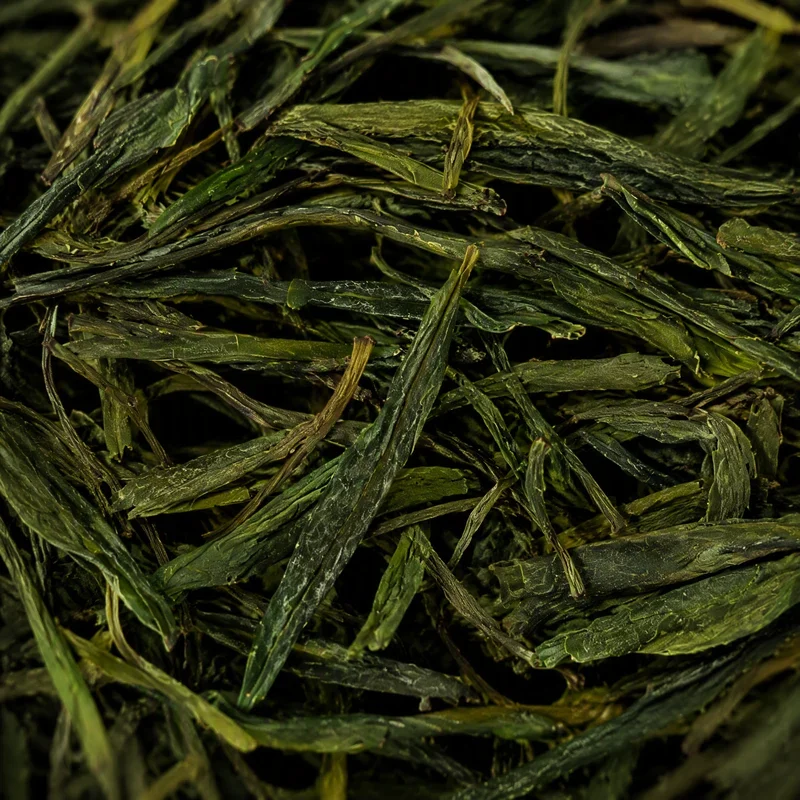
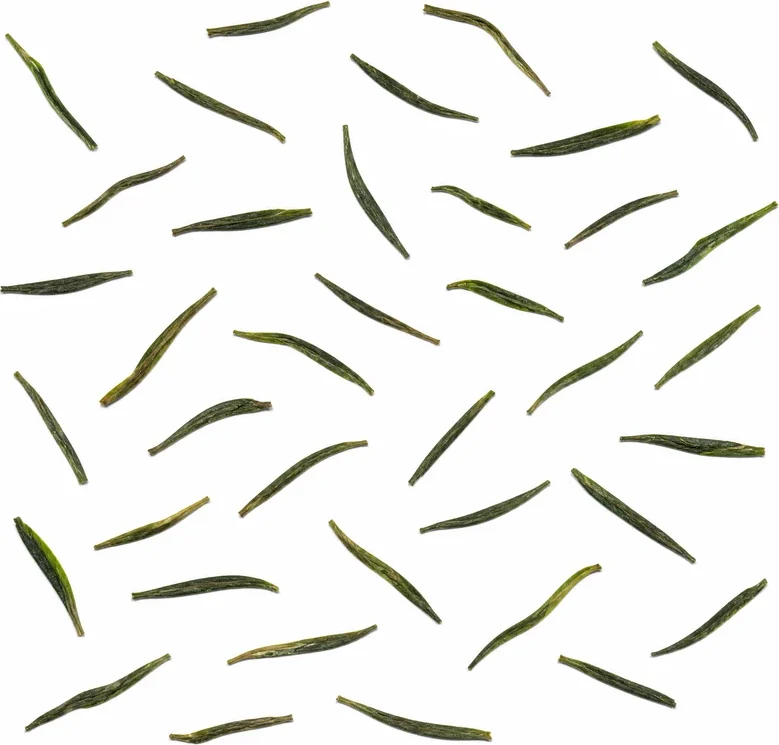
Dry Leaf Appearance: Flat, straight, pointed tea leaves resembling small swords (扁平挺直似剑, biǎnpíng tǐngzhí sì jiàn). Color — emerald green, uniform (色翠匀齐, sè cuì yúnqí). Abundant white down (毫显, háo xiǎn) covers the surface, giving a silvery tint.
Dry Leaf Aroma: High, clean, with pronounced floral note — delicate orchid tone (兰花香, lánhuā xiāng), characteristic of mountain Anhui teas. Background — fresh, green, without "raw" or grassy tones.
Liquor Aroma: Elegant, persistent (花香清雅持久, huāxiāng qīngyǎ chíjiǔ). Orchid note unfolds more fully, accompanied by light sweetness and sensation of mountain freshness.
Liquor Color: Bright green, clear, with light emerald glow (碧绿明亮, bìlǜ míngliàng).
Spent Leaves: Uniform, tender green, fresh (匀整嫩鲜, yúnzhěng nèn xiān). Leaves whole, elastic, with well-distinguished bud.
Taste: Rich, full-bodied (醇厚, chúnhòu), with returning sweetness (回甜, huítián). First sip — dense, "weighty" in mouth (入口浓醇, rùkǒu nóngchún); passage through throat — refreshing (过喉鲜爽, guòhóu xiānshuǎng); aftertaste — long, with residual aroma and sweetness (口留余香、回味甘甜).
Alkaloids: Caffeine (咖啡碱) — 2.5–3.5% dry mass. Theobromine and theophylline — in trace amounts.
Amino Acids: Increased content — result of high-mountain position (500+ m), frequent mists and diffused lighting. L-theanine (L-茶氨酸) — key amino acid determining softness, sweetness and "umami"-like flavor tone.
Not less than 36%, ensuring richness and "density" of liquor.
High amino acid to polyphenol ratio (amino acid-polyphenol index) determines the soft, sweet, "velvety" character of taste, typical of the finest mountain green teas.
Essential Oils: Linalool dominates (floral-orchid note); geraniol, nerolidol, cis-3-hexenol present.
Minerals: Potassium, magnesium, phosphorus, zinc, manganese. Mineral profile determined by granite foundation of Mount Tianzhu.
Polyphenols: Moderate content — characteristic of high-mountain green teas with increased amino acid content. Catechins (EGCG, ECG, EC) provide antioxidant activity and light astringency balanced by sweetness.
Vitamins: Vitamin C (ascorbic acid) — increased content, characteristic of green teas. B-group vitamins (B₁, B₂), vitamin E.
Catechins (EGCG) and flavonoids neutralize free radicals, slowing cellular aging and reducing oxidative stress.
Caffeine combined with high L-theanine level provides "calm alertness" effect — increased attention without nervousness.
Catechins help reduce LDL cholesterol levels, maintain vascular elasticity and normalize blood pressure.
Polyphenols stimulate digestive enzymes; moderate astringency activates gastric juice secretion.
L-theanine increases brain alpha-wave activity, promoting relaxed attentiveness and improving working memory.
Catechins suppress growth of various pathogenic bacteria in oral cavity, helping maintain gum health and breath freshness.
In traditional Chinese medicine, green tea from mountain regions is considered an effective remedy for "cooling" the body.
People with increased caffeine sensitivity — limit intake in second half of day. Strong brewing on empty stomach not recommended. Pregnant women — moderate consumption.
One of the "Ten Famous Teas of China." Slightly twisted, not flat shape; aroma — more floral-honey; body — light and "airy." Tianzhujian Hao is denser, more "sword-like" in shape and with more pronounced returning aftertaste.
Large-leaf green tea with flat, long (up to 7 cm) leaves. Orchid aroma — common to both teas, but Hou Kui is noticeably larger, with more "vegetal" body. Jian Hao is more compact and "sharper."
Unique green tea from leaves only, without buds. Completely different shape (plates resembling pumpkin seeds) and flavor profile (chestnut, dried fruit). Jian Hao is bud-based, sword-shaped, with floral accent.
Green tea from neighboring Yuexi County (also Dabie Mountains). More curved shape, aroma with orchid notes, but lighter body. Both teas are products of the same mountain range, but with different characters.
Green tea from Taihu County (near Qianshan). Needle-like shape, but without pronounced "sword" flatness and with less abundant down. Less known at national level.
Tea Amount: 3 g per 150 ml (glass) or 3–4 g per 100–120 ml (gaiwan).
Teaware: Glass cup (玻璃杯) — ideal for observing the "dance of swords": flat tea leaves slowly descend in water, opening and displaying emerald color and white down. Porcelain gàiwǎn (盖碗) — for controlled multiple infusions.
Water Temperature: 80–85 °C. For especially tender batches (一芽一叶初展) — 75–80 °C.
No reviews yet. Tell us what you think of this tea.
Rate this tea and share your impressions. We review each submission before publishing it.