Brewing
Gongfu brewing
- Water temperature
- 75 °C
- Tea amount
- 5 g
- Water volume
- 100 ml
- First steep
- 10 s
- Time added per infusion
- 5 s
- Infusions
- 3


Tiānfǔ lóng yá
Choose a brewing method. Start with the recommended quantities and time, then adjust to taste.
Brewing
Brewing
Taste
Tea encyclopedia
Category: Provincial regional public brand (省级大区域公共品牌) with geographical indication protection (农产品地理标志). Included among the "Ten Famous Teas of Sichuan" (四川十大名茶). Belongs to the "early tea" type (早茶, zǎochá) — one of the earliest harvested green teas in China.
Category: Provincial regional public brand (省级大区域公共品牌) with geographical indication protection (农产品地理标志). Included among the "Ten Famous Teas of Sichuan" (四川十大名茶). Belongs to the "early tea" type (早茶, zǎochá) — one of the earliest harvested green teas in China.
Coordinates: Approximately 28°46′–29°05′ N, 104°30′–104°50′ E (reference point — Yibin area / Tiangongshan Mountain).
Origin: China, Sìchuān Province (四川, Sìchuān). Key production zones: Yíbīn Prefecture (宜宾, Yíbīn) — especially Píngshān County (屏山) and Nánxī District (南溪), Luzhou (泸州), Ya'an (雅安), Méishān (眉山), Lèshān (乐山). Yibin is the "Hometown of China's Early Tea" (中国早茶之乡) — thanks to the special climate of the Sichuan Basin, tea buds awaken here in late January to early February, 15–20 days earlier than in other regions at the same latitudes.
Type: Green tea (non-oxidized). Within the "Tianfu Long Ya" brand framework, red tea (black tea), dark tea (hei cha), white tea, yellow tea, and oolong teas are also produced, however green tea is the core of the line and the most recognizable product.
Cultural Significance: Tianfu Long Ya is the first provincial brand in the history of the Chinese tea industry to unite all six tea categories in the "6+X" format (six categories + derivative products and tea creativity). The brand became an instrument of state policy for reviving Sichuan tea: from a supplier of nameless raw material, Sichuan is transforming into a producer of recognizable products. The tea has repeatedly served as a diplomatic gift — it was used by the Ministry of Foreign Affairs of the PRC as an official present (外交部外事礼品). Tianfu Long Ya is included in the "Chengdu-Chongqing Economic Circle Development Plan" (《成渝地区双城经济圈建设规划纲要》) as a strategic regional brand.
History: Sichuan is considered one of the most ancient centers of tea tree origin and the birthplace of tea culture. Lù Yǔ (陆羽, Lù Yǔ) wrote in "The Classic of Tea" (《茶经》, Chájīng): "tea is a noble tree of the south; in the mountains of Ba and gorges of Chuan are found trees that can only be embraced by two people." In the 1950s, thousand-year-old wild tea trees were discovered on Tiangongshan Mountain (天宫山) near Yibin. Despite this rich heritage, by the beginning of the 21st century Sichuan tea suffered from serious "brand disease": more than 120 tea-producing counties, enormous areas and volumes — but up to 60–70% of production went as nameless raw material to other regions. In 2014, the first document of the Sichuan Province CPC was devoted to tea industry transformation for the first time. The Sìchuān Tea Brand Promotion Association (四川省川茶品牌促进会) was created, uniting more than 120 enterprises. Following industry voting, the original "Tianfu Long Ya" brand, created by Sìchuān Tea Group (川茶集团, Chuānchá Jítuán), was approved as the provincial public brand. On May 5, 2016, at the V International Tea Exhibition in Sichuan, the brand was officially presented to the world audience, and already in July of the same year was chosen as the only official tea at the G20 Finance Ministers and Central Bank Governors meeting in Chengdu. In 2017, the International Tea Committee awarded Tianfu Long Ya the title "World Famous Tea" (世界名茶). In 2018, the brand received the gold award at the XVI China In
Name Breakdown: Tiānfú (天府) — "Heavenly Treasury," the classical poetic name for Sichuan, dating back to the characterization of the fertility of the Chengdu Plain. Long Yá (龙芽) — "Dragon Bud," emphasizes that the finest Sìchuān green teas are valued for their tender buds (芽形为贵), while the dragon (龙) symbolizes the greatness of China and tea quality.
Cultivar: For green Tianfu Long Ya, several regionalized cultivars are used: Wūniú Zǎo (乌牛早, Wūniú Zǎo) — an ultra-early variety ensuring harvest in late January; Shúchá Zǎo (蜀茶早) and other local early varieties; as well as Fushu Zaobai (福选早白). The early-ripening nature of the cultivars is the key competitive advantage of the brand.
Picking: Ultra-early spring harvest: the finest batches are collected already in late January–February, when tea bushes in other provinces are still dormant. This is due to the mild winter of the Sichuan Basin and rapid spring warming.
Pluck Standard: For premium green Tianfu Long Ya — single bud (独芽) or one bud with one beginning-to-unfold leaf (一芽一叶初展). The raw material must be tender, thick, juicy, with abundant down.
Raw Material: Not all Sichuan teas can use the "Tianfu Long Ya" brand — only products meeting approved production standards and included in the quality traceability system.
Altitude: 400–1000 m; premium raw material — at altitudes of 600–1000 m, especially on Tiangongshan Mountain (天宫山) in the Yibin area.
Climate: The Sichuan Basin possesses a unique microclimate: mild winters (temperature rarely drops below 0°C), high humidity, short frost period, early spring warming. Average annual precipitation 1200–1800 mm. Winter temperature in the basin is higher than at the same latitudes in the Yangtze Valley, which ensures ultra-early harvest.
Soil: Yellow and yellow-brown soils predominate, acidic (pH 4.5–6.0), with high organic content. In the mountainous areas of Yibin — deep weathered soils on volcanic rocks.
Frequent fogs, cloudiness, high relative humidity. Diffused light is characteristic, promoting amino acid accumulation and reducing catechin content, giving the tea softness and sweetness.
Within the "Tianfu Long Ya" program, standards for ecological and low-carbon tea cultivation have been implemented. Sìchuān Tea Group (川茶集团) — the brand's lead enterprise — has 30,000 mu of standardized base plantations with mechanized harvesting, green plant protection, and organic fertilization. In 2023, the company received certification as "the country's first ecological low-carbon tea enterprise."
Fresh raw material is spread in a cool, ventilated room for 4–8 hours to lose 15–20% moisture, activate enzyme systems, and form aromatic precursors.
Firing at high temperature (first high, then reducing — 先高后低, xiān gāo hòu dī); both manual pan fixation and roller drum methods are used. The task is rapid deactivation of polyphenol oxidase while preserving green color and fresh aroma.
For flat form (扁形) — pressing and smoothing in special pans; for needle form — rolling into thin straight needles. The shoot form — flat spatula or needle — is the visual signature of the brand.
Multi-stage: first initial drying at 100–110°C, then final at 80–90°C to moisture ≤ 6.5%. The "three firings and three rollings" method (三炒三揉) — a classical Sichuan approach borrowed from Mengding tea tradition.
Finished tea undergoes strict quality control and is included in the brand traceability system.
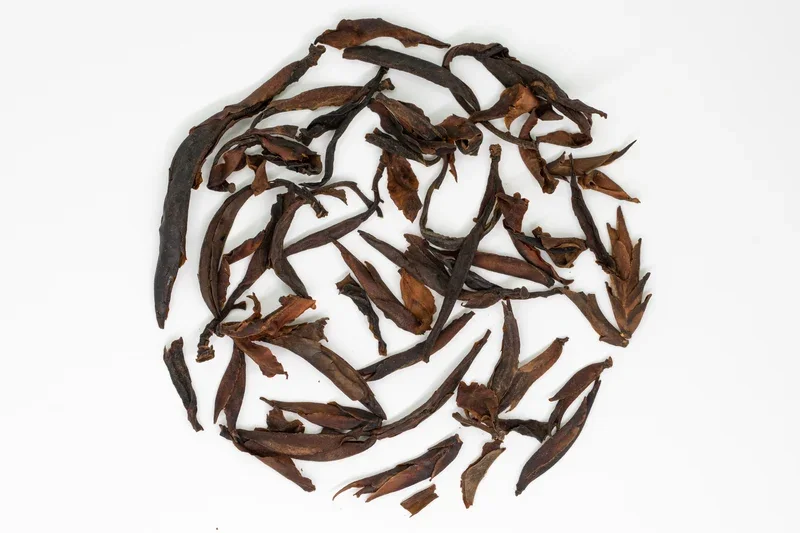
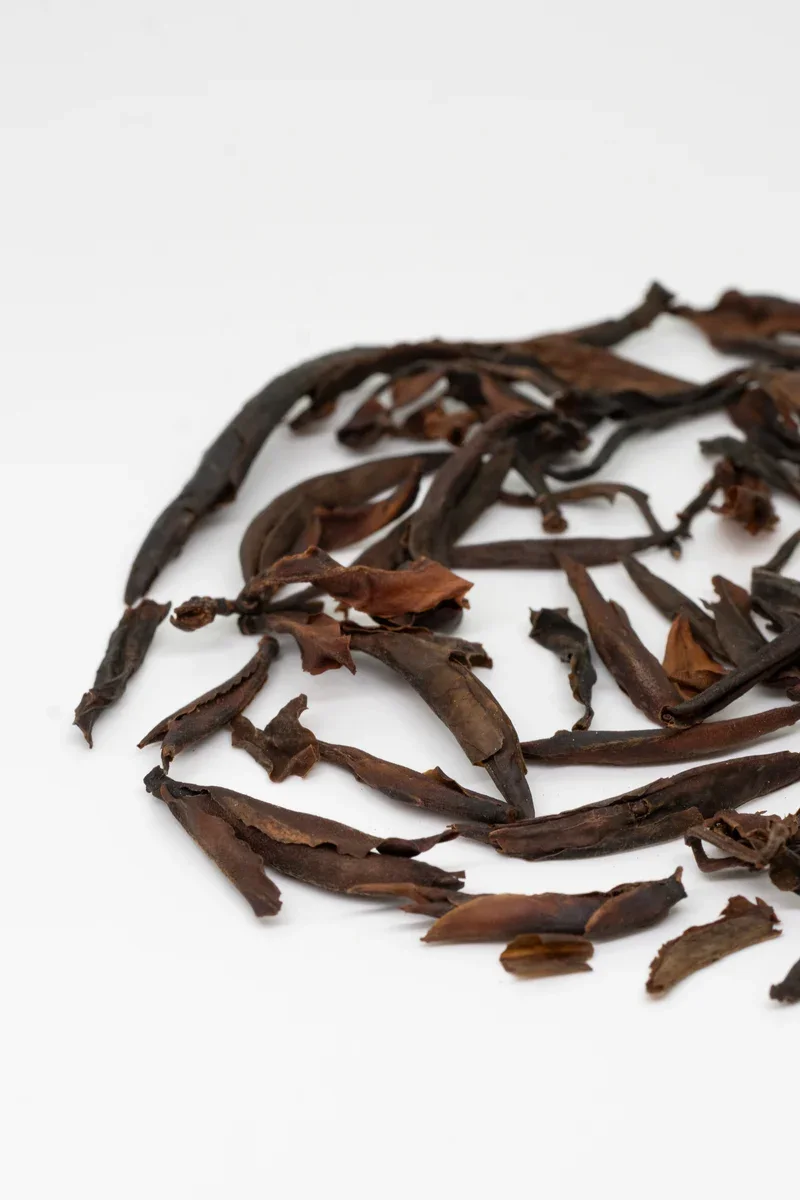
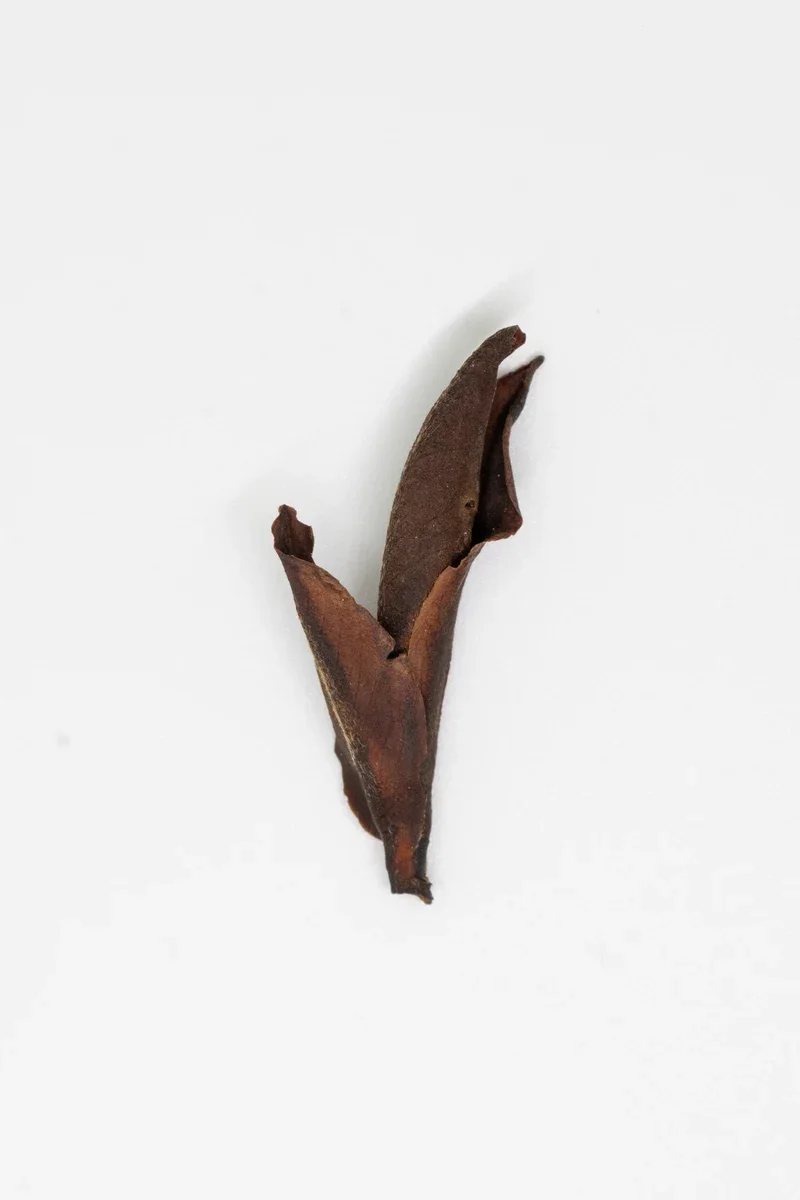
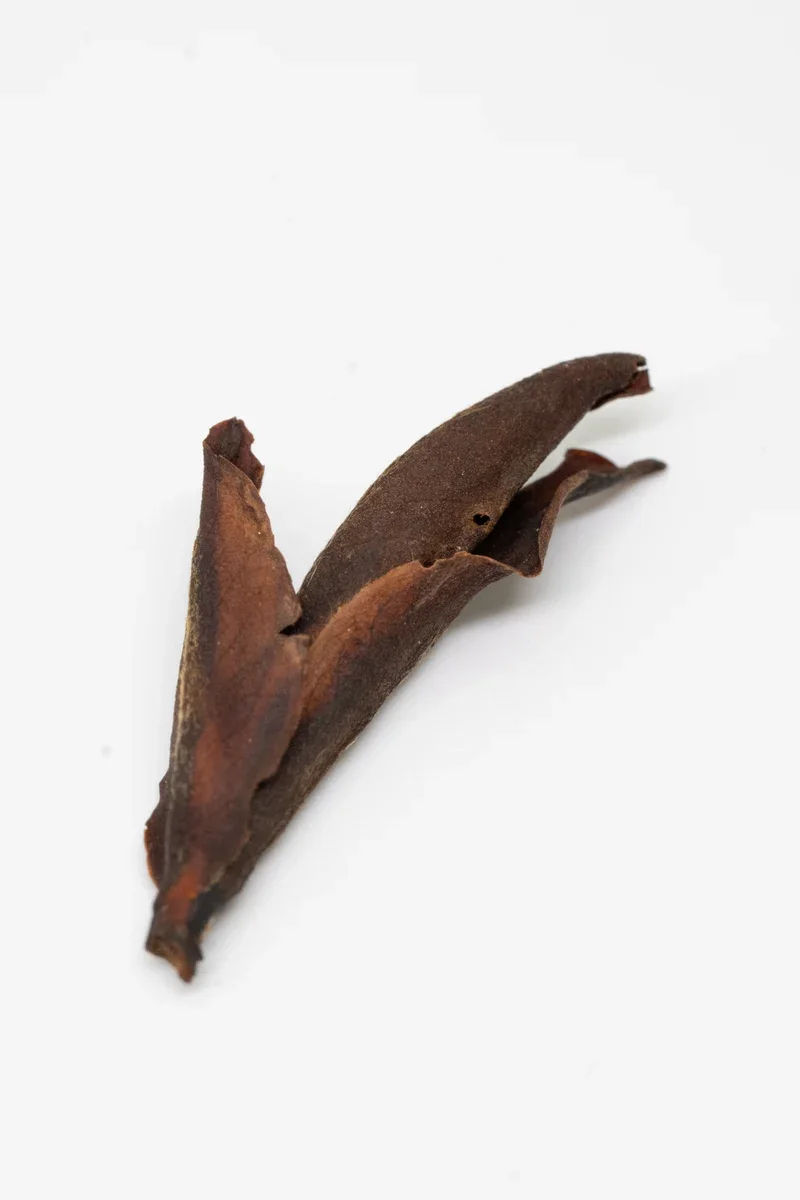
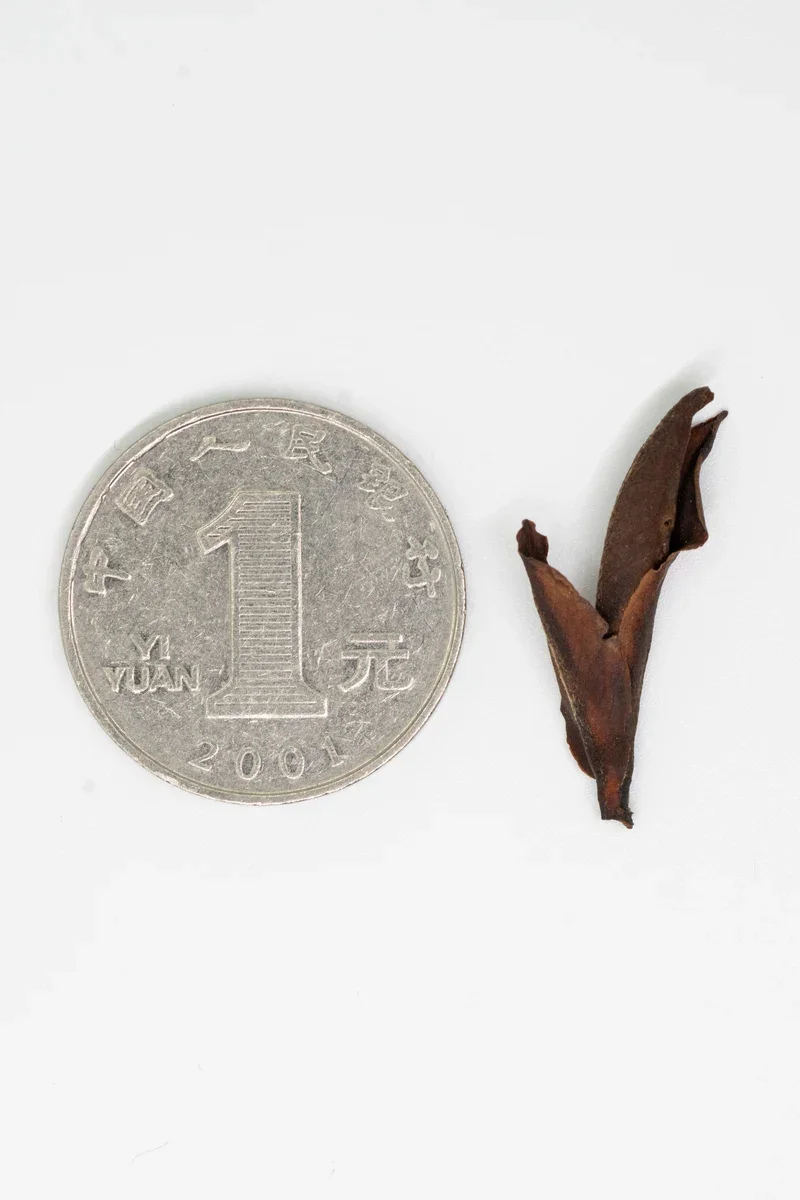
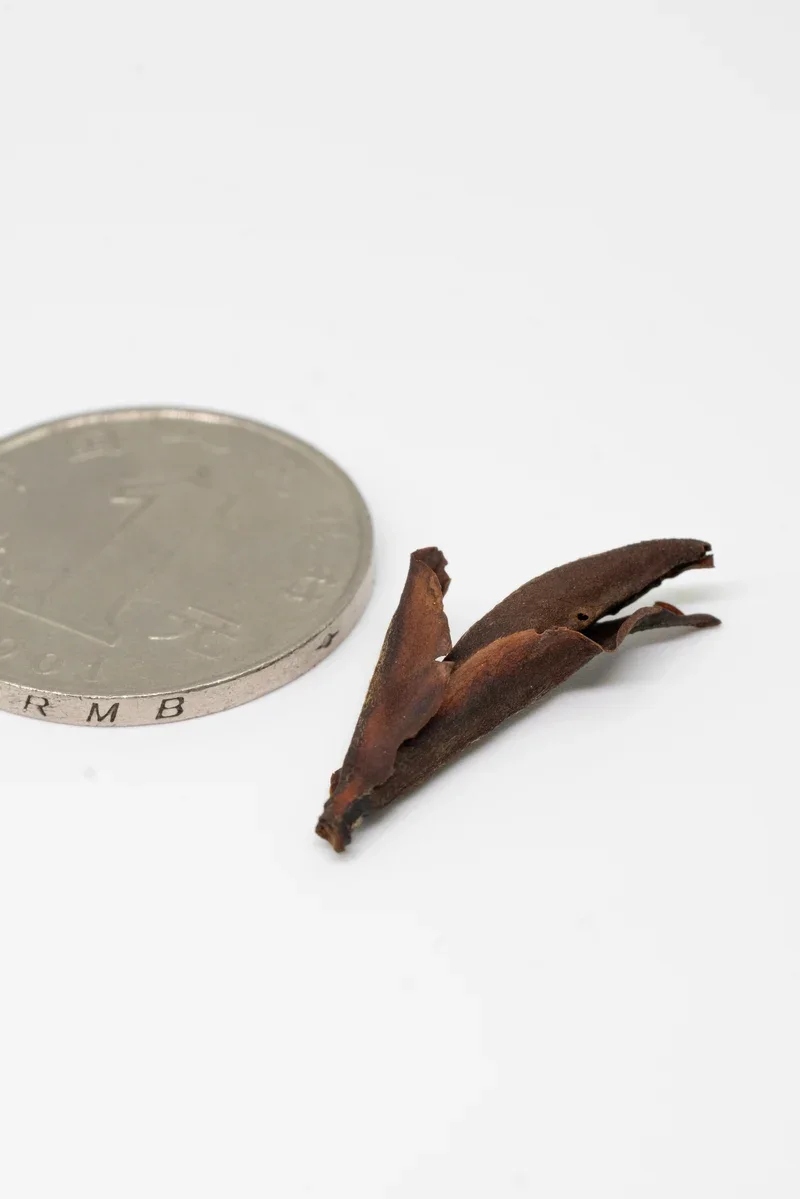
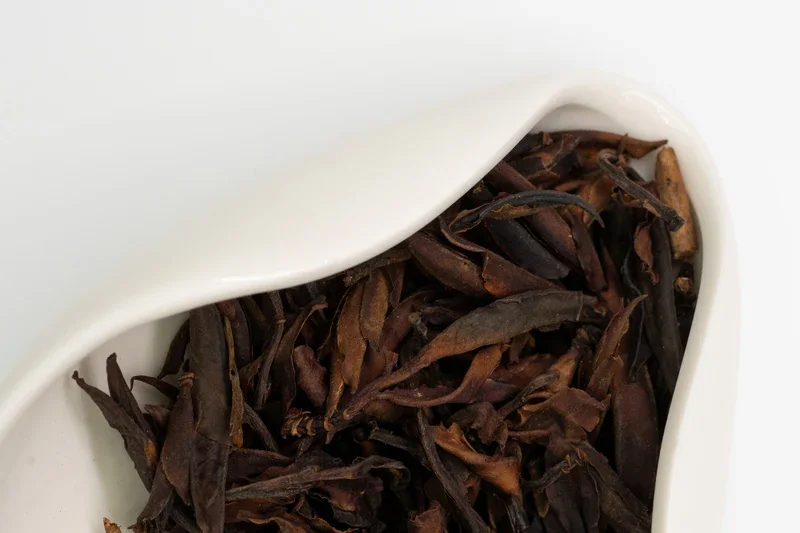
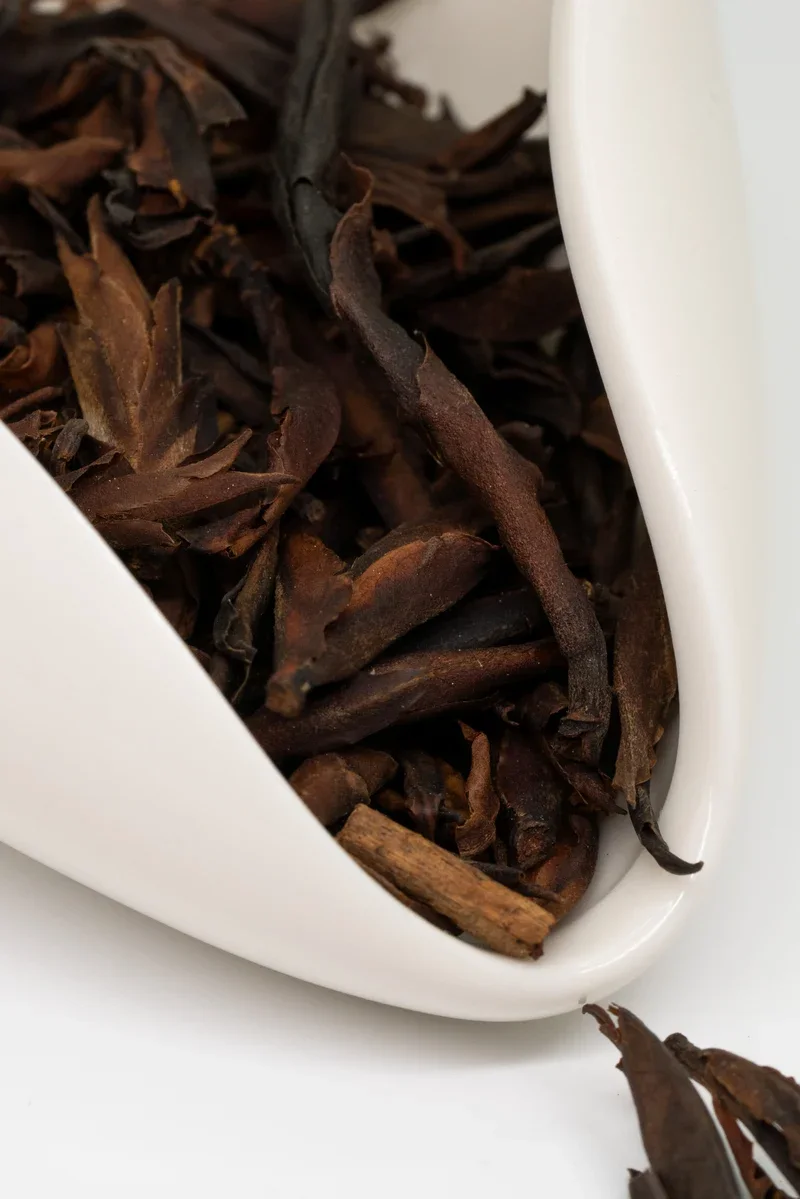
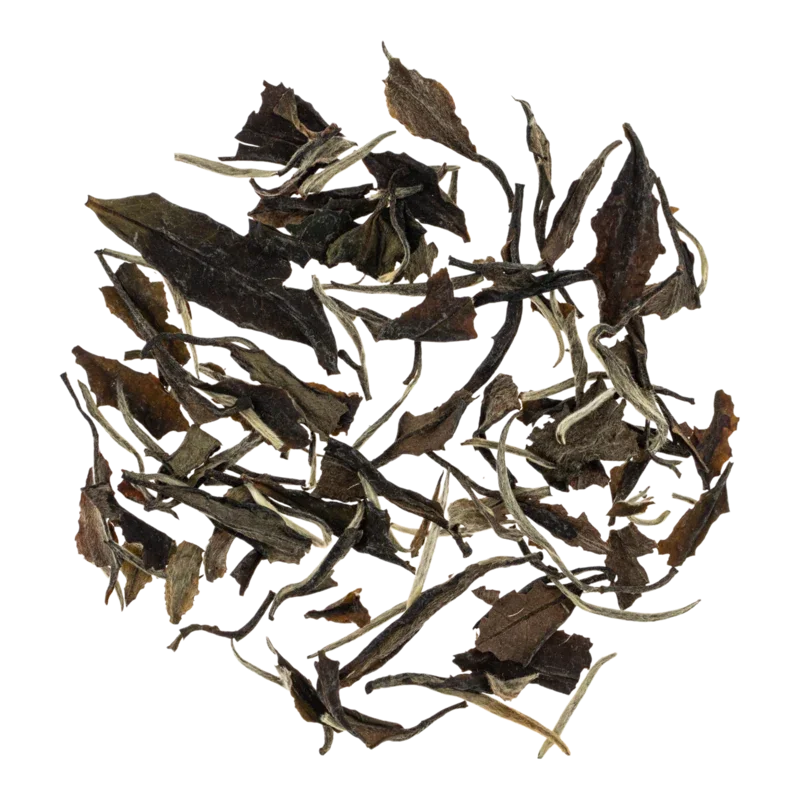
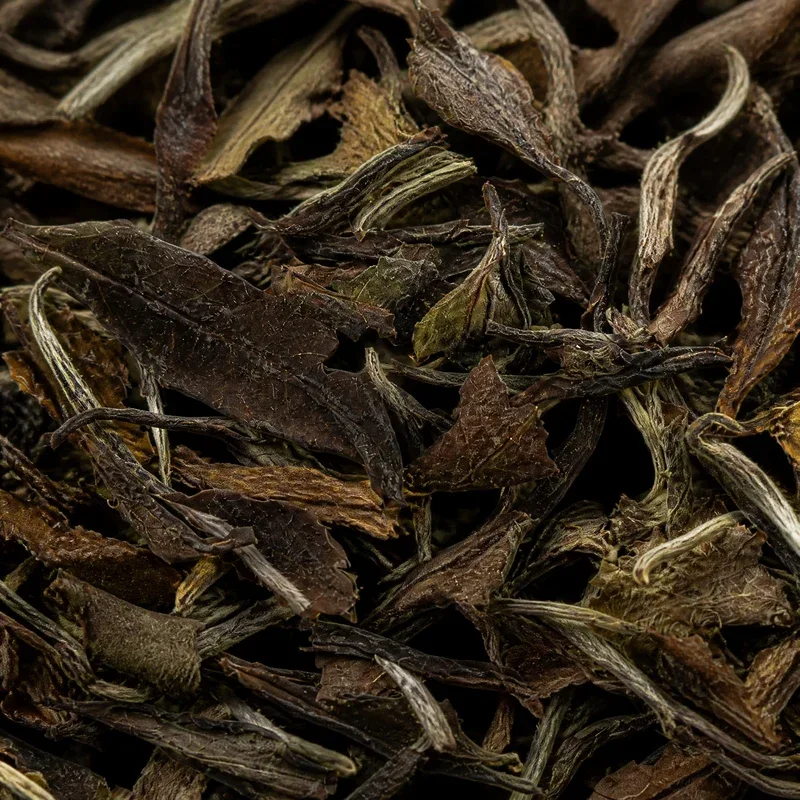
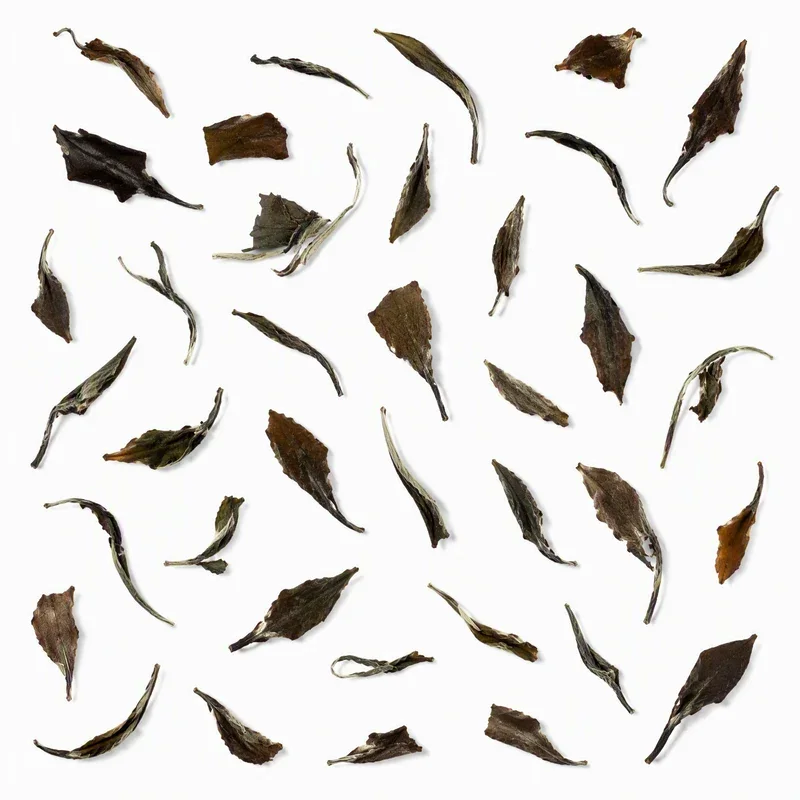
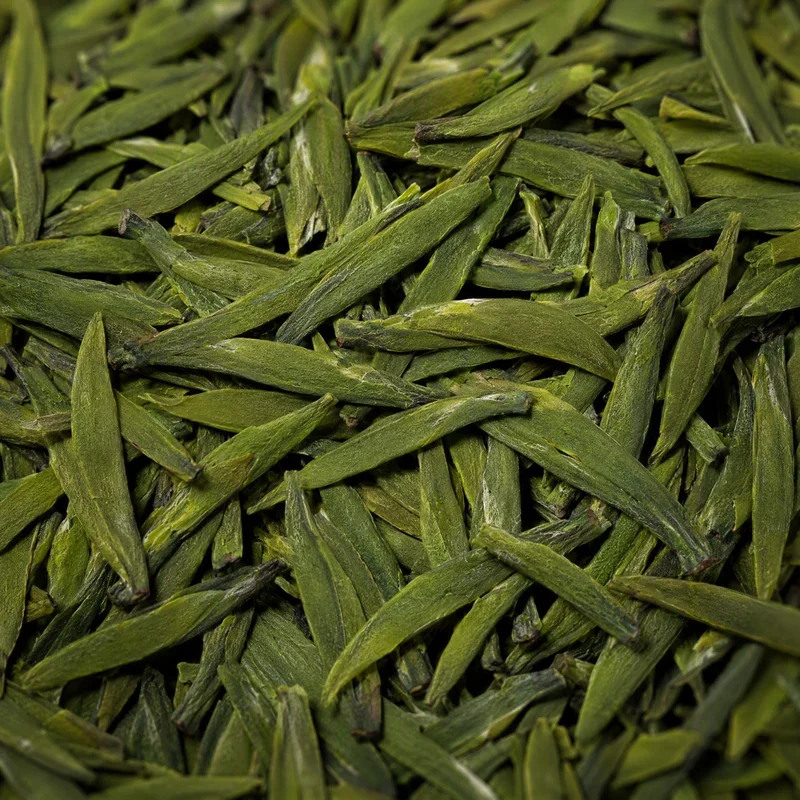
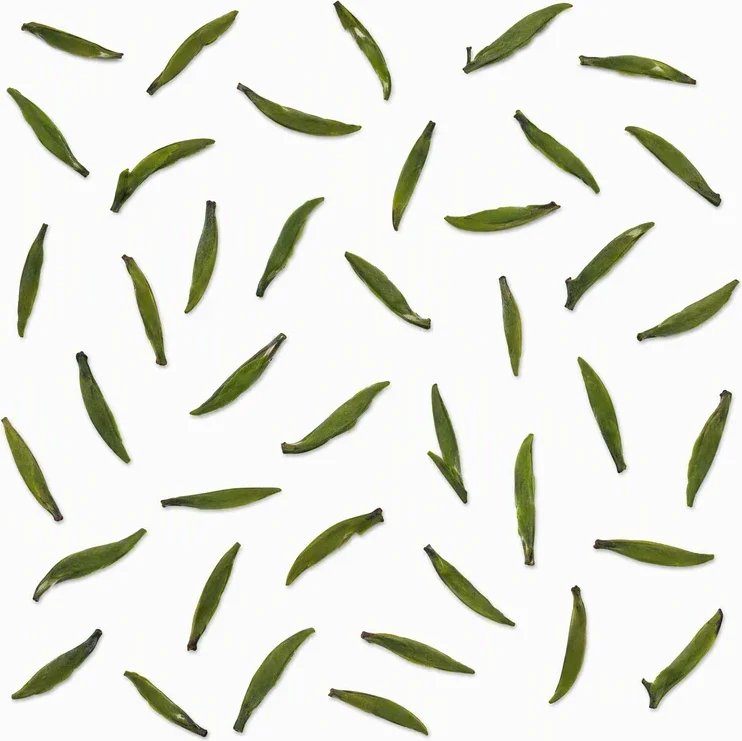
Dry Leaf Appearance: Even, slender buds or shoots of flat/needle form, covered with white down (白毫显露). Color — bright tender green with a light silvery sheen from the fuzz.
Dry Leaf Aroma: Fresh, clean, with a chestnut base (栗香) and light floral top notes. Ultra-early batches are characterized by a delicate "spring" aroma — greenery, young grass, light sweetness.
Liquor Aroma: High and bright (高香), unfolding with chestnut-nutty tones with transitions to sweet floral trail. The aroma is persistent — maintained through several infusions.
Liquor Color: Bright, clear, light green or greenish-yellow (嫩绿明亮).
Spent Leaves: Tender, intact buds/shoots of light green color, even and uniform.
Taste: Fresh (鲜), brisk (爽), with pronounced oily sweetness and noticeable returning sweetness (huí gān) (回甘, huígān). Medium body, without roughness or bitterness. The tea withstands multiple infusions well — this is noted as one of the brand's distinguishing features.
Alkaloids: Caffeine — within 25–35 mg/g; in synergy with theanine provides mild, prolonged stimulation.
Amino Acids: Elevated content — early spring buds accumulate maximum L-theanine over winter. The high proportion of amino acids provides pronounced freshness (鲜味, xiānwèi) and sweetness.
Not less than 36% (according to standard data), indicating high taste saturation.
Essential Oils: Chestnut profile forms during firing (pyrazines, furanones); floral notes — linalool and geraniol from original raw material.
Minerals: Potassium, magnesium, phosphorus, manganese, zinc, selenium — content varies depending on specific production zone.
Polyphenols: Moderate content — thanks to early harvest and diffused light of the Sichuan Basin, catechin levels are lower than in late harvests, explaining the taste softness. EGCG remains the dominant catechin.
Vitamins: C (green tea is one of the best plant sources), B₁, B₂, E, K, folic acid.
Synergy of L-theanine and caffeine provides even, sustained energy and concentration lift without anxiety — ideal for morning and daytime tea drinking.
Catechins and vitamin C neutralize free radicals, supporting cellular health.
Polyphenols possess mild antibacterial action and promote digestive normalization.
Regular consumption is associated with maintaining healthy cholesterol levels and blood pressure.
Green tea promotes thermogenesis and may help maintain normal weight.
Theanine stimulates brain alpha rhythm, improving calm concentration state. Sichuan early green tea, thanks to high theanine content in winter buds, is especially effective in this regard.
The complex of polyphenols, vitamin C, and trace elements (including selenium contained in soils of several production zones) supports general body resistance and protective functions.
Tea Amount: 3 g per 150 ml (glass method); 5–7 g per 120–150 ml (gaiwan).
Teaware: Glass cup (玻璃杯) — allows admiring the graceful unfolding of buds; porcelain gaiwan (盖碗) — for more precise extraction control; Yixing teapot not recommended as it may overheat tender raw material.
Water Temperature: 75–85°C. For the most tender bud batches — 75–80°C; for more mature shoots — 80–85°C.
Classic Sichuan green tea from Ya'an — one of China's oldest, with characteristic twisted form and sweet taste. Tianfu Long Ya as a brand is broader in scope, but specific green batches from Yibin differ in more pronounced chestnut aroma and earlier harvest timing.
The benchmark flat green tea from Zhejiang. Long Jing possesses a characteristic "beany" profile (豆香), while Sichuan green Tianfu Long Ya is softer, sweeter, and appears on the market a month to month-and-a-half earlier.
Another famous Sichuan green tea from Mount Emei. Zhuyeqing is a luxury flat needle tea with an emphatically elegant profile. Tianfu Long Ya is positioned as a more democratic and broad brand, available in different price segments.
Henan green tea with dense down and astringent fresh taste. Unlike it, Sichuan tea stands out for softness, sweetness, and early market appearance.
No reviews yet. Tell us what you think of this tea.
Rate this tea and share your impressions. We review each submission before publishing it.