Brewing
Gongfu brewing
- Water temperature
- 75 °C
- Tea amount
- 5 g
- Water volume
- 100 ml
- First steep
- 10 s
- Time added per infusion
- 5 s
- Infusions
- 3

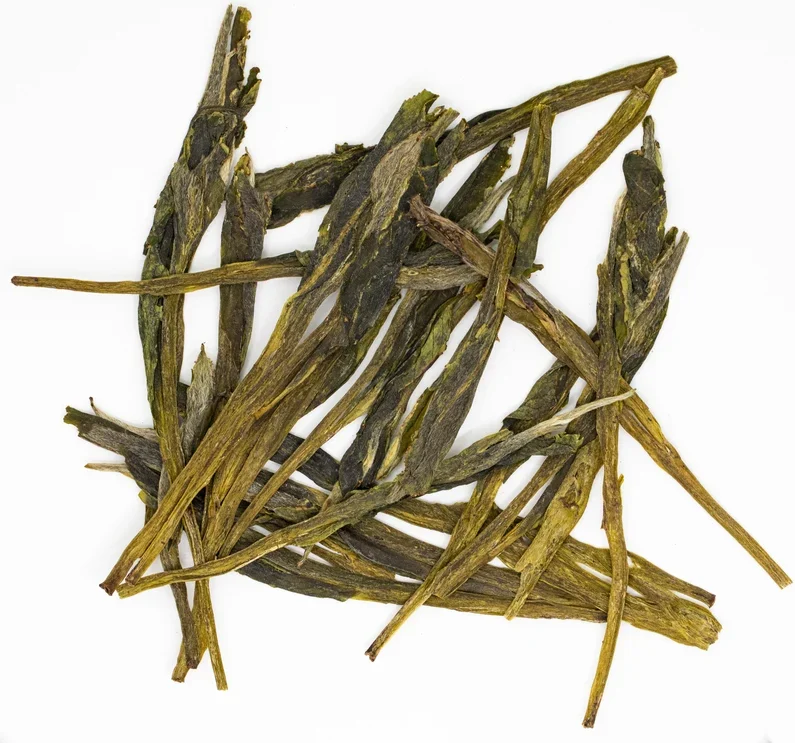
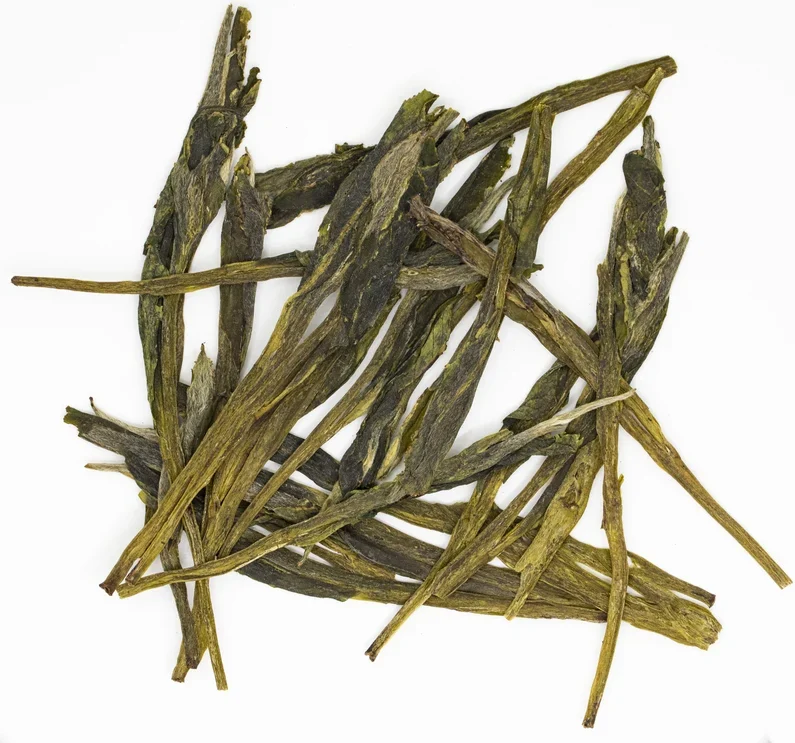
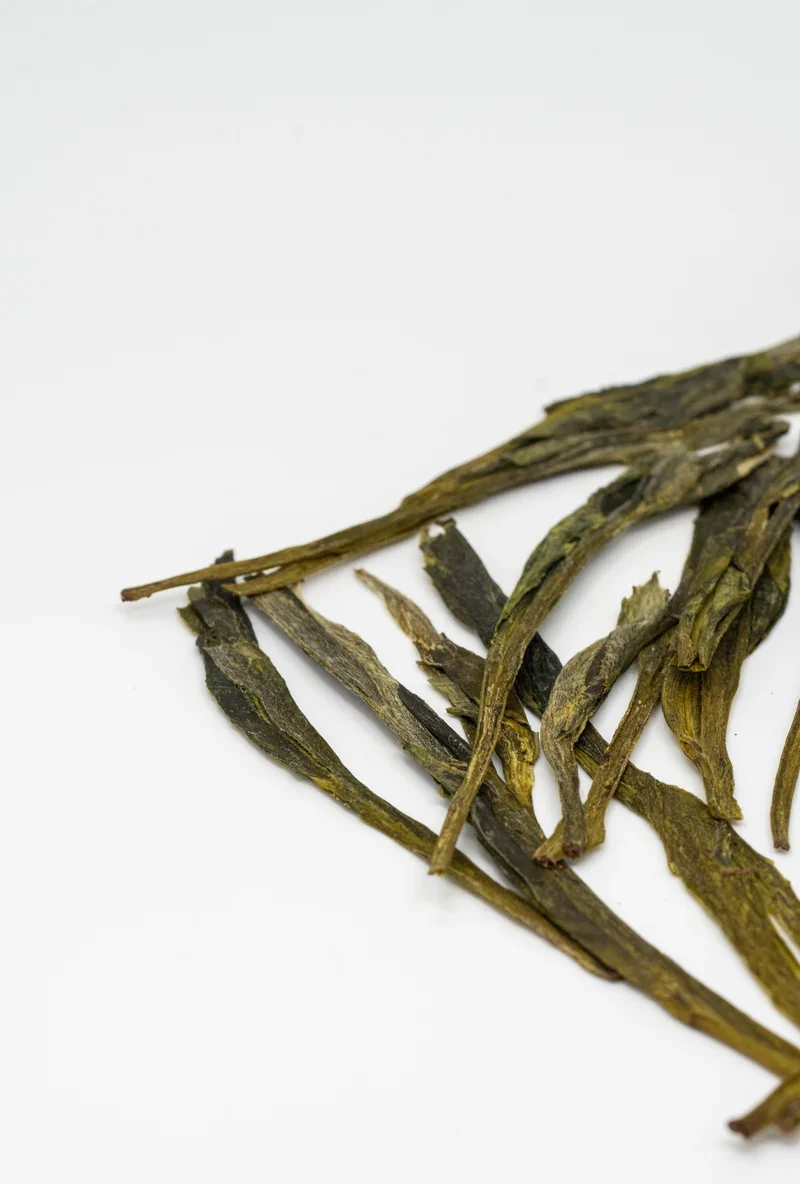

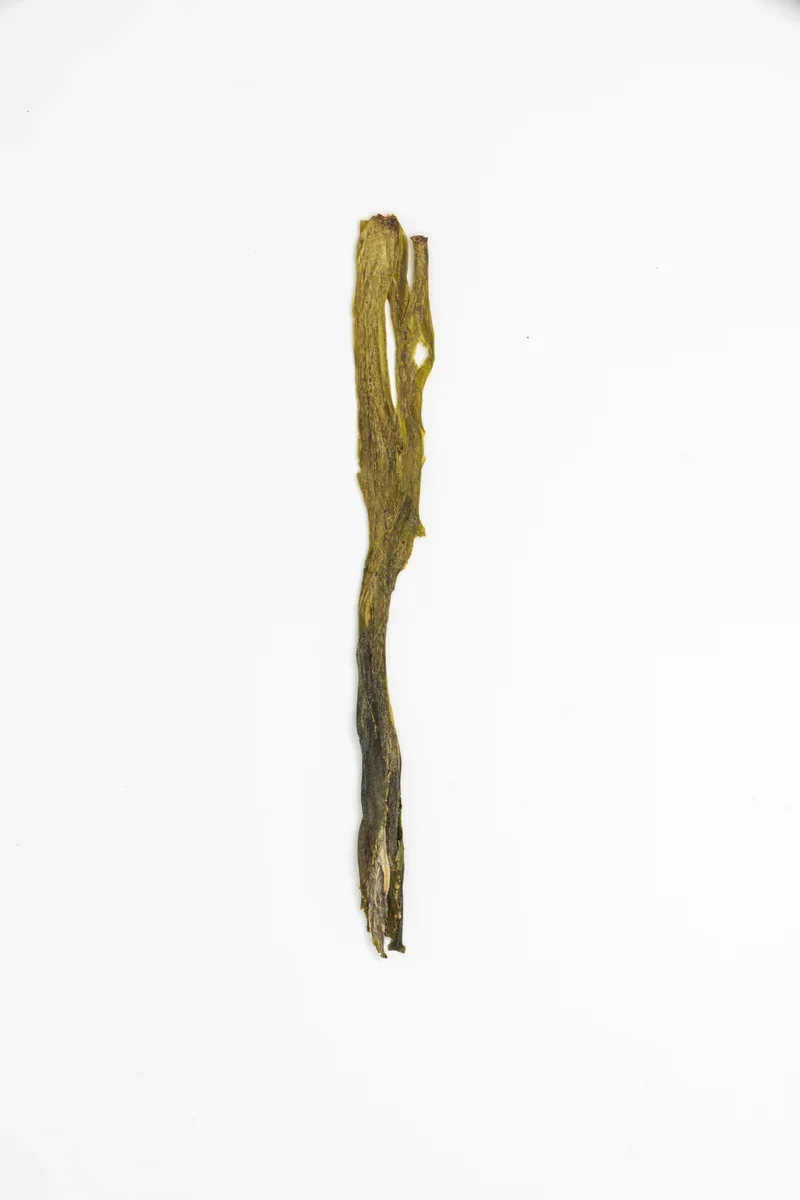
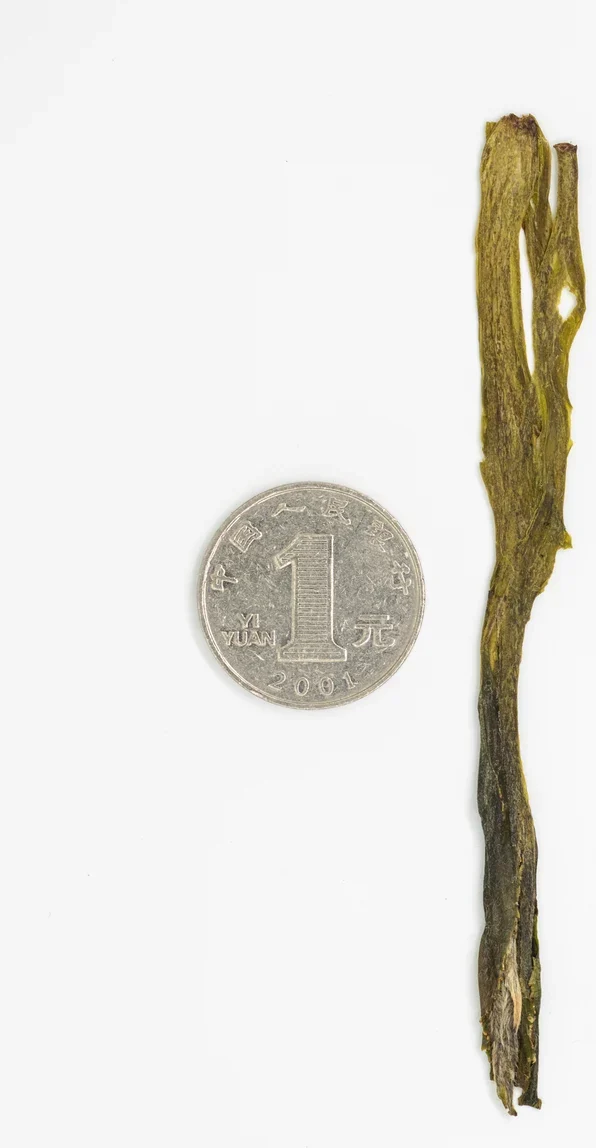
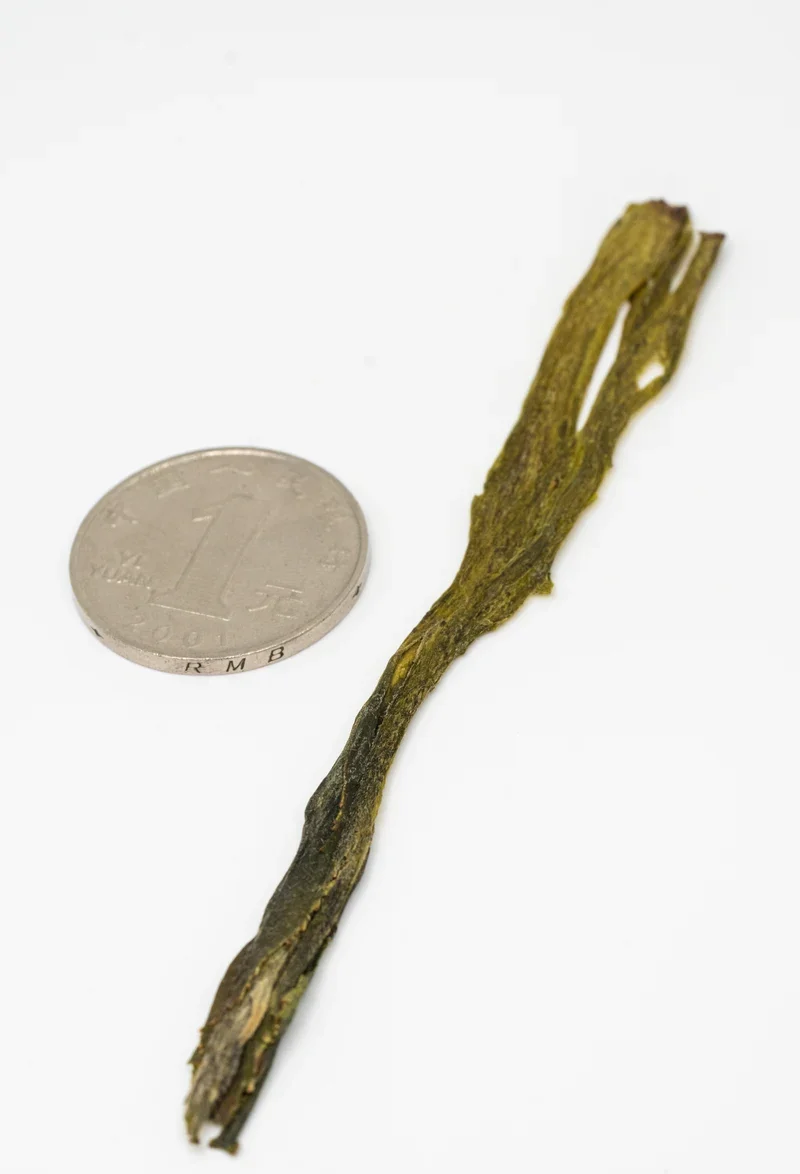
Tàipíng hóu kuí
Choose a brewing method. Start with the recommended quantities and time, then adjust to taste.
Brewing
Brewing
Taste
Tea encyclopedia
Category: Famous Teas of China (中国十大名茶, Zhōngguó shí dà míng chá) — included in the canonical list of China's ten greatest teas. Holder of the title "King of Green Teas" (绿茶茶王, lǜchá chá wáng), awarded at the International Tea Exhibition in 2004.
Category: Famous Teas of China (中国十大名茶, Zhōngguó shí dà míng chá) — included in the canonical list of China's ten greatest teas. Holder of the title "King of Green Teas" (绿茶茶王, lǜchá chá wáng), awarded at the International Tea Exhibition in 2004.
GB/T 19698-2008 "Geographic Indication — Taiping Houkui Tea" (地理标志产品 太平猴魁茶).
Coordinates: 29°59′14″–30°31′05″ N, 117°50′15″–118°20′20″ E.
Origin: China, Ānhuī Province (安徽省, Ānhuī shěng), Huángshān City (黄山市, Huángshān shì), Huángshān District (黄山区, Huángshān qū) — historically Tàipíng County (太平县, Tàipíng xiàn). The main production zone encompasses 14 townships and towns of the district, including Xīnmíng (新明乡, Xīnmíng xiāng), Lóngmén (龙门, Lóngmén), Sānkǒu (三口, Sānkǒu) and others. The core area (核心产区, héxīn chǎnqū) consists of three villages in Xīnmíng Township at the foot of Fenghuangjian Peak (凤凰尖, Fènghuáng Jiān, 750 m):
Type: Green tea (non-oxidized). Subcategory — jiancha (尖茶, jiānchá), "pointed" or "peak" tea — a class of green teas from Anhui Province with characteristic elongated leaf form.
Prefer companies with license to use "Taiping Houkui" geographical indication — for example, "Houkeng Tea Industry" (猴坑茶业), "Liubaili" (六百里), "Xie Yuda" (谢裕大).
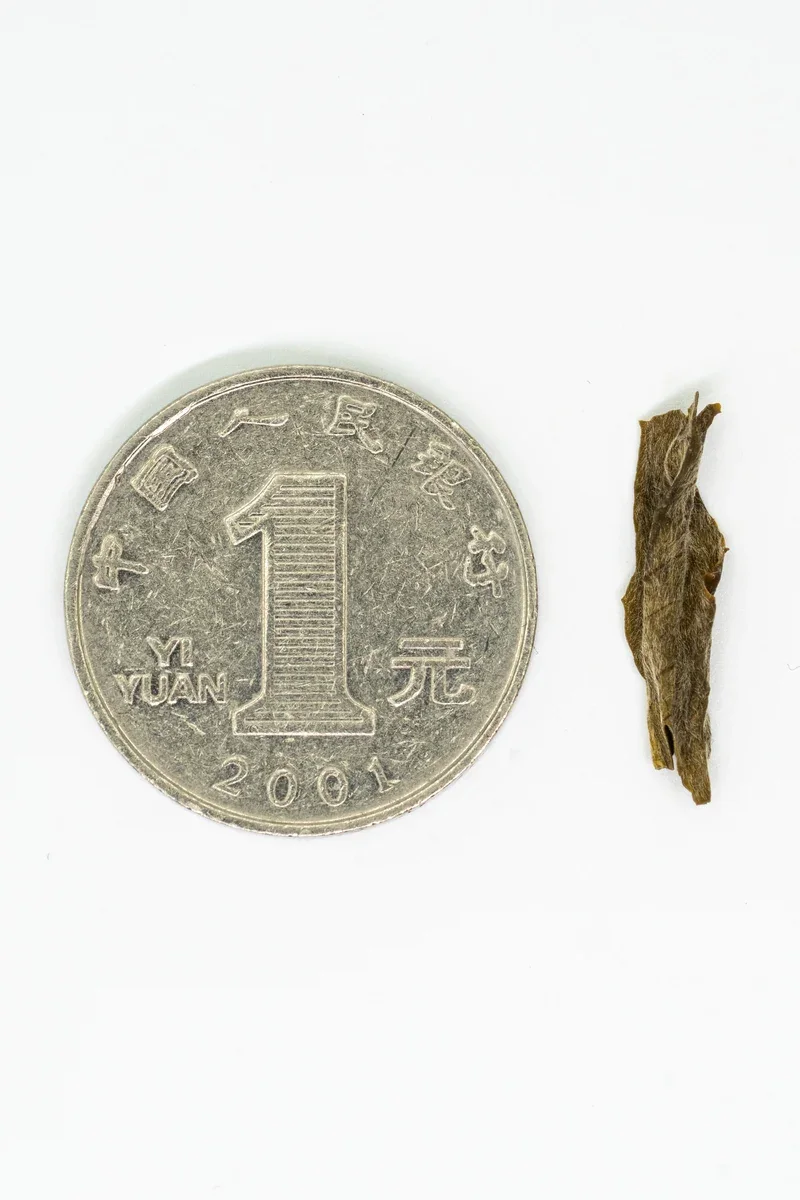
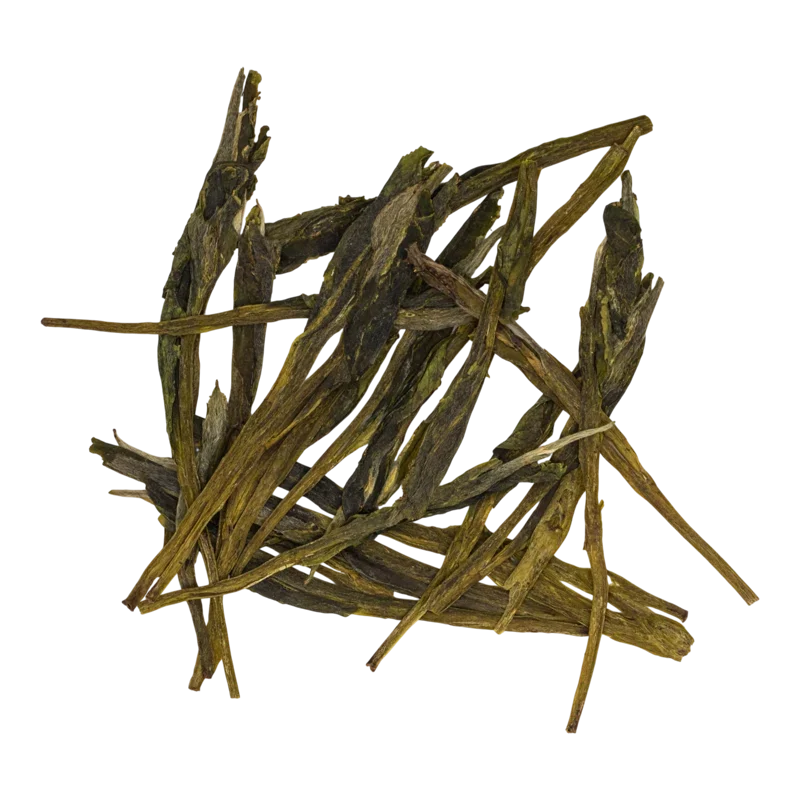
Authentic Houkui is flat, straight, large (5–7 cm), with mesh pattern from pressing and reddish veins ("red thread"). Counterfeit is often thinner, paler, without pronounced pattern, edges may curl.
Real tea has pure orchid aroma without grassiness or mustiness. When inhaling cold, aroma remains high and persistent.
Color — pure tender green, without turbidity. Taste — fresh, sweetish, without pronounced bitterness.
Hand-made Houkui production cost is high; too cheap tea is almost certainly machine product from non-central zones or counterfeit from another region.
Cultural Significance: Taiping Houkui is a symbol tea of Anhui Province, embodying elite tea artistry. Thanks to its unusual appearance (largest leaves among famous green teas), high cost, and limited production, it is considered an exquisite gift and attribute of prosperity. The unique category of taste experience — "monkey charm" (猴韵, hóu yùn) — places it alongside the "rock rhyme" (岩韵, yán yùn) of Wuyi oolongs and "Guanyin rhyme" (观音韵, guānyīn yùn) of Tieguanyin.
History: Taiping Houkui is a tea with a relatively young but brilliant history spanning just over one hundred years.
Cultivar: For production of authentic Taiping Houkui, exclusively the local large-leaf variety Shì Dà Chá (柿大茶, Shì Dà Chá) is used, literally — "Big tea [with leaves like] persimmon." Belongs to Camellia sinensis var. sinensis. This is a bush-type plant (灌木型, guànmù xíng) with semi-spreading crown and medium-late vegetation period. Characteristic features:
Picking: Picking begins in mid-April, during the "Grain Rain" period (谷雨, Gǔ Yǔ — 6th of the 24 solar terms), and continues for about two weeks. Summer and autumn picking is not conducted — bushes are left to recover and accumulate nutrients for the following spring.
Pluck Standard: One shoot with three to four leaves (一芽三、四叶, yī yá sān, sì yè), with the first leaf initially unfolded. A strict rule of "four selections, eight prohibitions" (四拣八不采, sì jiǎn bā bù cǎi) applies: buds, damaged, diseased, too small, overripe, wet from dew or rain leaves, etc. are not picked. Picking method — "lifting" (提手采, tí shǒu cǎi): the shoot is carefully broken off with an upward movement to avoid damaging the stem.
Raw Material: Shoots must be whole, rich green in color, fresh, without damage or foreign matter. Raw material is transported in open bamboo baskets (fabric and polyethylene bags are prohibited) and delivered to the factory in the shortest possible time.
Altitude: 350–750 m above sea level. Best quality comes from the 450–700 m zone, especially Houkeng village plantations above 500 m.
Climate: Subtropical humid monsoon (亚热带湿润气候). Average annual temperature — 15.5–16.4°C. Average annual precipitation — 1200–1556 mm. Relative humidity — over 80%. Average sunshine duration — 1727 hours per year. Frost-free period — about 255 days. Mountains are shrouded in mist and clouds almost year-round (云雾笼罩, yúnwù lǒngzhào), creating diffused light that slows photosynthesis and promotes accumulation of L-theanine and other amino acids.
Soil: Predominantly "wusha tu" (乌沙土) — dark sandy loams formed by weathering of metamorphic shales (志留纪康山组, Silurian sedimentary rocks). Characteristics: pH 4.8–6.5; deep profile (over 1.5 m); high organic matter content (up to 27 g/kg); good aeration and water retention; high potassium content with low calcium content — optimal ratio for tea bushes. Siliceous sandy soils provide significant diurnal temperature variation, favoring assimilate accumulation.
Tea gardens are located on northern slopes of the Huangshan mountain range, on the shady side of mountains (阴坡, yīn pō), by the shores of picturesque Tàipíng Lake (太平湖, Tàipíng Hú). Slopes are steep (25–40°), providing excellent drainage.
Forest cover exceeds 90%. Main species — evergreen broadleaf trees and bamboo. In tea garden understory, wild orchids (兰花, lánhuā), honeysuckle (金银花, jīnyínhuā), Litsea cubeba (山苍子, shāncāngzǐ), wild osmanthus (野桂花, yě guìhuā) grow abundantly — their aromas, according to tea growers, are absorbed by tea leaves and form the famous "monkey charm."
Described in section 3. Early morning, in dry weather.
Key preparatory stage. From picked shoots (一芽三叶), "tips" (尖头, jiān tóu) are manually selected — one bud with two leaves (一芽二叶, yī yá èr yè). The third leaf and petiole are discarded. This stage simultaneously serves as brief withering.
Selected shoots are spread in thin layers on bamboo trays (竹匾, zhú biǎn) for partial moisture loss. The process takes place in shade, lasting several hours. Light withering gives leaves plasticity and initiates primary enzymatic transformations favorable for aroma development.
Hand pan-firing in a wok (锅, guō) at about 110°C. Principle: "carry lightly, lift cleanly, shake opening" (带轻、捞净、抖开, dài qīng, lāo jìng, dǒu kāi). Duration — 2–3 minutes. Goal — inactivate enzymes, stop oxidation, remove grassy taste while preserving green color and fresh aroma. Important: fixation temperature for Taiping Houkui is lower than for most green teas, promoting gentler Maillard reaction and preserving high amino acid levels in finished tea.
Immediately after shaqing, while leaves are hot, the master manually straightens each shoot, flattening it and forming the characteristic configuration "two leaves embrace one bud" (两叶抱一芽, liǎng yè bào yī yá). Movements must be quick — cooled leaves lose plasticity.
Straightened shoots are laid between cotton cloth on special mesh frames and rolled with a small wooden roller (木滚, mù gǔn) — light pressure. This stage gives leaves their final flat form and leaves characteristic mesh pattern on their surface — cloth imprint.
Frames with leaves are placed on bamboo drying baskets (烘笼, hōng lóng) over charcoal. Initial temperature — about 100°C, gradually reduced to 70°C. Four drying baskets are used sequentially.
Temperature about 70°C. The master simultaneously dries and lightly presses leaves (边烘边捺, biān hōng biān nà), fixing their final form.
Final drying at 60°C — so-called "strong fire" (打老火, dǎ lǎo huǒ). Fully dried tea in hot state is packed in tin cylinders lined with bamboo leaves (箬叶, ruò yè) for protection from moisture and foreign odors.
Finished tea is sorted manually by size, shape, and quality.
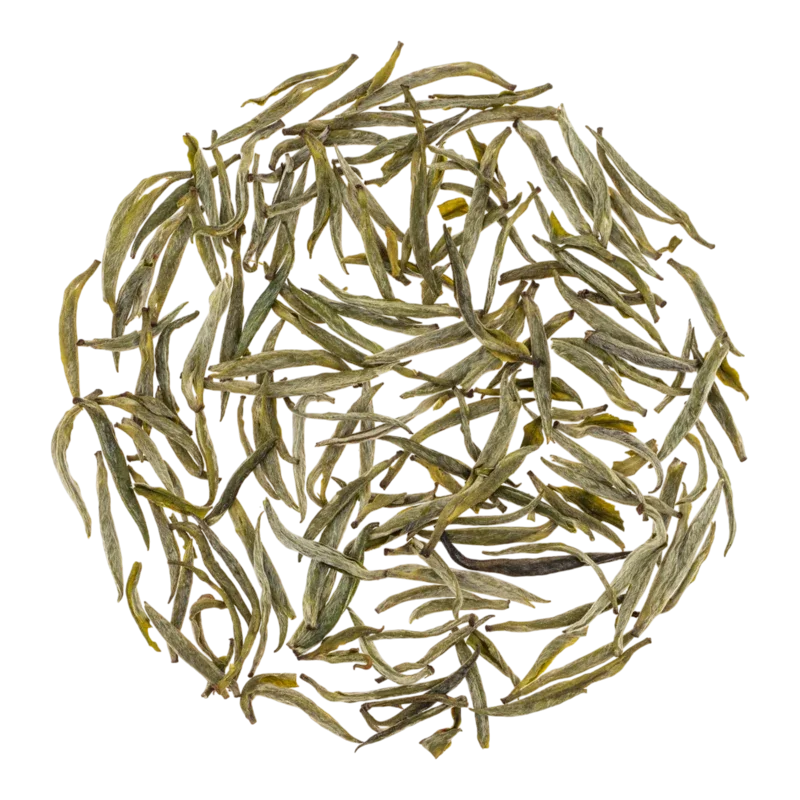
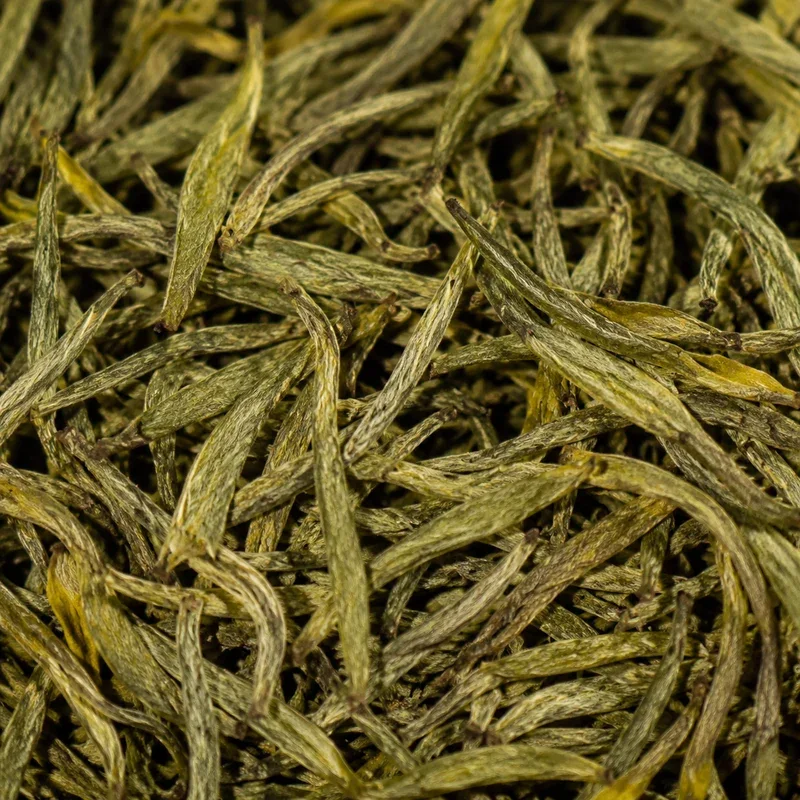
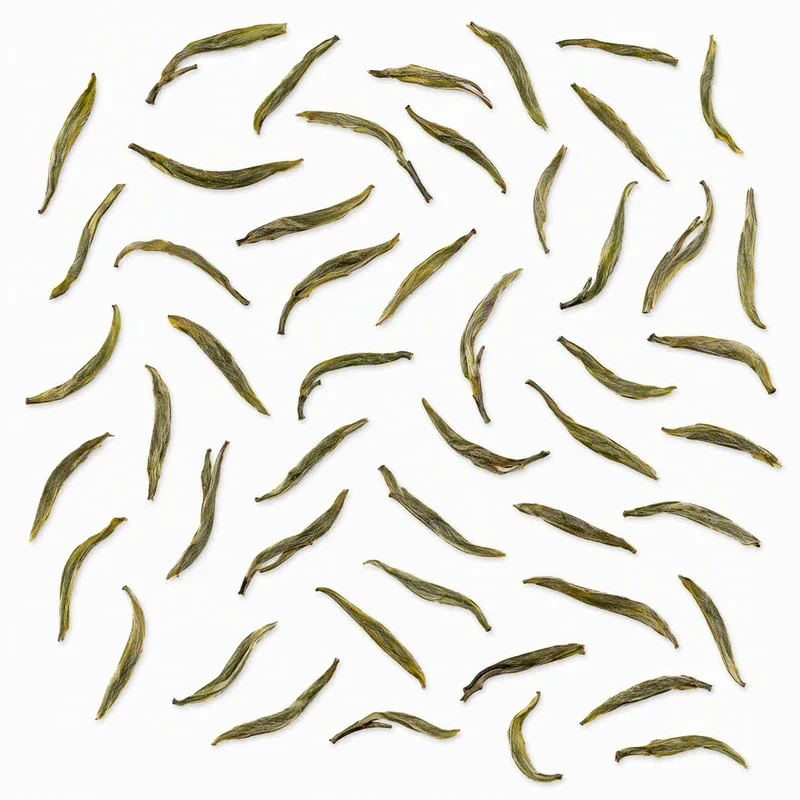
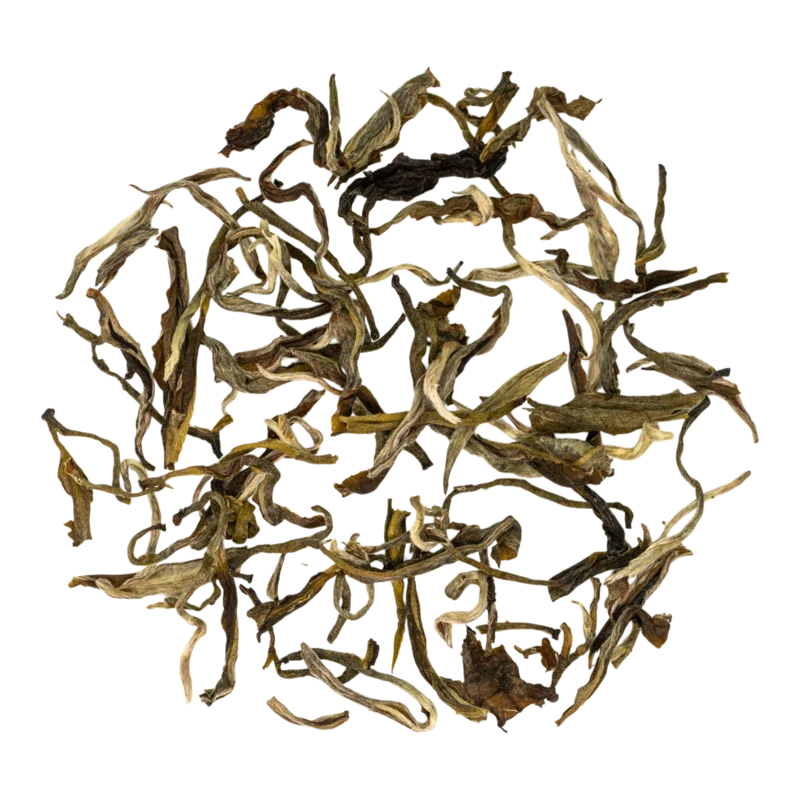
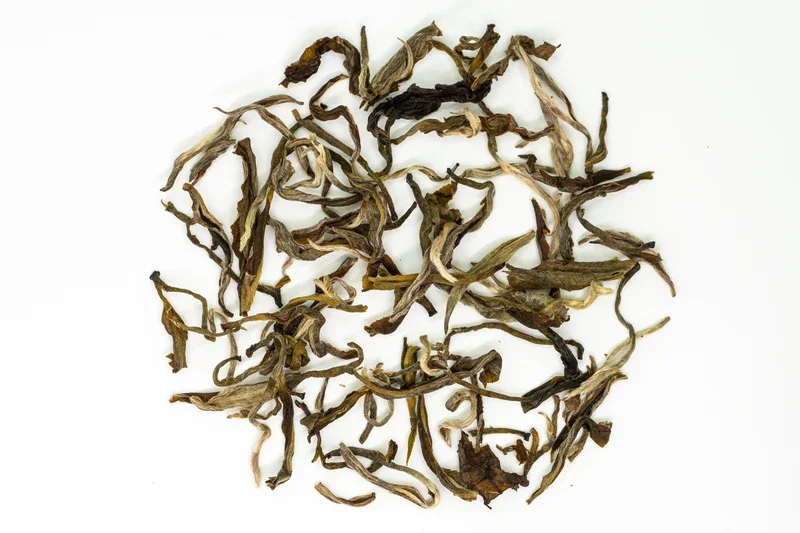
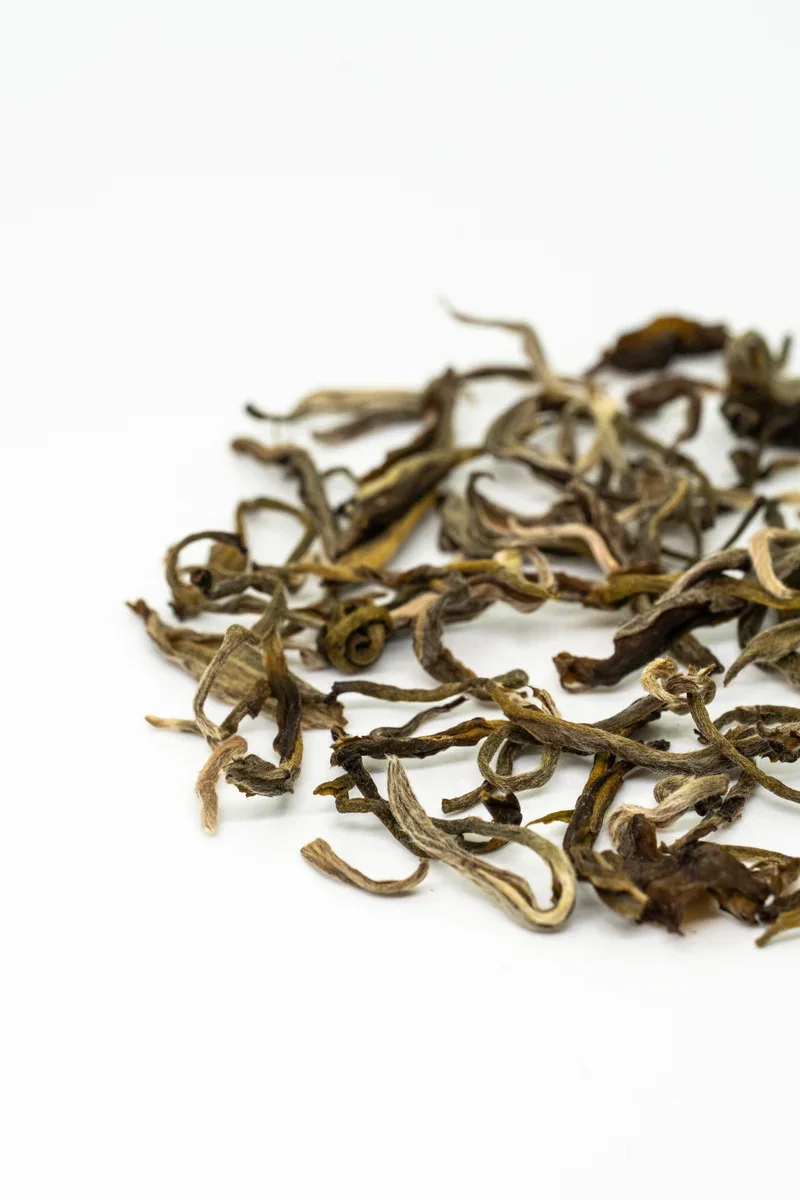
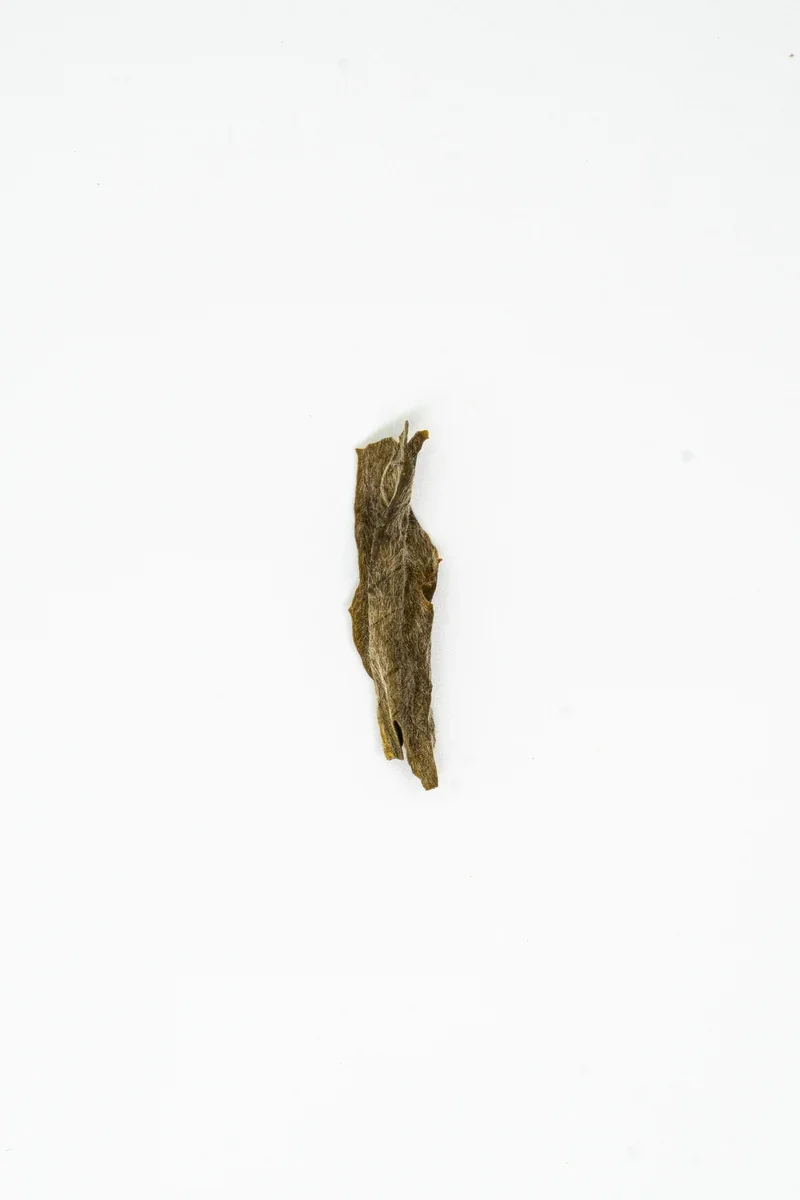
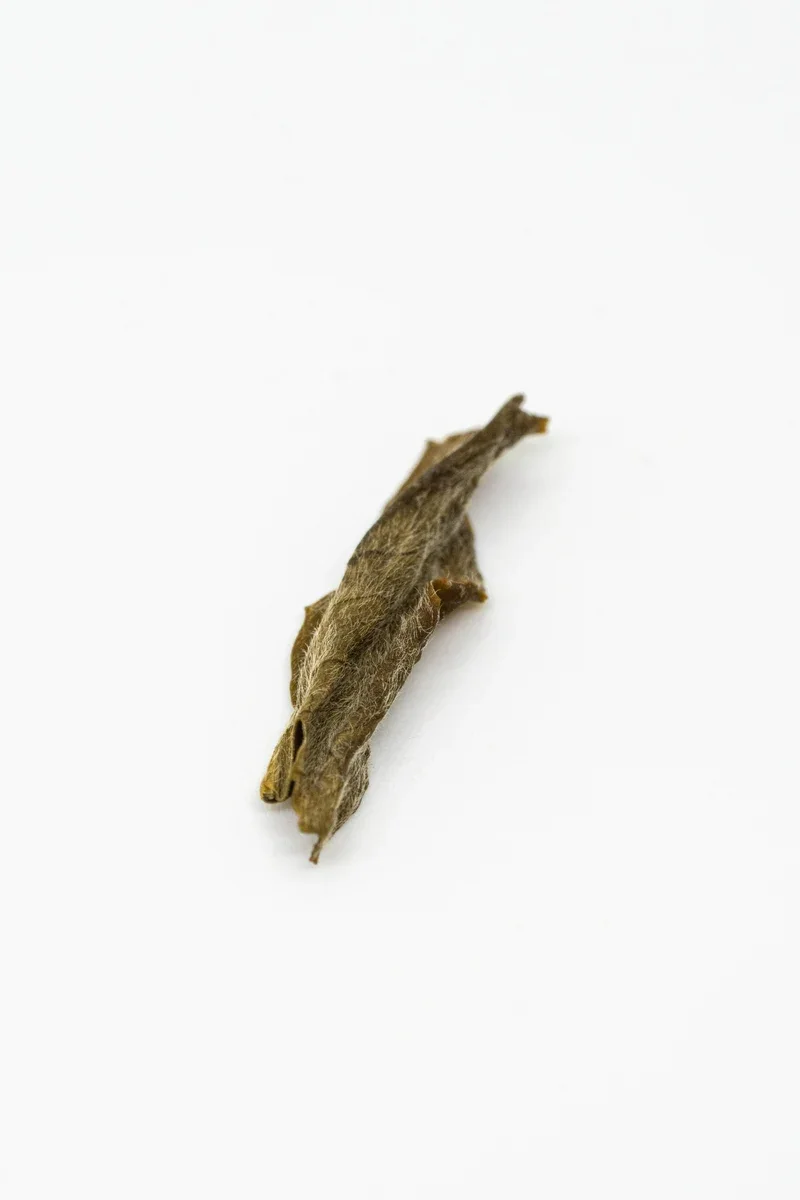
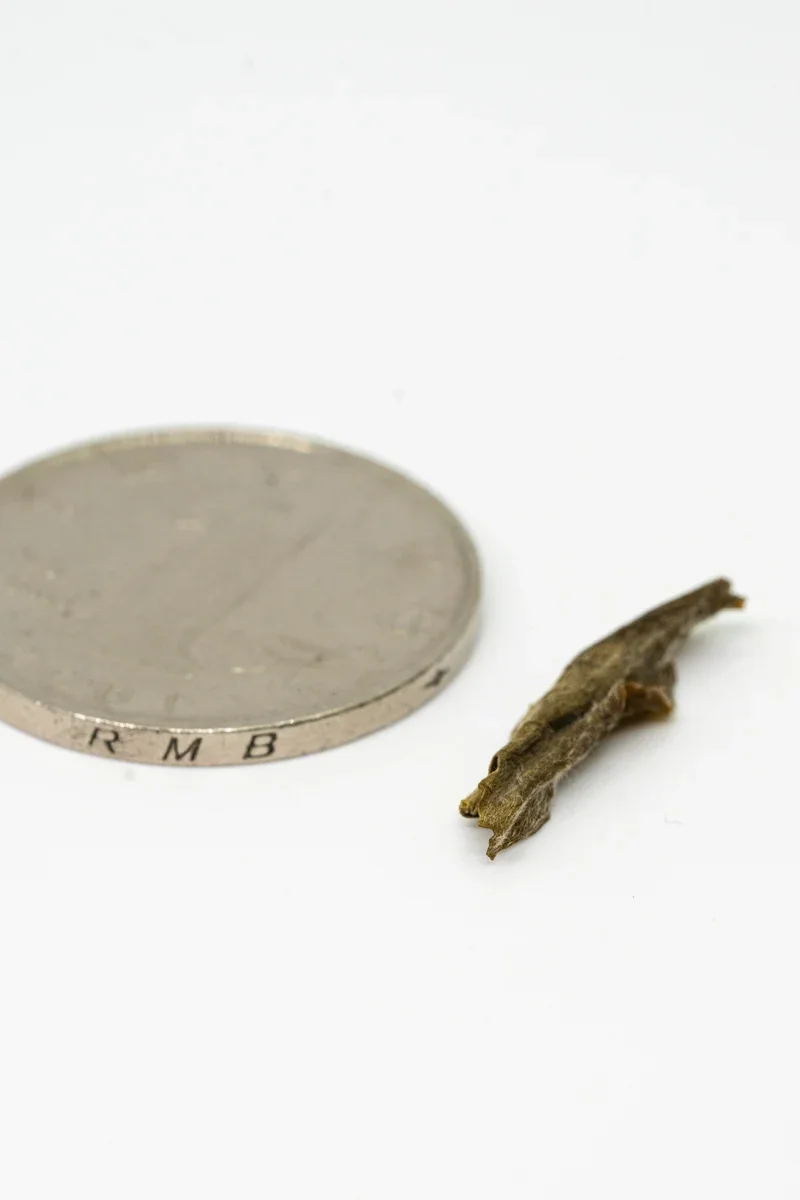
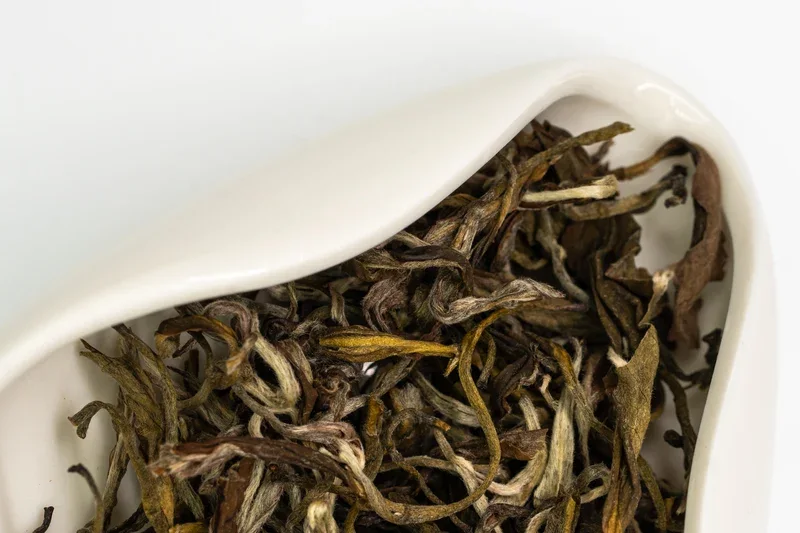
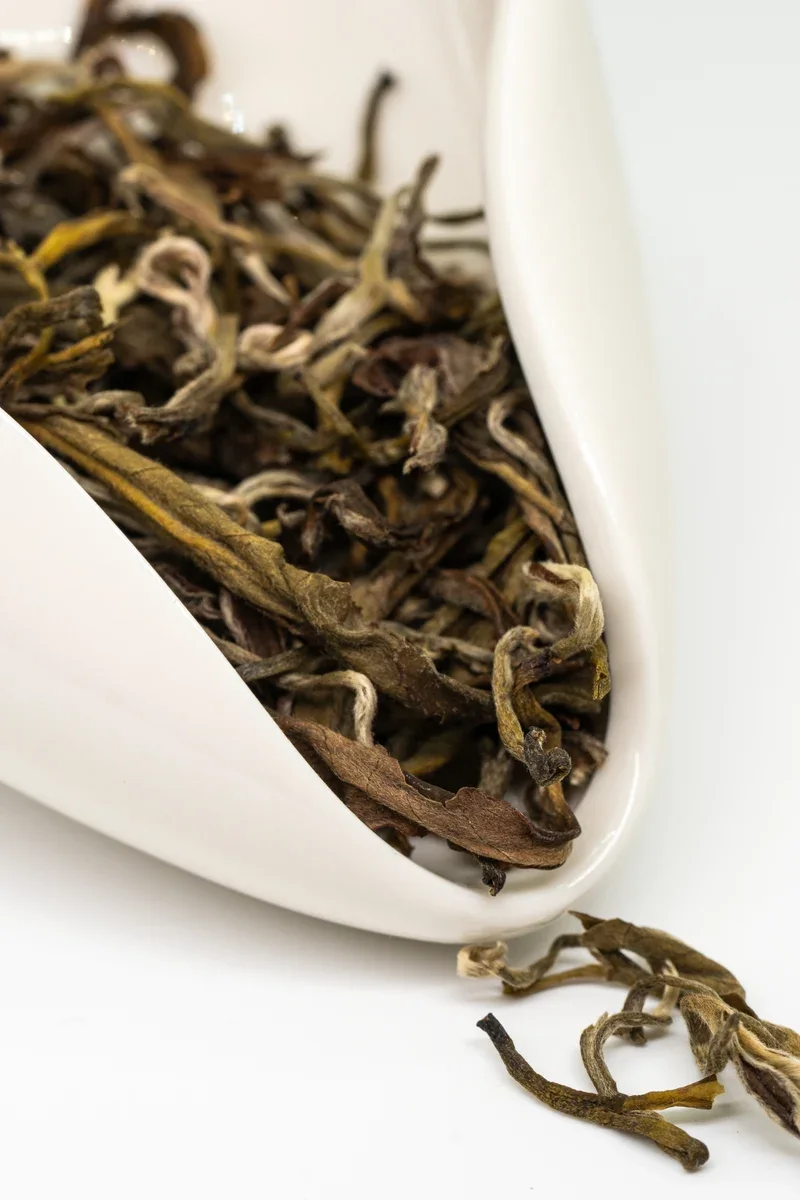
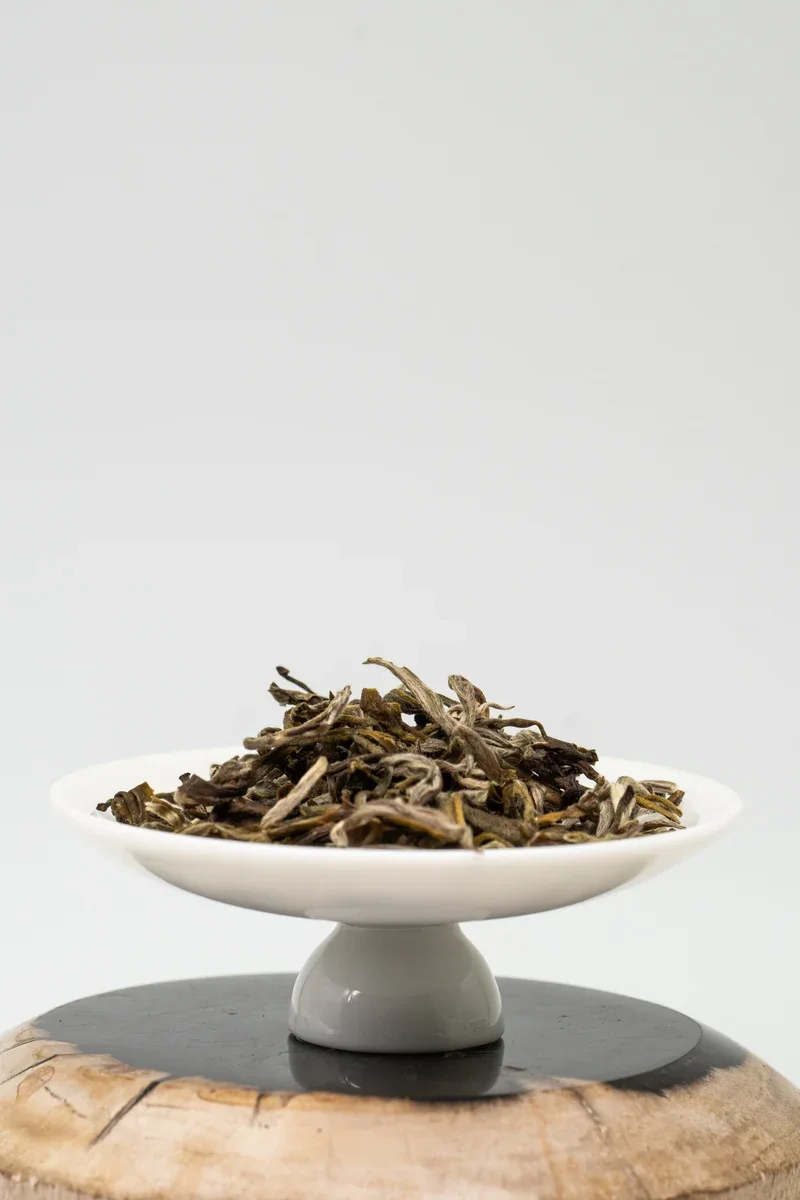
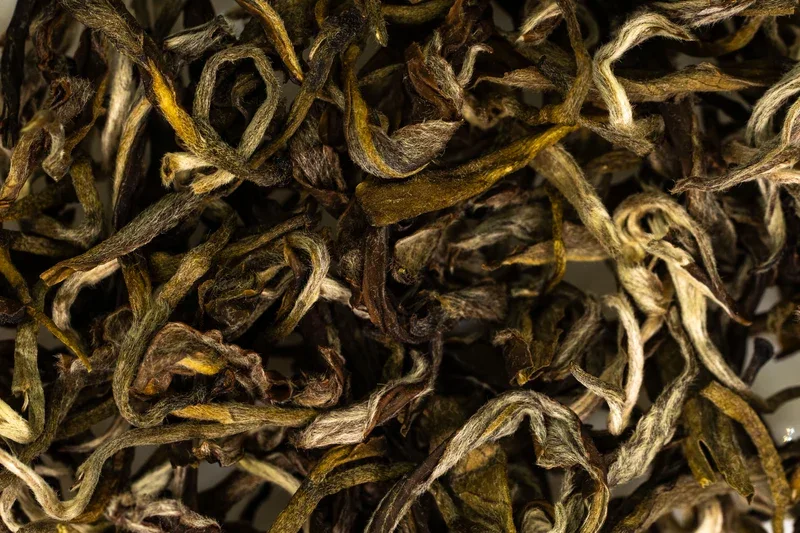
Dry Leaf Appearance: Very large (5–7 cm, individual leaves up to 10 cm), flat, straight, whole leaves in "two leaves embrace one bud" form. Characteristic motto: "Houkui has both ends pointed, doesn't scatter, doesn't curl, doesn't roll at edges" (猴魁两头尖,不散不翘不卷边). Color — dark green (苍绿, cānglǜ), even and glossy. Down is present but not conspicuous (白毫隐伏, báiháo yǐnfú). On the surface — characteristic mesh pattern from pressing. Along leaf veins, thin reddish threads can be noticed — "red thread" (红丝线, hóng sī xiàn) — sign of authenticity.
Dry Leaf Aroma: Intense, fresh, with pronounced orchid notes (兰花香, lánhuā xiāng), roasted chestnut and fresh greenery. Subtle nuances of wildflowers and honey.
Liquor Aroma: Pure, elevated orchid aroma (兰香高爽, lán xiāng gāo shuǎng) — the tea's calling card. Aroma is persistent: even when the cup cools, it maintains distinctness and doesn't lose height. Subtle, unobtrusive "phantom" aroma (幽香, yōu xiāng) is felt even after the third-fourth steeping.
Liquor Color: Tender green, clear, transparent, with bright luster (清绿明澈, qīng lǜ míng chè). Shade resembles green apple. Color is stable, doesn't yellow or redden when cooling.
Spent Leaves: Large, whole, fleshy, elastic leaves of tender green color (嫩绿匀亮, nèn lǜ jūn liàng), opened to full size. Shoots maintain "two leaves embrace one bud" configuration. Leaves are juicy and oily to touch — evidence of high raw material quality.
Taste: Fresh and brisk (鲜爽, xiān shuǎng) thanks to high amino acid content. Full-bodied and mellow (醇厚, chún hòu), yet soft without roughness — "rich without bitterness, mellow with character" (浓而不苦,醇而有味). Sweet aftertaste (回甘, huí gān) — long, refreshing. Notes of orchid, chestnut, green herbs, light honey undertone. Classic formula: first steeping — bright aroma, second — rich taste, third and fourth — subtle "phantom" aroma persists (头泡香高,二泡味浓,三泡四泡幽香犹存).
Amino Acids: Average 5.1% (4.7–5.6%), significantly higher than normal for green teas (usually about 3%). Leading component — L-theanine (茶氨酸), comprising over 70% of total amino acid content. L-theanine is responsible for sweet-fresh taste (鲜味, xiān wèi), as well as relaxing effect and softening caffeine action.
41.7–47.0%, average 44.2% — indicator of tea's richness in extractive substances; value above average for green teas.
4.4–6.8 (average — 5.5). For comparison: most green teas have this indicator at 8–15. Low "phenanbi" is the main reason Taiping Houkui liquor is "rich but not bitter."
Average 3.6% (in fresh Shi Da Cha leaves — up to 5.3%). Provides mild tonic effect.
Average 3.5% (up to 4.9%) — component responsible for sweetness and "returning sweetness" (回甘) of liquor.
Geraniol (香叶醇), linalool (沉香醇), β-ionone (β-紫罗酮) and other terpenoids forming characteristic orchid aroma.
indicators vary depending on specific plantation, growing elevation, picking date, and processing technology.
Minerals: Potassium, sodium, magnesium, copper, phosphorus, sulfur, fluorine, iron, zinc, manganese and others — total 28 inorganic elements.
Polyphenols: Average 28.2% (from 25% to 30% depending on specific plantation). Content is moderate, reducing bitterness and astringency. Main components — catechins, including epigallocatechin gallate (EGCG).
Vitamins: C, B₁, B₂, E, P, PP, K.
Caffeine stimulates the central nervous system, increases concentration and performance, relieves fatigue. Effect is mild thanks to high L-theanine content, which smooths caffeine's stimulating effect and promotes relaxed concentration.
Catechins (especially EGCG) neutralize free radicals, protecting cells from oxidative stress. Regular green tea consumption is linked to reduced risk of chronic diseases.
Polyphenols help reduce LDL cholesterol levels, strengthen vessel walls, normalize blood pressure. GABA (γ-aminobutyric acid, γ-氨基丁酸) content additionally aids blood pressure reduction.
Stimulates gastric juice secretion and intestinal peristalsis, aids fat breakdown after heavy meals.
High fluorine content (氟, fú) promotes fluorapatite formation, increasing enamel resistance to acid erosion.
Polyphenols have pronounced antibacterial properties, suppressing pathogenic microflora growth in oral cavity and gastrointestinal tract.
L-theanine improves cognitive indicators, promotes brain alpha-wave generation, creating calm focus state.
Theobromine and theophylline have mild diuretic action, promoting toxin elimination.
provided data is for general information and is not medical recommendation. Tea does not replace medications.
First steeping reveals bright aroma, second — taste fullness, third and fourth — subtle residual "phantom" aroma. Recommended to drink warm; don't brew on empty stomach (possible dizziness) and don't drink two hours before sleep.
Tea Amount: 3–5 g per 200–250 ml water.
Teaware: Ideally — tall straight glass cup (高直玻璃杯, gāo zhí bōli bēi), allowing observation of how large leaves slowly sink and unfold — a sight worthy of special attention. Porcelain gàiwǎn (盖碗, gàiwǎn) or glass teapot also suitable.
Water Temperature: 85–90°C. Boiling water is not recommended — it may cause bitterness and destroy delicate aromatic compounds.
Container: Airtight opaque packaging — porcelain or tin canister with tight lid, or zip-lock bag with air removed. Traditionally bamboo leaves (箬叶) are used for inner lining.
Humidity: Store in dry place; tea leaf is hygroscopic and quickly absorbs moisture.
Light: Exclude direct sunlight exposure — ultraviolet destroys chlorophyll and catechins.
Shelf Life: With proper refrigerator storage — up to 12–18 months. Best taste — in first 6 months after production.
Tea intensively absorbs foreign aromas — don't store near spices, coffee, perfumes.
Temperature: 0–5°C (refrigerator) — optimal for preserving green tea freshness. Tea should be placed in separate compartment, isolated from products with intense odors.
Thin reddish veins showing through leaf green are one of the most recognizable visual markers of authentic Taiping Houkui. Folk saying states: "Leaf vein is green, but red is hidden in green" (叶脉绿中隐红). "Red thread" appearance is related to pigment oxidation peculiarities in leaf veins during traditional processing.
In 1972, Taiping Houkui became element of "tea diplomacy" — Premier Zhou Enlai chose precisely this tea as gift to President Nixon, significantly raising the tea's international recognition.
In 1936, Bolivia's president, after reviewing chemical analysis results, recognized Taiping Houkui quality as surpassing even Xi Hu Longjing and attempted to purchase 1000 kg of seeds and hire 120 tea growers to transplant tea to South America. Contract was signed but later terminated due to inability to procure sufficient seed quantity.
Taiping Houkui is undisputed record holder among famous green teas for leaf size: individual specimens reach 10 cm length, 5–7 times larger than Longjing or Biluochun.
Shi Da Cha cultivar is officially prohibited from export beyond Huangshan District borders — unique case of "tea protectionism" aimed at preserving terroir exclusivity.
Leaves flat, unfolded, straight, large and mighty (魁伟壮实). Down abundant but not bright. Color — dark green, even, with luster. Aroma — persistent orchid. Taste — fresh, bright, rich, with pronounced "monkey charm" (猴韵). This is tea from core production zone, hand-made.
Flat, mighty, "two leaves embrace one bud." Dark green, even. Aroma — tender, pure, high. Taste — fresh, with returning sweetness.
Flat, dense. Down barely noticeable. Aroma — pure, high. Taste — fresh.
Flat, small amount of single leaves acceptable. Aroma — sufficiently high. Taste — rich.
"Two leaves embrace one bud," but form unevenness possible. Aroma — pure, proper. Taste — rich.
Prefer companies with license to use "Taiping Houkui" geographical indication — for example, "Houkeng Tea Industry" (猴坑茶业), "Liubaili" (六百里), "Xie Yuda" (谢裕大).
Authentic Houkui is flat, straight, large (5–7 cm), with mesh pattern from pressing and reddish veins ("red thread"). Counterfeit is often thinner, paler, without pronounced pattern, edges may curl.
Real tea has pure orchid aroma without grassiness or mustiness. When inhaling cold, aroma remains high and persistent.
Color — pure tender green, without turbidity. Taste — fresh, sweetish, without pronounced bitterness.
Hand-made Houkui production cost is high; too cheap tea is almost certainly machine product from non-central zones or counterfeit from another region.
No reviews yet. Tell us what you think of this tea.
Rate this tea and share your impressions. We review each submission before publishing it.