Brewing
Gongfu brewing
- Water temperature
- 75 °C
- Tea amount
- 5 g
- Water volume
- 100 ml
- First steep
- 10 s
- Time added per infusion
- 5 s
- Infusions
- 3

Sōngyáng yín hóu
Choose a brewing method. Start with the recommended quantities and time, then adjust to taste.
Brewing
Brewing
Taste
Tea encyclopedia
Category: National Geographical Indication Product (国家地理标志产品, 2008). Famous Tea of Zhèjiāng (浙江省名茶, 1984). Gold award at Shanghai International Tea Festival (2023). Tea for State Council meetings of the PRC (国务院会议指定用茶).
Category: National Geographical Indication Product (国家地理标志产品, 2008). Famous Tea of Zhèjiāng (浙江省名茶, 1984). Gold award at Shanghai International Tea Festival (2023). Tea for State Council meetings of the PRC (国务院会议指定用茶).
Coordinates: Approximately 28°27′ North latitude, 119°29′ East longitude.
Origin: China, Zhèjiāng Province (浙江, Zhèjiāng), Líshuǐ City (丽水市, Líshuǐ Shì), Sōngyáng County (松阳县, Sōngyáng Xiàn). The county is located in the upper reaches of the Ōu River (瓯江), surrounded by Máo Mountain (卯山), Wanshou Mountain (万寿山) and others, traversed by mountain streams. Forest coverage — 93%.
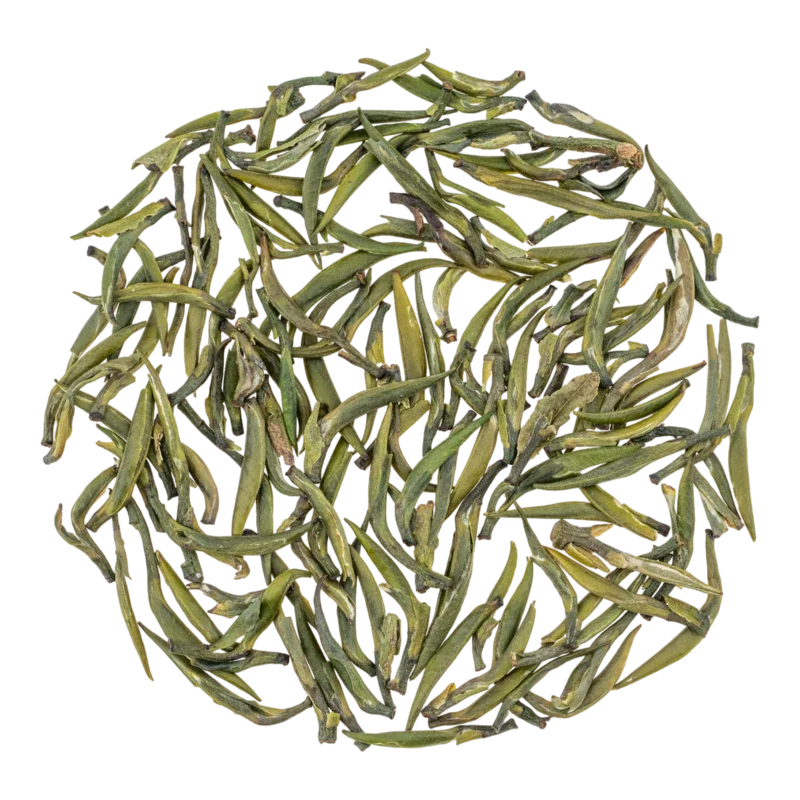
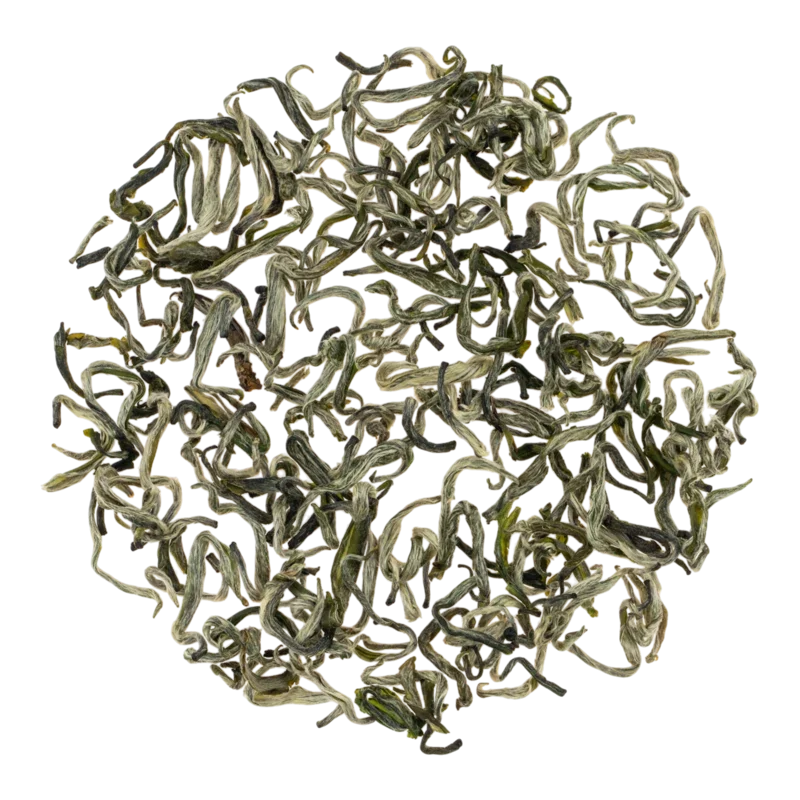
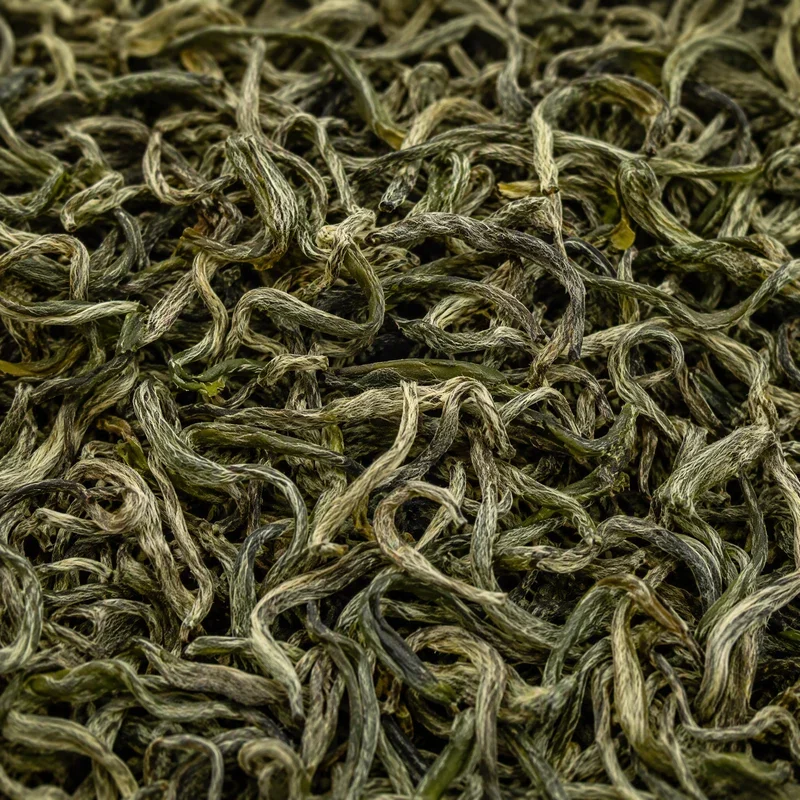
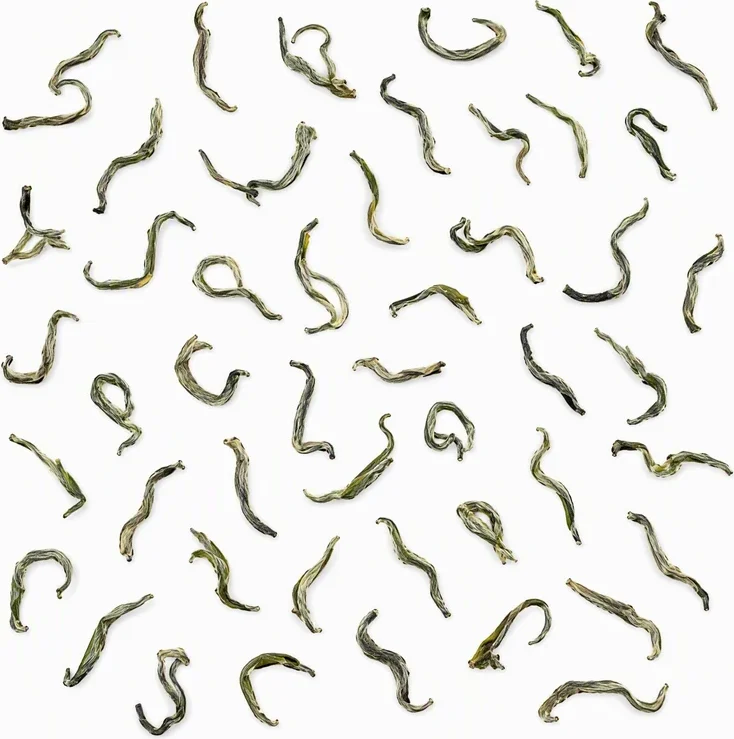
Type: Green tea (non-oxidized). By form — twisted "hook-shaped" (卷曲多毫, juǎnqū duōháo), with characteristic curves resembling "monkey paws" (弯钩状, wāngōu zhuàng).
Cultural Significance: Songyang is a "tea county" with deep roots: more than 40% of the population is somehow connected to the tea industry. Songyang Yin Hou is one of the few teas honored with the status of "State Council tea" (国务院会议指定用茶) — tea served at meetings of the highest state organ of the PRC.
History: Tea cultivation in Songyang dates back to the Tang era, when local teas were already known. During the Song era, the great poet Sū Dōngpō (苏东坡, Sū Dōngpō) praised tea from this region in verse: "The world sees not the milky flowers of Tiantai, where now is the jade nectar of Yuchuan?" (天台乳花世不见,玉川风液今何有) — confirming the high status of local tea a thousand years ago.
Cultivar: Local indigenous populations of Camellia sinensis var. sinensis. Shoots are fleshy, abundantly covered with down. Bushes are adapted to the humid mountain microclimate of Songyang.
Picking: Early spring. For the highest grade first category (特一级) — full buds or one bud with one leaf in initial opening stage (≥90%). Down — abundant, covering ≥90% of surface. For highest second category (特二级) — one bud with one leaf (≥80%). For first grade — one bud with one to two leaves. For second grade — one bud with two leaves.
Raw Material: Tender, fleshy, uniform shoots. Processing — on the day of picking.
Altitude: Main plantations — in mountain zones around 300+ m, in river valleys protected from wind by mountains.
Climate: Subtropical monsoon. Average annual temperature — 17.7°C, annual precipitation — 1511 mm. Average annual number of foggy days — ≥200. Relative humidity — ≥80%. Abundant diffused light.
Soil: Yellow clay (黄泥土, huángní tǔ) and "red pine clay" (红松泥, hóng sōng ní), pH 4.5–6.5. Profile depth — ≥0.5 m. Organic matter content — ≥1.0%.
Forest coverage — 93% — one of the highest indicators among tea-growing counties in China and the world. The Ou River and its tributaries traverse the territory, creating a microclimate of increased humidity.
In thin layer (1.5–2 cm) for withering.
At 150–200°C, alternating "tossing" and "smothering" (抛闷结合, pāo mèn jiéhé).
Three-stage — "light → heavy → light" (轻-重-轻).
At ~80°C the master uses special movements of "shaking, pressing, straightening" (抖捺理, dǒu nà lǐ) to form the characteristic "hook-shaped" curved form. This is the main and most virtuosic stage, determining the unique appearance of Yin Hou.
Two-stage: primary at 75°C, final at 50°C — gentle regime maximally preserving silvery down and chestnut aroma.
Dry Leaf Appearance: Tightly twisted, fleshy shoots with characteristic "hook-shaped" curves (卷曲多毫,弯钩状). Fleshy and uniform (肥壮匀整). Densely covered with silvery-white down — precisely the "silver" of the down and "monkey" form gave the tea its name.
Dry Leaf Aroma: Chestnut (栗香, lì xiāng) — main note, rich and persistent. Pure green freshness (清香持久). "Cold aroma" (冷香, lěngxiāng) — unique note characteristic of high-mountain ecological teas.
Liquor Aroma: Chestnut, persistent, with "cold" overtone.
Liquor Color: Tender green, clear, bright and transparent (嫩绿清澈明亮).
Spent Leaves: Tender, fleshy shoots gathered in "buds" (嫩绿成朵、匀齐肥嫩). Leaf is elastic, lively.
Taste: Fresh and brisk (鲜爽), mildly sweet (甘醇, gānchún), concentrated-fresh (浓鲜, nóngxiān) — amino acid note is especially pronounced. Returning sweetness is swift (回甘迅猛, huígān xùnměng) — one of the fastest and most powerful "huigan" among green teas.
Alkaloids: Caffeine — content 20% higher than average green tea (according to research). Provides pronounced tonic effect.
Amino Acids: High content — result of 200+ foggy days, abundant diffused light and organically rich soils. Precisely amino acids provide "swift huigan" — instantaneous returning sweetness.
Minerals: Potassium, magnesium, zinc, manganese.
Polyphenols: Significant content — provides antioxidant potential. According to research, free radical neutralization efficiency is 18 times higher than vitamin E.
Vitamins: Vitamin C, B-group vitamins.
Increased caffeine content (+20% above average) provides pronounced alertness. L-theanine softens and prolongs the effect.
Polyphenols — efficiency 18 times higher than vitamin E.
Tea belongs to "slightly cool" (性微寒, xìng wēi hán) — relieves "internal heat."
Catechins.
Vitamin-mineral complex.
the listed properties are based on publicly available data and are not medical recommendations.
freshly purchased tea is recommended to rest 15 days for "fire taste to dissipate." Do not pour boiling water — this destroys chlorophyll and gives yellowness.
Tea Amount: 3 g per 150 ml water (1:50 ratio).
Teaware: Glass cup — for observing "silver monkeys" swirling in water.
Water Temperature: 85–90°C.
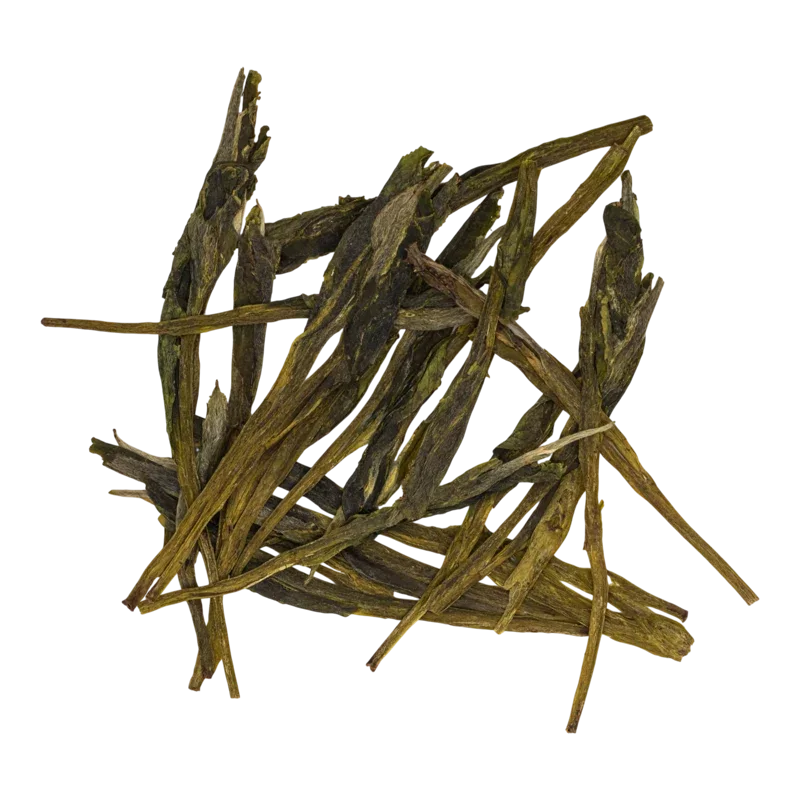
From western Zhejiang. Straight, needle-like, orchid-like. Long Ding is more "green" and visually spectacular; Yin Hou is more twisted and chestnut-like, with powerful huigan.
From Anhui. Also "monkey" tea, but — large flat leaf with deep orchid aroma. Hou Kui is "monumental"; Yin Hou is compact, fleshy, "hook-shaped."
Fellow from Lishui City. Milky-white buds, orchid-fruity aroma. Huimingcha is more "white" and fruity; Yin Hou is more "silver" and chestnut-like.
Flat, bean-chestnut. Long Jing is elegantly flat; Yin Hou is expressively twisted. Different philosophies of form, but both from Zhejiang.
characteristic "hook-shaped" curves, fleshy shoots with abundant silvery down. Straight or loose tea leaves — not Yin Hou.
persistent chestnut tone with "cold" note. Absence of chestnut — suspicious.
swift, powerful returning sweetness — authenticity marker. Weak or absent huigan — counterfeit.
suspiciously low — sign of counterfeit.
No reviews yet. Tell us what you think of this tea.
Rate this tea and share your impressions. We review each submission before publishing it.