Brewing
Gongfu brewing
- Water temperature
- 75 °C
- Tea amount
- 5 g
- Water volume
- 100 ml
- First steep
- 10 s
- Time added per infusion
- 5 s
- Infusions
- 3

Kāihuà lóng dǐng
Choose a brewing method. Start with the recommended quantities and time, then adjust to taste.
Brewing
Brewing
Taste
Tea encyclopedia
Category: National Geographical Indication Product (中国国家地理标志产品). First place by total score among "Ten Famous Teas of Zhejiang" (2004). In 1985 — title of "National Famous Tea" (全国名茶). Multiple winner of gold awards at international competitions.
Category: National Geographical Indication Product (中国国家地理标志产品). First place by total score among "Ten Famous Teas of Zhejiang" (2004). In 1985 — title of "National Famous Tea" (全国名茶). Multiple winner of gold awards at international competitions.
Coordinates: Approximately 29°08′ North latitude, 118°25′ East longitude.
Origin: China, Zhèjiāng Province (浙江, Zhèjiāng), Qúzhōu City (衢州市, Qúzhōu Shì), Kāihuà County (开化县, Kāihuà Xiàn). Production zone — mountainous areas at altitudes of 600–800 m. Kaihua is located at the junction of three provinces — Zhejiang, Anhui and Jiangxi — in the heart of the "Golden Triangle of Green Tea."
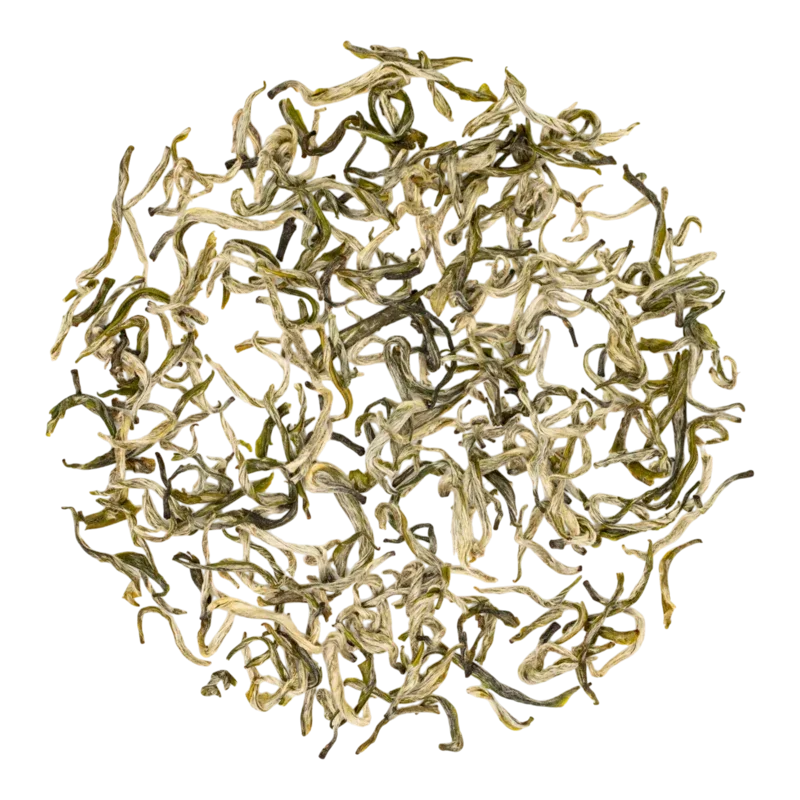
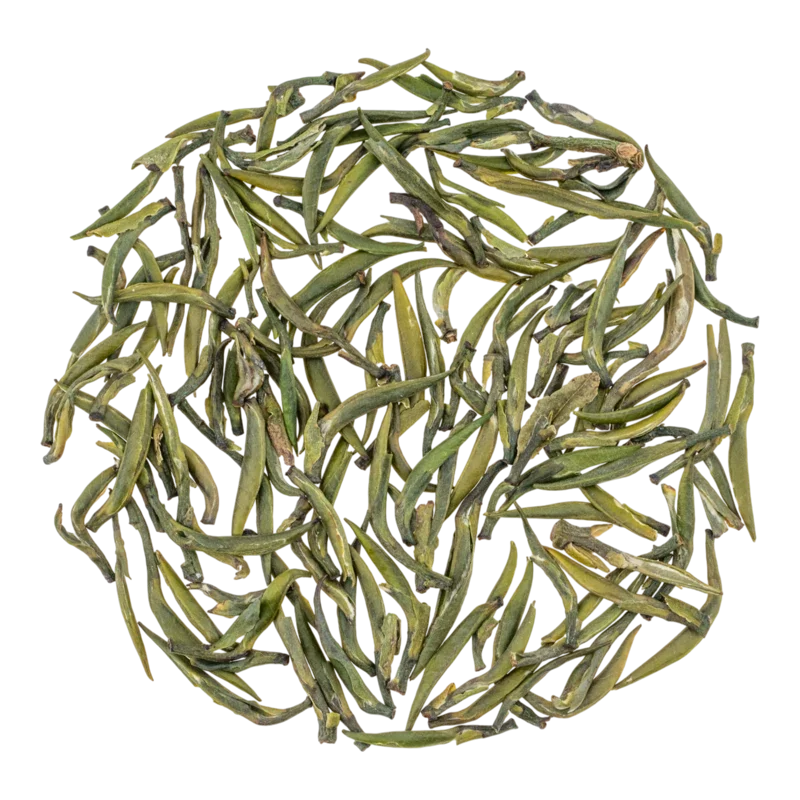
Type: Green tea (non-oxidized). By technology — pan-firing combined with oven-drying (炒烘结合, chǎo hōng jiéhé): combination of pan-firing for shaping and oven-drying. Shape — straight, needle-like (针芽状, zhēnyá zhuàng).
Cultural Significance: Kaihua Long Ding is the pride of western Zhejiang and the "Golden Triangle of Green Tea." The county's forest coverage — 80.4% — is one of the highest indicators in China, making Kaihua a model of "ecological tea cultivation." The tea embodies the philosophy of "purity of three greens" — harmony between natural ecosystem and artisanal technology.
History: Tea cultivation in Kaihua is documented from the Ming era: in the "Records of Kaihua County" (开化县志, Kāihuà Xiàn Zhì) from 1631 (fourth year of Chongzhen reign, 崇祯) it is recorded: "Four jin of tribute bud tea are presented" (进贡芽茶四斤). In the Qing era, during the Guāngxù period (光绪, 1875–1908), tea from Kaihua was supplied to the court under the name "Baimaojian" (白毛尖, "White Downy Tip") with strict delivery time restrictions.
Full buds or one bud with one leaf in initial opening stage. Buds fleshy, "luminous" (光韵明显). Orchid aroma persistent, taste fresh and sweet.
One bud with one leaf. Straight, even shoots, clean persistent aroma, full taste.
One bud with one to two small leaves. Still even, mild taste.
Coarser raw material. Simple taste.
Cultivar: The foundation of production is Jiūkēng Quntizong (鸠坑群体种, Jiūkēng Qúntǐzhǒng) — a famous indigenous small-leaf variety of Camellia sinensis var. sinensis, comprising 49.8% of plantings. Additionally: Fúdǐng Dàbáichá (福鼎大白茶), Cuìfēng (翠峰), and the new promising variety Longding 1 (龙顶1号, Lóngdǐng 1 hào) — a hybrid of Jiaming 1 (嘉茗1号) and Longjing 43 varieties, distinguished by ultra-early vegetation onset and pronounced floral aroma.
Picking: Spring — most valuable (明前, mingqian; 雨前, yuqian). Autumn — second in importance. Summer — coarsest.
Pluck Standard: Four grades:
Altitude: 600–800 meters above sea level. Tea gardens are surrounded by forests and mountain streams.
Soil: Acidic red and yellow soils (红黄壤, hónghuáng rǎng), rich in minerals. Terrain — mountainous, with abundance of valleys where fog accumulates.
Kaihua County is one of the "greenest" in China: forest coverage — 80.4%. Average annual temperature — 16.3°C, annual precipitation — 1990 mm (one of the highest in Zhejiang), average annual number of foggy days — more than 83. Abundance of diffused light and high humidity create ideal conditions for tea cultivation.
Kaihua is located at the junction of Zhejiang, Anhui and Jiangxi — a zone considered ideal for green tea production: here the influences of Zhejiang's oceanic climate, Anhui's mountainous terrain and Jiangxi's subtropical warmth intersect.
Brief spreading for withering.
In rolling drum or by hand method. Temperature — depending on method.
Light shaping.
Preliminary drying.
Double shaping (二次理条塑形) — key stage, giving buds straight, elegant, needle-like form with exposed white down (白毫披露).
Charcoal or mechanical. Slow heating (文火提香) — preservation of orchid aroma, which is the "signature note" of Long Ding.
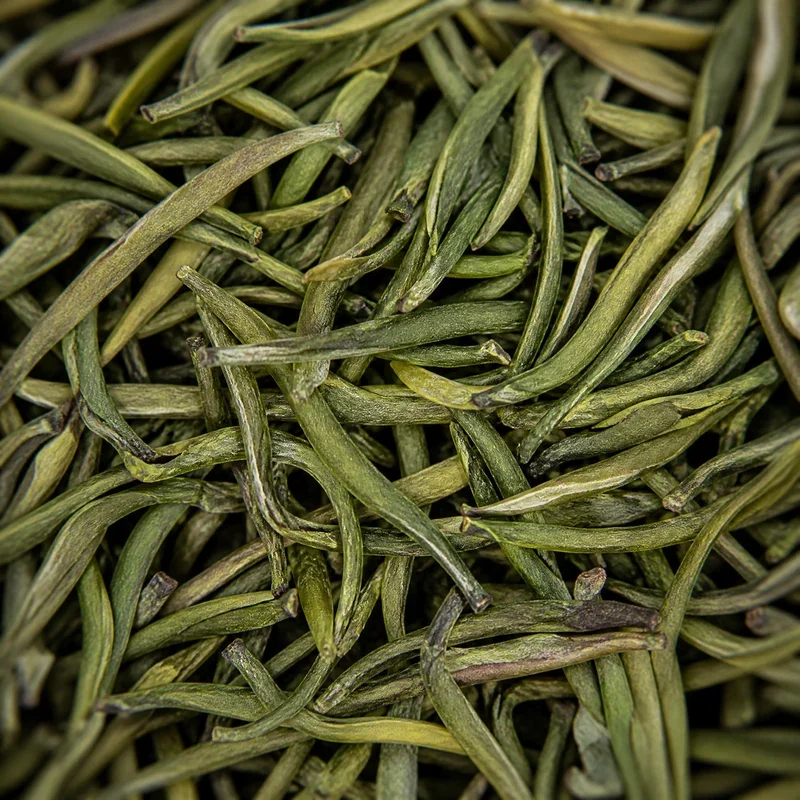
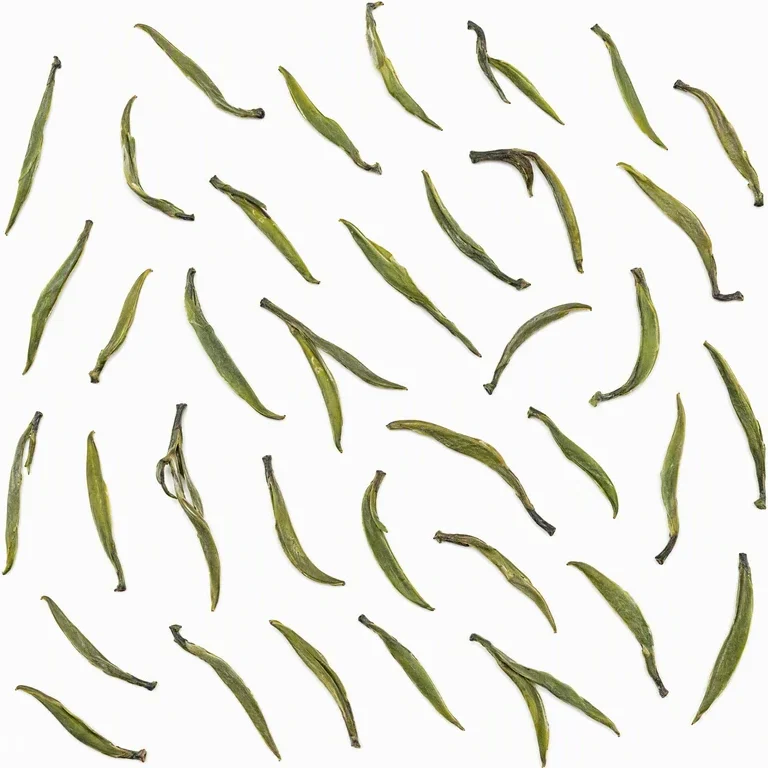
Dry Leaf Appearance: Straight, elegant, needle-like buds (紧直挺秀, jǐnzhí tǐngxiù), covered with silvery white down (白毫披露). Color — bright green. In highest grades — uniform, elegant, "like pine needles" (似针芽).
Dry Leaf Aroma: Orchid aroma (兰花香, lánhuā xiāng) — main aromatic characteristic by which Long Ding is unmistakably recognized. Chestnut note (板栗香, bǎnlì xiāng) — secondary. Clean green freshness.
Liquor Aroma: Orchid, persistent and elegant. With careful tasting — chestnut overtones.
Liquor Color: Green, clean and clear — the "greenness" of the liquor is one of the "three greens" (三绿).
When using a glass cup, straight buds stand vertically in the water, creating the effect of "Forest in a Cup" (杯中森林) or "Emerald Dragon Dancing in the Sea" (翠龙舞海, cuìlóng wǔhǎi). This is one of the most spectacular tea shows among Chinese green teas.
Spent Leaves: Tender, uniform, bright green shoots — third of the "three greens."
Taste: Fresh, mellow and brisk (鲜醇爽口, xiānchún shuǎngkǒu), sweet (甘甜, gāntián), with umami note of amino acid freshness. Rich (醇厚). Aftertaste — long, with "throat resonance" (喉韵悠长, hóuyùn yōucháng).
Alkaloids: Caffeine — moderate content.
Amino Acids: Elevated content — result of abundant fog and diffused light. Provides freshness and umami.
Minerals: Potassium, magnesium, zinc, manganese.
Polyphenols: High content — provides antioxidant potential and contributes to cholesterol reduction.
Vitamins: Vitamin C, carotenoids.
High polyphenol content neutralizes free radicals.
Catechins contribute to cholesterol level reduction.
Caffeine and L-theanine.
Thirst quenching in hot weather.
Stimulation of fat breakdown.
the listed properties are based on publicly available data and are not medical recommendations.
do not oversteep to avoid bitterness — especially relevant for summer tea. For connoisseurs, three stages of tasting are recommended: observing form (观形), inhaling aroma (闻香), evaluating taste (品味).
Tea Amount: 3 g per 150 ml (ratio 1:50). For "direct drinking" in a large cup — up to 1:75–1:150.
Teaware: Glass cup (玻璃杯) — mandatory choice for observing the "Forest in a Cup" effect. White porcelain gaiwan — for aroma evaluation.
Water Temperature: 85–95°C — Long Ding, thanks to its needle-like form and dense structure, withstands higher temperature than many delicate green teas.
Flat, bean-chestnut. Longjing — "architectural" and umami-oriented; Long Ding — needle-like, orchid, "forest."
From Jiangsu. Tight spirals with floral-fruity aroma. Biluochun — more delicate and fruity; Long Ding — more straightforward and "green."
From northern Zhejiang. Green tea from albino shoots. Anji — "pure sweetness"; Long Ding — more orchid and visually spectacular.
From Hangzhou. Twisted "mao feng." Jingshan — more historically deep; Long Ding — more elegant and "needle-like," with more pronounced "Forest in Cup."
straight, elegant "needles" with white down. Twisted or flat tea leaves — different type of tea.
when brewing in glass cup, buds should stand vertically. Absence of this effect — reason for doubt.
orchid note — signature mark. Absence of orchid — sign of counterfeit.
suspiciously low price — reason to be alert.
No reviews yet. Tell us what you think of this tea.
Rate this tea and share your impressions. We review each submission before publishing it.