Brewing
Gongfu brewing
- Water temperature
- 75 °C
- Tea amount
- 5 g
- Water volume
- 100 ml
- First steep
- 10 s
- Time added per infusion
- 5 s
- Infusions
- 3


huìmíngchá
Choose a brewing method. Start with the recommended quantities and time, then adjust to taste.
Brewing
Brewing
Taste
Tea encyclopedia
Category: National Geographical Indication Product (国家地理标志保护产品). Gold medal winner of the 1915 Panama-Pacific International Exposition (巴拿马万国博览会金质奖章). Historic famous tea of Zhejiang.
Category: National Geographical Indication Product (国家地理标志保护产品). Gold medal winner of the 1915 Panama-Pacific International Exposition (巴拿马万国博览会金质奖章). Historic famous tea of Zhejiang.
Coordinates: Approximately 27°58′ North latitude, 119°38′ East longitude.
Origin: China, Zhèjiāng Province (浙江, Zhèjiāng), Líshuǐ City (丽水市, Líshuǐ Shì), Jingning She Autonomous County (景宁畲族自治县, Jǐngníng Shēzú Zìzhìxiàn) — the only She nationality autonomous county in China. Geographical indication zone — the entire county. Core terroir — Huìmíng Temple Village (惠明寺村) in Hèxī Town (鹤溪镇, Hèxī Zhèn) and the slopes of Chìmù Mountain (敕木山, Chìmù Shān).
Type: Green tea (non-oxidized). Produced in two forms: spiral (螺形, luóxíng) and flat (扁形, biǎnxíng). By technology — pan-fired and heated.
Cultural Significance: Huimingcha is one of the few teas inextricably linked with a specific ethnic minority: the Shé nationality (畲族, Shēzú) — one of the 55 officially recognized ethnic minorities of the PRC. Jingning is the only She nationality autonomous county in China, and Huimingcha occupies a central place in local hospitality culture, rituals, and economy. The 1915 gold medal is a source of particular pride: it places Huimingcha alongside other great winners of the Panama Exhibition (Maotai, Biluochun, etc.).
History: In 861 CE (second year of Xiantong reign, 咸通, Tang dynasty), Buddhist monk Huìmíng (惠明和尚, Huìmíng Héshàng) built a monastery on Nanquan Mountain (南泉山) in Jingning and planted tea bushes on the temple slopes. The tea, named after the monk "Huimingcha," became one of the first "temple teas" of the region.
Cultivar: Local indigenous population variety of Camellia sinensis var. sinensis of bush type, medium-leaf. Young shoots are yellow-green in color with abundant down (芽叶黄绿色,茸毛多). Weight of one hundred shoots with three leaves — about 47 g. Additionally, specialized cultivars are used: Jingbai 1 and 2 (景白1号、景白2号) — local breeding varieties with improved characteristics, as well as Yíngshuāng (迎霜, Yíngshuāng) — a clonal variety suitable for producing high-quality green teas.
Picking: Early spring. For the highest grade "精品" (jīnpǐn, "masterpiece") — the most tender buds and shoots. For "特级" — one bud with one leaf. For "一级" and "二级" — one bud with one to two leaves.
Raw Material: Tender, uniform, undamaged shoots. The characteristic milky-white coloration of buds is a natural feature of local cultivars, not a defect.
Altitude: 300–800 meters above sea level. Core area — slopes of Chimu Mountain and surroundings of Huiming Monastery.
Climate: Mid-subtropical (中亚热带). Average annual temperature — ≥15.2°C, annual precipitation — ≥1600 mm, annual sunshine duration — ≥1800 hours. Cloudiness and fog are characteristic phenomena. Abundant diffused light promotes amino acid accumulation.
Soil: Acidic sandy yellow soils (酸性砂质黄壤土) and "ash" soils (香灰土), pH 4.5–6.5. Profile depth — ≥0.5 m. Organic matter content — ≥1.5%. Water resources — tributaries of the Ōu River (瓯江).
Brief spreading for withering.
Pan-firing with manual techniques "tossing, smothering, scooping, shaking" (抛、闷、捞、抖 — pāo, mèn, lāo, dǒu) — ten hand movements inherited from traditional craftsmanship.
Cold rolling (冷揉, lěngróu) — special feature: rolling is conducted after cooling, not immediately after firing, which preserves more aromatic substances.
Forming the spiral structure.
Special technique for "drawing" white down to the surface.
Final heating to fix the aroma.
Machine processing (for mass batches) uses staged drying (分段干燥) for maximum preservation of aroma and color.
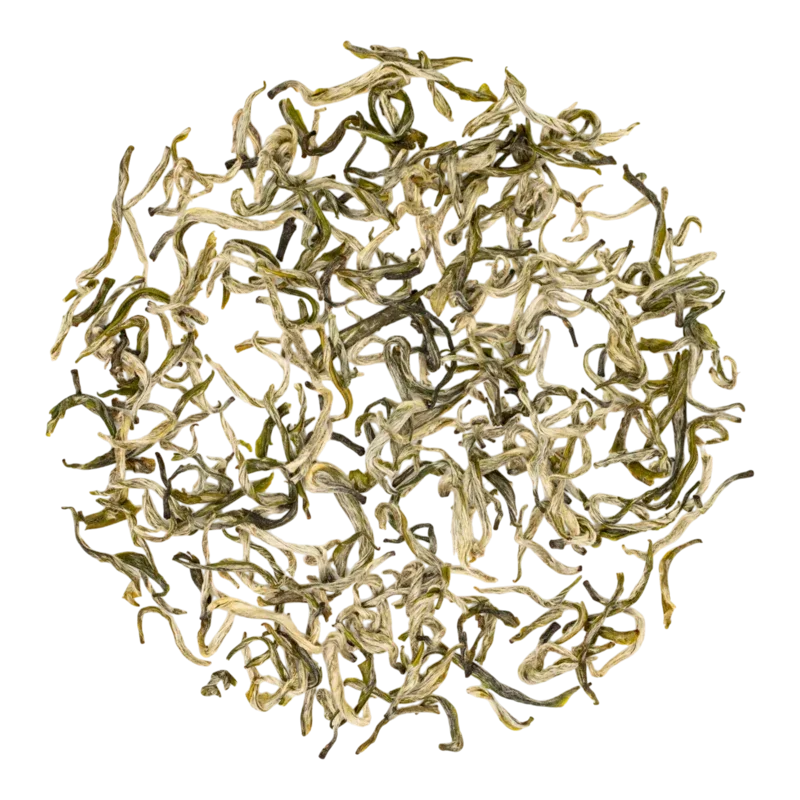
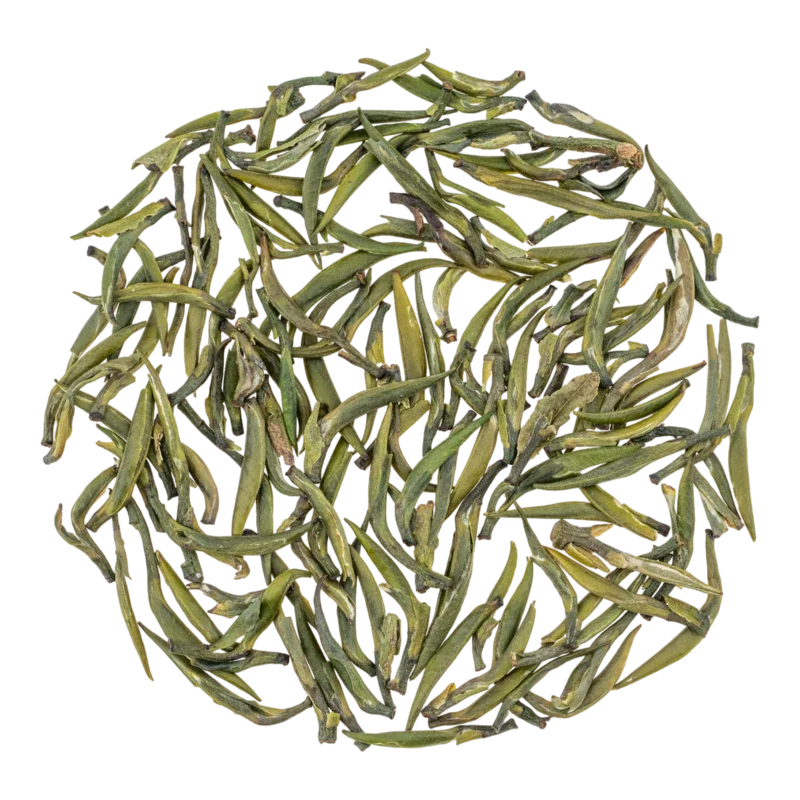
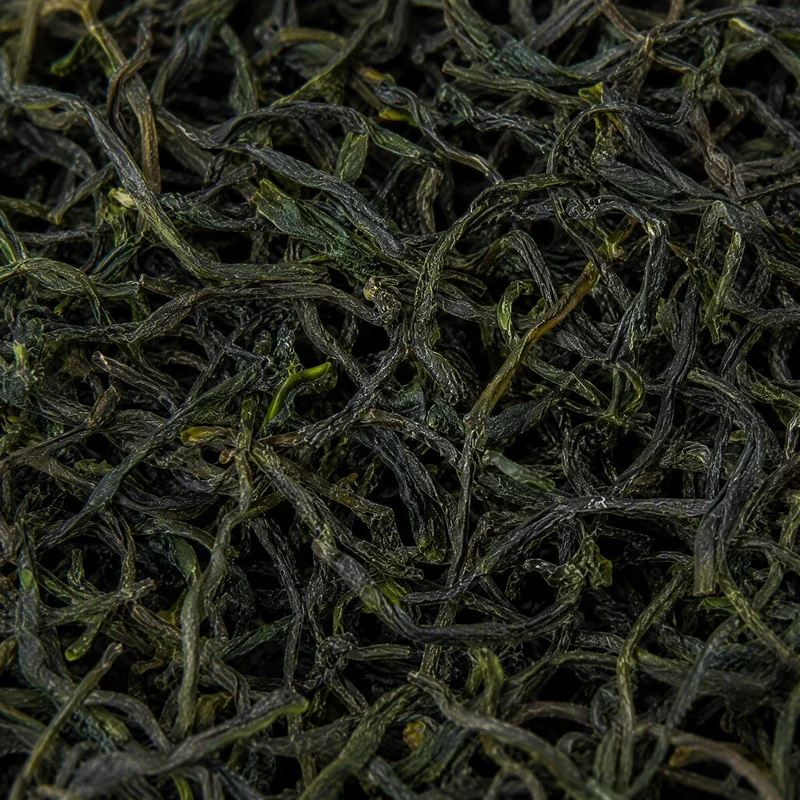
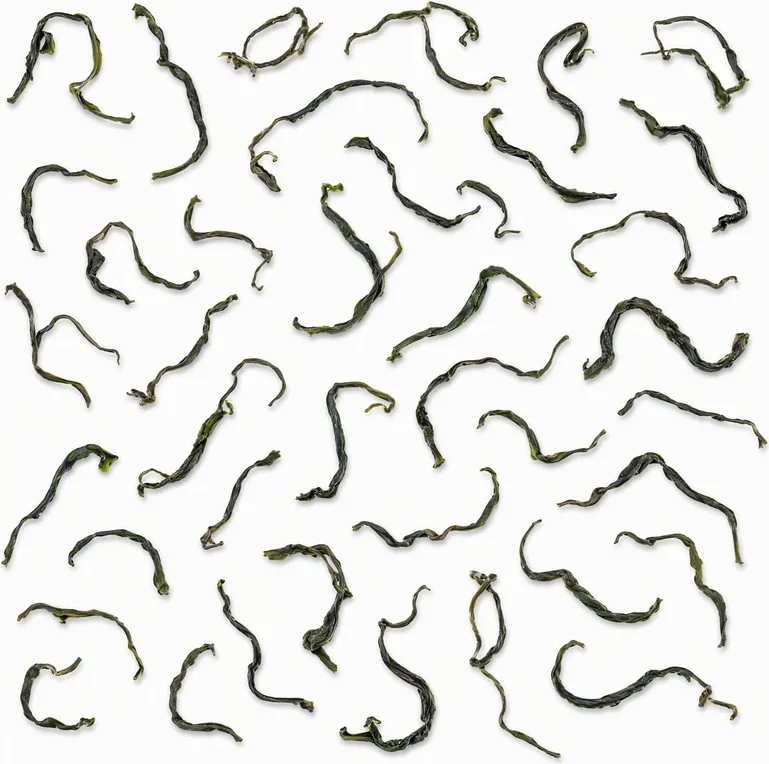
Dry Leaf Appearance: Spiral form — tightly twisted, thin spirals with abundant silvery down, color — emerald green (条索紧细卷曲,显毫,色泽翠绿). Flat form — straight, even tea leaves of tender green or dark green color (条索扁平挺直,色泽嫩绿或深绿).
Dry Leaf Aroma: Orchid aroma (兰花香, lánhuā xiāng) — leading note. Fruity sweetness (水果甜香, shuǐguǒ tiánxiāng) — unique characteristic for green tea. Pure green freshness (清香).
Liquor Aroma: Orchid-fruity, persistent. Combination of "花香" (floral) and "果香" (fruity) — rare for green teas.
Liquor Color: Clear, transparent, tender green with slight whiteness (清澈), related to the characteristics of milky-white buds.
Spent Leaves: Tender, uniform shoots. Leaves are resilient and lively.
Taste: Fresh and brisk (鲜爽, xiānshuǎng), mildly sweet (甘, gān), full-bodied (醇厚, chúnhòu). Free amino acid content — 3.5–4.5%, with 75–90% of them being "sweet-fresh" type amino acids (甜鲜味氨基酸), which explains the exceptional sweetness and "umami" without harsh astringency. Tasting formula: "First infusion — light elegance; second — fresh richness; third — sweet mellowness; fourth — lingering aftertaste" (首泡淡雅,二泡鲜浓,三泡甘醇,四泡后余韵犹存).
Alkaloids: Caffeine — moderate content.
Amino Acids: 3.5–4.5% — above average for green teas. Critically important feature: 75–90% of the amino acid profile consists of "sweet-fresh" amino acids (甜鲜味氨基酸) — L-theanine, glutamic acid and others, determining pronounced sweetness and "umami" without bitterness. This is one of the highest indicators among green teas.
Minerals: Potassium, magnesium, zinc, manganese.
Polyphenols: Significant content — provides antioxidant potential and immunomodulating action.
Vitamins: Vitamin C, B-group vitamins.
Complex of polyphenols and amino acids.
Traditional properties of green tea.
Carotenoids and vitamin C.
Stimulation of salivation.
Caffeine and L-theanine.
the listed properties are based on publicly available data and are not medical recommendations.
avoid high temperature and prolonged steeping — this leads to yellowing of the liquor and loss of freshness. Best appreciation: first inhale the orchid-fruity aroma from the cup, then evaluate the color, only then — the taste.
Tea Amount: 3 g per 150–180 ml water (ratio 1:50–1:60).
Teaware: Glass cup or white porcelain cup. Neutral or slightly acidic mineral water is recommended (中性微酸矿泉水).
Water Temperature: About 80°C.
From Jiangsu. Tight spirals with floral-fruity aroma. Biluochun is more "elegant" and fruity; Huimingcha has more pronounced orchid notes and unique "whiteness" of raw material.
From Guizhou. Also a Panama Exhibition winner (different level award). Duyun is more chestnut-like and structured; Huimingcha is sweeter and more "orchid-fruity."
From Zhejiang. Also a "white" green tea with high amino acid content, but from albino shoots. Anji is "pure sweetness"; Huimingcha is "orchid-fruity sweetness" with more pronounced aromatic profile.
From western Zhejiang. Needle-shaped, orchid-like. Long Ding is more "green" and visually spectacular ("Forest in a cup"); Huimingcha is more "white" and fruity.
milky-white buds are a natural sign of authenticity. Bright green uniform tea leaves without whiteness — probably another tea.
combination of orchid and fruity sweetness — signature characteristic. Absence of fruity note — reason for doubt.
transparent, with slight whiteness — characteristic feature.
suspiciously low price — sign of counterfeit.
No reviews yet. Tell us what you think of this tea.
Rate this tea and share your impressions. We review each submission before publishing it.