Brewing
Gongfu brewing
- Water temperature
- 100 °C
- Tea amount
- 7 g
- Water volume
- 100 ml
- First steep
- 10 s
- Time added per infusion
- 5 s
- Infusions
- 12

Shuǐchéng chūnchá
Choose a brewing method. Start with the recommended quantities and time, then adjust to taste.
Brewing
Brewing
Taste
Tea encyclopedia
Category: National Geographical Indication Product (国家地理标志产品, 2015). "First Spring Harvest of Guizhou" (贵州早春茶第一采). Historical "tribute tea" (贡茶) of the Qing era (Qianlong period). Silver award at the International Tea Congress (2024, red tea from ancient trees). By 2025 — 100,200 mu (6,680 hectares) of tea gardens, 200 tons of dry tea, total value — 2+ billion yuan.
Category: National Geographical Indication Product (国家地理标志产品, 2015). "First Spring Harvest of Guizhou" (贵州早春茶第一采). Historical "tribute tea" (贡茶) of the Qing era (Qianlong period). Silver award at the International Tea Congress (2024, red tea from ancient trees). By 2025 — 100,200 mu (6,680 hectares) of tea gardens, 200 tons of dry tea, total value — 2+ billion yuan.
Coordinates: Approximately 26°35′ North latitude, 104°50′ East longitude.
Origin: China, Guìzhōu Province (贵州, Guìzhōu), Liùpánshuǐ City (六盘水市, Liùpánshuǐ Shì), Shuǐchéng District (水城区, Shuǐchéng Qū). GI zone — 21 townships and villages, total area 2,370.8 km². Terroir core: Yángméi Township (杨梅乡) — Jiguanying ancient tree base (姬官营古树基地); Panlong Town (蟠龙镇) — centennial tea trees and birthplace of tribute "Muchengcha"; Longchang Township (龙场乡) — over 60% of total production.
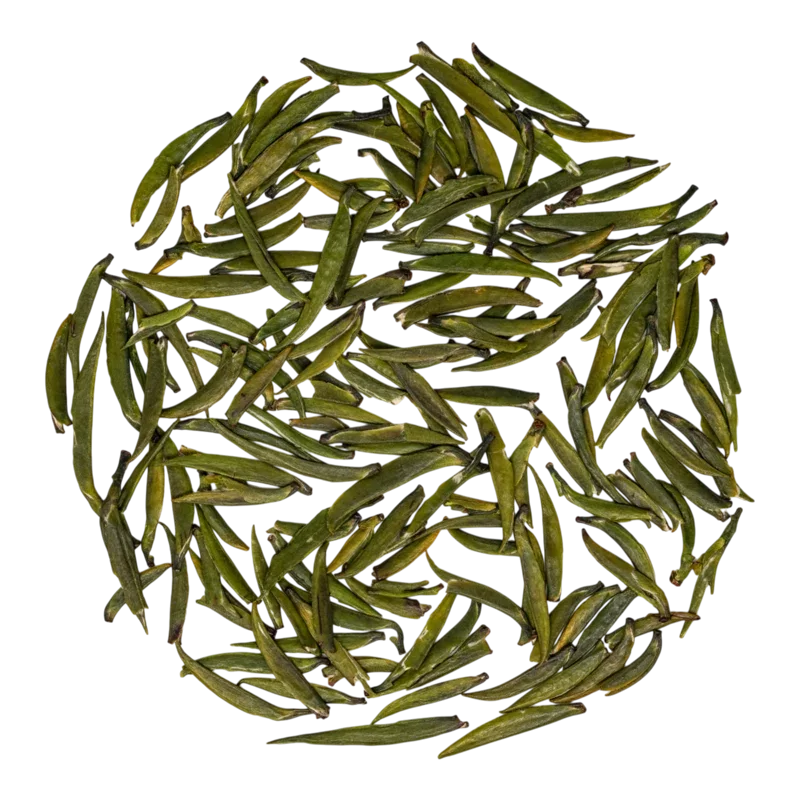
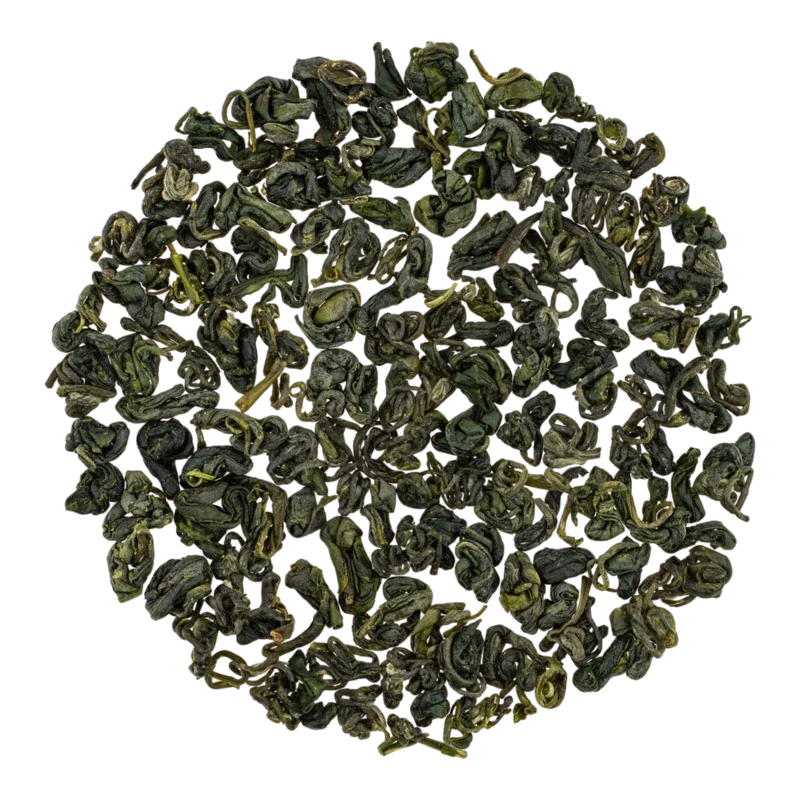
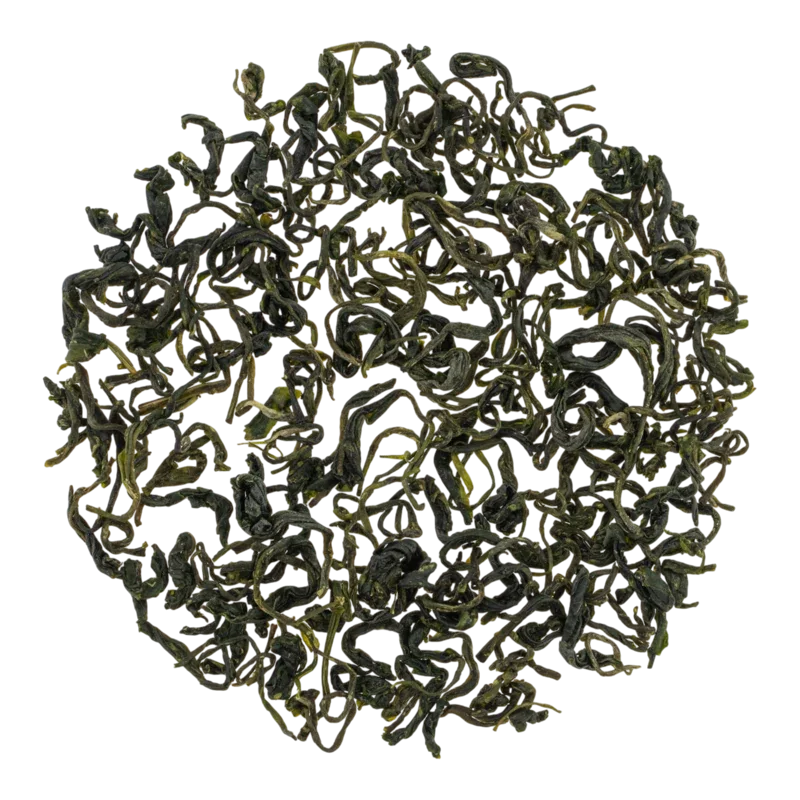
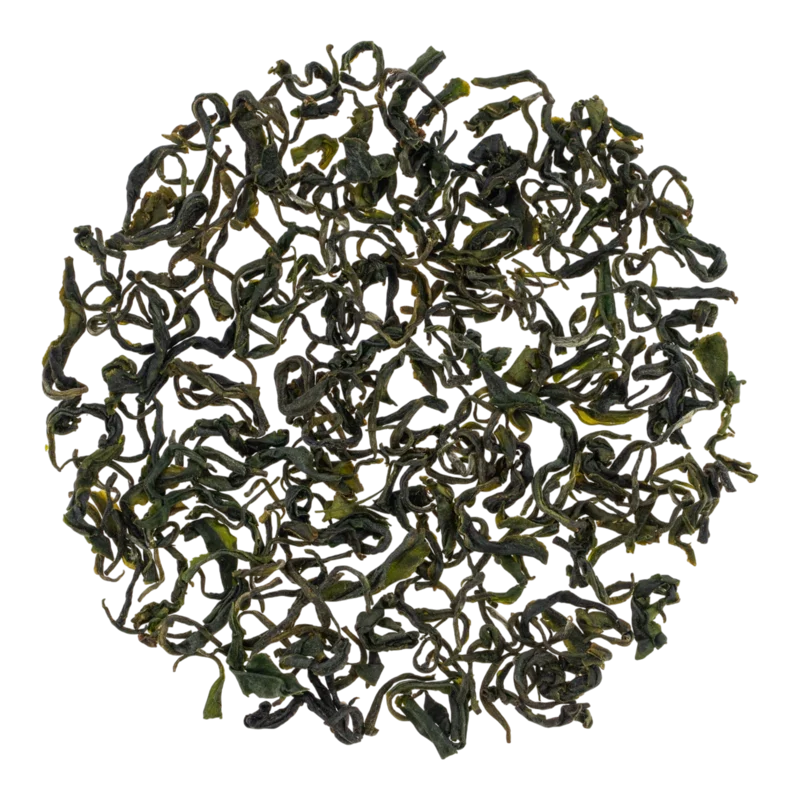
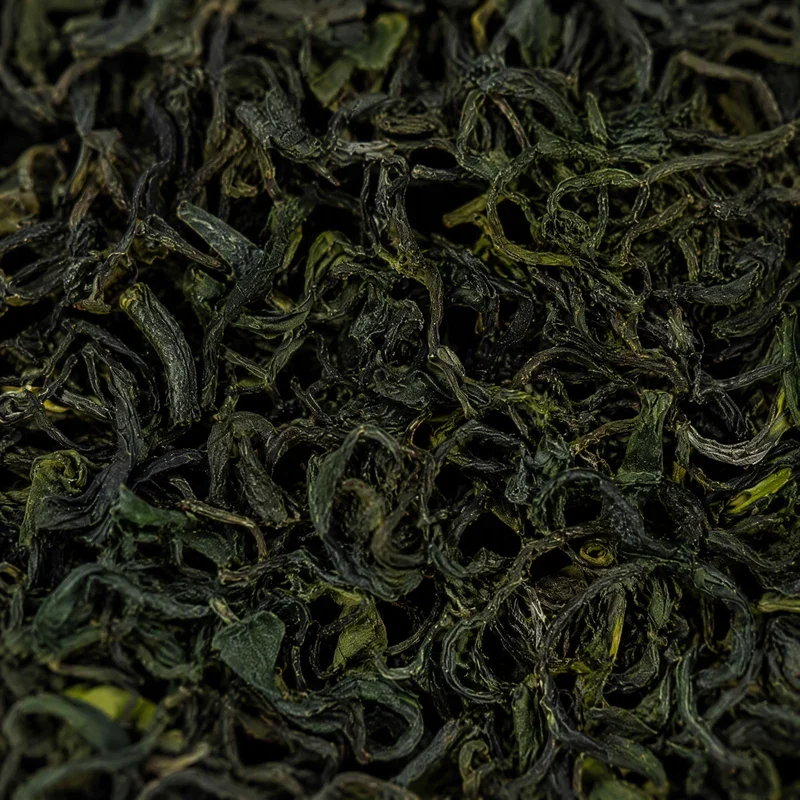
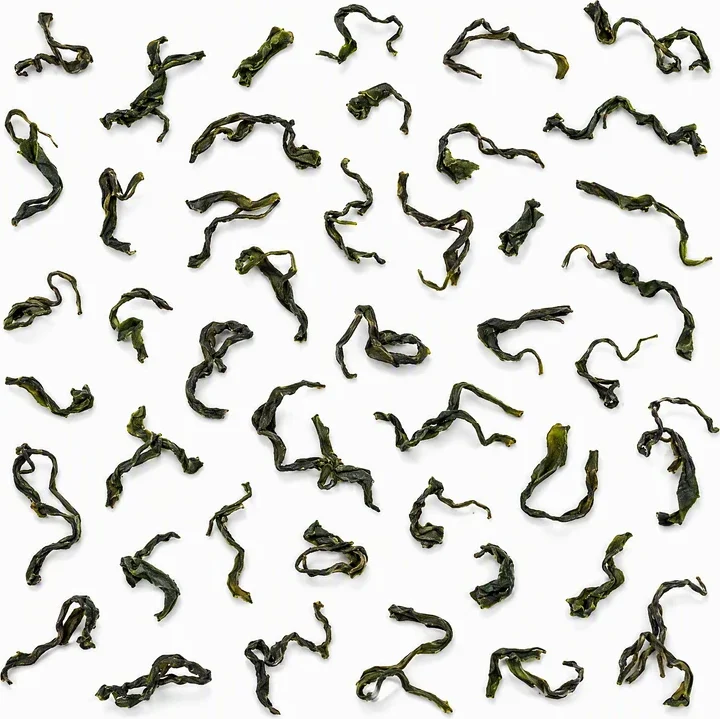
Type: Green tea (non-oxidized). Produced in two forms: flat (扁形, "Mingqian Cuiya" — 明前翠芽, "Guizhou Longjing") and rolled (卷曲形, "Qingchi Mao Jian" — 清池毛尖). By technology — pan-fired and heated.
Shuicheng Chun Cha — earliest tea in the province, ahead of Zhejiang by 10–25 days. Paradox: at 1200–2200 m altitude — yet first.
Cultural Significance: Shuicheng Chun Cha — "first spring tea of Guizhou" and symbol of Liupanshui City, known as "China's Cool Capital" (中国凉都, Zhōngguó Liángdū) — a city with uniquely mild summer climate.
History: Qing "tribute tea" (贡茶): During the Qiánlóng period (乾隆, 1736–1796), "Muchengcha" tea (木城茶, from Panlong Town) was included in the list of imperial tributes, establishing Shuicheng's status as a tea-producing region.
Full buds or one bud with one leaf. Down ≥90%. Pure persistent aroma. From 1,000 yuan/jin.
One bud with one leaf. Chestnut aroma. 600–1,000 yuan.
One bud with two leaves. Persistent. 400–600 yuan.
Cultivar: Local populations and introduced varieties adapted to high-altitude climate. In the core zone (Yangmei, Panlong), centennial ancient tea trees are preserved.
Picking: Early spring — earliest in Guizhou and 10–25 days earlier than Zhejiang. For premium grade — full buds or one bud with one leaf. For first grade — one bud with one leaf. For second grade — one bud with two leaves.
Altitude: 1200–2200 meters — one of the highest terroirs among Guizhou (and Chinese) green teas. Only Tibetan Linzhi Chun Lü (1900–2300 m) exceeds this range.
Climate: Subtropical high-altitude monsoon. Average annual temperature — 12.5–16.5°C, annual precipitation — 1050–1650 mm. Average annual number of foggy days — >180. Diffused light proportion — 70%. Daily temperature variation — >10°C.
Soil: Yellow or yellow-brown soils (黄壤/黄棕壤), pH 4.5–6.5. Organic content — ≥1.0%. Record selenium content: average — 3.24 mg/kg — tens of times higher than the national average (0.1–0.3 mg/kg). Forest coverage — 61.89%. Water — Class I national standard.
"高海拔、低纬度、寡日照、多云雾" — "high altitude, low latitude, low insolation, abundant clouds" — a unique combination explaining the paradox of ultra-early harvest at extreme altitude.
Altitude + coolness + cloudiness slow growth, increasing amino acid content (2.3–5.0%, 20% higher than low-altitude teas) and polyphenols (25.2%).
Buds that survived winter at 1200–2200 m altitude acquire characteristic "red edges" (红边, hóngbiān) — thin reddish margins on leaves, indicating deep accumulation of anthocyanins and nutrients during the long winter.
Ultra-early — December–February for first batches.
On bamboo trays, 4–6 hours.
In roller drum at 300°C — rapid "tempering" locking emerald color (锁翠).
Manual hot rolling (手工热揉).
Three-stage: primary at 120°C (毛火), final at 80°C (足火). Moisture content — ≤6.5%.
Intangible heritage — master sequentially uses three fire levels: "martial fire" (武火, wǔhuǒ — high temperature), "literary fire" (文火, wénhuǒ — medium), "gentle fire" (微火, wēihuǒ — low) — three stages of "aroma setting" (三重定香, sānchóng dìngxiāng). Complete cycle — with lights off (全程避光操作) to preserve anthocyanin activity.
Dry Leaf Appearance: Flat form — even, smooth "sparrow tongues" (扁形, 似雀舌). Rolled form — tight, heavy spirals (卷曲形, 紧实重实). Abundant down on premium grades.
Dry Leaf Aroma: Chestnut (栗香) — main note, high and persistent (栗香高长). Tender (嫩香) — in premium grade. Floral (花香) — in ancient tree tea. Residual aroma in empty cup — >15 minutes.
Liquor Aroma: Chestnut, persistent, with "high-altitude coolness".
Liquor Color: Yellow-green, clear, bright and transparent (黄绿清澈明亮).
Spent Leaves: Tender green, uniform shoots, fleshy and soft, with "red edges" — marker of overwintered buds (嫩绿匀亮,肥厚柔软带红边).
Taste: Fresh and brisk (鲜爽) — amino acids 2.3–5.0%. Mellow and rich (醇厚) — polyphenols 25.2%. Returning sweetness — persistent (回甘持久) — ensured by increased tea polysaccharide content (茶多糖, cháduōtáng).
Alkaloids: Caffeine — moderate content.
Amino Acids: 2.3–5.0% — range depending on grade. Premium batches — 20% higher than low-altitude teas.
0.25–4.00 mg/kg (average — 5.5+ times higher than ordinary green teas). Blocks synthesis of carcinogenic nitrosamines with 40% higher efficiency than standard tea.
Increased content — ensures long-lasting returning sweetness.
Present in "overwintered buds" — give reddish edges.
Polyphenols: 25.2% — significant content. Combined with selenium, reduces cholesterol by 30% — more effectively than Zhejiang and Jiangsu green teas (according to comparative studies).
Vitamins: Vitamin C, carotenoids.
Organic selenium (0.25–4.00 mg/kg) blocks nitrosamine synthesis with +40% efficiency compared to ordinary tea.
Polyphenols (25.2%) + selenium — 30% cholesterol reduction.
Selenium neutralizes radiation free radicals 1.5 times more effectively than ordinary tea.
Double effect — polyphenols + selenium.
Caffeine and L-theanine.
not medical advice.
Process: Pour water, add tea. First steeping — 30 seconds. Subsequent — +10 seconds. Tea withstands 3–4 brewings.
Tea Amount: 3 g per 150 ml (1:50).
Teaware: Glass cup or white porcelain gaiwan.
Water Temperature: 80–85°C; for premium grade — 75°C.
"Ten Famous Teas". Rolled "hooks" with "three greens and yellow". Duyun — more famous; Shuicheng — more high-altitude (up to 2200 m vs. ~1500 m) and more "selenium-rich".
Flat, 95% automation. Meitan — more "technological"; Shuicheng — more "mountainous" and artisanal, with "骑火炒".
Granulated, from mature material. Lübaoshi — more dense and durable (7+ steepings); Shuicheng — fresher and more "early spring".
Tibetan, 1900–2300 m. Linzhi — higher altitude; Shuicheng — "earlier" and more "selenium-rich" (3.24 mg/kg vs. unspecified).
No reviews yet. Tell us what you think of this tea.
Rate this tea and share your impressions. We review each submission before publishing it.