Brewing
Gongfu brewing
- Water temperature
- 75 °C
- Tea amount
- 5 g
- Water volume
- 100 ml
- First steep
- 10 s
- Time added per infusion
- 5 s
- Infusions
- 3

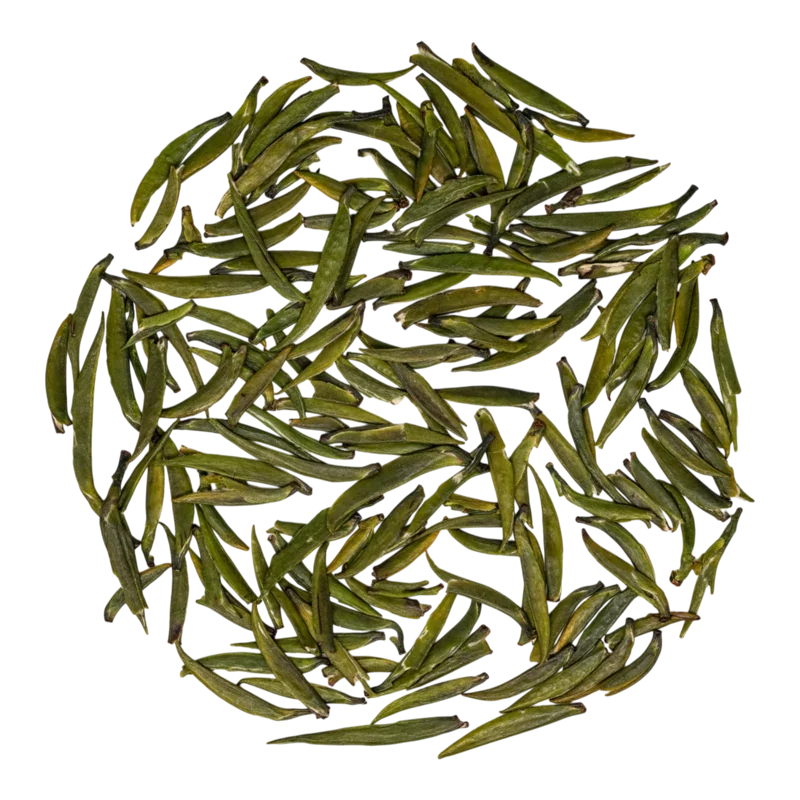
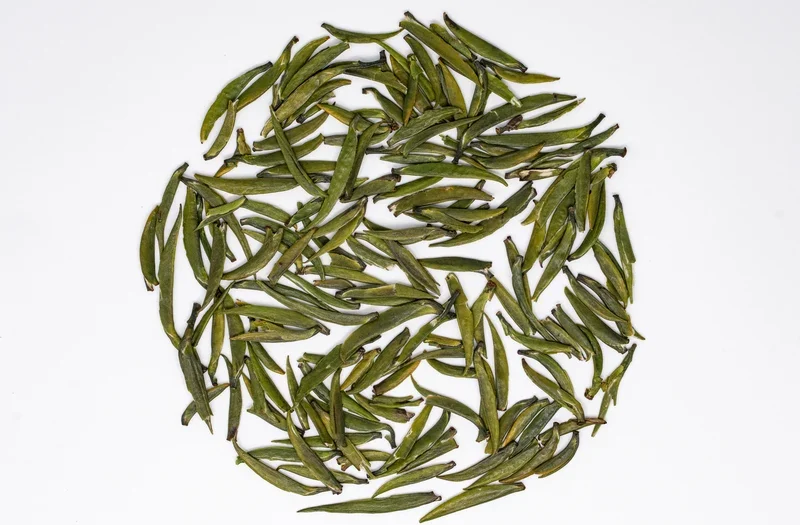
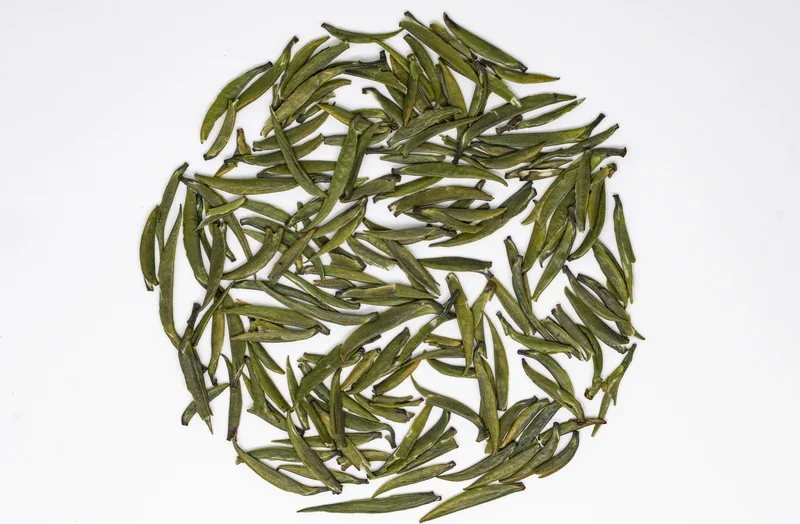
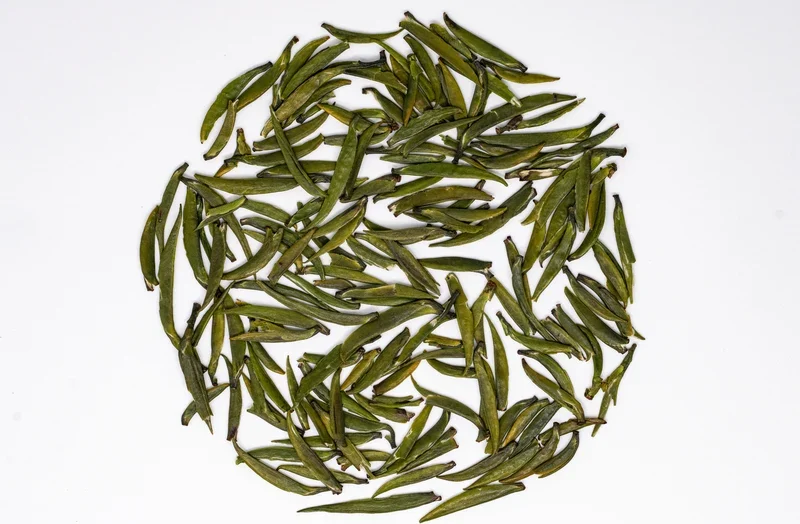
Méitán cuì yá
Choose a brewing method. Start with the recommended quantities and time, then adjust to taste.
Brewing
Brewing
Taste
Tea encyclopedia
Category: Geographical indication product (农产品地理标志, 2010). Production technology included in Guizhou Province's intangible cultural heritage registry (省级非物质文化遗产, 2017). In 2021, entered China's top ten most valuable regional tea brands (brand value — 71.97 billion yuan).
Category: Geographical indication product (农产品地理标志, 2010). Production technology included in Guizhou Province's intangible cultural heritage registry (省级非物质文化遗产, 2017). In 2021, entered China's top ten most valuable regional tea brands (brand value — 71.97 billion yuan).
Coordinates: 27°15′—28°16′ North latitude, approximately 107°30′ East longitude.
Origin: China, Guìzhōu Province (贵州, Guìzhōu), Zūnyì City (遵义市, Zūnyì Shì), Méitán County (湄潭县, Méitán Xiàn). The geographical indication zone covers 15 townships and villages of the county, including Meijiangzhen (湄江镇), Yongxingzhen (永兴镇), and Fuxingzhen (复兴镇). The terroir core is Hetaoba Village (核桃坝村), honored with the title "First Eco-Tea Village of Western China" (中国西部生态茶叶第一村).
Type: Green tea (non-oxidized). Belongs to flat pan-fired green teas (扁形炒青绿茶, biǎnxíng chǎoqīng lǜchá) — the same shaping type as Longjing.
Cultural Significance: Meitan Cui Ya is the flagship of Guizhou's tea industry and a symbol of tea cultivation modernization: this is the first mass-produced Guizhou tea to achieve national recognition based not on historical fame, but on scientific approach, production standardization, and professional brand-building. Meitan County is one of China's largest tea-producing counties, where tea gardens form the foundation of the local economy.
History: Meitan Cui Ya is a rare case of tea whose birth date can be named precisely to the year. In 1940, during World War II, the Central Experimental Tea Station (中央实验茶场, Zhōngyāng Shíyàn Cháchǎng) — predecessor of the current Guizhou Provincial Tea Research Institute — was evacuated to Meitan, where agricultural scientists developed a new type of flat green tea adapted to local raw materials and climate. Initially it was named "Meitan Longjing" (湄潭龙井) — by analogy with the famous Zhejiang prototype. In 1954, to emphasize the tea's independent character and distinction from original Longjing, it was renamed "Meitan Cui Ya" (湄潭翠芽, "Emerald Buds of Meitan").
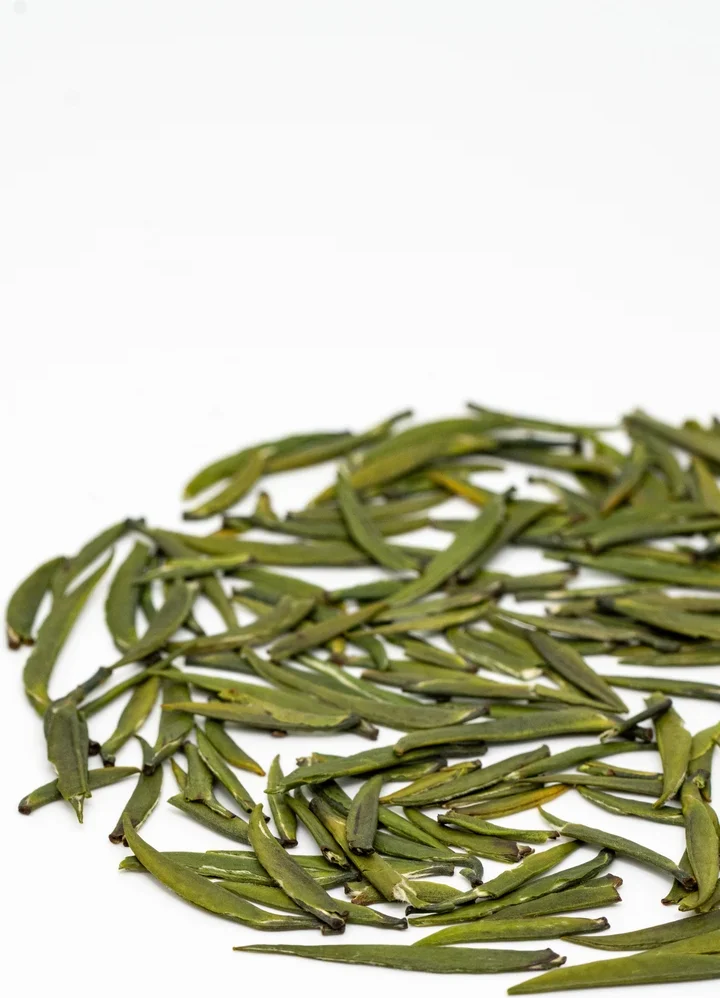
Late March — early April. Full buds (单芽). Shape — "sparrow tongue" (雀舌, quèshé). Comprises ~30% of annual production. Taste — fresh and delicate.
April — May. One bud with one leaf in initial opening stage. Taste — more dense and persistent.
Cultivar: Two main cultivars:
Picking: Two seasons:
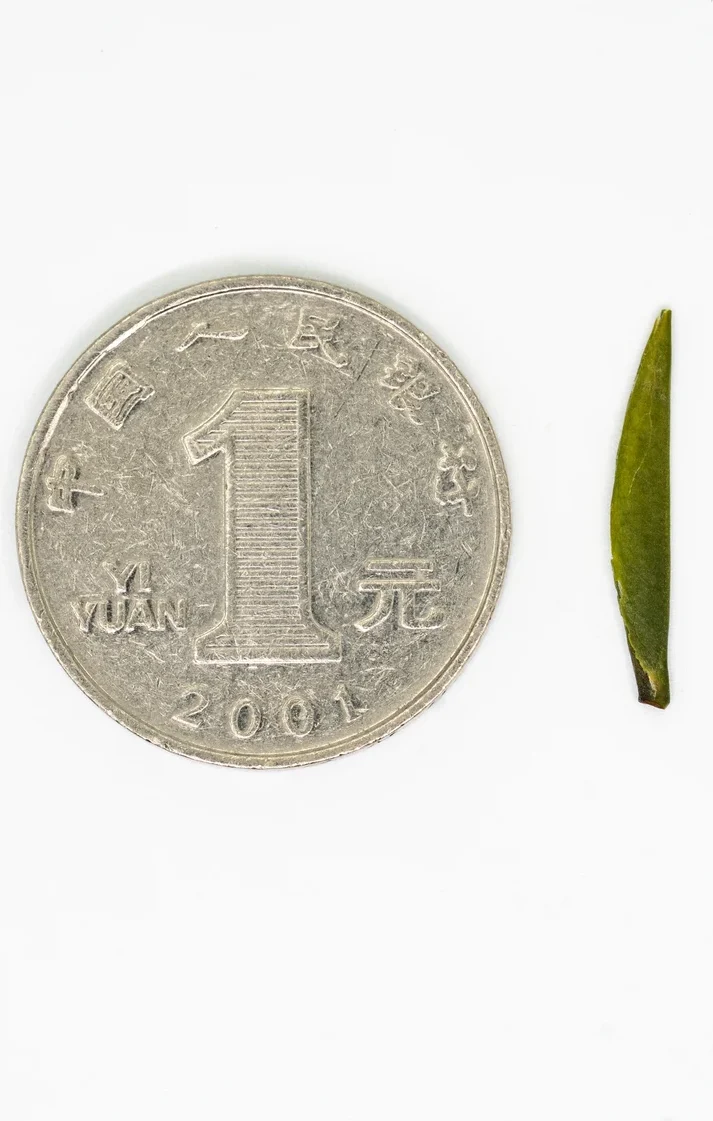
Pluck Standard: For supreme grade (特级) — exclusively full buds (单芽), no longer than 2.5 cm. To produce 500 g of supreme grade dry tea requires 65,000–70,000 buds.
Raw Material: Tender, uniform buds without damage. Processing — on harvest day.
Altitude: 700–1000 meters above sea level. Terroir core — Hetaoba Village — located at ~900 m elevation. Effective tea harvest period — 220 days per year, one of the longest in China.
Climate: Subtropical humid monsoon climate. Average annual temperature — 14.9°C, annual precipitation — 1137 mm. Number of foggy days — ≥200 per year. Relative humidity — ≥85%. Abundant diffused light promotes accumulation of amino acids and aromatic compounds.
Soil: Yellow soils (黄壤, huáng rǎng) with pH 4.5–6.0, naturally enriched with selenium (soil content — 0.3–2.8 mg/kg) and zinc. Forest coverage — 64.8%. Industrial pollution — absent.
4–6 hours of spreading.
In rolling drum (滚筒, gǔntǒng) at 260°C — high-temperature fixation ensuring rapid oxidation halt and "locking in" fresh aromatics.
On reciprocating machine (往复式理条机) at 90°C. Leaves are pressed into characteristic flat shape resembling sunflower seeds (葵花籽状, kuíhuāzǐ zhuàng).
Additional friction treatment giving tea leaves smoothness and luster.
Unique to Meitan Cui Ya stage — cold air treatment to remove excess down from surface. This technique gives the tea its characteristic "pure emerald" color (翠绿色泽) — unlike downy teas, Meitan Cui Ya has a smooth and glossy surface.
Final heating at 70°C — gentle fixing of chestnut aroma.
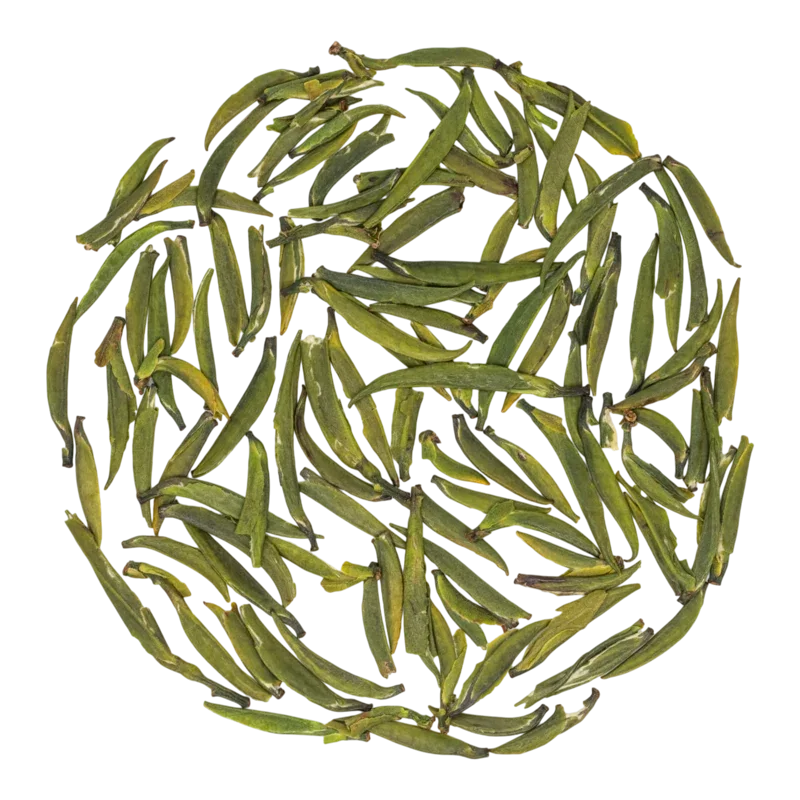
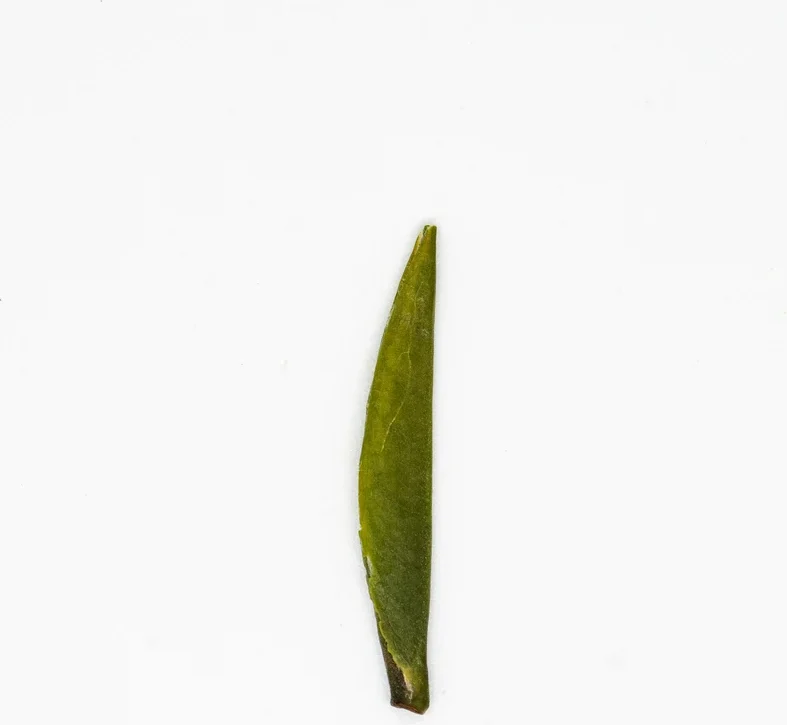
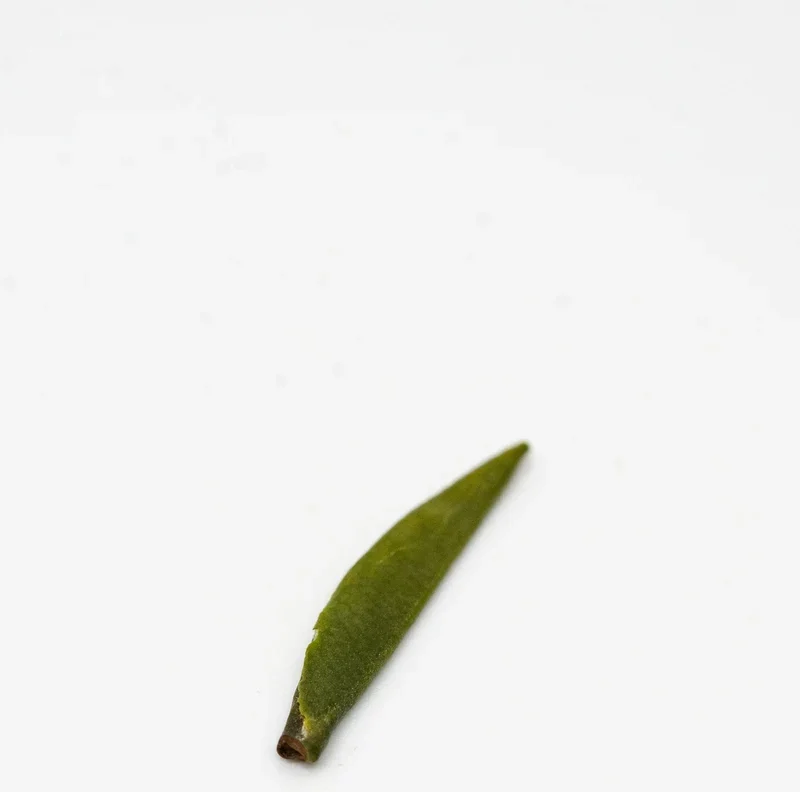
Dry Leaf Appearance: Flat, straight, smooth tea leaves (扁平光滑), shaped like sunflower seeds. Color — bright emerald green (翠绿) with light subdued down (隐毫). Surface — smooth, glossy (result of "脱毫" stage). In supreme grades — impeccable uniformity of size and shape.
Dry Leaf Aroma: Delicate chestnut aroma (嫩栗香, nèn lì xiāng), pure green freshness (清香), subtle "youthful aromatics" (鲜香). Without grassiness or harshness.
Liquor Aroma: Pure, high, persistent (清芬持久, qīngfēn chíjiǔ). Chestnut note — soft and enveloping.
Liquor Color: Tender green, clear and transparent (嫩绿清澈), with lively luster.
Spent Leaves: Fleshy, tender, lively shoots (肥嫩鲜活), light green color. Uniform, whole.
Taste: Fresh and brisk (鲜爽, xiānshuǎng) — amino acid content ≥4.2% provides pronounced umami note and bright freshness. Sweet and mellow (甘醇, gānchún). Pronounced returning sweetness with salivation-inducing (回甘生津). Body — medium-dense, clean. Astringency minimal.
Alkaloids: Caffeine — moderate content. Theobromine, theophylline.
Amino Acids: ≥4.2% — significantly above average. L-theanine — main component providing freshness, sweetness, and umami.
0.2–1.5 mg/kg — natural enrichment from selenium-containing soils.
Vitamin C, B-group vitamins, potassium, zinc, magnesium, manganese.
Polyphenols: Total content — 28.1% dry mass. EGCG content — 9.38% — one of the highest indicators among flat green teas. According to research, catechin effectiveness in reducing lipid levels is 1.3 times higher than average green tea.
Polyphenol content of 28.1% with high EGCG proportion (9.38%) provides outstanding antioxidant potential.
Catechins reduce blood lipid levels with 1.3 times higher effectiveness than average.
Selenium (0.2–1.5 mg/kg) enhances body's protective functions.
Caffeine and L-theanine provide gentle alertness.
Polyphenols stimulate fat breakdown.
listed properties are based on publicly available data and are not medical recommendations.
store freshly purchased tea in refrigerator; after opening — consume within 20 days for maximum freshness. Not recommended to combine with high-protein food (tannins may reduce protein absorption).
Tea Amount: 3 g per 250 ml water.
Teaware: Glass tumbler (250 ml) — for observing flat "seeds" standing vertically in water.
Water Temperature: 80°C (strictly not boiling water — high temperature destroys amino acids responsible for freshness and sweetness).
Prototype of Meitan Cui Ya. Longjing — "bean-chestnut," with more pronounced umami note and oiliness. Meitan — more "pure," fresh and light, with smooth surface (vs. slight roughness of Longjing).
Fellow from Guizhou, but twisted (not flat), with abundant down and curved shape. Duyun — more polyphenol-rich (up to 31.24%); Meitan — more amino acid-rich (≥4.2%) and visually more "polished."
From Sichuan. Also flat green tea. Zhuyeqing — more "bamboo-like" in shape and more brand-oriented; Meitan — more "seed-like" and with higher automation degree.
From Zhejiang. Also "longjing-type" shaping. Dafo — closer to original Longjing; Meitan — with Guizhou terroir character and unique "down-free" finish.
perfectly flat, smooth "seeds" — result of unique "脱毫" technology. Downy or uneven tea leaves — different tea type.
pure emerald without excess down. Silvery-downy tea — this is not Meitan Cui Ya.
pronounced freshness and sweetness (amino acids ≥4.2%). Flat, tasteless liquor — counterfeit.
special grade cannot be cheap.
No reviews yet. Tell us what you think of this tea.
Rate this tea and share your impressions. We review each submission before publishing it.