Brewing
Gongfu brewing
- Water temperature
- 75 °C
- Tea amount
- 5 g
- Water volume
- 100 ml
- First steep
- 10 s
- Time added per infusion
- 5 s
- Infusions
- 3

Línzhī chūn lǜ
Choose a brewing method. Start with the recommended quantities and time, then adjust to taste.
Brewing
Brewing
Taste
Tea encyclopedia
Category: National organic tea certification product (国家有机茶认证, 2013). Ecological origin protection product (国家生态原产地保护产品, 2017). Representative of Tibetan high-altitude tea cultivation and the modern "Tea Horse Road" (茶马古道).
Category: National organic tea certification product (国家有机茶认证, 2013). Ecological origin protection product (国家生态原产地保护产品, 2017). Representative of Tibetan high-altitude tea cultivation and the modern "Tea Horse Road" (茶马古道).
Coordinates: 30°19′ North latitude, 94°52′ East longitude.
Origin: China, Tibet Autonomous Region (西藏自治区, Xīzàng Zìzhìqū), Línzhī City (林芝市, Línzhī Shì), Bōmì County (波密县, Bōmì Xiàn), Igong Township (易贡乡, Yìgòng Xiāng). The production zone covers the entire Linzhi City, including Bomi, Mòtuō (墨脱) and Cháyù (察隅) counties. The terroir core — Igong Tea Farm (易贡茶场), located in Igong National Geological Park (易贡国家地质公园), on the shore of glacial Lake Igongcuo (易贡湖).
Type: Green tea (non-fermented). By technology — semi-roasted-semi-heated (半烘炒结合, bàn hōng chǎo jiéhé): combination of drum roasting and heated drying. By shape — curled (卷曲形).
Cultural Significance: Linzhi Chun Lü — more than tea. It is a symbol of the development of the Tibetan highlands, a monument to the soldiers of the 18th Army who transformed mountain wastelands into flourishing gardens, and living proof that the tea plant can take root on the "roof of the world." For modern Tibet, tea has become a new pillar of rural economy and a connecting link with the thousand-year tradition of the "Tea Horse Road."
History: Linzhi Chun Lü — tea with a heroic history that began in the era of Tibet's liberation. In 1956, the first attempt was made to introduce tea bushes from Yunnan to Tibet — it ended in failure: the plants could not withstand the extreme conditions. In 1960, demobilized soldiers of the 18th Army (十八军) — the legendary unit that participated in the peaceful liberation of Tibet — established a military farm in the Igong Valley and resumed attempts. By 1970, they achieved the first successful establishment of tea bushes on an area of several dozen mu.
Early April — later than in lowland regions due to high-altitude cold. Full buds (单芽). The most tender and valuable.
May — July. One bud with one to two leaves. Denser flavor.
Full buds or one bud with one leaf in initial stage. Dense rolling, golden down ≥80%. Chestnut aroma, fresh sweet taste. From 800 yuan per jin.
One bud with one leaf. Gray-green, oily. Clean aroma, mild taste.
One bud with two leaves. Simple aroma, moderate taste.
Cultivar: Main cultivar — Yúnnán Dàyèzhǒng (云南大叶种, Yúnnán Dàyè Zhǒng) — Yunnan large-leaf variety Camellia sinensis var. assamica, adapted to high-altitude conditions. Bush form (灌木型, guànmù xíng) — more compact than tree form, which provides better frost resistance. Distinguished by high cold resistance (耐寒性强).
Picking: Two seasons:
Pluck Standard: Three grades:
Raw Material: Fresh shoots without purple leaves, without pest damage. Processing — on the day of harvest.
Altitude: 1900–2300 meters above sea level — the world's highest industrial tea plantations. For comparison: Darjeeling — up to 2000 m, Alishan (Taiwan) — up to 1600 m, most Chinese "high-mountain" teas — 800–1200 m.
Climate: High-altitude temperate humid (高原温带湿润气候). Average annual temperature — 11.4°C (one of the lowest among all tea-growing zones in the world). Annual precipitation — 960–1100 mm. Cloudiness — practically year-round. Humidity — ≥80%. Abundance of diffused light (漫射光) suppresses the formation of coarse fibers (粗纤维), making shoots exceptionally tender and fleshy.
Soil: Acidic red-yellow soils (酸性红黄壤), pH 4.5–6.5. Organic matter content — ≥8.0% — a record indicator among tea-growing regions of the world (for comparison: in most zones — 1–3%). Soils are naturally enriched with selenium and zinc.
Complete absence of industrial pollution. Highest biodiversity — the territory borders Igong National Geological Park. Tea gardens — certified organic (有机茶), without pesticides and chemical fertilizers.
Water: Plantations are located on the shore of glacial Lake Igongcuo (易贡湖). Irrigation — with glacial meltwater (雪水灌溉). This is "distilled" water with minimal salt content — ideal for tea plants.
Brief spreading for withering.
In rolling drum (滚筒机) at 140°C — gentle fixation, sparing for amino acids.
Formation of initial structure.
At 110°C — rapid pre-drying.
At 60°C, slow "dark fire" (暗火慢烘, ànhuǒ màn hōng) — key stage preserving amino acid activity and forming the characteristic "frost down" (霜毫, shuāngháo) — silvery-white "frosty" coating on the surface of rolled shoots.
Final brief heating to fix the chestnut aroma.
Low-temperature slow drying (低温慢烘) — not just a technological choice, but a necessity: under Linzhi's high-altitude conditions, standard temperature regimes give different results than at lowland due to reduced atmospheric pressure. Masters of Igong Farm have developed optimal parameters for their unique terroir over decades.
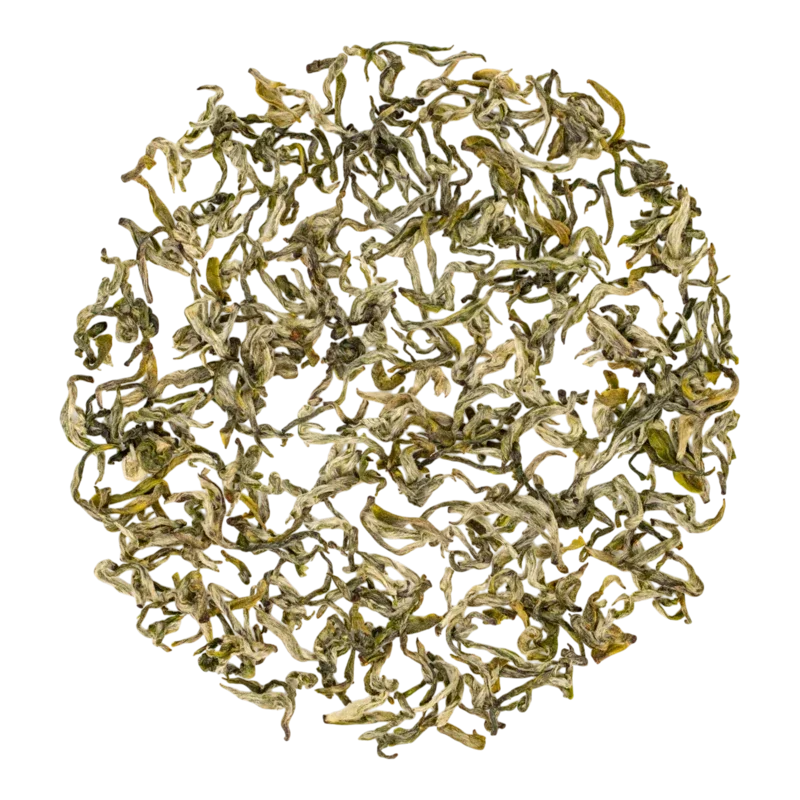
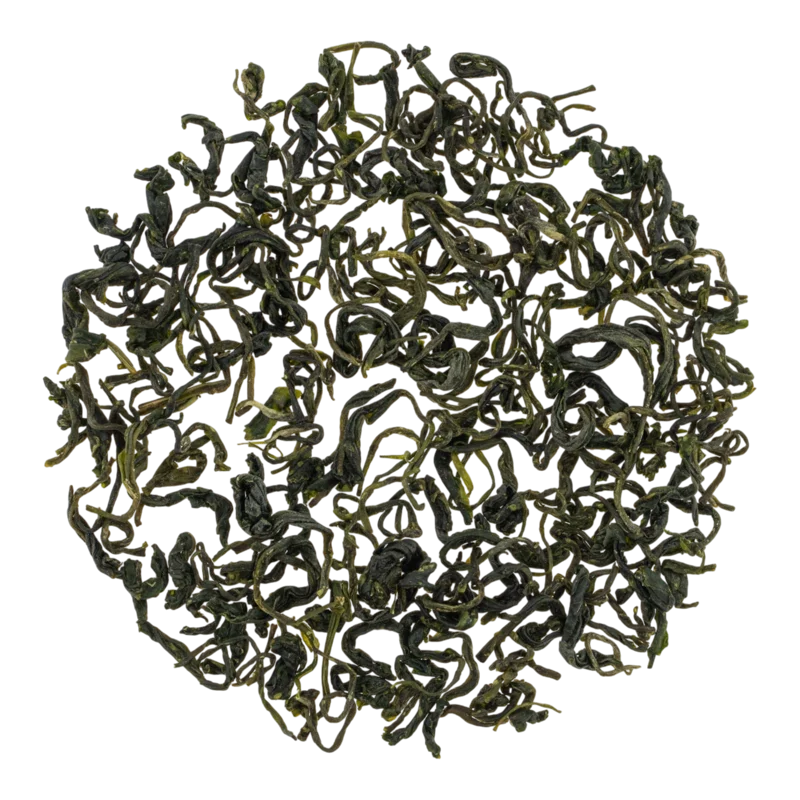
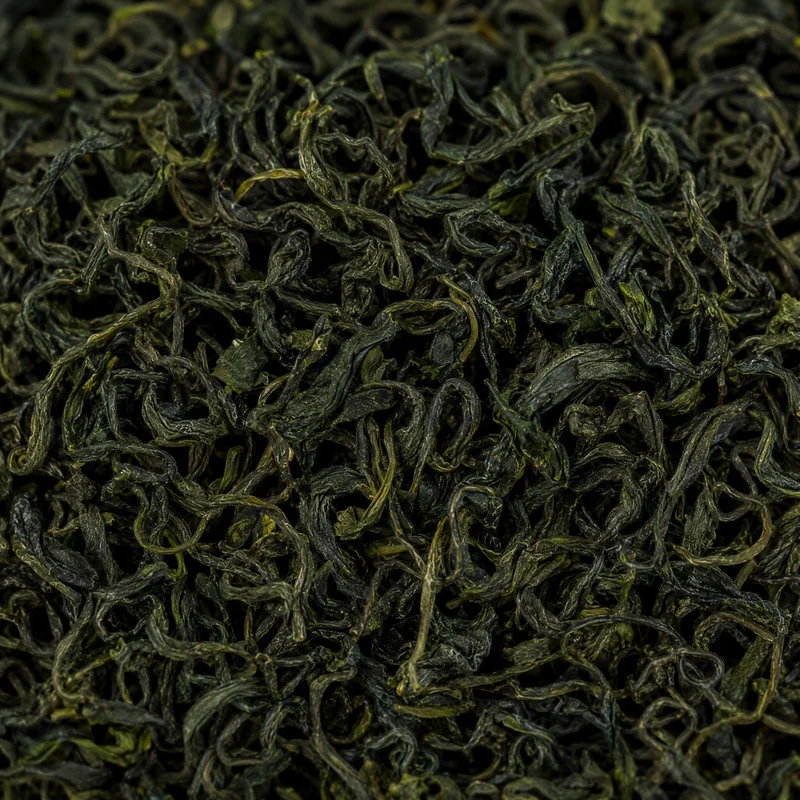
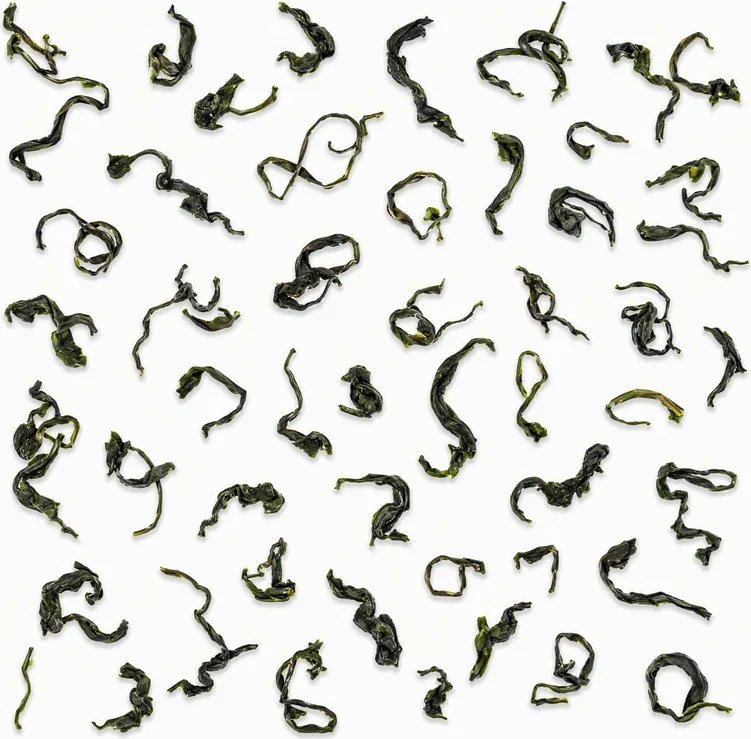
Dry Leaf Appearance: Dense, heavy, curled shoots (卷曲形,重实紧结). Color — yellow-green with oily luster (黄绿油润). Main visual feature — "frost down" (霜毫, shuāngháo) — silvery-white "frosty" coating giving the tea an appearance as if dusted with mountain frost.
Dry Leaf Aroma: Chestnut (栗香, lì xiāng) — main note. Clean green freshness (清香). "Mountain spirit" (高山气息, gāoshān qìxī) — unique note described as a combination of glacial freshness, minerality and coolness of rarefied air. This "mountain spirit" — the calling card of Tibetan tea, irreproducible in lowland terroirs.
Liquor Aroma: Chestnut-fresh, with mountain note. Persistent.
Liquor Color: Yellow-green, bright and clear (黄绿明亮).
Spent Leaves: Fleshy, juicy, elastic shoots (润泽肥壮). Leaf — lively, glossy.
Taste: Fresh (鲜, xiān) — bright amino acid note (content ≥4.5%). Sweet (甘, gān) — clean, "transparent" sweetness. Mellow (醇厚, chúnhòu). "Cool-sweet" (清甜, qīngtián) — unique descriptor combining mountain coolness with amino acid sweetness. Tea withstands up to 7 infusions — exceptional indicator for green tea, explained by high content of extractive substances (polyphenols ≥30% + amino acids ≥4.5%).
Alkaloids: Caffeine — moderate content. Theobromine, theophylline.
Amino Acids: ≥4.5% — significantly higher than lowland teas. Cold and cloudiness slow the conversion of amino acids to catechins, preserving record levels of "sweet" and "fresh" compounds.
Naturally elevated content — from soils with ≥8% organic matter.
Combination of ≥30% polyphenols and ≥4.5% amino acids in one tea — extremely rare phenomenon. In most terroirs, high polyphenol content is accompanied by reduced amino acid levels (and vice versa). Linzhi's extreme altitude — with simultaneous exposure to UV radiation and cold — creates conditions where both groups of substances are synthesized in parallel.
Minerals: Potassium, magnesium, zinc, selenium, manganese.
Polyphenols: ≥30% — result of intense ultraviolet radiation at 2000+ m altitude. Free radical neutralization efficiency — 18 times higher than vitamin E.
Vitamins: Vitamin C, carotenoids.
L-theanine modulates central nervous system neurotransmitters, providing steady alertness without overstimulation.
Polyphenols (≥30%) — free radical neutralization efficiency 18 times higher than vitamin E.
Catechins suppress fat synthesis.
Selenium, zinc and amino acids.
Caffeine and L-theanine.
the listed properties are based on publicly available data and are not medical recommendations.
do not use boiling water — it destroys thermolabile amino acids (tea theanine, 茶氨酸). Avoid "steeping" (闷泡) longer than 1 minute — this enhances bitterness. In dry high-altitude climate conditions (if drinking tea in Tibet) — store hermetically, in refrigerator.
Tea Amount: 3 g per 150 ml water (1:50 ratio).
Teaware: White porcelain gàiwǎn (白瓷盖碗).
Water Temperature: 90°C (boiling water, cooled ~1 minute). Linzhi Chun Lü, thanks to dense rolling and fleshy raw material, withstands higher temperature than many delicate green teas.
From Sichuan. Altitude — 800–1200 m. Curled, floral-orchid, sweet. Gan Lu — more "refined" and aromatic; Linzhi — more "powerful" and mineral, with unique "mountain spirit."
From Taiwan. Altitude — up to 1600 m. Semi-fermented, floral-milky. Completely different tea type, but close in philosophy "the higher — the better."
From India. Altitude — up to 2000 m. Semi-oxidized, muscatel. Darjeeling — more "European" and aromatically complex; Linzhi — more "pure" and mineral, with "snowy" freshness.
From Guizhou. Altitude — 600–1500 m. Chestnut, rich. Duyun — with "golden-green" character; Linzhi — with "frosty" Tibetan character.
characteristic silvery-white "frosty" coating — natural marker of authentic Tibetan tea.
unique note of glacial freshness and minerality, irreproducible in lowland terroirs.
up to 7 infusions — result of record extractive substance content.
genuine Tibetan tea cannot be cheap — production volume is limited.
No reviews yet. Tell us what you think of this tea.
Rate this tea and share your impressions. We review each submission before publishing it.