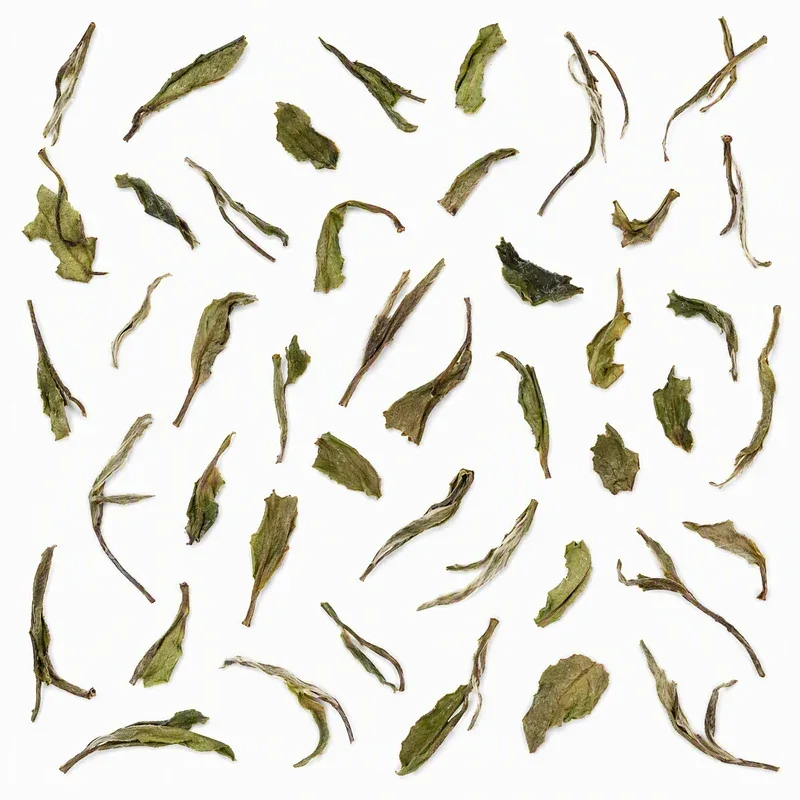
Brewing
Gongfu brewing
- Water temperature
- 75 °C
- Tea amount
- 5 g
- Water volume
- 100 ml
- First steep
- 10 s
- Time added per infusion
- 5 s
- Infusions
- 3

Shàngráo bái méi
Choose a brewing method. Start with the recommended quantities and time, then adjust to taste.
Brewing
Brewing
Taste
Tea encyclopedia
Category: Special green teas of China. Included among the "Eight Famous Teas of Jiangxi Province" (江西八大名茶, Jiāngxī bā dà míng chá).
Category: Special green teas of China. Included among the "Eight Famous Teas of Jiangxi Province" (江西八大名茶, Jiāngxī bā dà míng chá).
Coordinates: East longitude 117°41′–118°14′, North latitude 27°58′–28°50′.
Origin: China, Jiāngxī Province (江西省, Jiāngxī Shěng), Shàngráo City (上饶市, Shàngráo Shì), Guangxin District (广信区, Guǎngxìn Qū, formerly Shangrao County).
Type: Green tea (绿茶, lǜchá). Non-oxidized; degree of oxidation minimal (less than 5%).
The name "Bai Mei" (白眉 — "White Eyebrow") is a rare case of "anthropomorphic" tea nomenclature: white down on needle-like leaves resembles the thick silvery eyebrow of the Daoist god of longevity Shòuxīng (寿星). In Chinese culture, long white eyebrows are a symbol of wisdom and long life.
When brewing Yinhao grade using the upper pouring method, buds slowly descend in the glass, then rise and "stand" vertically, creating the effect of a "jade forest" (玉立, yù lì). This is one of the most aesthetic spectacles among Chinese green teas.
Shangrao is one of the few cities where the presence of the "tea saint" Lu Yu is documented: the spring he carved and tea monastery ruins have been preserved for more than a thousand years.
By 2023, the brand value of "Shangrao Bai Mei" reached 2.445 billion yuan (about 340 million dollars), placing it among the largest regional tea brands in China.
The growing region is certified as "China's Natural Oxygen Bar" — the concentration of negative air ions here is 50 times higher than urban levels, directly affecting the purity and freshness of tea leaves.
Cultural Significance: Shangrao Bai Mei is the main tea symbol of Guangxin District and an important element of regional cultural heritage. The connection with Lu Yu's name gives the tea special "tea-literary" status. This is a traditional spring gift tea of Jiangxi Province, which is also used at official receptions and tasting events.
Most tea bushes are over 30 years old.
Cultivar: Main cultivar — Dàmiànbái (大面白, Dàmiànbái), local asexual breeding line selected from Shangrao group tea garden. Camellia sinensis var. sinensis. Distinctive features: abundant down (茸毛密布, róngmáo mìbù), increased amino acid content (4.6–5.37% of dry matter), extended period of shoot tenderness by 7–10 days compared to standard varieties. Auxiliary cultivars — Fúdǐng Dàbáichá (福鼎大白茶, Fúdǐng Dàbái Chá) and Zhūyè Qí (槠叶齐, Zhūyè Qí).
Picking: Spring harvest (March–April), predominantly before and after the Qīngmíng festival (清明, Qīngmíng). Spring tea has maximum amino acid content.
Pluck Standard: Depending on grade: one bud with beginning-to-unfold leaf (银毫), one bud with one unfolded leaf (毛尖), one bud with two beginning-to-unfold leaves (翠峰). Strict observance of the "five prohibitions" rule (五不采, wǔ bù cǎi): do not pick shoots in rain, do not pick dewy shoots, do not pick hollow buds, do not pick shoots that have changed color, do not pick shoots damaged by pests.
Raw Material: General standard — "tender, uniform, fresh, clean" (嫩、匀、鲜、净, nèn, yún, xiān, jìng).
Altitude: 300–600 meters above sea level. Tea gardens are located predominantly in mountainous areas, constantly shrouded in clouds and mist, irrigated by mountain streams.
Climate: Subtropical monsoon humid climate. Average annual temperature 17.8°C. Annual precipitation — about 1724 mm. Number of foggy days exceeds 180 per year. Daily temperature range — more than 8°C. Frost-free period — 270 days. Annual sunshine — 1839 hours. High proportion of diffused light promotes amino acid accumulation in tea leaves.
Soil: Red soils (红壤, hóng rǎng) and yellow soils (黄壤, huáng rǎng) with acidic reaction (pH 5.2–6.3) predominate. Soils are enriched with microelements: zinc content — 76.2 mg/kg, selenium and other biologically significant elements are present.
Forest cover of the territory is 81%. Concentration of negative oxygen ions is 50 times higher than urban indicators. The district has certification as "China's Natural Oxygen Bar" (中国天然氧吧, Zhōngguó Tiānrán Yǎng Bā).
Topography: Guangxin District is located in the zone of the Wuyi Mountains (eastern extremity) and Huaiyushan mountain ranges. Topography is "saddle-shaped": southern and northern boundaries are elevated, the central part is lowered along the Xinjiang River. The highest point in the south is Wufugang Peak (五府岗, Wǔfǔ Gǎng), 1891.4 m; in the north — Lingshan Peak (灵山天梯峰), 1496 m.
Harvested raw material is spread in a thin layer in a cool, ventilated room for 4–6 hours. Purpose — partial moisture removal, beginning of aroma formation, increasing leaf pliability.
Conducted in a drum kiln at 130–140°C. High temperature deactivates oxidases and polyphenol oxidases, fixing the green color and fresh taste. Key moment — prevent scorching while maintaining uniform heating.
Processing temperature 70–80°C. Leaves are rolled, forming straight "eyebrow-like" stems. At this stage, the signature operation "tihao" is performed — rhythmic rubbing that reveals and straightens the silvery down on the leaf surface.
Drying at 70–80°C, reducing moisture to intermediate level.
Final drying at 50–60°C to residual moisture no more than 6.5%. At this stage, charcoal (木炭烘焙, mùtàn hōngbèi) is traditionally used, which delicately fixes the aroma and does not damage the down.
The proprietary operation "tihao" (提毫) is the calling card of Shangrao Bai Mei, distinguishing it from most other green teas of the province. Strict observance of the "five prohibitions" during harvest and complete temperature control at each stage ensure stable quality.
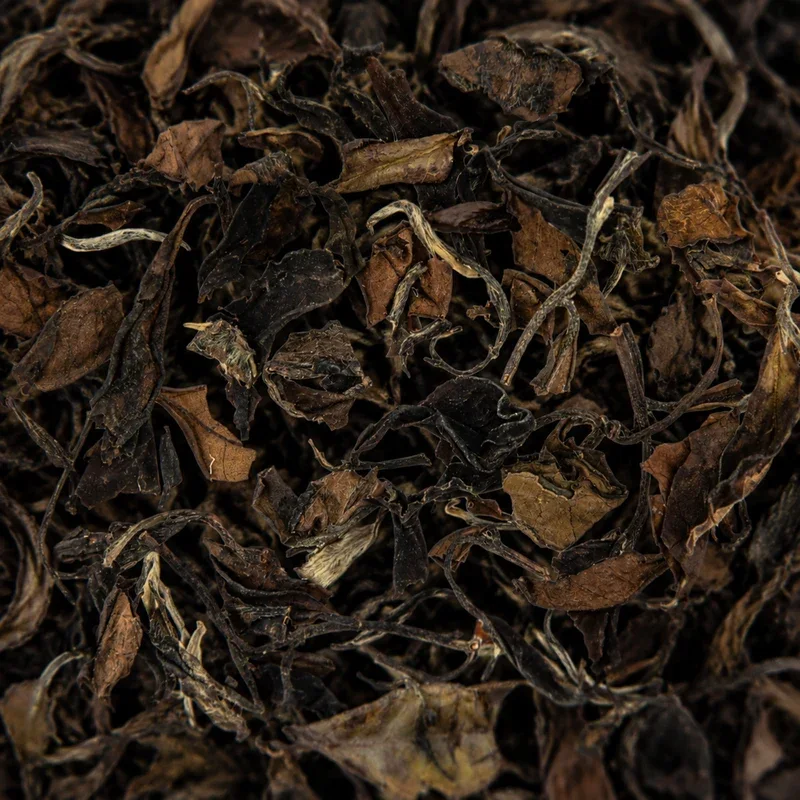
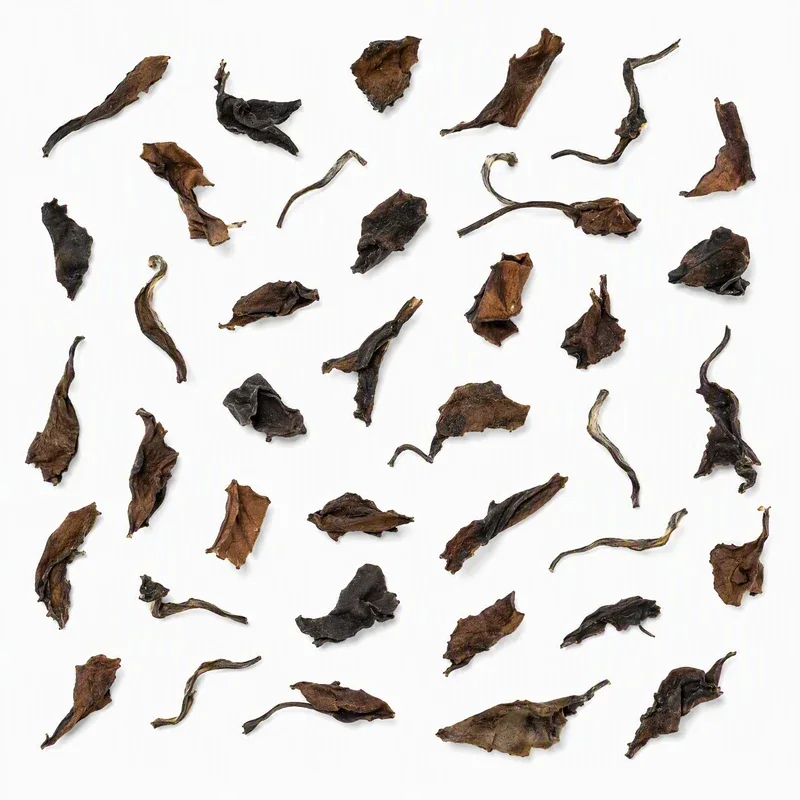
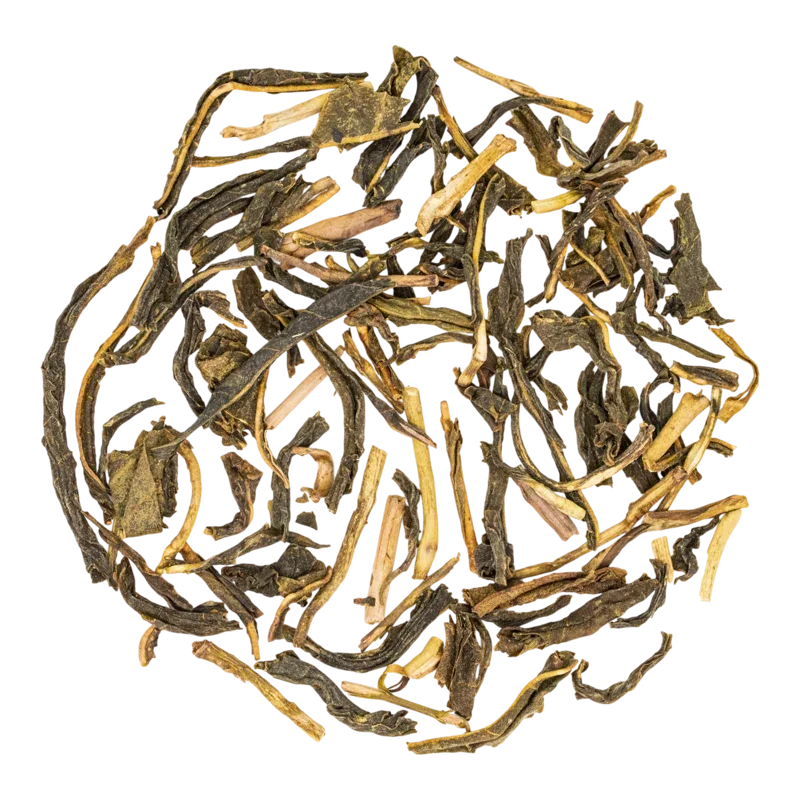
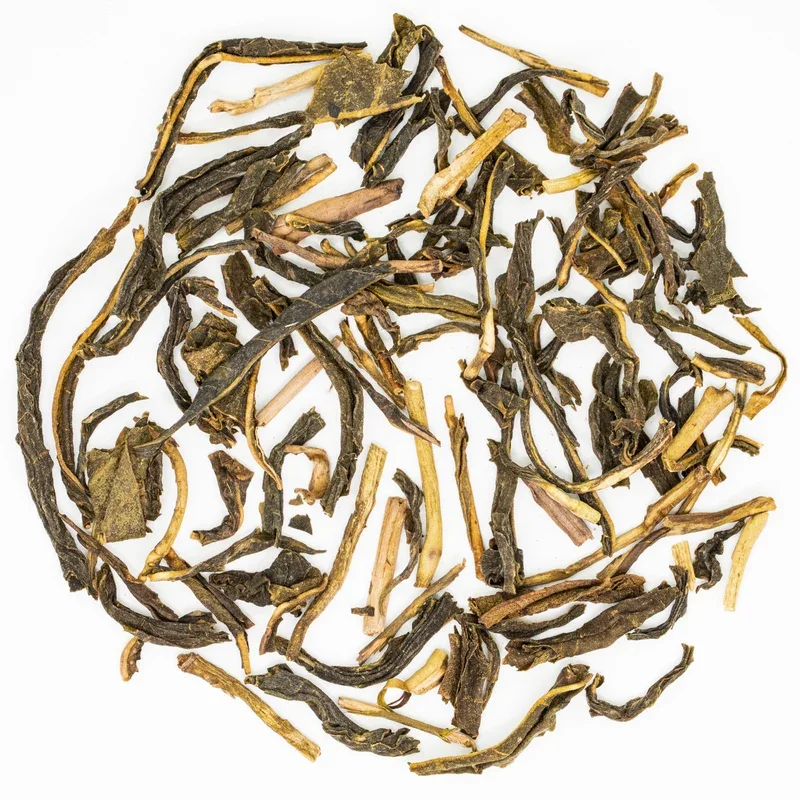
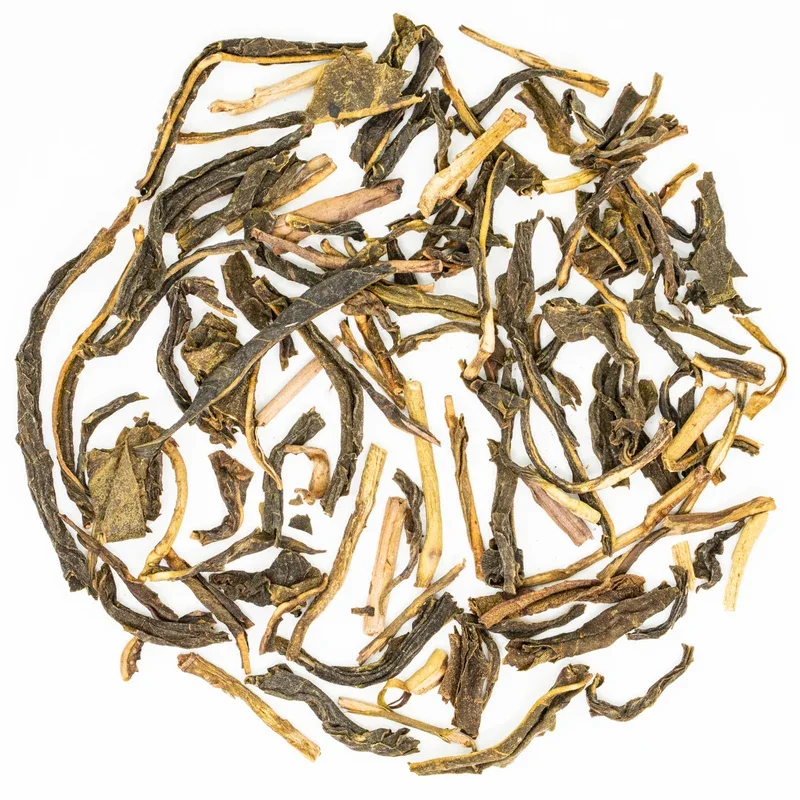
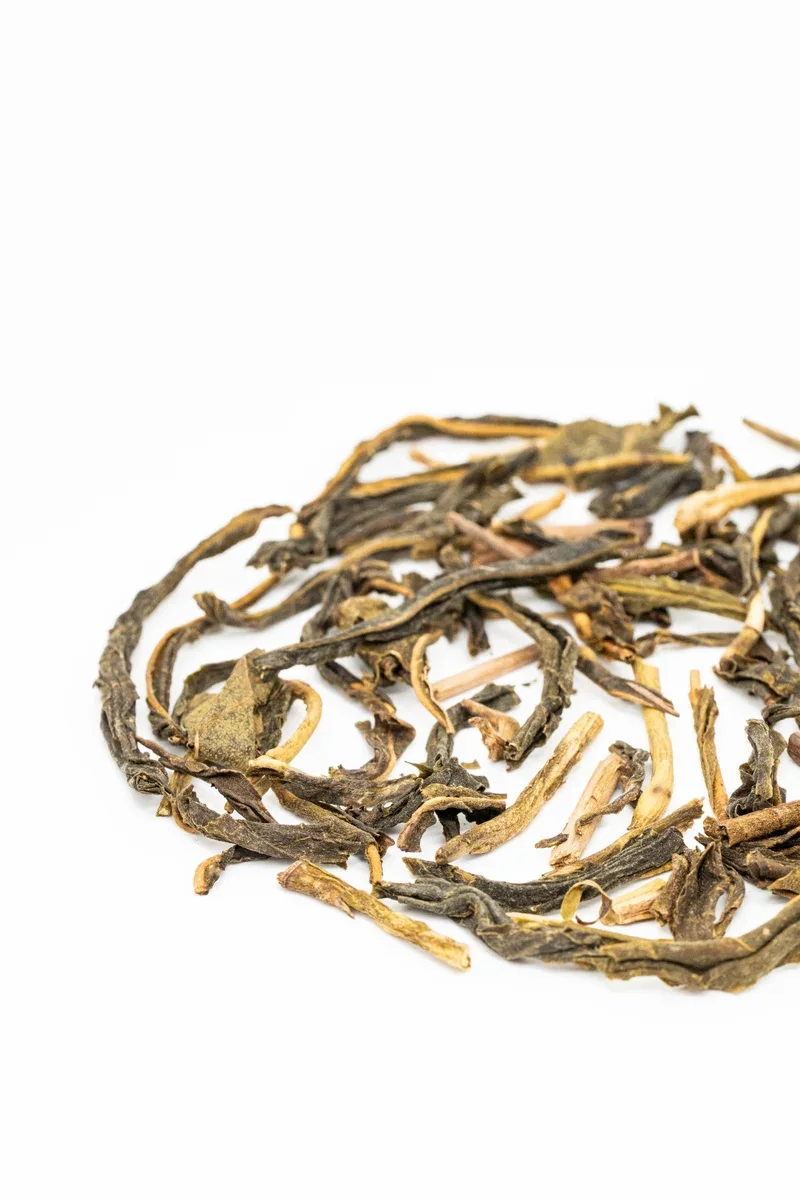
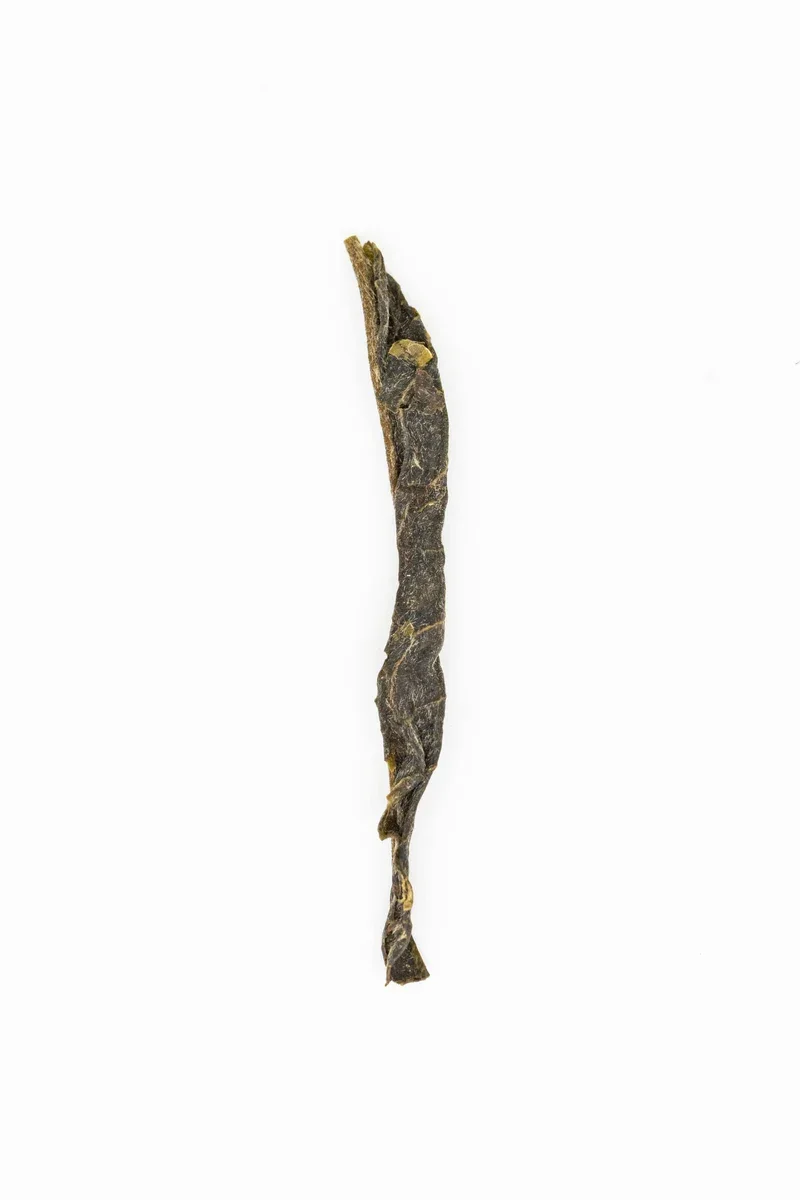
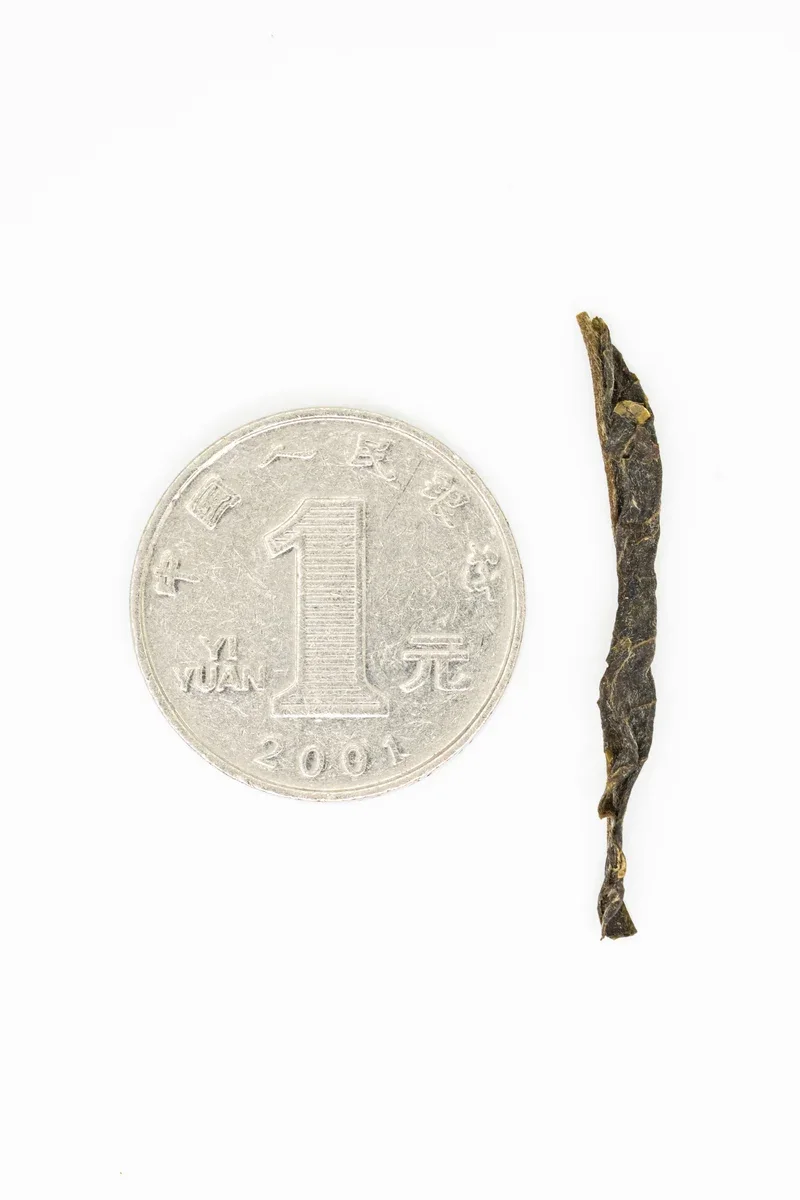
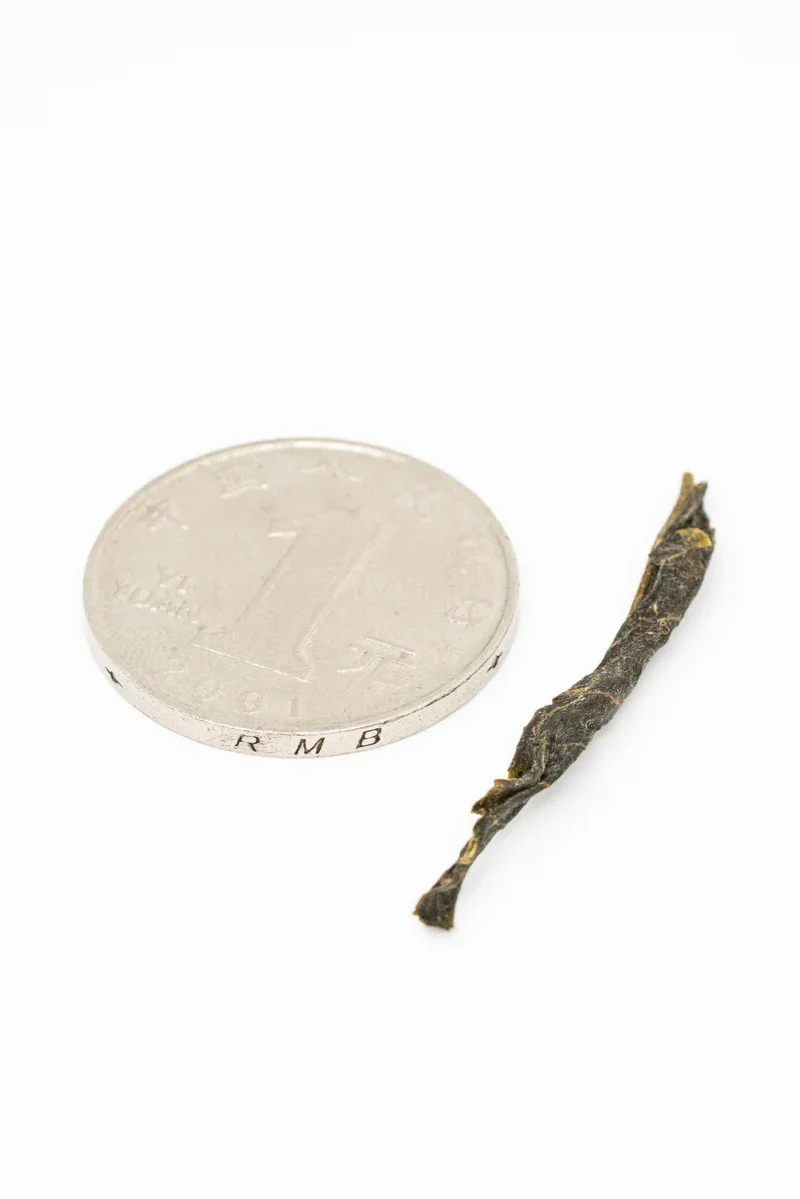
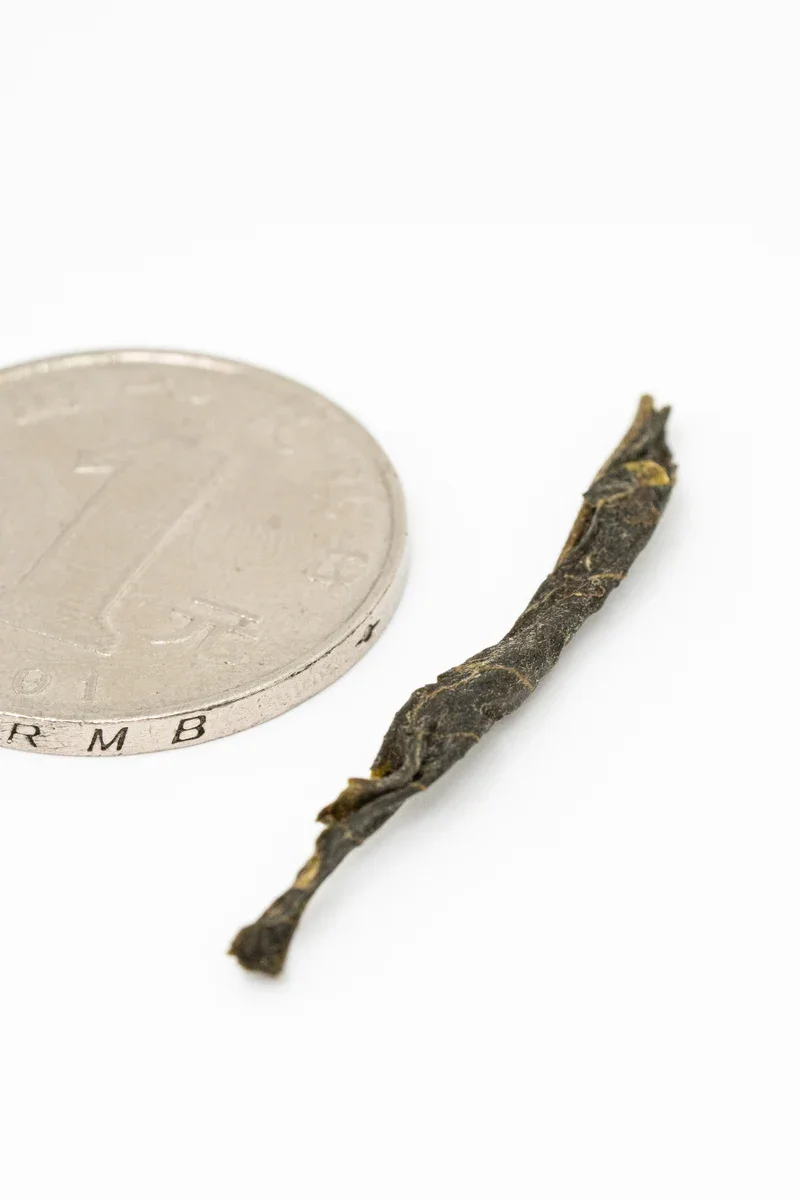
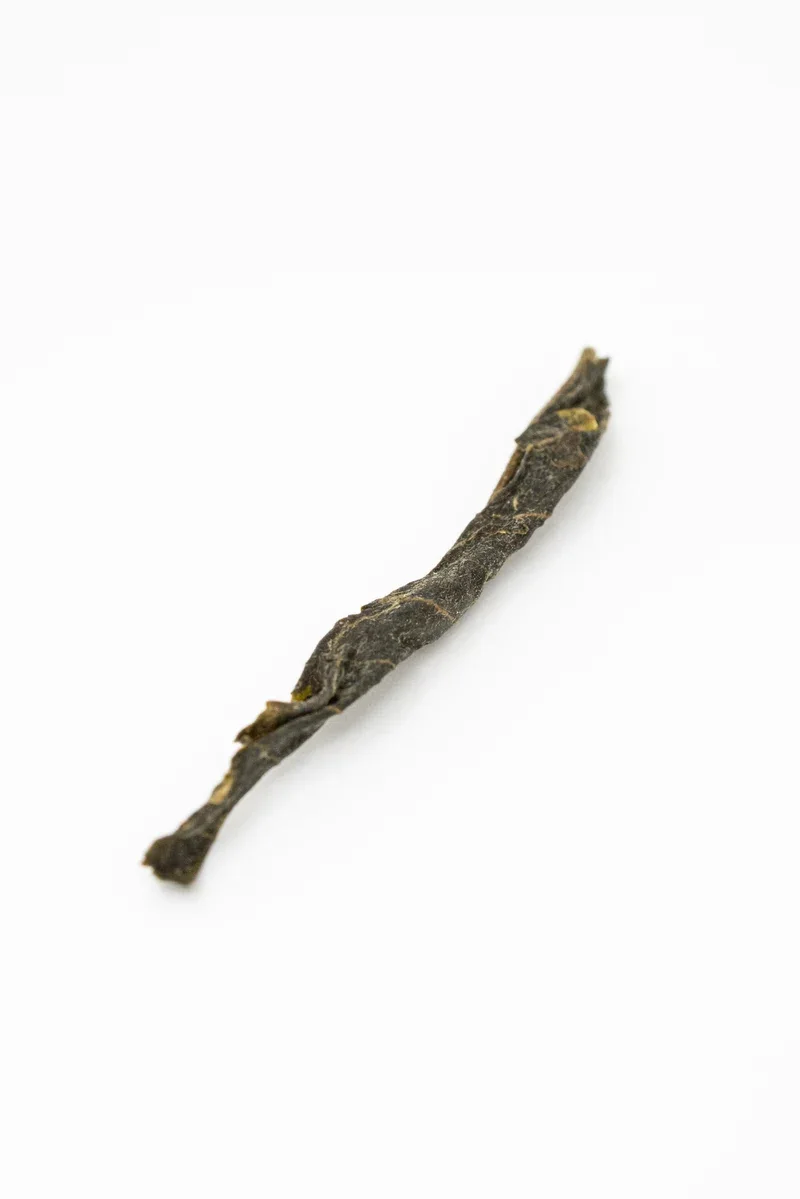
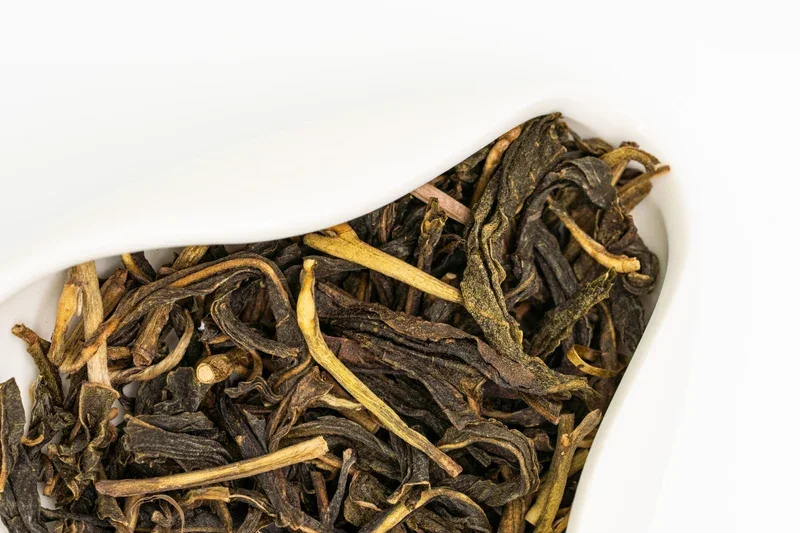
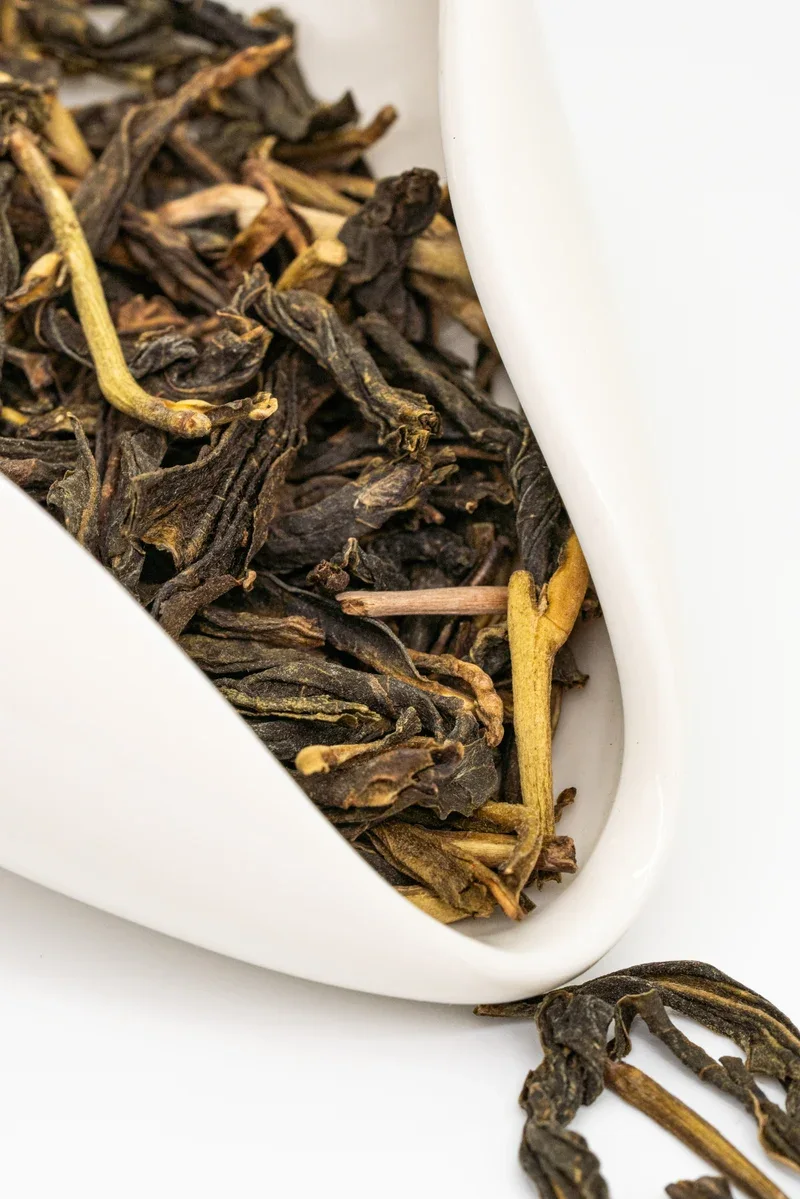
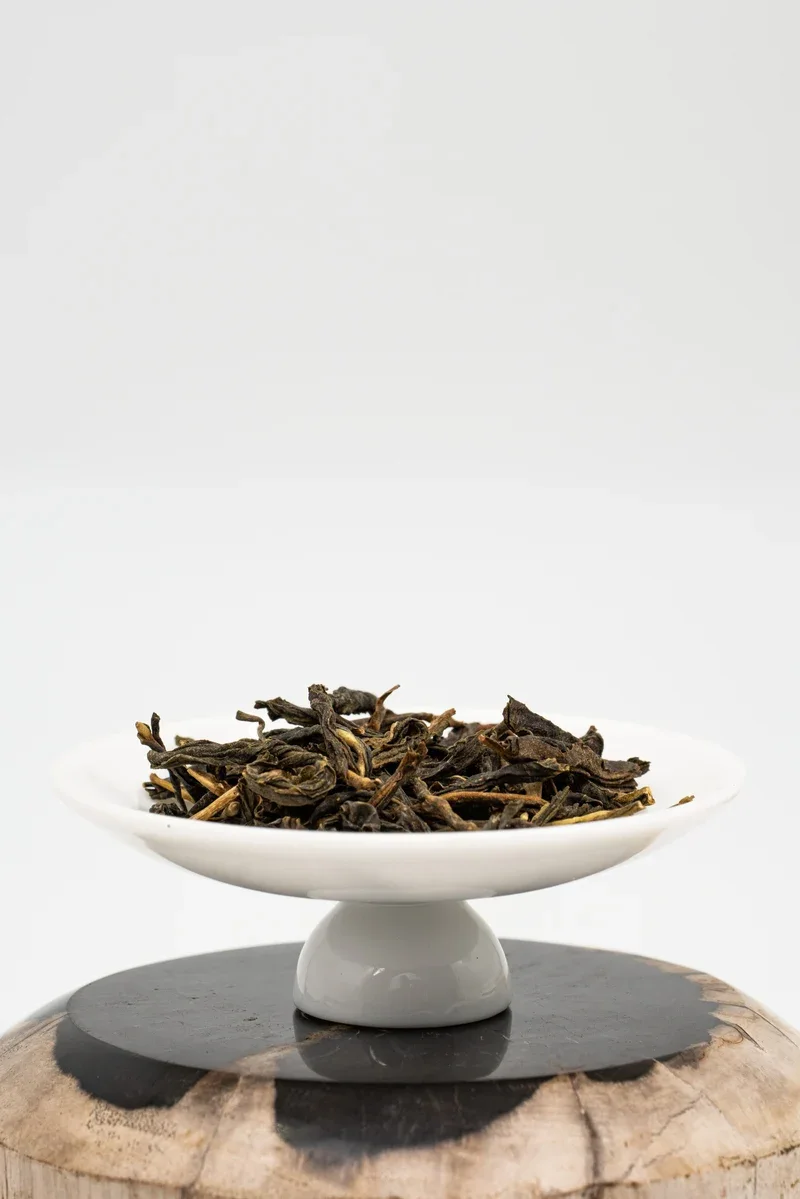
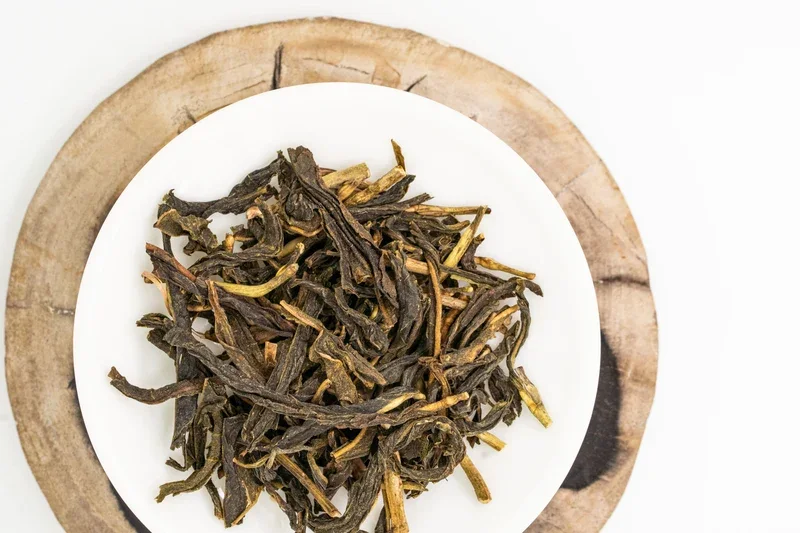
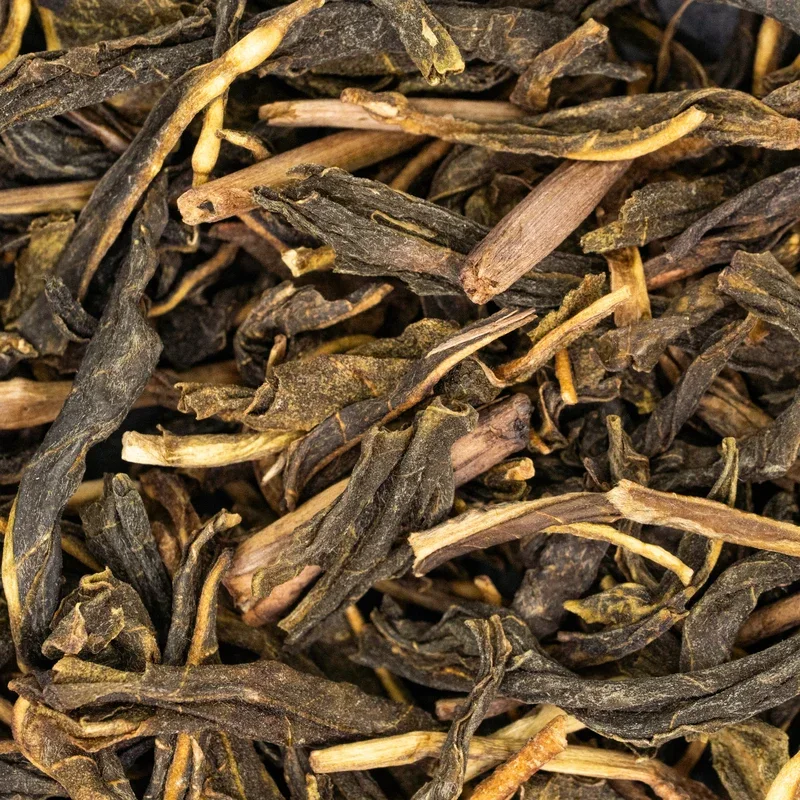
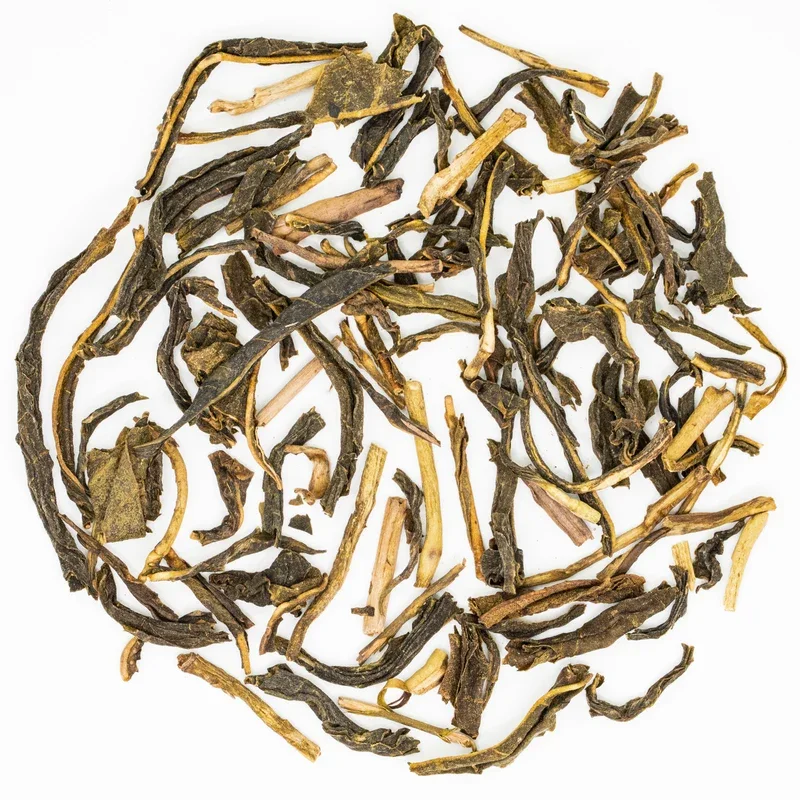
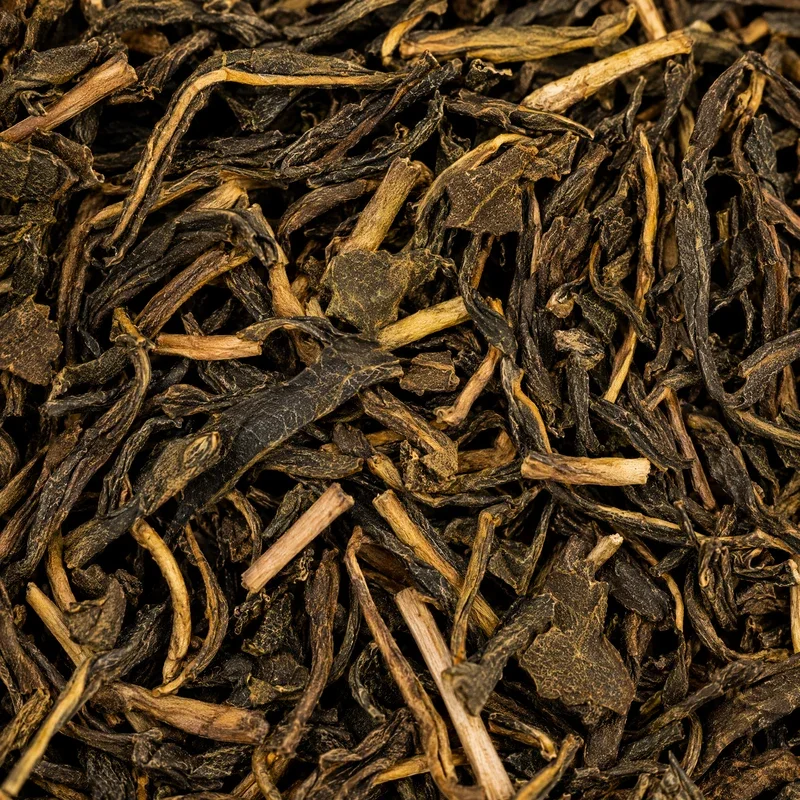
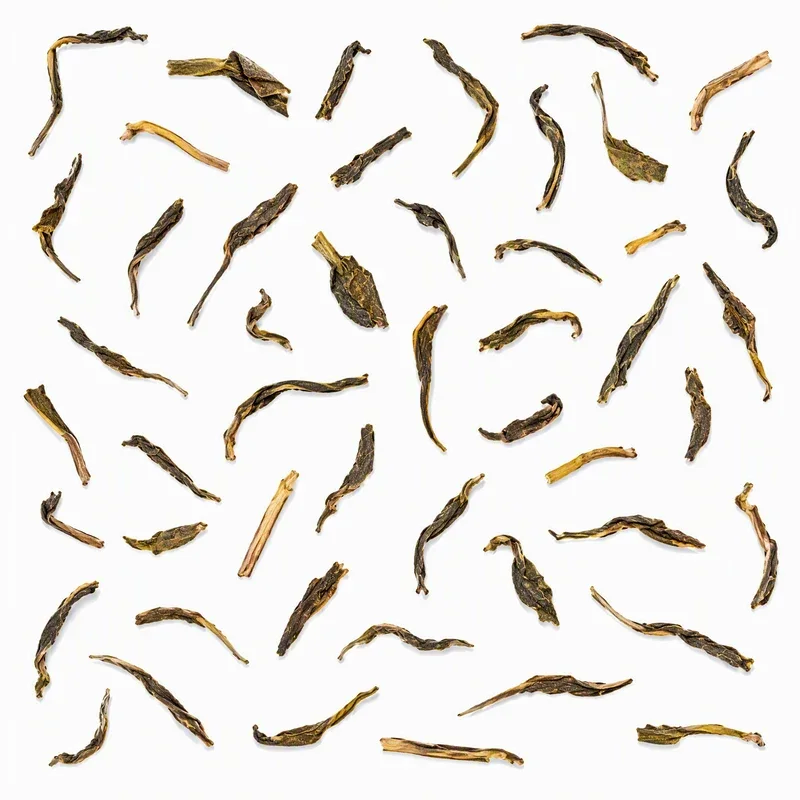
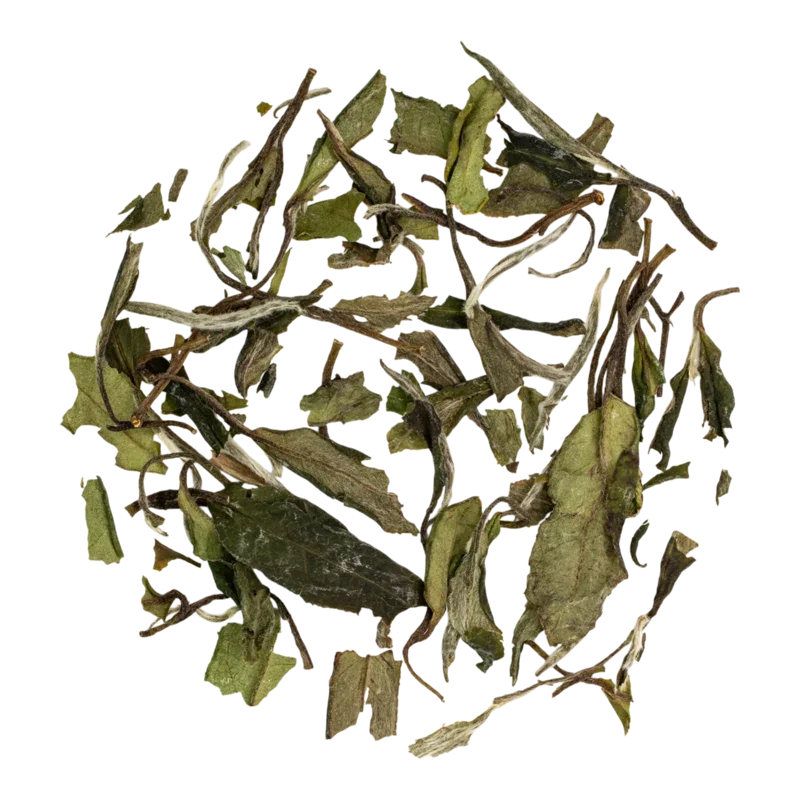
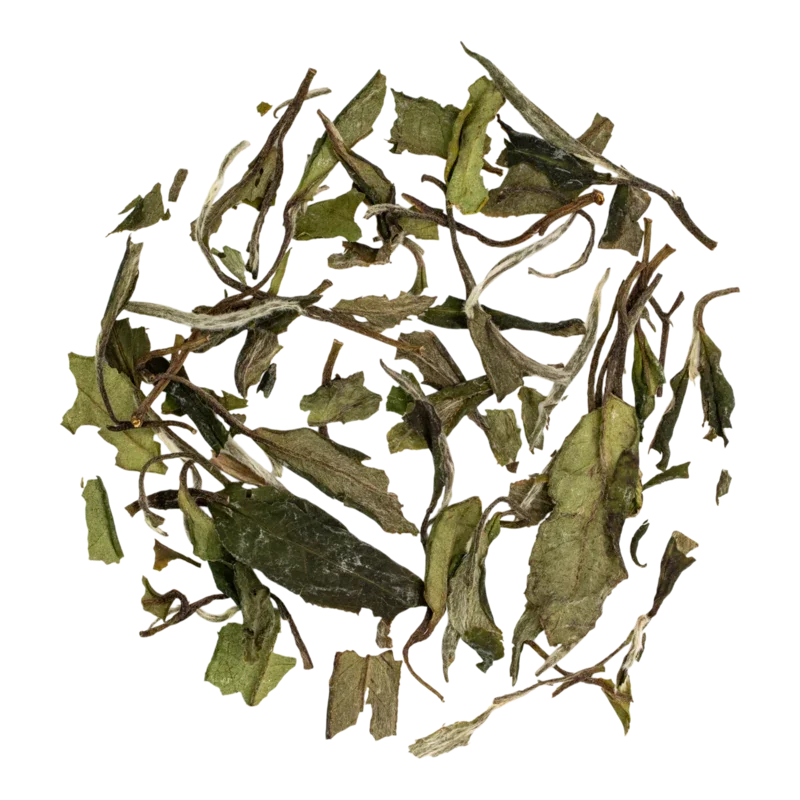
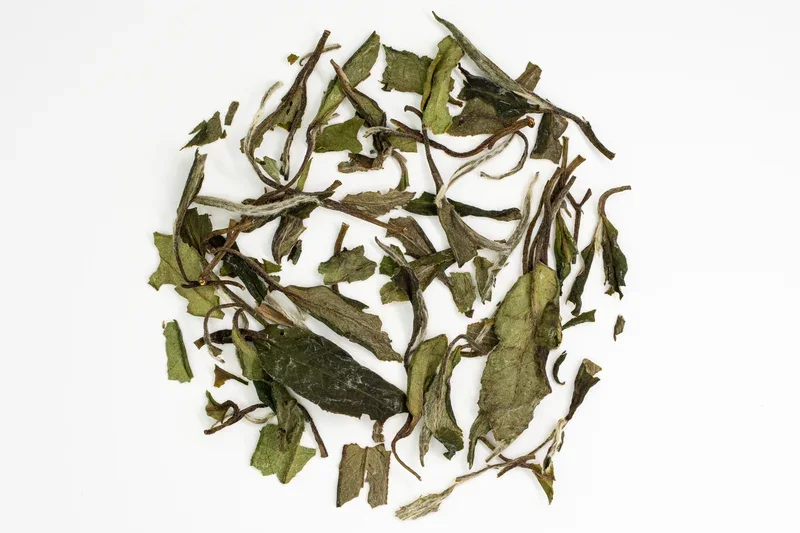
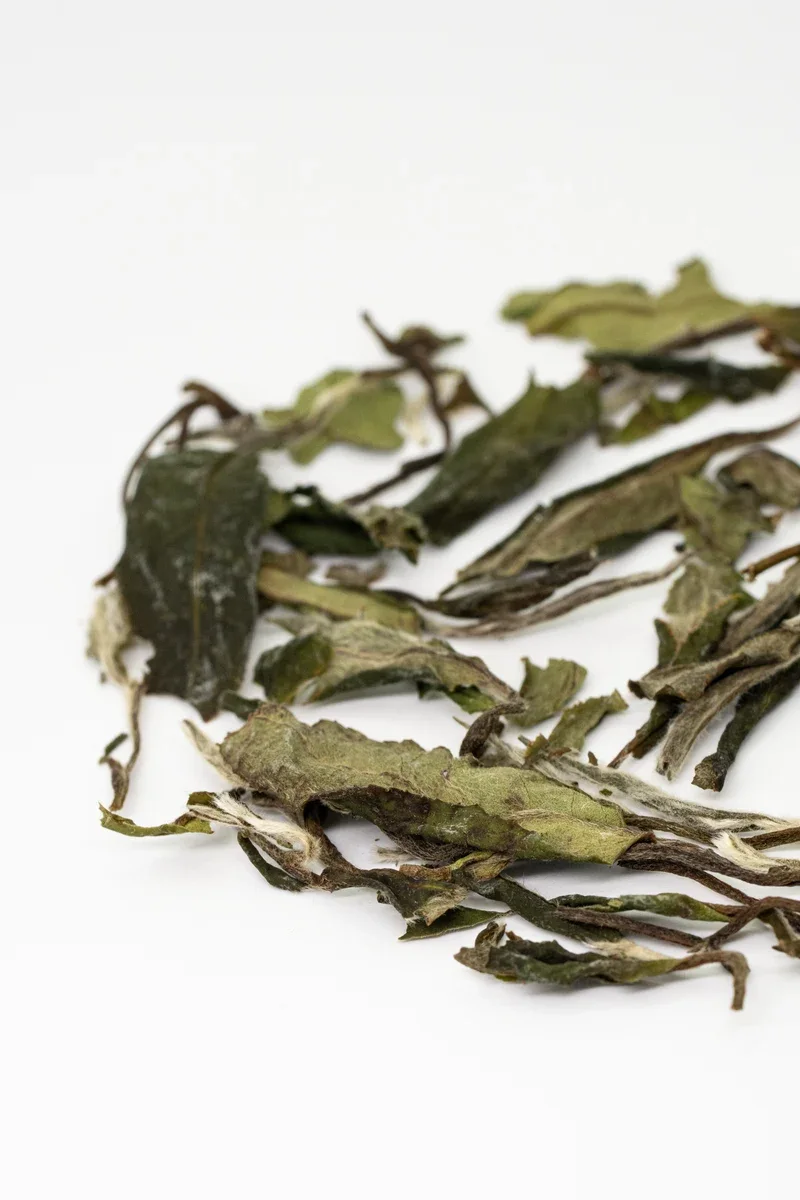
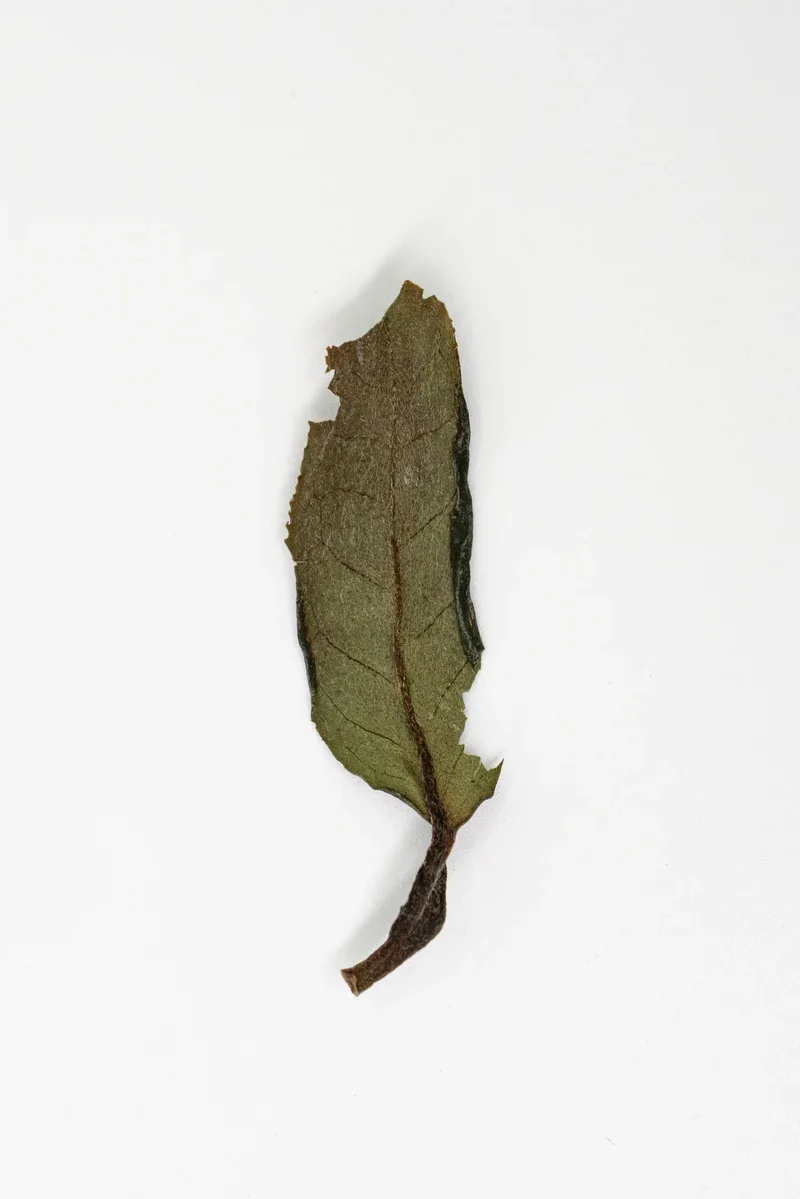
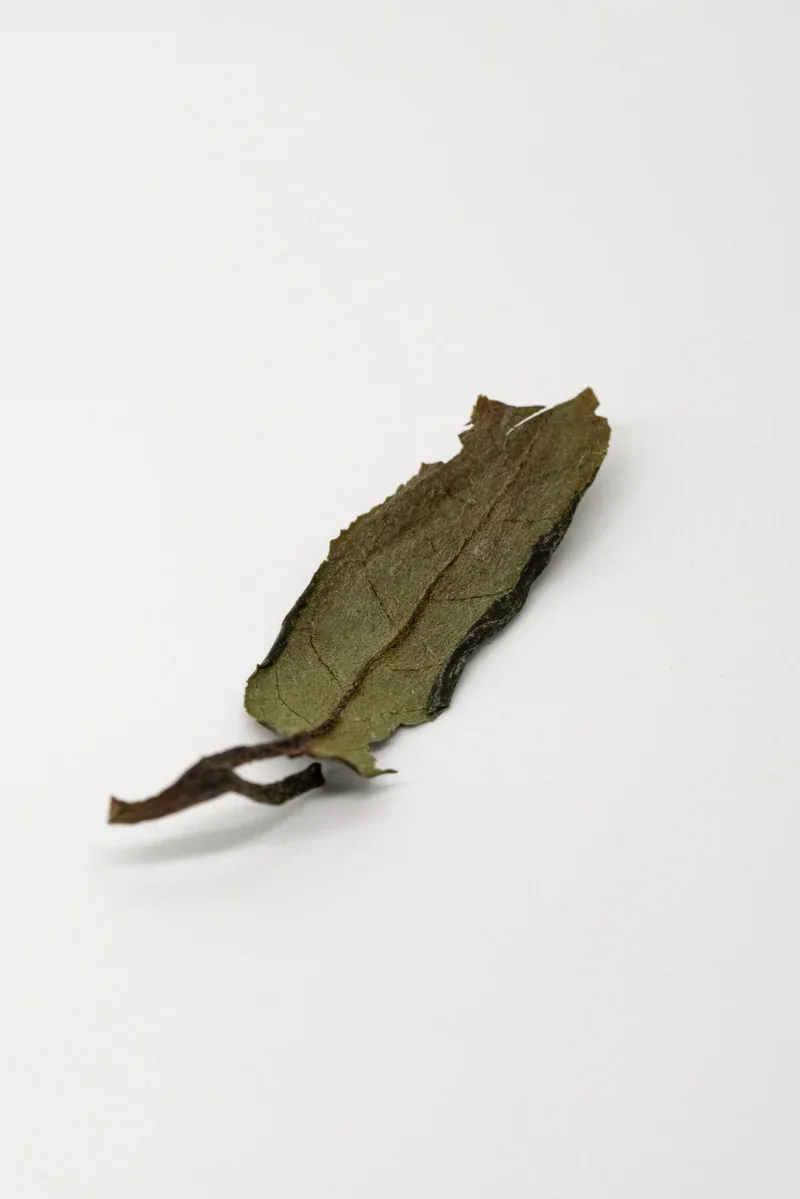
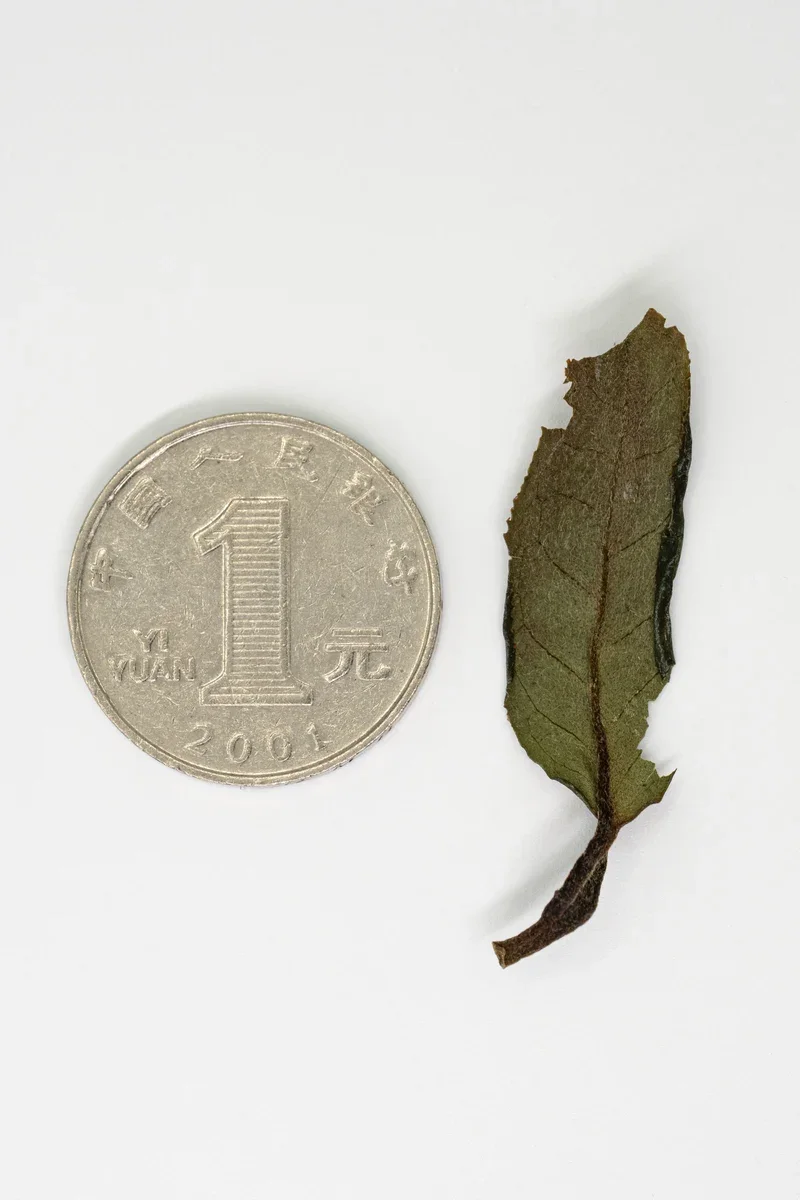
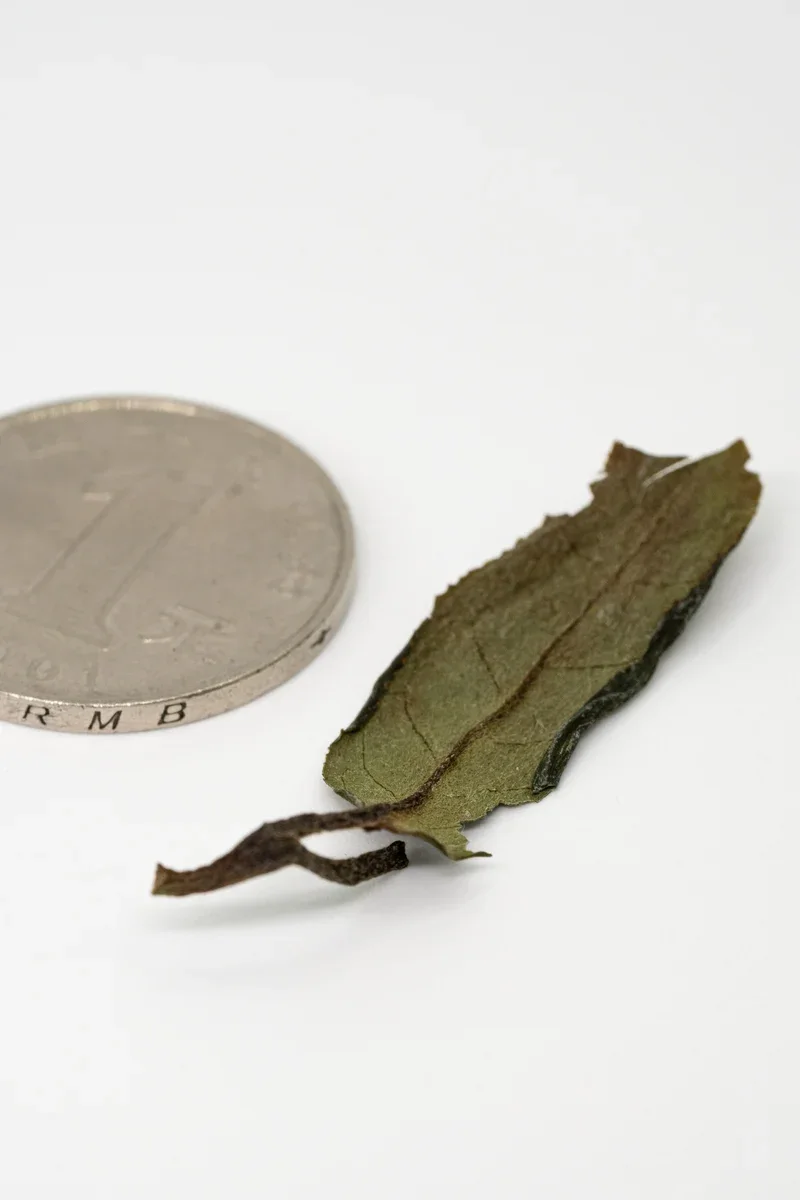
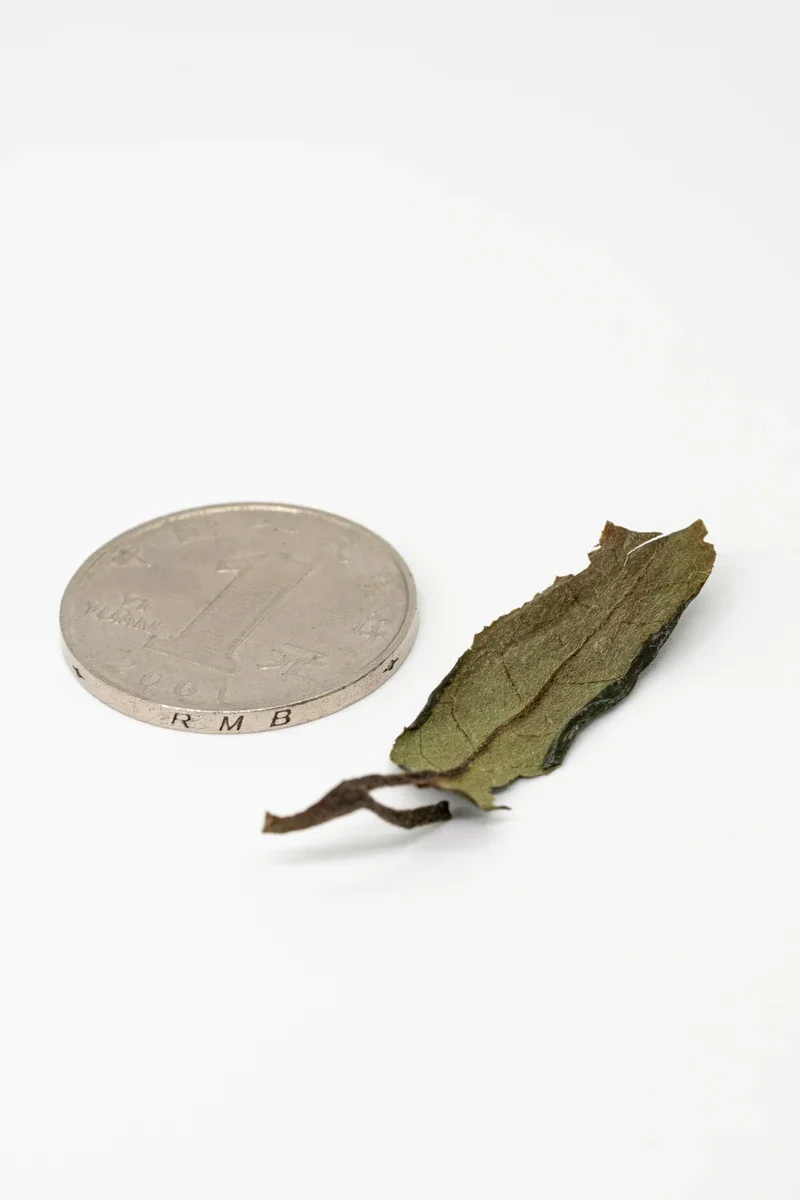
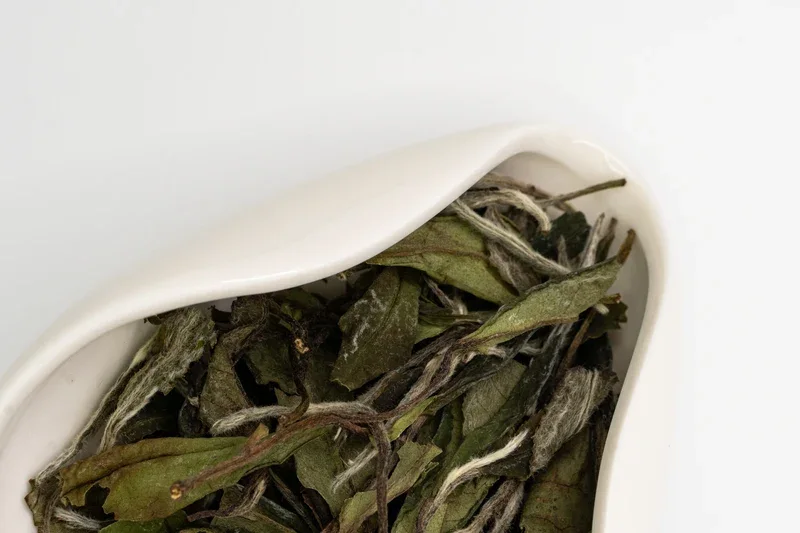
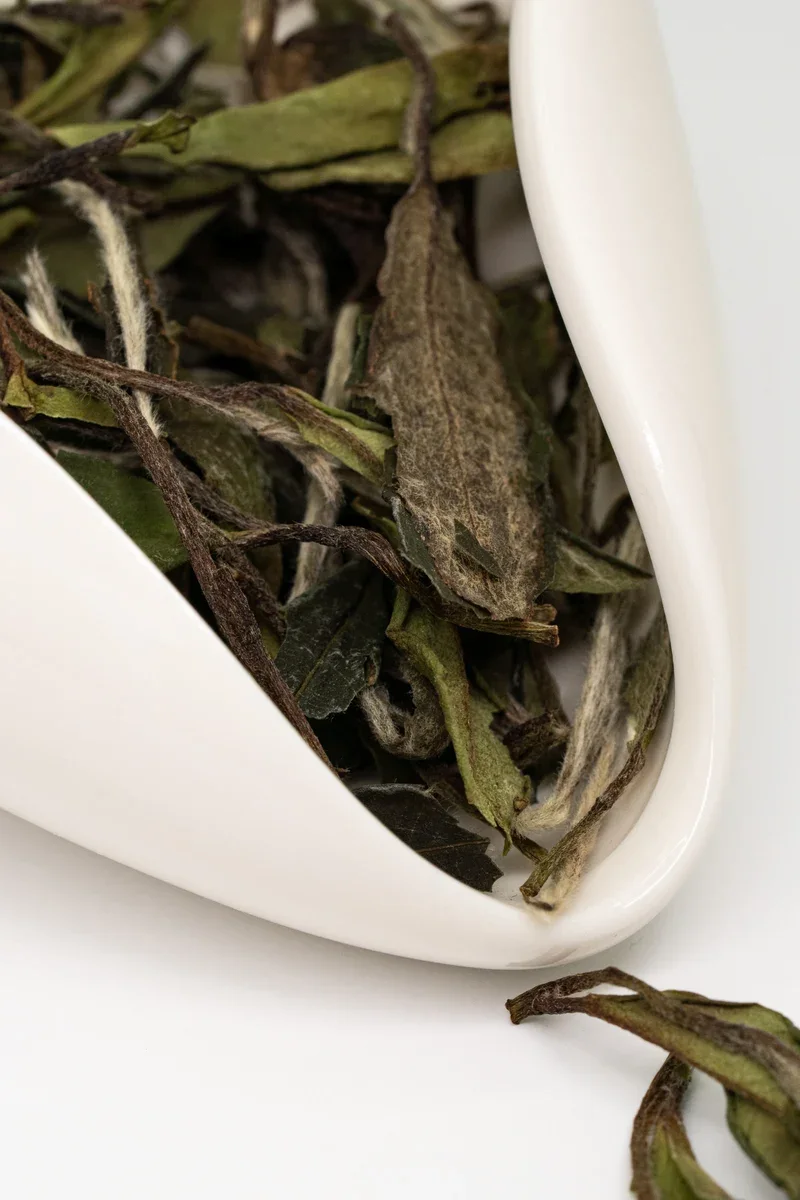
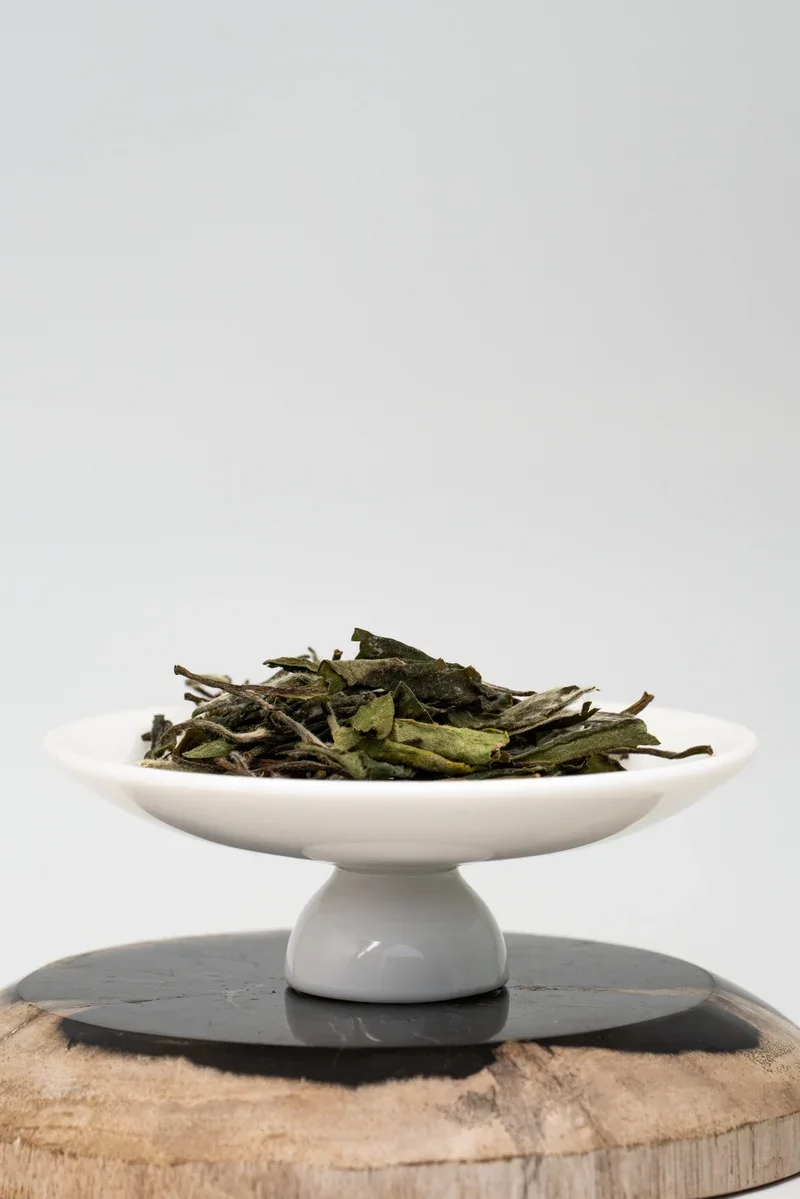
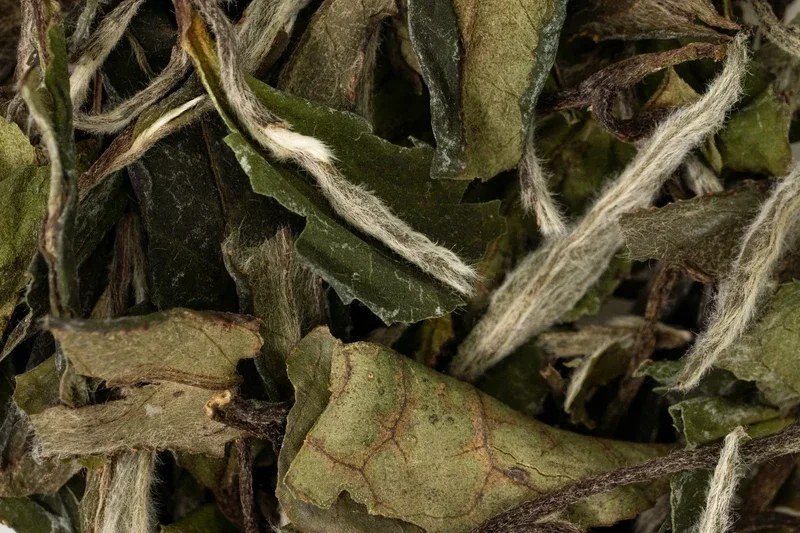
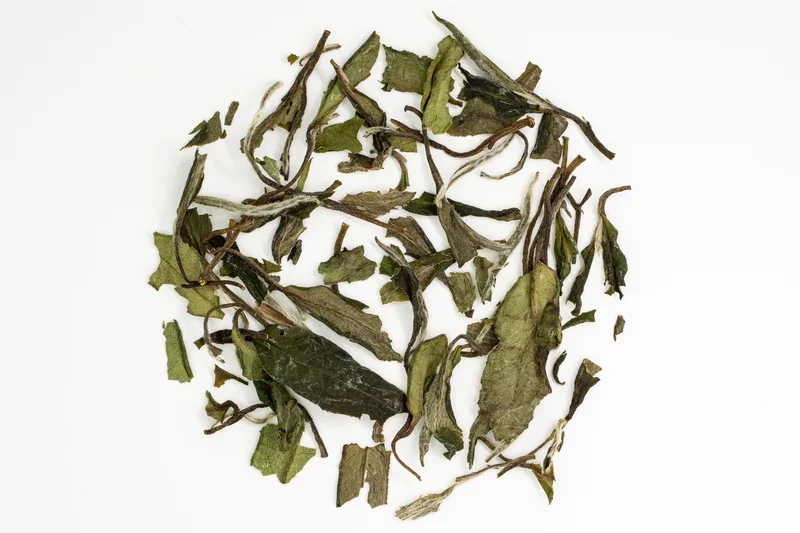
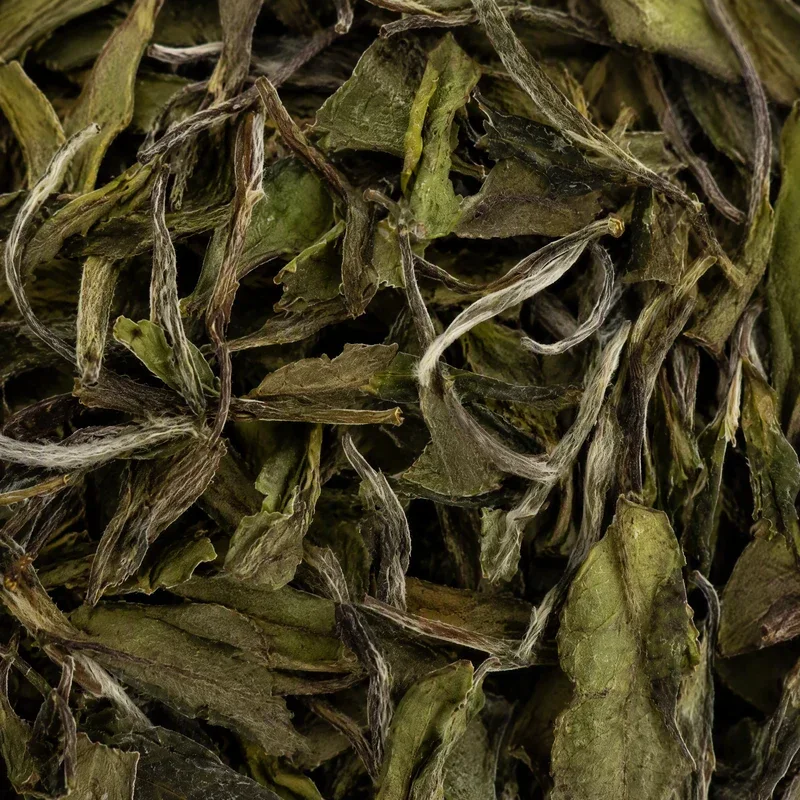
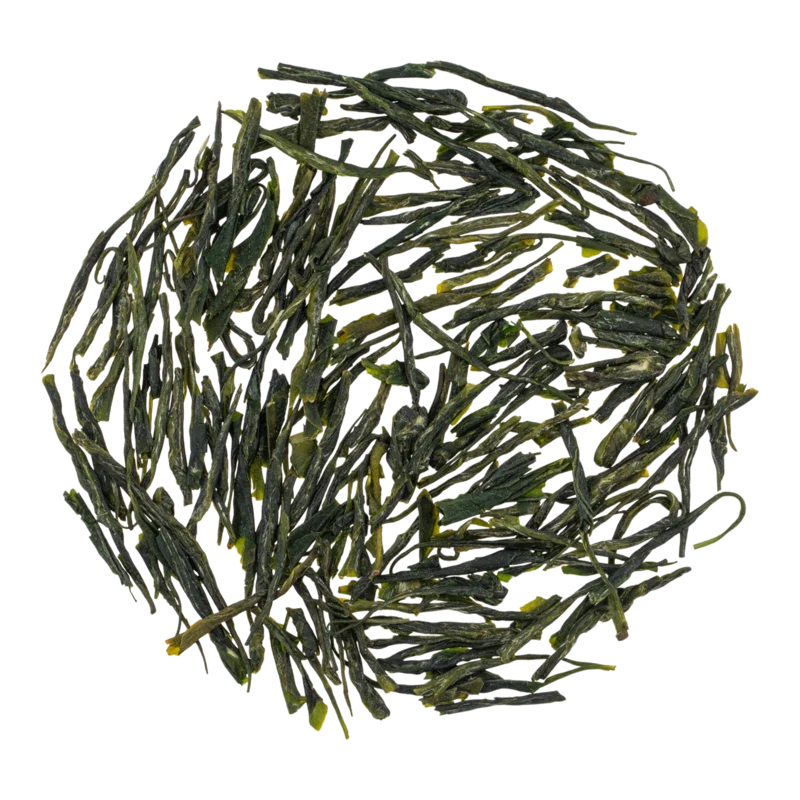
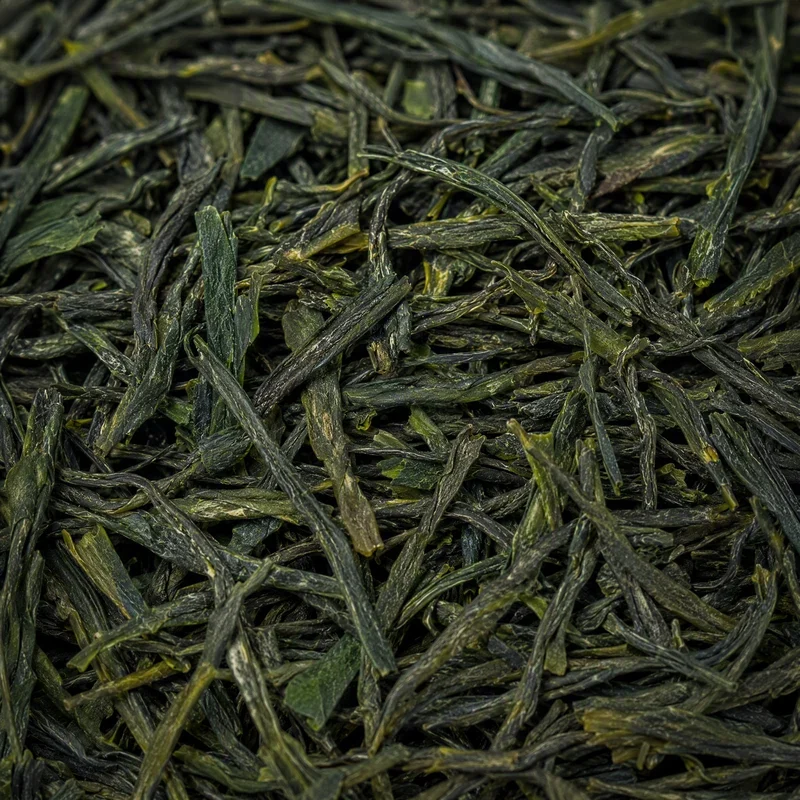
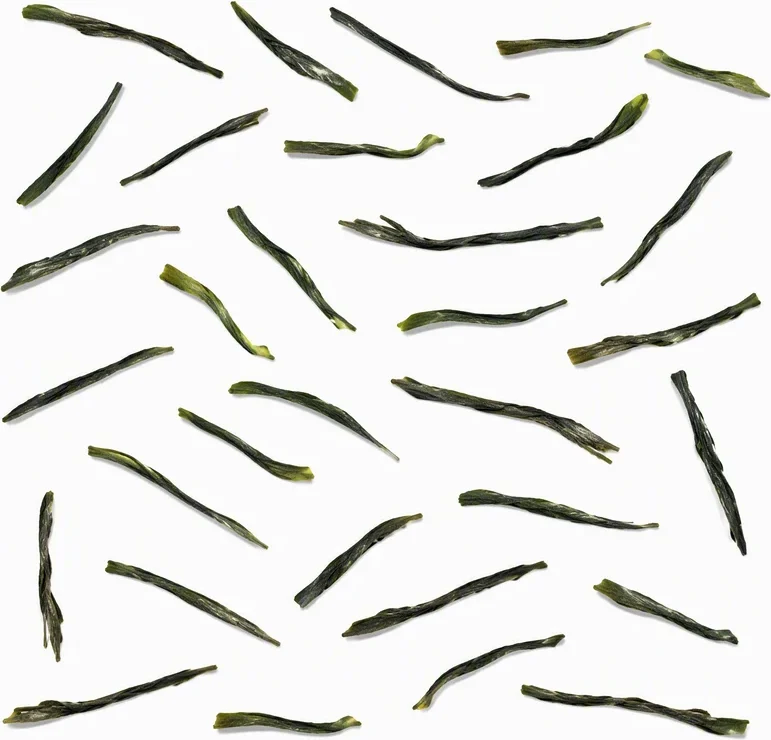
Dry Leaf Appearance: Shape — "eyebrow-like" (眉形, méi xíng): stems straight, strong, uniform. Abundantly covered with silvery-white down (白毫满披, bái háo mǎn pī). Color — rich green with oily luster (色泽绿润, sè zé lǜ rùn). Yínháo grade (银毫) is distinguished by almost snow-white color due to maximum down density.
Dry Leaf Aroma: Clean, high, with distinct chestnut notes (熟栗香, shú lì xiāng), especially pronounced in Yinhao grade. Background floral tones.
Liquor Aroma: High and persistent (清高持久, qīng gāo chíjiǔ). Main theme — chestnut aroma, accompanied by fresh green notes and light floral overtones. Aroma does not fade over several infusions.
Liquor Color: Tender green, bright and clear (嫩绿明亮, nèn lǜ míng liàng). When brewing Yinhao, the liquor has a light emerald shade with characteristic "sparkling" luster.
Spent Leaves: Tender green, uniform, juicy and lively (嫩绿匀整鲜活, nèn lǜ yún zhěng xiān huó). For Yinhao — whole buds resembling sparrow tongues (雀舌, què shé), standing vertically in the cup.
Taste: Fresh and rich (鲜浓, xiān nóng), with pronounced umami due to high amino acid content. Body — medium, with sensation of soft density (醇, chún). Pronounced returning sweetness (回甘, huí gān), long-lasting in the mouth. Taste is balanced — without rough bitterness or astringency when properly brewed.
Alkaloids: Caffeine (咖啡因, kāfēiyīn) — typical content for high-mountain green tea, approximately 25–35 mg/g dry leaf. Theobromine and theophylline are present in trace amounts.
Amino Acids: High content — not less than 4.6% (for first grade), up to 5.37% for Damianbai cultivar. L-theanine is the dominant amino acid, determining the characteristic "umami" freshness of taste and mild tonic effect. Increased amino acid content is the calling card of this tea, related to the abundance of foggy days and diffused light in the growing zone.
Not less than 50% (for special grade) — indicator of "extractability" and liquor richness, exceeding the national standard for green teas (34%).
Chestnut aroma is formed by a complex of pyrazines and furanones formed during moderate roasting. Fresh green notes are provided by hexanal and cis-3-hexenol.
Minerals: Zinc, selenium, potassium, phosphorus, magnesium. Zinc and selenium content is elevated due to geochemical features of Guangxin District soils.
Polyphenols: Content — not less than 21.3% (for special grade). Catechins (儿茶素, ér chá sù) — 122.57 mg/g. Provide antioxidant activity and form the astringent component of taste.
Vitamins: Vitamin C (ascorbic acid) — green teas with minimal heat treatment preserve a significant portion of ascorbic acid. Also contains B vitamins, vitamin E.
High content of polyphenols and catechins provides powerful neutralization of free radicals, contributing to slowing cellular aging.
Catechins (especially EGCG) help reduce "bad" cholesterol (LDL) levels, accelerate lipid metabolism and reduce the risk of atherosclerotic changes.
L-theanine combined with caffeine provides mild, steady tone and mental clarity without sharp peaks and drops characteristic of coffee.
Fluoride and catechins contained in tea suppress cariogenic bacteria activity and reduce dental plaque formation.
Polyphenols, vitamin C and microelements (zinc, selenium) in complex strengthen the body's protective functions.
Moderate green tea consumption stimulates digestive enzyme secretion and supports normal peristalsis.
Antioxidants and vitamin E help maintain skin tone and protect against ultraviolet damage.
Highest grade. Raw material — one bud with beginning-to-unfold leaf (一芽一叶初展). Externally resembles a silver needle: snow-white, straight. When brewed, buds stand vertically like "jade pillars." Aroma — bright chestnut; taste — fresh, sweet with pronounced returning sweetness. Water extract ≥50%, tea polyphenols ≥21.3%.
Medium grade. Raw material — one bud with one unfolded leaf (一芽一叶开展). Leaves are strong, with well-visible down. Aroma — persistent, clean; taste — fresh and mellow (鲜醇, xiān chún). Amino acids ≥4.6%.
Basic grade. Raw material — one bud with two beginning-to-unfold leaves (一芽二叶初展). Stems are strong, with noticeable down. Taste — rich, body — denser than senior grades. Withstands 4–5 full brewings. Optimal for daily tea drinking.
Soft water with low mineralization is preferable. Mountain spring water is ideal. Alkaline water can worsen liquor color.
Tea Amount: 3 g per 150 ml (1:50 ratio). For gaiwan (100–120 ml) — 5 g.
Teaware: Glass tumbler (透明玻璃杯, tòumíng bōli bēi) — optimal for observing the "dance" of buds; white porcelain gaiwan (白瓷盖碗, bái cí gàiwǎn) — for more precise extraction control and aroma concentration.
Water Temperature: 80–85°C. For Yínháo grade (银毫) — 80°C; for Máojiān (毛尖) and Cuìfēng (翠峰) — 80–85°C. Absolutely cannot use boiling water: temperature above 85°C destroys L-theanine and leads to extraction of excessive bitterness.
Airtight packaging, protection from light, moisture and foreign odors. Optimal storage — in refrigerator at 0–5°C in vacuum or foil packaging. Storage period under such conditions — up to 12 months; in vacuum packaging — up to 18 months.
Shangrao Bai Mei is a tea of freshness. Most vibrant aroma and taste — in the first 6 months after production. Not intended for long aging.
Fresh tea is recommended to be aged 5–7 days after opening in a dark place at room temperature for "fire dissipation" (褪火, tuì huǒ), then stored in refrigerator. After opening vacuum packaging, preferably consume within a month.
Famous tea from Henan Province. Also has abundant down and fresh taste, but differs in tighter, "needle-like" rolling and more pronounced chestnut aroma. Shangrao Bai Mei is "softer" in body and more "sweet" in aftertaste due to high amino acid content of Damianbai cultivar.
Another famous green tea from Jiangxi, growing on Mount Lushan. Lighter and more airy, with pronounced floral-bean notes. Bai Mei is denser, with more distinct chestnut accent and longer returning sweetness.
Another "eyebrow-shaped" tea from Jiangxi (Wuyuan District). Differs in finer rolling and somewhat different aromatic profile (more grassy). Bai Mei is visually "larger" and has more pronounced down.
Classic green tea from neighboring Anhui Province. Maofeng differs in lighter "floral-orchid" aroma and leaf shape "sparrow tongue with golden edge." Bai Mei is more saturated in taste and has more straight "needle-like" shape.
Price Category: Cost significantly depends on grade. Yínháo (银毫, Yínháo) — from 800 yuan per jin (500 g) and higher; Máojiān (毛尖, Máojiān) — 400–600 yuan per jin; Cuìfēng (翠峰, Cuìfēng) — 200–400 yuan per jin. Prices vary depending on year, specific producer and harvest season.
Raw material grade (shoot tenderness), harvest time (pre-Qingming tea is more expensive), specific plot (zone core — Zunqiao, Dongtuan), manual vs. mechanical processing.
No reviews yet. Tell us what you think of this tea.
Rate this tea and share your impressions. We review each submission before publishing it.