Brewing
Gongfu brewing
- Water temperature
- 80 °C
- Tea amount
- 5 g
- Water volume
- 100 ml
- First steep
- 10 s
- Time added per infusion
- 5 s
- Infusions
- 3

pùbù máo fēng
Choose a brewing method. Start with the recommended quantities and time, then adjust to taste.
Brewing
Brewing
Taste
Tea encyclopedia
Category: China National Geographic Indication Product (国家地理标志产品, 2012). "Big Five Famous Teas of Guizhou" (贵州五大名茶, 2010). "Top Ten Famous Teas of China" (全国十大名茶, Shanghai, 2023). Special Prize "Zhong Cha Bei" (中茶杯特等奖, 1994). Best Recommended Product of Shanghai International Tea Culture Festival (1995). Passing 400+ EU parameters.
Category: China National Geographic Indication Product (国家地理标志产品, 2012). "Big Five Famous Teas of Guizhou" (贵州五大名茶, 2010). "Top Ten Famous Teas of China" (全国十大名茶, Shanghai, 2023). Special Prize "Zhong Cha Bei" (中茶杯特等奖, 1994). Best Recommended Product of Shanghai International Tea Culture Festival (1995). Passing 400+ EU parameters.
Origin: China, Guìzhōu Province (贵州省), Ānshùn City (安顺市): Xīxiù District (西秀区), Píngbà District (平坝区), Ziyun County (紫云县). Coordinates: 105°55′–106°35′ E, 25°55′–26°32′ N. Quality core: Laoluopo (老落坡, 1365 m, cloud-mist belt), Bayang (坝羊, Se+Zn, EU-organic), zone around Huángguǒshù Waterfall (黄果树, 95% forest).
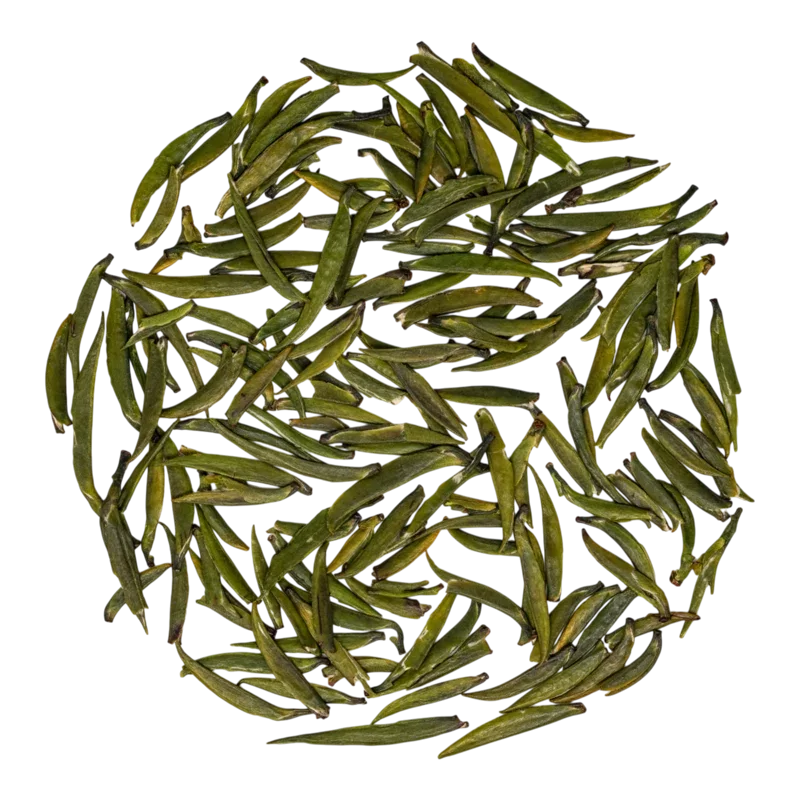
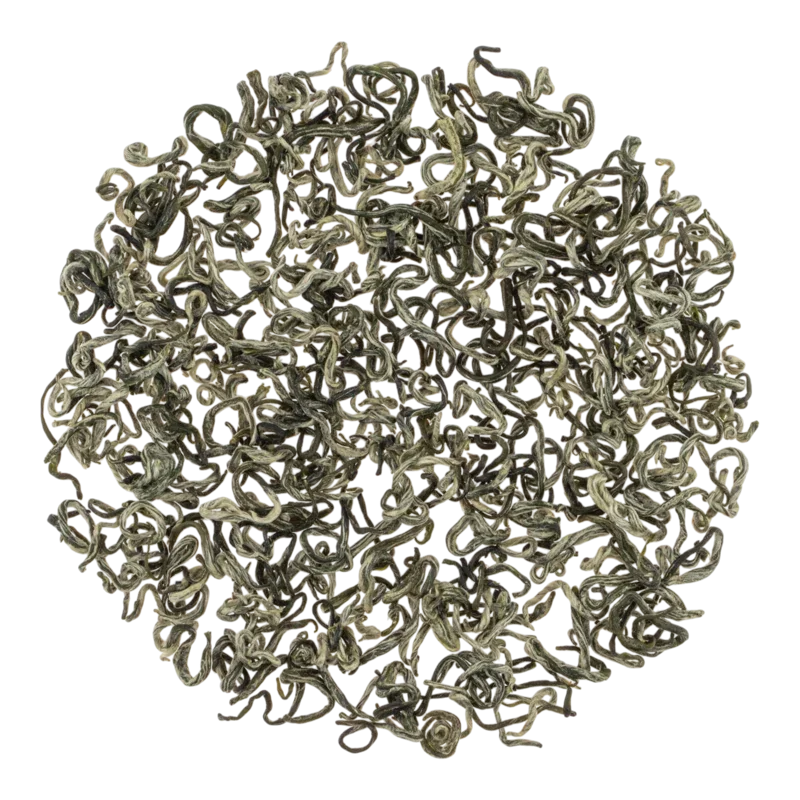
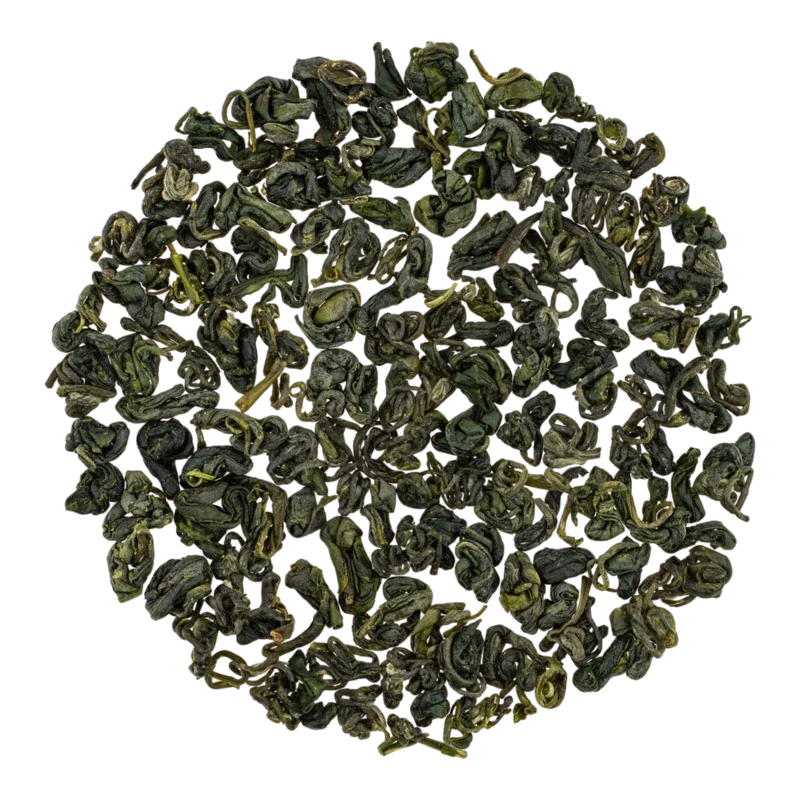
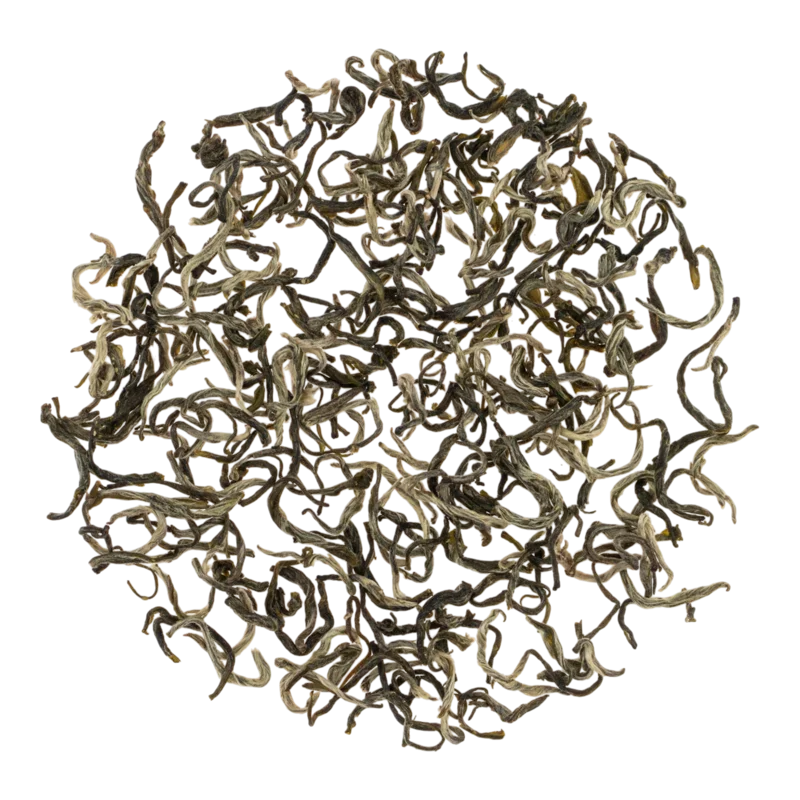
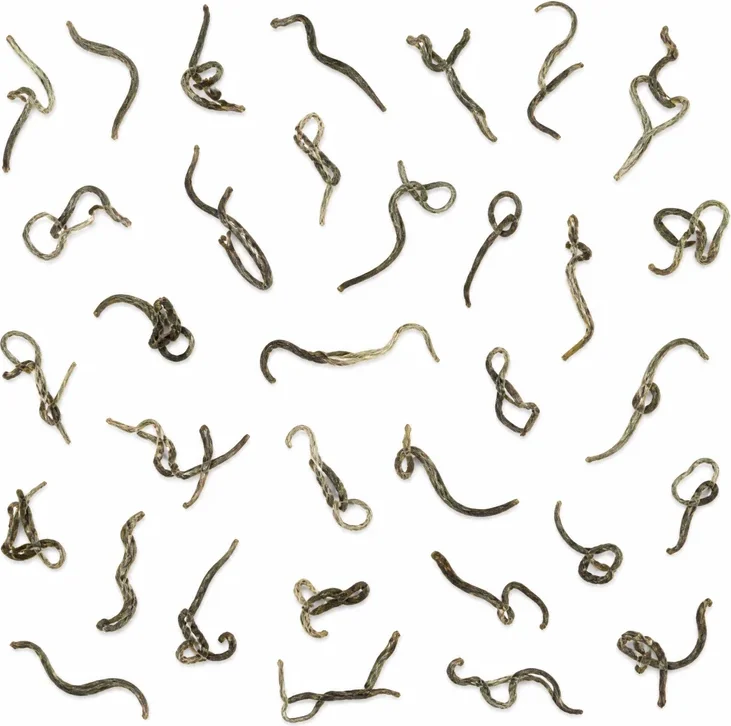
Type: Green tea (绿茶, lǜchá), unoxidized. Half pan-fired/half dried (semi-chǎo, semi-hōng). Shape — "fish hook" (鱼钩形, yúgōu xíng) and spiral (卷曲形, juǎnqū xíng) — unique tight spiral with curved tip, not found in other regions.
Cultural Significance: Anshun is a city at the crossroads of cultures: world-class karst landscapes (Huangguoshu — China's largest waterfall; Longgong — largest water cave; Getuhe — "most beautiful place on Earth" according to French geographer Richard Maire), living Ming tunpu culture (300+ settlements from the 14th century), batik, "dixi" (地戏, "earth opera" — masked theater, "living fossil of Chinese drama"). Pubu Mao Feng is tea born in this "melting pot" of nature and history: if Huangguoshu is Anshun for the eyes, then "Pubu" is Anshun for the taste.
Name Breakdown: 瀑布 (Pùbù) — "waterfall" (referring to Huangguoshu); 毛峰 (Máo Fēng) — "downy peak" — standard designation for green teas with abundant down on buds. Full meaning: "Downy Peak by the Waterfall".
90%+ single buds. Chestnut aroma. Amino acids ≥4.0%. From 500 yuan/500 g.
One bud + one leaf ≥80%. Honey tone. Polyphenols ≥30%.
One bud + two leaves. Price — by availability.
Cultivar: Primary — Fuding Dabai Cha (福鼎大白茶), possessing powerful down and early sprouting; from Fujian, but excellently adapted to karst mountain climate. Additionally — Anshun Zhuyeqing (安顺竹叶青, "Bamboo Green Leaf of Anshun") and Xie Taicha (细叶苔茶, "Small-leaf Moss Tea") — indigenous small-leaf groups, adapted over centuries to karst terroir and Se+Zn-enriched soils. It is precisely the combination of Fujian clone (down, amino acids) with local indigenous varieties (Se, polyphenols) that creates Pubu's unique chemical profile. Many trees are 30+ years old, which increases mineral saturation and flavor depth.
Picking: Spring — before and around Qingming. Standard: supreme — 90%+ single buds; first — one bud + one leaf; second — one bud + two leaves. Weight of 100 buds — about 45 g.
Climate: Average annual temperature 14–15°C. Foggy days — 200+ per year. Significant daily temperature variation — stimulates amino acid accumulation. Diffused light dominates.
Soil: Yellow and yellow-red loams (黄壤/黄红砂壤, pH 4.5–6.5). Enriched with Zn and Se. Karst foundation — «烂石» (weathered stone), described by Lu Yu as "upper [best] type of soil for tea" (《茶经》: «其地,上者生烂石,中者生砾壤» — "Best earth — weathered stone; medium — gravelly soil"). Anshun's karst soils — natural mosaic of limestone, dolomite and sandstone, destroyed by water and wind for millions of years — are the literal embodiment of this 1200-year-old description. Rich in minerals: silicon, manganese, iron. Local saying: «自古煤山出好茶» — "Since ancient times coal mountains produce good tea" — sandy soils with coal inclusions, characteristic of Anshun, provide drainage, aeration and mineral nutrition.
Forest coverage — 87.6% (near Huangguoshu Waterfall itself — 95%). Chemical pesticides and fertilizers prohibited. Passing 400+ EU parameters. Anshun's karst ecosystem is one of the cleanest in China: absence of industry, water purification through natural karst filters. Water spray from Huangguoshu cascades (18 waterfalls form a "family", the world's largest according to Guinness) creates a microclimate of constant humidity on slopes around the waterfall — tea bushes here receive not only rainwater, but also "waterfall mist". Biodiversity of karst forests provides natural protection from pests: grass and bats, spiders and predatory insects control tea parasite populations without chemical application.
3–5 hours.
Rotary drum, 180–220°C.
Gentle — to preserve down (保毫).
Key and most labor-intensive stage — hand shaping of "fish hook". Master rolls leaf with palms into tight spirals with curved tip, simultaneously "lifting" down so it stands upright. Movement resembles "rolling a ball" — but with controlled direction creating characteristic "hook". Process takes 15–20 minutes per batch and requires constant palm temperature control. Exclusively bamboo and wooden tools used — metal completely excluded (causes oxidation and iron taste).
80°C, slow, to moisture ≤7%.
Entire process — from harvest to packaging — conducted without metal contact: bamboo baskets, wooden trays, bamboo spatulas. This is one of the most "artisanal" green teas of Guizhou.
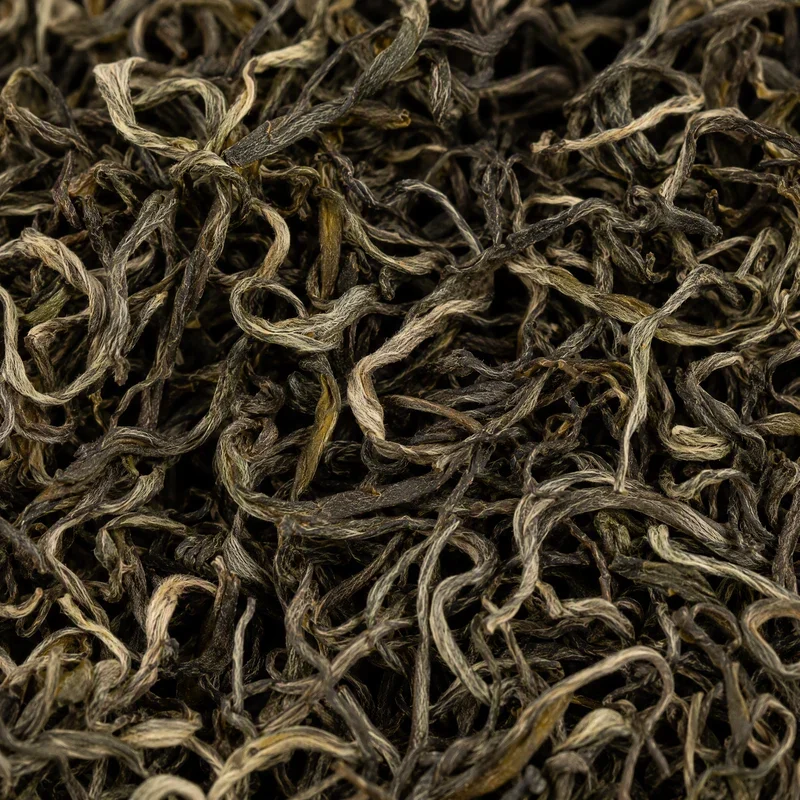
Dry Leaf Appearance: Tight spirals in "fish hook" shape (鱼钩形) — unique to Anshun form: dense, tight, with curved pointed tip. Color — emerald-green with dense silvery down (翠绿油润显银毫).
Dry Leaf Aroma: Chestnut (栗香, lì xiāng) — dominant, rich. Clean green (清香). "Downy" (毫香, háo xiāng) — light corn tone, characteristic of teas with abundant down.
Liquor Aroma: Chestnut-clean, persistent. With cooling — light "bread" and "corn" notes.
Liquor Color: Emerald-green, clear and bright (翠绿清澈透亮).
7+ infusions — one of the highest indicators among green teas. Dense spiral "fish hook" shape releases substances gradually.
Spent Leaves: Tender, uniform, "lively" — yellow-green (嫩匀鲜活、黄绿明亮).
Taste: Fresh and mellow (鲜醇). Sweet (甘). Returning aftertaste — distinct and persistent (回甘明显). Bitterness and astringency minimal.
Amino Acids: ≥4.65% — due to 200+ days of mist, diffused light and karst minerals.
4.23% — elevated, provides pronounced tonic effect.
≥40% (for second grade) — high level, ensuring rich liquor.
Minerals: Se + Zn — from karst soils. Silicon, manganese, iron.
Polyphenols: ≥34.4% — one of the highest indicators among green teas of Guizhou and China overall.
Polyphenols 34.4% — one of the highest among green teas.
Caffeine 4.23% in synergy with L-theanine — vigor without nervousness.
Catechins stimulate fat breakdown.
From Anshun's karst soils.
Listed properties are based on general data and are not medical recommendations. Not recommended to drink on empty stomach. Water >90°C destroys L-theanine and gives bitterness. Pour along cup wall — do not pour directly on leaves (washes away down, clouds liquor).
85–90°C, 3 g per 150 ml (1:50). Supreme grade — upper pouring method (先水后茶). Pour along wall (沿杯壁缓流), not on leaves. First infusion — 1 minute, each subsequent +20 seconds. 7+ infusions.
1 g per 50 ml cold water. 30 minutes in refrigerator. Sweetness — +20% compared to hot brewing. Mechanism: at low temperature amino acids (sweetness, umami) extract actively, while polyphenols (bitterness, astringency) — minimally. Result — pure, "dessert" sweetness without bitterness. Perfect for summer Guizhou (Anshun's average annual temperature — 14–15°C, but summer — up to 28–30°C; locals drink cold "Pubu" as refreshing beverage).
Teaware: Glass cup — for observing "fish hooks" slowly uncoiling in water.
Light: Complete isolation.
New tea — 7 days "rest" to release "fire". After opening — 10 days.
Temperature: 0–5°C, airtight.
Northern Guizhou. Flat shape. Chestnut aroma. More "mass market" and affordable. Pubu — spiral "hook" shape, higher polyphenols (34.4% vs ~28%).
Southern Guizhou, "famous tenth tea of Mao Zedong" (1956). Spiral shape with abundant down. Aroma — clean, without pronounced chestnut tone. More "delicate" and "floral". Pubu — more "chestnut", "robust" and enduring (7+ vs 4–5 infusions). Both — from karst zones of Guizhou, but Duyun — from small-leaf "Maojian Zhunzhong" (毛尖种), while Pubu — from Fuding Dabai Cha.
Central Guizhou (Guiyang), "Green Emerald". Large-leaf (one bud + two-three leaves), enduring (6+ infusions), rich. Pubu — more "delicate" (bud grade), with "hook" shape and higher amino acids.
Anti Counterfeit: GI "瀑布毛峰", brand "瀑布". Shape — "fish hooks" (鱼钩形). Chestnut aroma. 7+ infusions — endurance test.
No reviews yet. Tell us what you think of this tea.
Rate this tea and share your impressions. We review each submission before publishing it.