Brewing
Gongfu brewing
- Water temperature
- 75 °C
- Tea amount
- 5 g
- Water volume
- 100 ml
- First steep
- 10 s
- Time added per infusion
- 5 s
- Infusions
- 3

Dōuyún máo jiān
Choose a brewing method. Start with the recommended quantities and time, then adjust to taste.
Brewing
Brewing
Taste
Tea encyclopedia
Category: Included in the list of "Ten Famous Teas of China" (中国十大名茶). Geographical indication product (地理标志产品). In 2022, the production technology was included in the UNESCO List of Intangible Cultural Heritage of Humanity as part of the nomination "Traditional Chinese tea processing techniques and associated social practices". Production is regulated by regional standard DB52/T 433-2018.
Category: Included in the list of "Ten Famous Teas of China" (中国十大名茶). Geographical indication product (地理标志产品). In 2022, the production technology was included in the UNESCO List of Intangible Cultural Heritage of Humanity as part of the nomination "Traditional Chinese tea processing techniques and associated social practices". Production is regulated by regional standard DB52/T 433-2018.
Coordinates: Approximately 26°15′ North latitude, 107°31′ East longitude.
Origin: China, Guìzhōu Province (贵州, Guìzhōu), Qiánnán Buyei and Miáo Autonomous Prefecture (黔南布依族苗族自治州, Qiánnán Bùyīzú Miáozú Zìzhìzhōu). The geographical indication zone covers 12 counties and cities of the prefecture: Douyun, Fuquan, Weng'an and others. The core production is concentrated in the Tuanshan (团山), Shaojiao (哨脚) and Dacao (大槽) districts of Douyun city.
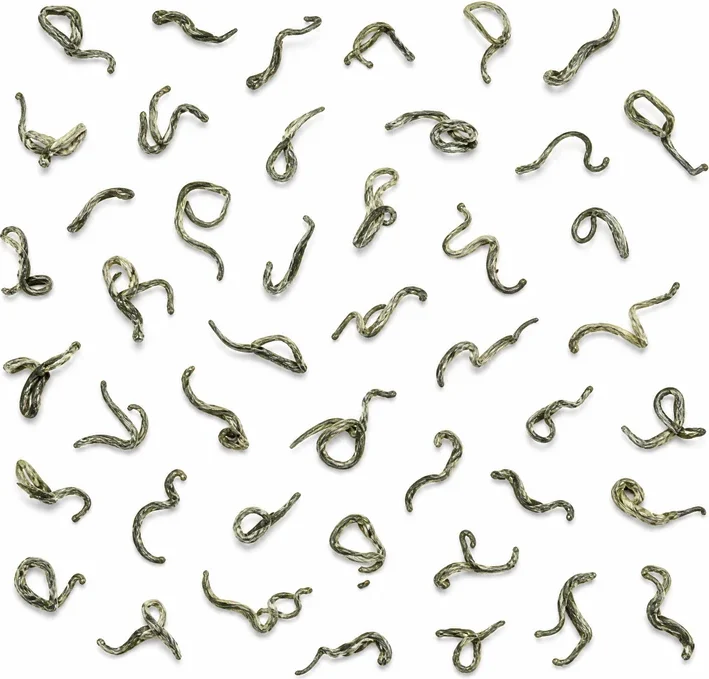
Type: Green tea (non-oxidized). Belongs to pan-fired green teas (炒青绿茶, chǎoqīng lǜchá) with a rolled leaf form resembling a fishing hook.
Cultural Significance: Douyun Mao Jian is the flagship of Guizhou's tea industry and a symbol of the cultural heritage of the Buyei and Miao peoples. The tea embodies the "green" identity of Guizhou Province — one of the most ecologically clean regions of China with 74% forest coverage. Mao Zedong's personal naming of the tea in 1956 turned it into one of the most "politically famous" teas of the PRC.
History: Tea cultivation traditions in the Douyun region trace back to the Ming era (1368–1644), when local tea was already known under colorful folk names "Yugoucha" (鱼钩茶, yúgōuchá — "fishing hook tea", after the characteristic shape of the rolled leaf) and "Quesheche" (雀舌茶, quèshéchá — "sparrow tongue tea", after the shape of tender buds). The tea was included in the list of imperial tributes (贡品, gòngpǐn), and according to legend, Emperor Chóngzhēn (崇祯, Chóngzhēn) personally bestowed its official name.
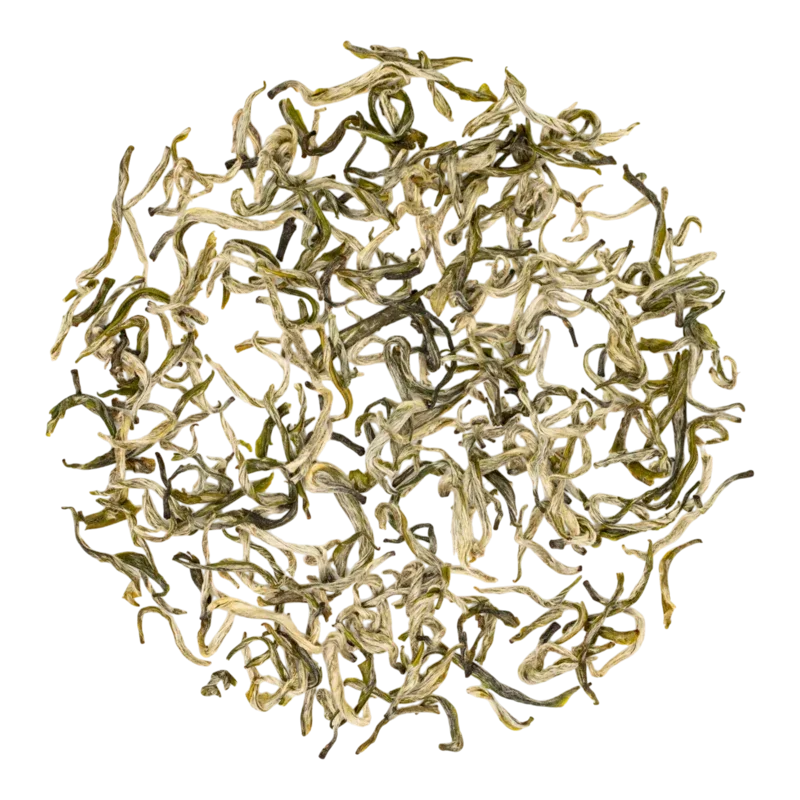
Whole buds or one bud with one leaf — thin, rolled, densely covered with white down. Aroma — delicate chestnut. Taste — fresh and mellow.
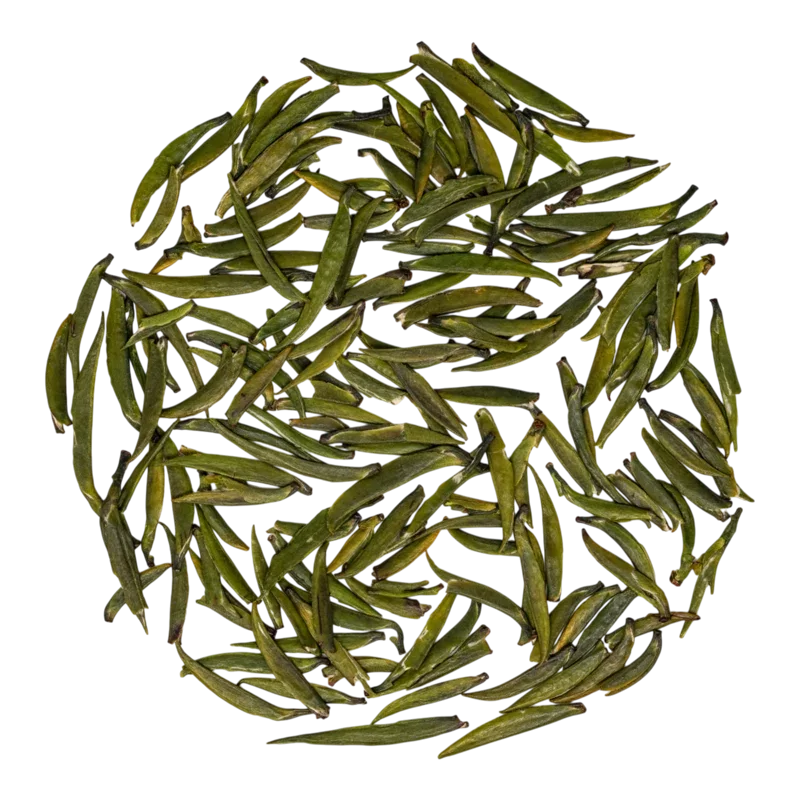
One bud with one leaf in initial opening stage. Down noticeable, aroma clean and fresh.
One bud with one leaf. Curved leaf with down, chestnut aroma, full taste.
One bud with two leaves. Tight rolling, mellow taste.
Coarser raw material, dark green color, simple taste.
Cultivar: The main cultivar is Dōuyún Táichá Liángzhǒng (都匀苔茶良种, Dōuyún Táichá Liángzhǒng) — a local indigenous variety of Camellia sinensis var. sinensis, developed through natural selection in the conditions of Guizhou highlands. Distinguished by fleshy shoots (芽叶肥厚), abundant down (茸毛多) and high "tenderness retention" (持嫩性强). Additionally used are breeding lines Douyun 79 (都匀79) and Douyun 49 (都匀49) — local cultivars with similar quality characteristics.
Picking: Main harvest — early spring, around Qīngmíng (清明, ~April 5). For highest grades ("Zunpin", 尊品) whole buds or one bud with barely opened leaf (一芽一叶初展) are picked; shoot length — no more than 2 cm. To produce 500 g of dry tea of the highest grade requires approximately 53,000 buds.
Pluck Standard: Five quality categories defined by standard DB52/T 433-2018:
Raw Material: Tender, uniform shoots without damage. Processing — on the day of picking.
Altitude: 600–1500 meters above sea level. The best plantations are located at elevations of 800–1200 m.
Climate: The Douyun region is located on the Guizhou Plateau in the zone of subtropical humid monsoon climate. Average annual temperature — about 16°C, annual precipitation — over 1400 mm. Mountains are shrouded in clouds and mist practically year-round, daily temperature fluctuations exceed 10°C. The proportion of diffused light (散射光) constitutes about 40% of total insolation — ideal conditions for accumulation of amino acids and aromatic substances.
Soil: Acidic yellow soils (黄壤, huáng rǎng) with deep profile, rich in iron and phosphates. Organic matter content — not less than 1.5%. The acidity and mineral composition of soils contribute to the formation of the "golden" shade of tea and its mineral depth.
Forest coverage of the region — 74%, industrial pollution is minimal. Guizhou is one of the most ecologically clean tea-growing regions of China, making Douyun Mao Jian attractive to connoisseurs of "organic" tea.
Hand picking of the most tender buds and shoots no longer than 2 cm. Conducted in early morning hours around Qingming.
Picked leaves are spread in a thin layer for brief withering, reducing moisture content and initiating primary aromatic reactions.
Leaves are pan-fired in a heated wok. Stopping enzyme oxidation fixes fresh green aromatics and characteristic chestnut tone.
Gentle rolling forms the initial leaf structure and brings cellular juice to the surface.
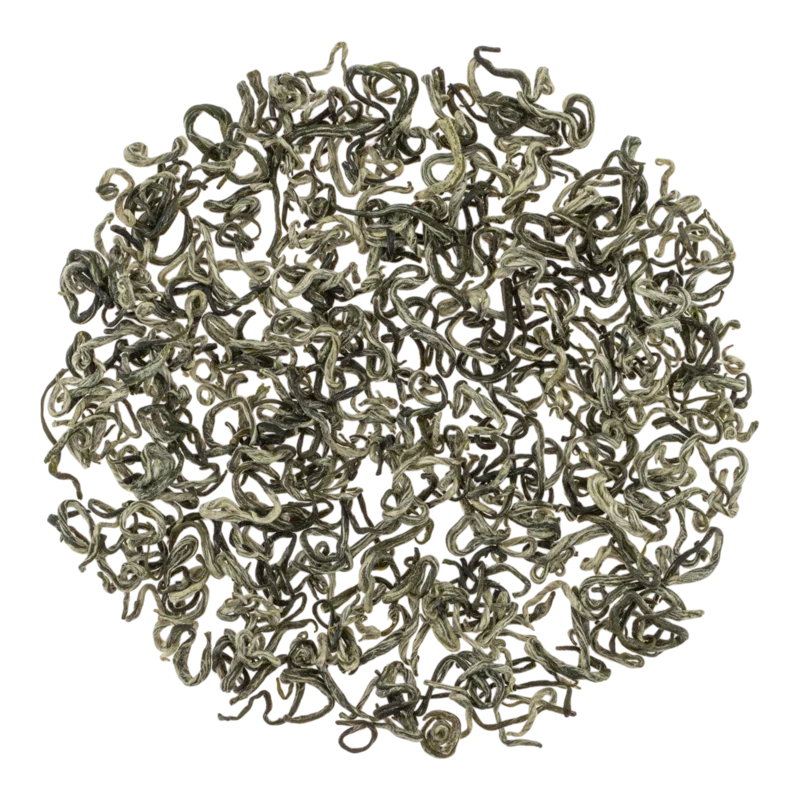
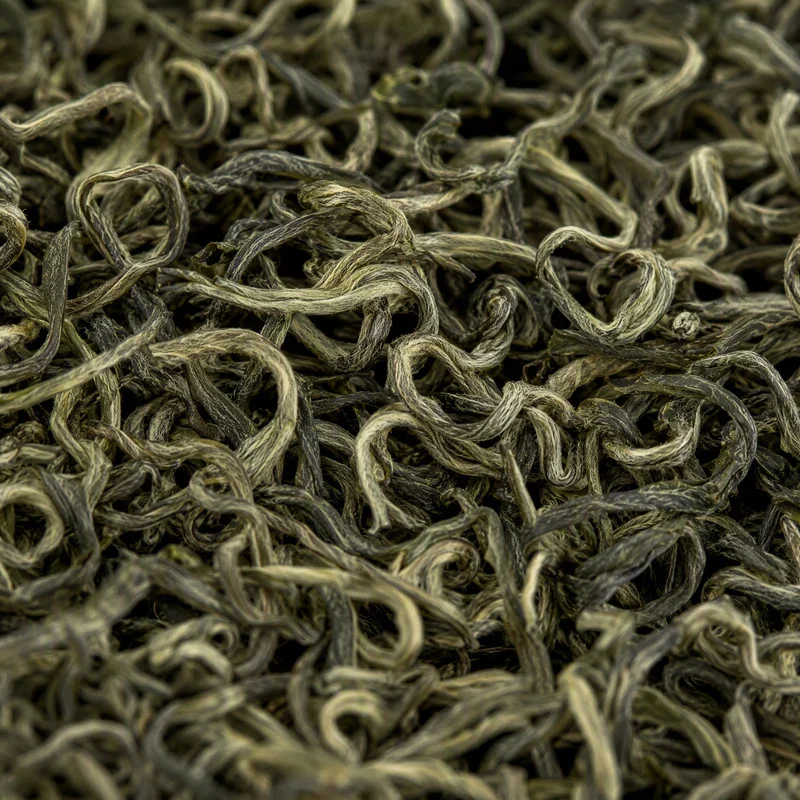
The key and most virtuosic stage, determining the unique form of Douyun Mao Jian. The master rolls leaves into tight "fishing hooks" while simultaneously "drawing out" silvery down to the surface. It is at this stage that the tea acquires its characteristic curved form (似鱼钩, sì yúgōu — "resembling a fishing hook").
Final drying at moderate temperature to stable condition.
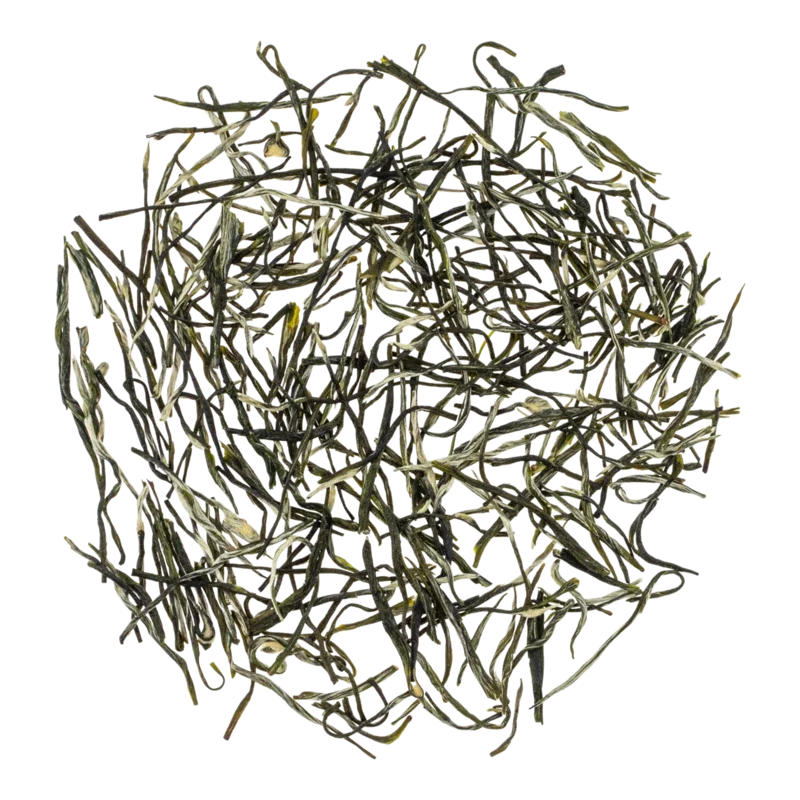
Dry Leaf Appearance: Thin, tightly rolled shoots of curved form (卷曲形), resembling fishing hooks. Shoots are thin and slender (条索紧细, tiáosuǒ jǐnxì), densely covered with silvery-white down (白毫显露). Color — green with characteristic golden luster (绿中带黄).
Dry Leaf Aroma: Delicate aroma of young buds (嫩香, nèn xiāng) combined with chestnut note (栗香, lì xiāng) and clean high tone (清香, qīngxiāng). Aroma is delicate, without harshness.
Liquor Aroma: Persistent chestnut aroma, complemented by fresh green note. Upon cooling, delicate honey nuances emerge.
Liquor Color: Green with emerging golden yellowness (绿中透黄) — one of the "three greens with yellow" (三绿透黄色), defining the visual character of tea. Liquor is clear and transparent.
Spent Leaves: Tender, uniform shoots of green color with yellow gleams (绿中显黄). Leaf is resilient, whole, retaining its form.
Taste: Fresh and rich (鲜浓, xiānnóng) — bright, "brisk" first sip. Dense and full-bodied (醇厚, chúnhòu). Pronounced returning sweetness (回甘, huígān), long clean aftertaste. Polyphenol content (up to 31.24% — significantly higher than average for green teas) gives the taste depth and structure, however high amino acid levels balance astringency, creating a harmonious profile.
Alkaloids: Caffeine — moderate content, providing mild tonic effect. Theobromine and theophylline are also present.
Amino Acids: Significant content, providing freshness, briskness and "umami" note to taste. Balance of polyphenols and amino acids creates the characteristic Douyun Mao Jian profile of "bright but not harsh".
Present in noticeable quantities, contribute to digestive tract cleansing and improved peristalsis.
Minerals: Potassium, magnesium, zinc, iron, manganese, phosphorus — profile determined by iron and phosphate-rich soils of Guizhou.
Polyphenols: Content — up to 31.24% of dry mass — significantly higher than average for green teas (approximately 10% higher). High polyphenol levels provide powerful antioxidant potential and structural depth of taste.
Vitamins: Vitamin C, B-group vitamins, carotenoids.
Polyphenol content (up to 31.24%) — one of the highest among green teas, ensuring effective neutralization of free radicals.
Polyphenols promote relaxation of vessel walls and normalization of blood pressure, as well as reduction of LDL cholesterol levels.
Flavanols and catechins stimulate peristalsis and promote fat breakdown.
Caffeine combined with L-theanine provides mild, sustained alertness without sharp fluctuations.
Rich vitamin-mineral complex supports immune function.
Catechins suppress pathogenic microflora growth, freshen breath.
the listed properties are based on publicly available data about green tea composition and are not medical recommendations.
at liquor temperature of 50–60°C the delicate chestnut sweetness is most vividly perceived. Upon cooling, tea reveals the effect of "cold sweetness" (冷后甜, lěnghòu tián) — pleasant sweet taste of cooled liquor. Not recommended to drink on empty stomach.
Tea Amount: 3 g per 150 ml water (1:50 ratio).
Teaware: Glass tumbler (玻璃杯) — for observing the "dance" of thin downy shoots. White porcelain gàiwǎn (白瓷盖碗) — for precise aroma control.
Water Temperature: 80–85°C (boiling water, cooled for ~2 minutes).
From Henan Province. Also "Mao Jian" — downy tips — but from different region. Xinyang Mao Jian is lighter and more delicate, with predominant clean green freshness. Douyun is denser, richer and more structured, with pronounced chestnut note and higher polyphenol content.
Flat leaf, chestnut-bean aroma. Long Jing is "architectural" and elegant; Douyun is more "wild", with mountain character of Guizhou.
Tight spirals with floral-fruity aroma. Biluochun is delicate and fruity; Douyun is stronger and more chestnut-like.
Also from Guizhou. Flat leaf, milder and more delicate taste. Douyun is more concentrated and full-bodied, with more pronounced down and chestnut aroma.
authentic Douyun Mao Jian has characteristic curved "fishing hook" form, thin dense shoots with silvery down. Coarse, loose leaf is a sign of counterfeit.
"three greens with yellow" is the calling card. Pure green without golden luster is cause for doubt.
characteristic chestnut-delicate tone. Sharp "grassy" or "perfumed" smell is a sign of poor quality product.
genuine Douyun Mao Jian of highest grades withstands 3–4 brewings with stable aroma.
No reviews yet. Tell us what you think of this tea.
Rate this tea and share your impressions. We review each submission before publishing it.