Brewing
Gongfu brewing
- Water temperature
- 93 °C
- Tea amount
- 5 g
- Water volume
- 100 ml
- First steep
- 10 s
- Time added per infusion
- 5 s
- Infusions
- 4

Pǔān hóngchá
Choose a brewing method. Start with the recommended quantities and time, then adjust to taste.
Brewing
Brewing
Taste
Tea encyclopedia
Category: Chinese red teas; protected geographical indication product (地理标志产品). Produced in two varieties: gongfu red tea (工夫红茶) and broken red tea (红碎茶, red granulated tea) according to local standard DB52/T1162-2016.
Category: Chinese red teas; protected geographical indication product (地理标志产品). Produced in two varieties: gongfu red tea (工夫红茶) and broken red tea (红碎茶, red granulated tea) according to local standard DB52/T1162-2016.
Coordinates: ≈ 25.8° N, 104.9° E.
Origin: China, Guìzhōu Province (贵州省, Guìzhōu Shěng), Qiánxīnán Buyei and Miáo Autonomous Prefecture (黔西南布依族苗族自治州, Qiánxīnán Bùyīzú Miáozú Zìzhìzhōu), Pǔān County (普安县, Pǔān Xiàn). Key production zone — Jiāngxīpō Township (江西坡镇, Jiāngxīpō Zhèn), recognized as the core of the hundred-thousand-mu tea base.
Type: Red tea (black tea) (红茶, hóngchá) — fully oxidized.
Cultural Significance: Puan has received numerous honorary titles: "Hometown of Ancient Tea Trees of China" (中国古茶树之乡), "Hometown of Tea Culture of China" (中国茶文化之乡), "One of the Ten Most Charming Tea Townships of China". Tea culture is closely intertwined with the traditions of the Buyei people (布依族, Bùyīzú): tea is an integral part of Buyei hospitality rituals, wedding ceremonies, and the annual ritual "sacrifice to the tea deity" (祭茶), conducted at the beginning of harvest in the Cháshén Valley sanctuary (茶神谷). Since 2016, the Puan Ancient Tea Culture Festival has been held annually. Puan Hong Cha was included in the gift set "Qian Huo Chu Shan — Gui Li" (黔货出山·贵礼), uniting symbols of Guizhou alongside Maotai liquor.
History: Puan is one of the most ancient tea regions on the planet. In 1980, at the junction of Pǔān and Qīnglóng counties (晴隆) in the Yuntou Dashan Mountains (云头大山), a fossilized tea fruit was discovered, identified by the Nanjing Institute of Geology and Palaeontology of the Chinese Academy of Sciences as the world's only four-chambered fossilized tea seed (四球古茶籽化石), dated to over 1.64 million years old. This discovery scientifically confirmed Puan's status as one of the centers of origin of the tea plant.
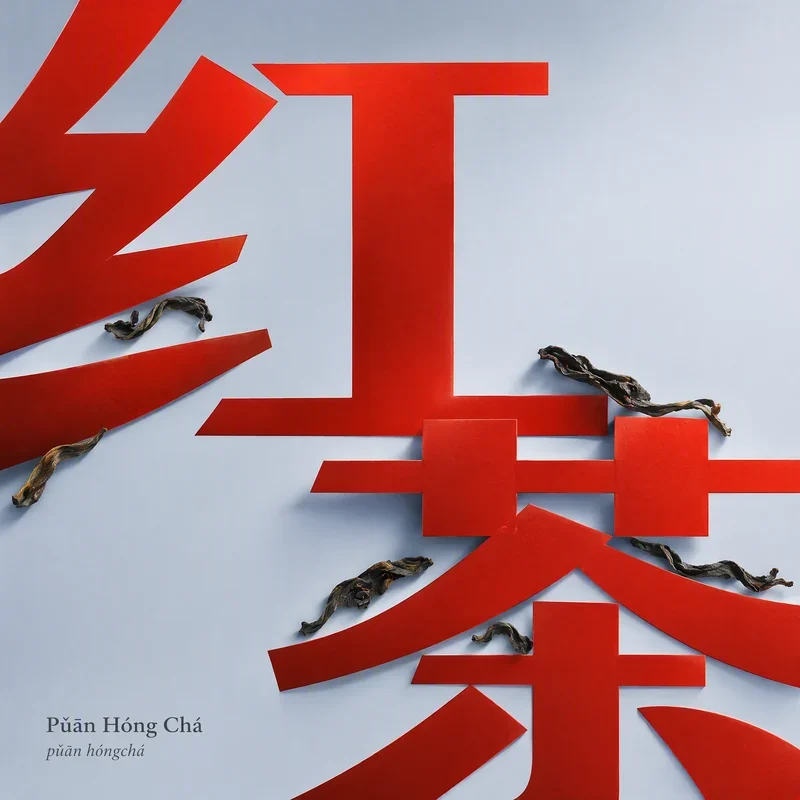
Name Breakdown: 普 (pǔ) — "universal, general"; 安 (ān) — "peace, tranquility". The toponym Puan means "universal peace". 红茶 (hóngchá) — "red tea". The brand is often accompanied by the motto "Qian Cha Di Yi Chun" (黔茶第一春, "First Spring of Guizhou Tea"), emphasizing the record early beginning of harvest.
Cultivar: Main sources of raw material: wild four-chambered tea (Camellia tetracocca, 四球茶, sìqiú chá) — endemic small tree species (小乔木, xiǎo qiáomù) with glabrous shoots and terminal buds, rich in pectins, polyphenols and especially suitable for red tea; local populations (群体种); as well as introduced cultivars of large-leaf type of Yunnan origin — Puan is one of the first districts of Guizhou to begin cultivation of Camellia sinensis var. assamica.
Picking: Exceptionally early — thanks to geothermal resources and low latitude (25° N), tea buds swell as early as December–January. Mass spring harvest begins from mid-February, ahead of most Chinese tea regions by 10–20 days. A local saying states: "On New Year we drink new tea" (大年三十喝新茶). Summer and autumn harvests are also produced.
Pluck Standard: One bud and one–two leaves (一芽一叶 / 一芽二叶) for gongfu; for elite "Zhengshantan · Puan Hong (Xi)" lines (曦) — exclusively single buds (单芽) from local large-leaf raw material.
Raw Material: Fresh, undamaged leaf; requires prompt processing to preserve tenderness. Organic raw material — absence of air, soil and water pollution confirmed by numerous certifications.
Altitude: Average height of tea gardens — about 1,400 m above sea level. Individual plots of wild four-chambered trees — up to 1,700–1,800 m. The altitude difference in the county is significant, creating a mosaic of microclimates.
Climate: Mid-subtropical humid monsoon (中亚热带湿润季风气候). Key characteristics of Puan — "high altitude, low latitude, little sunshine, much fog" (高海拔、低纬度、寡日照、多云雾). Mild winters (without extreme frosts), cool summers; abundant precipitation, high humidity and frequent cloudiness provide diffused light — ideal conditions for amino acid accumulation and reduction of catechin bitterness.
Soil: Predominantly organic humus soils (有机腐殖土), formed on carbonate and shale parent rocks. Weakly acidic (pH 4.5–6.0), rich in zinc and selenium. Absence of industrial pollution and low heavy metal content confirmed by certification.
Ecological farming predominates; the county has the status of "National Demonstration Zone for Export Food Agricultural Product Quality Safety (tea)" (国家级出口食品农产品质量安全示范区). Tea gardens with total area ≈ 18.3 万亩 (≈ 12,200 ha) encompass more than 200 tea enterprises, including one national-level enterprise. Four-chambered tea propagation is conducted by cutting method with assistance from Guìzhōu University team (贵州大学) under Professor Niu Suzhen's leadership; cutting survival rate increased from 25% to 80%.
Hand selection of tender raw material; elite batches — exclusively single-bud harvest.
Natural or artificial, until 35–40% moisture loss. Leaves are laid on bamboo sieves; for large-leaf raw material withering is more prolonged.
Formation of conditions for controlled oxidation; destruction of cell walls and release of juice to leaf surface.
Duration and temperature depend on batch. For elite "Puan Hong (Xi)" oxidation is conducted at reduced temperature and extended cycle, forming characteristic floral-honey profile with pronounced sweetness.
Stopping oxidation and fixing aroma. Gentle regimes are applied to preserve volatile floral compounds.
Finished tea is divided by fractions and grades; stable blends are formed when necessary.
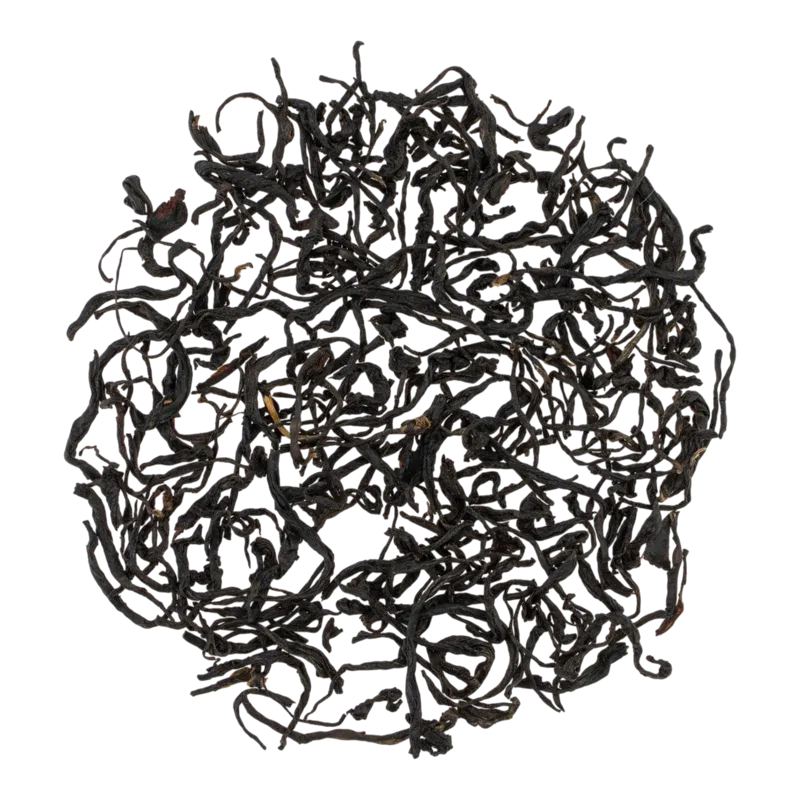
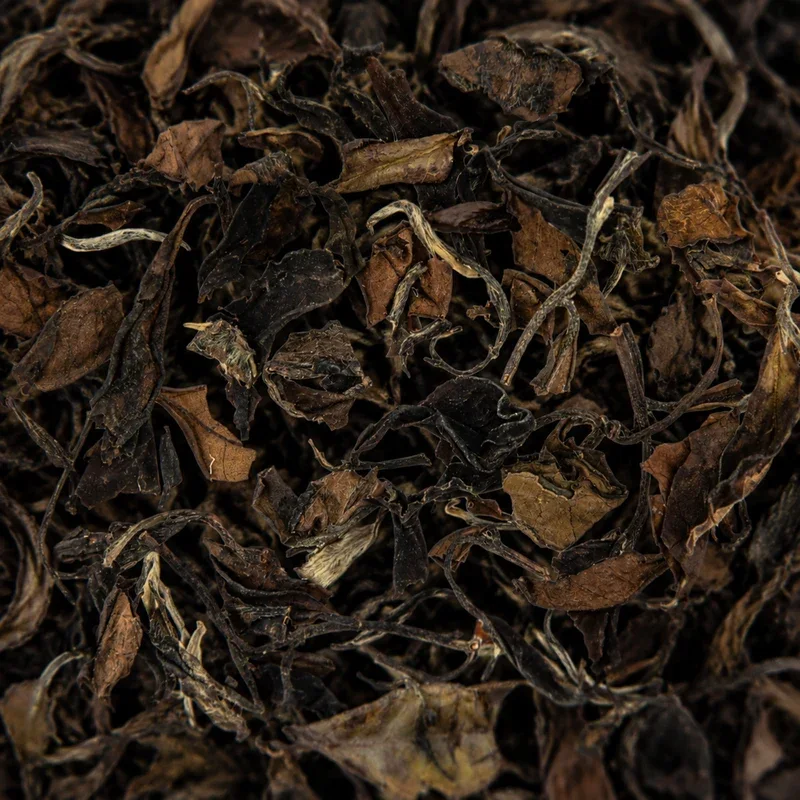
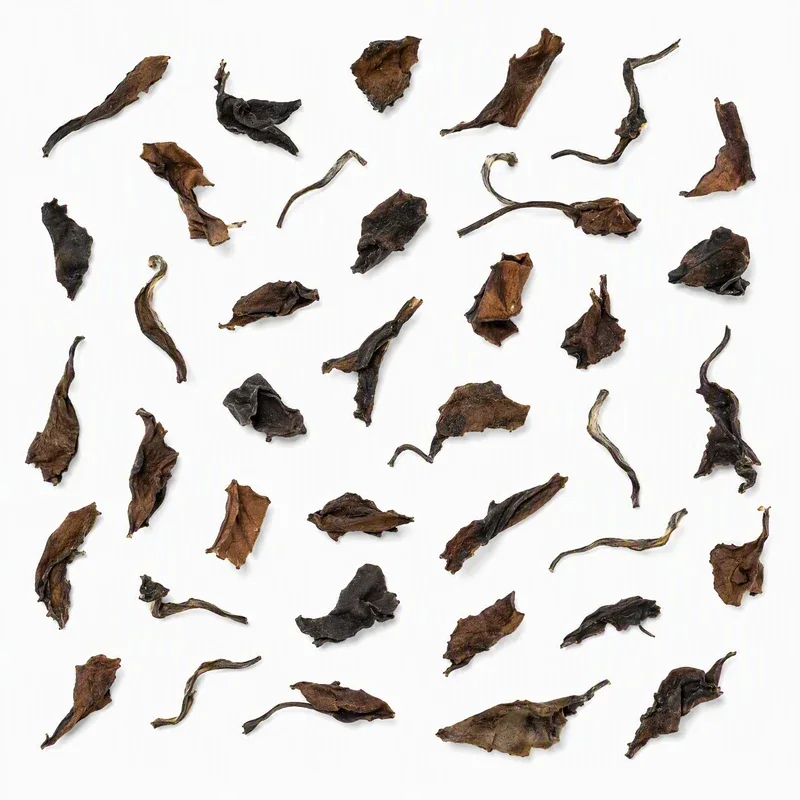
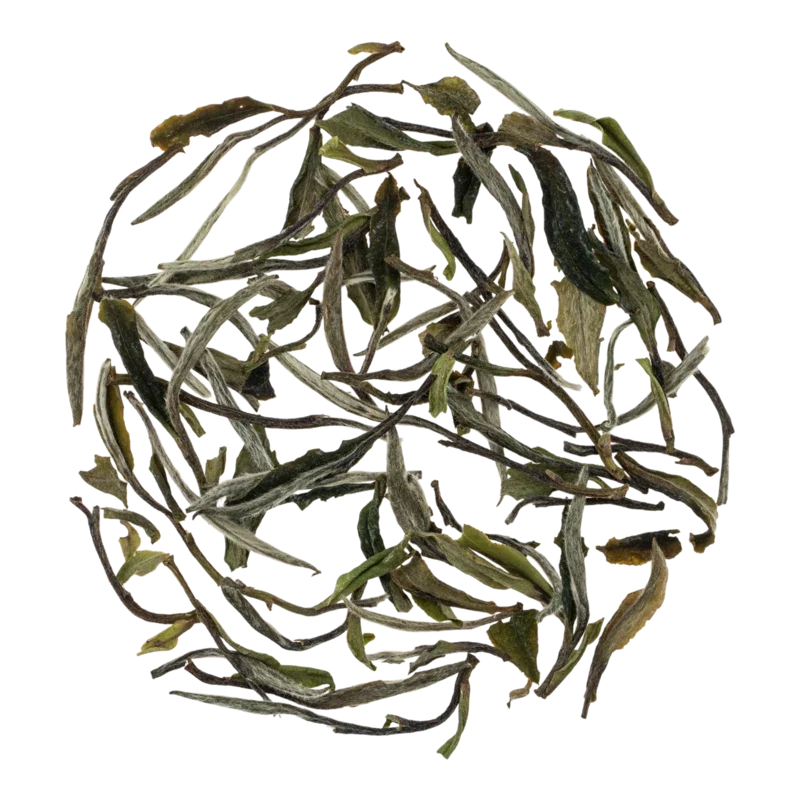
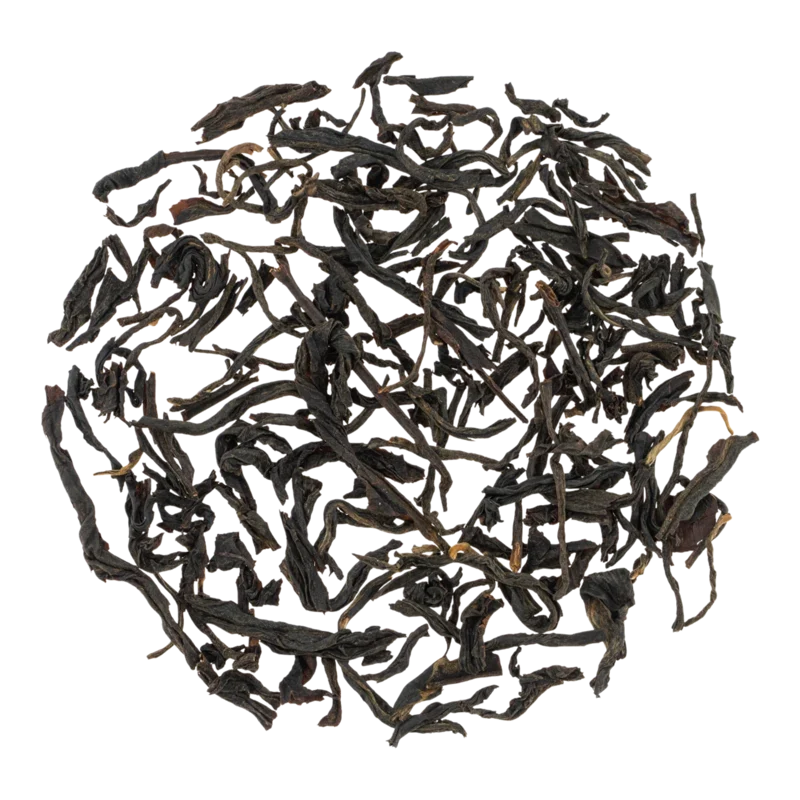
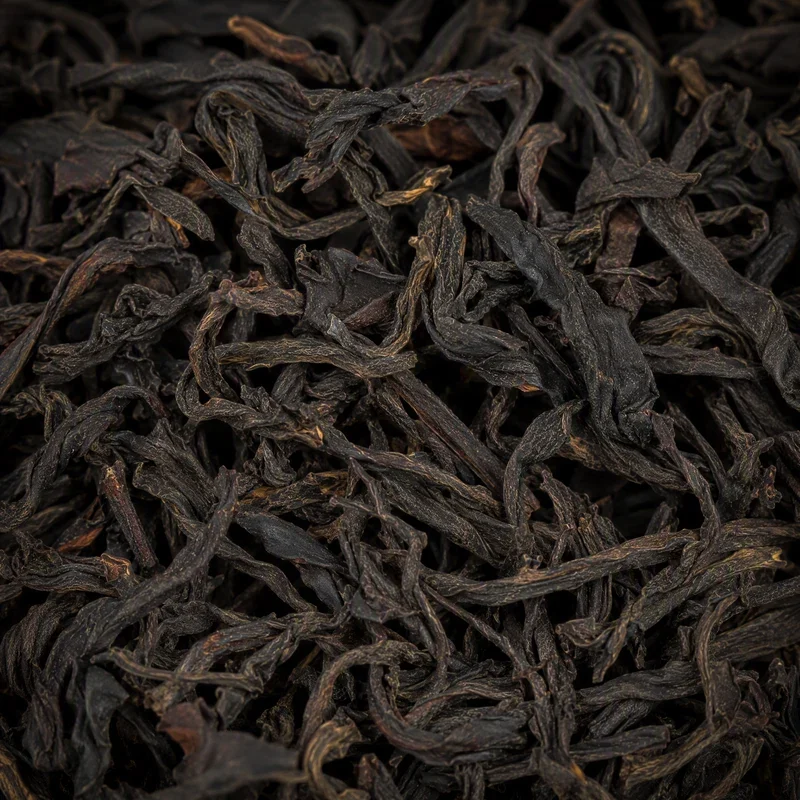
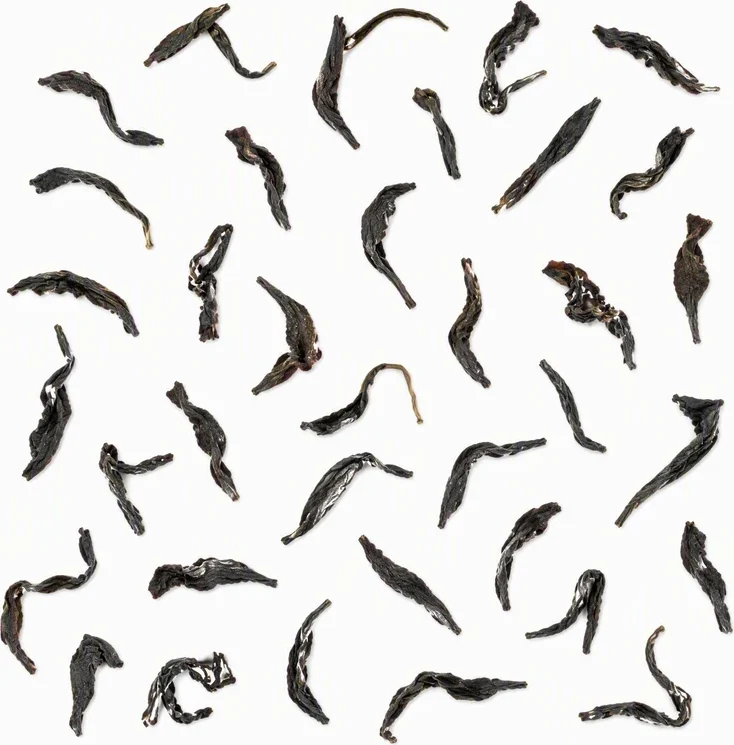
Dry Leaf Appearance: Tight, dense, thread-like twist (条索紧细); color — dark chestnut to black with oily luster (色泽乌润). For single-bud batches — abundance of golden tips.
Dry Leaf Aroma: Clean, high, with dominance of floral notes (orchid, jasmine) and honey background. In batches from four-chambered tea — additional fruity depth.
Liquor Aroma: Bright floral-honey bouquet, reminiscent of "like flowers, like honey" (如花似蜜) — thus describing the aroma of elite "Puan Hong (Xi)". As brewing progresses, notes of dried fruits, peach and light caramel warmth unfold.
Liquor Color: Orange-yellow to orange-red (橙黄/橙红), bright and clear. Standard gongfu — closer to red-amber; elite single-bud batches — lighter, golden-orange.
Spent Leaves: Lively, mobile, soft and complete (鲜活柔软完整). Color — from copper-orange to reddish-brown, leaves unfold evenly.
Taste: Sweet (甘甜, gāntián), smooth and "slippery" (爽滑, shuǎnghuá), with full body and long aftertaste (回味醇厚悠长). Astringency is minimal; pleasant honey sweetness remains in the mouth. Elite single-bud "Puan Hong" earned the nickname "Jin Junmei from large-leaf raw material" (大叶种里的金骏眉).
Amino Acids: 2.5%, including L-theanine, responsible for softness, sweetness and "calming" effect.
45.5% — exceptionally high indicator, ensuring richness and brewing endurance.
3.4%.
5.1% — elevated content, characteristic of four-chambered tea; pectins give liquor "roundness" and viscosity.
Tea is enriched with zinc and selenium (富含锌硒) — consequence of mineral composition of Puan mountain soils.
Complex of floral terpenes (linalool, geraniol, nerol) and Maillard reaction products; precisely floral terpenes form the famous "Puan Hong" aroma "like flowers, like honey".
Polyphenols: 24.8%. Theaflavins and thearubigins dominate, forming color and taste "body"; their ratio determines brightness and liveliness of liquor.
Caffeine (3.4%) combined with L-theanine provides gentle, prolonged alertness without anxiety; improves attention and working memory.
Polyphenols (24.8%) and their oxidation products neutralize free radicals, supporting cellular protection.
Pectins (5.1%) and tannins gently stimulate peristalsis and create protective film on gastric mucosa. Warm red tea after meals — classic recommendation.
Theaflavins contribute to maintaining vascular elasticity and normalizing lipid profile.
Enrichment with zinc and selenium supports immune system functions and antioxidant balance at cellular level.
Full-bodied red tea warms in cold weather, reduces subjective feeling of fatigue.
Combination of polyphenols and selenium contributes to skin protection from oxidative stress.
Tea Amount: 4–5 g per 100–120 ml for gongfu method; 3–4 g per 200 ml for European style.
Teaware: Porcelain gàiwǎn (盖碗) — reveals floral bouquet best. Glass teapot allows observing tea leaf dance. Yixing teapot — for more rounded, enveloping profile.
Water Temperature: 90–95°C.
Another Guizhou red tea, from Méitán County (湄潭). Uses Qiánméi series cultivars (黔湄); stylistically closer to cross between Qihong and Dianhong — with fruity aroma and bright liquor color. Puan Hong differs with more pronounced floral note, presence of pectic "silkiness" from four-chambered raw material and record early harvest.
Yunnan large-leaf red tea — powerful, dense, with chocolate-nutty tones. Puan Hong is softer and more elegant: floral-honey profile dominates over "earthy" depth; pectic softness provides additional "slippery" texture absent in most dianhongs.
Elite Fujian red tea from small-leaf raw material; parent technology for "Zhengshantan · Puan Hong". Jin Junmei — refined, caramel-fruity, "light on the rise". Puan Hong, using same technology, gives more saturated body and increased brewing endurance thanks to large-leaf raw material.
Tropical red tea with bright sweet profile. Puan Hong wins through high-mountain terroir: cloudiness and coolness give more refined aromatics and complex aftertaste with comparable sweetness.
Standard Pǔān Hóng Chá gōngfū (一芽二叶) — medium price segment, accessible to wide consumer circle. Elite "Zhengshantan · Puan Hong (Xi)" (正山堂·普安红·曦) — premium segment, comparable in price to leading Chinese red teas.
Harvest standard (single-bud vs. one bud with leaves); raw material origin (four-chambered wild vs. cultivated plantations); season (early spring valued higher); brand ("Zhengshantan" line — substantial markup).
No reviews yet. Tell us what you think of this tea.
Rate this tea and share your impressions. We review each submission before publishing it.