Brewing
Gongfu brewing
- Water temperature
- 75 °C
- Tea amount
- 5 g
- Water volume
- 100 ml
- First steep
- 10 s
- Time added per infusion
- 5 s
- Infusions
- 3

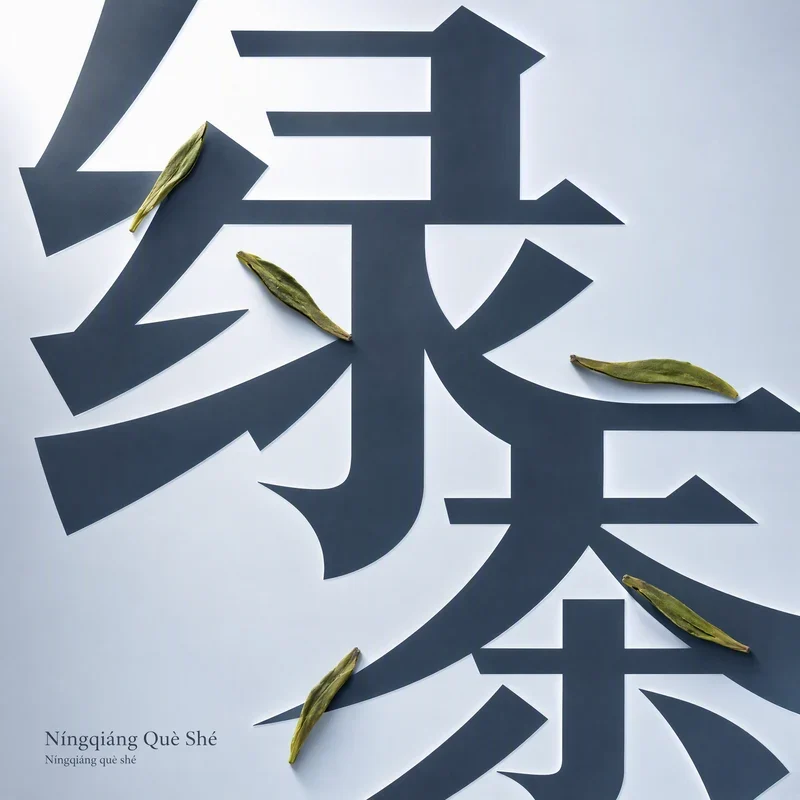
Níngqiáng què shé
Choose a brewing method. Start with the recommended quantities and time, then adjust to taste.
Brewing
Brewing
Taste
Tea encyclopedia
Category: Geographical indication product "Hanzhong Xianhao" (国家地理标志产品, 2007). "Tea for special state purposes" (国家特需用茶, 1996 — supplies to Zhongnanhai). First organic tea of Shaanxi (国家有机茶认证, 2002). National demonstration area for organic tea standardization (国家级有机茶标准化示范区, 2003). Gold at the National Agricultural Science and Technology Exhibition "Houji" (中国农业科技博览会后稷金像奖, 1995). Gold at Xi'an International Trade Fair (西交会金奖, 2002). UNESCO Biosphere Reserve. Se-enriched.
Category: Geographical indication product "Hanzhong Xianhao" (国家地理标志产品, 2007). "Tea for special state purposes" (国家特需用茶, 1996 — supplies to Zhongnanhai). First organic tea of Shaanxi (国家有机茶认证, 2002). National demonstration area for organic tea standardization (国家级有机茶标准化示范区, 2003). Gold at the National Agricultural Science and Technology Exhibition "Houji" (中国农业科技博览会后稷金像奖, 1995). Gold at Xi'an International Trade Fair (西交会金奖, 2002). UNESCO Biosphere Reserve. Se-enriched.
Coordinates: ~32°45′–33°15′ N, 105°55′–106°35′ E. The northwesternmost tea county of Shaanxi Province, at the junction of Qinling and Bashan.
Origin: China, Shaanxi Province (陕西省), Hànzhōng City (汉中市), Níngqiáng County (宁强县). Quality core: Hanyuan Township (汉源镇, "Source of Han [River]") and Gaozhaitzi Township (高寨子镇), 800–1200 m, in the basins of the headwaters of the Han River and Jialing River.
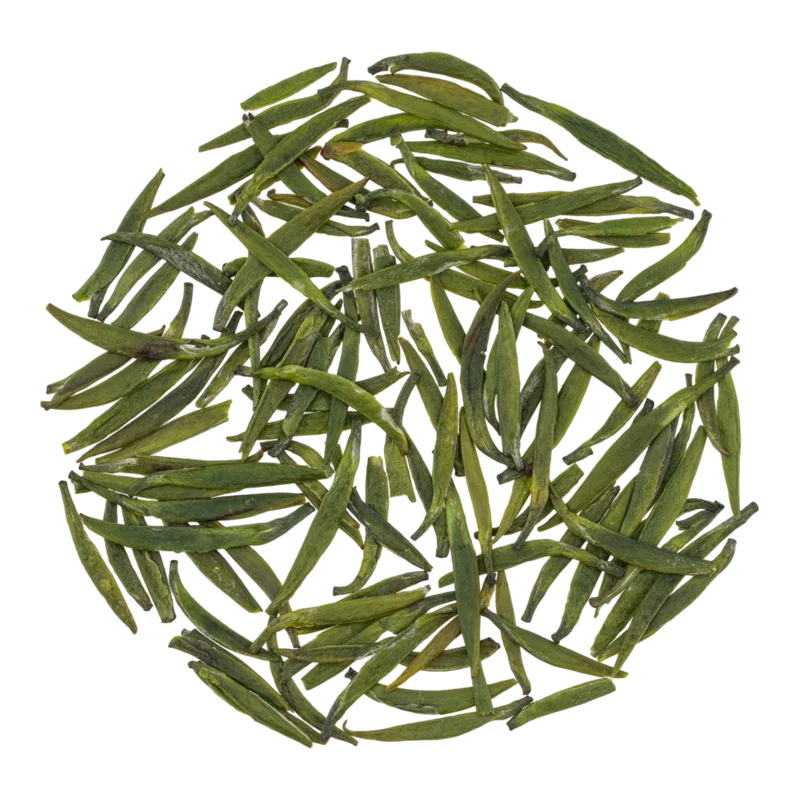
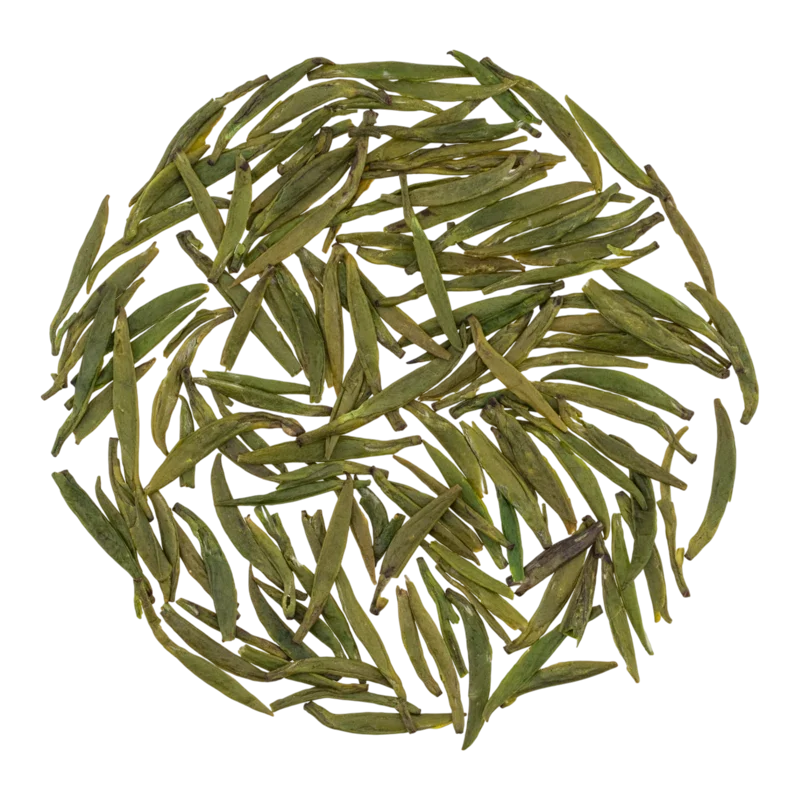
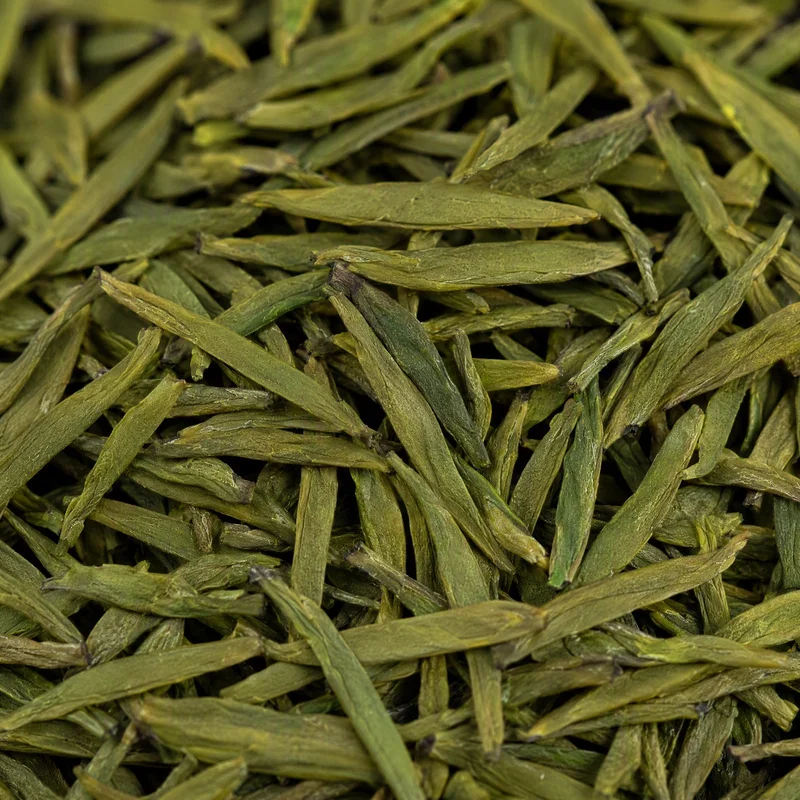
Type: Green tea (绿茶, lǜchá), unfermented. Shape — "sparrow's tongue" (雀舌形, quèshé xíng): slightly flat, slender, with silvery down — the shoot resembles a protruding sparrow's "tongue." Subcategory of the regional brand "Hanzhong Xianhao" (汉中仙毫, GI 2007), while preserving its own identity, technology, and name.
Cultural Significance: Ningqiang — "Source of the Han River" (汉江源头). The Hàn River (汉江) — the largest tributary of the Yangtze (长江), 1577 km long, which gave its name to the Han dynasty (汉朝, 202 BCE — 220 CE), the Han people (汉族), and Chinese characters (汉字). Tea from the Han River's source is tea "at the source of Han civilization." Moreover, Ningqiang is located on the "Golden Bull Road" — the most ancient transport artery connecting Xi'an and Chengdu through the Qinling Mountains. To drink Ningqiang Que She means to simultaneously touch Lu Yu's "Classic of Tea," the sources of "Han" identity, and the 2300-year history of the "Golden Bull Road."
Name Breakdown: 宁强 (Níngqiáng) — county name; 雀舌 (Què Shé) — "sparrow's tongue" — description of the finished tea's shape: small, slightly flat, slender shoot resembling a protruding sparrow's tongue. "Queshe" is one of the classic green tea categories alongside "Mao Jian" and "Mao Feng."
Polyphenols ≥24.73%, amino acids — 3.43%, Se + Zn from soils.
Cultivar: Local population variety (本地群体种), adapted to the northern subtropical conditions of the Qinling-Bashan junction. Small-leaf, frost-resistant, with abundant silvery down on buds. Some plantations are supplemented with Fuding Dabai Cha clone to increase down content.
Picking: Spring — around Qīngmíng (清明, early April). Standard — one bud + one leaf in initial stage (一芽一叶初展). The shoot must be whole, slender, without defects — to form the characteristic "sparrow's tongue" shape.
Altitude: 800–1200 m. Core — 1000±200 m, in mountain canyons with spring streams.
Climate: Northern subtropical. Average annual temperature — 12.9°C (one of the lowest among China's tea regions — "cold" tea). Precipitation — 900–1100 mm. Daily temperature range — >10°C — significant, stimulating amino acid accumulation. Cloud humidity — 85%. The Qinling Mountains create a natural barrier, protecting the valley from cold northern winds while allowing humid Pacific air masses through — a "natural greenhouse" for tea bushes.
Soil: Brown, developed on granites (花岗岩发育棕壤土, pH 4.8–5.5). Organic matter — >2.0%. Selenium (Se) — 0.653–3.853 ppm — 1.5 times higher than the Hanzhong average. These are some of the most Se-enriched tea soils in Shaanxi. Zn is also elevated.
Forest cover — >65%. The county territory is part of a UNESCO Biosphere Reserve (联合国世界人与自然生物圈保护区). More than 90% of tea production occurs in the ecological zone core. Chemical pesticides and fertilizers have been banned since 2002 (organic certification). Glacial streams of Qinling provide irrigation with water of the highest purity.
4–6 hours at room temperature. Moisture loss ~15%. Development of aromatic precursors.
Pan-firing in an inclined wok at 160–180°C. Quick — to preserve "green" freshness and aroma. Uses alternating tossing (抛) and pressing (闷) — classic Shaanxi methodology.
Key stage. The shoot is slightly flattened by palms into the characteristic "tongue" shape — slender, slightly flat, with a pointed tip. Movements — light, "pressing" (捺, nà), without strong pressure, so as not to crush the leaf and preserve the silvery down. Wok temperature — reduced to 80–90°C. This stage is the "soul" of Ningqiang Que She and the main difference from flat "Hanzhong Xianhao": the "tongue" retains volume and "airiness," while flat "Xianhao" is pressed completely flat.
Two-stage — initial at 100–110°C, final at 70–80°C to moisture ≤6.5%. Gentle final drying preserves the "high fragrant" aroma (高长馥郁) characteristic of Ningqiang.
Spectral analyzers control Se and polyphenol content; digital thermostats — wok temperature. However, "tongue" shaping remains completely manual.
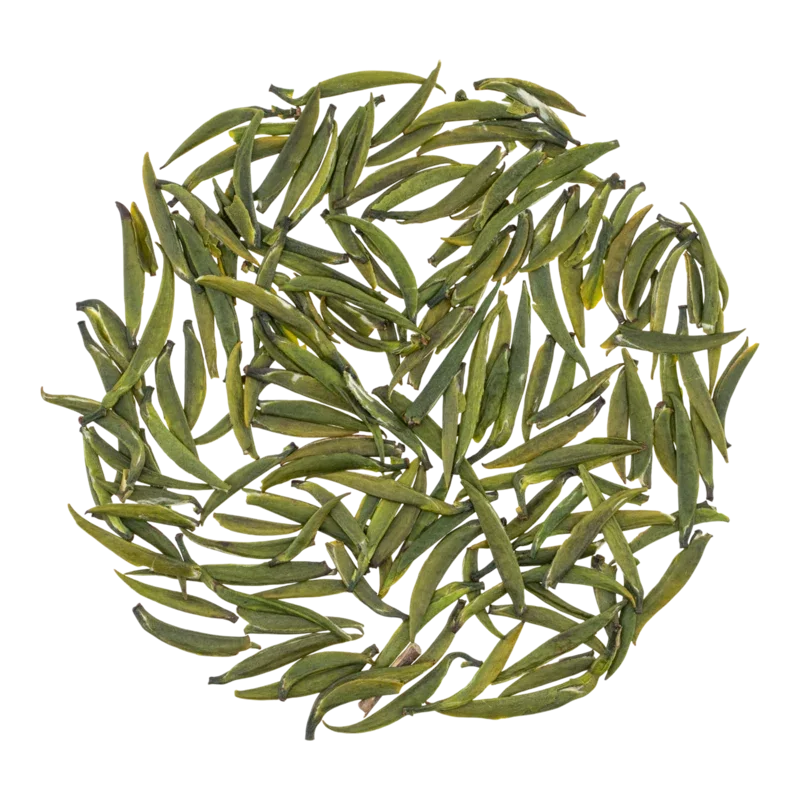
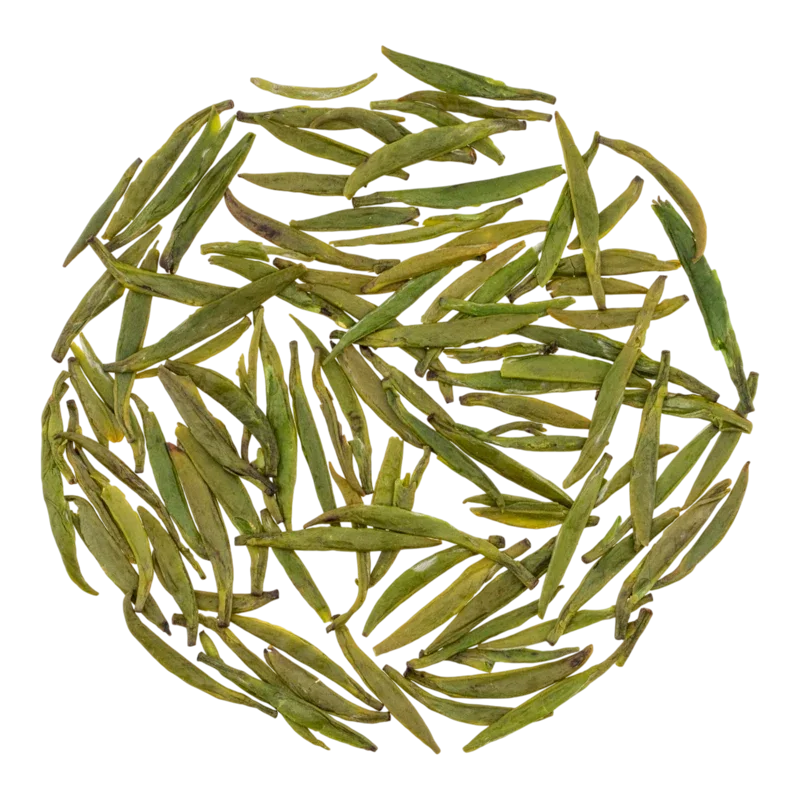
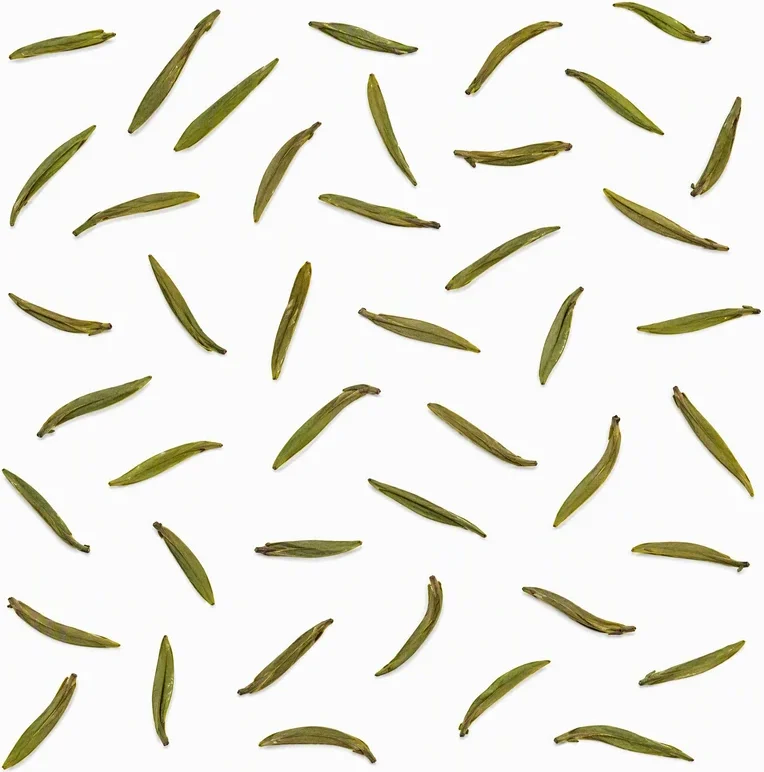
Dry Leaf Appearance: Slightly flat, slender "sparrow's tongues" (微扁挺秀、匀齐似雀舌). Emerald-green with abundant silvery down (翠绿显毫). Shoots — even, uniform in size.
Dry Leaf Aroma: "Tender" (嫩香, nèn xiāng). "High, long, fragrant" (高长馥郁, gāo cháng fùyù) — this is the key difference from standard "Hanzhong Xianhao," which is dominated by "chestnut" (栗香) tone. Ningqiang Que She is more "floral" and "orchid-like."
Liquor Aroma: Pure (清香), with pronounced floral-fruity note. When cooled — "honey" overtone. Aroma persistence — 3+ minutes on cold cup.
Liquor Color: Green, bright and clear (绿亮清澈, lǜ liàng qīng chè).
Spent Leaves: Tender green, "in bouquets," fleshy (嫩绿成朵、肥厚柔软). Shoots — whole, unbroken, with preserved "tongue" shape.
Taste: Mellow and sweet (醇厚甘甜, chúnhòu gāntián). Returning sweetness (回甘) — persistent and clean. Complete absence of astringency (无涩感, wú sè gǎn) — formula "醇厚甘甜,无涩感" — key taste difference from "Hanzhong Xianhao" and most other green teas. This is a consequence of low polyphenols (24.73%) and elevated amino acids (3.43%) — balance conditioned by "cold" terroir (12.9°C) and Se-soils.
Amino Acids: 3.43% — elevated level, conditioned by "cold" terroir (12.9°C) and significant daily fluctuations (>10°C). L-theanine dominates.
0.653–3.853 ppm — 1.5 times higher than the Hanzhong average. From granite Se-enriched soils.
Elevated — from the same soils.
Standard level for green tea.
~7.2 — characteristic of "mild" northern green teas; for comparison, southern ones — 10–15. Precisely this low ratio creates the formula "without astringency."
Polyphenols: ≥24.73% — moderate level for green tea, ensuring mildness and absence of astringency.
Vitamins: Vitamin C, B-group vitamins.
Se content — up to 3.853 ppm — one of the highest indicators among Shaanxi teas. Selenium is an essential microelement necessary for glutathione peroxidase function — a key antioxidant enzyme of the body. Regular consumption of Se-tea contributes to maintaining immunity and antioxidant protection.
Polyphenols (24.73%) + vitamin C + Se — triple antioxidant system.
Caffeine in synergy with L-theanine — mild, prolonged alertness without nervousness. Especially mild effect due to low polyphenol to amino acid ratio.
L-theanine stimulates alpha-wave brain activity — state of "relaxed concentration."
Catechins gently stimulate GI motility.
Listed properties are based on general data and are not medical recommendations. Not recommended to drink on empty stomach. Daily dose — no more than 600 ml.
3–4 infusions. Each subsequent — +30 seconds. Three infusions preserve "high fragrant" aroma — "三泡余韵绵长" ("after three infusions the aftertaste is still long").
Tea Amount: 3 g per 150 ml (1:50 ratio).
Teaware: Glass tumbler (推荐) — to observe the "dance" of "sparrow's tongues" slowly descending in water. White porcelain gaiwan — to concentrate aroma. Not recommended to use Yixing teapots — porosity "takes away" the delicate aroma.
Water Temperature: 75–85°C. Do not use boiling water — delicate "tongues" get "burned" and lose floral aroma. For highest grade — 75°C.
Container: Airtight, opaque. Aluminum foil + vacuum packaging — ideal.
Light: Complete isolation — down and chlorophyll are light-sensitive.
Shelf Life: Recommended to consume within 6–8 months. New tea — 7–10 days "rest" to release "fire."
Temperature: 0–5°C (refrigerator), in airtight packaging. Ningqiang Que She is a delicate "bud" tea, extremely sensitive to temperature, moisture, and foreign odors.
Umbrella brand uniting Hanzhong teas. Flat shape. "Chestnut" aroma. Ningqiang Que She — "tongue" (雀舌) shape, "high fragrant" aroma, without astringency. Ningqiang taste is more "floral" and "mild."
Jiangsu. Also "sparrow's tongue," but from eastern China, without Se-enrichment. Aroma — "pure and tender" (清雅). Ningqiang — with more pronounced "fragrance" and Se.
Hanzhong, "Eyebrow tea [of] Dingjun [Mountain]" — from the same "Xianhao" brand. Shape — thin "eyebrow." Ningqiang — "tongue." Both Se-enriched, but from different micro-regions of Hanzhong.
No reviews yet. Tell us what you think of this tea.
Rate this tea and share your impressions. We review each submission before publishing it.