Brewing
Gongfu brewing
- Water temperature
- 75 °C
- Tea amount
- 5 g
- Water volume
- 100 ml
- First steep
- 10 s
- Time added per infusion
- 5 s
- Infusions
- 3

Hànzhōng xiān háo
Choose a brewing method. Start with the recommended quantities and time, then adjust to taste.
Brewing
Brewing
Taste
Tea encyclopedia
Category: Regional tea with protected geographical indication (地理标志产品, dìlǐ biāozhì chǎnpǐn). Umbrella brand uniting production from more than 120 enterprises in Hanzhong Prefecture. In 2020, included in the second list of mutually recognized geographical indications of the China-EU Agreement (《中欧地理标志协定》). Belongs to the Jiāngběi Tea Region (江北茶区) — one of China's four main tea regions and the northernmost of them.
Category: Regional tea with protected geographical indication (地理标志产品, dìlǐ biāozhì chǎnpǐn). Umbrella brand uniting production from more than 120 enterprises in Hanzhong Prefecture. In 2020, included in the second list of mutually recognized geographical indications of the China-EU Agreement (《中欧地理标志协定》). Belongs to the Jiāngběi Tea Region (江北茶区) — one of China's four main tea regions and the northernmost of them.
Coordinates: Approximately 32.5°–33.5° N, 106.0°–108.0° E. Administrative center of Hanzhong — 33.07° N, 107.03° E.
Origin: China, Shaanxi Province (陕西, Shǎnxī), Hànzhōng Prefecture (汉中市, Hànzhōng shì). The protected origin zone covers 112 townships within 11 counties and districts: Nanzheng (南郑), Xīxiāng (西乡, main production area), Zhenba (镇巴), Chenggu (城固), Yángxiàn (洋县), Miǎnxiàn (勉县), Níngqiáng (宁强), Lueyang (略阳), and others.
Type: Green tea (non-oxidized, 绿茶, lǜchá).
Cultural Significance: Hanzhong is one of the most ancient tea regions of Northwest China, historically connected with the tea-horse trading system and the Great Tea Road. The region's tea culture is celebrated in special literary collections: "Han Cha Fu" (《汉茶赋》) and "Han Cha Yinglian Ji" (《汉茶楹联集》). The annual Hànzhōng Xiàn Háo Harvest Opening Festival (汉中仙毫开采节) and tea skill competitions are held. The "tea + tourism" model is actively developing: more than 20 tea-tourism demonstration points and 15 thematic routes have been created, one of which — "Dongyu — Zaoyuanhu — Yintaogou" — is included in the federal registry of tourist routes. The tea industry provides employment for more than 1 million people; over the past 10 years, 600,000 residents have emerged from poverty, and 300,000 have achieved sustainable prosperity thanks to tea.
History: Hanzhong's tea history spans more than three millennia. According to local sources, tea production in the region dates back to the Shang-Zhōu eras (商周). Xīxiāng County (西乡), now the core of the tea zone, traces its tea chronicle from the Warring States and Qin-Hàn periods (战国—秦汉): the "Xixiang County Gazetteer" (《西乡县志》) records that tea production here originated in the Qin-Han era and flourished during Tang-Song. In the Míng era (明代), Xixiang became one of the key points of the state "tea for horses" system (以茶易马, yǐ chá yì mǎ) — a large-scale border trade program, when tea from southern Shaanxi was supplied to nomadic peoples of the western frontiers through tea-horse administrations (茶马司). The historical formula "Hanzhong buys tea, Xihe exchanges for horses" (汉中买茶、熙河易马) reflects the strategic importance of the region.
Name Breakdown: Hànzhōng (汉中, Hànzhōng) — name of the prefecture, literally "Middle [of the Han River]": the region is located in the upper Hàn River (汉水) basin. Xiān (仙, xiān) — "immortal, celestial being, magical." Háo (毫, háo) — "down, fuzz (on tea buds)." The full name — "Magical Down from Hanzhong" — poetically indicates the main visual feature of the tea: tender shoots densely covered with silvery fuzz. The name inherits the tradition of its predecessor — Wǔ Zǐ Xiàn Háo (午子仙毫), where "Wu Zi" refers to Mount Wuzishan (午子山) in Xixiang County.
Cultivar: The foundation of plantations consists of local population plantings (群体种, qúntǐ zhǒng) — genetically diverse seed populations historically adapted to Qinling-Bashan conditions. Introduced cultivars are also widely used: Fúdǐng Dà Bái Chá (福鼎大白茶, Fúdǐng Dà Bái Chá), Lóngjǐng Cháng Yè (龙井长叶, Lóngjǐng Chángyè — "Longjing Long-leaf"), Zǐyáng Quntichong (紫阳群体种, Zǐyáng qúntǐ zhǒng — population from neighboring Ziyang tea region). Population plantings provide more complex aromatic profiles; Fuding Da Bai ensures large, densely fuzzy buds.
Picking: Spring harvest: from "Qingming" (清明, early April) to 10 days after "Guyu" (谷雨, late April). For extra-premium batches — before Qīngmíng (明前茶). Summer and autumn tea is also produced (mainly for mass categories and export), however the brand's reputation is formed by spring harvest.
Pluck Standard: Extra grade (特级) — single buds (单芽, dānyá) or bud with one leaf in initial opening stage (一芽一叶初展). Dry tea yield — about 62,000 buds per kilogram. First grade — bud with one to two leaves.
Raw Material: Shoots must be fresh, tender, uniform, without mechanical damage and pest traces. Delivery from plantation to factory — within minimal time to prevent overheating and spontaneous oxidation.
Climate: Transitional between northern subtropical and temperate warm, with pronounced monsoon character. Average annual temperature — 14.7°C. Annual precipitation — 1000–1500 mm. Significant cloudiness (高云雾几率): mountain relief generates frequent morning and evening mists that diffuse direct sunlight. This is a classic condition for forming "high-mountain" aromatic profiles. Large difference between day and night temperatures promotes accumulation of aromatic substances and amino acids. Extended vegetation period (生长周期长) — characteristic feature of northern tea zones: leaves grow slower than in the south but accumulate more extractive substances.
Soil: Predominantly yellow and yellow-brown mountain soils (黄壤, 黄棕壤), acidic reaction, with high organic content. Regional soils contain elevated concentrations of zinc and selenium — as in neighboring famous tea region Zǐyáng (紫阳).
Hànzhōng is located in ān intermountain basin between the Qínlǐng (秦岭, Qínlǐng) range to the north and Bashan (巴山, Bā Shān) to the south. Qinling is China's most important climatic divide, separating the subtropical south from the temperate north. Thanks to the mountain barrier, the basin is protected from cold northern air masses, creating an anomalously mild microclimate for this latitude. Tea plantations occupy mountain and hill slopes covered with dense forest. Total area of tea gardens in the prefecture — more than 1.32 million mu (about 88,000 hectares).
600–1600 m above sea level. Main plantations — at elevations of 800–1200 m.
Ecological model: biological and physical pest protection, abandonment of synthetic pesticides on certified plots. Several farms have AA-level green product certification (绿色AA级). The "tea gardens as landscapes" model (茶园景区化) combines agrotechnology with landscape aesthetics.
Freshly picked shoots are spread in thin layers in ventilated rooms. Duration — 3–5 hours (according to some sources — up to 35 hours for especially tender raw material, which is unusually long for green tea and indicates controlled light withering that enhances floral notes). Goal — moisture equalization, beginning of aroma formation.
Performed by pan-firing in wok or kettle (锅炒杀青) or, by some producers, steaming (蒸汽杀青). High-temperature pan-firing inactivates enzymes, preserving the green character of the leaf and forming the foundation of chestnut aroma. Steaming gives a fresher, "greener" tone.
After fixation, the leaf is briefly cooled in air ("清风" — "airing"), then gently rolled to release cellular juices.
Key stage forming the characteristic "micro-flat" (微扁, wēibiǎn) shape resembling an orchid petal (形似兰花). The leaf is pressed and straightened by hand or on shaping equipment, acquiring an elegant, slightly flattened but not flat (like Longjing) form.
Special stage characteristic of "hao" class teas (毫): delicate processing where silvery fuzz on buds is "raised" and becomes visible, giving the dry leaf its characteristic whitish coating.
Hot air brings moisture to stable level (≤7%), fixes aroma and ensures storability. The combination of pan-firing and drying stages (烘炒结合) forms Hanzhong Xian Hao's signature profile: chestnut depth from pan-firing and floral purity from drying.
Removal of broken particles, stems and darkened tea pieces. Batch equalization by size and color.
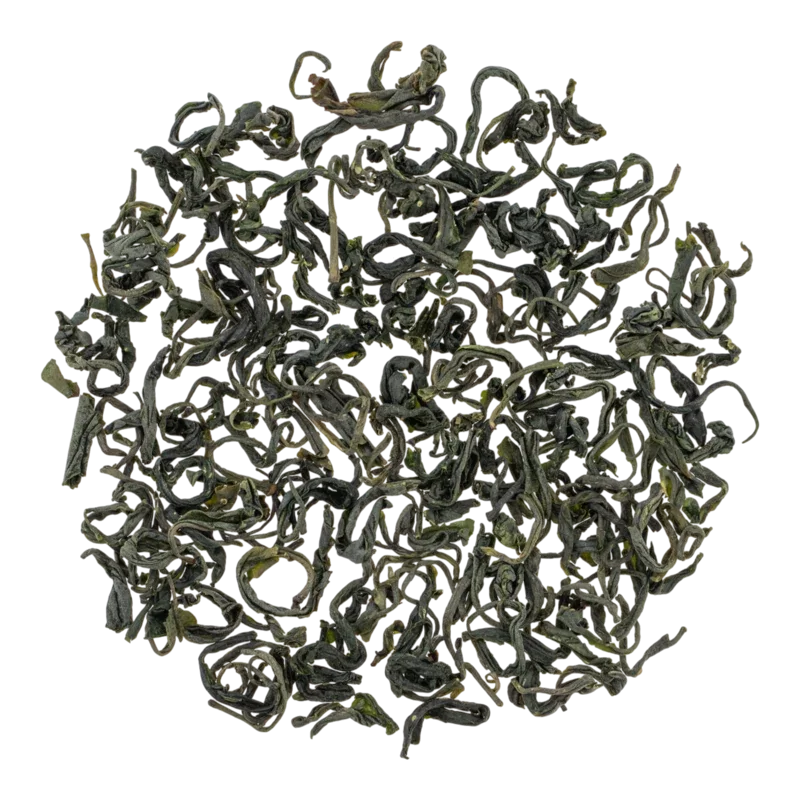
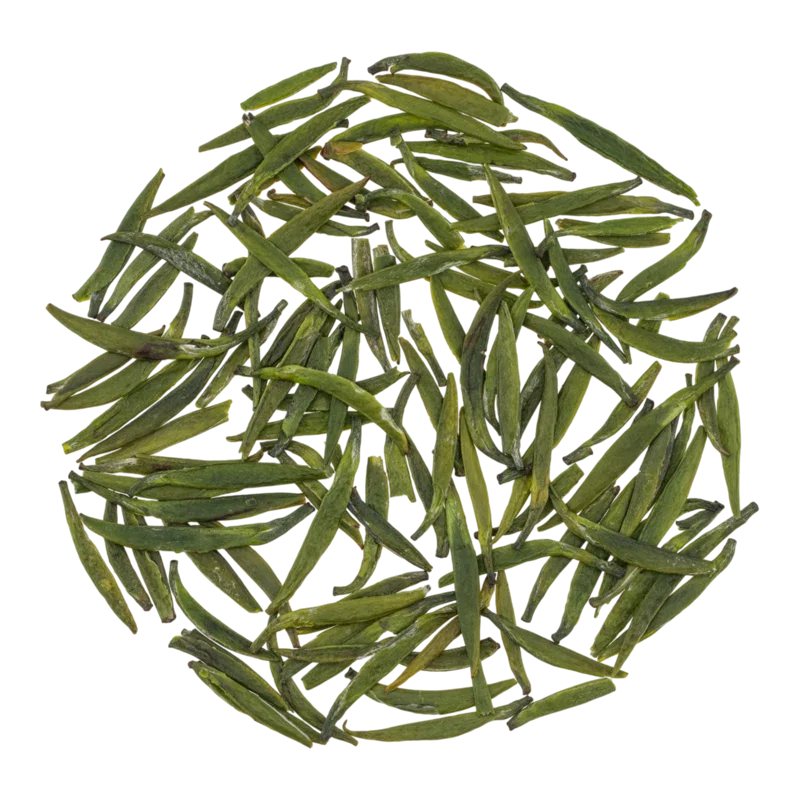
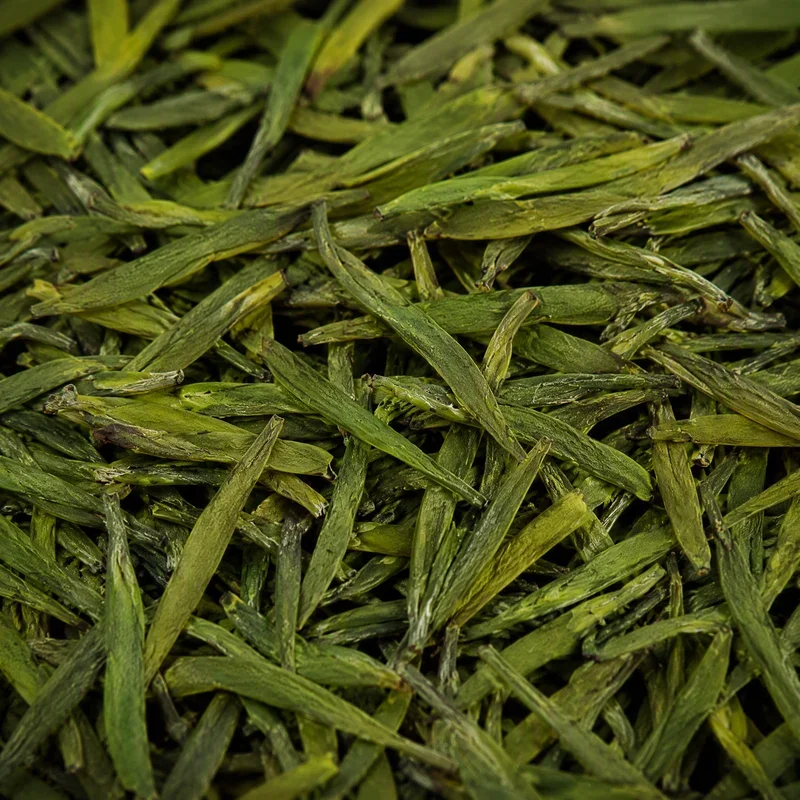
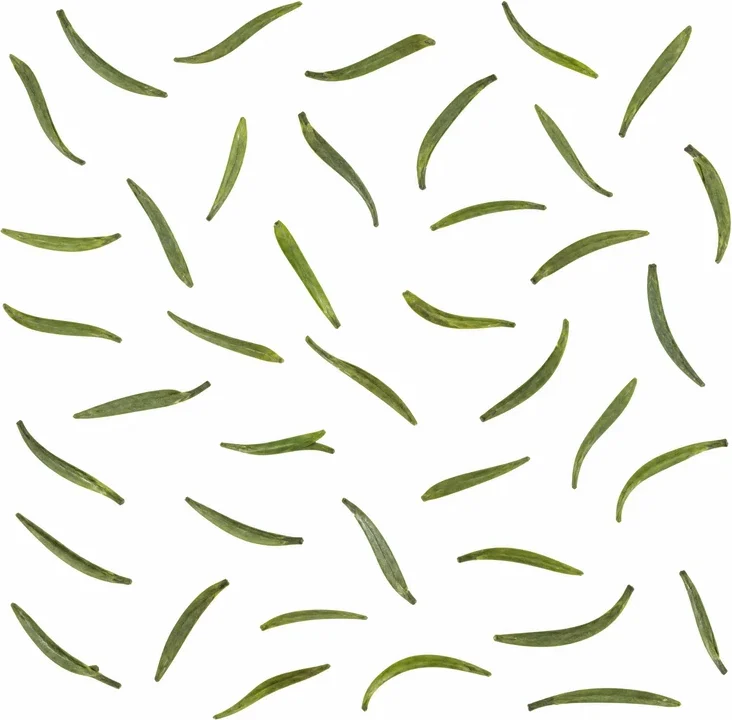
Dry Leaf Appearance: Micro-flat (微扁), elegant, straight or slightly curved shoots resembling orchid petals or thin "eyebrows" (秀如眉). Color — tender green, fresh (嫩绿), with dense covering of silvery-white fuzz (翠绿显毫). Shoots uniform in size, with visible bud.
Dry Leaf Aroma: Clean, high — with chestnut (栗香) and floral-herbal notes. Aroma persistent, not "raw," without sharp grassiness.
Liquor Aroma: High, sharp and lasting (香高锐持久). Chestnut and toasted notes predominate, complemented by floral overtones (in some batches — with light beany tones). Aroma persists through 3–4 infusions.
Liquor Color: Tender green, bright and clear (嫩绿清澈鲜明), sometimes with light yellowish tint. White fuzz floating in the liquor creates "pearl cloudiness" effect (毫浑) — this is a quality sign, not a defect.
Spent Leaves: Uniform, tender green, lively and resilient (匀齐鲜活、嫩绿明亮). Shoots open completely, demonstrating integrity of bud and leaf, often forming neat "rosettes" (成朵).
Taste: Fresh, brisk and full-bodied (鲜爽回甘). Body denser than typical southern green teas of the same raw material tenderness — reflecting elevated extractive substance content (>46%). Light astringency quickly transitions to distinct returning sweetness (回甘). Characteristic "briskness" (鲜) and "mellowness" (醇厚), due to high amino acid content.
Alkaloids: Caffeine — 4.43–4.5%. Theobromine and theophylline — in trace amounts.
Amino Acids: 3.5–5.23% — significantly higher than most South Chinese green teas. According to Chinese Academy of Agricultural Sciences Tea Research Institute (中国农科院茶叶研究所), amino acid content in Wu Zi Xian Hao exceeds Longjing "extra" indicators by 0.08% and Longjing "special first grade" by 1.19%. L-theanine dominates, providing umami-like briskness and gentle relaxation.
≥44.57% (according to some data — ≥46%), indicating high saturation and good "brewability."
Zinc (Zn) — 53.5–67.5 mg/kg. Selenium (Se) — 0.858 mg/kg. Both elements enter the leaf from soil naturally.
Gas chromatography-ion mobility spectrometry (GC-IMS) study identified 61 volatile odorant substances in Hanzhong Xian Hao from five production areas: 30 aldehydes, 12 ketones, 7 esters, 6 alcohols, 4 furans and 2 acids. Volatile substance profile allows reliable distinction of teas from different subregions.
Minerals: Potassium, magnesium, phosphorus, manganese, fluorine.
Polyphenols: About 32–40% (data varies depending on subtype: Wu Zi Xian Hao — ~33%, averaged brand data — up to 40%). Main catechins — EGCG, EGC, ECG.
Vitamins: Vitamin C, B-group vitamins, vitamin E.
High catechin (EGCG) content provides powerful free radical neutralization. Flavonoids additionally slow oxidative cell damage.
Balance of caffeine and L-theanine provides sustained alertness without sharp excitement peaks. Theanine promotes alpha-wave generation in the brain, improving concentration and reducing anxiety.
Flavonoids help maintain vascular wall elasticity. Catechins contribute to blood lipid profile optimization.
Fluorine and catechin content suppresses cariogenic bacteria growth and reduces bad breath.
Polyphenols stimulate peristalsis and digestive juice secretion. Catechins possess antibacterial activity useful for functional GI disorders.
Antioxidants slow photoaging; zinc participates in skin tissue repair.
Zinc and selenium from tea are cofactors of key immune enzymes.
People with increased caffeine sensitivity, GI diseases in acute stage, as well as pregnant and nursing women are recommended moderate consumption and specialist consultation.
Tea Amount: 3–4 g per 150–200 ml (glass tumbler or gaiwan method).
Teaware: Tall straight glass tumbler (直筒玻璃杯) — allows observing the "dance" of opening shoots that stand vertically like a small bamboo forest. Thin-walled porcelain gaiwan (薄胎盖碗) — for finer extraction control and full aroma revelation.
Water Temperature: 85–90°C. For most tender batches (单芽, 明前茶) reduction to 80°C is acceptable; for more mature leaf — up to 90°C.
Container: Airtight vacuum bags (aluminum + polyethylene), tin cans with tight lids. Inner packaging should be opaque.
Enemies: Light, moisture, foreign odors, high temperature, oxygen. When airtightness is compromised in refrigerator, tea absorbs foreign odors and becomes damp.
6–12 months from production date. Spring tea recommended to drink before next season. Green tea is not intended for long aging.
Temperature: Optimally — 0–5°C (refrigerator). At room temperature — no higher than 10°C, in dark dry place.
Standard flat green tea from Zhejiang. Longjing — completely flat, with pronounced "beany-chestnut" aroma and oily smoothness. Hanzhong Xian Hao — micro-flat (not as flat as Longjing), with more abundant fuzz and "higher," floral-chestnut aroma. In amino acid content, Hanzhong can exceed Longjing.
Classic fuzzy green tea from Anhui. Both teas are covered with abundant down, but Huangshan Mao Feng has twisted form, more pronounced floral sweetness and "misty-orchid" aroma. Hanzhong Xian Hao — denser in taste, with more pronounced chestnut note and higher extractive substance content.
Famous fuzzy tea from Henan, another "northern" green tea. Xinyang Mao Jian — twisted, with finer, "lily-of-the-valley" profile and delicate body. Hanzhong Xian Hao — micro-flat, more full-bodied and rich, with deeper chestnut tone.
Green tea with record amino acid content (up to 6–8%) from Zhejiang. Both teas are valued for "amino acid" briskness, but Anji — significantly more tender, finer and ephemeral, while Hanzhong — denser, more structured and more durable in infusions.
Green tea from Guizhou, also enriched with zinc and selenium. Both teas appeal to the "functional" component, but Fenggang is produced in several forms (flat, twisted, granulated), while Hanzhong Xian Hao has unified micro-flat "orchid" form. In taste profile, Hanzhong is more "northern": denser, with deeper chestnut note.
Price Category: Wide range. Spring tea extra grade (明前特级, single buds) — premium segment. First and second grades, as well as summer-autumn harvests — accessible everyday tea. "Hanzhong Xian Hao" brand value in 2025 — 50.98 billion yuan, placing it in the top twenty leading Chinese tea brands. Nevertheless, retail prices remain competitive compared to analogues from Zhejiang or Anhui.
No reviews yet. Tell us what you think of this tea.
Rate this tea and share your impressions. We review each submission before publishing it.