Brewing
Gongfu brewing
- Water temperature
- 75 °C
- Tea amount
- 5 g
- Water volume
- 100 ml
- First steep
- 10 s
- Time added per infusion
- 5 s
- Infusions
- 3

mòlì yínzhēn
Choose a brewing method. Start with the recommended quantities and time, then adjust to taste.
Brewing
Brewing
Taste
Tea encyclopedia
Category: High-quality scented teas of China.
Category: High-quality scented teas of China.
Coordinates: Depends on specific production location, for Fujian Province approximately 26° North latitude, 119° East longitude.
Origin: China, Fújiàn Province (福建, Fújiàn) - traditionally considered the birthplace of the finest jasmine teas and white tea. Fúdǐng County (福鼎, Fúdǐng) - most likely production location for the base tea (Bai Hao Yin Zhen).
Type: White tea (白茶) scented with jasmine. Sometimes erroneously classified as green tea due to the liquor color, but the base is indeed white tea.
Cultural Significance: Moli Yin Zhen is considered one of the most exquisite jasmine teas. It is valued for its refined aroma, mild taste, and beautiful appearance. This tea is often associated with luxury and prosperity.
History: Scenting tea with jasmine is an ancient Chinese tradition spanning many centuries. Using white tea, especially Bai Hao Yin Zhen, for jasmine scenting is a mark of high quality and exclusivity, as this type of white tea is itself very precious.
For producing Moli Yin Zhen, Bái Háo Yìn Zhèn (白毫银针, Báiháo Yínzhēn) - "Silver Needles with White Down" is used, an elite white tea consisting exclusively of unopened buds covered with dense silvery down. The raw material is harvested from Fúdǐng Dǎ Bái Chá (福鼎大白茶, Fúdǐng Dàbáichá) or Zhènghé Dǎ Bái Chá (政和大白茶, Zhènghé Dàbáichá) bushes.
Fresh, newly opened jasmine flowers of the species Jasminum sambac are used, which possess the strongest and most pleasant aroma.
Tea leaf (bud) harvest occurs very early in spring, during a short period (several days).
Jasmine flowers are collected in the evening or at night, when they open maximally and emit the strongest aroma.
Pluck Standard: Exclusively tender, unopened buds (tips) densely covered with white down are collected.
Raw Material: Very high. Only select, undamaged, fresh buds covered with dense silvery down are used, as well as fresh, aromatic jasmine flowers.
Altitude: Varies, but tea plantations are usually located at altitudes from 500 to 1000 meters above sea level.
Located in southeastern China, has a subtropical monsoon climate with warm winters and hot summers. The region is characterized by mountainous terrain, fertile soils, and abundant precipitation. Ideal conditions for growing both tea and jasmine.
The finished tea is sorted by quality.
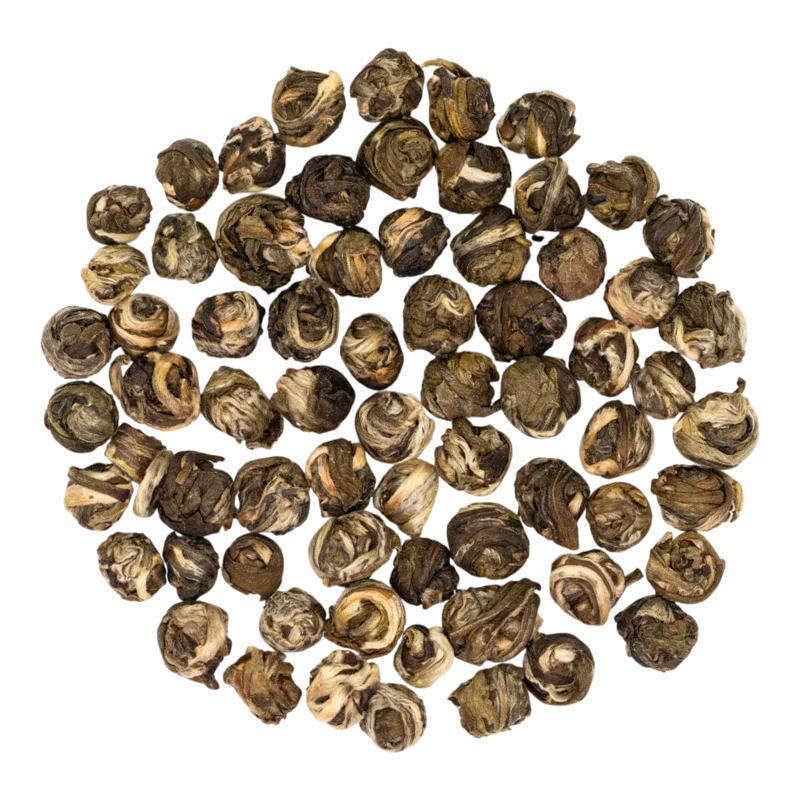
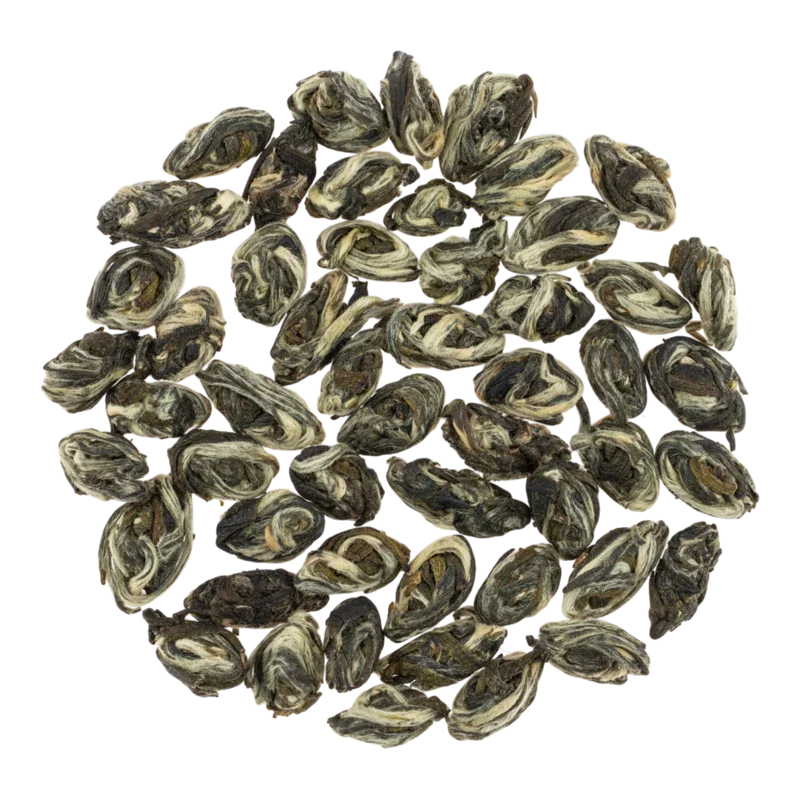
Dry Leaf Appearance: Small, tender, unopened buds (tips) densely covered with silvery-white down. Bud shape is straight or slightly curved, resembling needles. Color is silvery-white with a light pearlescent sheen.
Dry Leaf Aroma: Very delicate, refined, with pronounced jasmine aroma intertwined with the subtle aroma of white tea. The aroma should be natural, clean, without artificial fragrances.
Liquor Aroma: Exquisite, delicate, jasmine-like, with honey and floral nuances.
Liquor Color: Very light, pale yellow, almost transparent, with a light silvery tint.
Spent Leaves: Whole, elastic buds that have retained their shape and are covered with silvery down, of tender light yellow or pale green color.
Taste: Very mild, tender, clean, refreshing, sweetish, with harmonious combination of white tea and jasmine flavors. Long floral aftertaste with light astringency. Bitterness is absent or minimal.
Amino Acids: Including L-theanine, which has calming effects.
Give the tea its aroma and possess calming, antiseptic properties.
Minerals: Potassium, fluorine, magnesium.
Polyphenols: High content, as in quality white tea. Powerful antioxidants.
Vitamins: C, B group.
Protects against free radicals, slows aging, reduces the risk of many diseases.
Increases the body's resistance to infections.
Stimulates digestion.
Gently invigorates, improves concentration.
Jasmine aroma and L-theanine in the tea composition relieve stress, relax, improve mood, help with insomnia.
Improves complexion, promotes skin cleansing, has rejuvenating effects.
Well quenches thirst, especially in hot weather.
Jasmine possesses antiseptic properties.
May help reduce cholesterol levels and strengthen blood vessels.
Too long steeping can lead to bitterness.
During brewing, watch how the silvery buds open and "dance" in the water - this is a very beautiful sight.
Don't be afraid to experiment with steeping time and tea quantity to find the perfect variant for yourself.
Tea Amount: 3-5 grams per 150-200 ml of water.
Teaware: Glass teapot, gaiwan (盖碗) or porcelain vessels. Glass allows observation of the beauty of opening buds.
Water Temperature: 65-75°C. Using too hot water can "burn" the delicate buds and lead to bitterness.
Also jasmine-scented tea, but uses green tea leaves rolled into ball shapes ("pearls") as the base. Moli Longzhu has a more intense green tea flavor, while Moli Yin Zhen has a more delicate and refined taste with predominant bud notes.
Also jasmine-scented tea, rolled in "phoenix eye" shape. Usually made from more mature raw material than Moli Yin Zhen.
General name for jasmine teas. Moli Yin Zhen differs from them by using exclusively bud material (Bai Hao Yin Zhen) and multiple scenting, making its taste and aroma more refined.
Price Category: Too low a price should be concerning.
Buds should be whole, undamaged, densely covered with silvery down. Color should be uniform, without foreign inclusions.
Aroma should be bright, natural jasmine, without artificial fragrances. Jasmine scent should harmoniously combine with white tea aroma, not completely overpower it.
Taste should be mild, balanced, with jasmine notes, without bitterness.
No reviews yet. Tell us what you think of this tea.
Rate this tea and share your impressions. We review each submission before publishing it.