Brewing
Gongfu brewing
- Water temperature
- 100 °C
- Tea amount
- 6 g
- Water volume
- 100 ml
- First steep
- 10 s
- Time added per infusion
- 5 s
- Infusions
- 10

Liù bǎo chá
Choose a brewing method. Start with the recommended quantities and time, then adjust to taste.
Brewing
Brewing
Taste
Tea encyclopedia
Category: Famous Teas of China. One of 24 renowned teas listed during the Qing era. National geographical indication product (地理标志产品, dìlǐ biāozhì chǎnpǐn) since 2011. Production technology included in the List of Intangible Cultural Heritage of China (2014) and as part of "Traditional Chinese Tea Processing Techniques" in the UNESCO Intangible Cultural Heritage List (2022).
Category: Famous Teas of China. One of 24 renowned teas listed during the Qing era. National geographical indication product (地理标志产品, dìlǐ biāozhì chǎnpǐn) since 2011. Production technology included in the List of Intangible Cultural Heritage of China (2014) and as part of "Traditional Chinese Tea Processing Techniques" in the UNESCO Intangible Cultural Heritage List (2022).
Coordinates: Approximately 23°50′–24°10′ North latitude, 110°30′–111°20′ East longitude (for the core production region — Liubao Township, Cangwu County).
Origin: China, Guǎngxī Zhuāng Autonomous Region (广西壮族自治区, Guǎngxī Zhuàngzú Zìzhìqū), Wúzhōu City (梧州市, Wúzhōu Shì), Cāngwú County (苍梧县, Cāngwú Xiàn), Liùbǎo Township (六堡镇, Liù Bǎo Zhèn). The geographical indication protection zone covers the entire administrative area of Wuzhou City, while the expanded production territory encompasses 48 counties in 12 prefectural cities of Guangxi, including Nanning, Liuzhou, and Wuzhou.
Type: Post-fermented dark tea (黑茶, Hēichá). Degree of fermentation — deep, continuing during storage (post-fermentation). According to national standard GB/T 32719.4-2016, Liu Bao Cha belongs to the fourth part of the dark tea standard.
Cultural Significance: Liu Bao Cha is the calling card of Guangxi Zhuang Autonomous Region and a symbol of Wuzhou City. It is called "可以喝的古董" (kěyǐ hē de gǔdǒng) — "drinkable antique," emphasizing the tea's property of improving with age. The tea is inextricably linked with the phenomenon of the "Tea Boat Ancient Route" — a unique water trade artery, analogous to the Great Tea Road but laid along the rivers of Southern China. Liu Bao Cha remains an object of deep reverence in the huaqiao diaspora communities of Southeast Asia, where it continues to be consumed as a protective beverage against the humid tropical climate.
History: The history of Liu Bao Cha spans more than 1500 years. The earliest evidence of tea production in the Liùbǎo region dates to the Southern and Northern Dynasties period (南北朝, Nán Běi Cháo, 420–589 CE). During the Tāng (唐, 618–907) and Sōng (宋, 960–1279) dynasties, tea from Liubao gained recognition beyond the region. Its golden age came during the Qīng dynasty (清, 1644–1912): during the Jiāqìng reign (嘉庆, 1796–1820), Liu Bao Cha was included among the 24 renowned teas of the Middle Kingdom and became an imperial tribute thanks to its unique betel nut aroma. The Cangwu County Gazetteer (《苍梧县志》) from the Tóngzhì era (同治, 1862–1874) notes: "Tea is produced in many places; tea from Liubao is the finest, its taste is full-bodied, and it retains its properties overnight."
By 2024, 135 licensed tea enterprises, 14 large-scale production facilities, and more than 5,900 entities related to the Liu Bao tea industry were operating in Wuzhou.
Cultivar: The main raw material consists of leaves from the local group variety of Cangwu County — Cāngwú Group Variety (苍梧群体种, Cāngwú Qúntǐ Zhǒng), as well as large- and medium-leaf cultivars of Guǎngxī (广西大中叶种, Guǎngxī Dà Zhōng Yè Zhǒng), including their breeding lines. Botanical classification — Camellia sinensis (L.) O. Kuntze. Plants are predominantly propagated sexually (by seeds), forming small trees (乔木, qiáomù) or semi-trees (小乔木, xiǎo qiáomù) with large or medium leaves. The leaf blade is elongated-elliptical, lanceolate, with mature leaves being dark brown with glossy luster. Trees over 100 years old (老树, lǎo shù) are particularly valued, providing raw material with the deepest and most complex flavor.
Picking: Harvesting is conducted from spring to autumn. Spring harvest (春茶, chūnchá) is considered most valuable. For the traditional "farmer's" category (农家茶, nóngjiā chá), there is also an autumn harvest called "Old Tea Mother" (老茶婆, Lǎo Chá Pó) — coarse leaves collected after the Frost's Descent period (霜降, end of October).
Pluck Standard: Standard picking — one bud and two-three leaves (一芽二三叶, yī yá èr sān yè). For higher grades — one bud and one-two tender leaves. For "farmer's" tea the standard varies: "tea grain" (茶谷, cháoǧ) — tender buds; "middle tea" (中茶, zhōngchá) — one bud and three-four leaves; "two-white tea" (二白茶, èr báichá) — mixture of tender and coarse leaves; "Old Tea Mother" — coarse old leaves.
Raw Material: Leaves must be fresh, healthy, without mechanical damage or signs of disease. Raw material is collected in ecologically clean areas, preferably from high-altitude plantations in the core production region — villages Buyi (不倚村), Tangping (塘平村), Siliu (四柳村), with the finest tea considered to come from Gongzhou (恭州村) and Heishi (黑石村) villages.
Climate: Subtropical monsoon, hot and humid. Average annual temperature — about 21°C. Annual precipitation — approximately 1500–1800 mm. The region is characterized by high air humidity and frequent fogs (终年云雾缭绕, zhōngnián yúnwù liáorào — "year-round embraced by clouds and mist"), providing soft diffused light and slowing vegetation, promoting accumulation of aromatic substances and amino acids.
Soil: Predominantly acidic red soils (红壤, hóng rǎng), rich in humus (腐殖质, fǔzhízhì), as well as compounds of phosphorus, iron, and other minerals. Soil acidity (pH 4.5–5.5) is optimal for tea plants and promotes accumulation of polyphenols and mineral substances in leaves.
The core production region — Liubao Township — is located on the northern side of the Tropic of Cancer, in hilly and mid-mountain terrain at the junction of the Dàlián Mountains (大连山) and Guì River (桂江) with a dense network of rivers and streams. The terrain is heavily dissected, covered with subtropical evergreen forests.
Main plantations are located at altitudes from 300 to 1000 m above sea level. The highest quality raw material is collected in high-altitude areas (800–1400 m).
The unique combination of mountain topography, abundant precipitation, fogs, acidic mineralized soils, and tropical biota forms an incomparable terroir favorable for the development of endemic microflora — a key factor in Liu Bao Cha's post-fermentation.
The "cold water wet piling" technology (冷水渥堆, lěngshuǐ wò duī) was developed and implemented at Wuzhou Tea Factory around 1958 — earlier than similar technology for shu pu-erh (1973). Liu Bao Cha can thus be considered the historical predecessor of accelerated fermentation technology in the dark tea world. Another unique feature — use of ancient cellars and caves (茶窖, chá jiào) for aging, where stable microclimate and endemic microflora form the tea's incomparable character.
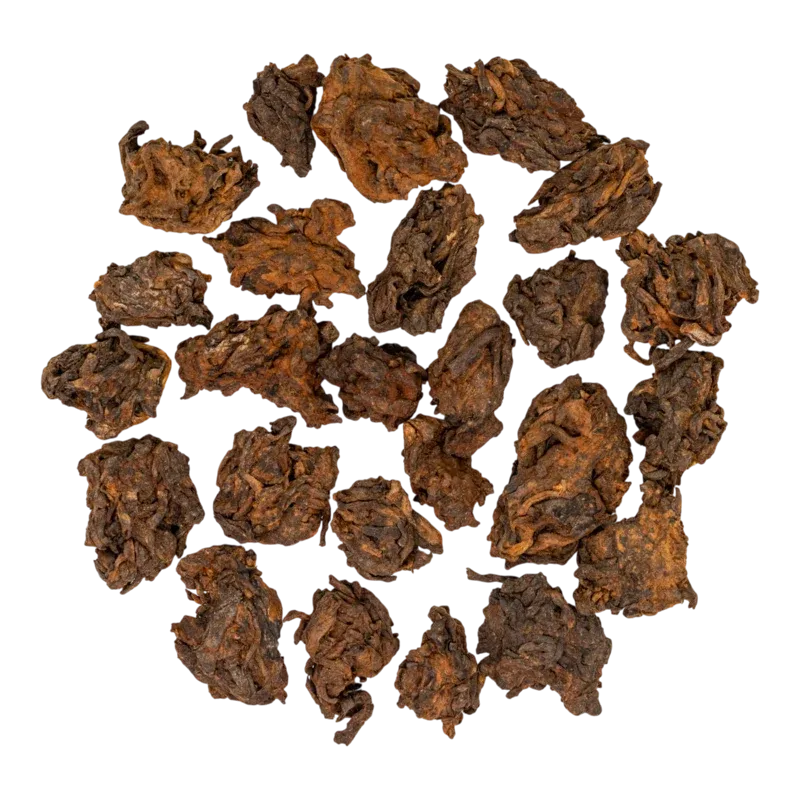
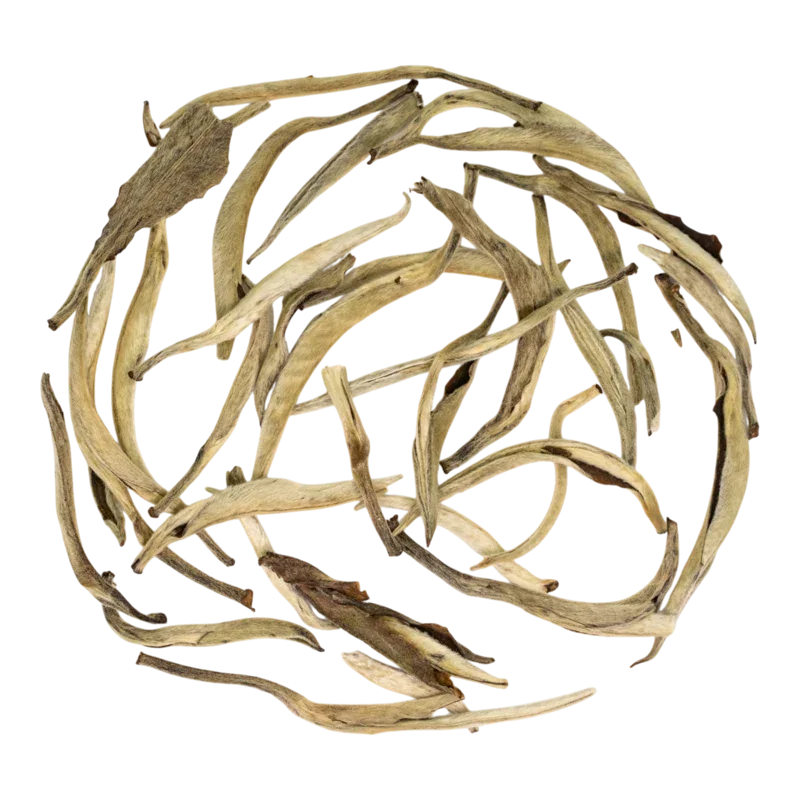
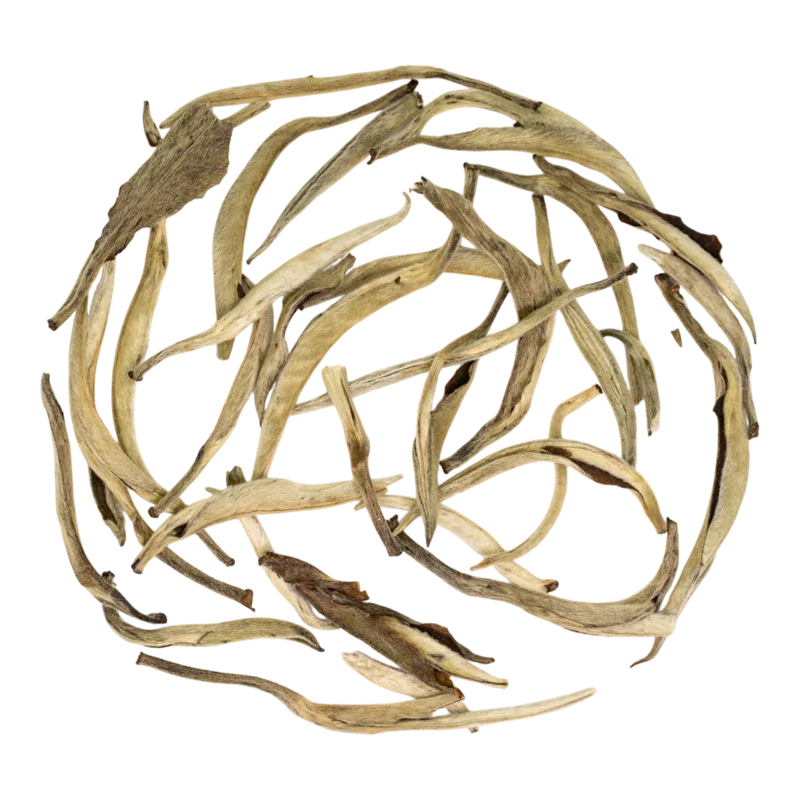
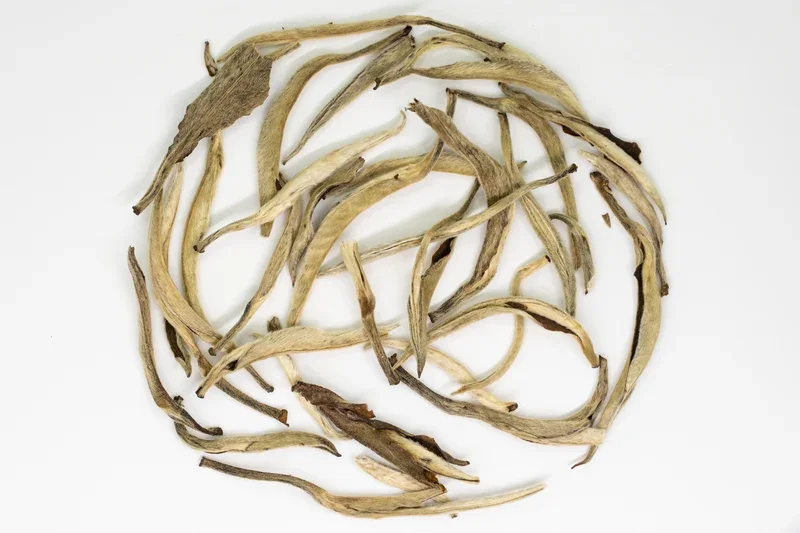
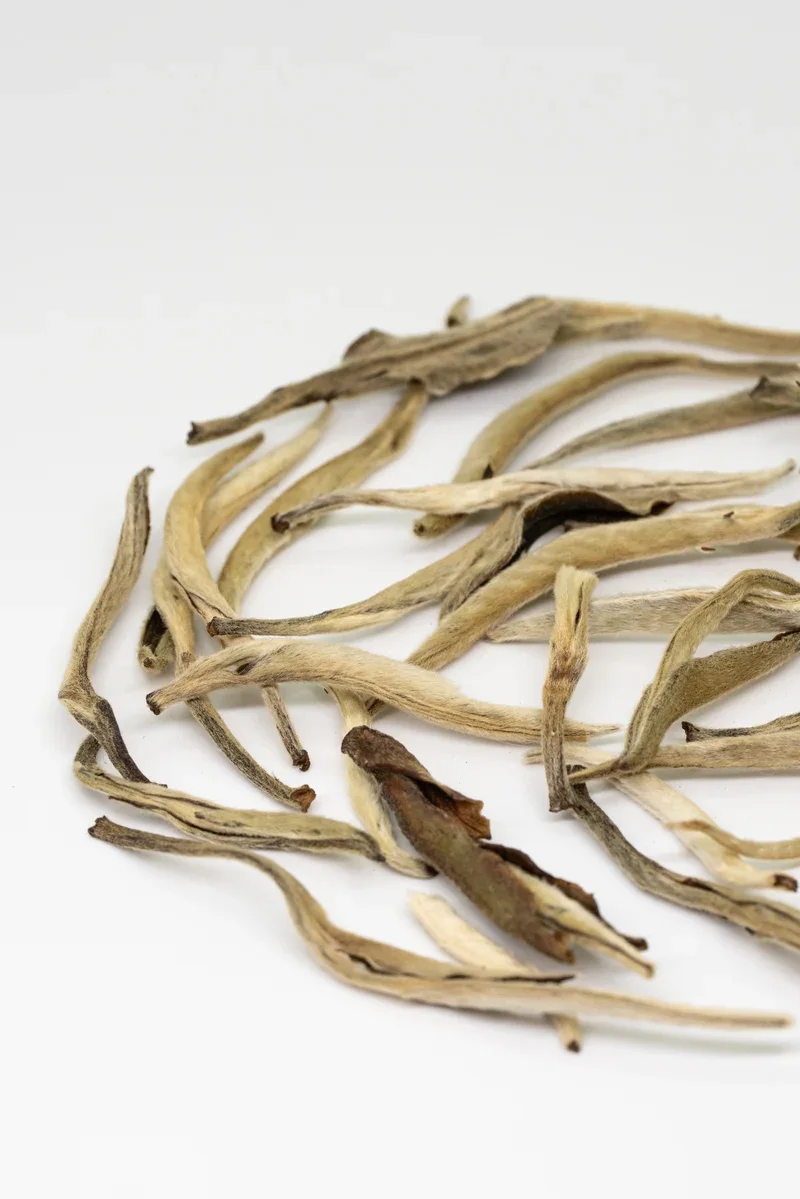
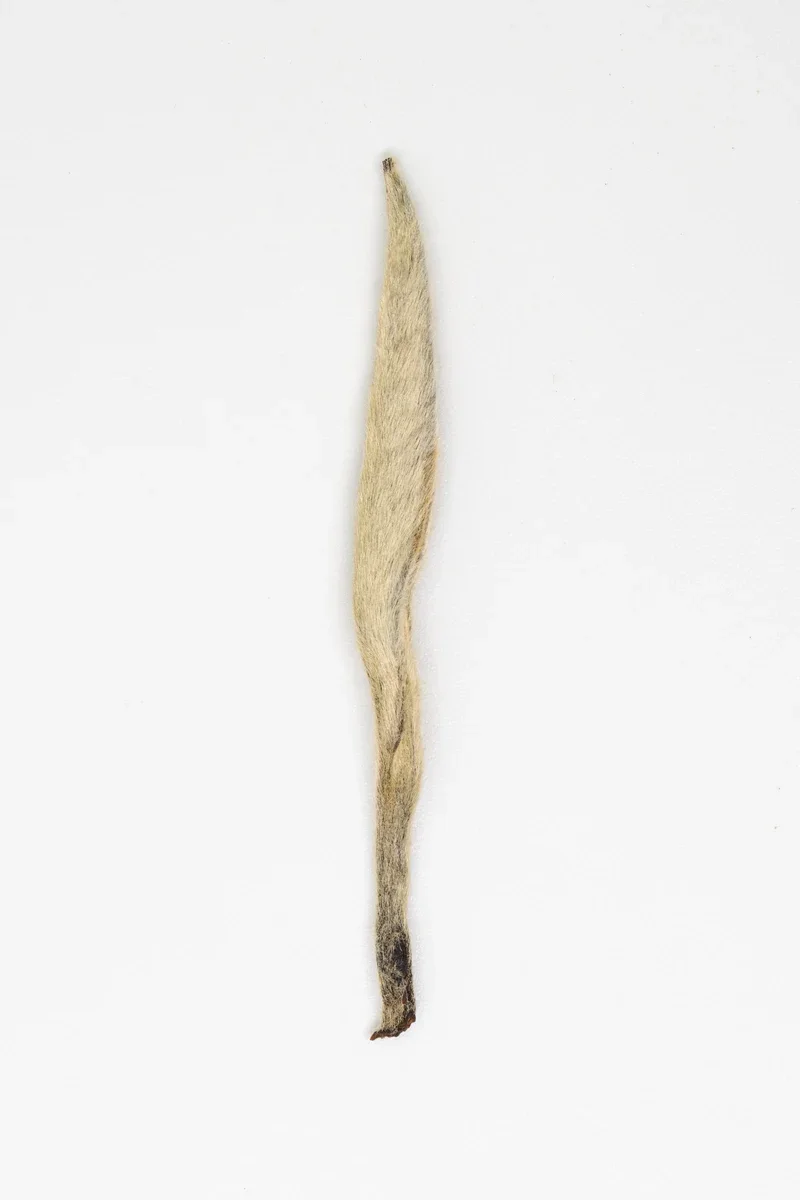
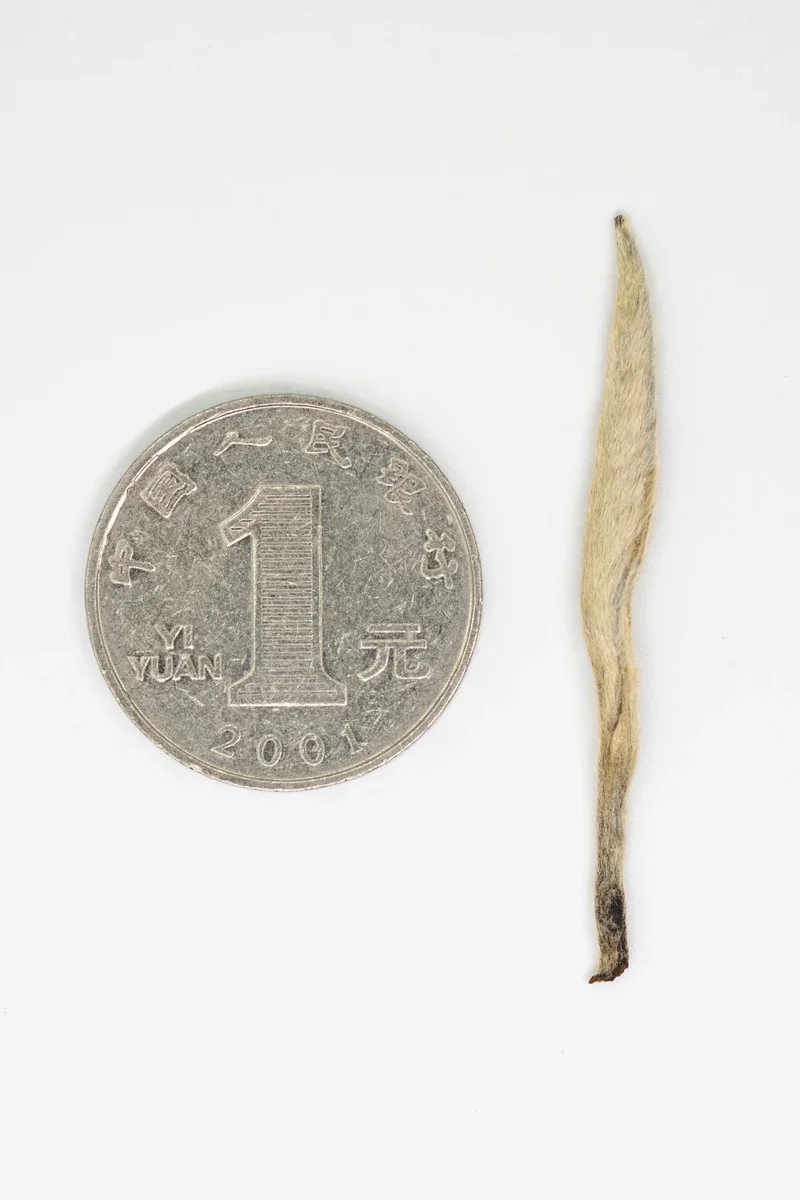
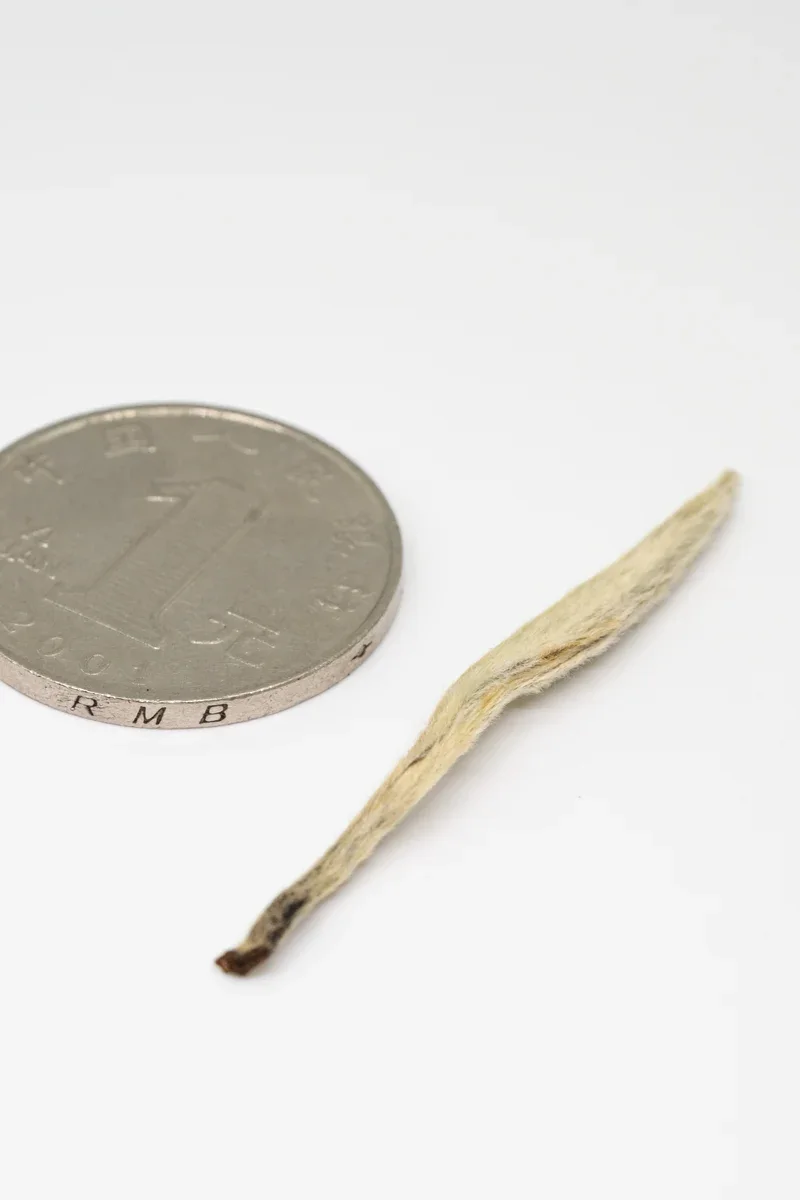
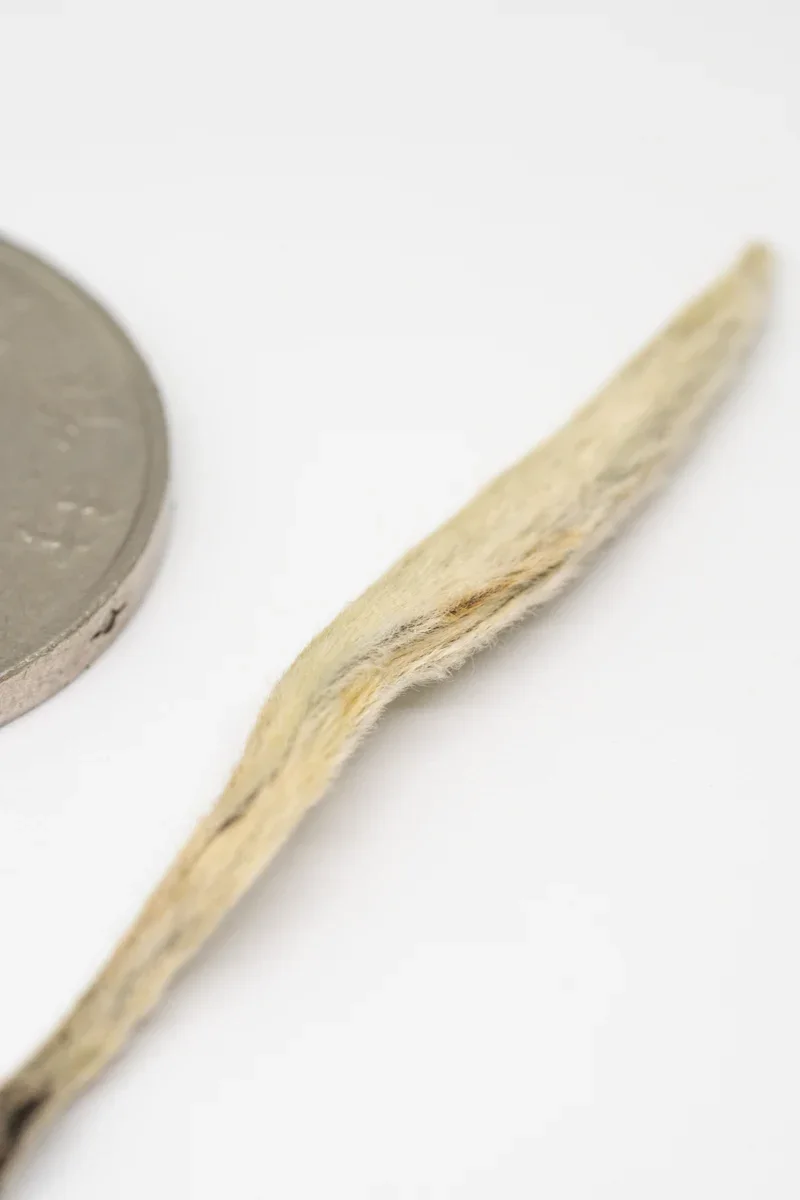
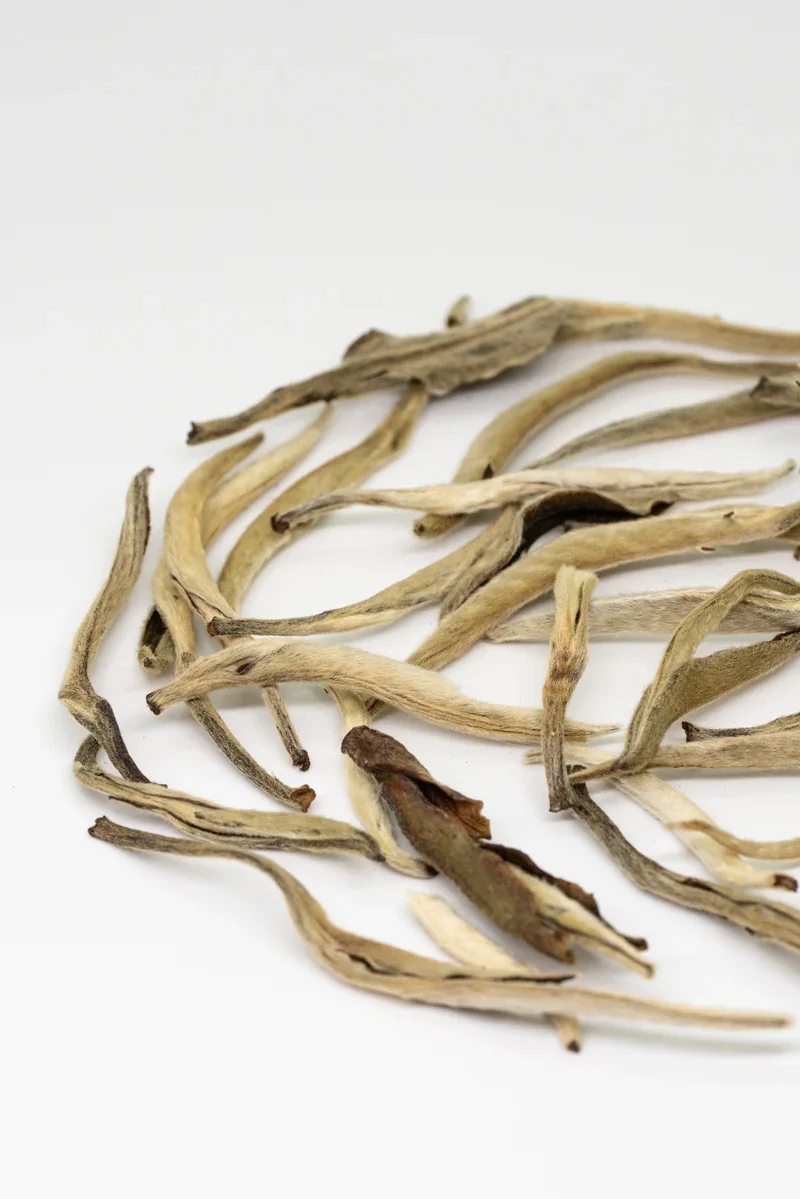
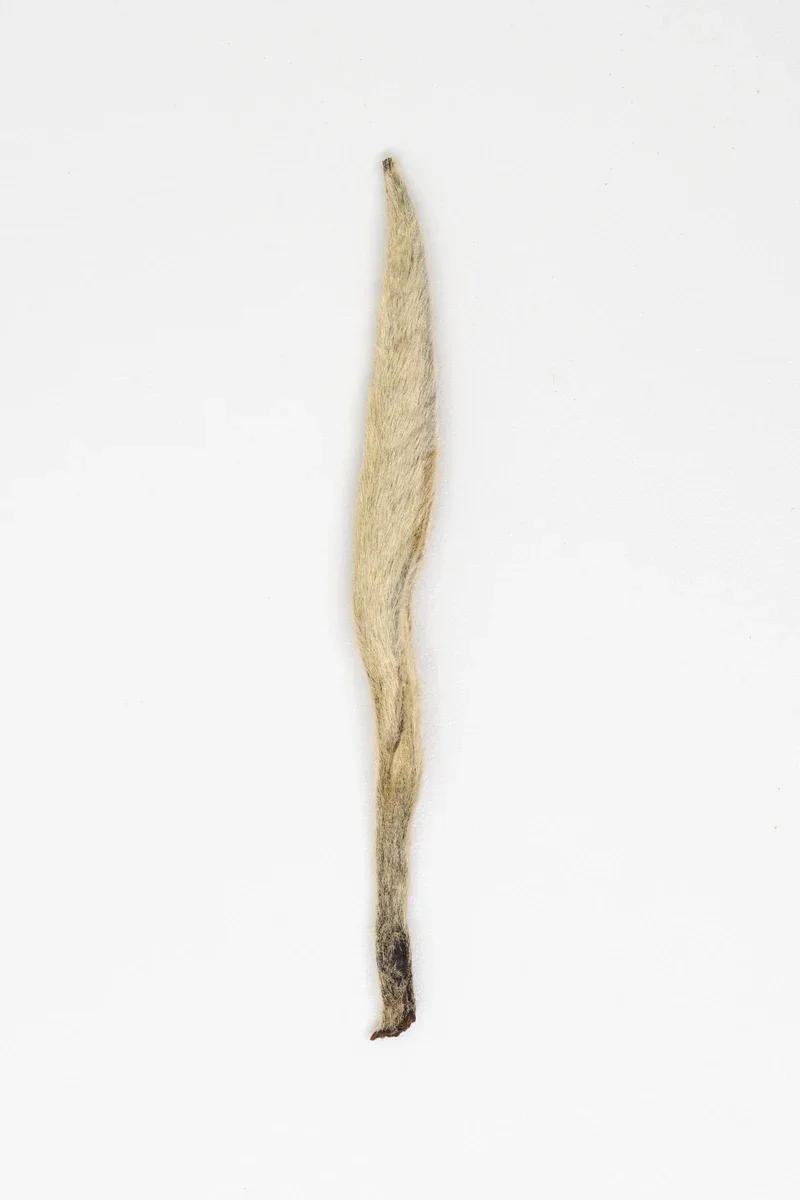
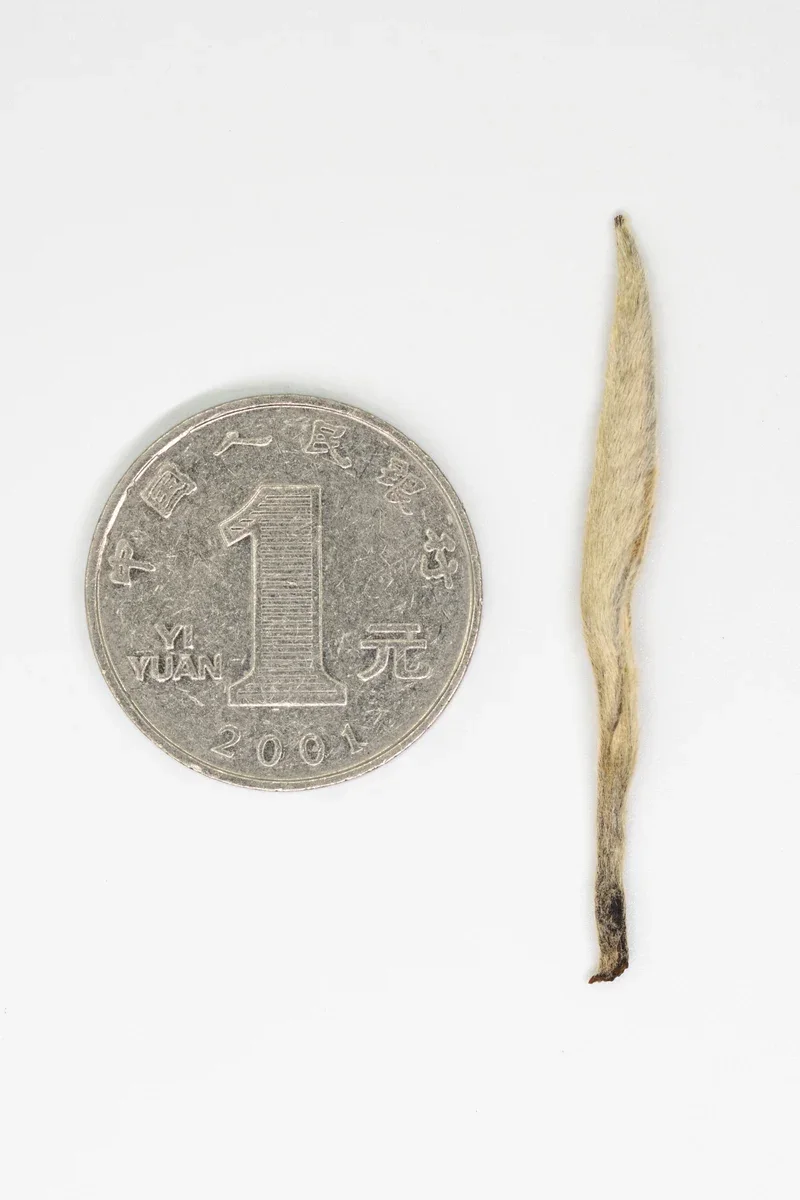
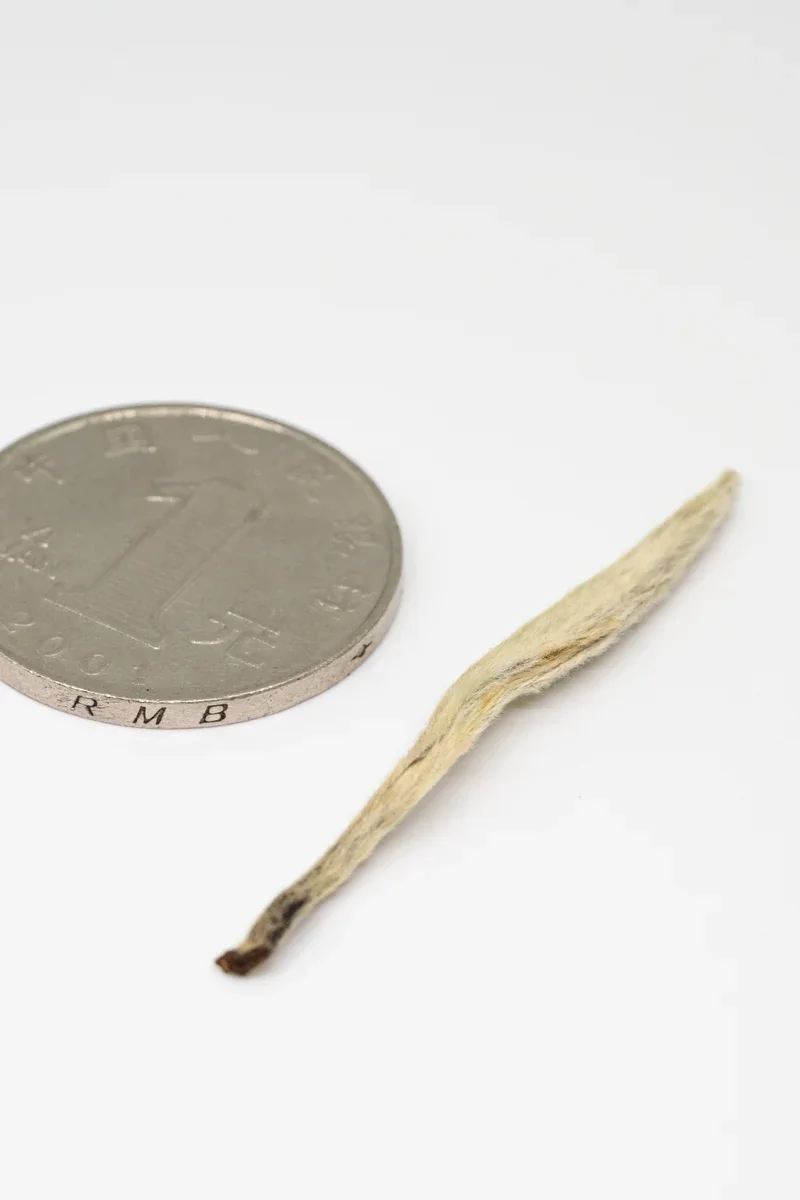
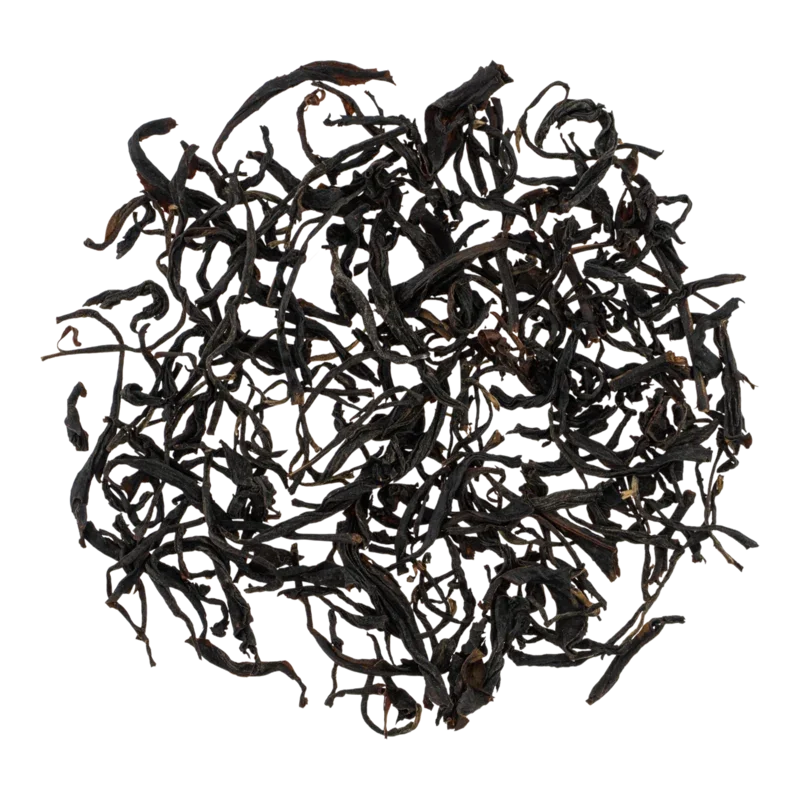
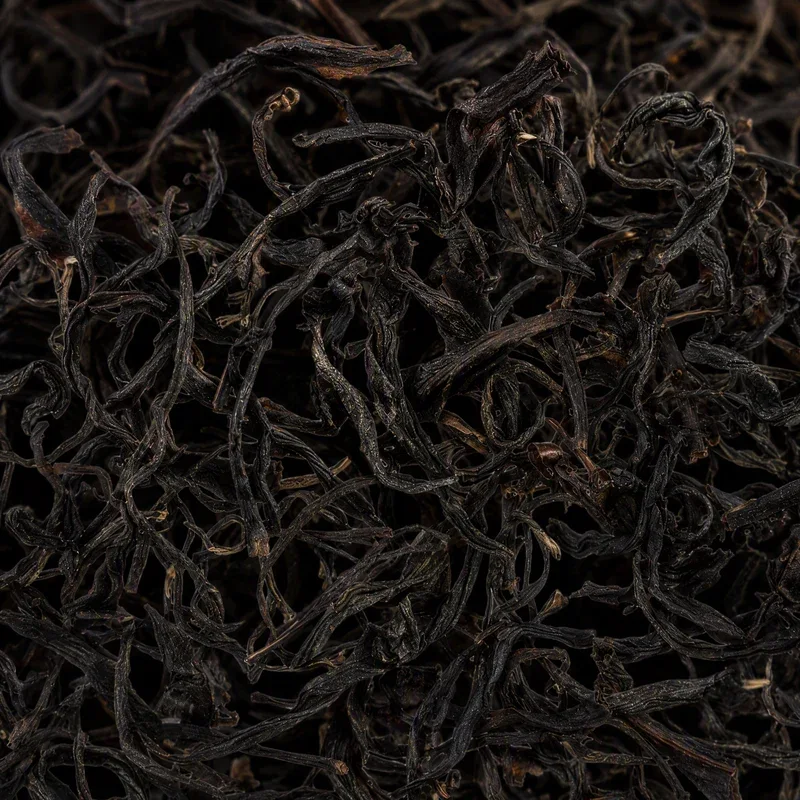
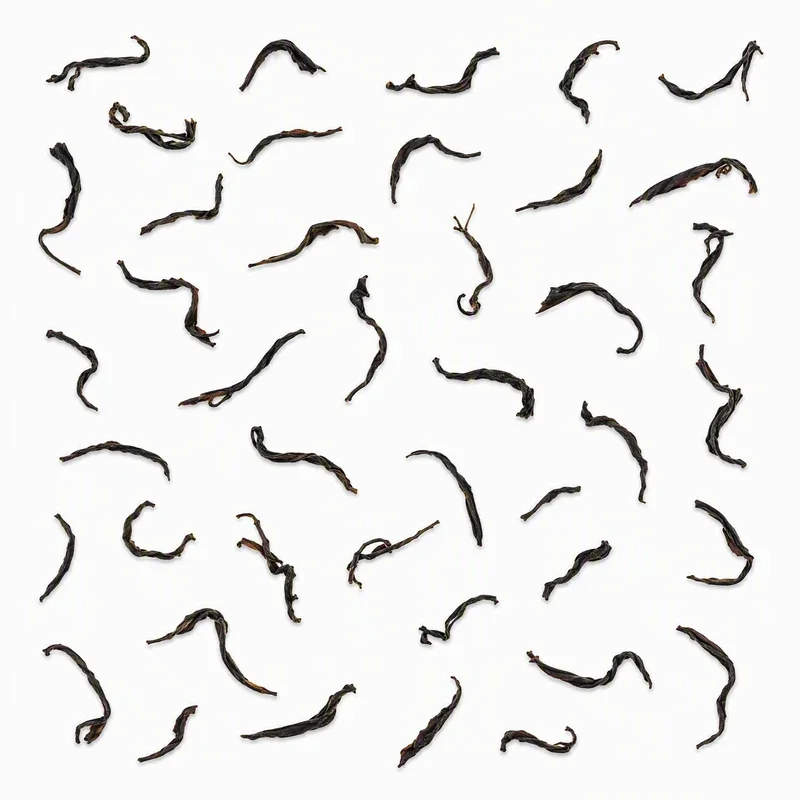
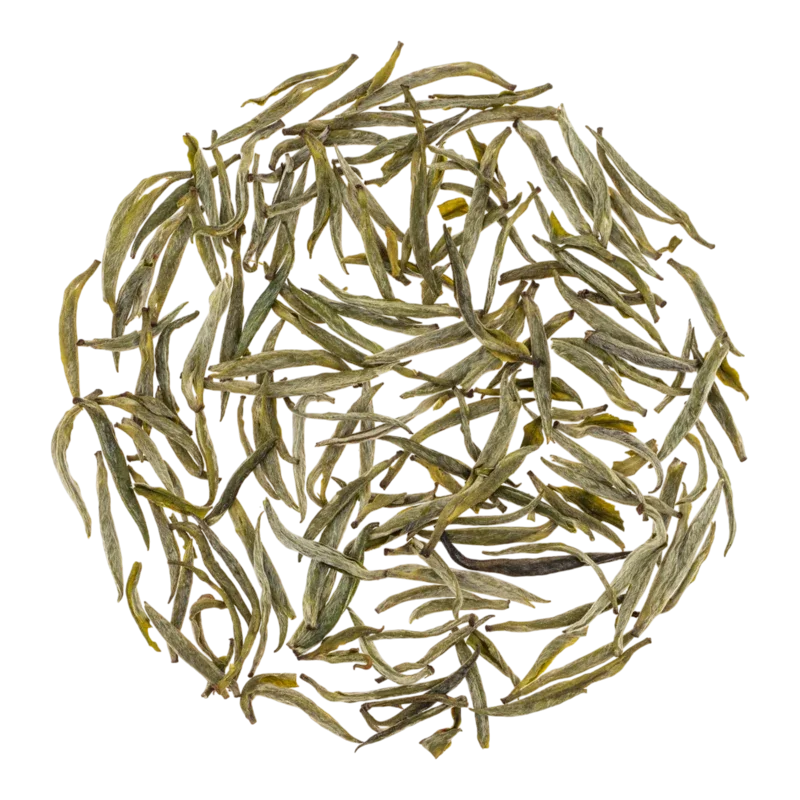
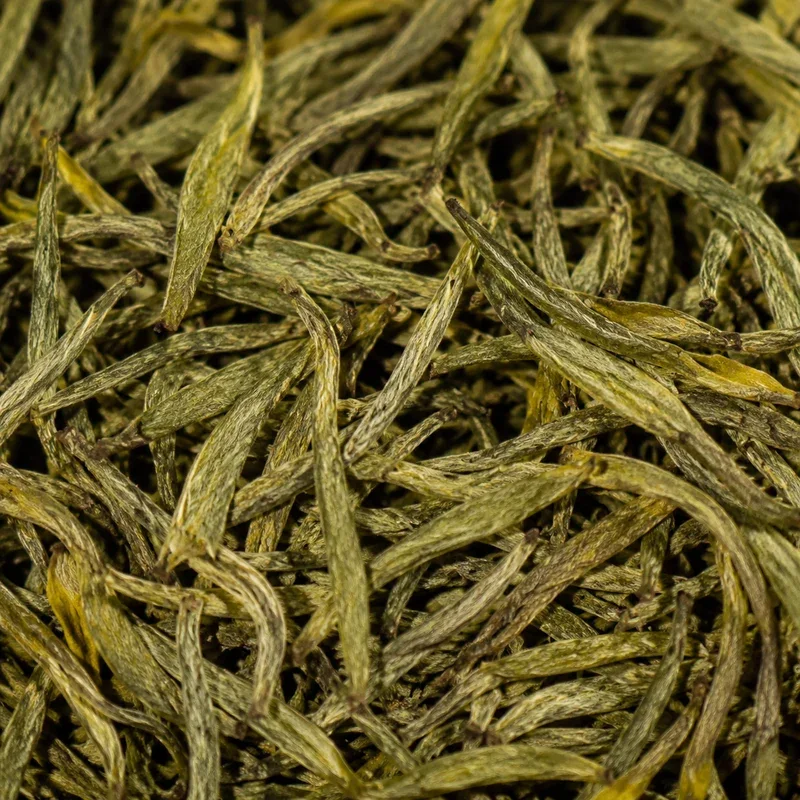
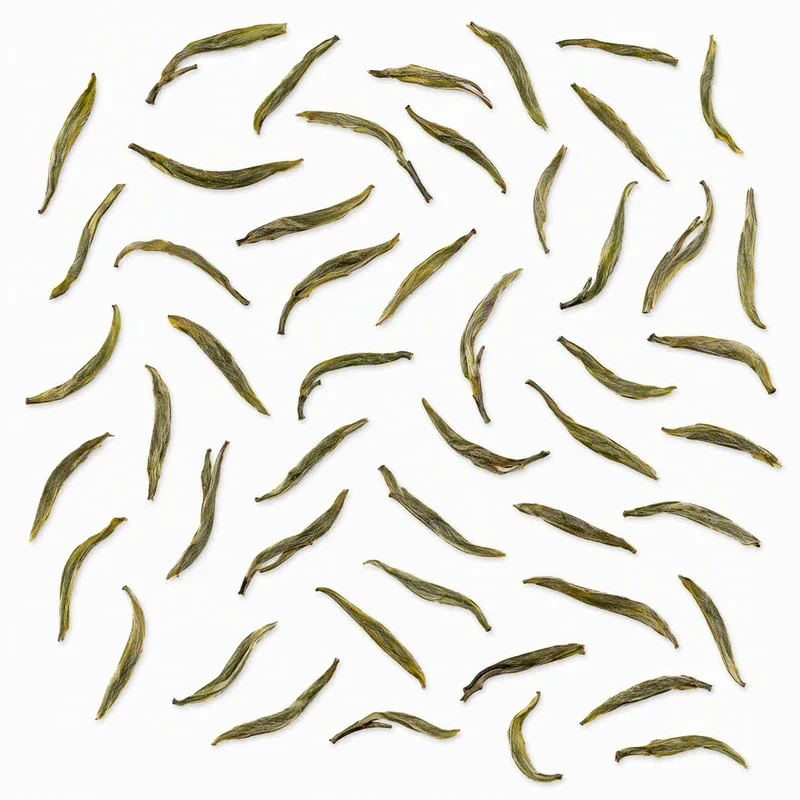
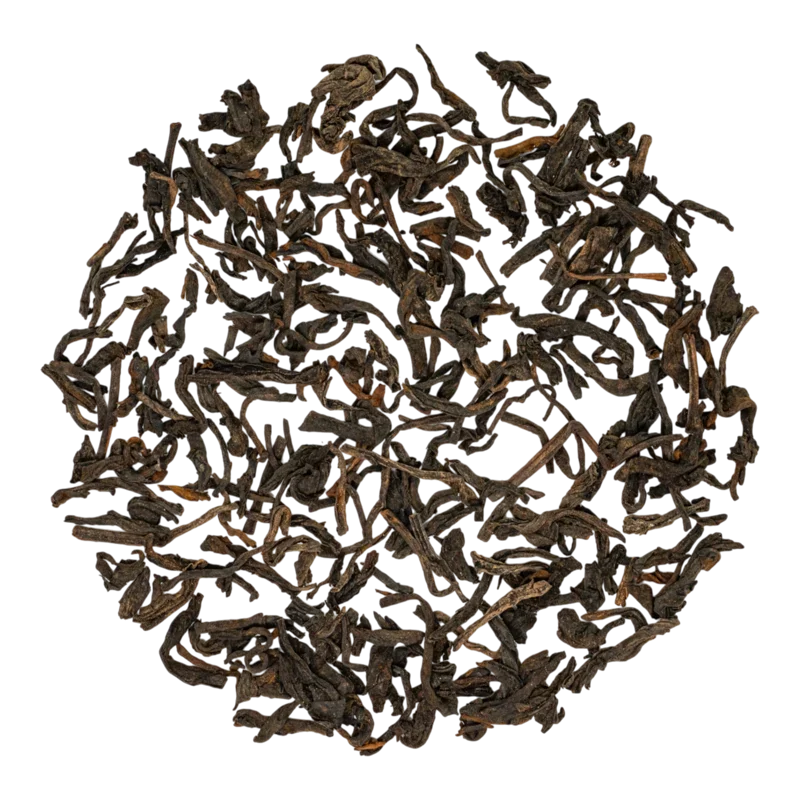
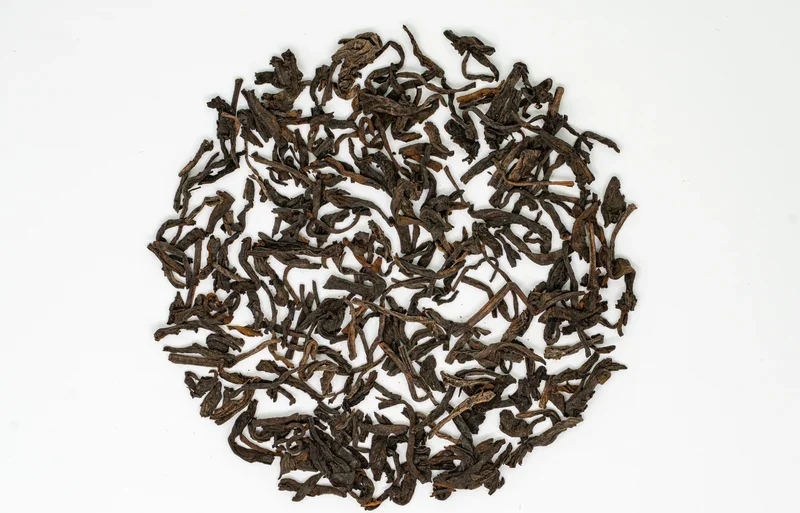
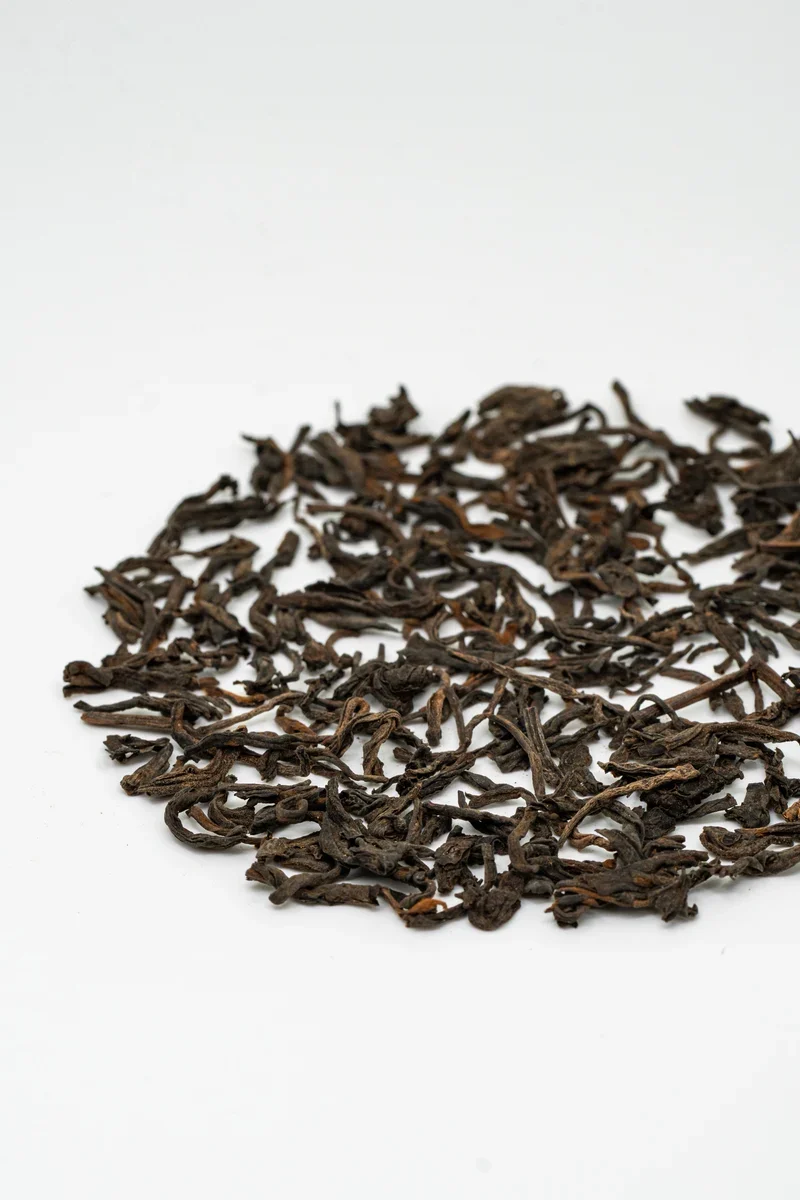
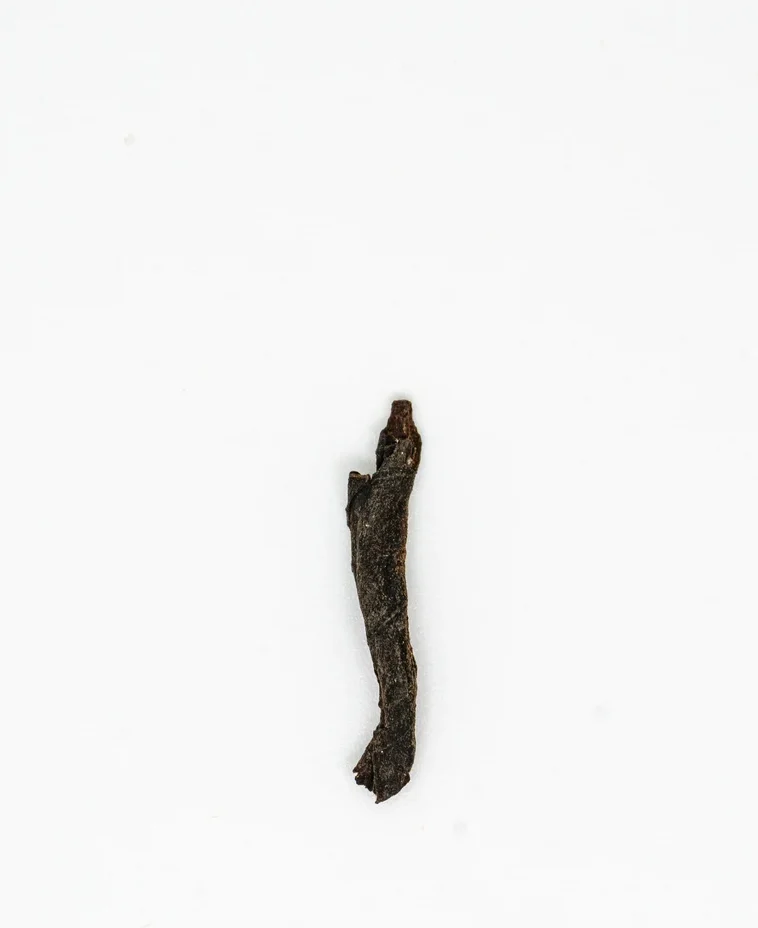
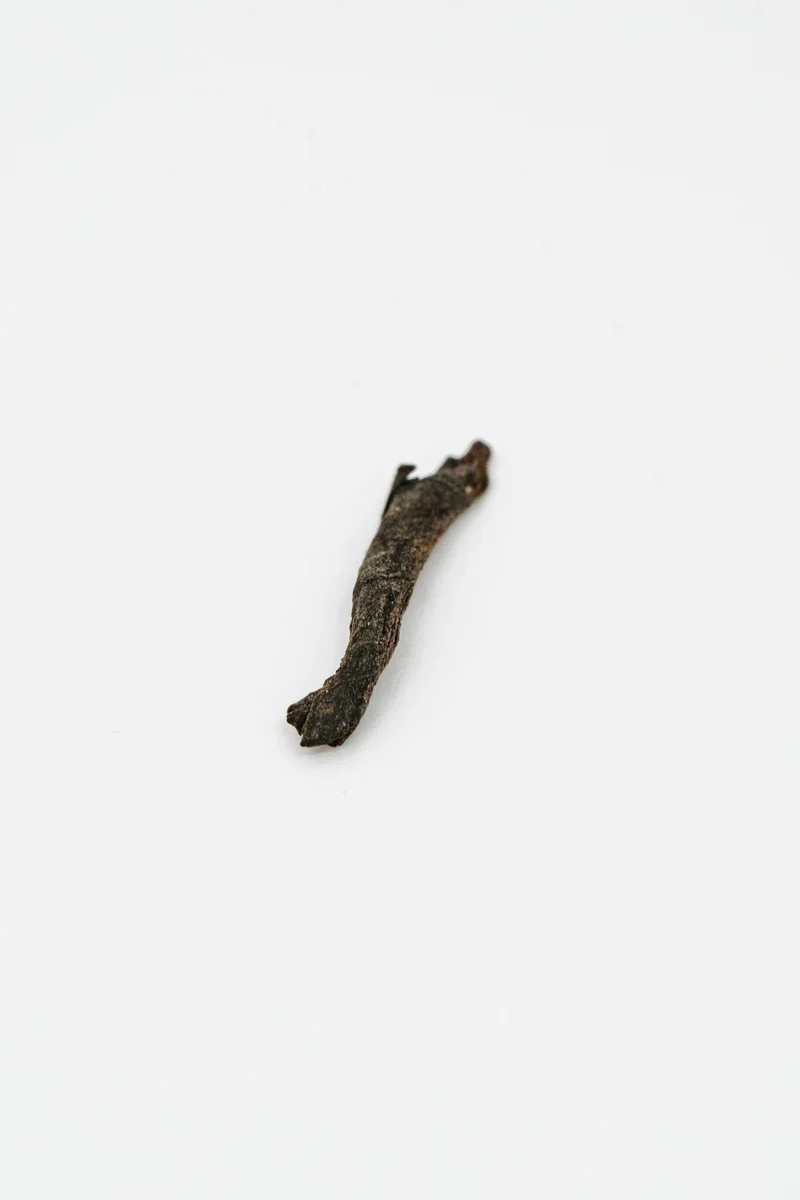
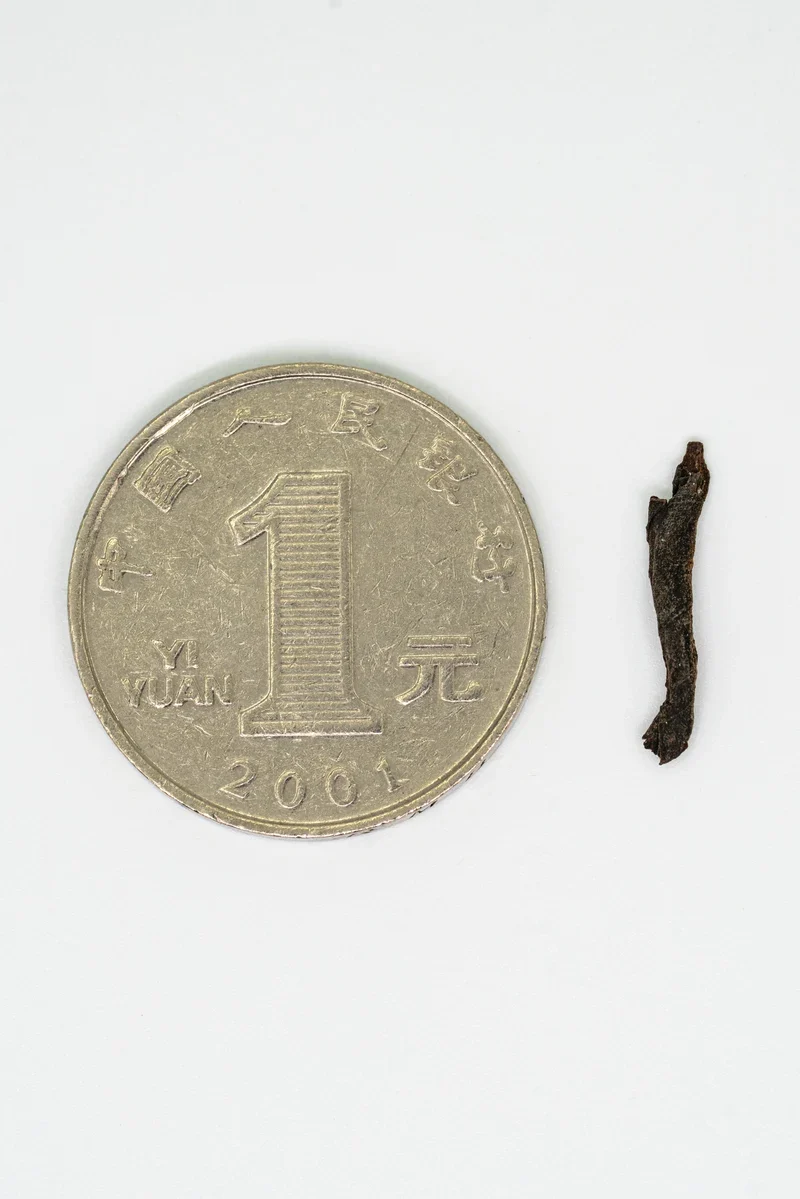
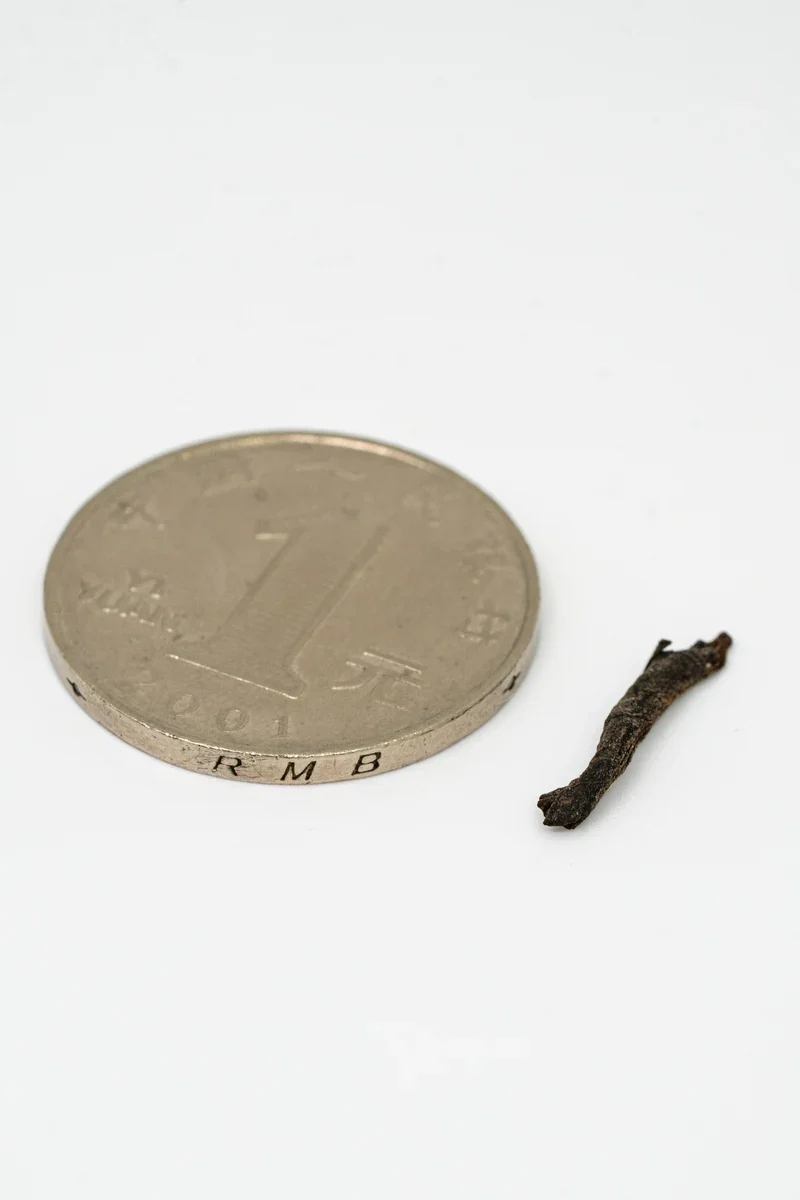
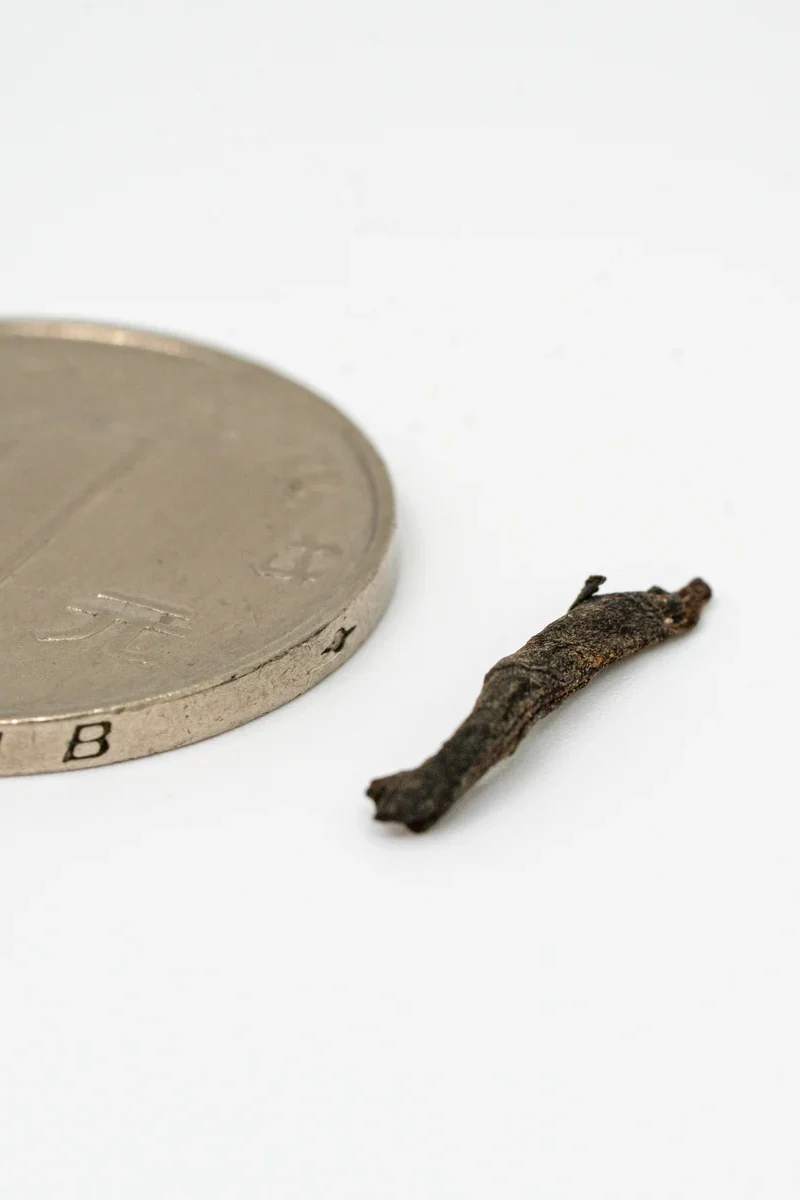
Dry Leaf Appearance: Conventional form — twisted strips (条索, tiáosuǒ), tightly compressed, strong. Color — black-brown (黑褐, hēi hè), with oily luster. Pressed tea — dense baskets, bricks, cakes, or nests. With prolonged aging, "golden flowers" (金花, jīnhuā) may appear on the surface — colonies of beneficial fungus Eurotium cristatum (冠突散囊菌, guàntū sàn náng jūn), visually appearing as small golden-yellow dots.
Dry Leaf Aroma: Deep, warm, woody-earthy, with characteristic aged notes (陈香, chénxiāng). In aged specimens, the famous betel nut aroma (槟榔香, bīnláng xiāng) appears — Liu Bao Cha's calling card, not found in any other tea. Also possible notes: woody aroma (木香, mùxiāng), "golden flowers" / mushroom aroma (菌花香, jūnhuā xiāng), medicinal aroma in very old teas (药香, yào xiāng), pine resin nuances (松烟香, sōngyān xiāng).
Liquor Aroma: Clean, aged (纯陈, chún chén). Warm, enveloping tones dominate: dried fruits, prunes, nuts, old wood, forest moss. In tea with "golden flowers" — subtle mushroom nuance. In old teas (30–50 years) the aroma becomes transparently sweet with distinct betel nut note.
Liquor Color: From dark amber to thick red-brown, in heavily aged specimens — almost black with ruby highlights. Transparent, clean, bright, with beautiful oily luster (红浓明亮, hóng nóng míng liàng).
Spent Leaves: Whole, resilient leaves that unfold after brewing. Color — from red-brown (红褐, hóng hè) to dark brown, almost black (黑褐, hēi hè). Texture — soft, elastic, without signs of decay or mold.
Taste: Full-bodied, rich, thick (醇厚, chúnhòu), oily-smooth (甘滑, gān huá), refreshing (爽口, shuǎng kǒu), with long and distinct returning sweetness (回甘, huí gān). In mature tea — pronounced betel nut taste (槟榔味, bīnláng wèi). Bitterness and astringency are minimized due to deep fermentation. Aged tea possesses round, silky, voluminous body. Notes: prunes, walnuts, earth, mushrooms, dried fruit sweetness, light minty coolness in aftertaste.
Alkaloids: Caffeine (咖啡碱, kāfēi jiǎn) — 2.9–4.3% (higher in modern technology tea). Theobromine, theophylline — in trace amounts. Caffeine content is relatively moderate for post-fermented teas.
Amino Acids: Total free amino acid content — about 2.2–2.6% (decreases 33–48% during wet piling). L-theanine is present but in smaller quantities than in green teas. Part of amino acids transform into volatile aromatic compounds, participating in characteristic aroma formation.
Key group of substances forming the "four perfections." Theabrownins (茶褐素, chá hèsù) — dominant pigment (up to 9–10% dry weight in modern Liu Bao), determining red-brown liquor color and oily texture. Theaflavin content (茶黄素, chá huángsù) — about 0.09–0.14%, thearubigins (茶红素, chá hóngsù) — 3.0–5.7%. The ratio of these pigments forms the characteristic palette of "red and thick" (红浓).
49 or more volatile components identified. In tea with betel nut aroma (槟榔香), aromatic compounds predominate: α-cedrol (α-雪松醇), α-terpineol (α-萜品醇), β-linalool (β-芳樟醇), trans-nerolidol (反-橙花叔醇), β-cedrene (β-雪松烯). In tea with aged aroma (陈香), alcohols and aldehydes predominate.
Water-soluble carbohydrate content is higher than in original maocha due to starch breakdown by "golden flower" enzymes. Eurotium cristatum fungi secrete amylase and oxidase, catalytically converting starch to monosaccharides — this enhances sweetness and "full-bodiedness" of tea.
Living microflora — integral part of tea. Main species: Aspergillus niger, Eurotium cristatum, Rhizopus spp. and others. Research by Hunan Agricultural University showed that the microbial community determines differences between main Liu Bao Cha aroma types.
Minerals: Potassium, magnesium, manganese, iron, fluorine, selenium — content determined by mineralized soils of the region, rich in phosphorus and iron.
Polyphenols: Total polyphenol content in finished Liu Bao Cha is significantly lower than in original maocha (12–38% reduction during wet piling). Catechins (EGCG, ECG, EGC, EC) intensively oxidize and polymerize, forming tea pigments. This transformation underlies taste mellowing and liquor color deepening.
Vitamins: C (in small amounts), B group, E, K.
Main traditional property of Liu Bao Cha, favorably distinguishing it among other teas. This quality made it an indispensable beverage in the tropical climate of Southeast Asia and humid regions of Southern China. According to traditional Chinese medicine, tea possesses pronounced "warm" character (温性茶, wēn xìng chá).
Stimulates gastrointestinal tract function, promotes digestion of fatty and heavy foods, relieves bloating and heartburn. Lipolytic enzyme content (脂肪分解酵素) in Liu Bao Cha is higher than in most other teas.
Liu Bao Cha theabrownins demonstrate significant free radical scavenging ability (DPPH, hydroxyl, superoxide) — confirmed by research from Guangxi University and other institutions.
Promotes triglyceride breakdown and "bad" cholesterol (LDL) reduction. Studies showed Liu Bao Cha has the most pronounced protective action against non-alcoholic fatty liver disease compared to other dark teas.
Several studies indicate hypoglycemic potential.
Mentioned in modern Chinese sources as one of Liu Bao Cha's specific properties.
Liver protection from damage related to oxidative stress and metabolic loads.
Intestinal microflora regulation and overall body resistance enhancement.
Both are post-fermented teas with wo dui. Differences: Shu Pu'er — Yunnan, large-leaf trees var. assamica, hot wo dui; Liu Bao — Guangxi, medium- and large-leaf varieties, cold wo dui. Liu Bao is typically lighter in body, with more distinct sweetness and coolness, characteristic betel aroma. Shu Pu'er — more "earthy," with notes of decaying forest.
Hunan. Key difference of Fu Zhuan — abundant presence of "golden flowers" as mandatory element of technology. Taste — more mushroomy, nutty. Liu Bao may have "golden flowers," but this is not mandatory; its taste — more fruity, with betel accent.
Hunan. Giant "logs" weighing about 36 kg. More woody-spicy, astringent. Liu Bao — softer and sweeter, with more pronounced "roundness" of taste.
5 g tea per 500 ml water. Bring to boil and simmer on low heat 5–10 minutes. Allow to cool slightly — when cooling, the liquor acquires special viscosity and oiliness (稠滑, chóu huá). Boiling is especially good for aged Liu Bao.
Tea Amount: 5–7 g per 100–150 ml water (gongfu brewing method); 5 g per 500 ml water (for boiling).
Teaware: Optimal — Yíxīng clay teapot (紫砂壶, zǐshā hú), excellently retaining heat and "remembering" tea. Also suitable: porcelain or ceramic gaiwan (盖碗, gàiwǎn). For boiling — glass or ceramic teapot.
Water Temperature: 95–100°C (boiling water). Liu Bao Cha is a "heat-loving" tea that fully reveals itself only at maximum temperature.
Enemies: Excessive humidity (leads to pathogenic mold appearance); direct sunlight; foreign sharp odors (spices, perfumes, household chemicals); complete airtightness.
Dark, dry, well-ventilated, without foreign odors. Ideal temperature — 20–28°C, relative humidity — 60–70%.
Traditional bamboo baskets (竹篓, zhú lǒu) are best, providing "breathing" environment for continuing post-fermentation. Also acceptable: unglazed ceramic or clay vessels (陶瓮, táo wèng); paper and cotton bags from natural materials. Absolutely not recommended — airtight packaging in plastic, foil, or metal cans — tea needs air access for continuing microbiological processes.
Liu Bao Cha must not be stored in refrigerator — low temperature and condensation are destructive to microflora and post-fermentation processes.
Without the wo dui stage. Liquor — lighter (orange-red), taste — more lively, with light astringency, pronounced acidity, floral-fruity nuances. Ferments naturally during storage. Standard: DBS45/057-2018.
With mandatory wo dui. Liquor — reddish-brown, thick. Taste — softer, "ripe," with emphasis on smoothness and sweetness. Standard: GB/T 32719.4-2016.
From tender spring buds. Most delicate, sweet.
One bud and three-four leaves. Balanced everyday tea.
Blend of tender and mature leaves. Broad, "democratic" taste.
Coarse leaves from autumn harvest after frosts. Powerful, deep, with pronounced sweetness and "autumn" notes.
Traditional pressing in bamboo baskets of 25–50 kg — historically dominant form of Liu Bao.
Bricks (砖茶), cakes (饼茶), nests (沱茶), cylinders (圆柱茶).
Up to 3 years. More astringent, with pronounced fermentative aroma.
From 3 years. Taste softens, dried fruit and nutty tones appear.
From 10–15 years. Betel palm aroma, medicinal notes, silky texture.
Key factor. Young Liu Bao (1–3 years) — most affordable. Tea with 10–20 years aging is significantly more expensive. Vintage specimens (30–50 years and older) — collectibles.
Tea from buds, high-altitude plantations, old trees — more expensive.
Traditional technology tea (农家茶) from Liubao core region — generally more expensive than factory tea.
Historical brands — "Three Cranes" (三鹤牌, Sānhè Pái, Wuzhou Tea Factory), "Zhongcha" (中茶牌, Zhōngchá Pái) — maintain premium prices.
Abundant "golden flower" colonies increase cost.
Dry leaf should be tightly twisted, with oily luster, without dust, broken particles, or foreign inclusions. Presence of "golden flowers" is acceptable and valuable, but don't confuse them with ordinary white or black mold — the latter indicates spoilage.
Characteristic clean aged aroma, without mustiness, sourness, or chemical notes. Artificial flavoring reveals itself through sharp, "flat" smell lacking depth.
Color should be transparent, bright, red-brown. Cloudy, dull liquor — sign of technology or storage violations. Taste — smooth, without bitterness; in aged tea — pronounced smoothness and sweetness.
Counterfeiting aged teas is the most profitable type of fraud. Too low price for "30-year-old" tea — almost certainly fake.
No reviews yet. Tell us what you think of this tea.
Rate this tea and share your impressions. We review each submission before publishing it.