Brewing
Gongfu brewing
- Water temperature
- 100 °C
- Tea amount
- 6 g
- Water volume
- 100 ml
- First steep
- 10 s
- Time added per infusion
- 5 s
- Infusions
- 10

kāng zhuān
Choose a brewing method. Start with the recommended quantities and time, then adjust to taste.
Brewing
Brewing
Taste
Tea encyclopedia
Alt Names: Sìchuān Cāng Chá (四川藏茶) — general name for Sichuan Tibetan teas; Nánlù Biān Chá (南路边茶) — trade designation by delivery route.
Alt Names: Sìchuān Cāng Chá (四川藏茶) — general name for Sichuan Tibetan teas; Nánlù Biān Chá (南路边茶) — trade designation by delivery route.
Category: Border tea (边茶, Biān Chá) / Sìchuān Tibetan tea (四川藏茶, Sìchuān Cáng Chá). Belongs to the "Southern Route" line — teas transported from Sìchuān to Tibet through the Kāngdìng pass (康定, Kāngdìng).
Coordinates: East longitude 102°–104°, North latitude 29°–30°.
Origin: China, Sìchuān Province (四川, Sìchuān), Ya'an City (雅安市, Yǎ'ān Shì). Historically also produced in Yíbīn (宜宾), Lèshān (乐山), and Yíngjīng County (荥经县, Yíngjīng Xiàn).
Type: Post-fermented tea, belongs to the dark tea (黑茶, Hēichá) category. It is a compressed tea (紧压茶, jǐnyā chá) in brick form.
The saying "宁可三日无粮,不可一日无茶" became so rooted in Tibetan culture that it became part of official documents: in the 1950s, supplying Tibet with tea was a priority state task on par with food deliveries.
Before automobile roads appeared, tea bricks from Ya'an to Tibet were delivered by foot porters carrying loads up to 150 kg (!) on bamboo frames through mountain passes over 4000 m high. One-way journey took about 3 months. Surviving photographs of these people are among the most impressive testimonies to Tea Horse Road history.
In Tang and Song eras, Kang Zhuan (and its predecessors) actually served as currency in dealings with Tibetans. One horse cost a certain number of tea bricks — this ratio was fixed by the state.
Under favorable wet piling (渥堆) conditions, colonies of Eurotium cristatum form on the surface and inside bricks — those same "Golden Flowers" for which Fu Zhuan Cha is famous. Their presence in Kang Zhuan is a pleasant bonus, increasing tea value.
Although Kang Zhuan is traditionally pressed into bricks, today other forms are found — cakes (饼茶), "nests" (沱茶), and even loose versions.
Cultural Significance: Kang Zhuan is not merely tea but an instrument of geopolitics and intercultural communication. For centuries, it was the only "currency" that Tibetans accepted in exchange for war horses. Control over tea trade allowed China's central authorities to maintain relations with Tibet. For Tibetans, Kàng Zhuān is the basis of butter tea (酥油茶, sūyóu chá) — salted tea with yak butter, drunk up to 60 cups daily and without which the daily life of Tibetan herders is unthinkable.
Tea-horse trade (茶马互市, chámǎ hùshì) between China and Tibet originated in the Tang era. Already then, the first batches of compressed tea were sent from Sichuan, exchanged for Tibetan horses. Ya'an became one of the key production centers.
In Yazhou (雅州, historical name of Ya'an), the Tea-Horse Trade Administration (茶马司, Chámǎ Sī) was established, exercising state control over border tea production and sales. The prototype of Kang Zhuan — "Yao Zhuan" (芽砖, "bud brick") — became a strategic commodity providing the Song Empire with cavalry horses.
During the reign of Emperor Qiánlóng (乾隆, Qiánlóng), the tea received its current name — "Kang Zhuan," literally meaning "brick for Kang" (Kang being short for Kangding, the main transit point on the border with Tibet). During this period, Kàng Zhuān was included in the registry of imperial tribute teas (贡茶, gòng chá) and was massively shipped via the Tea Horse Road to Tibet, Qinghai, and Gansu.
In the 1950s, the Ya'an State Tea Factory (雅安茶厂) standardized Kang Zhuan production technology. In 1984, production geography expanded — besides Sichuan, similar tea began to be produced in Guizhou and Yunnan. In the 2010s, Kāng Zhuān received protection as a product with geographical indication (国家地理标志产品), and annual production reached approximately 10,000 tons.
Cultivar: Local Sichuan medium-leaf and small-leaf group varieties (四川中小叶群体种, Sìchuān zhōng-xiǎo yè qúntǐ zhǒng) — Camellia sinensis var. sinensis, distinguished by high frost resistance, important for mountainous western Sichuan. Large-leaf varieties of Yunnan origin (Camellia sinensis var. assamica), introduced to the region later, are also used.
Picking: Predominantly summer and autumn, when leaves reach full maturity. For higher grades (Jin Jian), spring harvest is possible.
Pluck Standard: One bud with two to four leaves (一芽二叶至一芽四叶). Stem content (茶梗) — no more than 8% (for standard Kang Zhuan; for special grade, stem length ≤ 3 cm). Unlike elite green or red teas (black tea), Kang Zhuan deliberately includes mature leaves and some stems — these provide resistance to repeated boiling and contain microelements critical for nomads' diet.
Raw Material: Leaves must be healthy, without damage; moderate coarseness is acceptable. Raw material is distributed into four traditional categories: Máo Jiān (毛尖, finest), Yá Xī (芽细, "thin buds"), Kang Zhuan proper (mixture of 4th and 5th grades), and Jīn Jiān (金尖, "golden tips" — coarse material for the most mass-market product).
Altitude: 600–1500 meters above sea level. Best quality comes from plantations at altitude ≥ 600 m, particularly the ancient tea gardens of Yíngjīng and Yǔchéng district (雨城区).
Climate: Subtropical humid, with mild winters and cool summers. Average annual temperature 15–18°C. Frequent fogs diffuse sunlight, providing natural shading conditions.
Soil: Slightly acidic yellow-brown mountain soils, organic matter content ≥ 1.5%. Rich in minerals, including selenium and zinc.
Topography: Western edge of the Sichuan Basin, transition from hilly foothills to the Héngduàn mountain ranges (横断山脉), preceding the Tibetan Plateau.
High-temperature pan-firing to stop enzymatic processes and fix the initial chemical composition of the leaf.
Mechanical destruction of cellular structure to release juices and shape the leaves.
Central stage. Tea leaves are arranged in large piles and aged for approximately 45 days. In the warm and humid environment, microorganisms activate — mold fungi and bacteria — carrying out deep biotransformation of polyphenols. During this period, "Golden Flowers" (金花) may develop — colonies of Eurotium cristatum, forming characteristic fungal aroma (菌花香) and giving the tea additional smoothness.
Fermented material is sorted by size and quality, then blended to achieve standard flavor profile.
Material is treated with steam to soften leaves and prepare for pressing.
Forming into standard bricks with rounded corners. Pressing density — 0.9–1.1 g/cm³, ensuring slow and even post-fermentation during storage.
Traditional method — drying in bamboo baskets over smoldering charcoal (竹笼炭烘); alternatively — air drying.
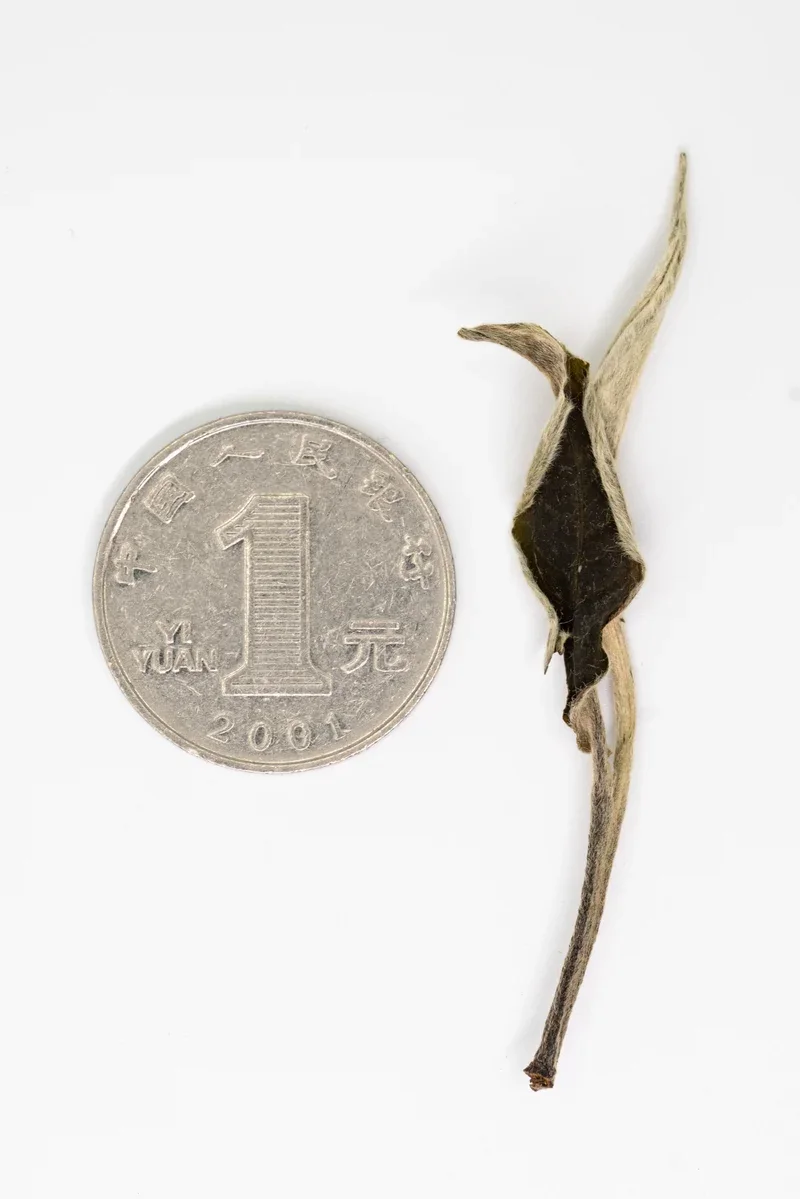
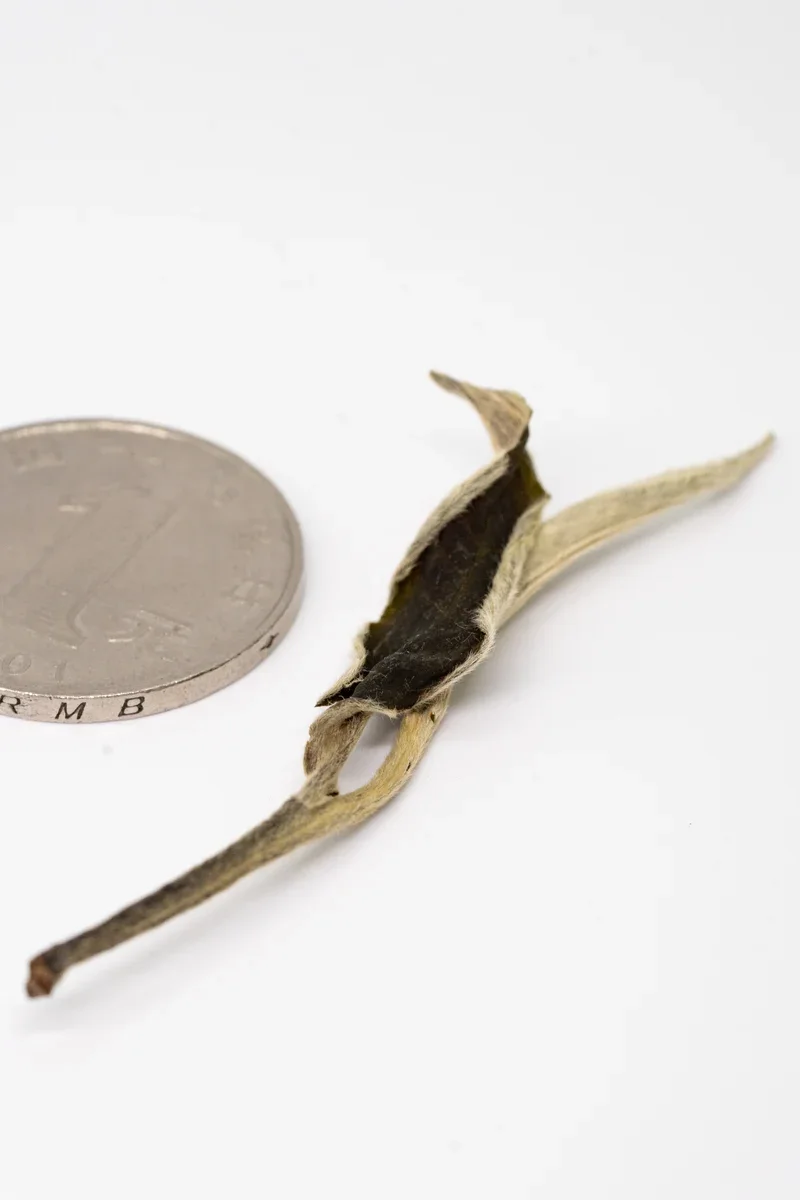
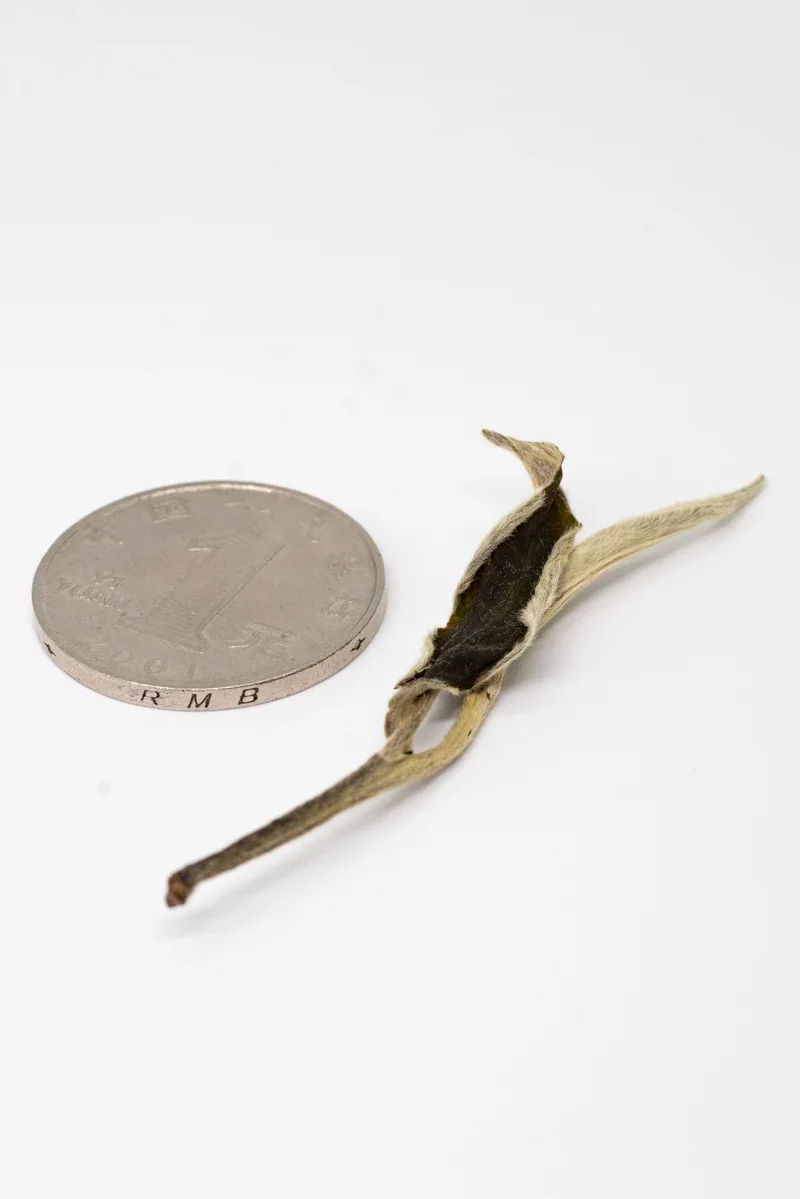
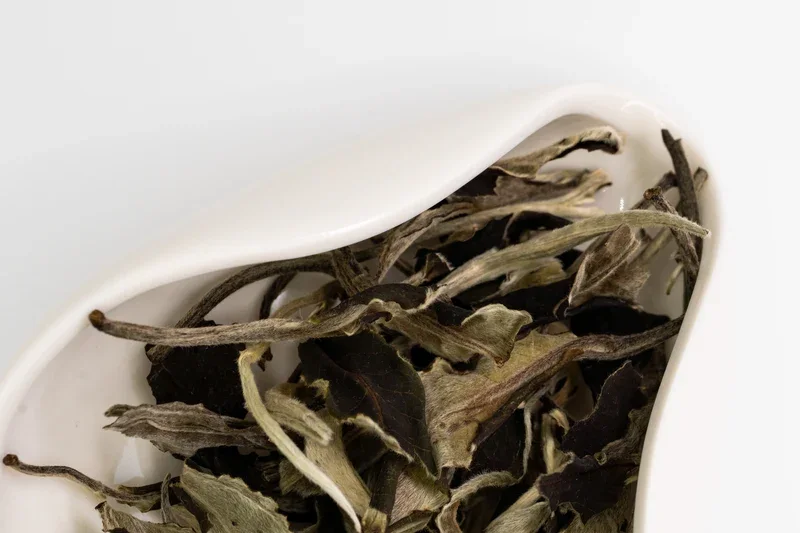
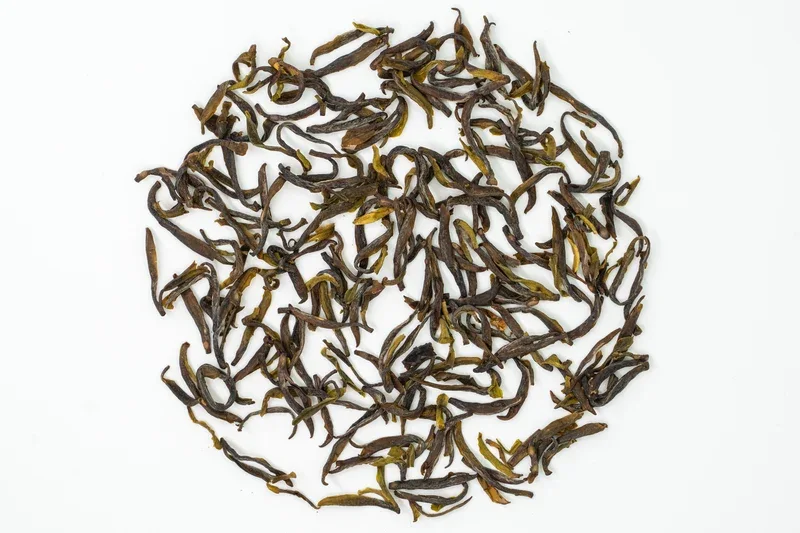
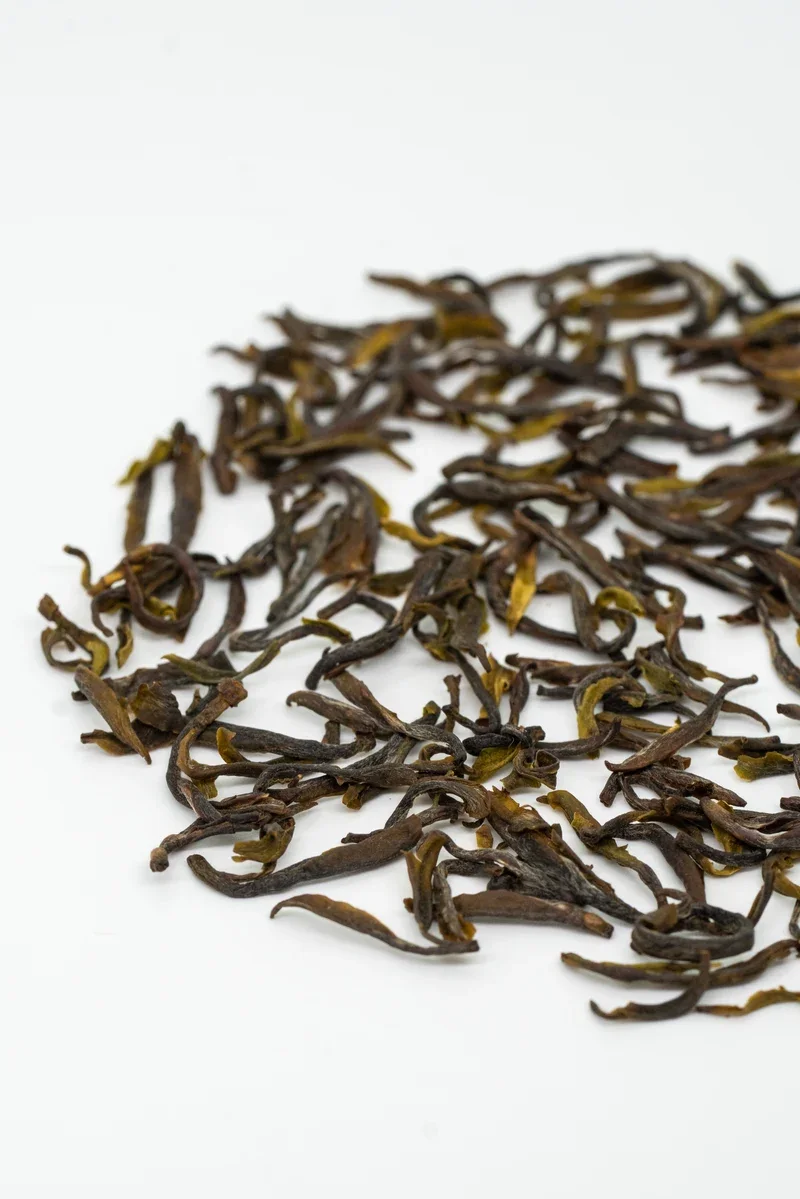
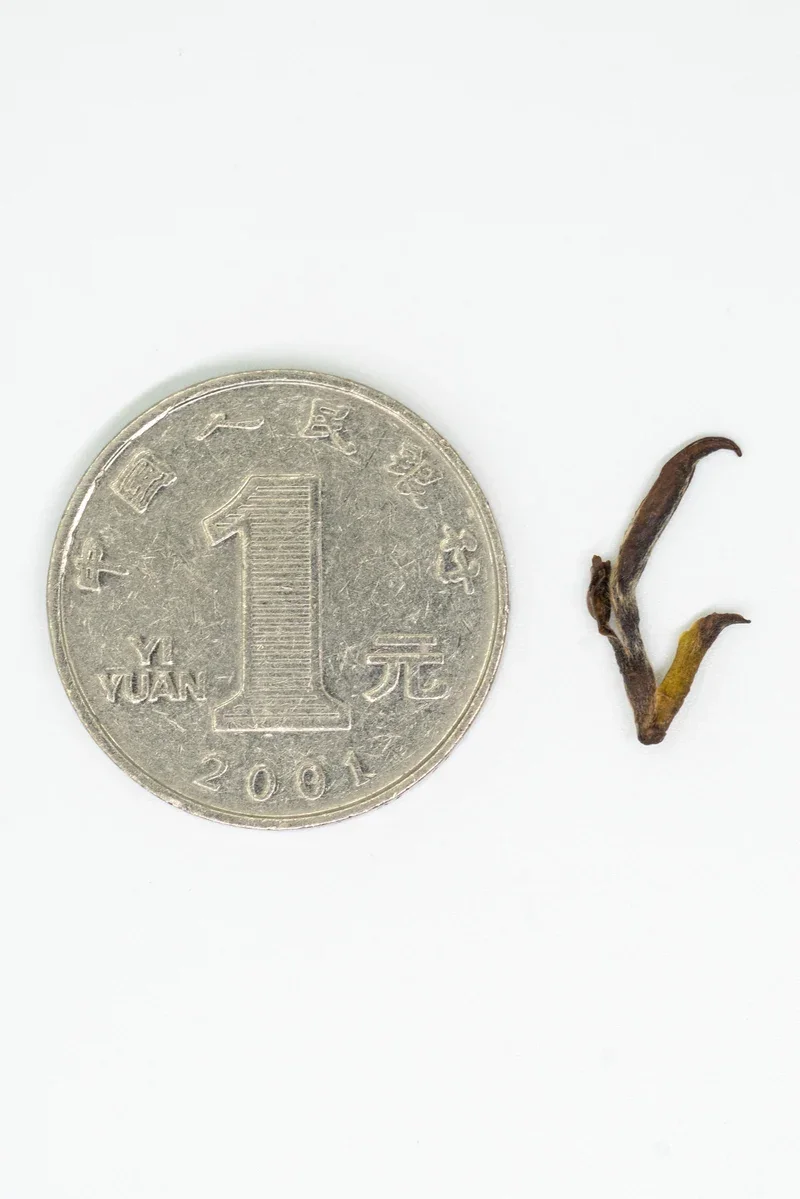
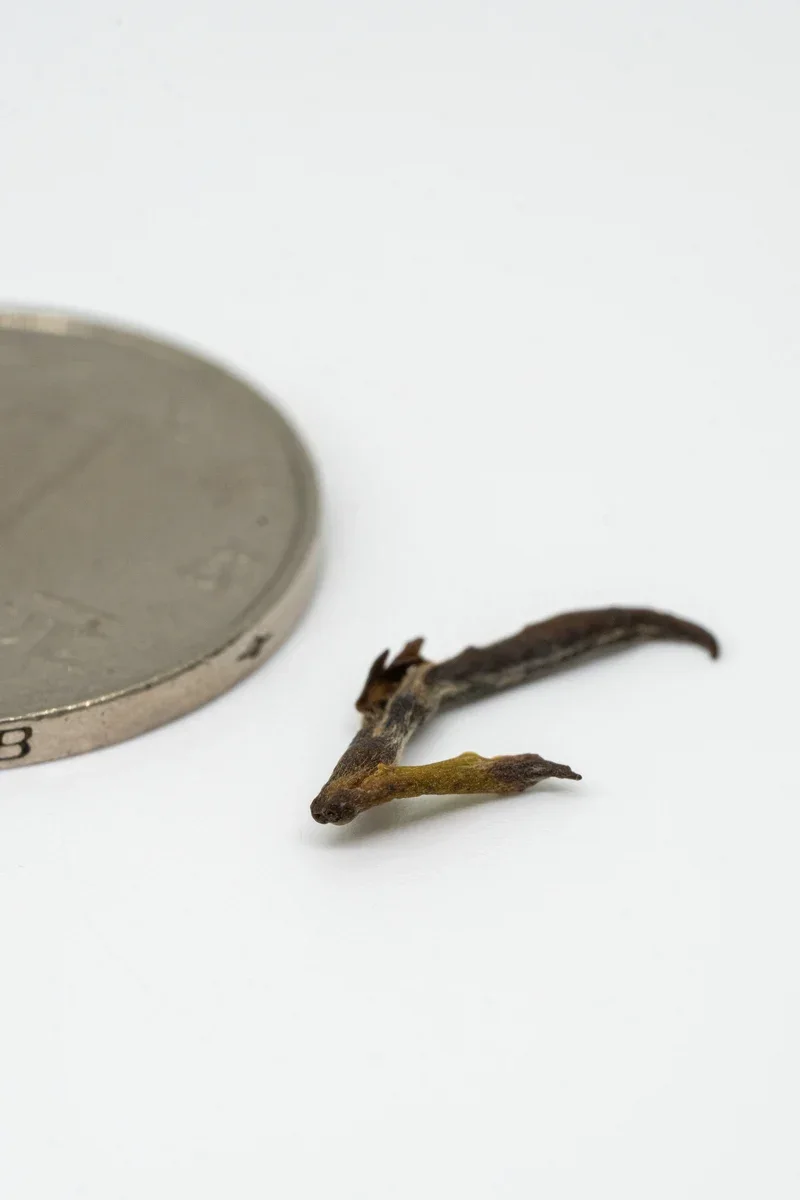
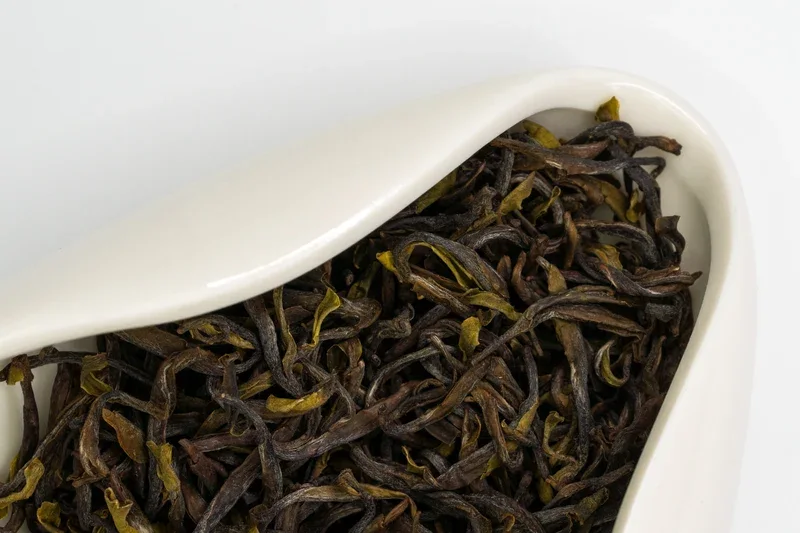
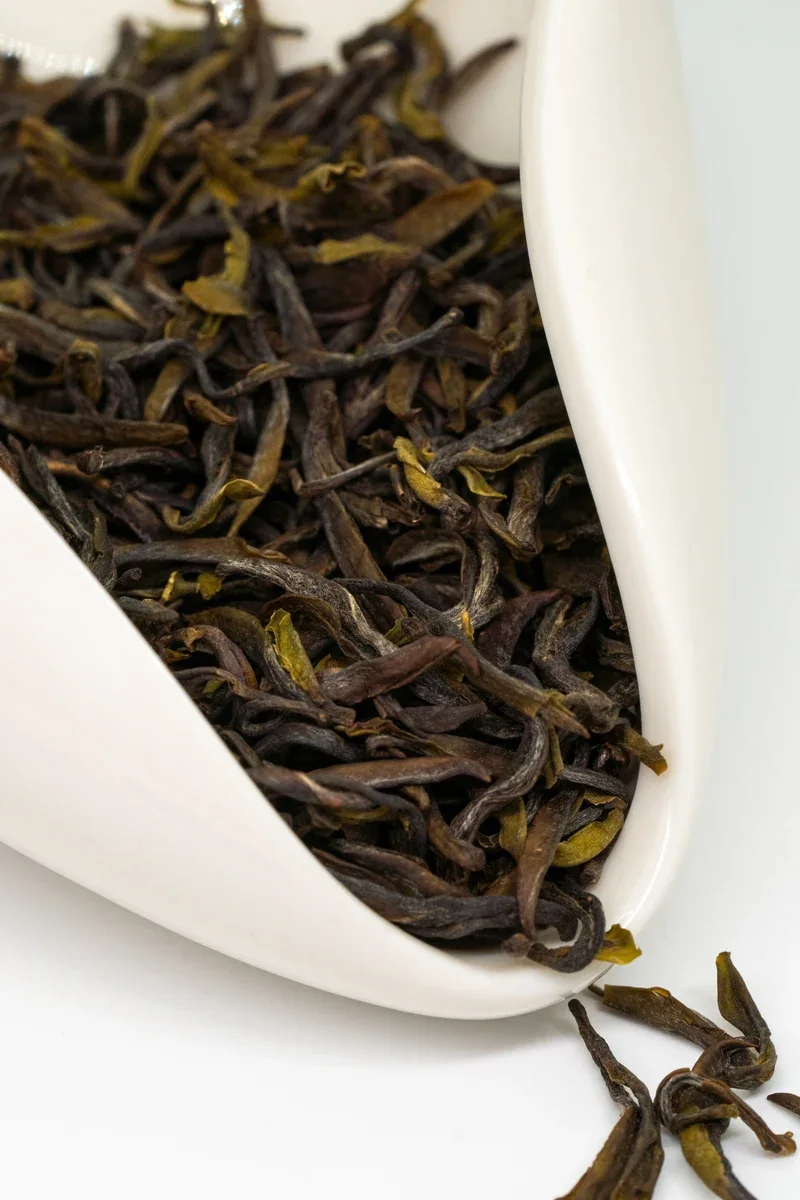
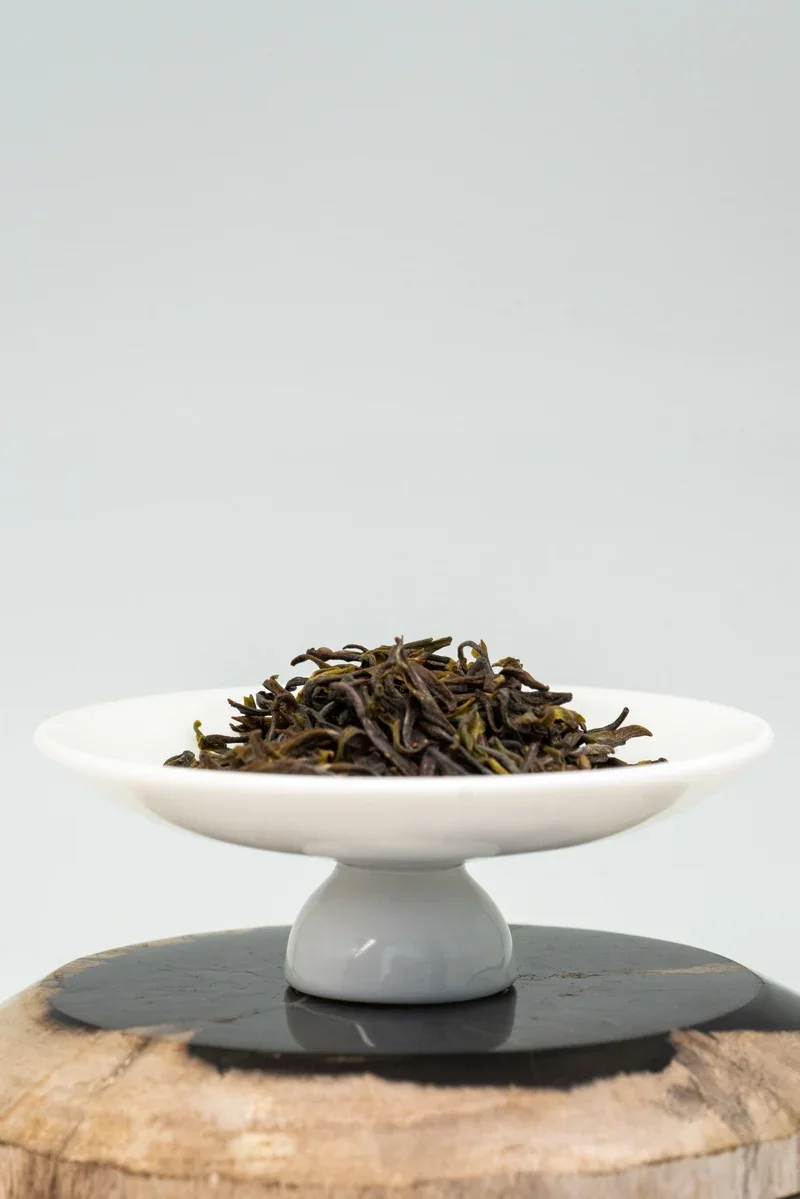
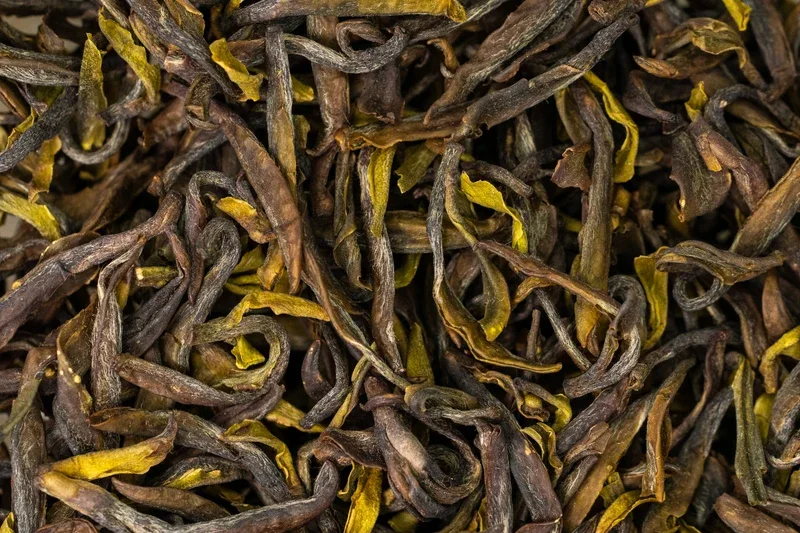
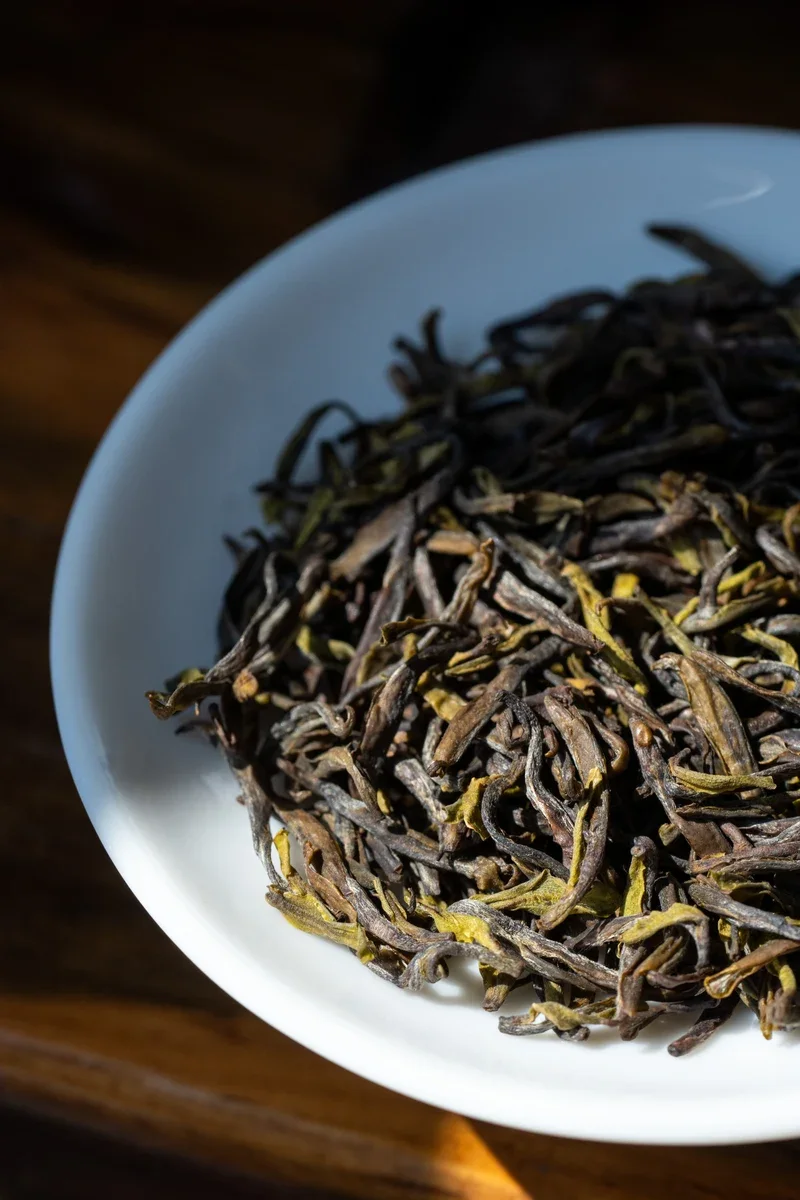
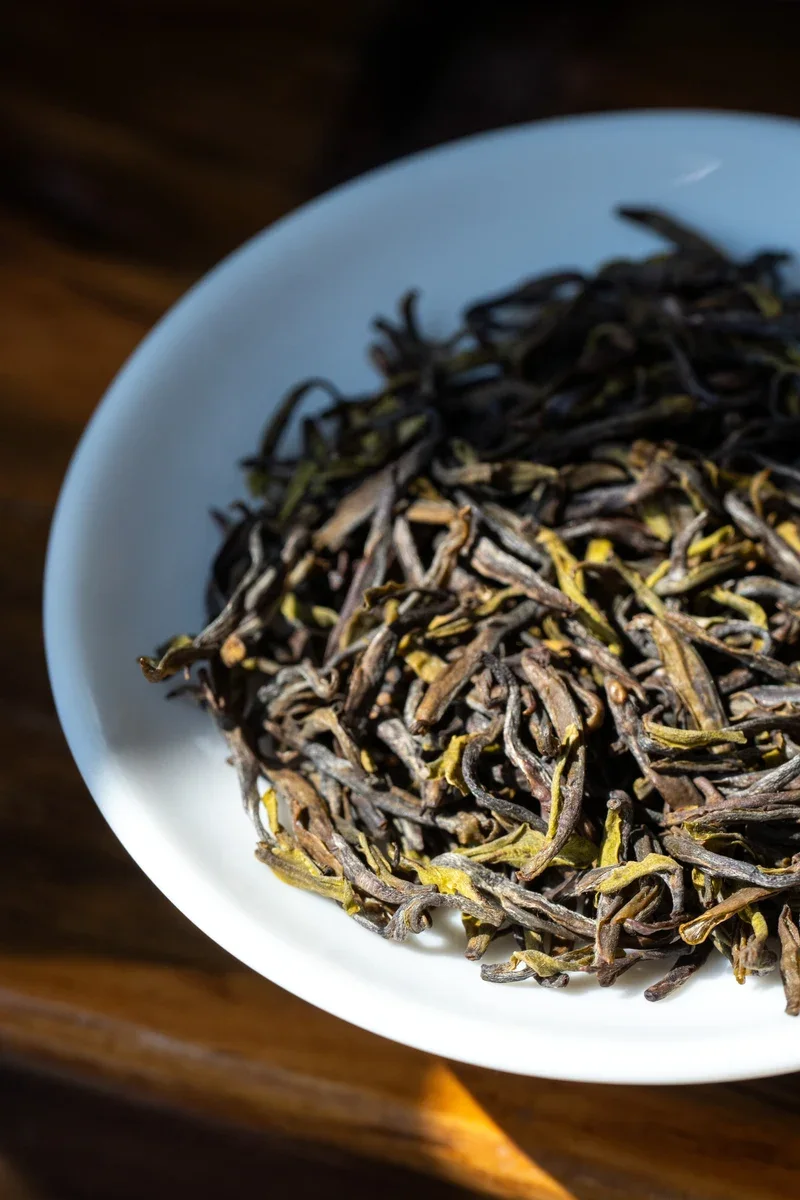
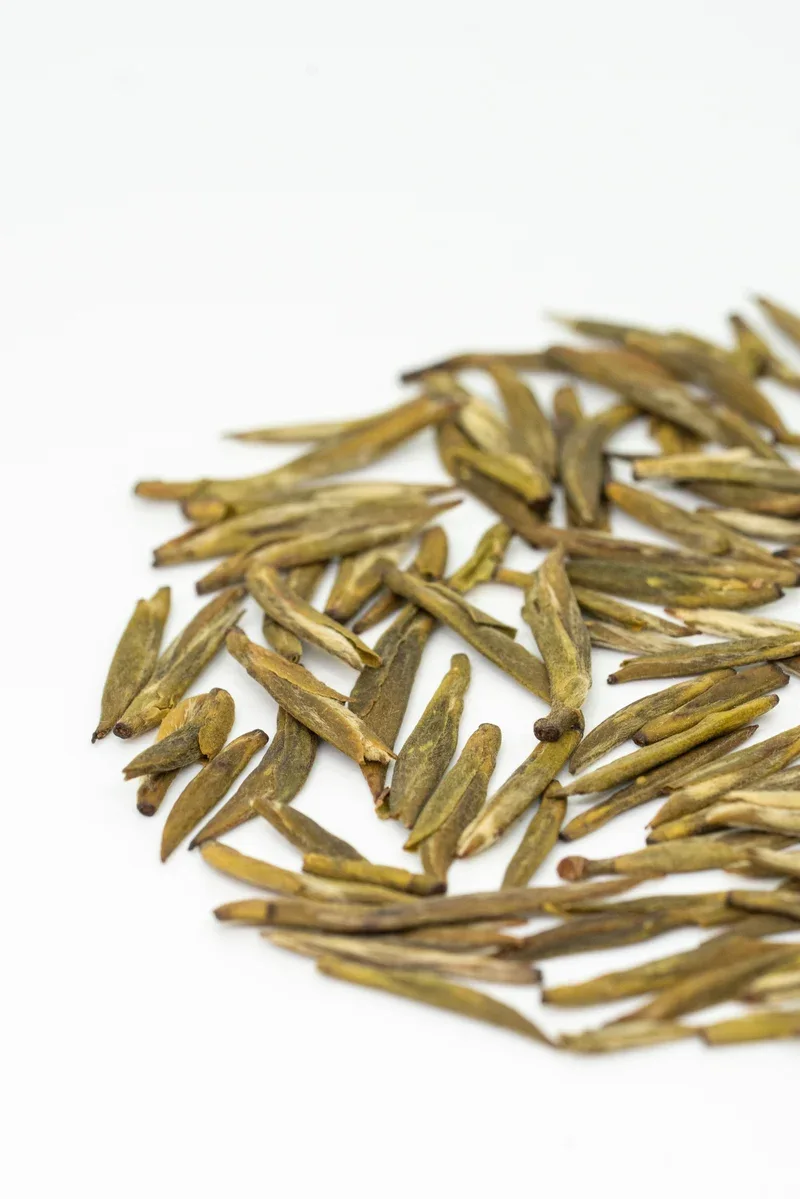
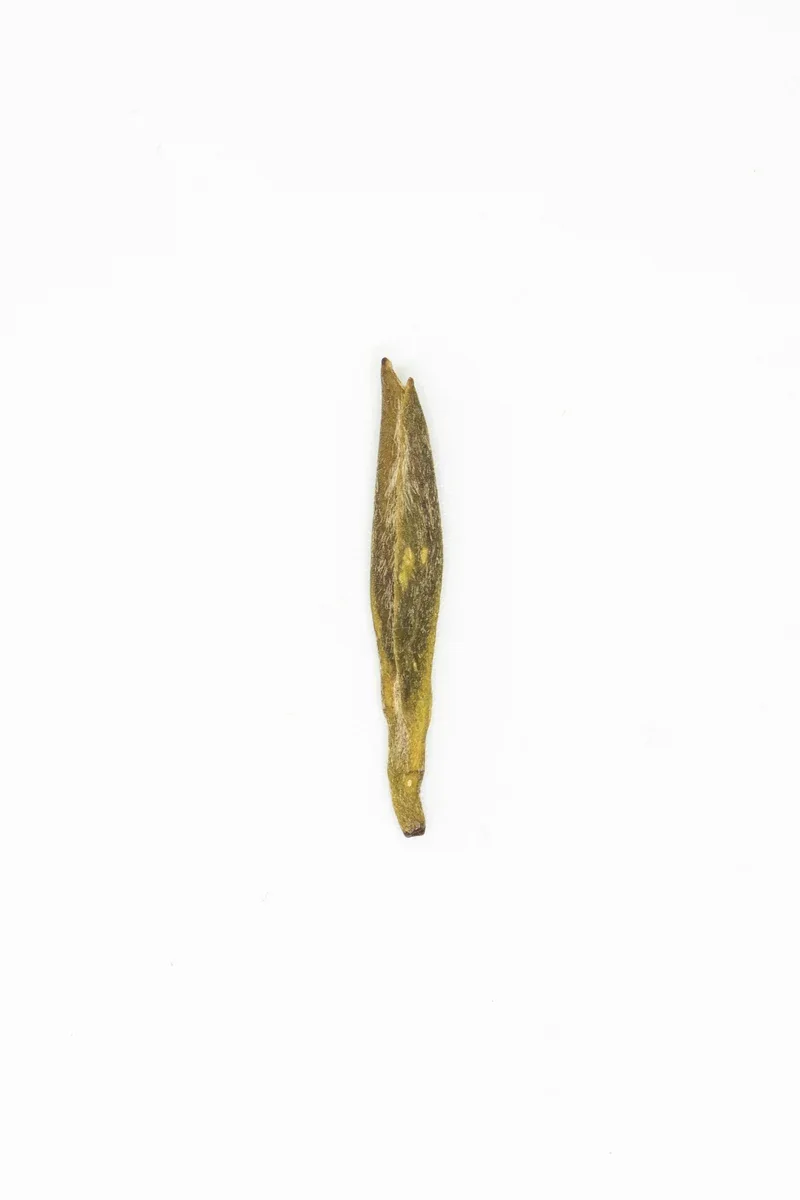
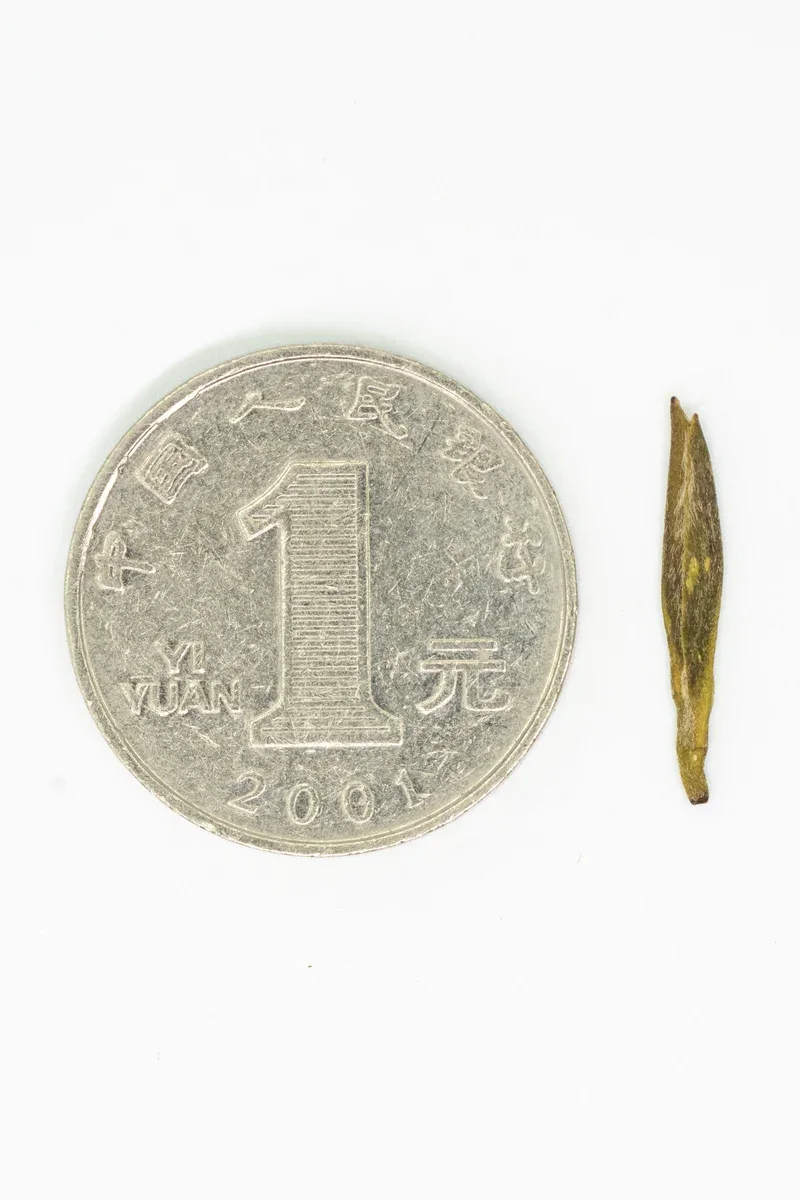
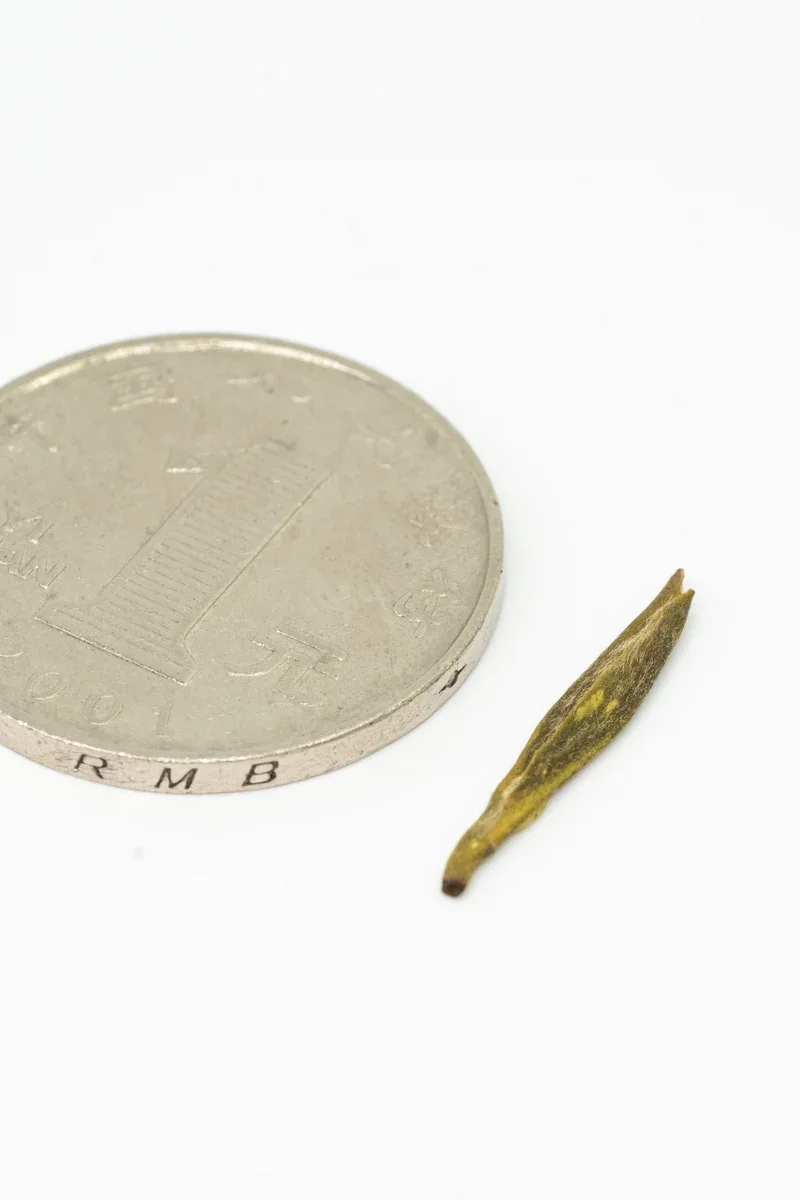
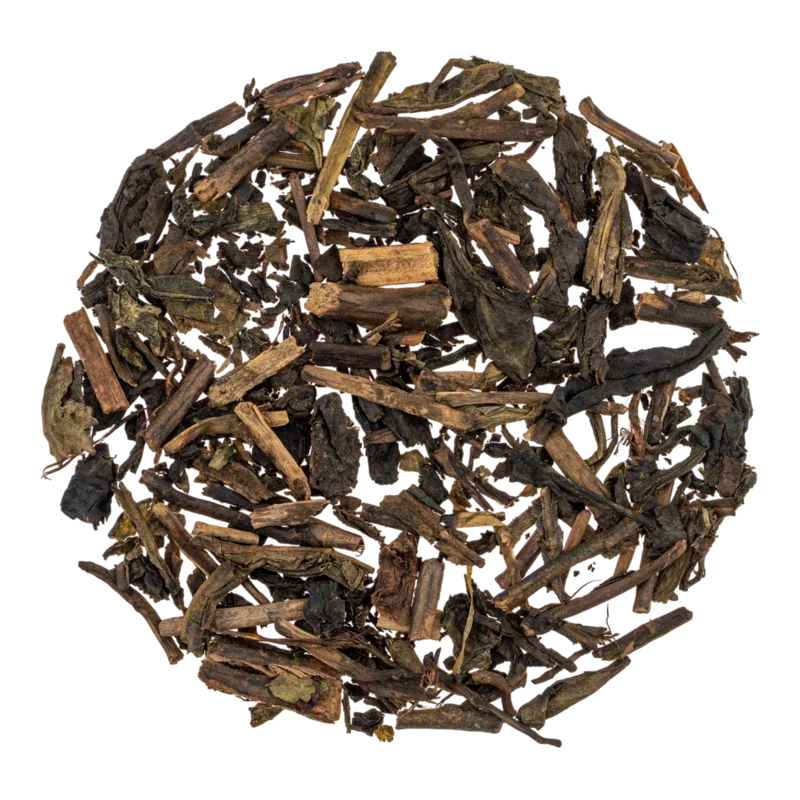
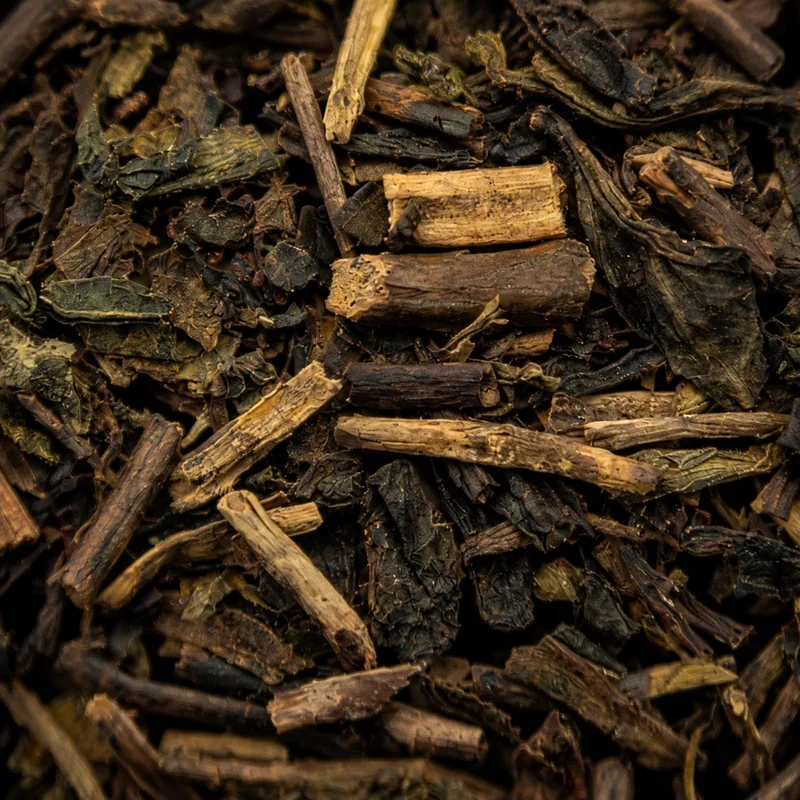
Dry Leaf Appearance: Dense rectangular brick with neatly rounded corners. Standard brick dimensions — 17 × 9 × 6 cm, weight — 0.5 kg. Surface is even, dense, without cracks or crumbling. Color — chestnut-brown (棕褐色, zōng hè sè), uniform.
Dry Leaf Aroma: Clean aged aroma (陈香, chén xiāng) with notes of old wood and dried fruits. Woody aroma (木香, mù xiāng) and light medicinal note (药香, yào xiāng) are present. Young tea (up to 3 years) may have fresh grassy notes (青草香, qīngcǎo xiāng).
Liquor Aroma: Rich, warm. Aged aroma dominates with woody-nutty undertones. Aged specimens (10+ years) show complex bouquet with medicinal and "pharmaceutical" notes.
Liquor Color: Red, rich, clear, with deep amber hue (红浓透亮, hóng nóng tòu liàng).
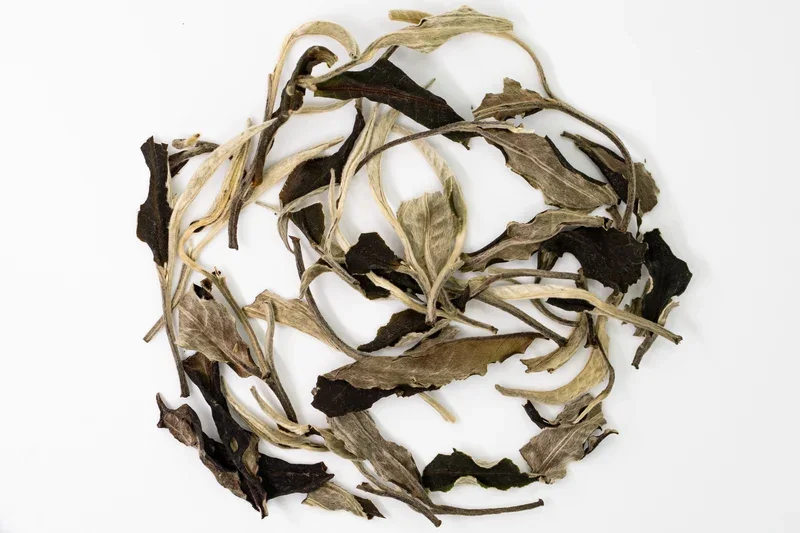
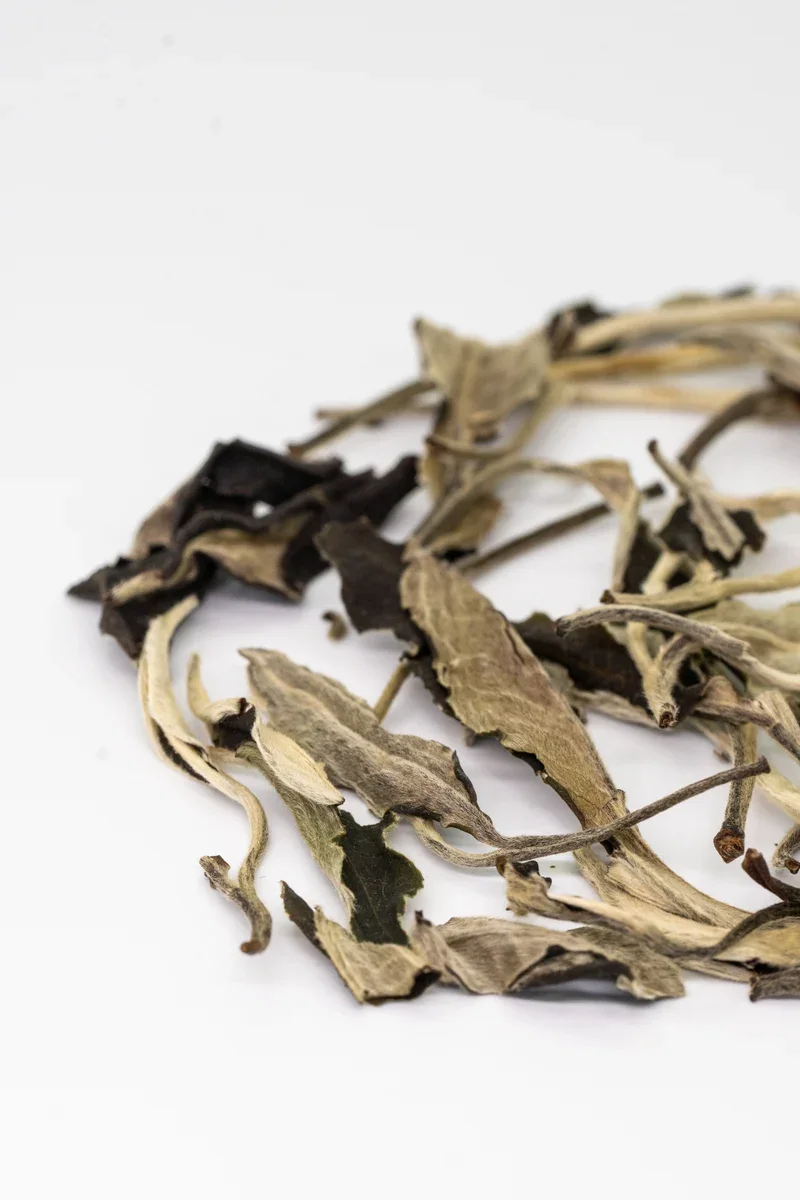
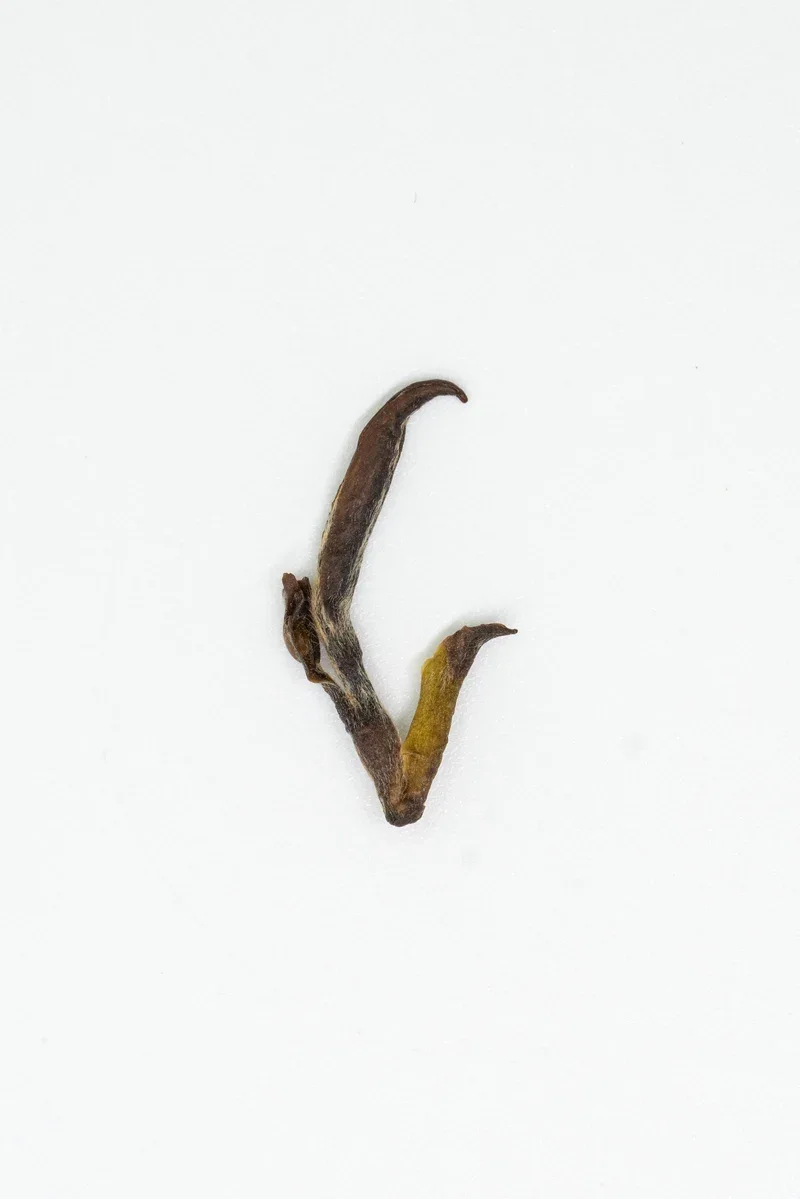
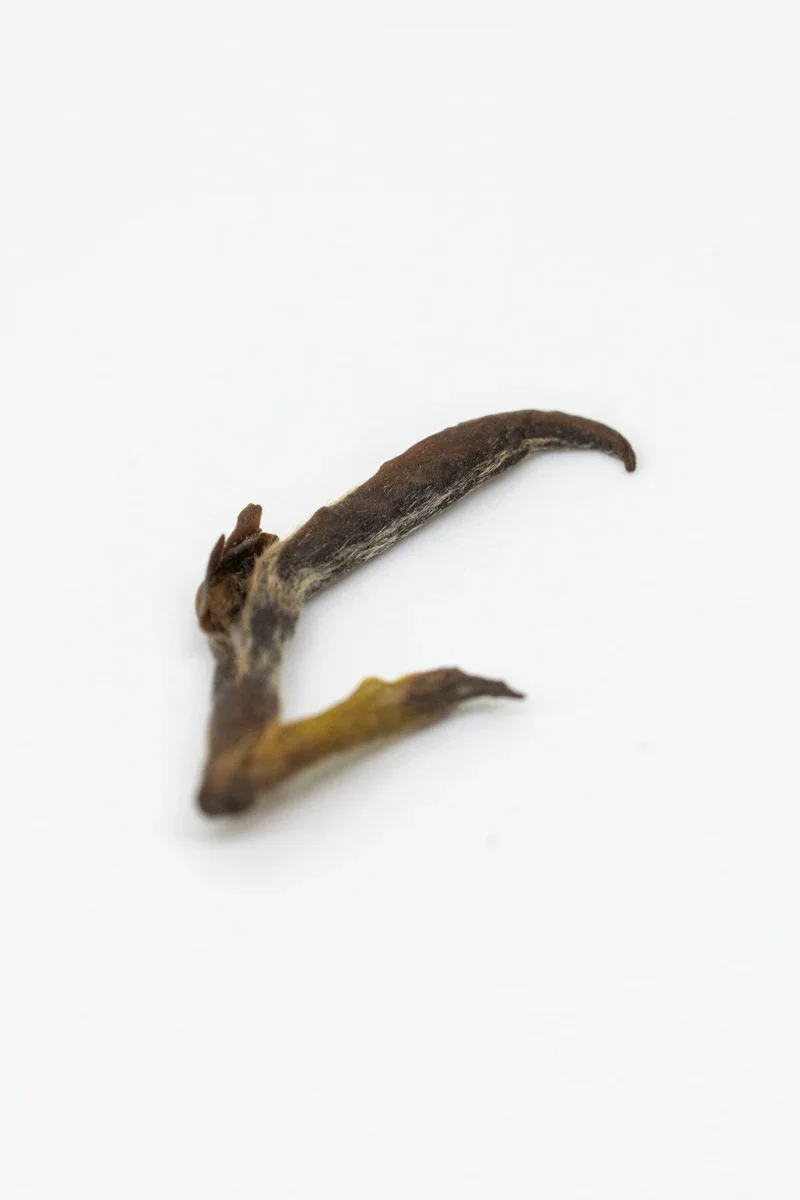
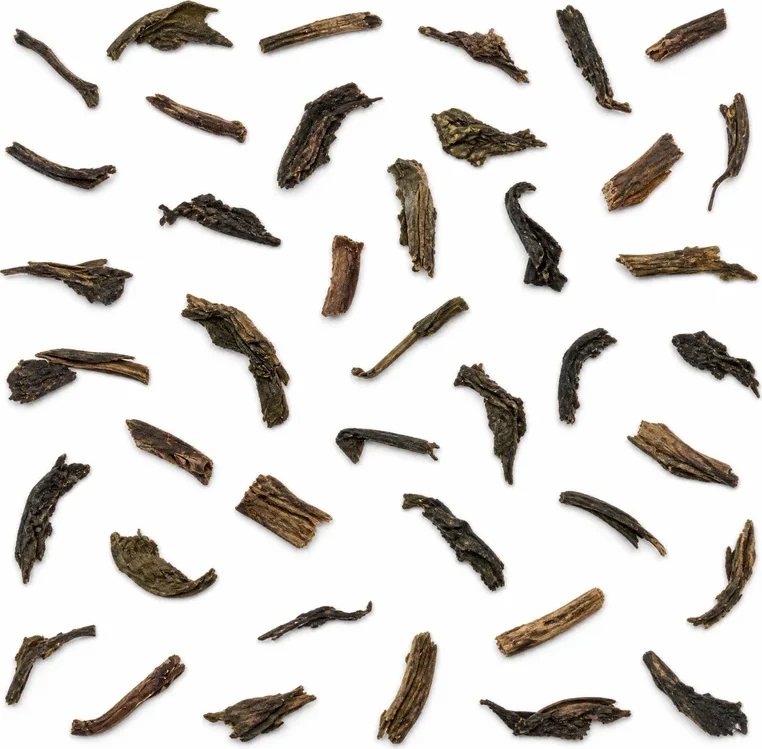
Spent Leaves: Large leaves of chestnut-brown color with visible stems. Texture is somewhat coarse but soft — leaves don't crumble.
Taste: 醇厚 (chúnhòu — "rich and mellow"), 甘滑 (gān huá — "sweet and smooth"). Full-bodied, round, without sharp astringency. Sweetness manifests in lǒng aftertaste (回甘持久, huígān chíjiǔ), which in old teas can last several minutes. Tea body is dense, "oily," with notes of prunes, walnuts, and dark caramel.
Alkaloids: Caffeine (moderate content — tea doesn't cause excessive stimulation), theobromine, theophylline.
Amino Acids: L-theanine and other free amino acids, forming "smooth" sweetness.
During wet piling (渥堆), colonies of beneficial bacteria and fungi form, whose metabolic products stimulate intestinal peristalsis.
Possess antibacterial action, suppressing pathogenic intestinal microflora.
Help regulate blood sugar levels.
Minerals: Potassium, calcium, magnesium, zinc, selenium, manganese, fluoride.
Polyphenols: Total tea polyphenol content is significant — their effectiveness in fat breakdown, by some estimates, exceeds that of green tea by 30%. Products of deep oxidation predominate: thearubigins and theabrownins, providing smoothness and absence of bitterness.
Vitamins: C, B1, B2, PP, K.
Primary property that made Kang Zhuan indispensable for peoples eating fatty meat and dairy products. Tea polyphenols effectively break down animal fats and accelerate digestion.
At high altitudes (3000–5000 m), digestion slows, flatulence is a common problem. Kang Zhuan is traditionally used by Tibetans to alleviate these symptoms.
Tannins suppress growth of pathogenic bacteria in the intestines, especially valuable in conditions of limited access to clean water.
The warm, "yang" character of the tea helps maintain normal thermoregulation in high-altitude cold conditions.
For nomadic peoples whose diet is poor in vegetables and fruits, Kang Zhuan serves as a critically important source of vitamins C, B group, and minerals.
Probiotic microorganisms formed during wet piling (渥堆) have prebiotic effects.
Thearubigins and polyphenols slow oxidative processes in cells.
Tibetan butter tea — the main way of consuming Kang Zhuan in its "historical homeland." Strong tea decoction is mixed with yak butter (酥油) and salt, then whipped in a wooden churn until uniform. The result is a thick, caloric, salty drink — simultaneously food and beverage, saving from cold and providing energy for the whole day.
Modern connoisseurs brew Kang Zhuan using the infusion method in gaiwan or Yixing teapot — this allows revealing flavor nuances that are "lost" in overall density when boiling.
Kang Zhuan excellently pairs with fatty foods — mutton, pork, cheeses. Also good with dried fruits and nuts.
In Tibet, tea is drunk all day, starting from early morning. In urban conditions, Kang Zhuan is well-suited for afternoon and evening tea sessions — it's mild enough not to disturb sleep.
Tea Amount: 5 g per 500 ml water (boiling method); 3 g per 500 ml (decoction method).
Teaware: Ceramic or cast iron teapot for boiling; gaiwan or Yixing teapot for infusion method.
Water Temperature: 100°C (rolling boil).
Container: Kraft paper, bamboo or cardboard box. Do not seal hermetically — tea needs minimal gas exchange for continued post-fermentation.
Enemies: Moisture (mold), foreign odors, direct sunlight.
Humidity: 50–70%.
Dry, dark, ventilated, without foreign odors.
Young Kang Zhuan (up to 3 years) has more astringent, "greenish" character. Optimal age for drinking — 5–15 years. Aged specimens (20+ years) are valued by collectors.
Temperature: Room temperature (15–25°C).
Highest grade, made from the most tender material (bud and one-two top leaves). In the Qing era, it was available exclusively to Tibetan aristocracy. Brick surface is covered with noticeable down, aroma is high and clean, taste is rich but without coarseness.
Third-grade material. Clean aroma, balanced taste. Yellow-red liquor.
Standard product from fourth-fifth grade material with addition of off-grade leaf. Main commodity for Kham (Eastern Tibet) and Central Tibet. Taste — 醇和 (chúnhé, "mellow and harmonious").
Most mass-market and affordable product from coarse material. Maximum resistance to boiling, minimum price. Main market — Western Sichuan and Qinghai. Despite simplicity, has honest, straightforward taste with pronounced sweetness.
Astringent, with grassy notes.
Optimal balance of smoothness and depth.
Deep, "compote-like," with medicinal overtones.
Price Category: Kāng Zhuān is one of the most affordable representatives of dark tea (黑茶). A standard brick (500 g) costs from 30 to 200 yuan depending on raw material quality and age. Premium batches from ancient tea gardens of Yingjing and aged specimens (10+ years) can cost significantly more.
Raw material grade, aging period, specific producer, presence of "Golden Flowers."
Contact major Ya'an factories (Sichuan Tea Factory, Ya'an Cha Chang) or specialized stores.
Brick should be dense, heavy, with even rounded corners, without cracks and white mold. Color — uniform chestnut-brown.
Clean, pleasant aged aroma without mustiness, sourness, or "basement" dampness.
Red, clear, rich. Murky or pale liquor — sign of low quality or improper storage.
Standard Kang Zhuan should comply with national standard GB/T 9833.4.
No reviews yet. Tell us what you think of this tea.
Rate this tea and share your impressions. We review each submission before publishing it.