Brewing
Gongfu brewing
- Water temperature
- 75 °C
- Tea amount
- 5 g
- Water volume
- 100 ml
- First steep
- 10 s
- Time added per infusion
- 5 s
- Infusions
- 3

Jiǔhuá fúchá
Choose a brewing method. Start with the recommended quantities and time, then adjust to taste.
Brewing
Brewing
Taste
Tea encyclopedia
Category: Historical famous tea of Ānhuī (安徽历史名茶). Registered certification trademark (证明商标, 2003). The variety "Huangshixi Mao Feng" (黄石溪毛峰) received a gold medal at the Panama-Pacific Exhibition of 1915.
Category: Historical famous tea of Ānhuī (安徽历史名茶). Registered certification trademark (证明商标, 2003). The variety "Huangshixi Mao Feng" (黄石溪毛峰) received a gold medal at the Panama-Pacific Exhibition of 1915.
Coordinates: Approximately 30°29′ North latitude, 117°48′ East longitude.
Origin: China, Ānhuī Province (安徽, Ānhuī), Chízhōu City (池州市, Chízhōu Shì), Qīngyáng County (青阳县, Qīngyáng Xiàn). Production zone — Mount Jiuhua and the Jiuhua mountain range as a whole, including adjacent areas of Qīngyáng County and Shítái County (石台县). Core terroir: Xiaminyuan (下闵园), Daguling (大古岭), Huangshixi (黄石溪) and Miaoqian (庙前). Two stylistic schools are particularly distinguished: Huangshixi Máo Fēng (黄石溪毛峰) — "栗香型" (chestnut type) and Minyuan Máo Fēng (闵园毛峰) — "兰花香型" (orchid type).
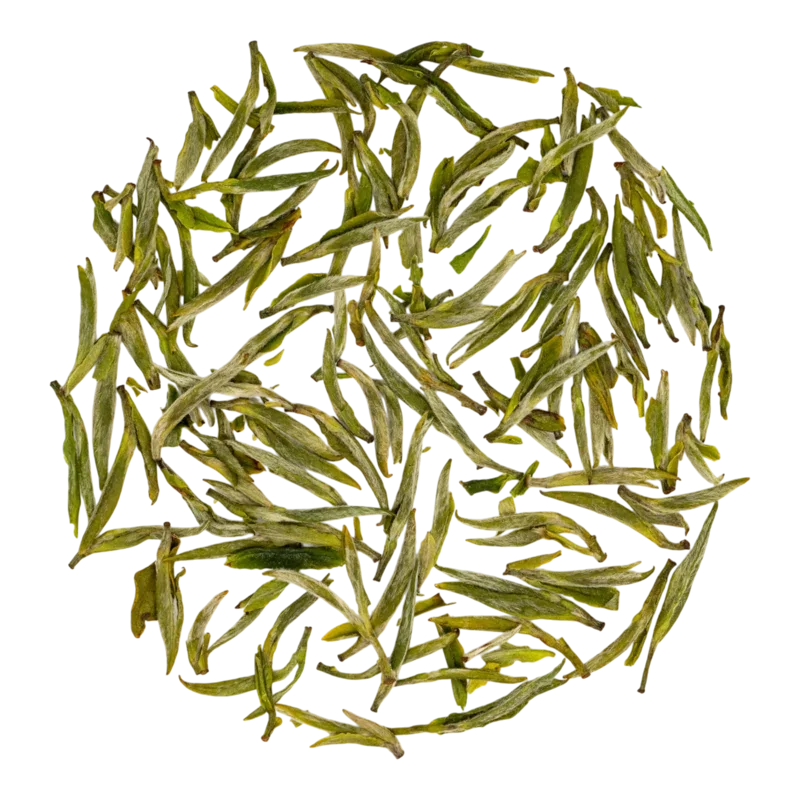
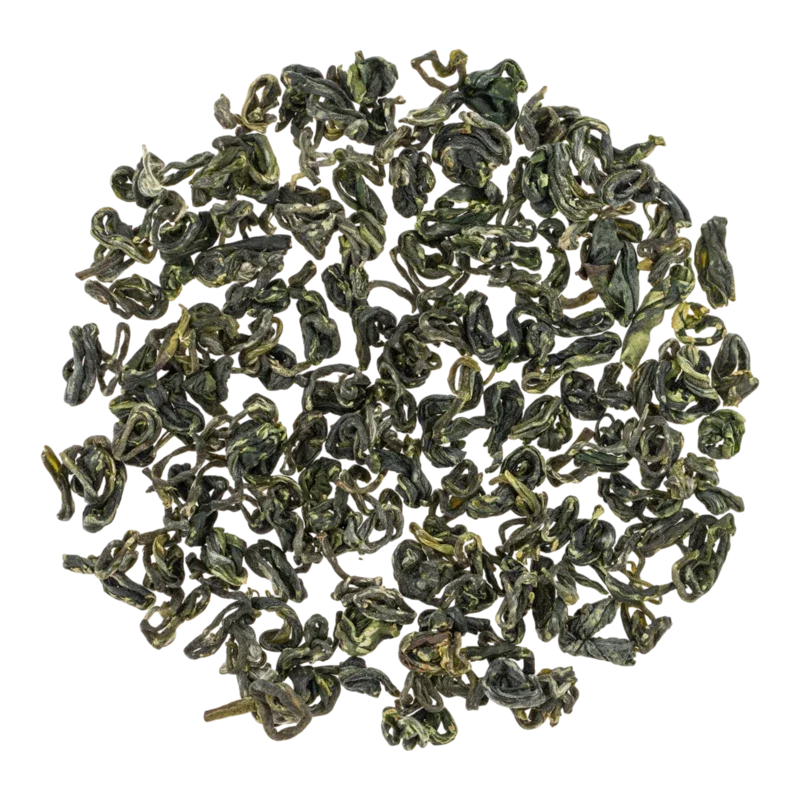
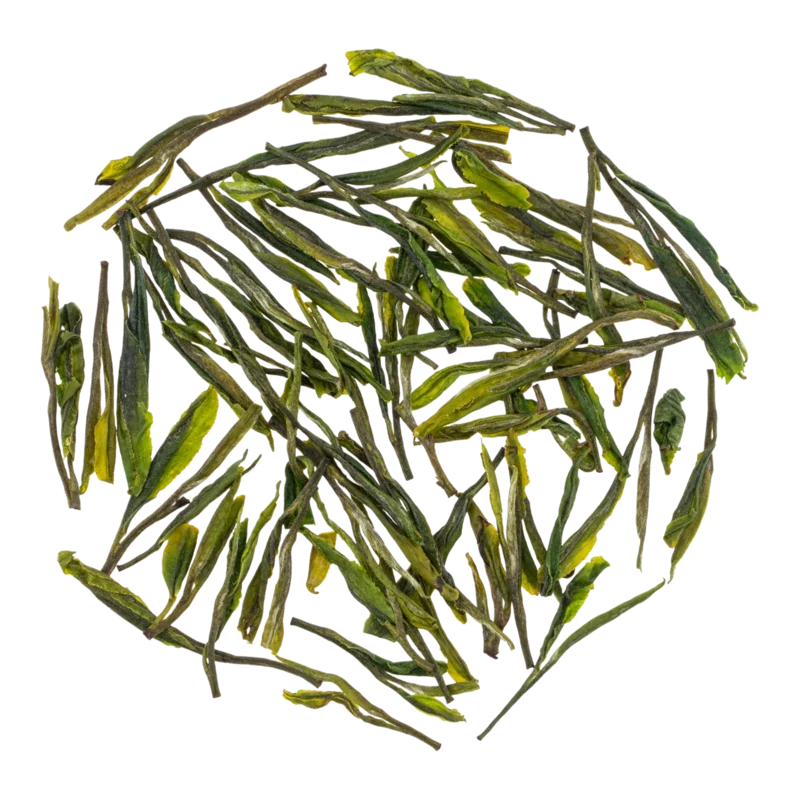
Type: Green tea (non-oxidized). Produced in two forms: flat (扁直形, biǎnzhí xíng — "flat-straight, like Buddha's hand") and spiral (卷曲形, juǎnqū xíng). By technology — pan-fired and heated.
Cultural Significance: Jiuhua Fu Cha — tea inextricably linked with one of the four great Buddhist mountains of China (四大佛教名山) — a place of pilgrimage for millions of believers. Bodhisattva Dizang (Ksitigarbha) — patron of the underworld and intercessor for the dead — is the "master" of Mount Jiuhua, and tea from this mountain possesses special spiritual status. The connection of Korean prince-monk Kim Kyogak with the founding of tea cultivation on Mount Jiuhua — a unique example of Korean-Chinese Buddhist cultural exchange.
History: The beginning of tea cultivation on Mount Jiuhua is connected with the legendary figure — Jindizang (金地藏), also known as Prince Kim Kyogak (金乔觉, 696–794) of the state of Silla (新罗, modern Korea). According to legend, during the Kaiyuan period (开元, 713–741) of the Tang era, young Kim Kyogak came to China to study Buddhism, settled on Mount Jiuhua and planted tea seeds he had brought with him. The tea, named "Jindicha" (金地茶, "Golden Earth Tea"), became an integral part of monastic life.
Cultivar: Local indigenous populations of Camellia sinensis var. sinensis — Jiǔhuáshān Yuansheng Quntichong (九华山原生群体种) — "Indigenous population of Mount Jiuhua". Bushes adapted to high-mountain climate; buds and shoots are fleshy, with abundant down (芽叶肥厚多毫).
Picking: Early spring. For the highest grade — one bud with one leaf in initial opening stage (一芽一叶初展, ≥80%). For first grade — one bud with one leaf (60–80%). For second grade — one bud with two leaves (60–80%). For third grade — one bud with two-three leaves (40–60%).
Raw Material: Tender, fleshy, uniform shoots. For highest grades — without "paired leaves" (对夹叶, duìjiā yè — leaves without bud). Processing — on the day of picking.
Altitude: Tea gardens are located at various elevations — from 400 to 1000+ m. Best quality — from high-mountain plantations of Huangshixi, Daguling and Minyuan.
Climate: Warm and humid, with abundant precipitation and frequent clouds. Daily temperature fluctuations — significant. Pests and industrial pollution — practically absent. Tea gardens — effectively "naturally organic" (天然有机).
Soil: Developed on granite and shale rocks (花岗岩或页岩风化母质). Acidic, fertile, with good aeration. Rich forest vegetation (林木葱茏, "green canopy of forests") and mountain flowers (杂花生树) create a unique ecosystem.
Mount Jiuhua — a mountain massif with main peaks above 1000 m, located in southern Anhui. Mountain relief — steep, with deep gorges, numerous streams and waterfalls. Landscape — classic example of "mountain Buddhist" terroir.
Manual spring picking of shoots of "one bud — one-two leaves in initial stage" standard.
Brief spreading for withering.
At 150–160°C — gentle pan-firing, preserving tenderness and down.
Moisture redistribution.
Double straightening on machine (理条机分二次理条) + manual "flattening" (手工压扁). It is at this stage that the flat form acquires the characteristic silhouette of "Buddha's hand" (佛手状, fóshǒu zhuàng).
At 120–130°C — rapid drying.
At 100–120°C — bringing to stable condition. Aroma development (提香) — until shoots break when the stem is bent (茶条折梗即断).
Final manual sorting.
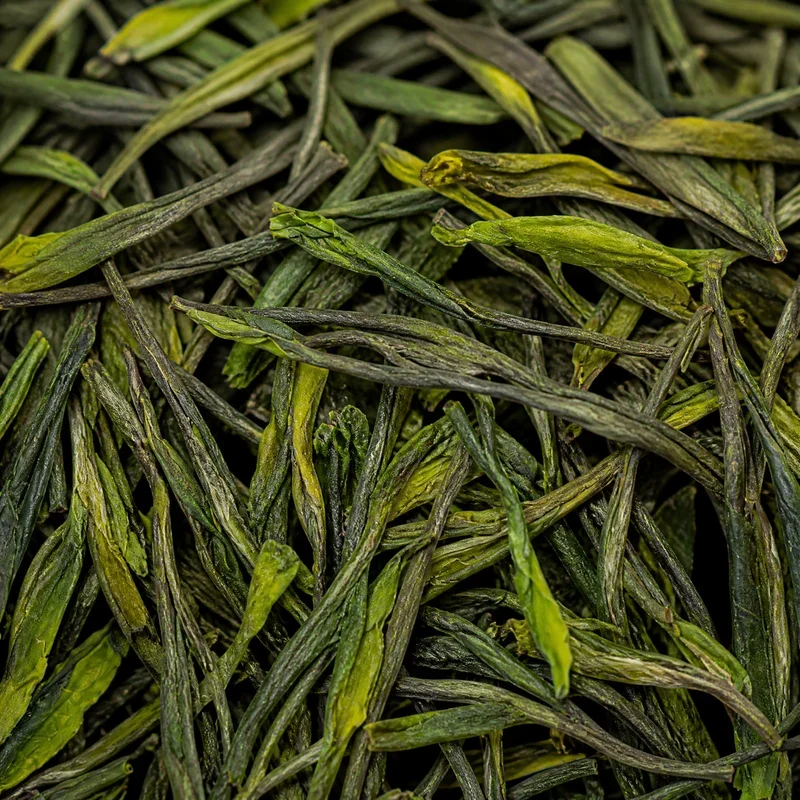
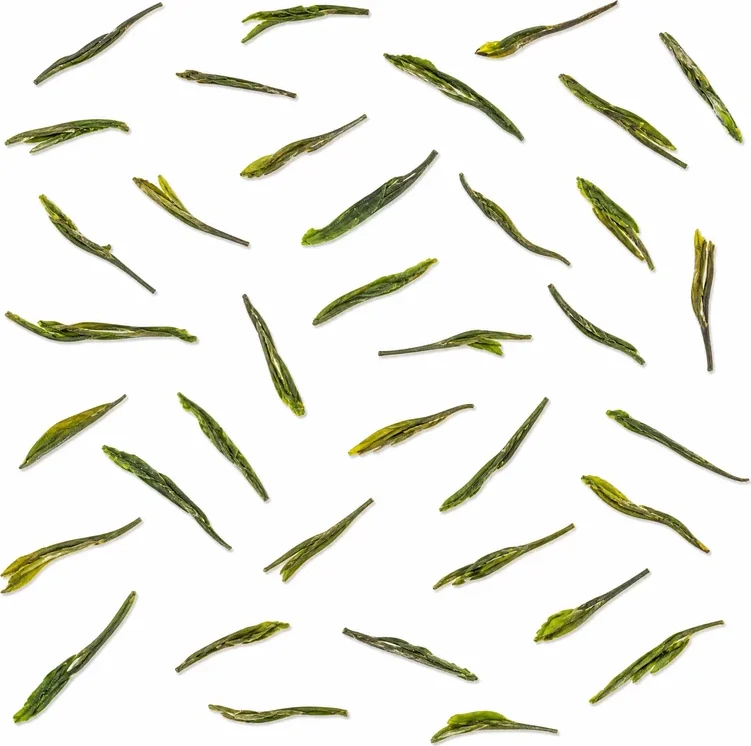
Dry Leaf Appearance: Flat form — straight, even tea leaves resembling "Buddha's hand" (扁直呈佛手状). Color — emerald-green with slight yellowish tint (翠绿带黄). Spiral form — tight curls of dark green color (墨绿).
Dry Leaf Aroma: Orchid note (兰花香, lánhuā xiāng), fruity (果香, guǒxiāng), chestnut (栗香, lìxiāng). Two stylistic directions: Huangshixi — chestnut type (栗香型); Minyuan — orchid type (兰花香型).
Liquor Aroma: High and persistent (香高味醇). Orchid-fruity in first infusions, chestnut — in subsequent ones.
Liquor Color: Emerald-green, bright and clear (碧绿明亮).
Spent Leaves: Tender, uniform shoots of green color.
Taste: Fresh and brisk (鲜爽, xiānshuǎng), mellow and rich (醇厚, chúnhòu), with pronounced returning sweetness (回甘, huígān). Aftertaste — long, clean.
Alkaloids: Caffeine — moderate content.
Amino Acids: Elevated content — result of mountain diffused light and rich soils.
Minerals: Potassium, magnesium, zinc, manganese — profile determined by granite and shale soils.
Polyphenols: Significant content. Provides antioxidant potential.
Vitamins: Vitamin C, carotenoids.
Caffeine and L-theanine.
Traditional properties.
Enzyme stimulation.
Theobromine and theophylline.
Catechins.
the listed properties are based on publicly available data and are not medical recommendations.
tasting according to Buddhist tradition — three stages: inhale aroma (闻香 — orchid and fruits), evaluate color (观色 — emerald brightness), taste in small sips (品味 — freshness and returning sweetness).
Tea Amount: 2 g per 100 ml of water.
Teaware: White porcelain gaiwan or glass cup.
Water Temperature: 80–85°C.
From Zhejiang. Also "Buddhist tea" from Chan monastery, also connected with tea ceremony history. Jingshan — "birthplace of Japanese tea ceremony"; Mount Jiuhua — "tea of Bodhisattva Dizang". By style: Jingshan — more twisted and chestnut-orchid; Jiuhua — more flat, in "Buddha's hand" shape.
Fellow from southern Anhui. Heated "sparrow's tongue" with orchid aroma. Mao Feng — more commercially successful and "elegant"; Jiuhua — more "spiritual", with Buddhist aura.
From Jingxian County, also Anhui. Pearl tea with apricot liquor. Radically different style: Huo Qing — round granules, 20-hour drying; Jiuhua — flat "Buddha's hands", standard heated drying.
From Mount Emei — also Buddhist shrine (Bodhisattva Puxian). Both — "Buddhist mountain teas", but from different provinces and with different style: Zhuyeqing — flat "bamboo leaf"; Jiuhua — flat "Buddha's hand".
Huangshixi (chestnut type) and Minyuan (orchid type) — both legitimate.
flat version — "Buddha's hand" — straight and even; spiral — tight and dark green.
orchid and/or chestnut — signature notes. Absence of both — suspicious.
authentic Jiuhua Fu Cha — only from Mount Jiuhua zone and adjacent areas.
No reviews yet. Tell us what you think of this tea.
Rate this tea and share your impressions. We review each submission before publishing it.