Brewing
Gongfu brewing
- Water temperature
- 75 °C
- Tea amount
- 5 g
- Water volume
- 100 ml
- First steep
- 10 s
- Time added per infusion
- 5 s
- Infusions
- 3

Jīngxiàn tè jiān
Choose a brewing method. Start with the recommended quantities and time, then adjust to taste.
Brewing
Brewing
Taste
Tea encyclopedia
Category: Historical famous tea of Ānhuī (安徽历史名茶). In 1983 — «Certificate of Honor» from the Ministry of Foreign Trade (外贸部"荣耀证书"). In 1985 — «Best Tea at Ministerial Level» (部优茶). In 1986 — «Famous Tea of China» (中国名茶). Geographical indication product.
Category: Historical famous tea of Ānhuī (安徽历史名茶). In 1983 — «Certificate of Honor» from the Ministry of Foreign Trade (外贸部"荣耀证书"). In 1985 — «Best Tea at Ministerial Level» (部优茶). In 1986 — «Famous Tea of China» (中国名茶). Geographical indication product.
Coordinates: Approximately 30°30′ North latitude, 118°25′ East longitude.
Origin: China, Ānhuī Province (安徽, Ānhuī), Jīngxiàn County (泾县, Jīngxiàn). The production zone covers the entire county, but the core is the southeastern mountainous regions, particularly Aimin Township (爱民乡), Nanrong Township (南容乡), Tingxi Township (汀溪乡), and Tongshan Township (铜山乡). More than 90% of highest category teas come from these four townships.
Type: Green tea (non-oxidized). Belongs to baked green teas (烘青绿茶, hōngqīng lǜchá) — final drying by baking method (烘焙, hōngbèi), including over charcoal. By shape — twisted (卷曲形) for special and premium grades, needle-like (针芽状) for «tikui» (提魁) category.
Cultural Significance: Jingxian is a county with deep tea tradition that has given the world two famous teas: Yǒngxī Huǒ Qīng (涌溪火青) and Jingxian Te Jian. If Yongxi Huo Qing is a pearl with 20-hour charcoal drying, then Te Jian is the «classic» of Anhui baked green tea, continuing the ancient line of «jiancha».
History: Tea cultivation in Jingxian has been documented since the Tang and Song dynasties, when local tea was already known in the region. During the Qing dynasty, tea from Jingxian received the name «Yangjian» (洋尖) and was exported to Southeast Asian countries — this is one of the early examples of Anhui tea export.
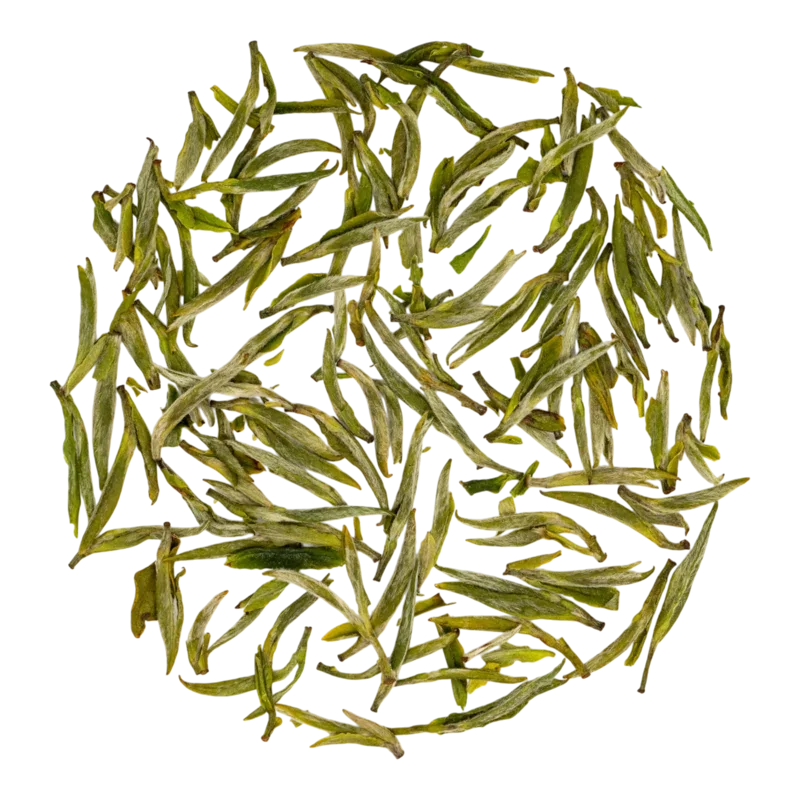
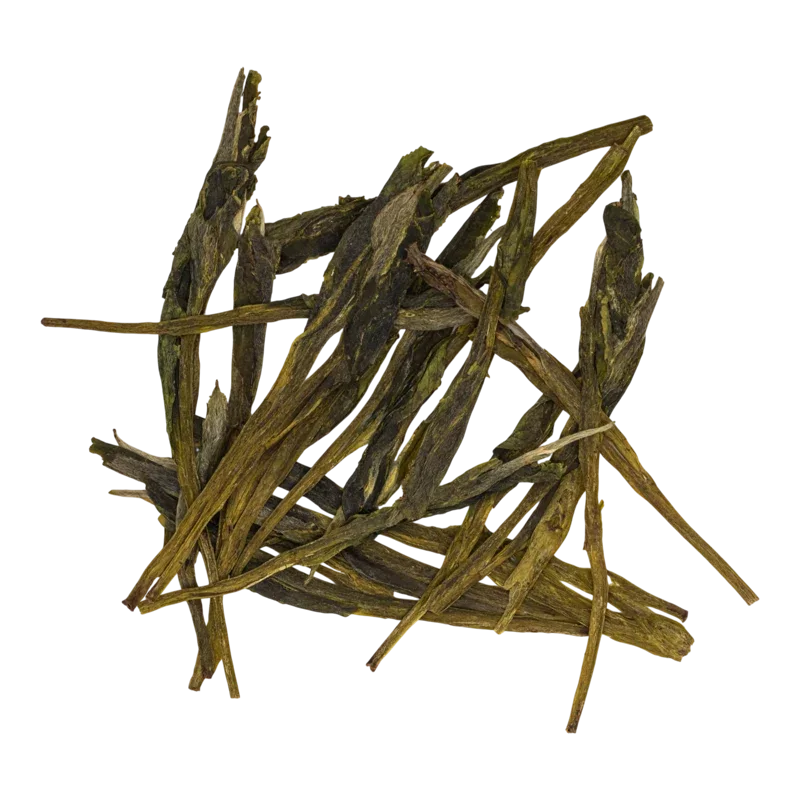
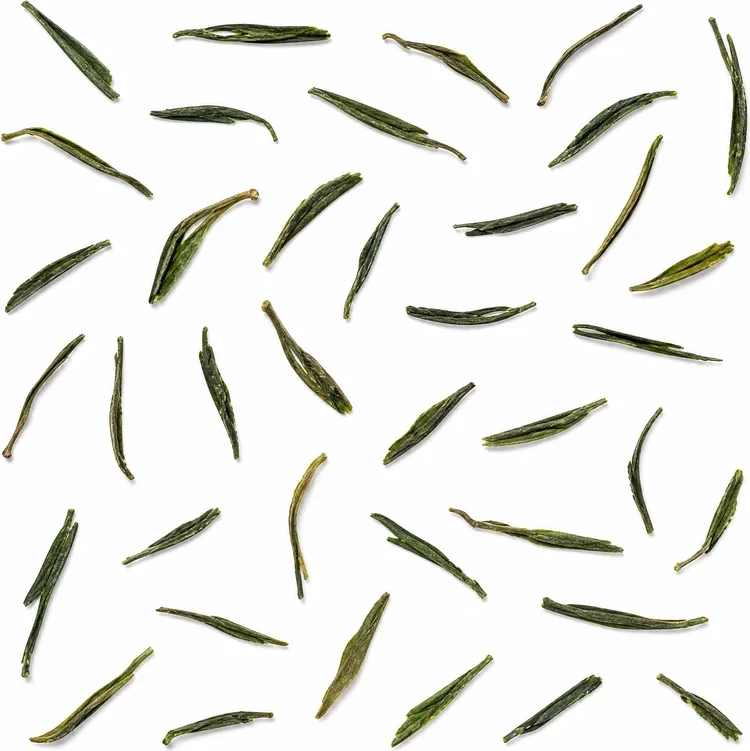
Full buds or one bud with one leaf. Straight, needle-like shape.
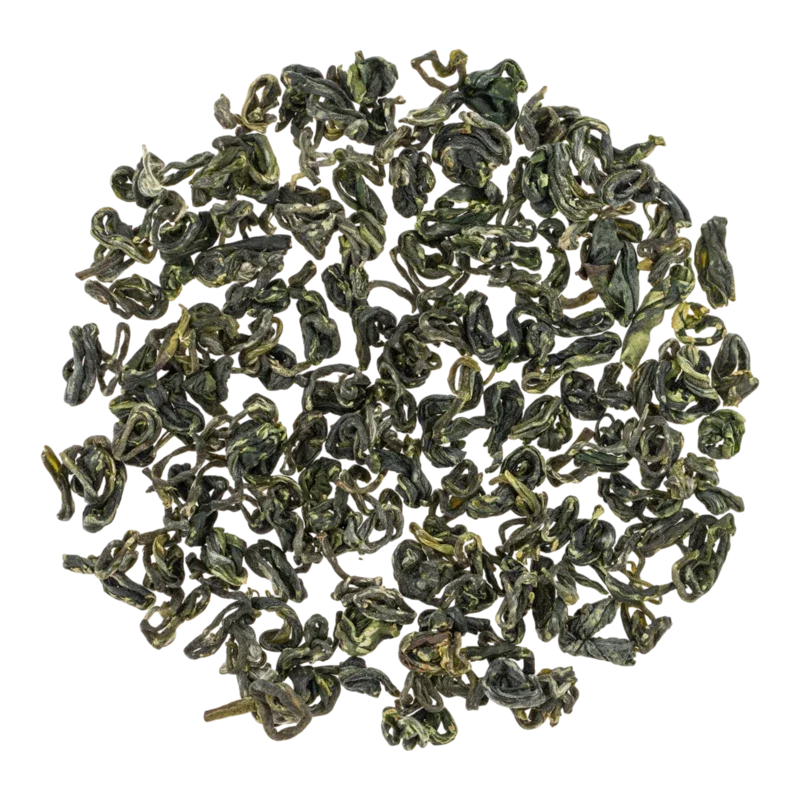
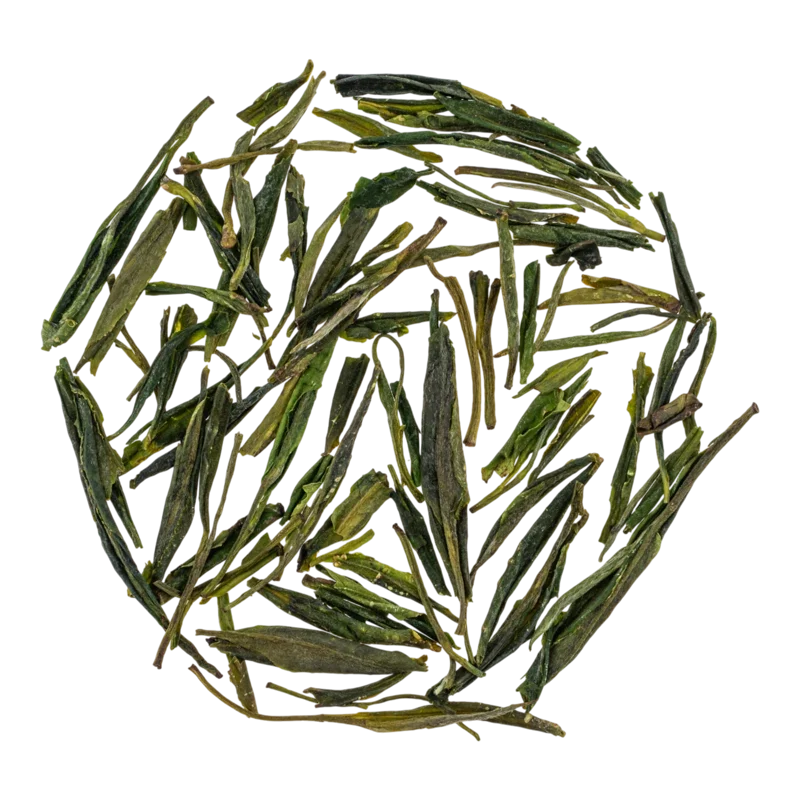
One bud with one leaf in initial opening stage (≥60%). Twisted shape with abundant down.
One bud with two small leaves. Rich taste with returning sweetness.
One bud with two small leaves and a bud-like leaf. Aroma with honey-orchid overtones.
Cultivar: Jīngxiàn Qúntǐzhǒng (泾县群体种, Jīngxiàn Qúntǐzhǒng) — local indigenous variety of Camellia sinensis var. sinensis, recognized as a «national-level local exemplary cultivar» (国家级地方良种). Bush type, leaf — from elliptical to willow-like. Distinguished by early onset of vegetation and high resistance to adverse conditions. Chemical profile of fresh leaf: polyphenols — 30.35%, amino acids — 3.08%, selenium content — one of the highest among Chinese green teas.
Picking: Early spring. Standard depends on category:
Raw Material: Tender, uniform, undamaged shoots. Processing — on the day of picking.
Altitude: Above 600 meters above sea level.
Climate: Average annual temperature — about 15°C, annual precipitation — 1200–1800 mm. Year-round cloudiness and fog. Abundance of diffused light (漫射光).
Soil: Acidic red and yellow soils (红黄壤), developed on granitic rocks (花岗岩发育). pH 4.5–6.5. Thick humus horizon with high organic content. Key feature — exceptionally high selenium content (硒, xī): 0.70–3.85 ppm — 5 or more times higher than ordinary tea soils. This natural enrichment determines the unique mineral profile of Jingxian Te Jian.
Topography: Southeastern foothills of Huángshān (黄山余脉). Mountain gorges with abundant streams.
Brief spreading.
Pan-firing — stopping oxidation, fixing the orchid-chestnut aroma.
Minimal pressure to preserve bud integrity.
Intermediate firing.
Structure compaction.
At 100–120°C over charcoal.
Hand straightening and shaping — light pressing (轻压做形) without rough pressure.
At 70–90°C — gentle baking to develop aroma.
Special technique for «drawing» silvery down to the surface.
Bringing to moisture content ≤4% — one of the lowest indicators among green teas, ensuring long-term preservation.
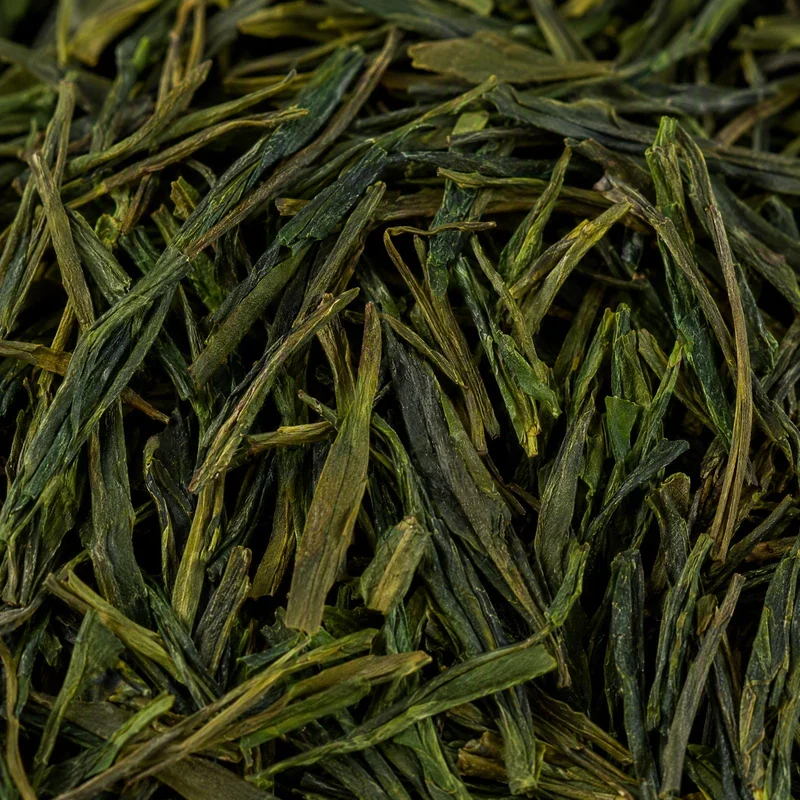
Dry Leaf Appearance: «Tikui» category — straight, slender needle-like buds (紧直显毫). «Teji» category — tightly twisted shoots with abundant down (细曲披毫). Color — emerald green with oily luster.
Dry Leaf Aroma: Delicate, persistent. Orchid note (兰花香, lánhuā xiāng) — main aromatic characteristic. Chestnut note (栗香) — rich, especially pronounced in «Teji» category.
Liquor Aroma: Orchid, clean, high and persistent (兰香清高持久). Chestnut overtones.
Liquor Color: Tender green, clear and bright (嫩绿清亮), transparent, «like jade» (清澈如翡翠).
Spent Leaves: Tender, yellow-green, fleshy shoots, gathered in «buds» (嫩黄匀整,肥壮成朵). Leaf is resilient and lively.
Taste: Fresh and brisk (鲜爽), with pronounced returning sweetness (回甘). Mellow and rich (醇厚). Polyphenol content — over 30% — one of the highest among baked green teas, giving the taste structural depth. At the same time, amino acids (3.08%) balance astringency, creating a harmonious profile.
Alkaloids: Caffeine — about 3%. Theobromine, theophylline.
Amino Acids: 3.08% — provides freshness and sweetness, balancing high polyphenol content.
0.70–3.85 ppm — 5.5 times higher than average for tea soils. Selenium is a powerful antioxidant and immunomodulator. Jingxian Te Jian is one of the most selenium-rich green teas in China.
Minerals: Potassium, magnesium, zinc, manganese, selenium, phosphorus.
Polyphenols: Content — over 30% of dry mass — one of the highest among baked green teas. Provides powerful antioxidant potential and structural depth.
Vitamins: Vitamin C, B-group vitamins.
Record polyphenol content (>30%) combined with selenium (5.5 times above average) provides double antioxidant effect.
Selenium combined with catechins helps normalize blood pressure and lipid profile.
Caffeine and L-theanine.
Thirst quenching.
Stimulation of fat breakdown.
the listed properties are based on publicly available data and are not medical recommendations.
if sensitive to caffeine, reduce dosage. Not recommended on empty stomach or before sleep.
Tea Amount: 3 g per 150 ml water (1:50 ratio).
Teaware: Glass tumbler — bottom-dropping method (下投法).
Water Temperature: 80°C.
Fellow from Jingxian County. Pearl shape, apricot liquor, 20-hour charcoal drying. Huo Qing is more «warm», rounded and «fiery»; Te Jian is more orchid-like and mineral.
From Huangshan City. Baked «sparrow tongue» with orchid-chestnut aroma. Mao Feng is more «famous» and commercially successful; Te Jian is richer in selenium and with higher polyphenol content.
From Huangshan City. Large flat leaves with deep orchid aroma. Hou Kui is more «monumental»; Te Jian is more compact and «mineral».
From western Anhui. Flat «melon seeds» from pure leaves. Gua Pian is more grassy and rich; Te Jian is more orchid-like and sweet.
orchid note is the signature mark. Absence of orchid — suspicious.
«like jade» — clear, bright, tender green.
90%+ of highest categories come from four core townships (Aimin, Nanrong, Tingxi, Tongshan).
No reviews yet. Tell us what you think of this tea.
Rate this tea and share your impressions. We review each submission before publishing it.