Brewing
Gongfu brewing
- Water temperature
- 75 °C
- Tea amount
- 5 g
- Water volume
- 100 ml
- First steep
- 10 s
- Time added per infusion
- 5 s
- Infusions
- 3

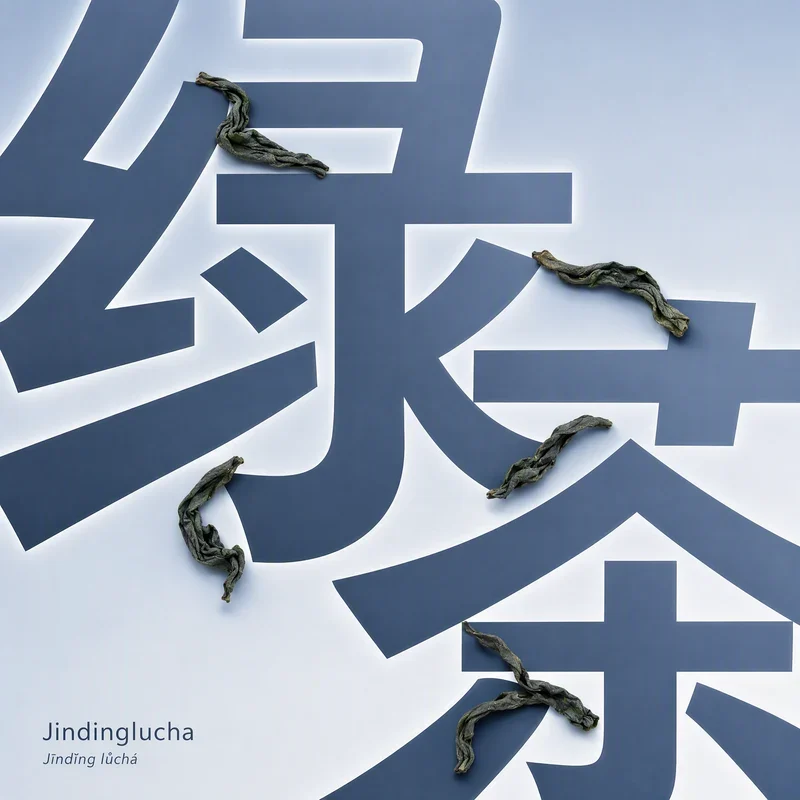
Jīndǐng lǜchá
Choose a brewing method. Start with the recommended quantities and time, then adjust to taste.
Brewing
Brewing
Taste
Tea encyclopedia
Category: Chinese regional green teas; tropical high-altitude green tea.
Category: Chinese regional green teas; tropical high-altitude green tea.
Coordinates: Approximately 18°45′ N, 109°30′ E (Wuzhi Mountain area).
Origin: China, Hǎinán Province (海南省, Hǎinán Shěng), Wǔzhǐshān City (五指山市, Wǔzhǐshān Shì). Main producer — Hǎinán Nóngkěn Tea Group (海垦茶业集团, Hǎikěn Cháyè Jítuán), successor to the state tea farm established in 1960. Core production — "Wuzhishan Tea Farm" (五指山茶场), located in Bǎotíng County (保亭县, Bǎotíng Xiàn), Mao'an Township (毛岸镇), on the southern slope of Wuzhi Mountain. This farm provides up to 90% of special grade tea production.
Type: Green tea (绿茶, lǜchá), unoxidized. By fixation method — pan-fired green tea (炒青绿茶, chǎoqīng lǜchá).
Cultural Significance: Jindinglucha is the flagship product of Hainan tea cultivation and symbol of the island's "green renaissance" after decades of red export tea dominance. The Wǔzhǐ Mountain tea plantations are surrounded by tropical rainforest of Hǎinán Tropical Rainforest National Park (海南热带雨林国家公园) — territory currently nominated for inclusion in the UNESCO World Heritage List (together with traditional settlements of the Li people). Wǔzhǐ Mountain is sacred to the indigenous Lì people (黎族, Lízú), and tea has historically been part of Li daily culture: drawing wild large-leaf tea from mountain thickets, the Li used it both as a beverage and as medicine.
History: Hainan possesses more than a millennium of tea cultivation history. The first written evidence of Hainan tea dates back to the Three Kingdoms period (3rd century CE): in "Tongjun Lu" (《桐君录》), quoted in "Wu Pu Bencao" (《吴普本草》), the southern tree "gualu" (瓜芦) is mentioned, which researchers believe to be precisely Hainan large-leaf tea. In the Ming era, "Qiongtai Zhi" (《琼台志》, 1511, Zhengde reign) recorded: "All teas of the island are gathered from wild trees, among which the most celebrated is tea from Shuǐmǎn (水满) at the foot of Wuzhi Mountain — trees so large that their trunks require two people to embrace" (树大盈抱,气味清醇). In the Qing era, Shuǐmǎn tea (水满茶, Shuǐmǎn Chá) was granted the status of imperial tribute (贡品).
Name Breakdown: 金 (jīn) — "gold, golden"; 鼎 (dǐng) — "tripod vessel, symbol of highest quality and statehood"; 绿茶 (lǜchá) — "green tea". "Jinding" — trademark of Hainan Nongken Tea Group, referring to the image of a peak (鼎 — "summit, peak") crowned with golden light — a metaphor for Wuzhi Mountain illuminated by tropical sun.
Cultivar: Main cultivars — Hainan large-leaf (海南大叶种, Hǎinán dàyè zhǒng), Yunnan large-leaf (云南大叶种, Yúnnán dàyè zhǒng) and Qílán (奇兰, Qílán). Hainan large-leaf — endemic variety of the Assam line (Camellia sinensis var. assamica), in 2023 genetic sequencing confirmed its status as an independent subspecies. It differs in large leaves, high polyphenol content (≥ 28%) and ability to produce rich, full-bodied green tea. Yunnan large-leaf provides additional strength and persistence. Qilan — small-leaf highly aromatic cultivar of Fujian origin, bringing floral-fruity notes to the blend.
Picking: Key feature — ultra-early harvest. Thanks to tropical climate, first harvest begins as early as November, making Jindinglucha the first early spring tea in China. Quality peak — January–March, when amino acid accumulation is maximal.
Pluck Standard: Special grade (特级) — fully opened buds or one bud with one beginning-to-open leaf; first grade (一级) — one bud with one leaf; second grade (二级) — one bud with two leaves.
Raw Material: Fresh, tender, uniform. Principle — "early harvest, tender harvest" (早采嫩摘, zǎo cǎi nèn zhāi).
Altitude: 600–800 m a.s.l. — cloud-mist belt on the southern slope of Wuzhi Mountain.
Soil: Slightly acidic sandy red soils (沙质红壤, shāzhì hóng rǎng), developed on volcanic ash, with pH 4.5–6.0. Organic matter content — ≥ 15 g/kg. Soils are naturally enriched with zinc and selenium. Plantation water supply — mountain springs meeting first-class national quality standards.
Tropical monsoon climate with high-altitude microclimate characteristics. Average annual temperature — 22.4°C; daily temperature range — more than 12°C (key factor for accumulation of aromatic and flavor compounds). Annual precipitation — 2,200–2,400 mm. Number of cloudy-misty days — more than 260 per year, proportion of diffused light — over 75%. Hainan is the only place in China where tea plantations are subject to neither winter frosts nor summer heat, ensuring year-round vegetation.
Tea gardens alternate with tropical rainforest massifs (forest coverage — 86%). Negative air ion concentration — more than 23,000 per cm³. Chemical pesticides are completely prohibited; protection is ensured by the biological barrier of the tropical ecosystem. Wuzhi Mountain is the biodiversity core of Hainan: among others, the Hainan gibbon (one of the world's rarest primates) and hundreds of endemic plant species live here, testifying to the ecosystem's pristine nature.
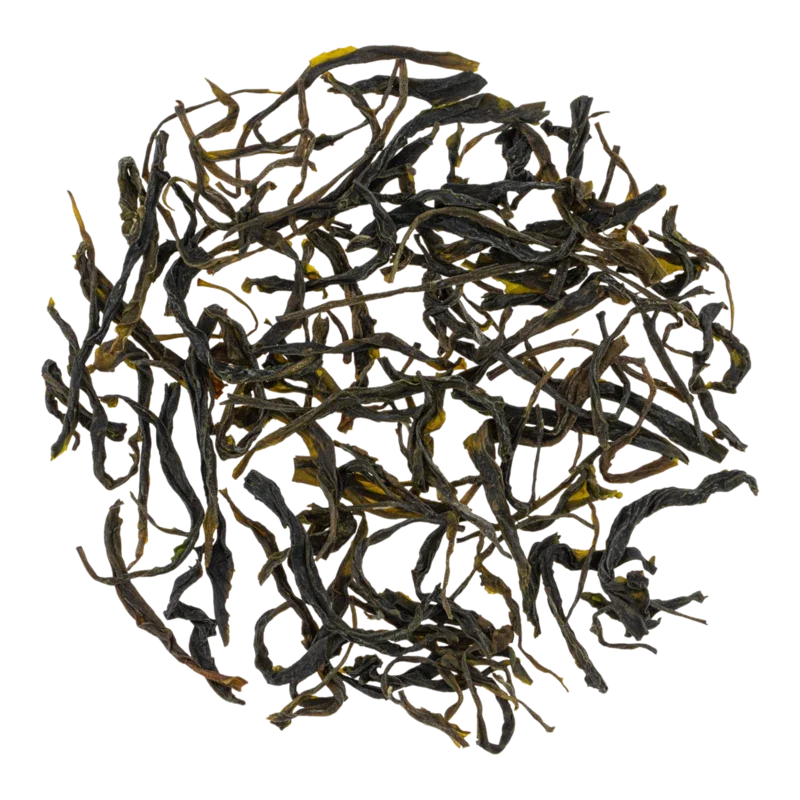
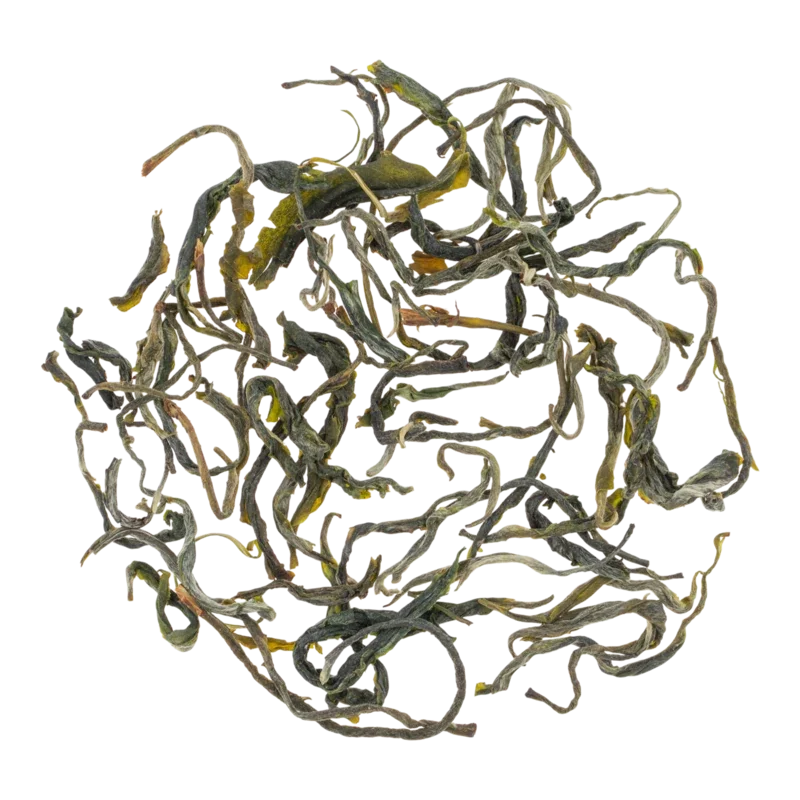
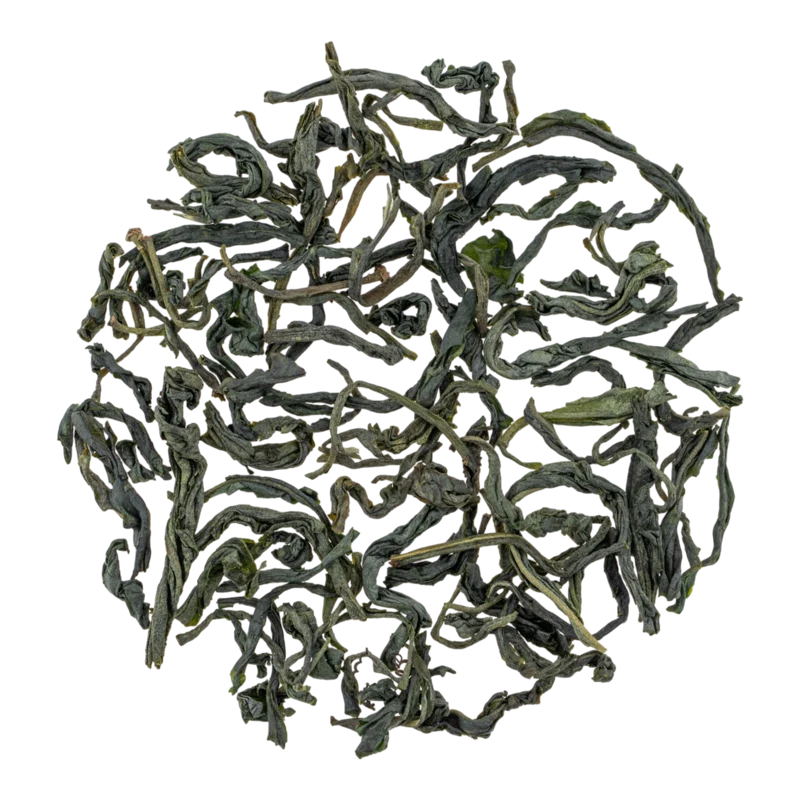
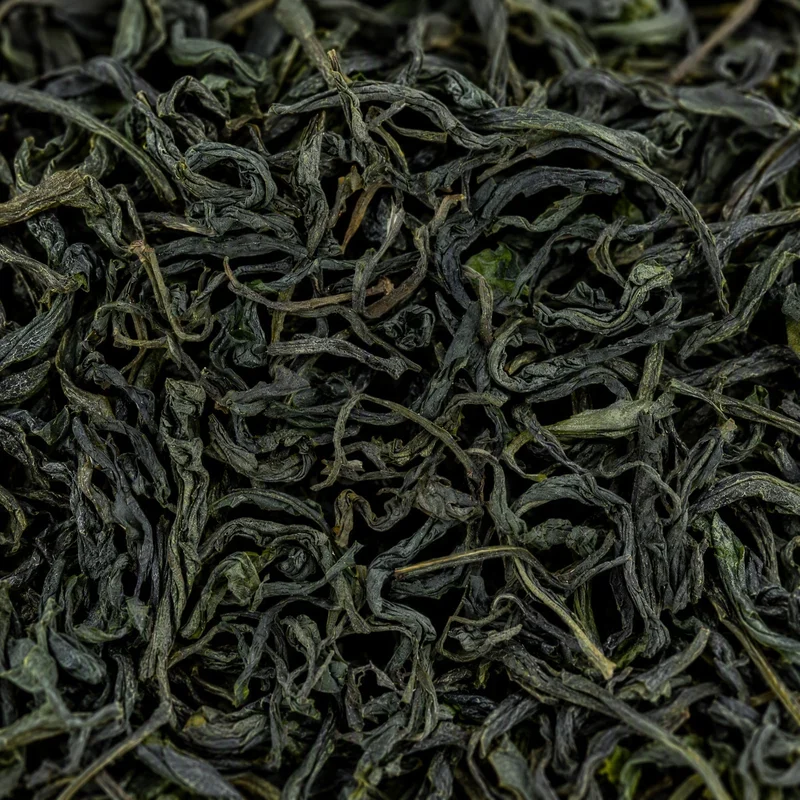
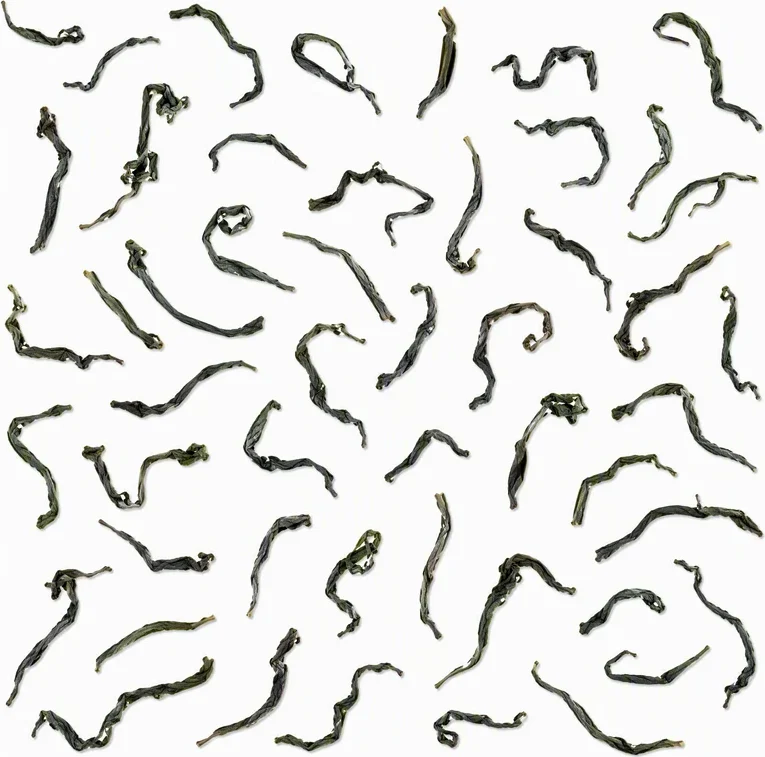
Dry Leaf Appearance: Two main styles. "Jinding Cuihao" (金鼎翠毫) — thin, curved, abundantly downy hand-made tea leaves. "Gaoxiang Maojian" (高香毛尖) — machine-produced, needle-like, straight as pine needles. Color — emerald green with oily luster and pronounced silvery down (翠绿油润显毫).
Dry Leaf Aroma: Persistent chestnut aroma (栗香, lìxiāng) with floral honey notes (花蜜香) in spring tea and bamboo leaf (粽叶香) in special grade. Characteristic feature — "cold cup" aroma persistence (冷杯留香) more than 8 minutes.
Liquor Aroma: Chestnut, rich and resonant (栗香高郁, lìxiāng gāoyù). Floral-honey note appears on second-third infusion.
Liquor Color: Yellow-green, bright and clear (黄绿明亮).
Full-bodied and viscous (浓醇, nóngchún), with pronounced freshness (鲜爽, xiānshuǎng), due to high amino acid content (≥ 3.2%). Pronounced returning sweetness (huí gān); bitterness and astringency are minimal.
Spent Leaves: Tender, uniform, forming "bouquets" (嫩匀成朵), yellow-green, lively and fresh.
Alkaloids: Caffeine content 15% higher than lowland green teas, explained by prolonged vegetation period in tropical conditions.
Amino Acids: Content — ≥ 3.2%. Accumulation ensured by significant daily temperature range (> 12°C) and predominance of diffused light.
4.7 mg per 100 g — relatively high indicator for tea leaf, potentially beneficial for vision protection.
Essential Oils: Form chestnut-honey aromatic profile.
Minerals: Zinc, selenium (enrichment from volcanic soils), potassium, manganese.
Polyphenols: Content — ≥ 28%. High level due to large-leaf nature of raw material (Hainan large-leaf contains polyphenols at 35% level in fresh leaf) and tropical climate with intense insolation. Main components — EGCG, EGC, ECG.
Vitamins: Vitamin C (high content in fresh leaf), B vitamins, vitamin K.
Tea Amount: 3 g per 150 ml (1:50 ratio) for glass method; 5 g per 120 ml for gongfu.
Teaware: Glass tumbler — for observing "tea needle dance" ("Maojian" style leaves float vertically in water). White porcelain gaiwan — for collecting and retaining aroma.
Water Temperature: 80°C for standard brewing (boiling water, cooled 90 seconds). For special grade (翠毫) — 75°C.
Another famous Hainan green tea, produced in Baisha County on soils of a meteorite crater 700,000 years old. Baisha Lucha has a softer, "mineral" profile due to unique geology, while Jindinglucha is denser, more chestnut-like and "heavier" due to large-leaf raw material and pan-firing technology.
Historical wild tea from Wuzhi Mountain, known since the Qing era. Shuiman Cha is produced from wild Hainan large-leaf raw material using artisanal technology; the liquor differs in powerful brewing resistance and deep, slightly astringent character. Jindinglucha is its "civilized descendant," processed on modern equipment and possessing a more polished flavor.
Steamed green tea of Japanese style from Taiwan. Fundamentally different technology (steam instead of pan-firing) gives a "marine," grassy profile, contrasting with the chestnut-honey character of Jindinglucha.
Yunnan green tea from old large-leaf variety trees. Similarity — large-leaf raw material and "dense body" liquor; difference — Yunnan tea has more pronounced floral-honey sweetness and "wild" minerality, while Jindinglucha tends toward pure chestnut tone.
Price Category: "Jinding Cuihao" (特级, handmade): 800–1,000 yuan per jin — highest grade, one bud with beginning-to-open leaf, pronounced chestnut aroma, abundant down. Suitable as gift tea. First grade: 300–500 yuan per 500 g — one bud with one leaf, bright liquor, fresh flavor. Second grade: 100–200 yuan per 500 g — one bud with two leaves, suitable for daily consumption and use as base for blends and bagged tea.
No reviews yet. Tell us what you think of this tea.
Rate this tea and share your impressions. We review each submission before publishing it.