Brewing
Gongfu brewing
- Water temperature
- 100 °C
- Tea amount
- 7 g
- Water volume
- 100 ml
- First steep
- 10 s
- Time added per infusion
- 5 s
- Infusions
- 12

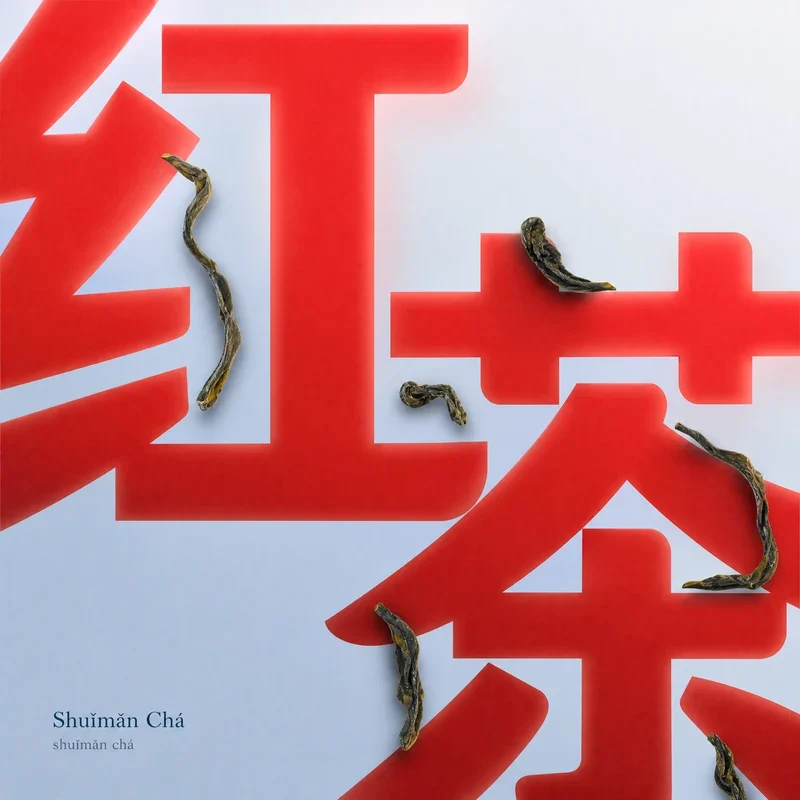
shuǐmǎn chá
Choose a brewing method. Start with the recommended quantities and time, then adjust to taste.
Brewing
Brewing
Taste
Tea encyclopedia
Alt Names: Wǔzhǐshān Chá (五指山茶) — "tea from Five Fingers Mountain"; Wǔzhǐshān Yè Chá (五指山野茶) — "wild tea of Wuzhishan"; Lì Chá (黎茶, Líchá) — "tea of the Li people"; Shuǐmǎn Dà Yè Chá (水满大叶茶) — "large-leaf tea from Shuiman".
Alt Names: Wǔzhǐshān Chá (五指山茶) — "tea from Five Fingers Mountain"; Wǔzhǐshān Yè Chá (五指山野茶) — "wild tea of Wuzhishan"; Lì Chá (黎茶, Líchá) — "tea of the Li people"; Shuǐmǎn Dà Yè Chá (水满大叶茶) — "large-leaf tea from Shuiman".
Category: Historical regional tea of Hainan Island; special tropical high-mountain tea (热带高山茶). Belongs to products with geographical indication of Wuzhishan City.
National-level geographical indication product (国家农产品地理标志). The Hainan large-leaf variety (海南大叶种) is registered in the national variety registry under number GS13016—1985. In 2024, the traditional production technology was included in the intangible cultural heritage registry.
Coordinates: approximately 109°30′ E, 18°50′ N (Shuiman Township, foothills of Wuzhishan Mountain).
Origin: China, Hǎinán Province (海南省), Wǔzhǐshān City (五指山市), Shuǐmǎn Township (水满乡). The name "Shuiman" (水满) in the Li language means "ancient, sacred, highest" — a reference to the venerable status of this locality in Li culture.
Type: Predominantly green tea (绿茶, lǜchá) — unoxidized; red tea (black tea) (红茶, hóngchá) — fully oxidized is also produced. The green variant is traditional and dominant.
Wǔzhǐshān Tea Farm (五指山茶场), Maona Village tea cooperatives, "Yexian" brand (椰仙), "Yinxiang Shuiman" brand (印象水满).
Hainan provincial tea shops, certified dealers with geographical indication products.
Tmall flagship stores of verified producers, JD.com certified shops.
Tea workshops in Maona Village and Xincun Village, Shuiman Township.
Due to tropical climate, early spring harvest in Shuiman begins as early as December–January — 1–3 months earlier than in any other tea region of China. This is the earliest spring tea in the country.
In April 2022, Maona Village was visited by Xi Jinping, who inspected the tea workshop of Wáng Bòhé (王柏和) and his wife Wáng Juru (王菊茹). The visit became a catalyst for rapid development of tea tourism and the tea industry in the region.
In Wuzhishan tropical forests, wild tea trees over 12 m tall with trunk circumference exceeding 1 m and age of several hundred years have been discovered. By 2024, more than 3,600 wild trees have been recorded, including over 200 centennial specimens — and the survey continues.
In traditional Li medicine, fresh tea tree leaves were chewed for stomach disorders, colds and diarrhea — a practice that continues today. This is possibly one of the most ancient ways of consuming tea in the world.
Research has shown that the Hainan large-leaf variety practically does not absorb toxic heavy metals (arsenic, cadmium, mercury) from soil — a rare property making it one of the "cleanest" tea varieties.
Cultivar: Hǎinán Dàyè Zhǒng (海南大叶种, Hǎinán Dàyè Zhǒng) — large-leaf variety of Camellia sinensis, domesticated from wild trees of Wuzhishan tropical forests. Recognized as a national variety in 1985 (GS13016—1985). Morphologically — tree-type (乔木型, qiáomù xíng); height of wild specimens reaches 11–12 m, individual ancient trees — over 12 m with trunk circumference exceeding 1 m. Leaves are large, elliptical, thick and fleshy. Polyphenol content — ≥28%, caffeine — about 6%. The variety possesses high resistance to adverse conditions and, according to research, demonstrates reduced uptake of heavy metals (arsenic, cadmium, mercury) from soil. To date, the Hainan large-leaf variety has not undergone complete selection — its "genetic profile" remains maximally close to its wild ancestor.
Picking: Due to the tropical climate, tea can be harvested up to 10 months per year. Early spring harvest (December–January) — the earliest in China; this tea is called "the first spring tea of the Middle Kingdom" (华夏第一早春茶). Main spring harvest — February–April.
Pluck Standard: Supreme grade (特级) — pure buds or bud with one leaf (全芽或一芽一叶); First grade (一级) — bud with one leaf (一芽一叶); Second grade (二级) — bud with two leaves (一芽二叶), also used as raw material for tea bags.
Raw Material: Shoots must be intact, without mechanical damage. For highest grades — hand picking.
Altitude: Main plantations — from 300 to 800 m above sea level; core — around 600 m. Wild trees are found up to 1,400 m.
Climate: Tropical monsoon. Average annual temperature 22.4°C; daily temperature range — more than 12°C (unusually high for tropics and very favorable for tea). Annual precipitation — 2,200–2,400 mm. Foggy days — over 200 per year; proportion of diffused light — more than 75%. Frost-free period — year-round. Average annual sunshine duration — about 2,000 hours.
Soil: Slightly acidic lateritic red soils (微酸性红壤, wēi suānxìng hóng rǎng), developed on volcanic ash. pH 4.5–6.0. Organic matter content — ≥15 g/kg. Soils are exceptionally rich in microelements: cobalt (Co) and molybdenum (Mo) — in concentrations 138–300 times higher than average soil levels; zinc and selenium — in elevated quantities. Water supply — first-class pure mountain springs (national standard Ⅰ).
Tea gardens are interspersed within tropical rainforest fabric (热带雨林); forest cover — 89.13%. Chemical pesticides are not used; pest control — natural (ladybugs, spiders and other predatory arthropods). The territory is part of the buffer zone of Hainan Tropical Rainforest National Park.
Maona Village (毛纳村) and Xincun Village (新村) in Shuiman Township provide up to 90% of supreme grade volume.
Fresh leaves are spread for initial moisture loss and aroma development.
In cast iron pan over wood (charcoal) fire (铁锅炭火). The principle "watch tea — make tea" (看茶做茶, kàn chá zuò chá) is applied: processing parameters are adjusted "by eye" depending on leaf condition.
Hand rolling in bamboo basket (竹筐手工). Cell wall destruction to begin juice extraction.
Pan-firing and rolling are repeated twice more — three cycles total. Each subsequent cycle enhances shaping and fixes the characteristic "smoke" of wood fire (柴火香, cháihuǒ xiāng). Precisely the "triple fixation" (三次杀青法) is the signature of the technology: it allows preserving wood fire aroma without burning.
Final drying and simultaneously "aroma lifting" (提香, tíxiāng) — slow heating over charcoal until complete drying.
Fresh leaves are spread under open sun for partial moisture loss and beginning of oxidation.
Hand or mechanical.
4–6 hours under controlled conditions.
Oxidation fixation and honey aroma formation.
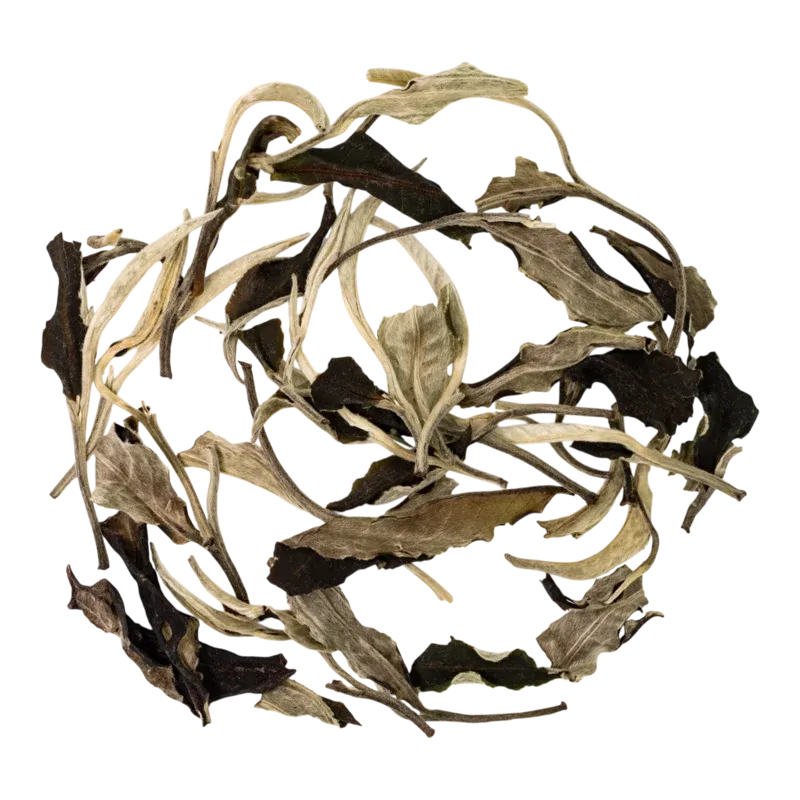
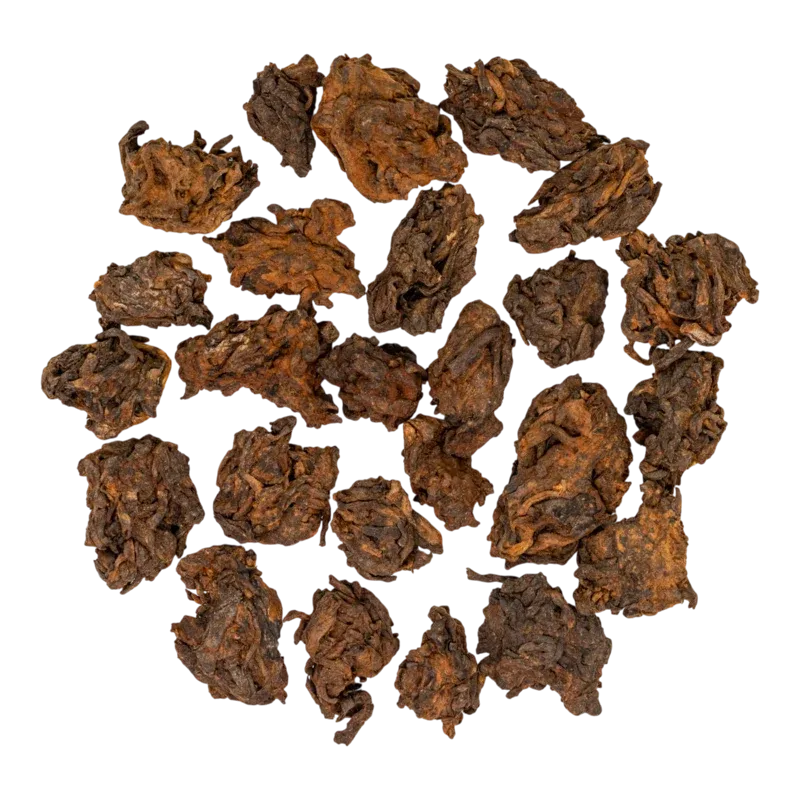
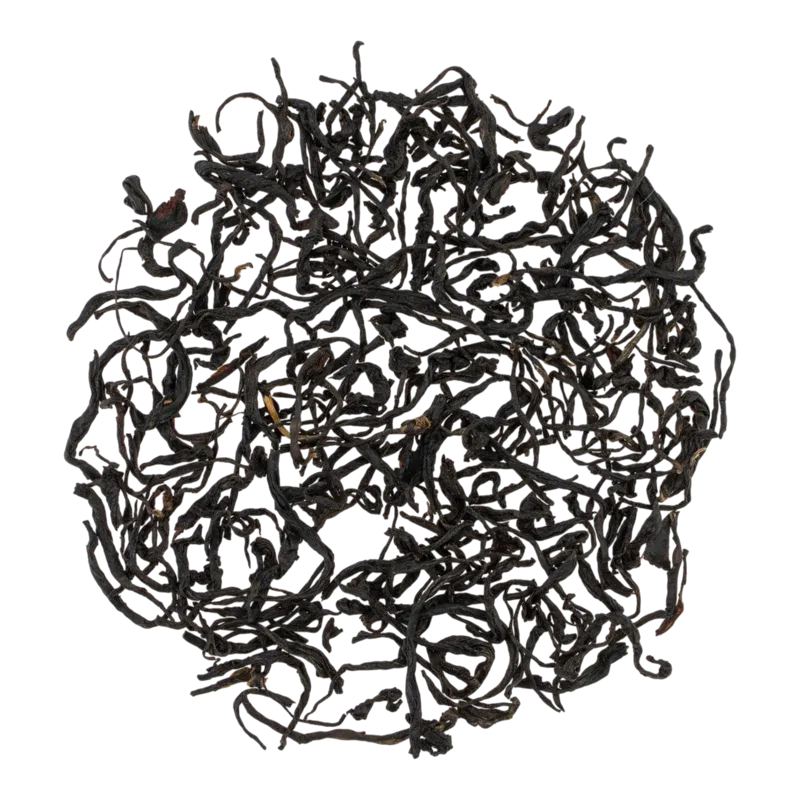
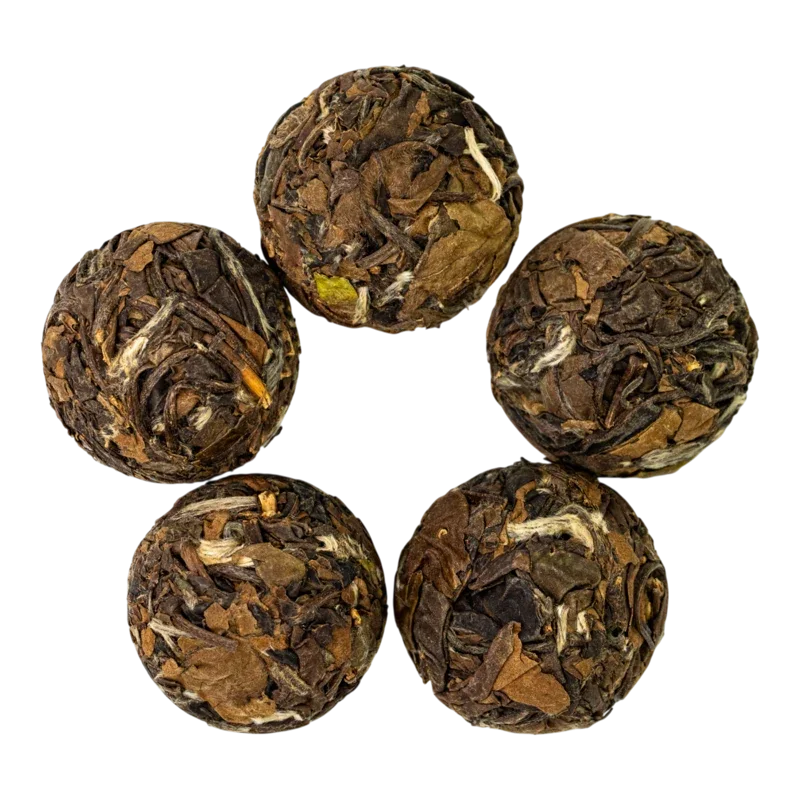
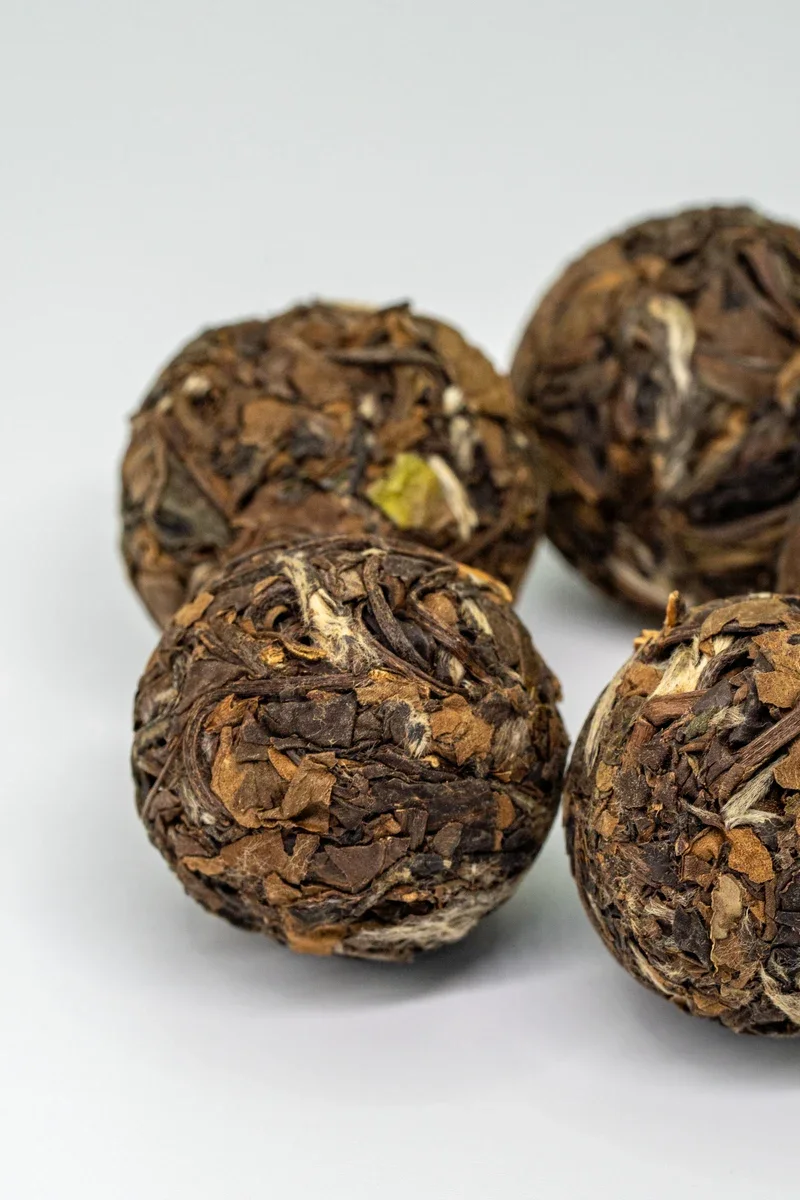
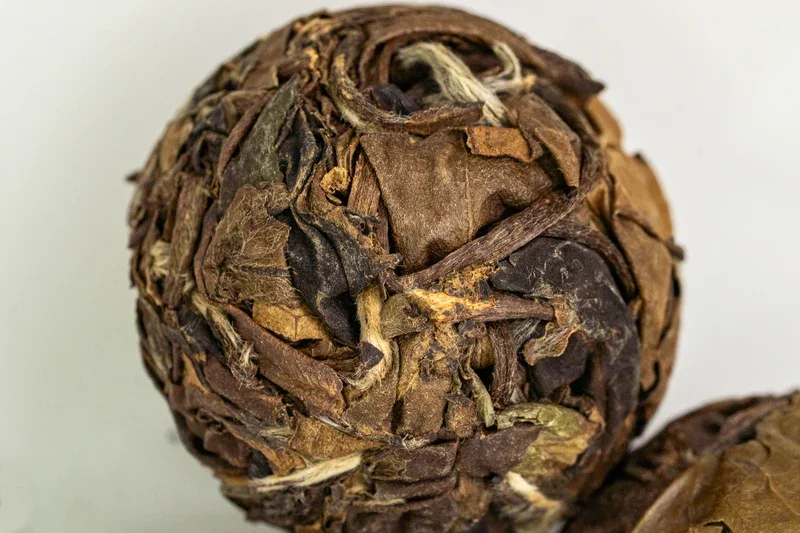
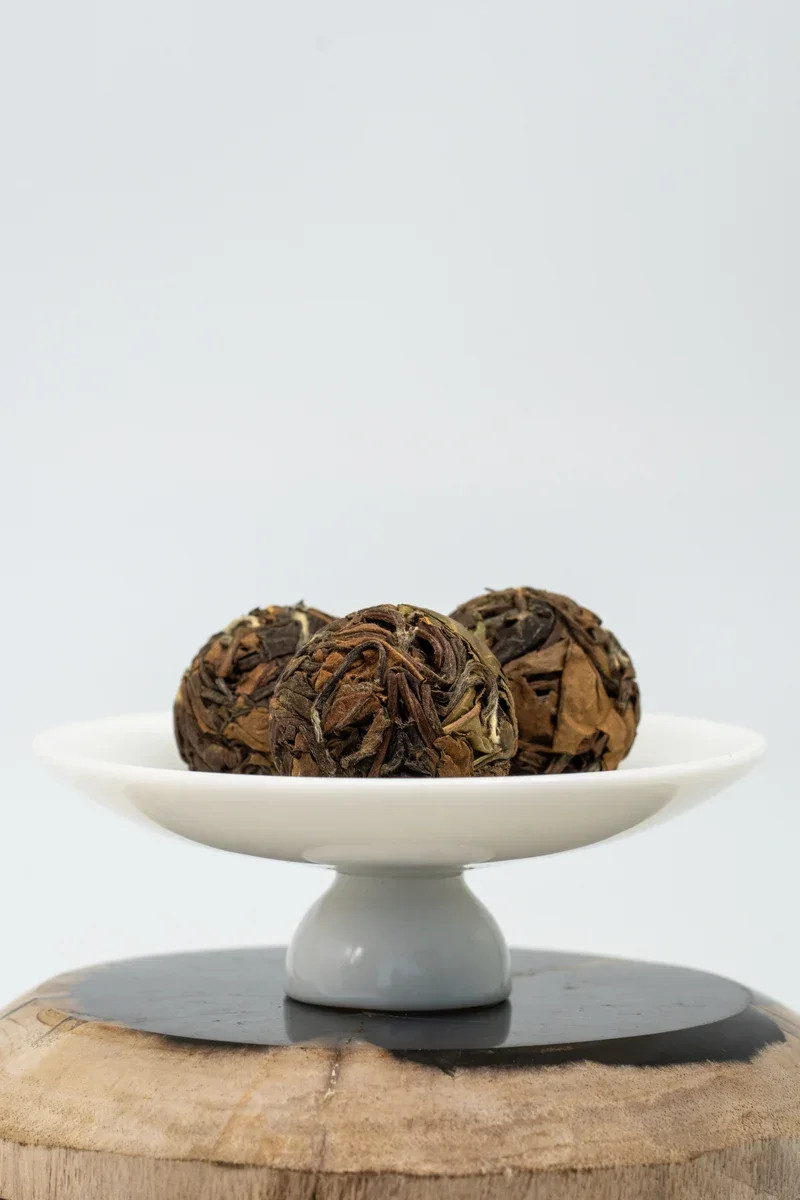
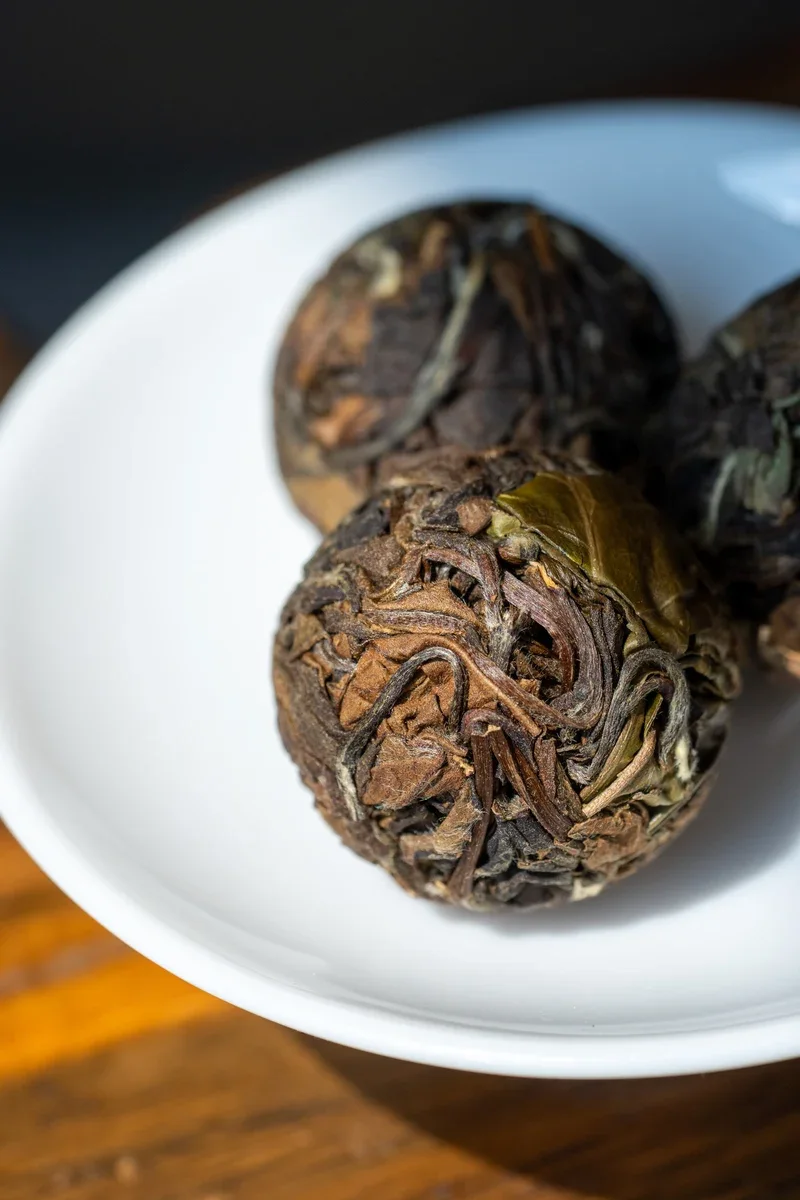
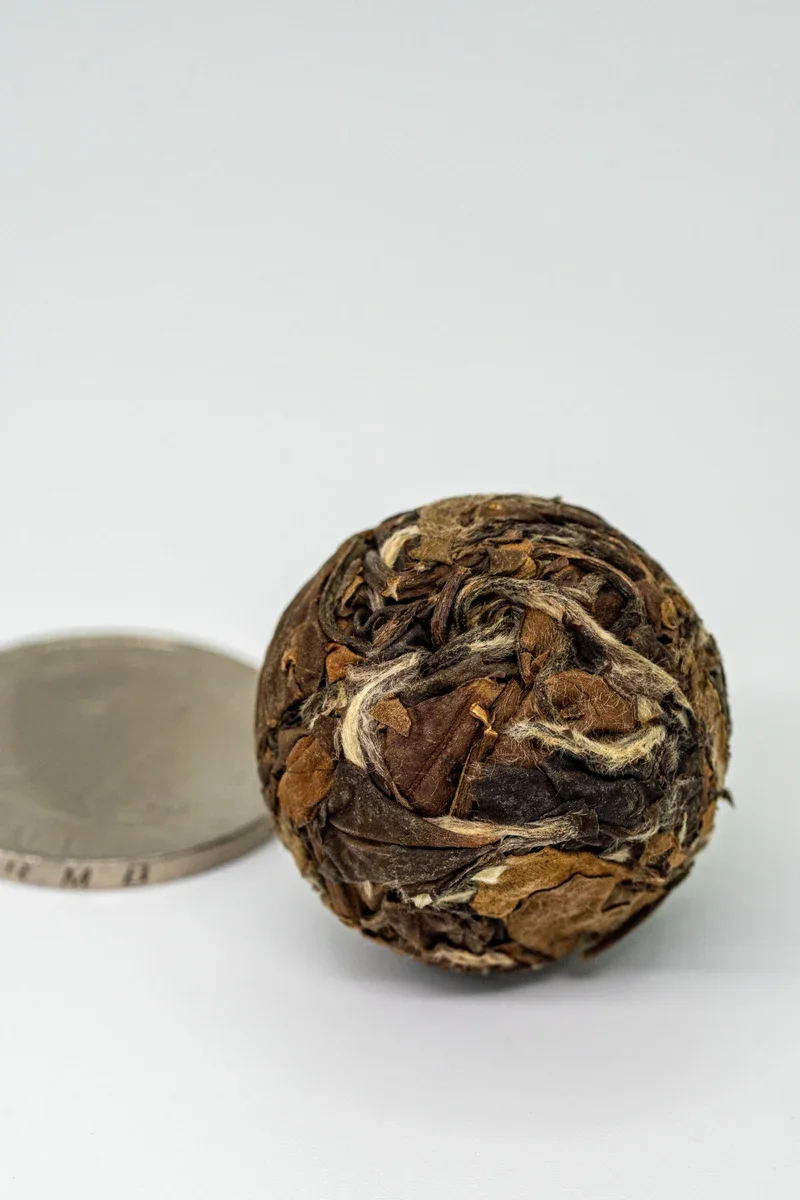
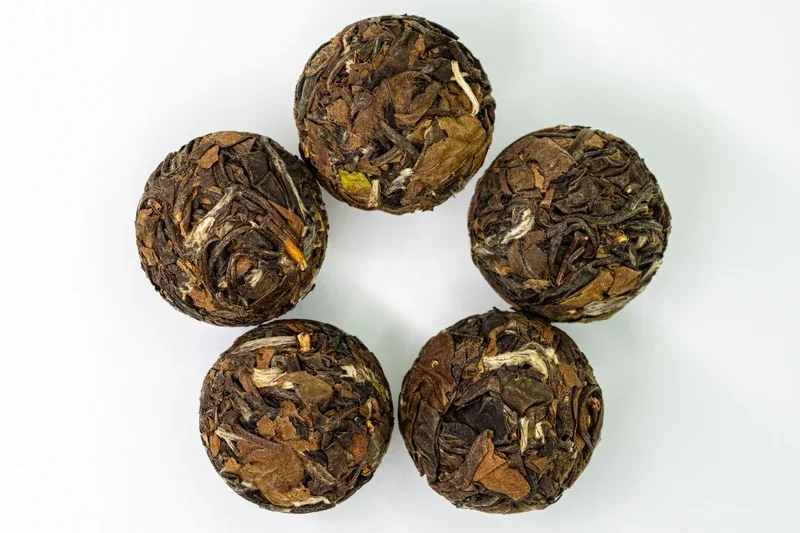
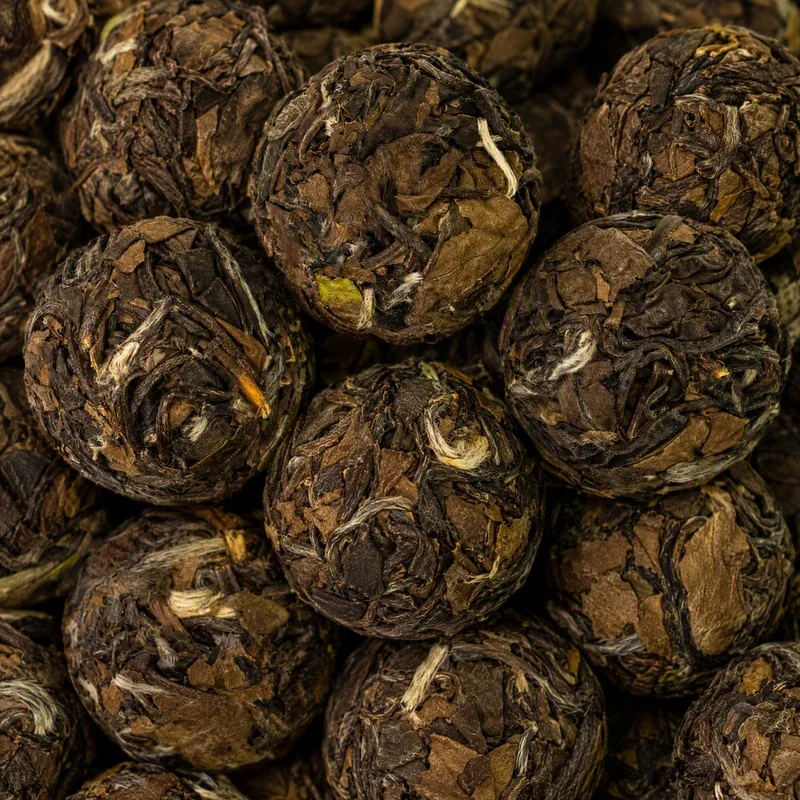
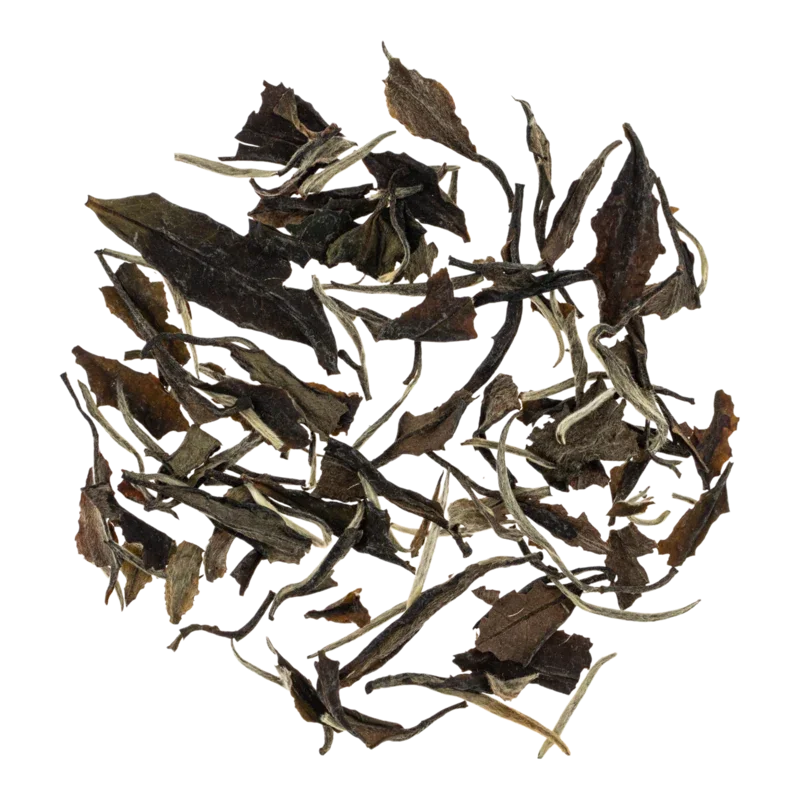
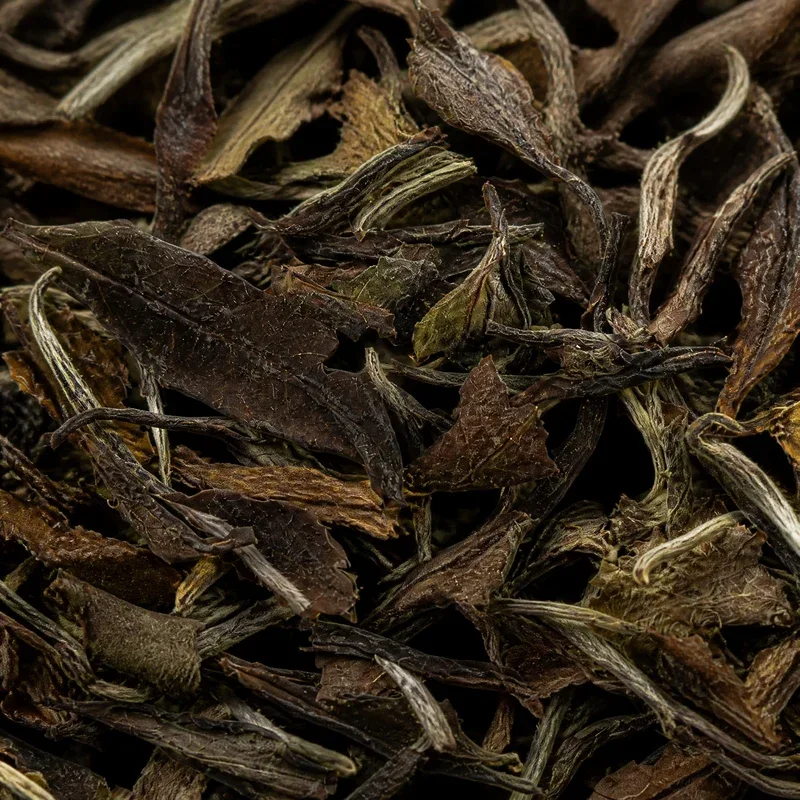
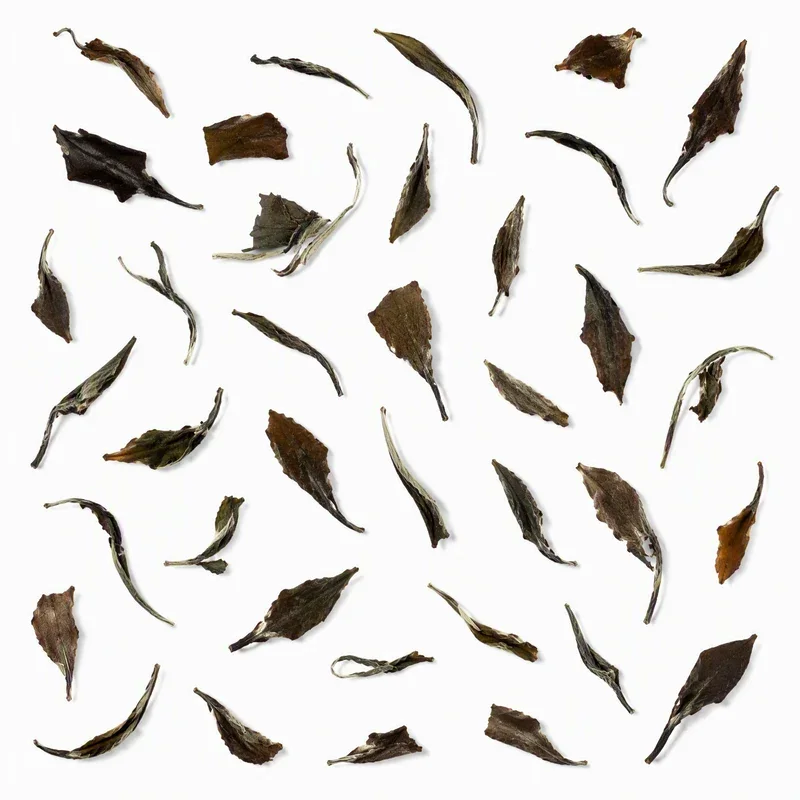
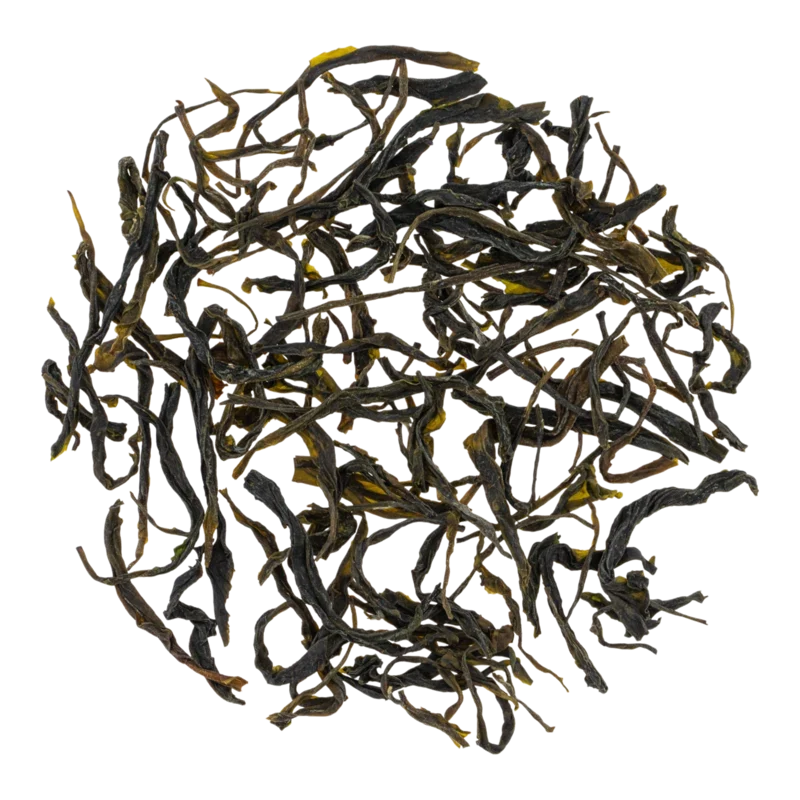
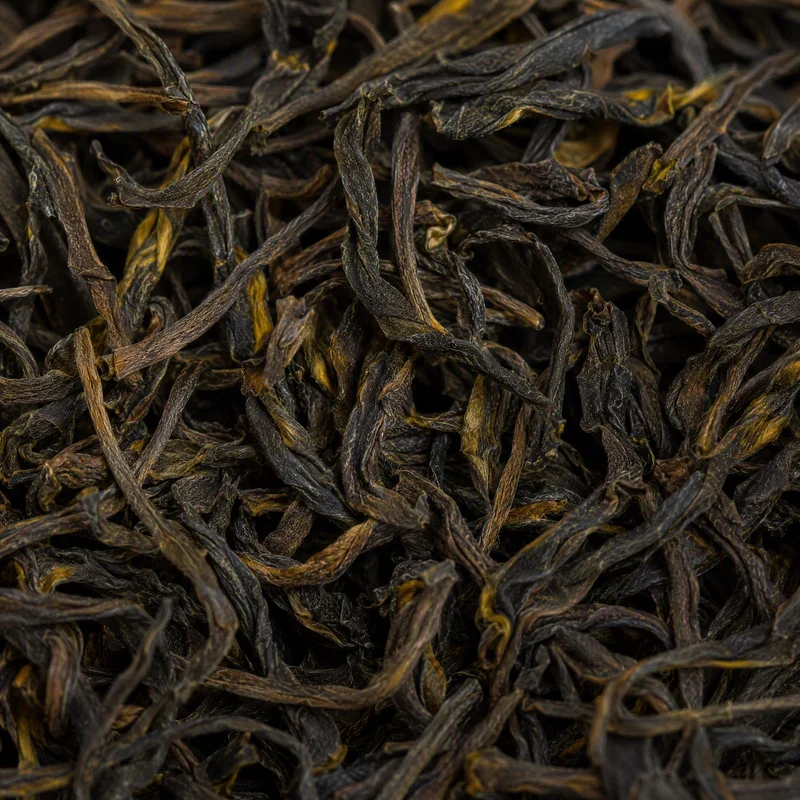
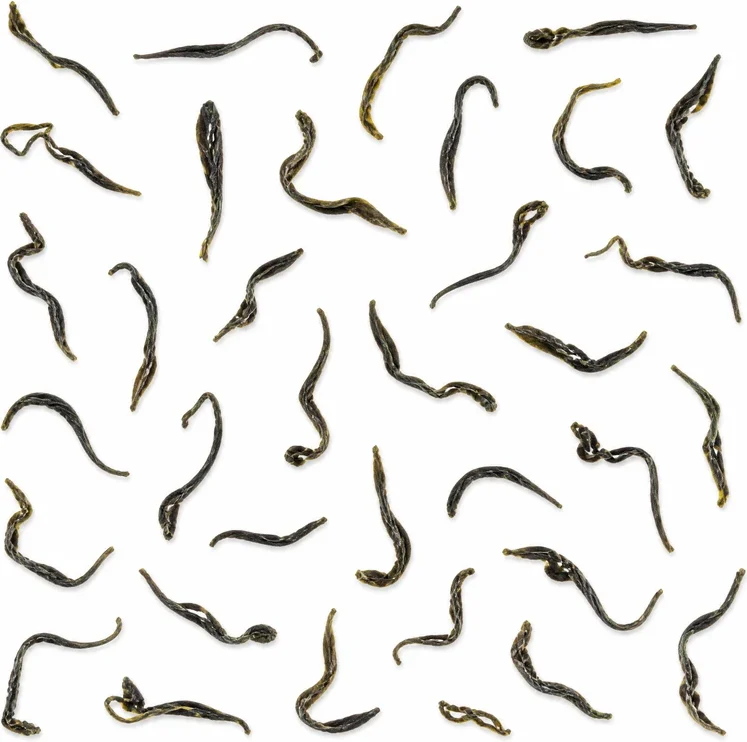
Dry Leaf Appearance: Dense, massive, tightly twisted tea particles (条索肥壮紧结). Color — dark green.
Dry Leaf Aroma: Pure, high, persistent, with chestnut note (spring harvest) and characteristic "wood hearth smoke" (柴火香).
Liquor Aroma: Persistent, with dominance of pure fresh tone (清香) and chestnut undertone. Cold cup aroma retention (冷杯留香) lasts more than 8 minutes.
Liquor Color: Bright red with golden rim (红艳透金圈).
Dark, with golden down (乌润显金毫).
Pronounced honey sweetness (蜜香) with floral-fruity notes.
Spent Leaves: Red-bright, lively.
Taste: Soft, full, with long sweetness.
Alkaloids: Caffeine — about 6% (elevated level, characteristic of large-leaf varieties). Theobromine, theophylline — in standard quantities.
Amino Acids: Content in balance with high polyphenol levels; L-theanine provides freshness and "calming" effect.
Cobalt (Co), molybdenum (Mo) — in concentrations many times higher than average (138–300 times). Cobalt participates in hematopoiesis (component of vitamin B₁₂); molybdenum — cofactor of several antioxidant enzymes. Zinc, selenium — in elevated quantities.
Extreme polyphenol content combined with unique microelement profile makes Shuiman Cha an object of interest for nutraceutical research.
Essential Oils: The smoky-chestnut profile of the green variant is formed by pyrazines and furfural from the triple fixation process over wood fire.
Polyphenols: 38–42% — record high level, significantly exceeding indicators of most Chinese green teas (typically 20–30%). Main components — catechins (EGCG, EGC, ECG, EC).
Vitamins: Vitamin C, B-group vitamins, vitamin E — within typical green tea ranges.
Polyphenols at 38–42% concentration provide one of the highest antioxidant potentials among green teas.
Cobalt (Co), contained in exceptionally high concentrations, is a component of vitamin B₁₂ and participates in erythropoiesis.
Elevated caffeine content (up to 6%) provides pronounced stimulation. Combination with L-theanine softens caffeine action, giving steady alertness.
In Li folk medicine, fresh tea leaves were chewed for intestinal disorders and colds — a practice over a thousand years old. Tannins and catechins possess confirmed bacteriostatic action.
Catechins stimulate fat oxidation.
High polyphenol content is associated with LDL cholesterol reduction and maintenance of vascular elasticity.
In tropical climate, tea is traditionally used for thirst quenching and heat stress relief.
Selenium and zinc support immune function.
Due to high polyphenol content, the liquor quickly gains strength; do not over-steep — over-brewing may cause excessive astringency.
Tea Amount: 3 g per 150 ml (1:50 ratio).
Teaware: Glass cup (玻璃杯) — for observing the "dance" of large leaves; white porcelain gaiwan (盖碗) — for aroma concentration and layered evaluation.
Water Temperature: Green tea — 80–85°C (boil and cool for about 90 seconds). Red tea (black tea) — 90–95°C.
Enemies: Light, moisture, heat, foreign odors, oxygen.
Airtight light-proof packaging; store in refrigerator at 0–5°C. Shelf life — 12 months.
Airtight packaging at room temperature, away from light, moisture and odors. Shelf life — up to 36 months.
The second famous Hainan green tea, grown in the meteorite crater of Baisha County. Both are tropical, from large-leaf varieties. However, Baisha is more "gentle," with an emphasis on sweetness (crater soils provide a special mineral profile); Shuiman is more "powerful," with pronounced polyphenol saturation and smoky aroma from triple fixation over charcoal.
Common ancestor — Camellia sinensis var. assamica, but the Hainan large-leaf variety is a separate population, isolated on the island for millennia. Yunnan greens (for example, shaiqing from Lincang) have a more pronounced floral note; Shuiman is more "primitive," with woody smoke and tropical minerality.
Complete opposite in typology: small-leaf vs. large-leaf, flat shape vs. tight twist, chestnut-bean aroma vs. smoky-chestnut. Long Jing polyphenols — 20–25%, Shuiman — 38–42%. If Long Jing is "silk," then Shuiman is "mountain wind."
Hainan red tea from Qiongzhong, a neighboring district. Both use large-leaf varieties, both are distinguished by honey aroma. However, Bai Ma Jun Hong is exclusively red; Shuiman is produced in both green and red variants, with green remaining dominant.
Price Category: Suspiciously cheap "wild tea from Wuzhishan" — almost certainly substitution: wild harvest volume is extremely limited.
Authentic Shuiman Cha (green) — large, massive, tightly twisted tea particles; red tea (black tea) — dark with golden down. Small-leaf imitations are noticeably different.
Real green Shuiman possesses characteristic "wood hearth smoke"; red tea (black tea) — honey sweetness. Absence of these notes — sign of substitution.
Green — yellow-green, clear; red tea (black tea) — bright red with golden rim.
Prefer products with Wuzhishan geographical indication marking. Reliable brands "Yexian" (椰仙), "Yinxiang Shuiman" (印象水满) and products from specific tea workshops of Maona Village.
No reviews yet. Tell us what you think of this tea.
Rate this tea and share your impressions. We review each submission before publishing it.