Brewing
Gongfu brewing
- Water temperature
- 93 °C
- Tea amount
- 5 g
- Water volume
- 100 ml
- First steep
- 10 s
- Time added per infusion
- 5 s
- Infusions
- 4

jīn xuān gāoshān hóngchá
Choose a brewing method. Start with the recommended quantities and time, then adjust to taste.
Brewing
Brewing
Taste
Tea encyclopedia
Category: Taiwanese high-mountain red teas (台灣高山紅茶, Táiwān Gāoshān Hóngchá). Belongs to the group of small-leaf (小葉種, xiǎoyè zhǒng) red teas, which distinguishes it from large-leaf Assam red teas such as Sǔn Moon Lake Red Tea (日月潭紅茶).
Category: Taiwanese high-mountain red teas (台灣高山紅茶, Táiwān Gāoshān Hóngchá). Belongs to the group of small-leaf (小葉種, xiǎoyè zhǒng) red teas, which distinguishes it from large-leaf Assam red teas such as Sǔn Moon Lake Red Tea (日月潭紅茶).
Coordinates: Approximately 23°30' North latitude, 120°45' East longitude (Alishan area, main production region).
Origin: Táiwān (台灣, Táiwān). Produced in several high-mountain tea regions in the central part of the island, predominantly in Chiayi County (嘉義縣, Jiāyì Xiàn) — Ālǐshān area (阿里山, Ālǐshān), and in Nántóu County (南投縣, Nántóu Xiàn) — areas of Shānlínxī (杉林溪, Shānlínxī), Lùgǔ (鹿谷, Lùgǔ) and Líshān (梨山, Líshān). Main plantations are located at elevations from 1000 to 1600 meters above sea level, with the most premium raw material harvested at elevations above 1200 m.
Type: Red tea (black tea) (紅茶, hóngchá) — fully oxidized. According to European classification, it belongs to black teas. Degree of oxidation — 90–100%.
The name "Jin Xuan" (金萱) was given to the cultivar by the first TRES director Wu Zhenduo in honor of his grandmother, which gives this breeding variety rare personal, familial warmth for the botanical world.
The worldwide fame of Jin Xuan as "milk oolong" created a persistent misconception. In reality, the natural milky aroma of this variety is very subtle and manifests only under certain growing and processing conditions. The overwhelming majority of "milk oolongs" on the market are flavored teas. In red tea from Jin Xuan, creamy notes are even more delicate and present rather as a light shade, not a dominant.
Jin Xuan is one of the few cultivars from which four tea categories are successfully produced: green, oolong (both light and medium oxidation), red, and even GABA tea. Such breadth of adaptation reflects its excellent agronomic qualities.
In the last decade, Jin Xuan has become one of the most popular cultivars for producing base tea in the Taiwanese tea beverage industry — from milk tea to fruit cold drinks.
Jin Xuan occupies one of the leading places by planting area in Taiwan, yielding only to Qingxin Oolong. Main cultivation areas are concentrated in Nantou and Chiayi counties.
Cultural Significance: Jin Xuan Gaoshan Hong Cha embodies the innovative spirit of Taiwanese tea cultivation — the desire to unlock the potential of familiar cultivars in processing technologies unusual for them. This tea occupies a special place in the lineup of Taiwanese red teas, positioning itself as a soft, elegant alternative to more astringent large-leaf red teas. In Taiwan, it has also gained popularity in the tea beverage industry (茶飲, cháyǐn) thanks to its sweet, honey-fruity character and smooth texture, perfectly suited for cold brewing.
History: Jin Xuan Gaoshan Hong Cha is a product of the modern Taiwanese tea industry, whose history is inextricably linked with the creation of the Tai Cha No. 12 cultivar. Work on this variety was conducted by the Taiwan Tea Research and Extension Station (茶業改良場, Cháyè Gǎiliáng Chǎng, TRES) for more than forty years. The cultivar was officially registered in 1981 under experimental number 2027 and received the commercial name "Jin Xuan." Initially, the variety was intended primarily for producing oolongs — Bāozhǒng (包種茶) and semi-spherical oolongs of the Taiwanese type. However, starting from the 2000s, Taiwanese farmers began experimenting with full oxidation of high-mountain Jin Xuan raw material, striving to create red teas with a unique flavor profile. This approach became part of the general trend in developing the Taiwanese red tea industry, which gained momentum in the early 21st century.
spreading (橫張型, héngzhāng xíng), medium height.
elliptical, medium size, fleshy and dense, bright green with pronounced luster. Buds are green with purple tint, with noticeable pubescence.
high — 20–50% higher than classic Taiwanese cultivars Qīngxīn Dàmǎo (青心大冇) and Qīngxīn Oolong (青心烏龍).
relatively frost-resistant, resistant to branch blight disease (枝枯病, zhīkū bìng), adapts well to various elevations and soil types.
when properly processed, exhibits natural creamy-milky aroma with notes of magnolia flowers (玉蘭花香, yùlánhuā xiāng). The intensity of the milky aroma depends on growing elevation, harvest season, and processing skill. In red tea, creamy notes manifest more subtly, yielding to a honey-fruity profile.
Cultivar: Jīn Xuān (金萱, Jīn Xuān), also known as Tai Cha No. 12 (台茶12號, Táichá Shí'èr Hào). Belongs to Camellia sinensis var. sinensis — the small-leaf subspecies. The variety was obtained through hybridization: paternal line — Yìngzhī Hóngxīn (硬枝紅心, Yìngzhī Hóngxīn), maternal — Tai Nong No. 8 (台農8號, Táinóng Bā Hào). Main botanical and agronomic characteristics of the cultivar:
Picking: Main harvest seasons — spring (March–April) and winter (October–November). Spring harvest is valued for refined aroma, winter — for increased sweetness. Summer and autumn harvests are also practiced, but their quality is considered less high.
Pluck Standard: Hand-picking. For premium red tea, bud and two upper leaves are used (一芽二葉, yī yá èr yè). For premium batches, the "bud + one leaf" standard is applied.
Raw Material: Only undamaged, healthy shoots harvested in dry weather are used. High-altitude origin of raw material is a key requirement determining tea quality and price category.
Climate: Subtropical mountain, with pronounced seasonality. Average annual temperature in the Alishan zone is 10–14°C, significantly cooler than lowland areas. Key climatic factors: significant diurnal temperature variation (10–15°C between day and night), frequent fogs and cloudiness (over 200 foggy days per year), high humidity (80–90%), abundant precipitation (2500–3000 mm per year). These conditions slow the growth of tea shoots, promoting accumulation of amino acids, pectins, and essential oils, which gives the tea characteristic sweetness and dense liquor texture.
Soil: Red lateritic and yellow-brown forest soils of mountain origin, well-drained, rich in organic matter and minerals. Acidity pH 4.5–5.5, optimal for tea plants. High phosphorus and potassium content promotes accumulation of aromatic compounds in leaves.
Jin Xuan plantations for red tea production are located at elevations of 1000–1600 meters above sea level. The Alishan area is the main production zone, where elevations vary from 1000 to 1400 m. Higher-altitude plantations of Lishan (1600–2000 m) and Dàyǔlǐng (大禹嶺, above 2000 m) yield even more refined raw material, however, they predominantly grow Qingxin Oolong, while Jin Xuan is encountered less frequently.
Hand-picking by "bud + two leaves" standard. Conducted in morning hours after dew has dried.
Picked leaves are spread in thin layers for moisture loss. Combined withering is applied: initial stage — in open air in shade or diffused light (日光萎凋, rìguāng wěidiāo), then — indoors with controlled temperature (室內萎凋, shìnèi wěidiāo). Duration — 12–18 hours or more. Goal — reduce moisture content to 60–65%, give leaves softness, and initiate initial oxidation.
Withered leaves are rolled using a roller or by hand. Rolling destroys cell walls, releases cell sap and enzymes, which activates oxidation of polyphenols. For Jin Xuan, rolling is conducted in moderate mode to preserve bud integrity and prevent excessive astringency.
Key stage. Rolled leaves are laid in layers in special rooms with temperature 24–28°C and humidity 90–95%. Duration — 3–5 hours. During oxidation, catechins transform into theaflavins and thearubigins, forming the characteristic liquor color, taste, and aroma. The master controls the process by leaf color change (from greenish-yellow to copper-red) and aroma (appearance of fruity-honey notes).
Multi-stage drying to stop oxidation and fix quality. Primary drying at temperature 100–110°C for 15–20 minutes stops enzymatic processes. Secondary drying at lower temperature (80–90°C) removes residual moisture to 4–6%. Some producers apply final light roasting (提香, tíxiāng) to enhance aroma.
Finished tea is sorted by size and leaf integrity, separating tips, whole leaves, broken leaf, and tea dust.
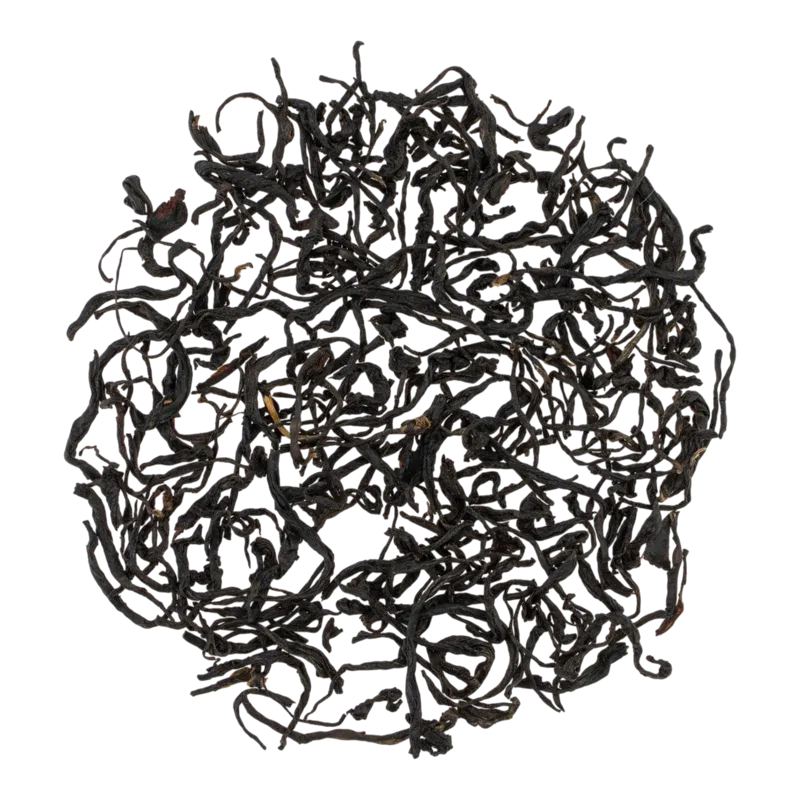
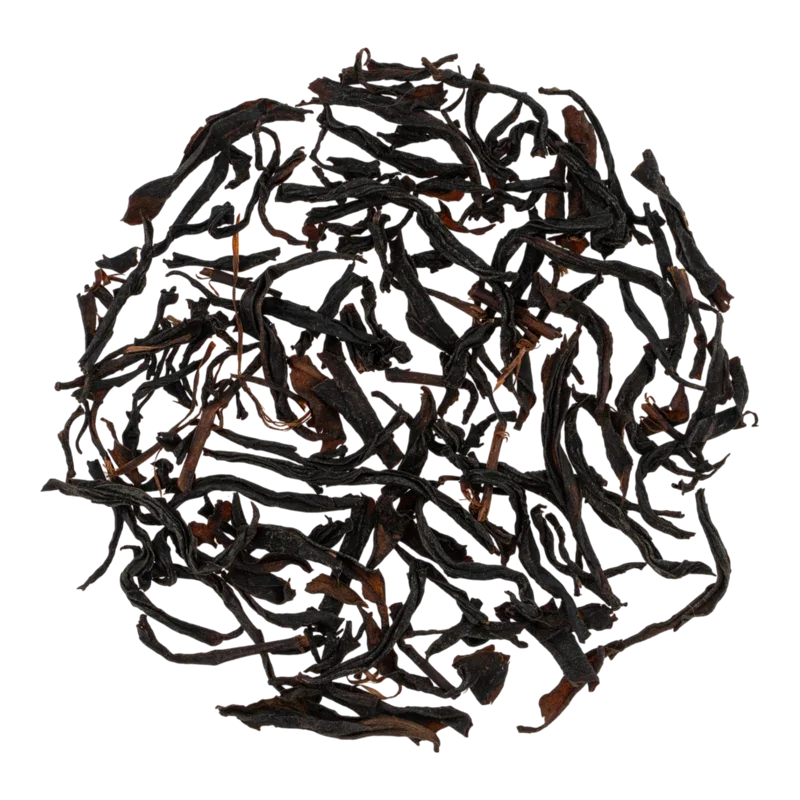
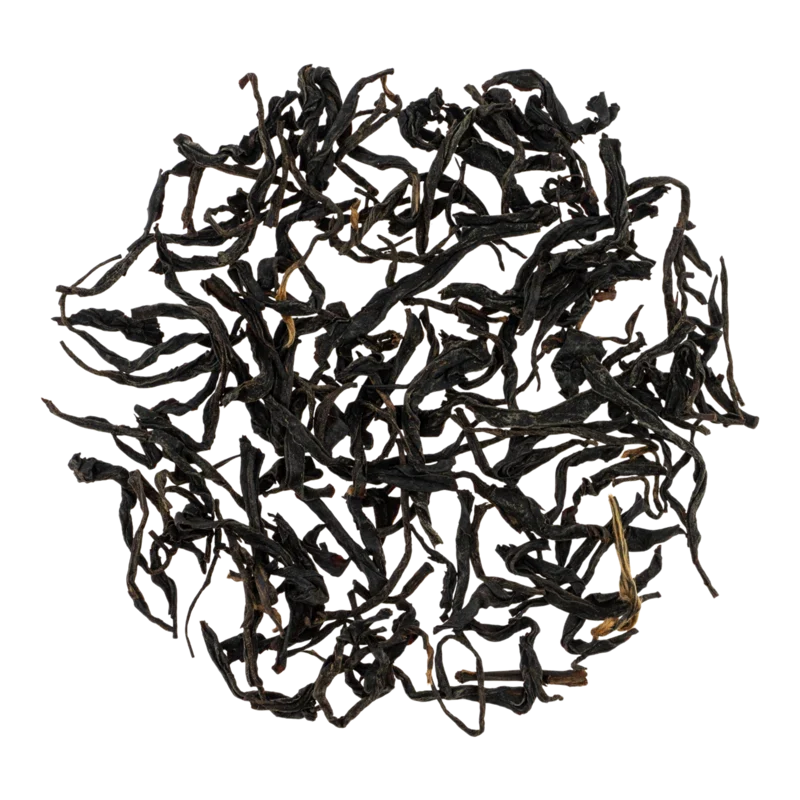
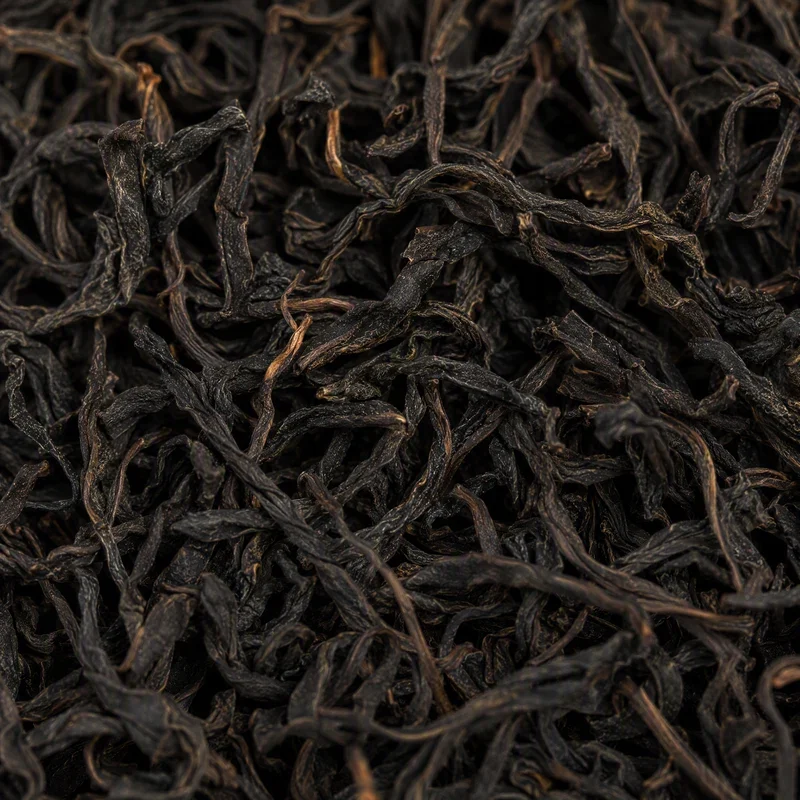
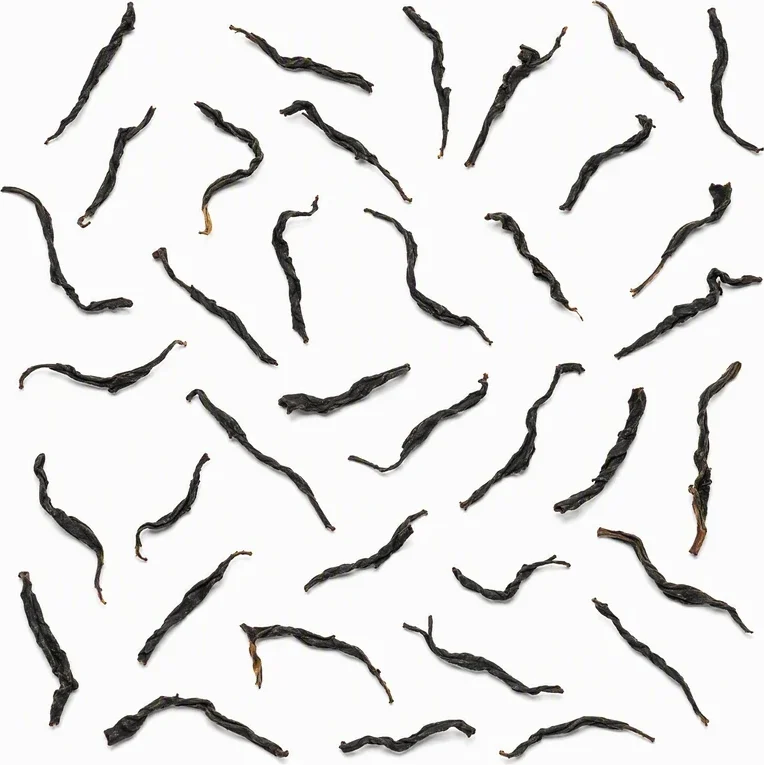
Dry Leaf Appearance: Dark brown, almost black, slightly curved tea particles in the form of strips or "eyebrows" (條索狀, tiáosuǒ zhuàng). Golden and reddish tips (buds) are present, their quantity being a marker of high quality. Leaf is neat, uniform in size.
Dry Leaf Aroma: Rich and multi-layered — honey, dried fruits (prunes, dried apricots), malt tones dominate. Light floral nuances and delicate creamy-milky notes characteristic of the Jin Xuan cultivar are present. High-mountain raw material adds a fresh, cool "top note."
Liquor Aroma: Bright, enveloping, with predominance of honey-fruity complex — ripe fruits, caramel, malt. Creamy tones are present in the background, especially pronounced when the liquor cools. Light floral shades may manifest.
Liquor Color: From amber-orange to rich red-amber, bright, transparent, with characteristic deep luster. Under good lighting demonstrates a golden "halo" around the cup edge.
Spent Leaves: Whole, elastic, evenly opened leaves of reddish-brown color with bronze tint. Buds are golden-orange. Uniformity and leaf integrity are indicators of quality processing.
Taste: Full-bodied, velvety, with pronounced natural sweetness and minimal bitterness. In the bouquet — notes of dried fruits (prunes, dried apricots, raisins), honey, malt, caramel. Astringency is light, pleasant, quickly transitioning to prolonged sweet aftertaste (回甘, huígān). Liquor texture is smooth, oily, with high pectin content (果膠質, guǒjiāo zhì). Sometimes a delicate fruity acidity is felt, adding dimension.
Alkaloids: Caffeine — about 2.5–3.5% dry mass (approximately 40–60 mg per 200 ml cup). Theobromine and theophylline are present in smaller quantities.
Amino Acids: Increased content compared to lowland red teas. L-theanine is the main amino acid, providing sweetness, umami-like notes, and calming effect. High-altitude origin and cool climate promote amino acid accumulation (≈3–4% dry mass).
High content of pectic substances — a characteristic feature of the Jin Xuan variety, conditioning the smooth, oily texture of the liquor.
Essential Oils: More than 300 volatile aromatic compounds, including linalool, geraniol, methyl salicylate, and cis-jasmone. The specific "creamy" aroma of Jin Xuan is associated with increased content of 2-acetyl-1-pyrroline and γ-dodecalactone.
Minerals: Potassium, magnesium, manganese, fluorine, zinc, iron. High-mountain soils enrich tea with mineral elements.
Polyphenols: During complete oxidation, catechins (epigallocatechin gallate, epigallocatechin, etc.) transform into theaflavins (1.5–2.5%) and thearubigins (8–15%), which form liquor color, flavor body, and astringent properties. Total polyphenol content in red tea from small-leaf raw material is usually lower than in large-leaf Assam varieties, explaining the milder taste.
Vitamins: B₁, B₂, B₆, C (in limited quantity due to heat treatment), E, K.
The combination of caffeine with L-theanine provides a mild, prolonged tonic effect without sharp peaks and drops, increases concentration and cognitive activity.
Red tea has a "warm" nature according to traditional Chinese medicine canons (性溫, xìng wēn), improves peripheral circulation, good in cold weather.
Theaflavins and thearubigins exhibit pronounced antioxidant activity, protecting cells from oxidative stress and promoting slowing of aging processes.
Stimulates secretion of digestive enzymes, promotes assimilation of fatty and protein foods. Pectins coat gastric mucosa, providing mild protective action.
Regular consumption of red tea may contribute to lowering LDL cholesterol levels, improving vascular elasticity, and normalizing blood pressure.
Red tea polyphenols possess antibacterial and antiviral properties, supporting natural body defense mechanisms.
L-theanine promotes increased dopamine and serotonin levels, providing mild anti-stress and anti-anxiety action. The tea ceremony ritual enhances the relaxing effect.
6 g tea per 600 ml cold water. Place in refrigerator for 6–8 hours. Cold brewing emphasizes natural sweetness and minimizes astringency.
Tea Amount: 4–5 g per 150 ml water (gongfu method); 3 g per 200 ml (European method).
Teaware: Porcelain gàiwǎn (蓋碗, gàiwǎn) — preferred option, allowing all aroma nuances to unfold. Yíxīng clay teapot (紫砂壺, zǐshā hú) or porcelain teapot also suitable.
Water Temperature: 90–95°C. Too hot water (100°C) may increase astringency, insufficiently hot — will not reveal aroma.
Container: Airtight opaque jar (tin, porcelain, glass with opaque coating) or dense foil bag with closure. Avoid plastic containers.
Enemies: Moisture, direct light, high temperature, foreign odors, oxygen.
Shelf Life: Optimal — 12–24 months from production date. Red tea does not require refrigerator storage, unlike green and yellow teas. With proper conditions, maintains quality up to 3 years, though fresh tea (up to 1 year) has the brightest aroma.
Dry, cool, dark place with temperature not exceeding 25°C. Store away from direct sunlight, moisture sources, and strong odors.
Taiwanese red tea from large-leaf cultivar Tai Cha No. 18 (Hong Yu, 紅玉). Noticeably more astringent and rich, with characteristic notes of mint and cinnamon, dense body. Jin Xuan Gaoshan Hong Cha is significantly milder and sweeter, with pronounced fruity-honey tones and smooth texture. The difference is due to the distinction between small-leaf (sinensis) and large-leaf (assamica) subspecies.
Produced in the same region but from Qīngxīn Oolong (青心烏龍) cultivar. Has more refined, floral aroma and light body, but yields to Jin Xuan in sweetness and flavor fullness. Jin Xuan has more pronounced honey profile and oily texture.
Elite Chinese red tea from buds, produced in Tóngmù (桐木). Has finest, exquisite taste with predominance of honey-floral notes and chocolate aftertaste. Jin Xuan Gaoshan Hong Cha is more "warm" and fruity, with denser body and pronounced caramel-malty tones.
Yunnan red teas from large-leaf raw material. Significantly more astringent and rich, with pronounced spicy, chocolate, and nutty notes, powerful body. Jin Xuan Gaoshan Hong Cha is more elegant, milder, with sweet fruity-honey profile.
Taiwanese heavily oxidized oolong (60–80%), not red tea, but often compared due to honey-fruity profile. Oriental Beauty has more "perfumery," muscatel aroma (thanks to leafhopper impact), while Jin Xuan Hong Cha is more straightforward, with clean caramel-fruity taste.
Specialized Taiwanese tea shops, dealers with transparent information about producer and origin region. Pay attention to presence of origin certificate (產地證明, chǎndì zhèngmíng).
Neat, uniform tea particles with visible golden tips. Abundance of broken leaf, dust, size non-uniformity — signs of low quality or adulteration.
Dry leaf should emit clean, rich honey-fruity aroma without foreign smells, mustiness, or artificial flavorings. Intrusive "milky" smell — probable sign of flavoring.
Clear, bright amber-red liquor with clean taste and prolonged aftertaste. Cloudy liquor, bitterness, flat taste — signs of poor-quality product.
Genuine high-mountain Jin Xuan red tea cannot cost the same as lowland tea. If the price seems "too good" — one should doubt the origin.
No reviews yet. Tell us what you think of this tea.
Rate this tea and share your impressions. We review each submission before publishing it.