Brewing
Gongfu brewing
- Water temperature
- 92 °C
- Tea amount
- 6 g
- Water volume
- 100 ml
- First steep
- 10 s
- Time added per infusion
- 5 s
- Infusions
- 8

dōngfāng měirén
Choose a brewing method. Start with the recommended quantities and time, then adjust to taste.
Brewing
Brewing
Taste
Tea encyclopedia
Category: Famous teas of Taiwan; premium-class Taiwanese oolong. In Western tea tradition it is known as "Champagne Oolong," which emphasizes its elegance and complexity.
Category: Famous teas of Taiwan; premium-class Taiwanese oolong. In Western tea tradition it is known as "Champagne Oolong," which emphasizes its elegance and complexity.
Coordinates: ≈ 24.6–24.9° N, 120.9–121.2° E (main Xinzhu — Miaoli zone).
Origin: Táiwān (臺灣, Táiwān). Main historical production areas — Xīnzhú County (新竹縣, Xīnzhú Xiàn): Běipǔ Township (北埔鄉, Běipǔ Xiāng) and Éméi Township (峨眉鄉, Éméi Xiāng); Miáolì County (苗栗縣, Miáolì Xiàn): Tóufèn Township (頭份鎮, Tóufèn Zhèn), Tóuwū Township (頭屋鄉, Tóuwū Xiāng), Sānwān Township (三灣鄉, Sānwān Xiāng), Nánzhuāng Township (南庄鄉, Nánzhuāng Xiāng) and Shītán Township (獅潭鄉, Shītán Xiāng). Also produced in the Pínglín (坪林, Pínglín) and Shídìng (石碇, Shídìng) areas of New Taipei, and on mainland China — in Dàtián County (大田縣, Dàtián Xiàn) of Fújiàn Province and Zǐjīn County (紫金縣, Zǐjīn Xiàn) of Guangdong Province.
Type: Heavily oxidized oolong (semi-oxidized tea). The degree of oxidation according to the Táiwān Tea Research and Extension Station (台灣茶業改良場, Táiwān Cháyè Gǎiliáng Chǎng) is 60%, however in traditional productions in Xinzhu and Miaoli counties, oxidation reaches 75–85%, which brings Dongfang Meiren close to red teas (black tea). With such deep oxidation, catechins are half or more converted to oxidized forms, thanks to which the tea is completely devoid of "green" bitterness and astringency.
Dongfang Meiren is the only tea in the world for whose production purposeful damage of raw material by an insect pest is necessary. Moreover, the leafhopper leaves no visible holes in the leaf (unlike caterpillars): it pierces tissue with its proboscis and sucks sap, like a mosquito. Mistaken searches for "insect holes" on tea leaves is a common misconception among beginning connoisseurs.
The best samples of Dongfang Meiren at Xinzhu competitions sold for 680,000 New Taiwan dollars per Taiwanese jin, making this tea one of the most expensive in Taiwan.
The history of Dongfang Meiren echoes the birth of red tea (black tea) Zhèng Shān Xiǎo Zhǒng (正山小種): both teas were created accidentally, from "spoiled" raw material, when masters decided not to discard but save the harvest by applying non-standard processing — and obtained a masterpiece.
Aromatic substances released by tea bushes when bitten by leafhoppers perform the function of alarm signal in nature: they attract predatory insects — enemies of leafhoppers, and also "warn" neighboring bushes, which preemptively strengthen their own chemical defense.
Dongfang Meiren cannot be "faked" on an industrial level: even the slightest use of pesticides destroys the leafhopper population and deprives the tea of its unique aroma, making it one of the most ecologically clean teas in the world.
Cultural Significance: Dongfang Meiren is one of Taiwan's tea symbols, a source of national pride. Annual competitions in Xinzhu and Miaoli are the island's largest tea contests; lots awarded "special class" (特等, tèděng) status reach prices of 500,000–600,000 New Taiwan dollars per Taiwanese jin (≈ 600 g). The tea embodies the philosophy of "turning damage into benefit": a pest that destroys the harvest becomes its main creator, and a farmer who refuses pesticides obtains Taiwan's most expensive oolong.
History: The history of Dongfang Meiren spans more than a hundred years and is inextricably linked with the development of Taiwanese tea cultivation. According to historical records, the first oolongs appeared in Taiwan in the early 19th century: in 1810 (嘉慶十五年, 15th year of the Jiaqing reign) a certain Ke Chao-shi (柯朝氏, Kē Cháo shì) brought tea seeds from the Wǔyí Mountains (武夷山, Wǔyí Shān), laying the foundation for Taiwanese oolong production. Over time, unique tea styles formed based on the imported varieties and local terroir.
Dongfang Meiren has a record number of alternative names for the tea world, each reflecting a certain aspect of its history and character:
Cultivar: The main cultivar is Qīng Xīn Dà Pàn (青心大冇, Qīng Xīn Dà Pàn), considered ideal for Dongfang Meiren production. This variety belongs to the species Camellia sinensis var. sinensis, characterized by medium-sized bushes, thin delicate shoots with pronounced down. In the Pinglin and Shiding areas, the main cultivar is Qīng Xīn Oolong (青心烏龍, Qīng Xīn Wūlóng). A supporting role is played by Bái Máo Hóu (白毛猴, Bái Máo Hóu) — "White Monkey," as well as modern breeding varieties: Tai Cha No. 12 (台茶12號), also known as Jin Xuan; Tai Cha No. 15 (台茶15號); Tai Cha No. 17 (台茶17號), also known as Bái Lù (白鷺). Among traditional cultivars, Qing Xin Da Pan gives the best quality according to the Taiwan Tea Research and Extension Station.
Picking: Harvesting is conducted in hot summer — in June–July, during the period from the Mángzhòng season (芒種, Mángzhòng, "grain in ear," ≈ June 6) to Dàshù (大暑, Dàshǔ, "great heat," ≈ July 23). The specific period is approximately 10 days around the Duanwu Festival (端午節, Duānwǔ Jié, Dragon Boat Festival). It is precisely at this time that tea green leafhoppers are active. This fundamentally differs from most Taiwanese oolongs, which are harvested in spring and winter.
Pluck Standard: Exclusively hand-picking — one bud and two young leaves (一心二葉, yī xīn èr yè). The highest quality is given by the "one bud and one leaf" standard (一心一葉, yī xīn yī yè). To produce one Taiwanese jin (≈ 600 g) of finished tea requires 3000 to 4000 tea shoots.
Raw Material: The key condition — leaves must be "bitten" by the tea green leafhopper (Jacobiasca formosana), in Taiwanese dialect this condition is called zhuoxian (著涎, zhuó xián). The leafhopper is a small hemipteran insect about 2.5–3 mm long, also known as fuchenzi (浮塵子, fúchénzi). It feeds on the sap of young shoots, piercing leaf tissue with its proboscis. In response to damage, the tea bush triggers a defensive reaction: it synthesizes and releases volatile terpenoids and aldehydes — primarily linalool (芳樟醇, fāngzhāngchún) and its oxides, neral, geranial, benzaldehyde — which in nature attract entomophagous predators that eat leafhoppers. It is precisely these aromatic compounds that form the famous "honey-fruity" profile during subsequent processing. The more intensively the leaves are bitten, the more pronounced the aroma and the higher the raw material quality is rated.
Altitude: 300–800 m above sea level. Individual plantations in the Pínglín and Lùgǔ (鹿谷, Lùgǔ) areas are located higher, and it is believed that tea from these places may exceed low-mountain analogues in quality.
Climate: Subtropical monsoon, with high humidity and abundant fog. Average annual temperature 18–22 °C, daily temperature fluctuations exceed 10 °C. Cloudiness and fog in tea areas reach 80% and higher. Warm and humid summer is the ideal environment for tea green leafhopper reproduction.
Soil: Red-yellow lateritic soils (紅黃壤, hóng huáng rǎng), rich in humus, with good drainage. Mountain streams and watercourses maintain stable humidity.
The classic terroir of Dongfang Meiren is the hilly foothills of northwestern Taiwan: the Xinzhu — Miaoli area. Beipu and Emei townships are located in the southeastern mountainous part of Xinzhu County, among multi-layered green ridges. The topography consists of gentle slopes with tea terraces protected from wind, creating a favorable microclimate for leafhoppers.
A fundamental condition is complete rejection of pesticides and insecticides. Any chemical treatment will destroy the leafhopper population and make Dongfang Meiren production impossible. Wild grasses are preserved between tea bush rows, serving as habitat for leafhoppers. Only organic fertilizers are used. This makes Dongfang Meiren one of the most ecologically clean teas in the world, but simultaneously causes extremely low and unpredictable yields: farmers consciously sacrifice up to 70% of potential harvest volume for the quality of the remaining 30%.
Exclusively manual. Pickers in straw hats and with woven baskets on their backs carefully select shoots affected by leafhoppers — by characteristic yellowing and withering of the tip. The work is seasonal and short-term: the picking window is about 10–15 days per year. Four experienced pickers collect only about 10 Taiwanese jin of fresh shoots in half a day.
Begins with solar withering (日光萎凋, rìguāng wěidiāo) — leaves are spread under open sun for 1–2 hours for initial moisture loss. Then transferred indoors for maturation (室內萎凋, shìnèi wěidiāo). Total duration — from several hours to a day depending on weather and air humidity. The goal is to soften cellular structure and initiate initial oxidation.
Leaves are carefully shaken and tossed, damaging edges to accelerate oxidation. For Dongfang Meiren this stage is conducted especially gently to avoid destroying tender buds. The master controls the process by changes in aroma and edge color of leaves.
The longest and critically important stage. Degree of oxidation — 60–85%, which is a record among oolongs. The process proceeds under constant master supervision, who regulates temperature, humidity and oxidation progress. At this stage the characteristic honey-muscat profile forms, and leaves acquire multicolored coloration.
Heating in a wok or special drum stops enzymatic processes. For Dongfang Meiren a gentler temperature is used than for ordinary oolongs to preserve the delicate aroma.
A unique stage distinguishing Dongfang Meiren technology from other oolongs. After fixation, tea is wrapped in cloth and placed in bamboo baskets or metal containers for so-called "secondary oxidation" (二度發酵, èr dù fājiào). The leaf "rests," equalizing moisture and deepening the aromatic profile.
Light rolling — forms longitudinally twisted (条索状, tiáosuǒ zhuàng) shape. Pressure is minimal to avoid damaging white down on buds.
Separation of stuck-together leaves after rolling.
Final stabilization of moisture to storage level (≈ 3–5%). Conducted at moderate temperature.
Finished tea is sorted by quality, undergoes final roasting (精製焙火, jīngzhì bèihuǒ) and is packaged.
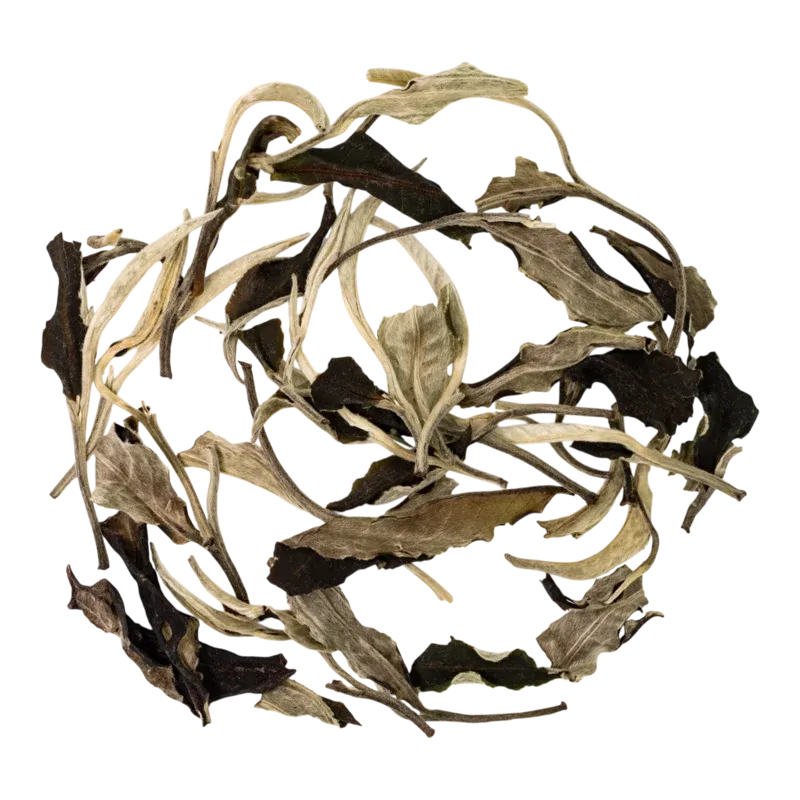
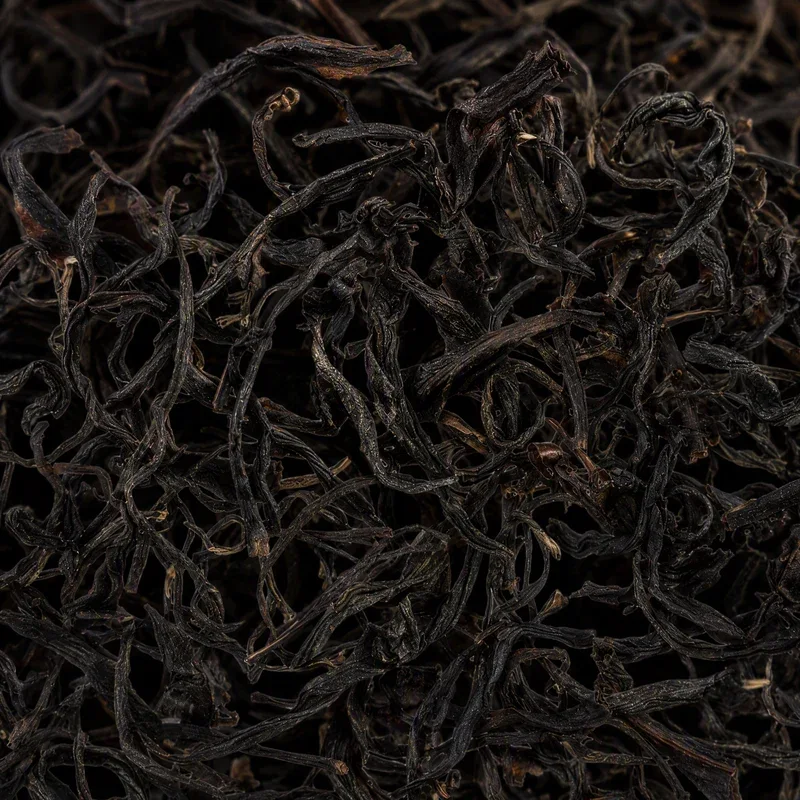
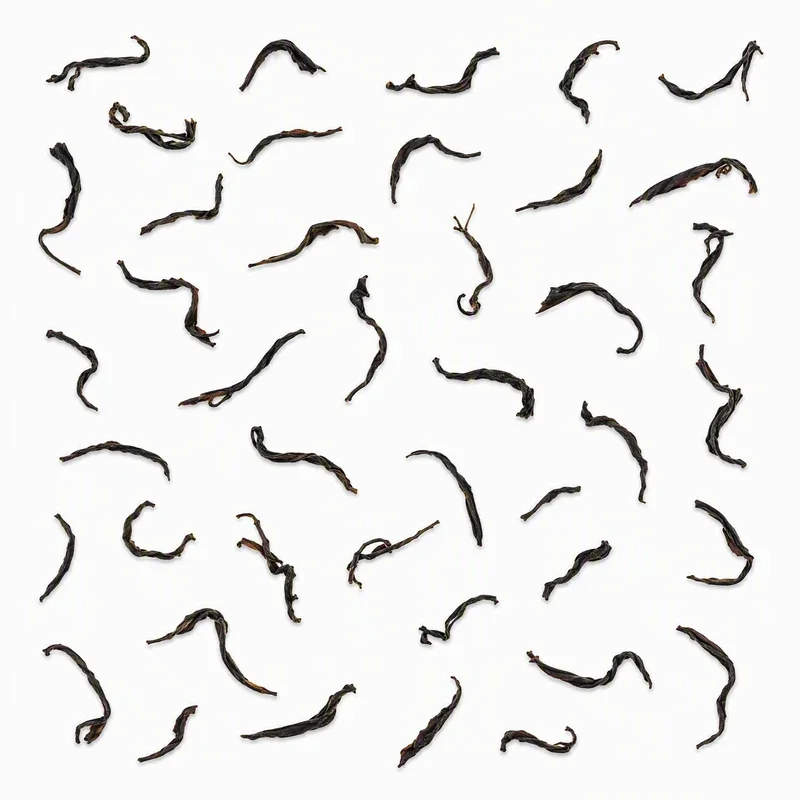
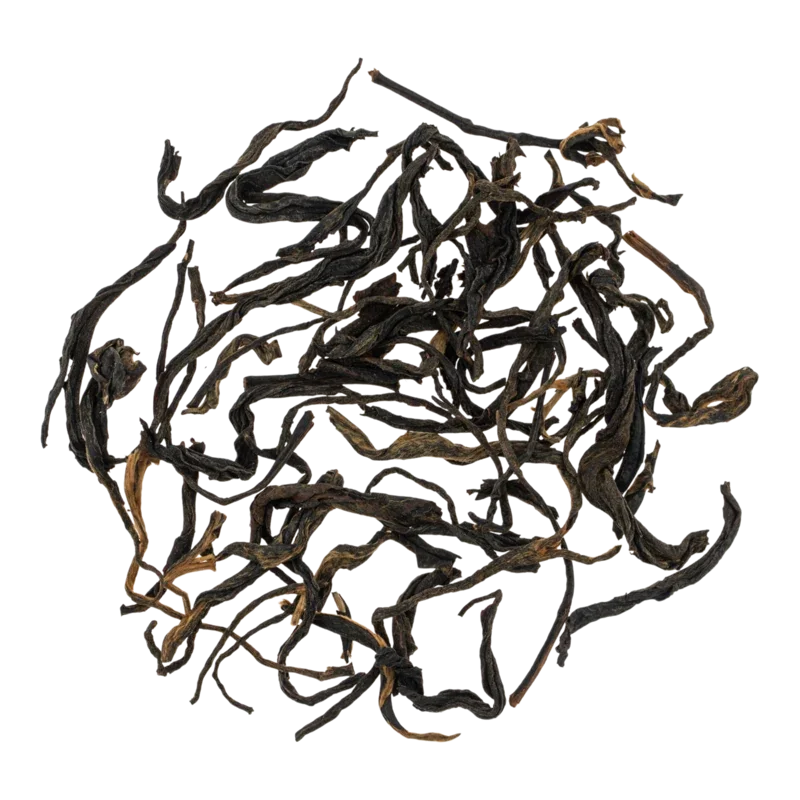
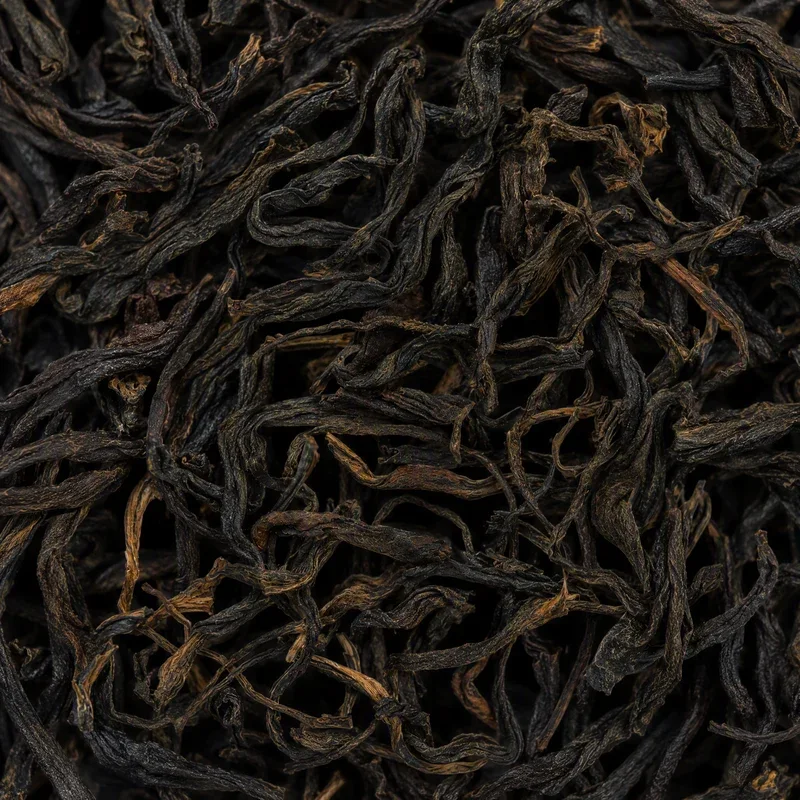
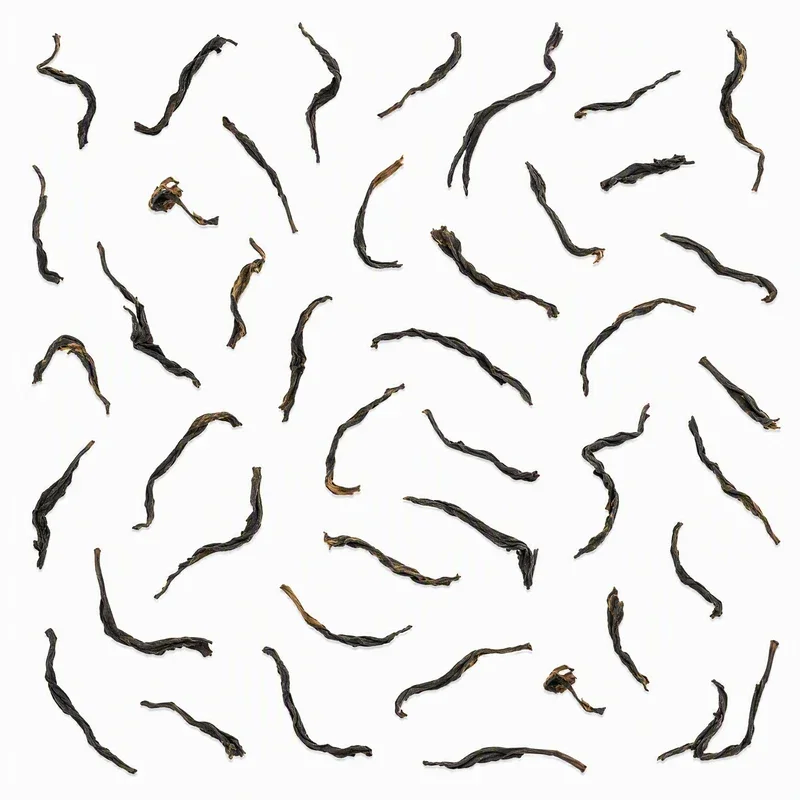
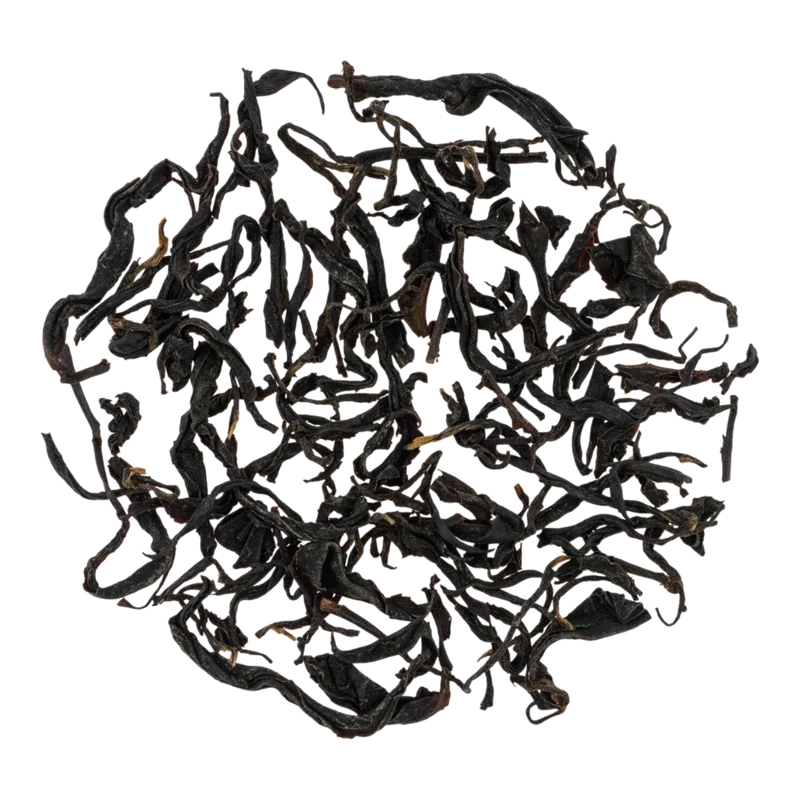
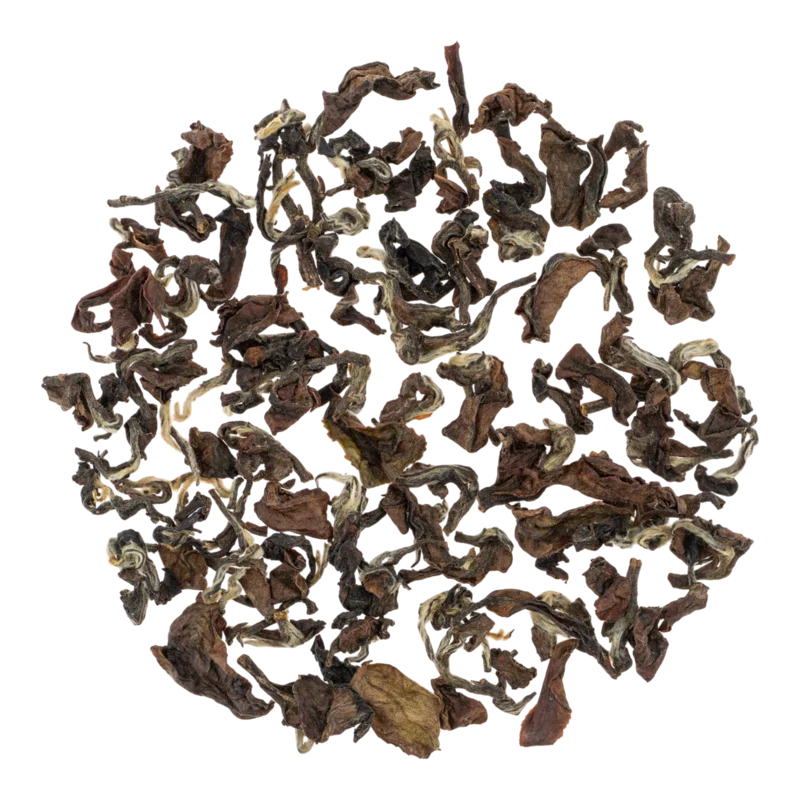
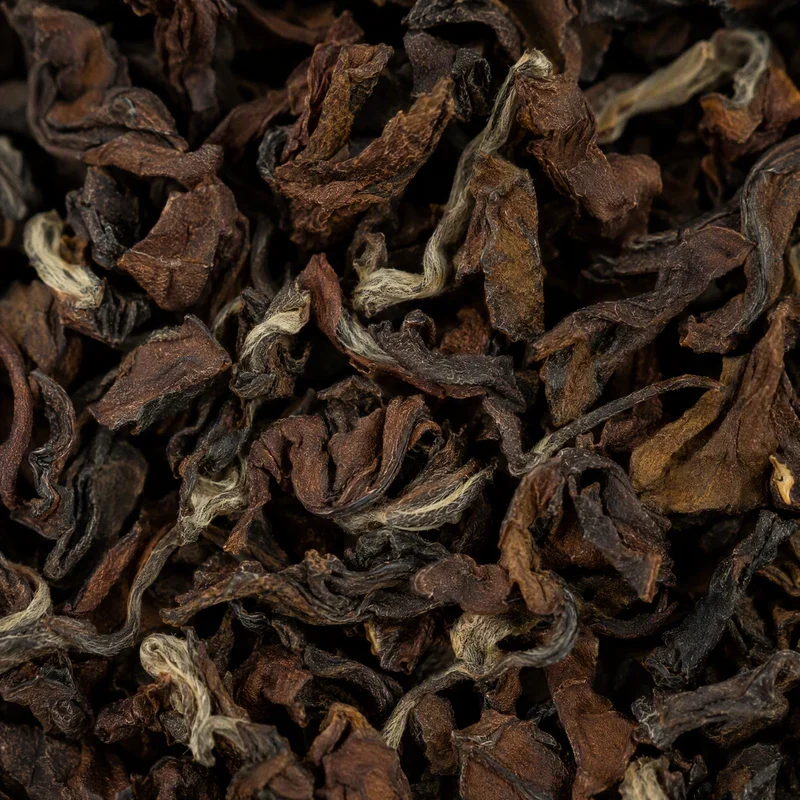
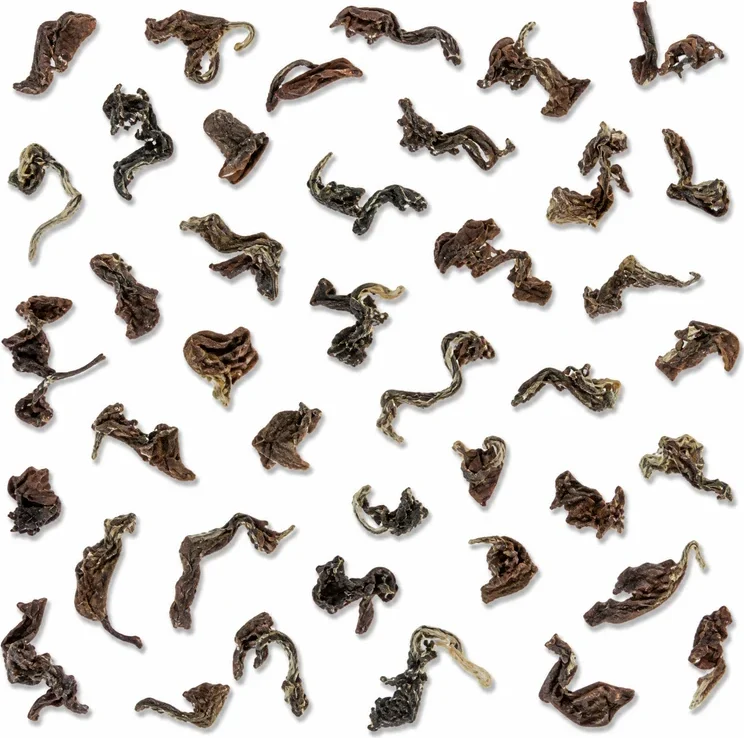
Dry Leaf Appearance: One of the most recognizable in the tea world. Leaves are small, longitudinally twisted, with abundant white down on buds. The main calling card is five-color variation (五色相間, wǔ sè xiāngjiān): white (buds with down), green, yellow, red and brown shades alternate in each tea leaf. This diversity is due to uneven degree of leaf oxidation: areas damaged by leafhoppers oxidize deeper and darken, while untouched fragments preserve green tone. Leaves look like miniature flowers — hence the poetic name "beauty."
Dry Leaf Aroma: Bright, intense, sweet. Honey notes dominate, complemented by ripe fruits (lychee, longan, peach, mango, grape), floral overtones and light muscat spice. The aroma is deep and multi-layered, unfolding as it warms.
Liquor Aroma: Rich, multifaceted, with honey and tropical fruit dominance. As it cools, floral notes (gardenia, honeysuckle), light woody nuances and dried fruit overtones appear. The aroma is "alive," changing from steeping to steeping — from bright fruity explosion at the beginning to delicate honey-floral trail at the finish.
Liquor Color: Amber to orange-red, bright, clear, transparent, with deep luster, resembling the color of shining amber or dark honey. Significantly darker than most oolongs, reflecting the high degree of oxidation.
Spent Leaves: A mixture of buds with golden down and opened leaves of non-uniform color — from greenish-olive to red-brown. Traces of leafhopper impact are visible on leaves — characteristic darkened areas. Leaves are elastic, soft, with oily sheen.
Taste: Sweet, full-bodied, enveloping. Honey-fruity notes (honey, peach, apricot, lychee, longan) interweave with delicate astringency and light spice. The typical "green" bitterness of less oxidized oolongs is absent. Aftertaste (回甘, huígān) is prolonged, sweet, with honey and floral overtones. Liquor texture is silky, oily. When cooled, the effect of "sweetness after cooling" (冷後甜, lěng hòu tián) is revealed.
Alkaloids: Caffeine (咖啡碱, kāfēi jiǎn) — content is moderate, somewhat lower than green oolongs and red teas (black tea), which is related to deep oxidation and partial caffeine destruction during processing. Also present are theobromine and theophylline in trace amounts.
Amino Acids: L-theanine (L-茶氨酸) — the key amino acid responsible for sweetness and "umami" flavor overtone, as well as the relaxing effect of tea. Also present are glutamic acid, aspartic acid and alanine.
The main chemical feature. Leafhopper bites cause accumulation of terpenoid alcohols: linalool (芳樟醇) and its oxides, nerol (橙花醇, chénghuāchún), geraniol (香叶醇, xiāngyèchún). During oxidation, β-cyclocitral, benzaldehyde and aldehyde 3,7-dimethyl-2,6-octadienal are also formed. According to research, the content of alcoholic aromatic compounds in Dongfang Meiren significantly exceeds that in ordinary oolongs (for example, Tieguanyin): it is precisely the predominance of alcohols, ketones and phenolic compounds with relatively low content of complex esters that distinguishes the aromatic profile of "Oriental Beauty."
Minerals: Potassium, magnesium, manganese, iron, fluorine, zinc — in trace amounts.
Polyphenols: Total polyphenol content is moderate compared to green teas, since with 75–85% oxidation a significant portion of catechins (primarily epigallocatechin-3-gallate, EGCG) oxidizes to theaflavins and thearubigins. It is precisely oxidation products that provide the deep amber color of the liquor and softness of taste.
Vitamins: C (ascorbic acid, partially destroyed during oxidation), E (tocopherols), K, B-group vitamins.
The combination of caffeine and L-theanine provides calm, prolonged alertness without sharp spikes and nervousness characteristic of coffee.
Theaflavins and thearubigins are powerful antioxidants that help neutralize free radicals and slow oxidative stress in cells.
Deeply oxidized oolongs gently stimulate peristalsis and secretion of digestive enzymes, promoting comfortable digestion of fatty foods.
Tea polyphenols may help maintain vascular elasticity and normalize cholesterol levels.
High L-theanine content stimulates alpha-wave production in the brain, promoting a state of calm concentration.
Polyphenolic compounds have moderate anti-inflammatory and antibacterial activity.
Fluorine and catechins have preventive action against caries.
The antioxidant complex and vitamin E help slow skin photoaging processes.
4 g tea per 600 ml room temperature water, steep in refrigerator for 6–8 hours. The method emphasizes sweetness and the effect of "cold sweetness" (冷後甜).
Traditional Western serving method — add a few drops of white brandy to cooled liquor. Alcohol enhances the release of volatile aromatic compounds, for which the tea earned the nickname "Champagne Oolong."
Tea Amount: 5–7 g per 150–200 ml (gongfu method) or 3–4 g per 200 ml (European method).
Teaware: Porcelain gàiwǎn (蓋碗, gàiwǎn) is the ideal choice, allowing the delicate aroma to unfold and controlling steeping. Yíxīng clay teapots (宜興紫砂壺) or glass teaware (for admiring the "dance" of leaves in the liquor) are also suitable.
Water Temperature: 80–90 °C. For delicate high-class raw material (with abundant white down) 80–85 °C is optimal to maximally reveal honey-floral notes and not burn tender buds. At 90 °C the liquor becomes denser and richer.
Medium-oxidized oolong (25–40%) from Nantou County. Ball-shaped rolling, floral-creamy profile, medium roasting. Unlike Dongfang Meiren, it does not depend on leafhoppers, and aroma is formed by roasting technology, not biochemical reaction to insects.
High-mountain oolong with light oxidation (15–25%) with bright floral-creamy notes. Ball-shaped rolling, light liquor. Complete opposite of Dongfang Meiren in style: light, "green," without honey notes.
Lightly oxidized oolong (12–18%) from northern Taiwan. Longitudinal rolling, most delicate floral-lily aroma, transparent pale yellow liquor. Also produced in northern Taiwan, but represents the opposite pole of oxidation.
Taiwanese red tea (black tea) also using raw material bitten by leafhoppers, but fully oxidized (100%). Honey profile is close to Dongfang Meiren, however taste is more straightforward, without the characteristic oolong multi-layering and "liveliness" from steeping to steeping.
"Imperial concubine tea" — medium-oxidized oolong (30–50%) also using raw material with leafhopper bites, but with ball-shaped rolling and less deep oxidation. Honey notes are expressed more weakly, profile closer to classic high-mountain oolongs.
Price Category: Dongfang Meiren is one of the most expensive oolongs in the world. High cost is due to a combination of factors: extremely labor-intensive hand picking (3000–4000 shoots per 600 g tea), dependence on unpredictable leafhopper activity, mandatory rejection of pesticides, short picking period (10–15 days per year) and losses up to 70% of potential harvest. Ordinary Taiwanese Dongfang Meiren of acceptable quality costs from 600 yuan / 80–100 USD per 500 g. Good farm tea — 1500–3000 yuan. Competition lots of premium classes sell for tens of thousands of yuan. Record prices at Xinzhu competitions reach 500,000–680,000 New Taiwan dollars per Taiwanese jin (≈ 600 g). Mainland versions (Datian, Zijin) are significantly cheaper — from 200–300 yuan per 500 g.
No reviews yet. Tell us what you think of this tea.
Rate this tea and share your impressions. We review each submission before publishing it.