Brewing
Gongfu brewing
- Water temperature
- 93 °C
- Tea amount
- 5 g
- Water volume
- 100 ml
- First steep
- 10 s
- Time added per infusion
- 5 s
- Infusions
- 4

hēi jīn
Choose a brewing method. Start with the recommended quantities and time, then adjust to taste.
Brewing
Brewing
Taste
Tea encyclopedia
Category: Modern artisanal red teas of Fujian. Stylistically belongs to the line of sweet tippy red teas that appeared after the success of Jīn Jùn Méi (金骏眉, Jīn Jùn Méi).
Category: Modern artisanal red teas of Fujian. Stylistically belongs to the line of sweet tippy red teas that appeared after the success of Jīn Jùn Méi (金骏眉, Jīn Jùn Méi).
Coordinates: Approximately 27°20′ N, 120°12′ E (for Fuding area); 27°22′ N, 118°51′ E (for Zhenghe area); 27°46′ N, 119°31′ E (for Shouning area).
Origin: China, Fújiàn Province (福建, Fújiàn). Main production areas — northern part of the province: Fúdǐng County (福鼎, Fúdǐng), Zhènghé County (政和, Zhènghé), Shòuníng County (寿宁, Shòuníng), as well as the Wǔyí Mountains region (武夷山, Wǔyí Shān). Individual batches are found from other tea-producing counties of northern Fujian.
Type: Red tea (black tea) (红茶, hóngchá) — fully fermented (oxidized) tea.
Reputable tea retailers with direct relationships with Fujian producers and good track record of quality control.
Companies specializing in Chinese tea import with established supply chains from northern Fujian tea regions.
Tea factories and cooperatives in Fuding, Zhenghe, Shouning counties with proper certifications and quality standards.
Direct purchasing opportunities at specialized tea events where producers present their products.
Established e-commerce sites with verified seller ratings, detailed product descriptions, and customer reviews from experienced tea drinkers.
Cultural Significance: Hei Jin embodies the innovative spirit of modern Chinese tea cultivation, where respect for tradition combines with bold experimentation. This tea became a symbol of the new generation of artisanal red teas, where the master's individuality and unexpected technological solutions are valued equally with terroir and bush variety. Hei Jin is positioned as a high-class gift tea with a bright, memorable character.
History: Hei Jin appeared on the tea market in the late 2000s — early 2010s, on the wave of intense interest in high-class tippy red teas caused by the triumph of Jin Jun Mei in 2005. Fujian masters, striving to create a new bright product, experimented with combinations of traditional tea bush varieties and methodology of deep roasting with sugar powder addition, non-traditional for classical red tea technology. The result exceeded expectations — the tea acquired an inimitable character, combining the richness of classical red tea with caramel-bread sweetness having no analogues among traditional Fujian red teas. Hei Jin quickly gained popularity first on the domestic Chinese market, and then among foreign connoisseurs.
Cultivar: For Hei Jin production, famous Fujian tea bush varieties are predominantly used. Main cultivars:
Picking: Spring harvest — March–April, predominantly the Qīngmíng (清明, Qīngmíng) period and early Gǔyǔ (谷雨, Gǔyǔ). Spring raw material provides the highest amino acid content and the most delicate flavor.
Pluck Standard: Predominantly buds and upper young leaves in a ratio of approximately 70% buds to 30% leaves. To produce 100 grams of finished tea requires about 10,000 tea buds, making Hei Jin a very labor-intensive product. Only experienced workers capable of carefully removing delicate buds without damaging them are allowed to pick.
Raw Material: High. Buds must be whole, tender, covered with dense down. Leaves — young, elastic, without damage or spots. Raw material from high-altitude plantations is preferable, providing higher amino acid content.
Altitude: Varies from 300 to 1,000 m above sea level, some batches — from plantations above 1,000 m.
Soil: Red earths (红壤, hóng rǎng), yellow earths (黄壤, huáng rǎng) and purple soils (紫色土, zǐsè tǔ) predominate — loose, fertile, well-drained, with acidic reaction (pH 4.5–5.5), rich in organic matter and trace elements. These soils provide the tea with a deep mineral profile.
Located in northeastern Fujian, on the coast of the East China Sea. Mountainous terrain, with Tàimǔ Mountain (太姥山, Tàimǔ Shān, 917 m) as the dominant feature. Subtropical oceanic monsoon climate, with mild winters and not-hot summers. Average annual temperature ~18.5°C, average annual precipitation ~1,600 mm. Humid sea air and frequent fogs create natural shading, favorable for amino acid accumulation in tea leaves.
Located in the mountainous area of northwestern Fujian, in the continental interior. Maximum elevation ~1,200 m. Subtropical climate with continental features: significant diurnal temperature variations, less humid air compared to Fuding. Soils — red earths and yellow earths on karst foundation, rich in minerals. Tea from Zhenghe is typically more intense and dense.
Mountain county in northeastern Fujian, with elevations up to 1,500 m. Average annual temperature ~15–16°C, abundant precipitation. Tea plantations are located in the subtropical mountain forest zone, ensuring high organic matter content in soil.
Famous tea region with elevations up to 2,160 m (Huanggang Shan). Subtropical mountain climate with abundant precipitation (~2,000 mm per year) and frequent fogs. Soils — weathered volcanic rocks, rich in minerals.
Hand-picking of tender buds and young leaves in morning hours after dew has cleared. Raw material is carefully placed in bamboo baskets and promptly delivered to the factory.
Picked leaves are spread in a thin layer on bamboo trays in open air or in a well-ventilated room. Duration — 12–18 hours, depending on air humidity and temperature. Goal — reduce moisture content to ~60%, make leaves soft and pliable, initiate initial biochemical transformations.
Withered leaves are rolled by hand or on rollers, breaking down cellular structure and releasing cell sap. This ensures contact between enzymes and polyphenols and initiates intensive oxidation. Rolling continues until the leaf is covered with juice and acquires characteristic twist.
Rolled leaves are laid out in layers 8–12 cm thick in special rooms with controlled temperature (24–28°C) and high humidity (90–95%). Duration — 3–5 hours. During fermentation, catechins oxidize to form theaflavins and thearubigins, giving the tea its red-amber liquor color, characteristic taste and aroma. Fermentation degree for Hei Jin — full, ensuring deep, rich flavor profile.
Quick drying at temperature ~100–110°C to stop fermentation and remove part of moisture.
Key stage distinguishing Hei Jin from most red teas. At the final drying stage, tea is roasted at moderate temperature with addition of small amount of sugar powder. Sugar caramelizes, forming the finest glaze on tea leaf surfaces, which gives the tea special caramel-bread notes, enhances natural sweetness and creates the characteristic glossy appearance of dark tea leaves. This stage forms the recognizable "signature" of Hei Jin — its difference from the externally similar Jin Jun Mei.
Drying to final moisture content 4–6% at temperature 80–90°C.
Finished tea is sorted by size, separating whole tips from leaf fragments, removing tea dust and substandard elements.
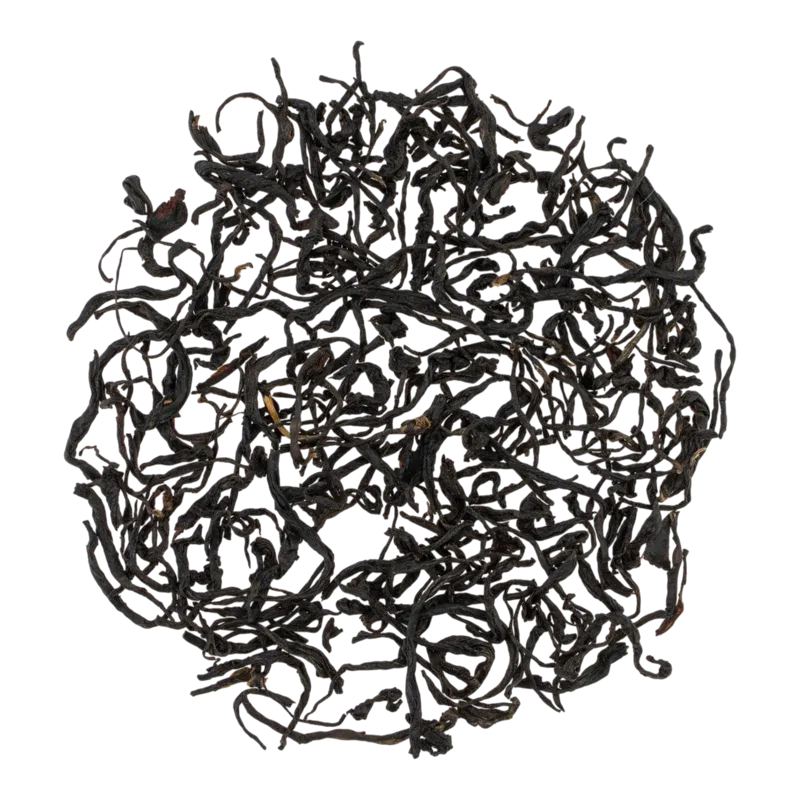
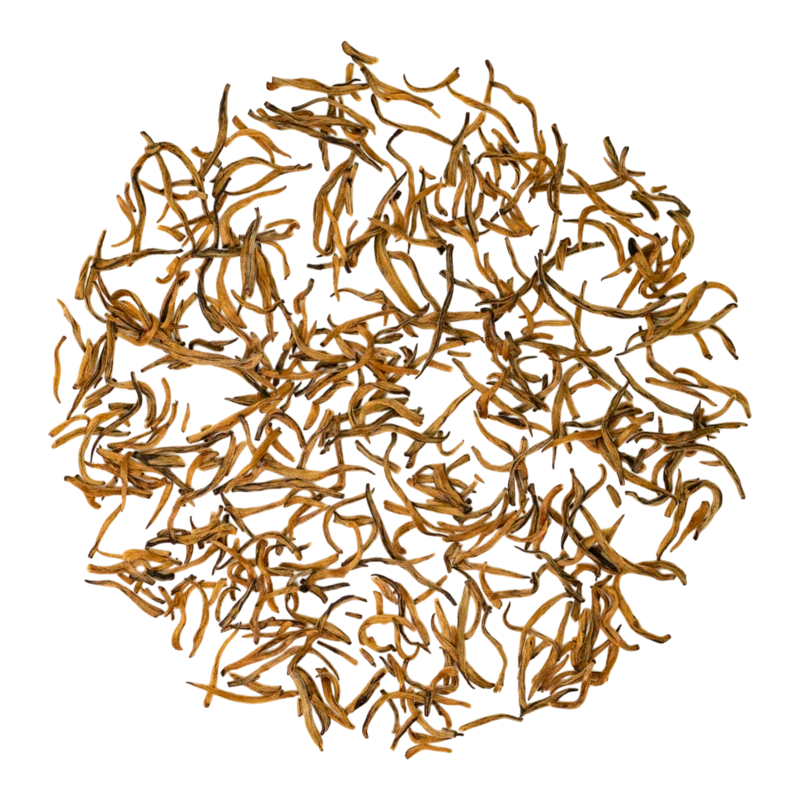
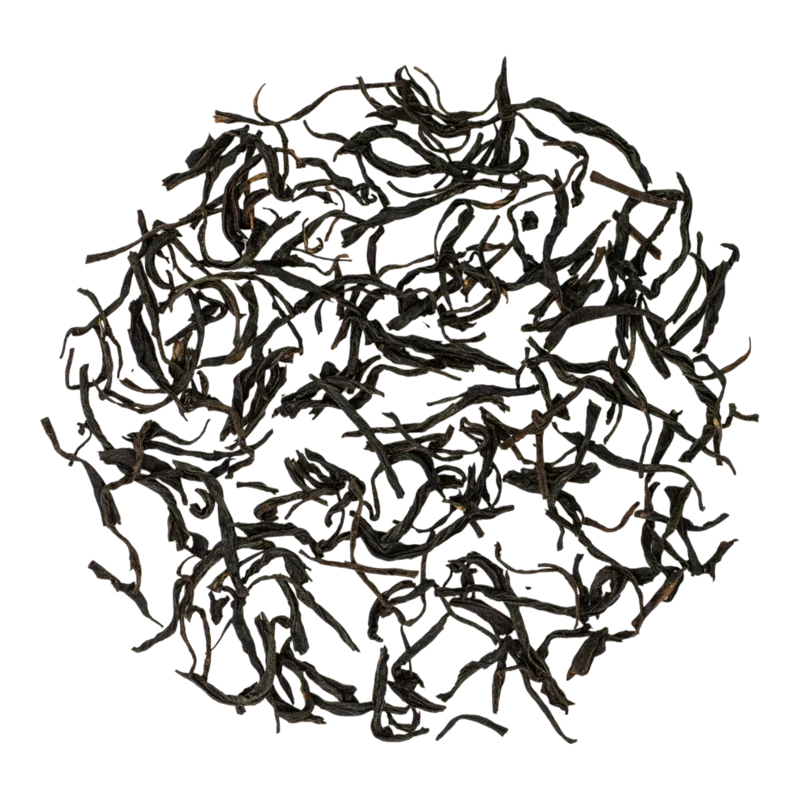
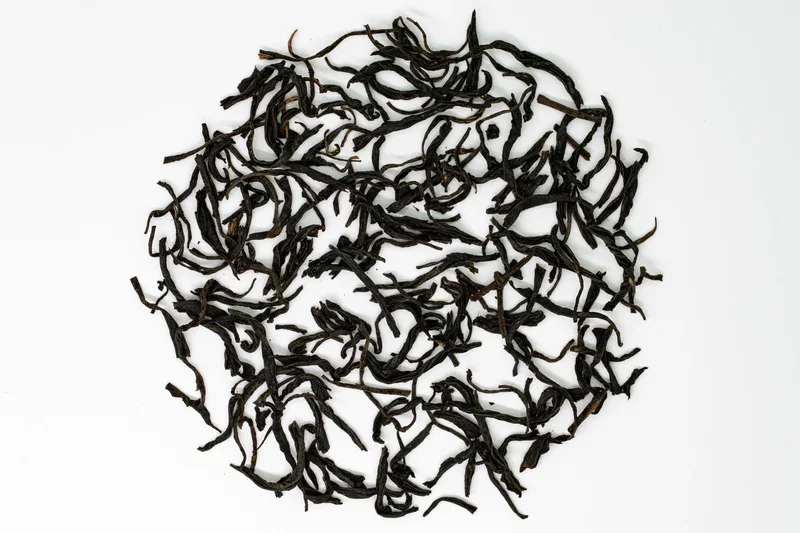
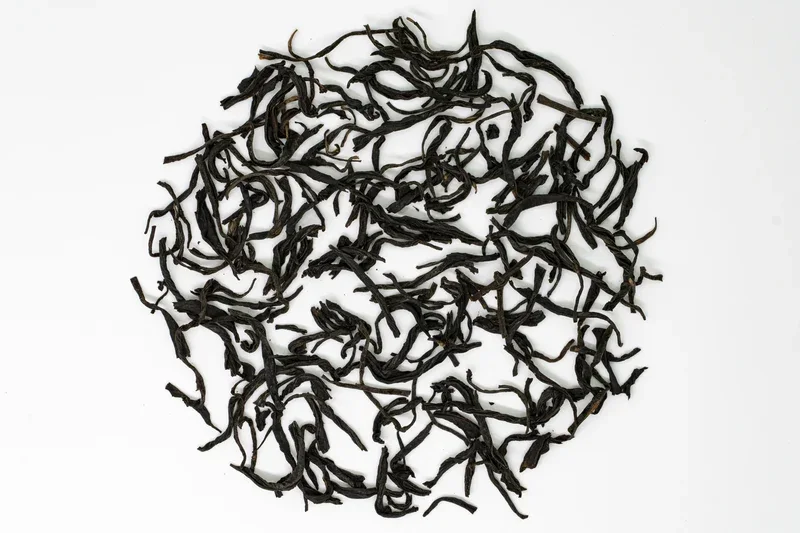
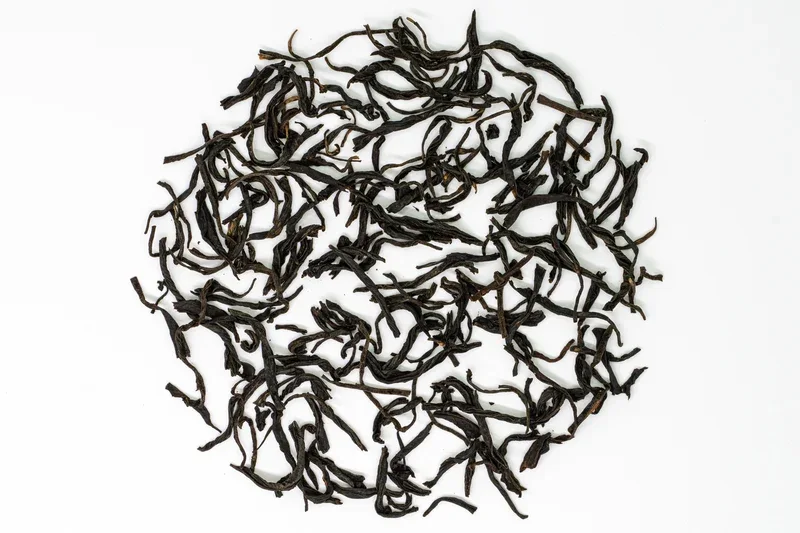
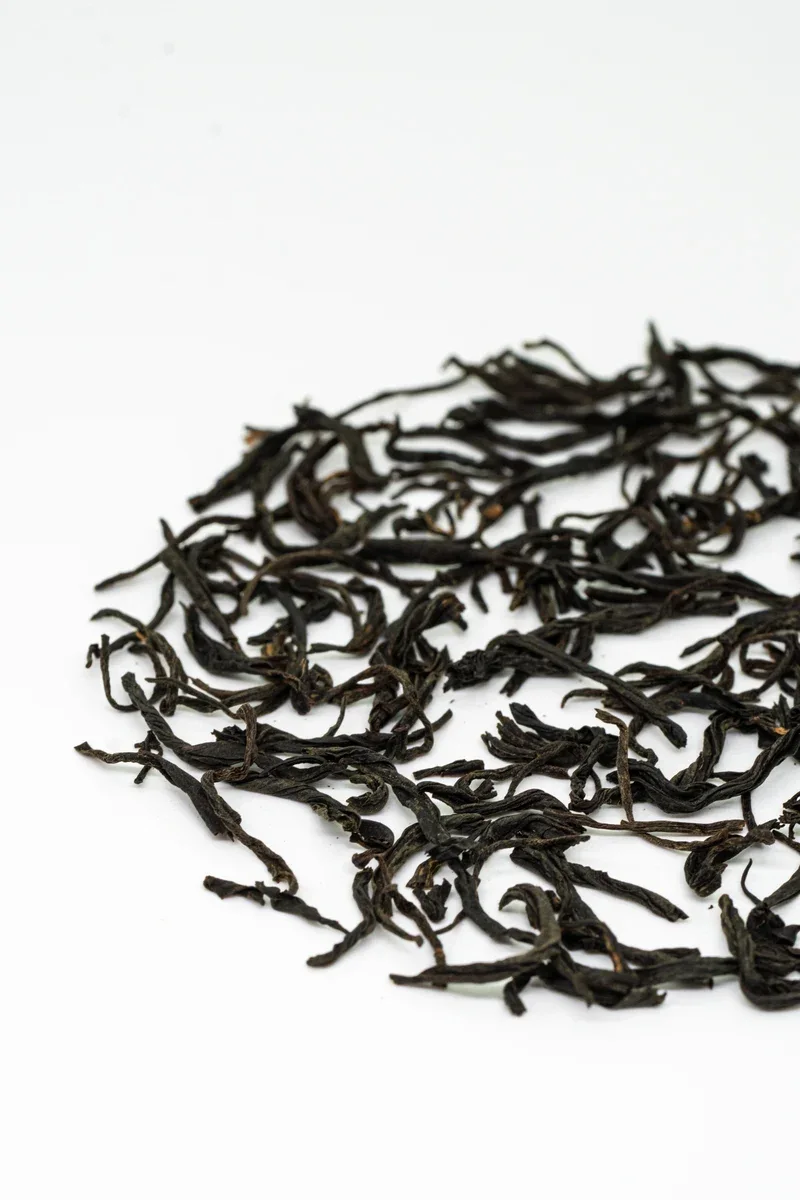
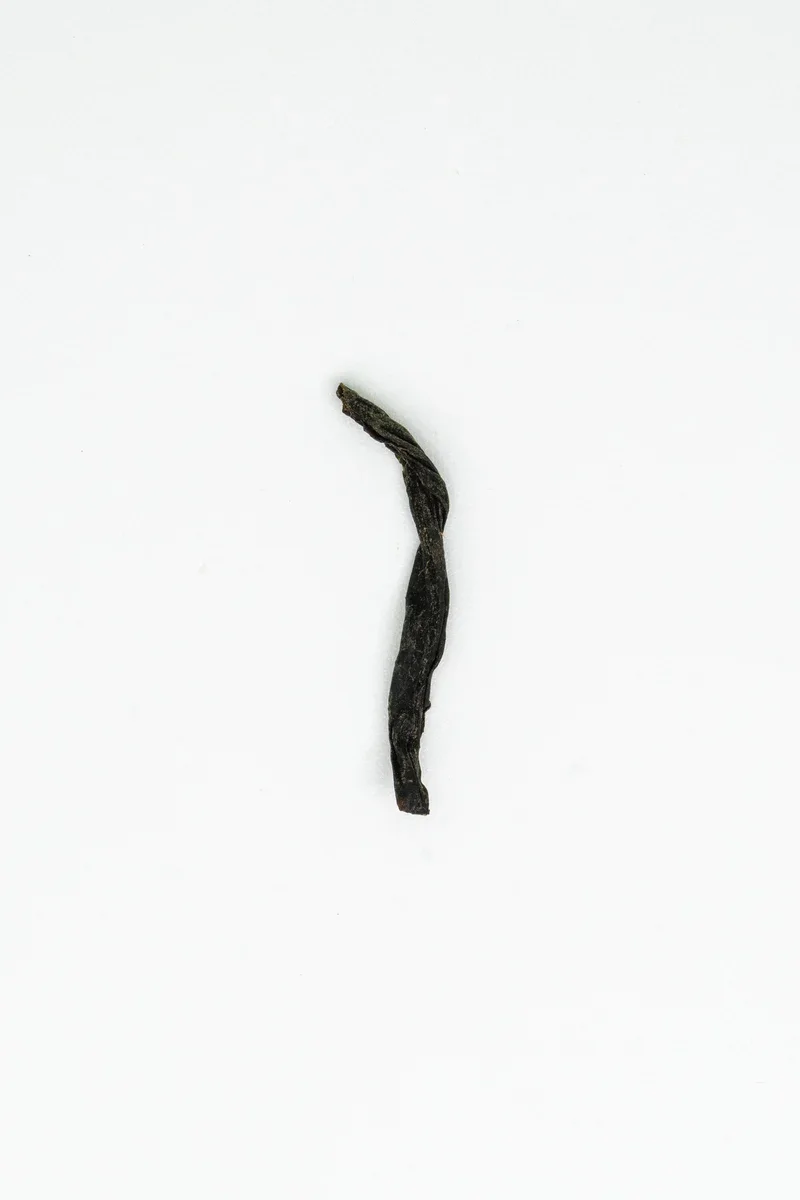
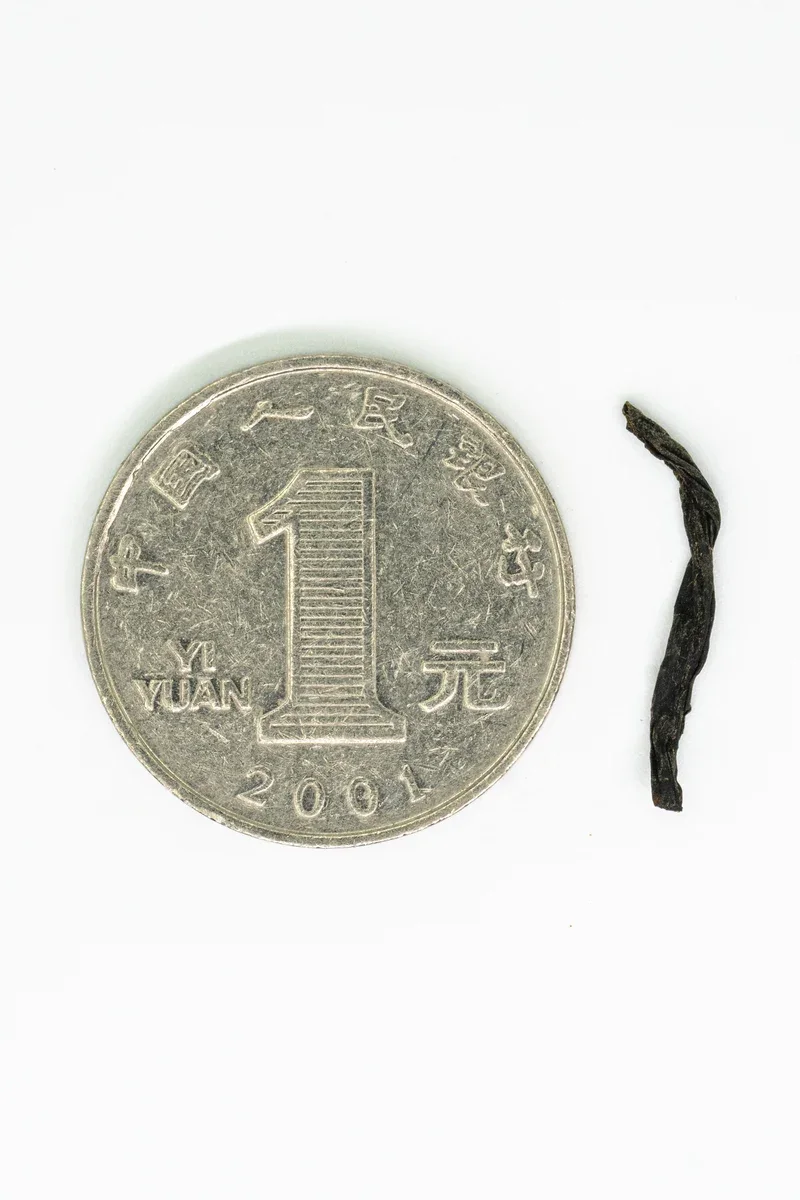
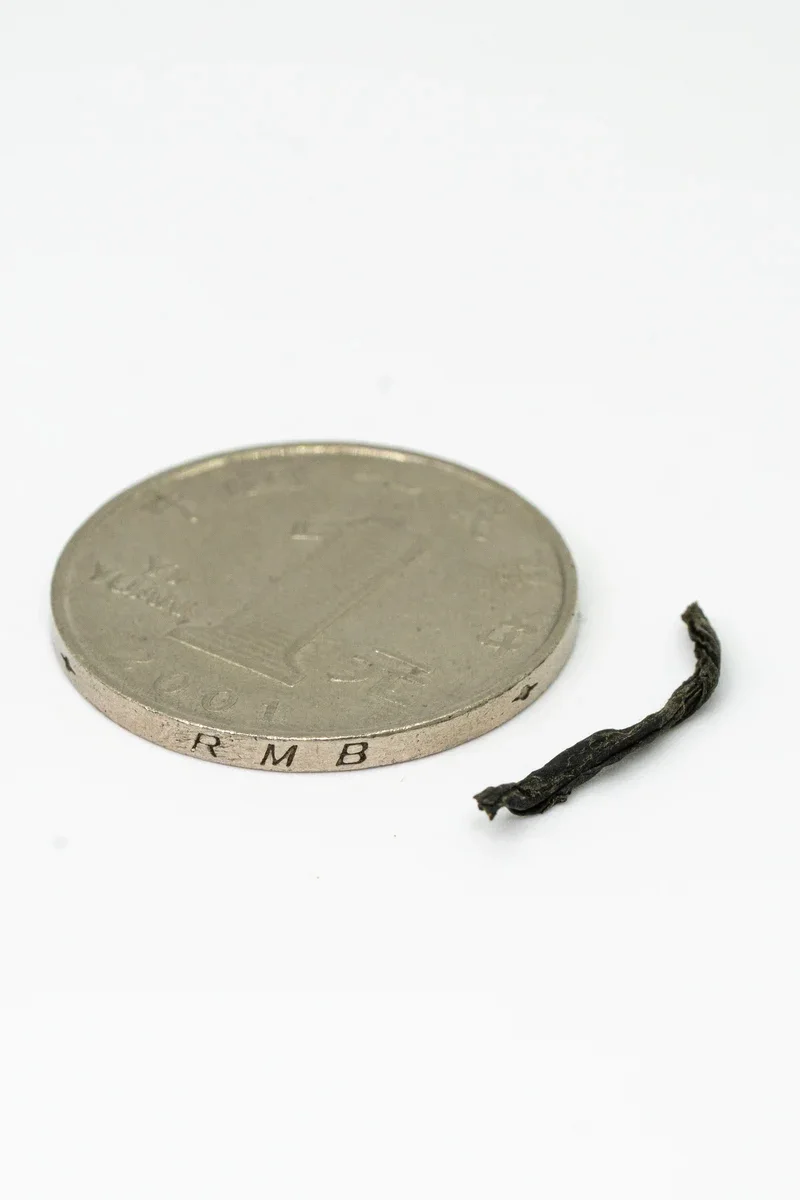
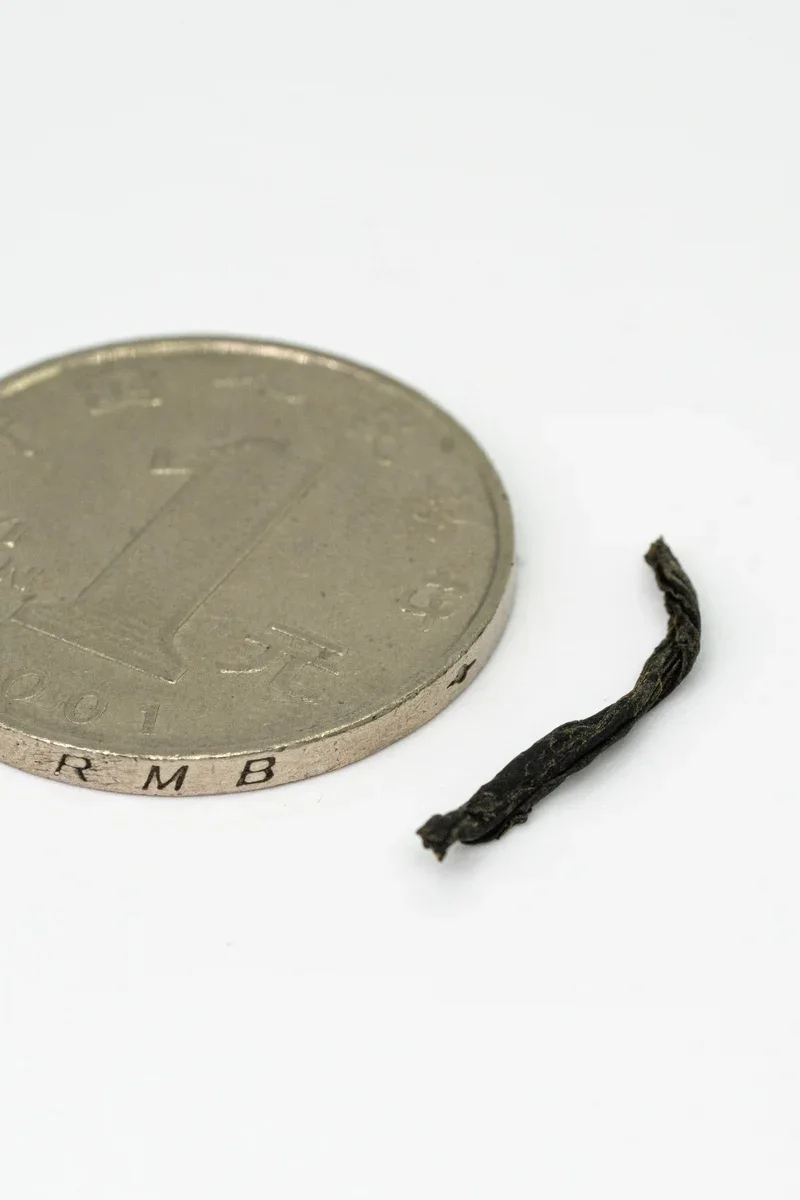
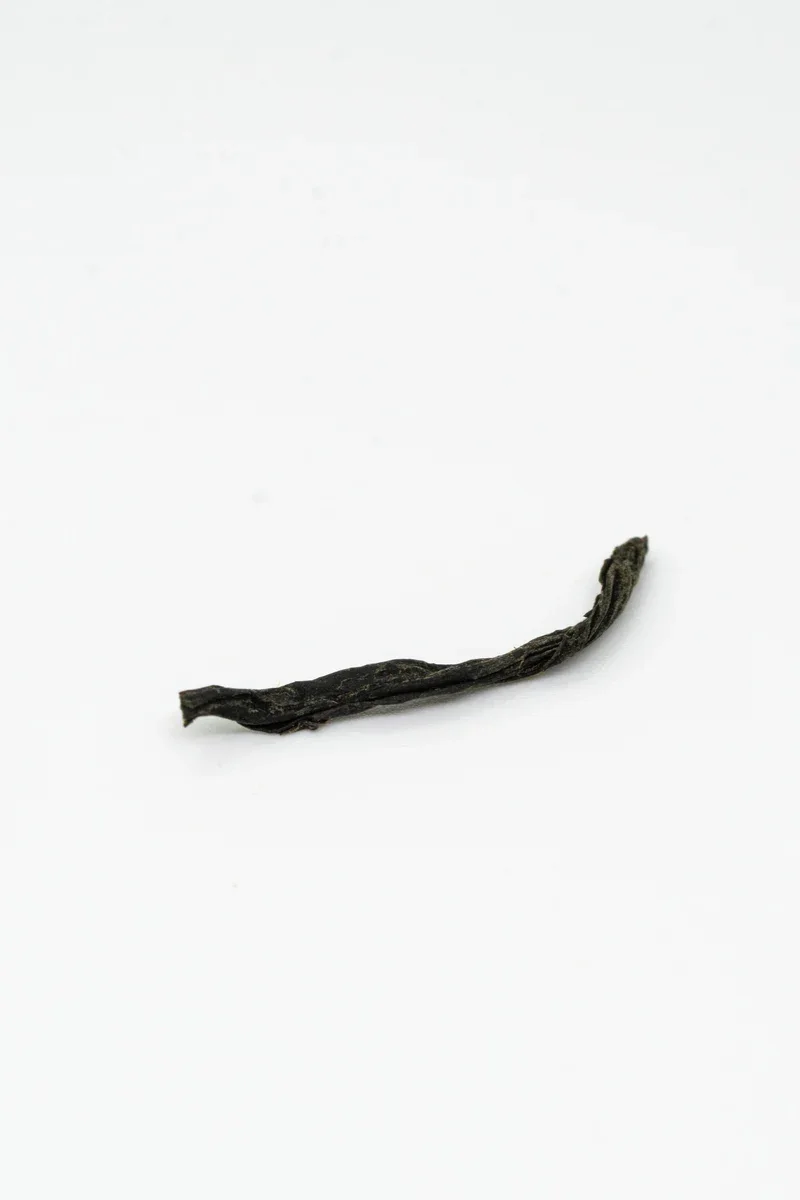
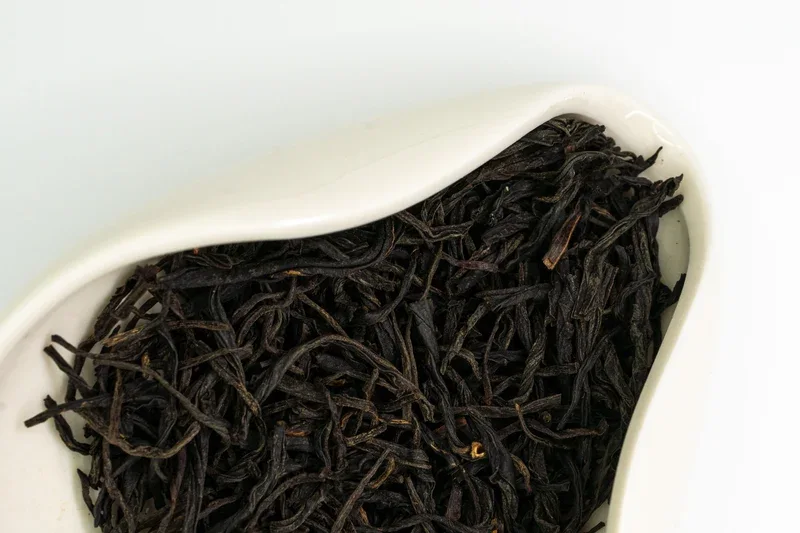
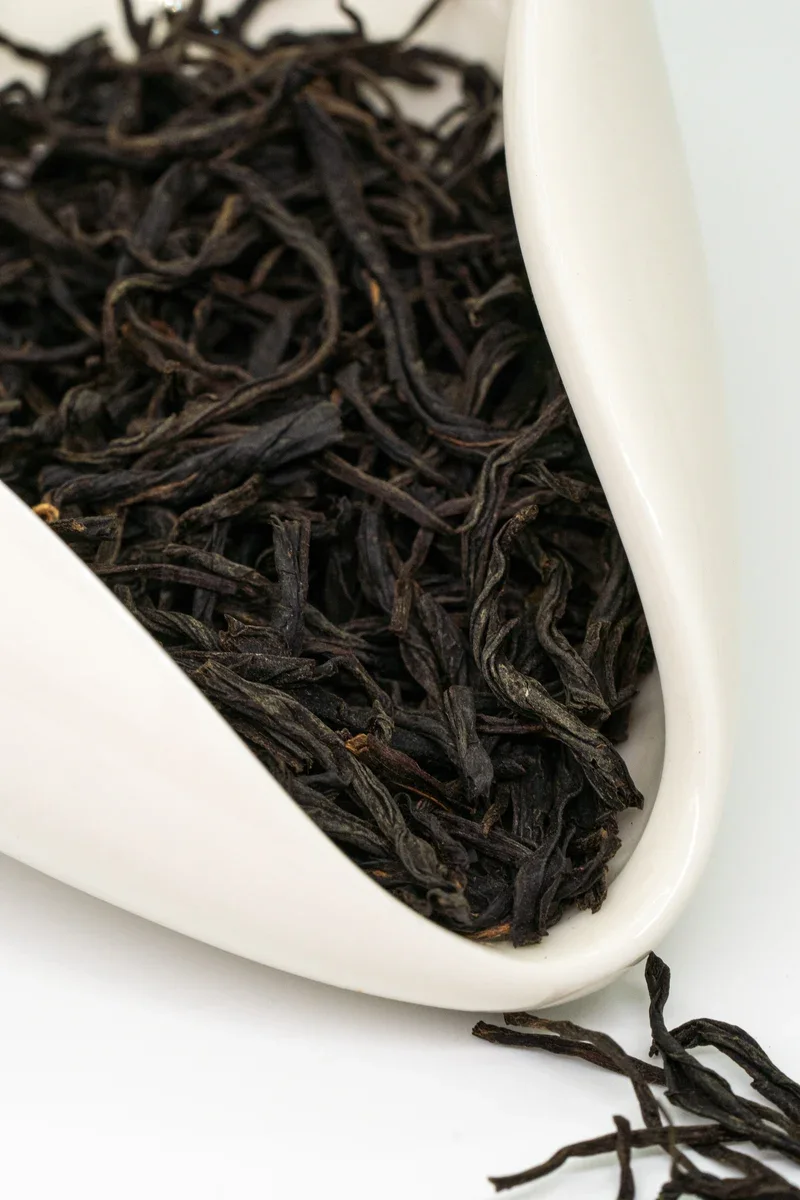
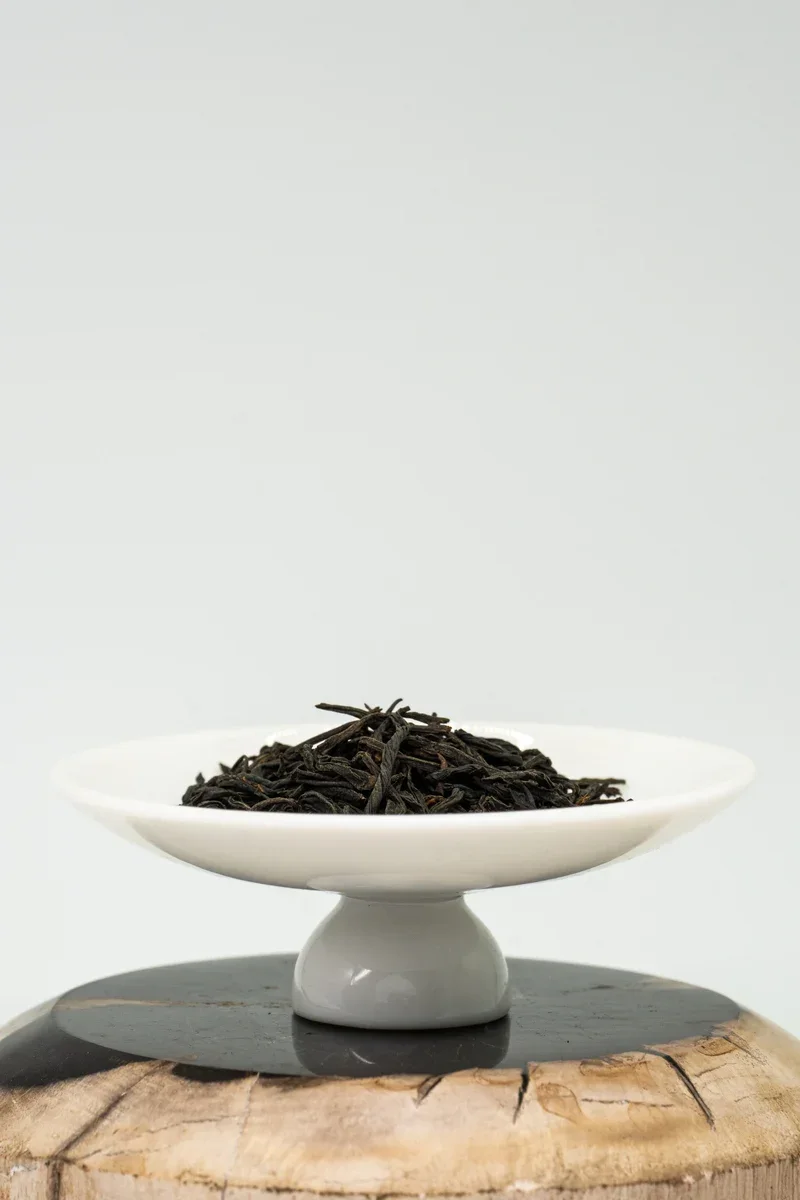
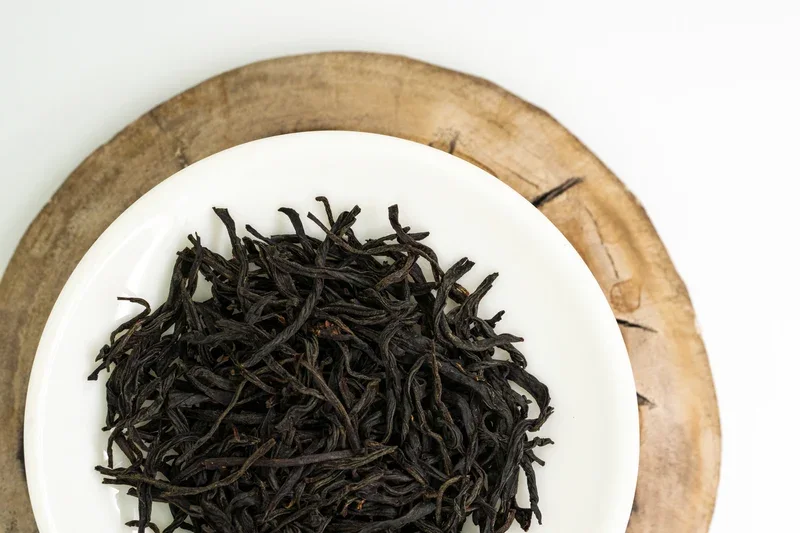
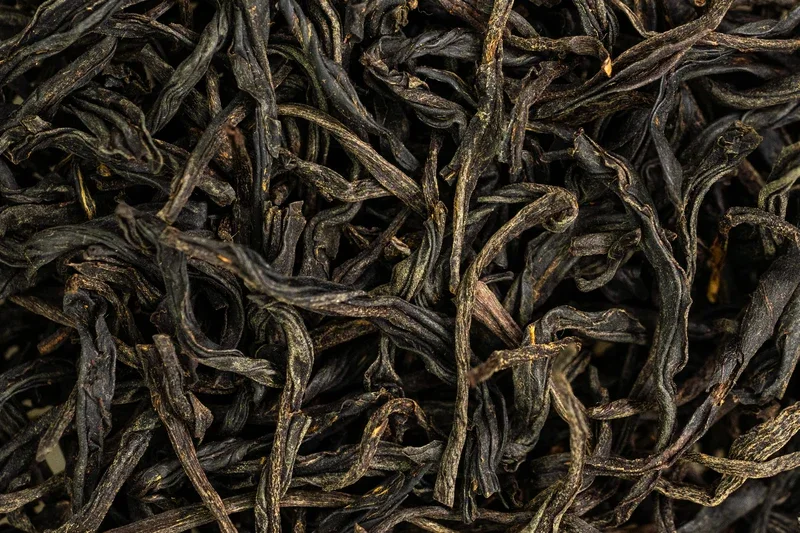
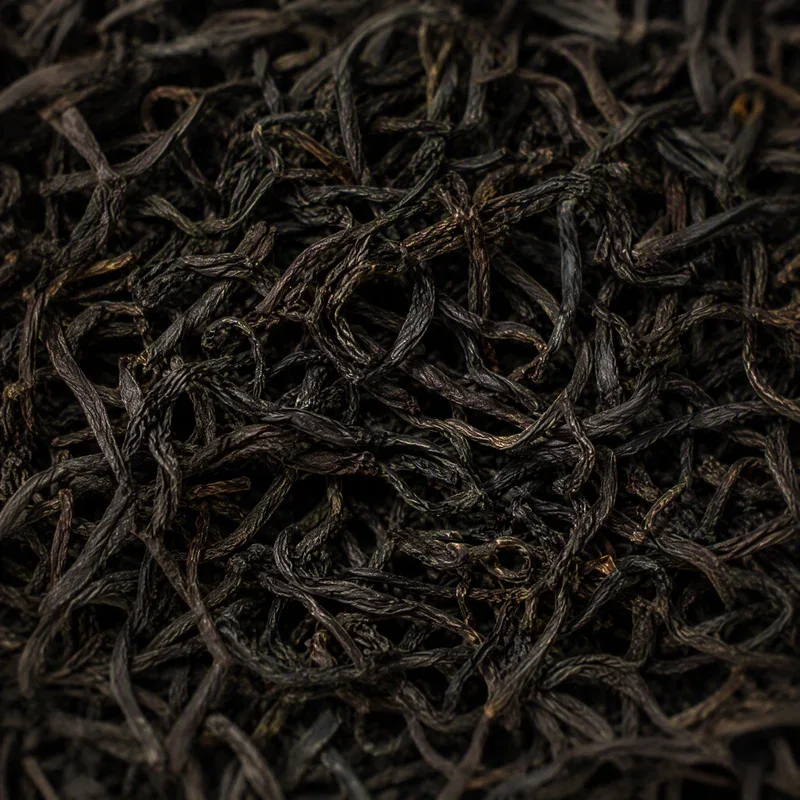
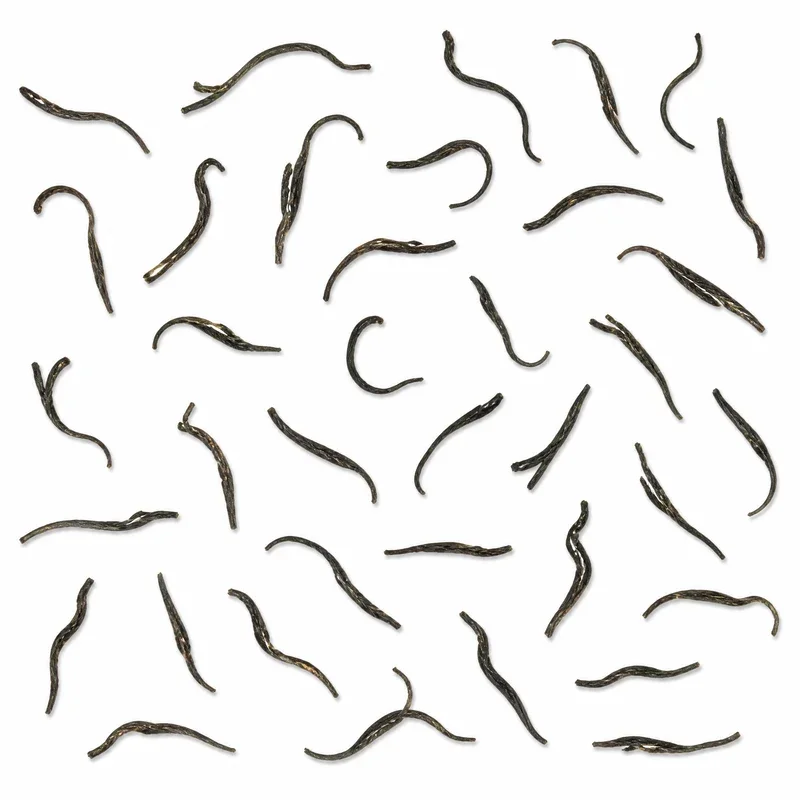
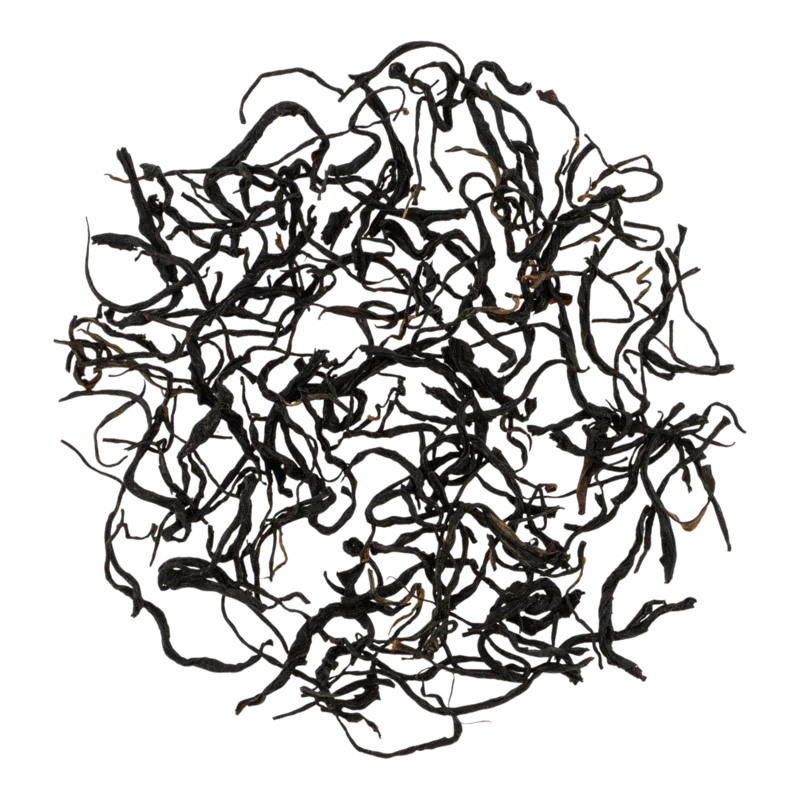
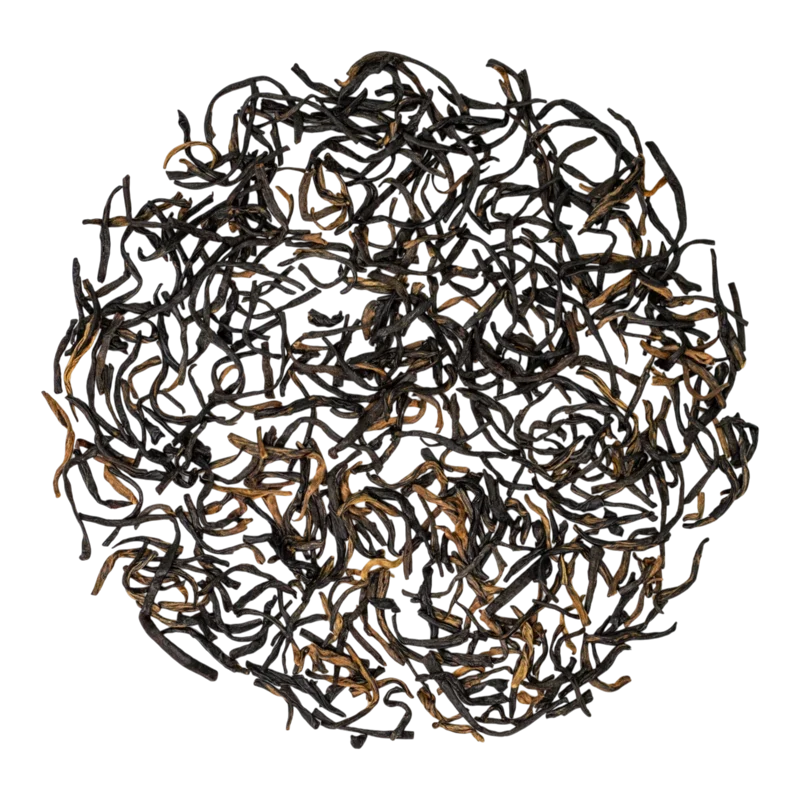
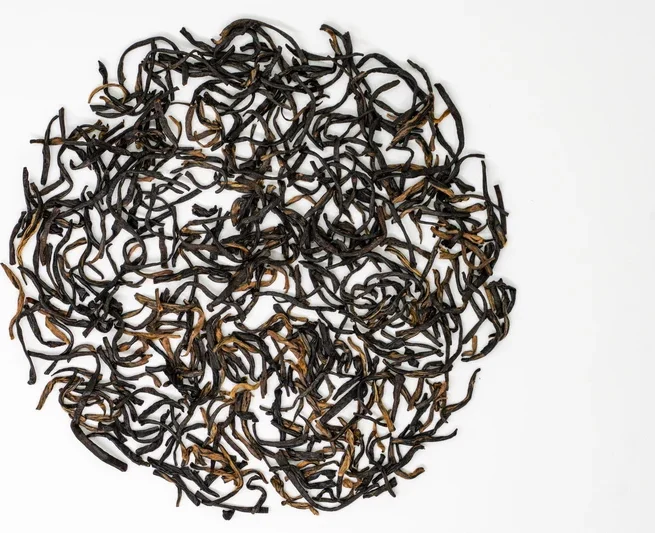
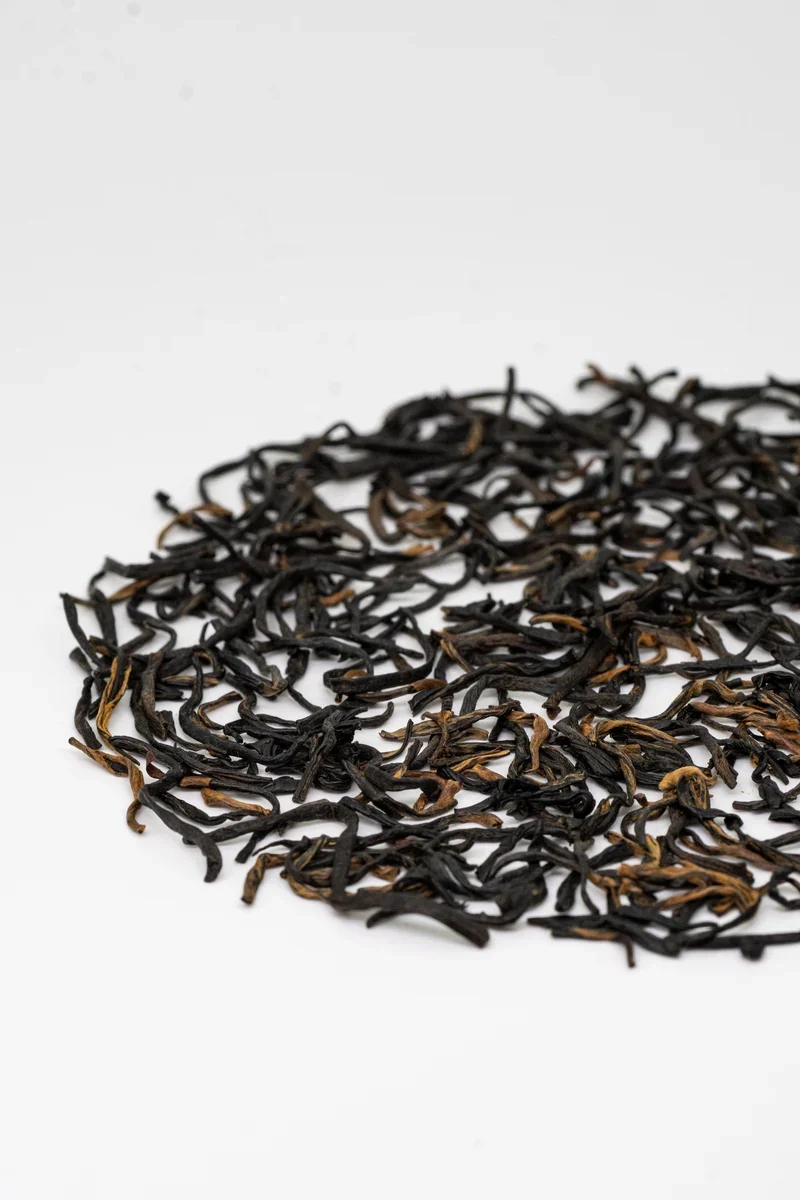
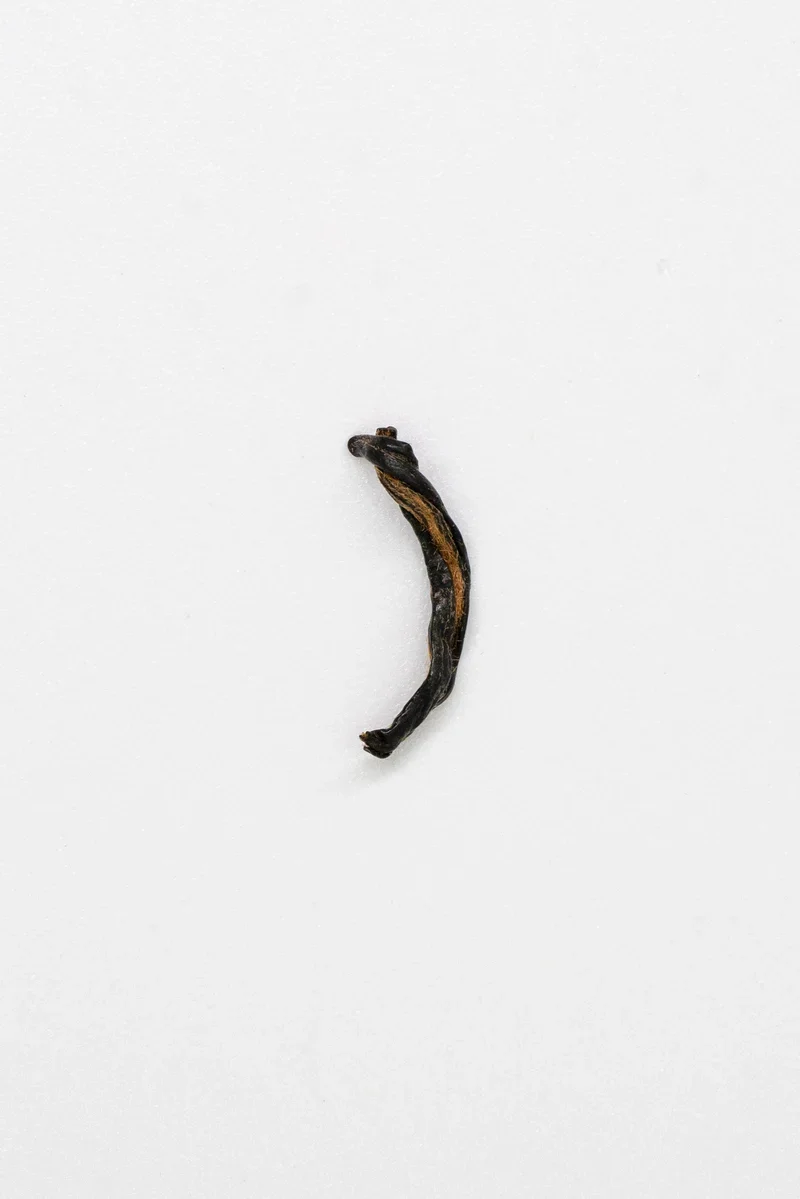
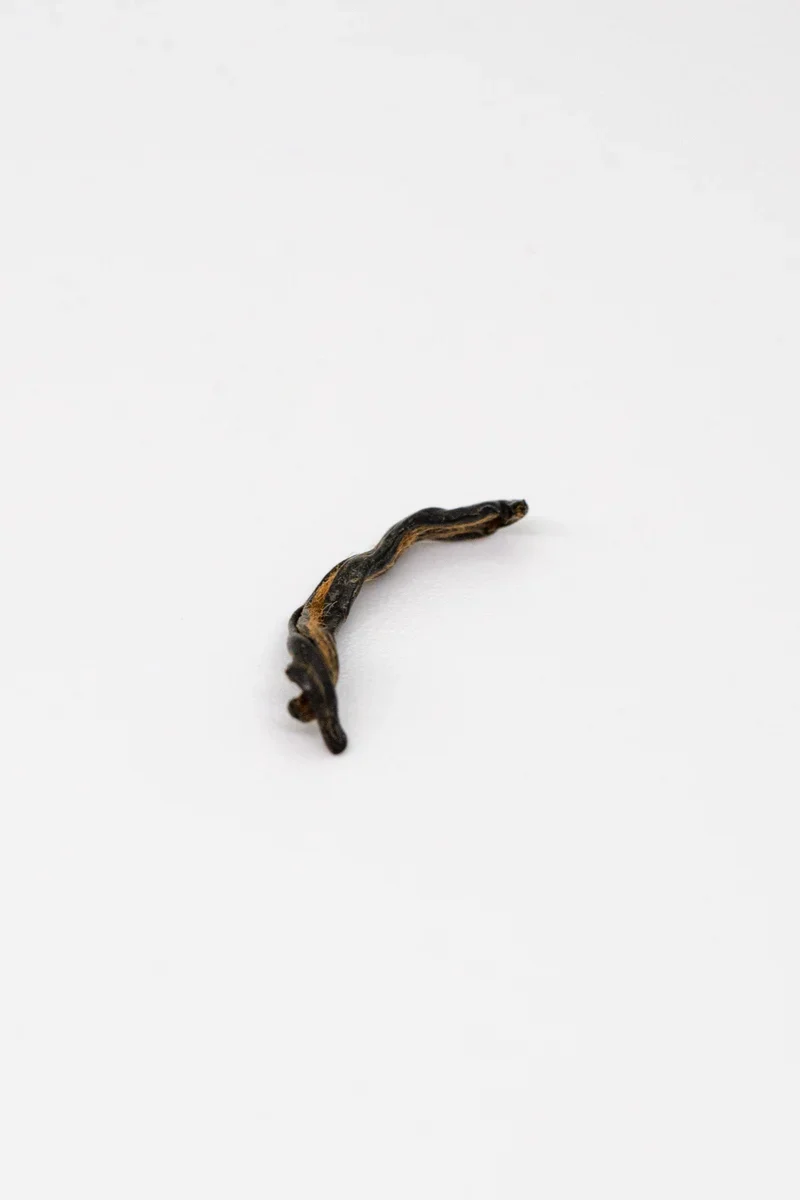
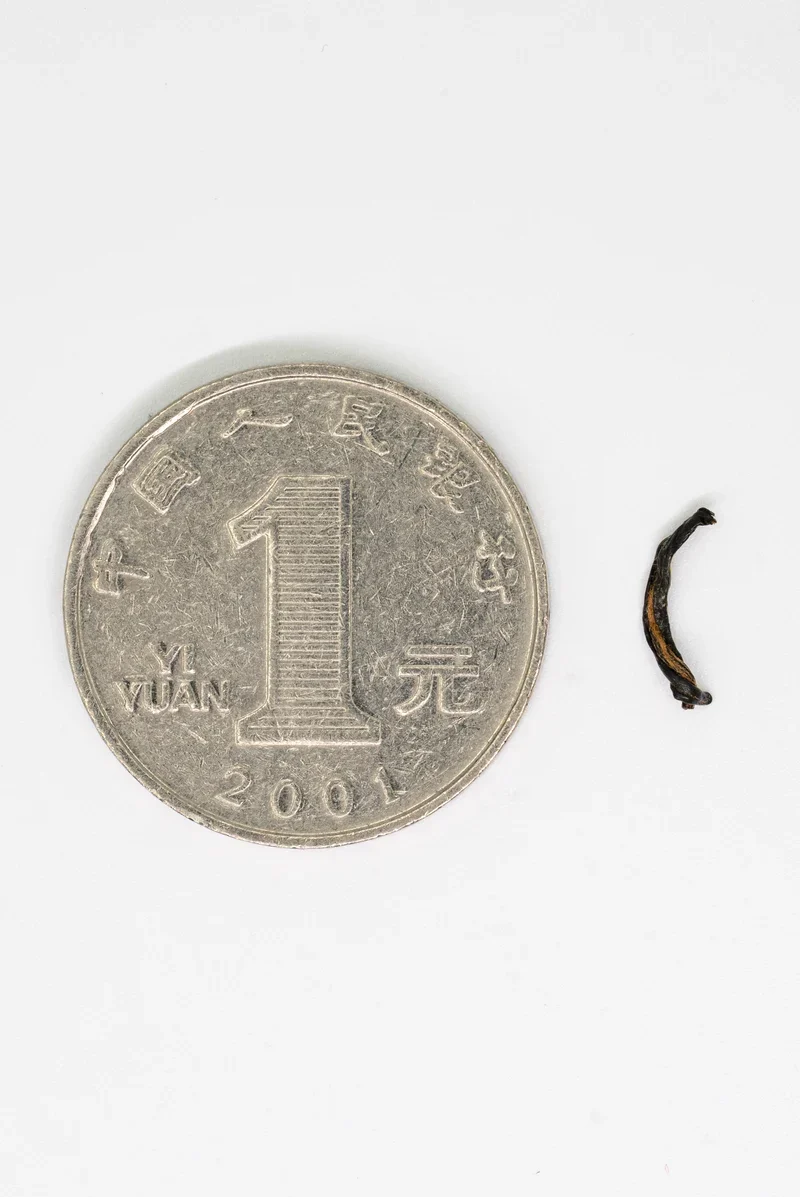
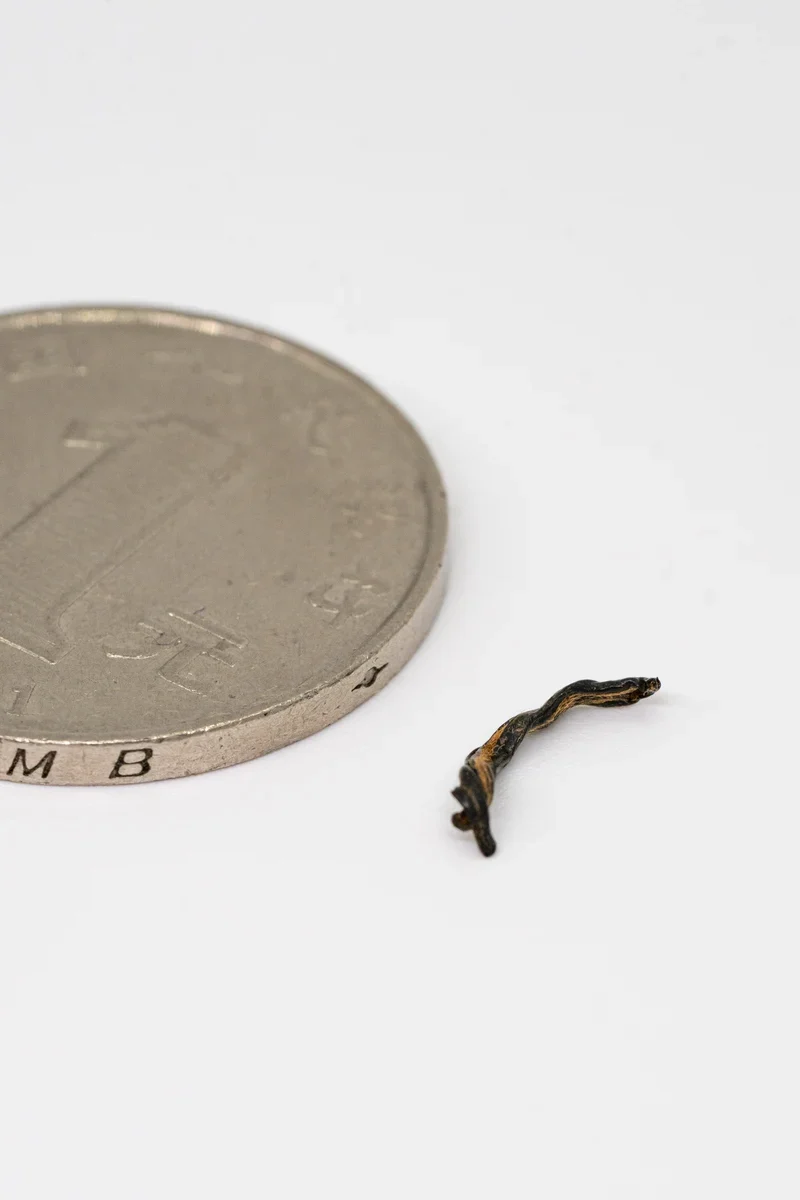
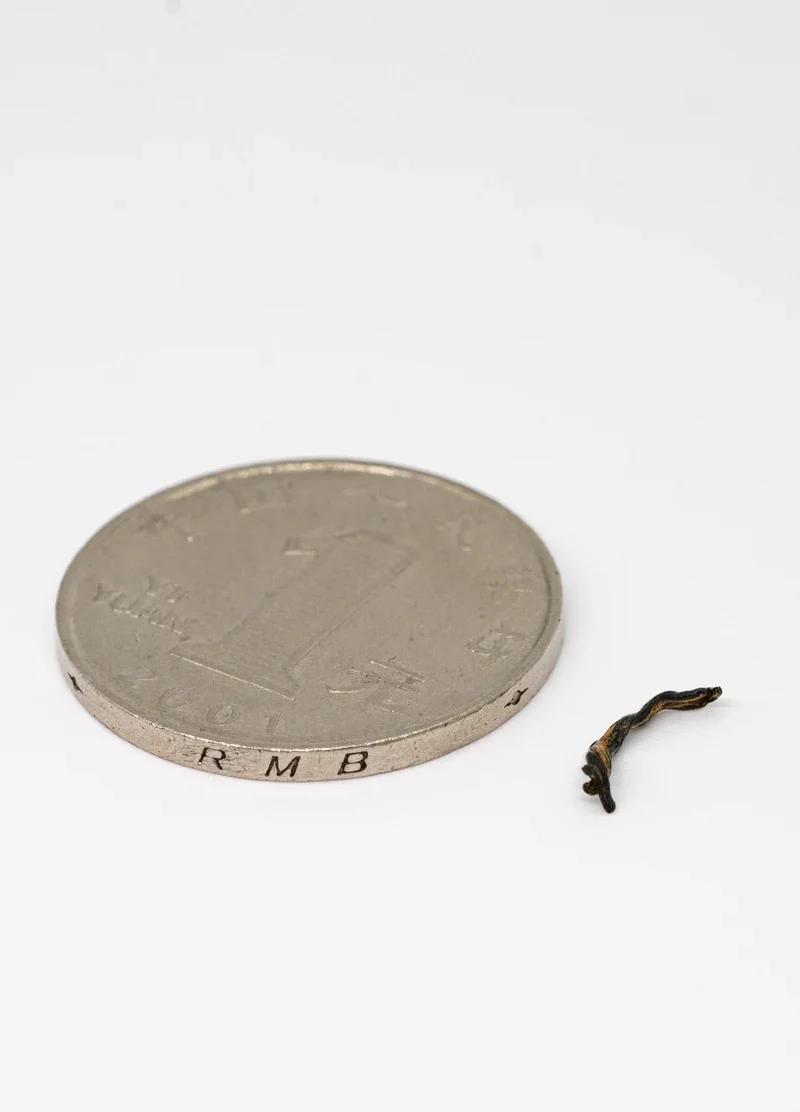
Dry Leaf Appearance: Dark brown, almost black tea leaves, tightly twisted longitudinally, with abundance of noticeable golden tips (bud to leaf ratio ~70/30). Tea leaf surface has characteristic light gloss due to caramelization technology. Tea leaf size is small, form thin and elegant.
Dry Leaf Aroma: Rich, multi-layered: dominated by notes of freshly baked rye bread, baked fruits (apple, dried apricot, prunes), dark chocolate and honey. In the background — malty, spicy and nutty shades. Delicate caramel note may be present.
Liquor Aroma: Bright, enveloping, with dominating notes of baked fruits and dried fruits, bread crust, chocolate, burnt caramel. Shades of honey, malt and spices (cinnamon, nutmeg) create depth. With cooling, light fruity acidity may appear.
Liquor Color: Dark amber, reddish-brown, clear and transparent, with rich shade. Liquor is dense, oily in light. With subsequent infusions, color gradually acquires reddish tone.
Spent Leaves: Whole, opened leaves and buds of dark brown color with reddish-copper shade. Tips retain golden tone. Leaf is elastic, with good "liveliness", evenly fermented, without burnt or under-fermented areas.
Taste: Full, velvety, oily-thick, with pronounced natural sweetness. Dominated by notes of chocolate candies, honey, butter, bread pastry. In the background — tones of dried fruits (prunes, raisins, dried apricots), roasted chestnuts, light coffee bitterness. Astringency is minimal — soft and delicate. Aftertaste is long, sweet, with notes of caramel and cocoa, with pleasant warming effect in throat.
Alkaloids: Caffeine (~3–4% of dry mass) provides tonic effect. Theobromine and theophylline are present in trace amounts, providing mild vasodilating and diuretic action.
Amino Acids: L-theanine (2-amino-4-(ethylcarbamoyl)butanoic acid) — main amino acid of tea, content in red tea from tippy raw material — ~1.5–2.5% of dry mass. Provides sweet umami taste, relaxing effect, synergy with caffeine for sustained, "soft" tone. Due to use of bud raw material, amino acid content in Hei Jin is higher than in most leaf red teas.
Roasting technology with sugar powder introduces additional simple sugars and Maillard reaction products (melanoidins, furfural), which give the tea characteristic bread-caramel notes and enhance sweetness perception.
Linalool, geraniol, benzaldehyde, phenylacetaldehyde, as well as thermal processing products — pyrazines, furanones, maltol — form complex aroma combining fruit-floral component with bread-caramel.
Minerals: Potassium (K), magnesium (Mg), manganese (Mn), fluorine (F), zinc (Zn), iron (Fe), selenium (Se). Mineral profile depends on growing soils.
Polyphenols: During full fermentation, catechins transform into theaflavins (TF, ~0.3–1.0% of dry mass), responsible for liquor brightness and refreshing astringency, and thearubigins (TR, ~6–12%), giving depth of color, softness and "body" to the liquor. TF/TR ratio determines balance between brightness and depth of taste.
Vitamins: B-group vitamins (B₁, B₂, B₆), vitamin E, vitamin K. Vitamin C content in red tea is significantly reduced compared to green tea due to oxidative processes.
Combination of caffeine and L-theanine provides gentle, sustained energy boost without sharp spikes characteristic of coffee. Increases concentration and performance.
Red tea has "warm" nature according to Chinese dietology classification, effectively warms the body in cold weather, improves peripheral circulation.
Theaflavins and thearubigins show pronounced antioxidant activity, protecting cells from oxidative stress. Melanoidins formed during caramelization also possess antioxidant properties.
Red tea stimulates gastric juice secretion, aids digestion of fatty foods. Tannins provide mild astringent action on stomach and intestinal mucosa.
Regular red tea consumption may contribute to lowering "bad" cholesterol (LDL) levels, improving vascular elasticity, normalizing blood pressure.
L-theanine promotes α-wave production in the brain, associated with relaxed concentration state. Tea provides feelings of warmth, comfort and psycho-emotional well-being.
Red tea polyphenols and contained trace elements (zinc, selenium) support normal immune system function.
Fluorides and catechins preserved in tea provide antibacterial action in oral cavity, contributing to tooth enamel strengthening.
Tea Amount: 5 grams per 100–150 ml water for flash brewing method (功夫泡, gōngfū pào); 3 grams per 200 ml for steeping in cup or thermos.
Teaware: Porcelain gàiwǎn (盖碗, gàiwǎn) — ideal option, allowing revelation of all aroma nuances and control of brewing time. Clay teapot from Yíxīng clay (宜兴紫砂壶, Yíxīng zǐshā hú) will emphasize softness and density of liquor. Glass teaware is also acceptable and allows admiring liquor color.
Water Temperature: 85–90°C. For maximally sweet and soft taste, using slightly cooled water rather than rolling boil is recommended. Boiling water (95–100°C) will reveal light chocolate bitterness, which may appeal to lovers of more intense profile.
An elite red tea from the Tóngmù (桐木) area in the Wuyi Mountains, produced exclusively from buds. Jin Jun Mei's aroma is delicate, honey-floral, with notes of baked persimmon; the taste is silky-sweet and refined. Hei Jin, while similar in appearance, differs with a denser, caramel-chocolate flavor and pronounced "bread" note contributed by the heating technology with powdered sugar. Jin Jun Mei is a pure terroir tea; Hei Jin is a technological masterpiece.
Classic red tea from Tongmu, the foundation for the entire "xiaozhong" school. Traditional Zheng Shan Xiao Zhong is distinguished by its characteristic smoky aroma (smoking over pine wood), which is completely absent in Hei Jin. Modern unsmoked versions of Xiao Zhong are closer to Hei Jin in profile but lack its caramel sweetness.
Famous red tea from Qimen County in Anhui Province. It possesses the characteristic "Qimen aroma" (祁门香, Qímén xiāng) — a complex floral-fruity bouquet with notes of rose, apple, and honey. Qi Men is more "airy" and elegant, while Hei Jin is denser, "heavier," and more dessert-like.
Yunnan red tea made from large-leaf material (Camellia sinensis var. assamica). Dian Hong is typically more astringent, robust, with spicy-woody and peppery notes, and a rich "body." Hei Jin from small-leaf Fujian varieties is significantly softer, sweeter, and more delicate, with a more dessert-like profile.
One of the three famous Fujian gongfu red teas, produced in Fu'an County (福安). Tan Yang Gongfu possesses a honey-floral aroma with lychee tones and a soft, rounded taste. Hei Jin differs with a more intense, dessert-chocolate profile and characteristic "bread" note.
Specialized tea shops with good reputation, direct suppliers from Fujian. Avoid anonymous online platforms with suspiciously low prices.
Genuine Hei Jin has dark, tightly twisted tea leaves with noticeable golden tips and light gloss. Predominance of broken leaf, absence of tips or heterogeneity — signs of low-quality product.
Dry tea should possess rich, clean aroma with notes of bread pastry, chocolate and dried fruits. Sharp, cloying or chemical smell indicates low quality or artificial flavorings.
Liquor should be clear, dark amber, with oily texture and clean sweetness. Cloudy liquor, sensation of "burnt sugar" or intrusive bitterness — warning signals.
Suspiciously cheap "Hei Jin" (significantly below market average) is almost certainly a fake or low-grade tea with excessive sugar addition to imitate sweetness.
No reviews yet. Tell us what you think of this tea.
Rate this tea and share your impressions. We review each submission before publishing it.