Brewing
Gongfu brewing
- Water temperature
- 75 °C
- Tea amount
- 5 g
- Water volume
- 100 ml
- First steep
- 10 s
- Time added per infusion
- 5 s
- Infusions
- 3

Fànjìngshān lǜchá
Choose a brewing method. Start with the recommended quantities and time, then adjust to taste.
Brewing
Brewing
Taste
Tea encyclopedia
Category: Regional famous tea (名茶, míngchá), product with protected geographical indication. Fànjìngshān Cuìfēng received the status of product with geographical indication (地理标志产品) from the State Administration for Quality Supervision of the PRC in 2005; the broader brand Fànjìngshān Chá (梵净山茶) — from the Ministry of Agriculture in 2016 (agricultural geographical indication). Included in the ten famous teas of Guizhou Province.
Category: Regional famous tea (名茶, míngchá), product with protected geographical indication. Fànjìngshān Cuìfēng received the status of product with geographical indication (地理标志产品) from the State Administration for Quality Supervision of the PRC in 2005; the broader brand Fànjìngshān Chá (梵净山茶) — from the Ministry of Agriculture in 2016 (agricultural geographical indication). Included in the ten famous teas of Guizhou Province.
Coordinates: 107°44′–109°30′ E, 27°07′–29°05′ N (protected origin zone). Reference point for Mount Fanjingshan itself: ~27.92° N, 108.68° E.
Origin: China, Guìzhōu Province (贵州省, Guìzhōu Shěng), Tóngrén Prefecture (铜仁市, Tóngrén Shì). The protected origin zone includes seven counties: Yìnjiāng (印江县), Shíqiān (石阡县), Sinan (思南县), Dejiang (德江县), Yanhe (沿河县), Jiāngkǒu (江口县) and Songtao (松桃县) — a total of 122 townships.
Type: Green tea (non-oxidized, 绿茶, lǜchá). By fixation and drying method, it is produced in several subtypes: high-grade Fànjìngshān Cuìfēng (梵净山翠峰, Fànjìngshān Cuìfēng) — flat pan-fired; mass-market green tea — rolled (卷曲形), pearl-shaped (珠形) or needle-shaped (针形), predominantly pan-fired (炒青) or baked (烘青).
Cultural Significance: Fanjingshan is one of the five sacred Buddhist mountains of China, dedicated to Bodhisattva Maitreya (弥勒道场). The tea culture of the region is closely intertwined with Buddhist, ethnic (Tujia and Miao peoples live here) and ecological traditions, forming a special philosophy of "cultivating spirit, health and harmony" (修身养性、健康和谐). In Tuanlong Village, more than thirty tea trees planted in the 15th century are still preserved; the largest of them is recognized as the "Chinese Tea King" (中国茶树王). Throughout Tongren Prefecture, there are 3 tea trees over 1000 years old and more than 6000 trees over 100 years old. In 1992, academician of the Chinese Academy of Sciences, leading tea expert Chén Zōngmào (陈宗懋, Chén Zōngmào) visited Fanjingshan and left a calligraphic inscription: "Blessed by nature beyond measure — beautiful scenery, fragrant tea" (得天独厚,景美茶香).
History: Tea cultivation in the Fànjìngshān area began in the Tāng dynasty (唐代, 7th–10th centuries). Lù Yǔ (陆羽, Lù Yǔ) in "The Classic of Tea" (《茶经》, "Chajing") mentions tea from the Sizhou (思州) region — territory corresponding to modern Tongren Prefecture — noting: "...often obtained, its taste is excellent" (往往得之,其味极佳). "Ming Shilu" (《明实录》, "Veritable Records of the Ming Dynasty") records: "Among the tribute products of Sizhou, tea is the finest" (思州方物茶为上). In 1411 (9th year of Yongle reign, 永乐九年), tea from Tuánlóng Village (团龙村, Tuánlóng Cūn), located at the foot of the mountain near Huguo Temple (护国寺), was granted the status of imperial tribute (贡茶, gòngchá). "Guizhou Tongzhi" (《贵州通志》) specifies that in the Ming dynasty, the annual tea production volume in the Fanjingshan area reached ~50,000 jin (about 25 tons). Large-scale plantation development began in 1987, when Yinjiang County included tea in the list of strategic industries. In 2005, Fanjingshan Cuifeng Cha received the status of product with geographical indication. In 2009, the tea entered the "Ten Famous Teas of Guizhou" (贵州十大名茶). In 2016, the Ministry of Agriculture approved the broader brand Fanjingshan Cha. By 2022, the brand was valued at 35.2 billion yuan, ranking 30th among China's regional tea brands and receiving the status of "China Famous Trademark" (中国驰名商标). The tea has repeatedly won at national competitions: in 2005, 2007, 2009 — first prizes at "Zhong Cha Bei" (中茶杯); in 2007 — gold medal at the preliminary
Name Breakdown: Fànjìngshān (梵净山) — Buddhist sacred name of the mountain, literally "Pure Mountain of Brahma." The character 梵 (fàn) — Sanskrit "Brahma," "sacred, pure"; 净 (jìng) — "pure, unmuddied"; 山 (shān) — "mountain." Lü Chá (绿茶) — "green tea." The full name translates as "green tea from Mount Fanjing" and carries connotations of spiritual purity and ecological pristineness.
Cultivar: Main cultivar for premium tea (Cuifeng) — Fúdǐng Dàbáichá (福鼎大白茶, Fúdǐng Dàbáichá) and its group clones, adapted to high altitude. Local population varieties (群体种, qúntǐzhǒng) are also widely used, creating genetic diversity and regional flavor specificity.
Picking: Spring harvest — main and most valuable. For Cuifeng highest grade — one bud with one young leaf in initial opening stage; for standard green tea — one bud and two-three leaves. Early spring batches (明前茶) are valued most highly.
Pluck Standard: Raw material must be whole, fresh, without mechanical damage; buds — dense, covered with down. Production standard provides for several grades: special (特级), first (一级) and second (二级).
Raw Material: Tea plantations are located in the protected origin zone at altitude 400–1500 m. Soils must comply with standard GB/T 18407.1 (agricultural product safety) and provincial regulations DB52.
Altitude: 400–1500 m above sea level; optimal zone for premium tea — 800–1300 m.
Climate: Subtropical monsoon. Average annual temperature — 16–18°C. Annual precipitation — 800–1300 mm. Sunshine hours — about 1200–1300 per year. Frost-free period — ~300 days.
Soil: Yellow, yellow-brown and red mountain soils with pH 4.5–6.5 and high organic matter content. Natural enrichment with zinc and selenium — characteristic feature of the entire "golden belt" of Guizhou tea cultivation.
High humidity and frequent fogs — the calling card of Fanjingshan. Negative ion concentration reaches 120,000–180,000 per cubic centimeter — one of the highest indicators in China. Constant cloud cover diffuses direct sunlight, stimulating synthesis of amino acids and chlorophyll.
Fanjingshan — UNESCO World Natural Heritage site (2018), included in the UN "Man and the Biosphere" biosphere reserve network and is a national nature reserve. Guizhou golden snub-nosed monkeys (Rhinopithecus brelichi) — an endemic species found only in this area — live here. Tea gardens are managed according to "green control" standards (绿色防控) with prohibition of 118 types of pesticides; green protection method coverage exceeds 90%. According to long-term inspections, all tea samples from the region meet or exceed national and provincial safety standards. Tongren Prefecture has about 189 万 mu (approximately 126,000 ha) of ecological tea plantations; seven counties have the status of "National Key Tea-Producing Counties" (全国重点产茶县), four — "Hometown of China's Famous Tea" (中国名茶之乡).
Topography: The Fanjingshan massif — main peak of the Wǔlíng Mountain Range (武陵山脉, Wǔlíng Shānmài), reaching 2572 m. Tea gardens spread across middle slopes and intermountain valleys, surrounded by virgin subtropical forests with forest coverage up to 98%.
Hand-picking of young shoots in early morning. Raw material is delivered to the workshop within several hours.
Fresh leaves are evenly spread in a thin layer in a ventilated room. Duration — 4–8 hours. Goal — to even out moisture, partially destroy cell membranes, increase free amino acid content, prepare aromatic precursors.
Pan-firing at high temperature in a wok or rotary drum. Inactivation of polyphenol oxidase, stopping oxidation, forming basic aroma. For Cuifeng, fixation temperature is carefully controlled to achieve chestnut notes without "burnt" overtones.
Brief airing and cooling after fixation. Prevents "steaming" of the leaf and evens out moisture before shaping.
Key stage for Cuifeng: leaves are straightened and flattened, acquiring a shape resembling a spear (形态似矛). For mass varieties — rolling (揉捻, róuniǎn) followed by breaking up clumps (解块, jiěkuài).
Repeated airing.
Specific stage for Cuifeng: removing excess down so the liquor remains clear.
Final heating at reduced temperature, fixing aroma and bringing residual moisture to stable level (≤6.5%).
For Cuifeng — final gentle heating, enhancing chestnut-nutty notes.
Classification of finished tea by grades.
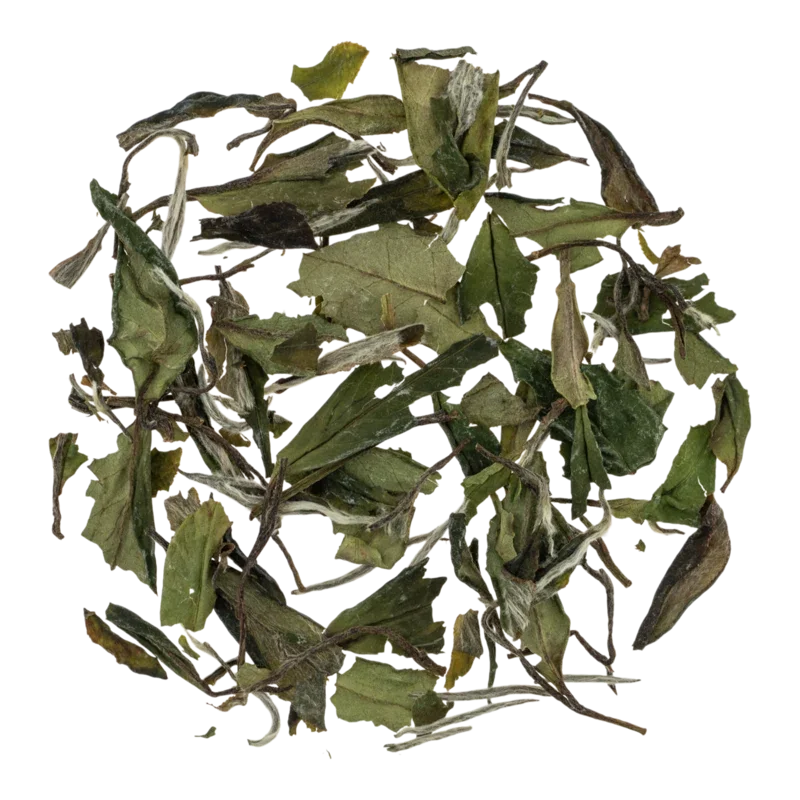
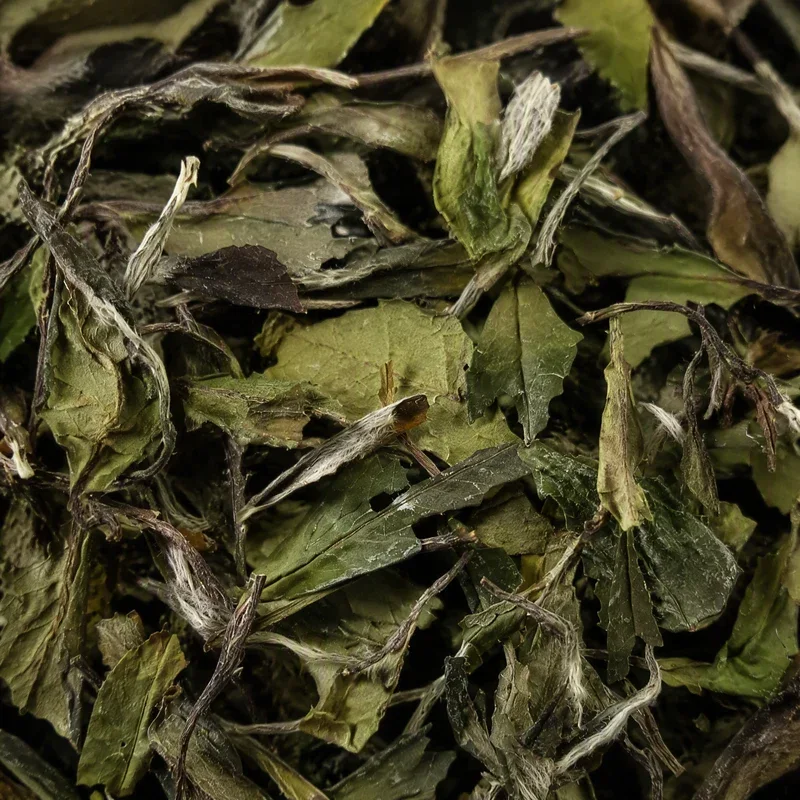
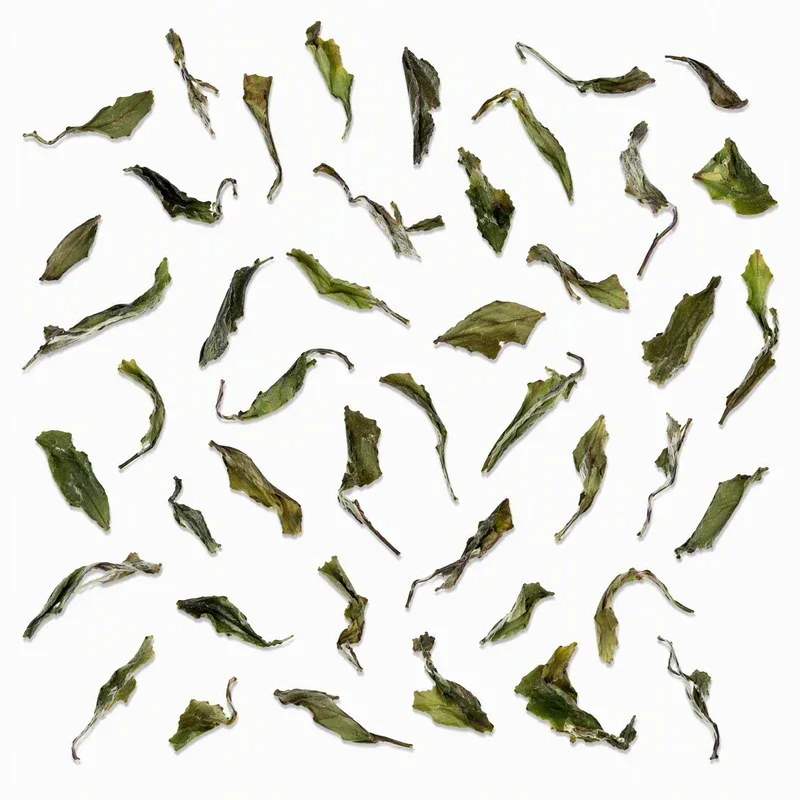
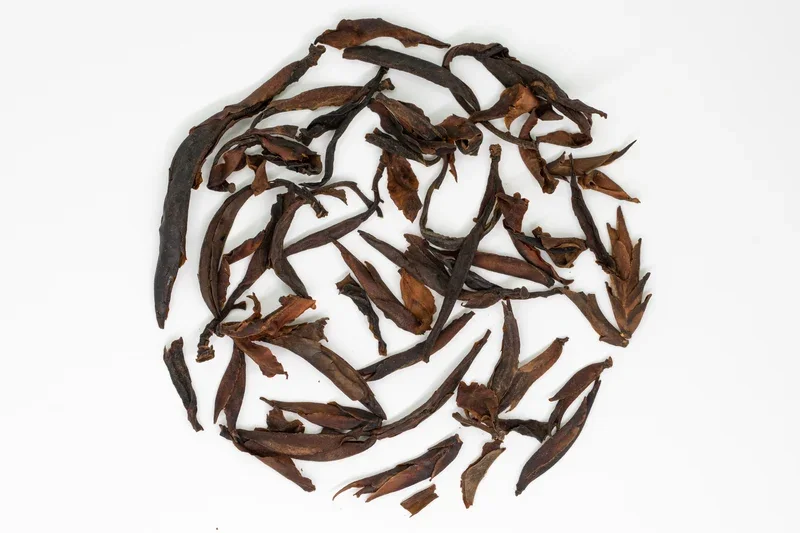
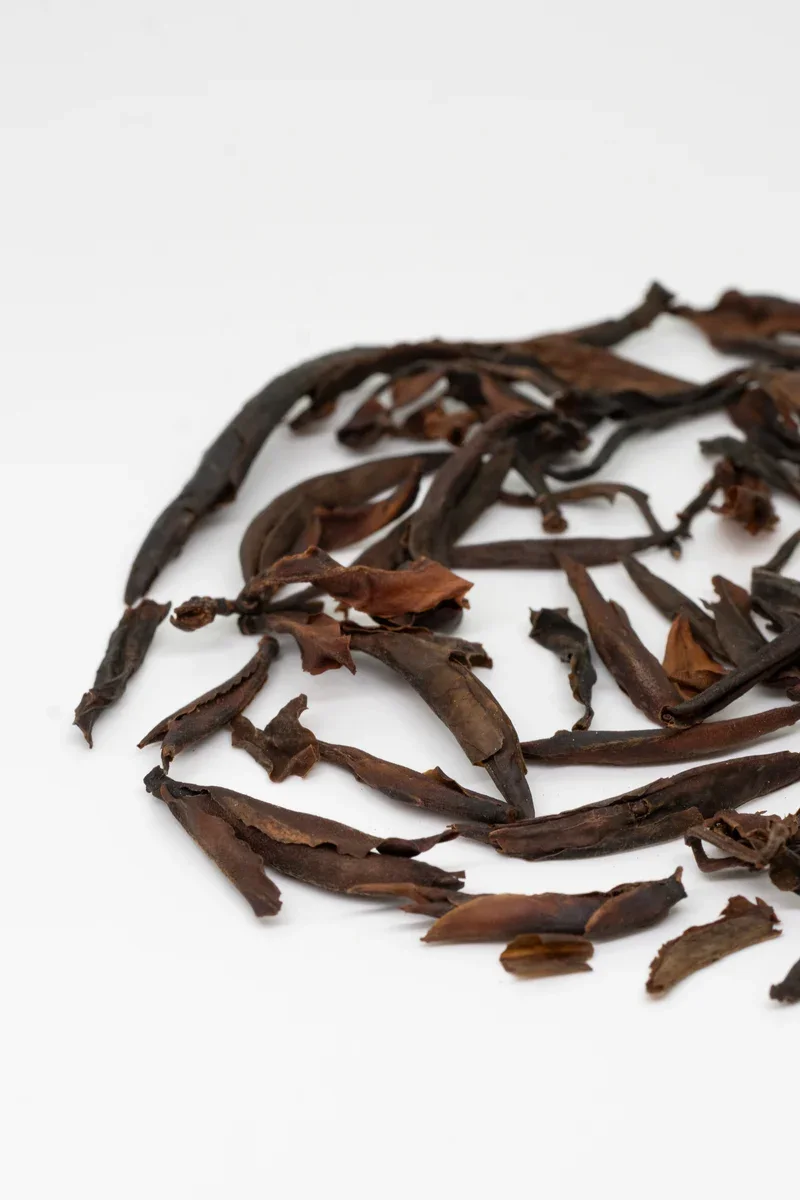
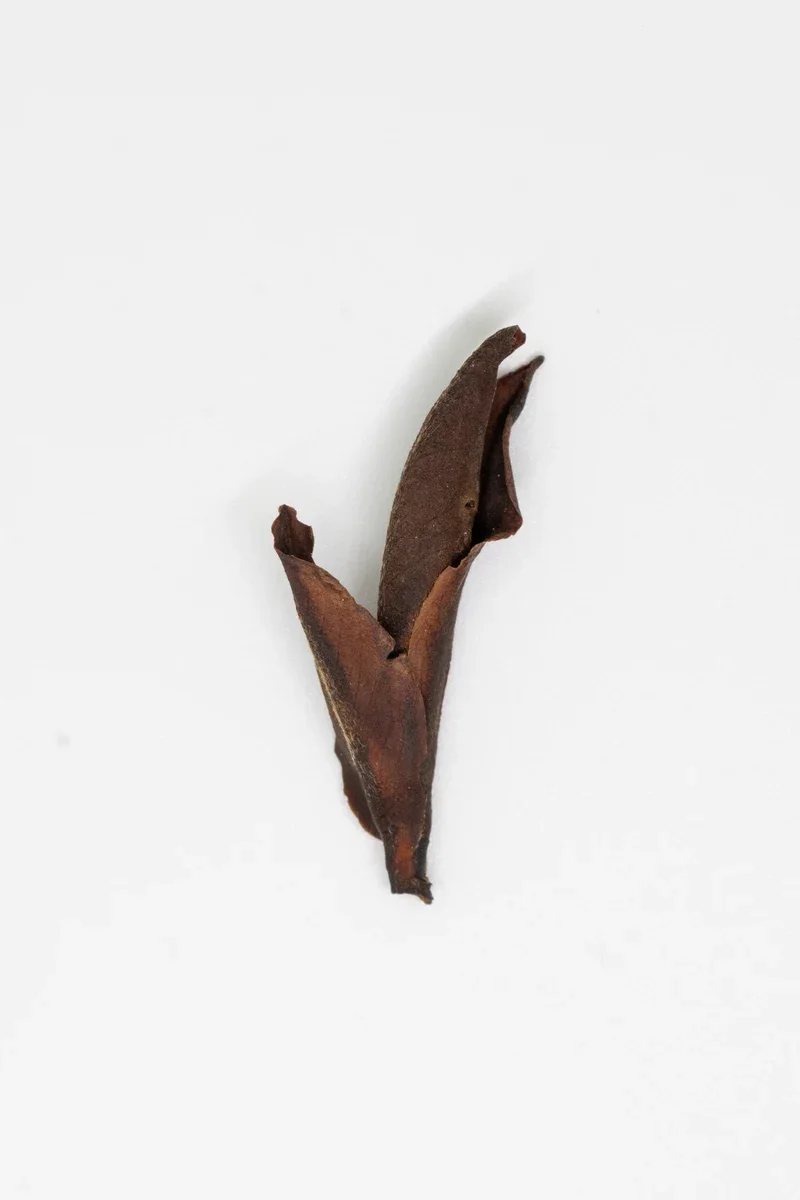
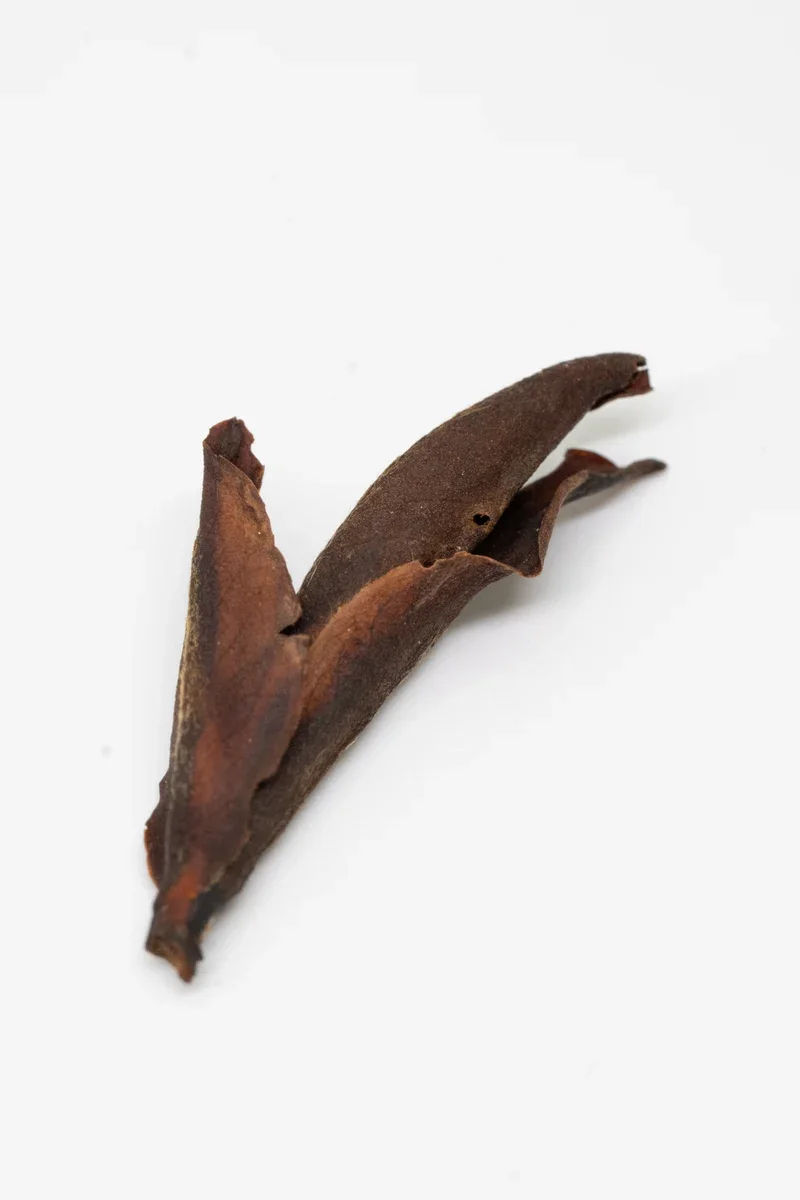
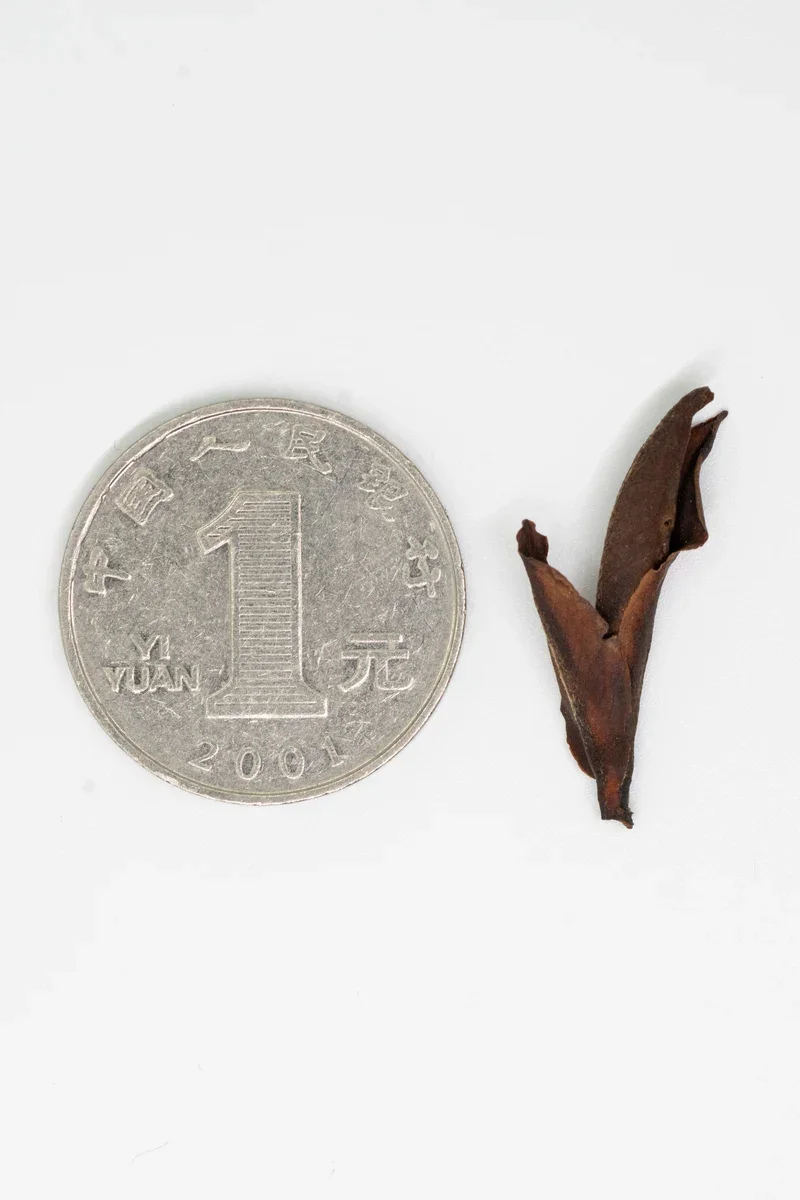
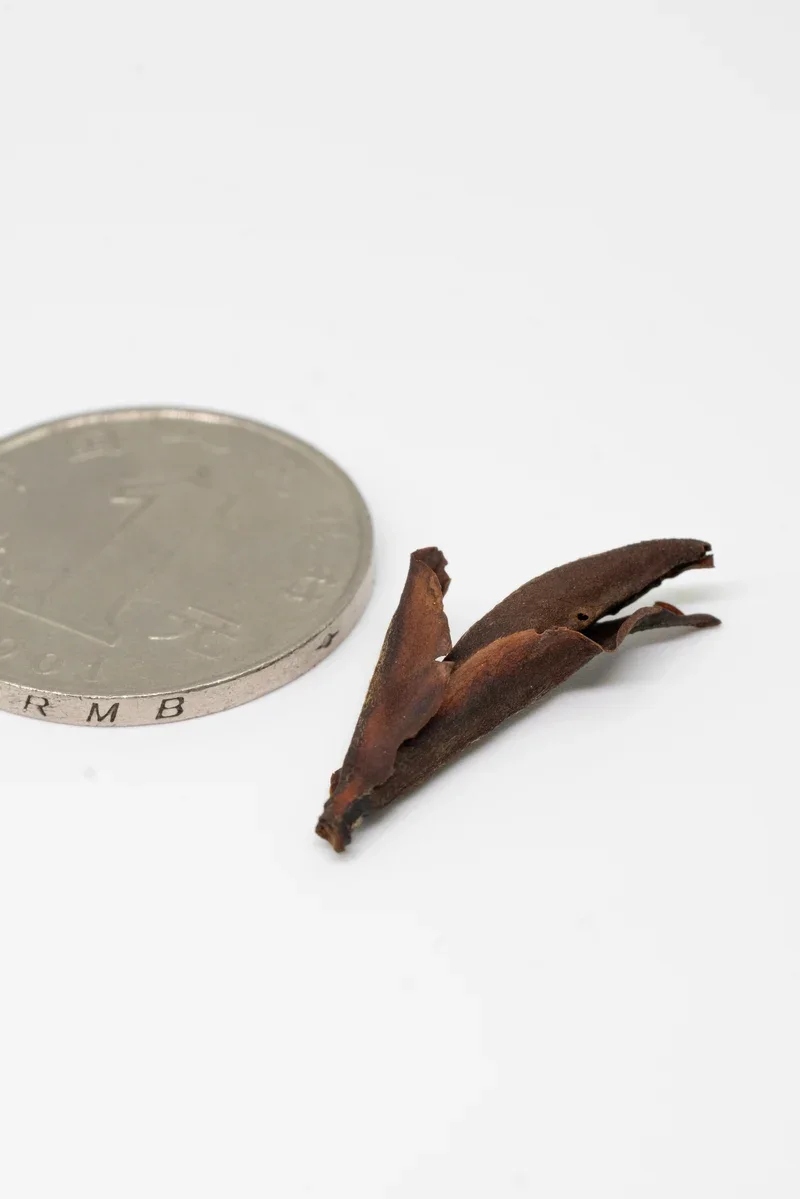
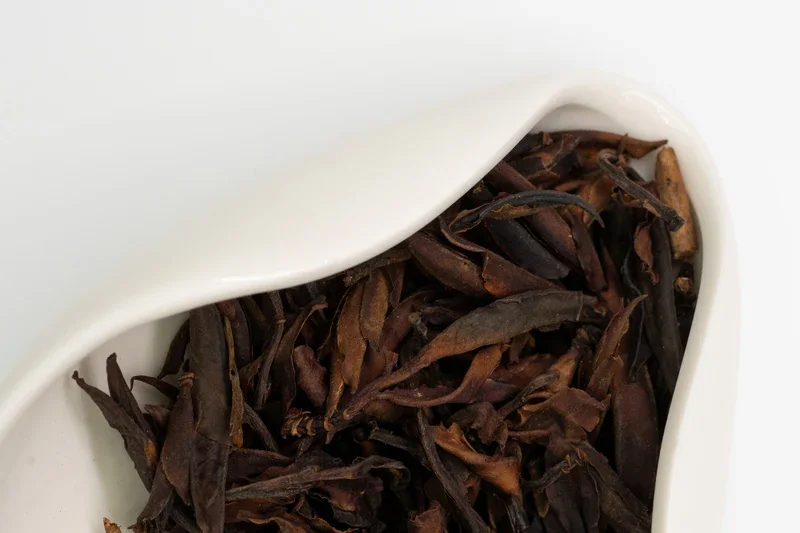
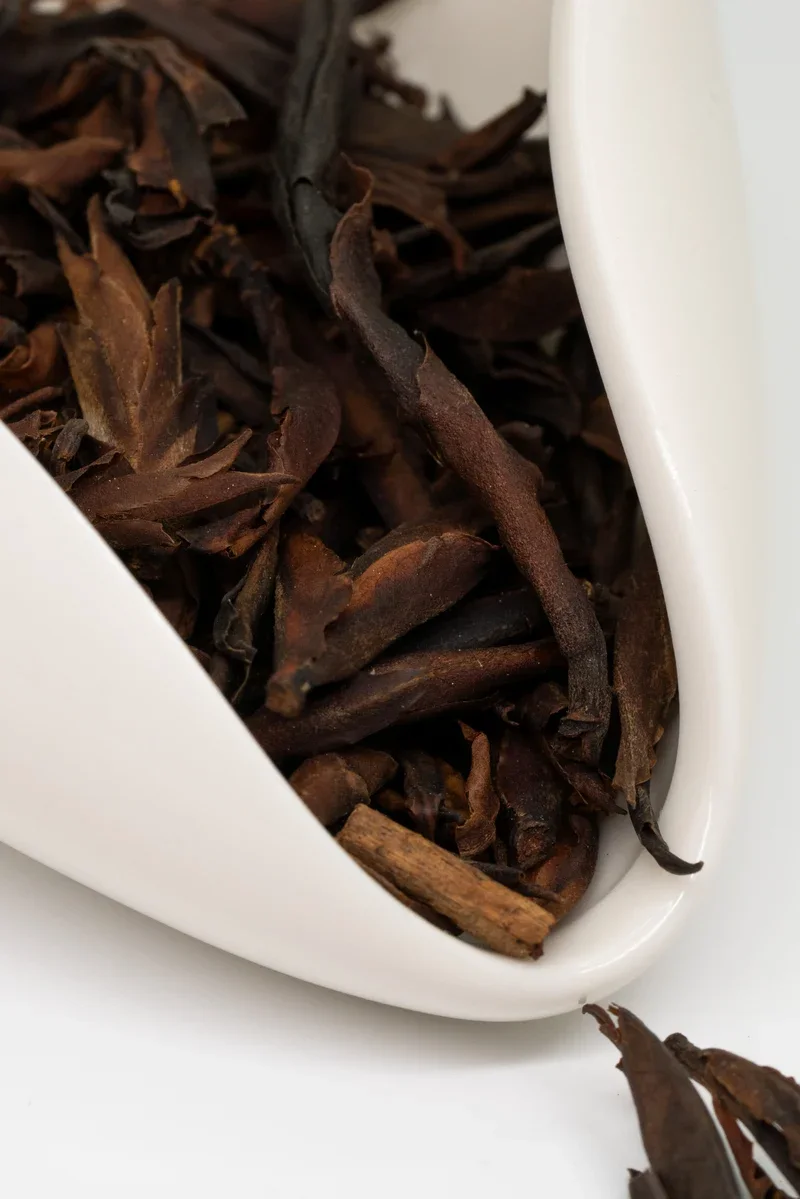
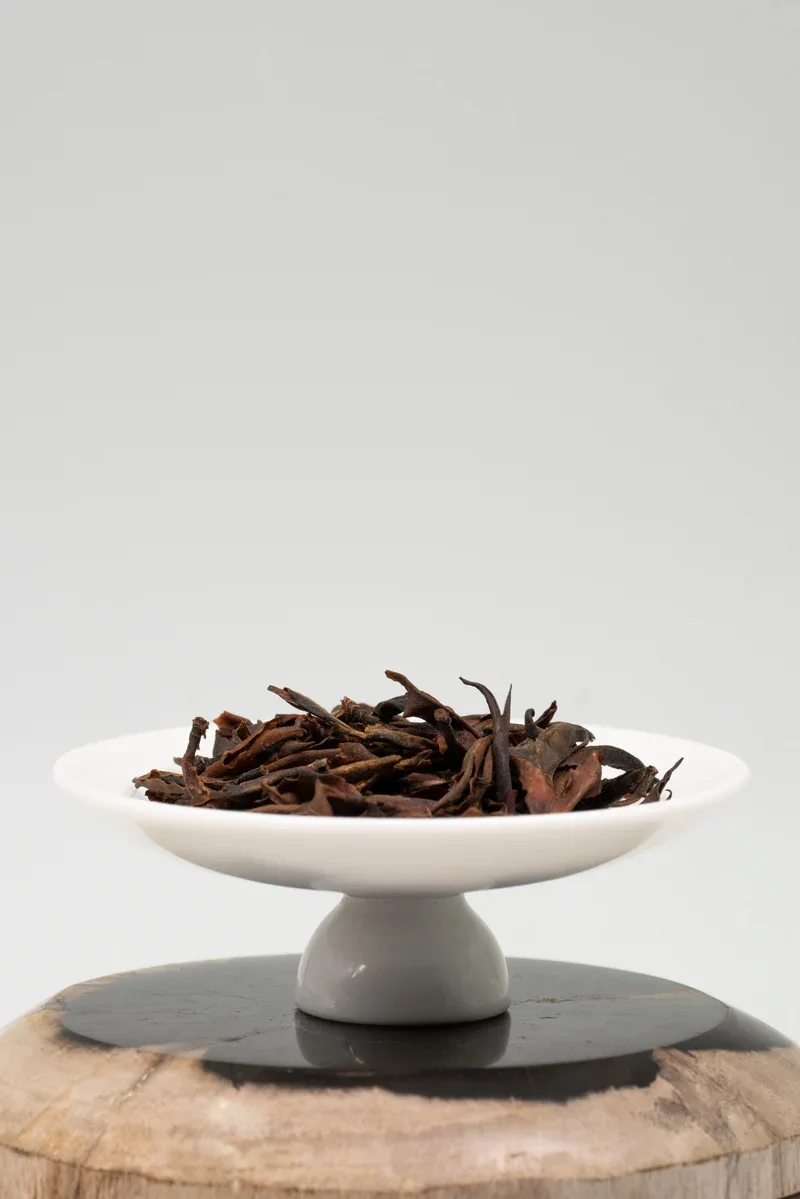
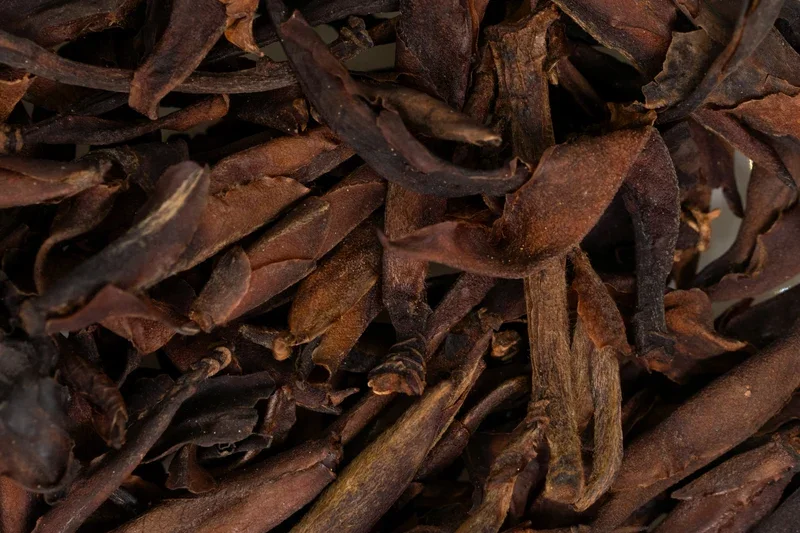
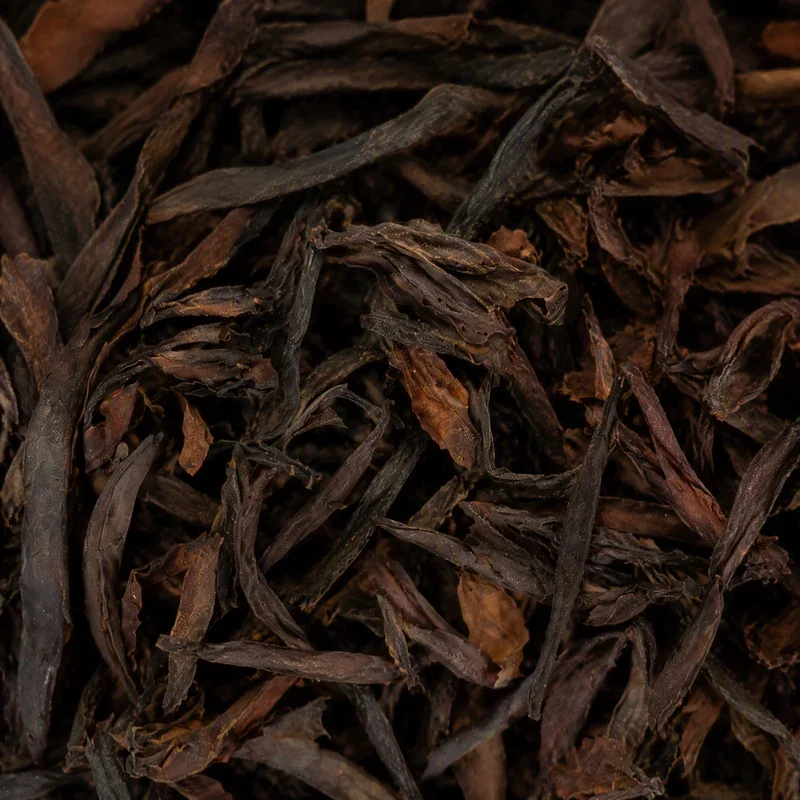
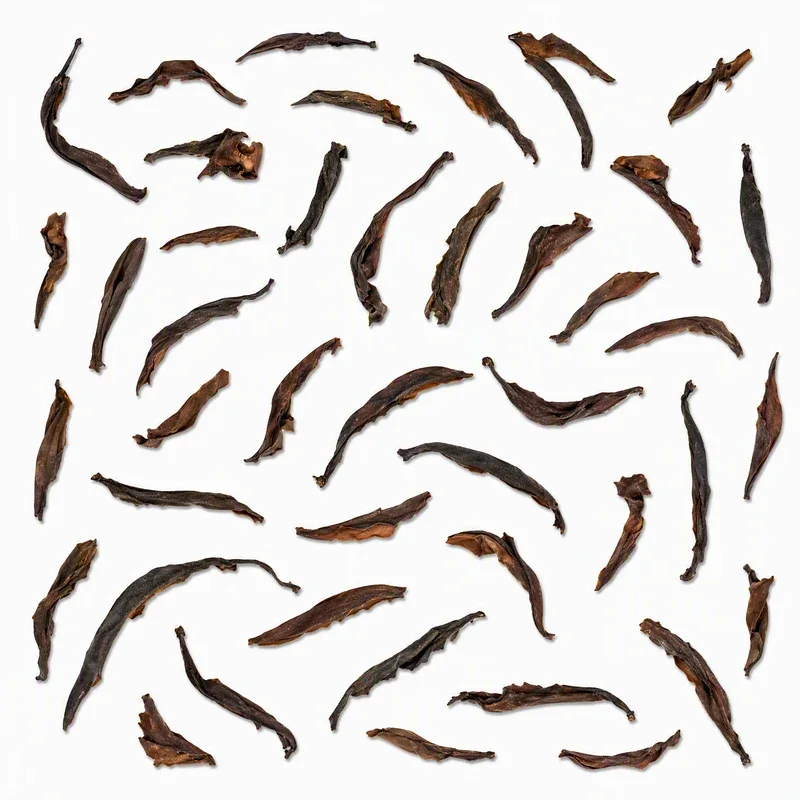
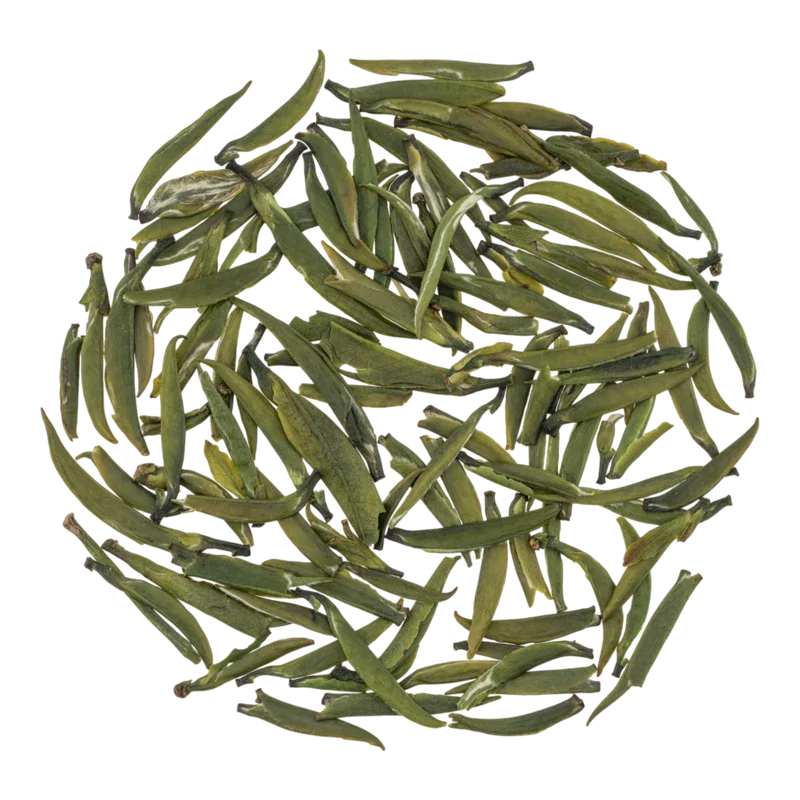
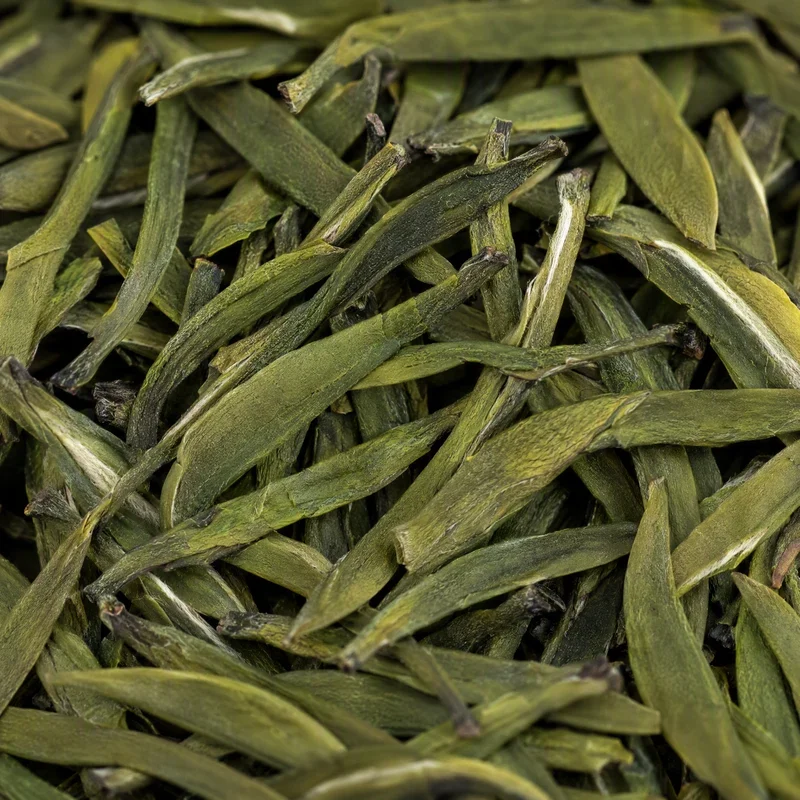
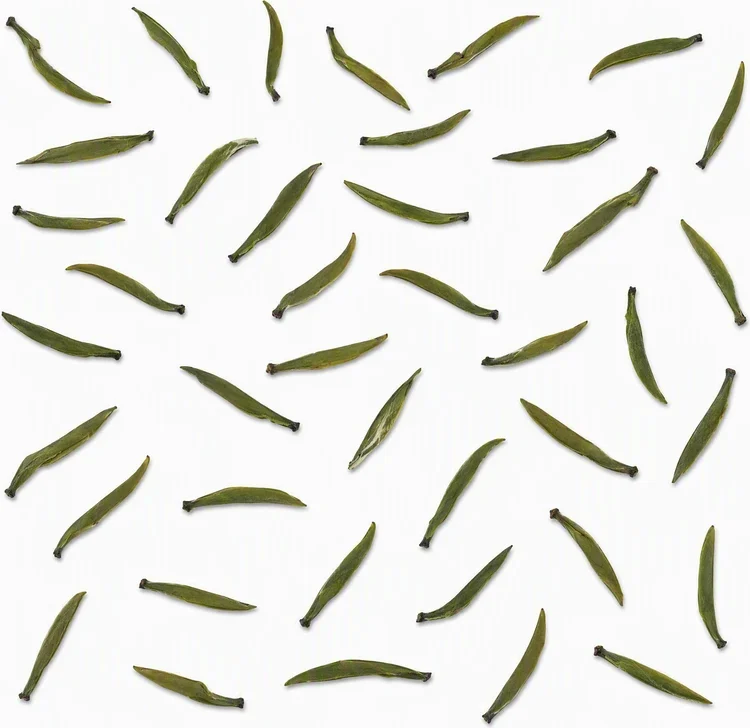
Dry Leaf Appearance: Cuifeng — flat, straight, smooth, resembling a spear tip; color — emerald green, even. Mass green tea — rolled, pearl-shaped or needle-shaped; tender green with oily luster.
Dry Leaf Aroma: Delicate, clean, with distinct chestnut overtone (栗香, lìxiāng). Cuifeng — refined, persistent aroma of roasted chestnuts with light floral nuances.
Liquor Aroma: High, persistent, with dominant chestnut note and second layer of fresh-cut grass and gentle florality. Aroma persists through several infusions.
Liquor Color: Tender green, bright, clear (嫩绿、清澈).
Spent Leaves: Tender, whole buds and leaves, even in size; color — bright light green. Cuifeng — buds open evenly, forming "blossoms."
Taste: Fresh, full, with pronounced sweetness and soft "body." Bitterness minimal; astringency — delicate, quickly transitioning to returning sweetness (回甘, huígān). Due to high amino acid content, characteristic umami component is felt.
Alkaloids: Caffeine — typically 2.5–4.5% for green teas of the region; theobromine and theophylline — in trace amounts.
Amino Acids: 3.1–10.6% — outstanding indicator, especially for high-altitude early spring harvests. Dominant amino acid — L-theanine, responsible for umami character and sedative-tonic balance.
38–47.8% — high level, ensuring density and richness of liquor.
Natural enrichment with zinc and selenium — characteristic feature of teas from the "golden belt" of Guizhou. Also present are potassium, magnesium, manganese, fluorine.
Chestnut profile is formed by pyrazines and pyrroles during pan-firing; floral-grassy base is created by linalool, geraniol and cis-3-hexenol.
Polyphenols: 16.7–31.5% of dry matter (wide range depends on altitude, season and grade). Main fractions — catechins (EGCG, ECG, EC), determining antioxidant activity.
Vitamins: Vitamin C, B vitamins (B₁, B₂), carotenoids (provitamin A).
Catechins (especially EGCG) neutralize free radicals and slow cellular aging processes.
Synergy of L-theanine and caffeine provides steady concentration enhancement without sharp excitement spikes.
Polyphenols help normalize cholesterol levels and blood pressure.
Gently stimulates peristalsis and enzyme secretion; excellently accompanies meals.
Natural enrichment with these trace elements supports immune function, thyroid function and body's antioxidant systems.
Fluorine and catechins suppress growth of pathogenic bacteria, promoting gum health.
Antioxidants and vitamin C protect from photodamage and promote collagen synthesis.
Catechins and caffeine promote metabolism acceleration and fat oxidation, which may be useful for body weight control with balanced nutrition.
With increased caffeine sensitivity, limit consumption in the second half of the day; not recommended to drink strongly brewed tea on empty stomach.
Tea Amount: 3–4 g per 150–200 ml (glass) or 4–5 g per 100–120 ml (gaiwan).
Teaware: Clear glass cup (玻璃杯) — for observing tea bud opening; porcelain gaiwan (盖碗) — for delicate aroma development; porcelain teapot — for group tea sessions.
Water Temperature: 75–85°C. For Cuifeng highest grade — 75–80°C; for mass green tea 80–85°C is acceptable.
The most famous green tea of Guizhou, included in China's "top ten" teas. Maojian — rolled, needle-shaped, with brighter astringency and pronounced "fresh" aroma. Fanjingshan Cuifeng — flat, gentler, with dominant chestnut profile.
Another Guizhou green tea, also flat-shaped. Cuiya — more delicate and "lanceolate," with predominant fresh bean notes; Fanjingshan Cuifeng — larger, more voluminous, with deeper chestnut tone.
Green tea with natural zinc and selenium enrichment from neighboring Zunyi Prefecture. Similar to Fanjingshan in mineral profile, but differs in denser rolling and slightly more astringent taste.
Unique local cultivar from Shiqian County, included in the Fanjingshan Cha zone. Tai Cha — genetically distinctive variety with especially high amino acid content and soft, "oily" taste; Fanjingshan Cuifeng — more universal in style.
Classic standard of flat green teas. Longjing — more oily, with "bean" aroma; Fanjingshan Cuifeng — fresher, more chestnut-like and simpler in texture, but with natural bonus of zinc and selenium.
Price Category: Wide range. Premium Cuifeng from early spring harvest — from 1,000 to 5,000 yuan/kg and higher (in 2009, 200 g "Fanjingshan De Yi Chun" sold at auction for 166,000 yuan; in 2010 — 300 g for 198,000 yuan). Standard mass green tea — 200–800 yuan/kg. Price factors: harvest season (明前 more expensive), grade (特级 > 一级 > 二级), plantation altitude, processing method.
No reviews yet. Tell us what you think of this tea.
Rate this tea and share your impressions. We review each submission before publishing it.