Brewing
Gongfu brewing
- Water temperature
- 95 °C
- Tea amount
- 7 g
- Water volume
- 100 ml
- First steep
- 10 s
- Time added per infusion
- 5 s
- Infusions
- 10

Diānhóng yě shēng
Choose a brewing method. Start with the recommended quantities and time, then adjust to taste.
Brewing
Brewing
Taste
Tea encyclopedia
Category: Rare collectible red tea (black tea) from wild raw material. Belongs to the broad group of Diān Hóng (滇红, Diānhóng) — Yunnan red teas (black tea), but is distinguished as a separate subcategory "wild red tea (black tea)" (野生红茶, yěshēng hóngchá) thanks to the unique origin of the raw material.
Category: Rare collectible red tea (black tea) from wild raw material. Belongs to the broad group of Diān Hóng (滇红, Diānhóng) — Yunnan red teas (black tea), but is distinguished as a separate subcategory "wild red tea (black tea)" (野生红茶, yěshēng hóngchá) thanks to the unique origin of the raw material.
Coordinates: Yunnan Province as a whole is located between 21° and 29° North latitude and 97° and 106° East longitude. The main regions of wild tea tree growth — the western part of the province, along the basin of the Láncāng River (澜沧江, Láncāng Jiāng, upper reaches of the Mekong).
Origin: China, Yúnnán Province (云南, Yúnnán). Collection of wild tea leaves is conducted in inaccessible mountain regions of western and southwestern Yunnan — in the vicinity of the mountain massifs of Líncāng (临沧, Líncāng), Bǎoshān (保山, Bǎoshān), Simao/Pu'er (思茅/普洱, Sīmáo / Pǔ'ěr), Xīshuāngbǎnnà (西双版纳, Xīshuāngbǎnnà) and Déhóng (德宏, Déhóng). Specific collection locations are often not disclosed by producers.
Type: Red tea (black tea) (红茶, hóngchá) — fully oxidized (in European classification — black tea). Degree of oxidation — 85–95%.
Cultural Significance: Dian Hong Ye Sheng is perceived in China as a tea "for those who understand": it is valued for its rarity, distinctive character and special "wild energy" (野韵, yě yùn), which, according to the conviction of connoisseurs, is carried by trees growing outside human control. This tea embodies the primordial connection between man and the nature of Yunnan — one of the most biodiverse regions on the planet.
History: Yunnan Province is one of the universally recognized centers of origin of the tea plant. In the mountain forests of southwestern China, wild tea trees hundreds and even thousands of years old have been preserved — in particular, the famous Xiāngzhúqīng tree (香竹箐) in Fengqing County, which, according to radiocarbon analysis data, is more than 3200 years old. Local ethnic groups — Dai, Bulang, Hani, Wa — for millennia collected and used leaves of wild tea trees for food and for preparing beverages. However, purposeful production of red tea (black tea) from wild raw material using gongfu hongcha technology (工夫红茶, gōngfū hóngchá) — is a relatively recent phenomenon, which gained development on the wave of market demand for exclusive and "natural" teas from the beginning of the 2000s. The history of classical Dian Hong began in 1939, when tea technologist Féng Shàoqiú (冯绍裘, Féng Shàoqiú) created the first batch of Yunnan red tea (black tea) at a factory in Shunning (now Fengqing) for export — under conditions when eastern Chinese tea regions were cut off by war. Wild tea as a separate niche was formed significantly later, but genetically and territorially is a direct heir to this tradition.
From several decades to several hundred years. Raw material from trees over 100 years old is most valued — it is believed that the deep root system of old trees extracts a richer mineral complex from the soil.
Cultivar: For the production of Dian Hong Ye Sheng, leaves from wild tea trees are used, which may belong to several species and varieties:
Picking: Main — spring (March — April); additional harvests — in summer and autumn. Spring harvest gives the most aromatic and sweet tea.
Pluck Standard: Predominantly "one bud + two-three leaves", but may vary. Wild trees are characterized by larger, fleshier buds and leaves compared to plantation raw material.
Raw Material: Leaves must be healthy, whole, without insect damage. Harvesting wild tea is an extremely labor-intensive and sometimes dangerous process: trees often grow on steep slopes, in dense tropical forest undergrowth, at altitudes of 1500–2500 m. To harvest from tall trees, it is sometimes necessary to climb the trunk.
Altitude: Generally 1500–2500 meters above sea level, although individual specimens are found even higher.
Climate: Subtropical and tropical monsoon. Average annual temperature 17–22°C, annual precipitation 1200–2000 mm, relative humidity over 80%. Abundant fogs, significant differences between day and night temperatures, and abundance of sunny days in the dry season (October — May) are characteristic.
Soil: Diverse: red soils (红壤, hóng rǎng), laterites (砖红壤, zhuān hóng rǎng), mountain yellow soils; pH 4.5–5.5. Deep humus layer, formed by forest litter, provides rich mineral and organic composition. The concentration of organic substances in wild forest soils is significantly higher than on plantations.
Mountain regions of western and southwestern Yunnan — one of the global "hotspots" of biodiversity. Wild tea trees are part of subtropical and tropical mountain forest ecosystems.
Wild tea trees are not subjected to any cultivation: they are not pruned, not fertilized, not treated with pesticides. They grow in a natural ecosystem surrounded by other woody, shrub and herbaceous species, which forms a unique microbiome and, according to many specialists, affects the aromatic and flavor profile of the tea — giving it a characteristic "forest", "wild" note.
Hand picking; leaves are carefully plucked or cut. Due to the inaccessibility of trees and difficult terrain, harvesting is conducted in small batches.
Prolonged, often longer than for plantation raw material (12–20 hours). Leaves are spread in a thin layer on bamboo racks in a ventilated room or outdoors in shade. Goal — reducing moisture content to 60–64% and beginning of biochemical transformations.
Manual or mechanical. Rolling destroys the cellular structure of the leaf, releasing polyphenol oxidase and ensuring contact of polyphenols with oxygen. For large wild leaf, more intensive or prolonged rolling may be required.
Key stage determining the color, taste and aroma of red tea (black tea). Rolled leaves are laid in a layer of 8–12 cm in a warm (25–30°C), humid room for 3–5 hours. During oxidation, catechins are converted to theaflavins and thearubigins, the leaf acquires a red-brown color and characteristic sweet-fruity aroma.
With hot air at temperature 100–120°C to residual moisture of 4–6%. Stops oxidation and fixes the achieved profile.
Finished tea is sorted by leaf size, presence of tips and overall quality. Small broken pieces and tea dust are sifted out.
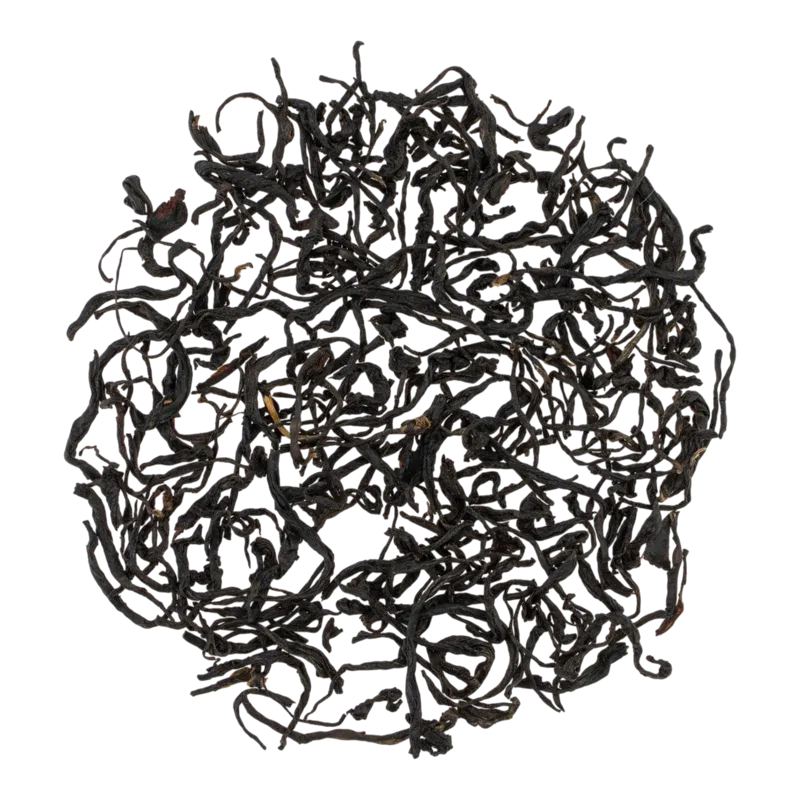
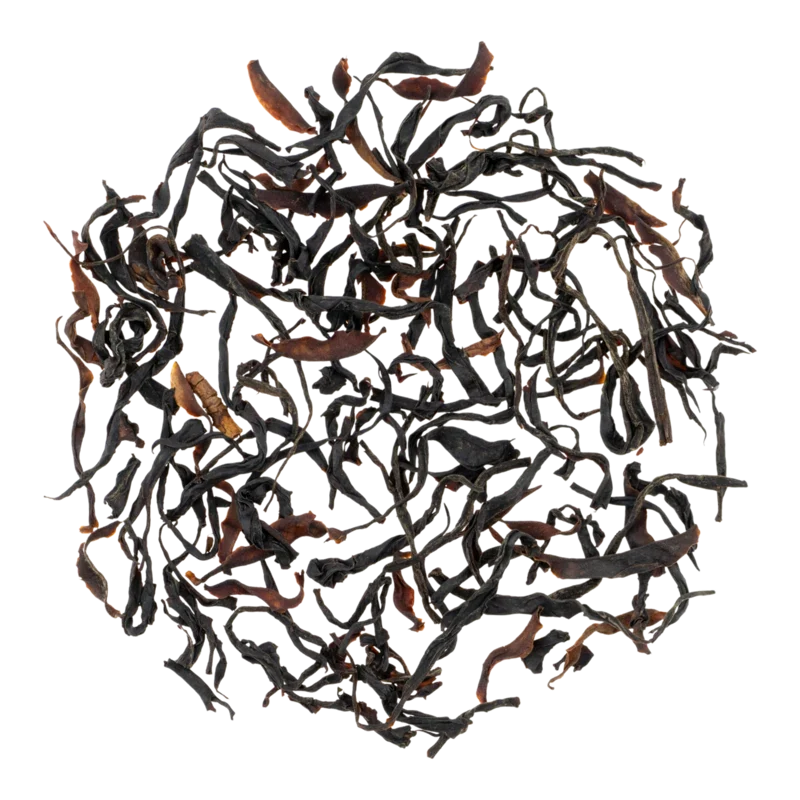
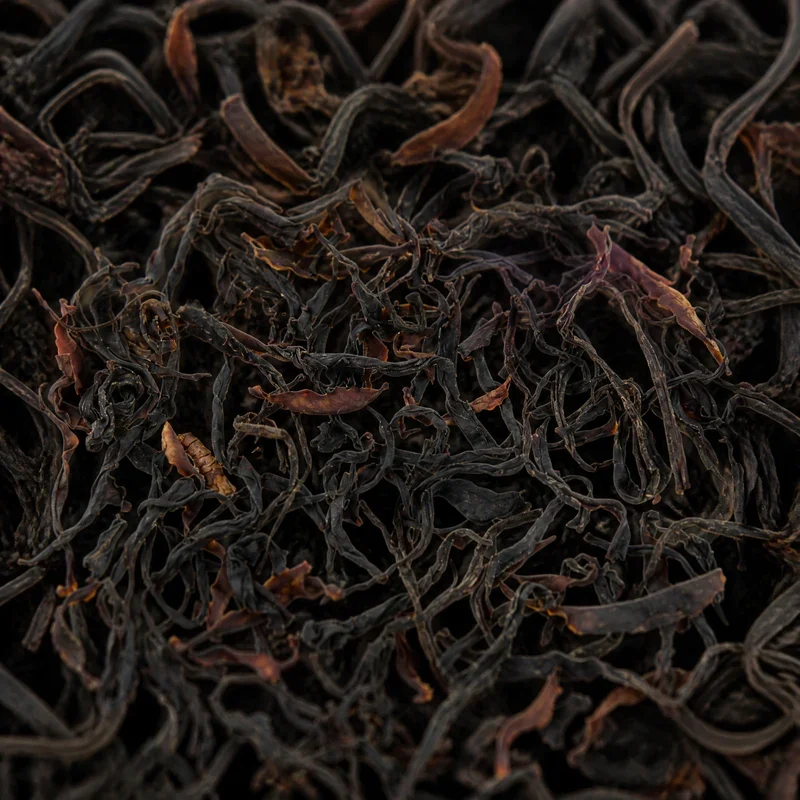
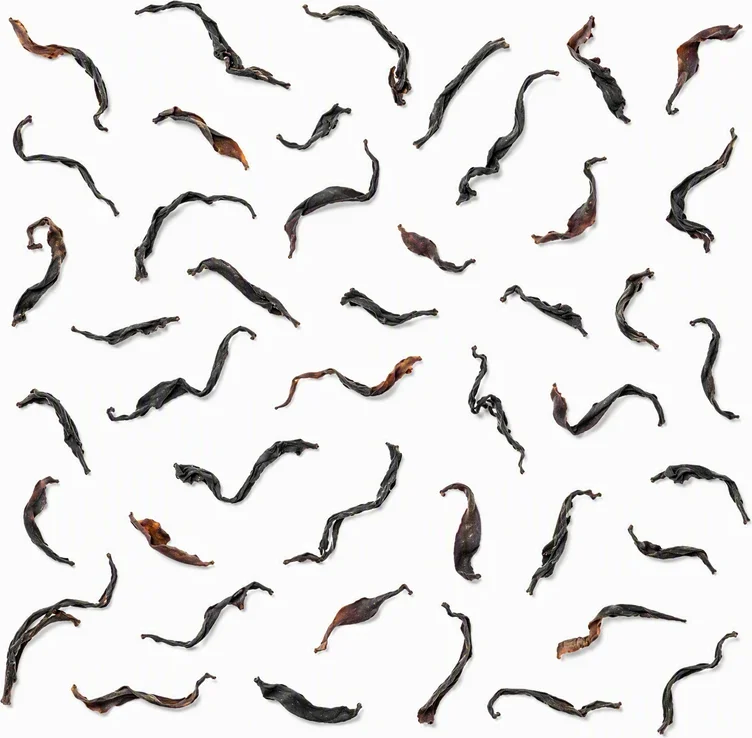
Dry Leaf Appearance: Varies from slightly twisted large strips to more tightly twisted tea particles — depends on the specific producer and type of wild tree. Color — from dark brown to almost black. Characteristic feature: absence or minimal pubescence on the underside of the leaf (unlike plantation Dian Hongs with abundant golden tips). Samples from young shoots of C. taliensis may have reddish buds.
Dry Leaf Aroma: Complex, multifaceted, with pronounced "wild" character. Notes of mountain herbs, wild flowers, tropical fruits (lychee, longan), honey, spices (cinnamon, nutmeg) dominate. Woody and earthy nuances are present — the smell of moist forest soil. Light smokiness may be felt, but without intrusiveness.
Liquor Aroma: Rich, deep, "voluminous". Dried fruits, wild honey, meadow herbs and flowers dominate. Base — wood, spices, moist earth. With each infusion the aroma evolves, revealing new shades.
Liquor Color: From amber-red to red-brown, transparent and clear, with rich, deep tone. High-quality samples — with distinct golden rim.
Spent Leaves: Whole, large, elastic leaves of reddish-brown color, opening almost to original size. Thicker petioles and veins than plantation raw material are characteristic.
Taste: Full, powerful, with noticeable "body" and texture, — noticeably more structured than most plantation Dian Hongs. Light but pleasant astringency (not binding, but rather "skeletal"), pronounced sweetness in the middle part and deep, prolonged aftertaste with notes of wild herbs, fruits and spices. Characteristic light acidity (lively, fruity), absent in standard red teas (black tea). The taste is unfamiliar to those who know only plantation red teas (black tea), and may be perceived as "wild" and "untamed".
Alkaloids: Caffeine — about 9.5 mg/g (lower than plantation — ~14.6 mg/g). Theobromine, theophylline — in trace amounts. Reduced caffeine content — characteristic feature of wild raw material C. taliensis and transitional forms.
Amino Acids: Average content of free amino acids — about 3.9% (higher than plantation Dian Hong — ~3.5%). Increased level of L-theanine determines more pronounced sweetness and "freshness" of wild tea taste.
About 10.6 mg/g (significantly lower than plantation — ~18.5 mg/g), which explains the softer, less astringent taste base.
Essential Oils: Rich and distinctive aromatic complex, including linalool, geraniol, nerolidol, methyl salicylate and a number of specific terpenoids not characteristic of plantation teas.
Minerals: Potassium, magnesium, manganese, iron, fluorine, zinc. Mineral profile reflects deep forest soils rich in humus.
Polyphenols: Water extract content — about 38.4% (somewhat lower than plantation Dian Hong — ~41%). Main components: theaflavins (give brightness to liquor), thearubigins (provide color depth and "body" of taste), residual catechins.
Vitamins: C (in residual amounts after oxidation), B group (B₁, B₂, B₆), E, K.
Red tea (black tea) has "warm" nature (温性, wēnxìng) on the scale of traditional Chinese medicine. Improves blood circulation, helps warm up, gently invigorates.
Theaflavins and thearubigins — powerful antioxidants protecting cells from oxidative damage and slowing cellular aging processes.
Stimulates gastric juice secretion, promotes fat breakdown. Red tea (black tea) after meals — traditional Chinese recommendation.
Combination of relatively low caffeine content and increased L-theanine level provides calm, stable alertness without the characteristic "nervous" peak of coffee.
Red tea (black tea) polyphenols promote vascular wall elasticity and may contribute to cholesterol level normalization.
Traditionally believed that wild tea growing in an ecologically clean environment without agrochemicals promotes body cleansing.
Vitamins, minerals and polyphenol complex together support general body resistance.
Tea Amount: 5–7 g per 150–200 ml water (for flash steeps method in gaiwan); 3–4 g per 200 ml (for European method in teapot).
Teaware: Gàiwǎn (盖碗, gàiwǎn) made of porcelain — best choice for evaluating aroma and observing spent leaves; clay teapot from Yixing clay — for "warmer", rounder taste; glass teapot — for aesthetic enjoyment of the view of opening large leaves.
Water Temperature: 90–95°C. Not recommended to use boiling water (100°C) — this can "burn" delicate aromatic compounds of wild raw material.
Container: Airtight — foil vacuum bag, tin or ceramic jar with tight lid.
Enemies: Moisture, light, high temperature, sharp foreign odors.
Shelf Life: Standard Diān Hóng Yè Shěng (烘干 / hot drying) optimally consumed within 2–3 years. Tea dried by sūn method (晒红, shài hóng) is capable of further transformation and with proper storage reveals new facets after 3–5 and more years, acquiring honey-nut notes.
Dry, cool, dark place; temperature 15–25°C, humidity not higher than 50%.
Elite bud Dian Hong from plantation raw material. Delicate, sweet, with dominance of honey-fruit notes and silky texture. Ye Sheng is significantly more powerful, coarser, with pronounced astringency, "wild" herbaceous notes and structural acidity — completely different scale and character.
Classical leaf Dian Hong from plantation raw material Yunnan Da Ye Zhong. Even, understandable, with predominance of malty, chocolate and dried fruit notes. Ye Sheng differs in significantly greater complexity, "multi-story" profile and unpredictability of unfolding from infusion to infusion.
Distinguished by spiral-shaped rolling form. Flavor profile may intersect with Ye Sheng, but usually softer, with less astringency and without "wild" character.
Closest "relative" of Ye Sheng — red tea (black tea) from old trees. Difference — in degree of "wildness" of raw material: gushu are ancient but cultivated trees; Ye Sheng — trees growing completely in wild environment. In taste gushu is usually slightly more "tamed" and predictable.
No reviews yet. Tell us what you think of this tea.
Rate this tea and share your impressions. We review each submission before publishing it.