Brewing
Gongfu brewing
- Water temperature
- 92 °C
- Tea amount
- 6 g
- Water volume
- 100 ml
- First steep
- 10 s
- Time added per infusion
- 5 s
- Infusions
- 8

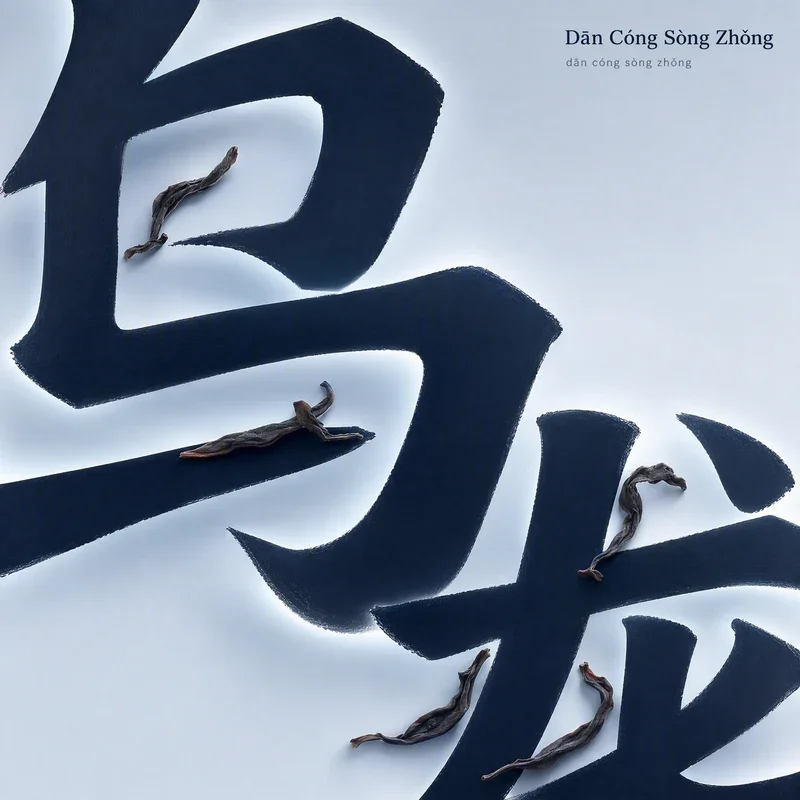
dān cóng sòng zhǒng
Choose a brewing method. Start with the recommended quantities and time, then adjust to taste.
Brewing
Brewing
Taste
Tea encyclopedia
Category: High-quality, rare, collectible oolong teas. Belongs to the group of Dān Cóng (单丛, dān cóng) teas, which means "single bushes" or "from a single bush".
Category: High-quality, rare, collectible oolong teas. Belongs to the group of Dān Cóng (单丛, dān cóng) teas, which means "single bushes" or "from a single bush".
Coordinates: Approximately 23-24° North latitude, 116-117° East longitude.
Origin: China, Guǎngdōng Province (广东, Guǎngdōng), Cháozhōu Prefecture (潮州, Cháozhōu), Fènghuáng Mountains (凤凰山, Fènghuáng Shān), also known as Phoenix Mountains. Wūdǒng Village (乌崬) on the peak of Wudong Mountain is the most famous growing area, where the oldest bushes are believed to grow.
Type: Oolong (oxidation level usually medium, 30-60%). Roasting level may vary, but is often medium or above medium.
It is believed that Dan Cong Song Zhong is one of the few tea varieties that comes from bushes whose age can reach 600-900 years.
This tea is shrouded in legends and traditions, making it even more attractive to connoisseurs.
Thanks to its rich taste, aroma and tonic effect, Dan Cong Song Zhong is often used for tea ceremonies and meditations.
Dan Cong Song Zhong pairs well with aged cheeses, nuts, dried fruits, as well as with Cantonese cuisine dishes.
Cultural Significance: Dan Cong Song Zhong is not just tea, but living history, part of China's cultural heritage. It is highly valued for its rarity, venerable age, unique flavor profile and is considered one of the most prestigious and expensive Dan Congs. This is tea for special occasions, for true connoisseurs and collectors.
History: Song Zhong is considered one of the most ancient Dan Congs. According to legend, its history dates back to the Song dynasty (960-1279), from which the name originates. It is claimed that several very old tea trees are preserved in the Fenghuang Mountains, estimated to be 600-900 years old, and these are considered the progenitors of the Song Zhong variety.
Song Zhong leaves are typically large, broad, fleshy.
The leaf blade is dense, leathery.
The leaves have a rich dark green color.
The Song Zhong variety is distinguished by a strong, characteristic aroma that manifests already at the bush growth stage.
Cultivar: Song Zhong is not just the name of the tea, but the name of a varietal cultivar of tea bushes growing in the Fenghuang Mountains. Like all Dan Congs, Song Zhong is not a variety in the strict botanical sense, but rather a local cultivar, formed as a result of natural selection and unique growing conditions. This variety is distinguished by:
Picking: Harvest occurs, as a rule, in spring. Spring Song Zhong is considered most valuable.
Pluck Standard: They collect the bud and two-three top leaves, sometimes four.
Raw Material: Very high. Only healthy, undamaged leaves from specific bushes are used, often very old ("Lao Cong").
Altitude: Tea plantations are located at altitudes from 400 to 1500 meters above sea level. High-altitude teas (above 1000 meters) are especially highly valued. Wudong Village, where the oldest bushes grow, is located at an altitude of about 1100-1300 meters.
Climate: Subtropical monsoon, with warm, humid winters and hot, rainy summers. Average annual temperature is about 21°C. High humidity and frequent mists create ideal conditions for tea cultivation.
Soil: Mountainous soils, often rocky, well-drained, rich in minerals.
A mountain range located in the northeastern part of Guangdong Province. The mountains are composed mainly of granite and volcanic rocks. They are distinguished by picturesque landscapes, clean air and abundant mists.
Many tea bushes in the Fenghuang Mountains are very old, several hundred years old. They are called "Lao Cong" (老枞) - "Old bushes". It is believed that tea from such bushes has a deeper, more complex taste and powerful energy. For Song Zhong, "Lao Cong" is especially important, as the old trees of this variety are considered most valuable.
Described above.
Collected leaves are spread outdoors (sun or shade withering) or indoors for several hours. The goal is to remove part of the moisture from the leaves, make them softer and begin the oxidation process.
Leaves are carefully shaken and stirred on bamboo trays. This stage is conducted several times with breaks for "resting" the leaves. For Song Zhong, shaking is usually done carefully to preserve leaf integrity.
The oxidation process that occurs during shaking and "resting" of leaves. The oxidation level of Song Zhong is usually medium (30-60%), but may vary depending on the producer and desired flavor profile.
Roasting at high temperature to stop the oxidation process.
Leaves are given a longitudinally twisted shape. Rolling can be either manual or mechanical.
Tea is dried to remove moisture. At this stage, light or more intensive roasting may be conducted, depending on the desired flavor profile. Sometimes multiple roasting with "rest" between them is used.
Finished tea is sorted by size and quality.
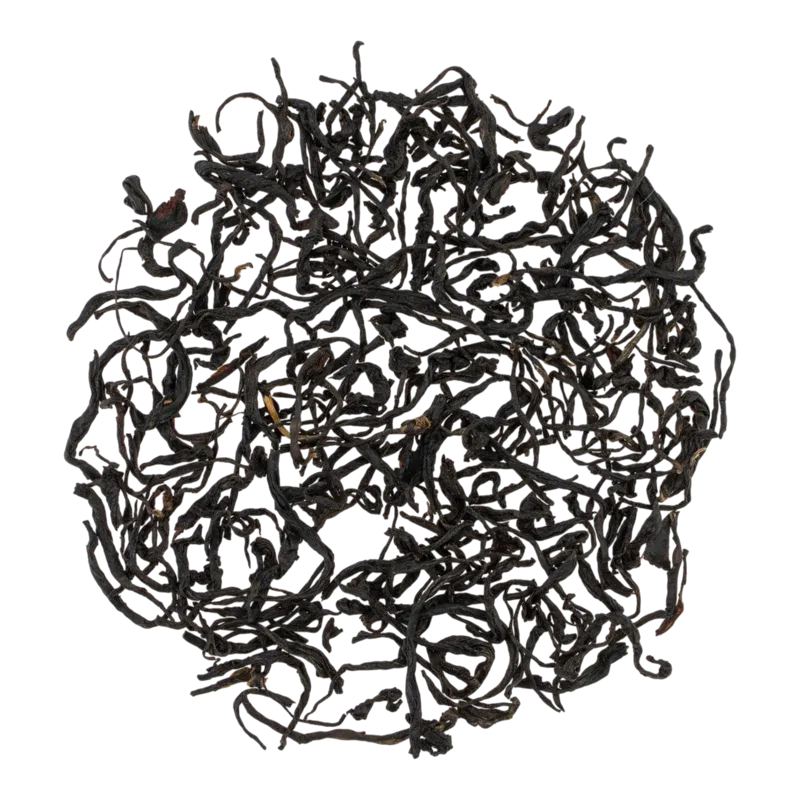
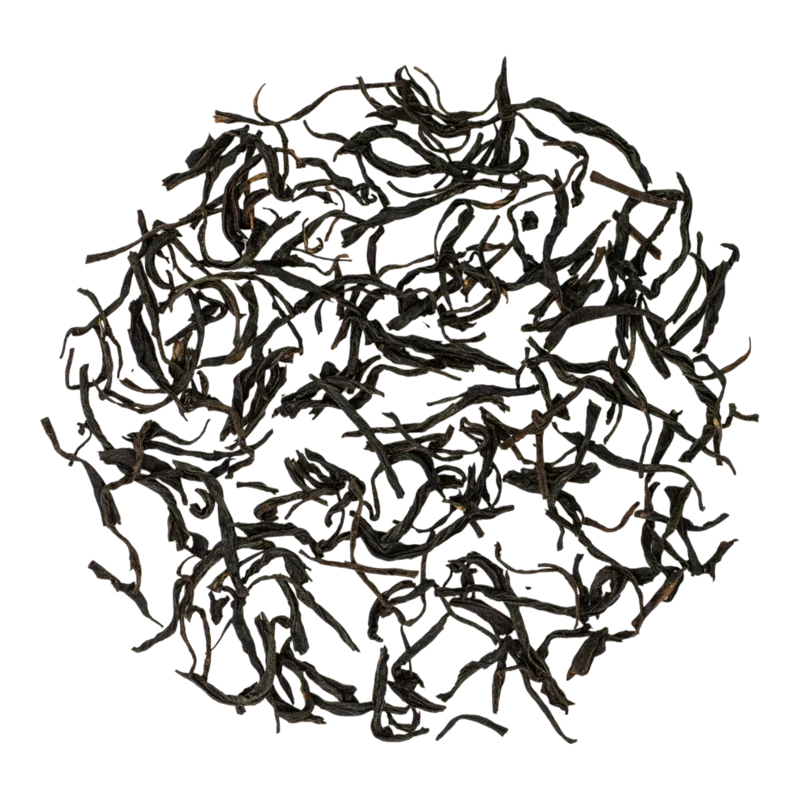
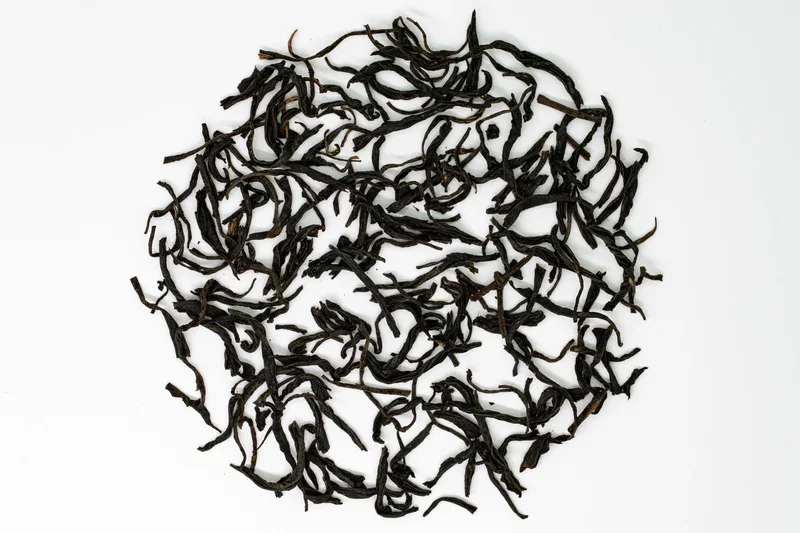
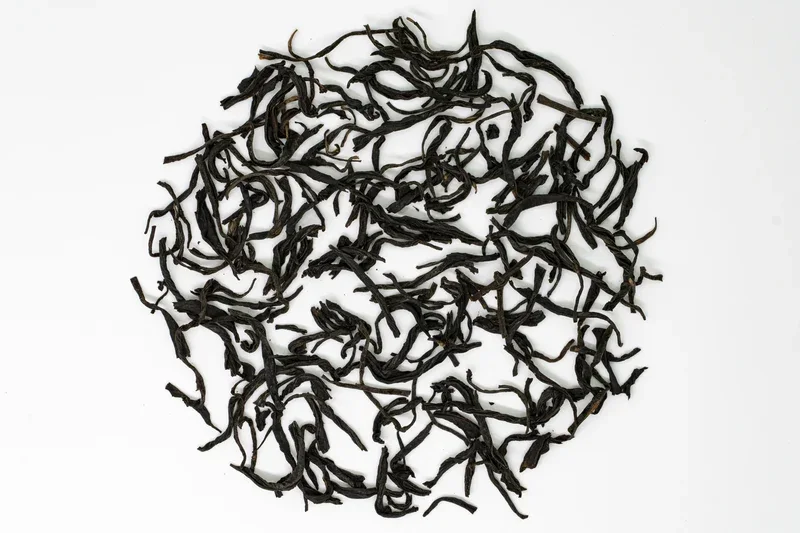
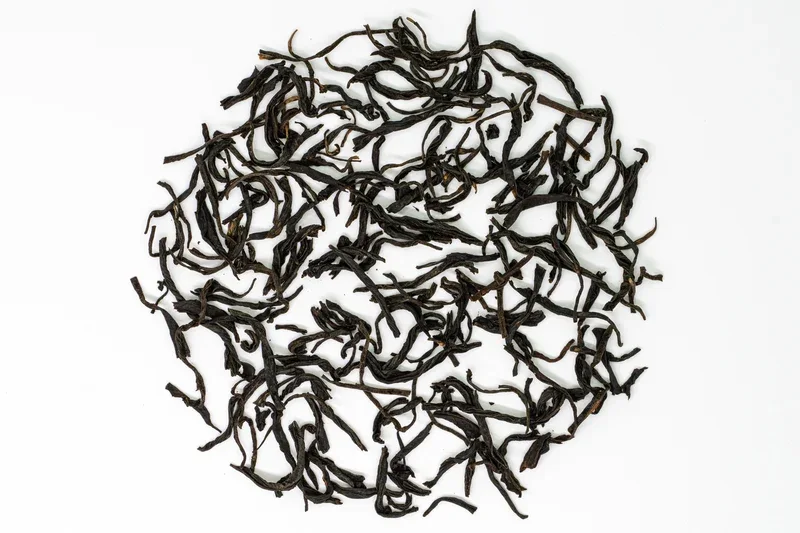
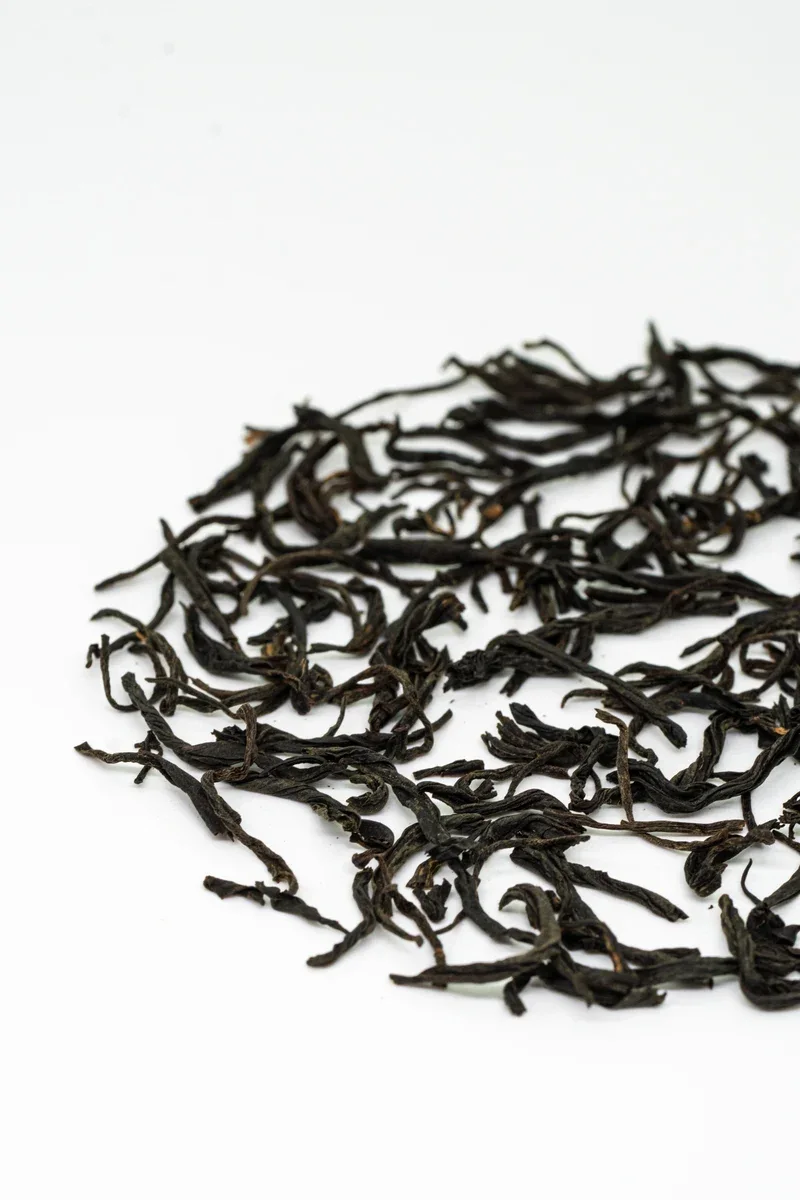
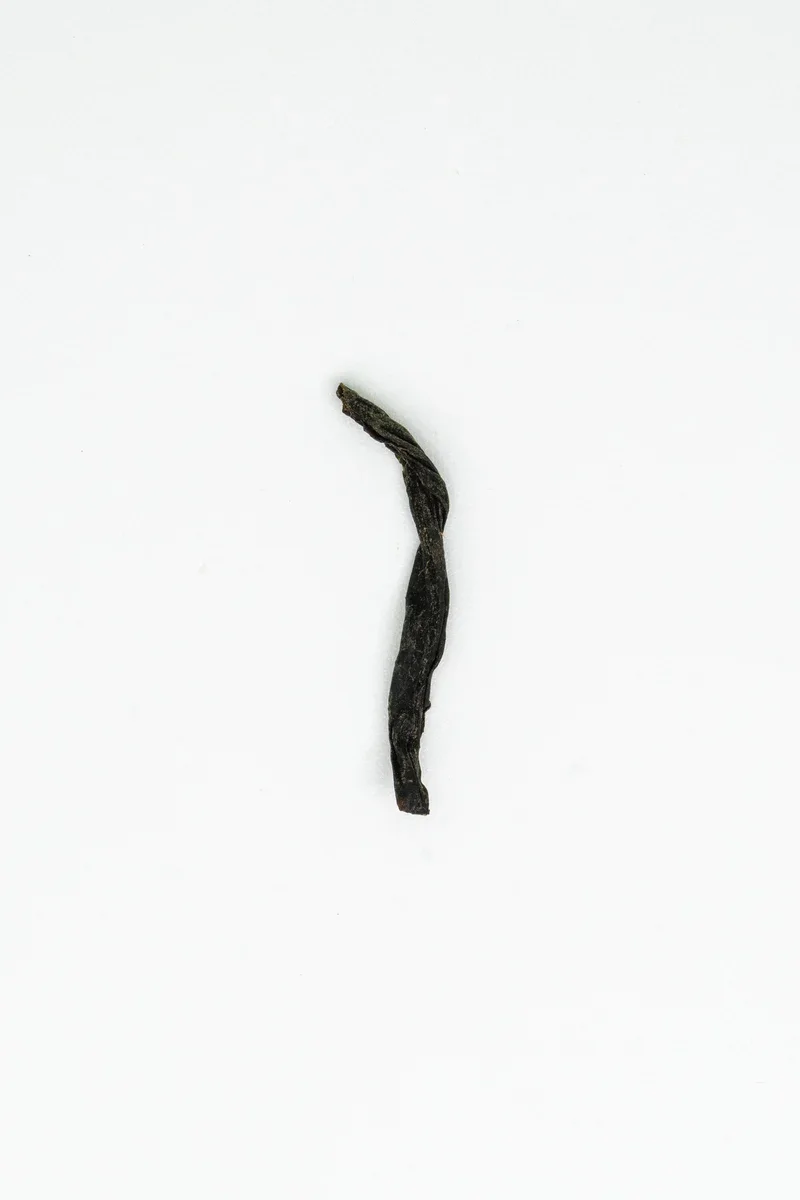
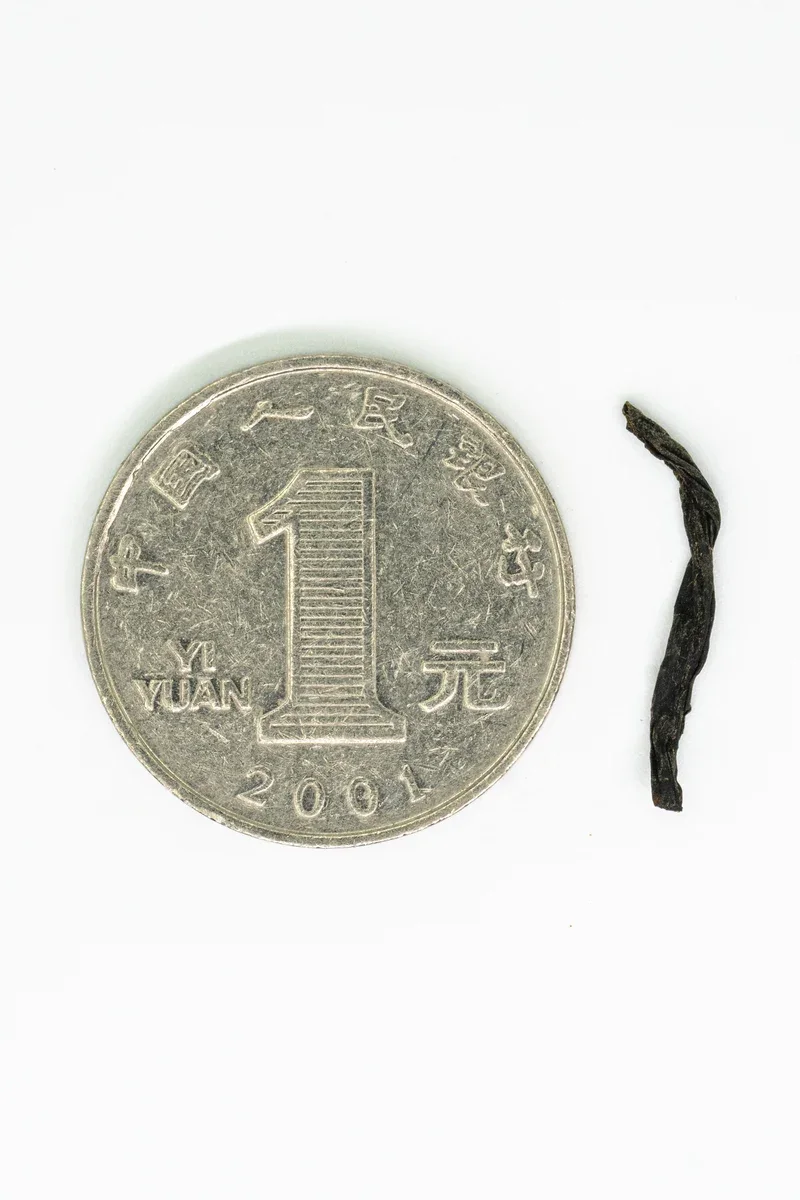
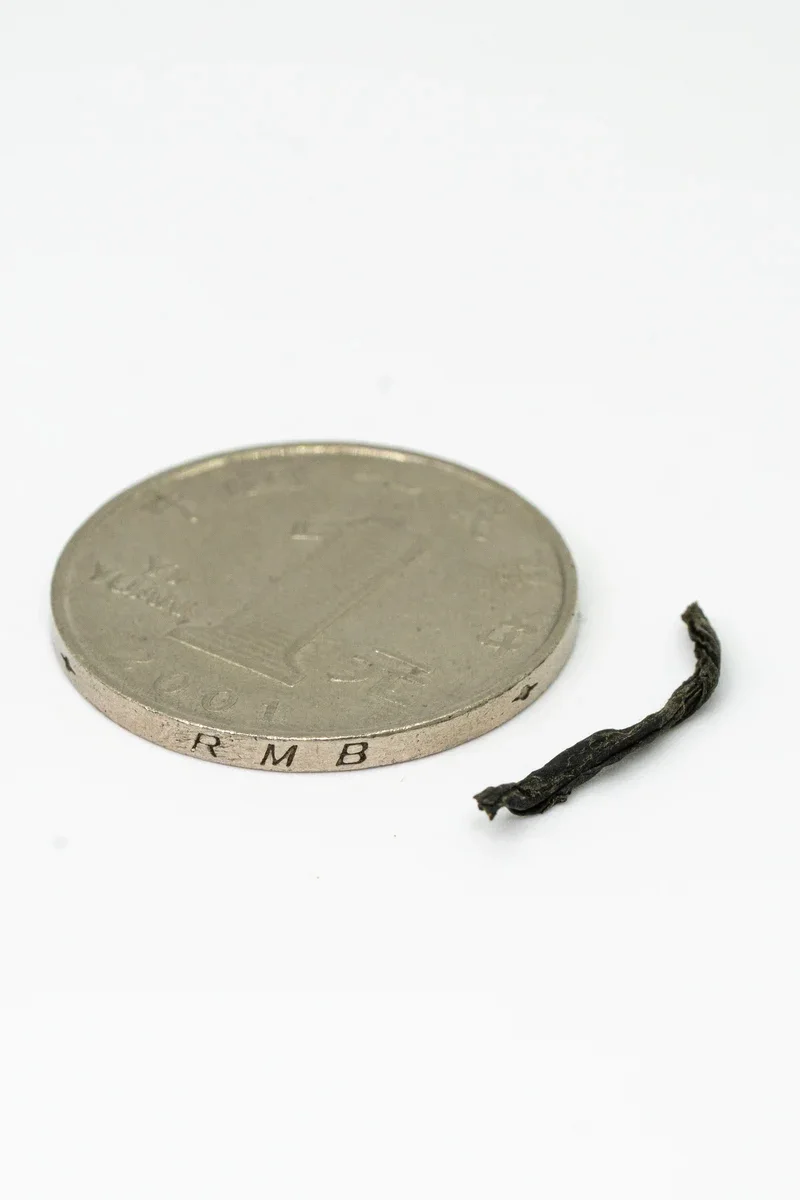
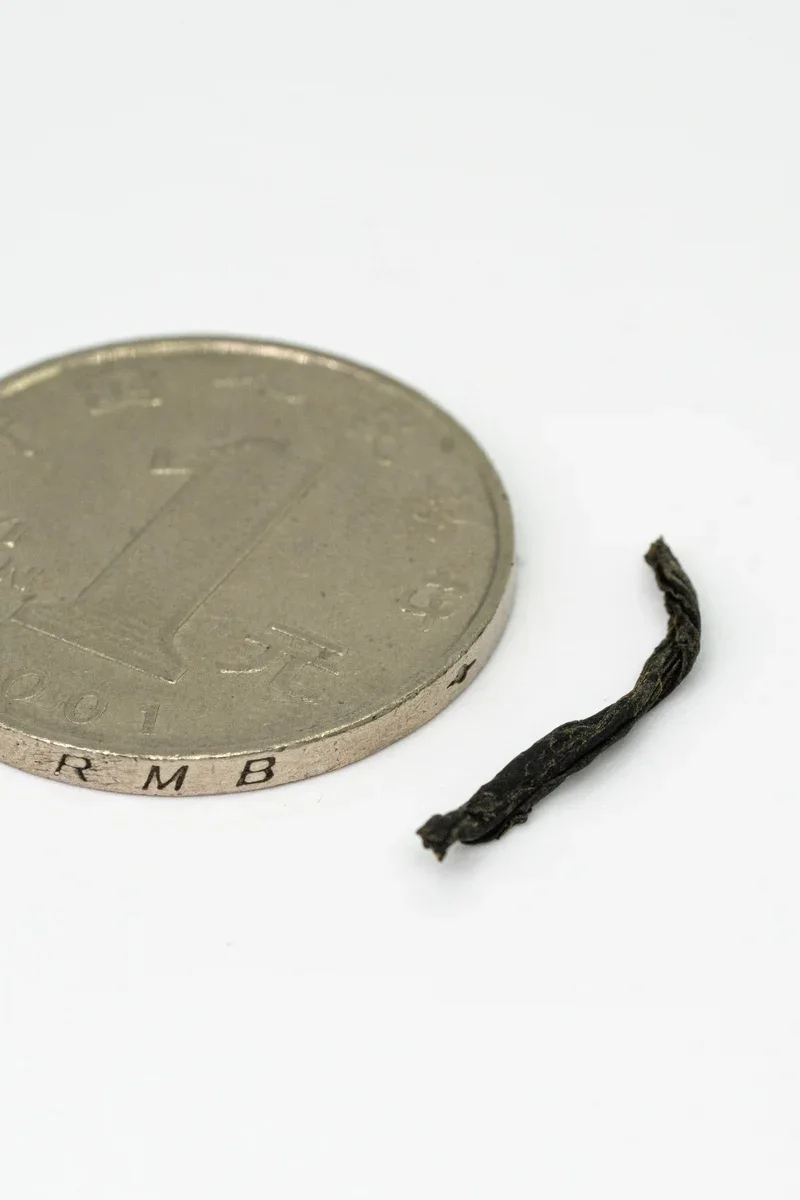
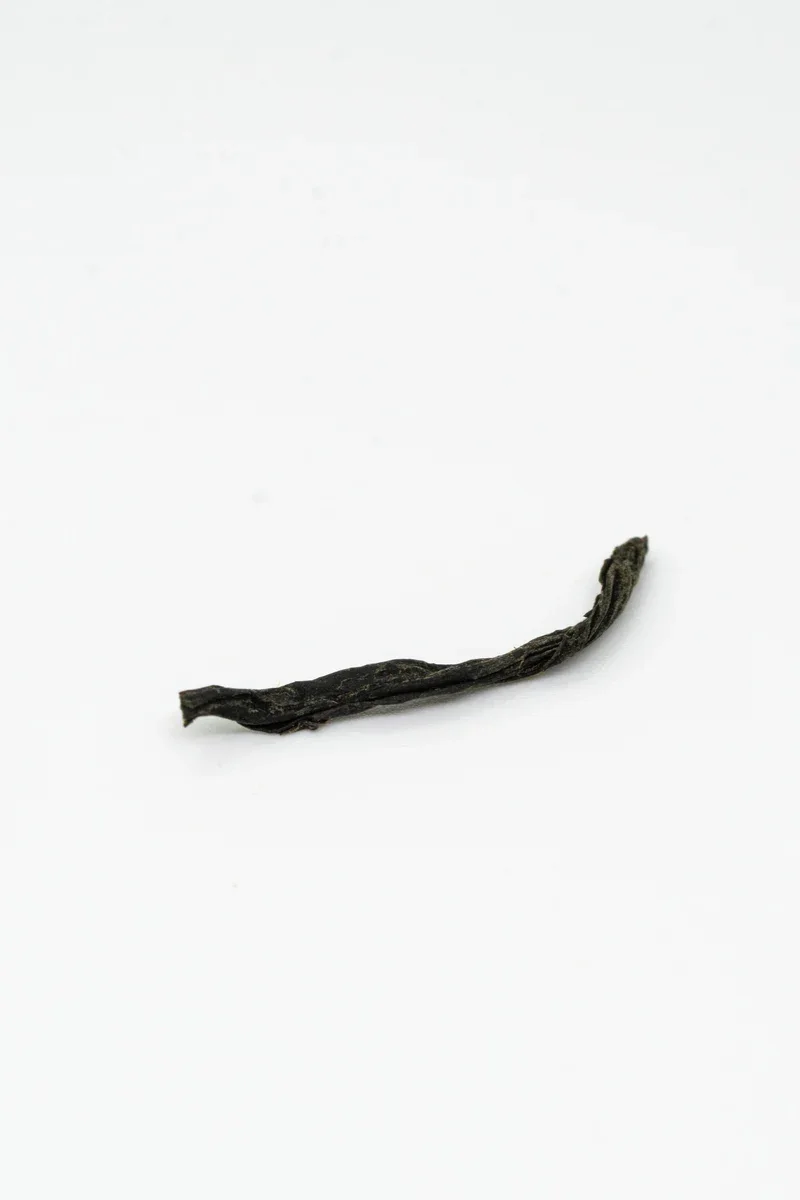
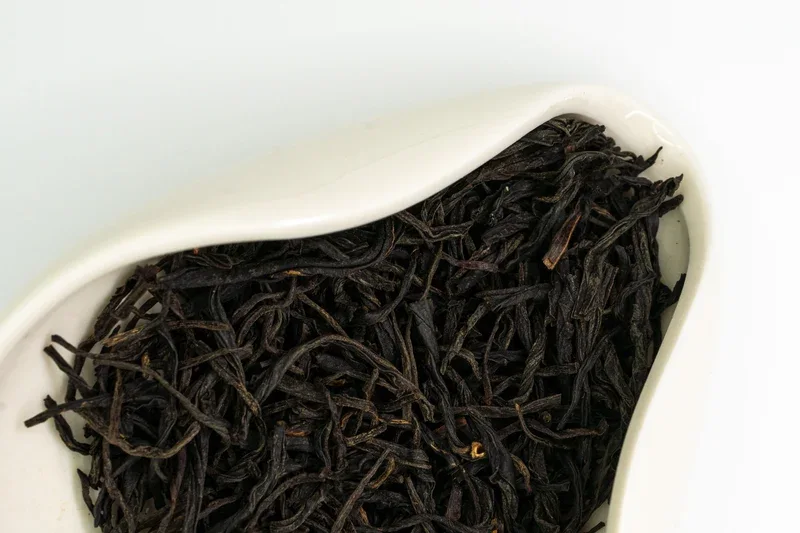
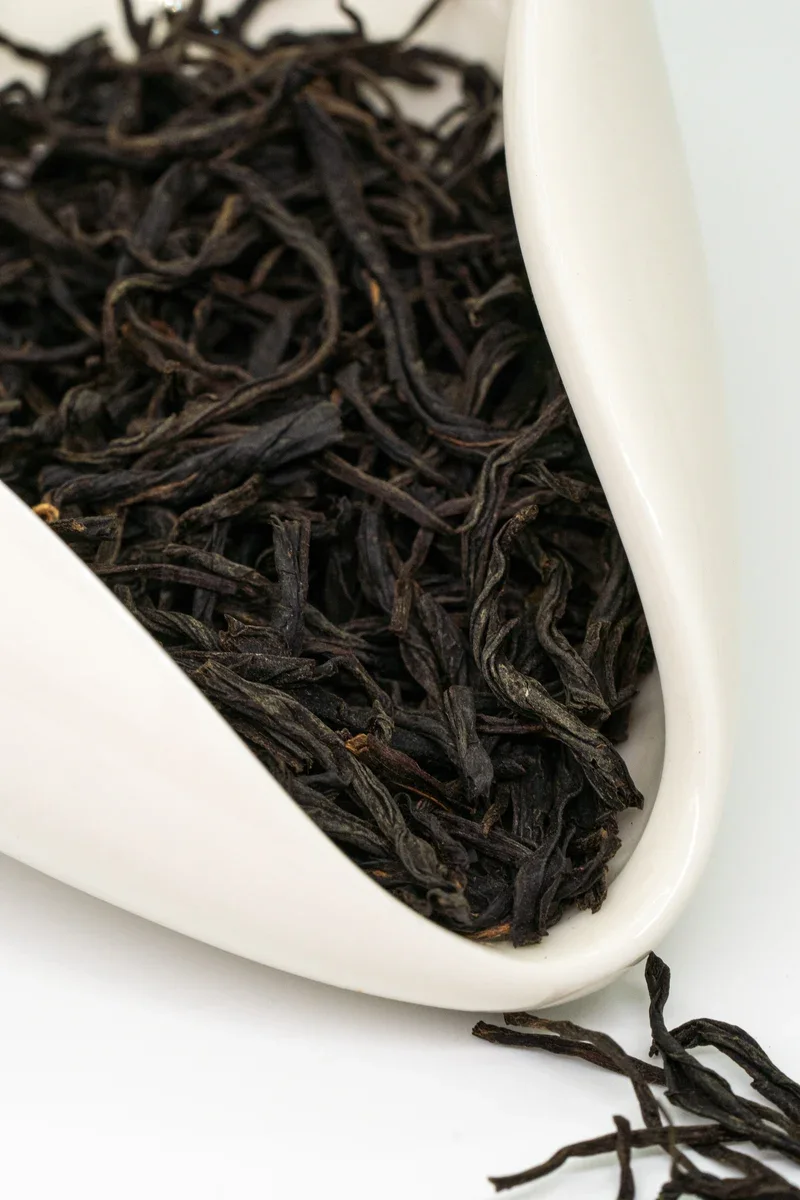
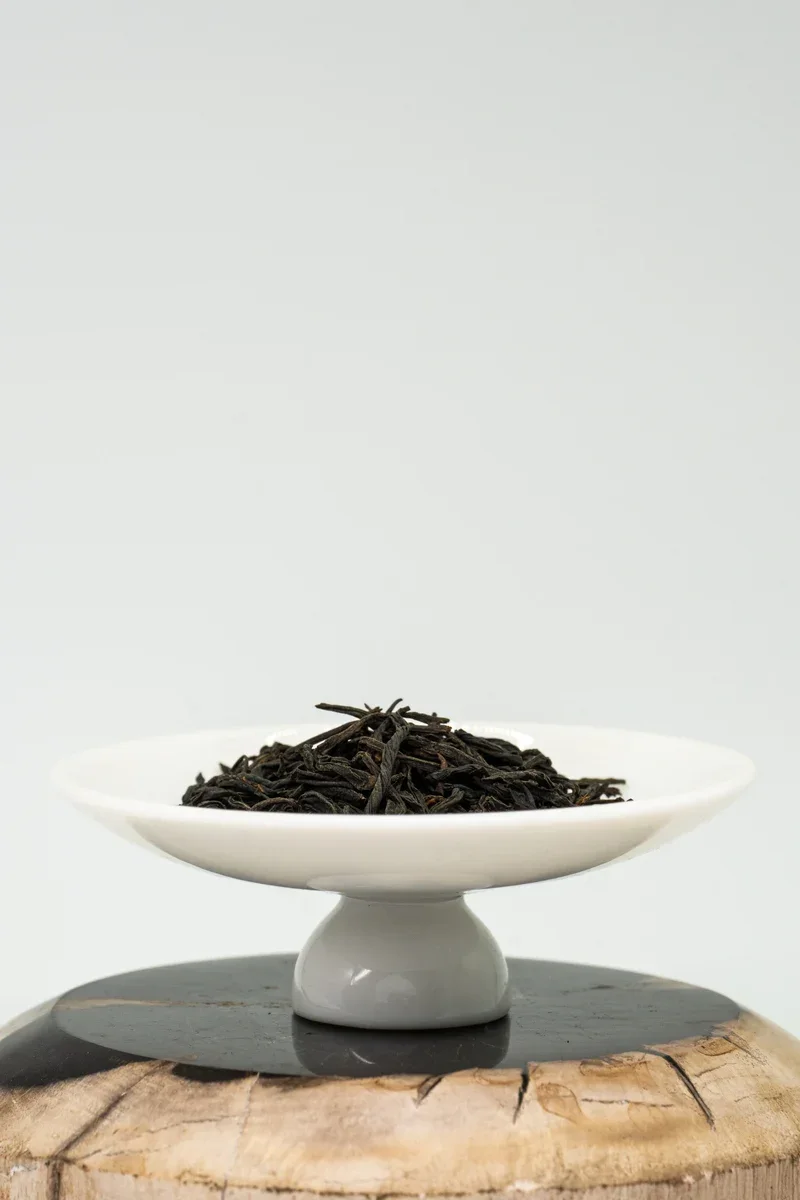
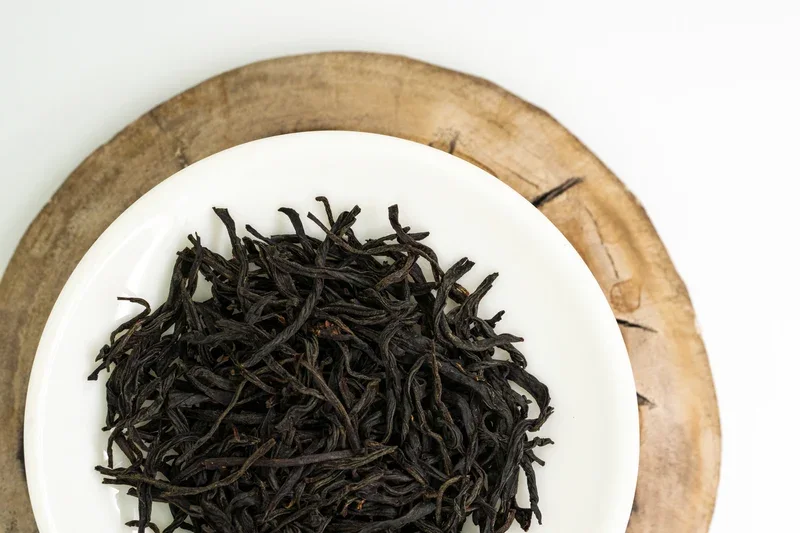
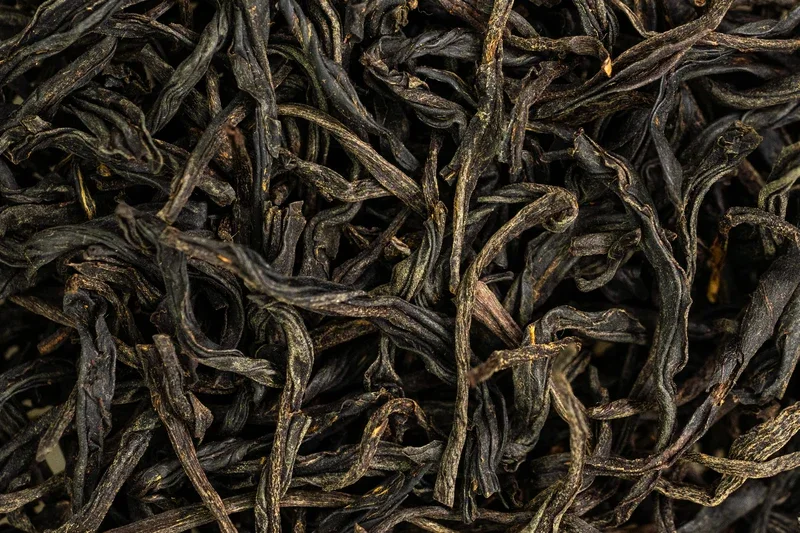
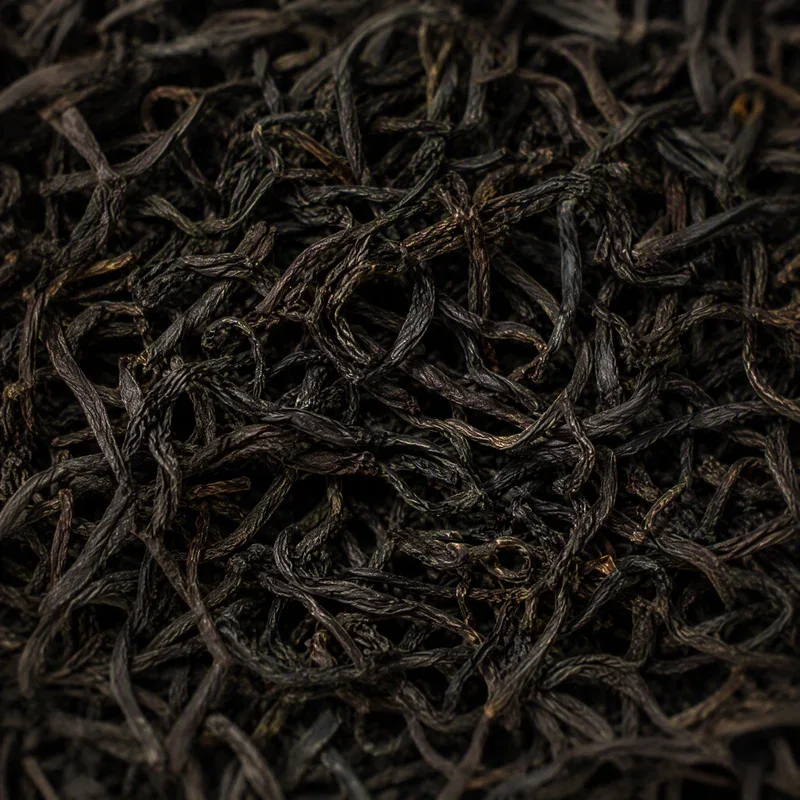
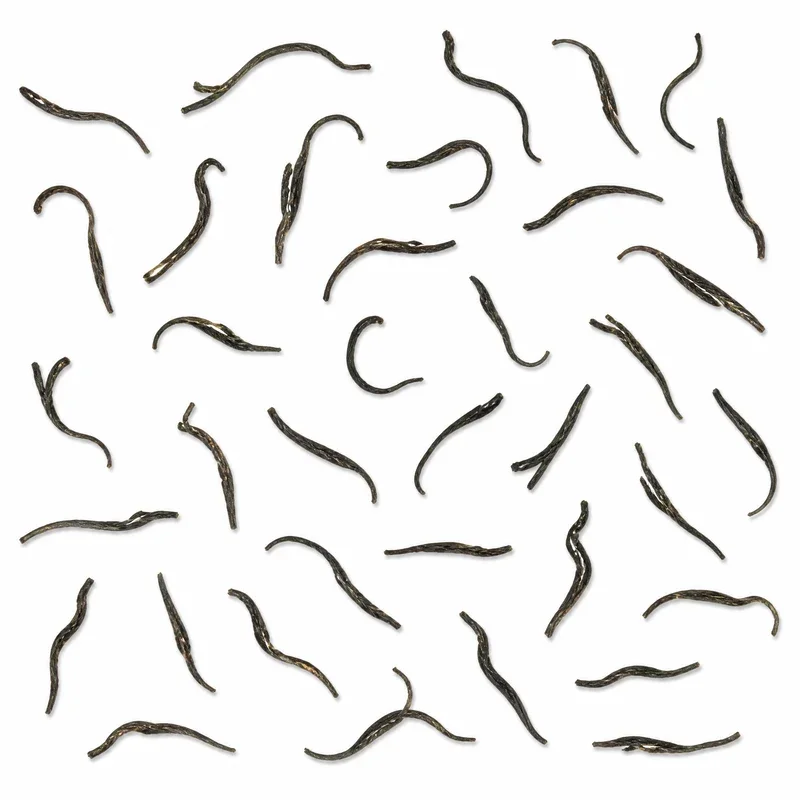
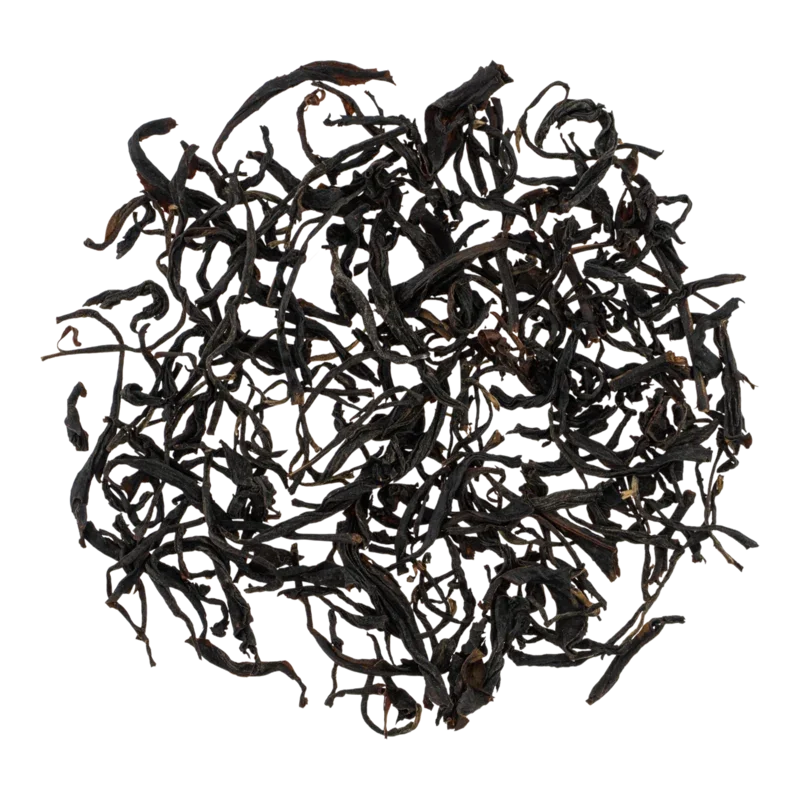
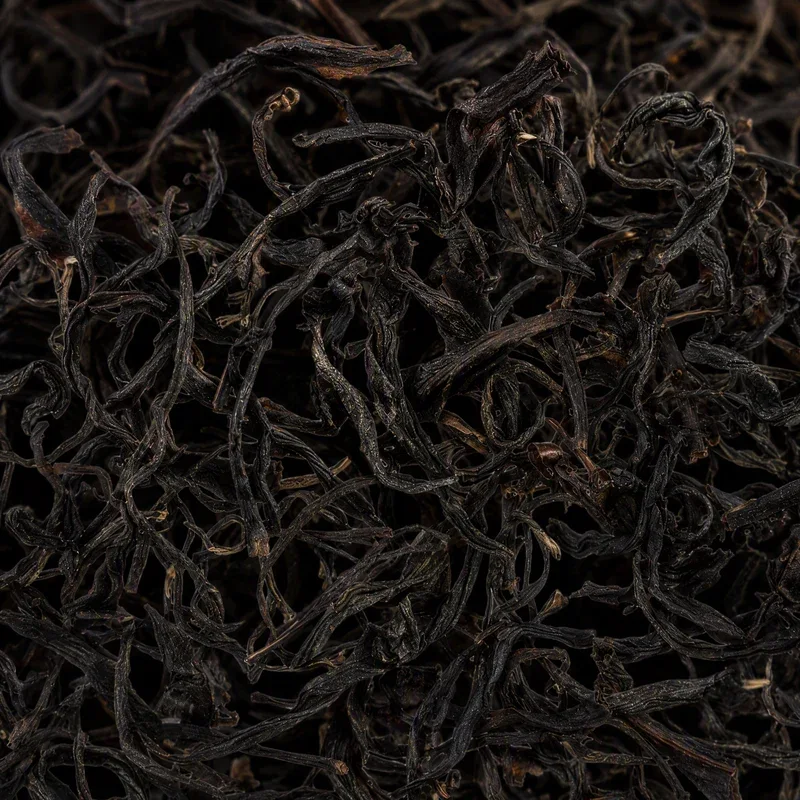
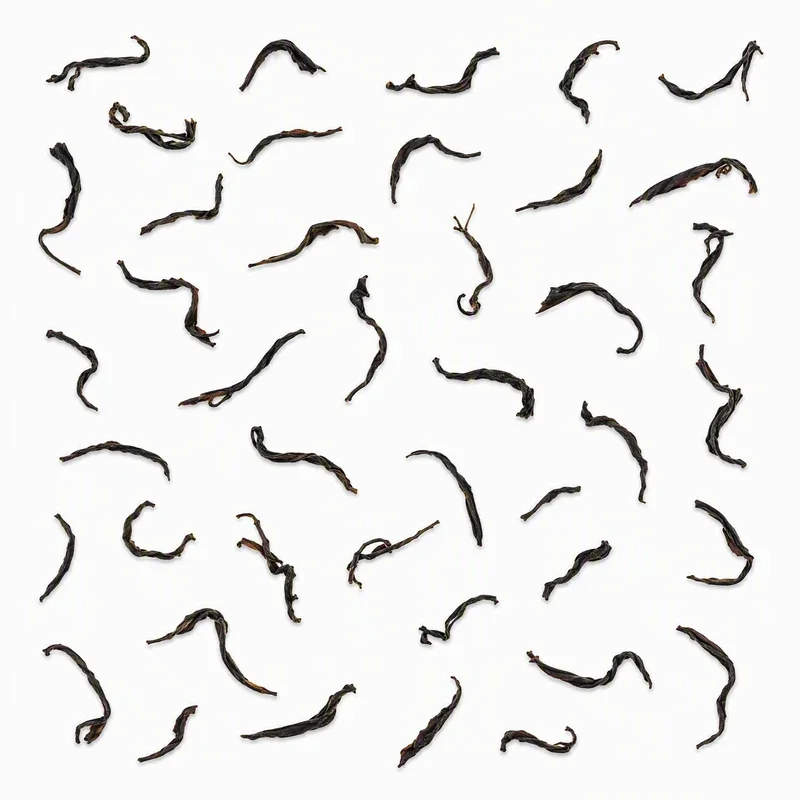
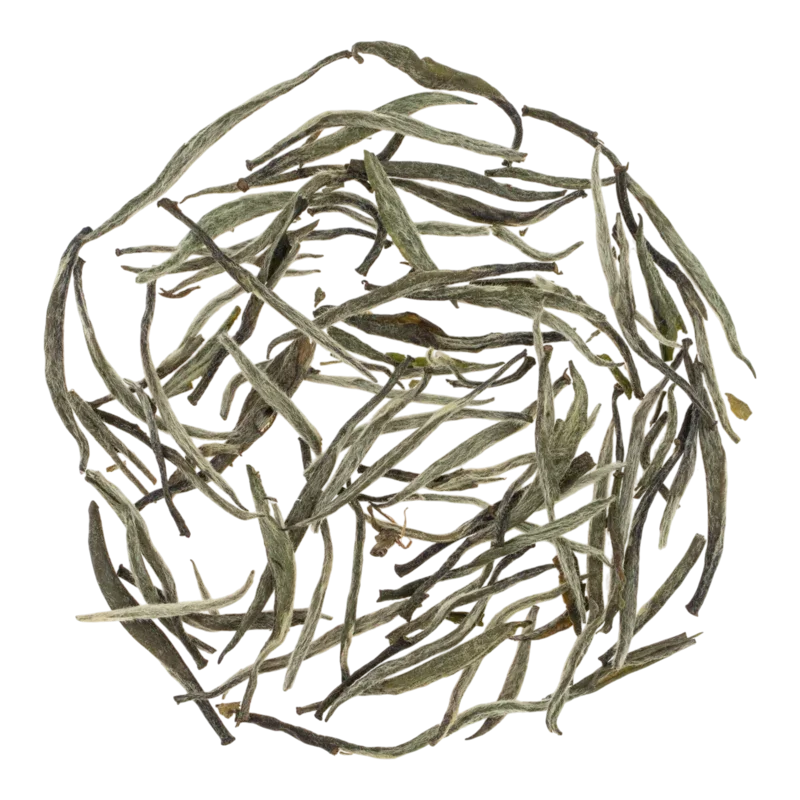
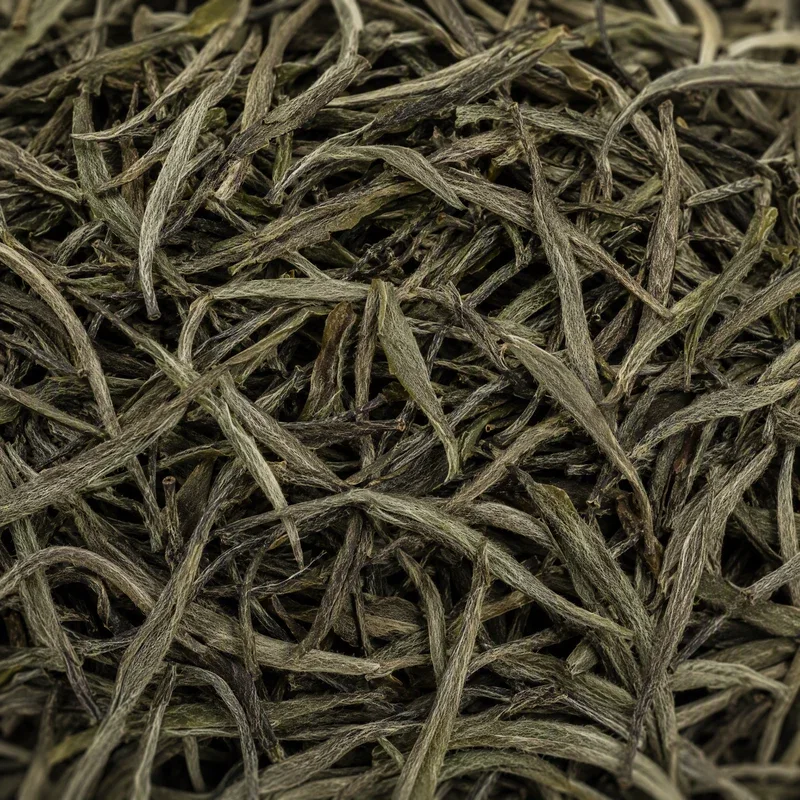
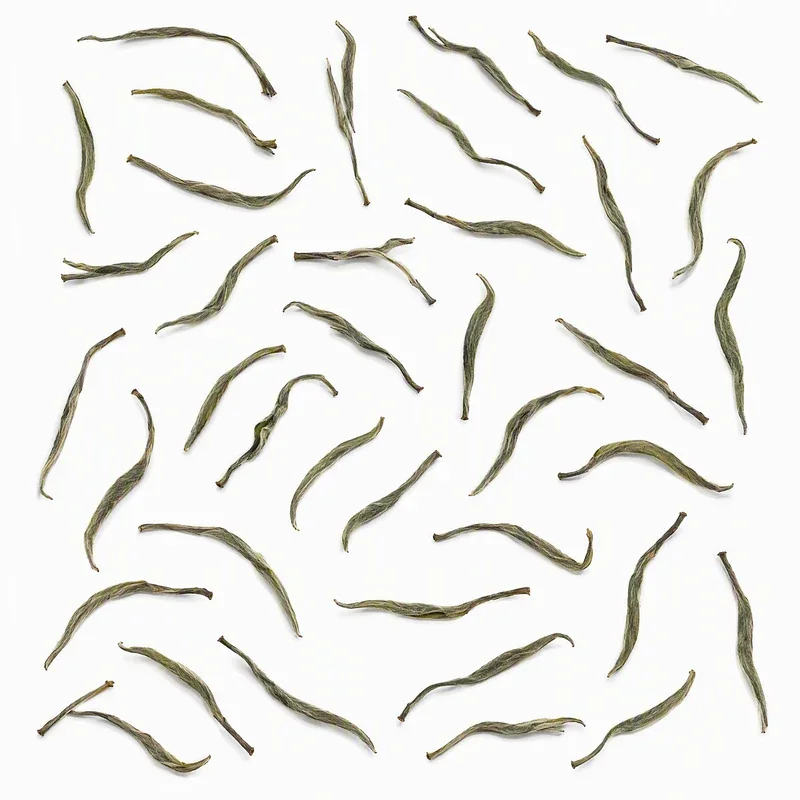
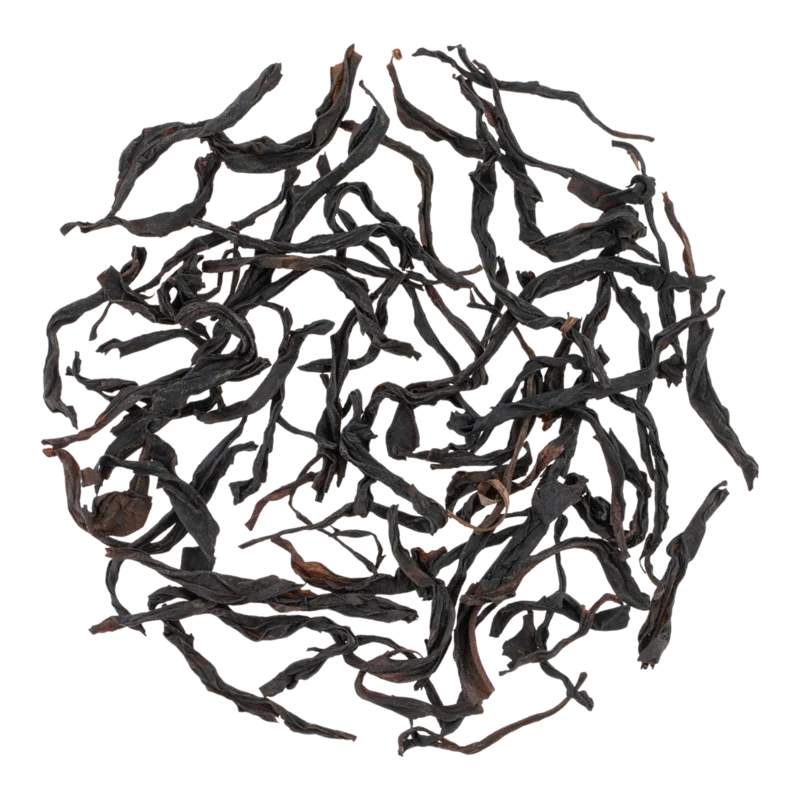
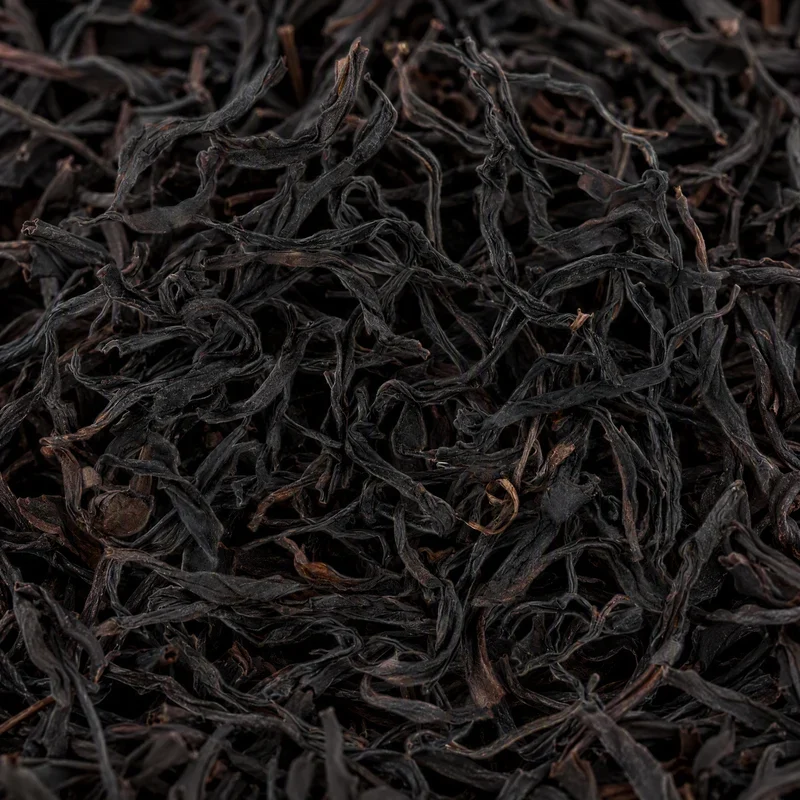
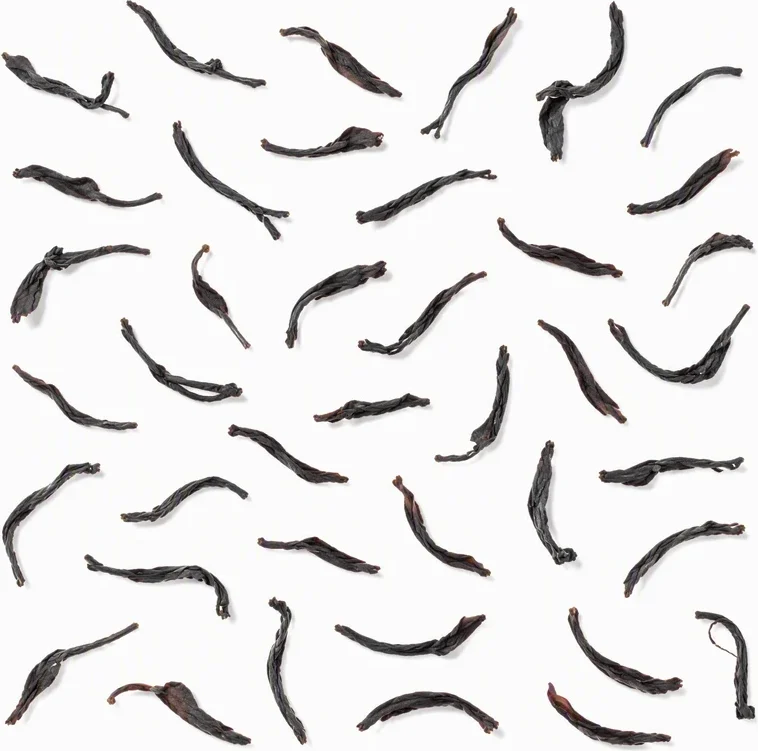
Dry Leaf Appearance: Relatively large, longitudinally twisted leaves, dark brown, brownish color with reddish tint. Stems may be present. Sometimes tips covered with golden down are visible.
Dry Leaf Aroma: Very rich, saturated, deep, with notes of flowers (orchid, gardenia), fruits (peach, lychee, longan), honey, spices, woody nuances. Notes of roasting, nuts, caramel may be present. Song Zhong aroma is often described as complex, multifaceted, "aged".
Liquor Aroma: Intense, enveloping, sweet, with dominant floral-fruity notes, hints of honey, spices, sometimes with light acidity.
Liquor Color: From golden-yellow to amber-orange and reddish-brown, transparent, clear. Liquor color depends on the degree of oxidation and roasting.
Spent Leaves: Whole, elastic leaves that have opened after brewing, brownish-green color with reddish edges and veins.
Taste: Full, rich, oily, sweetish, with light astringency and refreshing acidity. The bouquet is dominated by floral, fruity and honey notes, with nuances of spices, nuts, wood, with long, sweet aftertaste. Song Zhong taste is distinguished by special depth and complexity, with subtle nuances that unfold gradually.
Alkaloids: Caffeine, theobromine, theophylline.
Amino Acids: Including L-theanine.
Essential Oils: High content of essential oils responsible for the rich aroma of tea.
Minerals: Potassium, fluorine, magnesium, manganese, iron.
Polyphenols: Antioxidants.
Vitamins: C, B group, E, K.
Invigorates, relieves fatigue, increases performance, improves concentration.
Protects cells from free radical damage, slows aging processes.
Stimulates digestion, promotes food assimilation.
Warms well in cold weather.
May help reduce "bad" cholesterol levels, strengthen blood vessel walls.
Despite the tonic effect, the aroma and L-theanine in the tea composition promote relaxation and stress relief.
Gives a sense of harmony, joy and pleasure.
Besides taste and aroma, tea connoisseurs in China pay attention to the so-called "Cha Qi" - tea energy, its effect on body and consciousness. It is believed that Dan Cong Song Zhong, especially from old trees, has powerful but gentle and harmonious Cha Qi.
Experienced tea lovers describe Song Zhong's effects as:
Tea gives a sensation of warmth that spreads throughout the body.
Gives strength, vigor, mental clarity, improves concentration.
Promotes relaxation, tranquility, inner harmony.
Fills with energy but does not overexcite.
Too long steeping can make the tea taste astringent and bitter.
Be guided by your sensations and adjust brewing time depending on desired infusion strength.
Pay attention to infusion color, aroma, tea leaf opening.
Tea Amount: 5-7 grams per 150-200 ml of water.
Teaware: Gaiwan (traditional Chinese cup with lid) or Yixing clay teapot are ideal. Porcelain teaware can also be used.
Water Temperature: 90-95°C (for most varieties).
Perhaps the most famous Dan Cong. Mi Lan Xiang, as a rule, has more pronounced honey-floral notes, while Song Zhong has a more complex and deep aroma, with fruity, spicy and woody nuances.
Ya Shi Xiang is distinguished by bright floral aroma, often compared to gardenia, as well as creamy notes. Song Zhong has a more "aged", complex aroma with predominance of fruity-spicy and woody notes.
This Dan Cong has a characteristic almond aroma that distinguishes it from Song Zhong, which has weaker almond notes.
Tea from old bushes ("Lao Cong") is valued much higher. Specimens collected from individual, especially old and famous trees are particularly valued.
High-altitude tea (above 1000 meters) costs more.
Whether select buds and young leaves or more mature raw material are used.
Experience and reputation of the tea master who produced the tea significantly affects the price.
Hand roasting over charcoal, performed by an experienced master, significantly increases tea cost.
Song Zhong is a rare tea, and some of its varieties, for example, from individual old trees, are even rarer and, accordingly, more expensive.
High demand for Dan Congs also affects the price.
Look for specialized tea shops with good reputation that value their customers and can provide reliable information about tea origin, harvest year, producer. They should also guarantee its authenticity and quality.
Suspiciously low price is almost always a sure sign of counterfeit. Real Dan Cong Song Zhong cannot be cheap.
Pay attention to shape, color, leaf integrity. They should correspond to the description given above. Presence of many broken leaves, dust, foreign impurities is a sign of low quality or counterfeit.
Dry tea should have a rich, complex aroma with characteristic notes of flowers, fruits, honey, spices. Avoid tea with weak, inexpressive, musty or foreign smell. Artificial flavoring, sometimes used by unscrupulous sellers, usually betrays itself with an overly sharp, unnatural smell.
Infusion color should be from golden-yellow to amber-orange or reddish-brown, transparent. Spent leaves should consist of whole, elastic leaves.
Due to limited production volume and high demand, tea from ancient trees is most often counterfeited.
No reviews yet. Tell us what you think of this tea.
Rate this tea and share your impressions. We review each submission before publishing it.