Brewing
Gongfu brewing
- Water temperature
- 75 °C
- Tea amount
- 5 g
- Water volume
- 100 ml
- First steep
- 10 s
- Time added per infusion
- 5 s
- Infusions
- 3


Báishā lǜ chá
Choose a brewing method. Start with the recommended quantities and time, then adjust to taste.
Brewing
Brewing
Taste
Tea encyclopedia
Category: Regional green tea with geographical indication. One of the most famous teas of Hǎinán and among the five famous teas of South China (华南五大名茶). Awarded protected geographical designation status (原产地域产品保护) on October 29, 2004.
Category: Regional green tea with geographical indication. One of the most famous teas of Hǎinán and among the five famous teas of South China (华南五大名茶). Awarded protected geographical designation status (原产地域产品保护) on October 29, 2004.
Coordinates: Approximate coordinates of the meteorite crater center — 19°13′ N, 109°31′ E; coordinates of the Wuzhishan massif — 18°53′ N, 109°41′ E. Plantation altitude — from 300 to 800 meters above sea level.
Origin: China, Hǎinán Province (海南省, Hǎinán Shěng), Báishā Lì Autonomous County (白沙黎族自治县, Báishā Lízú Zìzhìxiàn), territory of Báishā State Agricultural Enterprise (国营白沙农场). Tea plantations are located within and around the Báishā Meteorite Crater (白沙陨石坑, Báishā Yǔnshí Kēng) and on the slopes of the Wǔzhǐshān mountain range (五指山, Wǔzhǐ Shān).
Type: Green tea (绿茶, lǜ chá), non-oxidized (0% oxidation). Predominantly produced using the hongshao (烘青, hōng qīng) method — hot air drying, with elements of drum roasting.
Cultural Significance: For the Lì (黎族) and Miáo (苗族) peoples — indigenous inhabitants of central Hainan — green tea has historically played an important role in daily life, traditional medicine, and hospitality rituals. Serving cold green tea infusion in hot weather is a traditional sign of respect for guests. Baisha Lu Cha is considered a symbol of Hainan alongside coconut, embodying the ecological purity and uniqueness of the island. The modern "Baisha Lu Cha" brand has become one of the key elements of the "green development" concept of Baisha County, which in 2021 became one of China's practice bases for the concept "Green mountains and clear waters are golden and silver mountains" (绿水青山就是金山银山).
History: Hainan's tea culture has centuries-old roots. The first written mentions of Hainan tea are contained in "Qiongtai Zhi" (琼台志, Qióngtái Zhì) — a chronicle of the island compiled in the sixth year of the Zhengde reign of the Míng dynasty (明正德六年, 1511). The indigenous peoples of Hainan — Lì (黎族) and Miáo (苗族) — have long collected wild large-leaf tea in the Wuzhishan mountains for medicinal and daily use. According to available estimates, the history of tea use on the island spans about a thousand years. In 1882, American botanist and missionary Henry Francis Hance documented wild tea trees in the Baisha area, which subsequently became one of the arguments in the international discussion about recognizing China as the homeland of the tea tree. The modern history of Baisha Lu Cha begins in the late 1950s, when the first organized tea farms appeared on Hainan. In 1987, Baisha State Agricultural Enterprise registered the "Baisha" trademark (白沙牌) and began industrial production of green tea. In 1990, Baisha Lu Cha was selected as the official "green beverage" of the XI Asian Games in Beijing. From 1991 to 2008, the tea continuously confirmed its status as a "green product" of the China Green Food Development Center (中国绿色食品发展中心). In 1998, it received a gold medal at the V All-China Food Exhibition.
Name Breakdown: "Baisha Lu Cha" (白沙绿茶) translates literally as "Green tea [from] White Sand [county]". The toponym "Baisha" (白沙, "White sand") reflects the characteristics of the local landscape — light soils formed as a result of the meteorite impact. The character "lu" (绿) indicates the type of tea — green, and "cha" (茶) — tea itself.
For the highest grades, tender raw material is used: flushes consisting of one bud and two upper young leaves (一芽二叶, yī yá èr yè). Requirements for raw material are strict: leaves must be fresh, tender, uniform and clean (嫩、鲜、匀、净). Flush length usually does not exceed 3–4 cm. Leaves undergo manual or mechanized sorting to remove damaged specimens.
Cultivar: Several varieties of tea bush are used for producing Baisha Lu Cha. The foundation consists of the Hainan large-leaf variety (海南大叶种, Hǎinán Dàyè Zhǒng), recognized as a state variety and entered in the registry as "Hua Cha No. 16" (华茶16号, GSCT16) at the second All-China Tea Variety Certification Conference in 1984. This is a variety of Camellia sinensis var. assamica, adapted to the island's tropical climate. Additionally used are: Yunnan large-leaf variety (云南大叶种, Camellia sinensis var. assamica), as well as cultivars introduced from Fujian Province — Qílán (奇兰, Qílán), Fúdǐng Dàbái (福鼎大白, Fúdǐng Dàbái), Shuǐxiān (水仙, Shuǐxiān), Fuyun No. 6 (福云6号, Fúyún Liùhào) and Jīnxuān (金萱, Jīnxuān).
Picking: Thanks to Hainan's tropical climate, the growing season of tea bushes is significantly longer than in mainland China. The earliest spring harvest can begin as early as December, earning Baisha Lu Cha the unofficial title "China's First Early Spring Fragrant Tea" (华夏第一早春香茗). The most valuable is the first spring harvest Míng Qián (明前, Míng Qián) — before the beginning of the Qingming season (approximately until April 5).
Altitude: 300–800 meters above sea level. Main plantations are located on hilly slopes inside and around the meteorite crater.
Climate: Subtropical monsoon climate with tropical elements. Average annual temperature +22…+26 °C. Annual precipitation — about 1800–2000 mm. Abundant fogs and morning dew are characteristic, creating natural shading (analogous to high-altitude cloud teas). Number of sunny days — more than 260 per year. Significant daily temperature fluctuations in the mountain zone promote the accumulation of aromatic substances in leaves.
Soil: Soils in the crater zone are unique: they contain both substances from the earth's surface and deep crustal layers, as well as minerals of cosmic origin brought by the meteorite. Scientific research has identified more than 50 types of minerals in the crater soils, making the mineral composition of Baisha Lu Cha unreproducible in other regions. Soils have an acidic reaction (pH about 5.0–5.5), rich in iron, manganese and other microelements, which promotes the accumulation of polyphenols and formation of the tea's characteristic mineral profile.
The key feature of Baisha Lu Cha's terroir is the Báishā Meteorite Crater (白沙陨石坑) — one of the few reliably confirmed meteorite craters on Chinese territory. The crater is located 9 km southeast of Yachazhen town (牙叉镇), has a diameter of 3.5 km and was formed approximately 700,000 years ago as a result of an asteroid impact. This is one of the few craters in the world where fragments of the meteorite itself have been discovered.
Many tea bushes grow in conditions close to natural, surrounded by rich tropical flora. There is no heavy industry near the plantations, ensuring the ecological purity of the raw material. Several plantations are managed according to organic farming standards.
Manual or mechanized harvest of tender flushes meeting quality standards.
Harvested leaves are spread in a thin layer on bamboo trays for brief withering and partial removal of surface moisture. Leaves are sorted by grades.
Key stage that inactivates enzymes and stops oxidation. Historically, the method of roasting in rotating drums (滚筒炒杀青) was used at temperatures of +180…+220 °C. In modern production, modernization has been implemented: roasting has been replaced by steaming (蒸汽杀青, zhēngqì shā qīng), which eliminates contact of leaves with open flame and eliminates smoke flavor, while preserving bright green color and aroma purity.
Leaves undergo mechanical rolling, which destroys part of the cell walls, brings cell juice to the surface and gives leaves the form of tight dense strips (条索, tiáosuǒ). Rolling increases tea extractability during brewing.
Performed with hot air streams in several stages at temperatures of +70…+90 °C until achieving residual leaf moisture ≤5%. This stage ensures long-term storage and aroma stability.
Final refinement stage characteristic specifically of Baisha Lu Cha. Tea is rolled in special octagonal drums (八角筒) for 1–2 hours at room temperature (without heating). This compacts the tea strips, gives them a characteristic grayish-green luster and additionally evens out moisture.
Finished tea is sorted by grades: highest (绿芽茶, green bud tea — from pure buds; 毛尖茶, maojian tea — buds with one leaf; 高香茶, gaoxiang tea — highly aromatic), medium (绿螺茶, green spiral tea — spiral twist; canned and boxed) and mass market (袋装绿茶, bagged green tea — packaged).
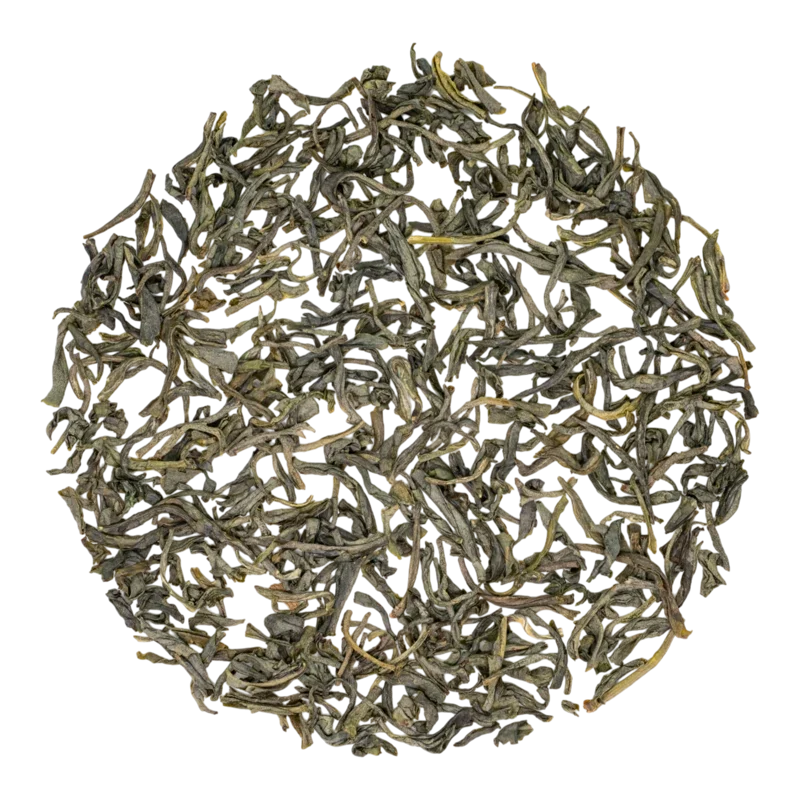
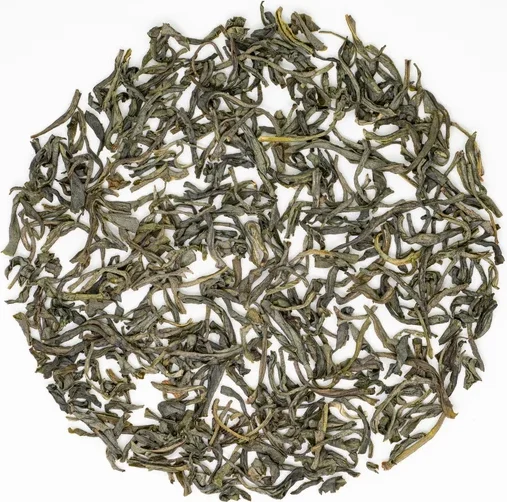
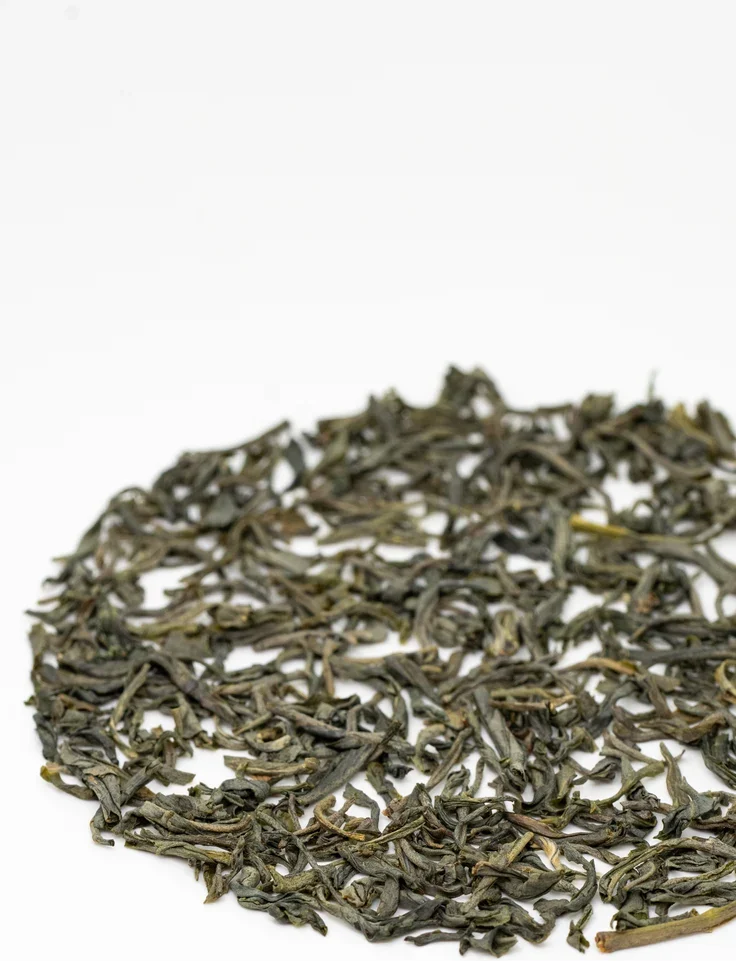
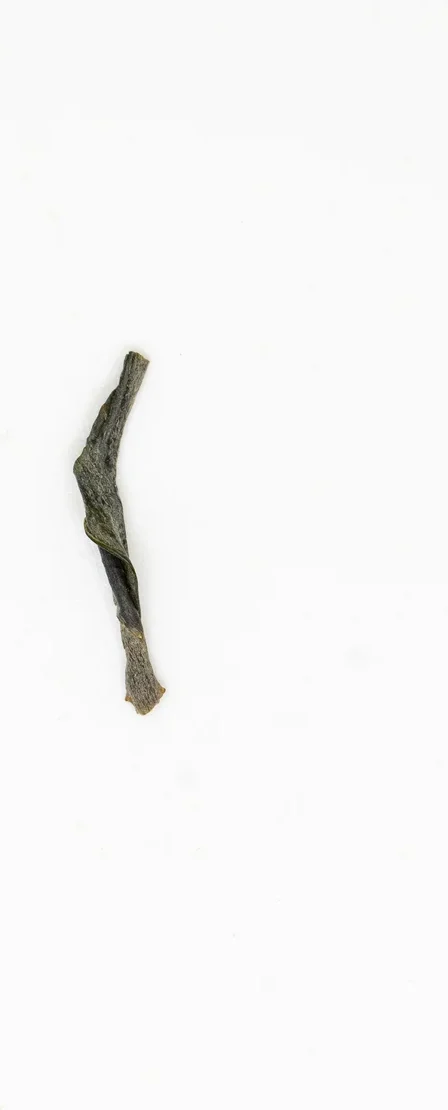
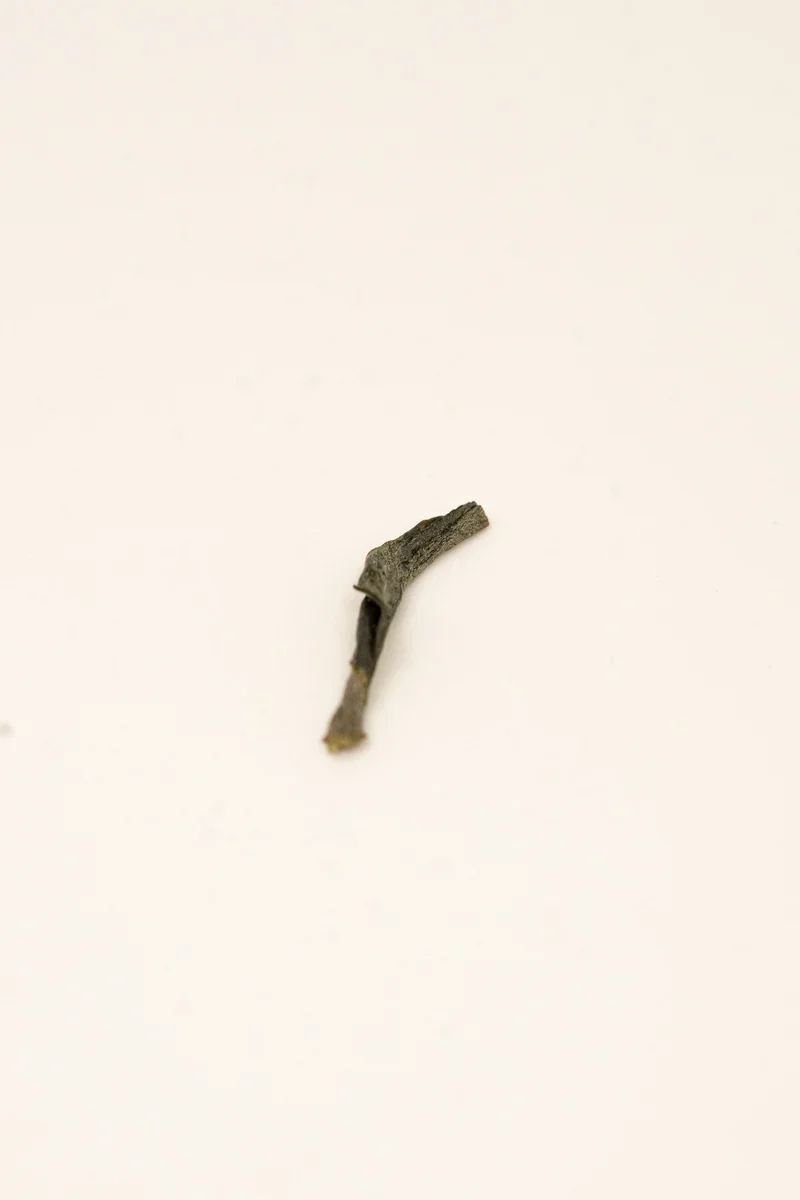
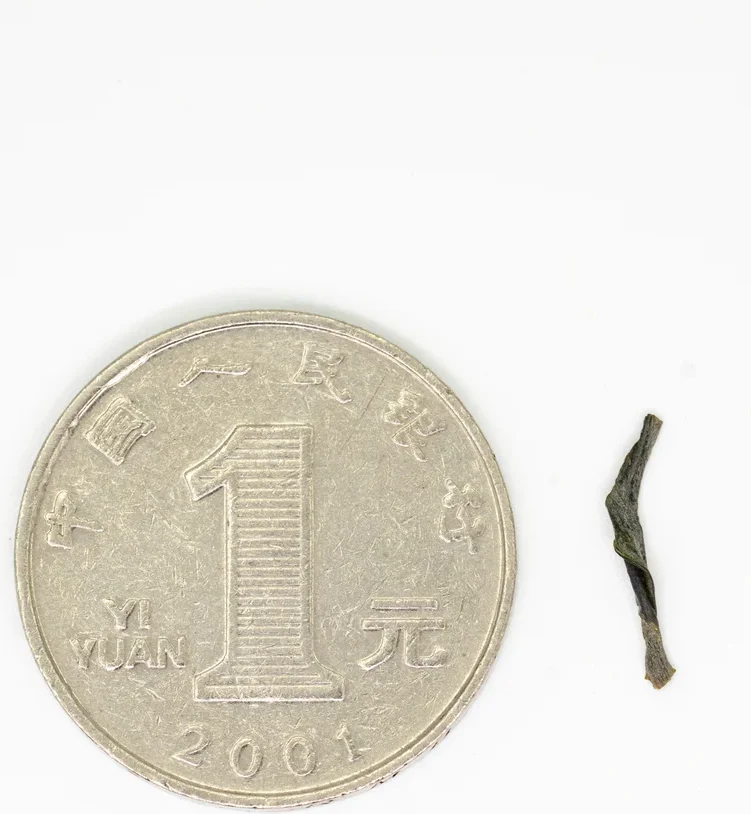
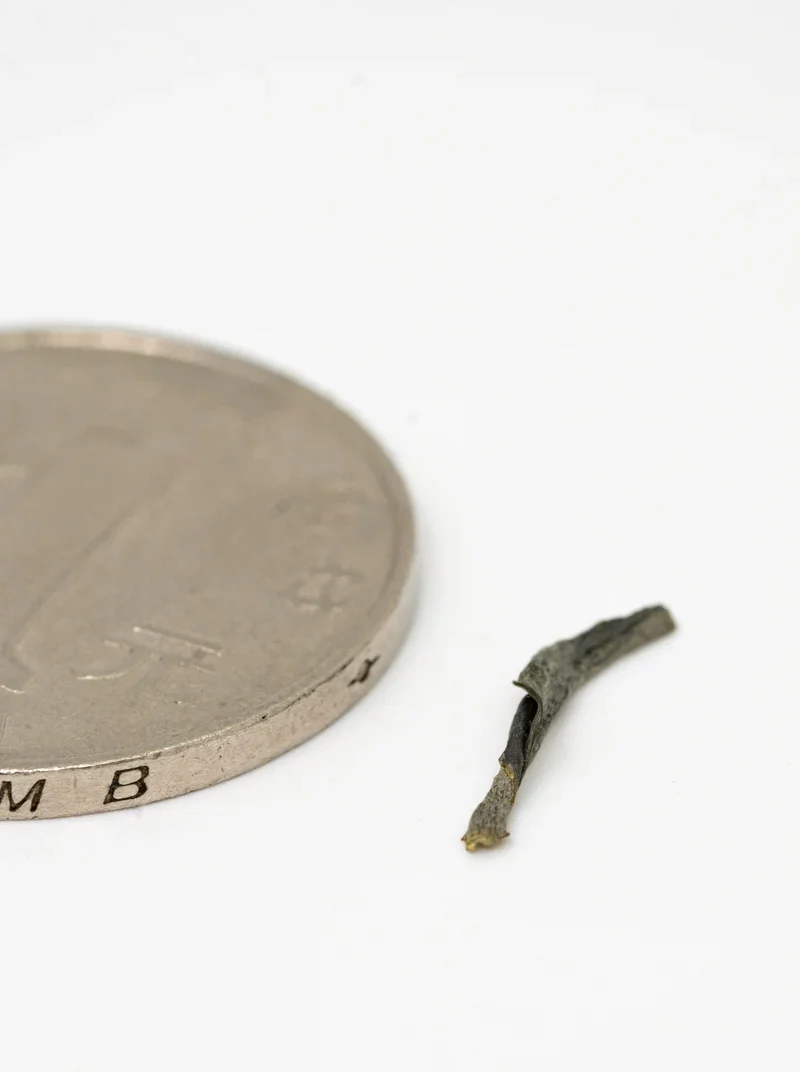
Dry Leaf Appearance: Tightly twisted, even strips (条索紧结, tiáosuǒ jǐnjié), uniform, without stems and impurities. Color — green with oily luster (色泽绿润有光). Highest grades contain a noticeable amount of silvery downy buds.
Dry Leaf Aroma: High, clean and persistent (香气清高持久), with pronounced floral (orchid, magnolia), grassy and light tropical fruit notes.
Liquor Aroma: Bright, refreshing, develops and intensifies the notes of dry leaf. Floral and fresh grassy tones predominate with light sweetness.
Liquor Color: Clear, yellow-green with bright golden hues (汤色黄绿明亮).
Spent Leaves: Tender, elastic, uniform leaves of bright green color (叶底细嫩匀净), well preserving integrity after brewing.
Taste: Rich, mellow and fresh (滋味浓醇鲜爽), with pronounced sweetness in the aftertaste (饮后回甘留芳). Medium-bodied, silky texture. Characterized by high durability with multiple brewings: according to traditional description, "first infusion is mild, second opens up, third and fourth — taste in full strength, fifth and sixth — gradually softens" (一开味淡二开吐,三开四开味正浓,五开六开味渐减). The combination of large-leaf variety properties (richness, body) and small-leaf varieties (delicate aroma) creates a unique balance.
Alkaloids: Contains caffeine (moderate amount typical for green teas — approximately 20–30 mg/g dry leaf), as well as theobromine and theophylline.
Amino Acids: Significant content of L-theanine, providing mild sweetness (umami) and a relaxed but focused state of consciousness. According to data from South China Agricultural University (华南农业大学), the tea is also rich in other free amino acids and enzymes.
43.2% (with national standard ≥34%) — significantly exceeds the norm, indicating high saturation of tea with soluble substances.
71.4% (with standard ≥45%) — an indicator of rich mineral composition.
Complex of essential oils, including linalool (floral notes), β-damascenone (honey shades), α-terpinene (spicy tones), forming the characteristic floral-tropical aroma.
High content ensures rich green color of leaf and liquor.
Minerals: Potassium, fluorine, manganese, iron (increased content due to mineralization of soils of cosmic origin), zinc, selenium.
Polyphenols: High content of catechins, especially epigallocatechin gallate (EGCG) — a powerful antioxidant. Polyphenol accumulation is promoted by mineralized soils of the meteorite crater and tropical climate with abundant sunlight.
Vitamins: Vitamin C, B-group vitamins.
High content of EGCG and other polyphenols provides protection of cells from free radical damage and promotes slowing of cellular aging processes.
Balanced combination of caffeine and L-theanine provides increased performance and concentration without excessive stimulation and subsequent "energy crash."
Traditionally believed to promote normalization of digestion, reduction of heaviness after meals and diuresis (利尿导滞).
Green tea polyphenols may contribute to normalizing cholesterol levels and maintaining vascular elasticity.
Vitamins C, B and mineral complex support immune function.
Traditionally valued on Hǎinán as a remedy for heat (清热降火), excellently quenches thirst.
In Hǎinán folk tradition used as a remedy to neutralize the effects of tobacco and alcohol consumption (敌烟醒酒).
May contribute to improving metabolic processes with regular consumption.
Pour 3–5 g tea with 500 ml cold filtered water and steep in refrigerator for 4–8 hours. This method is traditional for Hainan's hot climate and produces a very mild, sweetish and refreshing drink.
Tea Amount: 3–5 g per 150–200 ml water (when brewing with flash steeps in gaiwan); 2–3 g per 200 ml (European method in teapot).
Teaware: Optimal is a porcelain gàiwǎn (盖碗, gàiwǎn) or glass teapot, allowing control of steeping time, admiring the liquor color and leaf opening. Porcelain teapot is also suitable.
Water Temperature: 80–85 °C. Use of boiling water is categorically not recommended — tender leaves get "burned" and the infusion acquires bitterness.
Container: Airtight, opaque packaging — foil bag with vacuum sealing or zip-lock closure, metal tin with tight lid, ceramic container. Highest grades are released in individual vacuum packaging.
Enemies: Light, moisture, oxygen, heat and foreign odors. Store away from spices, coffee and other strongly scented products.
Shelf Life: With proper storage conditions — 12–18 months. Maximum freshness — in the first 6 months after production.
Temperature: Optimal storage at reduced temperature. For valuable spring harvests, refrigerator storage at 0–5 °C in absolutely airtight packaging is recommended. Before opening, the package must be brought to room temperature to avoid condensation formation.
Price Category: Baisha Lu Cha belongs to the medium and medium-high price segment. Cost depends on grade, harvest time and batch. Mass-market packaged tea is available at moderate prices; medium grades (绿螺, canned) cost noticeably more; highest grades (绿芽, 毛尖, 高香) belong to the premium product category. Approximate cost of quality medium-grade tea — from 100 to 300 yuan per 100 g, top batches can reach 500+ yuan per 100 g.
Purchase tea in specialized tea shops or directly from the producer — Baisha Nongchang (Baisha Farm). Beware of tea without producer and origin indication.
Authentic Báishā Lù Chá has a geographical indication mark (地理标志). On packages released after June 1, 2010, under ultraviolet lighting the inscription "白沙绿茶" should be visible on the labeling. Under the protective layer is a 16-digit authenticity code.
Strips should be tight, even, without stems, rich green color with luster. Presence of yellow, brown or broken leaves — sign of low quality.
Authentic Baisha Lu Cha has a clean, high, persistent aroma without foreign odors, rancidity or mustiness.
If the price is significantly below market rate for the declared grade — this is serious cause for doubt.
No reviews yet. Tell us what you think of this tea.
Rate this tea and share your impressions. We review each submission before publishing it.