Brewing
Gongfu brewing
- Water temperature
- 75 °C
- Tea amount
- 5 g
- Water volume
- 100 ml
- First steep
- 10 s
- Time added per infusion
- 5 s
- Infusions
- 3

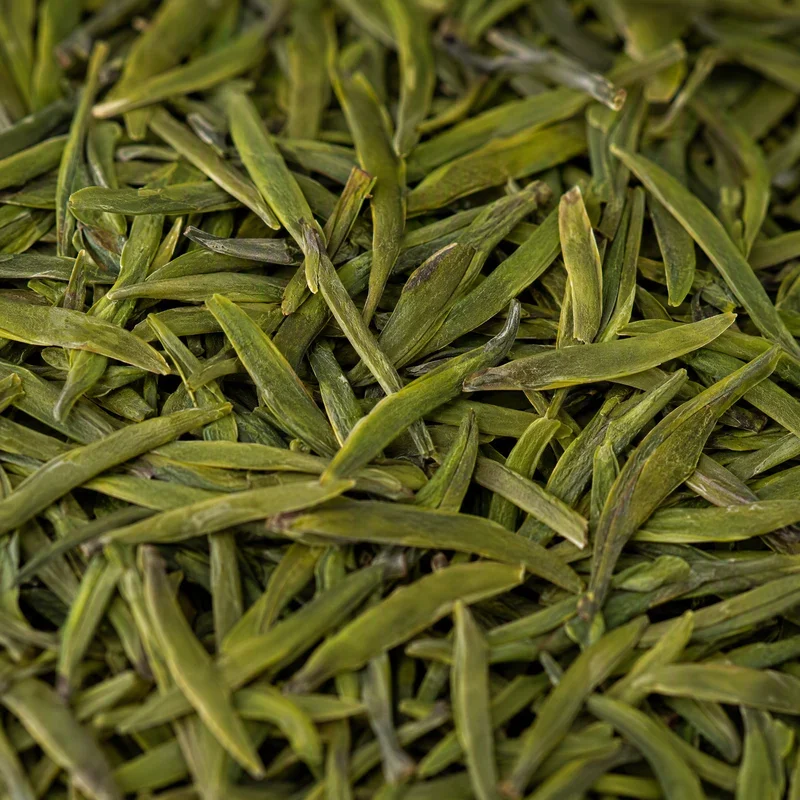
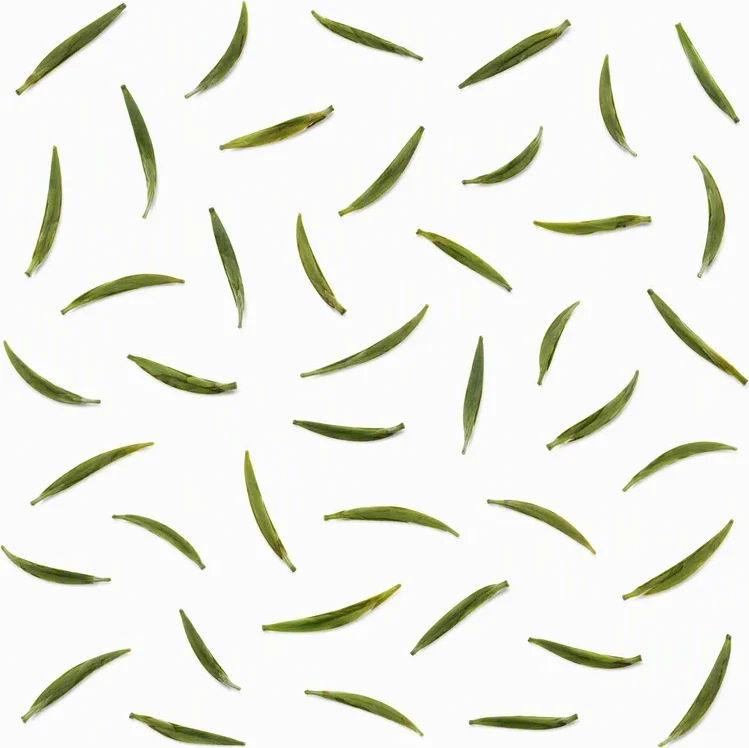
Bā shān què shé
Choose a brewing method. Start with the recommended quantities and time, then adjust to taste.
Brewing
Brewing
Taste
Tea encyclopedia
Category: One of the "Ten Famous Teas of Sichuan Province" (四川十大名茶). Geographical indication product (国家地理标志保护产品). Holder of "Famous Trademark of China" status (中国驰名商标, Zhōngguó Chímíng Shāngbiāo). In 1991, received the title "Cultural Famous Tea of China" (中国文化名茶) at the International Tea Culture Festival in Hangzhou—fifth place in the national ranking. Passed 486 parameter inspection by the European Union SGS standard. Received more than 80 awards at various levels.
Category: One of the "Ten Famous Teas of Sichuan Province" (四川十大名茶). Geographical indication product (国家地理标志保护产品). Holder of "Famous Trademark of China" status (中国驰名商标, Zhōngguó Chímíng Shāngbiāo). In 1991, received the title "Cultural Famous Tea of China" (中国文化名茶) at the International Tea Culture Festival in Hangzhou—fifth place in the national ranking. Passed 486 parameter inspection by the European Union SGS standard. Received more than 80 awards at various levels.
Coordinates: 107°28′–108°31′ East longitude, 30°39′–32°20′ North latitude.
Origin: China, Sìchuān Province (四川省, Sìchuān Shěng), Wànyuán City (万源市, Wànyuán Shì), part of Dázhōu Prefecture (达州市, Dázhōu Shì). Wanyuan is located at the junction of Sichuan Province, Shaanxi Province, and Chongqing Municipality, in the heart of the Dabashan mountain range (大巴山, Dà Bā Shān). The production territory covers 13 townships.
Type: Green tea (绿茶, lǜchá), unfermented. Belongs to flat green teas (扁形绿茶, biǎnxíng lǜchá)—subtype "queshe" (雀舌, "sparrow tongue"), characterized by miniature flat leaf form. Technologically combines pan-firing and hot air drying (半烘半炒, bàn hōng bàn chǎo).
Cultural Significance: Wanyuan holds the titles "China's Selenium-rich Tea Capital" (中国富硒茶都) and "Hometown of China's Famous Teas" (中国名茶之乡). Ba Shan Que She is the calling card not only of Wanyuan but of the entire Dazhou region, as well as a symbol of the "selenium tea corridor" (中国硒部茶园走廊), which the city strives to promote as a unified brand. Poems by Qīng official Wáng Menggen (王梦庚), who served twice as county magistrate in Wànyuán (1808, 1826), contain the famous line: "Sparrow tongue, with tip rivaling Mengdingshan shoots; disc pressed tea, pressing Linqiong products" (雀舌芒欺蒙顶撷,龙团饼压临邛研)—evidence that Wanyuan tea was already placed on par with Sichuan's greatest teas two hundred years ago.
History: Wanyuan's tea tradition has the deepest historical roots.
Cultivar: Main variety—Sichuan Medium-leaf Population (四川中叶群体种, Sìchuān Zhōngyè Qúntǐzhǒng)—Camellia sinensis var. sinensis of seed reproduction. Distinguished by high frost resistance (耐寒性强), which is critically important for the mountain conditions of Dabashan with winter temperatures down to –10°C. Medium-sized leaf with good pubescence. Old tea trees aged 30+ years are concentrated in Cǎobà Township (草坝镇). Weight of one hundred shoots of "one bud—one leaf" standard is about 45 g.
Picking: Spring harvest—primary. Most valuable is "mingqiancha" (明前茶)—tea picked before Qingming (~April 5): no less than 90% of shoots of "one bud—one barely opened leaf" standard. "Yuqiancha" (雨前茶)—before Guyu (~April 20): shoots of "one bud—one opened leaf," no less than 80%. The standard "five prohibitions on picking" (五不采, wǔ bù cǎi) applies: do not pick in rain, do not pick dewy leaves, do not pick purple leaves, do not pick damaged leaves, do not pick leaves not meeting the standard.
Raw Material: Exceptionally high. Shoots of uniform size, whole, without mechanical damage. Hand picking. Freshly picked raw material is immediately delivered for processing.
Altitude: 800–1200 meters above sea level—the so-called "golden tea cultivation belt of Dabashan" (大巴山黄金产茶带).
Climate: Wanyuan is located in the subtropical humid monsoon climate zone with pronounced altitudinal zonation—the difference between minimum (335 m) and maximum (2412 m) elevations of the city exceeds 2000 m. Average annual temperature—14.7°C. Frost-free period—237 days. Annual precipitation—about 1170 mm. Number of days with clouds and fog—more than 200 per year. Predominance of diffused light stimulates amino acid accumulation: amino acid content in spring tea—no less than 3.0%.
Soil: Yellow-brown soils (黄棕壤, huáng zōng rǎng) and "rocky" soils (烂石地, làn shí dì)—the very type that Lù Yǔ (陆羽) in "The Classic of Tea" (茶经) considered ideal for tea. pH 4.5–6.0, organic matter content—more than 1.0%. Key uniqueness—natural selenium content: 0.28–0.51 μg/g—Wanyuan is among China's three largest selenium-rich zones (全国三大富硒带).
Forest coverage—60.2%. Wànyuán City is located in the upper reaches of the Qújiāng River (渠江), in a zone with minimal industrial pollution. The region received certification as "China's Natural Oxygen Bar" (中国天然氧吧). Tea gardens are irrigated by mountain streams and spring waters from the upper reaches of the Dānjiāng River (丹江).
Historical production core—here is located the oldest state tea factory (1987). Old trees 30+ years.
High-altitude gardens at 1000–1200 m elevation, shrouded in year-round fog.
3000+ mu of gardens that have entered full productivity period.
Hand picking according to the "five prohibitions" standard (五不采). Shoots are delivered to the factory the same day.
Picked shoots are spread in a thin layer for 4–6 hours for light withering. During this time, moisture content decreases, the leaf becomes elastic, and aroma begins to form.
Processing in a rotary drum at about 180°C. Rapid enzyme inactivation, fixation of green color and chestnut note.
Key stage determining the characteristic "sparrow" form. Manual "pulling" technique is applied (手工拖带, shǒugōng tuōdài): the master pulls the leaf across a heated surface, simultaneously flattening and straightening each shoot. This is where the flat, even, slightly pointed "tongue" silhouette is formed.
Leaf is spread for moisture equalization and "rest" before final processing.
Additional form correction: removing irregularities, ensuring uniformity.
Leaf is gently rubbed on bamboo sieves (竹筛轻揉) for final surface shaping and partial removal of residual moisture.
Final low-temperature drying at 60–70°C. Slow, gentle heating "locks" chestnut aroma inside the tea leaf without overheating.
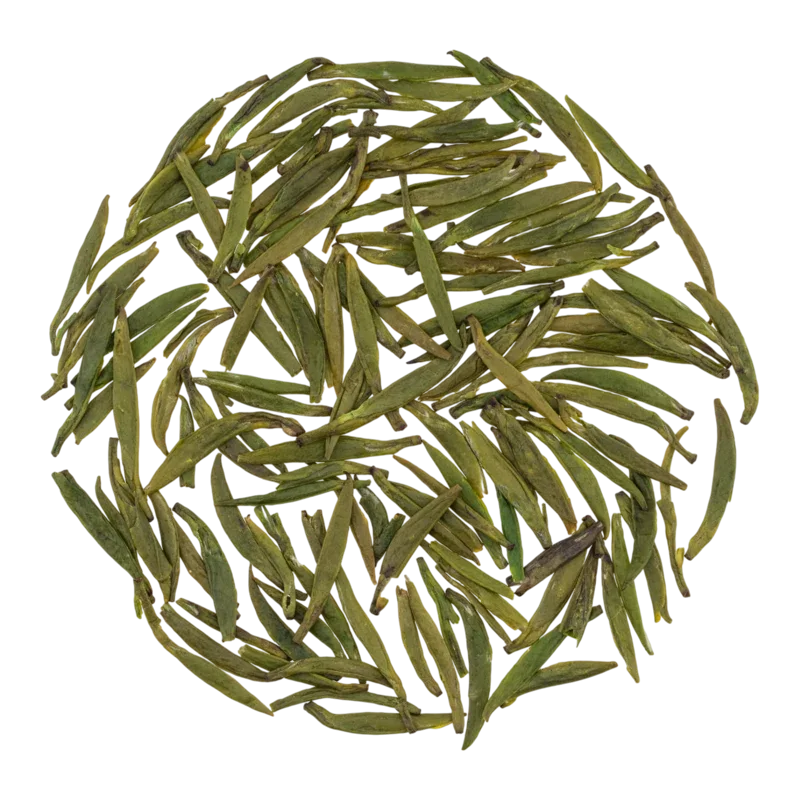
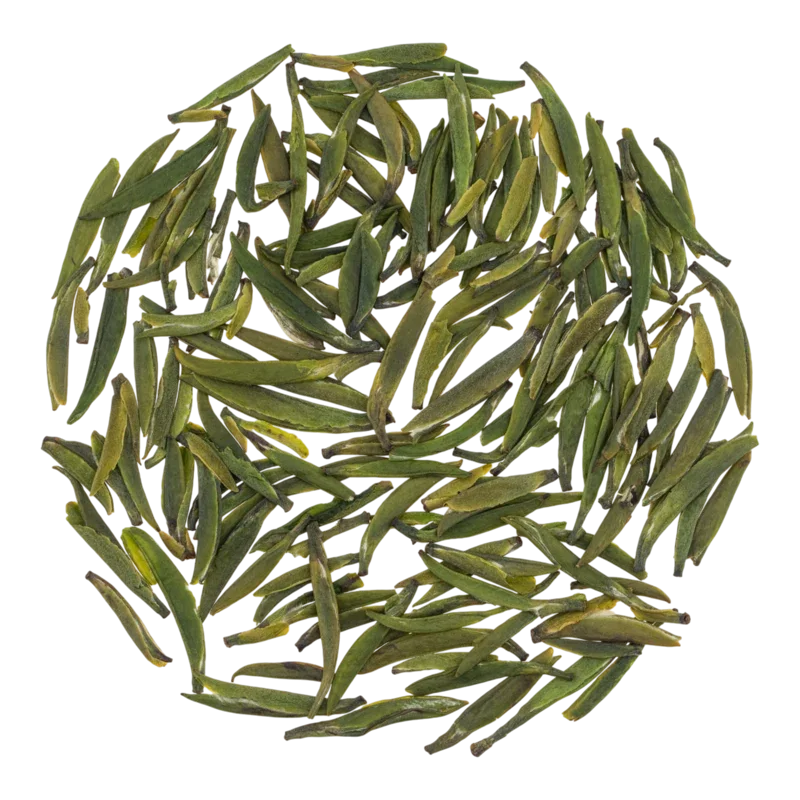
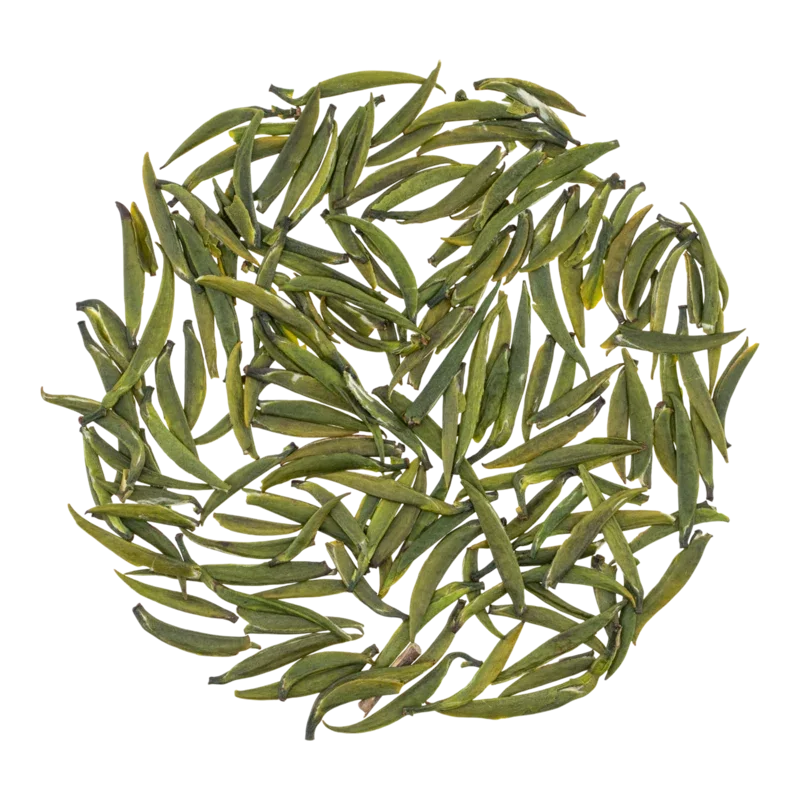
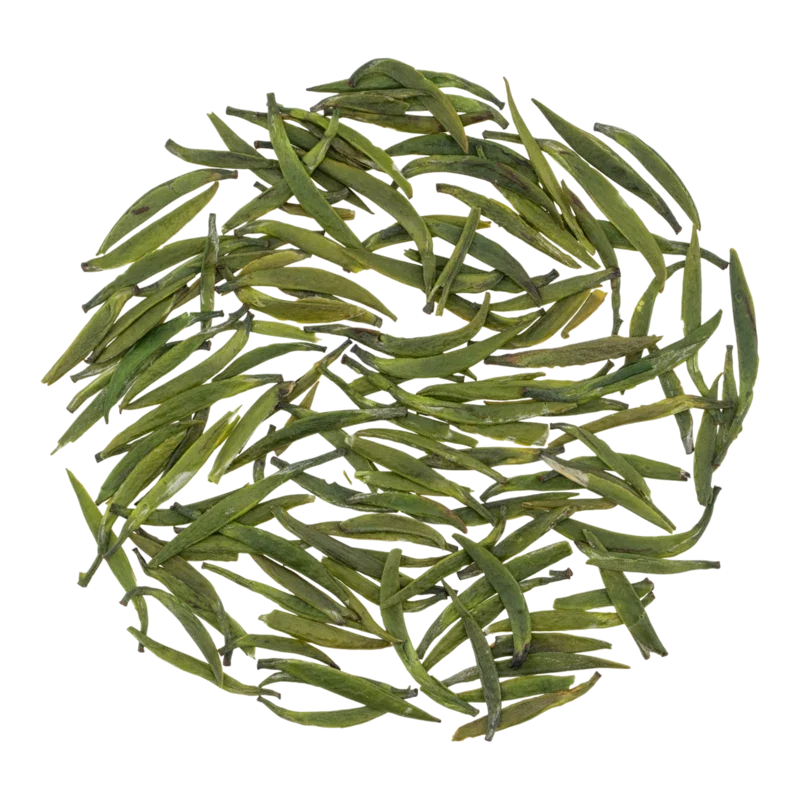
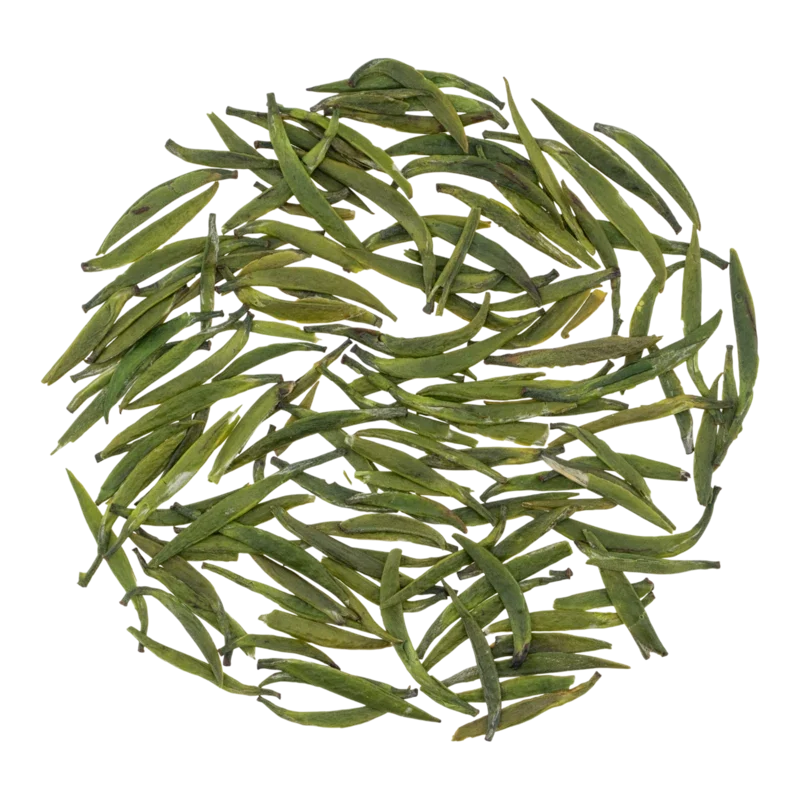
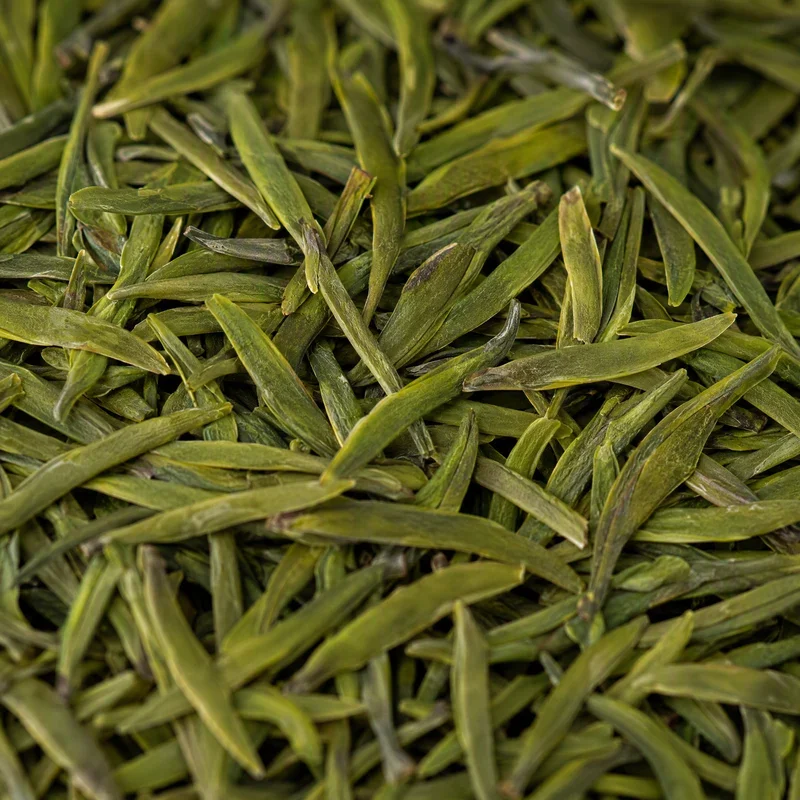
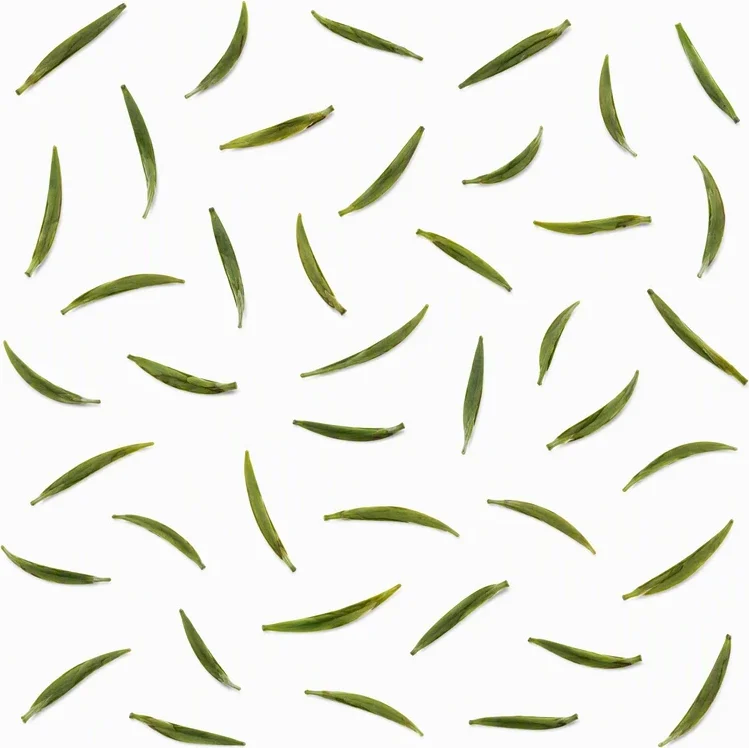
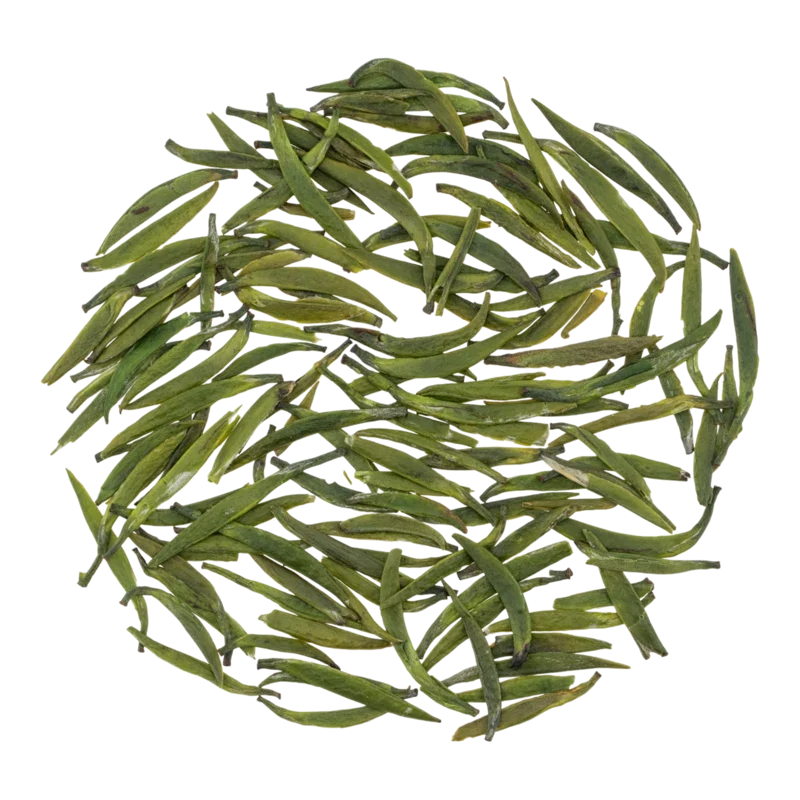
Dry Leaf Appearance: Flat, even, straight tea leaves (扁平匀直, biǎnpíng yúnzhí), bright green color (翠绿, cuìlǜ) with noticeable white pubescence (显毫, xiǎn háo). Miniature form—resembles a mountain sparrow's tongue. Exceptionally uniform leaf.
Dry Leaf Aroma: Delicate chestnut aroma (嫩栗香, nèn lìxiāng)—characteristic quality marker of Ba Shan Que She. Complemented by pure green note (清香, qīngxiāng).
Liquor Aroma: Chestnut aroma as dominant, persistent and lasting. In higher grades—additional subtle floral nuancing.
Liquor Color: Apricot-green (杏绿), bright, clear (明亮, míngliàng).
Spent Leaves: Tender green, lively (嫩绿鲜活, nèn lǜ xiānhuó), uniform. Shoots open in whole "bouquets" (匀整成朵).
Taste: Pronounced freshness (鲜爽, xiānshuǎng)—result of high amino acid content (≥3.0%). Distinct sweetness (甘, gān). Long, persistent returning sweetness with increasing salivation (回甘生津, huígān shēngjīn). Moderately full body. Bitterness and astringency practically absent when temperature regime is observed.
Alkaloids: Caffeine (moderate content), theobromine, theophylline.
Amino Acids: ≥3.0% for first grade and higher. High amino acid content—key factor determining pronounced freshness and "juiciness" of taste.
Unique feature—selenium content in tea leaf significantly higher than national average. Wanyuan soils contain 0.28–0.51 μg/g selenium; tea effectively accumulates this microelement. According to producer claims, selenium content in Ba Shan Que She dry leaf is several times higher than ordinary green tea indicators.
Essential Oils: Provide characteristic persistent chestnut aroma. Daily temperature fluctuations at 800–1200 m elevation enhance aromatic compound synthesis.
Minerals: Potassium, magnesium, zinc, manganese, fluorine, and unique to this terroir—selenium.
Polyphenols: ≥28% for premium grade. Water-extractable substances—≥45%—one of the highest indicators among Chinese green teas, testifying to exceptional richness of internal substances.
Vitamins: Vitamin C, B-group vitamins (B1, B2), vitamin E.
Combination of high polyphenol content (≥28%) and natural selenium creates synergistic antioxidant effect—selenium is part of glutathione peroxidase, one of the key enzymes of the body's antioxidant defense.
Selenium is an essential microelement necessary for normal thyroid function, immune system, and reproductive health. Tea from selenium-rich soils is a safe source of organic selenium.
Combination of caffeine and L-theanine provides gentle, balanced alertness and improved concentration.
Catechins promote lipid metabolism normalization and maintenance of vascular elasticity.
Polyphenols and catechins stimulate digestive processes and normalize intestinal microflora.
High fluorine content suppresses cariogenic bacteria activity.
Green tea in traditional Chinese medicine belongs to "cooling" products that help disperse internal heat.
Tea Amount: 3 g per 150 ml (glass cup, 1:50 ratio) or 4–5 g per 100–120 ml (gaiwan, flash steeping method).
Teaware: Glass cup (玻璃杯)—best choice: allows admiring how flat "sparrow tongues" stand vertically in water, opening like miniature fans. White porcelain gàiwǎn (白瓷盖碗) is also suitable.
Water Temperature: 80–85°C. For premium grade (特级), reduction to 75°C is acceptable—the more tender the raw material, the lower the temperature.
Shaanxi. Also "sparrow tongue," but from Hanzhong (Se-soils). Ba Shan — from Dazhou, also Se-enriched. Both — soft, with low astringency.
Sichuan. Flat, "bean" aroma, large production volumes. Ba Shan — more "floral," with chestnut base and Se.
Jiangsu. Eastern "queshe," without Se. Ba Shan — Se-enriched, with more pronounced chestnut tone.
Price Category: Medium and upper segment of Sichuan green teas. Approximate retail prices: premium grade (特级, mingqiancha)—from 800 yuan per jin (500 g) and higher; first grade (一级, yuqiancha)—400–600 yuan; second grade (二级)—more affordable, for daily consumption.
No reviews yet. Tell us what you think of this tea.
Rate this tea and share your impressions. We review each submission before publishing it.