Brewing
Gongfu brewing
- Water temperature
- 90 °C
- Tea amount
- 6 g
- Water volume
- 100 ml
- First steep
- 10 s
- Time added per infusion
- 5 s
- Infusions
- 8



Ālǐshān Wūlóng
Choose a brewing method. Start with the recommended quantities and time, then adjust to taste.
Brewing
Brewing
Taste
Tea encyclopedia
Category: Taiwanese high-mountain oolongs (高山茶, Gāoshān Chá) — teas grown at altitudes above 1000 m a.s.l. Alishan is one of the three "great" high-mountain regions of Táiwān alongside Líshān (梨山, Líshān) and Shānlínxī (杉林溪, Shānlínxī).
Category: Taiwanese high-mountain oolongs (高山茶, Gāoshān Chá) — teas grown at altitudes above 1000 m a.s.l. Alishan is one of the three "great" high-mountain regions of Táiwān alongside Líshān (梨山, Líshān) and Shānlínxī (杉林溪, Shānlínxī).
Shì Zhuó (石棹, Shí Zhuō — "Stone Table," 1200–1600 m) — the most famous and prestigious location; Ruìlǐ (瑞里, Ruìlǐ), Ruìfēng (瑞峰, Ruìfēng), Lóngyán (龍眼, Lóngyǎn — considered the historical birthplace of Taiwanese high-mountain tea cultivation), Xī Dǐng (隙頂, Xìdǐng), Guānghuá (光華, Guānghuá), Tàihé (太和, Tàihé), Zhāngshùhú (樟樹湖, Zhāngshùhú), Bìhú (碧湖, Bìhú).
Coordinates: ~23°30' N, ~120°42'–120°48' E. The region is located near the Tropic of Cancer (23.5° N) — it is believed that this latitude creates optimal conditions for high-mountain tea cultivation.
Origin: Taiwan (臺灣), Chiayi County (嘉義縣, Jiāyì Xiàn), Greater Ālǐshān mountainous region (大阿里山區, Dà Ālǐshān Qū). Alishan is not a single mountain, but an extensive mountain range uniting tea-growing territories of several townships: Ālǐshān (阿里山鄉, Ālǐshān Xiāng), Méishān (梅山鄉, Méishān Xiāng), and Zhúqí (竹崎鄉, Zhúqí Xiāng).
Type: Oolong (semi-oxidized tea, oxidation level 10–30%). The "qingxiang" (清香, qīngxiāng) style predominates — without roasting or with minimal roasting, emphasizing freshness and floral aroma. Medium-roasted variants with warmer, nutty profiles are encountered less frequently.
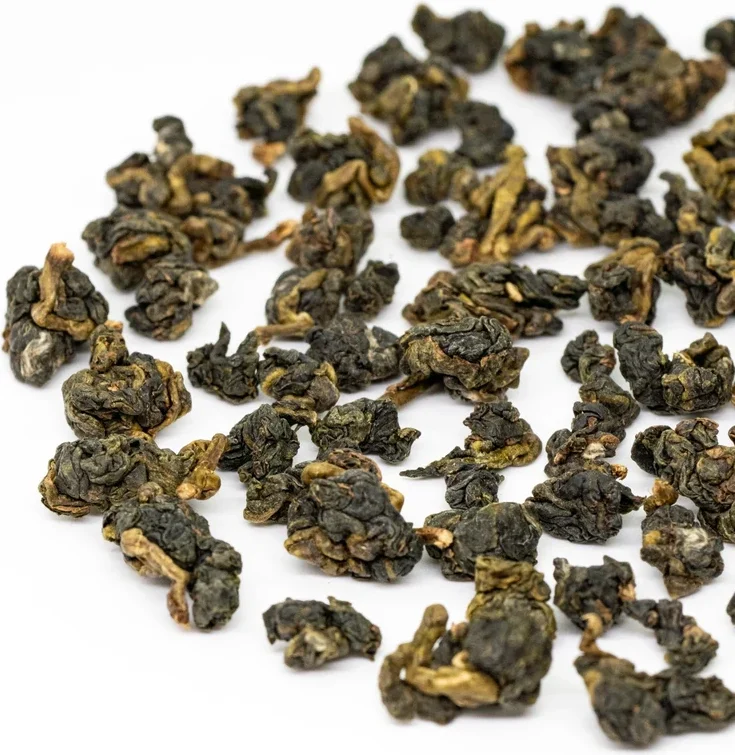
tightly rolled, uniform, large pellets without breakage — normal; dust, stems, small crumbs — warning sign.
whole, elastic leaves with visible bud + leaves structure. Torn, brown leaves — sign of coarse raw material or improper processing.
Cultural Significance: Alishan Oolong quickly gained status as an elite Taiwanese tea and became the calling card of the region. Táiwān regularly holds tea competitions (比賽茶, bǐsài chá), where oolongs from Alishan — especially from the Shi Zhuo area — often take prize places. Tea from Alishan is the most recognizable Taiwanese oolong for international consumers, largely due to the enormous popularity of the mountain range as a tourist destination. Tea plantations, tasting halls, and factories are included in the mandatory Alishan visiting program alongside the famous narrow-gauge railway, "sea of clouds," and sunrises.
History: Taiwan has long-standing tea traditions: even before the 17th century, wild tea trees existed on the island, and in the 18th–19th centuries, cultivated varieties and production technologies were brought from Fujian Province. However, tea cultivation in the mountainous Alishan region is a relatively recent phenomenon. According to the "Alishan Chronicles" (阿里山志, "Ālǐshān zhì"), the first attempts at tea cultivation in this region date to the reign of Emperor Guāngxù (光緒, 1875–1908) of the Qing dynasty. Nevertheless, systematic development of the high-mountain tea industry began only in the 1970s–1980s, when Taiwanese farmers began developing mountain slopes above 1000 m in search of new terroirs capable of producing exceptional quality tea. Lóngyán village (龍眼, "Dragon's Eye") in Meishan township, located at approximately 1200 m altitude, is considered the historical "birthplace" of Taiwanese high-mountain tea — it was here that they first demonstrated that mountain conditions radically improve oolong quality. The Shi Zhuo area — "Stone Table" — proved particularly successful and quickly gained a reputation as one of the best high-mountain locations for growing oolongs, and the term "Alishan Zhulu Cha" (阿里山珠露茶, "Pearl Dew of Alishan") became essentially a brand for tea from the Shi Zhuo area in Zhuqi township. The very concept of "high-mountain tea" (高山茶) was introduced during this same period: according to legend, farmer Chén Jindi (陳金地), who was growing pears on Lishan mount
"Green Heart Oolong" — the most widespread and prestigious cultivar for high-mountain Taiwanese oolongs. Camellia sinensis var. sinensis. Small-leaf, late-flowering, with delicate and complex floral aroma. It is precisely this cultivar that sets the "canonical" sound of Alishan Oolong — an orchid-floral profile with notes of gardenia and lily of the valley. Taiwanese name — "ruanzhi oolong" (軟枝烏龍, Ruǎnzhī Wūlóng, "soft-branch oolong").
TTES No. 12 (臺茶十二號, Táichá shí'èr hào). Developed in 1981 by breeder Wǔ Zhènduó (吳振鐸) at TTES (Taiwan Tea Experiment Station) by crossing TRES No. 8 (臺農八號) with Yìngzhī Hóngxīn (硬枝紅心). Characteristic feature — natural creamy-milky aroma (奶香, nǎixiāng). Natural creamy notes in Jin Xuan are rare and a quality marker; mass-market "milk oolong" is more often artificially flavored.
TTES No. 13 (臺茶十三號). Developed simultaneously with Jin Xuan by the same breeder. Refreshing floral-herbaceous taste and distinct aroma.
Encountered less frequently, used in some estates alongside the main three cultivars.
Spring harvest (春茶, chūnchá, March–May) — most valuable: most delicate taste, maximum amino acid content. Winter harvest (冬茶, dōngchá, October–November) — more concentrated and aromatic, also highly valued. Summer and autumn harvests — less prestigious due to intense sunlight and rapid shoot growth, increasing bitter catechin content.
Pluck Standard: Bud and 2–3 upper leaves (一心二三葉, yī xīn èr sān yè). Only young, undamaged shoots. Characteristic feature of high-mountain raw material — thick, fleshy leaves with high content of pectic substances and amino acids.
Altitude: 800–1800 m a.s.l.; main tea plantations located at 1000–1600 m. Shi Zhuo area — 1200–1600 m, Longyan — ~1200 m. The higher the garden is located, the slower the shoots grow and the higher the content of amino acids and pectins — meaning the "sweeter" and more "oily" the tea.
Climate: Cool average annual temperatures 14–18°C, high relative humidity (80–90%), frequent clouds and mists, significant diurnal temperature variations (up to 10–15°C). Average annual precipitation — approximately 2500 mm. Average sunshine duration reduced due to cloudiness — this is a key factor reducing synthesis of bitter catechins and increasing accumulation of amino acids (primarily L-theanine) and aromatic compounds.
Soil: Mountain soils with high organic matter and mineral content. Good drainage thanks to gravelly and rocky substrate. Acidic reaction (pH ~4.5–5.5), optimal for tea plants.
Many gardens in the region are managed according to organic or environmentally responsible farming principles. Recent years have seen a trend toward reducing or completely eliminating pesticides — confirmed by the return of fireflies to mountain valleys, which has become one of Alishan's tourist attractions. Tea gardens are often irrigated with mountain spring water.
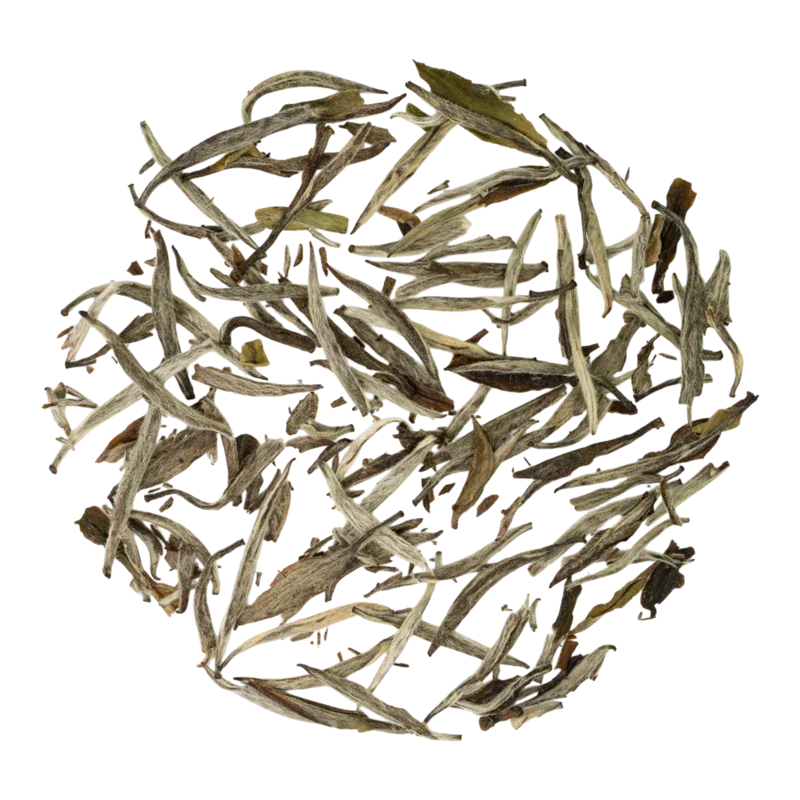
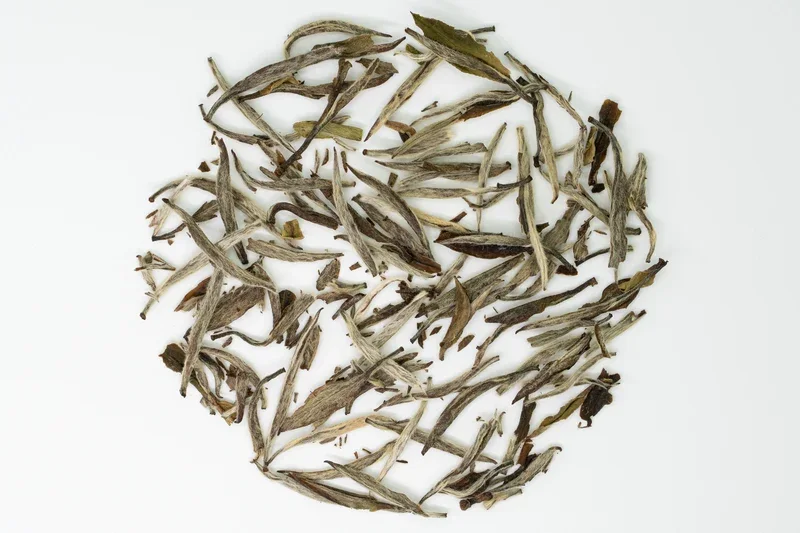
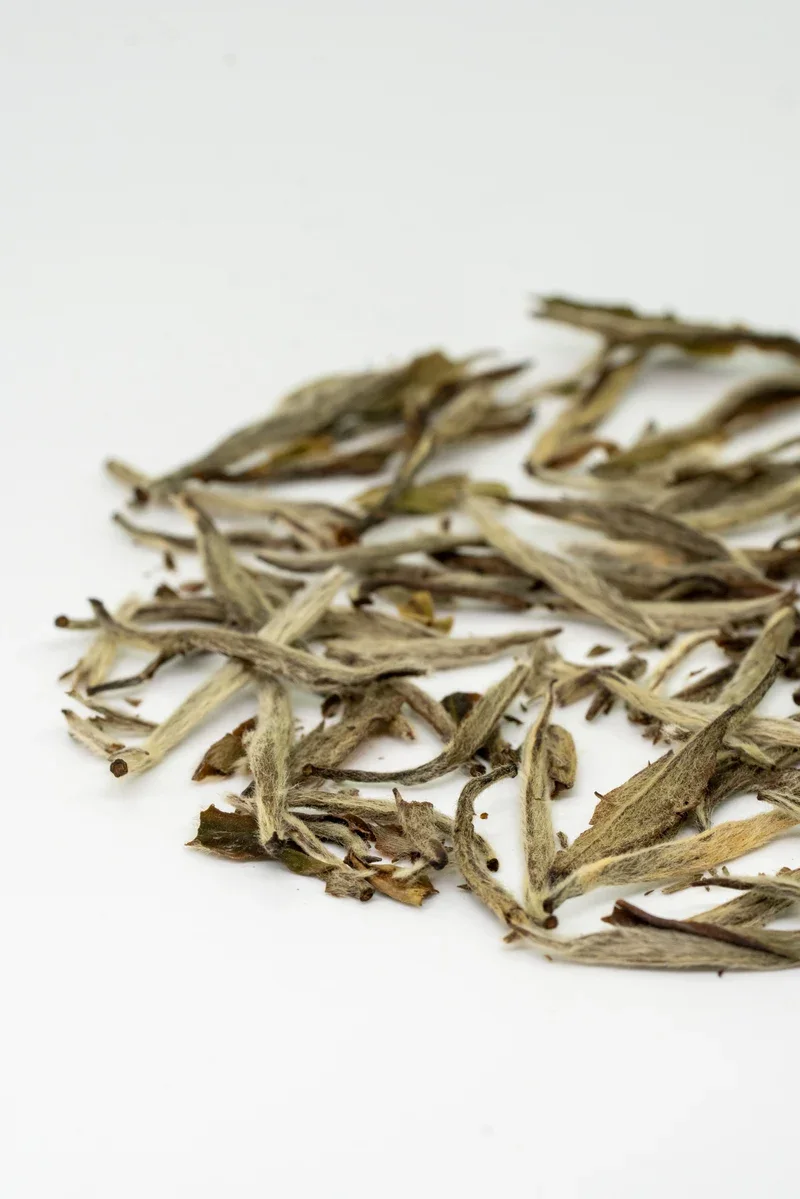
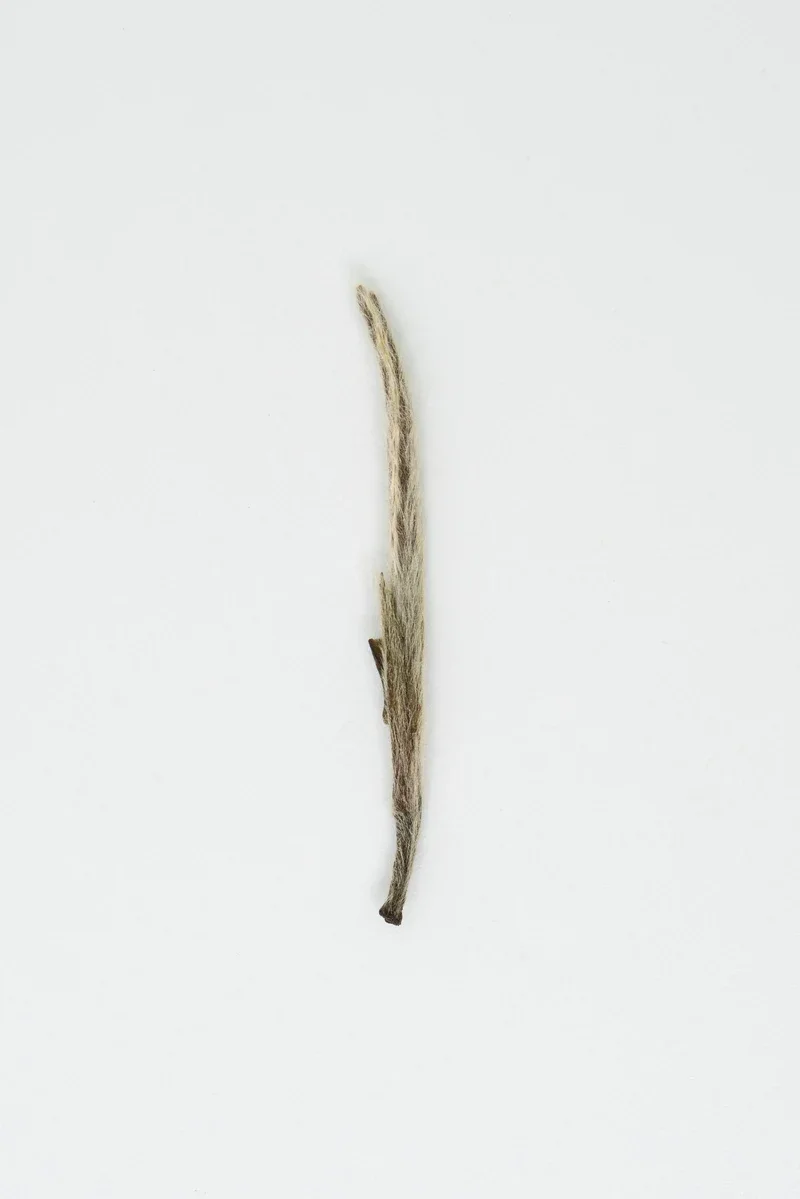
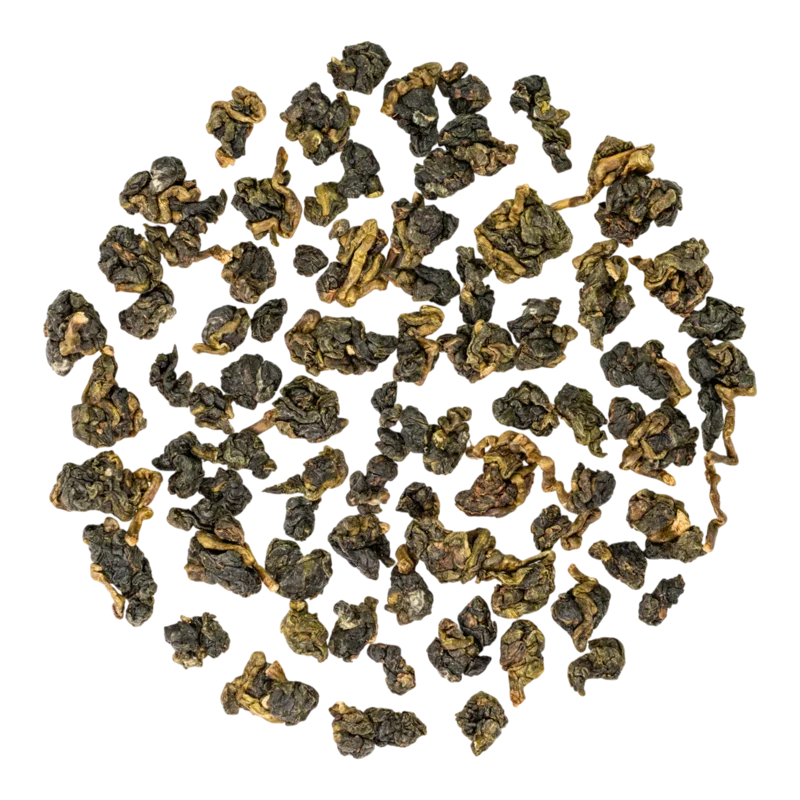
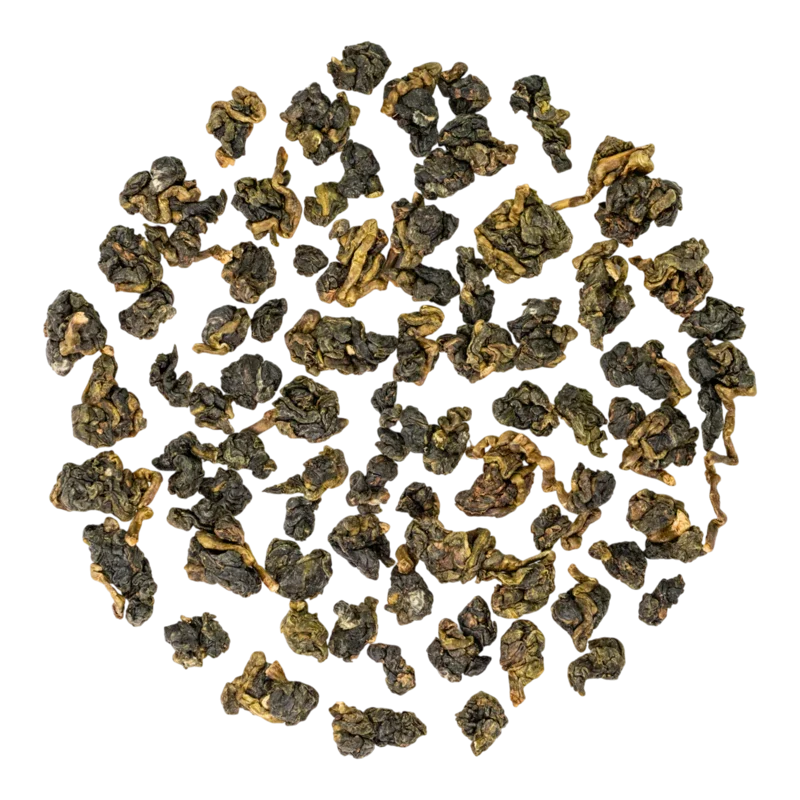
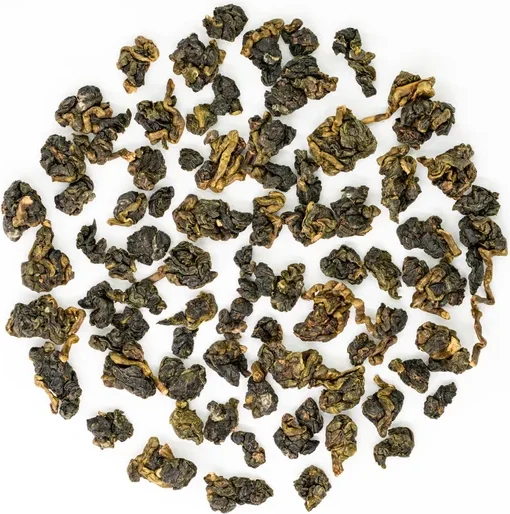
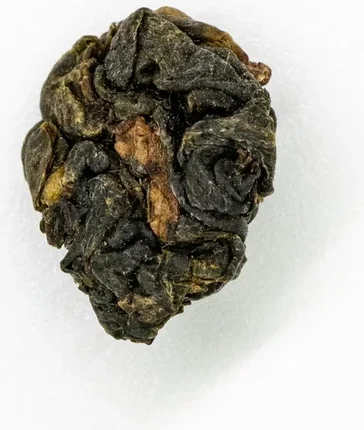
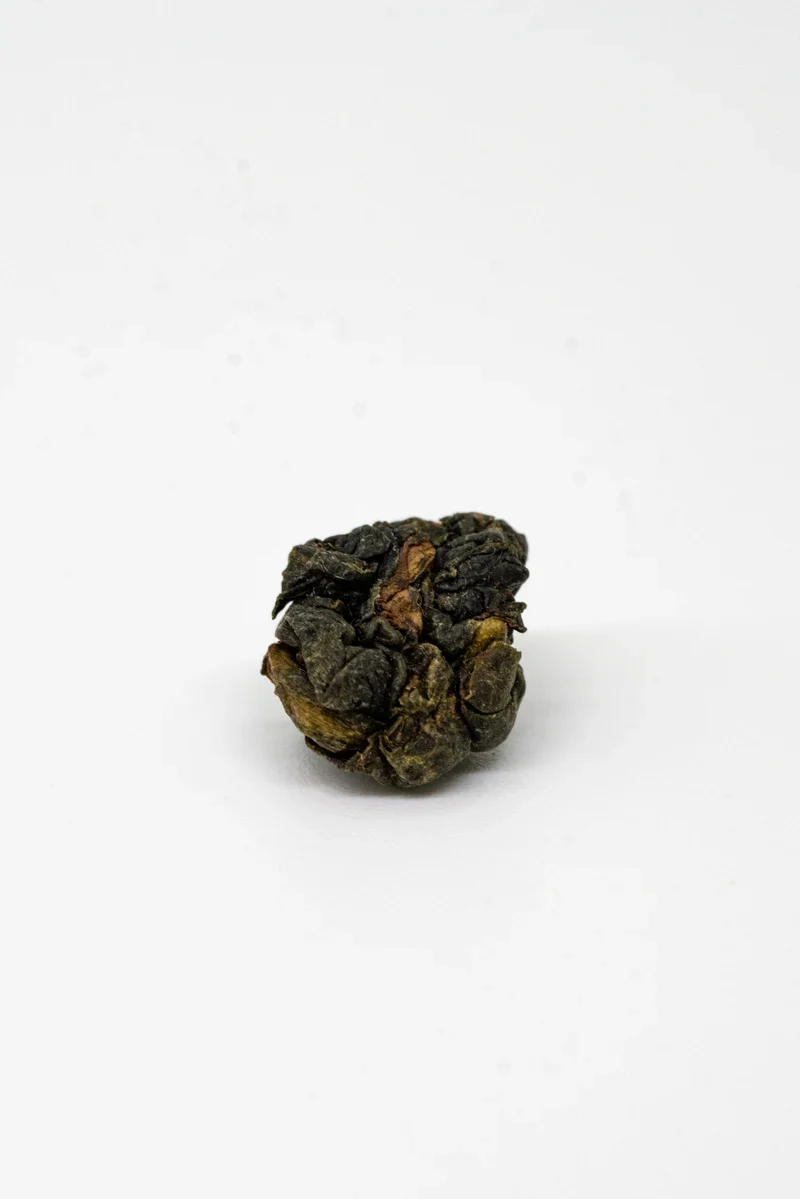
Dry Leaf Appearance: Dense, tight semi-spheres (pellets) from emerald to dark green color with matte or light oily sheen. Pellets are large, often with attached stem (sign of hand-picking of mature shoots). White tips possible.
Dry Leaf Aroma: Fresh, bright, and clean — orchid, gardenia, lily of the valley; creamy, fruity (peach, lychee, melon) and gentle herbaceous nuances. Tea from Shi Zhuo is distinguished by particularly "cool," clean character with hints of mountain air and notes of sweet dew.
Liquor Aroma: Rich, floral, sweetish — notes of cream, ripe fruits, fresh greens, and light floral honey. Cinnamon wood notes (桂花, guìhuā — osmanthus) are encountered — especially in winter batches. Aroma is persistent and "alive," unfolding differently with each infusion.
Liquor Color: Light yellow, golden-green (蜜綠透金黃, mì lǜ tòu jīn huáng — "honey-green with golden transparency"), clear, with bright luster.
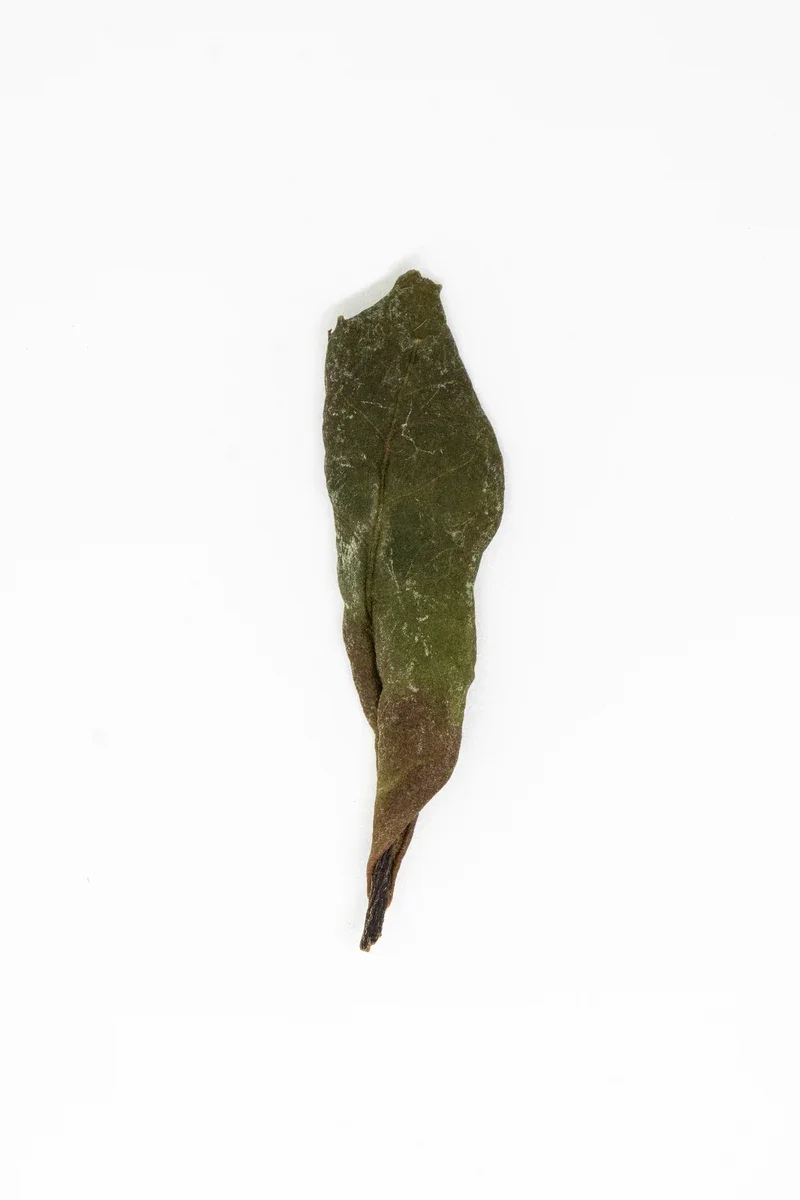
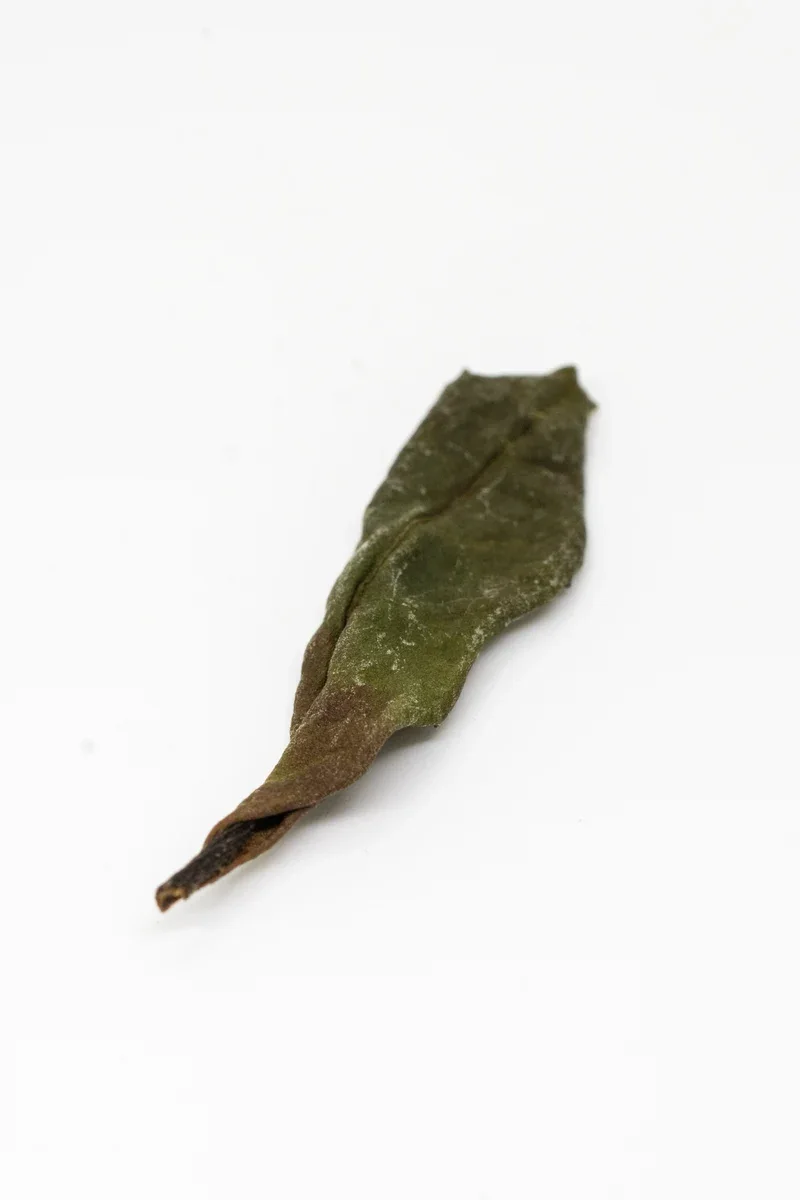
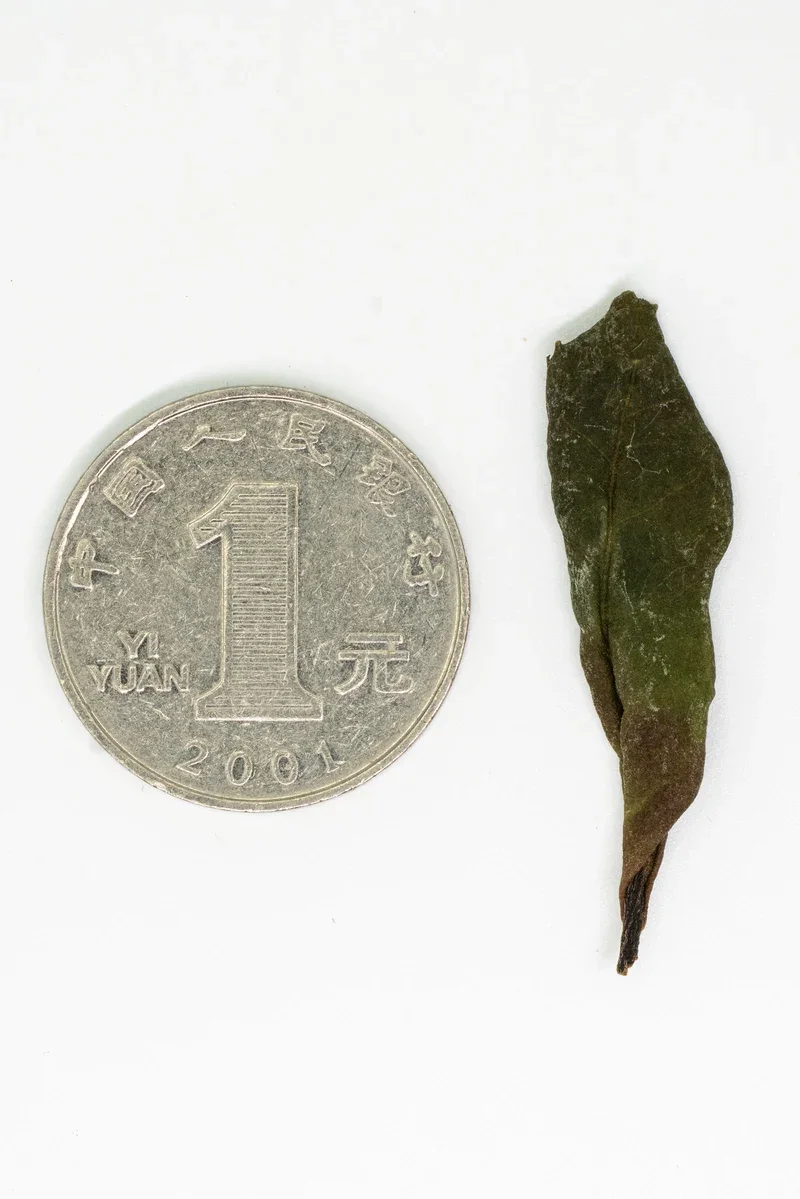
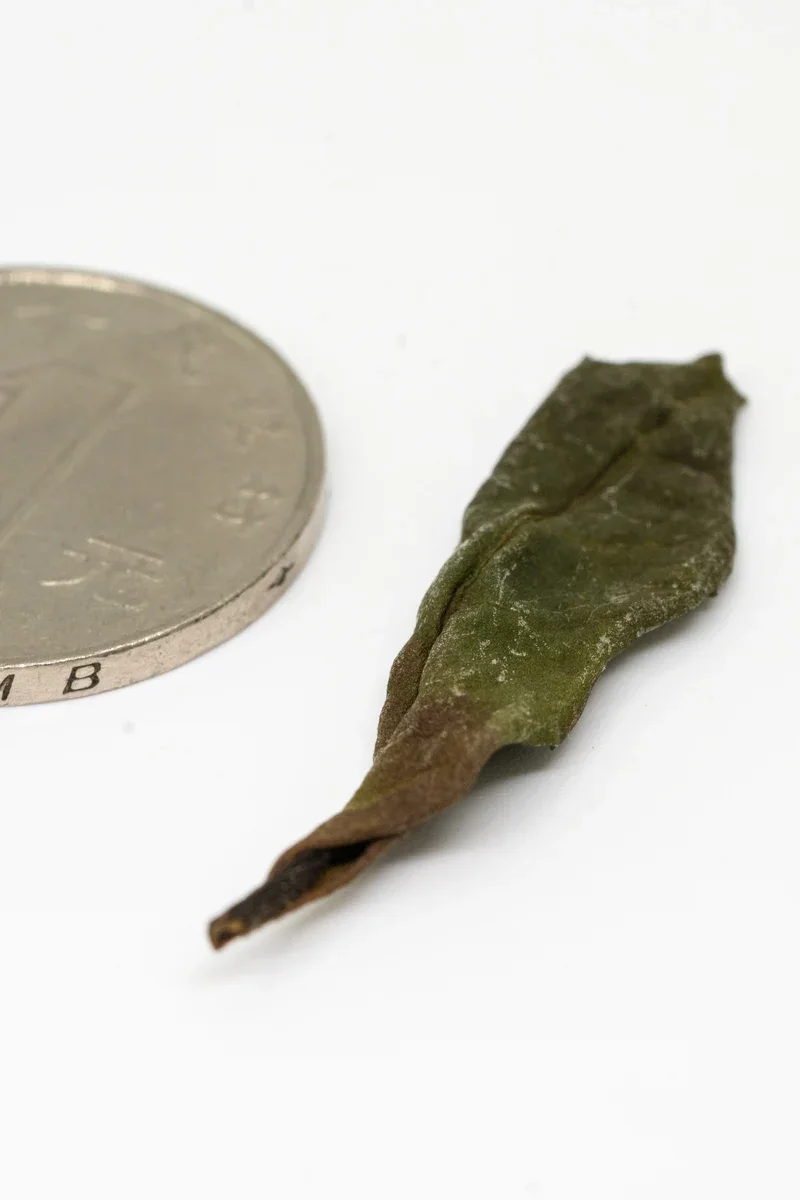
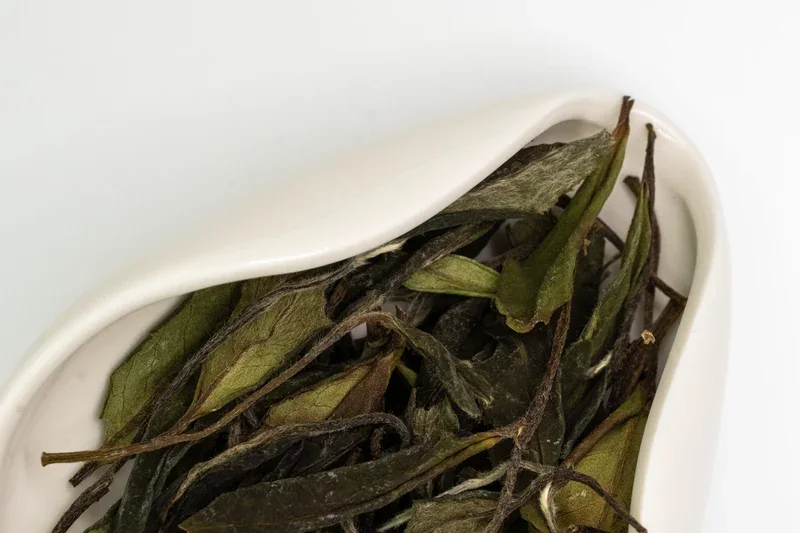
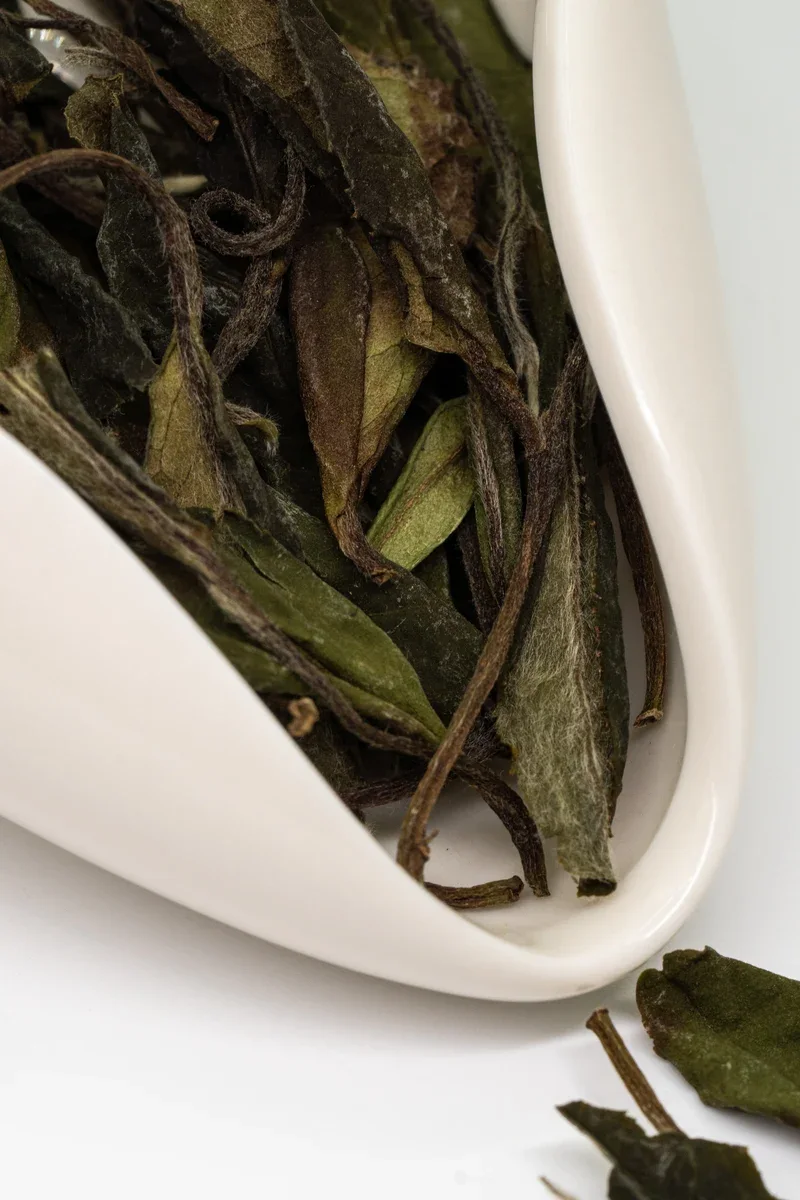
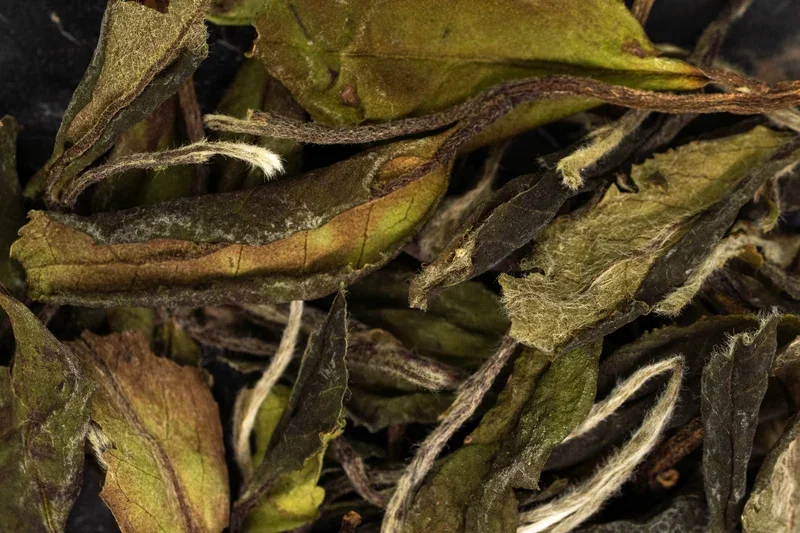
Spent Leaves: Whole, elastic leaves of emerald-green color, often with visible "one bud — two-three leaves" structure. Leaves are fleshy, elastic, with light reddish edge — sign of delicate oxidation.
Taste: Soft, delicate, oily, sweetish. Floral notes dominate, with nuances of cream, ripe fruits, light acidity, and characteristic "mountain melody" (高山韻, gāoshān yùn) — a complex sensation of softness, richness, and returning sweetness (回甘, huígān), due to high content of amino acids and pectic substances. Bitterness and astringency are practically absent. Long refreshing aftertaste.
Alkaloids: Caffeine — ~2–3% of dry mass (moderate content). Theobromine and theophylline — in trace amounts. L-theanine has antagonistic action toward caffeine's stimulating effect, providing "gentle alertness" without nervousness.
Amino Acids: Elevated content — up to 3–4% of dry mass; in spring batches — even higher. L-theanine (L-茶氨酸, L-cháānjīsuān) — dominant amino acid, comprising 50–60% of all free amino acids. L-theanine is responsible for sweetness, umami notes, and relaxing effect. Research shows that high-mountain raw material can contain 26% more amino acids than lowland material.
High-mountain raw material is distinguished by elevated essential oil content (41% more than lowland analogues, according to some studies). Key components: linalool (floral notes), geraniol (rose-floral notes), nerol (freshness), indole (jasmine notes), aldehydes (fruity notes).
Elevated content — forms the "thick," oily body of the liquor characteristic of high-mountain oolongs. Soluble sugar content in oolongs is among the highest of all tea types.
Minerals: Potassium, magnesium, manganese, fluoride, zinc, phosphorus.
Polyphenols: Content lower than in lowland oolongs and green teas — short sunlight exposure and low temperatures suppress catechin synthesis. This is a key factor in the reduced bitterness and astringency of high-mountain tea. Total polyphenol content — approximately 15–20% of dry mass (versus 20–30% in lowland oolongs).
Vitamins: C (in significant quantity — up to 1–2 mg/g), B group (B₁, B₂, B₃), E (tocopherols), K.
Combination of caffeine and L-theanine provides gentle, focused alertness without anxiety. L-theanine stimulates alpha-wave brain activity, promoting a state of calm concentration, and has antagonistic action to caffeine's nervous stimulation.
Catechins and polyphenols neutralize free radicals, slowing cellular oxidation processes.
Oolong polyphenols help reduce LDL cholesterol levels, strengthen vessel walls. Research indicates positive effects of regular oolong consumption on blood pressure levels.
Gentle stimulation of gastrointestinal tract function; oolong polyphenols promote fat breakdown. Taiwanese tradition recommends drinking high-mountain oolong after heavy meals.
Oolongs promote activation of metabolic processes and thermogenesis.
Fluoride and polyphenol content suppresses oral bacteria activity.
Excellent for hot climates thanks to "cool" aftertaste.
L-theanine promotes improved attention concentration and working memory.
Tea Amount: 5–7 g per 120–150 ml water (gongfu method); 3–4 g per 200–250 ml (European method).
Teaware: Porcelain gàiwǎn (蓋碗, gàiwǎn) — preferable for revealing delicate aroma; Yíxīng teapot (宜興壺, Yíxīng hú) — suitable provided it is "seasoned" for high-mountain oolongs; porcelain teapot.
Water Temperature: 85–95°C. For delicate spring harvests and Qing Xin Oolong — 80–90°C; for winter batches and more roasted variants — 90–95°C.
Container: Airtight vacuum packaging or opaque tin with tight lid.
Shelf Life: Optimal consumption period — 6–12 months after production. Over time, freshness and floral aroma fade. Re-roasting can extend tea life but will change its profile.
Oxygen, moisture, direct sunlight, heat (accelerates oxidative processes), and foreign odors (tea leaf is an excellent absorbent).
Temperature: Refrigerator (0–5°C) in separate compartment, away from strong-smelling products. Tea moisture content should be below 5–6%.
The higher the garden — the more expensive the tea. Shi Zhuo (1200–1600 m) — the most expensive sub-region.
Spring > winter >> autumn > summer.
Qing Xin Oolong — more expensive; Jin Xuan and Cui Yu — more accessible.
Prize-winning batches (特等奖, tèděng jiǎng) sell at multiples of normal prices.
No reviews yet. Tell us what you think of this tea.
Rate this tea and share your impressions. We review each submission before publishing it.