Classification and Origin
Category: Taiwanese oolongs of heritage varieties. Some sources classify as a subgroup of hóngshuǐ oolongs (紅水烏龍).
Coordinates: ~23°51' N, ~120°40' E.
Origin: Taiwan, Nántóu County (南投縣), Míngjiān Township (名間鄉). Plantations on the southeastern slopes of the Bāguà Mountain Range (八卦山脈), 250–400 m above sea level.
Type: Oolong, medium degree of oxidation (15–50%). Dark oolongs (濃香型, nóng xiāng xíng) of medium and high roasting.
Terroir
Altitude: 250–400 m (low mountains — high yield, but requires processing mastery for flavor depth).
Climate: Subtropical monsoon, ~21°C average annual, ~2000 mm precipitation. Morning fogs. Diurnal temperature variations 8–12°C.
Soil: Red soils (紅土) of lateritic type with high Fe₂O₃ content, pH 5.0–5.5. Elevated manganese content (~150 mg/100 g) — geological feature of Mingjian.
Mingjian — Taiwan's largest district by concentration of tea farms; tea plantations occupy more than 90% of terraced lands.
Some farms practice organic farming: inter-row legumes, living hedges from TTES №18, culinary herbs for biodiversity.
Organoleptic Profile
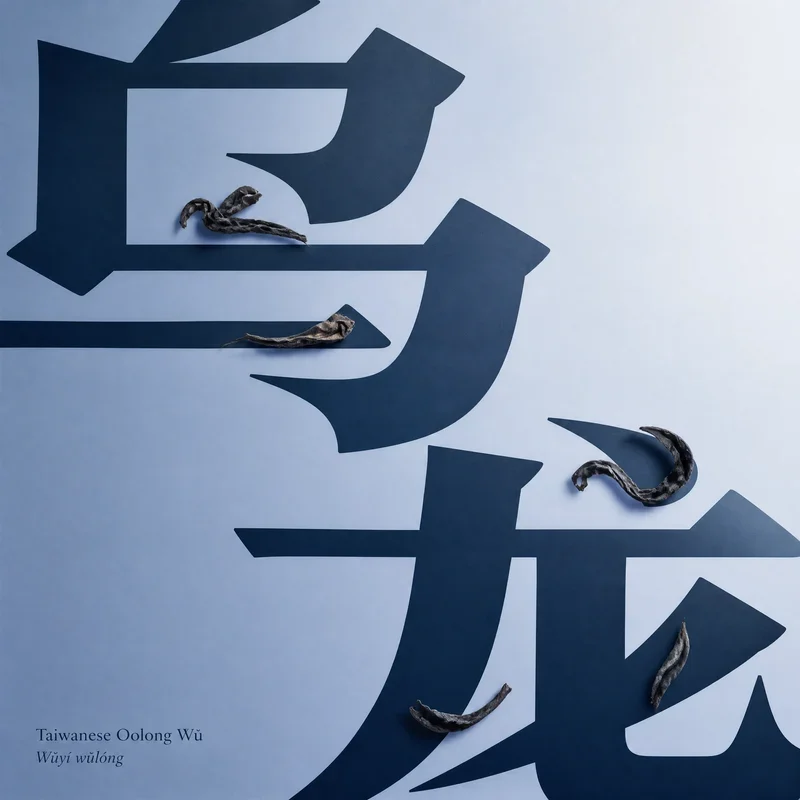
Dense granules ∅5–8 mm, dark olive with steel luster.
Roasting, dried fruits (prunes, apricots), deep minerality of heated stone → jasmine honey, chestnut creaminess, vanilla.
Golden-yellow to rich amber (topaz).
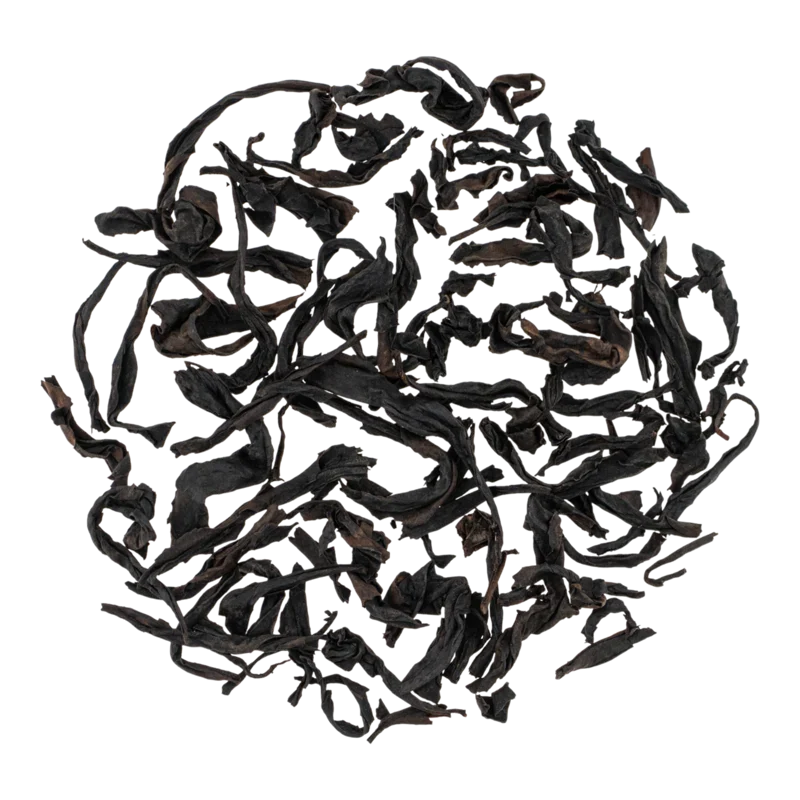
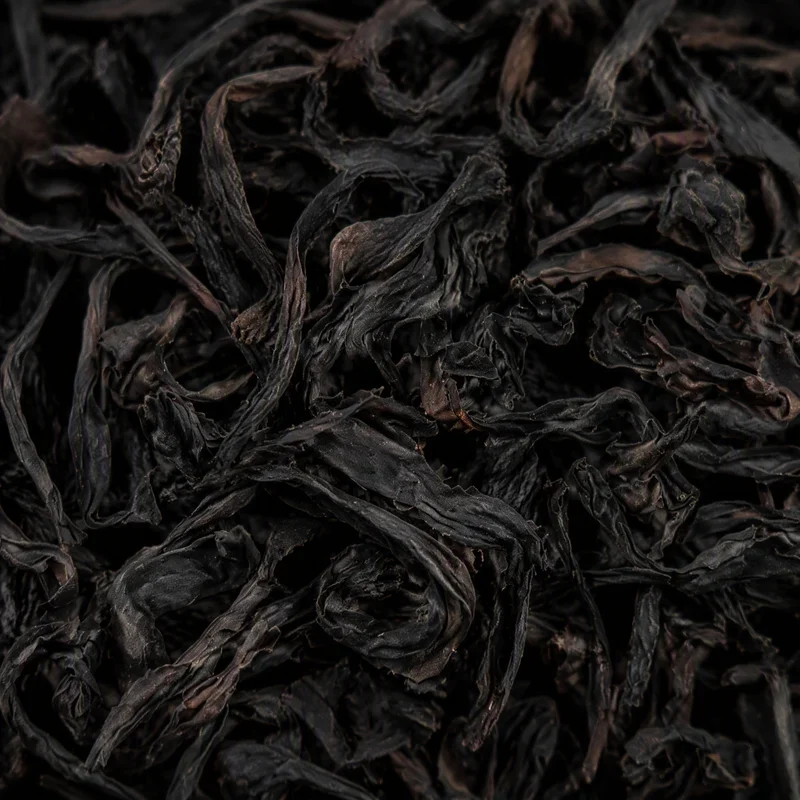
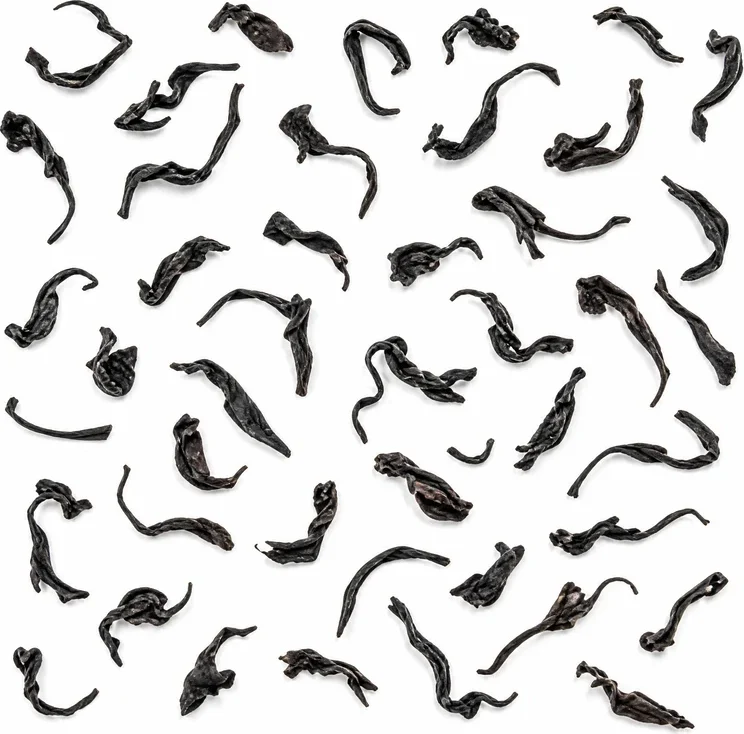
Longitudinal twist, dark brown with olive and burgundy highlights.
Roasting, burnt sugar, dried fruits, light minerality → caramel, baked fruits, orchid/gardenia.
Amber, golden-chestnut.
Spent Leaves: Dark green whole leaves with reddish-brown edges.
Taste: Dense, viscous, balanced. Honey, pastry, roasted nuts, minerality. Aftertaste long, sweetish, with light bitterness. Softer and rounder than Oolong Wu.
Chemical Composition
Amino Acids: L-theanine ~1.84% (Oolong Wu); ~3% free amino acids (Shui Xian). Sweetness, umami, relaxation.
~25 mg/g (Oolong Wu); ~2% (Shui Xian). Moderate stimulation.
~12% (Shui Xian) — prebiotic effect.
Essential Oils: Linalool, nerol, geraniol, benzyl acetate, methyl salicylate. Unique marker of Wu cultivar — terpene lactone wuyenolide C. Pyrazines and furfural (Maillard reaction products during roasting).
Minerals: Potassium, manganese (elevated due to red soils — ~150 mg/100 g), magnesium, iron, fluorine.
Polyphenols: ~22–23% of dry mass. EGCG, theaflavins (products of enzymatic oxidation).
Health Notes
Catechins (EGCG) + theaflavins.
LDL reduction.
α-amylase inhibition.
Tannins stimulate digestive juices; polysaccharides — prebiotic.
L-theanine + caffeine — concentration without agitation.
Caries prevention (Streptococcus mutans inhibition).
Manganese, fluorine.
Storage
Container: Airtight, opaque (tin, ceramic, foil-lined bag). Vacuum or nitrogen atmosphere — advantage.
Shelf Life: Up to 24 months. Roasted oolongs more stable than light ones. For Oolong Wu, periodic re-roasting (每年覆焙) possible to maintain freshness.
+5…+25°C, humidity <55%, away from odors and light.
Collectors age for years; 1958 sample sold at auction for record sum.
Comparison
From Qing Xin cultivar; more nutty and caramel, less mineral.
From Tieguanyin cultivar; more spicy, dense.
High-mountain light oolong; radically different — fresh, floral, without roasting.
Mainland originals; more pronounced "rock rhyme (yán yùn)" (岩韻), more smoky character. Taiwanese versions softer, with more pronounced floral notes.