Brewing
Gongfu brewing
- Water temperature
- 92 °C
- Tea amount
- 6 g
- Water volume
- 100 ml
- First steep
- 10 s
- Time added per infusion
- 5 s
- Infusions
- 8

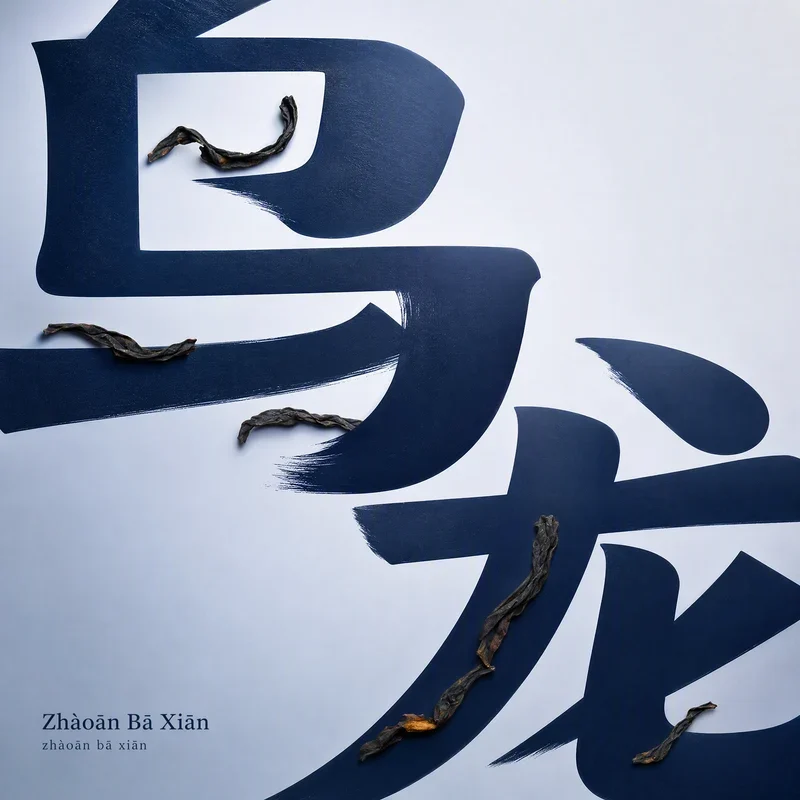
zhàoān bā xiān
Choose a brewing method. Start with the recommended quantities and time, then adjust to taste.
Brewing
Brewing
Taste
Tea encyclopedia
Category: Mǐnnán oolongs (闽南乌龙, Mǐnnán wūlóng). Product with national geographical indication (国家农产品地理标志, 2021).
Category: Mǐnnán oolongs (闽南乌龙, Mǐnnán wūlóng). Product with national geographical indication (国家农产品地理标志, 2021).
Coordinates: approximately 23°35′–24°10′ N, 116°55′–117°22′ E (tea plantation core — around 24°00′ N, 117°05′ E, at elevation 600–800 m).
Origin: China, Fújiàn Province (福建省, Fújiàn shěng), Zhāngzhōu Prefecture (漳州市, Zhāngzhōu shì), Zhàoān County (诏安县, Zhàoān xiàn). The geographically protected zone covers 15 townships and towns (梅洲, 四都, 金星, 梅岭, 桥东, 南诏, 深桥, 西潭, 白洋, 建设, 红星, 太平, 霞葛, 官陂, 秀篆), including 251 villages. The production core — Báiyáng Township (白洋乡, Báiyáng xiāng), Tīngyáng Village (汀洋村, Tīngyáng cūn), where the protected mother garden of 17 progenitor trees is located; as well as Jiànshè Town (建设乡, Jiànshè xiāng), Wanshixi District (万石溪, Wànshí xī); Guānpí Town (官陂镇, Guānpí zhèn) and Xiùzhuàn Town (秀篆镇, Xiùzhuàn zhèn).
Type: Oolong (semi-oxidized tea, oxidation degree 20–40%). The Ba Xian cultivar possesses multi-category adaptability (多茶类适制性, duō cháleì shìzhì xìng) and is also suitable for producing green and red tea (black tea), however the classic and most valued version is precisely the oolong variant.
Cultural Significance: Ba Xian occupies a special place in the tea culture of southern Fujian. Former chairman of the Tea Society of China, professor of Zhèjiāng Agricultural University Zhuāng Wǎnfāng (庄晚芳, Zhuāng Wǎnfāng) noted during his lifetime that "Ba Xian's quality is outstanding, in aroma and flavor it can compete with Tie Guanyin". Chairman of the Chinese Buddhist Association Zhào Pǔchū (赵朴初, Zhào Pǔchū) after tasting wrote the poem "Praise of Ba Xian" (赞八仙). Zhaoan — a region where tea is called "cha mi" (茶米, "tea rice"), equating it to the main food product. The custom of "tea for guests" (客来茶) is deeply rooted in daily life: practically every home has a gongfu tea set. The geographic position at the junction of Fujian and Guangdong creates a unique crossroads of two tea traditions — Minnan and Chaozhou.
History: Zhaoan — the southernmost county of Fujian, located on the border with Guangdong Province. Local tea cultivation spans about 400–500 years; here the traditions of Minnan oolongs and Guangdong dancongs interweave, forming a distinctive tea culture.
Name Breakdown: Zhàoān (诏安) — county name dating to the Míng era (明嘉靖九年, 1530), formed from the expression "Nan Zhao Anjing" (南诏安靖) — "pacification of Southern Zhao". Bā Xiàn (八仙) — "Eight Immortals", name of Ba Xian Mountain in Baiyang Township, at whose foot the 17 mother trees were rooted. According to local legend, once the eight immortals (Ba Xian) descended to this land to banish drought and evil spirits; local people offered them tea from fresh shoots of wild-growing bushes, and the immortals were so delighted with the drink that they proclaimed: "Truly excellent tea!" Since then the mountain is called Ba Xian Mountain, and the tea — Ba Xian Cha.
Cultivar: Bǎ Xiān Chá (八仙茶, Bāxiān chá) — clonal variety of Camellia sinensis var. sinensis, type "small tree, large-leaf" (小乔木大叶类, xiǎo qiáomù dàyè lèi). National oolong variety, code GS1302-1994. Listed in the "Catalog of Chinese Tea Cultivars" (《中国茶树品种志》). Botanical characteristics: tall plant with powerful root system; early spring sprouting, late winter dormancy entry; high shoot-forming ability, rapid shoot growth, elongated internodes. Pubescence on buds short and sparse, buds relatively thin, petioles thin. The bush prefers humidity and partial shade, possesses moderate cold resistance. Besides oolong, suitable for producing green and red tea (black tea).
Picking: Main seasons — spring (April–May) and autumn (September–October). Summer (June–July) and late autumn/"winter picking" (冬片, dōngpiàn) harvests are also practiced; summer and winter tea are valued for particularly high aroma. Thanks to the variety's early awakening, spring harvest begins earlier than most Fujian oolong cultivars.
Pluck Standard: Shoot "medium open face" (中开面, zhōng kāimiàn) — from terminal bud in dormant phase and 2–4 unfolded leaves (一芽二叶至三叶, yī yá èr yè zhì sān yè, rarely up to fourth leaf for fuller body).
Raw Material: Whole shoot with uniform leaf maturity, without mechanical damage, foreign odors and excessive coarseness. Tea polyphenol content in spring raw material — not less than 25%, amino acids — not less than 4.0%.
Altitude: Core: 600–800 m above sea level. Individual plantations in the Longsandong area — up to 800–1,157 m.
Climate: Subtropical oceanic monsoon climate. Average annual temperature 21.3°C (January average 14.9°C, July average 28.9°C). Average annual precipitation about 1,450 mm, concentrated in April–September period. Humidity ≥ 80%, number of foggy days over 200 per year. Pronounced daily temperature variation in mountain zones, diffused light due to clouds and fog promote intensive amino acid accumulation (content in spring raw material reaches 6% and higher). Frost-free period — about 360 days.
Soil: Predominantly red-yellow lateritic soils (红黄壤, hóng huáng rǎng), pH 4.5–6.0, organic matter content ≥ 6.01%. Critically important Zhaoan feature — soil selenium richness: about 78% of areas contain 0.15–0.35 mg/kg selenium, allowing the county to bear the title "China's Selenium Capital of the Strait" (中国海峡硒都). High selenium content translates into tea leaf, making Ba Xian Cha certified selenium-enriched tea (富硒茶, fùxī chá). Forest cover of the production core constitutes about 80%; the ecological model "pig–biogas–tea" (猪-沼-茶) is widely practiced, chemical fertilizers and pesticides are prohibited.
Zhaoan County is located in the far south of Fujian, at the junction with Ráopíng County (饶平, Guangdong). Complex topography: from mountain ranges in the northwest (highest point — Longsandong Peak (龙伞岽), 1,152 m) through hilly central part to coastal plain in the southeast, facing Zhaoan Bay. Mountains over 1,000 m also include Wushan (乌山), Bā Xiàn Zuoshan (八仙座山), Xishanyan (西山岩) and others. Tea plantations of the production core are located in the "cloud zone" at elevations 600–800 m, in mountain valleys with abundant vegetation.
Medium maturity shoots (中开面) are picked — 2–4 leaves from terminal bud. Raw material is quickly delivered to the workshop, avoiding overheating and mechanical damage.
Leaves are evenly spread in thin layer on bamboo trays or special fabric. Duration 15–30 minutes; leaf surface temperature should not exceed 35°C. Leaf loses significant moisture (mass loss 10–15%), becomes pliable, enzymatic activity is triggered. For Ba Xian, "heavy" withering approach (重晒青, zhòng shàiqīng) is applied — more intensive than standard Tie Guanyin technology, which strengthens the enzyme base for subsequent aroma formation.
Alternation of 3–5 cycles of mechanical leaf shaking and rest periods over 14–18 hours. Shaking damages leaf edges, triggering local oxidation; during rest phase enzymes redistribute aromatic precursors. Process continues until characteristic signs appear: leaf acquires yellow-green tint, veins become translucent, "turtle shell" formation (龟背形, guībèi xíng), edges redden (绿叶红镶边, lǜyè hóng xiāngbiān), pure floral and varietal aroma appears. Principle of "thin spreading" (薄摊, bó tān) during rest phases is especially important for orchid aroma formation.
Heating in rotating drum at 240–280°C for 6–8 minutes. Stops enzymatic processes, fixes aroma direction. Leaf acquires dark green tint, becomes soft, stem doesn't break when bent, characteristic "cooked" aroma appears (熟香, shú xiāng).
Rolling for 5–6 minutes with gradual pressure increase. Leaf curls into tight strands, rolling degree not less than 90%. Cell structure destruction increases extractability.
Temperature 120–140°C, duration 6–8 minutes, layer thickness about 1 cm. Dry until leaf when squeezed in fist forms a lump, slightly pricking the palm. Then — immediate spreading for cooling (摊凉, tānliáng) in 3–5 cm layer for 30–60 minutes.
Temperature 85–120°C, 6–8 minutes. Stabilizes moisture to storage level (≤ 7%), fixes color (乌润, wūrùn — dark oily) and reveals varietal aroma. For highest grades, charcoal roasting (炭焙, tànbèi) is applied, locking in aroma and adding additional depth.
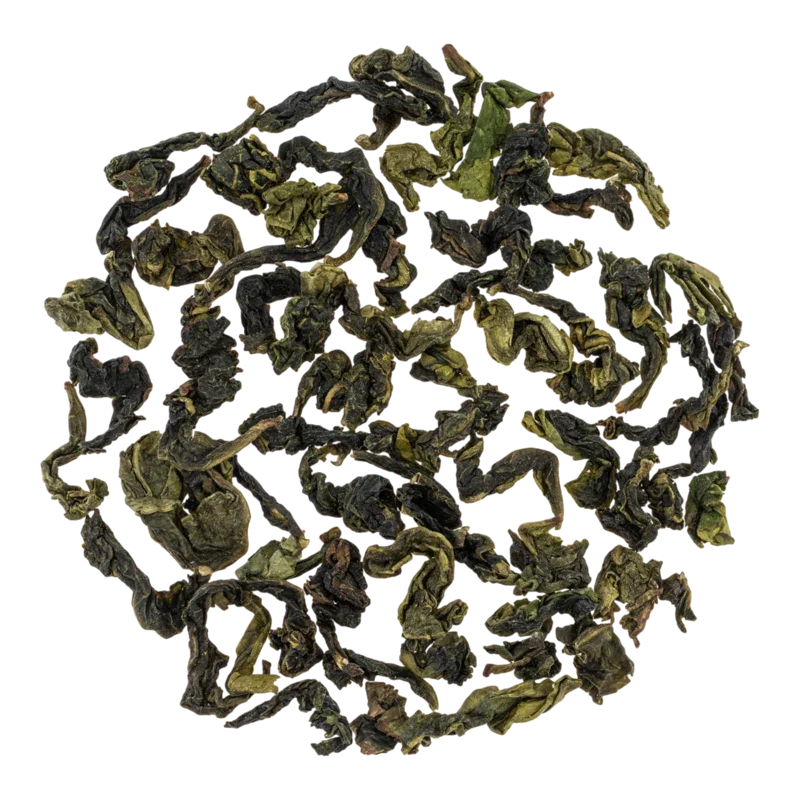
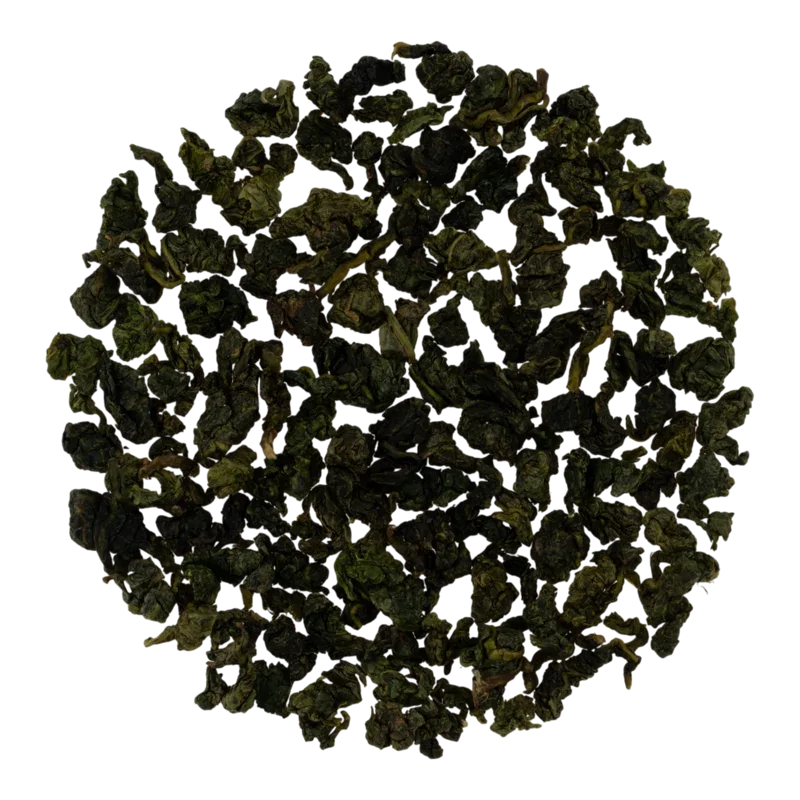
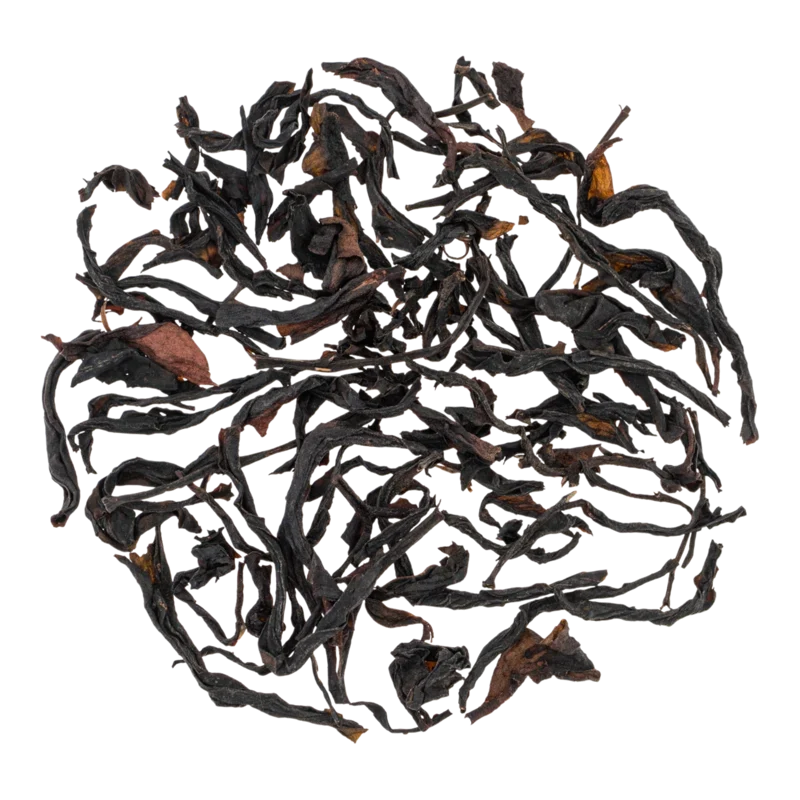
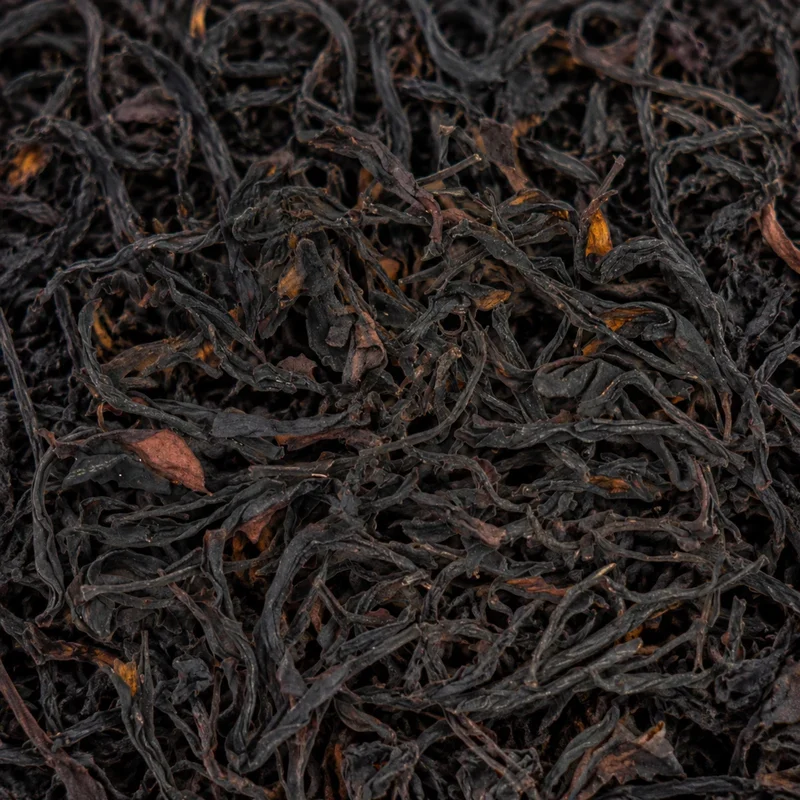
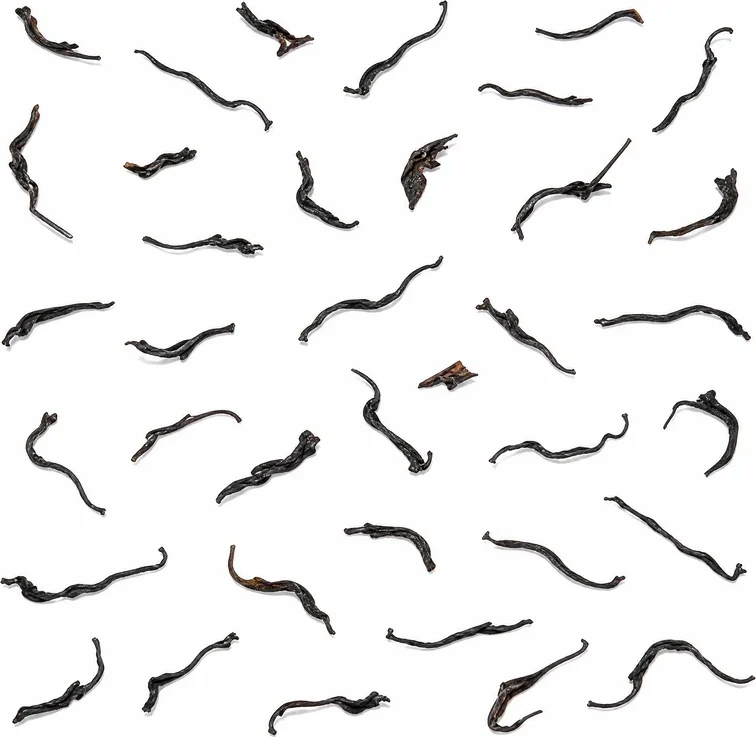
Dry Leaf Appearance: Tightly twisted, heavy strands (条索紧结重实, tiáosuǒ jǐnjié zhòngshí) — longitudinal twist characteristic of Minnan oolongs; color dark olive with oily luster and light honey-yellow tint (乌褐油润带蜜黄). Leaf calibration uniform.
Dry Leaf Aroma: High, penetrating and persistent (高锐持久, gāo ruì chíjiǔ). Bright varietal aroma (品种香) dominates, complemented by orchid notes (兰花香, lánhuā xiāng) in highest grades, as well as fresh green and pure sweet tones. Roasted versions add "fire aroma" note (火香, huǒ xiāng).
Liquor Aroma: Unfolds with powerful wave of varietal aroma, transitioning to orchid-floral register; in subsequent infusions honey sweetness builds. In charcoal-roasted versions — nutty and caramel overtones, in aged — dried fruit notes.
Liquor Color: Orange-yellow, clear and bright (橙黄明亮, chénghuáng míngliàng). With deeper oxidation or roasting — closer to amber. Red tea (black tea) from same raw material gives red-scarlet, clear liquor.
Dense and rich (浓厚, nónghòu), with characteristic "thickness" (粘稠感, niánchóugǎn). Fresh, brisk tone (鲜爽, xiānshuǎng) provided by high amino acid content. Bright returning sweetness (回甘, huígān) with sweetness reminiscent of cane sugar, lasts long. Varietal characteristic — light bitterness in first seconds, instantly transforming to sweetness (微苦速化, wēi kǔ sùhuà). Tea distinguished by exceptional brewing endurance: 6–8 full infusions without character loss.
Spent Leaves: Soft, elastic, with distinct red edges (柔软明亮红边显, róuruǎn míngliàng hóngbiān xiǎn). Tint — from green-olive in center to copper-red at edges. Leaves whole, opened, uniform in size.
Alkaloids: Caffeine (咖啡碱, kāfēijiǎn) — approximately 2–4% of dry mass (characteristic range for oolongs); theobromine and theophylline — in trace amounts. Ba Xian variety is classified as tea with moderately high caffeine content.
Amino Acids: Free amino acid content in spring raw material — not less than 4.0%, and in high-altitude cloud zone raw material — up to 6% and higher. L-theanine (茶氨酸, cháāmīnsuān) dominates, comprising more than 50% of amino acid pool; it provides gentle sweetness, "fresh" tone (鲜味, xiānwèi) and synergistic cognitive effect with caffeine — alertness without anxiety.
Combination of high polyphenols (≥ 25%) and high amino acids (≥ 4%) provides favorable phenol/amino acid ratio (酚氨比, fēn'ān bǐ), which is a key indicator of suitability for premium oolong production.
Essential Oils: Complex of volatile aromatic compounds responsible for varietal aroma (品种香); includes nerol, linalool, geraniol, indole, jasmone and their derivatives. Essential oil expression in Ba Xian — among the highest in Minnan oolongs, which was noted by experts when granting national status.
Minerals: Potassium, magnesium, manganese, zinc, phosphorus, iron — in standard oolong quantities. Unique characteristic — organic selenium (硒, xī): content in tea leaf corresponds to national "selenium-enriched tea" standard thanks to natural soil background (0.15–0.35 mg/kg Se in soil). Selenium is a powerful antioxidant, participates in selenoprotein function, supports thyroid function and immune system.
Polyphenols: Tea polyphenol content in fresh spring raw material — not less than 25% (per standard GH/T 1236-2018). Main fraction — catechins (EGCG, ECG, EGC, EC); during partial oxidation process, part of catechins transforms into theaflavins and thearubigins, forming the freshness and depth combination characteristic of oolongs. Varietal characteristic — elevated polyphenol concentration compared to average oolong cultivars (about 30% higher than usual level, according to Ba Xian sources), explaining the pronounced "strength" and robustness of the liquor.
Vitamins: Vitamin C (in fresh leaf, partially preserved during gentle oxidation), B-group vitamins (B₁, B₂, niacin), vitamin E (α-tocopherol, in lipid fraction), vitamin K.
Synergy of caffeine and L-theanine provides gentle, sustained alertness with improved attention concentration and short-term memory — without sharp "caffeine peak".
High polyphenol concentration neutralizes free radicals; according to data related to Ba Xian characteristics, free radical scavenging effectiveness of tea polyphenols is 18 times higher than vitamin E.
Catechins and selenium promote blood viscosity reduction and "bad" cholesterol (LDL) level decrease. Selenoproteins participate in protecting vessel walls from oxidative damage, reducing atherosclerosis risk.
Polyphenols stimulate digestive enzyme secretion, helping fat breakdown; gently eliminate feeling of heaviness after fatty food. Charcoal-roasted versions are especially gentle to stomach.
Catechins (especially EGCG) accelerate lipid metabolism; according to observations, the effect in Ba Xian is more pronounced than in typical oolongs, thanks to elevated polyphenol concentration.
Natural organic selenium in leaf composition participates in glutathione peroxidase synthesis — key enzyme of cellular antioxidant protection. Regular consumption of selenium-enriched tea contributes to daily selenium requirement.
Caffeine and theobromine provide gentle diuretic action, promoting metabolic waste elimination.
Polyphenols suppress growth of pathogenic bacteria and inhibit dental plaque formation.
Twist dense, heavy; color "sand-green oily" (砂绿油润); aroma orchid, high, penetrating and persistent; flavor rich, with bright returning sweetness. Approximate price — from 700 yuan per jin.
Twist firm, even; aroma clean; liquor color orange-yellow; flavor mellow and full (醇厚, chúnhòu).
Twist relatively dense; aroma correct; flavor strong, with slight coarseness (浓强稍粗).
Do not pour steep boiling water over 100°C directly on leaf — excessive temperature destroys L-theanine and reduces "fresh" tone expression.
Tea Amount: Gaiwan/gongfu — 5 g per 75 ml (ratio approximately 1:15); everyday style — 3–4 g per 150–200 ml.
Teaware: Porcelain gàiwǎn (盖碗, gàiwǎn) — universal option allowing full varietal aroma development. For charcoal-roasted and aged versions — small Yixing or Chaozhou teapot from porous clay, softening and "rounding" flavor. Small volume cups (品茗杯, pǐnmíng bēi) (30–50 ml) for concentration and aftertaste sensation.
Water Temperature: 95–100°C for standard and charcoal-roasted versions; 90–95°C for light "qingxiang" (清香) variants.
Container: Airtight packaging — vacuum foil bags, tin cans or ceramic vessels with tight lid.
Enemies: Moisture, heat, foreign odors and direct light — four main degradation factors.
Dry, cool, dark place; optimal temperature 10–25°C, humidity below 60%. Light "qingxiang" versions preferably stored in refrigerator (0–5°C) to preserve aroma freshness.
Store significantly longer; under proper conditions — 2–3 years and more without substantial quality loss. However after package opening, recommended to consume tea within 7 days while aroma hasn't dissipated.
New tea (新茶, xīnchá) recommended to age 10–15 days in dark place for "fire removal" (褪火气, tuì huǒqì) before consumption — this softens astringency and allows aroma to stabilize.
Most famous Minnan oolong from Anxi County. Compared to Tie Guanyin, Ba Xian possesses more powerful, "robust" flavor (浓厚 vs. 醇厚) and more penetrating varietal aroma. Tie Guanyin valued for elegant orchid note and silky texture; Ba Xian — for strength, endurance and characteristic "quick bitterness transformation to sweetness". Professor Zhuang Wanfang compared them as equals in quality.
Early Anxi oolong with pronounced cinnamon sweetness aroma. Lighter and more delicate than Ba Xian; inferior in flavor strength and brewing endurance, but superior in aroma development speed.
Oolong from Yongchun County, made from "Buddha's hand" cultivar with large, fleshy leaves. Possesses softer, "rounded" flavor with citrus overtones; less pronounced varietal aroma and bitterness compared to Ba Xian.
South Fujian version of Shuixian cultivar; more "woody" and deep, less "penetrating" in aromatics than Ba Xian, but close in body fullness.
Guangdong dancongs grown in same Zhaoan County. Represent "second soul" of local tea cultivation. Dancongs — finer, more aromatic, with pronounced individuality of each tree; Ba Xian — more standardized, stronger and more universal.
Price Category: Zhaoan Ba Xian belongs to medium and medium-high price segment among Minnan oolongs. Special grade (特级, tèjí) — from 700 yuan per jin (500 g) and higher. First and second grades significantly more affordable. Price factors: plantation elevation, harvest season (spring — more expensive), handwork, charcoal roasting, bush age, producer brand and micro-plot rarity. Compared to Tie Guanyin of similar level, Ba Xian often offers better "quality/price" ratio, since the brand is still less promoted in mass market.
No reviews yet. Tell us what you think of this tea.
Rate this tea and share your impressions. We review each submission before publishing it.