Brewing
Gongfu brewing
- Water temperature
- 93 °C
- Tea amount
- 5 g
- Water volume
- 100 ml
- First steep
- 10 s
- Time added per infusion
- 5 s
- Infusions
- 4


Yìgòng hóngchá
Choose a brewing method. Start with the recommended quantities and time, then adjust to taste.
Brewing
Brewing
Taste
Tea encyclopedia
Category: Regional Chinese red teas; high-altitude organic red tea of Tibet.
Category: Regional Chinese red teas; high-altitude organic red tea of Tibet.
Coordinates: ≈ 30.3° N, 94.9° E (area of farm headquarters).
Origin: China, Tibet Autonomous Region (西藏自治区, Xīzàng Zìzhìqū); Nyingchi City (林芝市, Línzhī Shì); Bōmì County (波密县, Bōmì Xiàn); Yìgòng Township (易贡乡, Yìgòng Xiāng). Tea plantations are located around Yìgòng Lake (易贡湖, Yìgòng Hú) and on adjacent slopes, in the center of Yigong National Geological Park.
Type: Red tea (black tea) (红茶, hóngchá) — fully fermented (oxidized).
Cultural Significance: Yigong Farm is the cradle of Tibetan tea cultivation and a symbol of so-called "red culture" (红色文化, hóngsè wénhuà): the farm territory preserves the "General's House" (将军楼, Jiāngjūn Lóu) — residence of the legendary 18th Army commander General Zhāng Guóhuá (张国华, Zhāng Guóhuá), the building of the former Party School of Tibet Autonomous Region, and other historical structures. The farm develops a model of "red-green tourism" (红色+绿色茶旅, hóngsè + lǜsè chálǚ), combining visits to historical memorials with tastings and excursions through tea gardens at the foot of snow-capped peaks.
History: The history of Yigong Tea Farm is inseparable from the military-political history of Tibet's development and represents one of the most dramatic stories in Chinese tea cultivation. In the 1950s, the Yigong territory became the headquarters of the 18th Army of the PLA (中国人民解放军第十八军, Zhōngguó Rénmín Jiěfàngjūn Dì Shíbā Jūn), which entered Tibet. In 1960, on orders from the production administration of the Tibet Military District, some officers and soldiers remained in Yìgòng to establish a military farm (军垦农场, jūnkěn nóngchǎng). In 1963 (according to other sources — 1964), seeds of medium-leaf and small-leaf tea trees were brought from Méngdǐng Tea Farm (蒙顶茶场) in Sichuan Province, which successfully germinated — survival rate reached 85%. Thus appeared the first industrial tea plantation in Tibet's history. In 1967, personnel from the Xinjiang Production and Construction Corps were transferred to Yigong, creating the "5th Regiment Yigong" (易贡五团, Yìgòng Wǔtuán). In 1978, the enterprise transferred to civilian administration and became known as Yìgòng Farm (易贡农场), and in 1993 — Yìgòng Tea Farm (易贡茶场). From 1985, Fujian Province provided assistance, and from 2010 — Guangdong Province. In 2000, a catastrophic landslide blocked the outlet from Yigong Lake, forming the world's largest barrier lake; a significant portion of tea gardens, archives, and buildings was flooded. Restoration began in 2008. In 2010, the farm first mastered red tea production — "Yigong Hong" (易贡红), filling a ga
Name Breakdown: 易贡 (Yìgòng) — Chinese transcription of a Tibetan word meaning "beautiful place where the heart finds satisfaction"; 红茶 (hóngchá) — "red tea." The brand "Yigong Hong" (易贡红) is used to designate the entire line of the farm's red tea — from "special" (臻选, zhēnxuǎn) to "first grade" (一级, yī jí).
Cultivar: The plantation foundation consists of Sichuan medium-leaf and small-leaf population Camellia sinensis var. sinensis (四川中小叶群体种, Sìchuān zhōngxiǎoyè qúntǐzhǒng), introduced from Méngdǐng (蒙顶山, Méngdǐng Shān) in the 1960s. In recent years, new cultivars have been planted: Fuxuan 9 (福选9号, Fúxuǎn Jiǔhào), Méizhàn (梅占, Méizhàn), Fúdǐng Dàbái (福鼎大白, Fúdǐng Dàbái), and the soft-branch oolong variety Ruǎnzhī Wūlóng (软枝乌龙, Ruǎnzhī Wūlóng). The Sichuan group is distinguished by a prolonged dormancy period (up to 6 months), during which increased concentrations of amino acids and extractive substances accumulate in leaf tissues.
Picking: Spring (and only main) harvest: from late March to May. High-altitude conditions (2,000+ m) and cold nights determine a single annual harvest (一年一收, yī nián yī shōu), which is rare for Chinese tea regions and ensures maximum concentration of substances in the leaf.
Pluck Standard: "One bud and one leaf" (一芽一叶) for "special" category (臻选); "one bud and two leaves" (一芽二叶) for "first grade" category; for individual premium batches — pure buds (单芽).
Raw Material: Hand-picking of whole, undamaged leaves. Tea gardens are located in pristine mountain forest zones; soils are fertilized exclusively with natural organics; pesticides and herbicides have never been used throughout the farm's history.
Altitude: Tea gardens are located at elevations from 1,900 m (Yigong Lake shore) to 2,280 m (upper terraces near farm headquarters). This is one of the world's highest industrial tea massifs.
Climate: Moderately warm for Tibetan conditions, but significantly cooler than subtropical Motuo. Average annual temperature — 11.4°C (4–5°C lower than Motuo); annual precipitation — 960–1,100 mm; mild winters (without severe frosts — local motto: "冬无严寒,夏无酷暑" — "no harsh cold in winter, no scorching heat in summer"), cool summers. Dense forests around Yigong Lake provide constant cloudiness and abundant mists; ultraviolet radiation at 2,000+ m altitude is significantly more intense than in lowland regions, stimulating synthesis of protective polyphenols and anthocyanins in leaves. The difference between average daytime and nighttime temperatures reaches 10–15°C, slowing the expenditure of sugars accumulated during the day through nighttime respiration. Tea bushes remain dormant for about six months per year — longer than in any other major Chinese tea region — and during this period accumulate exceptional concentrations of amino acids, sugars, and aromatic precursors.
Soil: Mountain forest soils with high organic content; acidic reaction (pH 4.5–6.0). Tea rows are irrigated with glacial meltwater and mountain snow, which contributes additional microelements.
Completely organic farming. Tea garden area — about 5,350 mu (≈357 ha), of which productive age — about 3,200 mu. Management is carried out by four production brigades (茶叶一队 — 茶叶三队 and Danka Brigade / 单卡队). Specialists from Guǎngdōng Academy of Agricultural Sciences Tea Research Institute (广东省农业科学院茶叶研究所) are permanently present at the farm and supervise processing technologies.
Hand selection of tender shoots in morning hours after dew disappears; strict control of "bud + leaf" standard.
Combined: initial stage — outdoors under canopies (in clear weather), final stage — indoors with controlled ventilation. Duration — 14–20 hours. Leaf moisture reduces to 60–64%.
Mechanical rolling with alternating pressure; formation of tight "stringy" twist. Duration — 60–90 minutes.
Rolled leaf is placed in fermentation room at 24–28°C and 90–95% humidity. Oxidation time — 3–5 hours. Control is conducted by color (transition to copper-red) and aroma (appearance of pronounced honey-fruit notes).
Two-stage: primary at 110–120°C (stopping fermentation) and final at 80–90°C (fixing aromatic profile, reducing moisture to 5–6%). For some batches, the farm applies elements of traditional Sichuan technology with drying over fruit wood fires, which imparts a light fruity-woody accent.
Separation into fractions by leaf size and tip content; removal of stems.
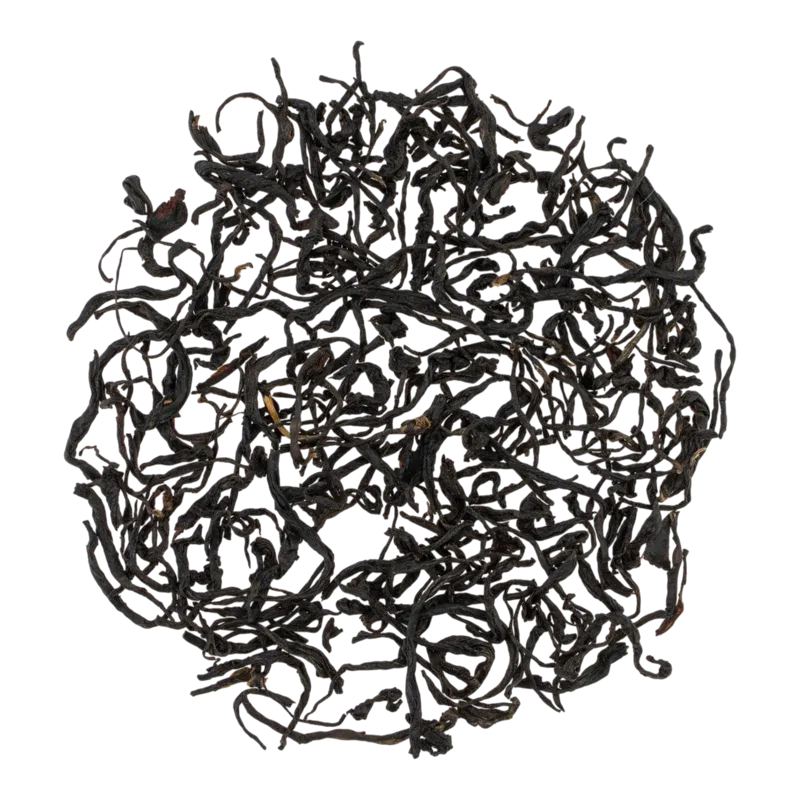
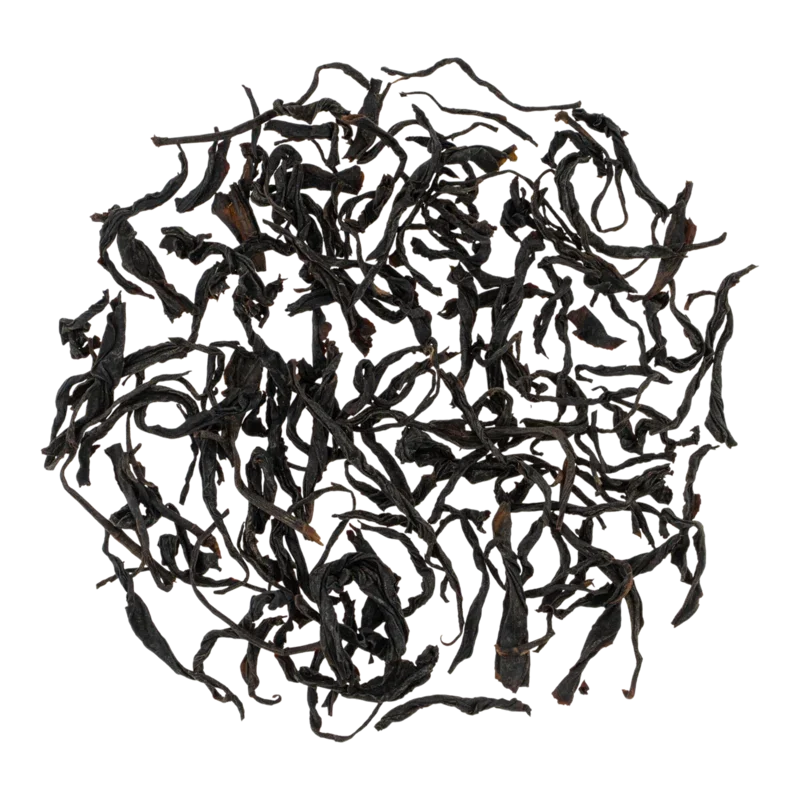
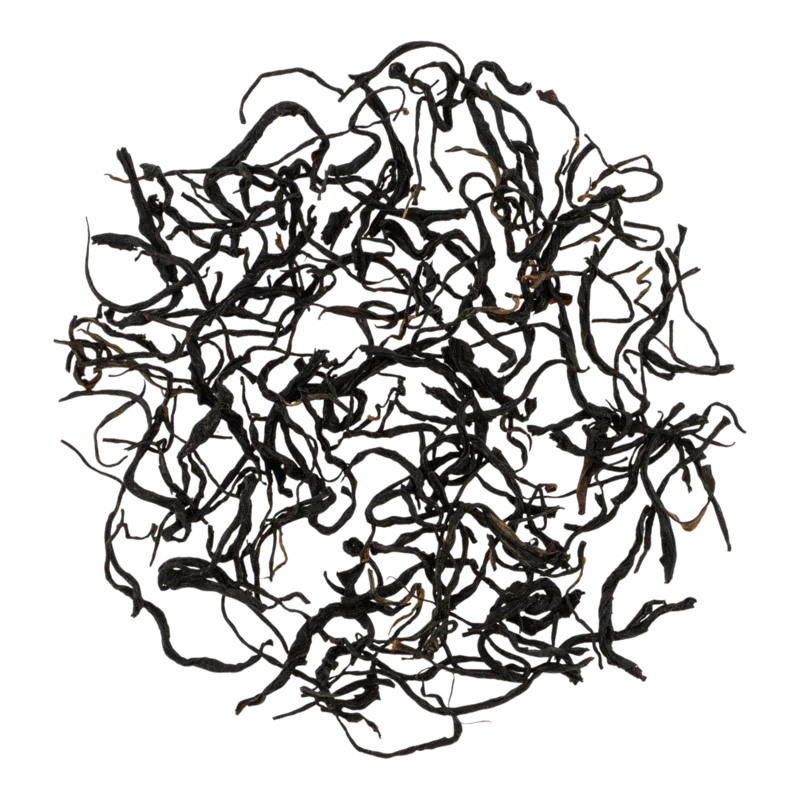
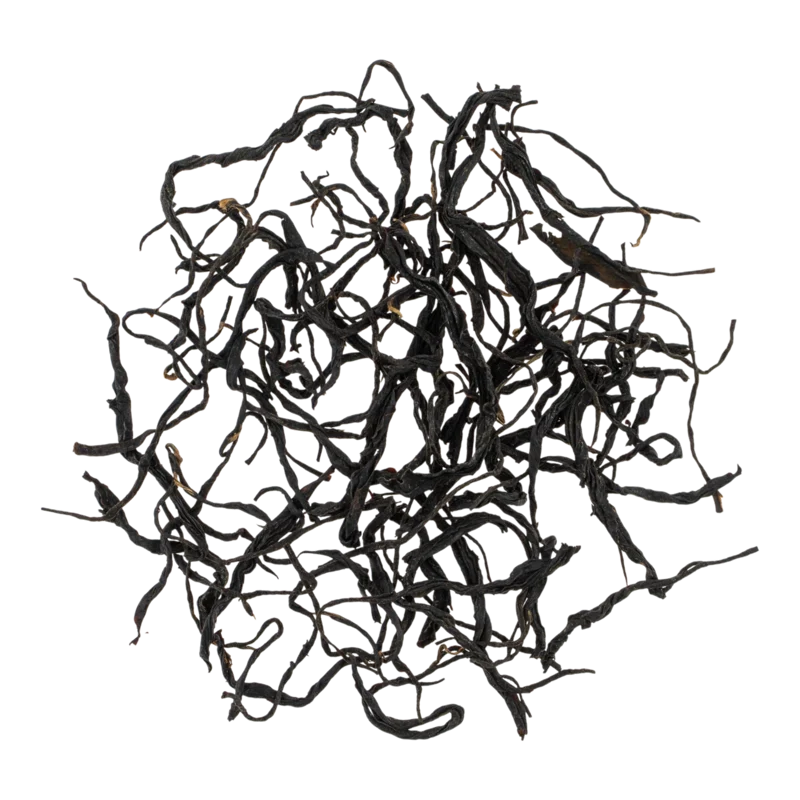
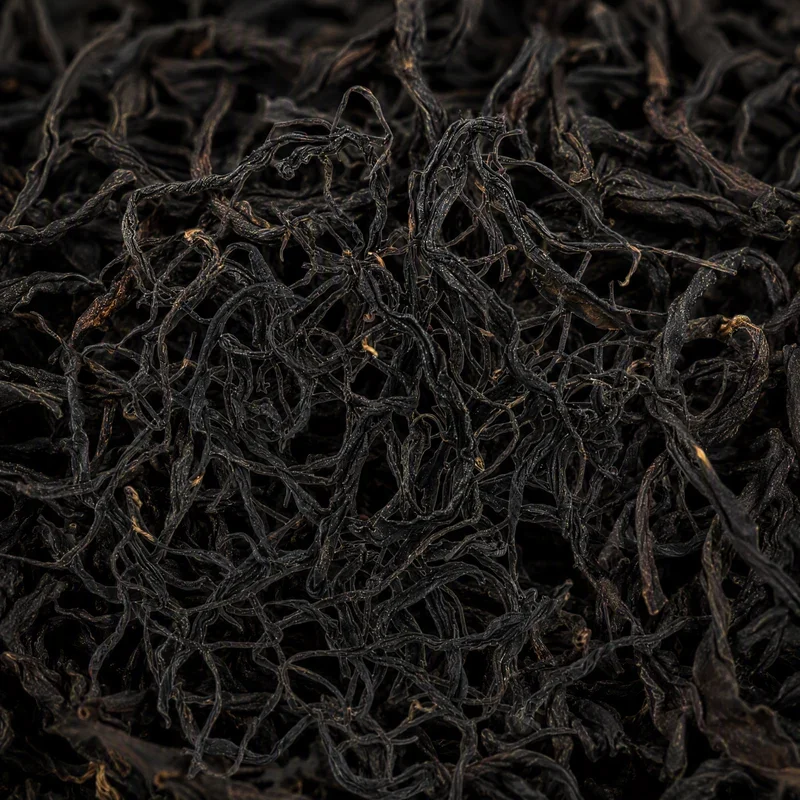
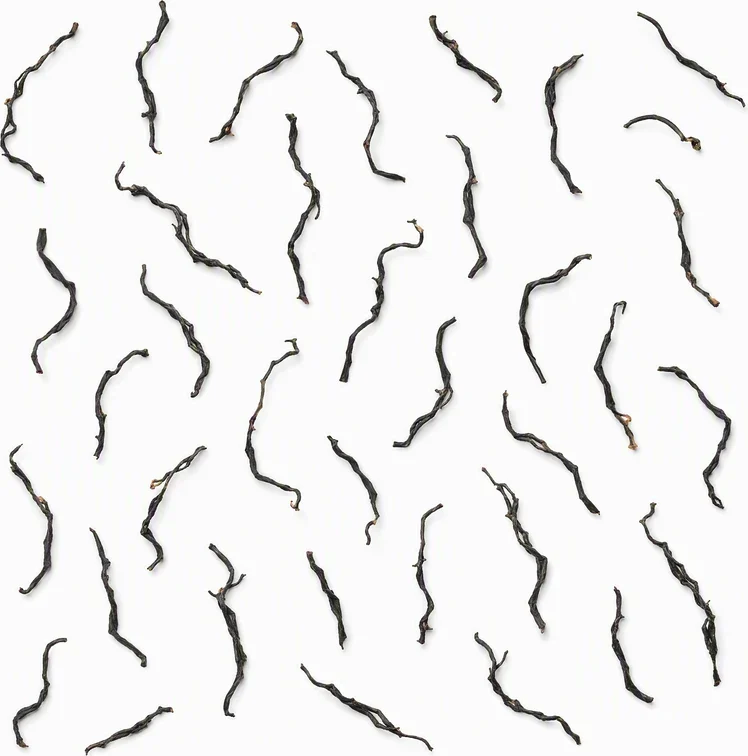
Dry Leaf Appearance: Tightly twisted dark "strings" with a noticeable proportion of golden tips (金毫). Leaf is even, glossy, without dust.
Dry Leaf Aroma: Rich, deep, with honey and dried fruit dominance; light chocolate overtone and barely perceptible woody accent (in batches with wood-fired drying).
Liquor Aroma: Multi-layered: honey, baked apple, dried apricot, transitioning to bread crust and cocoa; in the aftertaste — delicate florality and clean mineral note.
Liquor Color: Red-amber, bright and clear, with golden rim at cup edge.
Spent Leaves: Leaf opens evenly; texture soft, elastic; color — copper-red to chestnut.
Taste: Exceptionally dense, oily "body" (醇厚, chúnhòu); clean, pronounced sweetness; soft velvety astringency; long warming aftertaste. Content of water-soluble extractive substances in Yigong Farm leaf reaches 48% (with international standard of 32%), and tea polyphenols — up to 35%, explaining the unusual density and richness of taste.
Alkaloids: Caffeine (above-average content due to tender picking standard), theobromine, theophylline.
Amino Acids: Elevated content of L-theanine and taste amino acids (glutamic, aspartic), formed by long winter "dormancy" of plants and cool nights.
Up to 48% — one of the highest indicators among Chinese red teas, due to the prolonged dormancy period of tea bushes and accumulation of nutrients.
Linalool and its oxides, geraniol, phenylacetaldehyde, Maillard reaction products. In wood-fired dried batches — additional furan and lactone components giving woody-fruity nuance.
Minerals: Potassium, magnesium, manganese, zinc, fluorine, selenium — due to glacial origin of irrigation water and high-organic mountain soils.
Polyphenols: Tea polyphenol content in Yigong Farm raw material reaches 35% — twice higher than many elite lowland teas. In finished red tea, the main part of catechins is transformed into theaflavins (TF) and thearubigins (TR), forming bright liquor color and rounded taste.
Vitamins: B-group vitamins (B₁, B₂), traces of vitamin C, vitamin E.
Caffeine combined with L-theanine provides steady energy boost without nervousness; effect is smoother and more prolonged than coffee.
Highest polyphenol content (35%) makes Yigong Hong Cha one of the most "antioxidant" red teas in China.
Warm red tea stimulates gastric secretion and facilitates digestion of fatty and protein foods — a property traditionally valued in Tibetan dietetics.
Polyphenols promote vascular elasticity and lipid metabolism normalization.
Red tea belongs to "warm" beverages (温性) in traditional Chinese dietetics; especially appropriate in cold highland climate.
L-theanine aids concentration and stress reduction.
Rich mineral composition (potassium, magnesium, zinc, selenium) compensates for deficiencies characteristic of highland regions with limited diet.
Tea Amount: 4–5 g per 100–120 ml (gongfu method); 3–4 g per 200 ml (European method).
Teaware: Porcelain gàiwǎn (盖碗) — optimal for evaluating aroma and color; porcelain or glass teapot; Yíxīng teapot (宜兴紫砂壶) for more rounded profile.
Water Temperature: 90–95°C.
Closest "relative" from neighboring Tibetan Motuo County. Motuo is located lower (800–1,600 m) and has warmer subtropical climate; tea gardens were established later (2011–2013), using Fujian and Guangdong cultivars. Motuo Hong Cha is more floral and light; Yigong Hong Cha is denser, with pronounced minerality and "heavy" extract.
Yunnan red tea from Assam large-leaf varieties. Dianhong possesses tropical richness (cocoa, spices, tropical fruits), but grows at lower altitudes (1,200–1,800 m). Yigong Hong Cha is drier, more mineral and "cooler" with comparable density.
Red tea from Mengding (Sichuan) — "ancestral home" of Yigong tea bushes. Both teas share medium-leaf Sichuan cultivar, but Mengding gardens are located at 800–1,100 m, while Yigong at 1,900–2,280 m. Result: Yigong Hong Cha is more concentrated, with pronounced mountain freshness and prolonged returning sweetness (huí gān).
Elegant Anhui gongfu tea with signature "orchid" aroma. Qimen is more delicate, drier, with emphasis on aromatics; Yigong is more powerful, sweeter, with more "bodied" taste and less floral refinement.
Highest grade; picking standard — pure buds or "bud + one leaf" of spring first harvest. Maximum proportion of golden tips, most delicate and multi-layered aromatic profile.
Second in rank; standard "bud + one–two leaves." Dense taste with pronounced honey notes.
Standard "one bud and two leaves"; good quality-price ratio.
Accessible position; larger leaf, slightly less pronounced tips, but retains characteristic density and sweetness.
Price Category: Medium-high segment. "Yigong Hong — Special" (易贡红·臻选) — most expensive position; "Yigong Hong — First Grade" (易贡红·一级) — more accessible. Prices range from 400 to 2,500 yuan (≈$55–345) per 500 g depending on grade. Factors increasing cost: record growing altitude, single annual harvest, limited production volume, completely organic farming, high logistics costs (remoteness from main transport hubs).
No reviews yet. Tell us what you think of this tea.
Rate this tea and share your impressions. We review each submission before publishing it.