Brewing
Gongfu brewing
- Water temperature
- 93 °C
- Tea amount
- 5 g
- Water volume
- 100 ml
- First steep
- 10 s
- Time added per infusion
- 5 s
- Infusions
- 4

Mòtuō hóngchá
Choose a brewing method. Start with the recommended quantities and time, then adjust to taste.
Brewing
Brewing
Taste
Tea encyclopedia
Category: Regional Chinese red teas; high-altitude organic red tea of Tibet.
Category: Regional Chinese red teas; high-altitude organic red tea of Tibet.
Coordinates: ≈ 29.3° N, 95.3° E (center of Moto County).
Origin: China, Tibet Autonomous Region (西藏自治区, Xīzàng Zìzhìqū); Nyingchi City (林芝市, Línzhī Shì); Moto County (墨脱县, Mòtuō Xiàn). Main tea plantations are concentrated in the townships of Bèibēng (背崩乡, Bèibēng Xiāng), Moto (墨脱镇, Mòtuō Zhèn), Déxīng (德兴乡, Déxīng Xiāng), Dámù (达木乡, Dámù Xiāng), Gédāng (格当乡, Gédāng Xiāng) and Bāngxīn (帮辛乡, Bāngxīn Xiāng).
Type: Red tea (红茶, hóngchá) — fully fermented (oxidized).
Cultural Significance: Moto Hong Cha became a symbol of economic transformation of one of Tibet's poorest counties. The proverb "Better three days without food than one day without tea" (宁可三日无饭,不可一日无茶) historically reflected Tibetans' dependence on imported tea; now Moto demonstrates that Tibet is capable not only of consuming but also producing high-quality tea. The local brand "Gelin Cun" (格林村, Gélín Cūn) from Gelin Village became one of the first Tibetan tea brands promoted through e-commerce and the "tea-tourism integration" model (茶旅融合, chálǚ rónghé), combining tastings, ecotourism and stays in rural guesthouses.
History: Moto County remained one of the most inaccessible places in China for most of its history — the last county in the country to receive a motor road. Although isolated references to wild tea trees in the Yarlung Tsangpo valley date back to the Tang era, the modern tea industry emerged here quite recently. In 2011, a group of specialists from Guangdong and Fujian, working within the framework of the Tibet assistance program, discovered that Moto's climatic conditions were ideal for tea cultivation and conducted the first trial plantings. In 2012, experimental plots yielded successful results, and in 2013 — parallel to the opening of the Bomo-Moto Highway (波墨公路, Bōmò Gōnglù), which ended the county's complete road isolation — the tea industry was officially proclaimed Moto's main agricultural specialization. Initially, trial plots of 14 introduced varieties were established on 45 mu (≈3 ha) in five townships; based on test results, 7 of the most promising cultivars were selected. By 2017, Moto Hong Cha and Moto Lü Chá (墨脱绿茶, Mòtuō Lǜchá) were first presented at the International Tea Exhibition in Chengdu, where both teas won gold awards. In 2021, "Moto Cha" (墨脱茶叶) received geographical indication status (地理标志证明商标, dìlǐ biāozhì zhèngmíng shāngbiāo). By 2024, the county operated 103 high-altitude organic tea gardens with a total area of 1.9 万亩 (≈12,700 ha), covering 6 townships and 39 administrative villages.
Name Breakdown: 墨脱 (Mòtuō) — Chinese transliteration of the Tibetan name སྦས་ཡུལ་པད་མ་སྒང (Pemagang), meaning "Hidden Land of the Lotus"; 红茶 (hóngchá) — "red tea," the standard designation for fully fermented teas in Chinese classification. Thus, the full name literally translates as "red tea from the Lotus Secret Land."
Cultivar: Moto uses introduced cultivars, predominantly from Fujian and Guangdong provinces. Main varieties recommended for red tea: Fúdǐng Dàbái (福鼎大白, Fúdǐng Dàbái) — medium-leaf high-tip cultivar producing golden buds; Méizhàn (梅占, Méizhàn) — universal Fujian cultivar with high adaptability and pronounced aroma; Huángguānyīn (黄观音, Huángguānyīn) — hybrid with bright floral aromatics; Yīnghóng Jiǔhào (英红九号, Yīnghóng Jiǔhào) — large-leaf Guangdong cultivar created for red tea production; Fènghuáng Dāncóng (凤凰单丛, Fènghuáng Dāncóng) — aromatic clones from Chaozhou. Additionally, for research purposes, Zhūyè Qí (储叶齐, Chǔyèqí / 槠叶齐, Zhūyèqí), Tezao 213 (特早213, Tèzǎo 213), Zhongcha 302 (中茶302, Zhōngchá 302) and Tiěguānyīn (铁观音, Tiěguānyīn) are planted. All varieties belong to Camellia sinensis var. sinensis or var. assamica (Yinghong 9).
Picking: Spring harvest begins from mid to late March; summer harvest continues until August. Spring batches (明前茶, míngqián chá — before Qingming; 春茶, chūnchá) are valued higher for increased amino acid content and more delicate aroma.
Pluck Standard: Predominantly "one bud and one leaf" (一芽一叶, yī yá yī yè) for highest grades; "one bud and two leaves" (一芽二叶, yī yá èr yè) for standard batches; separate lots from pure buds (单芽, dān yá) for premium series with maximum golden tip content.
Raw Material: Whole, fresh leaf without mechanical damage. Picking is done by hand. Since all tea gardens in Moto are certified as organic (according to inspection results from the Tea Product Quality Control Center of China's Ministry of Agriculture in Guangdong), the raw material contains no pesticide residues or synthetic fertilizers — fertilization is carried out exclusively with natural organics (manure, compost, plant residues).
Altitude: Tea gardens are located at altitudes from 800 to 1,600 m above sea level, in the zone of lower and middle parts of ridges framing the Yarlung Tsangpo valley. Average county elevation is about 1,200 m.
Climate: Unique subtropical humid climate for Tibet, formed by warm air masses that the Indian Ocean drives through the Yarlung Tsangpo Canyon (雅鲁藏布江大峡谷). Average annual temperature is about 16°C; average temperature of the coldest month (January) is 12–16°C in river valleys; frost-free period is about 340 days. Annual precipitation exceeds 2,000 mm (in some areas up to 3,000 mm), with more than 50% of precipitation falling in June–August. Annual sunshine is about 1,500 hours (less than 2,000 h), providing diffused light and abundant cloudiness; number of foggy days is significant. The diurnal temperature range in mountain zones significantly slows sugar consumption during plant respiration, promoting accumulation of aromatic substances and amino acids in leaves.
Soil: Yellow soils (黄壤, huángrǎng) predominate in the tea plantation zone, occurring at altitudes of 1,100–2,100 m. Reaction is acidic (pH 4.5–6.0), organic matter content is high due to abundant plant litter from tropical and subtropical forests (county forest coverage is 78%). Soils are well-drained, rich in potassium, magnesium and manganese, which favorably affects the minerality and density of tea flavor.
Completely organic farming: synthetic pesticides and chemical fertilizers have historically not been used in Moto; soils are fertilized with manure and plant compost. Harvesting is manual. Since 2015, within the framework of the regional tea development program, specialists from the Fujian Academy of Agricultural Sciences have been involved to train local farmers in scientific methods of pruning, feeding and pest control using biological methods. Tea gardens are integrated into surrounding mountain forests, providing natural shading and high biodiversity.
Manual selection of tender shoots according to the "bud + 1–2 leaves" standard in morning hours, after dew has cleared.
Fresh leaf is spread in a thin layer on bamboo or mesh racks. Natural withering lasts 12–18 hours (depending on air humidity) and reduces leaf moisture to 60–64%, making it elastic and preparing cell membranes for subsequent rolling. Some farms use combined withering: initial stage — in open air, final stage — indoors with controlled microclimate.
Mechanical rolling breaks cell walls and releases polyphenol oxidase. Leaf acquires characteristic dense "strip" (条形, tiáoxíng) shape. Duration is 60–90 minutes with alternating pressure.
Rolled leaf is laid in a layer of 8–12 cm in a fermentation room at 24–28°C and 90–95% relative humidity. Oxidation time is 3–5 hours, until the leaf acquires a copper-red shade and pronounced fruity-honey aroma. At this stage, catechins transform into theaflavins and thearubigins, forming the red color of the liquor and rounded taste.
Two-stage drying: primary — at 110–120°C to stop fermentation and remove main moisture; secondary — at 80–90°C to fix aroma and reduce residual moisture to 5–6%. Some masters use a "warmer" profile with reduced final drying temperature to enhance caramel-honey notes.
Finished tea is sifted and separated into fractions by leaf size and tip content; stems and non-standard fragments are removed.
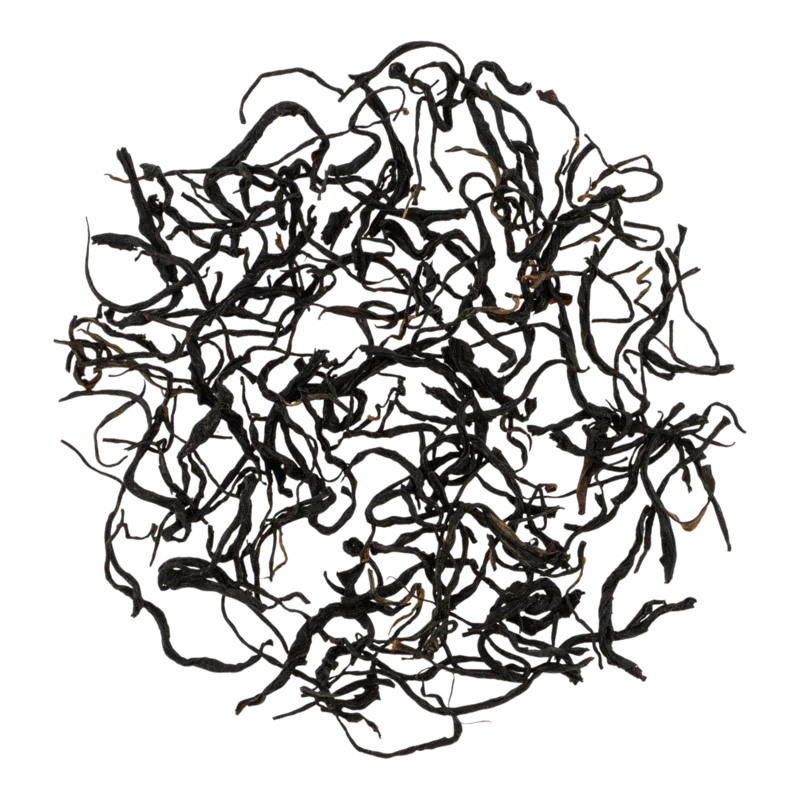
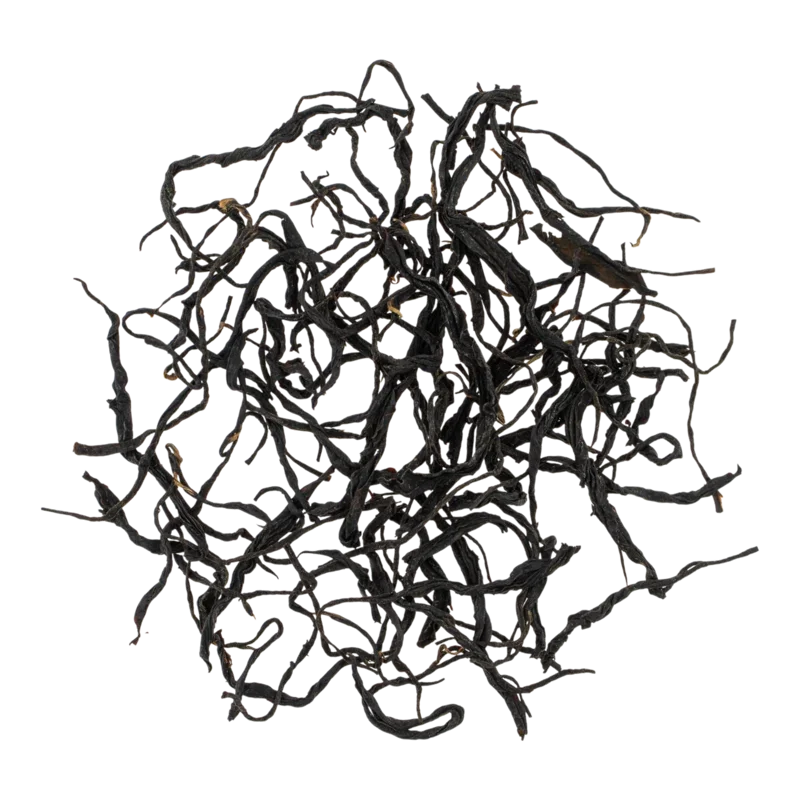
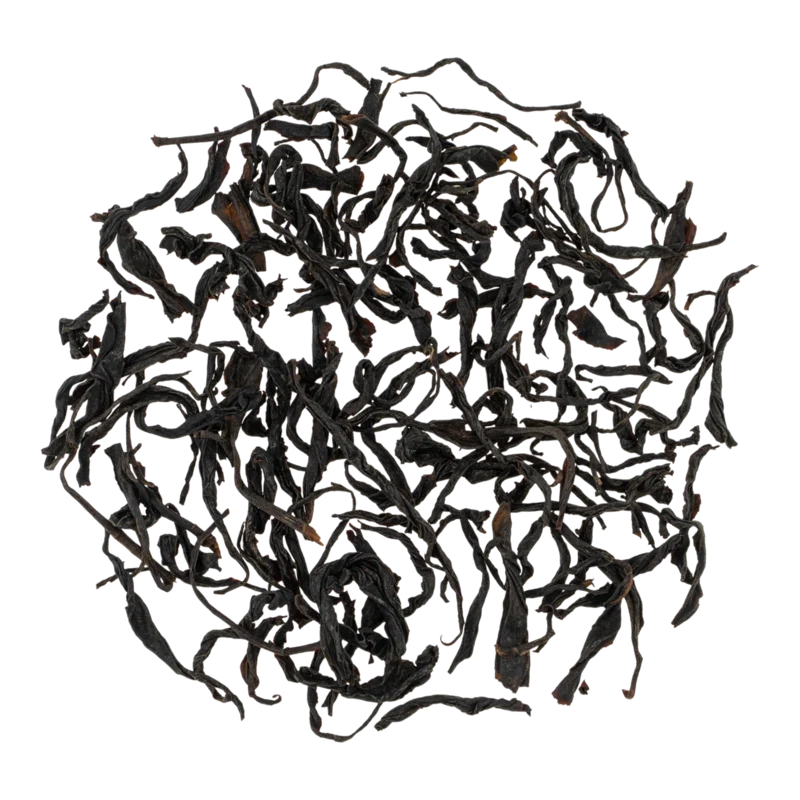
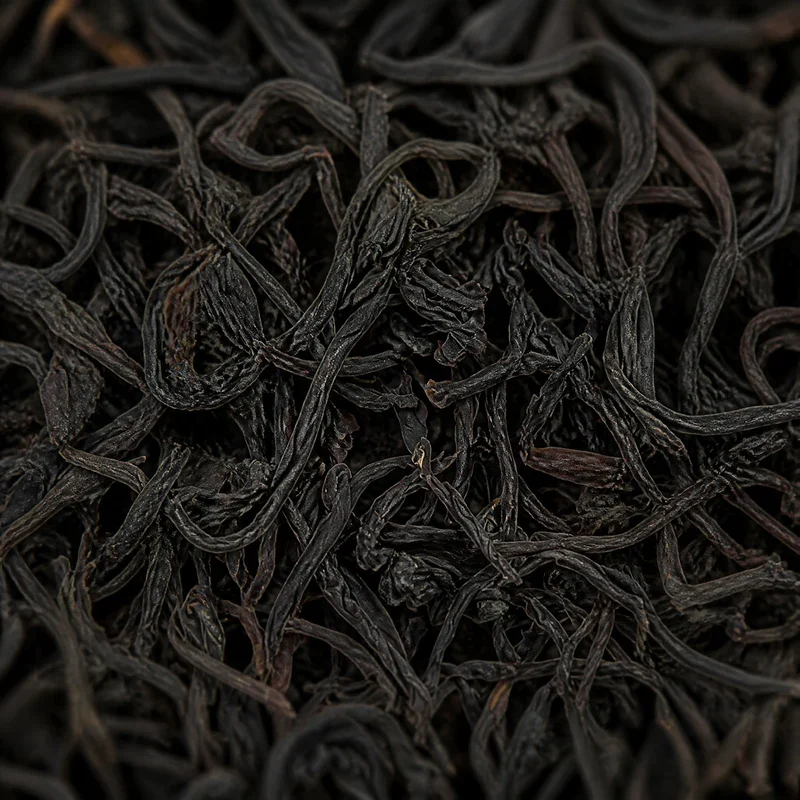
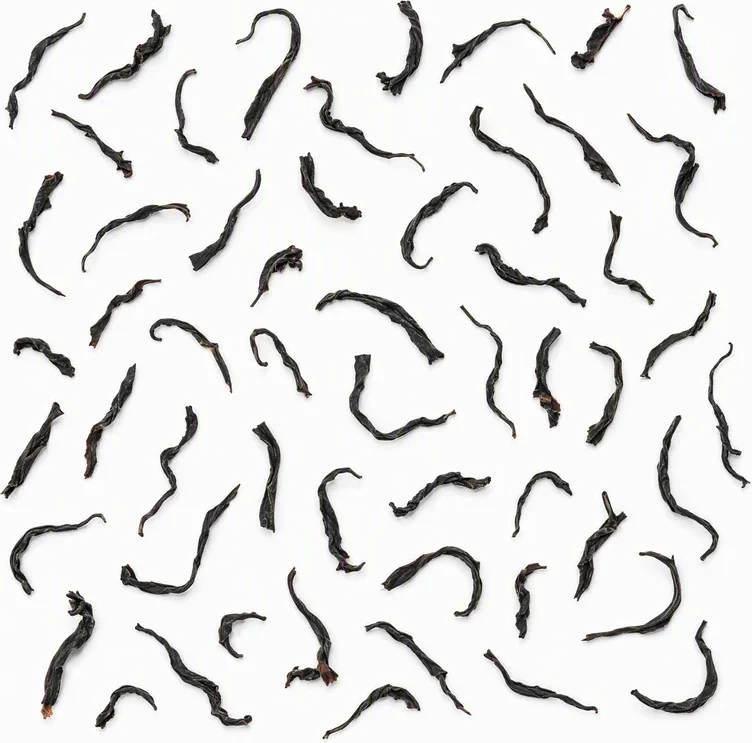
Dry Leaf Appearance: Thin, tightly twisted "strips" (紧细匀直, jǐnxì jūnzhí) dark brown to black in color with abundant golden downy buds (金毫, jīnháo). Leaf is even, without dust or foreign inclusions.
Dry Leaf Aroma: Rich, warm, with distinct notes of honey, dried apricots, chocolate and a light shade of mountain herbs. In high-tip batches, a subtle floral overtone is felt.
Liquor Aroma: Deep and multi-layered: in the foreground — ripe honey and baked apple; in the middle, shades of dried fruits (apricot, date), bread crust and cocoa emerge; in the aftertaste — delicate florality and a barely perceptible smoky-woody trail.
Liquor Color: Red-amber (红艳明亮, hóngyàn míngliàng), bright, transparent, with a golden rim at cup edges.
Leaves unfold completely and evenly; color is copper-red to reddish-chestnut; texture is soft and elastic, indicating high raw material quality and correct fermentation.
Taste: Dense, oily "body" (醇厚, chúnhòu); clean natural sweetness without cloying; moderate velvety astringency, quickly transitioning to prolonged sweet aftertaste (回甘, huígān). High-altitude raw material imparts a mineral note and freshness uncharacteristic of lowland red teas. The tea is distinguished by high "endurance" in steeps (极耐冲泡, jí nài chōngpào) — up to 8–10 full infusions.
Alkaloids: Caffeine (咖啡碱, kāfēijiǎn) — main purine alkaloid; its content depends on cultivar (Yinghong 9 and Fenghuang Dancong have above-average levels) and picking standard (in tender buds caffeine concentration is maximum). Theobromine and theophyllin are also present in trace amounts.
Amino Acids: Spring leaf is distinguished by increased content of free amino acids, including L-theanine (L-茶氨酸, L-cháānjīsuān), glutamic acid and aspartic acid. L-theanine provides mild sweetness and "calming" effect; the proportion of "savory" (鲜味, xiānwèi — umami) and "sweet" amino acids in spring material is significantly higher than in summer.
Linalool and its oxides (floral-citrus notes), geraniol, phenylacetaldehyde (honey shade), benzaldehyde and a series of Maillard reaction products formed during drying (bread, caramel, chocolate overtones).
Minerals: Potassium, magnesium, manganese, zinc, fluorine, selenium — composition is determined by the mineral profile of Moto's yellow soils and high organic content.
Polyphenols: Total tea polyphenol content in Moto raw material varies depending on cultivar and season. According to Fujian Academy research (2024), the average "polyphenol/amino acid" ratio (酚氨比, fēn'ān bǐ) in spring harvest is about 4.6, and in summer about 8.0, indicating favorable balance for producing both green and red tea. In finished red tea, catechins are significantly transformed into theaflavins (TF, responsible for liquor brightness and taste "liveliness") and thearubigins (TR, forming color depth and "body").
Vitamins: B-group vitamins (B₁, B₂), vitamin C (partially destroyed during fermentation but remains in trace amounts), vitamin E.
The combination of caffeine and L-theanine provides alertness without sharp "peak" excitement — the effect is smoother and more prolonged than from coffee.
Theaflavins and thearubigins possess pronounced ability to neutralize free radicals; regular red tea consumption is associated with reduced oxidative stress.
Warm red tea stimulates digestive enzyme secretion and is comfortably received by the stomach, especially after abundant or fatty food.
Red tea polyphenols promote vascular elasticity; moderate consumption is linked to cholesterol level normalization.
Red tea is traditionally considered "warm" (温性, wēnxìng) in Chinese dietetics; it is especially appropriate in cold weather and with reduced vitality.
L-theanine promotes α-wave generation in the brain, improving concentration and reducing stress levels.
The complex of polyphenols, zinc and selenium from high-altitude leaf supports body resistance.
Tea Amount: 4–5 g per 100–120 ml water (gongfu method); 3–4 g per 200 ml (European method).
Teaware: Gàiwǎn (盖碗, gàiwǎn) of white porcelain — optimal choice for revealing aroma and visual assessment of liquor; porcelain or glass teapot; Yíxīng teapot (宜兴紫砂壶) is acceptable for obtaining a more rounded, "enveloping" profile.
Water Temperature: 90–95°C (for high-tip batches, reduction to 85–88°C is acceptable to avoid "burning" tender buds and preserve delicate aromatics).
Yunnan red tea from large-leaf Assam cultivars. The infusion is darker, with a dense "body" and notes of cocoa, red pepper, tropical fruits. Moto Hong Cha is lighter, more mineral, with more delicate high-altitude freshness and less aggressive astringency.
Famous Anhui gongfu tea with characteristic "orchid" aroma (祁门香) and elegant, dry profile. Moto Hong Cha is more honeyed, rounded and "warm" in taste, with a smaller proportion of dry-floral notes.
Fujian "small variety" red tea from Tongmuguan. Traditional batches possess pronounced smoky aroma and longan flavor; modern ones are more fruity-floral. Moto Hong Cha has no smoky notes, but shares with modern Xiao Zhong the honeyed sweetness and multiple steepings capacity.
The closest "relative" — Tibetan red tea from neighboring Bōmì County (波密县). Both teas share high-altitude organic terroir and young history, however Yigong Hong Cha is produced on the base of Tibet's oldest tea farm (Yigong Tea State Farm, founded in the 1960s), while Moto is a product of the 2010s. Flavor profiles are similar, but Moto often distinguishes itself with slightly more pronounced florality due to cultivar selection (Huangguanyin, Fenghuang Dancong).
Price Category: Moto Hong Cha belongs to the medium-high price segment among Chinese regional red teas. Approximate retail price — from 300 to 2,000 yuan (≈$40–275) per jin (500 g), depending on picking standard, tip content, specific farm and certification. Pure bud batches (单芽) and early spring harvest cost more. Price-increasing factors: completely organic raw material, small production volume, regional remoteness and high logistics costs.
No reviews yet. Tell us what you think of this tea.
Rate this tea and share your impressions. We review each submission before publishing it.