Brewing
Gongfu brewing
- Water temperature
- 93 °C
- Tea amount
- 5 g
- Water volume
- 100 ml
- First steep
- 10 s
- Time added per infusion
- 5 s
- Infusions
- 4

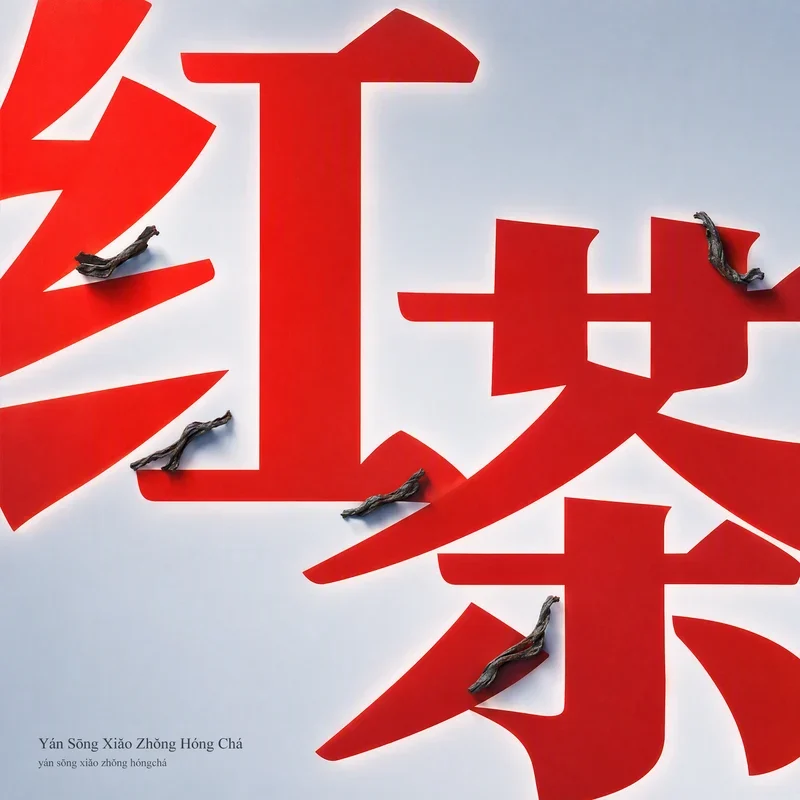
yán sōng xiǎo zhǒng hóngchá
Choose a brewing method. Start with the recommended quantities and time, then adjust to taste.
Brewing
Brewing
Taste
Tea encyclopedia
Category: High-quality red teas of Fujian Province. Belongs to the Xiǎo Zhǒng (小种, Xiǎo Zhǒng — "Small Variety") subgroup, an extensive family of red teas that originated in the Wuyi Mountains and is the progenitor of all red teas in the world.
Category: High-quality red teas of Fujian Province. Belongs to the Xiǎo Zhǒng (小种, Xiǎo Zhǒng — "Small Variety") subgroup, an extensive family of red teas that originated in the Wuyi Mountains and is the progenitor of all red teas in the world.
Coordinates: 27°43' North latitude, 117°41' East longitude (Wuyi Mountain range).
Origin: China, Fújiàn Province (福建省, Fújiàn Shěng), Nánpíng City (南平市, Nánpíng Shì), Wǔyí Mountains (武夷山, Wǔyí Shān). Probable production zone — vicinity of Xīngcūn Town (星村镇, Xīngcūn Zhèn), the historical center of trade and production of Wuyi teas, located within the scenic zone of Wǔyì Mountains but outside the protected territory of Tóngmù (桐木关, Tóngmù Guān), from where authentic Zheng Shan Xiao Zhong originates.
Type: Red tea (black tea) (红茶, hóngchá) — fully oxidized. By European classification — black tea. Degree of oxidation — 90–100%. Key difference from classic Zheng Shan Xiao Zhong: this tea is not subjected to smoking over pine wood fires.
Zheng Shan Xiao Zhong is considered the progenitor of all red teas in the world — precisely with it began Europe's acquaintance with "black tea" in the 17th century. Yan Song Xiao Zhong allows one to feel what this tea could have been "before smoke" — before the practice of smoking became the defining feature of the style.
In recent years, production of classic smoked Zheng Shan Xiao Zhong has faced a serious challenge — the spread of pine nematode (松材线虫, sōngcái xiànchóng) led to restrictions on harvesting and transporting maojie pine in the Tongmu protected zone. This circumstance indirectly increased interest in unsmoked versions of Xiao Zhong.
The term "yan yun" (岩韵) is traditionally associated with Wǔyì rock oolongs (岩茶, yánchá). Yan Song Xiao Zhong is one of the few red teas in which this mineral, "stone" note manifests so distinctly that it allows speaking of the rocky character precisely of red tea.
The flavor profile of Yan Song Xiao Zhong noticeably changes from infusion to infusion: first infusions — bright, fruity-honey; middle — deeper, spicy-mineral; final — soft, sweet-woody. This makes the tea especially interesting when brewing by gongfu method.
Cultural Significance: Yan Song Xiao Zhong occupies the niche of "tea for connoisseurs" — those who seek in Wuyi red tea not an exotic smoky aroma, but a deep, multi-layered taste born of unique mountain terroir. For experts, this tea reveals the "true face" of Xiao Zhong — the taste that hides behind the smoky veil in the classic smoked version. The emergence and growing popularity of such unsmoked teas is part of a broader cultural shift in China: from export-oriented "smoky" style to refined domestic consumption.
History: The history of Yan Song Xiao Zhong is inextricably linked with the centuries-old tradition of red tea production in Wuyi Mountains — the birthplace of all red teas in the world. Red tea originated in the Tóngmù (桐木) area of Wǔyí Mountains during the late Míng dynasty (明, late 16th — early 17th century). According to historical evidence, the first batches of red tea were shipped to Europe through Dutch merchants as early as 1610, and Xingcun village became the main center for collecting and trading red tea in the region. Director of the Taiwan Tea Association Dòng Tiangong (董天工) in "Records of Wuyi Mountains" (《武夷山志》, 1751) mentions two types of red tea — "xiao zhong" (小种) and "gongfu" (工夫), which testifies to the established differentiation of Wuyi red tea by that time. Classic Zheng Shan Xiao Zhong became famous in the West precisely because of its bright smoky aroma, arising from smoking over pine (maojie, 马尾松, mǎwěi sōng) wood fires. However, parallel to this existed a tradition of producing unsmoked red teas — they were less export-oriented and consumed predominantly on the domestic market. Yan Song Xiao Zhong belongs precisely to this lineage. In the 21st century, on the wave of popularity of unsmoked red teas (after the appearance of Jin Jun Mei in 2005), interest in such teas has grown significantly.
Small size (small-leaf type), dense, oval-lanceolate shape, with pronounced venation. Leaf color — dark green with gloss.
Predominantly shrub-type (灌木型, guànmù xíng), medium-height.
High. Cai Cha of Wuyi Mountains is distinguished by a complex aromatic profile, enriched with mineral tones conditioned by the unique soils of the region.
Since Cai Cha reproduces by seeds, each bush is genetically unique, creating a rich palette of tastes and aromas unavailable with clonal propagation.
Cultivar: Local small-leaf variety — Xiǎo Zhǒng (小种, Xiǎo Zhǒng), also known as Cǎi Chá (菜茶, Cài Chá — "vegetable tea" or "seed tea"). Belongs to Camellia sinensis var. sinensis. Cai Cha is a collective name for local seed (non-clonal) populations of tea bushes growing in Wuyi Mountains for centuries. Botanical characteristics:
Picking: Spring — April–May. Harvest time is later than for Jin Jun Mei (buds only), and approximately coincides with the harvest period for Wuyi oolongs.
Pluck Standard: One–two or two–three upper leaves (一芽二葉 or 一芽三葉). Use of tips (buds) is less typical than for elite Jin Jun Mei, but may be present in more expensive versions. Hand-picked.
Raw Material: High. Only healthy, undamaged leaves from bushes growing in the Wuyi Mountains zone.
Altitude: 350–800 meters above sea level. The Xingcun zone is located lower than Tongmu (600–1200 m), which determines a somewhat different microclimate and flavor profile.
Climate: Subtropical monsoon. Average annual temperature — about 18°C. Precipitation — about 2000 mm per year. High humidity (80–85%), frequent fogs (over 100 foggy days per year), short period of solar illumination. Dense vegetation cover creates diffused light, favorable for accumulation of aromatic substances and amino acids in tea leaves.
Soil: The calling card of Wuyi Mountains. Red and red-yellow soils (红壤, hóng rǎng), formed as a result of weathering of red sandstone aged about 80 million years. Contain a high percentage of sand and gravel (24–29%), which provides excellent drainage. Soils are rich in phosphorus, potassium and manganese, but relatively poor in nitrogen. This feature forms the famous "rock rhyme" (岩韵, yányùn) — the mineral, rocky character inherent in all teas from Wuyi Mountains. It should be noted that Yan Song Xiao Zhong, produced in Xingcun and adjacent territories, may not possess as pronounced "rockiness" as teas from the "Zheng Yan" (正岩, zhèngyán — "true rocks," the most prestigious zone within the scenic district) zone.
Unique mountain range with typical Dānxiá landscape (丹霞地貌, dānxiá dìmào) — massive columns of red sandstone, deep gorges, numerous streams and waterfalls. The mountains are cut by canyons, covered with subtropical evergreen forests and bamboo groves. The area of the Wuyi Mountains scenic zone is about 70 km², while the broader tea production zone covers a significantly larger territory. Since 1999, the region has been included in the UNESCO World Heritage List as a natural and cultural site.
Hand-picking, standard — "one–two leaves" or "two–three leaves."
Leaves are spread in a thin layer on bamboo trays in the open air (sun or shade withering) or indoors. Duration — 8–16 hours. Goal — reduce moisture content to 58–64%, soften the leaf, initiate initial oxidation. Unlike Zheng Shan Xiao Zhong, withering is not conducted over smoldering pine wood fires (松柴加温萎凋), but is performed naturally or with electric heating.
Withered leaves are rolled, giving them a longitudinally twisted form of thin strips. Rolling destroys cellular structure, releases enzymes and cellular juice, activating oxidation. Rolling intensity — from moderate to significant.
Rolled leaves are laid in fermentation rooms at temperature 25–30°C and humidity 90–95%. Duration — 4–6 hours. During oxidation, catechins transform into theaflavins and thearubigins, and leaves acquire characteristic reddish-brown color and form the basis of the flavor-aromatic profile.
Critical difference. Tea is dried without smoking. Electric drying cabinets are used or, in individual cases, coals from deciduous (fruit) trees, but without pronounced smoky component. Drying stops fermentation and fixes quality. Conducted at temperature 90–110°C, residual moisture — 4–6%.
Finished tea is sorted by quality and size fractions.
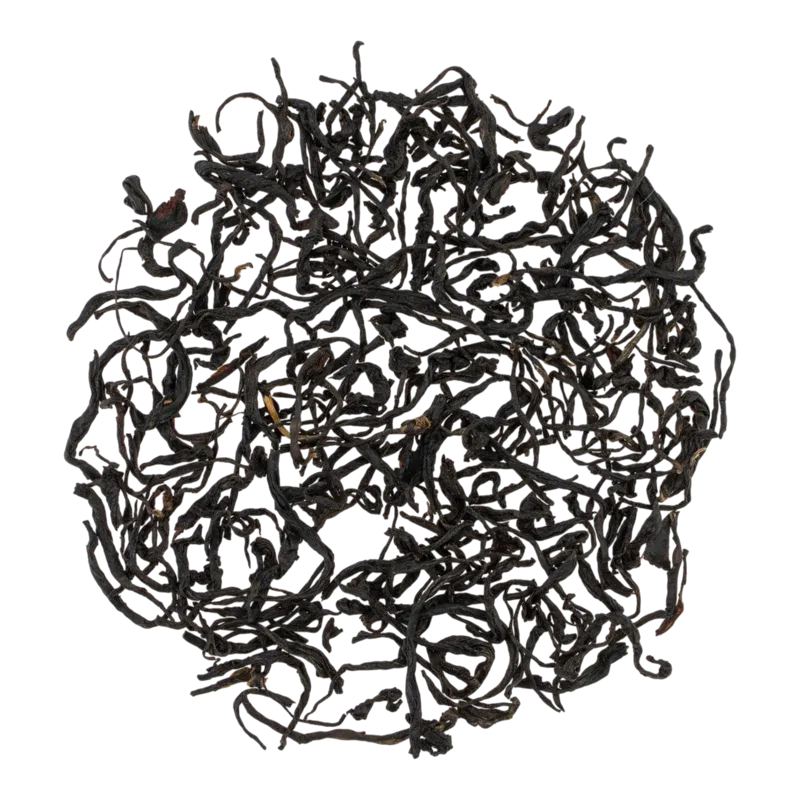
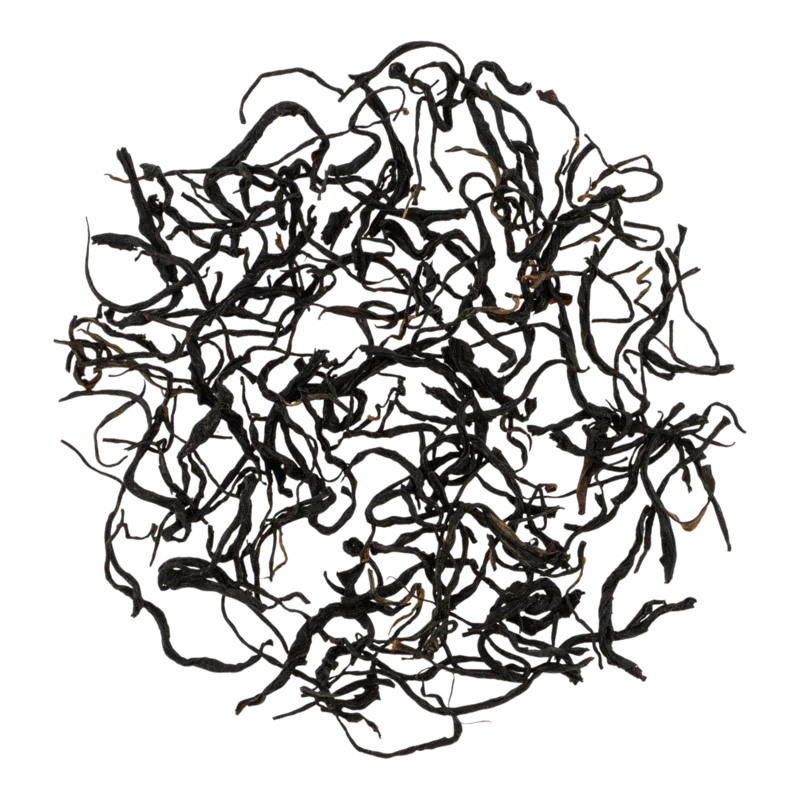
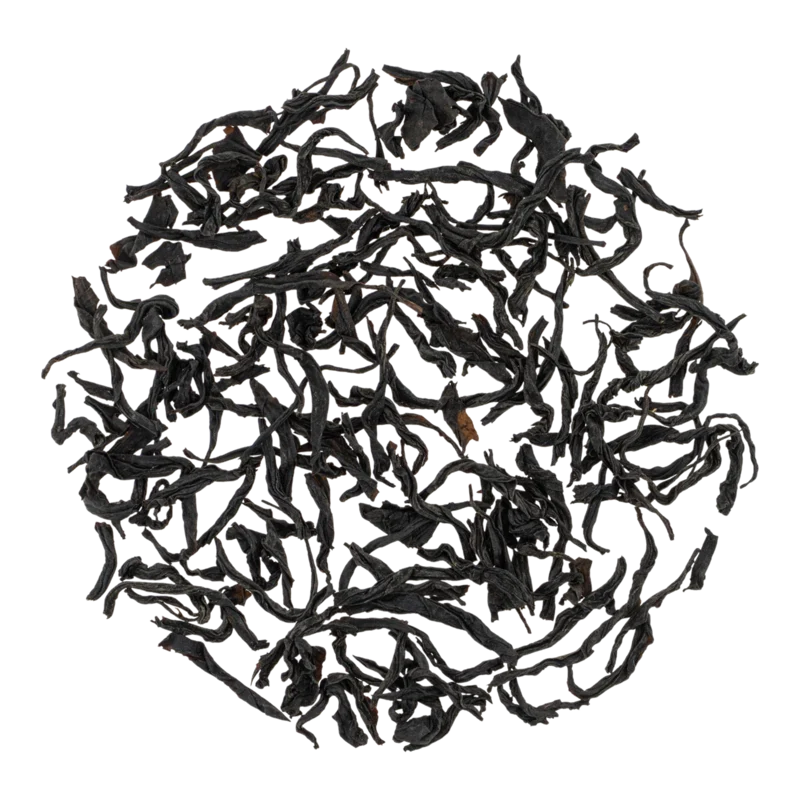
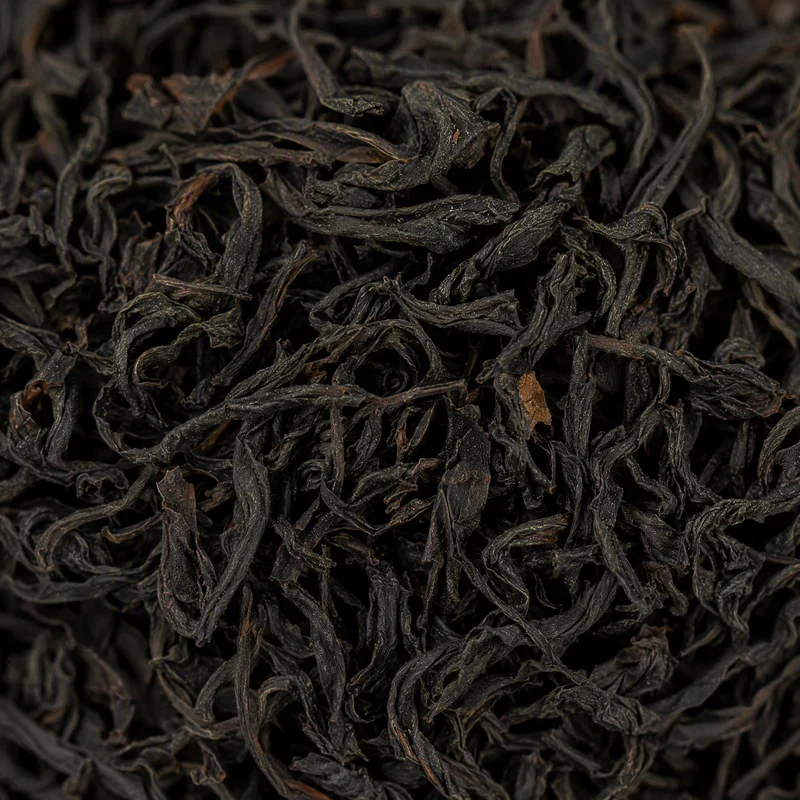
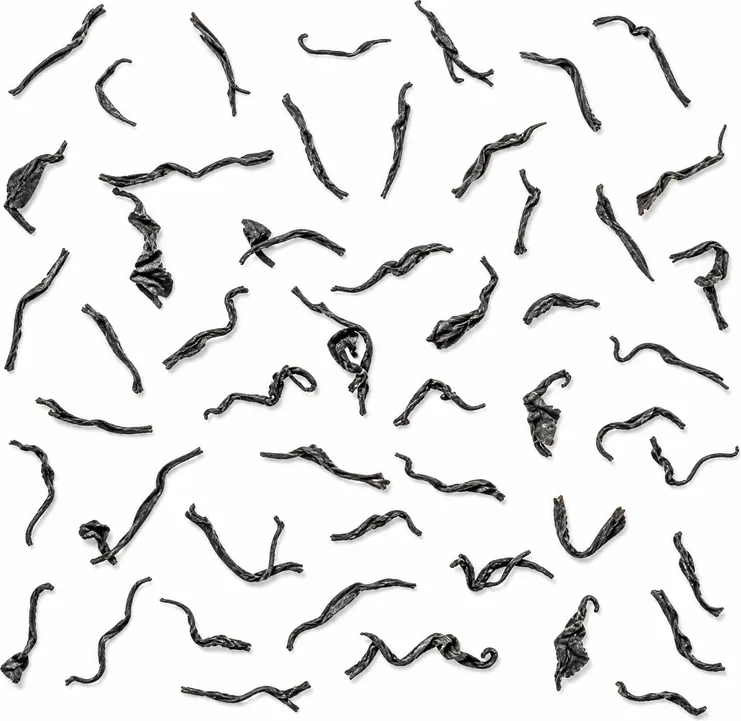
Dry Leaf Appearance: Small, tightly twisted tea particles in the form of thin longitudinal strips (條索狀). Color — dark brown, almost black, uniform. Sometimes a light grayish coating on the surface is noticeable. Leaf is neat, without large breakage.
Dry Leaf Aroma: Rich, complex — notes of dried fruits (prunes, dried apricots, dried plums), honey, malt dominate. Light woody and spicy nuances are present. Smoky notes are completely absent — this is a key marker distinguishing Yan Song from smoked Zheng Shan Xiao Zhong. When heated, a light rocky, mineral shade may appear.
Liquor Aroma: Bright, multi-layered, enveloping. Fruity-honey complex — ripe plums, honey, caramel — combines with spicy nuances (cinnamon, nutmeg) and characteristic "rocky" mineral shade. Floral tones (orchid, rose) may appear in cooled liquor.
Liquor Color: From dark amber to rich red-brown. Liquor is transparent, clear, with deep, warm shade. In good lighting, it shimmers with shades of mahogany and old amber.
Spent Leaves: Whole, elastic leaves of dark brown, sometimes reddish-bronze color. Leaf opens evenly. Uniformity and integrity of leaf — indicator of quality processing.
Taste: Full-bodied, smooth, with well-structured astringency and pronounced natural sweetness. In the bouquet — notes of dried fruits (prunes, dried apricots, raisins), honey, malt, spices. Characteristic "rock rhyme" (岩韵, yányùn) manifests as a light mineral taste and rocky aftertaste, giving the taste depth and length. Aftertaste is long, sweetish, with shades of dried fruits and warm spices.
Alkaloids: Caffeine — about 3–4% of dry mass (40–65 mg per 200 ml cup). Theobromine and theophylline — in trace amounts.
Amino Acids: Content — about 2.5–3.5% of dry mass. L-theanine — main amino acid, contributing sweetness and softening astringency.
Increased mineral content due to Danxia landscape soils. Potassium, manganese, magnesium, fluorine, zinc, iron, phosphorus. Precisely the mineral composition forms the characteristic "rocky note" in taste.
Provide smooth, enveloping texture of liquor.
Essential Oils: Diverse complex of volatile aromatic compounds, including linalool, geraniol, nerol, β-ionone, methyl salicylate. Absence of smoking preserves the purity of the original aromatic profile, not masked by guaiacol and other smoky components.
Polyphenols: High total content. Theaflavins (2–3%) form brightness and liveliness of taste, thearubigins (10–18%) are responsible for depth of color, fullness of body and astringent notes. The ratio of theaflavins to thearubigins influences the balance between "brightness" and "depth" of taste.
Vitamins: B₁, B₂, C (in limited quantity), E, K.
Yan Song Xiao Zhong possesses powerful warming effect — according to TCM canons this is tea of "warm" nature (性溫), ideal for cold season. Improves peripheral circulation, relieves feeling of chilliness.
Combination of caffeine with L-theanine provides gentle, sustained stimulation without nervousness. Increases concentration and cognitive activity.
Stimulates secretion of gastric juice and digestive enzymes. Especially beneficial after abundant, fatty or meat food. Pectins have enveloping action on GI tract mucosa.
Theaflavins demonstrate pronounced ability to neutralize free radicals, which contributes to slowing cellular aging and reducing risk of chronic diseases.
Red tea polyphenols contribute to lowering LDL cholesterol levels, improving vascular wall elasticity and normalizing blood pressure.
Promotes elimination of metabolic products, has mild diuretic action.
L-theanine stimulates production of alpha waves in the brain, promoting relaxation without drowsiness. The process itself of brewing and tasting rocky red tea disposes to meditative contemplation.
Pay attention to the "cold" aroma of empty cup after drinking the liquor (杯底香, bēidǐ xiāng) — good Yan Song Xiao Zhong reveals additional floral and fruity notes.
Tea Amount: 5–7 g per 150 ml water (gongfu method); 3–4 g per 200 ml (European method).
Teaware: Porcelain gàiwǎn (蓋碗) — optimal choice for precise extraction control. Yíxīng clay teapot (紫砂壺, zǐshā hú) also suits perfectly — porous clay softens astringency and adds roundness. Porcelain teapot — universal alternative.
Water Temperature: 90–95°C. Permissible to use boiling water (100°C) for fuller revelation of rocky notes.
Container: Airtight tin or ceramic jar. Foil packages with zip closure — budget alternative. Avoid transparent containers.
Enemies: Moisture, light, high temperature, foreign odors, oxygen.
Shelf Life: 18–36 months under proper conditions. Wuyi red tea preserves its qualities well, and some connoisseurs note that 6–12 months after production the taste becomes more rounded and harmonious.
Dry, cool, dark place. Temperature — not above 25°C. Away from sources of strong odors (spices, coffee, perfumery).
Closest "relative." Main difference — presence of pronounced pine smoke in classic Zheng Shan. Behind the smoky veil may hide similar fruity-honey base, but Yan Song allows evaluation of this base in pure form. Zheng Shan is usually produced in Tongmu zone (higher altitudes), Yan Song — closer to Xingcun.
Elite unsmoked red tea from buds only, produced in Tongmu. Significantly more delicate, refined, with predominance of honey-floral and chocolate notes. Price — an order of magnitude higher. Yan Song Xiao Zhong — more saturated and astringent, with pronounced fruity-spicy and mineral tones.
Famous red tea from Anhui Province. "Qi Men Xiang" (祁门香) — its signature orchid-honey aroma — is more floral and "perfumery." Yan Song Xiao Zhong — more "earthy," mineral, with accent on dried fruits and rocky character.
Yunnan red teas from large-leaf raw material (var. assamica). Significantly more powerful, astringent, with dominating chocolate-spicy notes and dense body. Yan Song — lighter, more elegant, with complex mineral-fruity profile.
Fujian red tea of gongfu category. Sweeter, honey-like, with pronounced caramel tones, but without "rocky" depth of Yan Song.
Look for shops focused on Wuyi teas, capable of providing detailed information about producer and origin zone.
If dry leaf or liquor demonstrates pronounced smoky, smoked notes — before you is classic (or imitated) Zheng Shan Xiao Zhong, but not Yan Song.
Authentic Yan Song should manifest at least light mineral, rocky shade in taste — this is the trace of Wuyi terroir.
Neat, small, tightly twisted tea particles of dark brown color. Large breakage, dust, non-uniformity — signs of low quality.
Transparent, rich dark amber or red-brown. Muddy, dull liquor — reason for doubt.
No reviews yet. Tell us what you think of this tea.
Rate this tea and share your impressions. We review each submission before publishing it.