Brewing
Gongfu brewing
- Water temperature
- 75 °C
- Tea amount
- 5 g
- Water volume
- 100 ml
- First steep
- 10 s
- Time added per infusion
- 5 s
- Infusions
- 3

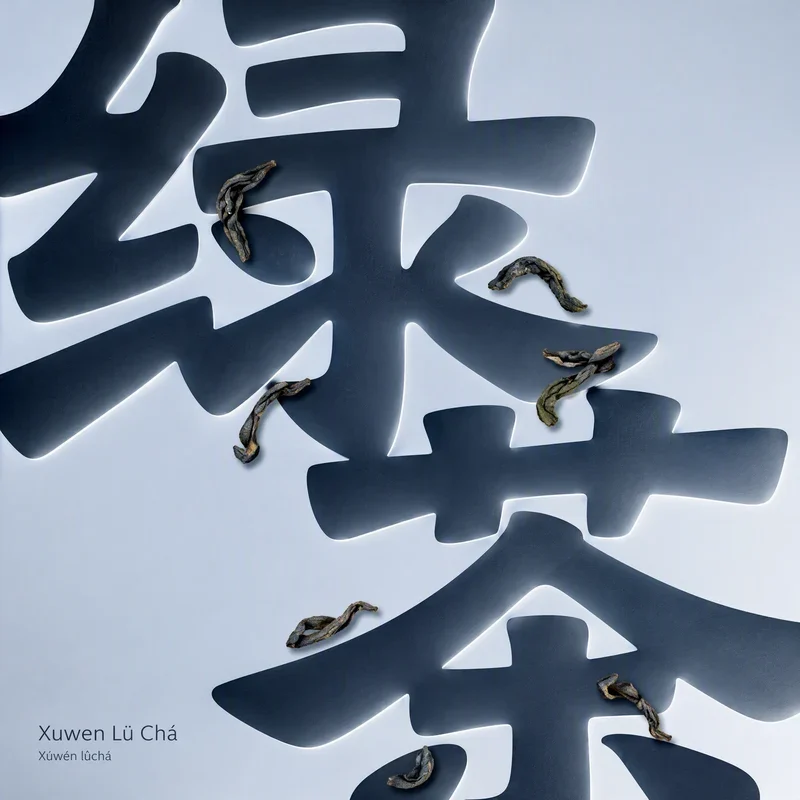
Xúwén lǜchá
Choose a brewing method. Start with the recommended quantities and time, then adjust to taste.
Brewing
Brewing
Taste
Tea encyclopedia
Category: Regional Chinese green tea. First tea in China to receive "green food product" certification (绿色食品, lǜsè shípǐn) in 1990. Included in the national standard "pollution-free quality food products" (国家无公害优质食品, 1999).
Category: Regional Chinese green tea. First tea in China to receive "green food product" certification (绿色食品, lǜsè shípǐn) in 1990. Included in the national standard "pollution-free quality food products" (国家无公害优质食品, 1999).
Coordinates: Approximately 20°13′–20°43′ North latitude, 109°52′–110°35′ East longitude.
Origin: China, Guǎngdōng Province (广东省, Guǎngdōng Shěng), Zhànjiāng Prefecture (湛江市, Zhànjiāng Shì), Xúwén County (徐闻县, Xúwén Xiàn). Production is concentrated in the eastern and northern hilly areas of the county.
Type: Green tea (绿茶, lǜchá), unoxidized. Primary style — steamed green tea (蒸青绿茶, zhēngqīng lǜchá); also produced as pan-fired green tea (炒青绿茶, chǎoqīng lǜchá).
Cultural Significance: Xúwén is the historical starting point of the Maritime Silk Road (海上丝绸之路, Hǎishang Sīchóu zhī Lù) of the Han era. Tea cultivation here is closely intertwined with state agricultural farm culture (农垦文化, nóngkěn wénhuà) and the "red soil culture" (红土文化, hóngtǔ wénhuà) of the Leizhou Peninsula. The modern "Tea and Pineapple" tourism zone (茶与菠萝创新创业基地) combines tea plantations with scenic pineapple fields, forming a unique agritourism route.
History: Tea cultivation in Xuwen County has a history of more than four centuries. During the Míng (明, 1368–1644) and Qīng (清, 1644–1912) dynasties, in Xiàqiáo Township (下桥镇, Xiàqiáo Zhèn), on the hills of Shíbǎnlǐng (石板岭, Shíbǎnlǐng), local residents grew and processed tea. The surviving trees, approximately 400 years old, are considered the mother stock of Xuwen tea. In the 20th century, overseas Chinese (华侨, huáqiáo) returning from Southeast Asia made significant contributions to tea development, introducing hand-firing techniques. In the 1960s–1980s, the state agricultural farm system (农垦系统, nóngkěn xìtǒng) created mechanized tea plantations, with Haiou Farm (海鸥农场, Hǎi'ōu Nóngchǎng) becoming the key facility. In 1983, the first certified organic tea gardens were established here, using biological plant protection instead of chemical pesticides. In 1990, the "Xiong'ou" (雄鸥, Xióng'ōu) and "Yongshi" (勇士, Yǒngshì) brands received one of China's first national "green food product" certifications. In 1992, Xuwen green tea was presented at the UN Conference on Environment and Development (Rio de Janeiro) as an example of China's environmentally clean food production. In 1995–1997, the tea twice received silver awards at the China Agricultural Exhibition (中国农业博览会, Zhōngguó Nóngyè Bólǎnhuì). The "Xiong'ou" brand also received "Chinese Famous Agricultural Brand" status (中国名牌农产品, Zhōngguó Míngpái Nóngchǎnpǐn), and in 2019–2020 earned the title "Famous Tea of Guangdong" (广东名茶, Guǎngdōng Míng
Name Breakdown: "Xuwen" (徐闻) is the historical name of the county, existing since 111 BCE when it was founded by Hàn general Lù Bódé (路博德, Lù Bódé). "Lü Cha" (绿茶) literally means "green tea." Thus, the full name simply means "Green tea [of] Xuwen [County]."
Special grade (特级, tèjí): exclusively buds or "one bud, one leaf" (一芽一叶, yī yá yī yè). First grade (一级, yījí): "one bud, two leaves" (一芽二叶, yī yá èr yè). Bulk tea (大宗茶, dàzōng chá): "one bud, three leaves" (一芽三叶, yī yá sān yè).
Cultivar: The foundation of plantations (about 70%) consists of Yunnan large-leaf variety (云南大叶种, Yúnnán Dàyè Zhǒng) — tree-type (Camellia sinensis var. assamica), distinguished by thick, fleshy leaves with tea polyphenol content ≥ 28.3%. The remaining portion is occupied by Hainan large-leaf variety (海南大叶种, Hǎinán Dàyè Zhǒng). Planting is done on volcanic slopes without chemical fertilizers or pesticides. Propagation uses traditional cutting methods, preserving genetic diversity and stability of population varieties (群体种, qúntǐ zhǒng).
Picking: Thanks to the tropical climate, the harvesting season in Xuwen lasts 8–10 months per year — significantly longer than in the main tea-producing regions of the Yangtze basin. Early spring harvesting begins in January-February, ahead of Yangtze valley tea regions by 30–70 days.
Raw Material: Young, uniform shoots without coarse leaves, mechanical damage, or foreign odors. Zero pesticide residue level is a key indicator for "green food product" certification.
Altitude: Plantations are located primarily on gentle volcanic hills at low elevation (up to 200–300 m a.s.l.). Despite the low elevation, the role of altitude is compensated by the unique combination of ocean proximity, volcanic soils, and tropical fog.
Soil: Brick-red lateritic soils (砖红壤, zhuānhóng rǎng) formed on volcanic rocks, with pH 4.5–6.5. Soils are rich in selenium (0.018–0.066 mg/kg), mineral elements, and organic matter (≥ 3%). The territory is free from industrial pollution.
Xúwén County is located in the tropical monsoon climate zone (热带季风气候, rèdài jìfēng qìhòu). Average annual temperature is 23.6°C, annual precipitation is 1864 mm, number of foggy days exceeds 150 per year, daily temperature variation is more than 8°C. The combination of high humidity, abundant fog, and significant daily temperature contrast promotes amino acid accumulation in tea leaves: amino acid content in early spring Xuwen tea is 15% higher than analogues from inland China.
The uniqueness of terroir is determined by the combination of two factors — volcanic geology and ocean proximity, which forms the characteristic flavor profile described by the poetic formula "terrestrial moisture and oceanic breath" (陆润海韵, lù rùn hǎi yùn). Tea gardens are located throughout the county, but main production is concentrated in two key zones:
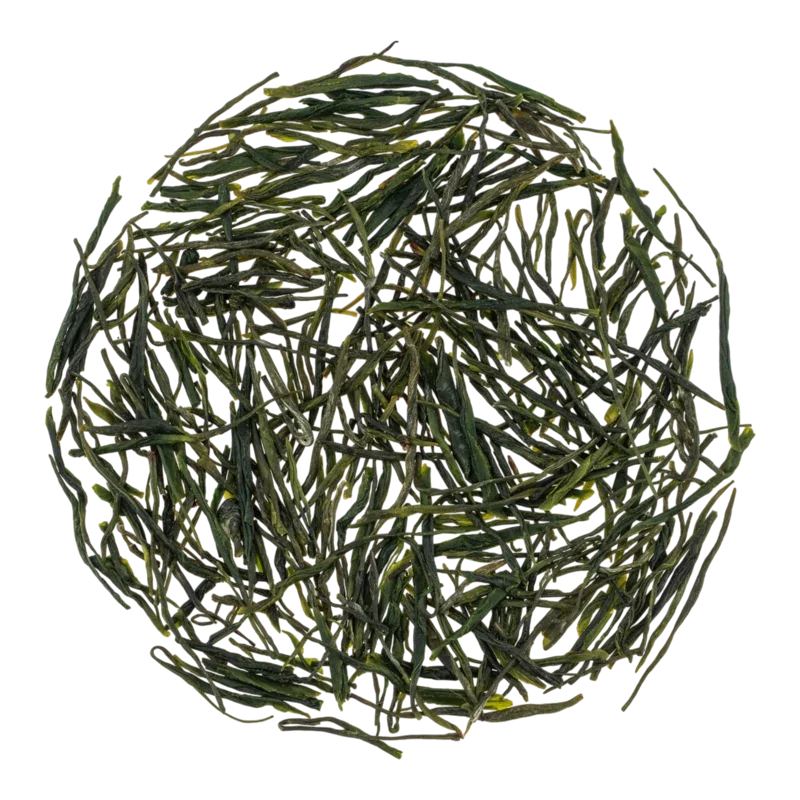
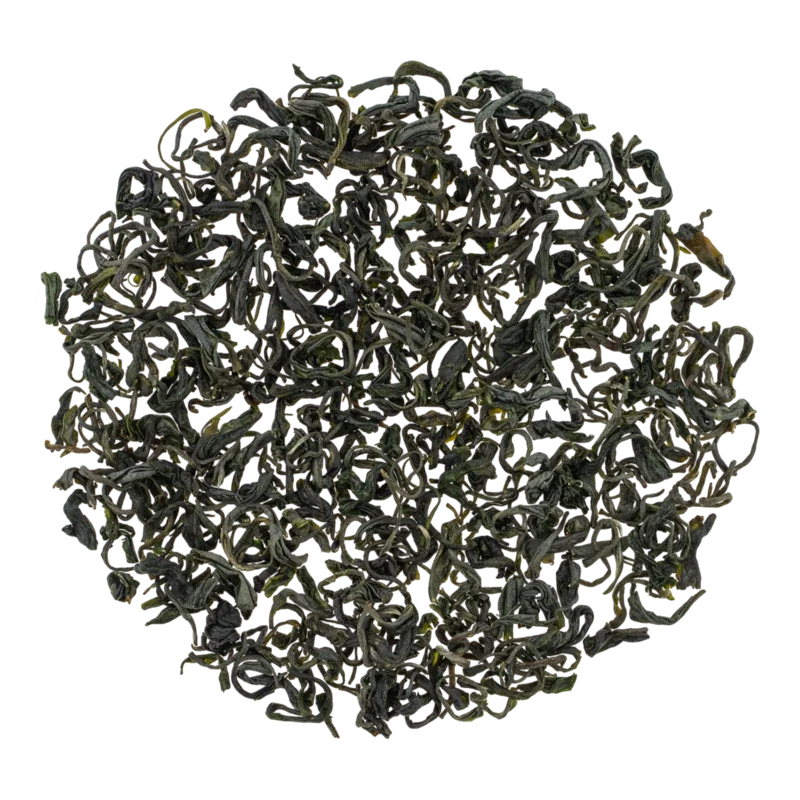
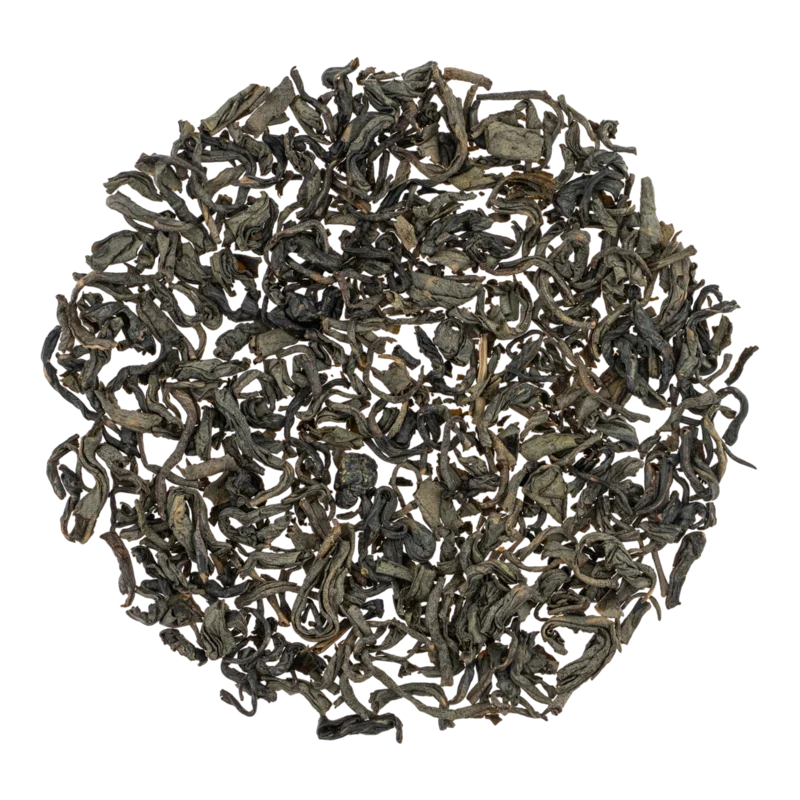
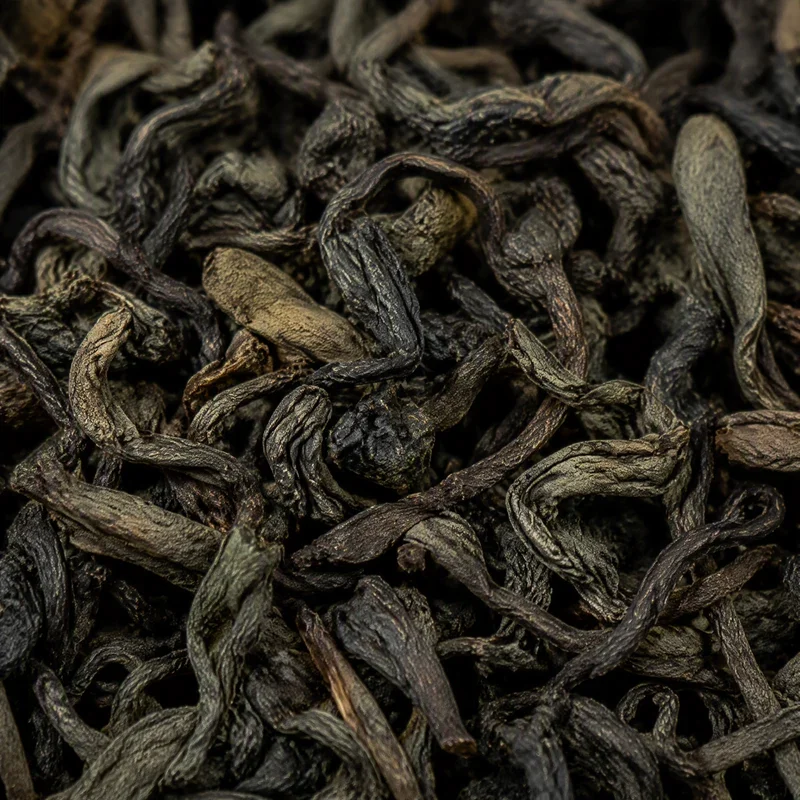
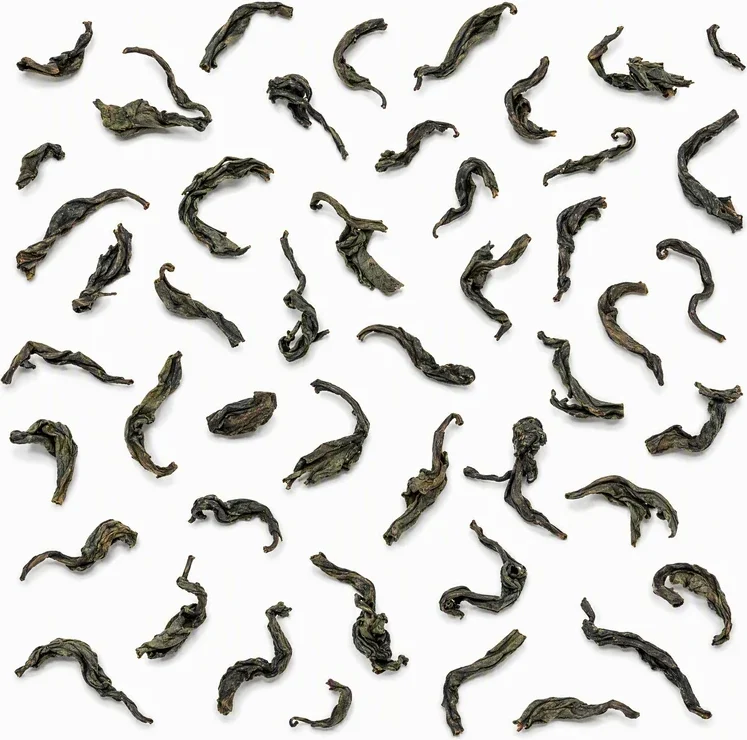
Dry Leaf Appearance: Shape — straight, tight, uniform strips (条索紧直匀整, tiáosuǒ jǐnzhí yúnzhěng). Down (hao) is minimally expressed. Color — rich emerald green with oily luster (色泽翠绿光润, sèzé cuìlǜ guāng rùn).
Dry Leaf Aroma: Clean vegetal aroma (清香, qīngxiāng) with warm chestnut notes (栗香, lìxiāng) and characteristic iodine-oceanic undertone reminiscent of fresh seaweed (海藻鲜香, hǎizǎo xiānxiāng) — a unique trait due to ocean proximity.
Liquor Aroma: Similar — clean, fresh, with chestnut base and oceanic overtones. Aroma persists in cooled cup for more than 20 minutes (冷杯留香 > 20分钟).
Liquor Color: Clear, clean, bright green (汤色清澈绿亮, tāngsè qīngchè lǜ liàng).
Spent Leaves: Tender, uniform leaves opening as complete "buds," yellow-green color with lively, fresh appearance (叶底嫩匀成朵,黄绿鲜活).
Taste: Pronounced freshness and briskness (鲜爽, xiānshuǎng) due to harmonious amino acid content. Smooth, oily texture (甘滑, gānhuá) with moderate polyphenol concentration. Light bitterness without astringent tannins (微苦无涩, wēi kǔ wú sè). Prolonged sweet aftertaste (回甘持久, huígān chíjiǔ).
Alkaloids: Caffeine (咖啡碱, kāfēi jiǎn) in standard concentrations for green tea; theobromine and theophylline in trace amounts.
Amino Acids: Content in early spring tea is 15% higher than analogues from inland regions, explaining the enhanced "freshness" and "briskness" of taste.
Zero pesticide residue level is a key indicator for "green food product" certification. The combination of high polyphenols from large-leaf raw material with elevated amino acids from tropical terroir creates an unusual balance for green tea: intensive antioxidant activity with low astringency.
Essential Oils: Responsible for the characteristic "oceanic" note and long-lasting aroma persistence in cooled cup.
Minerals: Due to volcanic lateritic soils, the tea has elevated selenium (Se) content, as well as fluoride (F) — the latter's content provides notable anti-caries action. Potassium, manganese, and other trace elements of volcanic origin are present.
Polyphenols: Tea polyphenol content is 25–30% of dry mass — characteristic for large-leaf varieties from tropical regions. High catechin content provides pronounced antioxidant properties.
Vitamins: Vitamin C (content 1.2 times higher than average green tea), B-group vitamins.
High catechin content (25–30%) provides powerful neutralizing action against free radicals.
Elevated fluoride content forms a protective layer on tooth enamel; according to producers, anti-caries effect exceeds ordinary green tea by 30%.
Tea polyphenols promote fat breakdown, while elevated vitamin C content enhances general metabolic processes.
Caffeine combined with L-theanine provides smooth, prolonged alertness without sharp rise and fall.
Zero pesticide residue level minimizes toxic load, particularly significant for daily consumption.
Moderate polyphenol levels favorably affect gastrointestinal function after meals.
The listed properties are based on compositional data and traditional use; this is general information, not medical advice.
Avoid drinking on empty stomach (caffeine may irritate gastric mucosa); optimal — one hour after meals. Daily limit — no more than 600ml. Interval between tea consumption and medications (especially iron preparations) — at least 1 hour, as tannins may reduce iron absorption.
Tea Amount: 1:50 ratio (approximately 3g per 150ml).
Teaware: Glass tumbler — ideal choice, allowing observation of characteristic "three greens" (三绿). White porcelain gàiwǎn (盖碗, gàiwǎn) also suitable.
Water Temperature: 80–85°C for standard tea; 75°C for special grade (特级) to avoid damaging tender buds.
Classic steamed tea from Hubei Province. Both teas are produced by steaming, but Enshi Yulu grows at high altitude (600–1200m) in temperate subtropical climate and has more pronounced nutty aroma and delicate grassy taste. Xuwen tea, conversely, is distinguished by characteristic "oceanic" note and higher polyphenol content due to large-leaf tropical raw material.
Technologically closest analogue — Japanese steamed sencha. However, Japanese tradition involves longer steaming (especially fukamushi), tea bush shading, and specific final "seiju" rolling. Xuwen tea has less pronounced umami profile but brighter and more "sunny" tropical character.
Another famous Guǎngdōng green tea from Hèshān County (鹤山). Represents classic pan-fired green tea (炒青) with denser, richer taste. Xuwen steamed tea is noticeably fresher and "cleaner" in aromatics.
Green tea from Shandong, also growing near the sea. Has similar "oceanic" note but is produced by pan-firing, matures at lower average annual temperatures, and has shorter harvest season. Laoshan tea taste is more chestnut-like and dense.
Price Factors: Harvest season (early spring tea more expensive), harvest standard, brand ("Xiong'ou" and "Yongshi" most famous), presence of "green food product" certification.
No reviews yet. Tell us what you think of this tea.
Rate this tea and share your impressions. We review each submission before publishing it.