Brewing
Gongfu brewing
- Water temperature
- 75 °C
- Tea amount
- 5 g
- Water volume
- 100 ml
- First steep
- 10 s
- Time added per infusion
- 5 s
- Infusions
- 3

Láoshān lǜchá
Choose a brewing method. Start with the recommended quantities and time, then adjust to taste.
Brewing
Brewing
Taste
Tea encyclopedia
Category: North Chinese green teas. Known as "Jiāngběi dìyī míngchá" (江北第一名茶, Jiāngběi dìyī míngchá) — "First Famous Tea North of the Yangtze."
Category: North Chinese green teas. Known as "Jiāngběi dìyī míngchá" (江北第一名茶, Jiāngběi dìyī míngchá) — "First Famous Tea North of the Yangtze."
Coordinates: 36°03′–36°20′ N, 120°24′–120°43′ E.
Origin: China, Shāndōng Province (山东省, Shāndōng Shěng), Qīngdǎo City (青岛市, Qīngdǎo Shì), Láoshān District (崂山区, Láoshān Qū). The protected geographical indication zone encompasses four administrative sub-districts (街道办事处, jiēdào bànshìchù): Wangezhuang (王哥庄, Wánggēzhuāng), Shāzǐkǒu (沙子口, Shāzǐkǒu), Zhōnghán (中韩, Zhōnghán) and Běizhái (北宅, Běizhái). This is one of the northernmost commercial tea regions in the world — approximately 36° North latitude.
Type: Green tea (non-oxidized). Fixation method — pan-firing in woks (炒青, chǎoqīng).
Cultural Significance: Despite its short — just over half a century — history of tea cultivation, Laoshan green tea has become an integral "calling card" of Qingdao and all of Shandong Province. It has firmly entered local hospitality culture: serving Laoshan Lü Cha to guests is a sign of respect, and the tea itself is a mandatory gift for holidays and weddings in the Jiāodōng Peninsula (胶东半岛). The deep connection with the Taoist heritage of Mount Laoshan gives the tea a special spiritual dimension, although historically Taoist monks here did not grow tea. Modern producers actively develop "tea tourism" (茶旅融合), offering guests participation in tea picking and roasting against the backdrop of mountain landscapes and Taoist temples.
Cultivar: Camellia sinensis var. sinensis. Medium-leaf and small-leaf frost-resistant cultivars adapted to the cold climate of Shandong are used. According to the national standard, the main varieties are: Huángshān quntichong (黄山群体种, Huángshān qúntǐzhǒng) — group population from Huangshan, Jiūkēng (鸠坑, Jiūkēng) — one of the oldest cultivars from Zhejiang, Qímén (祁门, Qímén), Longjing 43 (龙井43, Lóngjǐng 43) — early-ripening, high-yielding clone, as well as Fúdǐng Dà Bái (福鼎大白, Fúdǐng Dà Bái). The bushes are distinguished by compact form, small glossy leaves of rounded shape with high chlorophyll content and thickened leaf blade — the result of adaptation to northern climate.
Picking: Three main seasons: spring (春茶, chūnchá, mid-April — early May, considered the best), summer (夏茶, xiàchá) and autumn (秋茶, qiūchá). Due to the cold climate, vegetation begins significantly later than in the south — local tea is often among the earliest in its latitudinal zone. Picking is conducted predominantly by hand.
Pluck Standard: For highest grades — one bud and one-two young leaves (一芽一叶, yī yá yī yè; 一芽二叶, yī yá èr yè). Leaves must be whole, tender, uniform in size.
Raw Material: Fresh, undamaged young shoots with characteristic Laoshan leaf blade thickness. Wilted, frost-damaged or non-uniform in maturity leaves are not permitted.
Altitude: Predominantly on low slopes — from sea level to 200–400 m. The proximity of the sea and granite cliffs creates a unique microclimate — a kind of "solar trap," where rocks accumulate heat during the day and release it at night, softening temperature fluctuations.
Climate: Temperate oceanic monsoon (温带海洋性季风气候, wēndài hǎiyángxìng jìfēng qìhòu). Mild, humid summer (average July temperature +25°C) and cold winter (average January temperature about −1°C, minimums to −15°C). Annual precipitation — about 700–800 mm. Frequent sea fogs and breezes provide high air humidity and natural light diffusion.
Soil: Brown earths (棕壤, zōng rǎng), developed on granite parent rocks. Deep fertile layer (not less than 60 cm), pH 4.5–6.5, organic matter content more than 1%. Granite origin provides rich mineral composition: quartz, iron, zinc, selenium, manganese — which gives the tea its characteristic mineral profile.
Laoshan District is located in the southeast of the Shandong Peninsula, at the foot of the Láoshān mountain range (崂山), directly on the coast of the Yellow Sea (黄海, Huánghǎi). Mount Laoshan is the highest coastal peak in China (main peak Jufeng, 巨峰, 1,132.7 m). Plantations are located on gentle (up to 30°) slopes and hills, protected from wind and facing the sun (背风向阳, bèifēng xiàngyáng).
The main agrotechnical feature is the need to protect tea bushes from winter frosts. Polycarbonate greenhouses, film covers and mulching are used. Cold winter is not only a challenge but also an advantage: a long dormancy period (about 5 months) and extremely slow growth in cool climate allow leaves to accumulate significantly more amino acids (especially L-theanine), minerals and chlorophyll than southern analogues. Inter-row planting of soybeans (大豆间种, dàdòu jiānzhòng) is practiced for natural soil nitrogen enrichment — an innovative method developed by local farmers. Pure water from Laoshan mountain springs is used for irrigation, whose mineral composition also affects the tea's taste.
Hand picking of young shoots in morning hours. For highest grades — one bud with one-two leaves.
Freshly picked leaves are spread in a thin layer on bamboo trays in a cool, ventilated room for 3–4 hours to remove surface moisture and begin gentle biochemical transformations that prepare the leaf for pan-firing.
Key stage. Leaves are quickly pan-fired in rotating heated woks (滚筒杀青, gǔntǒng shāqīng) at about 180°C. High temperature inactivates oxidative enzymes, stopping the oxidation process, and gives the tea characteristic roasted notes (beans, chestnuts, toasted bread).
Leaves are given shape. Depending on style:
Final drying at moderate temperature to remove residual moisture, stabilize shape and fix the aromatic profile.
Hand sorting of finished tea: removal of damaged leaves, stems, ensuring uniformity. According to national standard GB/T 26530-2011, finished tea is classified into four grades: special (特级, tèjí, with two subcategories), first (一级), second (二级) and third (三级).
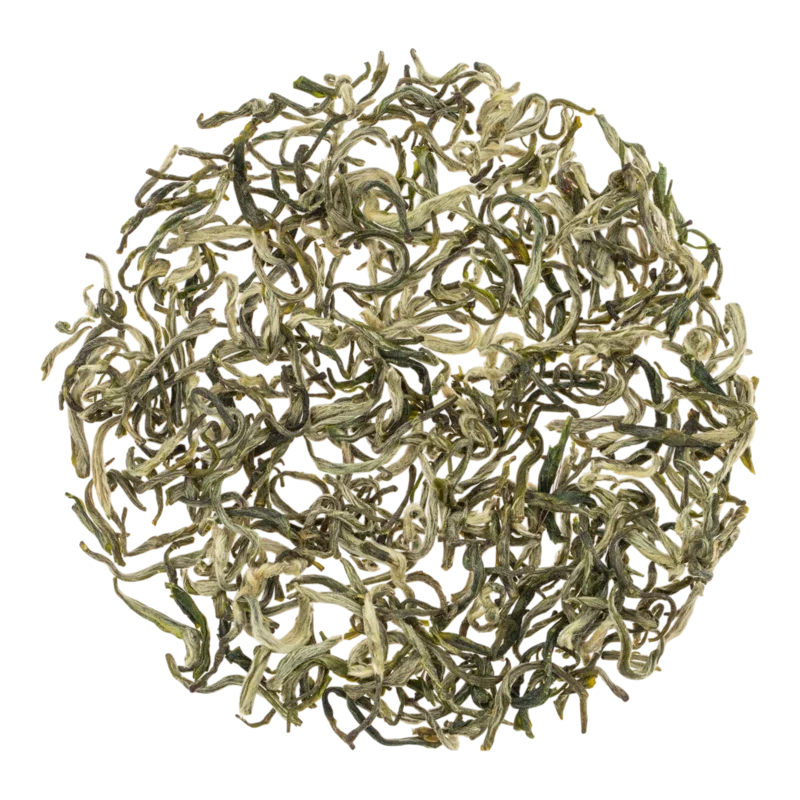
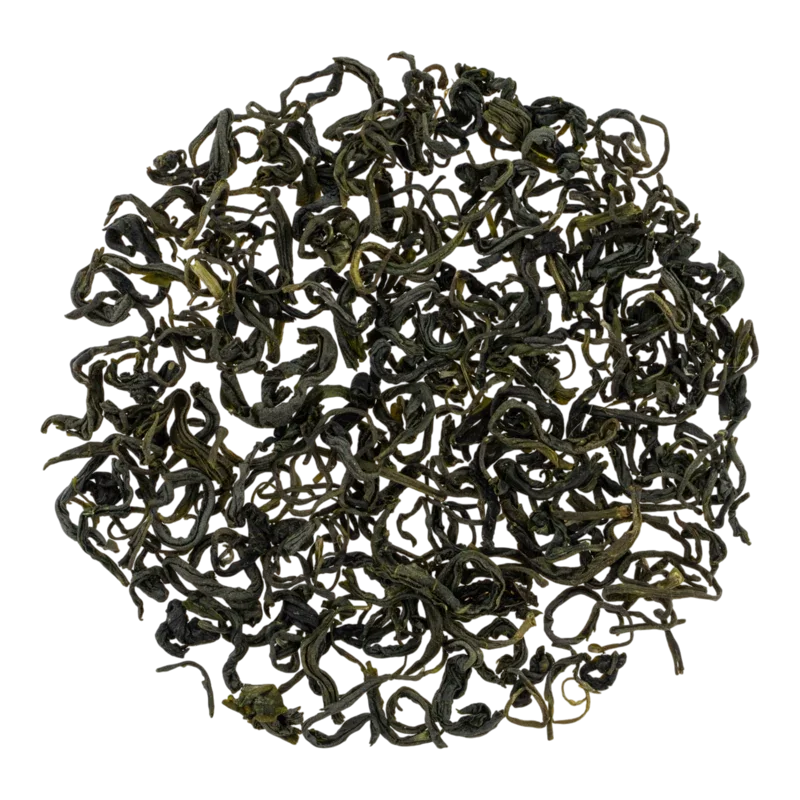
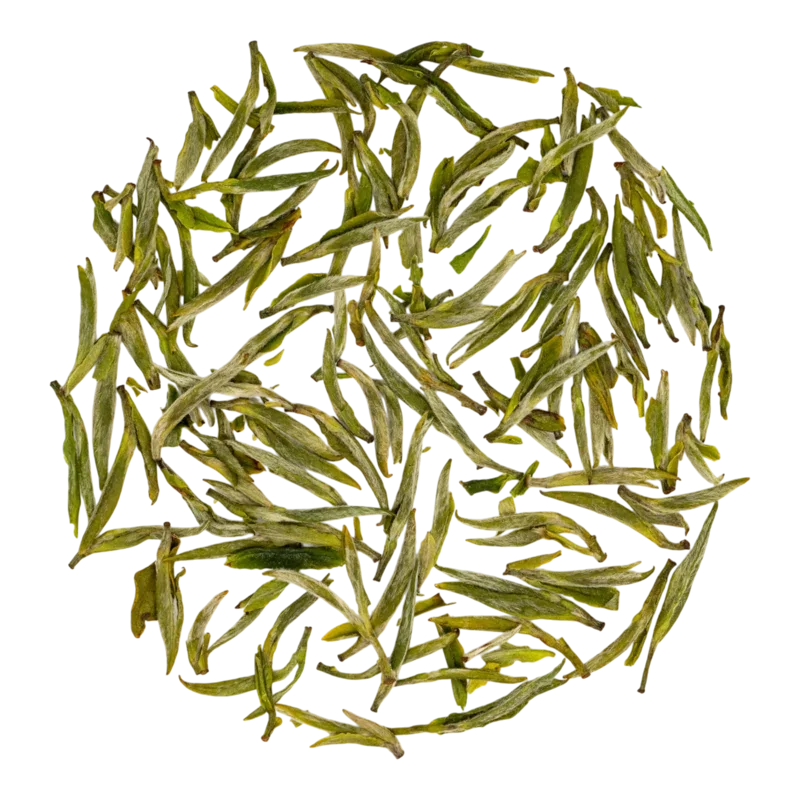
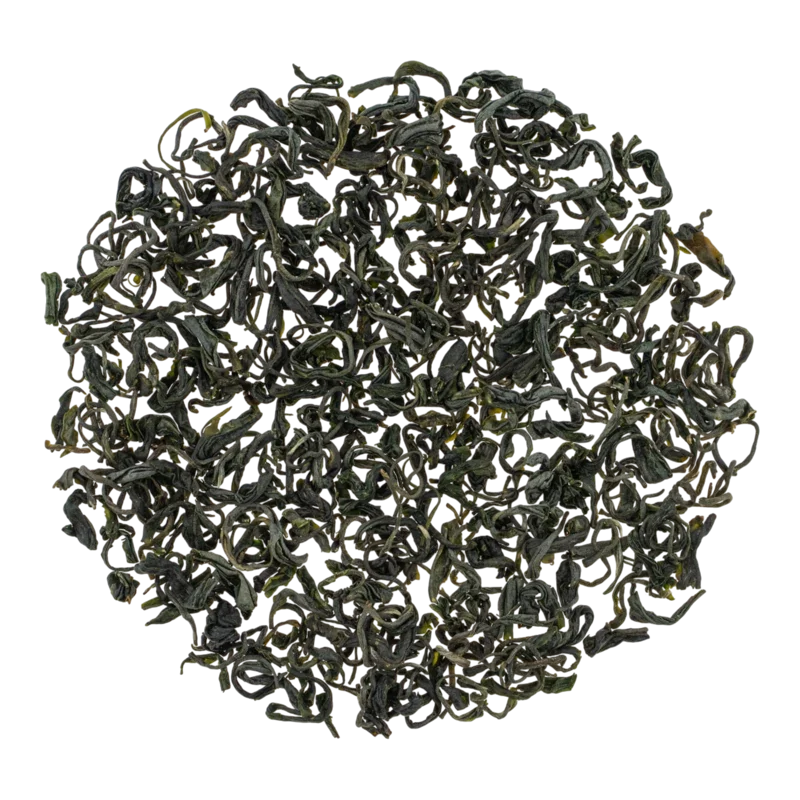
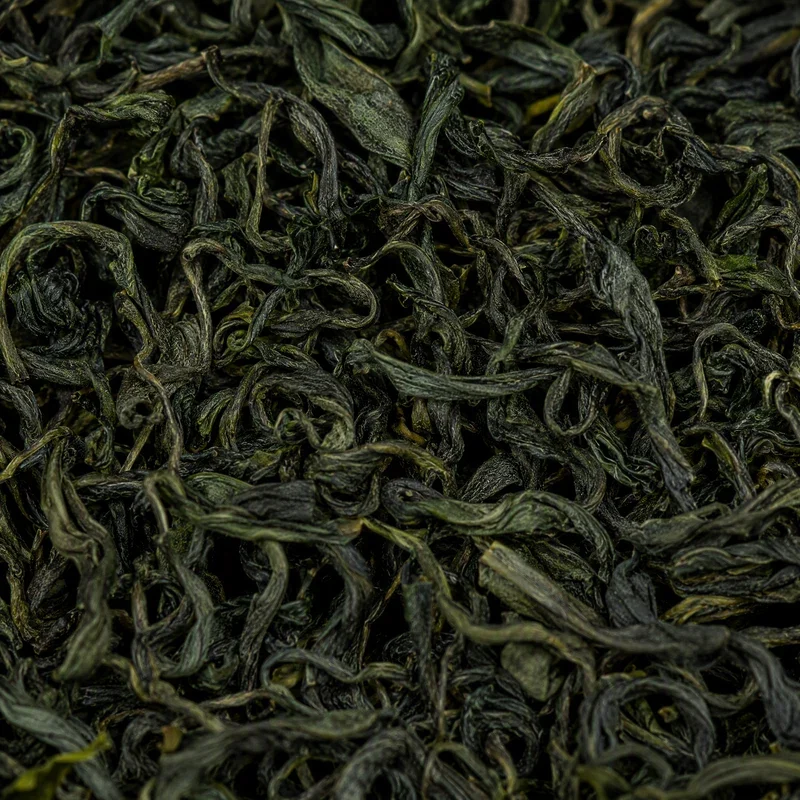
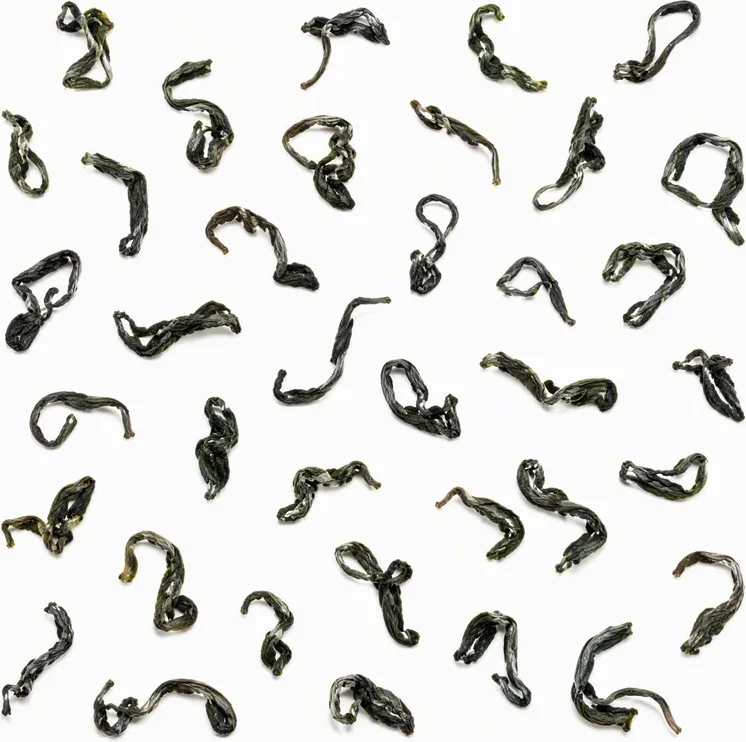
Dry Leaf Appearance: Depends on style. Curled (卷曲形): tight, small spirals of green color with noticeable silvery-white down. Flat (扁形): smooth, flat leaves of jade-green color. A characteristic feature of both styles is noticeably thicker and denser leaves compared to South Chinese green teas.
Dry Leaf Aroma: Bright, fresh, with characteristic notes of cooked or roasted edamame beans (豌豆香, wāndòu xiāng), chestnuts (栗香, lì xiāng), warm bread, sometimes — sweet corn. Light floral or grassy undertones.
Liquor Aroma: Retains bean-chestnut notes, complemented by freshness of green beans, spinach, creamy and mineral nuances. The aroma is persistent, unfolding gradually.
Liquor Color: Bright, clear, light yellow or yellow-green (黄绿明亮, huánglǜ míngliàng), often with a light "yellow tint" (带黄头, dài huángtóu) — a characteristic feature distinguishing it from southern green teas. Sometimes light opalescence is observed from finest particles of white down.
Spent Leaves: Bright green, tender, whole leaves and buds. Leaves unfold slowly and not completely — even after several infusions they retain light wrinkles, which testifies to the density of the leaf blade.
Taste: The main distinguishing feature is pronounced natural sweetness (甘醇, gānchún), softness and body density (滋味浓, zīwèi nóng). Notes of edamame beans, roasted seeds, butter, light minerality. With proper brewing, bitterness is practically absent. Aftertaste — long, sweet, refreshing, with mineral undertone (回甘, huígān). The tea is distinguished by high brewing resistance (耐冲泡, nài chōngpào) — up to 5–7 full infusions.
Alkaloids: Moderate content of caffeine (咖啡因), theobromine and theophylline, providing mild tonic effect.
Amino Acids: Increased content of L-theanine (L-茶氨酸, L-chá ānjīsuān) — one of the main features of Laoshan Lü Cha, due to slow growth in cool climate. L-theanine gives the tea natural sweetness (umami) and mild relaxing effect. Possible presence of GABA (γ-aminobutyric acid) in trace amounts as a result of cold stress in plants.
High content of chlorophyll b thanks to thick, dense leaves adapted to the long daylight hours of northern latitudes. Provides rich green color.
Minerals: Rich in zinc, selenium, manganese, iron, potassium, fluorine — consequence of the unique mineral composition of granite soils and mountain water of Laoshan.
Polyphenols: High content, especially epigallocatechin gallate (EGCG), providing powerful antioxidant properties.
Vitamins: Contains vitamins C, E, B group, carotene.
High content of catechins and minerals (selenium, zinc) provides effective protection of cells from oxidative stress.
Favorable ratio of L-theanine and caffeine promotes improved concentration and mental clarity without excessive stimulation.
Green tea polyphenols contribute to lipid metabolism normalization and improvement of vascular elasticity.
Increased L-theanine content helps reduce stress levels and improve mood.
Mineral complex (selenium, zinc, manganese) from unique granite soils strengthens the body's protective functions.
Promotes fat metabolism and overall body tone.
Tea Amount: 5–7 g per 150–200 ml water for flash steeping method (功夫泡法, gōngfu pàofǎ); 2–3 g per 200 ml for steeping in a glass.
Teaware: Porcelain gàiwǎn (盖碗, gàiwǎn) — classic choice. Glass cup or flask — allows observation of the unfolding of thick, dense leaves. Porcelain teapot. Yixing clay is not recommended — it absorbs the delicate bean aroma.
Water Temperature: 70–80°C. Too hot water will increase bitterness and "burn" the tender leaves.
Longjing is a flat pan-fired (炒青) tea from Zhejiang with nutty, chestnut aroma. The flat style of Laoshan Lü Cha externally resembles Longjing but differs in noticeably thicker leaf, pronounced bean aroma (instead of nutty) and significantly greater brewing resistance.
The curled style of Laoshan resembles Biluochun in shape, but in taste and aroma they differ dramatically: Biluochun is floral-fruity, light, elegant; Laoshan is bean-like, dense, oily.
Closest "neighbor" and competitor — also northern green tea from Shandong Province (Rizhao City). Both teas are products of "Nán chá běi yǐn," but Laoshan, thanks to unique coastal microclimate and granite soils, has a more pronounced mineral profile and more refined aroma.
Delicate spring baked (烘青) green tea from Anhui with floral-orchid aroma. Mao Feng is lighter and more floral; Laoshan is denser, sweeter and more "earthy."
No reviews yet. Tell us what you think of this tea.
Rate this tea and share your impressions. We review each submission before publishing it.