Brewing
Gongfu brewing
- Water temperature
- 93 °C
- Tea amount
- 5 g
- Water volume
- 100 ml
- First steep
- 10 s
- Time added per infusion
- 5 s
- Infusions
- 4

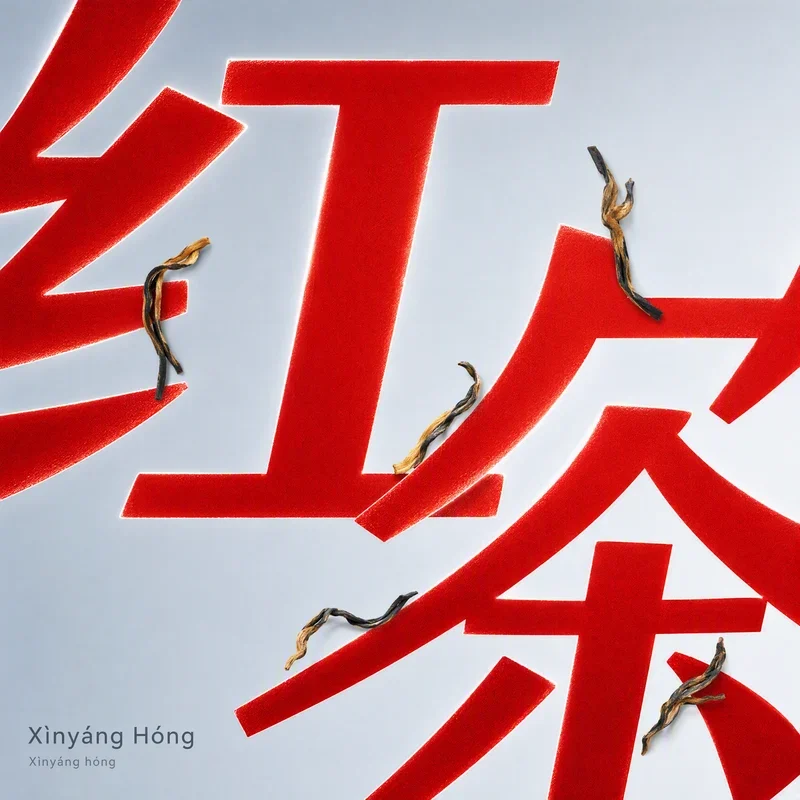
Xìnyáng hóng
Choose a brewing method. Start with the recommended quantities and time, then adjust to taste.
Brewing
Brewing
Taste
Tea encyclopedia
Category: Modern Chinese artisanal red teas; "new wave" of regional hongcha; positioned as "Standard of New Generation Noble Red Teas of China" (中国新贵红茶典范).
Category: Modern Chinese artisanal red teas; "new wave" of regional hongcha; positioned as "Standard of New Generation Noble Red Teas of China" (中国新贵红茶典范).
Coordinates: ≈ 31°23'–32°24' N, 113°45'–115°55' E — China's northernmost major tea region, located at the junction of the Huáinán (淮南) and Jiangnan zones.
Origin: China, Hénán Province (河南, Hénán), Xinyang Prefecture-level City (信阳市, Xìnyáng shì). The production zone covers 128 tea-growing villages in eight counties and districts: Shihe (浉河区), Pingqiao (平桥区), Luoshan (罗山县), Guangshan (光山县), Xinxian (新县), Shāngchéng (商城县), Gushi (固始县), Huangchuan (潢川县). Key mountain ranges — Cheyunshan (车云山), Jiyunshan (集云山), Lianyunshan (连云山), Tianyunshan (天云山), Wuyunshan (云雾山), as well as the Dàbié Mountains (大别山) and their northern spurs.
Type: Red tea (black tea) (红茶, hóngchá) — fully oxidized/fermented. Gōngfū hóngchá (工夫红茶).
Cultural Significance: Xinyang Hong is a rare example of how government initiative combined with scientific expertise created a new tea brand of national scale in just a few years. The tea broke a two-thousand-year paradigm ("Xinyang = only green tea"), solved the pragmatic task of utilizing summer-autumn raw material, and doubled tea farm incomes. Xinyang Hong and Xinyang Maojian are positioned as "twin brothers" (孪生兄弟) who do not compete but complement each other.
History: Xinyang is one of China's most ancient tea regions with a continuous tea cultivation history of more than 2,300 years. During archaeological excavations in Gushi County (固始县) in 1987, fragments of tea leaves dating to the 3rd–4th centuries BCE were discovered in an Eastern Zhōu (东周) burial site. Tea master Lù Yǔ (陆羽) in the "Cha Jing" (《茶经》, 764 CE) included Xìnyáng in the Huáinán tea district (淮南茶区) and specifically noted: "Tea from Guangzhou [now Guangshan] is the best" (淮南茶光州上). Poet Sù Dōngpō (苏东坡) during the Northern Sōng (北宋) era wrote: "Among Huainan teas, Xinyang is first" (淮南茶信阳第一).
Name Breakdown: 信阳 (Xìnyáng) — the city name, dating back to the Suì era (隋, 589–618); 红 (hóng) — "red," indicating the tea type. Simple, memorable, and contrasting to the "green" name of its elder brother — Maojian.
Cultivar: Local small-leaf population of Camellia sinensis var. sinensis — the same genetic base used for green Xinyang Maojian. Bushes are compact, 0.5–1.5 m tall, with small, dense leaves and high amino acid content (thanks to northern location and cool nights). Main local varieties: "Xinyang" group variety (信阳群体种). Historical origin — from southwestern tea zones (Sichuan → Shaanxi → Henan), adaptation over more than 2,000 years.
Picking: For premium batches — spring harvest (March–April); for mass production — summer (May–July) and autumn (August–October). The ability to effectively use summer-autumn leaves, previously unwanted, became the main economic stimulus for creating Xinyang Hong.
Raw Material: Freshness, integrity, absence of mechanical damage. Special attention — controlling polyphenol content: in summer-autumn raw material their level is higher than in spring, requiring precise fermentation adjustment to prevent excessive bitterness.
Altitude: 200–800 m above sea level. The best plantations are located in the "Five Cloud Mountains" (五云山) zone at 500–800 m altitude, where day-night temperature differences reach 10–15°C — ideal conditions for accumulating aromatic substances and amino acids.
Climate: Transitional — from subtropical to temperate; average annual temperature ≈ 15.1°C (range 14.5–15.5°C by years); average temperature of growing season (April–November) ≈ 20.7°C; annual precipitation ≈ 1,100–1,400 mm; effective sum of active temperatures ≈ 4,864°C. Frequent fogs and cloudiness on mountain slopes provide diffused lighting.
Soil: Yellow-brown mountain-forest soils, well-drained, with high organic content; acidity pH 4.5–6.0.
Predominantly small peasant farms and cooperatives; organic and ecological practices are becoming the norm for farms oriented toward export. A number of plantations — on steep mountain slopes, accessible only for hand picking. The total area of Xinyang tea gardens exceeds 14,000 hectares, making it the largest tea region in Henan Province. A characteristic feature of Xinyang tea gardens — location in mountain valleys (山坞) among chestnut and bamboo groves; natural shading reduces photosynthetic "hardness" of leaves and increases theanine content.
Selection of raw material by grade standard; for highest grades — exclusively hand picking.
Leaves are spread in thin layers on withering frames or trays; controlled temperature and air circulation. Duration — 8–14 hours. Goal — reduce moisture to 58–62%, give leaves elasticity.
Mechanical rolling on the principle of "light–heavy–light pressure." Xinyang small-leaf raw material rolls into thin, elegant "needles" (unlike massive spirals of large-leaf teas). Duration — 1–1.5 hours.
Breaking up clumps after rolling for even fermentation.
The most critical stage, distinguishing Xinyang Hong from other hongcha. Special emphasis on precise control of four parameters: air temperature, humidity, leaf surface temperature, and time. Fermentation stops when leaves acquire a copper-red shade, green "grassy" smell completely disappears, and pure floral-fruity aroma appears. This gives a characteristic profile different from "honey" Keemun, "smoky" Xiao Zhong, or "malty" Dian Hong. Duration — 4–8 hours.
Two-stage: high-temperature fixation and gentle final drying. Residual moisture ≤ 6%.
Sifting, wind separation, blending, final "lifting aromatics" (提香, tíxiāng) — light heating to enhance aroma before packaging.
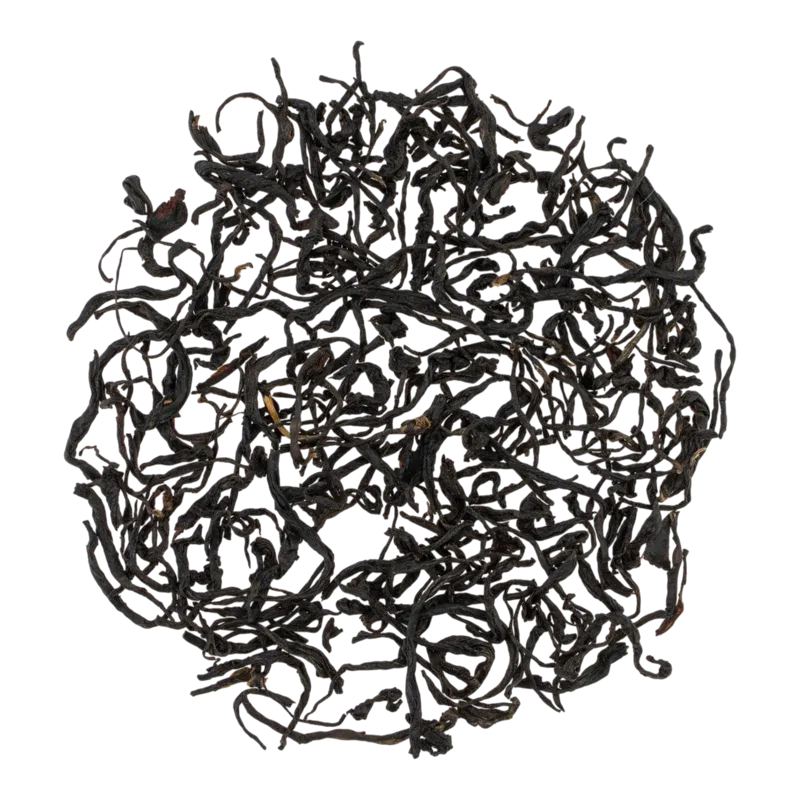
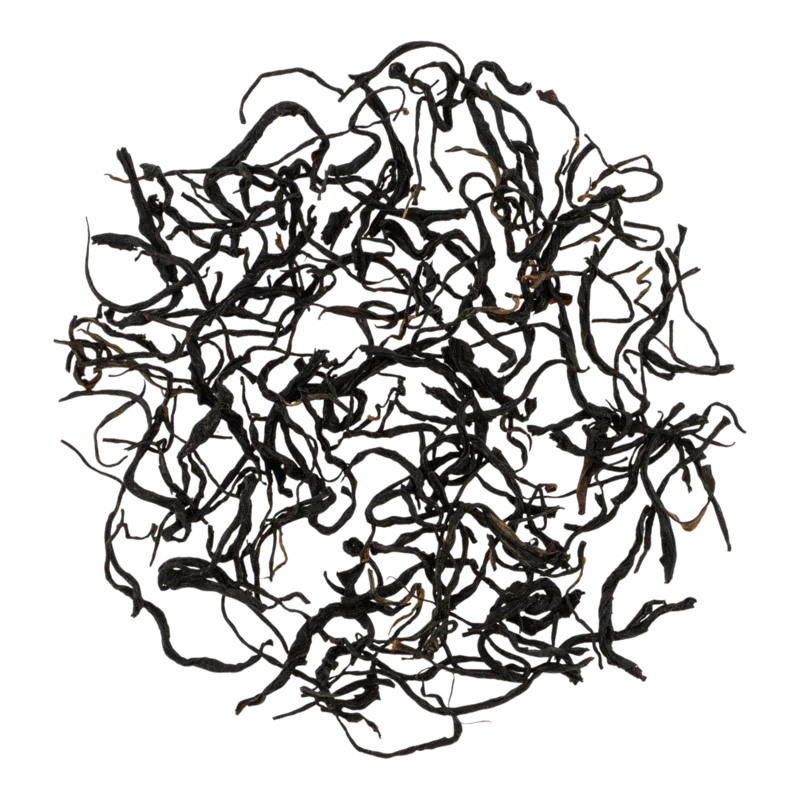
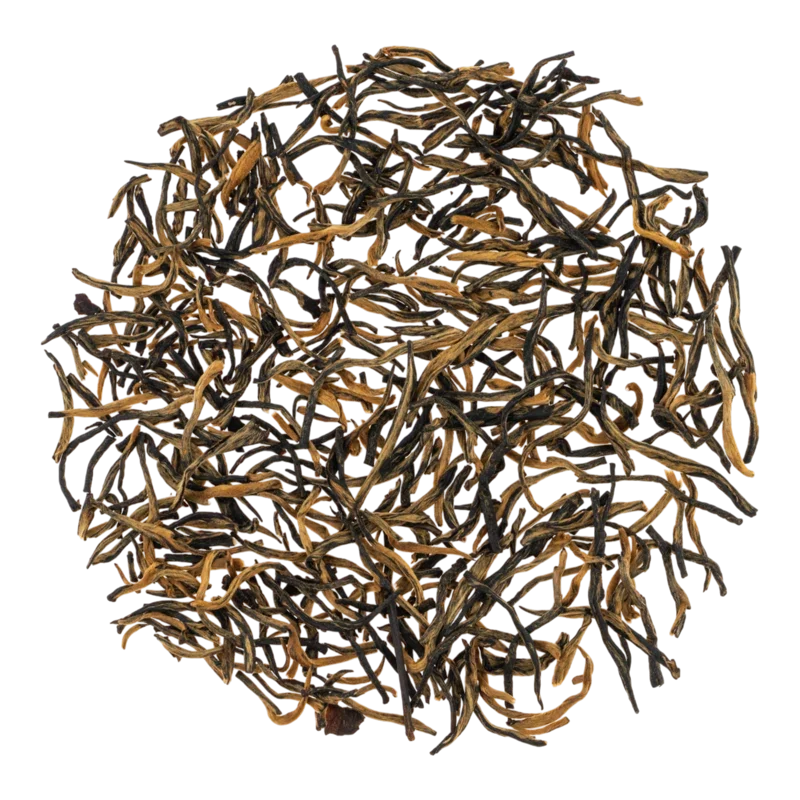
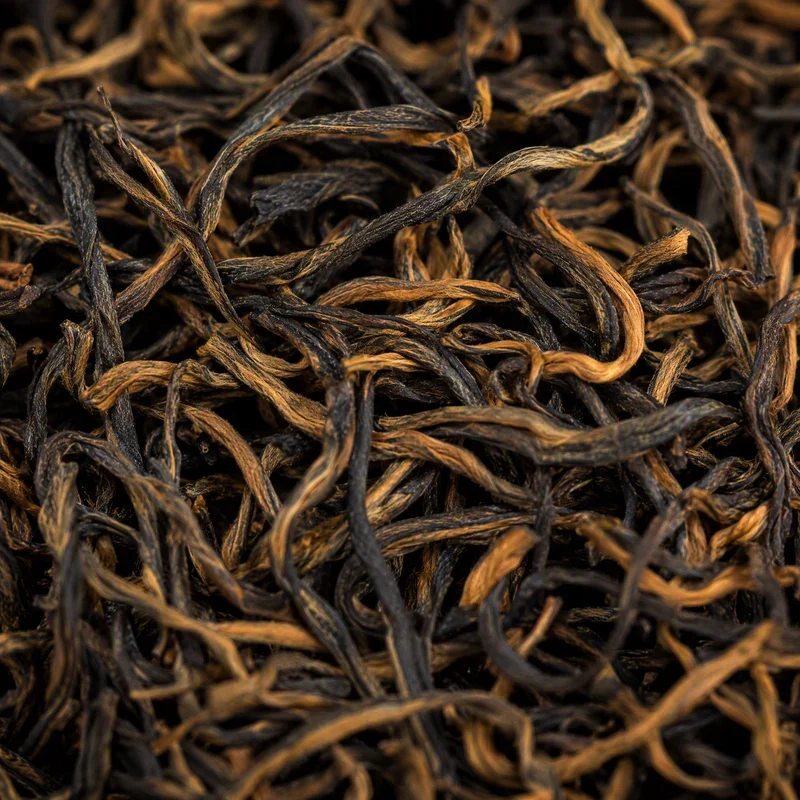
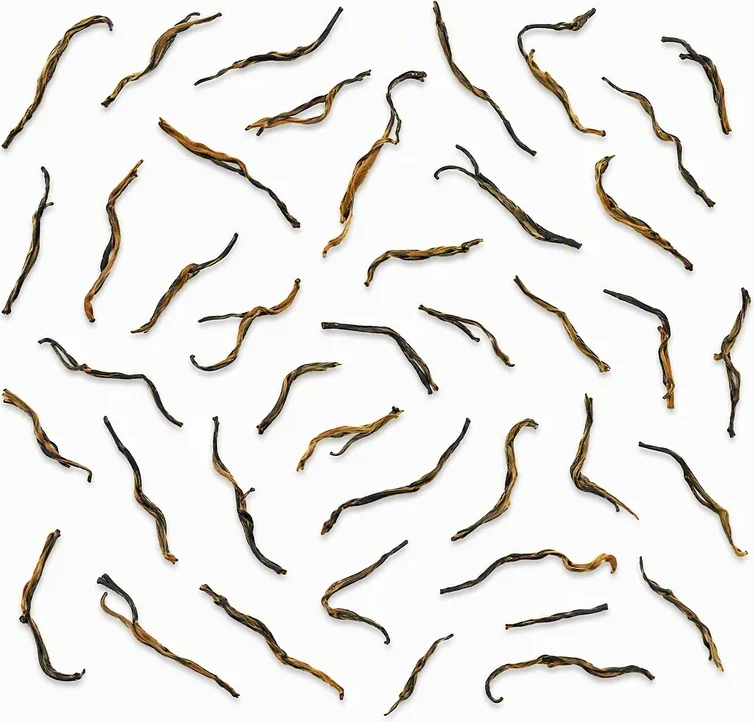
Dry Leaf Appearance: Thin, slender "needles" — tight and fine (条索紧细), resembling green Maojian in elegance; color — black-chestnut with oily luster (乌棕色, wūzōng sè); golden tips (金毫) are clearly visible, especially in higher grades.
Dry Leaf Aroma: Sweet, with distinct notes of chestnut, honey, and light florality; more "restrained" and "northern" in character than southern red teas.
Liquor Aroma: Multi-layered; key note — harmonious interweaving of "chestnut" (板栗香, bǎnlì xiāng) and "osmanthus" (桂花香, guìhuā xiāng) overtones, defined by connoisseurs as "Xinyang rhyme" (信阳韵, Xìnyáng yùn). In the background — notes of baked bread, caramel, and ripe fruits.
Liquor Color: Red-amber, transparent and bright; at the cup wall — clear "golden ring" (金圈).
Spent Leaves: Tender, even, bright red (嫩匀红亮); in highest grades — whole, elegant buds and leaves.
Taste: Dense, round, with pronounced natural sweetness and "clean" — not rough — astringency (醇厚甘爽). Liquor body — "silky," with soft oiliness. Aftertaste — long, with returning sweetness and chestnut echo.
Alkaloids: Caffeine ~2.5–3.5% dry mass; theobromine, theophylline.
Amino Acids: Small-leaf northern raw material is distinguished by high content of L-theanine and total free amino acids (3.0–4.5% dry mass of spring leaves) — significantly higher than southern large-leaf teas. This provides the characteristic "silky" sweetness.
Linalool and its oxides, geraniol, β-ionone, furfural (chestnut notes), cis-jasmone; Maillard reaction products during final heating. The unique "chestnut-osmanthus" palette — calling card of Xinyang terroir.
Minerals: Potassium, magnesium, manganese, zinc, fluorine, selenium.
Polyphenols: In fresh summer-autumn leaves — increased content (up to 25–30% dry mass); during full oxidation catechins transform into theaflavins and thearubigins. Precise fermentation adjustment is critically important for converting "bitter" catechins into "sweet" oxidation products.
Vitamins: B₁, B₂, P (rutin); trace amounts of C (partially destroyed during oxidation).
Synergy of caffeine and L-theanine provides sustained alertness, improved concentration and cognitive functions without "coffee jitters."
Theaflavins and thearubigins — effective "traps" for free radicals, contributing to slowing cellular aging.
Red tea, unlike green tea, is "warm" according to Chinese medicine classification; suitable for people with sensitive stomachs and for consumption after meals.
Moderate regular consumption is linked to maintaining vascular elasticity and reducing LDL cholesterol levels.
Polyphenols and their derivatives possess pronounced antimicrobial activity.
Promotes elimination of excess fluid and metabolic products.
Fluorides and polyphenols help prevent cavities.
Polyphenolic metabolites of red tea (theaflavins) possess moderate anti-inflammatory effect, beneficial for chronic inflammatory processes.
Several studies link moderate red tea consumption with improved tissue insulin sensitivity.
Tea Amount: 4–5 g per 100–120 ml (gongfu method); 3 g per 200 ml (Western method).
Teaware: White porcelain gàiwǎn (白瓷盖碗) — optimal for evaluating aroma and color; transparent glass teapot — for visual enjoyment; porcelain teapot for daily brewing.
Water Temperature: 88–92°C. For "Zhenpin" grade (pure buds) — 85–88°C; for more mature grades — up to 95°C.
Anhui small-leaf red tea with an "orchid" aroma (祁门香) and "honey-sugar" (蜜糖香) profile. Xinyang Hong is similar in raw material (small-leaf type), but differs with a more pronounced "chestnut" note and "fresh" sharpness inherited from the Dabie Mountains terroir. Xinyang Hong's fermentation is calibrated more "restrainedly," which preserves part of the "green" freshness.
Wuyi Mountain red tea; traditional versions — with smoky-pine aroma, modern ones — with fruity sweetness (Jin Jun Mei). Xinyang Hong lacks smokiness and is built on a chestnut-floral palette.
Hangzhou small-leaf red tea; delicate, "light" style. Xinyang Hong is more powerful and "warmer" due to more pronounced astringency and chestnut character.
Another "young" red tea from green terroir (Suzhou); emphasis on fruity-floral "tea-fruit" palette. Xinyang Hong differs with "northern" austerity and chestnut "rhyme," while Biluo Hong Cha is more "southern" and fruity.
No reviews yet. Tell us what you think of this tea.
Rate this tea and share your impressions. We review each submission before publishing it.