Brewing
Gongfu brewing
- Water temperature
- 93 °C
- Tea amount
- 5 g
- Water volume
- 100 ml
- First steep
- 10 s
- Time added per infusion
- 5 s
- Infusions
- 4

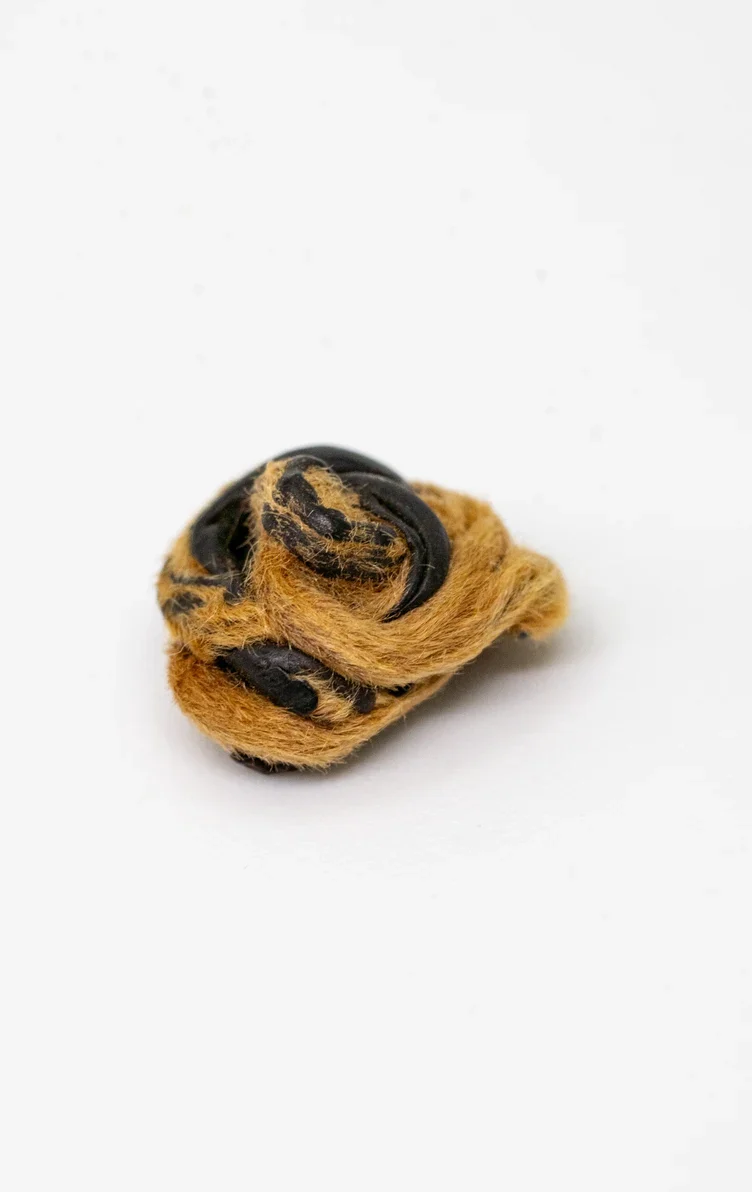
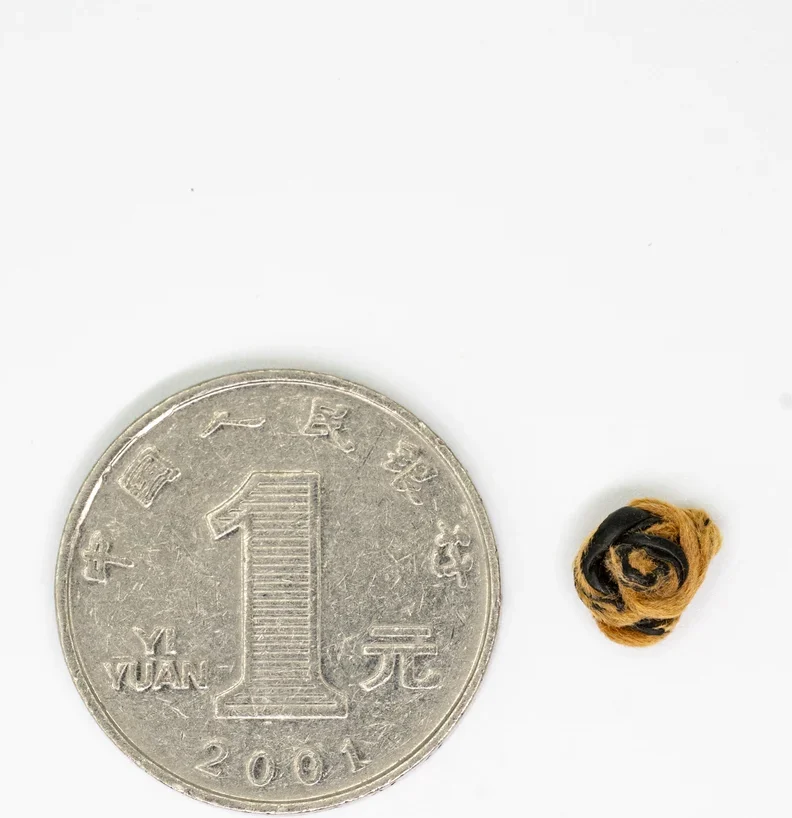
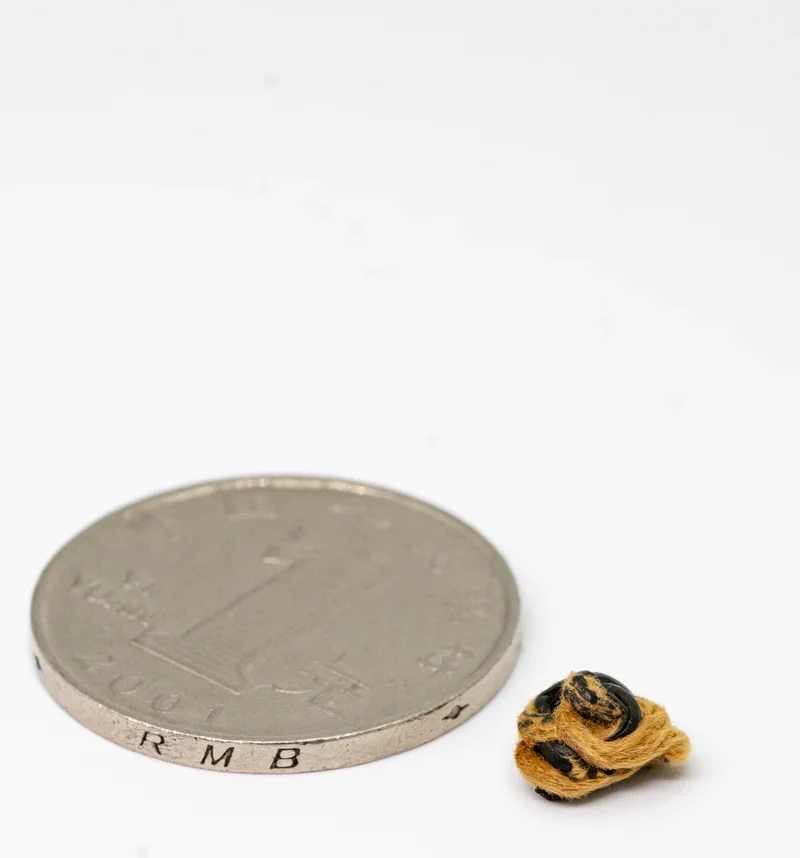
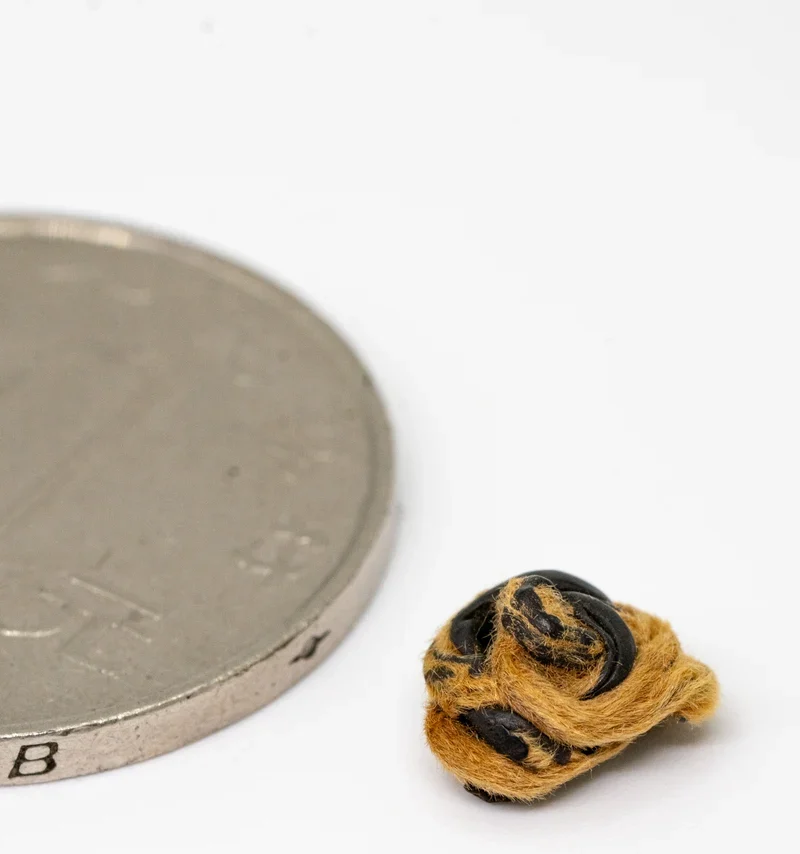
bìluó hóngchá
Choose a brewing method. Start with the recommended quantities and time, then adjust to taste.
Brewing
Brewing
Taste
Tea encyclopedia
Category: Regional Chinese red teas; gongfu black tea (工夫红茶, gōngfū hóngchá). Modern artisanal tea based on historical terroir.
Category: Regional Chinese red teas; gongfu black tea (工夫红茶, gōngfū hóngchá). Modern artisanal tea based on historical terroir.
Coordinates: ≈ 31.07° N, 120.38° E (Dongshan — Xishan area, southwest of Suzhou).
Origin: China, Jiāngsū Province (江苏, Jiāngsū), Sūzhōu City (苏州市, Sūzhōu shì), Wúzhōng District (吴中区, Wúzhōng qū); Dongting Mountains — Dōngshān Peninsula (洞庭东山, Dòngtíng Dōngshān) and Xīshān Island (洞庭西山, Dòngtíng Xīshān) on Lake Tàihú (太湖, Tàihú).
Type: Red tea (black tea) (红茶, hóngchá) — fully oxidized/fermented.
Cultural Significance: Biluohong Cha is an example of creative diversification of a famous tea region: not a replacement for green tea, but its "red mirror," allowing the same terroir to be revealed — primarily the unique system of intercropping tea bushes with fruit trees (tea-fruit compound system, 茶果复合系统) — through a completely different flavor profile. This tea became the calling card of the new generation of Dongting tea growers.
History: The Dongtingshan region has been producing tea for over a thousand years: as early as the Tāng dynasty (唐, 618–907), chronicles mention "Dongting tea," and during the Sōng era (宋, 960–1279), "Shuiyue" tea (水月茶) from Xishan was included in the list of tribute tea (gongcha, 贡茶). According to Wang Yingkui's chronicle "Liunan Suibi" (《柳南随笔》), the tea received its current name "Biluochun" (碧螺春) from Emperor Kāngxī (康熙) in 1699 (38th year of Kangxi's reign), when Governor Sōng Luó (宋荦) presented the local tea to the sovereign, previously known by the colloquial name "Xiashaleng xiang" (吓煞人香, "Aroma that makes people faint"). The emperor considered the folk name inelegant and named the tea "Biluochun" — "Emerald Spirals of Spring."
Name Breakdown: 碧 (bì) — "emerald, jade"; 螺 (luó) — "spiral, snail" (reference to the characteristic leaf twist); 红茶 (hóngchá) — "red tea." Thus, the name directly indicates: this is red tea made from Biluochun terroir raw material, inheriting the characteristic spiral twist from its green prototype.
Cultivar: Dongtingshan local population of small-leaf type (洞庭山群体小叶种, Dòngtíngshān qúntǐ xiǎoyè zhǒng), belonging to Camellia sinensis var. sinensis. Colloquial names include "liuye tiao" (柳叶条, "willow leaf") and "jiangbantou" (酱板头). This is the same authentic genetic pool used for green Biluochun — a population naturally selected over more than a thousand years of cultivation in Taihu conditions. The plants are low bushes (0.7–2.5 m) with small, dense leaves and high aromatic compound content.
Picking: For the highest grades of red tea, raw material harvested before Qīngmíng (清明, ≈ April 5) is used — "mingqian" (明前); the main volume falls in the period after Qīngmíng and further until Gǔyǔ (谷雨, ≈ April 20) and later — late April to early May.
Pluck Standard: For premium batches — one bud and one-two leaves (一芽一叶 / 一芽二叶, yī yá yī yè / yī yá èr yè). For standard red tea, more mature harvest is acceptable — one bud and two-three leaves (一芽二三叶), including from "large leaves" (大叶子) of late-season harvest.
Raw Material: Fresh whole leaf without mechanical damage. For red tea, a critical requirement is the absence of "red heads" (红头) at the stage before controlled withering begins, meaning the leaf should not begin spontaneous oxidation during transport.
Altitude: 50–293 m above sea level. The main part of tea gardens is located on the slopes of Dongshan (main peak Molifeng, 莫厘峰, 293.5 m) and hills of Xishan.
Climate: Subtropical monsoon, significantly moderated by the water mass of Taihu — the largest freshwater lake in the Yangtze Delta (area ≈ 2,250 km²). Mild winters, not hot summers, average annual temperature about 15.5–16.5°C, annual precipitation 1,000–1,200 mm, air humidity 75–85%. Cloudiness and light fogs from the lake are constant companions of tea gardens, providing diffused light ideal for amino acid accumulation in leaves.
Soil: Yellow-brown forest soils and red-yellow lateritic soils (红黄壤, hónghuáng rǎng), acidity pH 4.5–6.0; rich in organic matter and phosphorus due to centuries of fruit leaf fall.
The key feature is the tea-fruit system (茶果复合系统, chágǔo fùhé xìtǒng), recognized in 2020 by China's Ministry of Agriculture as "Important Agricultural Cultural Heritage of China." Tea bushes grow under the canopy of loquat (枇杷, pípa), Chinese bayberry (杨梅, yángméi), mandarins (柑桔, gānjú), peach trees, plums, chestnuts. The roots of fruit trees and tea intertwine; fallen flowers and fruits enrich the soil, and tea leaves absorb fruit aromas — this forms the famous "floral-fruity" character (花香果味, huāxiāng guǒwèi) that distinguishes Dongting raw material from any other in China. Forest cover reaches 80%, providing natural shading.
Hand picking with selection of tender shoots; for red tea, more mature leaf is acceptable than for green Biluochun.
Freshly picked leaves are spread in a thin layer in a well-ventilated room without direct sunlight. Professional masters use special withering frames (萎凋池) with controlled temperature for uniform moisture reduction. The goal is to make the leaf flexible and elastic (when squeezed in a fist, the leaf should spring back without breaking, like dough). The leaf is periodically turned to prevent premature reddening. Duration — 8–16 hours depending on weather conditions.
A mechanical rolling machine is used (unlike the hand-twisting of green Biluochun). Pressure principle: from light to strong and back to light, total duration about an hour. The goal is to break cell walls, release juices and enzymes, form the dense spiral twist characteristic of Biluochun style. Excessive pressure will lead to leaf brittleness.
Rolled leaf is placed in a warm humid room (temperature ~25–28°C, humidity ≥ 90%) for 4–8 hours. Catechins oxidize to theaflavins (金黄) and thearubigins (红褐), forming the red-amber color of the liquor and characteristic sweet honey-fruity aroma. The moment to stop fermentation is determined organoleptically: the leaf acquires a red-copper shade with distinct fruity aroma.
Conducted at moderate temperature (80–110°C) to fix the enzymatic profile and reduce residual moisture to ≤ 6%. Two-stage drying: primary hot drying to stop oxidation, then final "maturation" at a gentler regime to develop aroma depth.
Finished tea is divided by fractions — from tippy batches with abundant golden tips to more large-leaf ones.
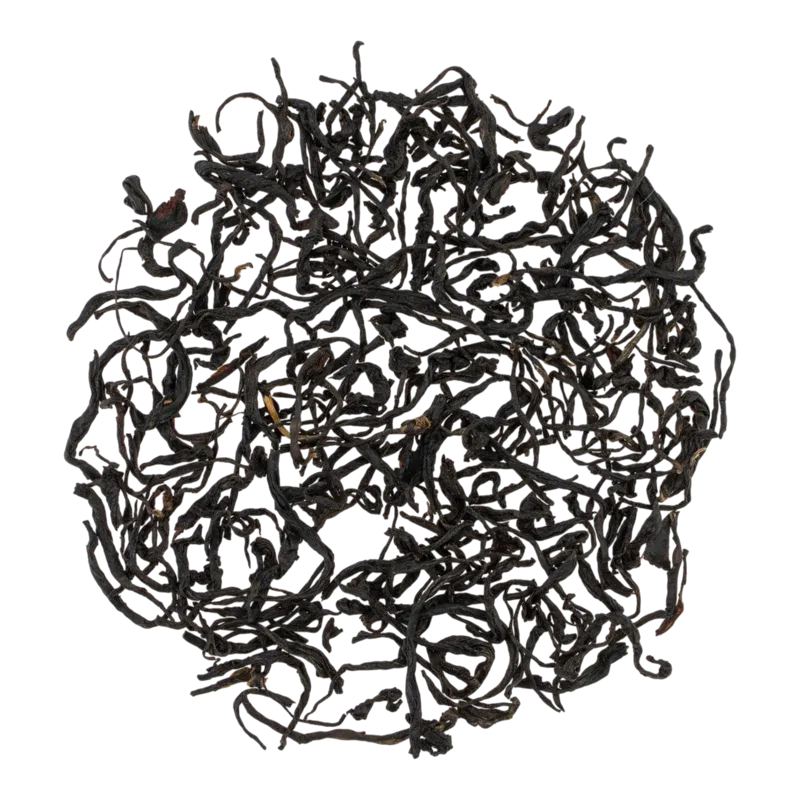
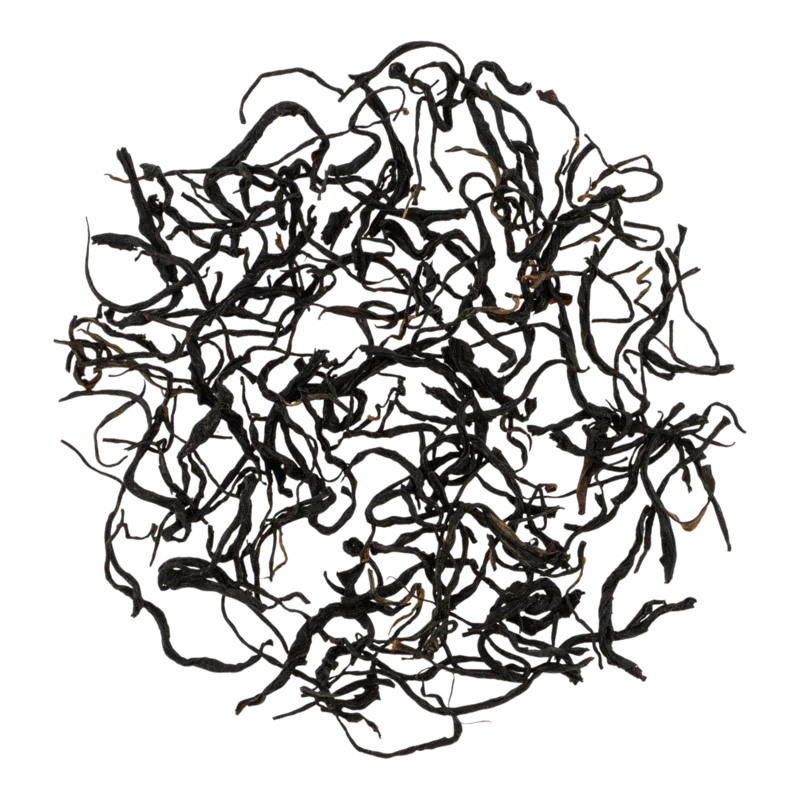
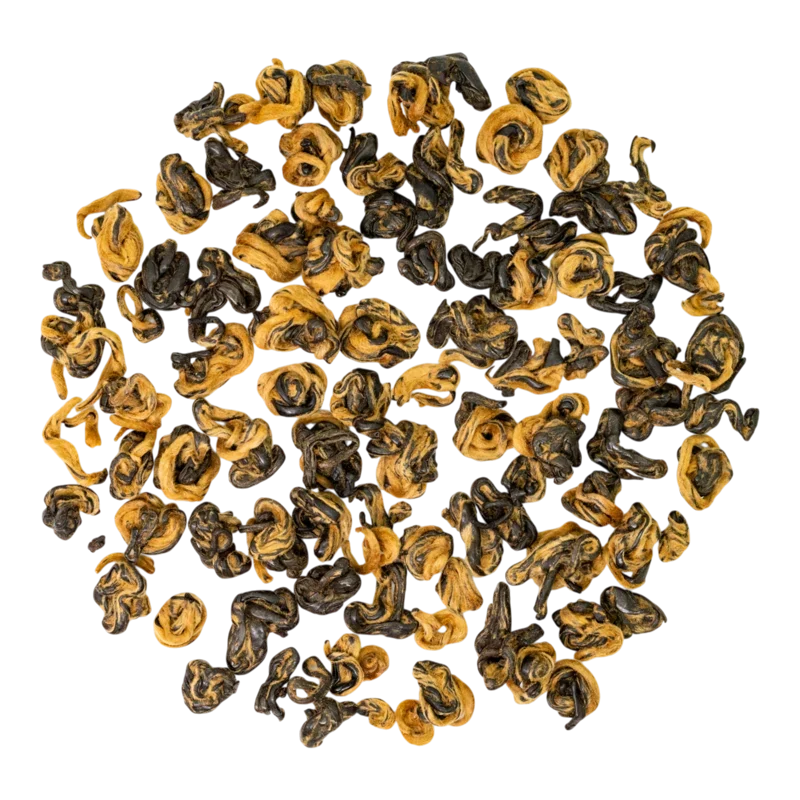
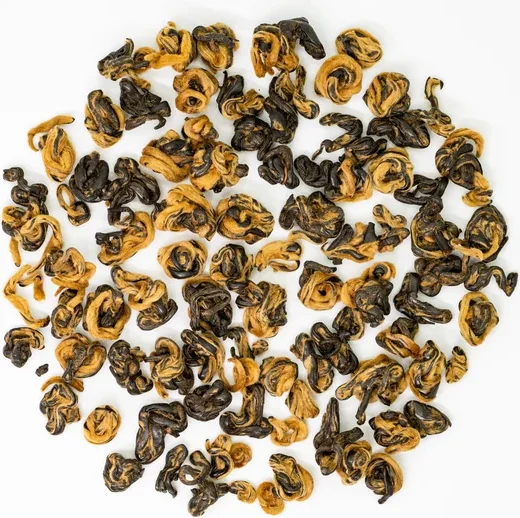
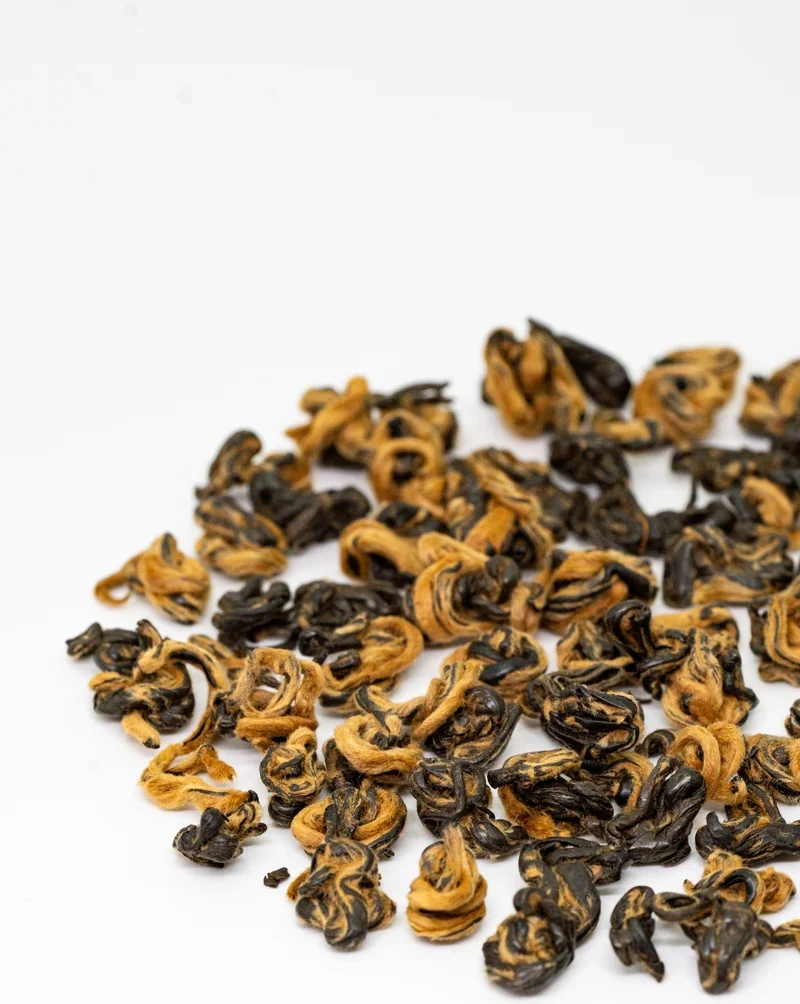
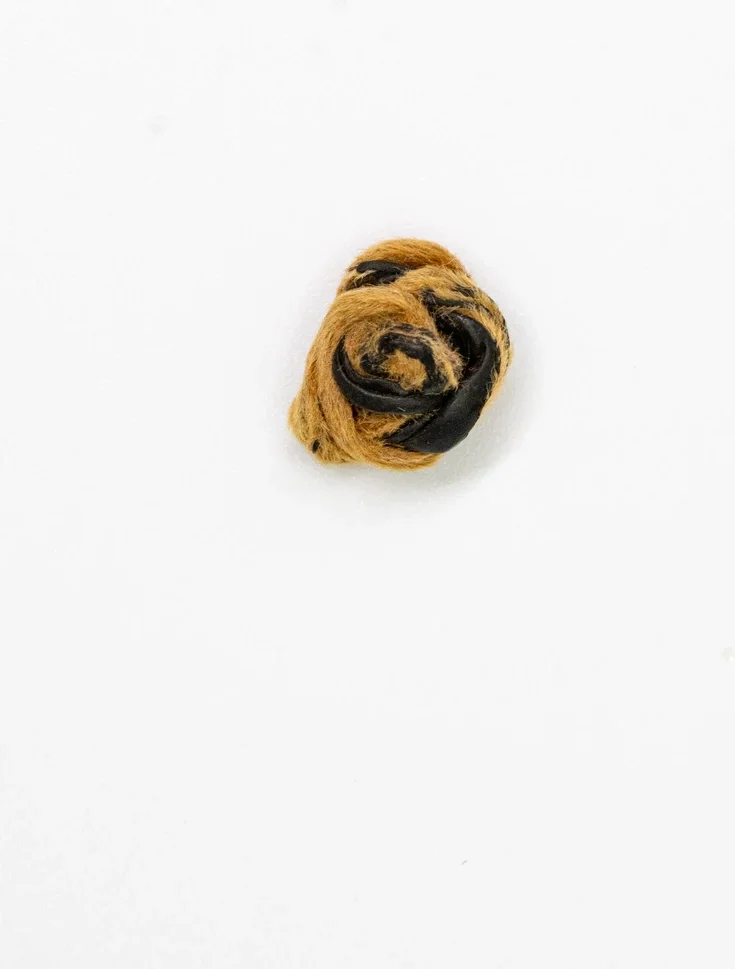
Dry Leaf Appearance: Thin, tightly twisted "spirals" 1–2 cm long; color from dark chestnut to black with a scattering of golden tips (金毫, jīnháo). Highest grades show abundant down and pronounced "bronze" luster.
Dry Leaf Aroma: Bright, sweet, with distinct notes of honey, dried apricot, and warm caramel; in the background — light floral trail inherited from proximity to fruit trees.
Liquor Aroma: Multi-layered: in first steeps — honey, lychee, ripe apricot; as it develops, notes of roasted chestnut, bread crust, and light cocoa appear. Characteristic "fruity florality" (花果香) is the main marker of authentic Dongting origin.
Liquor Color: Red-amber, clear and bright, with pronounced "golden ring" (金圈, jīnquān) around the cup edge — a sign of high theaflavin content.
Spent Leaves: Leaves unfold elastically and evenly; shades from copper-red to chestnut; in good batches the leaf is whole, with visible veins, without signs of burning.
Taste: Dense, round, with pronounced natural sweetness (回甘, huígān) and soft, not harsh astringency. Liquor body is "silky," with pleasant warming density. Aftertaste is long, sweetish, with fruity notes.
Alkaloids: Caffeine (~2.5–4.0% dry weight), theobromine, theophylline. The synergy of caffeine and L-theanine provides gentle, focused alertness without "spikes" and subsequent crashes.
Amino Acids: L-theanine is the key amino acid providing softness, sweetness, and relaxing effect. Thanks to the small-leaf variety and foggy microclimate of Taihu, amino acid content in Dongting raw material is elevated.
Linalool, geraniol, cis-jasmone, β-ionone, phenylacetaldehyde, as well as Maillard reaction products forming caramel-honey notes during final drying. A feature of Dongting raw material is the increased presence of fruit-profile terpenoids (from "absorbed" aromas of loquat and citrus trees).
Minerals: Potassium, magnesium, manganese, zinc, fluorine, phosphorus — due to the richness of Dongting soils.
Polyphenols: During full oxidation, the main part of catechins (EGCG, EGC, ECG) transforms into theaflavins (TF, ~0.5–1.5% dry weight) and thearubigins (TR, ~6–12%). Theaflavins are responsible for the "golden ring" and liquor brightness, while thearubigins provide density and "body" to the taste. Total polyphenol content is about 10–15% dry weight (lower than green Biluochun, where polyphenols reach 20–30%).
Vitamins: Trace amounts of B vitamins (B₁, B₂, B₆), vitamin E; vitamin C is partially destroyed during oxidation (unlike green tea, where its preservation is maximal).
The complex of caffeine and L-theanine provides sustained alertness and improved concentration without sharp "peaks" characteristic of coffee.
Theaflavins and thearubigins are powerful antioxidants that help neutralize free radicals; according to some studies, the antioxidant activity of red teas is comparable to green ones.
Red tea is traditionally considered "warm" (in terms of Chinese medicine) and gentle on the stomach; suitable for consumption after meals, promoting comfortable digestion.
Moderate red tea consumption is associated with maintaining vascular elasticity and reducing "bad" cholesterol (LDL) levels.
In cold weather, Biluohong Cha is an ideal warming drink that reduces subjective feelings of fatigue.
Polyphenols have antibacterial and antiviral properties; systematic tea consumption strengthens overall body resistance.
Fluorides and polyphenols help prevent cavities and reduce pathogenic bacteria in the mouth.
Tea Amount: 4–5 g per 100–120 ml (gongfu method); 3–4 g per 200 ml (brewing in cup/bowl).
Teaware: Porcelain gàiwǎn (盖碗, gàiwǎn) — universal choice; porcelain teapot; Yíxīng teapot (宜兴紫砂壶) — if you prefer a rounder, more "velvety" profile.
Water Temperature: 90–95°C. Boiling water (100°C) may increase astringency; for tippy batches, it's better to use 88–90°C.
Classic Wuyi red tea from Fujian. Distinguished by smoky-pine aroma (in traditional versions) and darker, mineral profile. Biluohong Cha, in contrast, shows bright fruity florality and softness inherited from Dongting terroir.
Famous Anhui gongfu red tea with characteristic "orchid" aroma (祁门香). Qimen is drier and more "wine-like" in taste; Biluohong Cha is more "honey-like" and round, with pronounced fruity note.
Yunnan red tea from large-leaf Assam subspecies; powerful, malty, with large golden tips. Biluohong Cha is more delicate and refined, with "silky" texture of small-leaf raw material.
Red tea from Hangzhou (Zhejiang), stylistically the closest "neighbor": also small-leaf raw material, delicate twist, delicate profile. Main difference — Hongmei lacks Dongting "fruity florality" due to the tea-fruit system.
Price Category: According to 2025 data, the price range for Biluohong Cha from authentic Dongting raw material:
No reviews yet. Tell us what you think of this tea.
Rate this tea and share your impressions. We review each submission before publishing it.