Brewing
Gongfu brewing
- Water temperature
- 92 °C
- Tea amount
- 6 g
- Water volume
- 100 ml
- First steep
- 10 s
- Time added per infusion
- 5 s
- Infusions
- 8


wǔ líng wūlóng
Choose a brewing method. Start with the recommended quantities and time, then adjust to taste.
Brewing
Brewing
Taste
Tea encyclopedia
Category: High-mountain Taiwanese oolongs (Gao Shan Cha).
Category: High-mountain Taiwanese oolongs (Gao Shan Cha).
Coordinates: Approximately 24°10' North latitude, 121°18' East longitude.
Origin: Táiwān (台湾, Táiwān), Nántóu County (南投縣, Nántóu Xiàn), Wǔlíng mountain range (武陵, Wǔ Líng), part of the Xuěshān mountain massif (雪山山脉, Xuěshān shānmài - Snow Mountains). Specific collection areas: Wuling Tea Garden, Wuling Farm, Cuì Fēng (翠峰), Cuì Luán (翠峦).
Type: Oolong (usually lightly oxidized, closer to green teas, oxidation level around 10-25%).
Wuling is one of the highest-altitude tea regions in Taiwan, which determines the unique characteristics of this tea.
Wuling oolong production is limited due to small area of high-mountain plantations suitable for tea cultivation and challenging climatic conditions.
Wuling Oolong is considered rarer and more prestigious tea than, for example, Alishan Oolong, due to smaller production volumes and higher plantation altitude.
Cultural Significance: Wuling Oolong is considered one of the rarest and most elite high-mountain oolongs of Taiwan. It is valued for its exceptionally pure, fresh taste, bright floral aroma, and ability to withstand multiple infusions. This tea is a pride of the region and enjoys great popularity both in Taiwan and beyond.
History: Like other high-mountain oolongs of Taiwan, Wuling is a relatively young tea. Its history began in the 1980s, when tea farmers started developing high-mountain areas of Taiwan that had previously not been used for tea cultivation due to challenging climatic conditions. The Wuling area proved particularly successful for this purpose.
"Green Heart Oolong" - the most common cultivar for high-mountain Taiwanese oolongs, known for its bright floral aroma.
"Golden Flower" (also known as "Milk Oolong No. 12"). This cultivar was developed in Taiwan and is distinguished by a light creamy aroma (rarely found in natural form).
"Jade" (also known as "Oolong No. 13"). Valued for its refreshing taste and aroma.
Cultivar: For Wuling Oolong production, the following cultivars are mainly used:
Picking: Harvest occurs mainly in spring and winter. Spring Wuling is considered the best, while winter is the most aromatic but slightly less intense in flavor.
Pluck Standard: Bud and two to three top leaves are picked.
Raw Material: Very high. Only young, undamaged, succulent leaves and buds are used.
Altitude: Tea plantations are located at altitudes from 1800 to 2500 meters above sea level, making this tea one of the highest-altitude teas in Taiwan and the world.
Climate: Unique microclimate with cool temperatures, high humidity, frequent fogs, abundant sunny days, and significant day-night temperature variations. Average annual temperature is about 12-15°C (at altitudes above 2000 m). Winters are cold, sometimes with snow. Such conditions promote slow growth of tea leaves and accumulation of aromatic substances and amino acids.
Soil: Soils in the Wuling region are rich in organic matter and minerals. Good drainage.
This area is part of the Xueshan mountain massif (Snow Mountains) and is distinguished by the very high altitude of tea plantations.
Frequent fogs envelop tea plantations, protecting leaves from direct sunlight, making them more tender and giving them a special sweet taste.
The Wuling region is distinguished by clean ecology, which positively affects tea quality.
It is precisely high-altitude cultivation (Gao Shan tea) that gives Wuling oolong its characteristic features: delicate aroma, sweet taste, and prolonged aftertaste. The higher the plantations are located, the more valuable the tea is considered.
Described above. Performed by hand.
Picked leaves are spread in open air (usually shade withering) or indoors. This stage can last from several hours to a day, depending on weather and humidity. The goal is to remove part of the moisture from leaves, make them softer, and begin the oxidation process.
Leaves are gently shaken and stirred on bamboo trays to initiate the oxidation process. This stage is conducted several times with breaks for leaf "rest." For Wuling oolong, shaking is usually done very gently to preserve leaf tenderness and delicate aroma.
The oxidation process that occurs during shaking and leaf "rest." Wuling oolong belongs to lightly oxidized oolongs, its oxidation degree usually does not exceed 10-25%. This allows preservation of freshness and floral notes in tea aroma.
High-temperature pan-firing to stop the oxidation process.
Leaves are rolled, giving them characteristic semi-spherical shape.
Tea is dried to remove moisture and fix the shape.
Finished tea is sorted by size and quality.
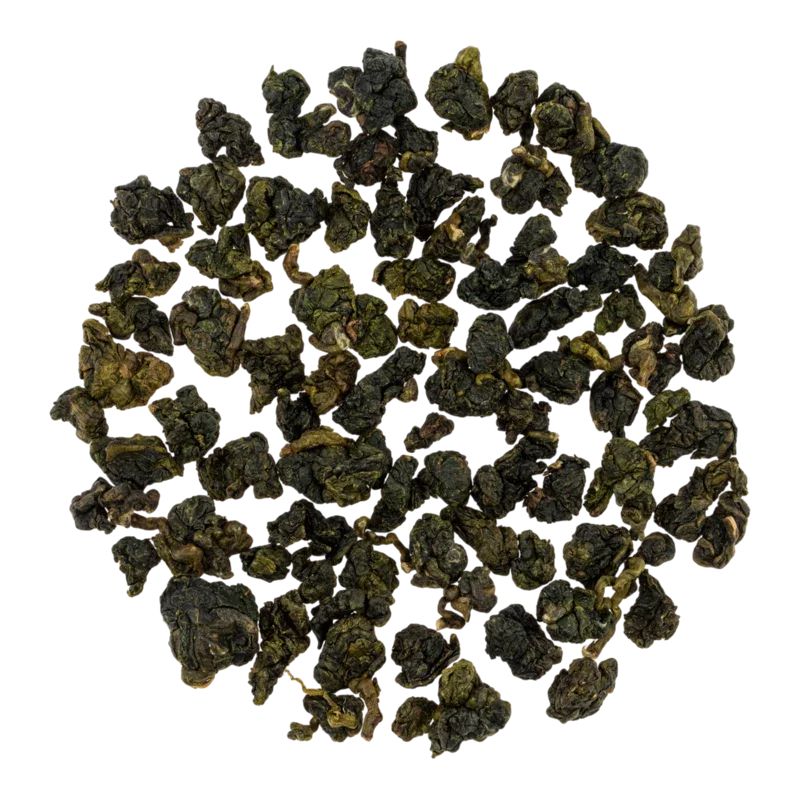
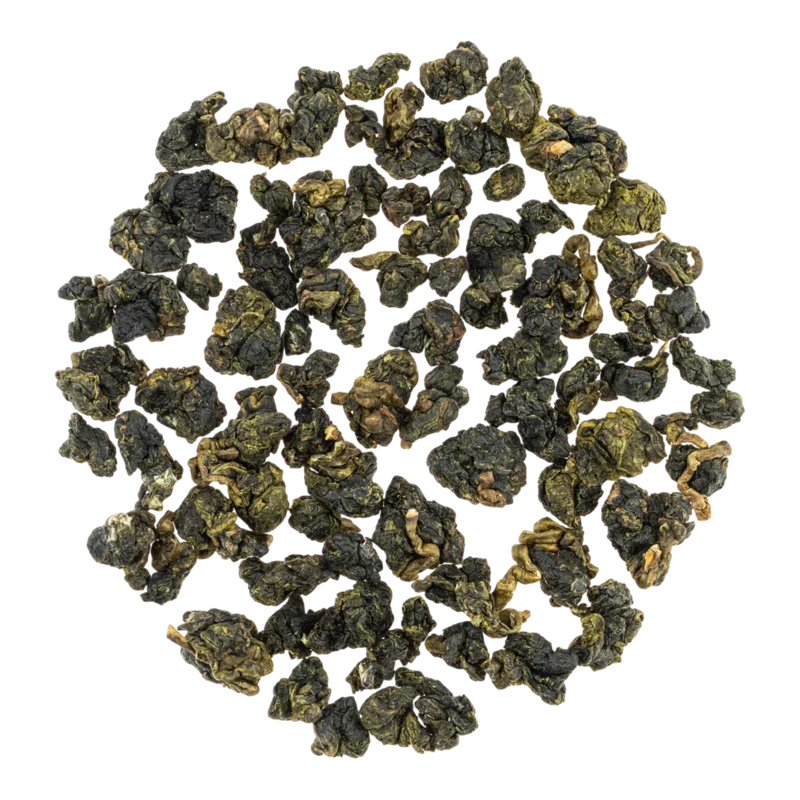
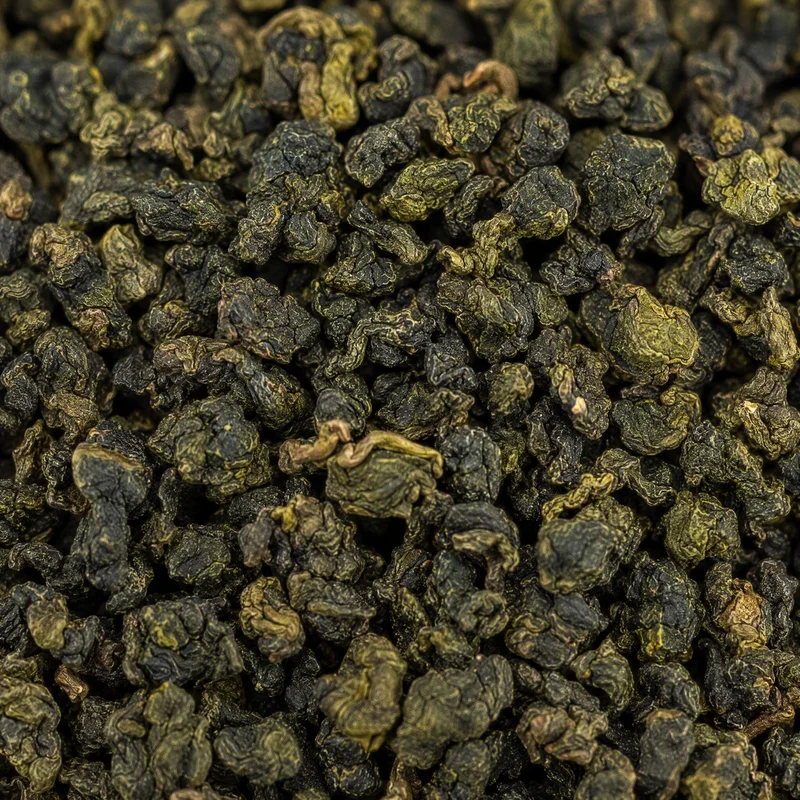
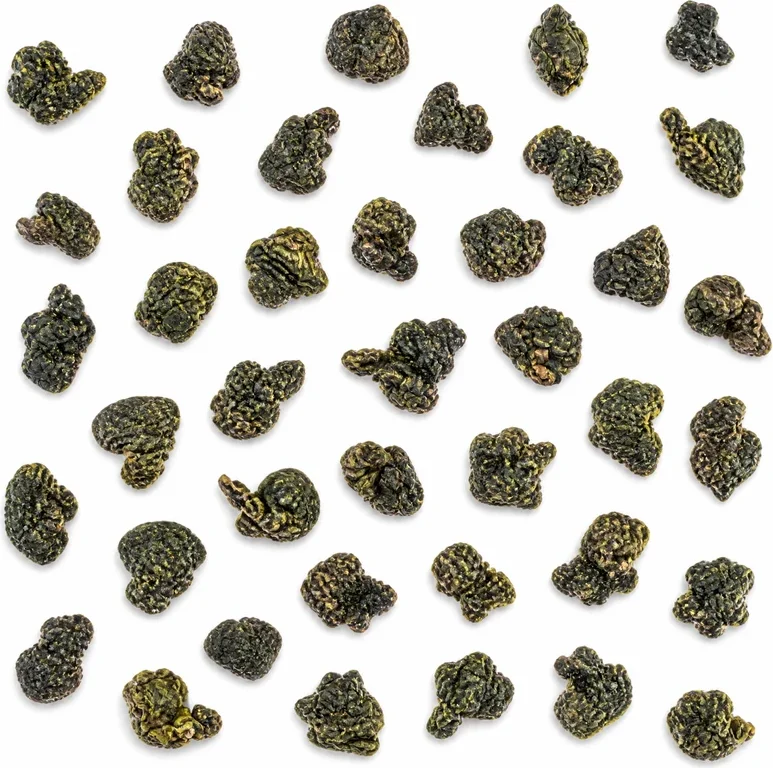
Dry Leaf Appearance: Tightly rolled tea particles in semi-spherical or granular form, medium to large size. Color from emerald-green to dark green, with light luster. Tips (buds) covered with light down may be present.
Dry Leaf Aroma: Very fresh, bright, with pronounced floral notes (orchid, gardenia, lily of the valley), creamy, fruity (peach, lychee, melon) and grassy nuances. Sometimes light coniferous and nutty notes can be detected. Characteristic "high-mountain" aroma - clean, cool, with hints of mountain air and fog, alpine meadows.
Liquor Aroma: Rich, floral, sweet, with hints of cream, fruits, greenery and honey. Very persistent, "lively" and clean.
Liquor Color: Light yellow, golden-green, transparent, clear, with bright luster.
Spent Leaves: Whole, elastic leaves that have opened after brewing, emerald-green color.
Taste: Very soft, tender, silky, sweet, with light astringency and refreshing, long aftertaste. Floral notes predominate in the bouquet, with nuances of cream, fruits, greenery, sometimes with light acidity. High-mountain teas, which include Wuling, possess special "sweetness and softness" due to high amino acid content, as well as characteristic "mountain melody" - a complex sensation that is difficult to describe in words. Also, high-mountain teas possess the greatest amount of beneficial substances accumulated in the leaf due to stressful high-altitude conditions.
Amino Acids: High content of amino acids, especially L-theanine, which is responsible for the sweet taste of tea and has calming effects.
Moderate caffeine content.
Minerals: Potassium, fluorine, magnesium, manganese.
Polyphenols: Powerful antioxidants.
Vitamins: C, B group, E, K.
Protects cells from free radical damage, slows aging processes.
Increases body resistance to infections.
Stimulates digestion, promotes food absorption.
Gently energizes, improves concentration, relieves fatigue.
Due to high L-theanine content, Wuling oolong helps relieve stress, improve mood, promotes relaxation.
Excellently quenches thirst, especially in hot weather.
May help reduce "bad" cholesterol levels, strengthen blood vessel walls.
Thanks to antioxidants and vitamins, tea promotes facial color improvement, increases skin elasticity.
Wuling is often compared with Alishan oolong, as both teas belong to high-mountain Taiwanese oolongs and have similar characteristics. However, Wuling usually has more pronounced, "cool" and "clean" taste, with brighter floral notes, while Alishan can be slightly more creamy and fruity.
Li Shan is another famous high-mountain area, of which Wuling is part. Wuling oolong is considered rarer and more expensive than Li Shan due to even higher growing altitude and correspondingly smaller production volume.
Da Yu Ling is the highest-altitude tea region in Taiwan (above 2600 m). Tea from there is distinguished by even more delicate and refined taste, but also even higher price.
Tea Amount: 5-7 grams per 150-200 ml of water.
Teaware: Gaiwan, Yixing clay teapot, or porcelain vessels.
Water Temperature: 85-95°C (depending on tea quality and desired strength). For the most delicate spring harvests and bud tea, it's better to use water at 80-85°C.
Tea grown directly on Wuling tea garden territory.
Considered one of the best areas within Wuling, tea from here is distinguished by particularly delicate taste and aroma.
Tea can also be produced in other, less known areas within Wuling.
Most common.
Rarer, but found.
Even rarer.
Most valuable, with the most delicate taste and aroma.
Also highly valued, has more intense taste and aroma.
Less prestigious.
Generally, Wuling Oolong is not subjected to heavy roasting to preserve freshness and floral notes. Variants with light or medium roasting are found.
Look for specialized tea shops with good reputation that can provide information about tea origin.
Too low price should be alarming. Genuine Wuling oolong cannot be cheap.
Tea particles should be tightly rolled, uniform in color, without breakage and dust.
Dry tea should have bright, fresh, floral aroma with characteristic high-mountain notes.
Liquor color should be light yellow or golden-green, transparent.
No reviews yet. Tell us what you think of this tea.
Rate this tea and share your impressions. We review each submission before publishing it.