Brewing
Gongfu brewing
- Water temperature
- 95 °C
- Tea amount
- 7 g
- Water volume
- 100 ml
- First steep
- 10 s
- Time added per infusion
- 5 s
- Infusions
- 10


Tóngmù yěshēng zhèng shān xiǎo zhǒng
Choose a brewing method. Start with the recommended quantities and time, then adjust to taste.
Brewing
Brewing
Taste
Tea encyclopedia
Alt Names: Lapsang Souchong — historic Western trade name for the entire xiaozhong category; "Tongmu Wild" — English commercial designation.
Alt Names: Lapsang Souchong — historic Western trade name for the entire xiaozhong category; "Tongmu Wild" — English commercial designation.
Category: Xiǎozhǒng hóngchá (小种红茶, xiǎo zhǒng hóngchá) — "small variety red tea," the oldest category of red tea in the world. Specifically — Zhèngshān Xiǎozhǒng (正山小种, Zhèng Shān Xiǎo Zhǒng), meaning "true mountain small variety," produced within the boundaries of the protected designation of origin. The "Yesheng" (野生, yěshēng) variant — "wild-growing" — indicates the use of raw material from semi-wild and wild tea bushes. Unsmoked (无烟, wúyān) style.
Coordinates: Protected designation of origin: 27°41′35″–27°49′00″ N, 117°38′06″–117°44′30″ E. Area — 565 km².
Origin: China, Fújiàn Province (福建, Fújiàn), Nánpíng Prefecture (南平, Nánpíng), Wǔyíshān City (武夷山市, Wǔyíshān Shì), Xīngcūn Town (星村镇, Xīngcūn Zhèn), Tóngmù Village (桐木村, Tóngmù Cūn) and adjacent natural villages (麻粟 Máosù, 挂墩 Guàdūn, 庙湾 Miàowān, 江墩 Jiāngdūn, 皮坑 Píkēng, 古王坑 Gǔwángkēng and others). The territory of Tóngmùguān (桐木关, Tóngmù Guān) is part of the Wǔyì Mountains National Nature Reserve (武夷山国家级自然保护区, Wǔyíshān Guójiā Jí Zìrán Bǎohùqū), which has been a UNESCO World Heritage Site since 1999.
Type: Red tea (black tea) (红茶, hóngchá) — fully oxidized. In Western tradition — "black tea."
Cultural Significance: Zhengshan Xiaozhong occupies a unique place in world tea history as the tea that began the era of red (black) tea on the planet. Tongmuguan is the place where botanist and spy Robert Fortune twice secretly penetrated in the mid-19th century to discover the secrets of tea production and export tea plants to India, which ultimately led to the creation of the Indian tea industry. Today, the territory of Tongmuguan is closed to free visitation by foreigners. The wild-growing variant of the tea embodies the philosophy of "returning to origins" — pure terroir without smoky veil, pristine nature without agrochemicals, century-old bushes without cultivation.
History: Zhengshan Xiaozhong is considered the progenitor of all red (black) teas in the world, with a history of over 400 years. According to the most widespread legend, its appearance dates to the Míng dynasty (明, Míng) era, approximately the mid-16th century: during the passage of troops through Tongmuguan, soldiers camped overnight directly on collected tea leaves. When they departed, the leaves had turned red — an uncontrolled oxidation process had begun. Seeking to save the harvest, peasants urgently dried the raw material over fires of local Masson pine (Pinus massoniana), which gave the tea its characteristic smoky aroma and flavor reminiscent of dried longan (桂圆, guìyuán). In the 17th century, Dutch merchants brought this tea to Europe, where it became known as "Bohea" (corrupted "Wǔyí") and initiated the world's fascination with black tea. In 1662, Catherine of Braganza, who became the wife of Charles II, brought the habit of drinking tea to England, which ultimately shaped British tea culture. Tongmu Yesheng Zhengshan Xiaozhong represents a modern interpretation of this classic: complete abandonment of smoking allows the pure terroir character of the tea to unfold, while the use of wild-growing raw material returns the tea to its pristine origins.
Cultivar: Wuyi small-leaf "vegetable tea" population — Cǎichá (菜茶, cài chá), also called Qízhǒng (奇种, qí zhǒng) — "unusual/miraculous variety." This is not a separate variety, but a heterogeneous group of Camellia sinensis var. sinensis populations that reproduced by seeds (sexual reproduction) over centuries. Each bush is genetically unique, ensuring exceptional complexity of the flavor-aroma profile. Bushes are low-growing (often no higher than waist-level even at several decades of age), with small, dense leaves. Wild-growing specimens used for the "yesheng" version grow in bamboo thickets, among stones and in rock crevices, covered with thick layers of moss and lichens — an indirect indicator of significant age (60–100+ years). The powerful root system penetrates deep into granite rock, extracting a unique set of mineral substances.
Picking: Spring harvest — first spring flush, usually from early to mid-May (due to high-altitude location and cool climate, vegetation begins significantly later than in lowland areas). Summer harvest is possible in late June but is valued substantially lower.
Pluck Standard: Bud and two-three upper leaves (一芽二三叶, yī yá èr sān yè). For premium versions, a stricter standard is allowed — bud and one-two leaves. Picking is exclusively manual — mechanization is impossible due to the scattered distribution of bushes across mountain slopes, bamboo thickets, and rock crevices.
Raw Material: Leaves must be whole, fresh, without damage. Key requirement — origin from wild-growing or semi-wild bushes within the reserve territory. No fertilizers and pesticides are applied — this is ensured both by the reserve regime and by nature itself: rich biodiversity (birds, predatory insects) maintains the natural balance of the ecosystem.
Altitude: Main tea zones — 1,000–1,500 m above sea level. Masu village (麻粟) is located at an elevation above 1,400–1,500 m — one of the highest tea zones in Fujian.
Climate: Mid-mountain subtropical, with pronounced mountain characteristics. Average annual temperature — 13–18 °C (depending on elevation). Maximum temperature — 32–34 °C, minimum — down to −11…−12 °C. Daily temperature range — 6–10 °C. Annual precipitation — 2,000–2,300 mm. Relative humidity — 80–85%. Number of foggy days — over 100 per year. In spring and summer, clouds and fog almost constantly envelop the mountains, creating natural diffused lighting. Short daylight hours, prolonged frost period (90–120 days), cool climate slow vegetation, promoting accumulation of amino acids, aromatic substances, and polyphenols in leaves.
Soil: Brown mountain-forest soils (灰棕壤, huī zōng rǎng) on granite foundation predominate. Parent rock — weathered granite, rich in iron, potassium, and phosphorus. Soil layer is deep (up to 1 m and more), humus horizon — 5–10 cm. Soils are loose, stony, with numerous pores and cracks, providing excellent drainage and deep root penetration. pH 5.0–6.5. High organic matter content is ensured by constant input of fallen leaves from bamboo and broadleaf trees.
Tongmuguan is one of the best-preserved subtropical forest ecosystems at this latitude on the planet. Tea bushes grow in natural symbiosis with bamboo (mao zhu, 毛竹), coniferous and deciduous trees, mosses and lichens. Biodiversity includes 57 animal species under state protection and 28 species of protected plants. Complete absence of agrochemicals.
Topography: The territory is located in the central part of the Wuyi Mountains ridge, on the watershed between Fujian and Jiangxi provinces. The highest point — Mount Huánggāng (黄岗山, Huánggāng Shān), 2,158 m — "roof of Eastern China" (华东屋脊, Huádōng Wūjǐ). Topography — deeply dissected mountainous terrain with V-shaped gorges, steep slopes (gradient 30° and more) and elevation differences from 300 to 2,158 m. Tea bushes are scattered across slopes at elevations of 700–1,500 m, among bamboo groves and subtropical forest.
Manual picking of the first spring flush in early to mid-May. Bud and two-three upper leaves. Raw material is carefully placed in bamboo baskets, delivery to factory — same day.
Collected leaves are spread in thin layers on bamboo trays in well-ventilated rooms or under canopies. Duration — about 18 hours, until the leaf loses its original elasticity and develops characteristic floral aroma. Goal — reduce moisture content to approximately 60%, initiate initial enzymatic processes, increase leaf plasticity for subsequent rolling.
Gentle rolling by hand or on small rollers. Destruction of cellular structure releases cell sap, ensuring contact of polyphenol oxidase with catechins and initiating intensive oxidation. Rolling for Xiaozhong is traditionally more delicate than for gongfu hongcha — leaves acquire characteristic longitudinal twist but are not fragmented.
Rolled leaves are laid out in layers in special rooms with controlled temperature (25–28 °C) and high humidity (over 90%). Oxidation duration — from several hours to three days, depending on temperature, humidity, and specific master's decision. This is the longest and most responsible stage: the master determines readiness by changes in leaf color (to copper-red) and aroma (appearance of fruity-floral tones). For wild-growing raw material, oxidation is typically longer, allowing fuller development of the complex flavor profile.
Final drying with hot air at temperature ~90–100 °C, which stops oxidation and fixes aroma. Unlike classic smoky Xiaozhong, pine wood is not used at this stage — tea is dried with clean hot air or over charcoal without resinous species.
Finished tea is sorted by leaf size, removing tea dust, broken fragments, and substandard elements.
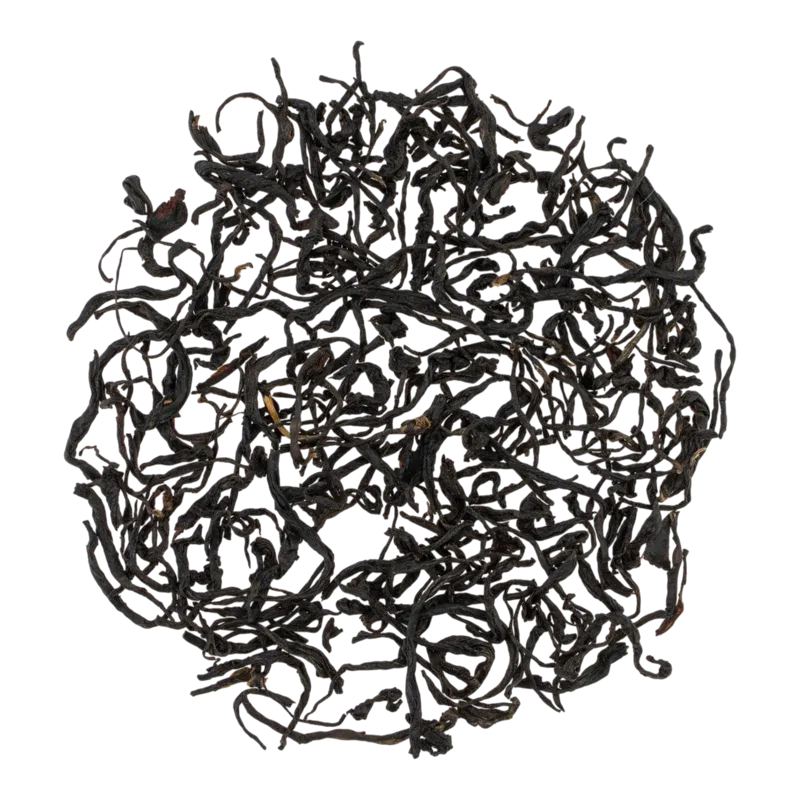
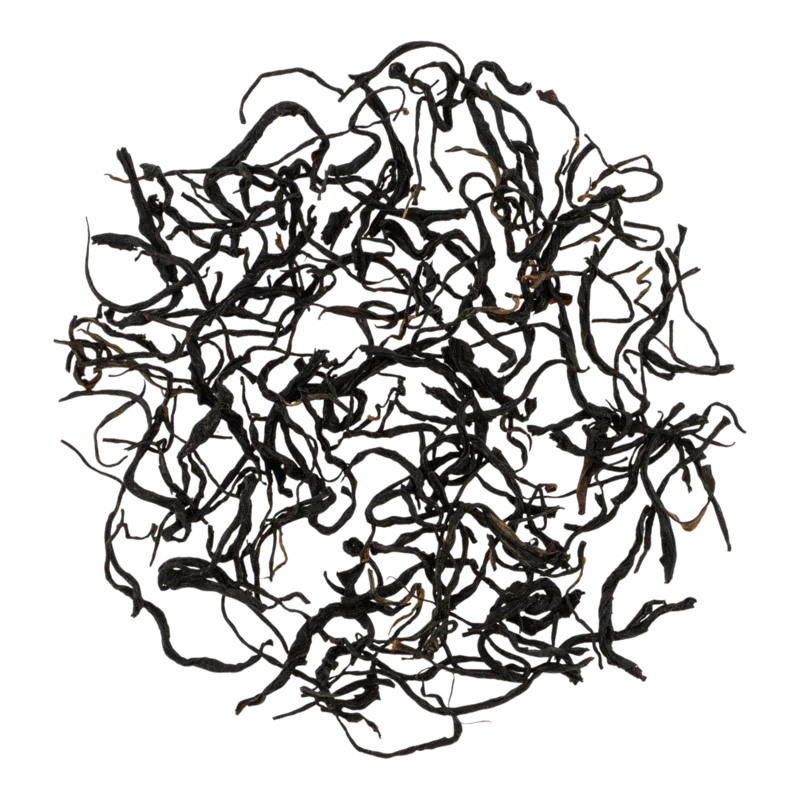
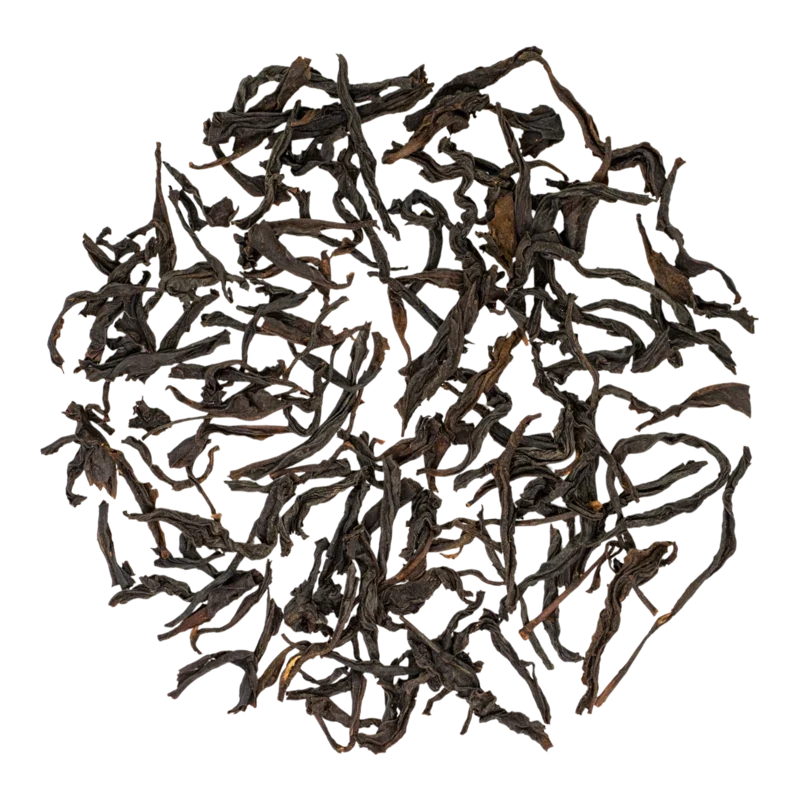
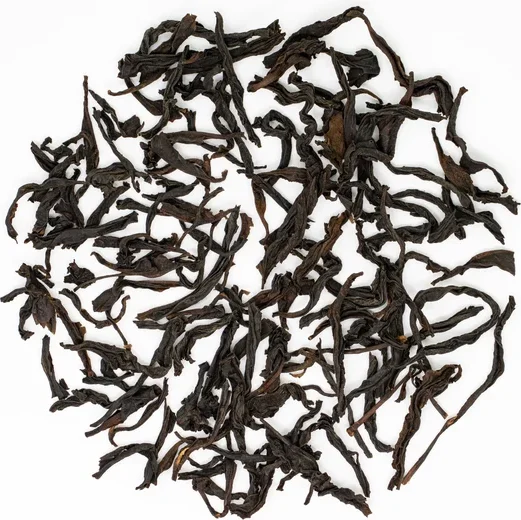
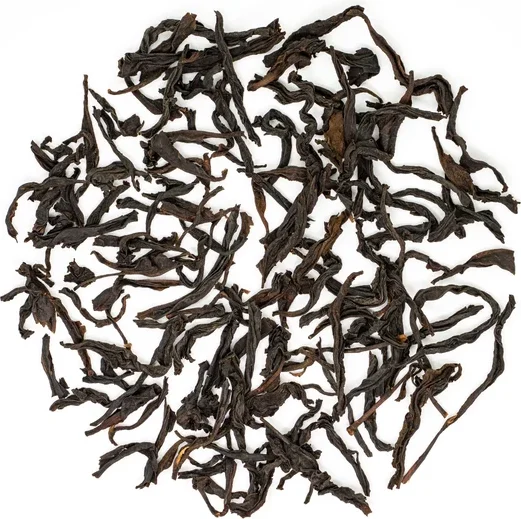
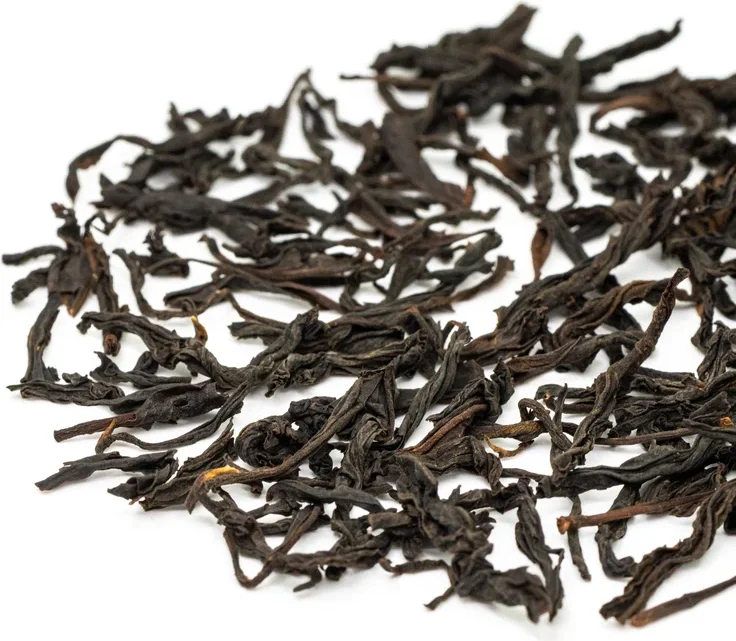
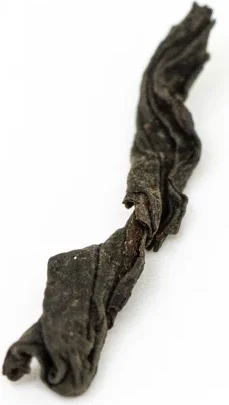
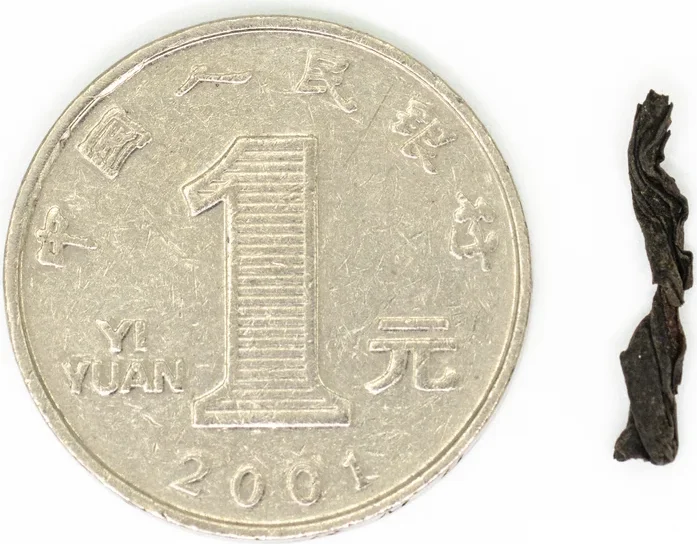
Dry Leaf Appearance: Thin, elegantly twisted in longitudinal direction leaflets of dark brown, almost black color, with noticeable amount of golden tips (buds). Twist is tight but not coarse. Leaf size — medium, shape characteristic of xiaozongs — elongated, slightly "wiry."
Dry Leaf Aroma: Complex, multifaceted, without smoky notes. Sweet floral-fruity tones dominate: lychee (荔枝, lìzhī), peach, honey, orchid. In the background — dried berries, light spicy sweetness. Characteristic "mountain air" — clean, cool, slightly moist note reminiscent of subtropical forest.
Liquor Aroma: Rich, warm, enveloping. Development of fruity notes (longan, lychee, ripe plum), floral honey and delicate spicy sweetness. Mineral background — that very "rock trail" (岩韵, yán yùn), relating this tea to Wuyi yancha. With cooling, caramel and dried fruit nuances emerge.
Liquor Color: Clear, bright, from golden-orange to rich amber-red — substantially lighter than most red teas. This light brightness is the calling card of quality smokeless Xiaozhong.
Long-lasting, sweet, refreshing, with notes of dried fruits, honey and light minerality. Deep, "meditative," returning sip after sip.
Spent Leaves: Whole, opened leaves and buds, copper-red color with olive tint at edges. Leaf is soft, elastic, "alive." Even oxidation without burnt or green areas.
Taste: Soft, silky-smooth, enveloping, without astringency and bitterness. The taste reveals notes of ripe tropical fruits (longan, lychee), floral honey, caramel, with light citrus acidity and distinct minerality. Liquor "body" — medium-full, oily-flowing. Characteristic of wild-growing raw material "枞味" (congwei) — "old tree taste," a subtle note that local masters describe as "sour-not-sour, fresh," reminiscent of wet moss and forest floor.
Alkaloids: Caffeine — ~3–4% of dry mass. Theobromine and theophylline — in trace amounts.
Amino Acids: Content — ~5–6% of dry mass — exceptionally high for red tea. Due to high-altitude growth, abundant cloudiness (reduction of direct sunlight promotes accumulation of amino acids instead of catechins) and diffused lighting in understory. L-theanine — main amino acid — provides characteristic umami sweetness, ensures mild relaxing effect.
Linalool and α-terpineol (floral notes), geraniol and citronellol (citrus nuances), β-damascenone (sweet fruity tones of aftertaste), 2-phenylethanol (rose nuance). Important feature: absence of guaiacol and pyrogallol — markers of smoke treatment present in classic smoked Xiaozhong.
Minerals: Potassium (K), phosphorus (P), iron (Fe), magnesium (Mg), manganese (Mn), zinc (Zn), fluorine (F). Elevated iron and potassium content due to granite parent rock.
Polyphenols: Total content — ~18–25% of dry mass, somewhat higher than lowland red teas, thanks to slowed vegetation and high ultraviolet levels. During oxidation, catechins (including EGCG — epigallocatechin gallate) transform into theaflavins (provide liquor brightness and refreshing astringency) and thearubigins (color depth and softness).
Vitamins: B-group vitamins (B₁, B₂, B₆), vitamin E, vitamin K. Vitamin C content is reduced compared to green tea due to oxidative processes of fermentation.
High polyphenol content, including theaflavins and thearubigins, provides powerful protection of cells from oxidative stress and free radical damage.
Synergy of caffeine and L-theanine creates a state of "calm alertness" — increased concentration and performance without nervousness and rapid heartbeat. High amino acid content provides especially mild, "meditative" tone.
Red tea polyphenols may contribute to lowering LDL cholesterol levels, improving vascular elasticity and normalizing blood pressure.
Unlike classic smoked Xiaozhong, the smokeless version does not contain pyrogallol — a pine resin product that irritates the GI tract mucosa. Fully oxidized red tea is generally gentler on the stomach than green or oolong tea.
Red tea has pronounced "warm" nature, effectively warms the body, improves peripheral circulation.
Tea polyphenols and fluorides show antibacterial action in the oral cavity, suppressing growth of cariogenic and periodontopathogenic bacteria.
L-theanine stimulates production of α-brain waves associated with states of relaxed concentration and creative thinking.
Deep, multi-layered taste and warm aroma of tea have beneficial effects on psycho-emotional state, providing feelings of comfort and tranquility.
Tea Amount: 5–7 grams per 150–200 ml water for flash steeping method (功夫泡, gōngfū pào); 3–4 grams per 200 ml for steeping in cup.
Teaware: Porcelain or glass gàiwǎn (盖碗, gàiwǎn) — ideal option, allowing maximum accurate transmission of terroir nuances and not "darkening" delicate aroma. Yíxīng clay teapot (宜兴紫砂壶, Yíxīng zǐshā hú) — acceptable, but teapot dedicated to red teas is recommended. Glass teaware allows admiring the light, clear liquor.
Water Temperature: 90–95 °C. Soft, purified water with low mineral content.
Elite tippy red tea from the same Tongmu region, produced exclusively from buds. Jin Jun Mei possesses a more delicate, silky taste with pronounced honey-floral notes. Wild-grown Xiao Zhong, made from more mature raw material (bud + 2–3 leaves), provides a fuller "body," deeper minerality, and more distinct "枞味."
One of the three famous Fujian gongfu red teas, from Fu'an County. Tan Yang is a plain-hilly tea with a soft, honey-floral profile, lacking the high-mountain minerality and "rocky trail" of Tongmu.
Anhui red tea with characteristic "Qimen aroma" (rose-apple-honey). More "light" and "airy" compared to the dense, mineral, "forest" character of Tongmuguan wild-grown Xiao Zhong.
Yunnan red tea from large-leaf raw material (C. sinensis var. assamica). Significantly stronger, more astringent, with spicy-peppery notes and powerful "body." Tongmuguan wild-grown Xiao Zhong, despite all its depth, differs with incomparably greater elegance and delicacy.
Direct suppliers from Tongmuguan, specialized tea shops with confirmed procurement channels. Largest producers from Tongmu — "Zhengshan Tang" (正山堂, Zhèng Shān Táng) and "Junde" (骏德, Jùndé).
Authentic smokeless Xiaozhong produces bright, clear, golden-orange liquor — substantially lighter than most red teas. Dark, murky liquor is a warning sign.
Characteristic mineral note, "mountain air" in aroma and taste — calling card of authentic Tongmuguan tea. Flat, unexpressive or artificially flavored taste indicates counterfeit.
In smokeless variant there should be no slightest hint of smoky aroma. Presence of light smokiness may indicate "outer mountain" (wai shan) tea masked by smoking.
Suspiciously cheap "Tongmu Xiaozhong" (below 15–30 dollars per 50 g) is almost certainly produced outside the protected zone.
No reviews yet. Tell us what you think of this tea.
Rate this tea and share your impressions. We review each submission before publishing it.