Brewing
Gongfu brewing
- Water temperature
- 75 °C
- Tea amount
- 5 g
- Water volume
- 100 ml
- First steep
- 10 s
- Time added per infusion
- 5 s
- Infusions
- 4

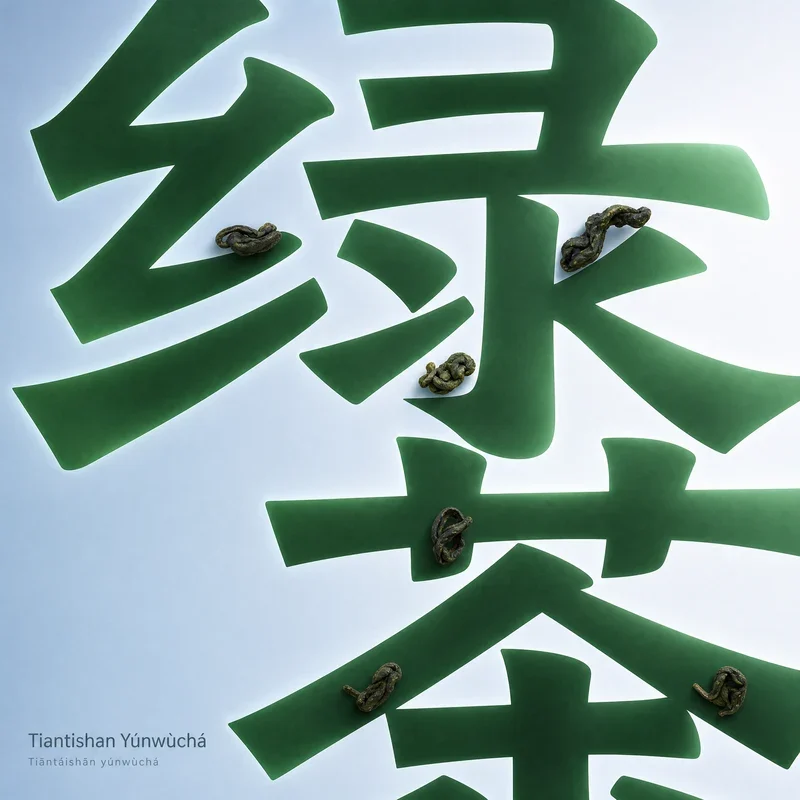
Tiāntáishān yúnwùchá
Choose a brewing method. Start with the recommended quantities and time, then adjust to taste.
Brewing
Brewing
Taste
Tea encyclopedia
Category: Historical famous tea of Zhèjiāng Province (浙江历史名茶). One of the four historical famous teas of Zhejiang. Product with protected geographical indication (中国国家地理标志产品, registered in 2010). Listed in "Famous Teas of China" (《中国名茶》) under number six.
Category: Historical famous tea of Zhèjiāng Province (浙江历史名茶). One of the four historical famous teas of Zhejiang. Product with protected geographical indication (中国国家地理标志产品, registered in 2010). Listed in "Famous Teas of China" (《中国名茶》) under number six.
Coordinates: 28°57′–29°21′ N, 120°41′–121°16′ E (protected designation area covering 15 townships and villages of Tiantai County).
Origin: China, Zhèjiāng Province (浙江省), Táizhōu Prefecture (台州市, Táizhōu shì), Tiāntái County (天台县, Tiāntái xiàn). The tea is produced on the mountain peaks of the Tiantai massif, with the most celebrated tea coming from the main peak — Huádǐng (华顶, Huádǐng, 1098 m), which is why historically it is also called Huádǐng Yúnwùchá (华顶云雾茶) or simply Huádǐng chá (华顶茶).
Type: Green tea (绿茶, lǜchá). Half pan-fired, half baked (半炒半烘, bàn chǎo bàn hōng) — with pan-firing predominating. Unoxidized, with minimal degree of oxidation.
Cultural Significance: Tiantishan Yunwucha is not merely a regional tea, but one of the most important nodes in world tea history. Mount Tiantai is the source of the "tea maritime route" (茶叶海上之路): from ancient Tiantai through the capital of the Yue kingdom — Shaoxing — to the port of Mingzhou (modern Ningbo) and further across the sea to Japan. Tea seeds from Tiantai not only became the foundation of Japanese tea culture, but also, according to established opinion, having reached the Hangzhou area during the Southern Dynasties period, subsequently gave rise to Xi Hu Longjing. The connection of tea with Buddhism of the Tiantai school gave birth to the unique ritual "offering tea to arhats" (罗汉供茶, Luóhàn gòng chá) at Fanguang Monastery on the stone bridge Shiliang, which was transferred to the Japanese monastery Eiheiji and is preserved there to this day.
History: Tiantishan Yunwucha possesses one of the most ancient documented histories among all Chinese green teas.
Name Breakdown: Tiantishan (天台山) — mountain massif in eastern Zhejiang, sacred mountain of Daoism and Buddhism of the Tiantai school. Yúnwù (云雾) — "clouds and mist," indicating the characteristic high-altitude climatic conditions in which the tea grows. Chá (茶) — "tea." The full name literally means: "Cloud-mist tea from the Tiantai Mountains." Historical alternative name — Huádǐng Yúnwùchá (华顶云雾茶), after the main peak of the massif.
Cultivar: Local population variety (群体种, qúntǐ zhǒng) — historically formed genetic mixture of lines adapted to the high-altitude cold climate of Mount Tiantai. The bushes possess high frost resistance and a short growing season, but produce shoots with elevated amino acid content.
Picking: Spring only (春茶). Due to the high-altitude cold climate (average annual temperature at Huading — 12.2°C), buds open significantly later than in lowland areas. Harvest begins after Xiaoman (小满, "Lesser Fullness," approximately May 20–22), which is 3–4 weeks later than most Zhejiang green teas. According to Qing sources, monks at Huading harvested tea "necessarily around Lixia" (立夏, "Beginning of Summer"), "for this place is cold, and [tea] ripens later."
Pluck Standard: One bud and one to two leaves in initial opening stage (一芽一叶至一芽二叶初展).
Raw Material: Shoots must be sturdy, with abundant white down. To preserve the unique character of the tea, only spring flush is harvested — summer and autumn harvests are not produced.
Altitude: 600–1098 m. The finest lots come from 800–900 m around Huádǐng peak and the famous Guiyun Cave (归云洞, "Cave of Returning Clouds"), near the ancient "Immortal Ge's Tea Garden."
Climate: High-altitude, harsh. Average annual temperature in the Huading zone — about 12.2°C (at county level — 17.1°C). Annual precipitation — about 1900 mm. All four seasons are shrouded in dense mists, with frequent snowfall in winter. Locals say: "On Huading there is no sixth month [i.e., summer]; when winter wind blows — snow falls immediately" (华顶山上无六月,冬来阵风便下雪). Such harsh climate slows vegetation but promotes accumulation of amino acids and aromatic compounds.
Soil: Mountain sandy-loam soils (砂质壤土, shāzhì rǎng tǔ), deep and fertile, with high organic matter content. Acidic reaction (pH 4.5–6.0), enriched with mineral elements — zinc and selenium.
The Tiantai mountain massif stretches from northeast to southwest, connecting the Xianxialing ridge with the Zhoushan archipelago, and serves as the watershed between the Cao'e and Yong rivers. The main peak — Huádǐng (华顶峰, 1098 m), is surrounded by a ring of peaks, "like lotus petals, with Huading as their crown" (状如百叶莲花,华顶正当花之顶). Tea gardens are located predominantly at altitudes of 800–900 m, scattered in small plots among forest.
Historically, tea bushes were planted scattered in small groups among tall trees — cryptomerias (柳杉), golden larches (金钱松), rhododendrons and bamboo, which form natural windbreak "screens" from high-altitude winds. In winter, soil is covered with bamboo leaves and dry grass to retain moisture and provide additional fertilization. Modern plantations also follow ecological methods — in 2022, all of Tiantai County passed certification as a "green" agricultural production base of the province.
Harvested material is spread in a thin layer in a ventilated room to equalize moisture and begin aroma development.
Kill-green is conducted at high temperature to completely stop enzymatic processes and form the aroma foundation. A wok pan is used.
Hot leaves are quickly spread and fanned to reduce temperature, preventing "steaming" and yellowing.
Gentle hand rolling-rubbing (搓揉, cuō róu) to break down cellular structure and form shape without excessive damage to shoots.
Drying to reduce moisture to intermediate level.
Another cycle of fanning and spreading.
Formation of final shape and flavor, drying with simultaneous "raising of down" (提毫, tíháo) — when rotating in the wok, white down on the leaf surface stands up and becomes visible.
Final drying at reduced temperature to stabilize moisture, fix aroma and ensure preservation.
Finished tea is slightly cooled and hermetically packaged.
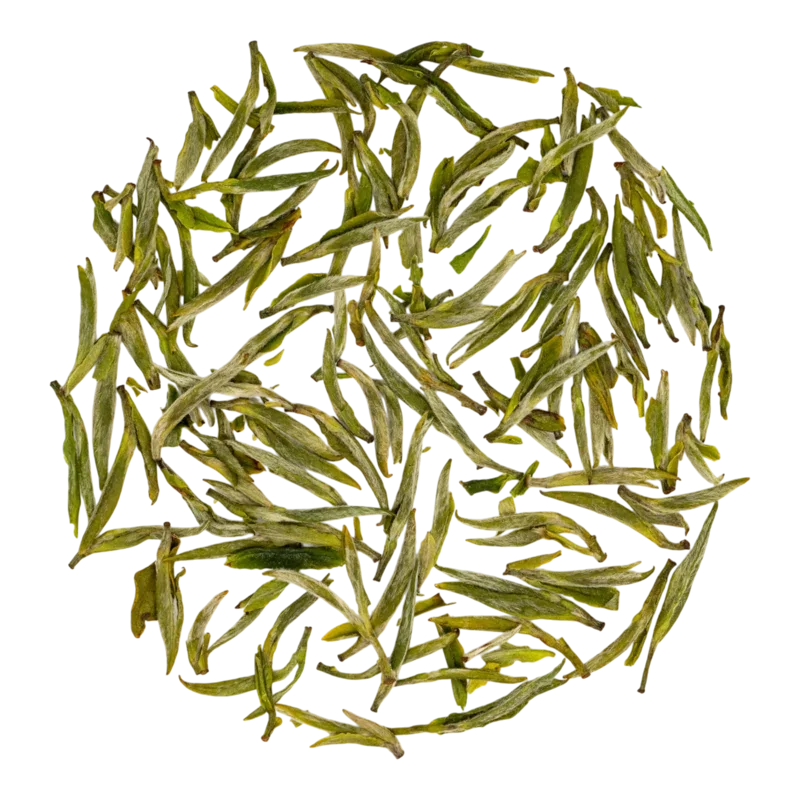
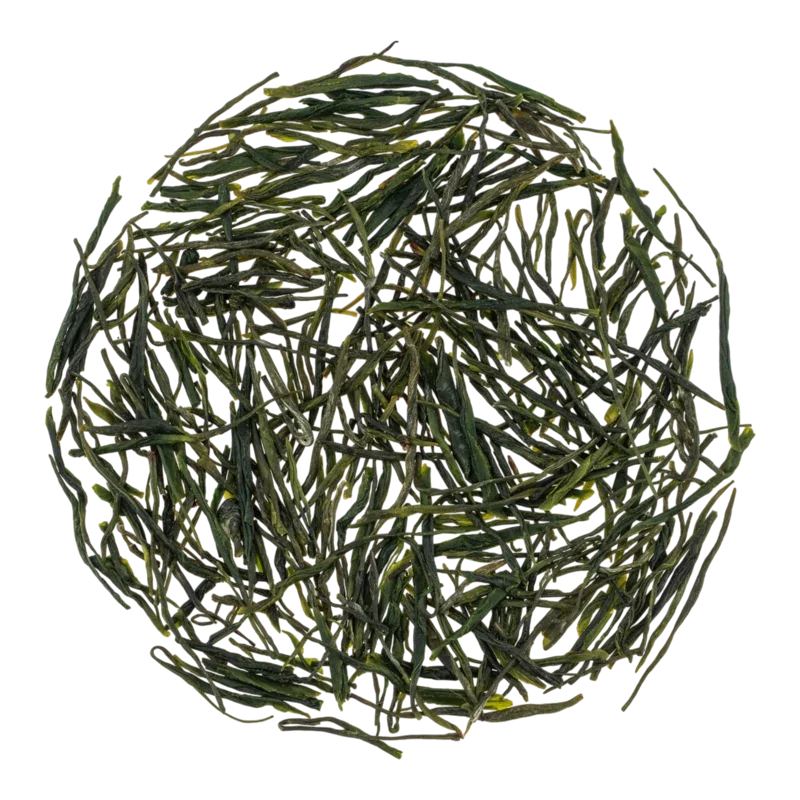
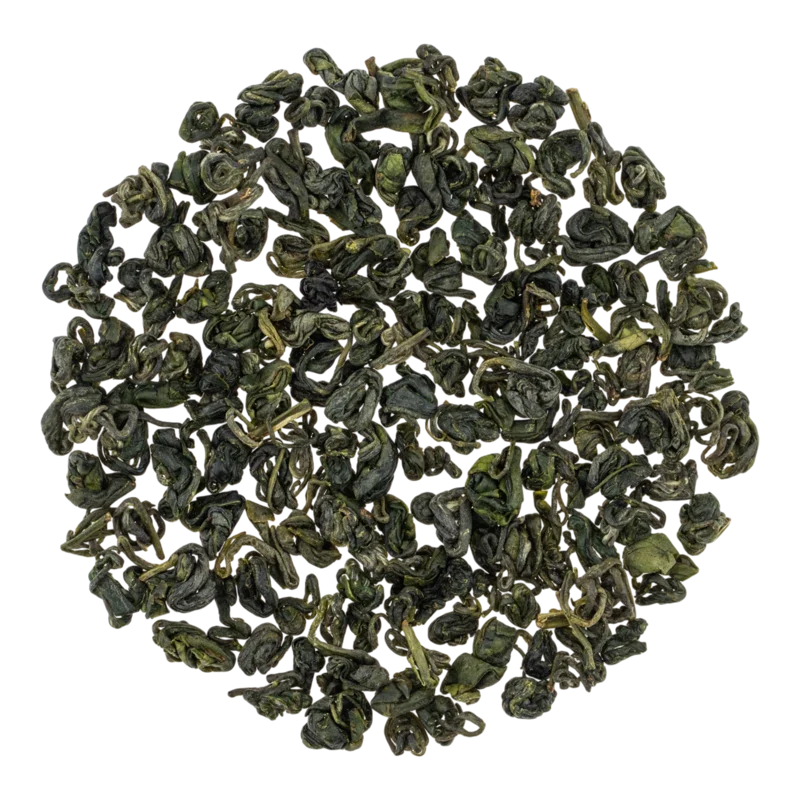
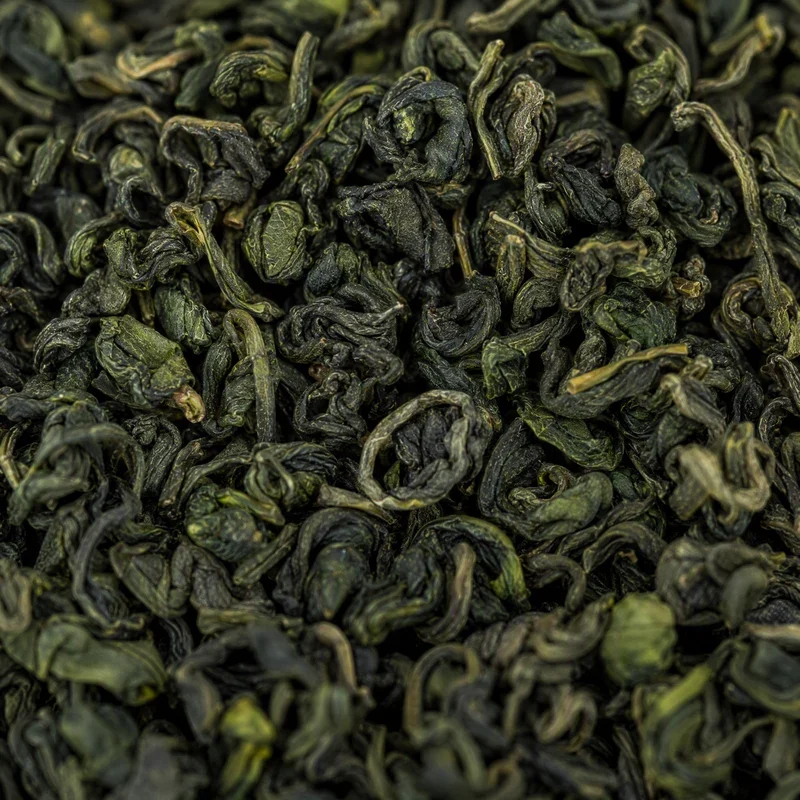
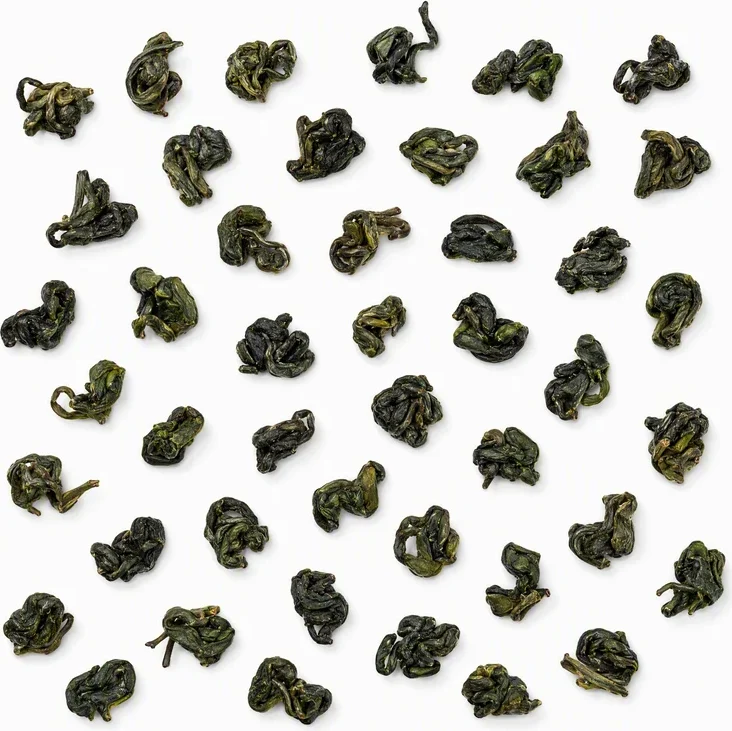
Dry Leaf Appearance: Thin, tightly twisted, slightly curved (细紧弯曲, xìjǐn wānqū). Shoots are sturdy, with abundant white down (芽毫壮实显露). Color — rich emerald green with luster (翠绿光润).
Dry Leaf Aroma: High and clean (清高, qīnggāo), with nutty-chestnut notes (栗香, lìxiāng). Characteristic aroma persistence — it does not dissipate quickly.
Liquor Aroma: Intense, high, lasting (高锐浓郁持久). Chestnut tone is complemented by a delicate sweet-floral note. In the finest lots from Huading, the aroma is described as "orchid-like" (芳味如兰).
Liquor Color: Tender yellow-green, clear and bright (嫩绿明亮 / 嫩黄清澈).
Spent Leaves: Tender, uniform, bright green with luster (嫩匀绿明). Shoots open completely, demonstrating quality raw material.
Taste: Full-bodied and rich (浓厚, nónghòu), simultaneously fresh and "clean" (鲜爽清冽, xiānshuǎng qīngliè). Pronounced sweetness (甘甜, gāntián), felt from the first sip. Minimal bitterness and astringency. Aftertaste — long-lasting, returning sweetness (回甘, huígān) comes quickly and gently. The tea withstands multiple infusions well — "three steepings, and aroma does not fade" (冲泡三次尤有余香).
Amino Acids: Elevated content — one of the key features of high-altitude cloud-mist terroir. L-theanine predominates, determining the "fresh sweetness" and relaxing component. According to sources, amino acid content is substantially higher than average for green teas of the region.
Typical level for green teas — around 2.5–3.5% dry weight. In combination with high L-theanine provides gentle stimulation without sharp nervous excitement.
Zinc, selenium (characteristic of Tiantai mountain soils), potassium, manganese, fluorine.
Chestnut aroma is formed by pyrazines and furan compounds during pan-firing. Floral notes — linalool, geraniol. Long-lasting aroma persistence is linked to the combination of pan-firing and final low-temperature drying.
Polyphenols: Moderate content for high-altitude green tea — approximately 16–22%. Reduced catechin levels compared to lowland teas due to altitude, low temperatures and diffused light, which explains the mild, non-astringent taste. Main catechins: EGCG, ECG, EGC.
Vitamins: Vitamin C (elevated content thanks to gentle half pan-fired technology), B-group vitamins (B₁, B₂), vitamin E.
High L-theanine content combined with caffeine provides calm, focused alertness — an ideal tea for meditative practices, which explains its centuries-long connection with Buddhism.
Catechins and vitamin C jointly provide neutralization of free radicals.
Polyphenols stimulate secretion of digestive enzymes, promoting fat breakdown.
Regular consumption of green tea with high catechin content may contribute to normalization of cholesterol levels and blood pressure.
Vitamin C, polyphenols and trace elements (zinc, selenium) have general strengthening effects.
L-theanine promotes generation of brain α-waves, improving concentration and memory.
Catechins, especially EGCG, possess anti-inflammatory properties.
Not recommended on empty stomach (tannins may irritate gastric mucosa). For caffeine sensitivity — consume in first half of day.
Tea Amount: 3 g per 150 ml (1:50 ratio). For gaiwan: 5 g per 100–120 ml.
Teaware: Glass tumbler (玻璃杯) — recommended option, allowing observation of beautiful shoot opening. Porcelain gàiwǎn (盖碗) for more controlled brewing.
Water Temperature: 75–85°C. For the most delicate material (特级, one bud) — 75–80°C. Boiling water is categorically not recommended: at temperatures above 85°C chlorophyll is destroyed, liquor yellows, coarse bitterness appears.
Shelf Life: Best taste — in first 6–12 months after production. New tea is recommended to be aged 10–15 days in closed packaging to "remove fire qi" (褪火气) before consumption. After opening package — consume within 2–3 weeks to preserve aroma freshness.
Airtight packaging — foil bag inside tin or pewter container. Protection from light, moisture and foreign odors.
Temperature: Optimally — refrigerator, 0–5°C, with strict sealing. For current consumption (up to 2 months) — cool dark place.
Classic "cloud-mist" tea from Jiangxi Province. Both teas are high-altitude, with elevated amino acid content and chestnut aroma. However, Lushan Yunwucha usually has more pronounced acidity and "strong" character, while Tiantishan Yunwucha is famous for deeper sweetness and greater mellowness. According to sources, Tiantishan Yunwucha surpasses Lushan Yunwucha with "an additional layer of chunxiang (醇香, mellow-rich aroma)."
Presumed "descendant" of Tiantai tea seeds. Longjing is flat, pan-fired at higher temperature, with bean-chestnut aroma and oily texture. Tiantishan Yunwucha is half pan-fired, half baked, twisted, with more delicate texture and pronounced sweetness due to high-altitude terroir.
Also high-altitude tea from mountain system shrouded in mists. Mao Feng is lighter, more delicate, with floral notes; Tiantishan Yunwucha is denser and richer, with more pronounced chestnut tone.
One of the few Chinese steamed green teas. Yulu gives a more "grassy," green profile with distinct umami; Tiantishan Yunwucha with its pan-firing is more "warm," with pronounced chestnut aroma.
Price Category: Wide range. Ordinary Tiantishan Yunwucha — from 200 yuan per 500 g. Highest grade tea from Huading — from 1000 yuan and higher. Price depends on specific altitude of origin, raw material grade and producer reputation.
Genuine Tiantishan Yunwucha — thin, slightly curved, with abundant white down. Coarse, thick, flat leaves — sign of substitution.
Authentic chestnut tone with clean "high" note. If aroma is dull, "grassy" or with foreign odors — tea is low quality or counterfeit.
Tender green or tender yellow, clear and bright. Dark or turbid liquor — sign of old tea or processing violations.
Genuine tea retains aroma on 3rd and even 4th infusion. Rapid flavor loss — sign of substitution with material from lower areas.
Demand confirmation from protected geographical indication zone (Tiantai County, 15 settlements). Tea sold under this name but produced outside the protected zone is not authentic.
No reviews yet. Tell us what you think of this tea.
Rate this tea and share your impressions. We review each submission before publishing it.