Brewing
Gongfu brewing
- Water temperature
- 75 °C
- Tea amount
- 5 g
- Water volume
- 100 ml
- First steep
- 10 s
- Time added per infusion
- 5 s
- Infusions
- 3


Shímén yín fēng
Choose a brewing method. Start with the recommended quantities and time, then adjust to taste.
Brewing
Brewing
Taste
Tea encyclopedia
Category: "Ten Famous Teas of Hunan" (湖南十大名茶, Húnán shí dà míng chá, since 2005). Product with protected geographical indication — registered as geographical certification mark (地理证明商标, dìlǐ zhèngmíng shāngbiāo, 2007). "Well-Known Trademark of China" (中国驰名商标, Zhōngguó Chímíng Shāngbiāo, 2012).
Category: "Ten Famous Teas of Hunan" (湖南十大名茶, Húnán shí dà míng chá, since 2005). Product with protected geographical indication — registered as geographical certification mark (地理证明商标, dìlǐ zhèngmíng shāngbiāo, 2007). "Well-Known Trademark of China" (中国驰名商标, Zhōngguó Chímíng Shāngbiāo, 2012).
Coordinates: East longitude 110°29′–111°32′, north latitude 29°16′–30°08′.
Origin: China, Húnán Province (湖南省, Húnán Shěng), Chángdé City (常德市, Chángdé Shì), Shímén County (石门县, Shímén Xiàn). 12 townships, 3 agricultural forestry farms.
Type: Green tea (绿茶, lǜchá). Non-oxidized; degree of oxidation minimal (less than 5%).
Shimen Yin Feng is a direct descendant of "Niudi" tea (牛抵茶, "Butting Bull Tea"), which was imperial tribute from Song era through Qing era — about 800 years of continuous "career" at court.
Jiashan Temple in Shimen is the birthplace of the famous formula "茶禅一味" (tea and zen — one taste), which Tāng monk Shān Huí (善会) first pronounced, and Sōng master Yuanwu Keqin (圆悟克勤) wrote in calligraphy and transmitted to Japan, where it became the cornerstone of Japanese tea ceremony.
In 2003 at an auction of famous teas of Shimen, 100 g of "Yin Feng Wang" were sold for 53,000 yuan — a record price that made the brand famous throughout the country.
The Hupingshan Mountains, where core plantations are located, are a "refuge" of ancient flora and fauna of the Tertiary period — species that disappeared in the rest of Eurasia are preserved here. This is one of the most ecologically pristine zones on the 30th parallel.
The soils of Shimen County are part of Hunan's "selenium belt" — one of the few zones in China where selenium naturally occurs in soil in bioavailable form.
Cultural Significance: Shimen Yin Feng is the main tea brand of Shimen County and one of the flagships of Hunan tea. The connection with Jiashan Temple and the concept "tea and chan — one taste" gives it special "tea-Buddhist" status. Shimen County holds the titles "Birthplace of Famous Tea of China" (中国名茶之乡) and "Birthplace of Tea Zen of China" (中国茶禅之乡).
Cultivar: Main — Shímén Qúntǐ Zhǒng (石门群体种, Shímén Qúntǐ Zhǒng) — local centennial population variety, and Báiháo Zǎo (白毫早, Báiháo Zǎo) — state elite line of early vegetation type, possessing dense down. Auxiliary: Fúdǐng Dàbáichá (福鼎大白茶), Zhūyè Qí (槠叶齐, Zhūyè Qí) and other clonal varieties. Camellia sinensis var. sinensis. Age of main bushes — over 30 years. Weight of one hundred buds (one bud + one leaf) — about 45 g.
Picking: Spring, in the period around the Qīngmíng festival (清明, early April). Due to the high-altitude location of plantations and late awakening of bushes, harvest begins later than in flatland areas. For "Yin Feng Wang" (银峰王, "King of Silver Peak") — a particularly elite subtype — harvest is limited to 2–3 days around Qingming, strictly in clear weather from 9:00 to 15:00.
Pluck Standard: Special grade — exclusively single buds (单芽, dān yá), length no more than 2.5 cm. First grade — one bud with beginning-to-unfold leaf (≥80%). Second grade — one bud with two leaves. Strictly observed is the rule of "four prohibitions" (四不采, sì bù cǎi): do not collect shoots in rain, do not collect dewy shoots, do not collect purple shoots, do not collect damaged and weakened shoots. Also not permitted are "fish leaves" (鱼叶), scales and petioles.
Raw Material: "Tender, uniform, clean, even" (嫩、匀、净、齐).
Altitude: 300–1200 meters above sea level. The core of quality raw material — high-mountain plantations at elevations of 600 m and higher, in the zone of constant clouds and fogs, with irrigation by mountain streams.
Climate: Subtropical monsoon, with pronounced vertical gradient. Average annual temperature 13–17°C (depending on altitude). Annual precipitation — 1300–1900 mm. Number of foggy days — more than 180 per year. Daily temperature range — more than 8°C. Abundance of diffused light promotes accumulation of amino acids (spring tea: amino acids ≥3.32%).
Soil: Yellow-brown (黄棕壤, huáng zōng rǎng) and red (红壤, hóng rǎng) soils with acidic reaction (pH 5.0–6.5). Enriched with selenium (0.82 mg/kg) and zinc (1.6 mg/kg) — Shimen is part of the "selenium belt" of Hunan.
Forest cover — 81%. Concentration of negative air ions — 50 times higher than urban level. The area is certified as "China's Natural Oxygen Bar" (中国天然氧吧). Part of the plantations have passed EU organic certification.
Topography: Shímén County is located at the eastern extremity of the Wǔlíng mountain range (武陵山脉, Wǔlíng Shānmài), in the zone of intersection of four provinces (Hunan, Hubei, Guizhou, Chongqing). Mount Húpíng (壶瓶山, Húpíng Shān), the highest peak of Hunan (2098.7 m), is located in the western part of the county and is the core of the National Nature Reserve. The region is considered a "refuge of Tertiary flora and fauna" — one of the most ecologically intact zones at this latitude in Eurasia.
Fresh leaf is spread in a layer no more than 3 cm in a clean, ventilated room for 4–10 hours. Goal — initial moisture evaporation and aroma formation.
Temperature of flat wok (平口锅) — 140°C. Batch — 500 g. Pan-firing with both hands, alternating "closed" (闷, mèn) and "scattering" (抖, dǒu) modes. Readiness is determined by loss of gloss, leaf softening and appearance of clean aroma.
Fixed leaf is tossed in bamboo sieve 10 or more times for rapid cooling and prevention of yellowing (闷黄).
Temperature 85°C, gentle stirring with both hands until moisture about 40%.
Temperature 60°C. Light one-sided rolling until moisture ~30%. Movements — from light to more intensive, with periodic scattering to prevent sticking.
Temperature 50°C. Right hand straightens leaf forward, forming straight "needle-like" shape. Movements extremely delicate. Readiness — 80% dryness.
Brief (about 4 minutes) cooling in air for moisture equalization.
Temperature 50°C. Rhythmic friction of leaves against each other reveals and straightens silvery down, creating characteristic "silver coat" on surface of stem. This is the signature operation of Shimen Yin Feng.
Final drying at 70°C on charcoal until residual moisture no more than 5%. Charcoal-firing (木炭焙, mùtàn bèi) technology delicately fixes aroma and protects down from damage.
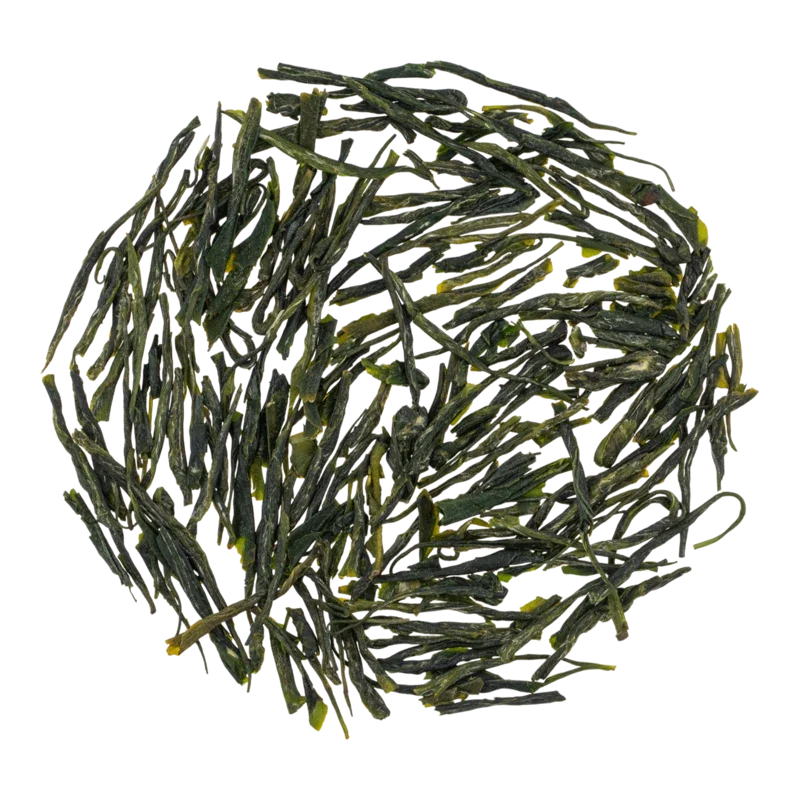
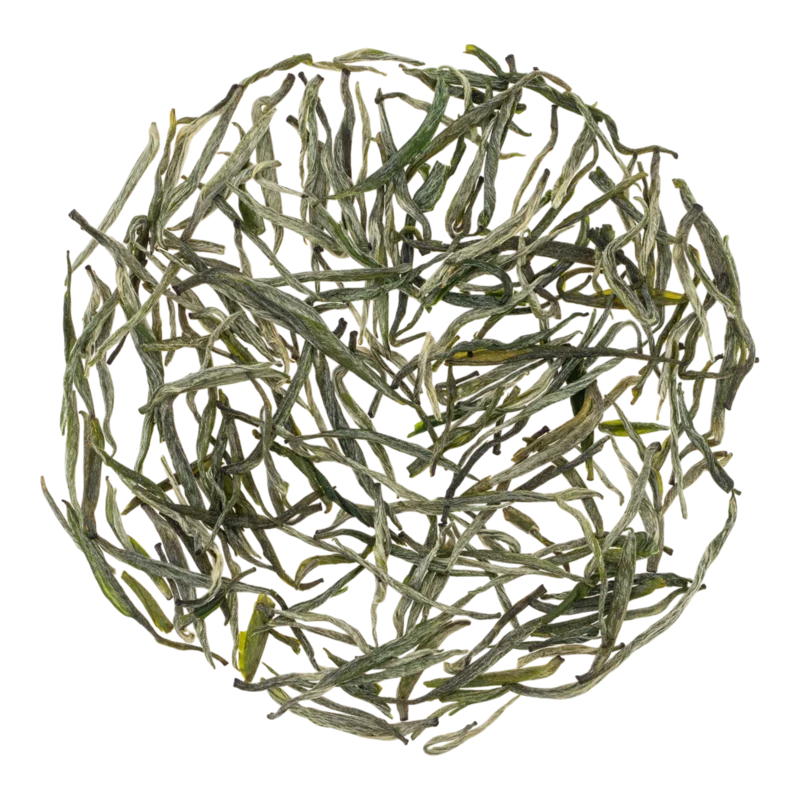
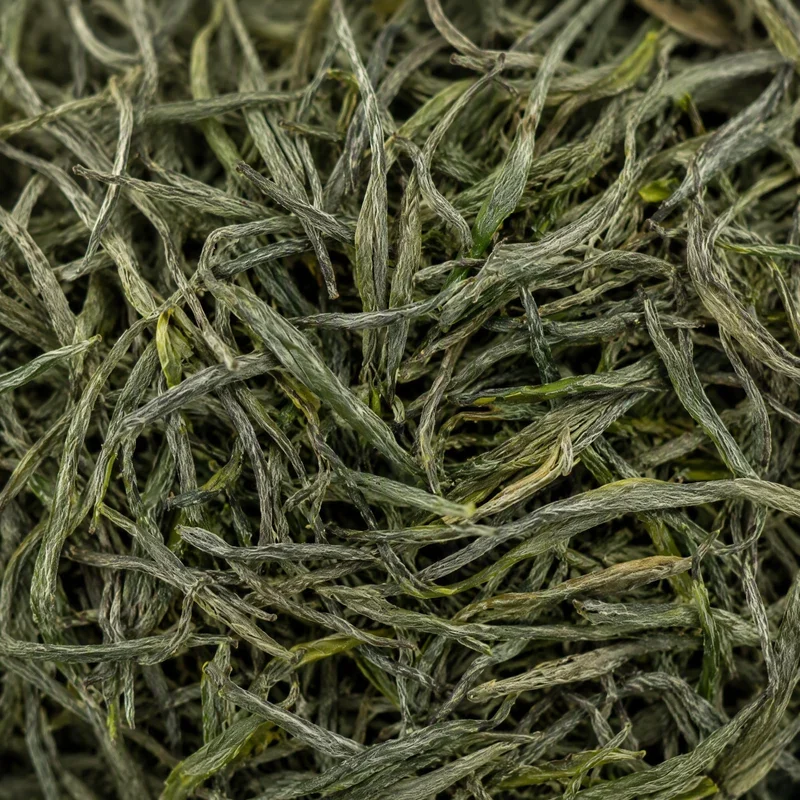
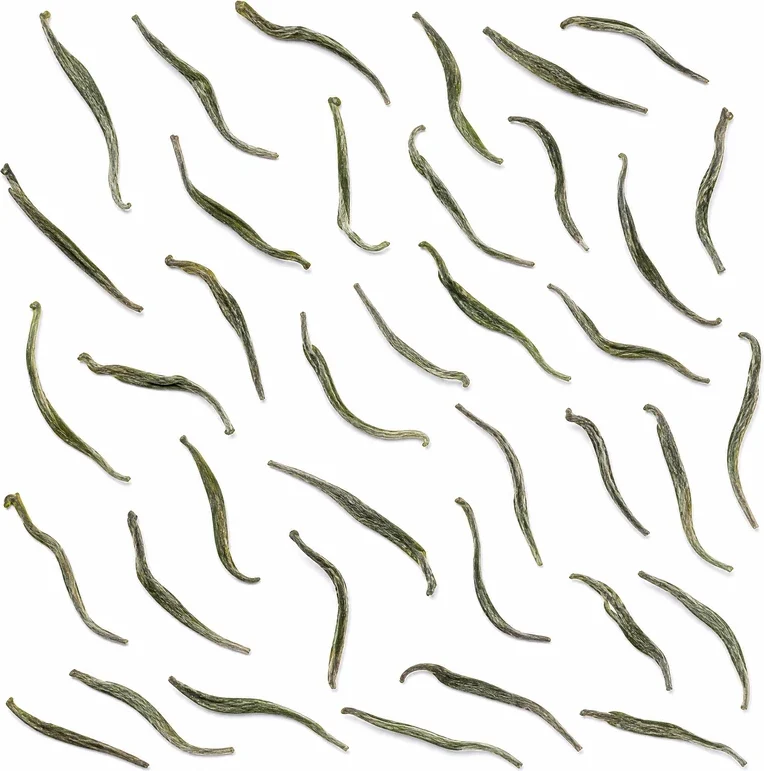
Dry Leaf Appearance: Thin, straight, uniform stems (紧细匀直, jǐn xì yún zhí) with pronounced "tip" (锋苗, fēng miáo). Abundantly covered with silvery down (银毫满披, yín háo mǎn pī). Color — emerald green with oily luster (翠绿油润, cuì lǜ yóu rùn).
Dry Leaf Aroma: Tender (嫩香, nèn xiāng), clean, high, with chestnut notes (栗香, lì xiāng) — especially in special grade. Characteristic soft "florality" with nuances of lily of the valley.
Liquor Aroma: High and persistent (清高持久, qīng gāo chíjiǔ). Main feature — multi-layered: "first infusion — clean aroma (清香), second — rich taste (味浓), third and fourth — subtle trail (幽香犹存)". According to tasters' testimonies, the best samples retain aroma until the seventh infusion.
Liquor Color: Bright green, transparent and clear (亮绿, liàng lǜ / 嫩绿明亮, nèn lǜ míng liàng).
Spent Leaves: Tender green, fresh, lively and uniform (嫩绿鲜活匀整). Buds intact, well-opened.
Taste: Fresh and brisk (鲜爽, xiān shuǎng), simultaneously rich and mellow (醇厚, chún hòu). Returning sweetness (回甘, huí gān) — long-lasting and distinct (回味甘甜, huí wèi gān tián). Astringency minimal. Body — medium to full, with sensation of "juiciness."
Alkaloids: Caffeine — approximately 25–35 mg/g. Theobromine, theophylline — trace amounts.
Amino Acids: Not less than 3.32% (spring tea). L-theanine provides "umami" freshness and mild tonic effect.
Record content of EGCG — 8.22%, which, according to producer data, is one of the highest indicators among Chinese green teas. EGCG is the most bioactive catechin, determining antioxidant potential.
Not less than 45% (special grade) — above average for green teas, which explains excellent resistance to infusions.
Essential Oils: Chestnut aroma is formed by pyrazines and furanones; tender floral notes — by linalool and geraniol.
Minerals: Selenium (0.82 mg/kg in soil, significant part transfers to leaf), zinc (1.6 mg/kg), potassium, phosphorus, magnesium.
Polyphenols: Not less than 30% (for first grade). High content is due to mountain terroir and temperature fluctuations.
Vitamins: Vitamin C, B-group vitamins, vitamin E.
Record content of EGCG (8.22%) provides one of the highest antioxidant activities among green teas. Polyphenols neutralize free radicals, slowing cellular aging.
Catechins accelerate fat metabolism, promote reduction of LDL cholesterol levels and reduce risk of atherosclerosis.
Catechins suppress activity of cariogenic bacteria, reducing dental plaque formation.
Combination of caffeine and L-theanine provides steady, sustained tone and mental clarity.
Thanks to selenium-bearing soils, the tea is a natural source of bioavailable selenium — a trace element important for immunity and thyroid function.
Moderate stimulation of digestive enzyme secretion.
Polyphenols and vitamin C in complex strengthen body's protective functions.
Tea Amount: 3 g per 150 ml (ratio 1:50).
Teaware: Glass cup (透明玻璃杯) — optimal for observing the opening of silvery buds. Preferably mountain spring water; avoid alkaline water that destroys liquor color.
Water Temperature: 80–85°C. Absolutely cannot use boiling water: temperature above 85°C destroys L-theanine and leads to excessive astringency.
Airtight packaging, protection from light, moisture and foreign odors. Optimal — refrigerator at 0–5°C.
Fresh tea. Most vibrant aroma and taste — in first 6 months after production.
Keep fresh tea 5–7 days in dark place at room temperature for "fire retreat" (褪火). After opening, store in refrigerator and consume within a month.
Famous tea from Henan, also possessing abundant down. Maojian is more "slender" in form, with delicate floral aroma. Shimen Yin Feng is richer in body and taste, with more pronounced chestnut accent and better resistance to infusions.
Jiangxi "eyebrow-shaped" green tea with abundant down. Similar in visual impression, but Yin Feng is produced from different cultivars (mountain population vs. Damianbai), possesses deeper chestnut aroma and fuller body.
Another famous Hunan tea from the mountain belt of Wuling, but from the western part of the range. Lighter, with pronounced "greenness" and grassiness. Shimen Yin Feng is fuller, with longer-lasting returning sweetness.
Hunan "needle-shaped" tea. Distinguished by thinner, longer "needle" and delicate "pine" aroma. Yin Feng is stronger, with accent on chestnut and persistence.
Price Category: Special grade — 1000–3000 yuan per jin (500 g); first grade — 600–1200 yuan; second grade — 400–800 yuan. "Yin Feng Wang" (银峰王) — elite subtype: in 2003 at auction 100 g were sold for record 53,000 yuan.
Price Factors: Grade, harvest time (pre-Qingming tea more expensive), specific plantation (high-altitude Hupingshan — most expensive), hand vs. machine processing, presence of organic certification.
No reviews yet. Tell us what you think of this tea.
Rate this tea and share your impressions. We review each submission before publishing it.