Brewing
Gongfu brewing
- Water temperature
- 75 °C
- Tea amount
- 5 g
- Water volume
- 100 ml
- First steep
- 10 s
- Time added per infusion
- 5 s
- Infusions
- 3

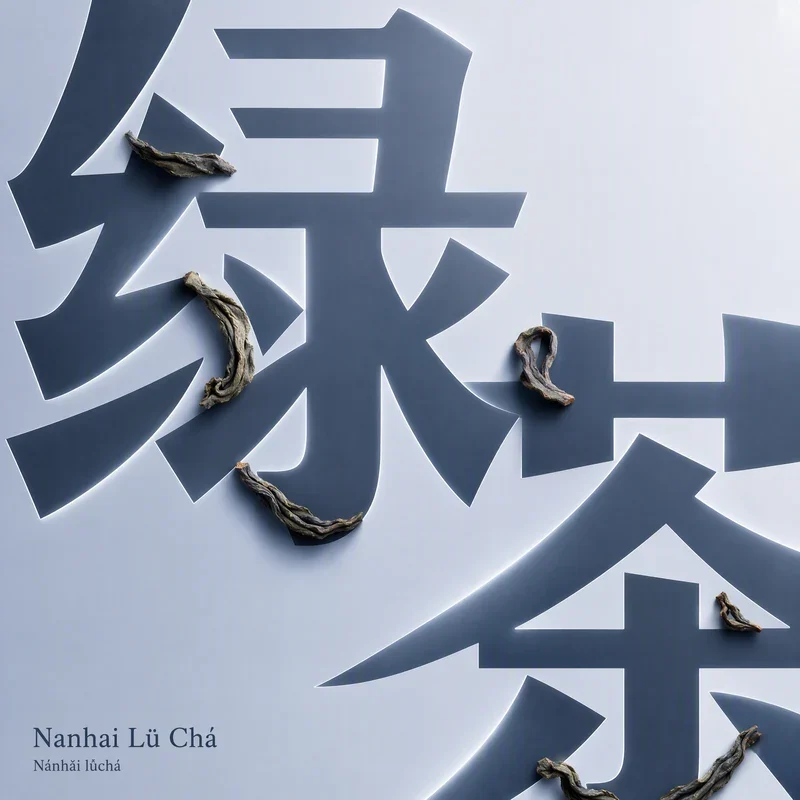
Nánhǎi lǜchá
Choose a brewing method. Start with the recommended quantities and time, then adjust to taste.
Brewing
Brewing
Taste
Tea encyclopedia
Category: Product of Geographical Indication of the PRC (国家地理标志保护产品). Former "big five tea factories of China" (中国五大茶场, 1989). Special prize "Zhong Cha Bei" (中茶杯特等奖, 2017). Prize of China International Tea Expo (中国国际茶业博览会优质奖, 2018). Part of Wǔzhǐshān Group (海垦).
Category: Product of Geographical Indication of the PRC (国家地理标志保护产品). Former "big five tea factories of China" (中国五大茶场, 1989). Special prize "Zhong Cha Bei" (中茶杯特等奖, 2017). Prize of China International Tea Expo (中国国际茶业博览会优质奖, 2018). Part of Wǔzhǐshān Group (海垦).
Coordinates: Approximately 19°30′–19°45′ N, 110°10′–110°25′ E. Elevation — 50–200 m above sea level.
Origin: China, Hǎinán Province (海南省, Hǎinán Shěng), Ding'an County (定安县, Dìng'ān Xiàn). Hainan is China's southernmost tea province (18–20° N), the country's only tropical tea region. The Nánhǎi Tea Gardens (南海茶园, Nánhǎi Cháyuán) are located in the volcanic Se-belt — a zone of volcanic ash and lava distribution, forming soils with abnormally high selenium content.
Type: Green tea (绿茶, lǜchá), unfermented. By technology — pan-fired (炒青绿茶, chǎoqīng lǜchá). By shape — spiral (卷曲形, juǎnqū xíng) with down. Produced in three lines: Se-green premium (特级富硒绿茶, tèjí fù xī lǜchá) — single bud, Se ≥0.8 mg/kg, chestnut aroma; high-aromatic (高香绿茶, gāoxiāng lǜchá) — from Qilan and Huangguanyin cultivars, floral profile; traditional (传统炒青, chuántǒng chǎoqīng) — mass market, for daily consumption and packaging.
For Nanhai Lü Cha production, medium-leaf and small-leaf varieties of Camellia sinensis var. sinensis are used, selected for resistance to heat and high humidity of tropical climate:
Single bud (单芽), dense, with down. Se ≥0.8 mg/kg. Chestnut aroma. From 800 yuan/500 g.
One bud + one leaf (一芽一叶). 300–500 yuan/500 g.
One bud + two leaves (一芽二叶). Mass market, used for bagged tea.
Thanks to Hainan's tropical climate, tea bushes vegetate year-round. Picking is possible 10–11 months per year. Early spring Hainan tea reaches market in January — two to three months earlier than in other Chinese provinces, allowing positioning as "first spring tea of the year" (华夏第一早春茶). Spring picking (1–3 month) — highest quality; summer and autumn — for mass lines.
Climate: Tropical monsoon (热带季风气候, rèdài jìfēng qìhòu). Average annual temperature — 22–25°C. Annual precipitation — about 2200 mm. Cloud cover — over 260 days per year — one of the highest indicators among China's tea regions. Diffused light comprises more than 75% of total light flow. Long summer without frost, short dry season. Tea bushes do not enter winter dormancy, ensuring year-round vegetation and high productivity.
Soil: Volcanic — developed on substrate of volcanic ash and lava (火山灰及火山石发育). Acidic (pH 5.0–5.5). Naturally enriched with selenium (Se) — content three times higher than Chinese average. Volcanic origin provides rich mineral profile: besides Se, elevated content of potassium, magnesium, iron and a range of trace elements. Soils are porous, with good drainage — excess tropical precipitation does not cause water stagnation.
Forest cover in tea garden zone — 86% — one of the highest indicators among China's tea regions. Water resources — 1st class purity. Chemical pesticides completely prohibited. Management — organic. Production passes control for 481 parameters in accordance with EU requirements.
4–6 hours in ventilated room. Evaporation of surface moisture, beginning of aromatic precursor formation.
Rotary drum, temperature — 160–180°C. Rapid fixation — enzyme inactivation, oxidation prevention. Immediately after fixation — rapid cooling to prevent thermal damage to tender buds and loss of volatile aromas.
Light, into strips (条形). Cell wall breakdown, initial shape formation.
Intermediate drying, moisture reduction to stable level.
Final spiral shape formation (卷曲形). Use of shaping machines.
Special stage aimed at "revealing" white down (白毫) on tea particle surface. Down is indicator of raw material tenderness and one of visual quality markers.
Bringing moisture to ≤6%. Shape stabilization, aroma fixation.
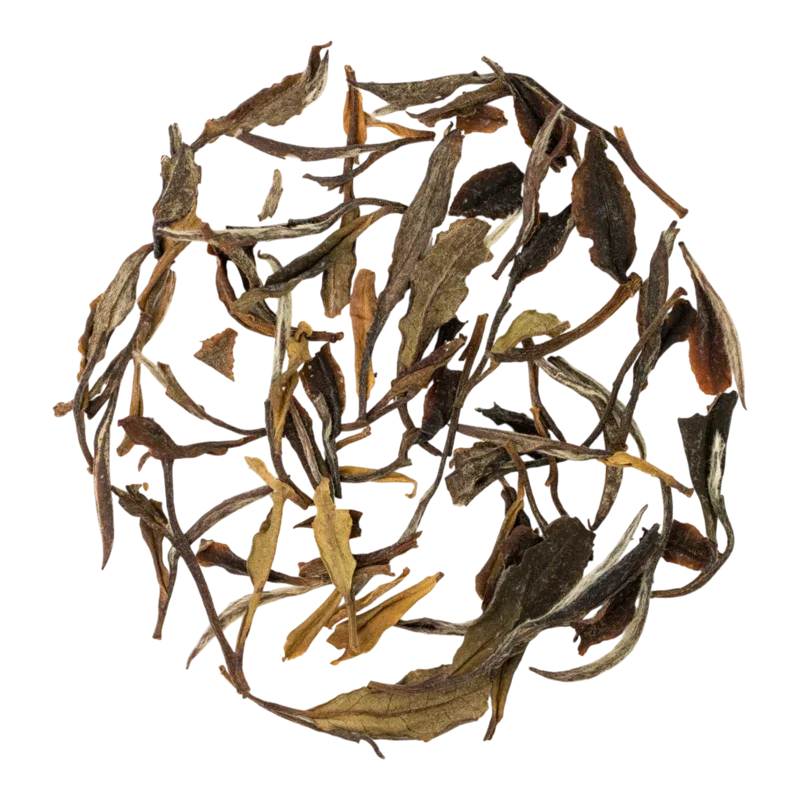
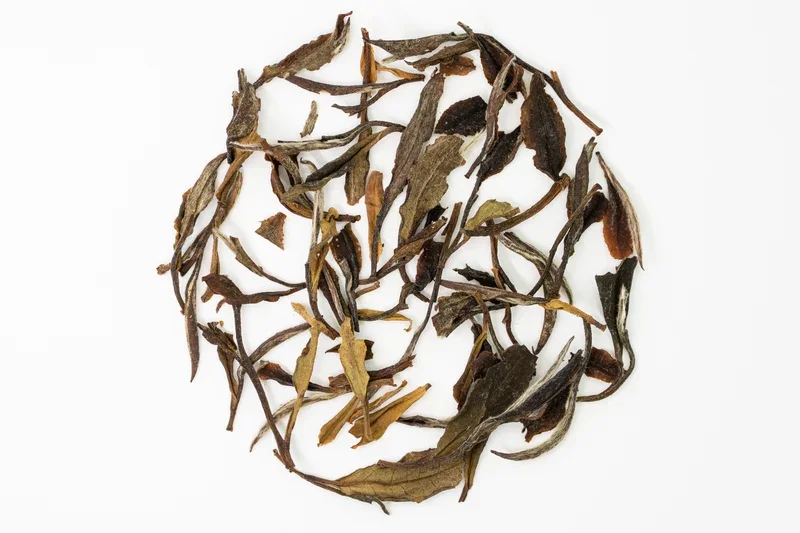
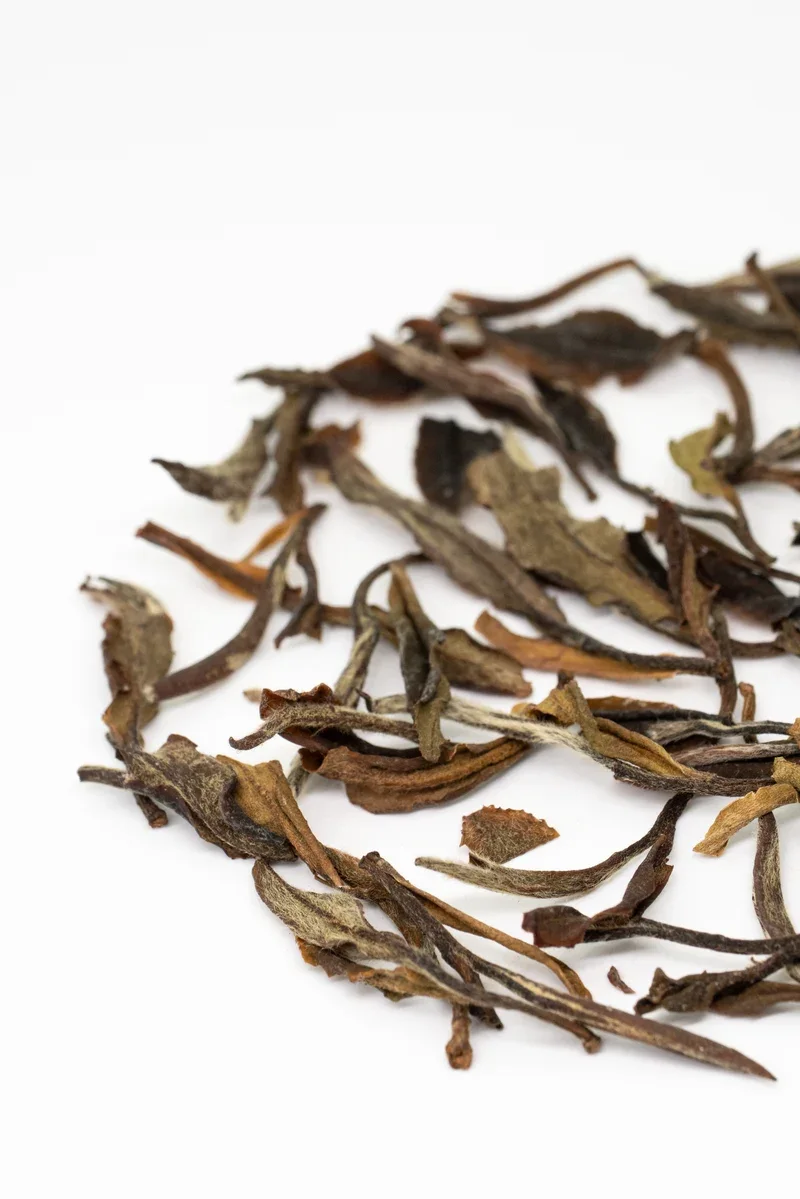
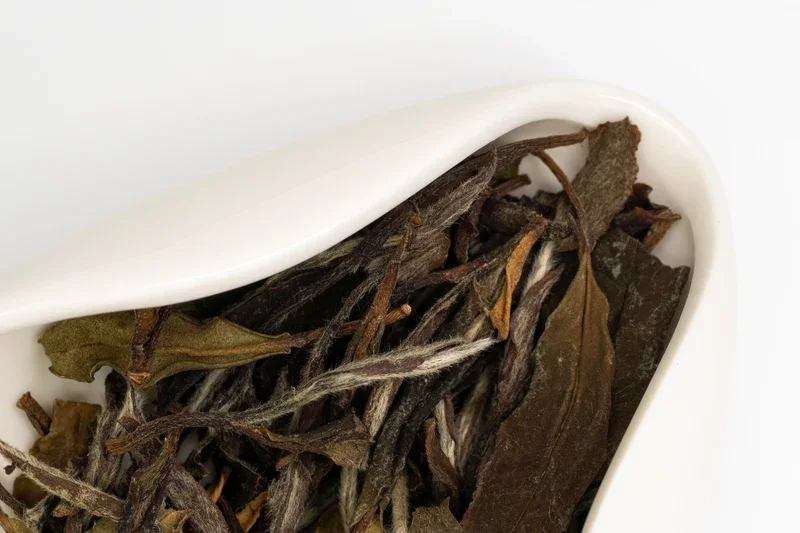
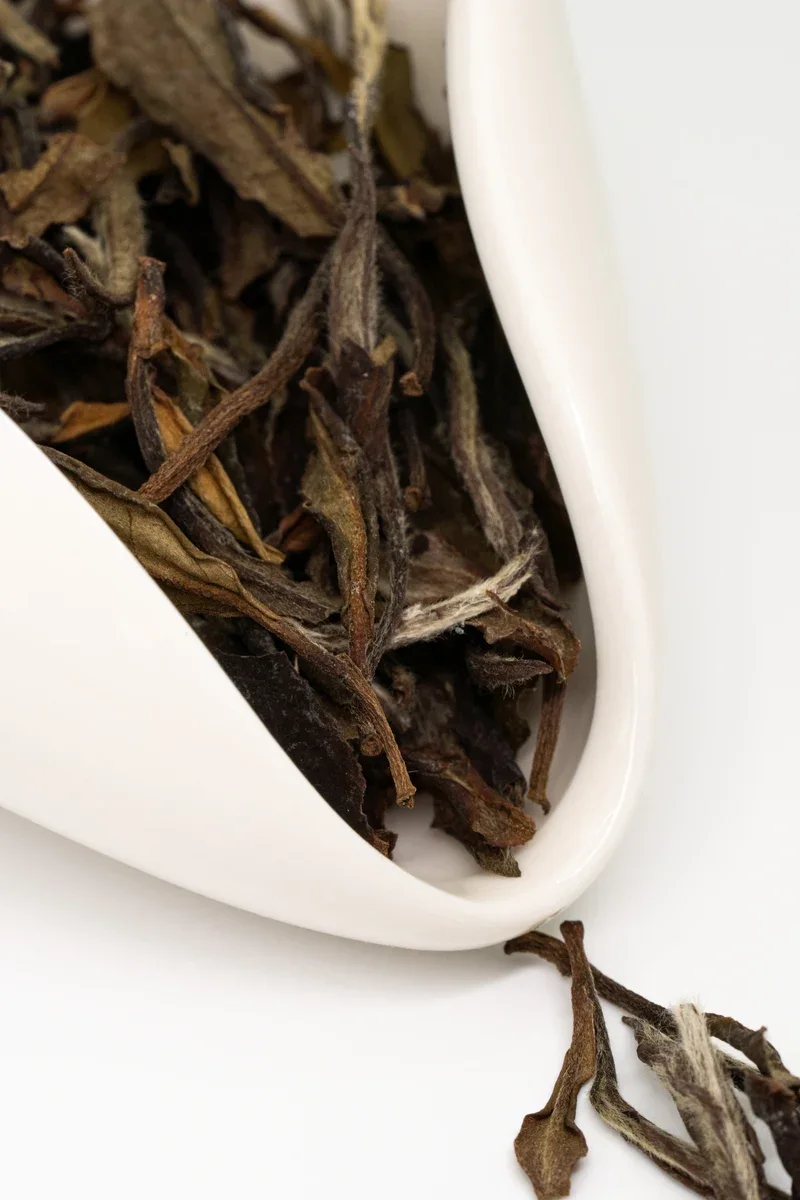
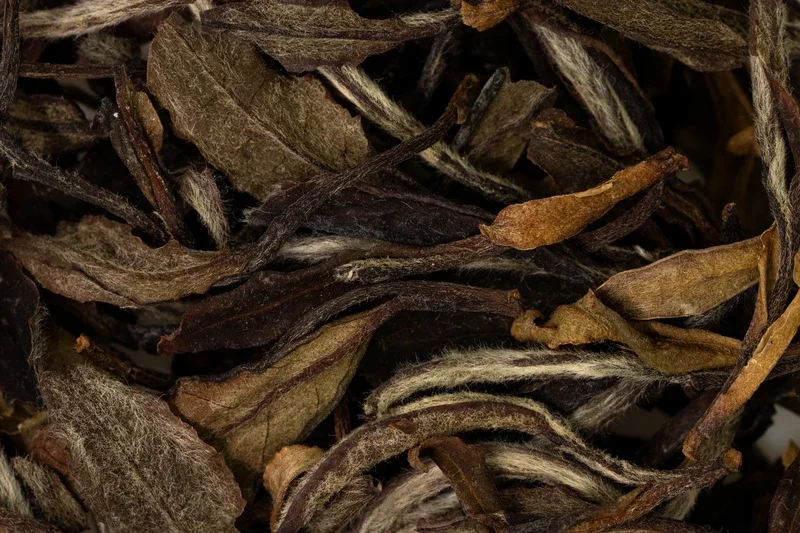
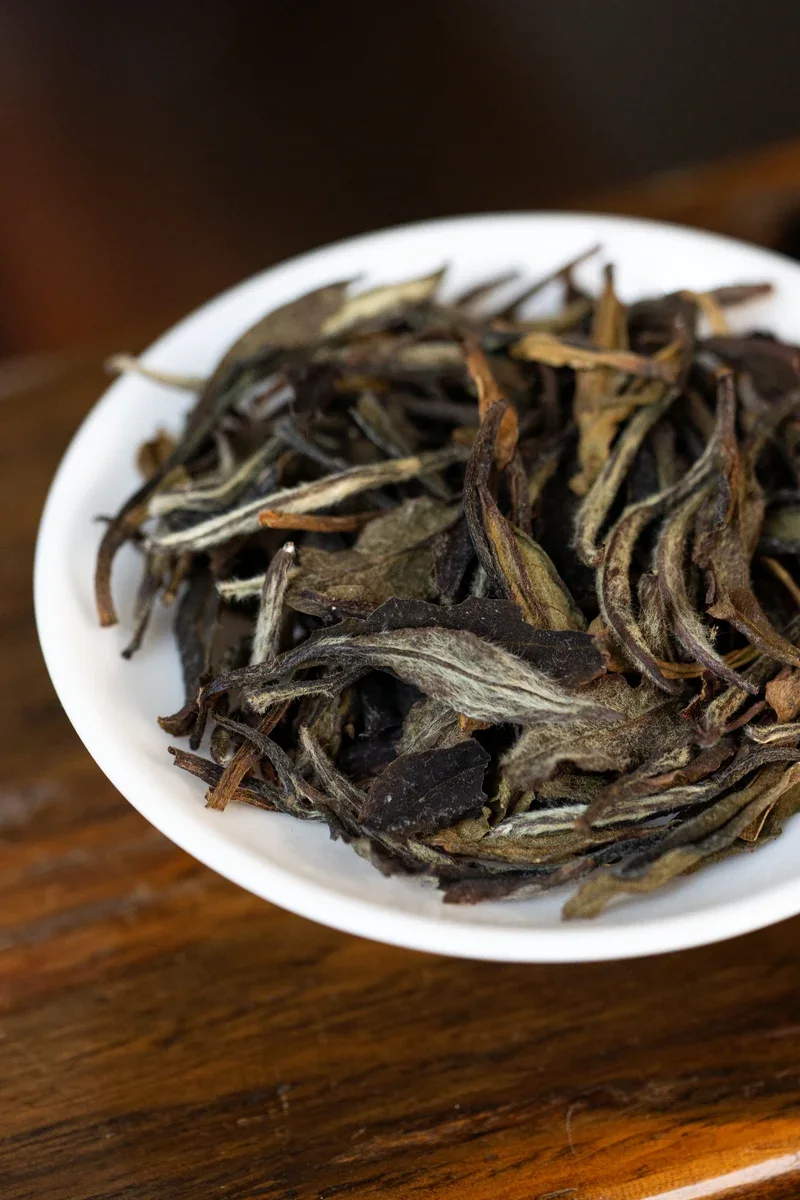
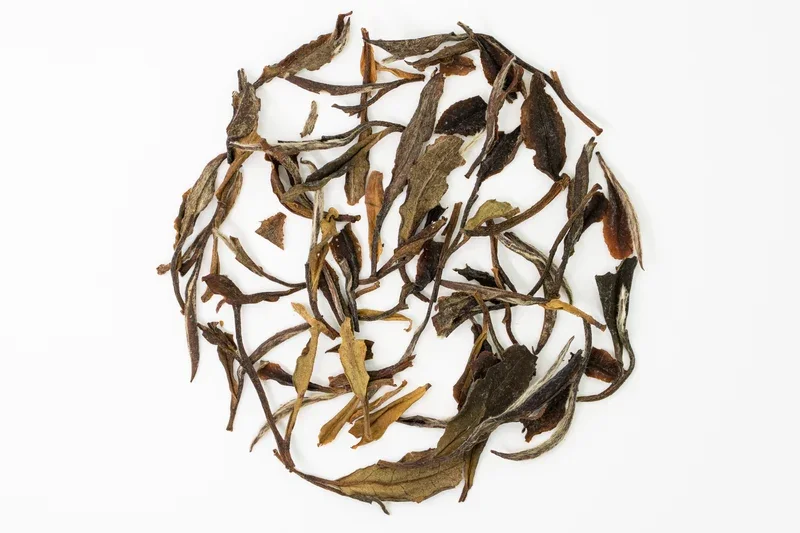
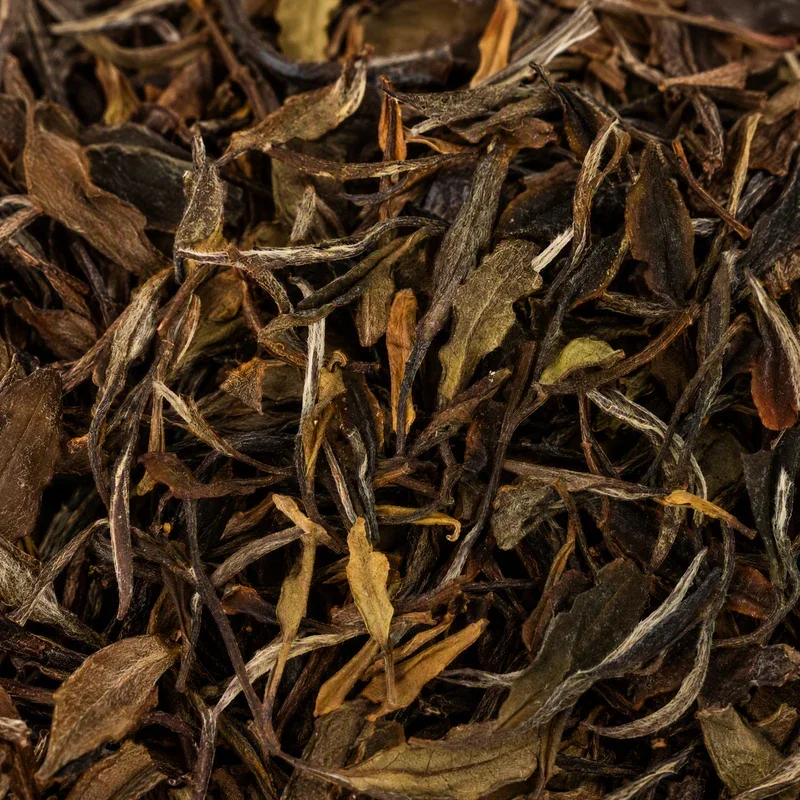
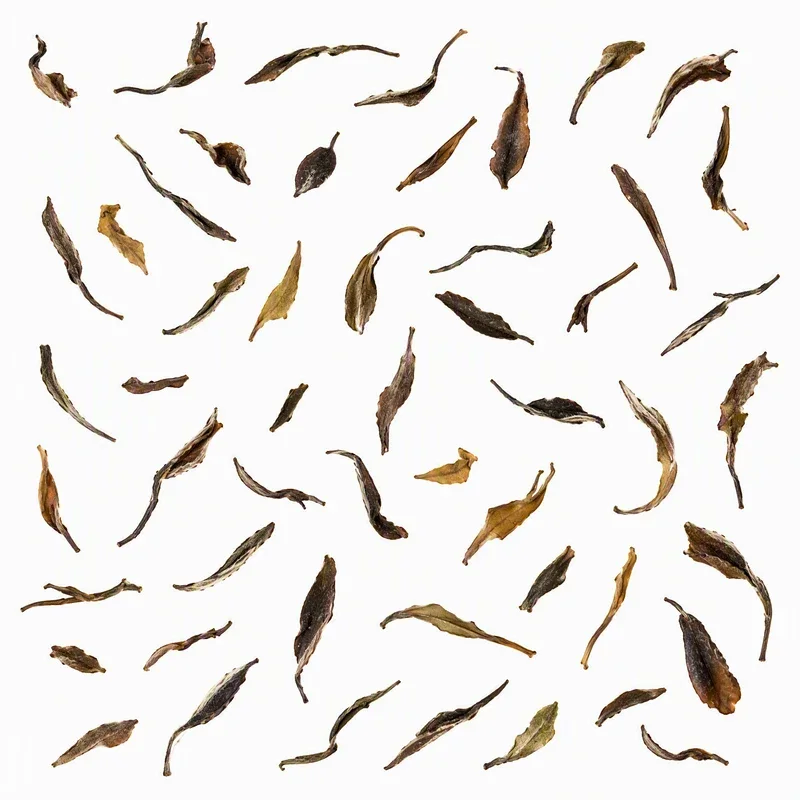
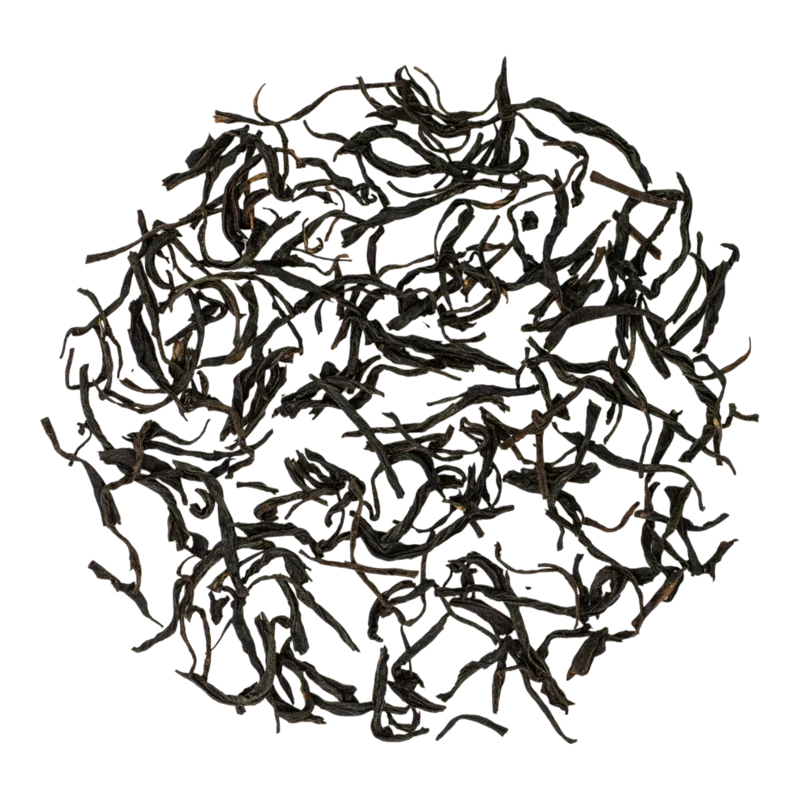
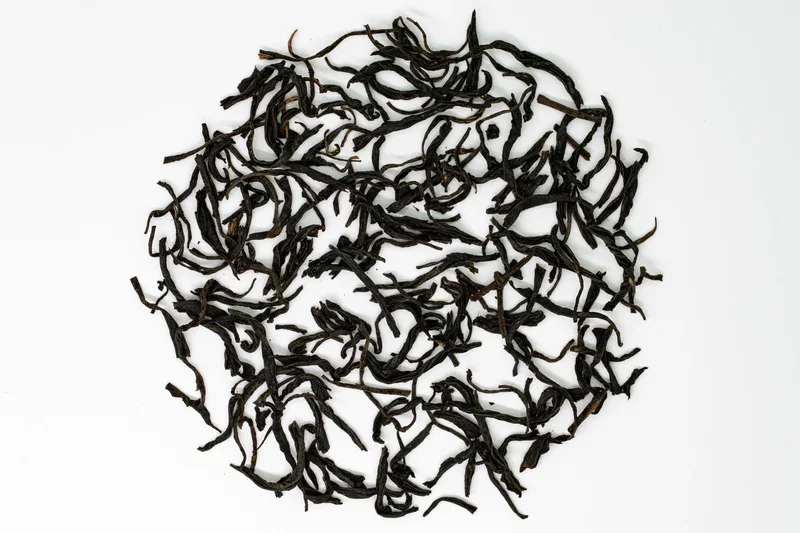
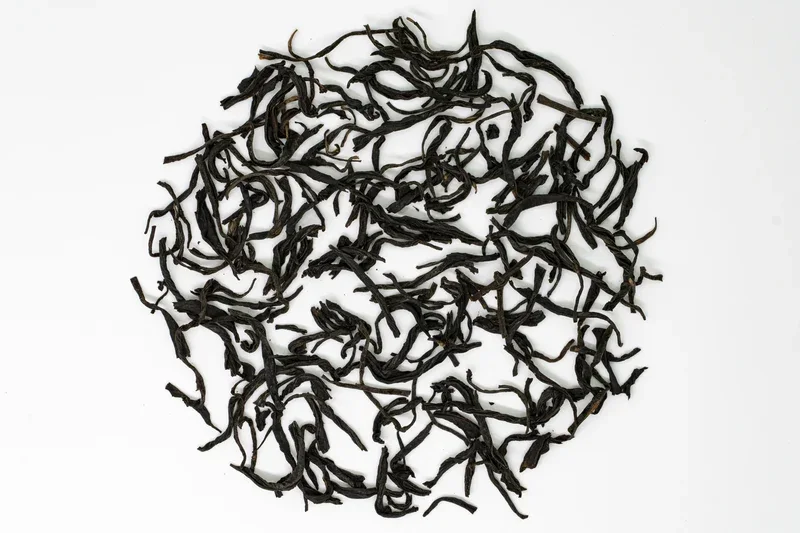
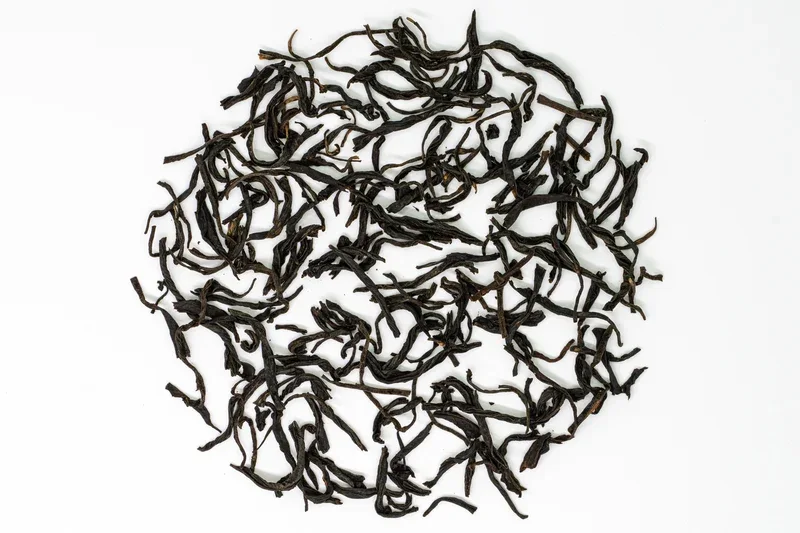
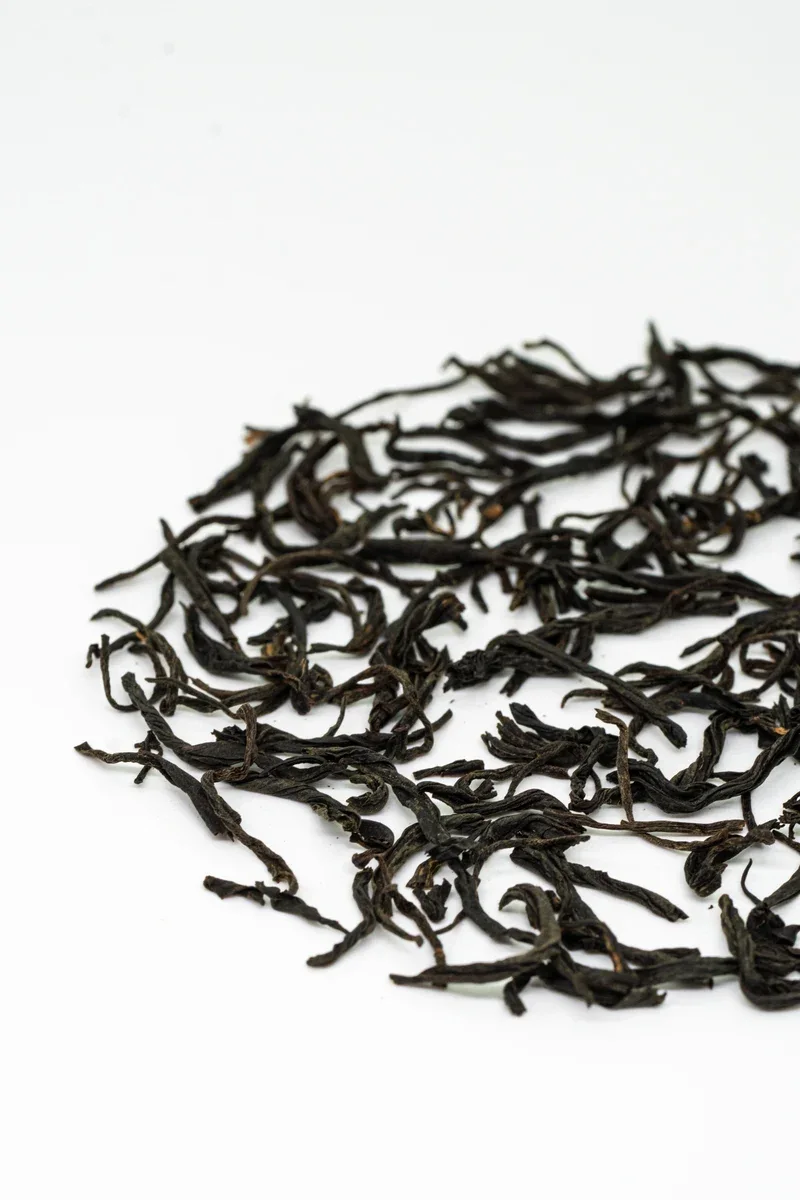
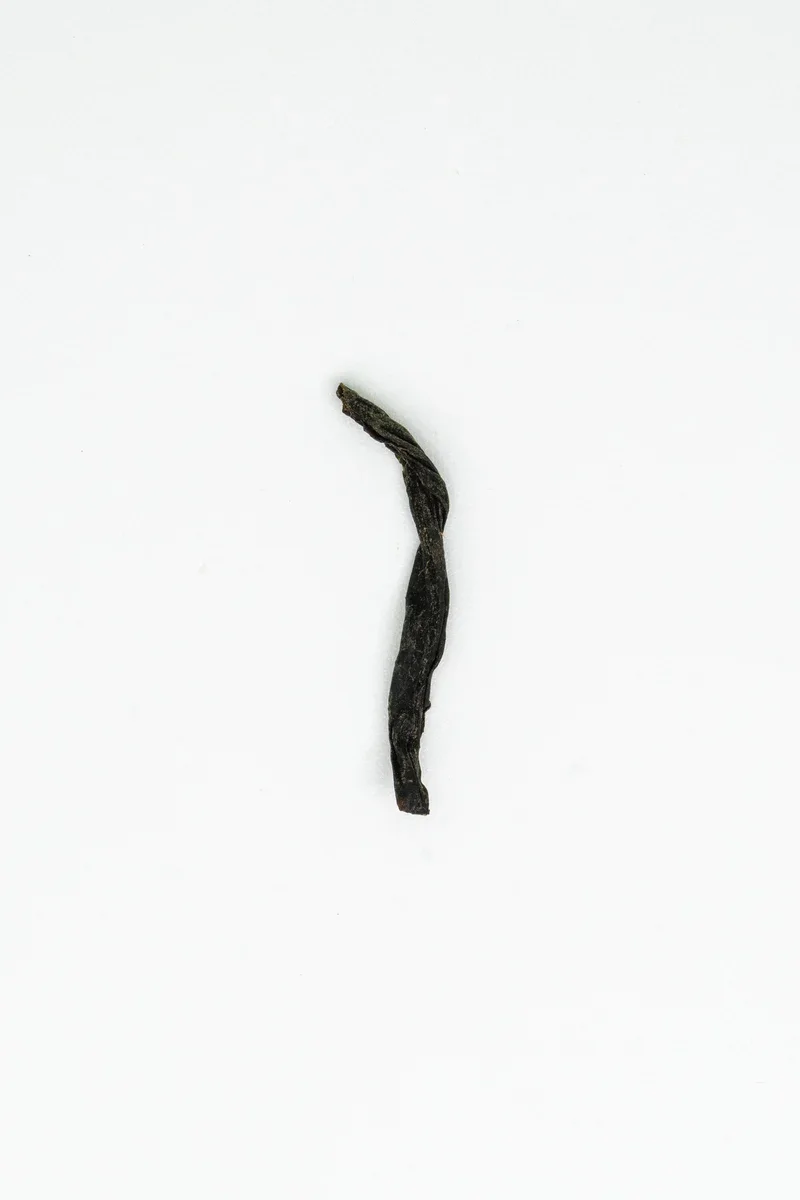
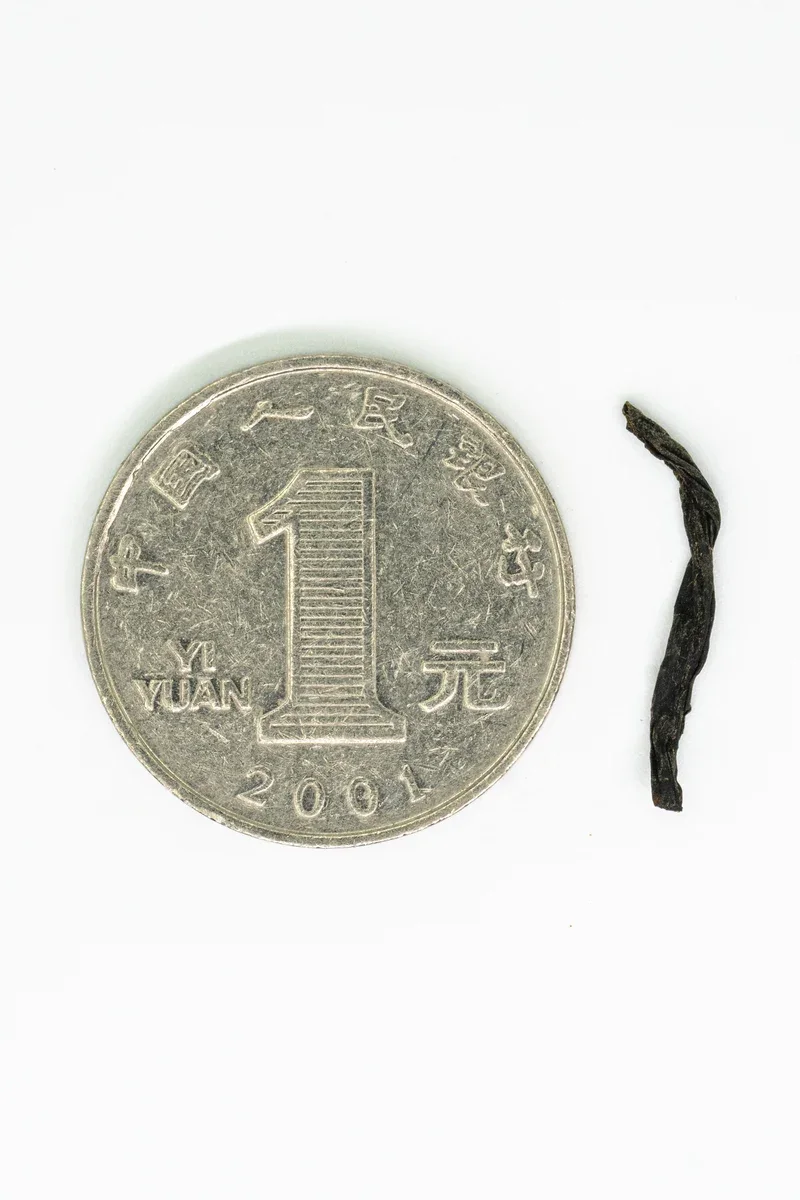
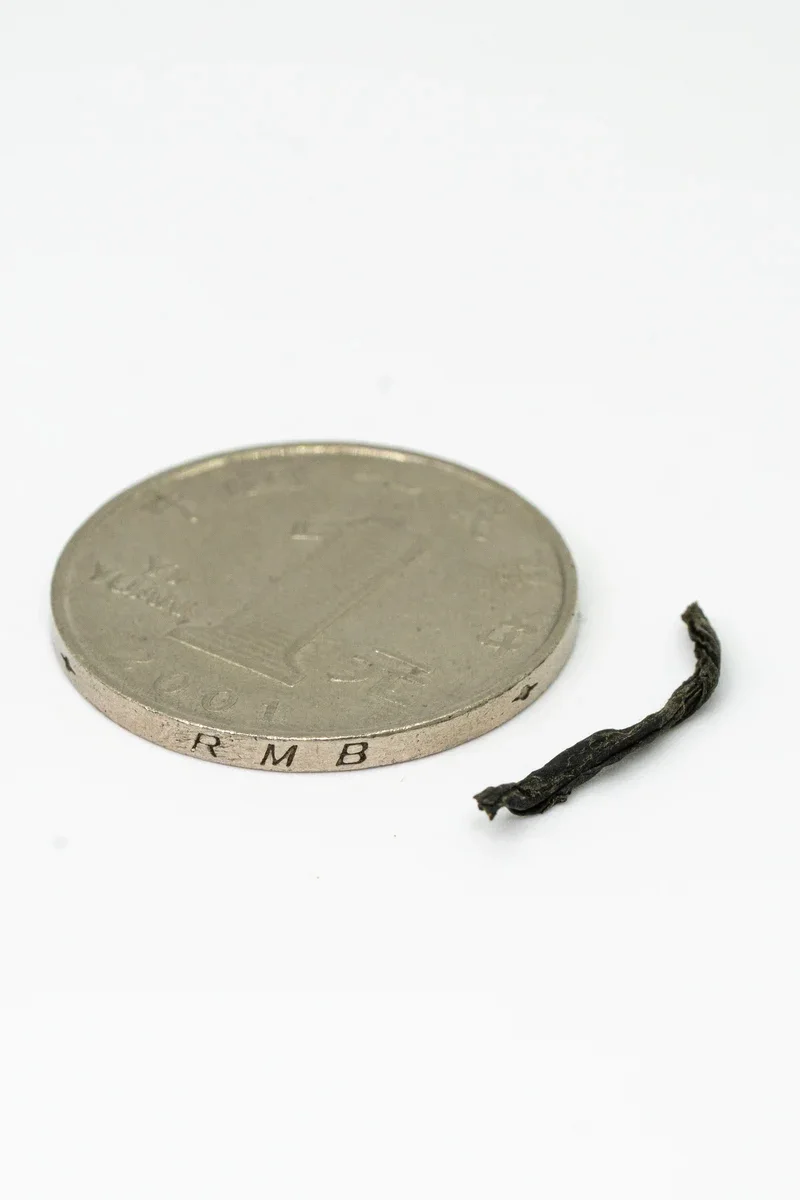
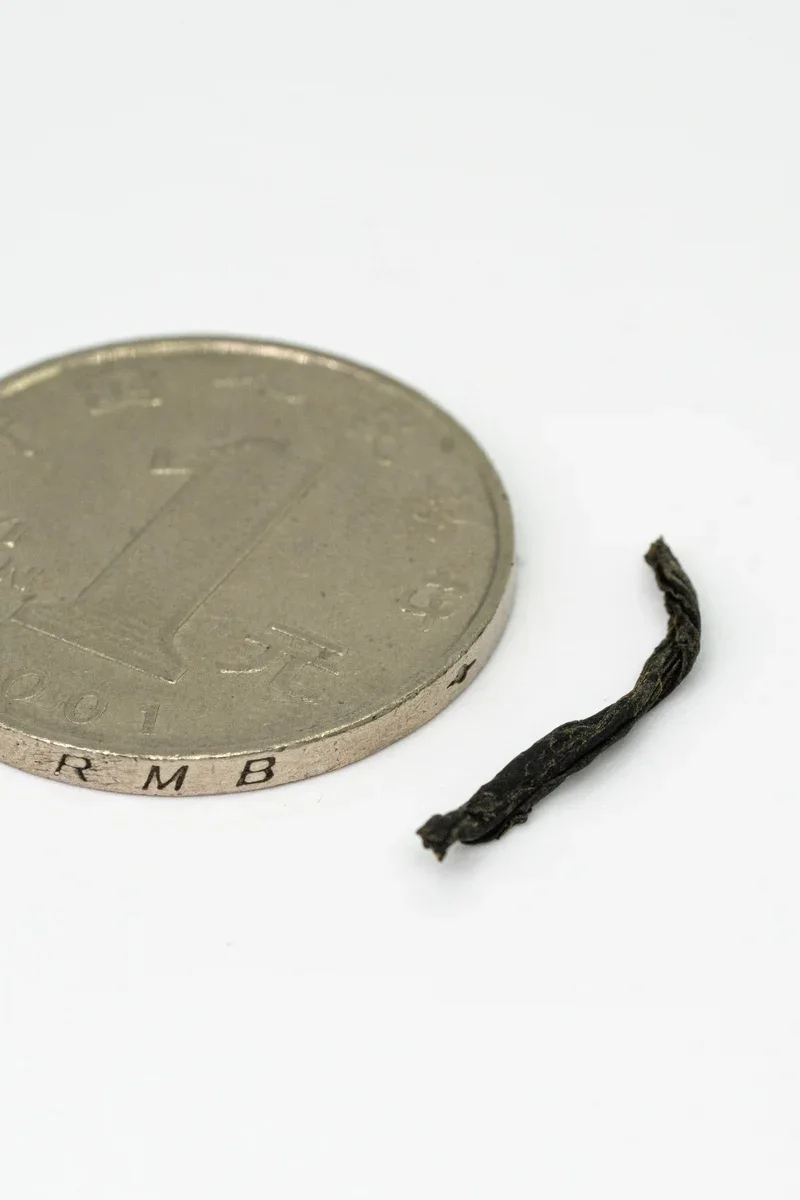
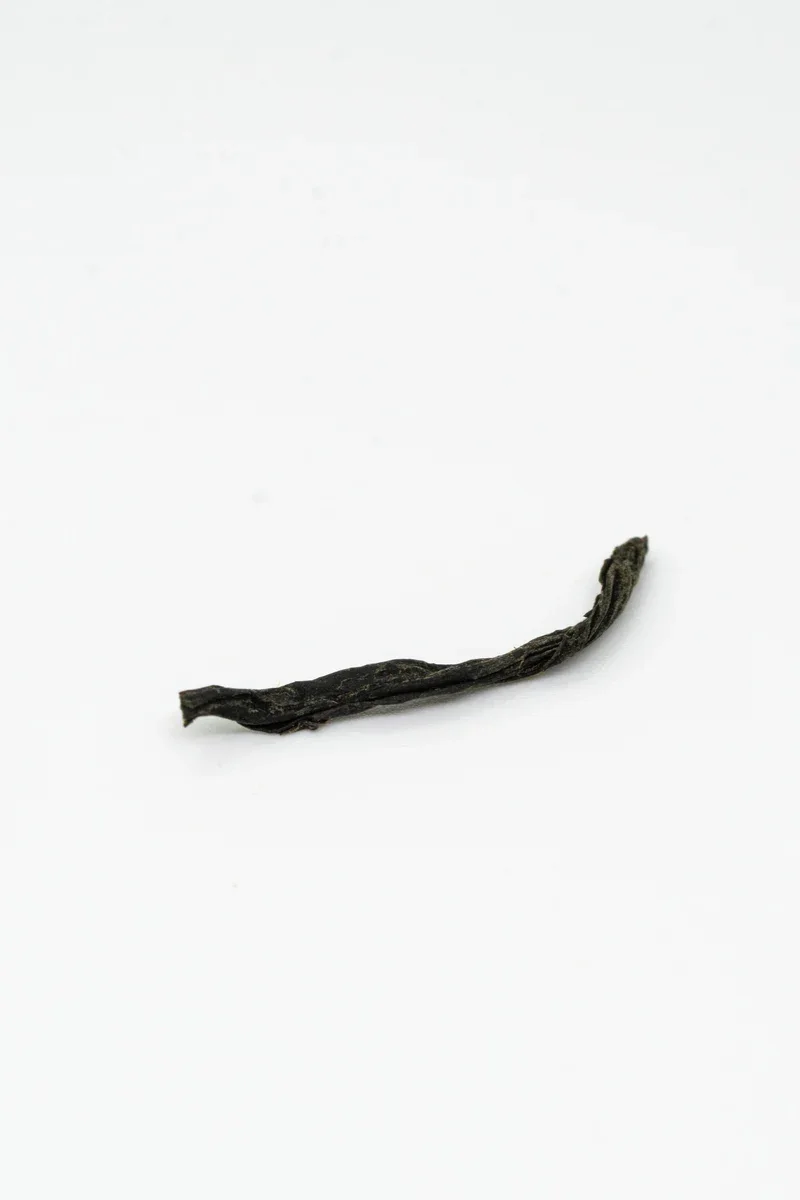
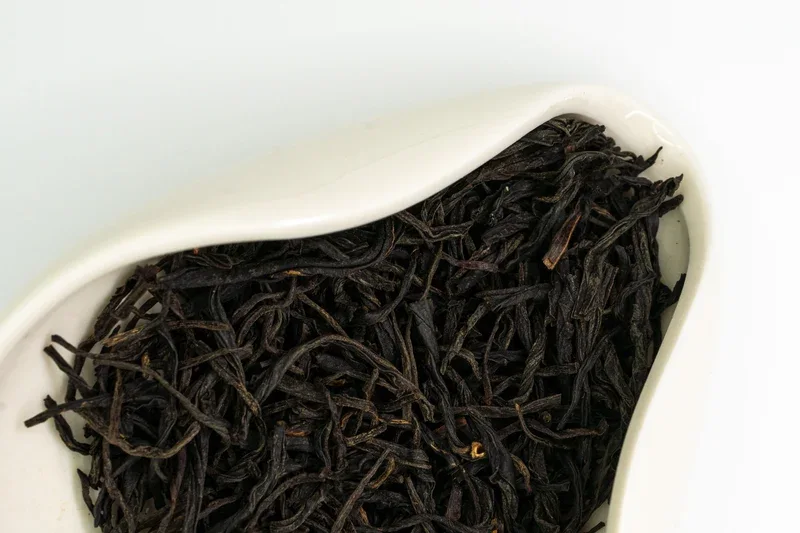
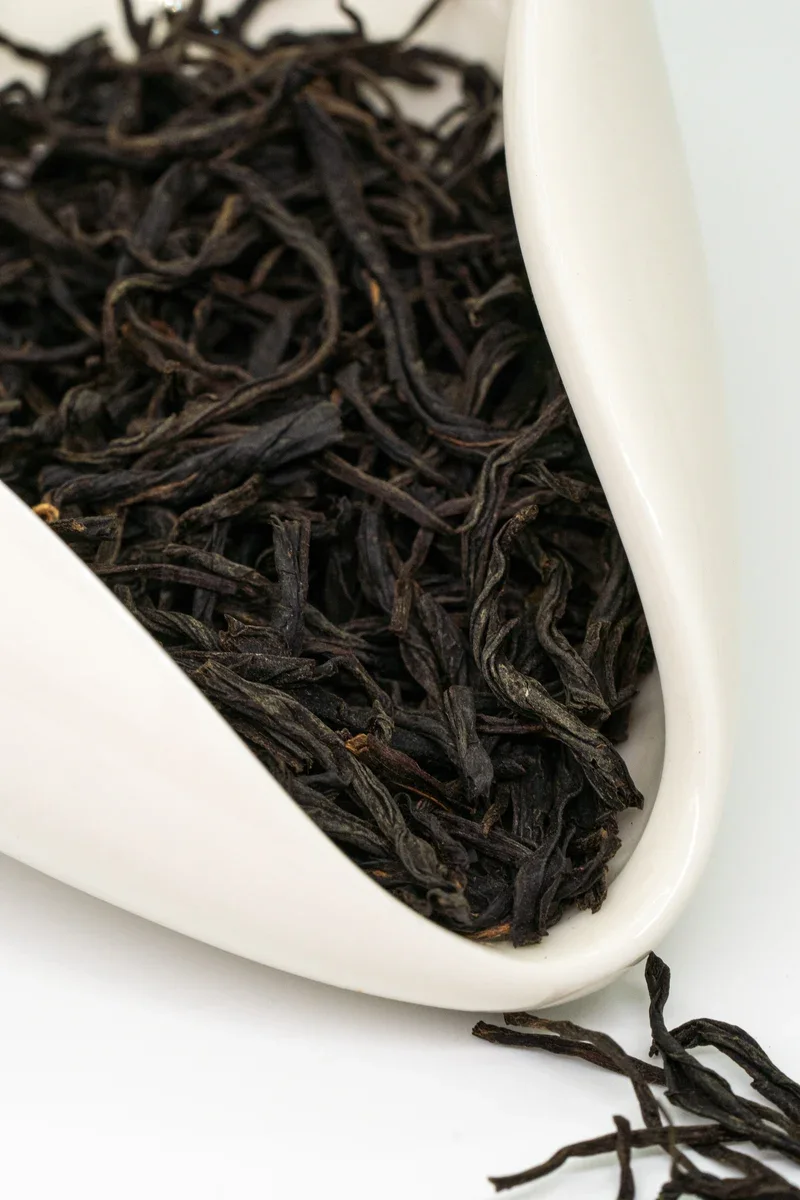
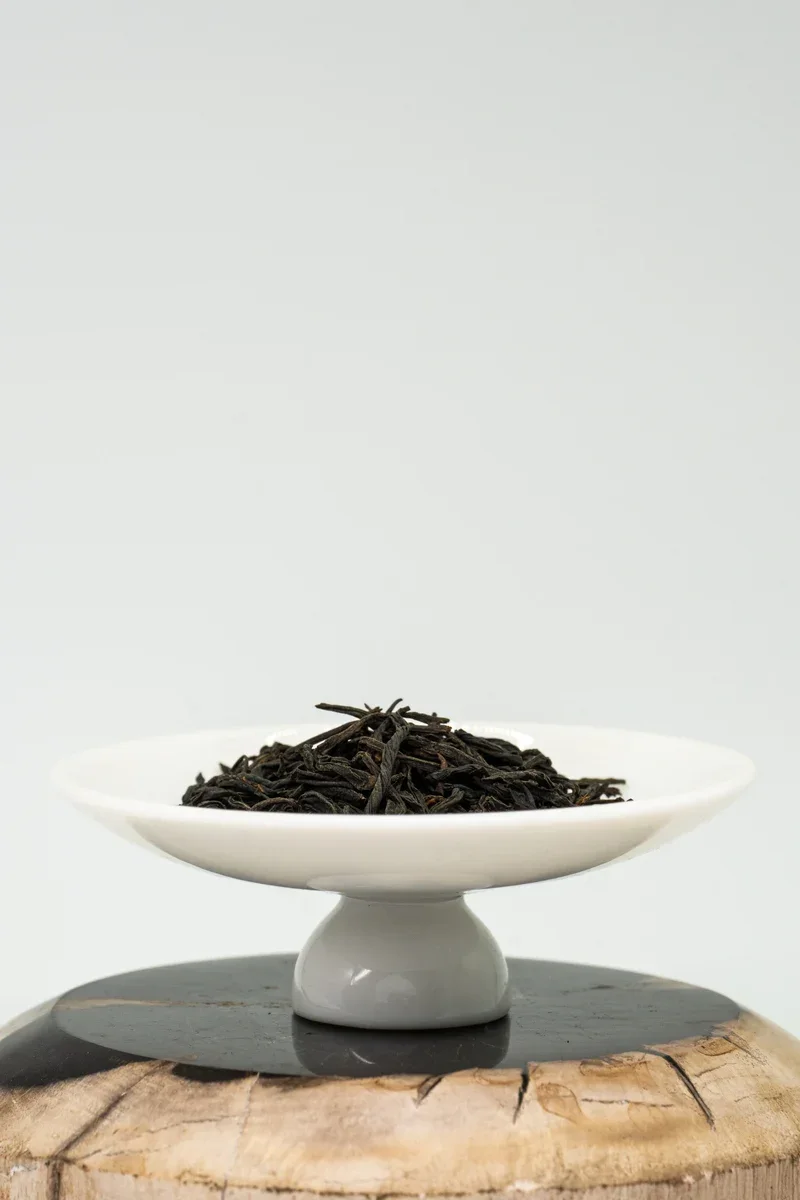
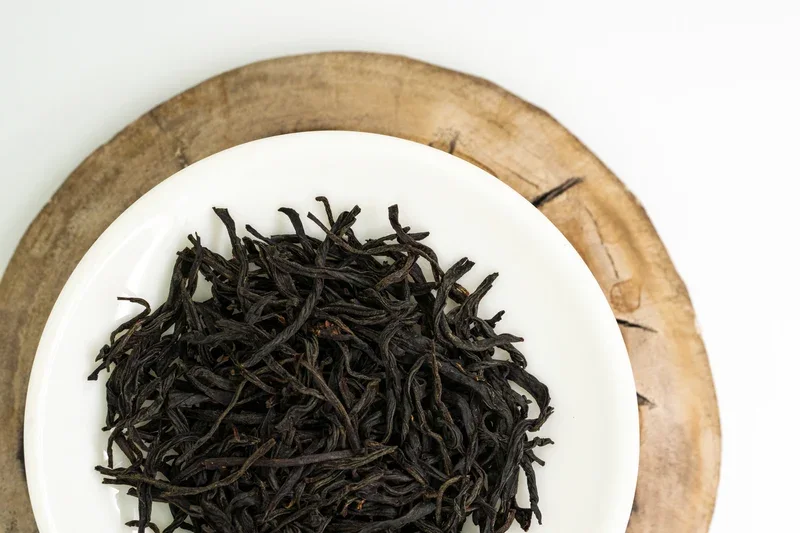
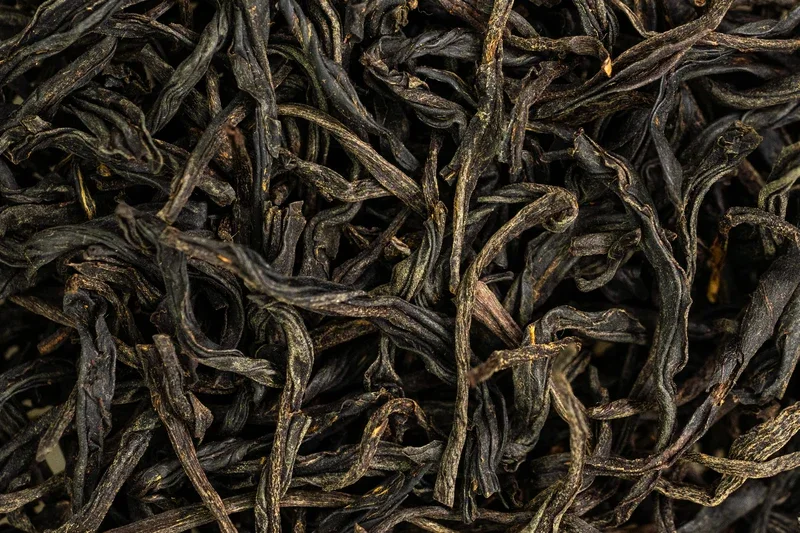
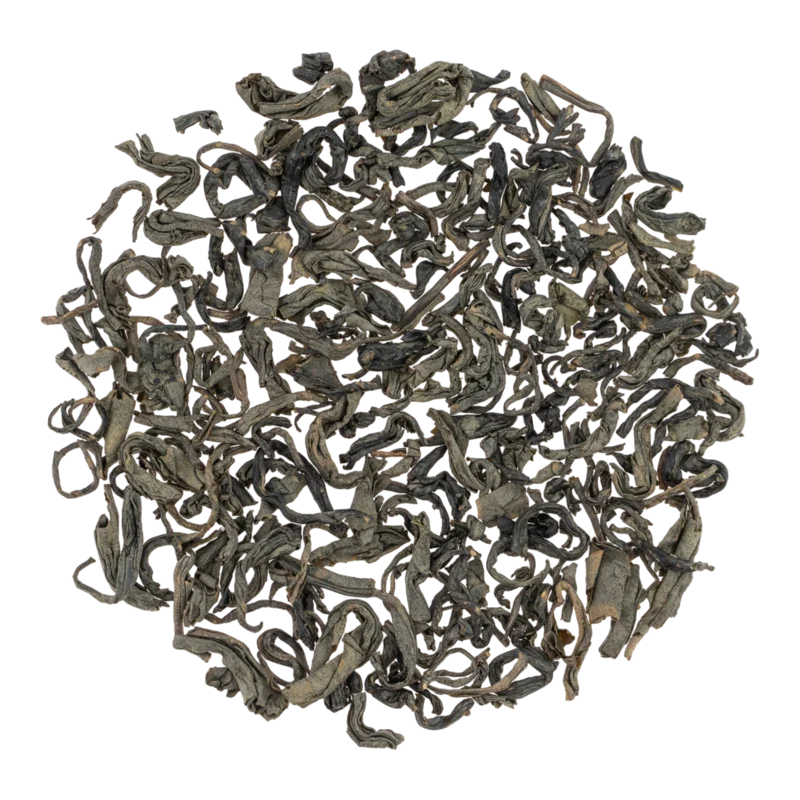
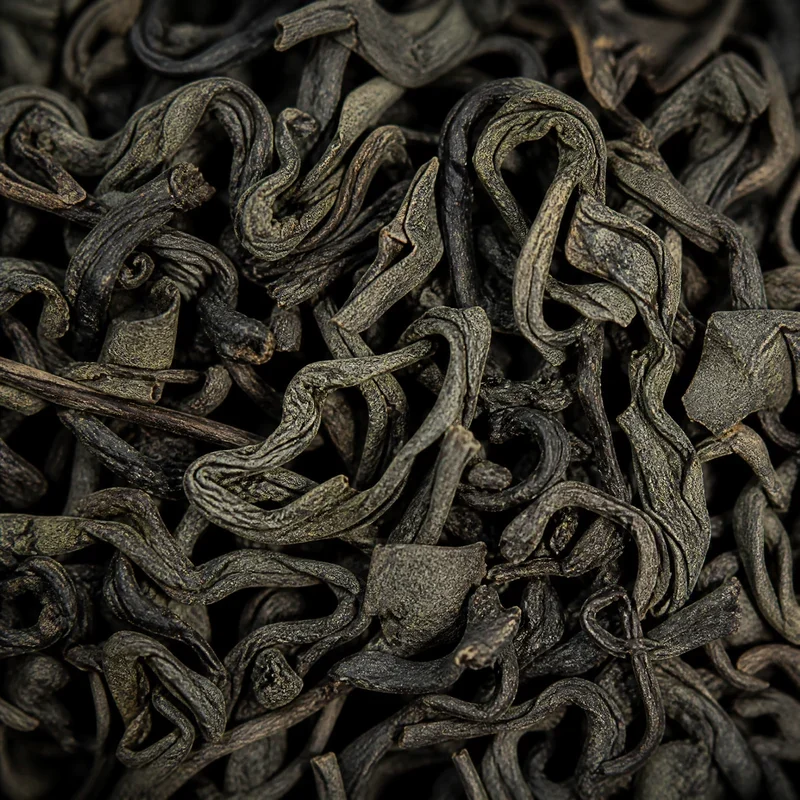
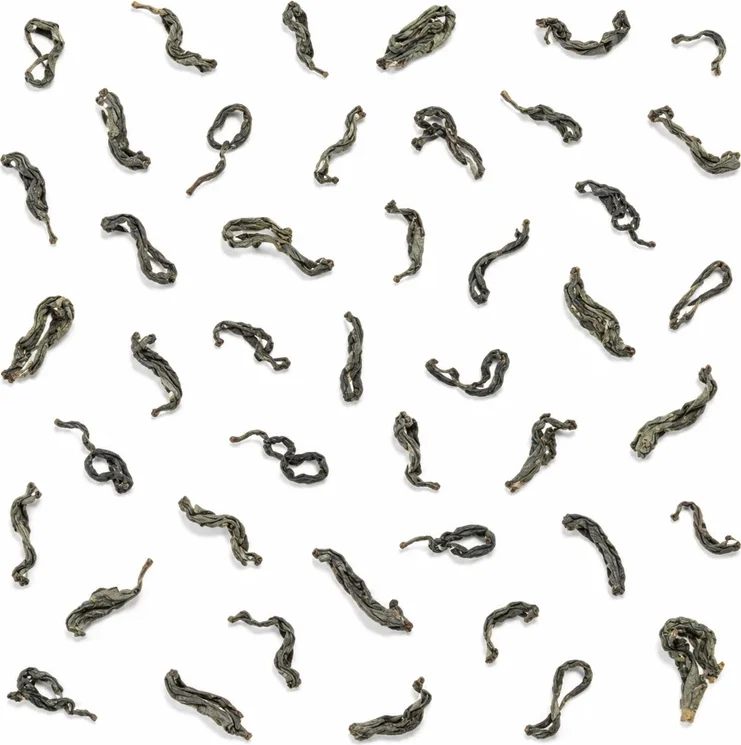
Dry Leaf Appearance: Dense, thin spirals (条索紧细卷曲, tiáosuǒ jǐn xì juǎnqū). Emerald-green with oily luster, covered with noticeable white down (翠绿油润显毫, cuìlǜ yóurùn xiǎn háo). Even, uniform.
Dry Leaf Aroma: Clean (清香, qīngxiāng) with chestnut tone (栗香) in spring Se-tea. In Qilan and Huangguanyin varieties — pronounced floral tone (花香, huāxiāng) with orchid and honeysuckle notes.
Liquor Aroma: High, persistent. Chestnut — in Se-line. Floral — in high-aromatic. Cold cup aroma persists over 8 minutes — indicator of exceptional persistence of aromatic compounds, characteristic of tropical raw material with high essential oil content.
Liquor Color: Yellow-green, clear and bright (黄绿清亮, huánglǜ qīng liàng).
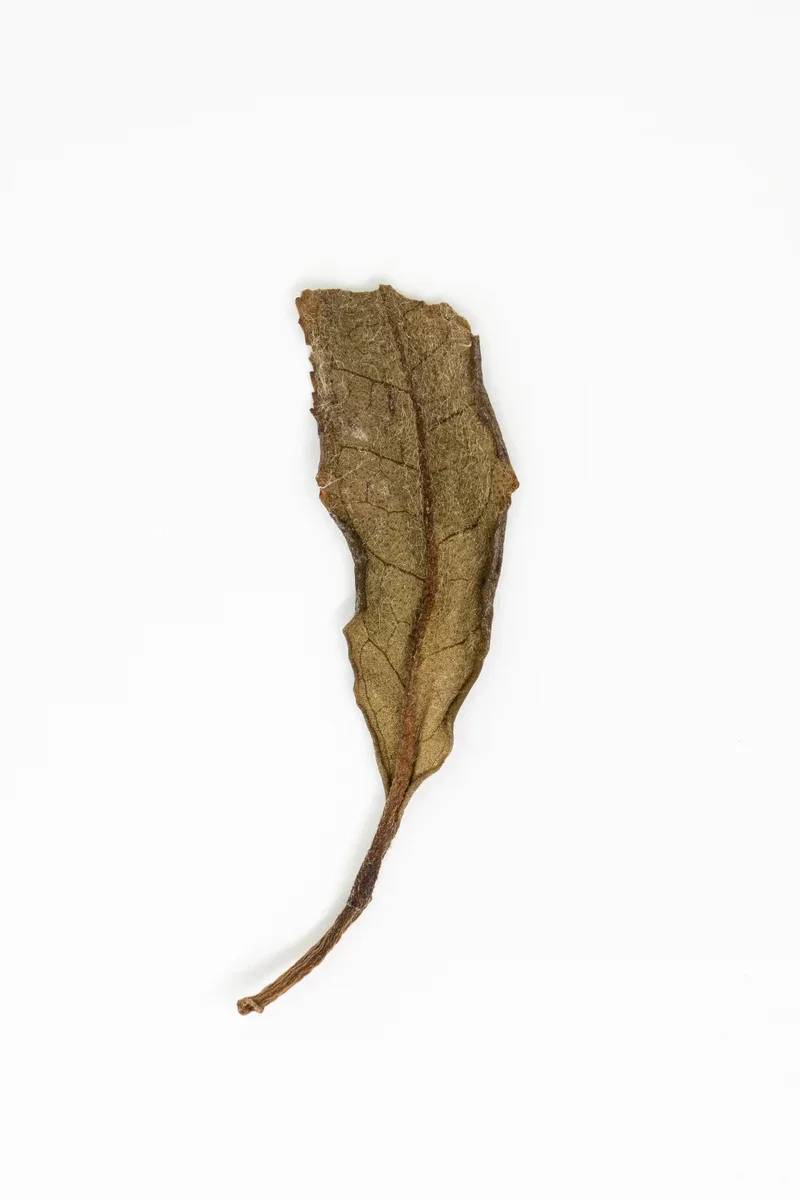
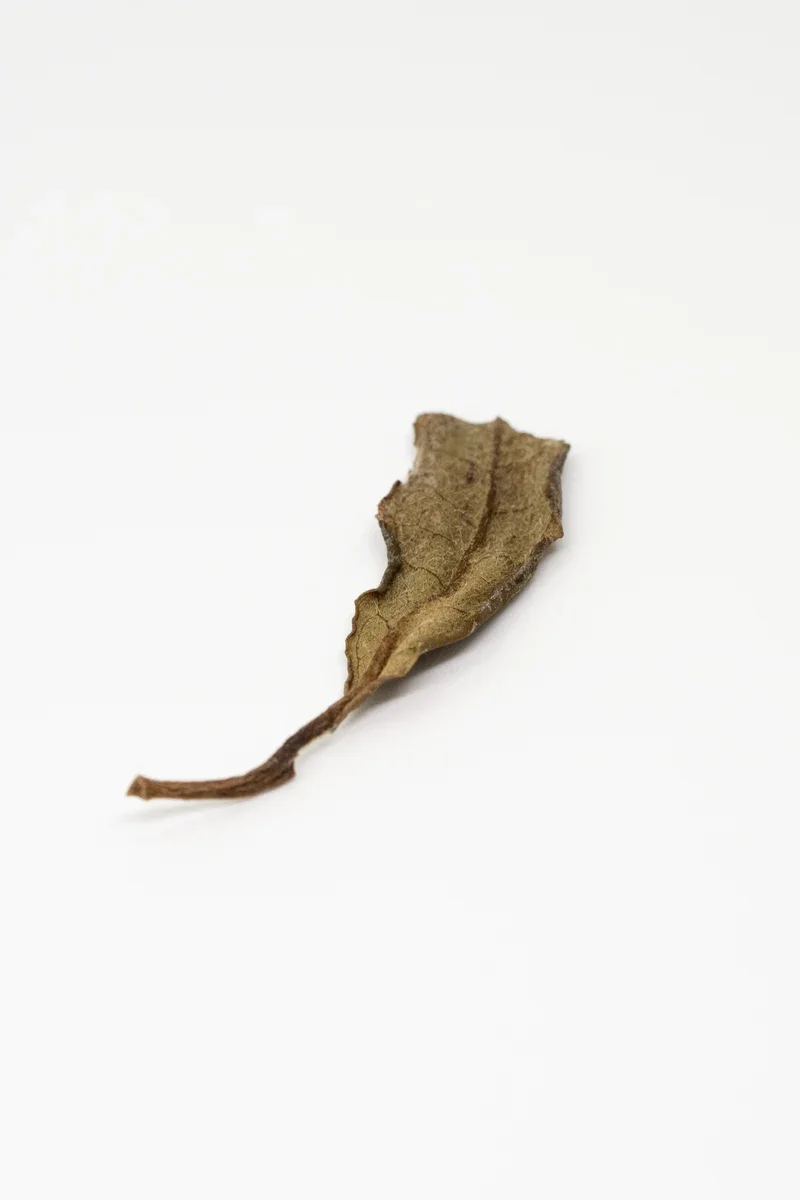
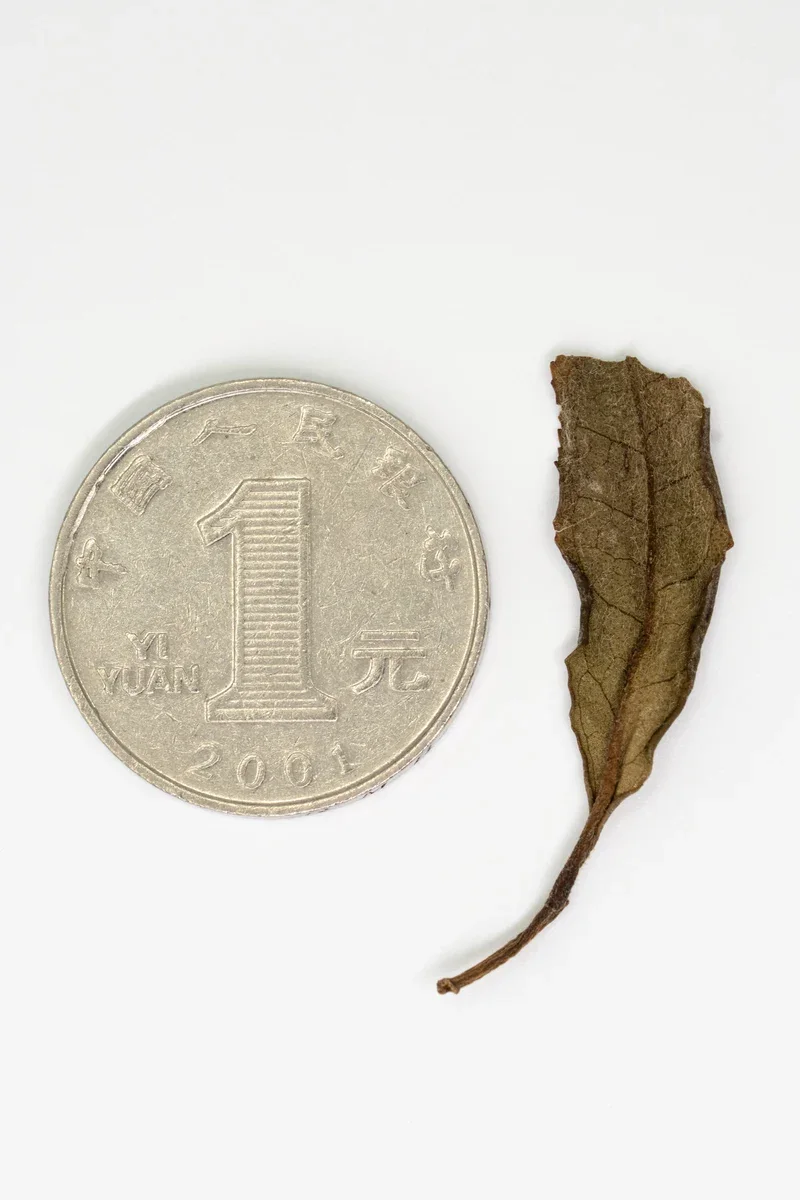
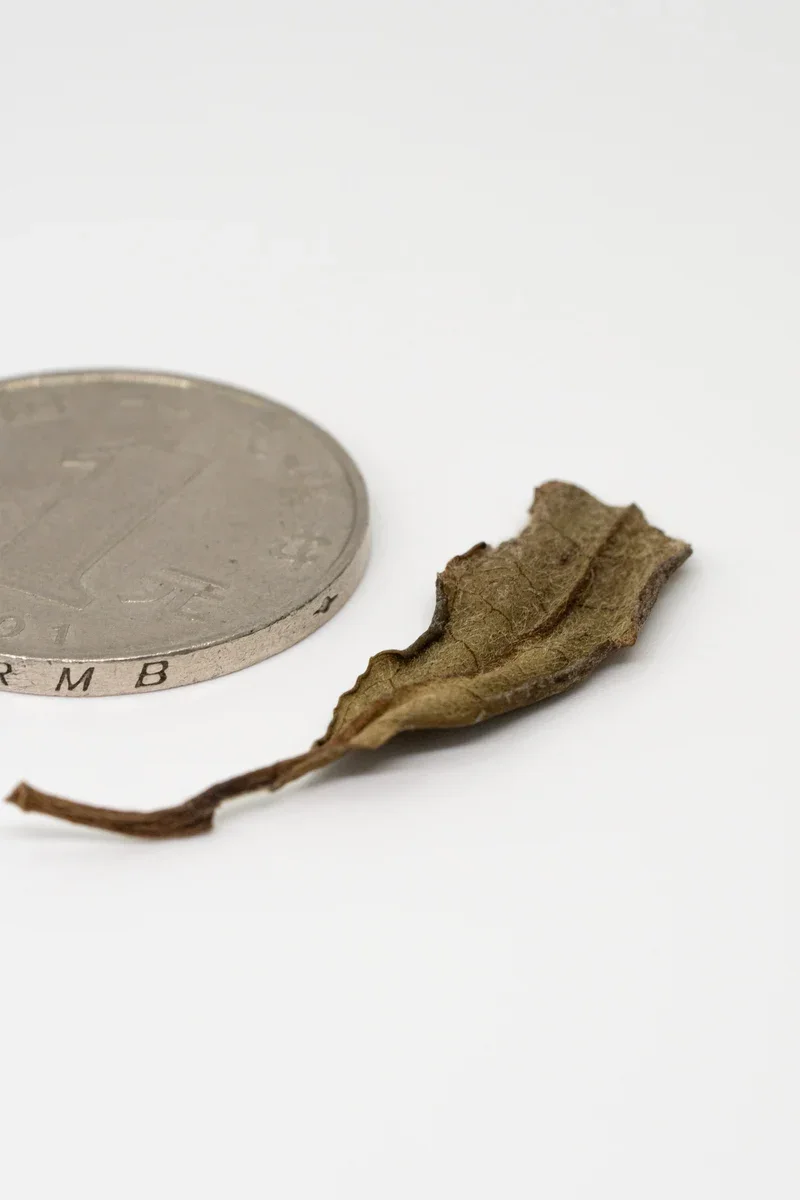
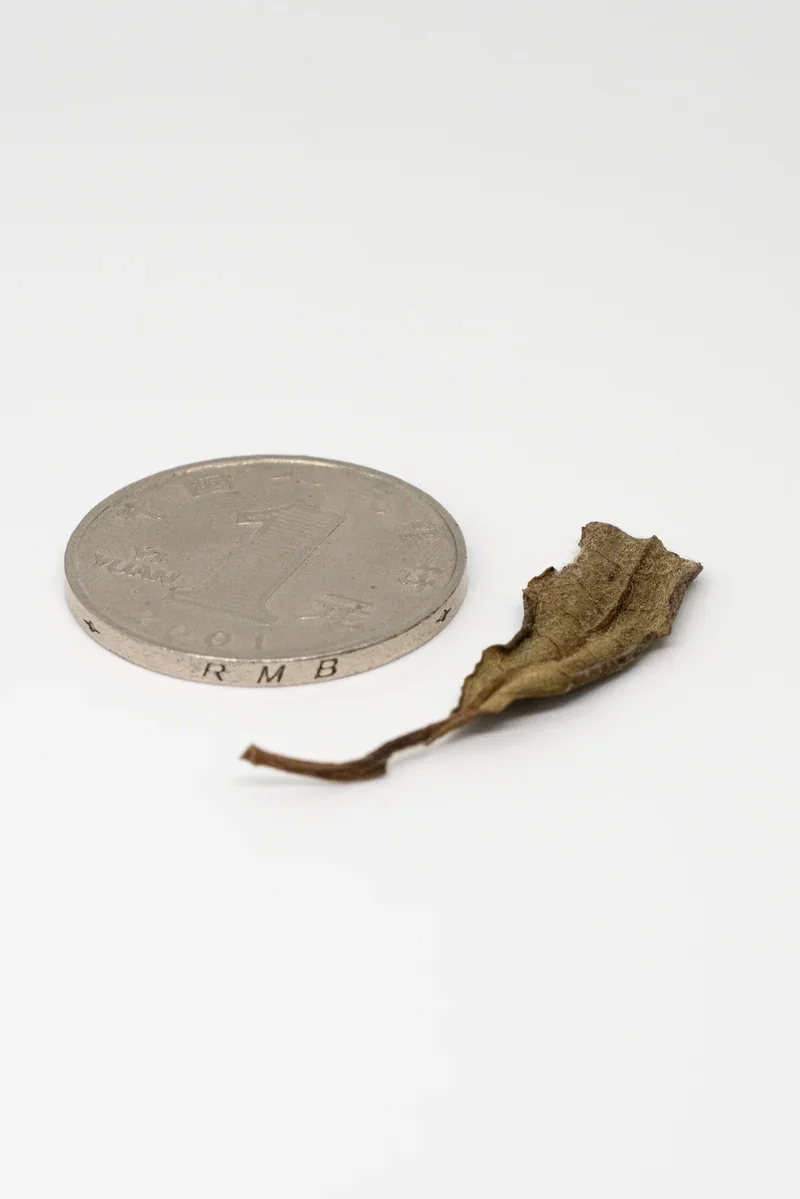
Spent Leaves: Tender, gathered in "bouquets" (成朵, chéng duǒ), yellow-green, "alive" — leaves retain elasticity and freshness (嫩匀成朵,黄绿鲜活).
Taste: Fresh and brisk (鲜爽, xiānshuǎng). Sweet and mellow (甘醇, gānchún). Minimal astringency — noticeably lower than green teas from more northern provinces. Returning sweetness (回甘) distinct and prolonged. Liquor body — medium, with silky texture.
Amino Acids: ≥3.5%. Including L-theanine — main component of "freshness" (鲜爽). Tropical conditions are less favorable for amino acid accumulation compared to northern provinces, however 3.5% is worthy for tropical green tea.
≥0.8 mg/kg in finished tea — 2.5+ times higher than ordinary green tea (≤0.3 mg/kg). Selenium comes from volcanic soils through tea bush root system and accumulates in young shoots. Main form of Se in tea — organic selenium (selenomethionine, selenocysteine), which has high bioavailability. This is the key unique feature of Nanhai Lü Cha, determining its positioning as "functional" green tea.
Typical content for green tea — 3.0–4.5%. Tropical origin and rapid vegetative mass growth may increase caffeine content.
Essential Oils: Elevated content — consequence of tropical climate and year-round vegetation. High-boiling terpene compounds form persistent aroma (cold cup >8 minutes).
Minerals: Besides selenium — potassium, magnesium, iron, zinc, manganese. Volcanic substrate provides wide spectrum of trace elements.
Polyphenols: ≥25%. Tropical climate with high insolation stimulates polyphenol synthesis in leaf.
Vitamins: Vitamin C (ascorbic acid) — tropical raw material has elevated content. B vitamins, vitamin E.
Tea Amount: 3 g per 150 ml (1:50 ratio).
Teaware: Glass tumbler — for observing spiral unfurling. Thin-walled gaiwan (薄胎盖碗) — for precise extraction control. Porcelain cup with lid.
Water Temperature: 80–85°C for first and second grades. For premium Se-grade (single buds) — 75°C — lower temperature prevents "scalding" tender buds and allows fuller sweetness development.
Enemies: Moisture (especially relevant for tropical climate — when storing in Hainan, air-conditioned room mandatory), foreign odors, light, high temperature, oxygen.
Airtight packaging (aluminum bag, vacuum air extraction), refrigerator 0–5°C. Term — up to 12 months.
Hainan green tea is recommended for fresh consumption — within 6 months after production. Tropical raw material is less stable for long-term storage compared to northern green teas.
Price Category: Premium Se-grade (特级富硒) — from 800 yuan/500 g (≈$110+). First grade (高香绿茶) — 300–500 yuan/500 g. Second grade (传统炒青) — from 100 yuan/500 g. Compared to other famous Hainan tea — Baisha Lü Chá (白沙绿茶) — Nanhai Lü Cha is positioned in comparable price category, but with emphasis on Se-enrichment.
No reviews yet. Tell us what you think of this tea.
Rate this tea and share your impressions. We review each submission before publishing it.