Brewing
Gongfu brewing
- Water temperature
- 80 °C
- Tea amount
- 5 g
- Water volume
- 100 ml
- First steep
- 10 s
- Time added per infusion
- 5 s
- Infusions
- 3

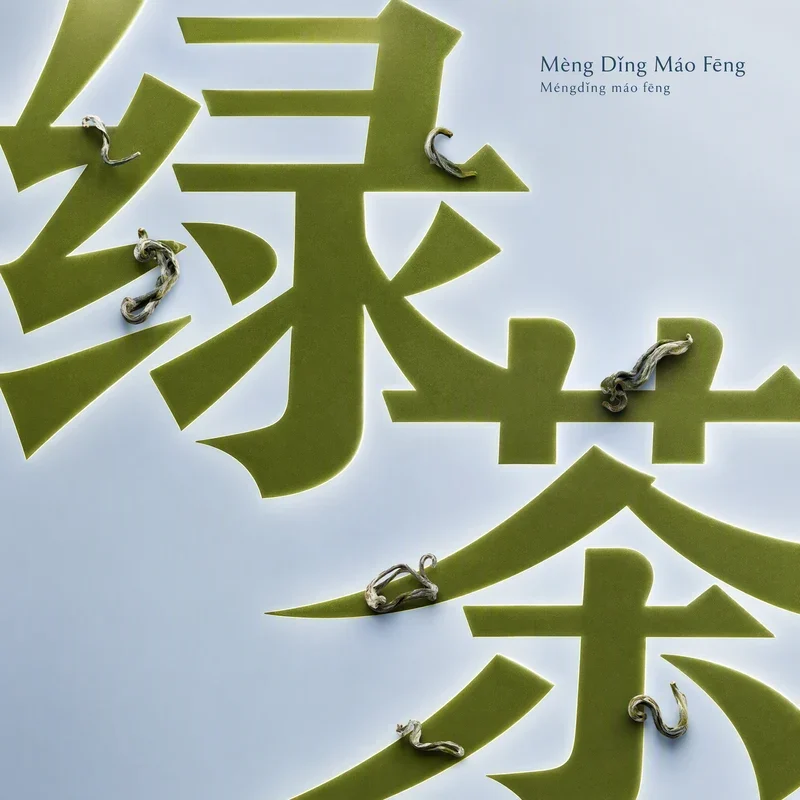
Méngdǐng máo fēng
Choose a brewing method. Start with the recommended quantities and time, then adjust to taste.
Brewing
Brewing
Taste
Tea encyclopedia
Category: Famous teas of Mount Mengding. Product of the geographical indication zone "Mengdingshan tea" (蒙顶山茶, Méngdǐng Shān chá). Included among the finest green teas of Sichuan Province.
Category: Famous teas of Mount Mengding. Product of the geographical indication zone "Mengdingshan tea" (蒙顶山茶, Méngdǐng Shān chá). Included among the finest green teas of Sichuan Province.
Coordinates: Approximately 30°05′ N, 103°12′ E (Mount Mengdingshan).
Origin: China, Sìchuān Province (四川省, Sìchuān Shěng), Ya'an City (雅安市, Yǎ'ān Shì), Míngshān District (名山区, Míngshān Qū). The core production area is Mount Mengdingshan, also known as Mount Méng (蒙山, Méng Shān). The geographical marking zone includes Míngshān District and part of Yǔchéng District (雨城区, Yǔchéng Qū). Besides the core area on Mengdingshan, "mao feng" style tea is widely produced throughout Sichuan's tea belt — in Leshan, Emeishan, Guangyuan, Yibin, Luzhou, and on the Chengdu plains.
Type: Green tea (绿茶, lǜchá), non-oxidized. Belongs to the category of hōngqīng (烘青, hōngqīng) — fine smokeless green tea produced by a method combining pan-firing and drying. The technology includes elements of both chǎoqīng (炒青, chǎoqīng) and hongqing, which allows it to be classified as a "pan-fired and dried combined" (炒烘结合, chǎo hōng jiéhé) type.
According to legend, seven tea bushes planted by Wu Lizhen on the summit of Mount Mengding more than two thousand years ago became the ancestors of all cultivated teas of China. The planting site — "Imperial Tea Garden" (皇茶园, Huáng Chá Yuán) — exists to this day and is an object of pilgrimage.
Tea from Mount Mengding was supplied to the court from the Tang era to the end of Qing — more than 1000 years of continuous imperial supplies. This is an absolute record among all tea regions of China.
Thanks to Sichuan's mild climate, tea harvest on Mengdingshan begins as early as late February — 2–3 weeks earlier than in Jiangsu or Zhejiang. The annual ceremony "First Basket of Tea" (第一背篓茶) — solemn opening of the season.
Li Shizhen in "Ben Cao Gang Mu" especially emphasized that tea from Mount Mengding is "warm" by nature and "capable of expelling diseases," distinguishing it among all other teas of China, which he considered "cold."
If Gan Lu is a "festive," rare and elite tea for special occasions, then Mao Feng is "everyday," democratic, but still preserving the authentic character of Mount Mengding. For millions of Sichuanese, precisely Mao Feng is "their" tea for every day.
Cultural Significance: Mount Mengding is revered as the "Birthplace of World Tea Culture" (世界茶文化发源地). In 2004, the "Mengdingshan Declaration of World Tea Culture" (《世界茶文化蒙顶山宣言》) was adopted on Mengdingshan, establishing the mountain's status as the "Sacred Mountain of World Tea Culture." In 2006, "Traditional Tea-making Craftsmanship of Mengdingshan" (蒙顶山茶传统制作工艺) was inscribed in the registry of intangible cultural heritage of Sichuan Province. Meng Ding Mao Feng, as the most mass-produced representative of the "Mengding family," is the daily beverage of millions of Sichuanese and the first tea with which many begin their acquaintance with the legendary teas of this mountain. The famous saying "Yang-zi jiang zhong shui, Mengding shan shang cha" (扬子江中水,蒙顶山上茶) — "Water from the Yangtze River, tea from Mount Mengding" — has for centuries emphasized the exceptional status of Mengding tea.
History: The history of tea cultivation on Mount Méngdǐngshān spans more than two thousand years and traces back to the legendary Daoist monk Wú Lǐzhēn (吴理真, Wú Lǐzhēn), who during the Western Hàn period (西汉, Xīhàn), around 53 BCE (third year of the Gan Lu era, 甘露三年), first in history planted seven tea bushes on the summit of Mount Meng, beginning the cultivation of tea in China. As recorded in "Qing Yi Lu" (《清异录》) by Tao Gu: "Wu Lizhen lived on Mount Mengding, built a hut and planted tea for three years; when the taste became perfect, he named the finest [varieties] 'Sheng Yang Hua' (圣扬花) and 'Jixiang Rui' (吉祥蕊)." From the Tang era (618–907) until the end of the Qing era (1912), tea from Mount Méngdǐng was continuously supplied to the court as tribute tea (贡茶, gòngchá) — a case unprecedented in duration in the history of Chinese tea, spanning more than a thousand years.
Cultivar: Local small-leaf varieties (Camellia sinensis var. sinensis) historically growing on Mount Mengdingshan. The main one is the group of local population varieties Méngshān Qúntǐzhǒng (蒙山群体种, Méngshān Qúntǐzhǒng), as well as selected Sichuan cultivars adapted to regional conditions. The bushes are of shrub or semi-shrub type, with relatively small, tender leaves. In 1979, four thousand-year-old tea trees were discovered on Mount Mengding at an altitude of 1400 m, confirming the antiquity of the local tea population.
Picking: Early spring is the main season. Sichuan, thanks to its mild climate, begins harvesting significantly earlier than eastern Chinese provinces: the first harvest on Mengdingshan starts as early as late February to early March. The main volume of Máo Fēng is collected after Qīngmíng (清明) and before Gǔyǔ (谷雨, "Grain Rain"), when intensive growth and abundant raw material ensure large volumes at moderate prices.
Pluck Standard: Bud and one to two upper leaves (一芽一二叶初展, yī yá yī-èr yè chūzhǎn). For higher grades — predominantly bud and one leaf; for mass production — bud and two to three leaves. Raw material must be uniform, undamaged, fresh, collected in dry weather.
Raw Material: Tender buds and leaves covered with white down, without coarse and purple leaves, without traces of diseases and pests. Freshness of raw material is critically important: processing begins on the day of harvest.
Climate: Subtropical monsoon humid climate (亚热带季风性湿润气候). Average annual temperature — about 15°C; winters are mild, summers not hot. Annual precipitation — about 2000 mm (Ya'an district is one of the rainiest in China, sometimes called the "Rain Capital"). Annual solar insolation — about 900–1000 hours (low indicator), which is compensated by abundant diffused light.
Soil: Yellow (黄壤, huángrǎng) and red (红壤, hóngrǎng) soils, deep, loose, well-drained. pH 4.5–6.0 — optimally acidic reaction for tea bushes. Acidic and weakly acidic soils comprise more than 70% of the district's arable land.
Located in the western part of the Sìchuān Basin (四川盆地), at the junction with the Qinghai-Tibet Plateau. Elevation — 557–1456 m above sea level; main tea gardens — at elevations of 800–1400 m. The mountain is famous for its picturesque landscapes, ancient temples, and rich Buddhist-Daoist history.
Mount Méngdǐng is shrouded in dense mists (云雾, yúnwù) for most of the year. Diffused light slows photosynthesis and promotes accumulation of amino acids (primarily L-theanine) by reducing conversion to catechins, which gives the tea a sweetish, "umami" taste.
More than 51% of Mingshan District territory is covered by forests; greening — 79.6%. Clean mountain air and abundant spring water create an ideal ecosystem for growing quality tea.
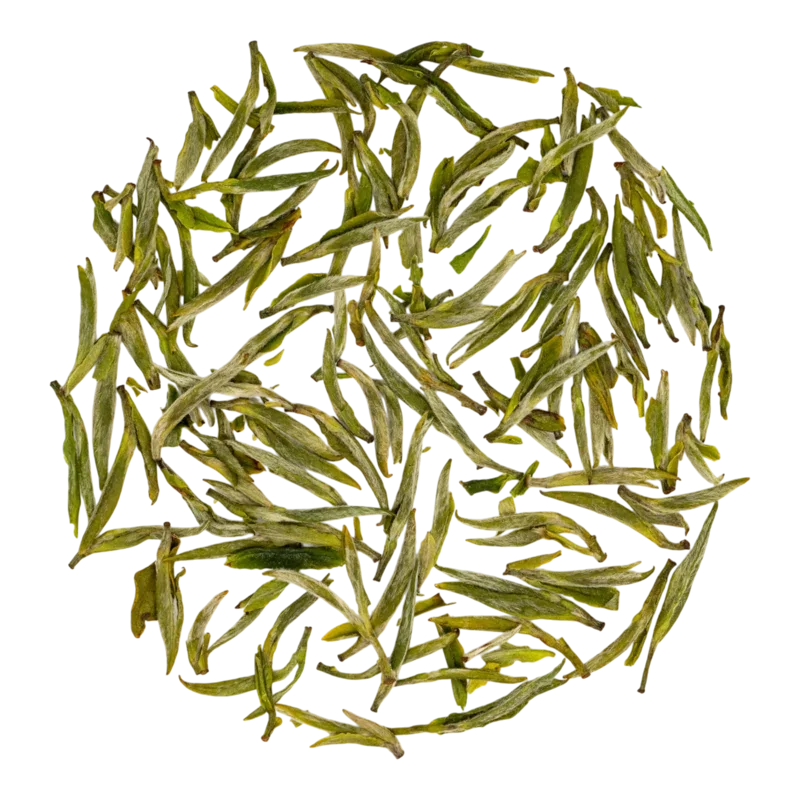
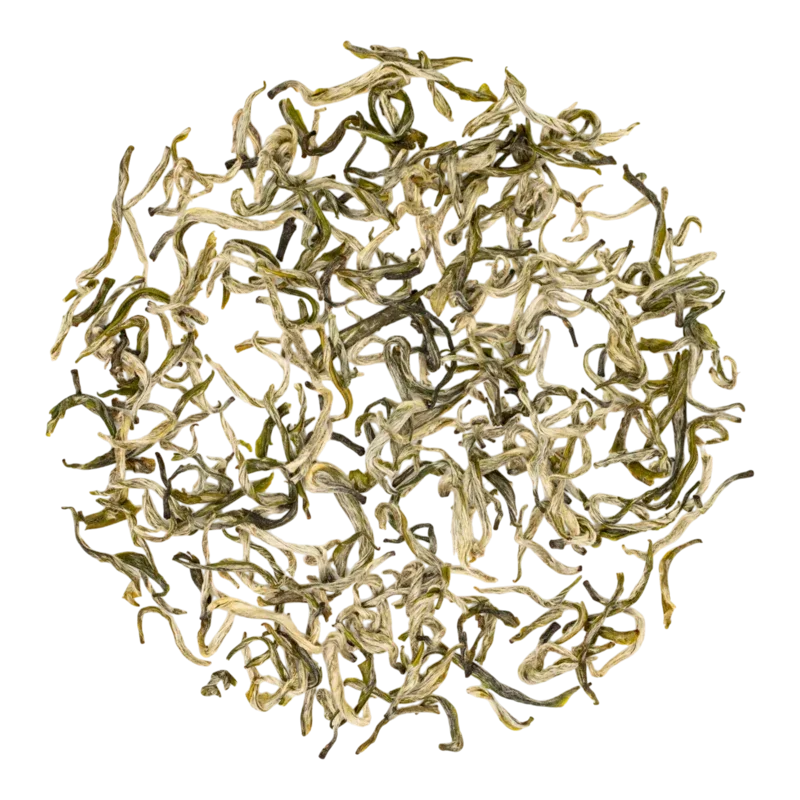
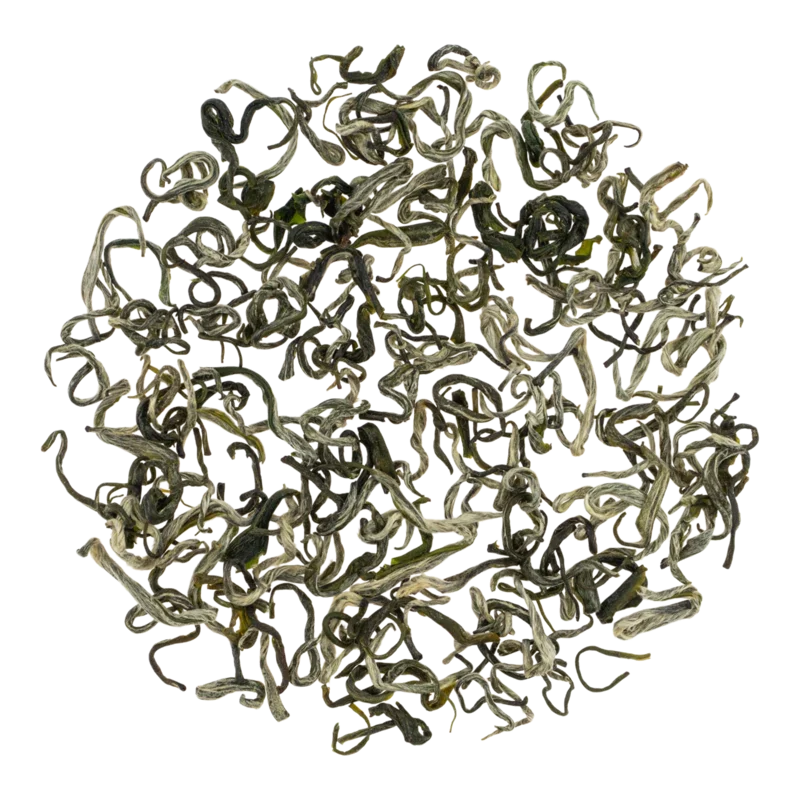
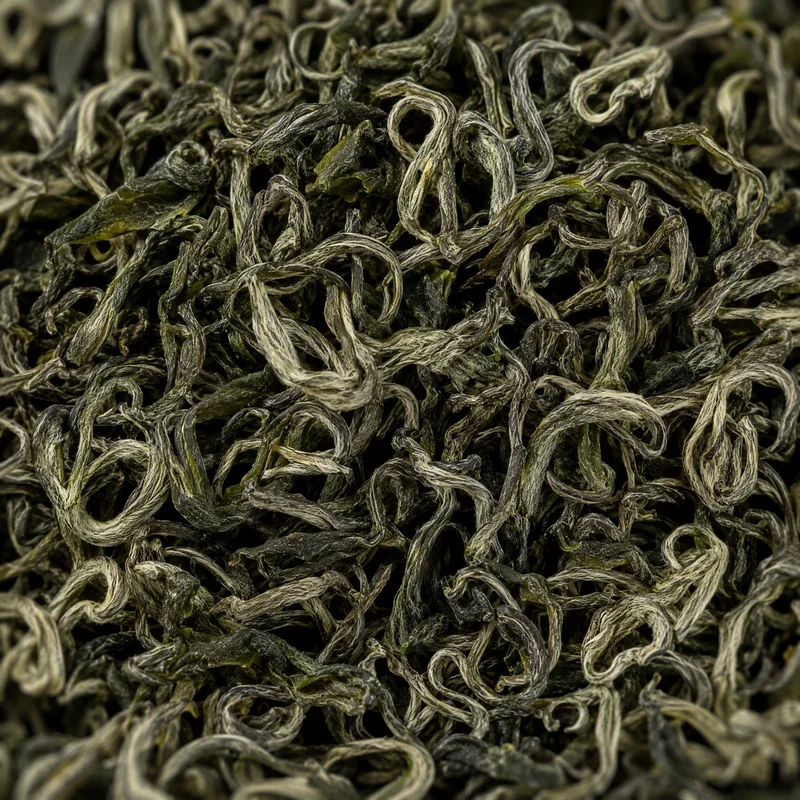
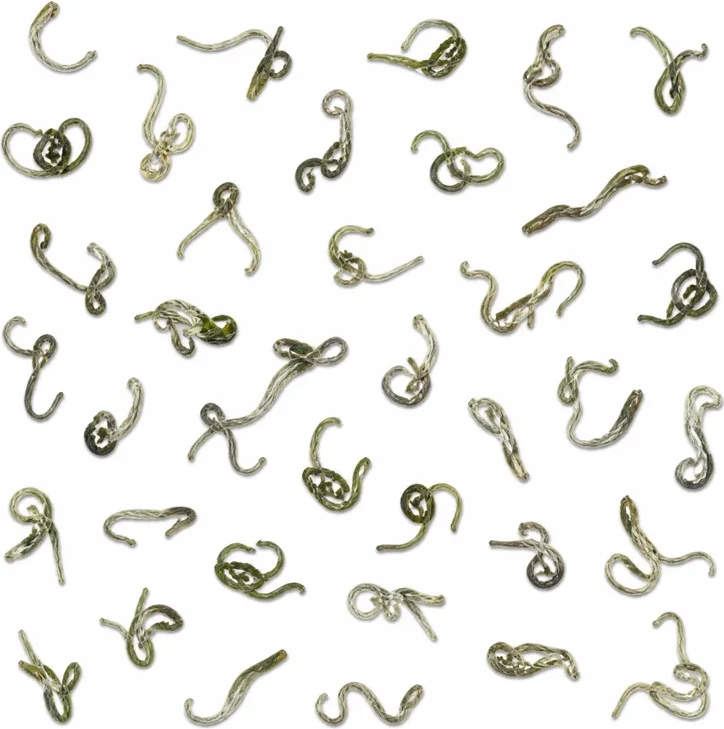
Dry Leaf Appearance: Strips are thin, tight, relatively straight (紧细较直, jǐnxì jiào zhí), with pronounced white down (鲜润显毫). Color — tender green with silvery tint from abundant trichomes; oily-smooth surface. Shape resembles miniature "mountain peaks" or "sparrow tongues."
Dry Leaf Aroma: Fresh, clean, with notes of chestnut (栗香), orchid (兰花香, lánhuā xiāng), and young greenery. In higher grades — light creamy nuances.
Liquor Aroma: Bright, high (清香高长, qīngxiāng gāo cháng), with dominance of floral notes (orchid), undertones of fresh grass and light nutty shade. Aroma is persistent but delicate.
Liquor Color: Light green to yellow-green (微黄明亮, wēihuáng míngliàng), crystal clear, clean, with good brightness.
Spent Leaves: Tender, whole, elastic leaves and buds of bright green color (嫩匀成花朵, nèn yún chéng huāduǒ — "tender, even, opening like a flower"). Uniformity of spent leaves testifies to high quality of raw material and processing skill.
Taste: Soft, gentle, sweetish (味浓爽适口, wèi nóng shuǎng shìkǒu), with light, pleasant astringency and long refreshing aftertaste. Liquor body — medium, "streamlined," without harshness. In the bouquet — notes of orchid, chestnut, spring greenery, sometimes light creamy shades. Taste "醇厚甘甜" (chúnhòu gāntián) — "full, rich, sweet."
Alkaloids: Caffeine — moderate content, providing mild tonic effect. Theobromine, theophylline — in insignificant amounts.
Amino Acids: Elevated content thanks to conditions of diffused light and abundant mists. Precisely L-theanine provides characteristic sweetness, taste "body," and calming effect. Studies of Sichuan tea (particularly the relative — Meng Ding Gan Lu) showed that the main taste-forming amino acids are theanine, glutamic and aspartic acids.
Essential Oils: Comparative study (GC-MS) of aromatic components of Meng Ding Gan Lu and Mengshan Mao Feng revealed that both teas possess rich profiles of volatile compounds forming the characteristic floral-chestnut aroma, with differences in the ratio of terpene and aldehyde fractions.
Minerals: Fluorine, potassium, magnesium, zinc, manganese.
Polyphenols: Moderately high content. Leading component — epigallocatechin-3-gallate (EGCG), providing antioxidant properties. In small-leaf Sichuan raw material, polyphenol content is typically lower than in Yunnan large-leaf (typically 20–30%), which forms a softer, less astringent taste.
Vitamins: C (high content in fresh green tea, partially preserved with gentle processing), B group.
Catechins (EGCG) protect cells from free radical damage, slow oxidative stress processes. Traditional Chinese medicine especially highlighted tea from Mount Mengding: Lì Shízhēn (李时珍) in "Ben Cao Gang Mu" (《本草纲目》) wrote that "true tea by nature is cold, only that from Mount Mengding in Ya'an is warm and capable of expelling diseases."
The combination of caffeine and L-theanine provides smooth, prolonged attention enhancement without anxiety.
Green tea stimulates secretion of digestive enzymes, aids food digestion, especially after fatty meals.
Polyphenols and vitamin C increase the body's resistance to seasonal infections.
Regular green tea consumption is associated with lowering LDL cholesterol levels and strengthening vascular walls.
Excellently quenches thirst, especially in hot weather; ideal as summer tea.
In traditional Chinese medicine, green tea, and especially "mao feng" type teas, are traditionally considered beneficial for the eyes.
Researchers at West China Medical University (华西医大) noted that green tea from Mount Mengding demonstrates notable effect in preventing esophageal diseases.
Tea Amount: 3–5 g per 150–200 ml water.
Teaware: Glass cup (玻璃杯) — for contemplating the "dance" of opening leaves and enjoying the liquor color. Porcelain gàiwǎn (盖碗) — for fuller aroma development. Both options are excellent; choice is a matter of taste and mood.
Water Temperature: 75–80°C. Hotter water "burns" tender leaves, causing bitterness and loss of fine aromatic notes.
Closest "relative" — elite green tea from the same Mount Mengding. Differences: Gan Lu is made from more tender raw material (predominantly single bud or bud + one leaf of early spring), its shape is more twisted and downy, aroma — more intense, and taste — more saturated, sweet and multi-layered. Mao Feng — simpler in structure, with straighter leaf shape, less expensive, but preserving Mengding terroir character.
Famous Anhui "mao feng" from the "Ten Great Teas of China." Raw material — small-leaf, Anhui varieties; shape — "sparrow tongue" with golden tint (象牙色, "ivory color"). Aroma more floral, "orchid-like"; taste — more refined and delicate. Meng Ding Mao Feng — stronger, "denser," with more noticeable chestnut shade.
Flat, pressed leaf shape, bright nutty aroma, "bean" notes, characteristic "pan-fired" profile. Meng Ding Mao Feng — not flat, with more pronounced down and floral-chestnut character, less "nutty."
Finely twisted spirals with abundant down; bright floral-fruity notes, lightness and refreshing character. Meng Ding Mao Feng — straighter in shape, less floral, with more pronounced "chestnut" component.
No reviews yet. Tell us what you think of this tea.
Rate this tea and share your impressions. We review each submission before publishing it.