Brewing
Gongfu brewing
- Water temperature
- 75 °C
- Tea amount
- 5 g
- Water volume
- 100 ml
- First steep
- 10 s
- Time added per infusion
- 5 s
- Infusions
- 3



Lúshān yún wù
Choose a brewing method. Start with the recommended quantities and time, then adjust to taste.
Brewing
Brewing
Taste
Tea encyclopedia
Category: Included in the list of "Ten Famous Teas of China" (中国十大名茶). Historical "tribute tea (gòng chá)" (贡茶, gòngchá) — tea offered to the imperial court since the Song dynasty. In 1982, confirmed in the status of "Famous Tea of China" (中国名茶). In 2015, received a gold award at the World Expo in Milan.
Category: Included in the list of "Ten Famous Teas of China" (中国十大名茶). Historical "tribute tea (gòng chá)" (贡茶, gòngchá) — tea offered to the imperial court since the Song dynasty. In 1982, confirmed in the status of "Famous Tea of China" (中国名茶). In 2015, received a gold award at the World Expo in Milan.
Coordinates: Approximately 29°35′ North latitude, 115°59′ East longitude.
Origin: China, Jiāngxī Province (江西, Jiāngxī), Jiǔjiāng City (九江, Jiǔjiāng), Mount Lúshān massif (庐山, Lúshān). The production territory covers the entire Mount Lushan zone, including the areas of Hanyangfeng Peak (汉阳峰), Wulaofeng Peak (五老峰), Xiaotianchi (小天池) and adjacent valleys.
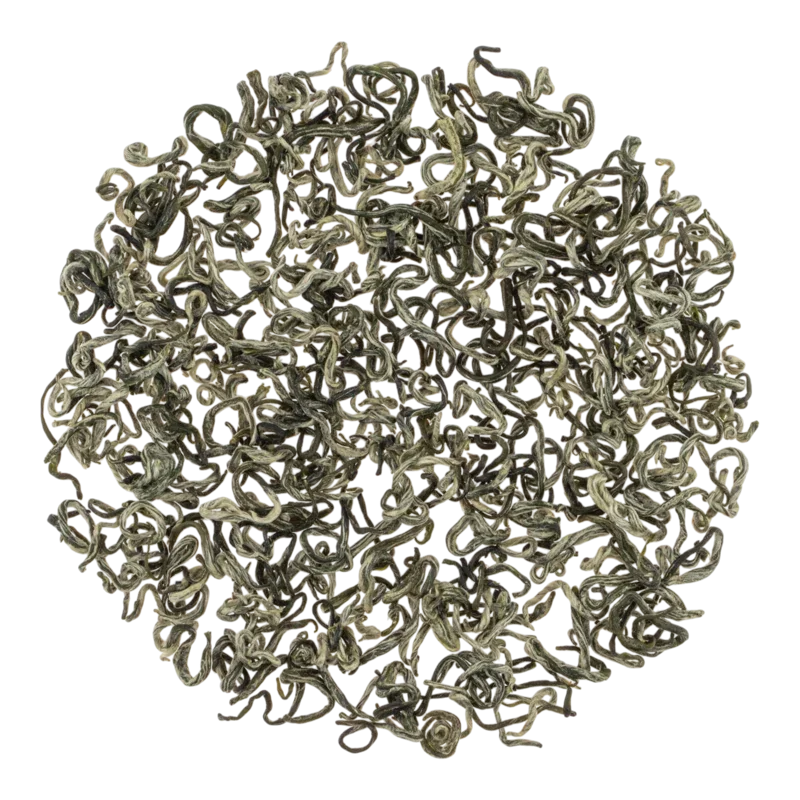
Type: Green tea (绿茶) (unoxidized). Belongs to the category of pan-fired green teas (炒青绿茶, chǎoqīng lǜchá) with characteristic twisted leaf shape resembling pine needles or orchid petals.
Cultural Significance: Lushan is one of the sacred mountains of Chinese Buddhism and Daoism, a place of literary pilgrimage and philosophical retreats. Tea from Lushan is inseparably connected with the tradition of Chan Buddhism (Zen), with Tang and Song poetry, with the image of mountain hermitage. Lushan Yun Wu is not simply a beverage, but a symbol of "above-cloud" purity and spiritual clarity.
History: Lushan Yun Wu is one of the teas with the most ancient history, spanning approximately two thousand years. The origins of tea cultivation on Lushan are connected with Buddhist monks and Daoist hermits of the Han era (206 BCE — 220 CE), who first began selecting and cultivating wild tea bushes on mountain slopes.
Longjing 43 (龙井43, Lóngjǐng 43), Shàngméizhōu (上梅州, Shàngméizhōu), Anhui No. 1 (安徽一号) — improve frost resistance and quality stability.
Lu Yun 1, 2, 3 (庐云1号、2号、3号, Lú Yún) — registered in 2019, belong to early-ripening varieties, especially suitable for producing orchid-shaped tea.
Cultivar: For the production of Lushan Yun Wu, several varieties of tea bush Camellia sinensis var. sinensis are used:
Picking: Picking begins in early spring. Most valued is "pre-Qingming tea (míngqián chá)" (明前茶, Míngqián chá) — tea picked before Qingming (~April 5): consists predominantly of full buds (单芽, dān yá), whose proportion in the batch comprises no less than 90%. Distinguished by pronounced sweetness thanks to high amino acid content. "Pre-Grain Rain tea (yǔqián chá)" (雨前茶, Yǔqián chá) — tea before Guyu (~April 20): standard "one bud — one leaf," bud content no less than 80%, taste more saturated and dense due to increased polyphenol content. Summer-autumn tea is produced in limited quantities and is inferior in quality.
Pluck Standard: For the highest grade — full buds or one bud with barely opened leaflet. For first grade — one bud with one leaf. For second grade — one bud with two leaflets in initial stage of opening.
Raw Material: Tender, whole shoots of uniform size, without coarse leaves and mechanical damage. Processing on the same day.
Altitude: Main tea gardens are located at elevations of 800–1200 meters above sea level, in the zone of constant cloudiness.
Climate: Lushan is located in the zone of subtropical humid climate. Key characteristic — exceptional cloudiness and mistiness: average annual number of misty days — about 200 (maximum — 223 days per year). Relative humidity — 78% (from April to September exceeds 81%). Abundant mist creates ideal conditions of diffused light (散射光), comprising more than 75% of total insolation. Daily temperature fluctuations reach 15°C — daytime high temperature stimulates accumulation of organic substances, nighttime cooling slows energy expenditure, which leads to increased content of amino acids and caffeine in leaves.
Soil: Fertile acidic soils, rich in organic matter and minerals. Slow growth of tea bushes in conditions of constant mist and coolness ensures fleshy, juicy shoots (芽叶肥壮).
Mount Lúshān is located on the northern shore of the Yangtze River (长江), with its southern slope facing China's largest freshwater lake — Póyáng Lake (鄱阳湖, Póyáng Hú). The water surface of the lake and river intensively evaporates moisture, which rises through deep mountain valleys, forming cloud cover. Precisely this geomorphological "pump" makes the microclimate of Lushan unique.
Zone between Wulaofeng Peak (五老峰) and Hanyangfeng Peak (汉阳峰), where mist persists practically around the clock — tea from here is considered of highest quality.
Leaves are pan-fired in an iron wok at moderate temperature. Distinctive feature of Lushan Yun Wu technology — low-temperature pan-firing (低温炒制, dīwēn chǎozhì), allowing maximum preservation of emerald color of the leaf.
After fixation, leaves are vigorously shaken, separating stuck shoots and releasing excess steam.
Leaves are gently rolled, forming initial structure and releasing cell juice.
Preliminary drying to reduce moisture content.
Master manually rolls leaves into tight strips, giving them characteristic shape resembling pine needles or curved orchid petals.
Special technique in which silvery-white down (白毫) separates from leaf surface and covers twisted shoots, giving the tea characteristic "frosty" appearance.
Bringing to stable state at low temperature.
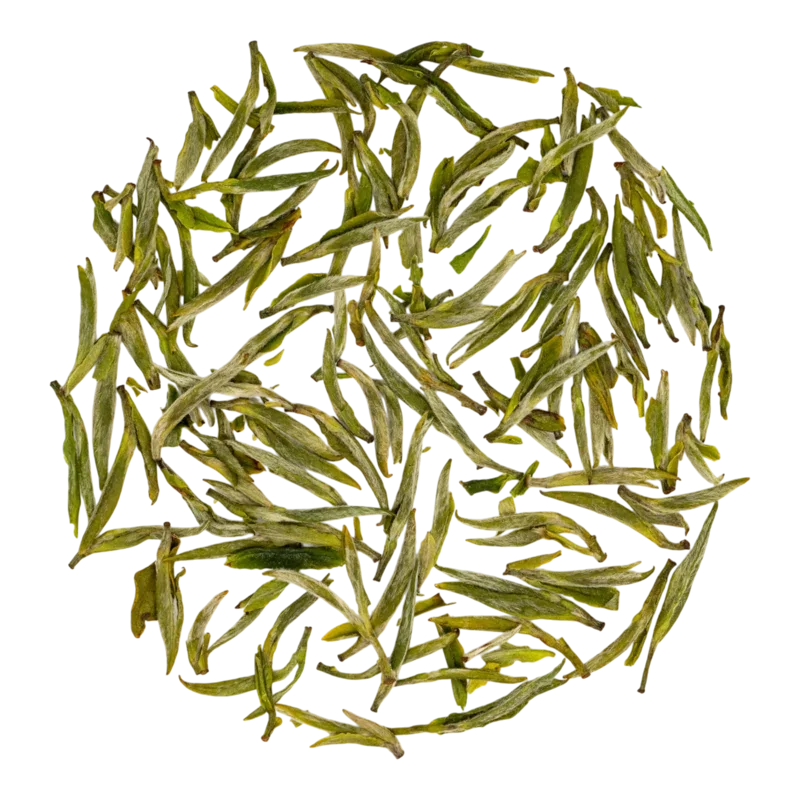
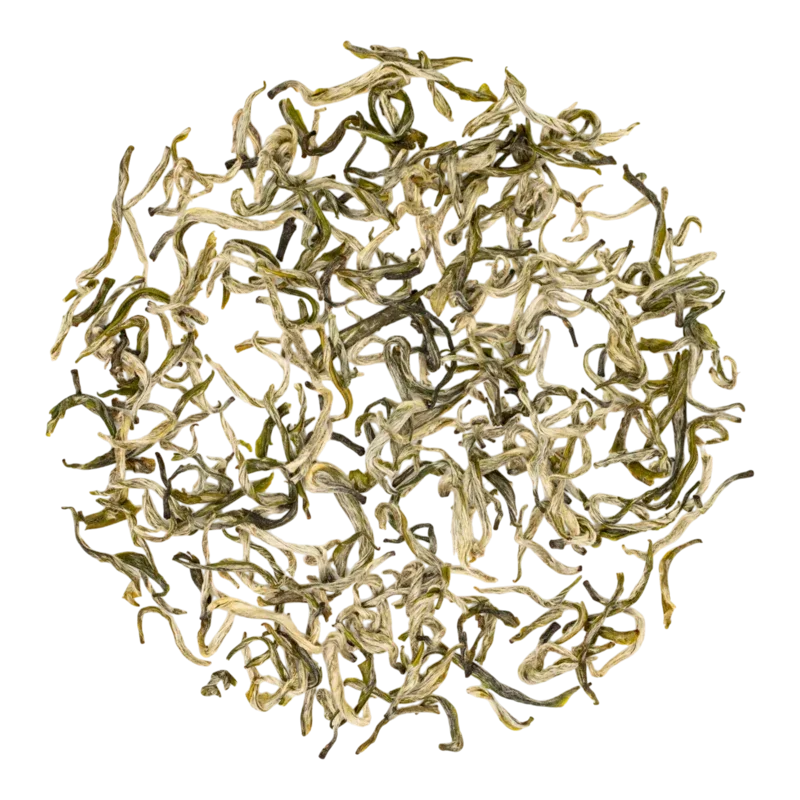
Dry Leaf Appearance: Twisted shape resembling pine needles or curved orchid petals (卷曲形,形似松针或兰花). Shoots are dense, slender and elegant (紧结秀丽). Color — emerald green with abundant silvery-white down (翠绿披毫).
Dry Leaf Aroma: Complex, multi-layered. Orchid note dominates (兰花香, lánhuā xiāng) — pure, cool, "mountain." When heated, chestnut notes unfold (栗香, lì xiāng). When the cup cools (冷杯), honey sweetness manifests (蜜香, mì xiāng).
Liquor Aroma: Orchid-like, persistent and deep. Chestnut note intensifies in hot liquor. When cooling — honey trail with long resonance.
Liquor Color: Tender green, clear and bright (嫩绿明亮), with crystalline transparency.
Spent Leaves: Tender, uniform shoots of yellow-green color (黄绿鲜活), gathered in "buds" (嫩匀成朵). Leaf is resilient, lively, having preserved original shape.
Taste: Fresh and brisk (鲜爽, xiānshuǎng) — bright umami note thanks to high amino acid content. Mellow and rich (醇厚, chúnhòu). Sweet — with long returning sweetness (回甘持久, huígān chíjiǔ). Resistant to multiple brewings (耐泡, nàipào) — withstands 4 or more infusions. Classic tasting formula: "First sip — light astringency; second — blooming aroma; third — returning sweetness; from fourth — taste gradually lightens" (初品微涩,二品留香,三品回甘,四泡后味淡).
Alkaloids: Increased caffeine content — characteristic of high-altitude teas with prolonged vegetation period. Provides pronounced but mild tonic effect. Theobromine and theophylline are also present.
Amino Acids: Increased content — one of the key indicators of "cloudy" high-altitude teas. Precisely the high level of amino acids is responsible for pronounced freshness and sweetness of taste. Slow growth of shoots in conditions of mist and diffused light slows the conversion of amino acids to catechins, which preserves a mild, non-bitter profile.
Volatile aromatic complex includes linalool and other terpenoids, forming characteristic orchid-chestnut bouquet.
Minerals: Potassium, magnesium, zinc, iron, manganese — composition determined by fertile acidic soils of Lushan.
Polyphenols: Significant content. EGCG — main component, providing antioxidant potential and light structural astringency.
Vitamins: High content of vitamin C (characteristic of green teas of early spring picking). B vitamins, carotenoids.
Caffeine combined with L-theanine provides mild, prolonged alertness and increased concentration (提神醒脑).
Tea polyphenols stimulate fat breakdown and relieve feeling of heaviness after fatty food (消食解腻).
Promotes removal of excess fluid, gently relieves internal heat (清热利尿).
High content of polyphenols and vitamin C provides powerful protection against oxidative stress (抗衰老).
Polyphenols contribute to cholesterol reduction and blood pressure normalization (降脂降压).
Clear liquor refreshes breath and creates sensation of internal lightness.
the listed properties are based on publicly available data about green tea composition and are not medical recommendations.
best taste perception — at liquor temperature around 60°C, when freshness and sweetness are maximally felt. Not recommended to drink on empty stomach (tannins may irritate mucous membrane). With sensitive stomach — drink one hour after meals.
Tea Amount: 3 g per 150 ml water.
Teaware: Glass tumbler (玻璃杯) — allows observation of twisted shoot opening and assessment of liquor color. White porcelain gàiwǎn (白瓷盖碗) is also suitable — for more precise aroma control.
Water Temperature: 80–85°C (boiling water, cooled for ~2 minutes). The higher the grade, the lower the temperature — for highest grade, 80°C is optimal.
From Anhui Province. Both are "mountain misty" teas, but Huangshan Mao Feng is lighter and more delicate, with predominant floral notes. Lushan Yun Wu is more dense and saturated, with pronounced chestnut note and longer aftertaste.
Flat leaf with chestnut-bean aroma. Long Jing is "structural" and "umami"-oriented; Lushan Yun Wu is more "wild," orchid-like, with mountain freshness.
From Jiangsu Province. Tight spirals with floral-fruity aroma from co-cultivation with fruit trees. Biluochun is more delicate and fruity; Lushan Yun Wu is stronger and more "mountain," with pronounced "minerality."
From Guizhou Province. Thin shoots with abundant down, fresh and sweetish taste. Duyun is lighter and more delicate; Lushan Yun Wu is more full-bodied and persistent.
authentic Lushan Yun Wu — dense twisted shoots with abundant silvery down. Bright green "plastic" color without down — sign of tea from flatland regions.
characteristic orchid-chestnut aroma. Absence of "mountain" character — reason for doubt.
authentic Lushan Yun Wu withstands 3–4 full infusions; counterfeits "exhaust" after first.
suspiciously low price — sure sign of counterfeit.
No reviews yet. Tell us what you think of this tea.
Rate this tea and share your impressions. We review each submission before publishing it.