Brewing
Gongfu brewing
- Water temperature
- 75 °C
- Tea amount
- 5 g
- Water volume
- 100 ml
- First steep
- 10 s
- Time added per infusion
- 5 s
- Infusions
- 3

lǜ yáng chūn
Choose a brewing method. Start with the recommended quantities and time, then adjust to taste.
Brewing
Brewing
Taste
Tea encyclopedia
Category: China's geographical indication product (国家农产品地理标志产品, 2011). Jiāngsū provincial standard tea (江苏省地方名茶, 1999). Multiple recipient of the special prize "Zhong Cha Bei" (中茶杯特等奖) — four special prizes, six first places. In 2001, at the "Zhong Cha Bei" competition, a sample from Yizheng scored the highest among 207 green teas from across the country. "Land of Famous Teas of China" (中国名茶之乡, 2012 — Yizheng). Provincial intangible cultural heritage object (手工制茶技艺 — 江苏省非遗, 2023).
Category: China's geographical indication product (国家农产品地理标志产品, 2011). Jiāngsū provincial standard tea (江苏省地方名茶, 1999). Multiple recipient of the special prize "Zhong Cha Bei" (中茶杯特等奖) — four special prizes, six first places. In 2001, at the "Zhong Cha Bei" competition, a sample from Yizheng scored the highest among 207 green teas from across the country. "Land of Famous Teas of China" (中国名茶之乡, 2012 — Yizheng). Provincial intangible cultural heritage object (手工制茶技艺 — 江苏省非遗, 2023).
Coordinates: 32°14′–32°36′ N, 119°02′–119°22′ E. Elevation — 5–149 m a.s.l. Main tea zone — hilly belt at 30–40 m.
Origin: China, Jiāngsū Province (江苏省), Yángzhōu City (扬州市, Yángzhōu Shì), Yízhēng City (仪征市, Yízhēng Shì). The protected geographical indication zone covers 9 townships and 1 office: Xieji (谢集乡), Yuetang (月塘乡), Qingshan (青山镇), Liuji (刘集镇), Tongshan (铜山办事处), Xincheng (新城镇), Xinji (新集镇), Maji (马集镇), Zhenzhou (真州镇), Chenji (陈集镇). The core production area is the Nàshān Tea Farm (捺山茶场, Nàshān Cháchǎng) in Yuetang Township.
Type: Green tea (绿茶, lǜchá), unoxidized. By technology — half pan-fired, half-dried (半烘炒结合, bàn hōngchǎo jiéhé): combining pan-firing (炒, chǎo) at the fixation and shaping stages with drying (烘, hōng) at the final stage. By leaf shape, it belongs to "eyebrow-shaped" (眉形, méixíng) teas: tea leaves are thin, elegant, slightly curved, "like young willow shoots" (形似新柳). By classification — conditionally eyebrow-shaped pan-fired and dried (条形烘炒绿茶, tiáoxíng hōngchǎo lǜchá).
Nàshān Tea Farm (捺山茶场) in Yizheng — original producer. Yízhēng Tea Industry Association (仪征市茶叶协会) — authorized distributors list.
Stores with geographical indication authorization. Major tea markets in Yangzhou, Nanjing, Shanghai.
Tmall, JD.com — official flagship stores of authorized producers. Verify geographical indication marking and producer authorization.
Annual Yangzhou Tea Festival, Jiangsu Provincial Tea Exhibition — opportunity to taste and purchase directly from producers.
For first purchase, buy small quantities from several sources to compare. Authentic Lü Yang Chun has distinctive chestnut aroma and "willow shoot" appearance that are difficult to counterfeit.
For Lü Yang Chun production, medium-leaf (中叶种, zhōngyè zhǒng), lightly pubescent clonal varieties of Camellia sinensis var. sinensis are used, selected for cold and drought resistance, suitability for green tea, as well as moderate length and fullness of buds. Main cultivars:
Míngqiánchá (明前茶, Míngqián Chá) — harvest before Qīngmíng Festival (清明, usually April 4–5) — yields highest and first grades, with maximum amino acid content. Yǔqiánchá (雨前茶, Yǔqián Chá) — harvest before Gǔyǔ Festival (谷雨, usually April 19–20) — denser leaf, stronger liquor, withstands more infusions. After May, Lü Yang Chun production ceases; summer and autumn leaves are used only for mass green tea or red tea (black tea).
Single bud, dense, emerald-green, light fuzz. Chestnut aroma. From 2,680 yuan/500g.
One bud + one leaf, even rolling. 800–1,500 yuan/500g.
One bud + two leaves, denser liquor.
Pluck Standard: Exclusively early spring harvest (春茶, chūnchá). Highest grade (特级, tèjí) — single bud (单芽, dān yá), dense, full. First grade (一级) — one bud and one leaf in initial opening stage (一芽一叶初展). Second grade (二级) — one bud and two leaves. Shoot length for highest grade — 1.8–2.5 cm. Approximately 90,000 buds are required for one kilogram of highest grade.
Climate: Northern subtropical monsoon (北亚热带季风气候). Average annual temperature — 15.1°C. Annual precipitation — approximately 1,100 mm. Sunshine hours — 2,226.5 per year. Frost-free period — 221+ days. Effective accumulated temperature — 5,537°C. Four distinct seasons with large diurnal temperature variation — a key factor in accumulating beneficial substances in leaves. Winter-spring contrast is particularly significant: prolonged winter dormancy allows tea bushes to accumulate nutrients, while late vegetation start (later than in southern provinces) ensures increased amino acid content in spring shoots.
Soil: Yellow-brown (黄棕壤, huáng zōng rǎng), formed on Xiàshǔ loess parent material (下蜀黄土, Xiàshǔ huángtǔ). Deep soil profile. pH — 4.5–6.5 (optimally 6.0–6.5 for core zone). High content of clay particles, exchangeable hydrogen and aluminum ions, as well as exchangeable bases. Rich in mineral elements. Organic matter content — up to 8.0% and higher — an exceptionally high indicator among China's tea regions, ensuring flavor richness and liquor density. Bedrock — horizontal sedimentary rocks, forming characteristic clay hardpan layer (粘盘层, zhān pán céng).
Freshly picked shoots are spread in thin layers in ventilated rooms to evaporate excess moisture and begin formation of aromatic precursors. Moisture loss — up to 15–20%.
Rotary drum (滚筒杀青机), temperature — approximately 140°C. Gentle fixation: relatively low temperature compared to other green teas (Longjing — 200–250°C in wok), which prevents burning of tender buds and preserves amino acids.
Key stage giving tea leaves the characteristic "young willow" shape. Hand techniques "grasp and shake" (抓、抖, zhuā, dǒu) — master grasps handful of leaves and rhythmically shakes, simultaneously stretching and straightening tea leaves. This operation distinguishes Lü Yang Chun from flat (Longjing) and spiral (Biluochun) teas. In machine processing, shaping machines (理条机) are used.
Reducing moisture to intermediate level, stabilizing shape.
Shape refinement — straightening, removing deformed tea leaves.
Temperature — approximately 60°C. Low-temperature, slow drying — fundamental difference from high-temperature final pan-firing of other green teas. "Dark fire" maximally preserves free amino acids and prevents destruction of volatile chestnut aromatic compounds. Final moisture content — ≤6%.
Removing stems, yellow leaves, foreign inclusions. Separation by grades.
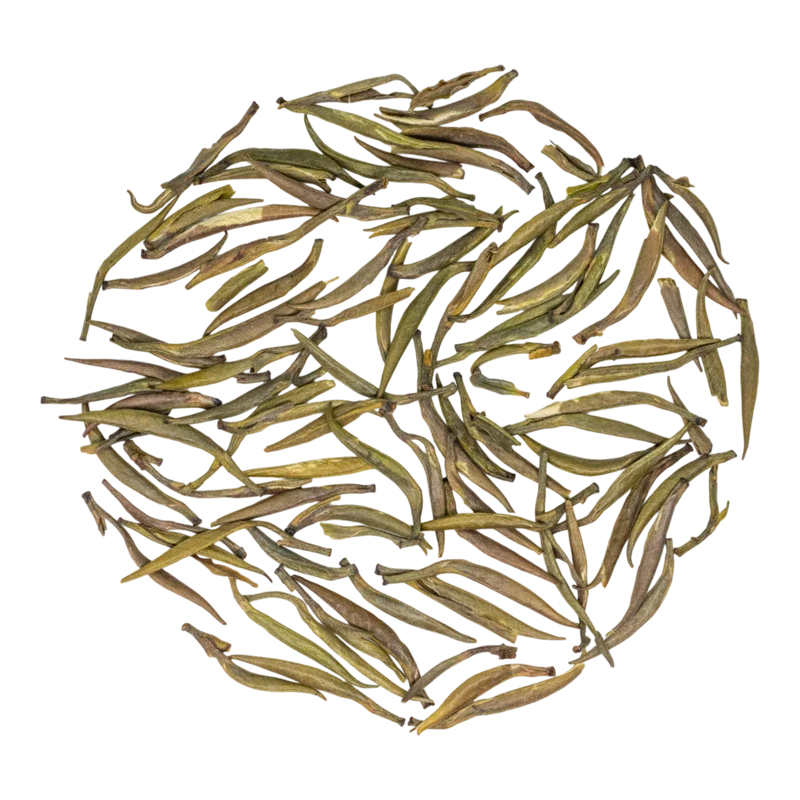
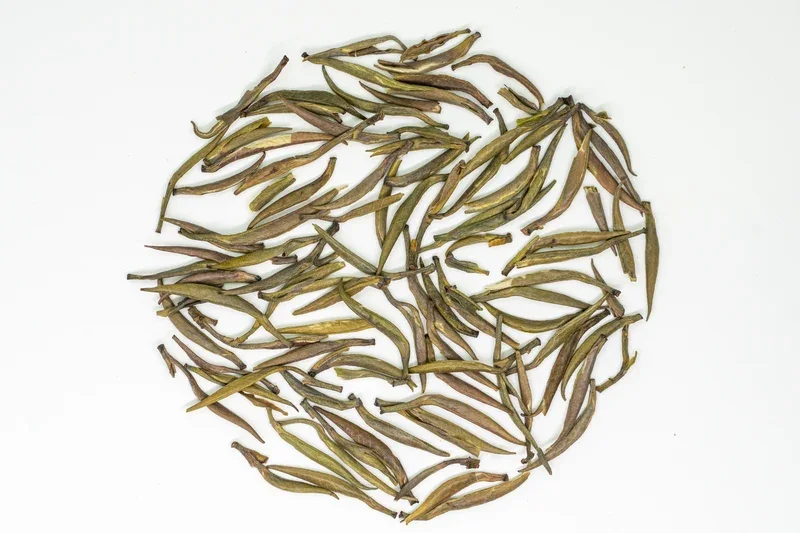
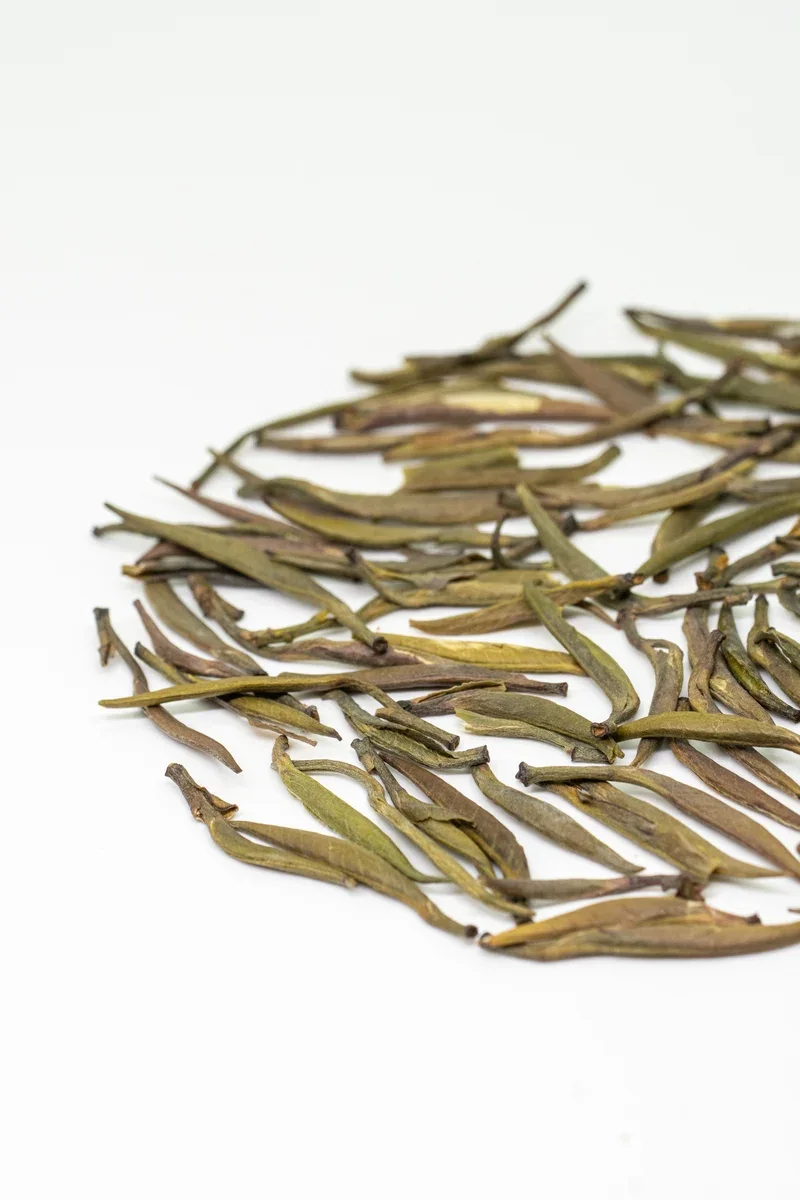
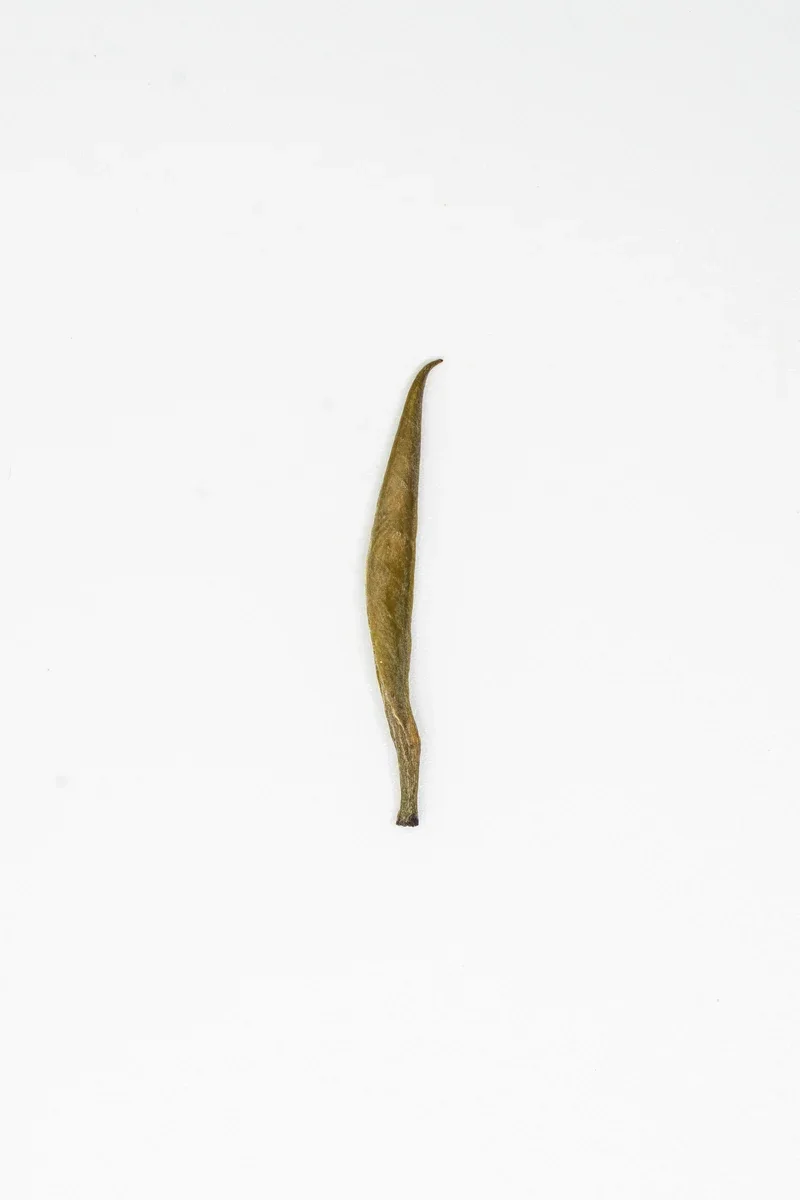
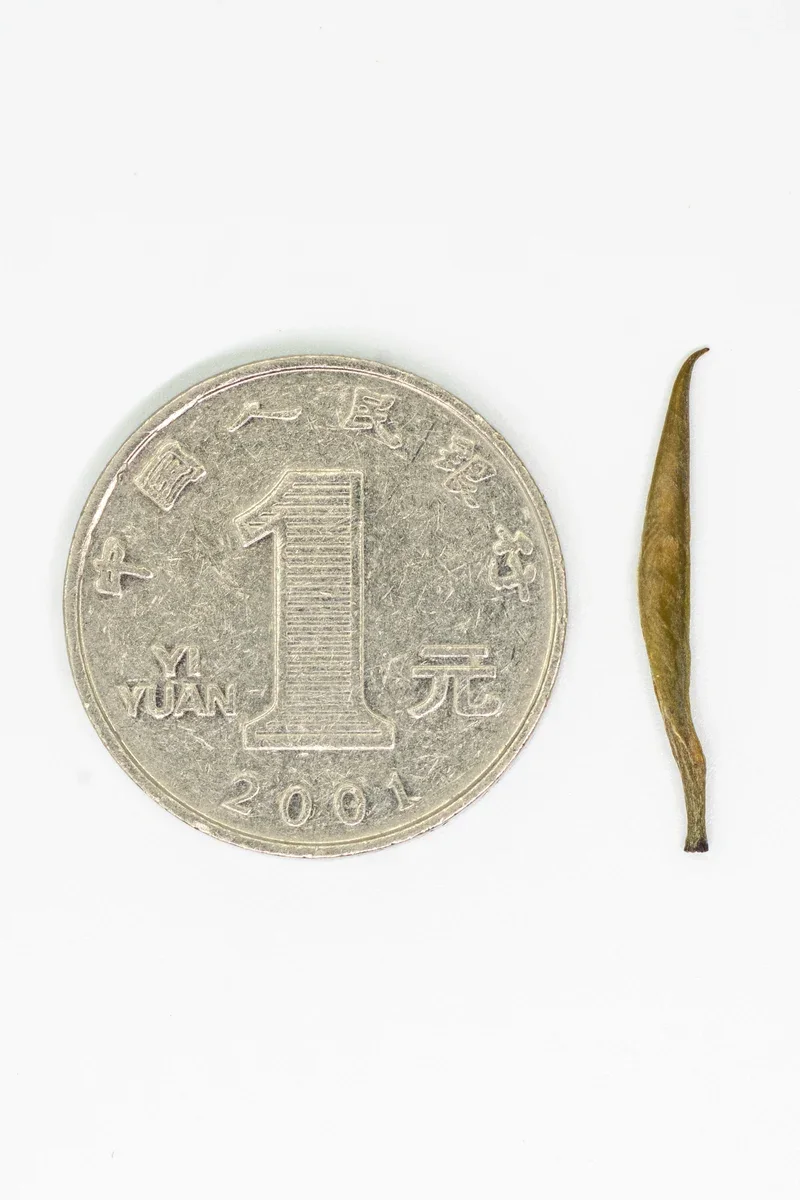
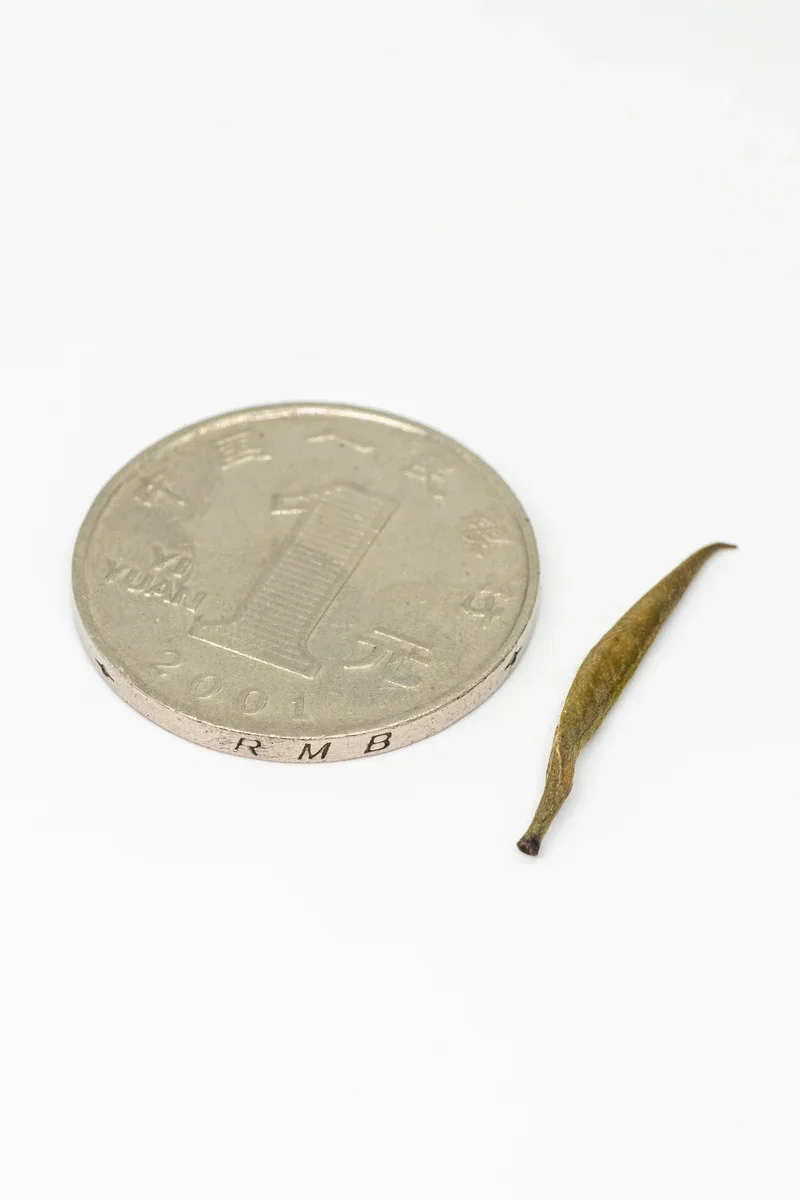
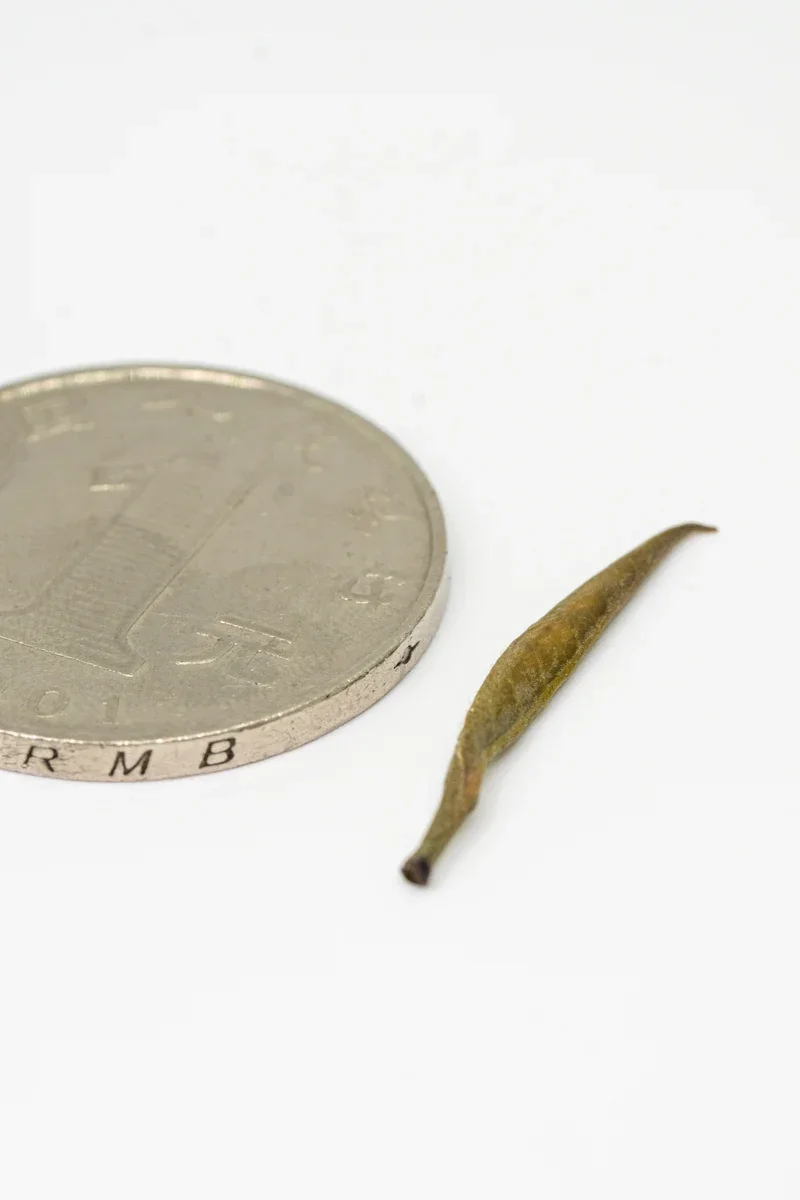
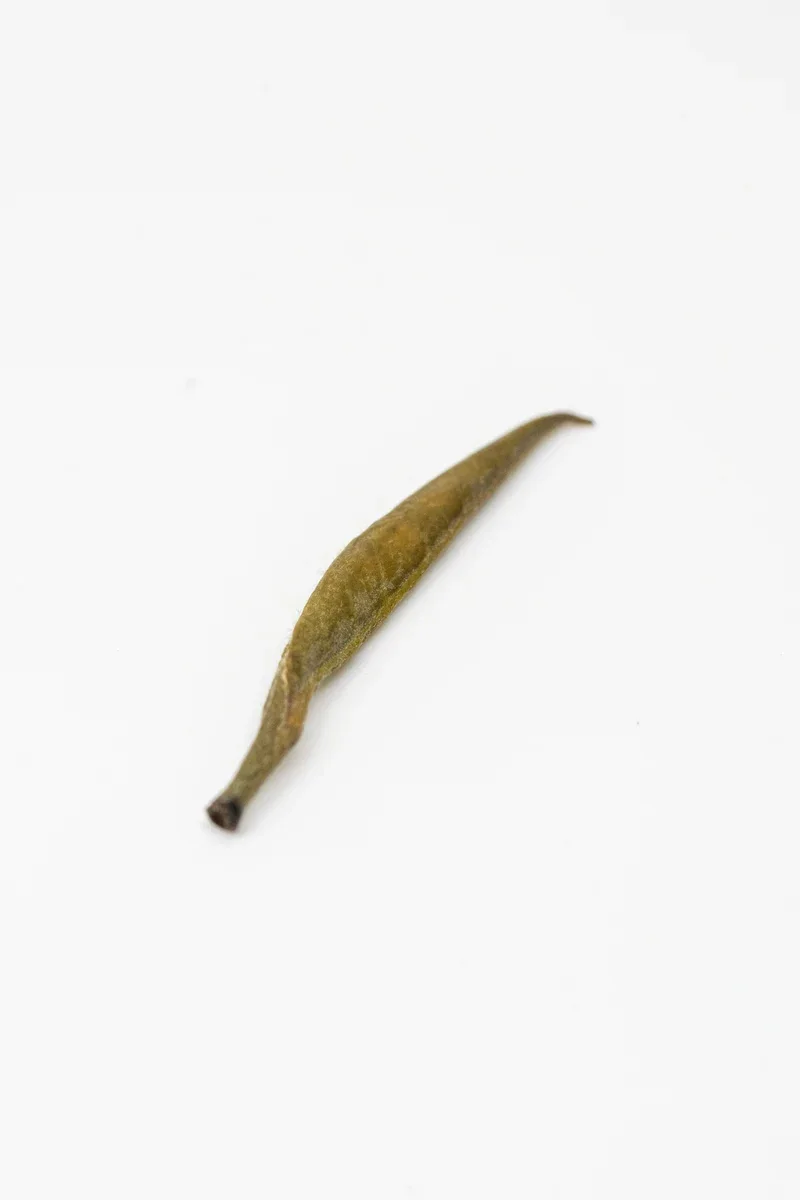
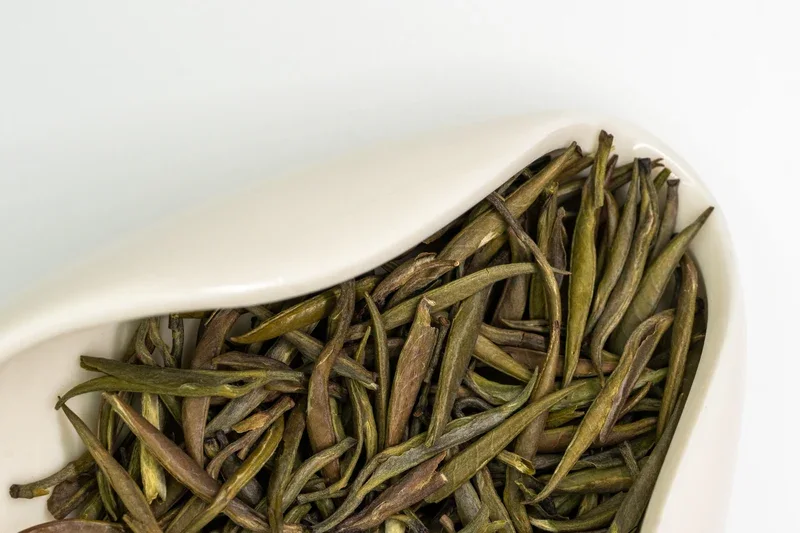
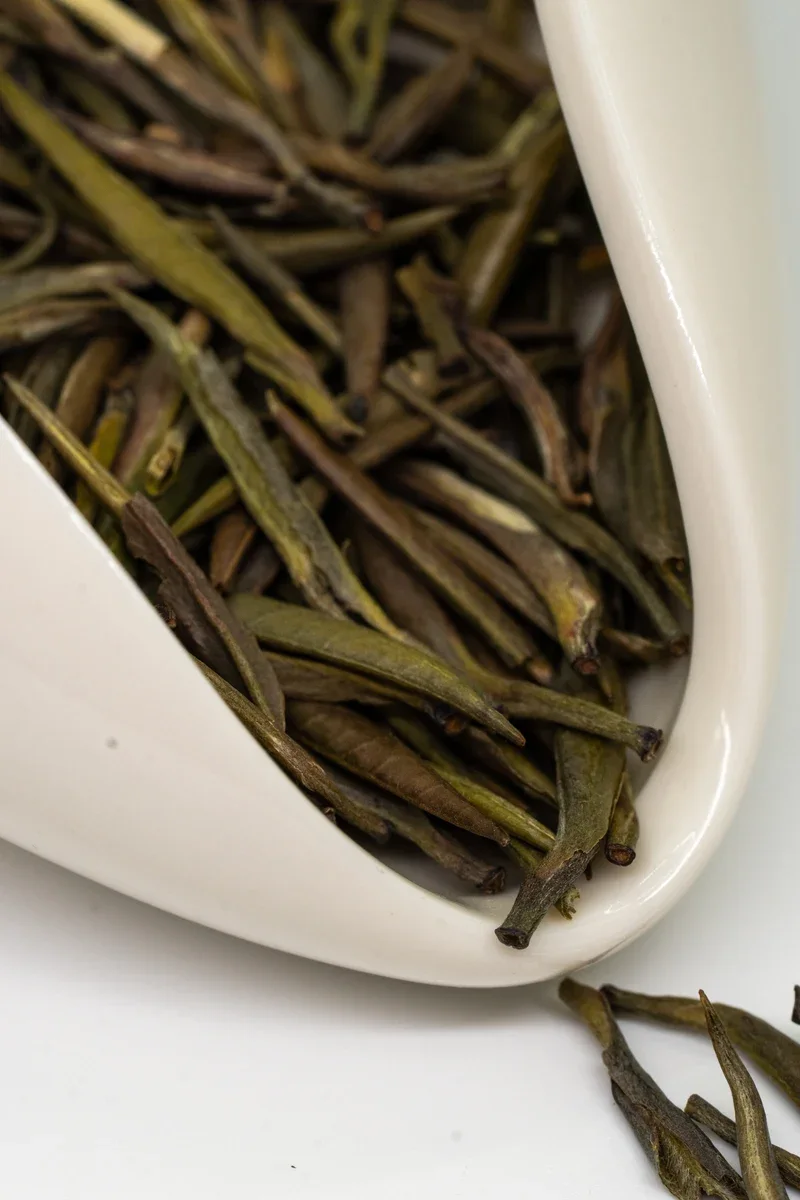
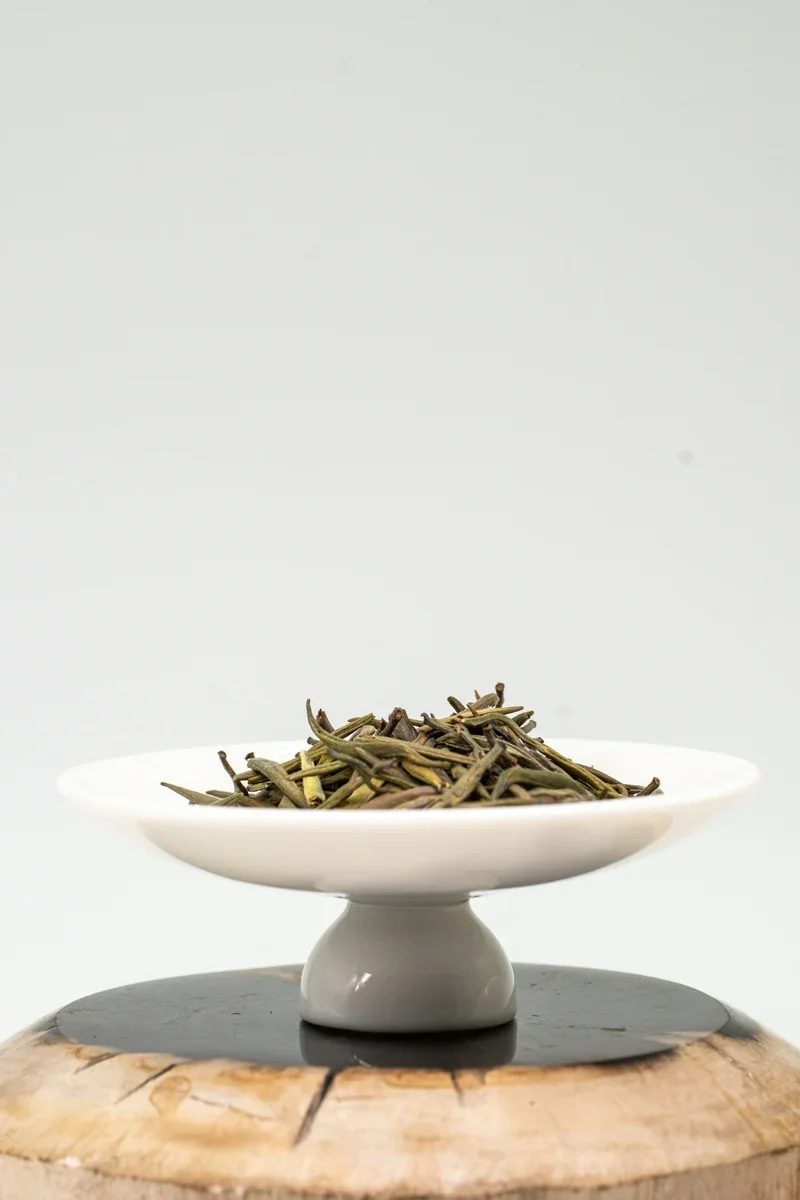
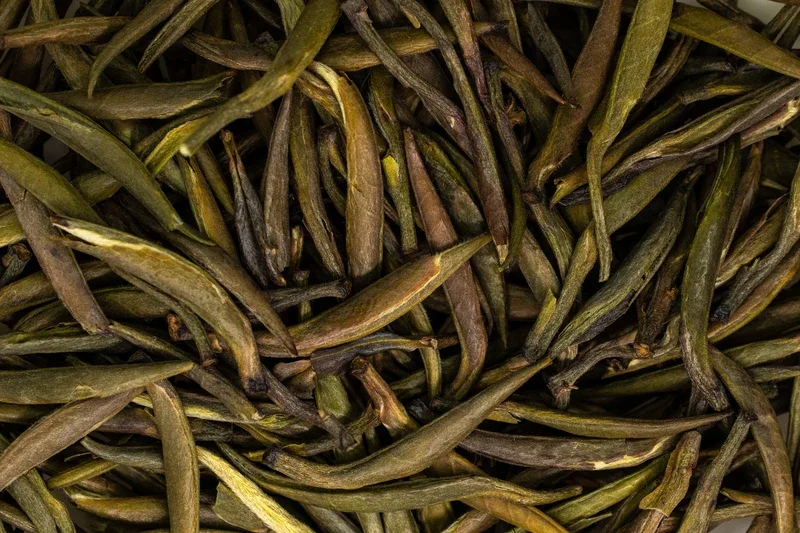
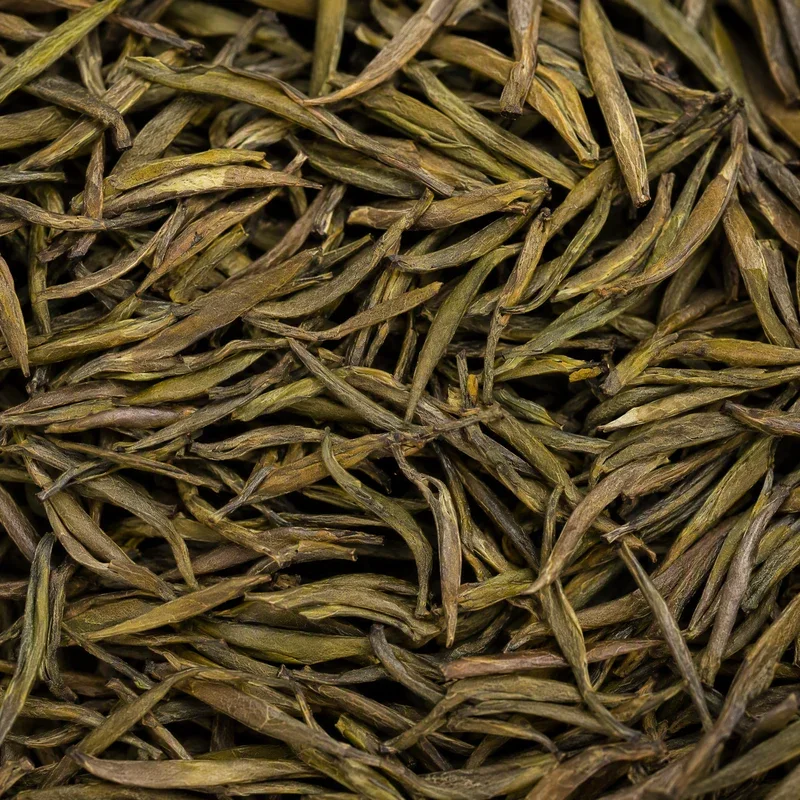
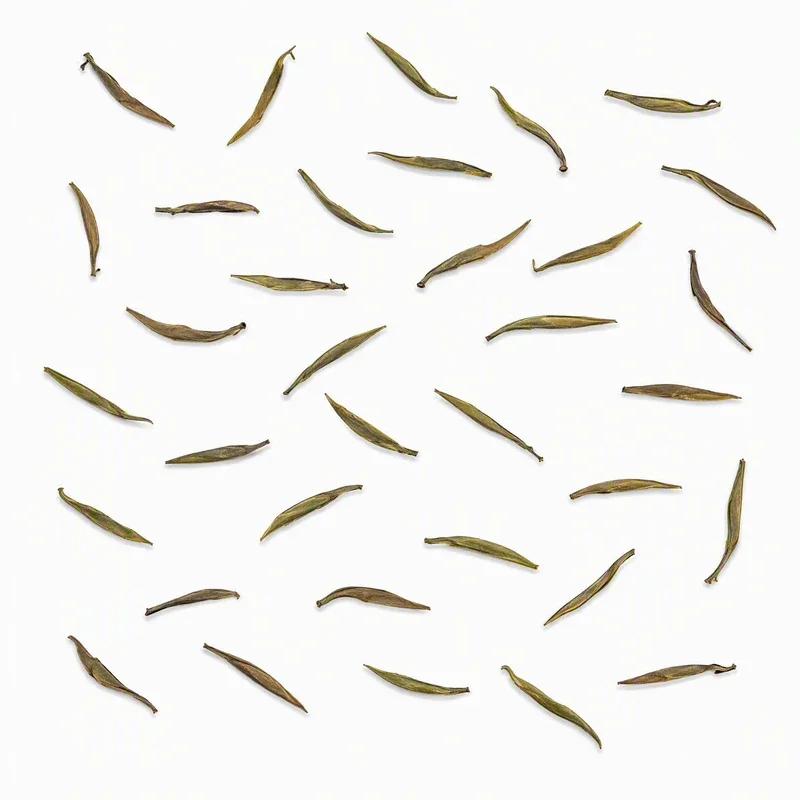
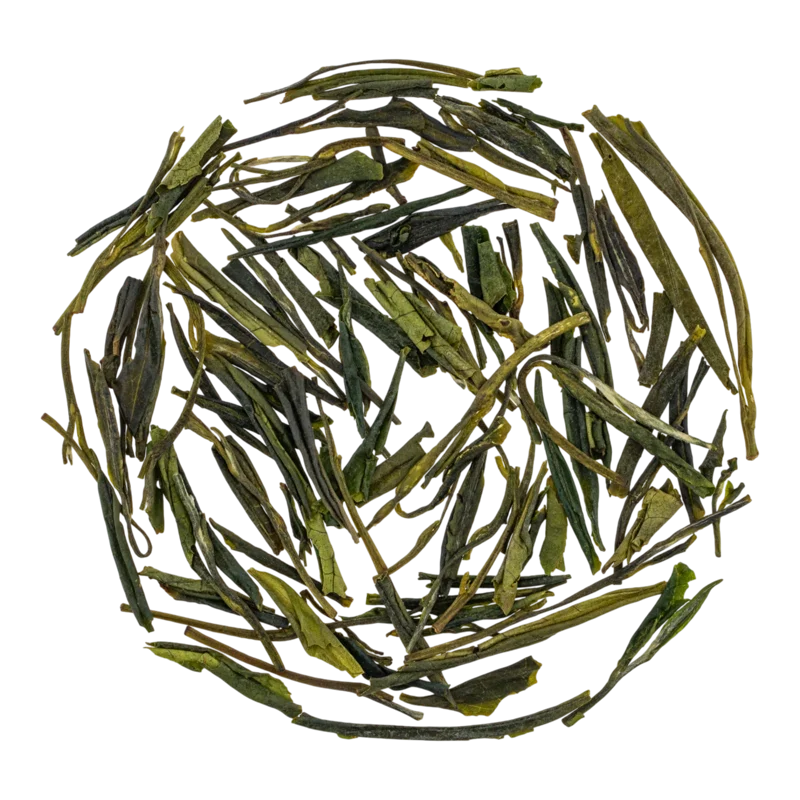
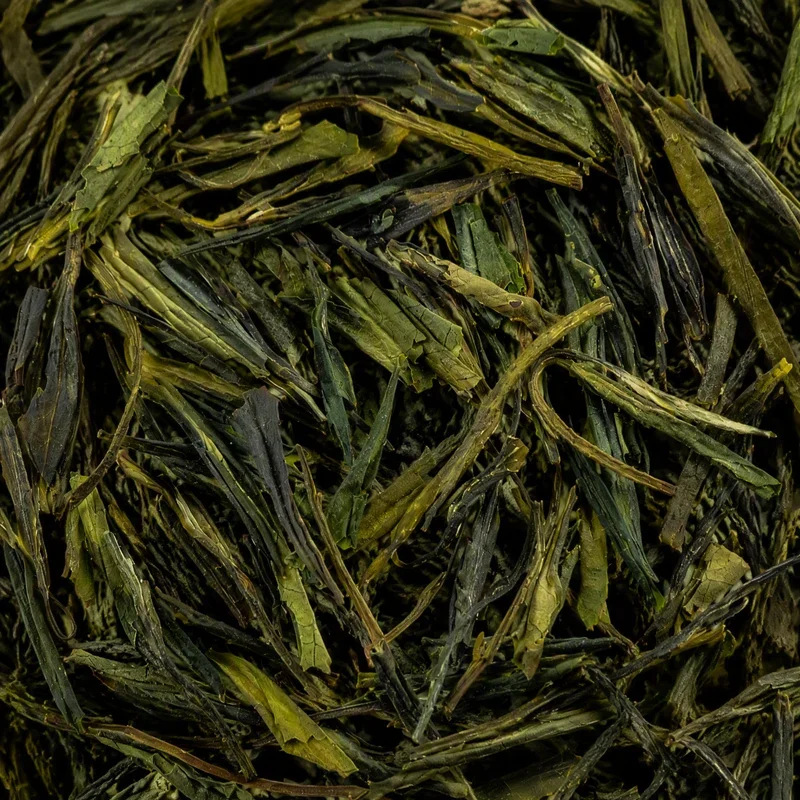
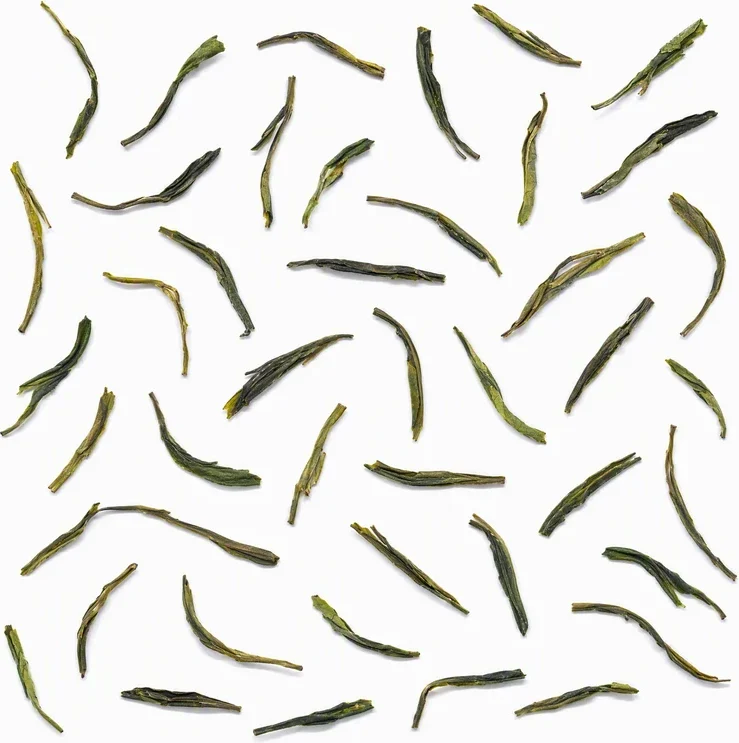
Dry Leaf Appearance: "Eyebrow-shaped" tea leaves (眉形): thin, elongated, elegant, slightly curved — "like young willow shoots" (纤细秀长似新柳, xiānxì xiùcháng sì xīn liǔ). Color — emerald-green with oily luster (翠绿油润). Light fuzz. Even, uniform in size.
Dry Leaf Aroma: Pure (清香, qīngxiāng) with pronounced chestnut tone (栗香, lìxiāng) — warm, slightly sweet, reminiscent of roasted chestnuts. Subtle green grass note present.
Liquor Aroma: Chestnut aroma — primary and most characteristic. High and persistent (高雅持久, gāoyǎ chíjiǔ). Upon cooling, sweet floral note emerges. Cold cup aroma persists for long time.
Liquor Color: Clear, bright (清澈明亮, qīngchè míngliàng). Emerald-green, sometimes with light yellowish tint (翠绿 / 浅绿带黄).
Spent Leaves: Tender green, uniform, even (嫩绿匀齐, nèn lǜ yún qí). Leaves — whole, tender, without damage.
Taste: Fresh (鲜爽, xiānshuǎng) — pronounced "freshness" due to high amino acid content. Mellow and rich (醇厚, chúnhòu) — liquor body is full, without wateriness. Sweet (甘, gān) — returning sweetness (回甘, huígān) is stable and prolonged. Minimal astringency. Aftertaste — long, with chestnut sweetness.
Amino Acids: Elevated content — result of three factors: (1) northern location with large diurnal variation and long winter, stimulating accumulation of nitrogenous substances; (2) high organic content in soils (up to 8%); (3) "dark fire" technology (暗火), preserving thermolabile amino acids, primarily L-theanine (L-茶氨酸). L-theanine — key component of "freshness" (鲜爽) and source of relaxing effect.
Typical for green tea content — 2.5–4.0%. Provides tonic effect, in synergy with L-theanine creates state of "alert calmness."
Potassium, zinc, magnesium, manganese, fluorine. Richness of mineral profile is due to yellow-brown soils with high content of exchangeable ions.
The ratio of amino acids to polyphenols (酚氨比, fēn-ān bǐ) in Lü Yang Chun is shifted toward amino acids compared to southern green teas — this is a consequence of northern location and determines the characteristic "fresh, sweet, without bitterness" profile.
Essential Oils: Chestnut aroma is formed by high-boiling terpene compounds and Maillard reaction products formed during pan-firing. Low-temperature final drying preserves volatile aromatic fractions.
Polyphenols: Content — at the level of typical green tea from northern subtropical belt (18–24%). Lü Yang Chun specificity — moderate polyphenol content combined with elevated amino acids, forming balance of "freshness without bitterness." Catechins — main polyphenol fraction — provide antioxidant potential.
Vitamins: Vitamin C (ascorbic acid) — preserved due to gentle fixation and low-temperature drying. B-group vitamins (B₁, B₂). Vitamin E (tocopherols).
Tea Amount: 3g per 150ml (1:50 ratio).
Teaware: Straight glass tumbler (直筒玻璃杯) — allows observing "dance" of willow-shoot tea leaves. Thin-walled gaiwan (薄胎盖碗) — for more precise extraction control. Porcelain cup with lid also suitable.
Water Temperature: 80–90°C. For highest grade (single buds mingqiancha) — 80–85°C. For yuqiancha (more mature leaf) — 85–90°C.
Enemies: Moisture, foreign odors, light, high temperature, oxygen. Do not store near products with strong odors. Before consumption from refrigerator — keep package at room temperature 30–60 minutes to avoid condensation.
After purchasing fresh tea, 10–15 days storage at room temperature in airtight packaging is recommended for flavor stabilization and dissipation of residual pan-firing "fire."
Airtight packaging (aluminum bag with vacuum air extraction), refrigerator 0–5°C. Period — up to 12 months.
Freezing (-18°C) in vacuum packaging — up to 18 months.
Working supply for 1–2 weeks can be stored at room temperature in cool, dark place. Main supply — in refrigerator.
Price Category: Highest grade (特级, single bud, mingqiancha) — from 2,680 yuan/500g (≈$370+). First grade — 800–1,500 yuan/500g. Second grade and yuqiancha — from 300 yuan/500g. Compared to similar quality Xi Hu Longjing or Dongting Biluochun, Lü Yang Chun remains significantly more affordable — its brand is less promoted, but quality is comparable.
No reviews yet. Tell us what you think of this tea.
Rate this tea and share your impressions. We review each submission before publishing it.