Brewing
Gongfu brewing
- Water temperature
- 100 °C
- Tea amount
- 6 g
- Water volume
- 100 ml
- First steep
- 10 s
- Time added per infusion
- 5 s
- Infusions
- 10

Liù'ān hēichá
Choose a brewing method. Start with the recommended quantities and time, then adjust to taste.
Brewing
Brewing
Taste
Tea encyclopedia
Alt Names: Ān Chá (安茶, Ānchá), Liú An Lán Chá (六安篮茶, Liù'ān Lánchá — "Lu'an basket tea"), Ruǎnzhī Chá (软枝茶, Ruǎnzhī Chá — "soft shoot tea").
Alt Names: Ān Chá (安茶, Ānchá), Liú An Lán Chá (六安篮茶, Liù'ān Lánchá — "Lu'an basket tea"), Ruǎnzhī Chá (软枝茶, Ruǎnzhī Chá — "soft shoot tea").
Category: Ānhuī dark teas (安徽黑茶, Ānhuī Hēichá); historical "overseas Chinese export tea tradition" (侨销茶, qiáoxiāo chá — "tea for overseas Chinese communities").
Coordinates: Qimen: approximately 29.7–30.0° N, 117.5–117.8° E; Lu'an: approximately 31.3–32.0° N, 115.7–117.0° E.
Origin: China, Ānhuī Province (安徽, Ānhuī). Main production base — Qímén County (祁门县, Qímén Xiàn), Huángshān City (黄山市, Huángshān Shì), primarily Lúxī Township (芦溪乡, Lúxī Xiāng) and Róngkǒu Township (溶口乡, Róngkǒu Xiāng). Historically, raw material also came from Lu'an Prefecture (六安, Liù'ān), Jīnzhài County (金寨, Jīnzhài) and Huòshān County (霍山, Huòshān) — the Dàbié Mountains region (大别山, Dàbiéshān).
Type: Post-fermented tea (dark tea, hei cha — 黑茶, Hēichá). In classification, it occupies a borderline position: initial production stages resemble green tea, but unique processes of "night dew" (夜露, yèlù), steaming, pressing into bamboo baskets, and multi-year aging transform it into full-fledged hei cha.
Both are "侨销茶," both went south. Liu Bao denser in body, with "camphor" and "betel" profile; An Cha — lighter, with floral-nutty character and signature "watermelon rind" note. Liu Bao pressed in large baskets and comes loose; An Cha — only in small bamboo baskets.
Shu pu-erh — Yunnan large-leaf, with intense "earthy" profile and darker liquor. An Cha — medium-leaf Anhui, lighter, clearer and more "fresh" in character. Pu-erh was "tea of masses," An Cha — "tea of elite" in the same markets.
Tian Jian — Hunan loose hei cha, often with pine smokiness. An Cha — pressed in baskets, without smokiness, with more pronounced "dewy" and floral profile.
Fu Zhuan has characteristic "golden flowers" and honey-mushroom note. An Cha lacks "金花," its profile — nutty-fruity with "watermelon" note.
Qing Zhuan — mass border tea with coarse raw material and pronounced astringency. An Cha — refined product from tender raw material, oriented toward "pure drinking" (清饮, qīngyǐn), not preparation of milk-salt beverages.
Cultural Significance: Liu An Hei Cha / An Cha is one of the few historical "qiao-xiao cha" (侨销茶, qiáoxiāo chá) — teas intended for export to overseas Chinese (华侨) communities in Southeast Asia. Unlike "border" hei cha that went to Tibet and Mongolia, An Cha moved south — to Guangdong, Hong Kong, Malaya, Singapore, Indonesia. In Cantonese tea culture, this tea was considered elite: "wealthy families drank liu-an, common people drank pu-erh and liu bao." Its medicinal reputation in Lǐngnán (岭南) — as a remedy for heat and dampness — was supported by generations of traditional Chinese medicine practitioners.
History: Ānhuī dark tea traces its roots to the late Míng period (明, 16th–17th centuries). The An Cha technology is believed to have formed around 1725, though mentions of "soft shoot tea" (软枝茶) appear in the "Local Records of Qi'an" (《祁阊志》) from the Yǒnglè period (永乐, 1403–1424). By the Qīng era (清), production flourished: from Qiánlóng to Xiánfēng (乾隆–咸丰, 1736–1861), dozens of tea houses operated in the southern townships of Qimen, and the legendary brand "Sun Yishun" (孙义顺, Sūn Yìshùn) has existed for over 200 years.
Cultivar: Main cultivar — Qímén Zhūyè Qúntǐ Zhǒng (祁门槠叶群体种, Qímén Zhūyè Qúntǐ Zhǒng) — local population of medium-leaf type (Camellia sinensis var. sinensis), as well as selected descendants "Anhui No. 1" (安徽1号) and "Anhui No. 3" (安徽3号). Leaves are distinguished by soft shoots (hence the folk name "soft shoot tea"), high content of aromatic substances, and good suitability for aging.
Picking: Mid to late April — mid-May, around the Gǔyǔ period (谷雨, "Grain Rain"), strictly within approximately 10 days. This is one of the narrowest harvest "windows" among Chinese dark teas.
Pluck Standard: 1 bud + 2 leaves (一芽二叶, yī yá èr yè), 1 bud + 3 leaves (一芽三叶, yī yá sān yè) or opposite leaves (对夹叶, duìjiā yè) — for "Mao Jian" (毛尖) standard tea. For higher grades "Gong Jian" (贡尖), more tender raw material is used.
Raw Material: Leaves must be whole, fresh, without mechanical damage or foreign odors. Despite belonging to hei cha, raw material for An Cha is substantially more tender than for most dark teas — closer to green tea standards.
Altitude: Up to 800 m above sea level. Main plantations — at 300–600 m altitude.
Climate: Subtropical monsoon with clearly defined seasons. Average annual temperature 15–16°C, abundant precipitation (1600–1800 mm in Qimen), high humidity and prolonged fogs.
Soil: Red, yellow, and yellow-brown soils (红壤, 黄壤, 黄棕壤), pH 4.5–5.5, with sufficient organic matter content. Rich mineral composition of mountain soils promotes accumulation of aromatic precursors in the leaf.
Qimen County is located in southern Anhui, at the junction of the Huangshan and Jiuhuashan ranges. The terrain is mountainous, covered with dense forests. The Lushui River (率水) and its tributaries form a system of humid valleys.
Western Anhui, foothills of the Dàbié Mountains (大别山, Dàbiéshān). Hilly terrain with numerous rivers and streams, plantation altitude 200–800 m.
High forest cover, remoteness from industrial zones, traditionally small-scale production (about 200 tons per year throughout Qimen) — all this ensures ecological purity of raw material.
Fresh leaves are spread in a 3–5 cm layer on bamboo trays, turning every 30 minutes for ~2 hours, until slight wilting and darkening of the leaf.
High-temperature treatment in wok or drum to inactivate enzymes. Similar to green tea fixation.
Mechanical shaping of the leaf to release cell juices and give form.
Drying to the state of rough tea (毛茶, máochá). At this stage, the tea is essentially a green-type semi-finished product.
Rough tea is sifted, winnowed, and hand-sorted, removing coarse stems and defective material.
Creating uniform batches.
Final drying at controlled temperature to stabilize moisture and develop aroma.
Key unique stage. After daytime fire processing, tea is spread in a 6–8 cm layer on bamboo mats under open sky on clear autumn nights. During the night, the leaf absorbs dew, then is collected in the morning. The procedure is repeated several times. "Night dew" promotes natural cooling, moistening, and initiation of slow microbial transformation, which subsequently deepens during storage. As masters say: "Without night dew, good An Cha cannot be made" (不经过夜露、做不好安茶).
Tea is spread in a 3–4 cm layer on cloth placed on a bamboo tray and treated with steam until stems and leaves soften.
Softened tea is placed in small cylindrical bamboo baskets (竹篓, zhúlǒu), lined inside with bamboo wrapper leaves (箬叶, ruòyè). Tea is tightly pressed by hand. This stage determines the characteristic appearance of An Cha: "Three aromas united" (三香合一, sān xiāng hé yī) — bamboo aroma, wrapper leaf aroma, and tea aroma itself.
6–8 small baskets are tied with bamboo strips into a single bundle (条, tiáo).
Bundles are dried at moderate temperature.
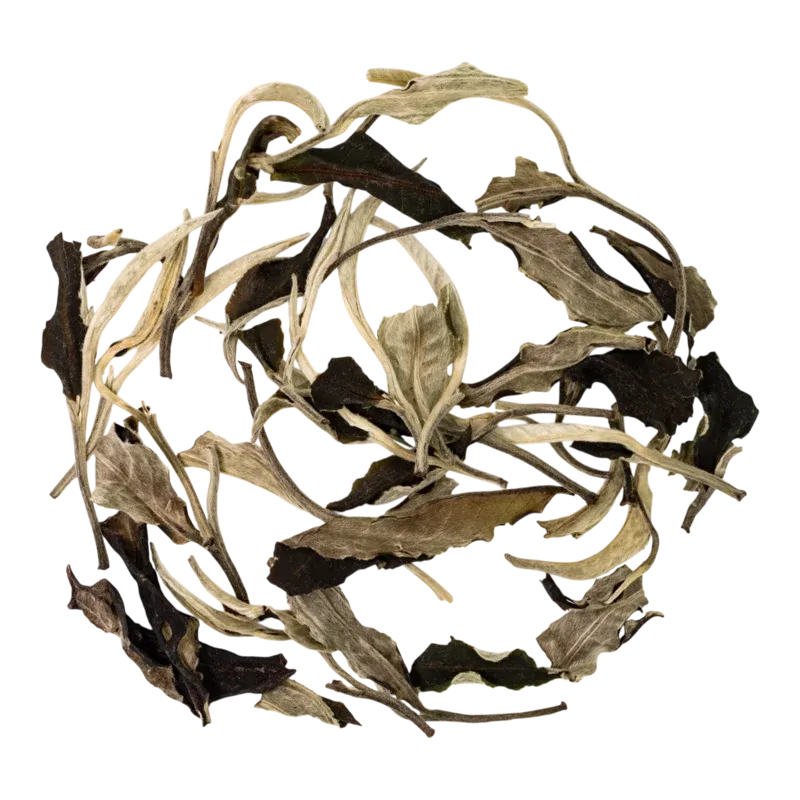
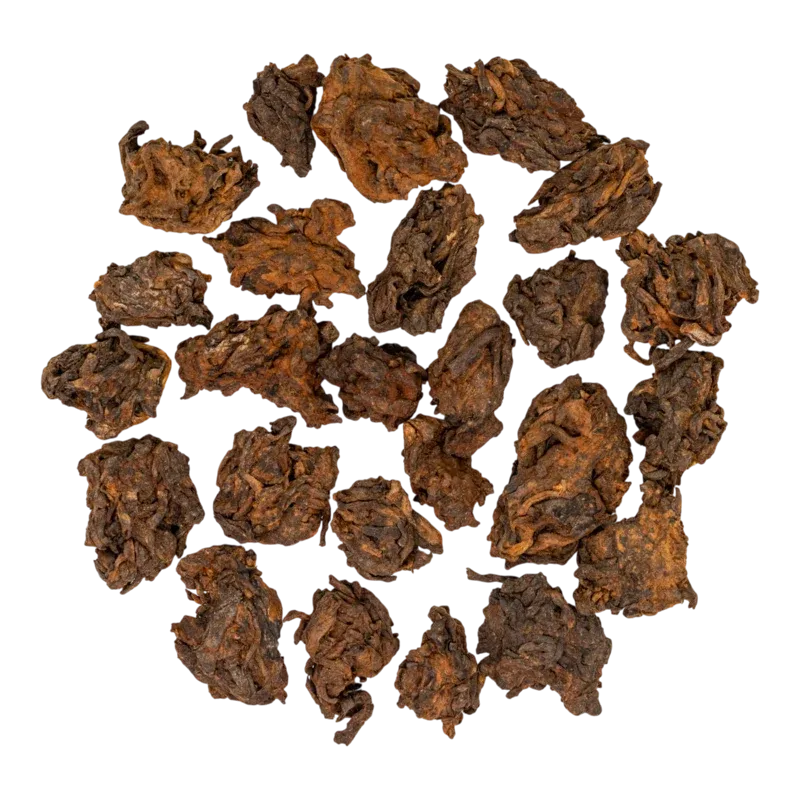
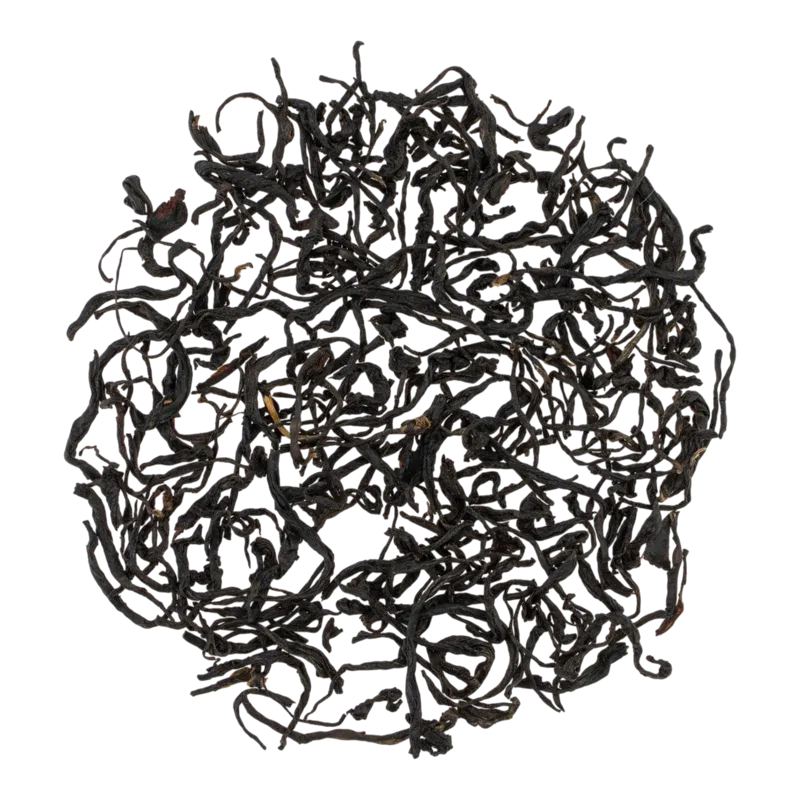
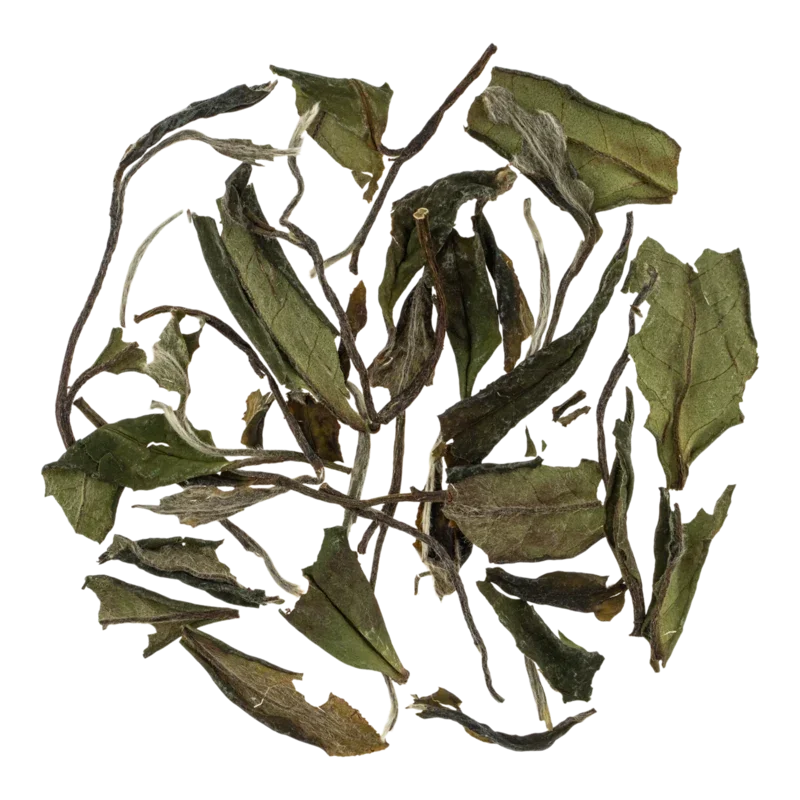
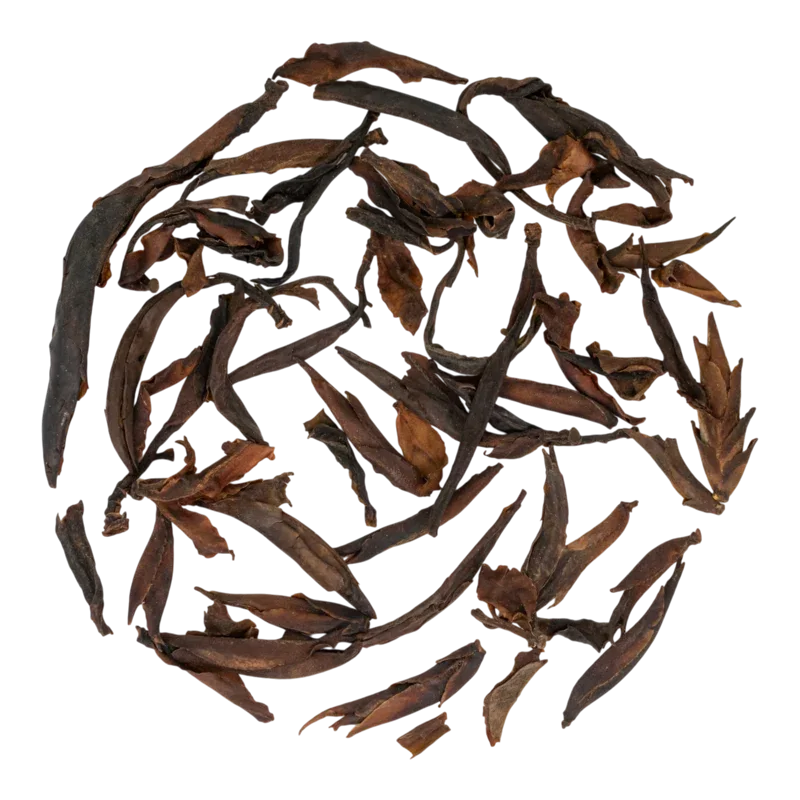
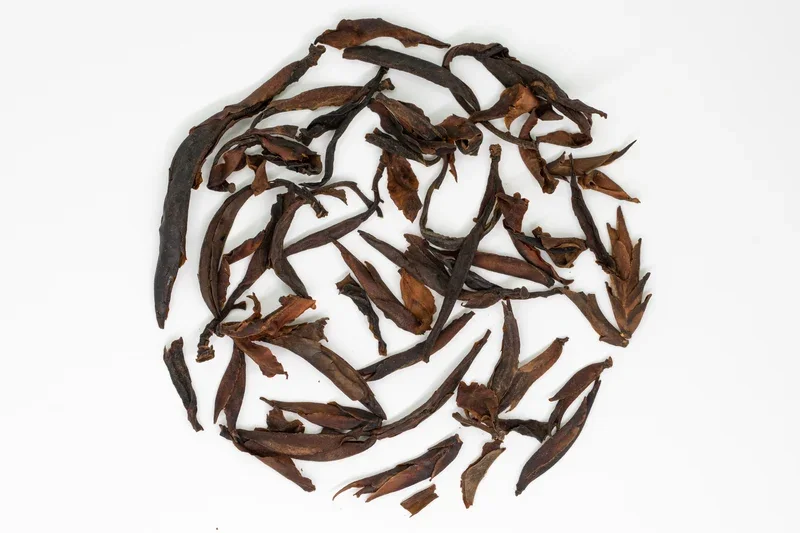
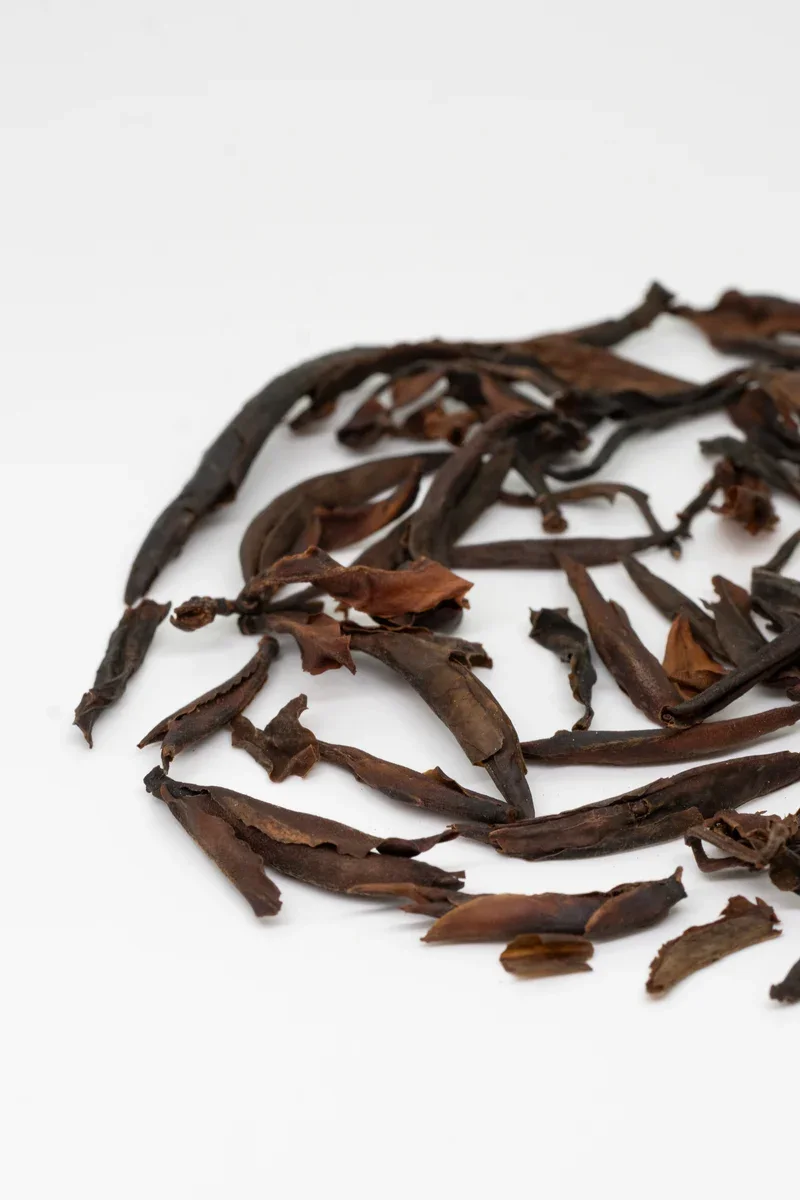
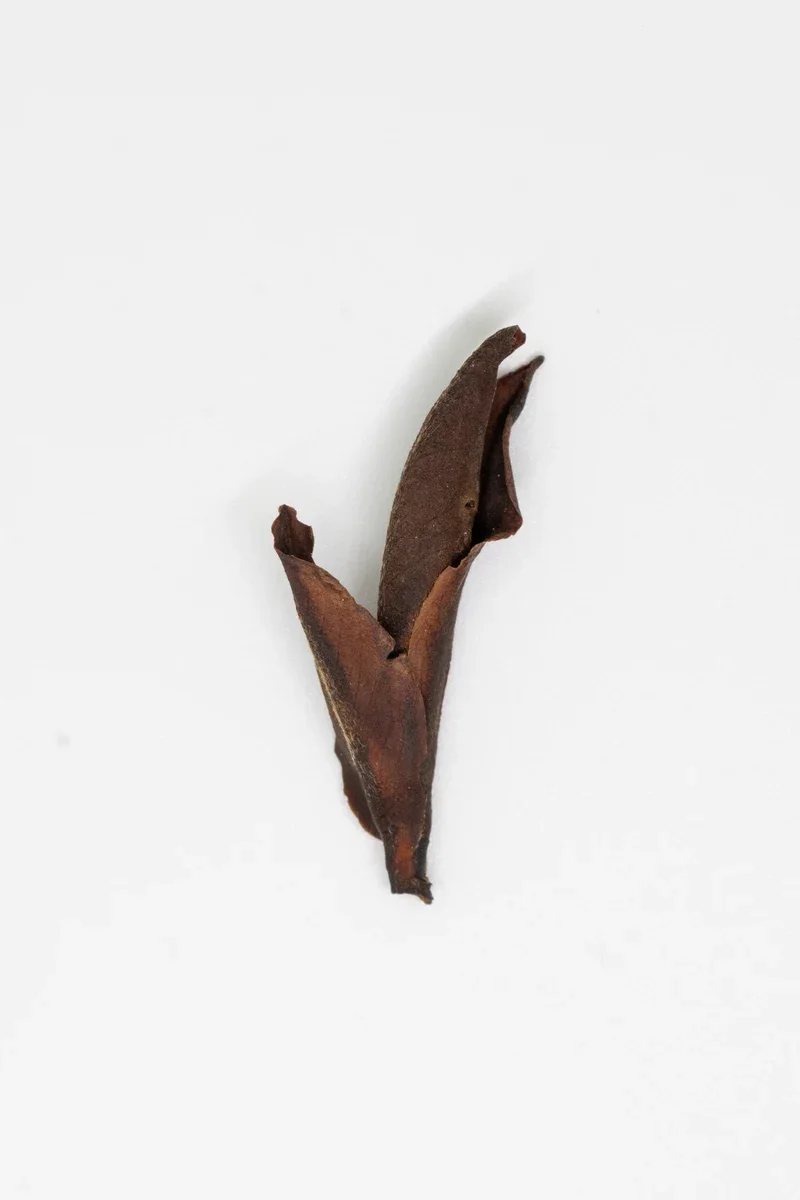
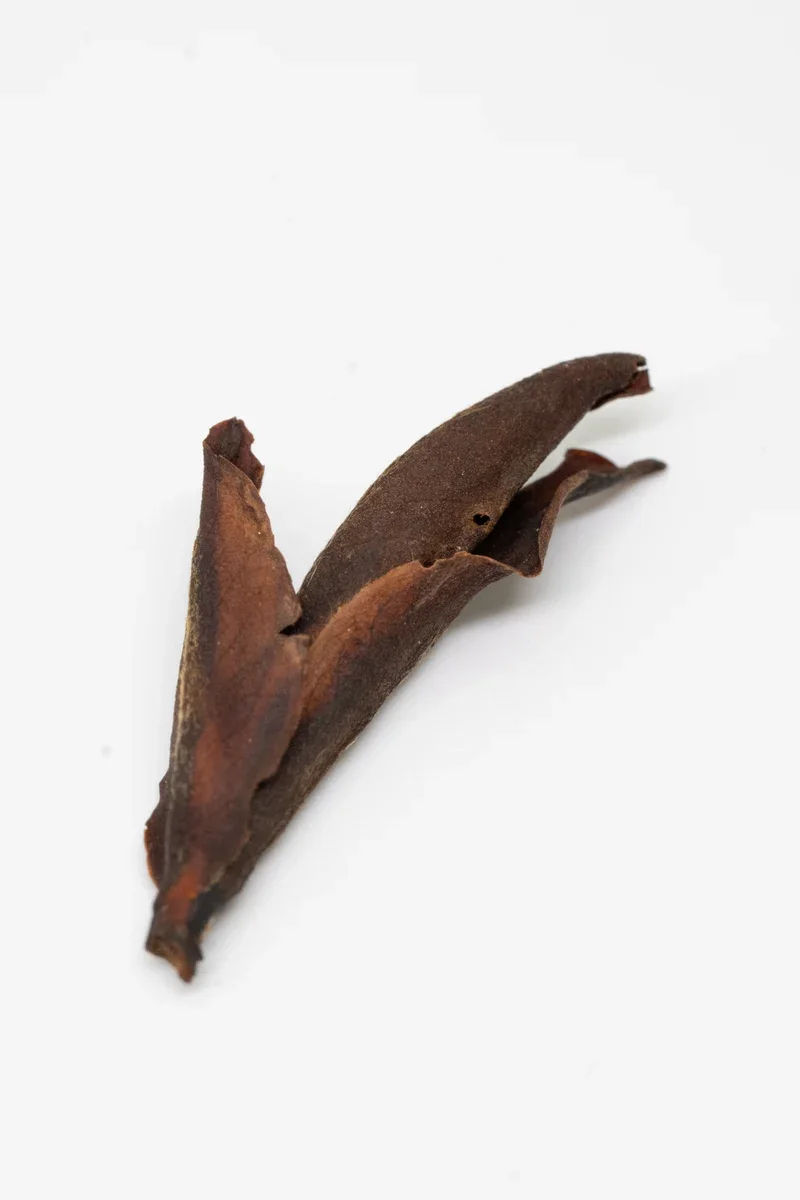
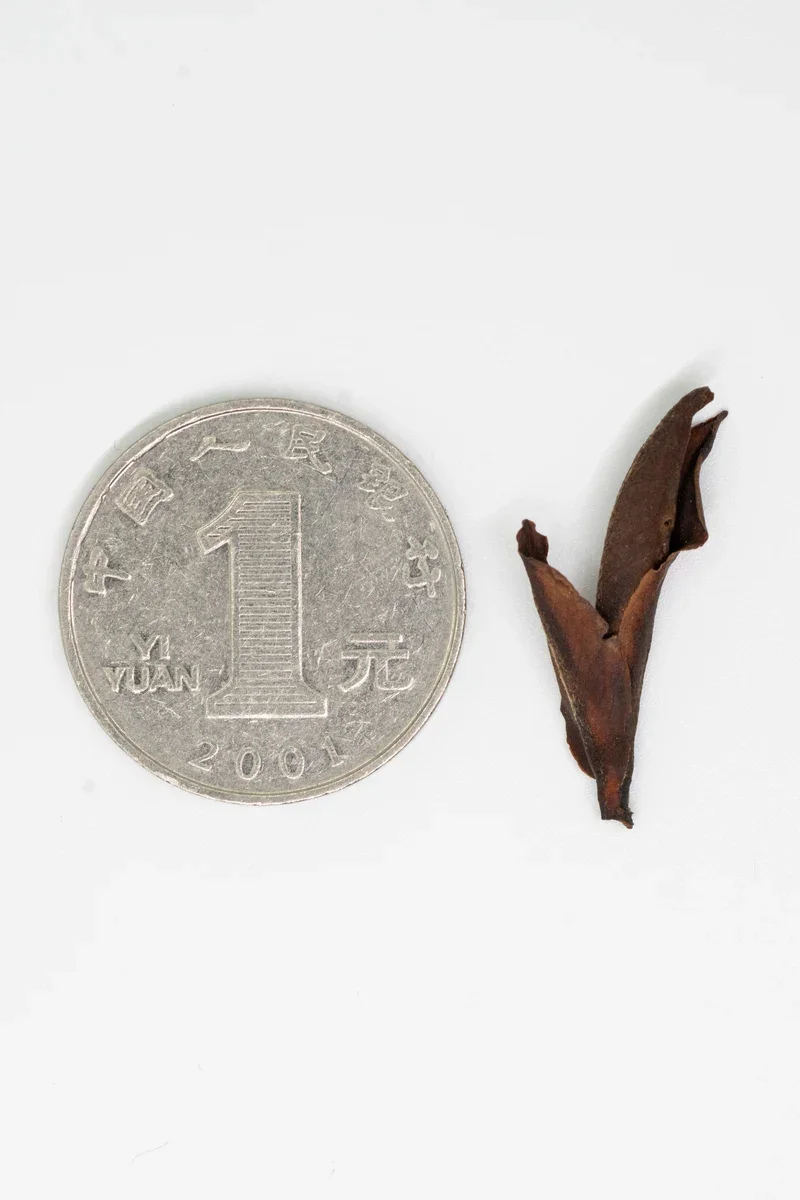
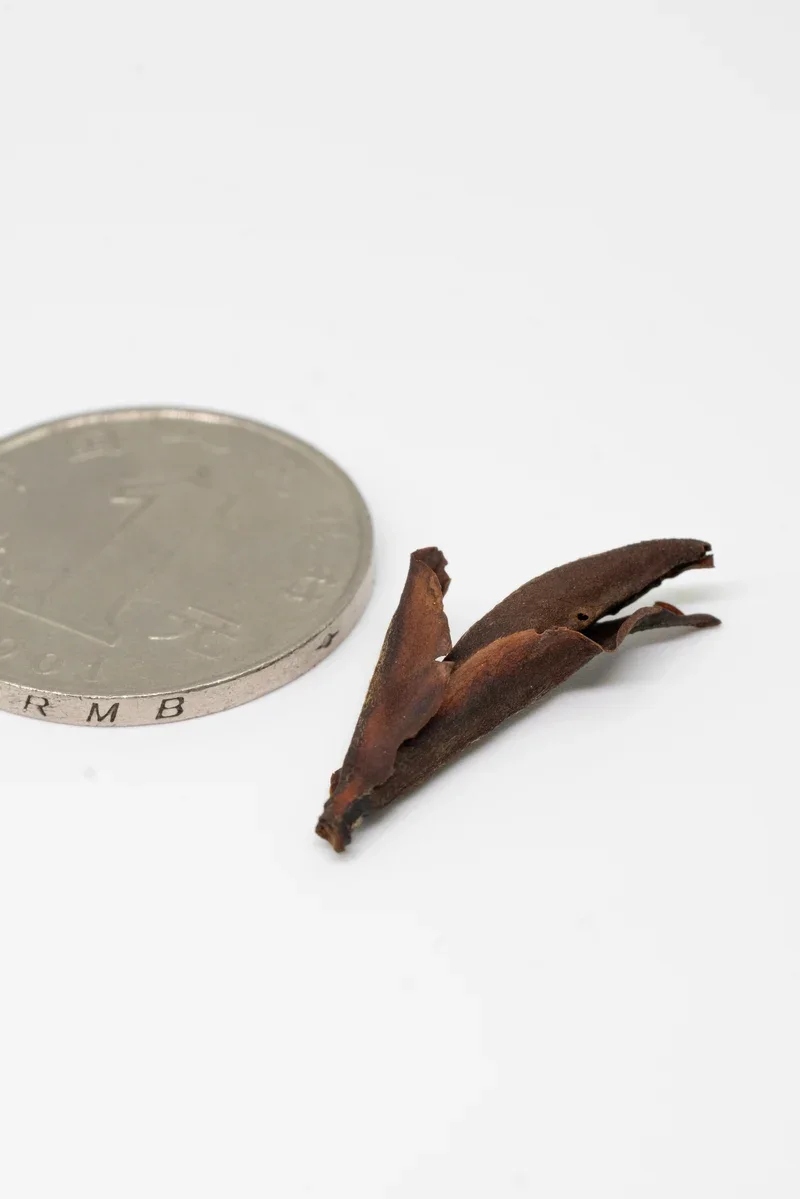
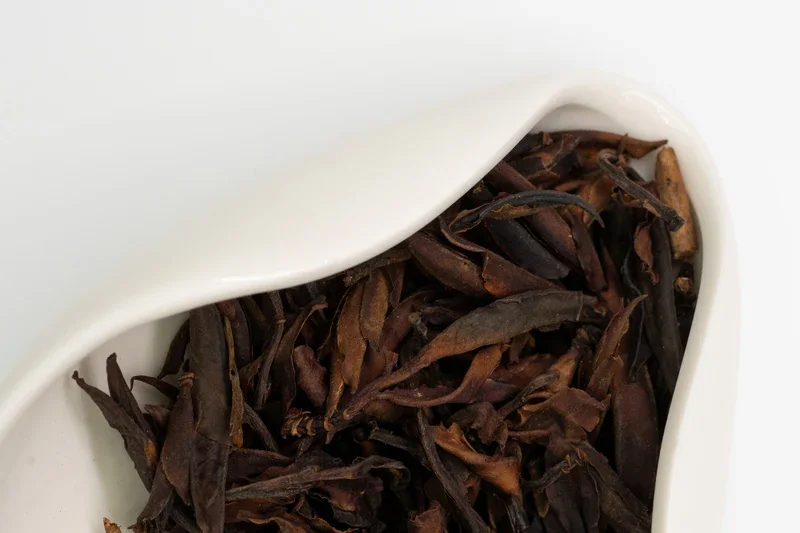
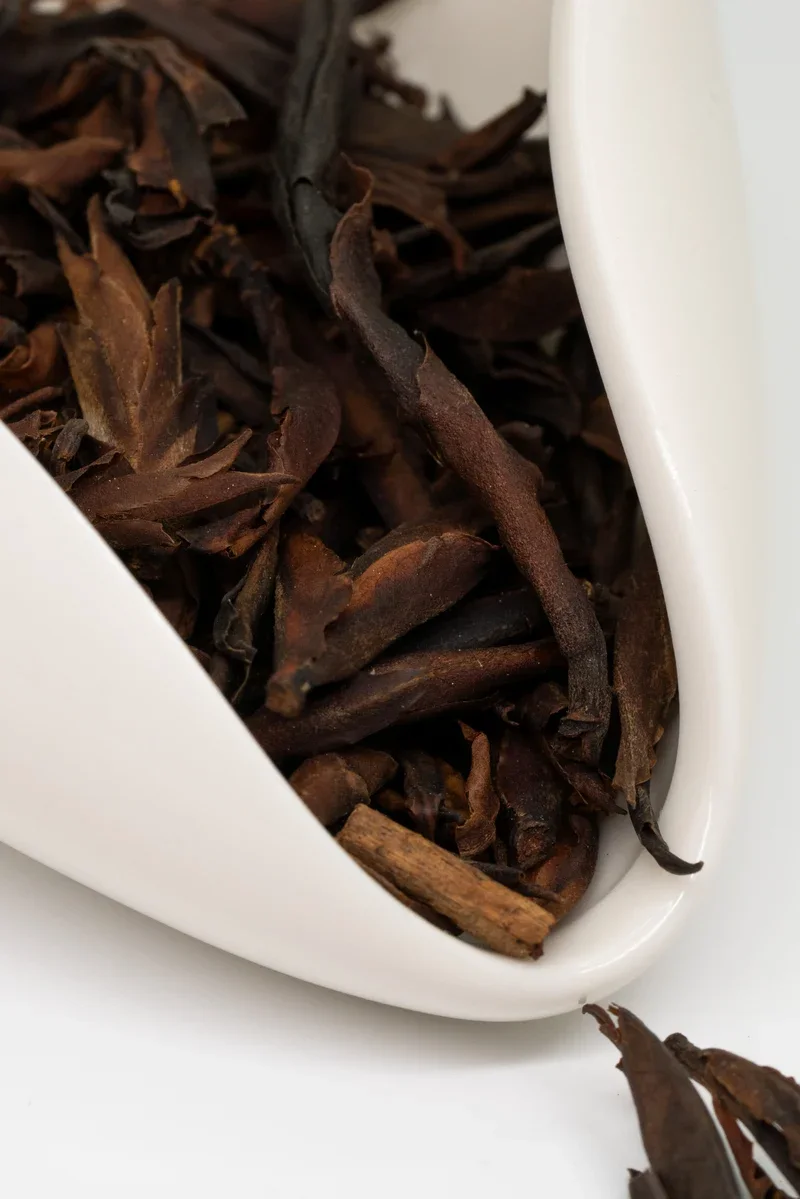
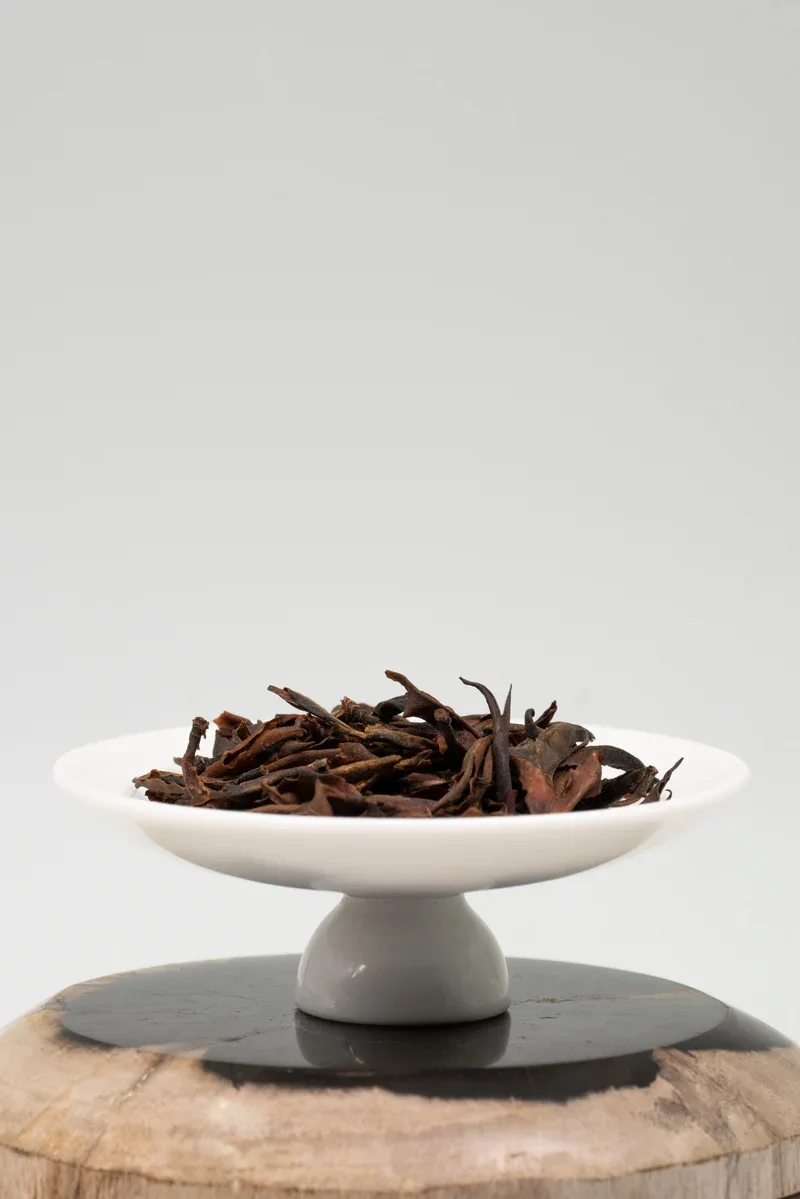
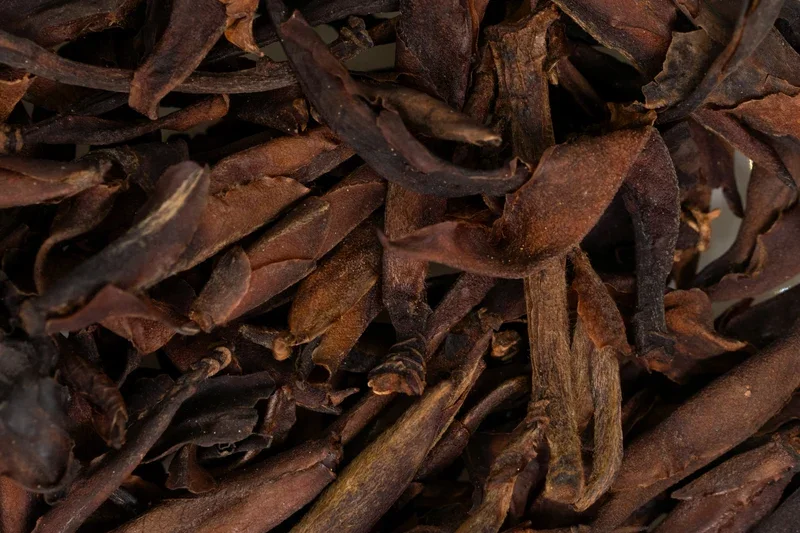
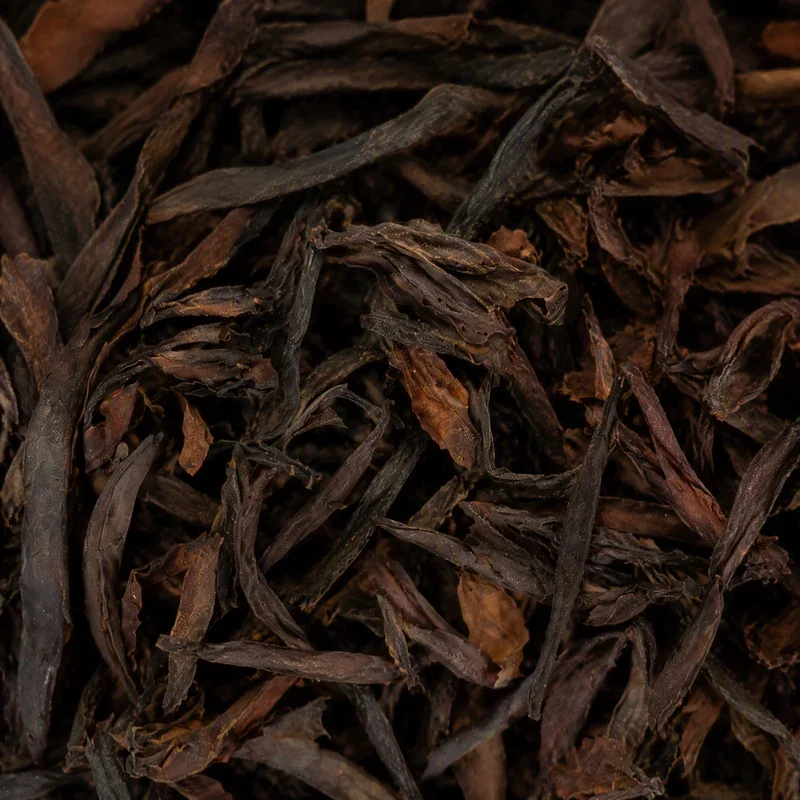
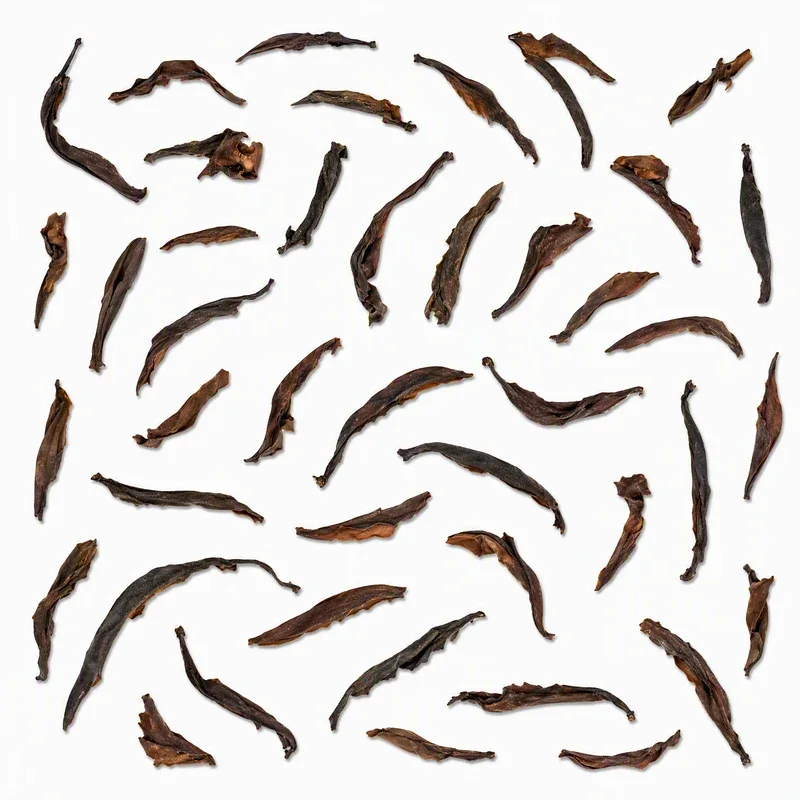
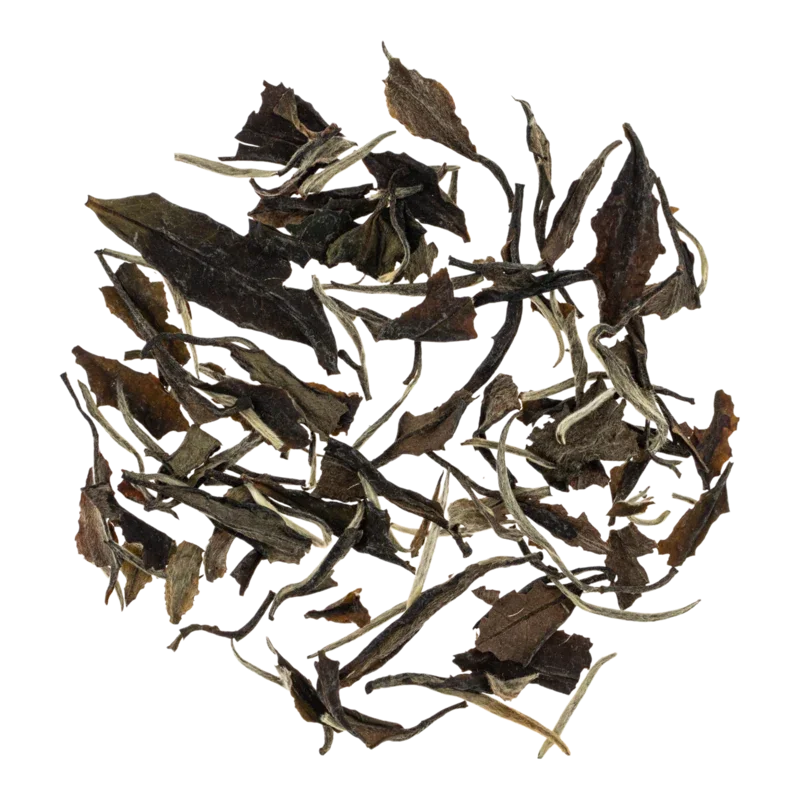
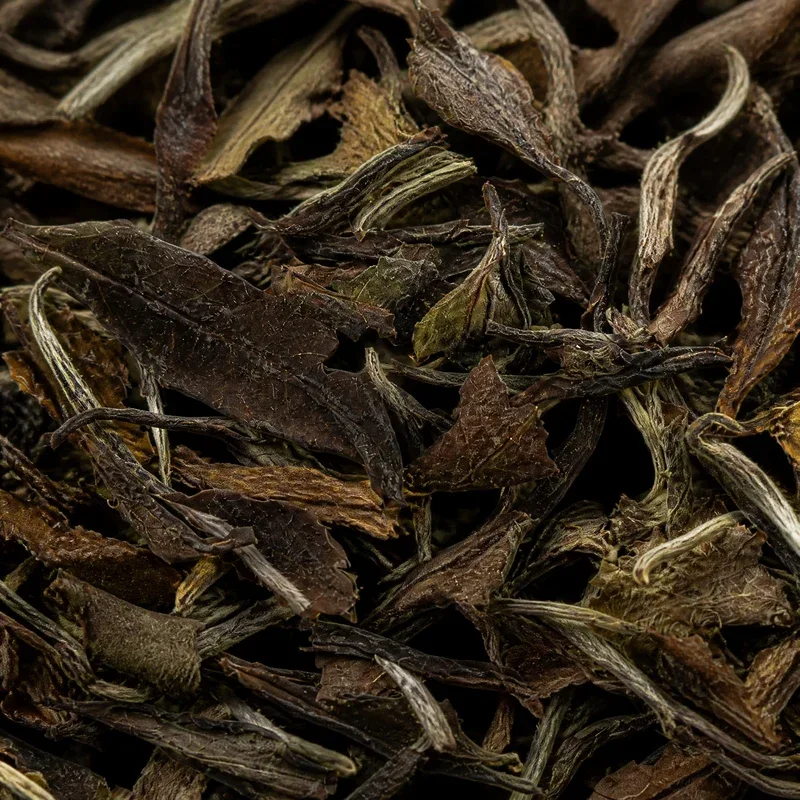
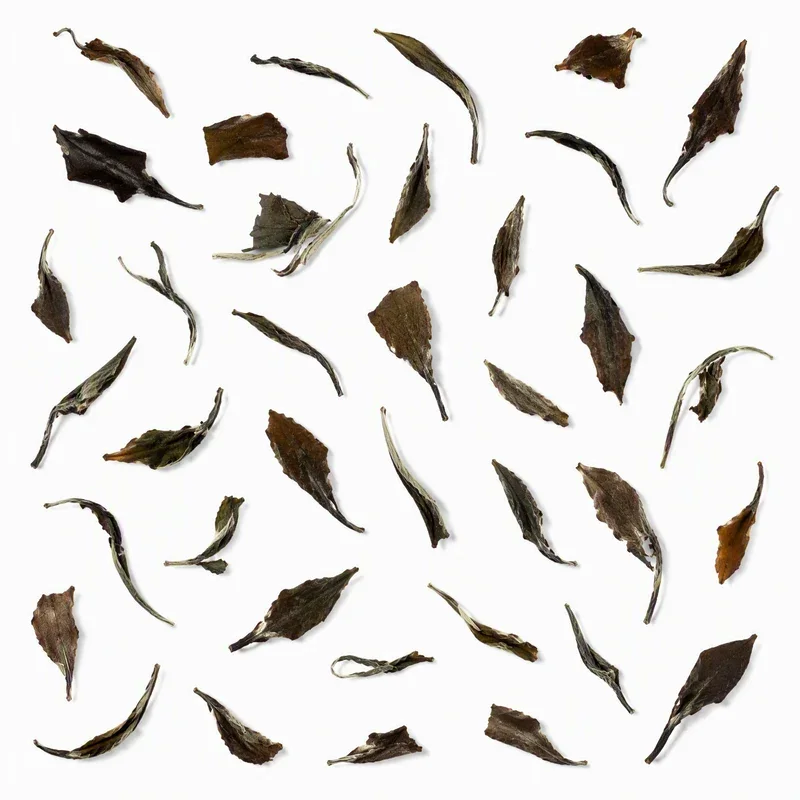
Dry Leaf Appearance: Tightly twisted, somewhat coarse leaves of dark green, olive-black color with oily luster. In aged specimens — black with chocolate tint. Characteristic packaging in bamboo baskets with bamboo wrapper leaves.
Dry Leaf Aroma: Floral, with notes of dry herbs and light spiciness. In aged tea — deep "chenxiang" with hints of dried fruits, nuts, and characteristic "watermelon rind" (西瓜皮味, xīguāpí wèi) — considered a marker of authentic quality An Cha.
Liquor Aroma: Rich, multi-layered. Woody, nutty notes, dried fruits, light floral background. In young tea — more "green," herbal aromatics; with aging — deepening toward "chenxiang" and honey tones.
Liquor Color: From amber-orange (young tea) to deep red-chestnut (aged). Clear, bright.
Spent Leaves: Dark olive to brown-red, leaf veins often with reddish tint. Leaf elastic, expands well.
Taste: Dense, concentrated, with light noble bitterness that quickly transitions to pronounced returning sweetness (回甘, huígān) and refreshing aftertaste. Medium to full body, smooth texture. Very high resistance to multiple infusions — tea brews repeatedly without noticeable loss of intensity.
Alkaloids: Caffeine (咖啡碱), theobromine (可可碱) — standard tea levels. Caffeine content moderate due to raw material maturity and prolonged processing.
Amino Acids: L-theanine (L-茶氨酸) and other amino acids — content depends on raw material tenderness; in "Gong Jian" grade — elevated.
Tea polysaccharides — important component of aged dark teas, determining part of their bioactive properties.
Essential Oils: Play key role in aroma formation. The unique "watermelon rind aroma" characteristic of quality An Cha is associated with specific combinations of terpenoids and Maillard reaction products formed during the complex processing and aging chain.
Minerals: Potassium, magnesium, fluorine, zinc, manganese — enrichment determined by mountain soils.
Polyphenols: Initial raw material from Qimen Zhuye and related cultivars contains typical medium-leaf population levels of polyphenols. During "night dew" and long aging, part of catechins transforms into thearubigins (茶红素) and theabrownins (茶褐素), which softens taste and deepens liquor color.
Vitamins: Vitamin C (partially destroyed during processing), B vitamins, vitamin E.
In Cantonese medical tradition — primary property. Tea is considered effective for heat and excessive "dampness" (湿热, shīrè) — a traditional Chinese medicine concept relevant for tropical and subtropical climates.
Polyphenolic fermentation derivatives and tea polysaccharides promote peristalsis and ease digestion of fatty foods.
Residual catechins and their transformation products — thearubigins and theabrownins — possess confirmed antioxidant activity.
Traditionally An Chá was used as a component of medical prescriptions (药引) to enhance the action of other remedies and "expel heat."
Caffeine combined with L-theanine provides gentle alertness without sharp stimulation.
Several studies of dark teas indicate possible beneficial effects on cholesterol levels with regular moderate consumption.
In South China and Southeast Asia, An Cha is traditionally drunk not only hot but also chilled — chilled infusion is considered especially effective for summer heat.
Caffeine sensitivity, acute gastrointestinal diseases, medication use (1–2 hour interval), pregnancy — consume moderately.
Tea Amount: 5–7 g per 150–200 ml water.
Teaware: Porcelain gàiwǎn (盖碗); Yíxīng clay teapot (宜兴紫砂壶) — dedicated to dark teas; ceramic teapot.
Water Temperature: 95–100°C (boiling water).
An Cha is one of the few teas for which aging is not merely acceptable but a necessary part of maturation. Minimum term — 3 years; collectible specimens are stored 10–30 years or more.
Tea is stored directly in original bamboo baskets — packaging is part of the technology: "three aromas" continue to interact during storage.
Dry, ventilated room, without strong odors. Temperature 15–25°C, humidity 50–70%. Direct sunlight and hermetic packaging undesirable.
"Ages but doesn't mold; ages but doesn't spoil; the older — the more aromatic" (陈而不霉, 陈而不烂, 越陈茶味越醇) — classic formula for An Cha.
Both are "侨销茶", both went south. Liu Bao is denser in body, with a "camphorous" and "betel" profile; An Cha is lighter, with a floral-nutty character and signature "watermelon rind" note. Liu Bao is pressed into large baskets and comes loose; An Cha only in small bamboo baskets.
Shu pu'er is Yunnan large-leaf, with an intense "earthy" profile and darker liquor. An Cha is medium-leaf from Anhui, lighter, more transparent and "fresh" in character. Pu'er was "tea of the masses," An Cha was "tea of the elite" in the same markets.
Tian Jian is Hunan loose hei cha, often with pine smokiness. An Cha is pressed in baskets, without smokiness, with a more pronounced "dewy" and floral profile.
Fu Zhuan has characteristic "golden flowers" and honey-mushroom notes. An Cha lacks "金花", its profile is nutty-fruity with a "watermelon" note.
Qing Zhuan is mass-market border tea with coarse material and pronounced astringency. An Cha is a refined product from tender material, oriented toward "pure drinking" (清饮, qīngyǐn), not for preparing milk-salt beverages.
Price Category: An Cha was historically positioned as "aristocrat among dark teas" — its price substantially higher than mass hei cha (fu bricks, border teas). Cost determined by aging years, grade (Gong Jian — highest, Mao Jian — medium, Huaxiang — standard), producer reputation, and storage conditions.
Limited production volume (~200 tons per year), narrow harvest window, labor-intensive handwork, necessity of multi-year aging.
No reviews yet. Tell us what you think of this tea.
Rate this tea and share your impressions. We review each submission before publishing it.